Place: United States
A small and curious bulletin begins this note from the front lines: as of several hours ago, the head of the Wisconsin professional police association announced that its members would not eject demonstrators from the Capitol building, and suggested some would be spending the night with the demonstrators in order to protect them.
There are three simple solutions to the deficit, Medicare, and the Social Security problems.
The new American workers movement—born in the last few weeks in the giant protests in Wisconsin and Ohio—faces a fateful confrontation this coming week. In Madison and Columbus, Republican legislators are pushing to abolish public employee labor unions and tens of thousands of workers are protesting and resisting. We have seen nothing like this face off between workers and bosses in the United States since the labor upheaval of the early 1970s, though the issues in the balance are more like those of the 1930s.
Thousands of workers demonstrated at the state capital in Madison, Wisconsin on Feb. 15 and 16 to protest plans by that state’s Republican Governor Scott Walker to take away the state workers’ union rights. Walker, cleverly attempted to divide the public workers by excluding police and firefighters from his anti-union law, and the media have worked to divide public employees against private sector workers.
Carl Davidson, organizer for CCDS [Committees of Correspondence for Democracy and Socialism] and one of its four National Co-chairs, recently e-mailed me on what it was doing in terms of addressing the unemployment crisis in the U.S. today, that direct and nasty continuing fallout from the still-current recession. He wrote:
Let me begin with a confession: While the 1980s are a blur to me, I recall the 1970s with a crispness and precision that has led me ever since to replaying the mental tape of those years, trying to understand how things ended up as they did.
"The Eisenhower years have been years of flabbiness and self satisfaction and gross materialism . .. . The loudest sound has been the oink and grunt of private hoggishness. . . . It has been the age of the slob."
William Shannon, New York Times writer quoted by
Richard Rovere in The American Scholar, Spring, 1962
Labor’s Civil War in California
Cal Winslow
Oakland: PM Press, 2010, 115pp, $12
Shades of Justice: A Memoir
Paul Krehbiel
Altadena, CA: Autumn Leaf Press,
2008, 422pp, $19.95
[This interview was originally published in New Politics no 50, Winter 2011, and posted online at that time. This substantially revised version is being posted Nov. 21, 2011.]
Interview with Lois Martin, Volunteer Worker for immigrant support groups on the Arizona/Mexico border (October, 2010)
I’d like to begin by asking a question that has probably occurred to you already: How come despite the biggest economic downturn since the 1930s, and not withstanding the Obama victory which was supposed to have created a center-left realignment, American public opinion has veered to the Right; not the Left? Why have middle class and some working class people been attracted to the Tea Party; not towards progressive organizations; or towards organized labor?
As soon as I acquired the hefty 2005 edition of The Oxford Companion to the Supreme Court of the United States, I lugged it onto the coffee table and opened to its comments on two fascinating cases: Marbury v. Madison and the Dred Scott decision.
The curious thing about the 2010 midterm elections is that their results were totally unsurprising and highly illuminating at the same time. They were unsurprising because they confirmed what we all expected would happen. The voters who propelled Democrats to power in the two previous elections in 2006 and 2008 stayed home. Voters dissatisfied with the status quo turned out in droves to support the party out of power as the economy plunged into its worst crisis since the Great Depression.
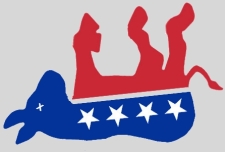
For more than a year, it had been obvious that the Democrats would face a debacle at the polls on November 2. And they did. In the largest congressional midterm landslide since 1938, the Republicans captured more than 60 seats, ending the four-year Democratic majority in the House of Representatives.
New Politics is an independent socialist forum for dialogue and debate on the left.
I wrote a letter to the Boston Globe in response to a series of 3 articles that appeared in the Globe describing how parents are desperately trying to get their children on SSI (Supplemental Security Income) and are persuading doctors to prescribe medication so the children will be eligible.

It used to be said that if you walked down any street in a black neighborhood during a Joe Louis fight you would not miss a word of the broadcast because every radio in every house would be tuned to the same station … and turned up loud. A few years later, the same thing could be said about a Sugar Ray Robinson fight. Sugar Ray and Joe Louis dominated their respective divisions for nearly three decades.

The Dan La Botz Socialist for Senate Campaign in Ohio in 2010 was one of the most successful socialist electoral campaigns in more than 60 years. The 25,000 votes cast for La Botz compare favorably with earlier Socialist Party candidacies in Ohio, with other socialist parties, and with reformist parties to the left of the Democrats. The La Botz campaign, in fact, compares favorably with all Socialist, Communist and Socialist Workers Party and other leftist party campaigns since the heyday of socialism. Only Eugene V.

If the purpose of a memoir is to tell the story of a life or the evolution of an individual’s thinking, this one by Christopher Hitchens, the jowly, balding erstwhile enfant terrible doesn’t ring true. There’s no metamorphosis in thinking here — it’s more a whipsawing of opinion if not a trading up. And despite a heavy lathering of opinions, there’s precious little of his adult life as lived.

Loïc Wacquant has expanded the theory of the neoliberal state beyond the usual economic definition. He has linked the criminal justice system with the welfare system as two parts of the same policy of enforcing conformity to an unstable job market of temporary, part-time, low-paid, and flexible employment. Other criminal justice scholars and welfare scholars have analyzed these as separate spheres. While they have seen both as repressive, they have not seen them as interconnected.
Introduction
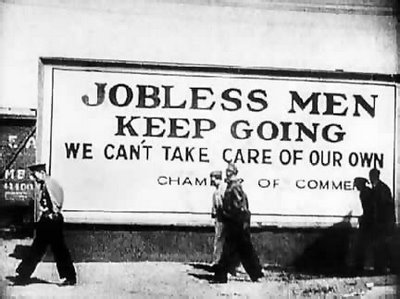
The United States has an ongoing jobs crisis that has been crippling our people and our economy for nearly two years. In September 2010, 14.8 million people were officially unemployed, 15.7 million were either forced to work part-time or were jobless and no longer looking for work and another 16.3 million were the working poor. Thus, almost 47 million people were afflicted by unemployment or underemployment (see table 1). Moreover, the numbers multiply when the families of the unemployed are included.
- « Newer Posts
- 1
- …
- 62
- 63
- 64
- 65
- 66
- 67
- 68
- …
- 72
- Older Posts »