We welcome the opportunity to clarify misrepresentations of New Politics’ editorial stance about Cuba and US imperialism. We write on behalf of the New Politics editorial board.
Since its founding 60 years ago, New Politics has consistently opposed US. intervention in Cuba, defending the right of the Cuban people to determine their government. We have defended freedom of political expression everywhere, the right to organize politically, including the right to form unions, rights denied in this country and many countries that self-identify as opponents of US imperialism. Just as we call on the U.S. government to release political prisoners and allow freedom of expression, we call on the Cuban government and all other governments to do the same. We oppose the U.S. embargo, which harms ordinary Cubans, especially when imposed during the devastating COVID-19 pandemic.
Here we present only a partial list of the many articles we have published, online and in print, expressing our simultaneous opposition to US interference in Cuba and support for Cubans’ democratic rights.*
In Fall 1961, New Politics carried a symposium “The Cuban Revolution: Four Views,” which rejected US intervention and offered differing analyses of the Cuban revolution. Sam Bottone’s contribution expressed the Third Camp socialist tradition of NP’s editors and its founders, Julius and Phyllis Jacobson, which posited a symbiosis between two rival social systems and imperialist blocs, one headed by the US, and the other led by the USSR. Bottone noted the tragedy of the left’s failure to oppose both:
“For the New Left evolved as a response to the revelations of the Twentieth Party Congress, to the horrors of the suppression of the Hungarian Revolution, to the conservatism of the official labor movement and, most broadly, to the insanity of a world threatened by two imperialist power blocs. The New Left spoke in the name of democracy, humanism, socialism—and still does. But Cuba is a test of how deeply rooted these convictions are. And thus far the most authoritative spokesmen for the New Left have not measured up to their promise.” (p. 32)
In the “Cuba-Blockade-Crisis: A Symposium” in Fall 1962, New Politics hosted a debate about the Cuban missile crisis among writers who differed on how to understand the Castro regime. Hal Draper, condemned “Kennedy’s Disastrous Cuban Policy,” (pp. 27-40) warning that the triumphalist rhetoric of the Kennedy administration “is the most dangerous thing that has happened in American public opinion since the beginning of the Cold War. Not only is it basically false … but it means that, the next time, there will be so much the less resistance in the United States to an aggressive, adventuristic military-based foreign policy in reaction to Cold-War crises.” (p. 27).
Zane Boyd, in “The Debate Over the Recent Arrests and Sentences in Cuba,” New Politics, Summer 2003, examined debate in the international left around the arrests and harsh sentences meted out to more than 70 opponents of the Cuban government and its execution of three hijackers. In defending a statement critical of the Cuban government’s actions, Boyd noted the anti-imperialist credentials of its signatories, including Noam Chomsky, Howard Zinn, and Susan Sontag, and the statement’s clear focus “on the past and the present crimes of the U.S. government. It is a demagogic smear to claim that these intellectuals make a moral equation between the recent actions of the Cuban government with the manifold crimes of U.S. imperialism.”
In “Cuba Today: An Interview with Samuel Farber,” conducted by Joanne Landy, Thomas Harrison and Stephen R. Shalom, in the same issue of NP, Sam Farber concludes“The best thing that the people in the U.S. can do is to see that the blockade and all other forms of hostility against the Republic of Cuba cease and desist, and that normal diplomatic and economic relations are reestablished, thereby allowing maximum room for the Cuban people to make their own choices.” We have proudly published Farber’s erudite, incisive analyses of Cuban politics, all of which defend democracy in Cuba and oppose US intervention, including these three articles in 2020: “U.S. Politics and the Financing of Political Groups in Cuba,” “Cuba’s New Economic Turn,” and “Cuban Doctors Abroad – Appearances and Realities.”
In the past decade NP has encouraged analysis of Cuba from a critical, anti-imperialist perspective. In “Is Cuba Different?” (New Politics, Summer 2012), Charles Post reviewed Farber’s book, Cuba Since the Revolution of 1959: A Critical Assessment, (Haymarket Books, 2011), while Armando Chaquaceda and Lennier Lopez examined spaces for dissent in their piece on “Cuban Civil Society,” (New Politics, Winter 2018). Ariel Dacal Diaz provided an overview of Cuba’s internal politics in “Cuba: Note for a Balance Sheet of Ten Years of Reforms,” (July 21, 2018).
We challenge any and all who aver that the editorial position of New Politics has been to support US intervention in Cuba in any fashion, economic, political, or military, to examine what we have published for evidence, currently or historically. We are confident they will find nothing to support their claim.
*Currently the archives of New Politics are found in three locations online, and not all of the print issues have been digitalized. The editorial board is shortly launching a special fund appeal to raise at least $10,000 to gather the entire archive on a new website, allowing readers easy access to this rich trove of material as well as new articles that continue the proud tradition of this journal. You can donate here to support this exciting project.
This article was written for L’Anticapitaliste, the weekly newspaper of the New Anticapitalist Party (NPA) of France.
Women in Texas and around the country were horrified and outraged to learn that the U.S. Supreme Court, meeting in the dead of night on September 1, voted 5 to 4 to uphold a new Texas law that would outlaw abortion for nearly all women. The law bans abortions after a heart beat can be heard, usually at about six weeks, before most women typically realize that they are pregnant. In Texas, before the passage of this law, 85 percent of women who got abortions had them after six weeks. While there are other “heartbeat laws” in other states–Georgia, Mississippi, Kentucky, and Ohio–this law goes further. It makes no exceptions for pregnancies resulting from rape or incest, and very narrowly defines health conditions that might allow an abortion.
The law does not call upon state officials to enforce it, but rather deputizes private citizens to sue anyone who performs an abortion or “aids and abets” a procedure, making it more difficult to declare the law unconstitutional. People with no connection to the patient or the clinic may sue and recover legal fees, as well as a bounty of $10,000 if they win. Women in Texas will now have to go to other states to seek abortions, an option that is much easier for the well off than for workers and the poor. The law will disproportionately affect Black and Latina women who have fewer economic resources. The law immediately threatens Planned Parenthood, the nation’s and Texas’ largest abortion provider, though there was a court ruling temporarily stopping suits against it until September 17.
The Texas law, which was passed by its Republican dominated legislature and signed by Republican Governor Greg Abbott, will not only affect the seven million women of childbearing age in Texas, but could also become a model for other states, about half of which could conceivably pass similar laws. And it is part of a broader attempt to get the Supreme Court to overturn Roe v. Wade, the 1973 Supreme Court decision that upheld women’s abortion rights, later defined as pregnancies up to 24 weeks.
The Texas law and the Supreme Court decision are tremendous blows to women’s right to make decisions about their own bodies and their own lives. Abortion rights, culminating in Roe v. Wade in 1973 was won by the women’s movement of the 1960s and 70s through educational campaigns, mass protests, and political pressure, and still today a majority of Americans support women’s abortion rights. According to a national media poll in 2019, “A total of 77% say the Supreme Court should uphold Roe, [though] 26% say they would like to see it remain in place, but with more restrictions added; 21% want to see Roe expanded to establish the right to abortion under any circumstance; 16% want to keep it the way it is; and 14% want to see some of the restrictions allowed under Roe reduced. Just 13% overall say it should be overturned.”
In response, President Joe Biden denounced the law as “unleashing unconstitutional chaos” against women and promised that his administration would “launch a whole-of-government effort” to try to check the law. Planned Parenthood, NARAL Pro-Choice America, and women’s groups will be pushing the Democrats to pass new, comprehensive abortion rights legislation, though it would have little chance of passage at the moment given the divided Congress.
Resistance to the new law began at once, led by ordinary women and by women’s organizations. When Texas Right to Life established a website, Prolifewhistleblower.com, to act as a tip line to turn in abortion providers or those helping women seeking abortions in Texas—both of which are now crimes—women and men began using Tik Tok to flood the site with accusations that Governor Abbott was seeking an abortion, that Marvel Avengers wanted abortions, and bots regularly filed fade reports. The Texas law could spark a new women’s movement, letting people know that Women’s Lives Matter.
An Economic Policy Institute graph showing the relationship between union density and the concentration of wealth sends us an important message this Labor Day; however it does not, as one well-known writer argues, say it all for socialists, or those who want a revitalized labor movement, or activists who are fighting social oppression. In fact, it recapitulates the problem with the graphic for this article, a historically inaccurate nostalgia for a white, male cisgender working class.
Seeing gender (and its intersectionality with race) in labor reveals much we need to recall this Labor Day. Black women have historically worked for pay outside the home (in addition to caring for their own families) when they could. Women worked at the start of the industrial revolution in textile mills. When urban school systems were created, women were hired as teachers, in Chicago forming Local 1 of what became the American Federation of Teachers, under the leadership of Margaret Haley. More recently teachers and nurses have often displayed a resilience and militancy defending their own working conditions and protecting those who are most vulnerable in our society that’s a model for the rest of the labor movement.
The pandemic has confronted unions with a historic challenge. COVID-19 and the response to it have simultaneously illuminated and intensified the ways “women’s work,” labor traditionally done by women in and for social reproduction, is both essential and devalued. The pandemic has exposed our dependence on people who are paid to provide physical and emotional care, along with our society’s inability and unwillingness to support and protect these workers as they risk their lives for us. From nurses, therapists, teachers, and flight attendants, to workers in jobs viewed (incorrectly) as unskilled with lower status and pay, like aides in hospitals and nursing homes, restaurant workers, and workers in hotels, it’s clear the less respect (and money) workers receive, the more disproportionately the job is done by Black, Latinx, and Indigenous people, often women. The poor pay and working conditions of much caregiving work reflect not only who is doing the care but for whom it is being done. Low-income people of color get the short end of both sides of the stick.
Social movements for equality and social justice have exposed disparities at the workplace, giving unions an opening to support workers who most need the protection collective representation brings. We see employers, from nonprofits to transnational corporations, giving verbal homage to correcting inequalities while failing to disrupt underlying inequalities in how work is organized, classified and paid. Outrage at the hyper-exploitation of food delivery services forced some of the most exploitative businesses to modify practices, stating clearly that delivery fees weren’t going to workers and providing ways for customers to tip. We should be fighting for the “gig economy” workers in food services, many of them immigrants, to earn a living wage and have stable hours. Still even among these hyper-exploited workers there’s a gender divide. The apps and websites allow customers to tip the workers who do deliveries (mostly young males of color) while the workers who prepare, pick and package food (traditionally women’s work) remain invisible and subject to whims of employers about wages.
Labor Day invites us to commemorate significant contributions unions have made for working people, recognizing courageous sacrifices of workers who lost their jobs and sometimes their lives fighting for the right for us to have collective voice at the workplace and to force both political parties to pass legislation limiting employers’ exploitation. At the same time, we confront sobering realities of how many advances have been undercut, as labor’s economic and political power and its numbers waned, due in part to widespread acceptance of “business unionism,” which makes workers clients served by a union apparatus, rather than “owners” of their unions. The pandemic has created a global opportunity for disaster capitalism to mask policies that increase exploitation – and profits — in rhetoric about addressing longstanding social inequality. One ominous change is the chilling intensification, development and application of information technology to control workplace conditions; provide social, health and educational services; increase surveillance and data mining; and replace workers with AI.
Employers applaud themselves for boosting the prominence and authority of individuals from historically marginalized groups, substituting this shared power at the top in dominating workers, instead of supporting workers’ voice and empowerment through unionization. In contrast, when workers organize collectively, independent of the employer, they challenge the employer’s unilateral control over life at work, from pay and hours to the air they breathe, which in the pandemic is literally a matter of life and death. Collective organization brings potential power, which depends on the extent to which workers control what unions do in their name. Unions are only as strong as workers’ understanding that they, not union staff or officials, “own” their organizations.
It’s important not to romanticize workers and diminish the enormity of what we ask. Given the harsh conditions for work, expecting working people to do the jobs for which they are paid and also help organize their workplaces is a huge ask. One invaluable asset we have is seeing the inseparability of struggles for social justice and workplace democracy. We don’t dilute our power to improve economic conditions when we fight for demands to make our society and workplace more equitable, just and humane. On the contrary, we benefit from the synergy of increased resources and networks, often missed even when unions organize and defend workers who do “women’s work,” missing the gendered nature of work. UNITE HERE’s campaign opposing Hilton Hotel’s elimination of the daily requirement for cleaning rooms, putting housekeepers’ jobs in jeopardy, rightly highlights how this harms communities of color and low-wage women workers. Still it misses how housekeeping can be eliminated so easily: “women’s work,” cleaning the home, is taken for granted. What’s assumed is that no one will miss the work that’s done or the people doing it.
When Liz Shuler, the newly elected president of the AFL-CIO, who proudly claims the mantle as first woman to hold this position, tweets “I am humbled, honored and ready to guide this federation forward. I believe in my bones the labor movement is the single greatest organized force for progress,” she expresses what should be our hope and vision. Yet labor officialdom’s actions often undercut our chances of success in making that vision a reality. For example, the AFL-CIO has focused almost all of its energy on passing the PRO Act, and while the legislation is important, we can’t assume its passage will solve labor’s problems. Labor can’t rely on Biden and the Democrats’ promises of legislation to substitute for workers fighting for what they want and need, for themselves and the society.
What is it we should expect and demand of unions? When a hospital starts to hire “replacements” for striking nurses in Worcester, Massachusetts, who have been on the line for months, insisting on conditions that protect patients, the state and national AFL-CIO need to speak up for a state-wide one-day walkout – and provide resources to organize it. When teachers and staff demand school districts change policies to help keep schools safe, reflecting new dangers brought on by the Delta variant, they deserve to have the state and national teachers unions show up with resources for organizing one-day statewide walkouts and protests. One teacher union activist, who like others is organizing to make his district and state spend their federal pandemic funding on what students really need, observed the national teacher unions have the most influence over the White House than we’ve had in a generation, and yet both national unions, AFT and NEA are “working as mouthpieces for the administration instead of pushing the envelope.”
Movements fighting for social justice, from “#MeToo” to BLM to “AbolishIce” need a massively reinvigorated labor movement, just as much as labor unions need them. We need new understandings and enactments of solidarity that recognize how social oppression affects us all. Unions are stronger when they acknowledge the political tensions that exist among union members and provide democratic spaces to hammer out differences, in the process of deciding on specifics for fighting back. When we use our power on the job to force those who exploit us to hear, value, respect our humanity, we are demanding a new world. The challenge workers and their organizations face is not so different from what women must accomplish when they go into labor: arduous work that requires courage, confidence and hope, the work essential for birthing a new society, which we need and deserve.
Editor’s note: Labor Day 2021 marks the start of the New Politics special fund appeal. This year we have an especially ambitious goal, raising $10,000 for updating our website, making the entire archive of back issues available on our site, purchasing software to manage the growing number of subscriptions and donations, and improve communication among the editorial board, NP’s supporters, and our generous writers. We are counting on our readers to help us. You can donate here.
[Editors’ note: This article is a further contribution to the Symposium on Black Lives Matter and the US Left begun in the Winter 2019 issue of New Politics with an initial essay by Cedric Johnson, “Who’s Afraid of Left Populism.” All the articles in this discussion can be accessed here.]
Cedric Johnson’s contributions to this New Politics Symposium challenge us to confront the complexity of actually existing Black political life without falling back on the homogenizing assumptions of a “Black exceptionalism” that denies African Americans the same level of class, cultural, regional, and ideological diversity routinely extended to other similarly-sized groups (such as, for instance, the entire population of Canada). Johnson further urges us to recognize, in light of “Black Lives Matter,” that slogans which may “galvanize” street mobilization can also “enshroud” crucial underlying issues. Just because a banner or slogan is suddenly popular is not a reason to refrain from critical thinking about it—which is not necessarily to say that such a slogan should be dropped entirely, either. The question then, is how to approach such “race-first” tendencies in light of our broader historical and materialist analyses and socialist politics.
Johnson rejects the hardening of ‘standpoint theory’ into a racially essentialized outlook that fetishizes ascribed identity and enforces ethno-territoriality on critical discourse, policing who is allowed to speak about what, irrespective of the content of what they may have to say. He warns us against demonizing the white working-class and calls out ruling elite attempts to baptize corporations as “progressive” by way of multicultural “blackwashing.” Consistently, he attends to the deeper forces that are driving the contemporary policing crisis in the United States, which are considerably more complex than prevailing meta-stories of transhistorical racism allow. If we want to grasp where exactly the Trumpist “Blue Lives Matter” current is coming from, Johnson reminds us, then we need to grapple with the actual historical and material conditions giving rise to that tendency, even as doing so may trouble cherished movement shibboleths. Overall, Johnson makes a compelling case for orienting socialist politics towards the majoritarian goal of connecting working-class people across ethno-racial lines, uniting all those who are affected negatively by systemic injustices—from mass incarceration and militarized policing, to unemployment and poverty wages—in order to build a popular force capable of making the actual transformations we seek, while outflanking the enemies we face. His work helps us move beyond a simplistic ‘Black and white’ view of the history and problems before us.
The core of the Symposium critics’ response to Johnson seems to be that there is still nonetheless something productive, illuminating, and necessary in foregrounding the injustices of race and racism ‘as such’ (even while noting the importance of class, too).Kim Moody, for instance, suggests the need for both universal and class-based programs and race-based interventions, warning of the danger of equating the established national unions of the Democratic Party with “labor” or “the working-class.” Lester Spence unites with Johnson on the need for broad left and class-based universal programs (like Medicare for All), but also insists on the need to focus on hyper-incarcerated populations, who may be so isolated and disconnected from broader social institutions that they can’t be reached without more targeted action. (Note that Spence appears to assume that those affected by such hyper-incarceration are non-white.) Brian Jones, for his part, referring to the growth of the Democratic Socialists of America (DSA) and the #BlackLivesMatter upsurge, asks “Can these two developments be fused?”Jones concedes that what “galvanizes” may often mystify with regards to race, but nonetheless reminds us of the value—from an anti-capitalist perspective—of a good deal of the popular #BlackLivesMatter-aligned writing that has broken through in mainstream media outlets like the New York Times, including regular appearances from the likes of Michelle Alexander, Keeanga-Yamahtta Taylor, and Ibram X. Kendi. Even if the focus in such venues is generally on the history of racism and contemporary racial inequality rather than capitalism per se, Jones suggests, that frame allows anti-capitalist voices and ideas to gain ground.
A stronger version of Jones’ claim might go on to argue that so entwined are the histories of racism and capitalist exploitation in the USA that one cannot excavate the former without calling the latter into question as well. “You can’t have capitalism without racism,” Malcolm X famously said. Perhaps we could invert and update the saying: “You can’t popularize anti-racism without stirring up anti-capitalism.” It is an appealing notion, suggesting that any expression of anti-racism, even if not consciously committed to socialism or working-class power, is nonetheless creating space for such politics, laying bare the fundamental injustices, inequalities, and violence that structure American capitalism and empire. But is this notion, however appealing, true? Does anti-racism automatically create space for anti-capitalism? Might even the “anti-racist” corporate trainings of Robin DiAngelo and Co. be paving the way for more radical possibilities?
Parallel with this NP Symposium, another contemporary critical framework has been growing popular, in part on its promise to address both race and class simultaneously: the discourse centered around the notion of “racial capitalism.” Associated with Cedric Robinson’s 1983 work Black Marxism: The Making of the Black Radical Tradition, this tendency has been especially influential since this book’s reintroduction by Robin D.G. Kelley in 2000, with a third edition released in late 2020, in the wake of the massive George Floyd upsurge. One might assume that, among various avowedly anti-racist trends today, the critique via “racial capitalism” would represent the proof of the strong proposition above, with attention to racial inequities developing organically to challenge capitalist social relations. Yet the situation is not so simple; Black Marxism’s treatment of anti-capitalist Black radicalism in fact closes down as many avenues as it opens. I’ve recently offered a detailed critique of this book—and Robinson’s deployment of the notion of “racial capitalism”—in my January 2021 Socialism & Democracy article “Sifting the Stony Soil of Black Marxism: Cedric Robinson, Richard Wright, and Ellipses of the Black Radical Tradition.”
I should mention that my own engagement with Robinson grew out of a three-pronged paradox. First, Black Marxism has been enjoying tremendous influence, with its key concepts of “racial capitalism” and “the Black Radical tradition” taken up by significant sectors of the academic-activist left. Second, amidst the Black Radical embrace of recent years—which has helped elevate voices like Zora Neale Hurston and James Baldwin—Richard Wright, long thought of as central to the Black left, has seemed to be somewhat excluded from the renaissance. Third, upon returning to Black Marxism, I realized that, contrary to my expectations, Richard Wright was himself a key—indeed foundational—figure in Robinson’s own text.
How, I wondered, could this be? How could Black Marxism be experiencing such a revival even as Wright, one of its central figures, was being muted or marginalized? Furthermore, I wondered, what was it about Cedric Robinson and Black Marxism that so many academics and activists were finding so appealing? And what was it about Richard Wright that made him increasingly anathema, even amidst a virtual Black Radical revival? These linked concerns led me to set out on a close critical interpretation of Cedric Robinson’s ubiquitous magnum opus, through the lens of his treatment of Wright’s work—which I’ve been studying for years.
The title of my Socialism & Democracy piece, “Sifting the ‘Stony Soil’ of Black Marxism,” speaks to my approach, which aims not to deny the value of Robinson’s work, but to ‘sift’ through it, critically distinguishing what is fertile from what is an obstacle to left theory and practice. The appeal of racial capitalism is easy enough to discern. Likewise, the Black radical tradition. But the problems—or potential problems—embedded in such terms may not be so easy to spot. So I set out to explicate some of the ways these terms, whatever their value or mobilizing power, could also be prone to blind-spots, narrowing our sense of what we might call ‘actually existing Black Marxism.’
The term “stony soil” alludes to Richard Wright’s crucial 1937 essay, “Blueprint for Negro Writing,” where Wright, from a Marxian and pro-socialist perspective, addresses what he saw as the contradictory appeal of Black nationalism (associated then with Marcus Garvey’s massively popular, but by the ‘30s declining, United Negro Improvement Association). As I discovered, this essay is also a symptomatic point that reveals the serious limitations of Robinson’s opus as an approach to actually existing Black Marxism.
The short of Wright’s take—which warrants re-reading–is that, so long as the American scene continues to be characterized by “white chauvinism” and racist inequality, its “stony” terrain will continue to give rise to Black nationalism, including distorted and unhealthy variants (such as those at the time cheerleading for Japanese imperialism). And yet, the paradox for Wright was that while the growth of such nationalist currents in Black life was understandable—maybe even inevitable—their growth was still not on its own adequate to emancipating people from this terrain and could in fact create new problems, deepening rather than escaping the various ruts in which working and oppressed people were stuck.
In “Blueprint,” Wright conducts a two-fold struggle: on the one hand opposing the ‘class reductionists’ of his own day with an argument as to the historical necessity and unavoidability of race and nationalistic consciousness for Black writers and the socialist movement alike; and, on the other, problematizing that nationalistic consciousness itself as inadequate to challenges before us, despite its understandable roots. Against the two poles, Wright calls for a critical dialectical engagement with the nationalist currents in Negro life, and also for creating culture and organization to promote unity and trust among Black and white writers and workers, as a means of reducing the suspicion and alienation that, in his view, gave rise to Black nationalism in the first place. (Only once this second goal was achieved could nationalist reaction be truly overcome.) At the same time, Wright does not discourage Black writers from engaging the undeniable racial condition of their lives—how could they not?—but he urges them to do so in ways that reveal the need for that nationalistic consciousness to transcend itself.
What does it mean to “transcend” Black nationalism in this context? Was Wright asking Black writers to ‘put race aside’ or to embrace a kind of ‘race-blind’ working-class unity that rendered racism a secondary ‘epiphenomenon’? Clearly not—as the centrality of racialized struggles to Wright’s own major works demonstrates, from his earliest poetry, to his collection Uncle Tom’s Children (1938/40), to his blockbusters Native Son (1940) and Black Boy (American Hunger) (1945/77). By ‘transcendence,’ Wright meant not a minimizing, side-stepping, or leaping over race, but rather a particular approach to it. As he wrote: “It means a nationalism that knows its origins, its limitations; that is aware of the dangers of its position; that knows its ultimate aims areunrealizable within the framework of capitalist America” and that recognizes “the interdependence of people in modern society” (emphasis added).
Wright was in effect calling for cultivating a racially integrated, global anti-capitalist movement in part through critical reflection on the historical injustices, experiences, and social distortions of race. But, paradoxically, in Wright’s (pro-Communist, socialist) view, a would-be Black nationalist movement could not realize itself without overcoming itself, on at least two levels:
At the level of historical analysis: it needed to grasp where and how “race” and racial divisions came into being in the first place (invocations of race never being enough to grasp racism’s own origins—except through racists’ eyes);
At the level of political strategy: facing the limitsof being a national minority within the USA, it needed to seek out comrades and allies beyond its ‘own’ ranks. It further needed to challenge capitalism—as well as imperialism— since a majority of Black people in the US were exploited workers, and since oppressed peoples elsewhere shared many similar struggles.
If a project of Black liberation was to succeed, then, it needed to work for the liberation and unity of all working-class and oppressed people, across race lines and across the world; as well as to prioritize the struggles of the Black working-class—the great majority of Black folks, to be sure—against more petty bourgeois and bourgeois elements who were already struggling for control over the nationalist banner, even before the overcoming of Jim Crow. (At the same time, the more that the broader working-class movement took up these causes too, the less Black responses would need to assume a nationalist form.)
We could do a lot worse than to use Wright’s breakdown of “transcendent” Black nationalism as a tool for evaluating and engaging different manifestations of #BlackLivesMatter and anti-racist discourse and movement today. Yet “Blueprint” remains a largely neglected treatment of the race/class problematic. And those who do mention the text often misread it, blunting its critical edge. Sadly—and symptomatically—Black Marxism here is helping to mislead the pack. Cedric Robinson foreground’s Wright’s “Blueprint,” but he misleadingly strips it of its crucial dialectical hinge, literally excising (via use of ellipses when quoting from the piece: “…”) Wright’s insistence on the need for ‘transcendence’ and instead leaving us with a far more uncritically and affirmatively nationalist account that ignores Wright’s concern about the dangers of nationalisms that fail to grow beyond immediate racial reaction. Robinson, to be sure, has lots of interesting and insightful things to say about Wright, and defends him against several influential detractors—from Robert Bone, to Harold Cruse, to James Baldwin. But his essentializing ideological commitment to a notion of “racialism” as a virtually transhistorical architectonic (one that, he claims, predates capitalism by as much as a millennium), and the corollary notion that Black militancy is therefore inherently “radical,” leads him to elide Wright’s crucial contributions to fit his own more nationalist frame. In effect, the “Black Marxism” (and the Black Radical Tradition) that Robinson puts forth narrows the breadth and thins the depth of actually existing Black Marxism.
So much for Robinson’s treatment of Wright. How about the broader Black Radical trajectory that Robinson has helped to inspire and coalesce? Why has Richard Wright become so marginal within so much of this discourse, even though Robinson saw him as crucial? Increasingly it seems to me that the sidelining of Wright (Ibram X. Kendi and Ta-Nehisi Coates are notable examples) is not only unfortunate, but symptomatic of the limits of current academic, left and/or #BLM thought, specifically a widespread reluctance to embrace and engage a core insight of Wright’s work: oppression—though it certainly inspires resistance—also oppresses people. As Wright theorized in “Blueprint,” and most infamously expressed through the character of Bigger Thomas in his novel Native Son, the forms of spontaneous resistance that oppressed people are driven to in a racist capitalist society are often themselves marked negatively by that oppression. (Bigger certainly engages in heroic and innovative resistance; he also kills two different young women out of his desperate fear.) Contra Robinson, struggling Black people are not immune to the corruptive and alienating forces of the society in which they are forced to live. No one is. Yet, the current preference for more affirmative race talk, favoring a more ‘uplifting’ portrait of the racially oppressed, tends to steer clear of the problems Wright was at pains to foreground.
Such reluctance is understandable, stemming perhaps from a fear of playing into racist stereotypes circulated by the “law and order” right-wing and racist “underclass” ideology, which has dogged policy towards African Americans for nearly a century since the Great Migration. (It may also reflect a middle-class academic aversion to looking the rough realities of proletarian life in the eye.) But whatever its rationale, a fixed stance of racial affirmation risks romanticizing the oppressed as well as suppressing crucial aspects of the strategic situation before us, while ignoring the urgent dialectic of racial oppression and social liberation which “Blueprint” outlines, in particular the ways in which racial nationalism that doesn’t “transcend” itself can in fact compound rather than alleviate the trap we’re in. At times, strains of Black Radical Thought today operate as if recognizing the complex entanglement of people’s lives in poverty, desperation, vulnerability, violence, and social alienation, is somehow to co-sign a racist thesis about Black people’s ‘imbrutization’ (Kendi). But while we must certainly distinguish a left critique from racist right-wing underclass demonization, we do our cause no favor by smoothing over the rough edges of the world we inhabit and the challenges we face.
Recently assembled violent crime statistics and the 2021 mayoral race in New York City both underscore the urgency of the issue, with a majority of even Black Brooklyn helping to elect a former police officer, notwithstanding militant movement calls to “Defund” or “Abolish” the police. The city of Chicago—Bigger Thomas’s home—saw 774 homicides in 2020 alone, more than two killings per day, a 50% increase over 2019 totals. Such high levels of violence within contemporary US society cannot be laid narrowly at the foot of the favored movement target—racist police—alone, though the system they are trained to defend does bear ultimate responsibility. What are the concrete mechanisms that produce such violence? What must be transformed socially if we are to reduce such bloodshed, and thus abolish the alibi of the increasingly militarized ‘thin blue line’ that finds its self-justification in such social mayhem? What are the social pressures that stifle and distort the human potential simmering in our most oppressed communities? How is the growth of structural unemployment, and of a precarious surplus population ‘useless’ in the eyes of capital, compelling people to hustle and hunker down to survive? What are the material reasons that even many working-class people are compelled to seek out the limited (and often trigger-happy) assistance of the police (or the lure of Trumpian authoritarianism) in response to the more immediate social violence and insecurity that surrounds them? Can we speak openly about such material dynamics without being accused of demoralizing our side or of consorting with the enemy?
Wright himself was often criticized in his own time for his alleged pessimism, for dwelling on the negative, and foregrounding the way that systems of racism and capitalism intertwined and distorted the responses of oppressed people, Black and white alike. As Wright made explicit in his essay “How Bigger Was Born,” he saw that the dangerous tendencies of ‘Bigger Thomas’ could appear—and increasingly were appearing—across all racial complexions in an increasingly alienated US society. And he further saw that in the hyper-alienated context of the USA, urbanized and proletarianized people could break either towards progressive socialism (and international communism) or towards nationalistic and reactionary fascism. In general, Wright refused to give his readers—leftists among them—the uplifting endings or heroic radical proletarians that some clamored for. And with good reason.
For a truly majoritarian socialist movement needs to be rooted in a deep honest grasp of the disparate forces that produce social alienation, desperation, and dysfunction. Such analysis can provide us with a map to trace these forces through to all who are linked by them across racial lines—whether the affected see those links themselves yet or not. This shared contact with social oppression may feel surprising or shameful at first, but in fact lays the basis for increasingly wide networks of solidarity, connecting and dividing communities that otherwise may be seen as separate from—or even pitted against—one another. The very messiness and ‘pessimism’ of Richard Wright’s work then, as well as its class-attentive, race-transcendent radicalism, arguably lends itself to exploring and ‘sifting’ our social terrain better than many other writers (creative and critical alike) who in one way or another give us more comforting Black and white assurances that, however bad things are, we know the nature of the people and problems and possibilities before us, without the need for any more burdensome investigation.
One might say something similar of Cedric Johnson’s work—and contemporary reactions to it—though his thoroughgoing empirical critique of 20th-century Black nationalism goes even further than Wright’s. (Indeed, Wright’s dialectical “Blueprint” may look positively rosy and optimistic compared to the accounts of class conflict and ideological sectarianism that Johnson recovers in his book Revolutionaries to Race Rebels: Black Power and the Making of African American Politics.) Nonetheless, in compelling us to address the messiness of historical inheritance, class contradictions that cross racial lines, and political struggle within and beyond the oppressed groups themselves, Johnson, like Wright, helps shake loose our thinking from comforting (and often anachronistic) beliefs about what the struggle for liberation must look like in the contemporary USA, insisting that our theory of the world be as nuanced and open to complexity and change as the world itself.
It seems clear that neither the Black Marxism of Richard Wright, nor that of Cedric Johnson, fits the now popular forge of “Black Marxism” laid out by Cedric Robinson and his followers. But their thought remains vital and necessary today regardless, even more so because of the way it challenges a “racial capitalism” discourse wherein the latter term may be eclipsed by the former. We can ill afford the dominance of “Black radical” frames that marginalize or suppress such brilliant and actually existing Black Marxists from view, narrowing historical materialism to nationalist militancy. Tacking on the word “capitalism” is not enough. We need all the tools that history has handed us for the difficult work ahead.
The September 11th attacks were the first major event I can remember. I was in Grade Eight at the time. We were all sent home where the news played scenes of the carnage over and over again like some kind of Sadean merry-go-round. Even in Canada there was panic that we might be next, with the center of Ottawa locked down and our leaders struggling to one up each other in expressions of remorse and stern concern.
Mere weeks later the Bush administration, backed by a tremendous groundswell in global and domestic good will, launched an invasion of Afghanistan to oust the Taliban and capture Osama Bin Laden. The former was seemingly accomplished in record time, the latter would take many more years. It seemed like victory had been won at minimal cost and maximal moral integrity. Little did we know the writing had already plastered the wall as early as September 20th, when Bush emphatically dualized the world into those who were with “us” and those who were “with the terrorists.” The implications would soon become clear: this would be a very different kind of conflict, one which transcended global borders and was directed against a spectral and indeterminate series of enemies, whose number would increase as resentment at American interventionism cascaded into violence. Less than two years later, the administration lied its way into an illegal war against Iraq that massaged the egos of those who’d wanted Saddam Hussein dead since 1991. But a series of arrogant blunders — most notably effectively dissolving previous power structures wholesale and beginning wholesale — led to a long insurgency and the collapse of the entire region in the face of the Syrian Civil War and ISIS aggression after 2011. Now, a decade on, the final domino has toppled and the Taliban have regained control of Afghanistan.
The Conceits of Empire Lite
One of the most remarkable features of the war was how decisively it broke with many of the hallowed pieties of American self-reverence. Conservative Republicans, who some might have expected to have at least some respect for traditional practices, became entranced by an unholy neoconservative Jacobinism, one which adopted an almost Year One type approach to the countries they sought to govern. What was fascinating about this was how reflective this Millenarian approach to reality was. In a 2004 interview in the New York Times a senior Bush official, widely alleged to be Karl Rove, infamously disdained the “reality based community,” claiming that as an empire “we create our own reality.” What this reflected was all the old Thucydidean warning about hubris in politics coupled with the natal post-modernism of the American conservative movement. The belief that the world was a plastic medium defined by the brightly colored ideological fantasies of its participants, who jostled with one another for the power to will theirs into solidity over and against the materiality of living people and their centuries-old social and material relations. But underneath this bluster was a deep anxiety that the failure to achieve this almost Miltonian power of imperial creation would lead to the decadence and fall of the shining city on the hill. Organizations like the Project for a New American Century expressed anxiety that the end of the Cold War would lead Americans to lose their martial edge, and sink into a mire of “complacency,” consumerism, and lethargy rather than the spectacular projection of power as an instrument of hegemonic global rule. As William Kristol and Robert Kagan, two of the leading intellectuals of the movement put it:
“American civilians at home, preoccupied with the distribution of tax breaks and government benefits, will not come to [the military’s] support when the going gets tough. Weak political leadership and a poor job educating the citizenry to the responsibilities of global hegemony have created an increasingly distinct and alien military culture. Ask any mechanic or mess boy on an aircraft carrier why he is patrolling the seas, and he can give a more sophisticated explanation of power projection than 99 per cent of college graduates.”
What was of course required was reinvigorated military spending, and a more ambitious foreign policy agenda to export the universality of the American way to countries where it eminently belonged. They simply didn’t know it yet. But more than that was the importance of the image of power as a precondition for its reality; the projection of macho force and military might were the key to maintaining the awe required for hegemony as much as its actual use. More hardened social conservatives like Dinesh D’Souza ruminated that in fact it was the American left that had helped bring about 9/11, by attracting the ire of Islamic fundamentalists with their permissive sinfulness. The common thread unifying this dialectical dance between imperial hubris and fear of decay was the fatal conceit that power and discipline make the world, and a country where the disorder of faithlessness and individual dissent were overcome would be the most powerful and disciplined of all. If it failed at this the country would inevitably be swallowed by enemies, who held fast where their rivals faltered.
None of these tendencies were unique in American history of course. Everything from the euphoric imperial universalism to the paranoid style of politics had its precedents. One of the most ironic examples of this was the intensely politically correct language that surrounded the neoconservative War on Terror. This was sometimes misdescribed as Orwellian, in its seeming relish in putting opposites together. The infamous Patriot Act intended to defend American freedoms invited the government to spy on its citizens. Bringing “independence” to the people of Afghanistan and Iraq meant liberating their industries from national control and allowing the entry of American capital. But Orwellian language requires a willful weaponization of untruth against truth, mobilized by the heads an authoritarian party that is self-reflective about its own hypocrisy. The lower downs may have to engage in double think, but not the party heads. What was distinctive about the lingo of the War on Terror was how desperately its proponents tried to hold the self-imploding ideological contradictions together, even in the face of mounting criticism and catastrophe, through sheer willpower. What was distinctive was the way their imperial, authoritarian, and militaristic sensibilities were almost automatically disowned by their proponents, almost like ritualistic Catholic confessionals through which these sinful inclinations were disavowed and the national conscience cleansed. Which of course allows us to sin again with a pure heart.
Nowhere were these tendencies better reflected than in the kitschy neologism “Empire Lite.” Coined by Michael Ignatieff in the mid-2000s, empire lite referred to the increasingly informal ways American hegemony manifested across the globe. Everything from its global alliance system with other developed states — from Canada to the United Kingdom — to its network of laws and soft-power projection, enabled the United States to maintain a relatively benign order without the requirement of military occupation which defined what I suppose were the “heavy” empires of yore. Of course sometimes the United States did intervene militarily, with the most remarkable examples being the twin invasions of Iraq and Afghanistan. And Ignatieff even argued that in defense of “empire lite” lesser evils like modest forms of torture –also whitewashed under the politically-correct guise of “enhanced interrogation” — would be justifiable. But what was significant was that in these instances violence was of a more pure and holy form, since it was motivated less by avarice, than by a humanitarian desire to spread human rights and liberal democracy to authoritarian countries. Freedom from cruel and unusual punishment for all, brought to you courtesy of waterboarding in Guantanamo Bay.
Fat Free, Sugar Free Empire
The Obama administration’s efforts to rebrand the war in a more humanitarian fashion, if anything, doubled down on this attempt to have what Slavoj Zizek might call a fat free, sugar free empire, one where acceptable human casualties — read, American military casualties –would be kept be a minimum, but imperial power and prestige would be maintained. For a brief period there was an effort to emulate the Iraq “surge” through deploying tens of thousands of additional troops, leading to a peak in the early 2010s where there were 100,000 soldiers in the country. Obama’s administration even succeeded where its predecessor had failed, and Osama Bin Laden was assassinated and 9/11 avenged in 2011. But as it became clear that the Iraq war was ending and the public’s appetite for conflict continued to wane, troop numbers fell dramatically. This of course meant that the war would increasingly be subcontracted out to a combination of drones, militias, and dubious allies. Many of these would cause irreparable damage to the region; but still better than the irreparable damage to public opinion of the war that would result from more American military deaths. Obama’s lethal record of drone strikes even solicited criticism from typically friendly media outlets like The Atlantic (though of course that didn’t stop Trump from later carrying on the same policy with even less transparency and even more callousness). Throughout Obama tried to sell the conflict as an unwanted burden, brought about by the 9/11 attacks and in need of a swift end. And undoubtedly there is more validity to this claim then the argument the United States had any business in Iraq. But the reality was that the United States did invade a foreign country, topple its government, and install a weak puppet regime in its place. In doing so it assumed responsibility for the care of the Afghan people and their security; a responsibility that was often treated as an even more unwelcome burden than the war itself.
The Trump administration transformed this policy of wounded aloofness into a veritable political style. Trump himself lied about his initial support for the War on Terror, trying to paint himself as a visionary Cassandra who saw the disaster to come rather than a huckster fellow traveler who abandoned ship when convenient. Superficially, Trumpist post-modern conservatisms’ “America First” policy seemed to constitute a retreat from neoconservative imperialism abroad. And to the extent it perpetuated the Obama era yearning to purge itself of responsibility for the country’s chosen wars, there is some truth to that. Trump followed Obama’s policy of briefly increasing US troop numbers, before bringing them dramatically down while ramping up ineffective but violent drone attacks. He even intended a June 2021 withdrawal from Afghanistan, signing Faustian deals with the Taliban that turned out not to be worth the paper they were printed on. Historians will no doubt debate whether Trump would have made an even bigger muck of the retreat than Biden; and like all hypotheticals we will never know for sure. His ego may have demanded a show of splendor and force to preserve American pride, but on the other hand the Trumpists were never known for their ability to organize more or less anything effectively.
The real legacy of Trumpist foreign policy, including in Afghanistan, will be the impact on conservative discourse going forward. Trumpism assimilated many of the post-modern features of neoconservative empire lite, but instead directed them internally against enemies at home. Instead of a titanic clash of civilizations which would provide the necessary tonic against American decadence, its energies were largely spent in culture wars and solidifying the most anti-democratic and revanchist features of the constitutional order. In its indifference to reality at home, and its veneration of power as the medium through which the facts of the world could be overcome, we see in Trumpism the worrying extension of an imperial logic developed abroad applied erratically on the home front. A logic defined by the continuous embrace and then disavowal of its own contradictions. Embrace where that allowed Trump to posture as a man of power and strength, who wouldn’t allow something as inconvenient as truth or facticity get in the way of “winning.” Disavowal where a majority of the American people rejected their tin-pot leader in November 2020, leading to the unreal spectacle of the Republican party racing to erode democracy while claiming to defend it. In all of this the Afghan people were, predictably, forgotten.
The only thing “lite” about American empire turned out to be a dogged unwillingness to accept any culpability in using power to try and remake the world, instead insisting that the exercise of violence could be innocent as long as the right people were doing it. As it became increasingly clear what would really be required to remodel the globe into a true McWorld, the razor of integrity cut deep into the contradictions of American imperialism. Moreover it also became clear that despite the Crusader-like faith in imperial power to “create our own reality” it turned out reality is quite real. The mounting cost of empire lite, almost always framed in terms of consequences for America and its allies rather than those subjected to their benevolent interventions, left us with a serious choice. Accept that if you break it, you bought it. This would mean acknowledging that the invasions were wrong and strategically misguided, recognizing that it would now take decades and a lot more pain to actually bring about the effective, rights respecting democratic government that was supposed to simply blossom in bombed out soil. Or blame the country and its puppet leaders for not respecting the gift delivered unto them and leave them to their fate. In 2011 that’s what happened in Iraq. Now in 2021 it’s the turn of the Afghan people.
This turn of the screw will undoubtedly shape geopolitics for many years. America’s international reputation, already seriously compromised by the outrage over the war in Iraq, will take another serious hit. In the 2010s this enabled Russia and China to regionally flex into the Ukraine and many parts of Asia and sub-Saharan Africa respectively. They will no doubt feel further emboldened. The prestige of the Taliban will likely be immeasurably increased, leading many fundamentalists and militants to regard them as an inspiration. While making some half-hearted efforts at rebranding themselves as cuddlier, gentler authoritarian fundamentalists the tragic reality is that many people will suffer from their revenge and reprisals. We should brush aside the inevitable, Islamophobic anxieties about immigration and accept as many refugees as possible, though the window will likely get narrower by the day. And most importantly we should recommit ourselves to empowering an international legal system to put normative pressure on states that wish to launch ill-conceived and self-serving wars, even when backed up by flowery rhetoric. This might not have stopped the war in Afghanistan, which received widespread support, but it could have prevented the parallel disaster in Iraq. This should be coupled with more stringent deterrent measures which threaten the officials of powerful states with criminal sanctions in the event that they advocate for unjust wars, or choose to use unjust and cruel means to fight them. The War on Terror brought a lot of evil and suffering into the world. Nothing can make that right, but we can try for once to learn from the past and realize that the answer to terror can’t be the banal horrors of empire.
Earlier this month, the United Nations Intergovernmental Panel on Climate Change (IPCC) released the first part of its Sixth Assessment Report (AR6) of ongoing global warming. This study of the “Physical Science Basis” of climate change concludes that the situation is very alarming. As such, the AR6 may be taken as “code red for humanity.” In less than 300 years, the carbon emitted to power industrial capitalism has intensified the greenhouse effect, causing Earth’s global temperature to rise on average by 1°C, or 1.8°F (A.1.3). Overall, the AR6’s authors project the impacts of five trajectories of climate change in what remains of the twenty-first century, from courses that limit warming to a 1.5-2°C (2.7-3.6°F) average increase, to paths promising a rise of 3-5°C (5.4-9°F)—or worse. While these latter scenarios would hasten the Sixth Mass Extinction and threaten humankind’s self-destruction through precipitous global ecological collapse, even in the less destructive cases of increases of 1.5-2°C, “[m]any changes due to past and future greenhouse gas emissions are irreversible for centuries to millennia, especially changes in the ocean, ice sheets and global sea level” (B.5). Indeed, global temperatures will rise this century in all scenarios under consideration, and limiting this increase to 1.5-2°C is only possible with “deep reductions in CO2 and other greenhouse gas emissions” now, and in the coming years (B.1)
Since publication of its first assessment report in 1990, the IPCC has borne witness to the ever-worsening problem of anthropogenic climate disruption, together with what amounts to humanity’s suicidal failure to address the factors threatening collective destruction. The AR6 reflects the latest and starkest findings from the field of climatology. Given that each successive report takes 6-8 years to produce, as Guardian environment correspondent Fiona Harvey adds soberly, the AR6 also constitutes “the last IPCC report to be published while we still have a chance of averting the worst ravages of climate breakdown.”
In this article, we will review the IPCC’s AR6 Summary for Policymakers (SPM). The SPM is a much-condensed version of the full report on the “Physical Science Basis” of global warming, which runs to nearly 4,000 pages. We encourage readers to read either or both reports for themselves. After considering the latest findings from climatology, we will conclude by considering possible remedies to the grave problems highlighted by the AR6 SPM. As summarized in the concept of green syndicalism, we will avow egalitarian and socially transformative approaches to radically reducing emissions, in the hopes of minimizing the grave risks posed by the climate crisis. All figures are taken from the SPM.
Climate Change 2021: The Physical Science Basis
The IPCC’s AR6 expands upon and updates the AR5, published in 2013. In turn, the 2007 AR4 served as the basis for the eco-journalist Mark Lynas’ terrifying exposé, Six Degrees: Our Future on a Hotter Climate (2007; reviewed here). Although it is the first IPCC report “to assess the risk of tipping points thoroughly,” the AR6 follows a similar format to its predecessors, in considering the past and current states of the climate, contemplating possible climate futures, and stressing the importance of limiting future warming. As scientists, the AR6’s authors use confidence estimates to convey the certainty of their claims.
For instance, with 80-90% confidence, the IPCC finds that atmospheric carbon dioxide levels in 2019 were the highest they’ve been in 2 million years, and that human activities are the “main driver” of worldwide glacial retreat since the 1990s, as of the decrease in Arctic sea ice seen in the past 40 years (A.1.5, A.2.1). Grimly, with 80% confidence, the IPCC can say that the average Arctic sea ice extent has been at its lowest over the past decade since 1850. With 50% confidence, it finds that both the existing level of late-summer Arctic sea ice and the global rate of glacial recession are unprecedented for one to two-thousand years (A.2.3). Since the onset of industrial capitalism, the oceans have borne the brunt of global warming: specifically, the AR6’s authors estimate with 80% confidence that the oceans have absorbed “91% of the heating in the climate system, with land warming, ice loss and atmospheric warming accounting for about 5%, 3% and 1%, respectively” (A.4.2). By the same token, in the early twenty-first century, “ice sheet and glacier mass loss were the dominant contributors” to sea-level rise (A.4.3). Thus far over the past century, the oceans have risen an estimated 0.2 meters, or 0.7 feet (A.1.7)
In terms of both the fate of Earth’s cryosphere (icy regions) and sea levels, the IPCC’s authors have no doubt either that ice loss will continue in Greenland, or that sea levels will rise, as this century progresses. Moreover, they calculate a two-thirds probability that Antarctica’s ice will recede during this time, together with a lower risk that the Antarctic ice sheet will start to break up altogether, in the case of especially high emissions (B.5.2). In a similar vein, the AR6 authors warns that sea levels will continue to rise another 0.3-1 meter(s) this century, with more intensive carbon-emission trajectories translating to greater sea-level rise (B.5.3).
Regarding heat and drought, the IPCC’s authors are “virtually certain that hot extremes (including heatwaves) have become more frequent and more intense across most land regions since the 1950s, while cold extremes (including cold waves) have become less frequent and less severe, with high confidence that human-induced climate change is the main driver of these changes” (A.3.1, A.3.5; original emphasis). This shift toward a “Hothouse Earth” pathway is bleakly illustrated in the figure below, which shows nearly all of the world’s regions heating up. Whereas warming effects are expected to be most concentrated at Earth’s poles, some temperate and semi-arid regions can be expected to “see the highest increase in the temperature of the hottest days, at about 1.5 to 2 times the rate of global warming (high confidence)” (B.2.1, B.2.3; orig. emphasis). Overall, as Guardian editor Damian Carrington observes in his review of the AR6, “[d]rought is increasing in more than 90% of the regions for which there is good data.” Paradoxically, though, a hotter Earth can also be a wetter Earth: “The frequency and intensity of heavy precipitation events have increased since the 1950s over most land area for which observational data are sufficient for trend analysis (high confidence), and human-induced climate change is likely the main driver” (A.3.2; orig. emphasis). As we have seen confirmed this summer from China to Germany and the U.S., global warming intensifies the risk and frequency of “heavy precipitation events” (B.2.4).
Transitioning to a focus on different climate futures, the AR6 authors ominously conclude that there is effectively no space for any future expansion of greenhouse-gas emissions, considering that we have “blown 86% of our carbon budget already.” Therefore, as with exposure to ionizing radiation, we can conclude that there is no safe dose for the burning of carbon at this point, as “[c]hanges in several climatic impact-drivers would be more widespread at 2°C compared to 1.5°C global warming and even more widespread and/or pronounced for higher warming levels” (C.2). In other words, the degree of damage wrought by anthropogenic climate disruption depends on whether or not we can defy capital’s growth imperative and radically reorganize production, society, and polity in the coming years. As is clear from the bar graphs below, only the most radical of reduction trajectories considered in the AR6, the so-called SSP1-1.9, provides a good chance of limiting overall global warming to a 1.5°C average increase. Achieving this goal presupposes sustained global net negative carbon emissions—meaning the abolition of fossil fuels and deforestation, plus carbon sequestration (D.1.6). Even then, in the best case, temperatures could soar beyond 1.5°C later this century, before declining below the target again (B.1.3).
In reality, only the lowest and second-lowest greenhouse-gas emission trajectories modeled by the IPCC in the AR6 are likely to avoid the “threshold” of a 2°C rise, beyond which catastrophe ensues (B.1.1, B.1.2). All other courses, which are expected by the capitalist compulsions that govern the world, ensure our collective self-destruction.
Radical Climate Politics and Green Syndicalism As we have seen in this article, the first third of the AR6 is not dedicated to solutions, but rather, to examining the scope of the problem of global warming. However, whereas the AR6 section on strategies for mitigating global warming is not expected until next year, remedial action to shift us toward very low emissions trajectories is desperately needed now. Rather than perpetuate hierarchical convention or Trumpist barbarism, we need a regenerative “Great Transition” integrating a “managed decline” of fossil-fuel production, expansion, and exploration, together with a halt to deforestation, across the globe. As the AR6 demonstrates, such a program would need to achieve negative net carbon emissions—as through reforestation, rewilding, restoration, and other forms of sequestration—to limit global warming to a 1.5-2°C rise. In short, the longer we procrastinate, the higher our risk of self-destruction (D.2.3).
At the same time, while the gloominess of the AR6 might shock its readers, we should recall that its conclusions are necessarily conservative. Climate journalist Emily Atkin points out that every word published in the IPCC’s name must be agreed to by each UN member-country—including mass-carbon burners like the U.S., Canada, Russia, China, India, Brazil, Australia, South Africa, and Saudi Arabia. Due to this same power dynamic, the term “fossil fuels” does not appear once in the Summary for Policymakers. We hear about “activities,” “emissions,” and “influence,” but not exploitation or domination, whether of humanity or nature. Reading the AR6, Atkin notes soberly, “You’ll learn the world is ending, [but] you [might] not know who to blame.”
In closing, then, and keeping in mind our interest in egalitarian and socially transformative frameworks for radically reducing emissions to minimize our climate risk, let us consider some contemporary approaches to climate politics, both institutional and radical.
Known as the official architecture for discussing and debating global warming, the United Nations Framework Convention on Climate Change (UNFCCC) is the body that has negotiated such non-binding international agreements as the Kyoto Protocol (1997) and the Paris Accord (2015) through annual meetings of the Conference of Parties (COPs). In November 2021, after a one-year hiatus over the COVID-19 pandemic, the twenty-sixth COP will be held. Based on its track record so far, nothing meaningful can be expected to come of it. Of course, the failure of the COP to restrain the factors driving global warming is largely on the United States, the largest historical emitter by far, which refused to join Kyoto under the Clinton and Bush administrations, torpedoed the Copenhagen talks in 2009 but then championed the Paris Agreement under Obama, and withdrew from it under Trump.
Although Biden has ordered the U.S. to get back on track to meet the goals outlined in the Paris Accord, the stark reality is that very few countries have met their pledges to date. Even if they did, studies show that the outcome would mean an unacceptable 3°C rise in average global temperatures. In parallel, Biden’s brainchild, the much-touted, $1 trillion-dollar infrastructure bill, had many of its climate provisions gutted to get it past Republican senators. In short, we are still on a high-emissions trajectory that promises hell on Earth later this century, even under centrist-reformist State management, and the necrophilic irrationalism of Trump and the GOP will only get us there sooner. In this sense, Republicans will likely capitalize on Biden’s chaotic withdrawal of troops from Afghanistan—which ironically followed Trump’s lead—thus amounting to an elegy for the Green New Deal.
With time running out, and with all this negativity in mind, seeing the powers that be so radically failing us, what alternative remedies can we possibly consider?
Certainly, with a combination of political, social, and economic changes, humanity’s energetic needs could be met by a transition to wind, water, and solar (WWS) sources, as outlined by Mark Jacobson and company’s WWS-based roadmaps for 139 countries, and David Schwartz’s concept of solar communism. The problem of replacing fossil fuels with renewable energy is far more political and economic than technical. Humanistic and ecological proposals for degrowth, targeting both private and State capitalism, echo Richard Smith’s deindustrialization imperative and a “neither Washington-nor Beijing” position that would critique both U.S.-American and Chinese Communist authoritarianism on principle. A decade ago, in Imperiled Life: Revolution against Climate Catastrophe, I recommended internationalism and ecological anarcho-communism as reconstructive strategies, and still do.
In The Ministry for the Future, the visionary writer Kim Stanley Robinson foresees the climate crisis unleashing global uprisings that force policymakers into overhauling the economy to deincentivize the burning of carbon altogether. Taking inspiration from La Via Campesina’s motto that “agroecology cools the planet,” Troy Vettese proposes that we induce a “second Little Ice Age” through a simultaneous transition to plant-based diets and the restoration and reforestation of the billions of hectares of land currently dedicated to pasture and agriculture. Hopefully, this would be a “bloodless” Little Ice Age, unlike the first, which took place between the 16th and 19th centuries, as European genocide and epidemiological desolation of Indigenous peoples in the Americas resulted in rapid regrowth of ecosystems, the sequestration of carbon, and a decline in atmospheric CO2.
We believe green syndicalism to be among the most reasonable of strategies for implementing the deepest cuts to carbon emissions foreseen in the AR6’s—that is, the SSP1-1.9 curve, which provides the best chance to limiting global warming to 1.5°C. In light of the historical failures of bureaucratic socialism to achieve its stated goal of classlessness, much less to provide inspiring models for eco-socialism (see the Chernobyl nuclear disaster or the Aral Sea), anarcho-syndicalism provides greater hope for workers’ self-abolition as workers, for it aims directly to overthrow class society. To add ecology to the mix, especially in the face of looming climate catastrophe, is only logical, considering Jeff Shantz’s point that the protection of nature “requires the social power, the power to stop capitalist production, distribution, and exchange, that is represented by the collective power of working people.” Rather than view workers as necessarily allied with bosses in the destruction of ecosystems, as the “jobs versus environment” double-bind would have us think, green syndicalists highlight class struggle and powerlessness at work and in society at large as factors that can contest and reproduce environmental destruction, respectively. In this sense, workers must come to recognize the uselessness of their jobs, while ecologists must come to recognize that class divisions and the bureaucratic organization of work perpetuate ecocide. The ideal organizing strategy might be to revisit Judi Bari’s synthesis of the syndicalist Industrial Workers of the World with the deep-green ecology of Earth First!—seen in the founding of the unique IWW/EF! Local 1 in northern California in 1989—learn from its shortcomings, and reapply similar models of “blue-green alliance[s],” community syndicalism, and autonomous unionization today, and in the future.[1]
By inverting the established decision-making hierarchies between capital and labor, green anarcho-syndicalism has the potential to meet the unprecedented challenge, posed by the authors of the IPCC’s AR6, of reducing carbon emissions radically and rescuing humanity from self-destruction. Ideally, workers and environmentalists would unite to “dismantle the factory system, its work discipline, hierarchies, and regimentation,” as well as ban fossil fuels, implement a transition to a WWS-based energy system, and reorganize global society by promoting participatory democracy at work, in the community, and in social life.[2] Although the success of such a program may be hard to imagine in oligarchical U.S. society (not to mention other oligarchical contexts), in light of the exceedingly low rate of unionization in the workforce and the lack of effective recourse against bosses who crush union drives, a green-syndicalist revival is nevertheless imperative.[3]
[1] Jeff Shantz, Green Syndicalism: An Alternative Red/Green Vision (Syracuse, NY: Syracuse University Press, 2012), xxv, xxxii, xxli, 46, 109-112.
[2]Ibid, 54.
[3] Alice Martin and Annie Quick, Unions Renewed: Building Power in an Age of Finance (Cambridge, UK: Polity, 2020).
Perhaps the most fatal of the teenage anti-imperialist’s distractions was their argument Western governments were actually supporting the dangerous Islamists in Syria they ‘pretended’ to be bombing. This was a denial which meant, amongst other things, that the thousands of civilians killed in that illusory war didn’t actually exist, and that the destruction leveled on towns and cities controlled by ISIS did not take place. If the propagated notion was that the West wasn’t really fighting ISIS – but was more concerned, say, with ‘undermining Iran’ – how could there be protests against such an imaginary (or at least suspect) war?
And indeed, this is precisely why there were almost no such protests against some of the major events of the US-led intervention in Syria. To take the example of the Stop the War Coalition, following the 2015 vote on UK airstrikes, the group only came out of the street on a Syria matter on four occasions: twice to protest against symbolic (and often pre-coordinated) strikes on empty Syrian regime facilities following one of hundreds out of hundreds of chemical attacks, and twice to oppose Turkish and rebel military offensives against the Western-backed Kurdish-led SDF. To take the first of such protests, almost 50 Muslim worshippers killed in a US airstrike on a mosque in a rebel-held village weeks before the strike on an evacuated regime airfield, and 33 civilians that were killed in a US strike on a school in Raqqa, did not warrant the same headlines – or protests – that the damaged airfield tarmac provoked shortly after Trump’s “first strike on Syria” – i.e. in the aftermath of the Khan Shaikhoun chemical attack. Far more extensive bombings of Raqqa, Mosul, and Manbij failed to elicit a single protest by the teenage anti-imperialist leadership of Stop the War Coalition. Much to the contrary, the group in fact continued to host supporters of the SDF on its platforms, even while it denied reports of civilians killed by the Coalition as ‘exaggerated’ and ‘ISIS propaganda’, and refused opposition requests to suspend cooperation with the US-led Coalition. When criticised precisely on these points, its leaders accused its opponents (somehow) of “supporting war”.
In total, the teenage anti-imperialist and their organisations protested against less than 0.1% of Western airstrikes in Syria. They have meanwhile ensured that Western audiences heard far more about the US crime of striking empty airfields and ‘supporting the opposition’ than of the thousands of civilians directly killed by US airstrikes – or even for that matter, of the fact that the US has bases in a third of Syria happened to be in the areas under the control of the teenage anti-imperialist’s “only progressive friends” – and has its own oil companies in the region (the traditional obsession of anti-imperialists) – in those areas under the control of the left-wing SDF.
Indeed, as will be seen in the following section – the Syrian opposition became more hated for the teenage anti-imperialist even when it clashed with the US, and even when the opposition explicitly claimed that the US was supporting Assad. Perhaps unwilling to be seen as sympathetic to ISIS by organising protests against Western airstrikes, the teenage anti-imperialist settled for the compromise of continuing to bully the Syrian opposition. Such a focus continued even after the (much-misunderstood and net-restricting) CIA program of coordinating the supply of regional arms to the rebels was ended by Donald Trump in early 2017, and there was a severe underreporting in the teenage anti-imperialist’s media of the humanitarian realities in areas under the bombardment of of the US-led Coalition, most reports of which came from pro-opposition networks in addition to human rights groups and conflict monitors.
Hold on, did they just support… their imperialist parents?
Beyond failing to adequately cover the realities of areas under US-led bombardment or protest against such bombardment, the manifestation of the teenage anti-imperialist’s often-surreal contradictions meant that on occasion, they actually ended up mobilising against rebel operations which aimed to expel US forces from the region. This took place for instance in protests organised in defence of the SDF when it came under attack by the Turkish-backed Free Syrian Army (FSA). US Special Forces were in fact embedded with the SDF, and came under attack by the FSA prior to the major offensive. One stated target of the Turkish-backed FSA offensive was for the evacuation of the city of Manbij from both the SDF and US Special Forces. Indeed, from a narrow so-called “anti-imperialist” view, it ironically remains the case that to this day, the only withdrawal of US Special Forces in Syria has been as a result of a Turkish and rebel military operation – namely the 2019 ‘Operation Peace Spring’, which was in fact opposed by Western anti-war groups. Meanwhile, US Special Forces continue to cohabit the Syrian regime in the province of Hasakeh, with few if any attacks launched on US forces.
It should be again reemphasised at this juncture that the point of this is not to claim that one side is ‘good’ or otherwise – this author has condemned the Turkish/FSA offensive and the extensive human rights abuses that have followed in Afrin, for instance. Nor is it to deny that the Syrian opposition made crucial mistakes in handling the Kurdish cause, which was poignant in such decisions as refusing to change the name of the new state from Syrian Arab Republic to Syrian Republic. Rather, it is to state that using purely the supposed metric of “opposing Western intervention”, groups such as the Stop the War Coalition have ended up in fact de facto siding with US Special Forces remaining in the region to protect them against a Turkish and rebel offensive. The reasons here, of course, have much to do with the general identity politics of the teenage anti-imperialist: as leftists, the Kurdish-led SDF enjoyed exceptions to the teenage anti-imperialist’s supposed “non-intervention” rules (indeed, this author has attended events where Syrian opposition speakers who have expressed opposition to Western intervention, had their invitation to speak at a anti-war party branch later rescinded on instruction from the organisation’s central leadership. At the same event, a Kurdish supporter of the SDF was allowed to speak).
Indeed, there are even those who are wary of these contradictions and yet who prioritise the War on Terror over opposition to ‘Western imperialism’. Readers may be surprised to hear that one such example was none other than the former stalwart of the anti-War on Terror movement during the Bush era, the former ally of the Muslim community in Britain against its narratives, the former resolute defender and supporter of the Iraqi resistance to the US occupation, and the former condemner of the narratives of the Hitchens’ and the Dershowitzs’ of that resistance being purely “extremist” as racist and Islamophobic – none other than former UK MP George Galloway. In 2015, Galloway declared his support of Western airstrikes in Iraq, and advocated for the UK to launch airstrikes in support of the Assad regime. In other words, Galloway advocated for ‘Western imperialism’ to offer support to the Assad regime, which Galloway supports due to its resistance to Western imperialism. As could perhaps be expected with the underlying racialist Islamophobia that categorised much of the far-right—far-left convergence on Syria, Galloway has since increasingly and overtly embraced right-wing figures and rhetoric – including sharing platforms with (and allegedly hugging) Steve Bannon, hosting Nigel Farage on his television show and declaring support for his “Brexit Party”, and most recently, describing a Muslim Scottish MP as “not a Celt like me”.
Ultimately, as with the establishment parent, the teenage anti-imperialist is orientalist – just in an upside down sense. This is precisely why the teenage anti-imperialist is terrified of debating a native voice. Because it is that native voice behind which his own interests masquerade and take justification. What if it contradicts their own? What if the native voice says “well, your parent is not the main issue I am facing in this particular case”? Or what if the native voice says “you have no idea what your government’s policy actually is”? Or what if it says both? And this is precisely the point that has not been made enough by those in solidarity with the Arab Spring and genuine anti-imperialists: the teenage anti-imperialist is not an anti-imperialist – not in opposing or even understanding what imperialism constitutes, nor even in genuinely opposing its Western variant.
Anecdotes: When the angry Arab meets the Western teenage anti-imperialist
When the teenage anti-imperialist reaches a position of relative visibility and influence, they often come under criticism. The teenage anti-imperialist does not, however, always adopt one form in response. Some are unabashed of their affiliation with the West’s perceived adversaries, others are not. In the latter, take the aforementioned UK Stop the War Coalition, perhaps a more “mature” form of the teenage anti-imperialist. The group has always said that it does not support the Assad regime, Iran, or Russia. And indeed, from long experience attending the group’s events, it is clear that there are differences amongst the organisation’s leadership (and of course, the general membership) on the nature of their affiliations and held narratives on the conflict. But there is absolutely no doubt that such a group has promoted narratives that lean heavily towards the Syrian regime and Iran. Its website was (and is) full of them. Its talks were full of them. The conflict was an attempt by Western-backed Sunni jihadists to enforce “regime change” in Syria to undermine Iran. (Incidentally, what exactly does opposition to “regime change” in a proclaimed revolutionary war entail? Is it not by definition “regime survival”?). The talks, of which this writer attended many, were a consistent, one-sided attack on the Syrian opposition – even during periods when the Syrian opposition actually claimed that the US position was one of regime-preservation (in other words, ironically the same position advocated by groups such as Stop the War).
Take the example of a Syrian from the northern city of Manbij, who stood up to speak at a at a Q&A at a Stop the War conference. The activist in question led a pro-opposition organisation in London, which was opposed to both Western and Russian intervention – even emailing his Member of Parliament, a certain Jeremy Corbyn, to ask him to relay his opposition to Western airstrikes in parliament. Corbyn would indeed do so, directly referencing the activist’s concerns in parliament and in the very same statement declare that the activists’s relatives and friends in the FSA were not moderate. At the conference, the activist asked the panel – which would include Corbyn’s future Director of Communications Seamus Milne, as well as the convenor of Stop the War Coalition, Lindsey German – why the group failed to cover incidents of the US and Syrian airforces bombing the same cities and towns of northern Syria in tandem – a mockery of those US policymakers who claimed that there was no coordination between the two sides, in contrast to the regime’s own admissions and brags. “You know what’s going on now in Manbij city?” he asked. “Assad’s bombing us in the daytime, and the Coalition – the Americans – are bombing us in the night-time. There is cooperation between Assad and the West”. Such claims were not singular – they were at the time repeatedlyreported by Syrians on the ground areas outside the control of the Syrian government.
This writer was also present at the event, and had his own intervention: the Stop the War leadership were not actually covering any US airstrikes on anti-ISIS mainstream rebels (that is, even excluding groups such as Jabhat al-Nusra) that were taking place, because such events were a contradiction “inconvenient to their narrative” (i.e. of what the leadership had always said was a US-obsessed “regime change” plot). I added that the correct and nuanced analysis, that the US was not interested in regime change and in fact, wanted the regime to survive – “whether with Assad personally at the top or not” (at this point German scoffed: “because it doesn’t”) – was not bombastic enough for their liking despite being the correct analysis.
Responding to the Syrian activist, German declared: “I simply do not agree that the US is supporting Assad in any way. I just don’t see it, there is nothing in their [US] actions that shows that they are in any way supporting the Assad regime… whether you like it or not that is the truth”. “Nothing” in their actions. Not even, it appeared, the quite straightforward observation of two airforces simultaneously bombing different enemies of the regime. What was the pertinent evidence by which German so easily swatted the testimony of this Syrian – whose city was being bombed and whose neighbours were reporting the same thing? It of course, started and ended, with the Western parent: a ‘recent interview’ she had watched in which a “US official was blaming Assad for everything”.
Such anecdotes of clashes between Arab Spring activists and Western teenage anti-imperialists also extended to other Arab Spring arenas. At an event hosted by the UK ‘Stop the War Coalition’ circa 2015, a Houthi supporter who was given a platform by the Stop the War organisers would proclaim that the Houthi takeover that had taken place in coordination with Saleh loyalists within the Yemeni military was a ‘revolution’ – prompting this author, no supporter of the Saudi bombing (not because it opposed the coup, but because of its destructive and indiscriminate nature) – to respond “what kind of revolutionaries ally with the man the revolution overthrew”. After the event, and after confronting the speaker in question, he responded with the following words that I remember to this day: “Ali Abdullah Saleh is a man and a hundred men”. In other words, the Stop the War Coalition had hosted an avid admirer of a US “puppet”, in every sense of the word. Interestingly, another Stop the War-organised event was crashed and shut down by pro-Arab Spring Yemeni supporters, who called the organisers supporters of the Houthi-Saleh coup.
The notion that the group has “only opposed Western intervention” is, of course, nonsense – it was possible to oppose Western intervention without recycling narratives heavily laden with dangerous Islamophobic implications regarding millions of Syrians who opposed the Assad regime (a congruence between the far-right and far-left that has been covered extensively elsewhere). It was possible to stay truly neutral on the civil war, if that was the wish of the organisation, and oppose Western intervention in the conflict. But what would they fill their websites and talks with and create outrage amongst the crowd of foreign policy hobbyists?
Don’t take to heart the comforting denials by such groups that “we do not support any side in these conflicts”. I was personally witness to the platform given to the Houthi-Saleh supporters, applauded by the entire audience of teenage anti-imperialists. This author personally had police with machine guns summoned to talk to him (very cordially though, to be fair) for being a bit rowdy at a Stop the War event, after only one Syrian speaker out of a dozen was allowed to speak despite promises that others would be heard (Western members in the audience were afforded the rest of the promised time). Unbeknownst to the author, a BBC journalist in the crowd caught the whole exchange – including my response to a steward who said that they would call the police. Subsequently, the Stop the War Coalition released a statement describing the claim of police being called (my claim, not the BBC’s – an organisation that has also produced some awful pieces on Syria as on Iraq before it) as a BBC invention.
But this is where it got very interesting: perhaps wary that there was an entire audience that was witness to the arrival of police at the event, the teenage anti-imperialist who wrote the response carefully specified that “the constabulary” was never called. Indeed. It wasn’t the constabulary, it was parliamentary security – who, unlike the constabulary as it happens, happen to be armed with machine guns. It was that day that I realised that the problem with the teenage anti-imperialist was not limited solely to analytical superficiality, exhibitionism, and self-centeredness – it included outright dishonesty to protect what had become a brand.
To make this even more of a scandal (one undoubtedly long-since covered up by the group’s leadership), one of the speakers on that event’s platform, Conservative MP Crispin Blunt, invited by the “anti-war organisers” – would vote for UK airstrikes in Syria a month later. Indeed, even at the ‘anti-war’ event in question, Blunt made the case that there should be UK airstrikes in Syria; his original reservation was not in fact, an anti-war one at all: rather, he believed that the West should include Assad in the plan against ISIS, and he was not convinced that there was enough of a ‘moderate’ opposition that should be relied on for the effort. In other words, to put it in the sort of bombastic terms perhaps more familiar to the teenage anti-imperialist: the Stop the War Coalition invited a UK parliamentarian who would vote to bomb the country of the same people they refused to allow to speak at that very event. Again, this was another example where the Stop the War actually accepted a ‘pro-war’ speaker as long as he condemned not the principle of Western intervention, but simply the Syrian opposition. And while the Syrian regime actually repeatedlywelcomed the airstrikes itself, the Stop the War Coalition warned that it was a backdoor attempt at ‘regime change’ – in other words, being more defensive, not to mention proven wildly incorrect, of the regime than the regime itself. The regime of course understood well that the West had adopted a War on Terror that would leave him in place (it had actually solicited such an intervention before it took place), and boasted of intelligence coordination with Western governments that criticised him in public.
One man’s terrorist (circa 2011) is another man’s freedom fighter (circa 2010) – discarding former friends
The Stop the War Coalition’s position on the Syrian conflict is estimated to have cost it the support of large numbers of British Muslim activists who had previously been active alongside the Coalition during the Iraq war. Former Guantanamo prisoner and Stop the War ally, Moazzam Begg*, is perhaps the most prominent example. “In my case, I think that I’ve seen evidently that not only have they [Stop the War Coalition] stopped asking me to speak at more and more events, I have found myself naturally not wanting to go to such events and speak more and more”, Begg said in an interview conducted in 2019. He proceeded to cite examples of prominent figures from within the Muslim community who in the past had “fought alongside the left on their platforms” but had come to feel squeezed by a new right-left convergence: “Of course, people have felt that you naturally can’t turn towards the right because they hate us anyway, and the left who are historically our allies on this use the same language to define us” he declared.
Begg was ultimately unimpressed by the Stop the War Coalition’s record on Syria. “When I’ve seen the [Stop the War Coalition] signs of ‘don’t bomb Syria’, it’s always been about don’t bomb the Syrian government. But let’s talk about the places that are being bombed – not even by the Russians, because they [Stop the War Coalition] say that they could only talk about what our government is doing. America has not only bombed ISIS but in the early days they bombed Nusra, Ahrar al-Sham, they even hit the Free Syrian Army. There were no protests against that either, and clearly that shows that there is a great double-speak. When Syria has been bombed in non-regime areas there have been no protests – not when it’s done by the British or the Americans or the Russians.”
Indeed, one traditional feature offered by anti-war and leftist movements in the aftermath of extremist attacks in the West has been to cite Western foreign policy towards Iraq, Afghanistan, and Palestine as a motivating factor. This however was notably absent in the case of Syria; here, various examples of radicalised Muslims who carried out atrocities cited motivations that the West had in fact ignored Assad, before deciding to selectively intervene to turn an Arab Spring conflict into a renewed War on Terror. Such examples included testimonies by Amedy Coulibali, one of the perpetrators of the 2015 France Kosher Supermarket killings (“I think of those who had to put up with Bashar al-Assad in Syria. He tortured people. Nobody did anything for years. Then bombers, coalition of 50,000 countries and all that”); Basam Ayachi, a mosque Imam and the father of one of the 2016 Paris attackers (who attributed the travelling of Belgian Muslims to Syria to a “lack of action against the Assad regime on the one hand, and domestic factors on the other”), and Amer Deghayes, one of the remaining British fighters fighting for al-Nusra in Syria. Indeed, it is interesting to note that far fewer British Muslims joined the fight against the US-led occupation in Iraq than was the case in the conflict in Syria. This poses an interesting question as to what extent this could be attributed to the lack of the same active anti-war mobilisation that served as outlet which absorbed the energies of British Muslim youths during the Iraq war, being available in the Syrian context. Indeed, the degree to which Muslims who closely followed the events of Syria were mobilised by the daily televised nature of the Syrian regime’s war is one that has been largely marginalised in anti-war and leftist analyses on the phenomenon. Instead, and in a complete reversal of the ‘contextual’ and grievance-based explanations offered for extremist attacks that previously predominated, groups such as Stop the War Coalition in fact attributed atrocities such as the 2015 Paris attacks to the West supporting ‘jihadists’ in Syria.
The anti-war movement failed to oppose the collective Wars on Terror that were fought out on Syrian territory. The failure to recognise the overlaps between those Wars on Terror meant that such watersheds as the Russian destruction of Aleppo and the US-led destruction of Raqqa alike failed to provoke much protest or anti-war mobilisations – with a perception that there had overall been a ‘mission accomplished’ so long as the Syrian regime was not targeted for overthrow.
Shrodinger’s “Jihadists”
For the teenage anti-imperialist, the “rebel jihadists” are a mythical creature. Descendent from the sky, moved through time from “when we backed the mujahedin against the Soviets” some thirty years ago. They have nothing to do with the protests that broke out in 2011 – even though they happen to be concentrated in the same areas (putting aside the years of reports by conflict monitors that find that most of these fighters were former civilians and protesters – ‘experts’ carry little currency in this field). They are Shrodinger’s “moderate rebel jihadists”: so heavily backed by the West, yet somehow simultaneously a fiction losing out to better-funded extremists. So weak and negligible in scale – yet somehow still able to control some third of an entire country’s territory (those green areas you used to see on the Syria war maps) – even after ISIS chipped away at the other half, killing thousands of the “so-called moderates” in the process. So divided, localised, and fragmented in nature, yet with such an indisputable and obvious extremist uniformity. After all, who’s going to take the time to examine which rebel coalition controls such and such town, village, or city? Leave that to the experts (who we’ll then ignore). No, the teenage anti-imperialist can hardly name a handful of the factions – from the ‘hundreds of extremist ones’ – that exist in Syria.
No, the teenage anti-imperialist cares little for the many years of reporting of conflict monitors that find that most villages, towns, and cities in those ‘green’ areas are indeed controlled by factions that put themselves under the ‘FSA’ umbrella (such claims were even on occasion unwittingly confirmed by the likes of Russia). FSA? “Don’t make us laugh. They didn’t exist. Those green areas were controlled by no-one. Or they were controlled by Nusra – those so-called “conflict monitors” never talk about Nusra.” The teenage anti-imperialist then proceeds to cite the latest report from a conflict monitor on how Nusra is controlling Idlib. Besides, even if the ‘FSA’ did exist in the other provinces, that was only to get the Western funding they needed to not have the resources to launch a jihad against the Western governments who are actually supporting them. To the teenage anti-imperialist, this is somehow logically coherent. In conclusion, the ‘FSA’ does not exist. Or alternatively, the ‘FSA’ is entirely made up of extremists. Ironically, the latter analysis happened to be shared both by Tony Blair’s think tank and none other than Jeremy Corbyn.
The agency of ‘jihadists’ and insurgents changes depending on the teenage anti-imperialist’s goals. When fighting the tyrannical establishment parent, the US occupation forces in Iraq for instance, the ‘jihadists’ and insurgents were valiantly resisting foreign domination. “One man’s terrorist is another man’s freedom fighter”, they reminded you. The teenage anti-imperialist raged when a Bush administration official claimed that the insurgents were invariably ‘Al-Qaeda’ – of course a false claim then in Iraq as later in Syria. Yet it was similarly undoubtedly the case that the predecessor of ISIS – founded by Abu Mus’ab Al-Zarqawi, and known then as Al-Qaeda in Iraq and later Islamic State of Iraq – did play a considerable role in the insurgency against the US. When fighting in Syria however, the ‘jihadists’ and insurgents suddenly morphed into agency-less, context-less monsters. Yet was there actually a substantive change in how the imperialist parent approached the likes of Al-Qaeda and ISIS during this transition to justify this?
The reality of the next few years reveal rather the opposite: the anti-ISIS and anti-Al Qaeda campaign of the post-Arab Spring period was, from the Western point of view, far more efficiently conducted when considering the sheer asymmetry between ISIS fighters killed and Western soldiers killed. It also resulted in more than 13,000 civilians killed in Iraq and Syria, overwhelmingly in areas which witnessed Arab Spring protests – not heartlands of Syrian government support, as the teenage anti-imperialist would deceptively have you believe. How many Arab Spring protesters were killed in US airstrikes in these regions? Indeed, this is a question that is never asked.
*The wider views held by interviewees quoted in this article do not necessarily reflect those of the writer or New Politics.
U.S. President Joe Biden invoked Afghanistan’s historical nickname as “graveyard of empires” in order to justify his decision to speed up the withdrawal of American troops from this poor country. He was thus asserting that attempts at securing control over Afghanistan are doomed to fail, while laying the blame on the Afghan government that had been established by the U.S. occupation itself. The tragic pictures of the Afghan government’s collapse along with its state and the panic that got hold of a big fraction of Afghan society, especially in urban areas and above all in the capital Kabul, led to reactions split between two opposite poles: while one pole blamed Biden for having misjudged the situation and having failed to do what should have been done to make sure that the Afghan pro-Western government carries on, the other pole rejoiced and celebrated the magnitude of the defeat suffered by U.S. designs, comparing what took place in Kabul these last days to what happened in Saigon, South Vietnam’s capital, when it was taken over by Communist forces in 1975, two years after the U.S. troops’ withdrawal. It is difficult to decide which of these two reactions is more short-sighted; they both ignore basic facts.
Let us first consider the reproaches made to Biden for his misjudgment (in other words, his intelligence services’ misjudgment) of the Afghan government’s capacity to withstand the Taliban’s offensive. It is truly extraordinary that anyone could believe that the failure of twenty years of occupation in building the foundations of a state with enough credibility and popular support to stand up without being protected by foreign troops, that that failure could have been made up for by prolonging the presence of NATO troops by a few months! The claim is all the more extraordinary in that none of the critics is capable of explaining what the U.S. occupation could have done during a few more months that it hadn’t done for two decades.
In reality, the Afghan government’s fate is but the most recent in a long list of cases of puppet entities created by a foreign occupation that collapse when that occupation ends. Ashraf Ghani was preceded on this same path by Mohammad Najibullah, who had been appointed as president of Afghanistan by the USSR’s rulers in replacement of Babrak Karmal whom they had installed in power when their troops invaded the country, in the same way as Ghani was appointed by Washington in replacement of Hamid Karzai, whom U.S. forces installed in power when they invaded the country. This refers us to the obvious fact that the U.S. occupation of Afghanistan in the wake of the September 11, 2001 attacks was not a “liberation” of that country, no more than the American occupation of Iraq was less than two years later. It was a seizure of the country for reasons pertaining to U.S. imperial strategy in Central Asia and toward Russia and China, coated in the pretext of liberating the Afghans, the women in particular, from the Taliban’s obscurantist yoke, that same yoke that Washington and its regional allies had played a key role in helping to get hold of the country.
Those who hail the Taliban from a standpoint claiming to be on the left or “anti-imperialist” should be reminded that only four governments recognized diplomatically the Taliban’s regime after it took control of Afghanistan in 1996, and those were not Cuba or Vietnam or China or even Iran, but Pakistan, Turkmenistan, the Saudi kingdom and the United Arab Emirates! Add to this that it is well known that behind the Taliban stood, and continue to stand, Pakistan’s military intelligence, which adds to the anxiety of neighboring countries, starting with Iran.
The truth is that Washington didn’t entertain many illusions about Afghanistan’s fate, but knew from the USSR’s defeat in that country and from its own Vietnamese experience that controlling Afghanistan is impossible for several reasons, including the country’s geography and the strength of age-old tribal and ethnic bonds that still prevail there. That’s why Washington’s strategy in Afghanistan was from the beginning qualitatively different from its strategy in Iraq: whereas it aimed at exerting full control over Iraq and deployed there forces adequate for that purpose (in Defense Secretary Donald Rumsfeld’s belief, despite warnings from the U.S. high brass that his estimate of the adequate number of troops was highly optimistic), Washington only deployed a limited number of troops in Afghanistan, while relying upon the Afghan anti-Taliban Northern Alliance to take control of the country and putting pressure on its NATO allies to send in troops so that the U.S. didn’t need to deploy more.
The strategic goals of the U.S. occupation of Afghanistan, or more accurately of parts of Afghan territory, consisted first of all in building American air bases in this country of highly-prized strategic location and in the extension of U.S. influence to Central Asian republics that were previously part of the USSR. With time, Washington came to the conclusion that the cost of its continued presence in Afghanistan was no longer commensurate with these strategic benefits that had lessened over time, especially that the Taliban’s offensive and their ability to control increasingly vast areas of the country indicated that Afghanistan was on its way to confront Washington with a Vietnam-like dilemma between endless escalation and withdrawal.
This said, the closest situation to what is occurring in Afghanistan isn’t Vietnam in fact: the South Vietnamese forces were much stronger than the Afghan government’s forces, and they managed to stand up for two years against Communist forces that the U.S. itself had been incapable to defeat and which enjoyed much larger international and regional support than the Taliban ever had. The closest situation to what has occurred in Afghanistan is what happened to the troops of the Iraqi army that Washington had built up and that collapsed disgracefully in front of the offensive launched by the so-called Islamic State (IS) in the summer of 2014 in the same way that the forces of the Kabul government collapsed in front of the Taliban’s offensive. Needless to say, the resemblance between IS and the Taliban is only matched by the huge difference between the two jihadist groups, on the one hand, and the Vietnamese Communist forces on the other.
This article is translated from the original Arabic published in the issue of Al-Quds al-Arabi dated August 18, 2021.
Afghan Women’s Mission has been in touch with RAWA to address their needs at this urgent time. In this brief Q&A with AWM Co-Director Sonali Kolhatkar, RAWA explains the unfolding situation on the ground as they see it. Click HERE to donate to RAWA now.
Sonali Kolhatkar: For years RAWA spoke out against the U.S. occupation and now that it has ended, the Taliban are back. Could President Biden have withdrawn U.S. forces in a manner that would have left Afghanistan in a safer situation than currently? Could he have done more to ensure the Taliban were not so quickly able to take over?
RAWA: In the past 20 years, one of our demands was an end to the US/NATO occupation and even better if they take their Islamic fundamentalists and technocrats with them and let our people decide their own fate. This occupation only resulted in bloodshed, destruction and chaos. They turned our country into the most corrupt, insecure, drug-mafia and dangerous place especially for women.
From the very beginning we could predict such an outcome. On the first days of the US occupation of Afghanistan, RAWA declared on October 11, 2001:
“The continuation of US attacks and the increase in the number of innocent civilian victims not only gives an excuse to the Taliban, but also will cause the empowerment of the fundamentalist forces in the region and even in the world.”
The main reason we were against this occupation was their backing of terrorism under the nice banner of “war on terror”. From the very first days when the Northern Alliance looters and killers were installed back into power in 2002 to the last so-called peace talks, deals and agreements in Doha and release of 5000 terrorists from prisons in 2020/21, it was very obvious that even the withdrawal won’t have a good end.
The Pentagon proves that none of the theory invasion or meddling ended up in safe condition. All imperialist powers invade countries for their own strategic, political and financial interests but through lies and the powerful corporate media try to hide their real motive and agenda.
It is a joke to say values like “women’s rights”, “democracy”, “nation-building” etc. were part of the US/NATO aims in Afghanistan! US was in Afghanistan to turn region into instability and terrorism to encircling the rival powers especially China and Russia and undermining their economies via regional wars. But of course the US government did not want such a disastrous, disgraceful and embarrassing exit that left behind such a commotion that they were forced to send troops again in 48 hours to control the airport and safely evacuate its diplomats and staff.
We believe the US left Afghanistan out of its own weaknesses not defeated by its creatures (Taliban). There are two significant reasons for this withdrawal.
The main reason is the multifold internal crisis in the US. The signs of the US system decline was seen in the weak response to Covid-19 pandemic, attack on Capitol Hill and the great protests of the US public in the past few years. The policy-makers were forced to withdraw troops to focus on internal burning issues.
The second reason is that the Afghan war was an exceptionally expensive war whose cost has gone into trillions, all taken from taxpayer money. This put such a heavy dent on the US financially that it had to leave Afghanistan.
The war-mongering policies prove that their aim was never to make Afghanistan safer, let alone now when they are leaving. Furthermore, they also knew that the withdrawal would be chaotic yet they still went ahead and did it. Now Afghanistan is in the limelight again due to the Taliban being in power but this has been the situation for the past 20 years and everyday hundreds of our people were killed and our country destroyed, it just was rarely reported in the media.
Sonali Kolhatkar: The Taliban leadership are saying they will respect women’s rights as long as it complies with Islamic law. Some Western media are painting this in a positive light. Didn’t the Taliban say the same thing 20 years ago? Do you think there is any change in their attitude toward human rights and women’s rights?
RAWA: The corporate media is only trying to put salt on our devastated people’s wounds; they should be ashamed of themselves the way they try to sugarcoat brutal Taliban. The Taliban spokesperson declared that there is no difference between their ideology of 1996 and today. And what they say about women’s rights is the exact phrases used during their previous dark rule: implementing Sharia law.
These days the Taliban have declared an amnesty in all parts of Afghanistan and their slogan is ‘what the joy of amnesty can bring, revenge cannot’. But in reality they are killing people every day. Just yesterday a boy was shot dead in Nangarhar only for carrying the tricolored Afghan national flag instead of the white flag of Taliban. They executed four former army officials in Kandahar, arrested a young Afghan poet Mehran Popal in Herat province for writing anti-Taliban posts on Facebook and his whereabouts is unknown to his family. These are just a few examples of their violent actions despite the “nice” and polished words of their spokespersons.
But we believe their claims may be one of the dramas being played by the Taliban and they are just trying to buy more time till they can organize themselves. Things happened so fast and they are trying to build-up their government structure, create their intelligence and make the Ministry for the Propagation of Virtue and the Prevention of Vice, which is responsible for controlling the little details of people’s daily lives like the length of the beard, the dress code and having a Mahram (male companion, only father, brother or husband) for a woman. Taliban claim that we are not against women’s rights but then it should be within the framework Islamic/Sharia laws.
Islamic/Sharia law is vague and construed in different ways by Islamic regimes to benefit their own political agendas and rules. Furthermore, the Taliban would also like the West to acknowledge them and take them seriously, and all these claims are part of painting a whitewashed image for themselves. Maybe after a few months they would say that we will hold elections since we believe in justice and democracy! These pretences will never change their true nature, and will still be Islamic fundamentalists: misogynist, inhuman, barbaric, reactionary, anti-democracy and anti-progressive. In a word, the Taliban mentality has not changed and will never change!
Sonali Kolhatkar: Why did the Afghan National Army and the U.S. backed Afghan government fall apart so quickly?
RAWA: Some major reasons out of many are:
1) Everything was done according to a deal to handover Afghanistan to Taliban. The US govt. negotiating with Pakistan and other regional players had agreement to form a govt. mainly composed of Taliban. So the soldiers were not ready to be killed in a war that they knew there was no benefit of the Afghan people in it because finally it is set behind closed doors to bring Taliban to power. Zalmay Khalilzad is highly hated among Afghan people due to his treacherous role in bringing the Taliban back to power.
2) Most Afghans understand well that the war going on in Afghanistan is not the war of Afghans and for the benefit of the country, but waged by foreign powers for their own strategic interests and Afghans are just fuels of the war. Majority of the young people are joining the forces because of severe poverty and unemployment so they have no commitment and morals to fight. It is worth mentioning that the United States and the West have tried for 20 years to keep Afghanistan a consumer country and have hindered the growth of industry. This situation created a wave of unemployment and poverty, paving the way for the recruitments of the puppet government, the Taliban and growth of opium production.
3) Afghan forces were not so weak to defeat in the course of a week, but they were receiving orders from the presidential palace not to fight back Taliban and should surrender. Most provinces were peacefully handed over to the Taliban.
4) The puppet regime of Hamid Karzai and Ashraf Ghani were calling Taliban “dissatisfied brothers” for years, and released many of their most ruthless commanders and leaders from prisons. Asking Afghan soldiers to fight a force that is not called “enemy” but “brother”, emboldened the Taliban and hit the morale of the Afghan armed forces.
5) The armed forces were unprecedentedly plagued by corruption. The large number of generals (mostly former brutal warlords of the Northern Alliance) sitting in Kabul grabbed millions of $, they cut even from food and salary of soldiers fighting in the frontlines. “Ghost soldiers” was a phenomenon exposed by SIGAR. High-ranking officials were busy filling their own pockets; they channelled salary and ration of tens of thousands of none-existing soldiers into their own bank accounts.
6) Whenever forces were besieged by Taliban in the hard fight, their call for help was ignored by Kabul. In numerous cases tens of soldiers were massacred by Taliban when they were deserted without ammunition and food for weeks. Therefore the rate of casualties among armed forces was very high. In the World Economic Forum (Davos 2019), Ashraf Ghani confessed that since 2014 over 45,000 Afghan security personnel have been killed, while in the same period only 72 personnel of US/NATO were killed.
7) Overall in society growing corruption, injustice, unemployment, insecurity, uncertainty, fraud, vast poverty, drug and smuggling, etc. provided a ground for reemergence of Taliban.
Sonali Kolhatkar: What is the best way for Americans to help RAWA and Afghan people and women right now?
RAWA: We feel very lucky and happy to have the freedom-loving people of the US with us during all these years. We need the Americans to raise their voice and protest against their government’s war-mongering policies and support the strengthening of the people’s struggle in Afghanistan against these barbarians.
It is human nature to resist and the history bears witness. We have the glorious examples of US struggle “Occupy Wall Street” and “Black Lives Matter” movements. We have seen that no amount of oppression, tyranny and violence can stop resistance. Women will not be shackled anymore! Just the next morning after the Taliban entered the capital, a group of our young brave women painted graffiti on the walls of Kabul with the slogan: Down with Taliban! Our women are now politically conscious and no longer want to live under the Burqa, something they easily did 20 years ago. We will continue our struggles while finding smart ways to stay safe.
We think the inhuman US military empire is not only the enemy of the Afghan people but the biggest threat to world peace and instability. Now that the system is on the verge of decline, it is the duty of all peace-loving, progressive, leftist and justice-loving individuals and groups to intensify their fight against the brutal war-mongers in the White House, the Pentagon and the Capitol Hill. Replacing the rotten system with a just and humane one will not only liberate millions of poor and oppressed American people but will have a lasting effect on every corner of the world.
Now our fear is that the world may forget Afghanistan and Afghan women like under the Taliban bloody rule in late 90s. Therefore, the US progressive people and institutions should not forget Afghan women.
We will raise our voice louder and continue our resistance and fight for secular democracy and women’s rights!
[Stanley Aronowitz, who died at age 88 in mid August, was to the many on the left who knew and deeply respected him Gramsci’s quintessential organic intellectual. Articulate in prose and breathtaking as a speaker, he was an experienced trade union organizer, prolific author on working-class life, and an academic of the first rank who was himself, as a tenured sociologist at the City University of New York Graduate School, well aware of the limitations incurred by the odious and arbitrary divisions of the social sciences as well as the limitations of contract unionism and its eliding of the capacity for workers to control their own unions, let alone their workplaces.
Unlike many radicals who trace their thinking back from traditional left organizations, Stanley was a bit of an outlier, identifying most closely with the Council Communist tradition, a variant blend of syndicalism and political organization that put its emphasis on socialism from below and the capacity of working people to emancipate themselves and make their own history.
A founding editor of the 1960s decade’s seminal journal Studies on the Left, a key organizer of union participation in the 1963 Civil Rights March on Washington, and an erstwhile editor of this journal as well as a decades’ long sponsor of our work, Stanley was always available to emerging radicals as a mentor, speaker at teach-ins, and warm friend and mentor. Laudatory obituaries have already appeared in Jacobin and Truthout. More will doubtlessly appear. He will be much missed.
Below is a remembrance of Aronowitz by Steve Early, himself a leading contemporary labor writer and one deeply appreciative of the things Aronowitz brought not only to the text but to the class struggle and to emerging militant social and culture insurgencies.
— Michael Hirsch, New Politics editorial board member]
Brother Stanley Aronowitz was always ahead of the curve, with his criticism of the shortcomings of old labor and his envisioning of “a new workers movement” that might replace it. During the 1960s, campus radicals turned to him, as a former factory worker and staff member of the Oil, Chemical, and Atomic Workers, for advice about the student left’s much debated and then still pending “turn toward the working class.” Late in life, while well embedded in academia, he remained a teacher union activist and successful reform caucus member.
In a series of incisive books like False Promises, Working-Class Hero, and From the Ashes of the Old, Stanley always took “slumbering mainstream unions” to task for their lack of militancy, diversity, internal democracy, and progressive politics. Less than a decade ago, in The Death and Life of American Labor: Toward a New Workers’ Movement (New York: Verso 2014), he was still on target about what was wrong and needed to be changed. “Despite brave words from AFL-CIO headquarters,” he wrote, “unions rely on the mainstream political power structure rather than their own resources for gains. They have poured hundreds of millions into electing Democrats to national and state offices and relegated the grassroots organization of workers to the margins.”
Aronowitz was particularly astute about the unhealthy synergy between membership expectations and public-sector-union functioning, as the latter have evolved since the rank-and-file upsurge that won collective-bargaining rights for teachers and other civil servants in the 1960s and ’70s. Over time, Aronowitz observed, too many public employees came to “view their unions as service providers, rather than as instruments of mobilization.” As Aronowitz noted, “The unions may fight individual grievances and negotiate decent contracts, but to call upon their members to conduct collective political fights — including direct actions that might disturb the comfortable relationship that the leadership enjoys with the employer — is well beyond the perspective, and therefore, the capacity, of the union. In short, the member is now generally a client of the union rather than its owner.”
As an alternative approach, in Death and Life of American Labor, Aronowitz offered his own blueprint for how a “militant minority within unions and the larger workers movement” could make American labor “more combative in challenging capital and the repressive state” over issues like “the super-exploitation of the working poor.” He applauded the recent emergence of worker formations in the retail and fast-food industries that functioned with voluntary membership, no legal certification, and a greater reliance on what he called “innovative direct action,” including short duration protest strikes.
This type of organizing and strike activity reflects, in part, the continuing erosion of an 86-year-old industrial relations system based on “exclusive representation,” “contract unionism,” and accompanying no strike clauses. In the last decade, Stanley wrote, “the era of labor-management cooperation that was initiated by the New Deal and supported by succeeding legislation… has come to an end.” He argued that continued union reliance on a last-century institutional framework, now under attack by private corporations and right-wing politicians alike, is not helping “workers meet the challenges created by globalization and its significantly aggravated anti-union political and social environment.”
Stanley was one of the few left labor intellectuals who also took note of the fact that the Wagner Act regime (and related AFL-CIO rules) create nearly insurmountable legal obstacles to workers switching unions or building independent ones. As a result, many union members have had more trouble holding their national and local organizations accountable to the rank-and-file than trade unionists in other countries, where switching unions (or labor federations) is much easier and there is more competition among them. Because of their far greater insulation from the threat of membership defection to rival organizations—and reform from within–incumbent union officials in the U.S. have been much freer to embrace labor-management partnering, with results that have never been good, from the auto industry to healthcare.
In the U.S., Aronowitz noted, “any association that chooses to independently organize workers within an established union’s jurisdiction, even workers from a group that the union has effectively abandoned, is going to be seen as a threat. This is not necessarily a bad thing: competition may goad the conventional unions to undertake their own organizing. As we have seen, competitive unionism is often a stimulus to mobilization and ultimate success.”
The greater union pluralism that Stanley hoped would emerge, amid American labor’s continuing shrinkage, has yet to materialize, on a large scale. But there are many new working class heroes, not blinded by 21st century false promises, who still hope to build better organizations from the ashes of the old—who should check out the past writings of a now deceased 88-year old New Yorker who knew what he was talking about, then and now.
#
Richmond, California-based Steve Early is most recently the author of Refinery Town: Big Oil, Big Money, and the Remaking of an American City (Beacon Press, 2017). For book ordering or speaking event information, visit: http://steveearly.org/.
Four months ago, 200 academics from the United States, Britain, Europe and Israel published the “Jerusalem Declaration,” an attempt to produce a single, usable, guide as to what separates antisemitic behavior from behavior that does not deserve that label.
Surely, you might ask, this exercise is redundant? Everyone knows what antisemitism is—it is hate speech or actions directed at Jews. But it isn’t the case that everyone agrees. Since 2016 governments across the world (including the British government) have insisted that private bodies including political parties, universities, even football clubs, must adopt a different definition of antisemitism, one adopted by the International Holocaust Remembrance Alliance (“IHRA”). In North America, the Trump-era Department of State signed up to the IHRA definition, as did the Anti-Defamation League. Universities are under pressure to sign up, and in February Kentucky became the first state to formally adopt it.
The number of people involved in drafting the two definitions is very different. The IHRA definition was drafted by Kenneth Stern, the in-house lawyer of an advocacy group, the American Jewish Committee. He has written about his intentions, which were modest. “The [IHRA] definition was drafted to make it easier for data collectors to know what to put in their reports and what to reject.” Stern did not anticipate his measure would be used to study particular events; what he wanted was something simpler, just a “working definition”, in other words a practical guide, to help statisticians so that they could assess dozens of incidents at a time and tell us whether their number was rising or falling year by year.
The Jerusalem Declaration definition by contrast was a group effort. Among the initial signatories were the historian of the German Army in the Holocaust Omer Bartov, the philosopher Brian Klug, Tony Kushner, who has written more widely than anyone on antisemitism in postwar Britain, the Conservative rabbi Jill Jacobs, the international human rights lawyer and opponent of the use of torture after 9/11, Philippe Sands.
The IHRA definition begins “Antisemitism is a certain perception of Jews, which may be expressed as hatred toward Jews.” But what is this “certain” perception of Jews? You could read the definition a hundred times and would be no wiser. It says that this undefined perception of Jews “may” take the form of hatred—but what else other than hatred qualifies? It fails to explain what the perception is that makes a speech or an act antisemitic.
The Jerusalem Declaration definition is much clearer. “Antisemitism is discrimination, prejudice, hostility or violence against Jews as Jews (or Jewish institutions as Jewish).”
Most commentary on the IHRA definition focuses on its treatment of Israel and Palestine. This is why governments encourage civil society to adopt the definition, as a way (as its supporters might put it) of reminding people that criticism of the state of Israel risks slipping into antisemitism, or (as its detractors would say) of policing anti-Israeli speech.
In the body of the IHRA definition there is no mention of Israel. However more than half of the examples attached to the definition (seven out of eleven) refer to criticisms of that state. Stern wrote that “criticism of Israel similar to that leveled against any other country cannot be regarded as antisemitic.” However, his definition went on to give as an example of antisemitic speech: “Denying the Jewish people their right to self-determination, e.g., by claiming that the existence of a State of Israel is a racist endeavor.”
As many previouscritics have also observed, the IHRA definition does not just take sides in the Palestinian conflict, it is also unclear. What for example did Stern mean by writing of “a” (meaning any) as opposed to “the” State of Israel? That criticism of Israeli policies, even calls for the present Israeli state to be smashed, were legitimate so long as the authors accepted that some Jews in the future would be allowed to live in the Middle East and have a state there? By saying that anyone who disagreed was an antisemite, Stern was smuggling into the heart of his definition his own unacknowledged views of that conflict.
The Jerusalem Declaration is sharper on the politics of Israel-Palestine and the risk of antisemitism creeping into that discussion. The authors write in concrete terms about the myth that “Jews are linked to the forces of evil,” and how this idea connects the antisemitism of the middle ages to a certain kind of anti-Israel discourse today.
The authors of the Jerusalem Declaration begin with examples of antisemitic words and caricatures, the capacity of antisemitism to be explicit or coded, and by showing how Holocaust denial is antisemitic. They go on to Israel and Palestine, but they do not start there. They get the relationship the right-way round. Racist comments about Israel are not the typical or predominant form of antisemitism but only an instance of a much wider phenomenon.
The Jerusalem Declaration has itself been criticized. It seems that few Palestinians were consulted. The Canadian academic and Palestine rights campaigner Mark Ayyash has written that the authors “determin[e] which kinds of anti-Zionist critiques and views constitute antisemitism and which do not,” with the result “that the very foundation of the Jewish state as a state for Jews is a matter only for Jews to debate and critically discuss.”
That objection overlaps, ironically, with the views of the people who support the IHRA definition. Both pro-Israel and pro-Palestinian critics of the Jerusalem Declaration definition insist that the real issue is Israel/Palestine, and that we should fix our understanding of antisemitism according to what side we take in that conflict.
But this is why the Jerusalem Declaration definition is superior. It grasps that antisemitism long precedes the state of Israel. It has its own history and a wide reach today. Antisemitism informs government policy in Poland and Hungary; it shapes the new right and its fixation on George Soros. Any usable definition of antisemitism needs to see that wider context.
Six years ago, the Guardian reported a survey that showed that one in six people in Britain felt Jews thought they were better than other people, and had too much power in the media, while one in ten claimed Jews were not as honest in business as other people. Another one in ten said they would be unhappy if a relative married a Jew. The revival of antisemitism in the United States was even clearer under Donald Trump. That prejudice, too, needs to be understood and fought. Definitions which focus on protecting a state, rather than combating racism, ignore serious threats to Jewish communities—the attacks on cemeteries and on people, the sense that in a populist age a familiar evil has returned.
This year the Chinese Communist Party celebrated the hundredth anniversary of its founding; festivities culminated on July 1 with a mass extravaganza in Tiananmen Square addressed by Xi Jinping, Party Secretary, President, and, unofficially, dictator. In preparation, surveillance and censorship were stepped up, and the population was encouraged to report internet postings of “historical nihilism’ – i.e, any questioning of the CCP’s heroism and benevolence. Repression in China, which includes confining more than a million Uyghurs in concentration camps and stripping Hong Kong of its autonomy, is harsher now than at any time since the late 1970s.
In reality, 2021 marks the centennial of a political party that ceased to exist nearly 90 years ago. That Chinese Communist Party, founded in 1921 by revolutionary socialists inspired by democratic Marxism and the 1917 Bolshevik Revolution and based in the industrial working class of China’s cities, was essentially destroyed by Chiang Kai-shek in 1927-28. Today’s CCP was born in the early 1930s and quickly came under the control of Mao Zedong. The new CCP, deploying an army drawn from the rural poor and peasantry, fought not to bring peasants and workers to power but rather to establish the totalitarian rule of a new oligarchy — an oligarchy whose power and, in recent decades, vast wealth are based on the super-exploitation of the nation’s working people.
The absolute domination of state and society by an arrogant elite, without a shred of democracy, is strongly reminiscent of Imperial China.
THE CRUCIBLE OF NATIONALISM
The original Chinese Communist Party emerged from a prolonged democratic revolution against autocracy and foreign imperialism. The Qing dynasty had occupied the imperial throne of China since 1644. But during the nineteenth century it suffered one humiliating defeat after another, and by 1900 it was clear that the Qing’s days were numbered. After the Opium Wars with Britain and conflicts with other European powers in the 1840s and 1850s, China had to sign a whole series of “unequal treaties,” not only with Britain but also with France, Russia, the United States, and later Germany. More and more port cities had to be opened up to European and American merchants. Westerners were given “extraterritoriality”: if they committed a crime on Chinese soil they were nevertheless exempt from punishment by Chinese authorities. China was allowed to impose a tariff of only five percent on Western imports; this insignificant tax meant that the West had basically forced open Chinese markets to free trade in Western products. Within the “treaty ports,” especially Shanghai and Guangzhou (Canton), European and U.S. companies set up offices, factories and schools. Japan was another threat to China’s sovereignty. The Japanese had succeeded in launching an ambitious program of industrialization and modernization in the late nineteenth century. And like the Western powers, Japan was extending its imperialist reach.
In 1894 China and Japan, which had both been scheming to take over Korea, went to war against each other. The Sino-Japanese War was brief. Within a few months, China had been soundly defeated on land and sea. In the Treaty of Shimonoseki in 1895, Japan forced the Chinese to give up the island of Taiwan and the Liaodong Peninsula in Manchuria; China also had to pay an immense indemnity. The loss of the Sino-Japanese War was a painful blow to Chinese pride. Japan was a small country, and the Chinese had always dismissed its inhabitants as “island barbarians” and “dwarf bandits” (Japanese tended to be shorter in stature than Chinese).
Now began a “scramble for China” among the European powers. Each of them, fearing that the Qing was on the verge of total collapse, and worried that its rivals might take advantage by grabbing more than itself, rushed to carve out a “sphere of influence” in some part of China, an area where it would be the acknowledged, though unofficial, boss. Japan, which the Europeans saw as an upstart, had to be reined in, so it was forced it to give up control of the Liaodong Peninsula in favor of Russia; Russia acquired the port of Dalian on the peninsula’s southern tip and the nearby naval base of Port Arthur. Germany grabbed a naval base on the Shandong Peninsula, while Britain staked out Shanghai and the Yangzi Valley as its sphere of influence and France claimed three southern provinces, including China’s second-largest city, the port of Guangzhou.
Foreigners now received the right to set up factories and mines in China employing Chinese labor. Within their concessions they maintained their own police forces; troops and gunboats were near at hand, to be used against the Chinese whenever foreigners saw fit. In the coastal cities, almost everything was run by the foreigners – industries like cloth, cigarettes, matches, soap, flour, but also services such as gas, water, electricity and trolley cars. Their arrogance knew no bounds. The existence of a sign in a Shanghai park reading “No Dogs or Chinese Allowed” is apparently a legend, but Chinese were, like dogs, banned from parks in the foreign settlements.
With China rapidly turning into a kind of international colony, some elements in the imperial government sought reforms, chiefly the creation of a new educational system, with a national university and technical and military schools. The most radical reformers envisioned transforming China into a constitutional monarchy, with elections and a parliament. But the real power behind the throne, the Dowager Empress Cixi, along with most of the scholar-official elite, opposed reform. Instead, Cixi threw her support to a growing anti-foreign movement among the common people led by a secret, anti-Christian martial arts society called the Righteous and Harmonious Fists – foreigners called them “Boxers.” In July 1900 Cixi declared war on Britain, Germany, France, Japan, the United States, Italy, Belgium, Holland, and Austria-Hungary. Boxers killed every missionary they could get their hands on, and in Beijing they laid siege to the foreign embassies. A military force organized by the Western powers and Japan marched to the capital, slaughtered the Boxers, and plundered the city.
The Boxer Rebellion was the final blow to the Qing. It was an immense popular explosion of resistance to foreign domination. But its goal was the restoration of the old regime, turning everything back to the way it was before the imperialists arrived – that is, reconstituting the very society that had succumbed so easily to imperialist aggression. Clearly, that was a dead end. From now on, resistance to the West would take a different form.
Nationalists, especially students who had gone overseas to study, now became revolutionaries, joining secret societies dedicated to overthrowing the Qing. They regarded the dynasty as yet another group of barbarian foreigners – Manchus – who were exploiting and oppressing China. Progress would be impossible without the removal of the Qing.
THE REVOLUTION OF 1911
The largest number of students went to study in Japan. Despite the Sino-Japanese War, many progressive Chinese had looked to Japan for inspiration. Especially after the Japanese trounced Russia in the Russo-Japanese War of 1905, Japan was admired by liberals and modernizers throughout Asia. After 1905 a new self-confidence and determination swept the far-flung anti-Qing movement: students living abroad, members of the Chinese émigré community in Southeast Asia (who substantially financed the movement), young army officers in China who had been trained by foreign military instructors, and an older generation of revolutionaries. Among the latter was Sun Yat-sen.
Sun came from a peasant family near Guangzhou. He had studied at an Episcopalian mission school in Hawaii, learned English and converted to Christianity. Unlike the earlier reformers, he did not come from a privileged background, and he was entirely Western-educated. Sun began his career as a doctor, practicing in the Portuguese colony of Macao near Hong Kong. Soon, however, he was devoting all his time to working against the Qing. He started several secret societies and made several unsuccessful attempts at revolution. In 1895 Sun organized 3,000 revolutionaries to march on Guangzhou, but the plot was discovered before they could set out and Sun had to flee to Japan.
In exile, he formulated his political philosophy. One of Sun’s chief themes was what he called the Three Principles of the People: nationalism, democracy and social justice. “Nationalism” meant freeing China from foreign domination. As for “democracy,” Sun believed the Chinese were not ready for representative government; there would have to be a period of “tutelage” by qualified leaders, a benevolent dictatorship that would educate the Chinese people to be responsible citizens. By “social justice,” Sun meant economic development and land reform. Land would be distributed to the poor, and the government would borrow capital from the West to invest in building up Chinese industry.
In 1905 Sun brought together several secret societies based in Japan and formed the Tongmeng hui – the Revolutionary Alliance. Meanwhile, the Qing was making last-gasp attempts to stay in power by liberalizing China. There was great relief when the Empress Dowager died in 1908. Her young nephew, the Emperor, followed her to the grave one day later and was succeeded by a two-year-old, Puyi. In the following year, provincial assemblies met throughout China to lay the basis for a constitution. These quickly became filled with anti-Qing agitation, however. In the fall of 1911, the assembly of the province of Sichuan, meeting in the town of Wuchang, voted to break away from the imperial government in Beijing. On October 10, a soldier in Wuchang shot and killed his commanding officer, giving the signal for other soldiers to take over the town. The Chinese Revolution of 1911 had begun.
As a revolution, it was fairly bloodless – the imperial government and its few remaining supporters collapsed with barely a whimper. Soon after the events in Wuchang, revolutionary societies like the Tongmeng hui began to seize control of city after city. Within two weeks, assemblies in 15 provinces had declared their independence. On Jan.1, 1912, Sun Yat-sen took office as the first president of the Chinese Republic, and on February 12, Emperor Puyi, by now all of six years old, abdicated, bringing to a close the 268-year reign of the Qing dynasty.
The Tongmeng hui was renamed the Guomindang (GMD) – the Nationalist Party – dedicated to Sun Yat-sen’s Three Principles of the People. But supporters of the Revolution included powerful landlords and generals, who had no interest in democracy and social justice and regarded Sun and his fellow revolutionary intellectuals with deep suspicion. Sun himself worried that the new Republic would not survive without strong military backing. Consequently, he agreed to turn over the presidency to a general, Yuan Shikai, who had been a leading official under the Qing. Yuan was the head of the biggest army in China, and Sun hoped he would use it to unify the country. So on Feb. 14, 1912, Yuan succeeded Sun as president.
Within a year, however, Yuan began to assume dictatorial powers. He dissolved the Guomindang and forced its members underground. Only a year after leading a successful revolution, Sun Yat-sen found himself once again a fugitive heading a secret revolutionary society. The Revolution had deposed the Qing, but it had not brought China any closer to democracy. Foreign imperialism still held the country in a tight grip. The mass of people, the peasants and urban workers, had not participated in the Revolution at all. Their lives only got worse.
In 1915 Yuan went so far as to abolish the Republic and declare himself emperor. Yuan was so unpopular, though, that he “abdicated” as emperor a year later, restored the Republic and resumed the presidency. Later that year he died.
After Yuan’s death, all central authority disappeared. Beijing came under the control of another general, Duan Qirui. Because he held the capital city, Duan was treated as China’s ruler by foreign governments, but he was unable to extend his authority far beyond Beijing itself. For the next ten years, China was divided up into dozens of separate regions, each controlled by men who commanded their own armies. These were the warlords. Duan was really just one warlord among many.
Unlike the generals in the imperial army, most of the warlords were not trained in Confucian values and had few ties to the old scholar-official class. Instead, they had acquired power through sheer ruthlessness. Acting like gangsters, they simply looted the provinces they controlled. Their armies, consisting for the most part of young peasant men escaping starvation, rampaged through the countryside, robbing, raping and terrorizing the population. Warlord rule was a nightmare, especially for China’s wretchedly poor peasantry.
THE MAY FOURTH MOVEMENT
Despite the weakness of the Beijing government, the Allies wanted China to join their side in World War I. A year into the War, Japan had seized Germany’s coastal possessions on the Shandong Peninsula, east of Beijing. After receiving a vague promise that Britain and France would make sure Shandong was restored after the fighting ended, Duan Qirui dutifully declared war on the Central Powers in August 1917. China had been cynically deceived, however. Earlier, the French and British had signed a secret treaty with the Japanese promising that Shandong would remain theirs once Germany was defeated. The Chinese did not know this, of course. And they were encouraged by Woodrow Wilson’s Fourteen Points to believe that the Allies really would respect China’s right to self-determination. They were to be cruelly disappointed.
At the Paris Peace Conference in 1919, the existence of the secret treaty was revealed; Shandong would not be returned to China after all. The Chinese delegates were stunned (even they did not realize that Duan Qirui had himself agreed to surrender Shandong, in return for a large Japanese loan to his regime.) Back in China, there was a wave of revulsion against foreign imperialism.
Around noon on May 4, 1919, thousands of students from Beijing’s high schools and colleges assembled in front of the Tiananmen Gate in the heart of the city. After listening to speeches, they adopted a resolution: “Today we swear two solemn oaths with our fellow countrymen: One, China’s territory may be conquered but it cannot be given away; two, the Chinese people may be massacred but they will not surrender.” The students than paraded silently through the streets of Beijing before masses of onlookers, many of whom wept at the sight of boys and girls, some as young as 13, marching for China’s honor. Eventually the demonstrators reached the home of one of those government officials who was considered pro-Japanese. The official’s house was attacked and systematically destroyed. Demonstrations quickly spread to other cities. In Beijing and elsewhere, the students were supported by merchants, who closed their shops, and by factory workers, who went on strike.
The May Fourth Movement, as it came to be known, marked a political awakening for China. But even before 1919, a new intellectual ferment had been growing among circles of educated Chinese, especially at institutions of higher education. In the treaty ports, European, American and Chinese Christians had set up colleges, many of which were financed by wealthy Westerners, such as the Rockefeller family. But the most important intellectual center was Beijing University. There, professors and students enjoyed the freedom to question traditional ideas and customs and to investigate the most modern and radical philosophies imported from the West.
One of the University’s deans was a remarkable man, Chen Duxiu. Chen had studied in France; he opposed Confucianism and was an enthusiastic proponent of science and democracy. Soon after the overthrow of the Qing, Chen and other Western-educated intellectuals began calling for a “New Culture” for China. They detested China’s stifling traditional family system, arguing for individual freedom, including freedom for women. Against filial piety, absolute obedience to one’s parents, arranged marriages and so on, they advocated the right to break out of the confines of the family, make one’s own way in the world, and love whomever one chooses.
Since 1915, Chen had edited a widely read magazine, New Youth. Along with the philosopher and literary historian Hu Shi, he urged writers to use everyday Chinese speech rather than the difficult classical literary language that had always been employed by the scholar-officials. Progress for China required the spread of education, and this was possible only if texts were written in the language of the people, which would be much easier for all to learn to read and write. Chen himself translated numerous European and American works of philosophy and history, as well as novels.
But the influence of New Youth came primarily from its attack on Confucianism and its call for revolutionary change. In the magazine’s first issue, Chen issued a ringing manifesto:
“We must discard our old ways. We must merge the ideas of the great thinkers of history, old and new, with our own experience, build up new ideas in politics, morality and economic life… Our ideal society is honest, progressive, positive, free, egalitarian, creative, beautiful, good, peaceful, cooperative, toilsome, but happy for the many. We look for the world that is false, conservative, negative, restricted, inequitable, hidebound, ugly, evil, war-torn, cruel, indolent, miserable for the many and felicitous for the few, to crumble until it disappears from sight… I hope those of you who are young will be self-conscious and that you will struggle… Why do I think you should struggle? Because it is necessary for you to use all the intelligence you have to get rid of those who are decaying, who have lost their youth. Regard them as enemies and beasts; do not be influenced by them, do not associate with them.”
The impact of these lines was electrifying. New Youth was eagerly read by students in every school and college in China. One of them later recalled: “It came to us like a clap of thunder which awakened us in the midst of a restless dream.” Chen urged educated youth not to seek lucrative careers but instead place themselves at the service of China’s suffering masses. And the proponents of the New Culture passionately believed that the first step toward ending China’s suffering was to free the country from bondage to foreign imperialism.
THE REVIVAL OF THE GUOMINDANG AND THE BIRTH OF THE CHINESE COMMUNIST PARTY
These were the seeds that came to fruition in the May Fourth Movement. The exciting events of 1919, however, almost bypassed Sun Yat-sen and the Guomindang. Shunted aside soon after the Revolution of 1911, Sun had spent the intervening years vainly attempting a political comeback. By the time the May Fourth Movement broke out, the GMD had almost disintegrated. Sun, though he detested warlordism, had himself become dependent on the warlord who controlled the city of Guangzhou. There he was allowed to establish a Nationalist “government,” but it was not recognized by any other countries, all of which preferred to deal with the Duan Qirui’s regime in Beijing.
Neither the GMD, which was a loose association of intellectuals, army officers, urban professionals and businessmen, nor Sun’s political philosophy were adapted to the new mood of militant anti-imperialism and mass action in the streets. Sun was a lifelong conspirator, who assumed that change would be brought about by small bands of dedicated men with the help of the military. His Three Principles of the People may have inspired the overthrow of the Qing, but in the aftermath of the Russian Revolution, China’s humiliation at Versailles and the growing popularity of democracy and socialism, they seemed vague and somewhat outmoded to China’s young revolutionaries.
Sun’s principle of Nationalism did not call for the expulsion of the imperialists, but instead envisaged cooperation between China and the Great Powers to develop the country’s resources to the mutual advantage of all. Many of the new radicals, convinced that the imperialists wanted only to exploit, not develop, China’s economy, considered this idea extremely naïve.* Sun had a complex scheme for providing additional land to poor peasants, but at the same time he reassured big landowners that their holdings would not be jeopardized. Though he sometimes called himself a “socialist,” Sun vehemently rejected Marxism and class struggle and was reluctant to draw the masses into political activity.
Nevertheless, Sun was still a legendary figure who commanded great respect. The May Fourth Movement did bring him and the GMD out of isolation. Sun spoke at student rallies, and in Guangzhou he began making contact with the emerging labor movement.
China’s urban working class was growing fast. The First World War temporarily interrupted the flow of Western imports, allowing new native industries to spring up in the cities alongside the many foreign-owned concerns. Factories started by Chinese capitalists began turning out cotton textiles, flour, cigarettes, matches, paper and other products for domestic consumption. Other plants manufactured the machines, such as looms, that were needed to produce these consumer goods. The demand for factory workers lured millions of peasants to the cities. The population of Shanghai, China’s largest city, doubled between 1910 and 1927, reaching 2.6 million.
The center of Shanghai was a bustling downtown, with big modern buildings, department stores and banks. And in the “international settlement” foreigners lived in mansions on tree-lined streets. But in the industrial districts of Shanghai and other cities conditions were appalling.
“Some of the match factories and carpet factories, the ceramics and glass works and the old style silk and cotton factories could well have served as inspiration for even Dante’s description of the infernal regions. Pale, sickly creatures move around there in almost total darkness, amidst indescribable filth, and breathing an atmosphere that is insupportable to anyone coming in from the outside. At 10:00 at night, or sometimes even later, they are still at work, and the feeble light of a few oil lamps lends the factories a still more sinister aspect. A few breaks are taken to snatch some food while still at work, or to eat a meal in a courtyard covered with excrement and filth of all kinds. When the time to stop work finally comes, these miserable creatures doss down [bed down] in any place they can find – the lucky ones on bales of waste material, or in the attics if there are any, and the rest on the workshop floor, like chained dogs.”
Mercilessly exploited, with no legal rights, Chinese workers nevertheless started organizing unions and waging strikes.
In Guangzhou and Hong Kong, where it was allowed to function legally, the GMD supported the workers and tried to help them organize. In all of China’s cities, students and intellectuals took an interest in the problems that workers faced and were inspired by their fighting spirit. The turn towards the working class generated an interest in socialism, and study groups were formed to read and discuss the writings of European Marxists.
Russia’s Bolshevik Revolution had a tremendous impact. Even non-socialist Chinese were impressed by the Bolsheviks’ renunciation of secret treaties and imperialism, and by the fact that the Soviet Union was the only major country that offered to treat China as an equal. Those Chinese who were drawn to socialism saw Russia as a model: even though it was a relatively poor country with a vast peasant majority, like China, the Bolsheviks had led the working class in a successful revolution. There seemed to be no reason why Chinese revolutionaries could not do likewise.
But Lenin did not think the working classes in China and other colonial and semi-colonial countries were strong enough to carry out socialist revolutions on their own. He did believe, however, that revolutions against foreign domination, even if led by middle-class nationalists like Sun Yat-sen and the GMD, would weaken imperialism and thus make it easier for workers in the advanced capitalist countries to overthrow their own capitalist rulers. And in these anti-imperialist revolutions, the workers of the colonial countries, led by Communist parties, could play a crucial role.
So, in 1921 agents of the Comintern were sent into China to help organize a Communist group. Chief among them was a Dutch Marxist, Henk Sneevliet, who had already played a key role in founding Communist parties in the Netherlands and the Dutch East Indies – modern day Indonesia. In July, 12 Chinese men, members of several Marxist societies, plus Sneevliet, met secretly in an empty girl’s school in Shanghai’s French concession – the students and faculty were away on summer vacation. Halfway through the four-day long meeting the French police got wind of it, and the men were forced to scatter. They reconvened at a lake in the countryside, where they rented a boat and pretended to be nature lovers out for a picnic. From this inauspicious gathering, the Chinese Communist Party (CCP) was formed. Although it had only 50 members to begin with, the CCP was led by two very influential personalities: Chen Duxiu and Li Dazhao, the head librarian at Beijing University. One of the first things the party did was to plunge into union organizing. As the Chinese labor movement grew, the CCP recruited thousands of workers, including much of the leadership of the new unions.
NATIONALISTS AND COMMUNISTS FORM A UNITED FRONT
Lenin believed the socialist revolution would spread from Russia first to Europe, not to Asia. But China, and other Asian countries, would be an important part of the worldwide revolutionary process. The CCP, under Bolshevik guidance, proclaimed its goal to be “democratic revolution” against imperialism and the warlords. This revolution would have to be led by the Chinese bourgeoisie, spurred on by the workers. The bourgeoisie, in turn, would be led by the GMD, and the working class by the CCP. Lenin insisted that the two groups should be allied, but separate. It was essential that the CCP maintain its independence: that way, the party would be better able to prevent the bourgeoisie from betraying the democratic revolution, and, once China was united and independent, it would be in a strong position to usher in the second stage – a socialist revolution against the Chinese bourgeoisie and landlords, supported by the workers of the advanced industrial nations.
The trouble was, the Guomindang seemed ill-equipped to lead a democratic revolution. It was poorly organized, riddled with corruption and lacking in any significant numbers of supporters outside Guangzhou. In order for the GMD to play the role foreseen by Bolsheviks, it would need to be transformed into a disciplined, well-organized mass party, with hundreds of thousands of members. Sun Yat-sen, old conspirator though he was, finally agreed too that this had to be done. So, despite his mistrust of Communism, Sun gladly accepted Russian help. The Soviet government sent a Russian adviser to Sun’s headquarters in Guangzhou, Mikhail Borodin, who, in 1923, reorganized the GMD from top to bottom. Borodin also set up a military academy, Whampoa, near Guangzhou, to train Chinese officers and build up a Nationalist army – without which Sun and the GMD could not hope to defeat the warlords and unify China.
A select group of Chinese military leaders was sent to the Soviet Union to receive their initial training. This group included an extremely ambitious young officer named Chiang Kai-shek. Chiang was a devoted follower of Sun. Upon his return to China, he took charge of the Whampoa Academy along with a staff of Russian military experts. Chiang merely pretended to go along with the Soviets, however; in reality, he hated Communism. Actually, Chiang was much more of an anti-Communist than Sun Yat-sen, but because the Soviets were useful, he kept his feelings to himself.
By 1923, when the GMD began to work with the Soviet Union, Lenin had effectively retired because of ill health, and the Troika – Zinoviev, Kamenev and Stalin – had come to the forefront in Moscow. Now Comintern policy toward the Chinese Communist Party underwent a significant shift. CCP members were directed not just to work in alliance with the Guomindang, but actually to join it. This created a confusing situation: Chinese Communists were now members of both their own party, a revolutionary Marxist organization, and the GMD, an anti-Marxist, nationalist organization led by middle class men and army officers. The CCP represented the workers, while the leaders of the GMD were in many cases the very people who owned the factories in which the workers were exploited and commanded the troops that shot down the workers when they protested their miserable conditions. Moreover, Sun Yat-sen had secured a promise from the Soviet leaders that Communists would function loyally within the GMD: they would not challenge the leadership and they would not try to recruit other GMD members to join the CCP.
The idea of a “United Front” between Communists and non-Communists was not new. In Germany, the Comintern had called for a United Front between the Communist Party (KPD) and the Social-Democrats (SPD). But that was different. The SPD was anti-revolutionary, but it was a working-class organization – unlike the Guomindang. Also, KPD members were never supposed to join the SPD and submit to its leaders. The Comintern’s China policy, we shall see, was a recipe for disaster.
THE REVOLUTION OF 1925-1927
Although Sun Yat-sen, with Soviet help, had transformed the Guomindang into a tightly disciplined mass organization, he did not expect to unify China through revolution. Sun concentrated instead on strengthening the Nationalist Army in preparation for a major military offensive against hostile warlords, while trying to win over other warlords through negotiations. In 1925 he journeyed to Beijing for talks with Feng Yuxiang, a warlord who had taken control of the capital. Known as the “Christian General,” Feng was a strong but eccentric character who was famous for such antics as “baptizing” his troops with a fire-hose. En route, Sun was discovered to have an advanced case of liver cancer, and on March 15 he died in Beijing.
On his deathbed, Sun sent a message to Soviet leaders expressing “the hope that soon will come the day when the USSR will greet a great, free China as a friend and ally, and that in the great battle for liberating the enslaved peoples of the world both allies will advance to victory hand in hand.” But these sentiments by no means reflected the views of all the Guomindang leaders, and Sun’s death set off a power struggle within the party. Sun’s chosen successor was Wang Jingwei, who had stood side by side with him since his earliest revolutionary conspiracies. But Chiang Kai-shek was eager to assume the leadership himself. Around the two, a left and a right wing began to coalesce. The Left, around Wang Jingwei, was in favor of maintaining the United Front with the CCP and friendly relations with the Soviet Union. Chiang’s supporters constituted the GMD Right. At the center of this faction was a circle of conservative businessmen who called themselves the Western Hills Group – named after the place outside Beijing where Sun Yat-sen was buried. They were dead set against the United Front with the CCP and even wanted Communists to be expelled from the GMD. Privately, Chiang had close ties to these men, but publicly he was careful not to endorse their demands. In any case, his main power base was not among the politicians of the GMD, but among his fellow officers at the Whampoa Military Academy.
The role of the Communists themselves in this factional conflict was ambiguous. While aligning themselves with the Guomindang Left, the Soviet leaders, back in Moscow, were anxious to maintain good relations with Chiang Kai-shek. They preferred to think of Chiang as a “moderate” rather than part of the GMD Right. Stalin was already emerging as the most powerful figure, and his inclinations were increasingly opposed to revolution. His vision of “socialism in one country” required only that neighboring countries, like China, not pose a threat to the Soviet Union. If Chiang Kai-shek were to become ruler of all of China, he might be a solid ally, especially if he achieved power with Russian help. To Stalin, the idea of a revolutionary democracy on Russia’s border, run by workers and peasants, on the other hand, was anathema.
Shortly after Sun’s death in 1925 a great movement against foreign imperialism erupted in central and southern China. The movement began among the workers of Shanghai, after a couple of union activists were killed in a Japanese-owned factory. Protest demonstrations broke out on May 30. Police in the international settlement fired on the demonstrators, and in response the CCP called a general strike against all foreign-owned companies. The strike was massively supported by the Shanghai working class, as well as by students and shop-owners, and it quickly spread to Guangzhou and Hong Kong. For the first time, foreigners in their settlements felt profoundly threatened. Their businesses in Shanghai, Guangzhou and Hong Kong came to a standstill. Even the servants in their mansions walked out. Moreover, the strikes soon spread to Chinese-owned factories and businesses as well. In Guangzhou and Hong Kong many workers stayed on strike for more than a year – an incredible feat of endurance for people with almost no resources to fall back on. Viciously attacked by troops and police, the workers fought back and held their ground, giving the lie to the stereotype of cowering, docile Chinese “coolies.”
This upheaval alarmed not only the foreigners. It also threw a fright into the more conservative Chinese Nationalists, especially those who were capitalists and landlords. Business owners were obviously horrified when the workers started targeting their factories as well as foreign-owned plants. In rural areas near the big cities, poor peasants had also joined in the struggle, demanding reductions in the exorbitant rents they were forced to pay to landlords. Plus, the Guomindang Right was extremely concerned that all the strikes, demonstrations and peasant agitation were strengthening the Communists, which was certainly true. Membership in the CCP had ballooned to 10,000. Workers streamed into the labor unions, most of them controlled by the CCP: by the end of 1925 they had around 1.2 million members. In Guangzhou, the Left was in control of the Guomindang.
It seemed that China, or at least a large part of it, was on the verge of revolution – a revolution that might finally complete the work of 1911, by unifying the country and freeing it from foreign domination. The leadership of the Soviet Union now turned its full attention to China. But in Moscow a debate broke out over what course the Chinese revolution should take. On the one hand, Stalin and his supporters, who controlled the Comintern, wanted to maintain the United Front of the GMD and the CCP at all costs. It was clear to them that the Chinese workers and peasants must be restrained from going too far; if the masses were not held back, the Chinese bourgeoisie would turn away and thus divide and weaken the anti-imperialist forces. On the other side was Trotsky, who argued that the Chinese bourgeoisie, like the Russian bourgeoisie in 1905 and 1917, was treacherous and cowardly; only the workers and peasants could carry out a successful revolution, and to do that they must have a cause worth fighting for. Stalin and company were acting like latter-day Mensheviks, he warned, and the result would be ruinous for the Chinese revolution:
“The victory over foreign imperialism can only be won by means of the toilers of town and country driving it out of China. For this the masses must really rise millions strong. They cannot rise under the bare slogan of national liberation, but only in direct struggle against the big landlords, the military satraps [warlords], the usurers, the capitalist brigands.”
In China, the leaders of the CCP, men such as Chen Duxiu, had always been uncomfortable with the United Front strategy. Now they were alarmed by Chiang’s increasingly obvious counterrevolutionary tendencies. But Borodin, who was very close to Stalin, dismissed their concerns.
Meanwhile, Western governments were so concerned that they began making overtures to China’s wealthy elite. Chinese businessmen received invitations to the foreign settlements for private discussions about how to deal with the Communist threat. Conservative Nationalist leaders were promised that if the Communists were crushed with severity, the Western powers would relinquish their special privileges, such as extraterritoriality and control over China’s tariffs. Chiang Kai-shek was aware of these negotiations, but in public he spoke only of maintaining the United Front against the imperialists, while carefully strengthening his power base at Whampoa.
In March 1926, Chiang Kai-shek showed his true colors. To check the growing influence of the CCP at Guomindang headquarters in Guangzhou, he carried out a surprise coup: Communist officers at Whampoa were arrested, as were the CCP leaders in Guangzhou. Establishing himself as military dictator of the city, Chiang ousted the Left from control of the Guomindang, banned strikes and forbade workers to have meetings or carry weapons. In so doing, he sent a clear signal to foreign and Chinese business interests that he was on their side and prepared to cooperate with them.
In the Soviet Union, the incident caused consternation among the Stalinists. Since it might be seen as confirmation of Trotsky’s warnings against the treachery of the Chinese military and bourgeoisie, the news of the coup was at first hushed up in the Soviet press. Once it was acknowledged, however, the Comintern blamed the debacle on the CCP: Chinese Communist leaders had provoked Chiang and the GMD Right by encouraging excessive radicalism among the workers. From now on, Chen Duxiu and other CCP officials were told, the party must be more submissive to the Guomindang. Meanwhile, Chiang had released the arrested Communists, with apologies, and made a show of proclaiming his unchanging loyalty to the revolution and friendship for the Soviet Union. The Russians, in turn, accepted Chiang’s dictatorship over Guangzhou, and Borodin assured him that he would continue to receive generous Soviet aid.
THE NORTHERN EXPEDITION
In July 1926, Chiang launched a major military offensive to capture warlord-held areas in central and northern China: the Northern Expedition. About 50,000 troops marched out of Guangzhou, accompanied by a full staff of Russian military advisers. Their mission: to unify China. In the Soviet Union and throughout the world, Communist newspapers hailed the Northern Expedition as a great liberating event and praised Chiang Kai-shek in extravagant terms. As the Nationalist Army moved northward, peasants and workers lent their aid. Railway and telegraph workers sabotaged the warlords’ transportation and communications. Peasant spies infiltrated the warlords’ armies and sent information back to Chiang’s headquarters. Other peasants formed guerrilla bands that fought the warlords in advance of the Nationalist troops. As the Northern Expedition headed towards the Yangzi River, the warlords began to fall apart. Many actually opted to join Chiang’s forces.
But workers and peasants also saw the advance of the Northern Expedition as a signal for them to correct age-old abuses and improve their own lives. In anticipation of the Army’s arrival, peasants rose up against their landlords. Some simply refused to pay rent for their miserably small plots of land – rent that had amounted to half their crops in many cases. Other seized the landlords’ property and drove out or killed the landlords themselves. In several cities, workers did not wait to be “liberated” by Chiang’s troops, but seized control.
From the point of view of both Chiang Kai-shek and Stalin, the situation was getting out of hand. The officers of the Nationalist Army were almost all the sons or relatives of landlords and merchants, and they were determined to prevent rent reductions, land seizures and strikes. Everywhere the Army went, peasant leaders were arrested and land reform was reversed. In the cities he occupied, Chiang ordered the arrest of Communists and the crushing of workers’ unions. He was particularly assiduous at making alliances with the local criminals who controlled gambling, prostitution and drugs. Far from turning him against Chiang, these actions only made Stalin more determined than ever to hold back the workers and peasants. The Comintern decreed that land seizures and rent boycotts were “premature,” and it ordered the CCP to avoid challenging the Army’s leaders in any way. Stalin kept hoping that if the Communists proved their loyalty, Chiang could be cajoled into being more cooperative.
Shanghai, China’s biggest and richest metropolis, was Chiang’s prize goal. Though under warlord control, it was also the city in which Communist strength was greatest. On Feb. 18, 1927, with some units of Chiang’s army only 25 miles away, Shanghai’s Communist-controlled labor unions ordered a general strike. More than 600,000 workers left their jobs in answer to the call, and they were joined on the streets by masses of the unemployed. Carrying banners that declared “Support the Northern Expeditionary Army!” and “Welcome Chiang Kai-shek!” the workers expected the Nationalist troops to enter the city at any moment. But Chiang had no intention of entering Shanghai while it was essentially being run by the workers. He ordered his soldiers to halt. Meanwhile, police and troops loyal to the ruling warlord and to the city’s foreign settlements rallied for a counterattack. The CCP had not prepared the workers to defend themselves. They were mainly unarmed, and the Communists had no idea what to do in the absence of the Nationalist Army. As a result, the strike was broken and the workers suffered a bloody defeat.
With the Shanghai working class weakened, Chiang Kai-shek now felt prepared to march on the city – though he knew the CCP and the unions were still a force to be reckoned with. And indeed, on March 21, the Communists declared an armed uprising in Shanghai. This time the workers were armed and their actions well coordinated. In less than 24 hours, the entire city – including telephone exchanges, police stations and army posts — everything except for the foreign settlements – was in their hands. Again, however, the goal was strictly limited: the CCP had no plans beyond welcoming Chiang Kai-shek and turning Shanghai over to him as soon as he arrived.
COMMUNIST DEFEAT
On March 26, 1927, Chiang made his grand entrance into Shanghai. Outwardly triumphant, he was full of inner foreboding. Most of the Northern Expeditionary Army was lagging behind, and Chiang actually had only 3,000 troops under his command within the city walls. The CCP and its unions, on the other hand, had an enormous militia of armed workers and could count on the loyalty of hundreds of thousands of the city’s poor. Chiang knew what to do. Immediately, in utmost secrecy, he got in touch with Shanghai’s business community and foreign settlements, and with the city’s powerful criminal underworld, in particular with one fearsome mob known as the Green Gang.
Given Chiang’s record thus far, it should not have been hard to predict what he was up to. Indeed, in Moscow Trotsky desperately warned that a counterrevolutionary coup was in the making. He urged a new strategy for Chinese Communists: abandon the United Front with the GMD and form soviets – workers’ councils. These councils could govern Shanghai and coordinate the fight against Chiang and his allies. Trotsky predicted that soviets would quickly spread, as they had in Russia in 1917, and would win the support of the land-hungry peasantry. By this time, however, Stalin had succeeded in almost completely isolating Trotsky, whose urgent warnings therefore went unheeded. Instead, the CCP in Shanghai did everything it could to placate Chiang Kai-shek and behaved as though nothing was amiss, even after rumors of the plot began to circulate. A commander of one of Chiang’s divisions even approached Communist leaders with an offer to arrest the general, but they turned him down.
On April 12, at 4:00 in the morning, a bugle sounded from Shanghai’s main garrison. At the same moment Chiang’s gunboats anchored in the river set off their sirens. Throughout the vast city, soldiers and gangsters poured out of their hiding places, firing rifles and machine guns, wielding bayonets and huge broadswords. They laid siege to every union headquarters and Communist office. Every worker who fought back was shot down on the spot or beheaded right in the street. Soon Shanghai was festooned with ghastly poles topped by workers’ heads. Scores were taken off to the railroad yards, where they were thrown alive into the fiery boilers of locomotives. Chiang’s reign of terror continued for several days. When it was over, thousands of workers had perished. In Shanghai, the CCP and the labor movement had almost ceased to exist.
The alliance between Chiang and the Soviet Union was at an end, obviously. But Stalin was not yet ready to abandon the United Front with the GMD, and he refused to admit that the Comintern’s strategy had failed. Now he put all his hopes in the Guomindang Left, which had established a temporary government in Wuhan, several hundred miles upriver from Shanghai. Wang Jingwei and the other leaders of the Left, however, proved to be false friends as well. Though more “liberal” than Chiang and the Right, they came from the same social classes – landlords, businessmen and professionals – and they were just as worried about the possibility of social revolution by the workers and peasants. So, within three months the Left had turned on the Communists too, expelling them from the GMD, then arresting and even executing CCP members in Wuhan. Borodin and the Soviet military advisers had to flee the country. In July 1927 the Left declared their allegiance to Chiang Kai-shek.
In Russia, the Comintern’s blunders were now so blatantly apparent that Trotsky’s criticisms were beginning to worry Stalin. So, after the Left Opposition had been expelled from the Russian Communist Party and were safely out of the way, Stalin ordered the Comintern and the CCP to do a complete about-face. The failures of the past were blamed on Chen Duxiu and the other leaders of the CCP – ignoring the fact that they had only been following Moscow’s orders. The Chinese Communists were directed to go on the offensive, break with the GMD and form soviets.
In December 1927 the CCP proclaimed the formation of a revolutionary soviet in Guangzhou and called for an armed uprising. The “soviet” was a phony; it had only 15 members. Only a few thousand answered the call to revolution; the majority of Guangzhou’s workers remained at their jobs and took no part in the fighting. The “uprising,” really a small-scale coup, was a bloody fiasco. It lasted only two days, but the repression afterwards was terrible. As in Shanghai, the city’s vicious criminal gangs were turned loose. Women Communists, or those assumed to be Communists, were especially targeted. Even women found on the streets with bobbed hair were raped and killed; some were doused with gasoline and set on fire. In the end, an estimated 6,000 people were dispatched by Chiang’s death squads.
The catastrophes in Shanghai and Guangzhou had been repeated in several other cities. As a result, Chinese workers came to regard the CCP as incompetent and dangerous, and the party permanently lost any significant base of support in China’s urban areas. Most of the CCP’s top leaders, including Chen Duxiu were made scapegoats for the party’s defeats and expelled. Chen now openly admitted that Trotsky had been right and tried, without much success, to organize a Trotskyist group in China.
NATIONALIST CHINA
Crushing the CCP freed Chiang to continue the Northern Expedition, and by the summer of 1927 it had been completed. Beijing was captured by Nationalist troops – in the course of which, Li Dazhao, the co-founder of the CCP, was caught and strangled to death. Chiang decided not to set up his capital in Beijing, however, but in the city of Nanjing, not far from Shanghai. He had succeeded in unifying much, but not all, of China. Instead of defeating all the warlords, Chiang had, in the end, made deals with many of them that left them more or less in control of their provinces. And in the western part of the country, where Nanjing’s influence did not reach, the warlords continued to rule their fiefdoms and fight among each other with impunity. Still, China was more united than at any time since the overthrow of the Qing. And it now had a relatively strong central government, one that was recognized by other nations.
Officially, China was a one-party state, and the Guomindang was the ruling party. But the events of 1927 had completely transformed the GMD. It had far fewer members, and most of these were army officers, policemen and government officials. Moreover, the GMD had become extremely corrupt. Its officials were deeply involved in the lucrative opium trade and worked closely with criminals of all kinds. Because Chiang Kai-shek had “saved” wealthy Chinese from Communism, he and the GMD expected to be rewarded. The rich were pressured to “contribute” to the Army and the Guomindang; if they showed any reluctance, a few kidnappings and murders usually persuaded them to cooperate. Actually, the industrialists, bankers, merchants and landlords were, on the whole satisfied with the new order. At least they thought they no longer had to fear the lower classes.
The Western powers established friendly relations with the Nanjing government. Under Chiang, the Guomindang dropped most of its anti-imperialist rhetoric. And a Chinese police state was very much to the liking of foreign businessmen, for the same reasons that it pleased the country’s own propertied classes: there was a semblance of law and order (as long as you were careful to bribe the relevant officials and pay protection money to the appropriate gangsters), and the workers and peasants were kept in their place. In return, the Powers gave Nanjing control over tariffs and surrendered some of their “concessions” in the treaty ports. But foreigners held on to a great deal of their power, especially in the cities of central and southern China.
Despite the improved business climate, however, foreigners, except for the Japanese, were reluctant to invest in China on a large scale, and they could not afford to once the Great Depression struck in 1929. Nor did the government do very much to promote industrialization. Beyond some railroad building, there was little economic development under Chiang Kai-shek, but GMD officials didn’t seem to care – their main concern was to enrich themselves as much as possible. As for the peasants, they were left completely at the mercy of the landlords — forced to pay ruinously high rents if they were tenants and ruthlessly exploited as farm labor if they were landless. Agricultural productivity did not increase – in other words, most peasants still eked out a bare subsistence on minuscule plots of land (averaging less than three acres per family), using the same primitive farming implements their ancestors had used for centuries. And since China’s population continued to grow, this meant less and less food per person was being produced.
CHIANG KAI-SHEK IN POWER
Although Chiang Kai-shek considered himself a devoted follower of Sun Yat-sen, he was a very different kind of leader. A small man with a shaved head, he was stiff and formal personally and no speechmaker. Unlike Sun, he had received a traditional Chinese, rather than a Western, education – except for a brief period of study in Japan. While he became, under his wife’s influence, a fervent Christian (Methodist), Chiang continued to look to Confucius and the other ancient Chinese sages for philosophical – and increasingly for political – inspiration.
Then, in the early 1930s, Chiang discovered another source of inspiration: European fascism. He admired the way Mussolini and Hitler seemed to have imposed order and discipline on their countries, and of course he envied the thoroughness with which they wiped out their own Communists. Under Hitler, Germany was recovering from defeat and humiliation, and Chiang felt that by emulating the Nazis China might also be able to stand up on its own two feet once again.
The Nanjing government had nowhere near the power and resources of Hitler’s, or even Mussolini’s, regime however, so all Chiang was able to produce was a rather feeble substitute for real fascism. He took the title, “Generalissimo,” or supreme general. In 1932, he launched his own version of the storm troopers, an organization called the Blue Shirts (Fascist strong-arm squads all had to have mono-colored uniforms – e.g., the Brown Shirts of Germany and the Black Shirts of Italy.) The Blue Shirts numbered several thousand, mostly army officers, who pledged personal loyalty to Chiang himself. They assassinated Chiang’s critics and enforced discipline in the streets by physically attacking workers who dared to strike or protest and any others who stepped out of line. Communists and other dissidents, if found, were treated with the utmost severity.
Two years later, in 1934, Chiang launched the New Life Movement. Its purpose was to “improve” the personal behavior of the average Chinese and to revive the old-fashioned Confucianist virtues of obedience, strict self-discipline and self-restraint, and hard work. The manifesto of the New Life Movement listed 55 rules of conduct: these included prohibitions on smoking opium and tobacco, spitting in public, eating noisily, leaving coats unbuttoned and slouching (everyone was supposed to stand up straight). The Generalissimo was obsessed with cleanliness and had a military man’s respect for physical strength and toughness, so New Life stressed personal hygiene and vigorous exercise.
The New Life Movement never caught on in China in the way that Fascism in Italy and Nazism in Germany did. Nor were the Blue Shirts much like the squadristi or the SA. The Guomindang was nothing like a fascist party either. Generalissimo Chiang Kai-shek’s regime was a military dictatorship rather than a fascist state, and he relied primarily on the Army to keep himself in power and deal with his enemies — chiefly the Communists. For, despite the crushing defeats suffered by the CCP in 1927, Communism returned to threaten Chiang. It returned, however, as a military force, not a revolutionary mass movement
REVIVAL AND TRANSFORMATION OF THE CCP
After 1927 there were in fact, if not in name, two Communist parties in China. In the cities, a tiny remnant survived as an underground organization, its members always under threat from the police and the Blue Shirts. Here was the party’s official leadership, in direct contact with Moscow and the Comintern. Then there were the “mountain Communists,” who had fled into remote, mountainous parts of China where they were, for the most part, beyond the reach of Chiang’s police and soldiers. One of them was Mao Zedong.
Mao was the son of relatively well off peasants in Hunan province. His father was a greedy, tight-fisted man who treated his son harshly but never denied him any creature comfort he could afford. Mao acquired an education and trained to be a teacher. It was while he was working as an assistant librarian at Beijing University that Mao became one of the founding members of the CCP in 1921.
Tall and commanding, he nonetheless never felt entirely at ease with other Communist leaders, most of whom were urbane, city-bred intellectuals. Whereas nearly all of them had traveled and studied in Japan and Europe, Mao had never left China. Defensively, he liked to emphasize his peasant roots with habits that shocked many of his more proper comrades. He took cold water plunges instead of bathing, never brushed his teeth and preferred to relieve himself outdoors even when a toilet was within reach. However, as noted, Mao’s parents were not poor, and in any case he had broken his ties to the peasantry early in life. Later, as a Communist official, even when he had to live among the peasants he tried not to live as one of them if he could avoid it.
Soon after the founding of the CCP, Mao returned to Hunan. There, far from the big cities, he ran the party’s small provincial branch but had little to do with its national leadership in Shanghai. When the United Front was formed in 1923, Mao took a series of jobs as a Guomindang official in Guangzhou. Meanwhile, he made a study of the Chinese peasantry. After Chiang’s anti-Communist coup in March 1926, Mao lost his GMD post. But by now he was known in the CCP as an authority on the peasants, so he was put in charge of organizing for the party in China’s rural areas.
With the launching of the Northern Expedition, Mao closely watched the massive peasant upheaval that preceded the progress of the Nationalist Army. Out of his observations came an important document, published in 1927: Report on an Investigation of the Peasant Movement in Hunan. Though it contained a great deal of dry statistics, the report was also full of passion for the peasantry’s revolutionary potential. Mao described the revolt of the poor peasants in rapturous tones: landlords forced to parade through the villages they had once dominated, wearing pointed dunce caps and ridiculed by all, sentenced to death by peasant courts, their houses looted and burned. He predicted: “in a very short time… several hundred million peasants will rise like a mighty storm, like a hurricane, a force so swift and violent that no power, however great, will be able to hold it back.” To those who shrank from violence, Mao responded with an aphorism that later became famous: “A revolution is not a dinner party.”
Mao actually seemed to regard the peasants as a more important revolutionary force than urban factory workers. This was not the official Communist position, though, and both Moscow and the CCP’s leaders looked somewhat askance at it. In any case, despite his enthusiasm for peasant revolution, Mao always loyally carried out Comintern instructions. As a Communist working for the GMD, he had done everything he could to restrain peasants from “premature” land seizures and rent boycotts. Then, after Chiang destroyed the United Front and Mao was booted out of the GMD, he was instructed to change course and foment a peasant revolt in Hunan, which he dutifully proceeded to do despite the certainty of defeat. The “Autumn Harvest Uprising” of 1927 was indeed a disaster, and thousands of peasants paid for the Comintern’s folly with their lives. Mao barely escaped with his own life, retreating into the mountainous border area between Jiangxi and Hunan provinces, one of China’s poorest and most inaccessible regions.
Mao’s followers were joined by other bands of peasant rebels, by a few regiments of Nationalist soldiers who had mutinied, and by some CCP leaders, mostly intellectuals, who were fleeing Chiang’s repression in the cities. In 1928 they coalesced as the Red Army. Most of the soldiers came from the vast population of thieves, vagrants, unemployed and homeless – a socially marginal class that is always large in poor countries like China. For about a year, the Red Army wandered aimlessly, carrying out guerrilla raids against Chiang’s forces and trying to survive. Red soldiers deserted in droves, and the peasants treated the Communists with apathy or outright hostility – to them, the Reds were just another marauding army gobbling up their scarce food.
Finally, under Mao’s leadership, the Reds drove Nationalist troops out of an area in southern Jiangxi and settled down. There, they began to build a base of support among the poorer peasants by attacking the landlords. Poor peasants were given land, and they were naturally grateful for this to Mao and the Communists. Soon, the part of Jiangxi controlled by the Red Army was functioning virtually as a separate state.
Meanwhile, in the party’s underground headquarters in Shanghai, Moscow had put a man named Li Lisan in charge of the CCP. Li made the bizarre claim that China’s working class was not defeated, but only waiting for the party’s signal to rise in revolt. The signal was to be given by having part of the Red Army occupy the city of Changsha, the capital of Hunan province. This was accomplished in July 1930, but the “ninety million” that Li predicted would join the revolution never materialized. After foreigners evacuated the city, British, American, Japanese and Italian gunboats steamed up the river and bombarded Changsha – forcing the Reds to flee and leaving the city to the tender mercies of Chiang’s troops, who proceeded to slaughter 5,000 of its residents.
Although Li Lisan had only been following Comintern policy, he was, of course, blamed for the whole disaster. Li was replaced by the “Twenty-eight Bolsheviks” – Chinese students who had proved their absolute loyalty to Stalin by hunting down alleged “Trotskyists” among their fellow students while studying in Moscow. The party’s youthful new leaders proved just as inept as their predecessors. But it was under their regime that Moscow and the CCP finally accepted the shift from city to country. The Communist line now was that China was slated for a peasant, rather than workers, revolution. What this meant more precisely was that the CCP would build up its base in the countryside, with the support of the peasantry, and from there engulf the cities, carried to victory by the Red Army. Chinese Communists still insisted that the proletariat had to lead the peasantry, but by “proletariat” they meant the CCP and the Red Army, not the actual working class.
In November 1931 Mao proclaimed his stronghold in Jiangxi the “Chinese Soviet Republic.” For its approximately nine million inhabitants, conditions were far from democratic. Mao had a secret police for rooting out dissenters in the party’s ranks, and he conducted purges of alleged Trotskyists and other malefactors very much along the lines of Stalin’s show trials. Just as, later, Stalin accused his victims of plotting with Hitler, those who were purged by Mao were charged with conspiring with the landlords and Chiang Kai-shek. And, like the prisoners in the cells of the NKVD, they were systematically tortured to extract “confessions.” In addition to purged party members, many thousands more, ordinary peasants as well as landlords, were killed for resisting land reforms. Under the laws of the Chinese Soviet Republic, dozens of offenses could be punished with death, including “engaging in conversation… to undermine faith in the soviets” (meaning the CCP authorities, since there were no actual soviets).
Mao’s regime was modeled on Stalin’s in other ways too. All decisions were made by a small politburo of the party in Jiangxi, and no factions were permitted. Elections were held in which all men and women aged 16 and older were allowed to vote. But all candidates were nominated by the party leaders. Along with the absence of political freedom, however, came important social reforms, especially concerning women. Foot binding had already been outlawed under the Republic, but the Communists made a real attempt to eliminate it. Women were given the same rights as men to marry and divorce, and a great many women seized the opportunity to escape from arranged marriages. The wives of Red Army soldiers could not divorce without their husbands’ permission, though.
Not just in Mao’s Jiangxi stronghold, but everywhere in China, the CCP had been completely transformed. In 1926, almost 70 percent of the party’s members were workers; about 25 percent were intellectuals and only five percent peasants. By 1931, there were almost no workers left in the party’s membership. But even though the CCP now advocated peasant revolution, it had not become by that token a peasant party. It cultivated the peasants’ loyalty, but peasants as a class were never allowed to have any influence over the party’s policies. The party’s leadership consisted almost entirely of refugees from the urban middle class. These leaders – mostly new men, since the bulk of the CCP’s founding generation had been purged or killed by the Nationalists — idealized the Stalinist system that was coming into being in the Soviet Union. Rapid industrialization, the collectivization of agriculture, the creation of a massive secret police and military – these they viewed as the key to a strong China, ruled by an all-powerful party bureaucracy. The regime created by Mao in Jiangxi was the nucleus of the totalitarian Communist state that he and the other CCP leaders hoped to establish over all of China in the future.
Though under constant attack from Chiang’s forces, the Chinese Soviet Republic was the only bastion the CCP possessed. In 1933 the party’s leadership was finally forced to abandon the cities completely and join Mao in his mountainous redoubt. With the Moscow-backed leaders now on his territory, Mao had to assume a secondary position, but only temporarily as it turned out.
THE LONG MARCH
Chiang Kai-shek was obsessed with destroying the Communists. In 1930 he launched an “extermination campaign” against them, but it was routed. Four more times, he sent huge armies into Jiangxi, and each time the Reds defeated them, despite the fact that the Communist forces were much smaller and possessed far fewer weapons. The Reds fought back with hit-and-run guerrilla tactics, rather than direct military confrontations. In this kind of fighting, the Communists relied on the good will of the peasants, who provided shelter, supplies and information on Chiang’s troop movements. Nevertheless, the Red Army kept getting pushed back and the Chinese Soviet Republic got smaller and smaller.
Finally, in 1933 Chiang was ready to finish them off. He now commanded more than one million soldiers. The Nationalist Army had accumulated an arsenal of modern weapons and even assembled an air force of more than 300 American, British and Italian bomber planes. Chiang also had a staff of military advisers from Germany, headed by General Hans von Seeckt. After four previous extermination campaigns, the area under Communist control had been reduced to a small enclave with only three million inhabitants.
The Red Army was no match for the Nationalist forces, which rolled inexorably through Jiangxi and completely surrounded the Communists’ stronghold. Stupidly, the party’s top leaders abandoned guerrilla war tactics and insisted on a more traditional war of position, which made the Red Army’s losses even worse. Finally there was nothing left to do but try to break through the encircling Nationalists and rescue as much of the Red Army as possible. So, in October 1934, the Long March began. About 86,000 Communists, including several hundred women, fought their way through Nationalist lines and began an epic journey into the farthest reaches of China. A doomed remnant was left behind. Chiang rooted out the Chinese Soviet Republic with great savagery: altogether, perhaps one million people were killed in Jiangxi.
The Long March became a legendary event in the history of Chinese Communism. Most of those who left Jiangxi lacked winter clothing and none carried more than a few weeks supply of rice. At first, the column was burdened with all manner of heavy equipment, such as printing presses and file cabinets, but these were soon abandoned. The marchers were not told where they were going, and even the leaders were not sure. Chiang was usually able to predict what route the March would take, which meant that it was constantly attacked by troops, artillery and planes. In the early stages, the Red commanders tried to avert bombing raids by having the column march by night, but the terrain they covered was so barren that there was little to hide the resting marchers by day. From the first, therefore, casualties were enormous. In one incident alone, while trying to cross a river, Nationalist planes and artillery wiped out half the column.
Moving west almost as far as Tibet, then north, the Long March eventually covered 6,000 miles. Harried by Chiang’s forces and by bandits, warlords, fierce weather and food shortages, the marchers fought on. They crossed deserts, swamps, rushing rivers, dense forests and several mountain ranges. Besides those who died along the way from Nationalist bombs and shells, disease, falls from mountain precipices, exposure to the cold, and eating poisonous plants, many thousands gave up and deserted. Some peasants were recruited en route, but the Long March steadily dwindled in numbers. Covering an average of 17 miles a day, the trek lasted more than a year. Finally, in 1935, it came to a halt in Shaanxi province, in north-central China.
Out of the 86,000 who had left Jiangxi the year before, only 7,000 or so survived the ordeal. Mao had not been in on the planning of the Long March, but halfway through it he succeeded in getting the party leaders deposed and making himself chairman of the CCP – a position he was to occupy for the rest of his life. Soon after reaching Shaanxi, Mao set up his headquarters near the dusty town of Yan’an, which had cave dwellings nearby – good for withstanding bombing attacks. There he began to encourage a Stalin-style cult of personality. Mao’s picture was featured prominently on posters. His early writings, collected and published, were treated as holy writ. Histories of the CCP were rewritten to inflate his importance. Mao’s 1927 report on the peasant movement in Hunan was especially revered, since it appeared to propose a new kind of Communist revolution for China.
Around himself, Mao assembled a group of trusted advisers, consisting of Lin Biao and Deng Xiaoping, both military men from the Whampoa academy; Liu Shaoqi, a former labor organizer who had fled to Shaanxi from the party’s underground in the northern cities; and Zhou Enlai. All except Liu had endured the Long March. Zhou Enlai was the one closest to Mao. Suave and sophisticated, with polished manners and an ingratiating style, Zhou came from an upper class family. He had studied in Europe, joined the CCP in its early days, received military training at Whampoa and played a leading role in the Shanghai events of 1927, during which he was almost executed. Zhou went to Jiangxi in 1931 but at first he was highly critical of Mao. He saw the way the wind was blowing in time, though, and when Mao became chairman of the CCP during the Long March, Zhou made an abject apology for his political “errors” and became the new leader’s strongest supporter. Along with Mao, these men – Zhou Enlai, Lin Biao, Deng Xiaoping and Liu Shaoqi — were to run the CCP for the next 30 to 40 years. It was now a thoroughly Stalinized CCP that confronted the Nationalists.
THE JAPANESE INVASION
But beginning in 1931, Chiang faced a much more pressing danger came from Japan. In September Tokyo claimed that Chinese had placed a bomb on a Japanese-controlled railroad near the city of Mukden in Manchuria (in fact, the bombing had secretly been engineered by Japanese officers). In retaliation, Japanese troops began to occupy all of Manchuria. The following year Japan set up a puppet state it called Manchukuo and installed as “emperor” Puyi, the last child-ruler of the Qing dynasty.
The loss of Manchuria was a devastating blow to all patriotic Chinese. A wave of anti-Japanese sentiment swept the country, accompanied by amazement and anger that the Nationalist government seemed unable, even unwilling, to stand up to Japanese aggression. Chiang Kai-shek, it appeared, wanted only to fight the Communists. In fact, the Generalissimo accepted Japan’s conquest of Manchuria as inevitable. He had never succeeded himself in subduing the warlords who controlled the region. These warlords had a long history of making deals with the Japanese, and Chiang had already more or less written off Manchuria as a semi-colony of Tokyo. He did lodge a protest with the League of Nations, which was supposed to prevent one nation from invading another and seizing its territory — but the League did nothing more than censure Japan. Besides, the Japanese Army was a formidable military force, and Chiang knew his troops did not stand a chance of defeating it.
But public opinion in China was not so fatalistic. Manchuria was as big as France and contained nearly 40 million people. Next to Shanghai, it was China’s economic powerhouse, with important seaports, a dense network of railways and many coal mines – although most of it was either arid or heavily forested and still undeveloped. Under Japanese control, moreover, it would be like a dagger aimed at Beijing and northern China. And in fact it wasn’t long before Japan began chipping away at parts of China adjacent to Manchuria, advancing ever closer to Beijing. In 1932 Japanese planes actually bombed Shanghai in retaliation for alleged attacks on Japanese citizens there. That same year, thousands of Chinese students left their classrooms, seized trains and headed for Nanjing to demand that the government do something. Chiang brought out troops to suppress the protest, but he was shaken by it.
Stalin, meanwhile, was becoming more and more concerned that Japan also posed an imminent threat to the Soviet Union. And indeed, there were powerful factions within the Japanese government and military that viewed the conquest of Manchuria as a prelude to an attack on the USSR. Since the Manchurian incident in 1931, the CCP had called for “revolutionary war” against Japanese imperialism. At the same time, Mao spurned any idea of halting the struggle against the Nationalists. Only the Red Army, he insisted, had the will to fight the foreign enemy; indeed, a successful war against Japan required the overthrow of Chiang Kai-shek. But in 1935 Stalin decided to reconstitute an alliance with the Nationalists as a counterweight to Japanese power in the Far East. Consequently, the Communist line abruptly changed.
Now the CCP was ordered by Moscow to treat Japan, rather than Chiang Kai-shek, as the main enemy. After 1935, the CCP called for an end to the civil war; China must unite in a patriotic struggle against Japanese imperialism. To bring this about, the party proposed a new Communist-Nationalist alliance — a Second United Front. For the sake of national unity against the foreign enemy the CCP softened its revolutionary rhetoric. Land reform was halted in an effort to win the good will of the landlords. In the cities, the few remaining Communists discouraged workers from going on strike.
At first, the Nationalist government and the Guomindang rejected any cooperation with the Communists. Chiang stubbornly refused to deal with Japanese aggression and instead concentrated all his forces on eradicating the CCP and the Red Army. In December 1936, the Generalissimo flew to the city of Xi’an, the capital of Shaanxi, to organize another one of his extermination campaigns. There he met with a general named Zhang Xueliang, the former warlord of Manchuria who had been driven out by the Japanese. Chiang needed his support, but Zhang wanted to re-conquer Manchuria rather than fight the Communists. In a daring plot, Zhang decided to kidnap Chiang and hold him prisoner until he agreed to lead a full-scale resistance to Japan.
The CCP had also been making overtures to Zhang, and they saw the Xi’an kidnapping as an opportunity. Now they might persuade Zhang, along with more strongly anti-Japanese elements within the GMD, to head up a United Front, instead of the hated Chiang, whom they hoped to see put on trial and executed. But Stalin had other plans. His own officials had been engaged in secret talks with the Nanjing government, about which even the CCP was not aware. So Stalin brusquely cabled party leaders in Yan’an: “Save Chiang Kai-shek!” Zhou Enlai was sent to Xi’an to negotiate the Generalissimo’s release. He finally persuaded Zhang to free Chiang in return for a promise to halt the civil war and take on the Japanese.
At first, however, it looked like Chiang might go back on his word. He did order a cease-fire with the Communists, but he refused any sort of cooperation with them. Seven months later, though, Chiang was finally ready to go to war. On July 7, 1937, fighting broke out between Chinese troops and Japanese soldiers stationed near the Marco Polo Bridge, a few miles outside Beijing. This was not Japanese-held territory; the troops were there under the Boxer Protocol of 1901. It was a minor skirmish, and the Japanese government did not want to make a big deal out of it. At this point, Tokyo was not prepared for all-out war with China, and the dominant faction in the Japanese government was instead planning an attack on the Soviet Union. Chiang, however, decided to draw a line in the sand. From his point of view, the greatest danger was that the Communists would be seen as the only true Chinese patriots, so in order to recoup his dwindling popularity he knew he had to make a stand.
Chiang therefore responded to the Marco Polo Bridge incident by sending troops to northern China to confront the Japanese. Tokyo now adopted an extremely belligerent tone, demanding an apology from the Chinese and threatening to “annihilate” the Nationalists. Fresh Japanese troops moved into the area around the Marco Polo Bridge, and by August they had occupied Beijing.
The second Sino-Japanese War had begun. Japan had already begun to align itself with Nazi Germany and Fascist Italy, and once the war with China was underway, Chiang started receiving military aid from the Soviet Union. So the fighting in China soon became part of a gigantic international confrontation that culminated in World War II. The Second World War officially broke out in September 1939 in Europe, but the shots exchanged at the Marco Polo Bridge in 1937 can be said to have marked its real beginning.
By the autumn of 1937, a massive Japanese invasion was underway. China was plunged into a hell of bombing, torture, rape and mass murder that was to last for eight years. But while the War was a disaster for the Chinese people, it proved to be an opportunity for Mao and the CCP to acquire decisive predominance over the Nationalists. Once Japan had been defeated it took only four years for the Red Army to conquer China.
SOURCES
Brad, Jack, How Mao Conquered China, reprinted in Workers Liberty, Oct. 2009.
Fairbank, John K. and Merle Goldman, China: A New History. Cambridge: Harvard, 1998.
Gernet, Jacques, A History of Chinese Civilization, 2nd ed. Cambridge: Cambridge, 1999.
Grasso, June, Jay Corrin and Michael Kort, Modernization and Revolution in China. Armonk: Sharpe, 1997.
Gruber, Helmut, Soviet Russia Masters the Comintern: International Communism in the Era of Stalin’s Ascendancy. Garden City: Doubleday, 1974.
Isaacs, Harold R., The Tragedy of the Chinese Revolution, 2nd ed. New York: Atheneum, 1966.
Saich, Tony, From Rebel to Ruler: One Hundred Years of the Chinese Communist Party. Cambridge: Belknap, 2021.
Salisbury, Harrison E., China: 100 Years of Revolution. New York: Holt, Rinehart, 1983.
Schurmann, Franz and Orville Schell, eds., Republican China: Nationalism, War and theRise of Communism, 1911-1949. New York: Random House, 1967.
Short, Philip, Mao: A Life. New York: Holt, 1999.
Spence, Jonathan, Mao Zedong. New York: Penguin, 1999.
___________
* Sun’s Nationalism also insisted that ethnic minorities, such as the Manchus, Mongols, Tibetans and Uyghurs remain under the domination of China’s Han majority.
We think readers of New Politics may want to know about (and participate in) the inaugural Historical Materialism East Asia conference (online). It features over 12 panels and promotes critical inquiry on East Asia capitalism, workers and labor movement, ecology, social reproduction, labor migration in East Asia, Chinese capitalism and labor, radical theories and histories. You can see the full program and register here: https://hmeastasia.org/
A protester holds a sign reading “No to health pass” during a demonstration called by the “Yellow Vest Movement” (gilets jaunes) against France’s restrictions, including a compulsory health pass, to fight the coronavirus disease (COVID-19) outbreak, in Paris, France, July 31, 2021. REUTERS/Sarah Meyssonnier
Aplusoc is the abbreviation for the collective Arguments for the Social Struggle.
[July 29,2021] Seen from abroad, through the press but also, unfortunately, through certain leftist interpretations, France is in a very strange situation. It has experienced the biggest “anti-vaccination movement” in the world, that is, after the United States under the inspiration of Trump and Brazil under the inspiration of Bolsonaro. A reactionary movement, therefore, but massive, showing that the “fascization of society” fantasized by some and contradicted by the vote in the regional elections at the end of June in France, would unfortunately be very real.
This frightening vision must be denied. France is no more in the grip of a Trumpo-Bolsonarian anti-vaccine wave, than the Arab and North African peoples are Islamists, or the Ukrainians are anti-Semitic “Nazis.”
It’s Macron, first of all, who in terms of the pandemic has much more in common with Trump and Bolsonaro. In the spring of 2020, he said not to put on masks. The French government like many others initially did not want to see the epidemic coming; then it precipitated a total containment enforced by the police, banning masks but not testing the population, which interrupted a wave of strikes in defense of the right to retirement, a project which was then suspended. In the spring of 2021 he effectively curbed vaccination, only opening it to the mass of the population in June and refusing to organize it towards teaching staff. At that time, the 4th wave of the “Delta” variant, which has claimed millions of lives in India, was already foreseeable.
On the other hand, the uniqueness of the presidential elections next year in the history of the Fifth Republic is essential to understand what is going on. On the side of the left, environmentalists and the workers’ movement, no candidate will be able to succeed the first round, not because there would be no social revolt in France and not because there would be no aspiration for a society liberated from capital and oppression, quite the contrary, but because no confidence exists any longer in this kind of candidates.
But at the same time Macron failed. He had to beat the working class by destroying existing social rights, and although he did harm, he failed. He hoped to restore the Fifth Republic regime with an all-powerful, quasi-imperial presidential office – that he called “Jupiter” – and he failed either. He also wished to restore French imperialist power in the European Union and in Africa: total failure.
The “normal” functioning of French institutions would lead the president to be re-elected for a second term, and Macron would, of course, hope to restore this normal functioning. Majority abstention, the electoral defeat of the presidential party (which, in fact, is not even a party), and the failure of Marine Le Pen’s RN, have shown that the presidential elections are under threat. Macron risk, if he is a candidate, being defeated in the first round, and the very real and very concrete possibility of a majority abstention risks making these elections the opposite of what they should be for the Fifth Republic: a plebiscite which revives it, investing a president leading the anti-social attacks.
It is a major crisis of the regime that is looming, and that is why Aplutsoc has debated the political option of campaigning for a rejection of the presidential elections, a majority abstention, as a prospect for the proletariat, opening the way to confrontation. Because this clash, under Macron, has already erupted on a pre-revolutionary scale twice: with the movement of the Yellow Vests at the end of 2018, and with the push towards a general strike in defense of the right to retirement at the end of 2019. That’s why Macron failed. And that is why he wants to counter-attack before the presidential election, with an anti-social victory that allows this vote, an undemocratic plebiscite, to play its role. He wants to save the regime of the Fifth Republic. Incidentally (even if it is perhaps the most important for him), he wants to make his own candidacy credible for his successor, because it is not.
At the beginning of July, the French media were therefore buzzing with rumors about a draft “big speech” by the president, prepared by the fact that he called the unions to a meeting on July 6 (and their leaders came …), supposedly a great speech which was undoubtedly to announce the raising of the retirement age from 62 to 64 years. At the same time, the “Delta variant” was coming at full speed and the risk grew that Macron would shoot himself in the foot by announcing anti-social attacks as the epidemic returned.
He therefore decided in his grand speech on July 12 to announce a combination of anti-social attacks and anti-epidemic measures. Using the mass immunization’s own delays due to his policies and using the anti-vaccine obscurantist currents as a very useful foil, he set in motion a sort of plan of attack with the following timetable.
First, implementation at the end of July early August of the “health pass” prohibiting access without completed vaccination or paid test (from September 1) to a very large number of means of transport and public services, even hospital outside emergencies, as well as to cafes, restaurants, cultural and sporting venues, and the outbreak of controversies “for” or “against” vaccination intended to disturb opposition to these measures.
Second, as of September 15, health workers, transport workers, firefighters, staff in hotels, cafes, restaurants, and leisure parks, who have not yet been vaccinated, will be without salaries at least until 15 November, and risk dismissal.
Third, on October 1, application of the unemployment insurance reform, then other anti-social pension reforms, etc.
This calendar was put in place by Macron after the union leaders–Inter-union CGT / FO / FSU / SUD Solidaire–had given their own calendar just before going on vacation: … to begin on August 30 a campaign to launch a major National Day of Action… on October 5!
It is also important to know what the real government goals for immunization are. Prime Minister J. Castex announced them on July 21. At the beginning of September, there should theoretically be 50 million people in France who have received at least one injection, including 35 millions having received two, so 15 millions with only one. Out of 57 million inhabitants over 12 years old, this means that at least 22 million people (the 15 million with a single dose and the 7 million without any), are “programed” by the government in such a way that they cannot, in fact, be vaccinated in September. They will have to undergo the prohibitions due to the prohibitions of the “vaccine pass.” As many are young people (almost none were vaccinated at the end of June, since until then priority was given to the elderly), they have already suffered the deprivation of large-scale studies and the reforms of the government on high school, because of the risk of explosion at the start of the school year the obligation of the “health pass” has been postponed to October 1 for those under 18.
There is a scandalous falsification to make people believe that the unvaccinated in France are mostly opponents of vaccination. As the government’s forecasts show, it does not seek to vaccinate the entire population but is content to stigmatize the unvaccinated who are mostly workers and precarious employees, those living in the most disadvantaged neighborhoods, and the youth, who are targeted. In the “overseas departments” (former colonies), this is the situation for most of the population.
It is appalling that labor activists do not realize this situation and lecture these people by telling them, “You just have to get vaccinated.” The waiting time for getting vaccinated is now several weeks.
Admittedly, opposition to vaccination, scientifically unjustified, is in these circumstances quite widespread among the population. It has three types of causes.
First, conspiracy rumors. The Qanon-style nonsense exists in France, and they are enhanced by the fact that Macron and the media designate them as the only opposition. Fighting these currents is mandatory, but if you do not start by denouncing Macron’s measures, the constraints linked to the health pass and the threats against unvaccinated employees, you are playing their game.
The second type of cause can be found among the many young and old alike who have legitimatel questions. How could it be otherwise, given the health scandals that have already taken place, given the living conditions in an age of global warming, precariousness, and deadly capitalism? The government announces a decree, which has not been published, about patients for whom vaccination is medically prohibited: for the moment, there is no plan for their situation! Rational worker activists, if they are really rational, and not morality fathers contemptuous of the youth and the broader masses, must respect these reservations and discuss them without threats or accusations, and above all without supporting more or less Macron’s so-called health policy.
Third type of cause is this. The number of vaccinations is increasing sharply, and this is a good thing, but Macron’s measures themselves revolt people to the point that some who wanted to be vaccinated no longer want to.
These three types of causes are grouped together in particular in the poorest paid and most female categories of nursing staffs. Whether we like it or not, there are tens of thousands, women especially who are heading towards confrontation in the form of their suspension or their dismissal from September 15, with a kind of sacrificial will. Impressive.
If you tell them all they have to do is get the shot, including to outsmart Macron, you won’t convince them. Because to the three reasons given, the “bad” (conspiratorial propaganda), and the “good” (legitimate questions and feeling of revolt), there is added here a fourth: scorned dignity.
A caregiver who worked 70 hours a week in the middle of the first confinement, who sometimes had Covid and who was forced to work, who has her hands chapped by liquid gel and who has been wearing her mask all day long since soon two-year-old, who had not had time to be vaccinated, or who has questions to which she has found no other “answer” on the net than antiscientific theories on messenger RNA, is not now in a situation of going to be vaccinated (especially when her colleague, in solidarity with her now, who was vaccinated, had a salary withdrawal because it made her sick!), is now in a state of revolt. Fortunately, more and more union sections are filing strike notices so as not to leave them alone.
Of course, automatic vaccination of everyone is desirable. But it must be understood that capitalism, the pharmaceutical trusts, and the policies of the Macron governments have created a situation where certain layers of the proletariat can only be vaccinated by force. To make these proletarians morally responsible is to reject them and thrust them towards obscurantism, and it is to manifest elitist prejudices towards the most exploited layers – something very striking during the present weeks in France, in certain left and activist circles.
It is by no means Macron who will regain the confidence that everyone should be vaccinated, such is not his intention. The suspensions on September 15 are not aimed at the health security of hospitals and retirement homes where these staff worked throughout the epidemic, a large majority of staff and residents being vaccinated. They aim to undermine labor law and the status of civil servants. Any support, any passivity, on this threat, is support for Macron and the breaking of our rights and will have no health effects.
It is therefore in the absence of any appeal from their organizations, especially trade unions, that hundreds of thousands of workers and young people began to demonstrate every Saturday in France, using the method of the Yellow Vests, which reappear moreover in these demonstrations. They do not occur at all at the call of the far right (some sectors, such as the TV columnist Éric Zemmour and the mayor of Béziers, Robert Ménard, support Macron’s measures), but the latter benefits from it and he even went to some rallies, allowing the government and sectors of the left and unions who do not want to engage in battle, to denounce them.
Likewise, the references to the yellow star and to anti-Semitic persecutions are totally misplaced, and are sometimes made by anti-Semitic conspirators, but their frantic media and political uses are aimed at all the protests against the health pass, delivered to an amalgam of the same type and the same level.
In fact, the movement is rising, the presence of union branches is growing and not that of the far right, the anti-Macron tone is fundamental. The third wave against Macron and his regime has begun, following those of late 2018 and late 2019.
The pure and unblemished activist who does not want to compromise himself with confusion and who wants to highlight the urgency of mass vaccination, will of course have some setbacks in current gatherings, especially as the place of confusion and confusionists was facilitated by the official left rejecting this movement as a whole. Indeed, it is probably still impossible in the current situation to chant “Vaccination for all!” in these demonstrations, where “anti-vax ” ideas circulate. Who is to blame?
But it is quite possible to discuss the issue there if you do not make it a screen against the mobilization all together against the health pass and against Macron. Because, on this level, the real movement finds its way: “Macron, your pass, we don’t want it, nor you!” and “Macron, your pass will not last the winter, and neither will you!”
Such slogans do not come from the far right and there are a thousand times more on the left in the real sense of the word than all the activists wanting to lecture the masses. They indicate the direction we need to take – including, and most importantly, whether we are really in favor of generalized immunization!
The government has set a deadline itself: September 15. The CGT and SUD railroad federations threaten a general strike if the sanctions, suspension of wages and dismissal, fall against workers not vaccinated on that day. To get from here to there is a matter of political confrontation, against the leaderships, apparatuses and activists sectors that have helped Macron and are helping him by leaving the movement against him or by slandering it, which should help the masses to put their unions in the fight, achieving unity against Macron.
To stop him is to drive him out, to drive him out, especially a few months before the presidential elections, it is to turn your back on them by opening up the crisis of the regime – a revolutionary crisis in France seeking a democratic political outcome, a well-founded regime on democracy, hence the importance of the discussion on a genuine constituent assembly, imposed by the destruction of this state: its president, and with him his prefects, his rectors, his directors of ARS (Regional Health Agencies) .
Comrades, don’t be afraid! This is not a reactionary wave rising in France. Is it confusing? We know it well. Any great movement is confused. This movement comes from afar and seeks to go far. It is the duty of revolutionaries to help the movement to confront power and ultimately overthrow it. And that’s how you overcome confusion.
Presentation for an August 11, 2021 panel on “What’s Happening in Cuba?” organized by Internationalism from Below, New Politics, and Haymarket Books. Other participants were Odette Casamayor-Cisneros and Samuel Farber. Natalia Tylim moderated. The full panel can be seen here.
I thank New Politics and the other organizers for this event for the invitation to this debate space. First, because the subject is important, I would say crucial; second, because the opportunity to publicly debate the current situation in Cuba is encouraging, as it is something difficult for Cuban intellectuals within our own country; and third, because it is an honor to share with people like Odette Casamayor and Samuel Farber.
The subject to be debated is what happened in Cuba on July 11. According to the Cuban government, as stated on July 19 by Juan Antonio Quintanilla Román, Cuba’s permanent representative in Geneva:
“In Cuba there was no social outbreak on Sunday, July 11; there were riots, disorders on a very limited scale, caused by a communicational operation that had been prepared for a long time from outside the country.”
This perspective is totally wrong. I will substantiate my statement.
In 2021, it will be 35 years since Fidel announced the start of the “Process for Rectification of Errors and Negative Trends”. It also marks 14 years since Raúl [Castro] set down the reform process known as “Updating of the Cuban Economy”. In neither case were successes achieved.
In those three and a half decades, an enormous amount of social debts accumulated. Poverty and vulnerability of broad sectors increased, as is evident in certain municipalities, zones and neighborhoods. These sectors include the elderly, retired or pensioners; single mothers who, due to divorce or emigration of their partners, had to take on raising their children alone; black people and those who are not employed in the tourism sector.
People in Cuba have not suffered the hard years and poverty all in the same way. They do not belong to the same generations, and don’t have the same levels of trust, patience, capacity to resist, or political commitment. And the monopoly over information and citizen campaigns no longer exists.
Especially since the arrival of Raúl Castro to the government—although it started earlier—a substantial part of the national economic patrimony has been withdrawn from popular control and placed under the aegis of the Grupo de Administración Empresarial SA (GAESA), a company attached to the Ministry of the Revolutionary Armed Forces (FAR). This sector has attracted most of the investments to the detriment of others, such as agriculture, industry, science, health and education, to name just key examples.
Usually, a social outbreak has catalytic elements. In this sense, the Cuban government blames the Trump administration’s pressure measures on Cuba, maintained for the most part by President Biden, and the conditions of tensions derived from the pandemic. It is true that this aggravated the situation on the island. However, the weight of two decisions recently taken has not been mentioned as internal catalysts for the protests:
1) The so-called “Ordering Task”, a general reform of prices and wages that began in January, without having been accompanied by corresponding previous structural and legislative changes to strengthen the domestic private sector or even the public sector itself. The government denies that it was shock therapy, but the wage increase, in the midst of the current crisis and scarcities, triggered a spike in the prices of products and services to incredible levels, absorbing in a short time real wages and depressing them again.
2) Social inequalities have increased due to the controversial decision to open commercial establishments that would only sell in dollars deposited on magnetic cards.
On July 11, thousands of people, with great diversity in all senses, took to the streets of nearly fifty towns and cities. From an ideological point of view there were those who want a truly democratic, inclusive and participatory socialism; those who would like a restoration of national capitalism; and even those who did not have clarity in their political ideas but demanded immediate changes to their precarious living conditions.
Regarding representation by age, there was a large presence of young people, including teenagers, but also elderly people of different ages. There were university students, workers, professionals, workers, the unemployed, artists, intellectuals.
No political leadership was seen in the protests, neither from individuals nor from organizations. They had a disorganized character, even anarchic if you will, like all spontaneous outbursts. They were mostly peaceful, although there were acts of vandalism and violence.
Social networks helped increase convening power. This was not exclusive to Cuba, and we have seen it in protests in other countries, such as France with the Yellow Vests, and in Chile recently. The thesis that in Cuba a “soft coup” against socialism is being attempted hides reality.
I fully understand that social networks lend themselves to open calls, and that behind them there are hegemonic interests of regime change. However, reducing everything that happens on the island to a conspiracy theory seems very simplistic and self-justifying.
Neither does the Cuban government recognize the police violence, exercised against the spirit of the Constitution, towards the detained protesters, who in many cases suffered physical and psychological abuse. Several of them were unaccounted for for several days by their families. This must be investigated and clarified with transparency.
In the La Joven Cuba analysis portal, of which I am the coordinator, we have already published Leonardo Romero’s testimony, and today we published about the hard-hitting experience of Alexander Hall, a young university student in history and Afro-descendant activist with socialist ideas.
My opinion is that we are witnessing the definitive exhaustion of a political model, the model of bureaucratic socialism. Our rulers are unable to make the nation progress with the old methods, but they are not capable of accepting more participatory forms with a greater weight of citizens in decision-making. The National Assembly of Popular Power (ANPP), our Parliament, has been filled with representatives of the Party and governmental bureaucracy: members of the Political Bureau, the Central Committee, provincial and municipal political officials; ministers, vice ministers, governors, mayors; directors of companies. Meanwhile, the deputies from the popular bases have been decreasing in number.
This determines the political character of the protests, since the pressure of the majorities from below is what has made political systems evolve from ancient times to today.
In the one-party bureaucratic socialism model, the real and spontaneous participation of citizens in political activity is not allowed. This discriminatory condition is what explains why, in the face of the social outbreak of July 11, the Party reacted in a police and non-political manner.
Anti-imperialist forces in the face of J-11
The social outbreak of J-11, unprecedented in the history of the socialist process in Cuba, has shaken the international left, which is perfectly understandable. However, a question arises: Is it possible to reject the U.S. government’s blockade of Cuba and at the same time criticize the Cuban government’s attitude to these events?
The answer is yes. First of all, it must be clear that the geopolitical relationship of the United States towards Cuba has been profoundly imperialist since before 1959. They became involved in the Spanish-Cuban War, they did not allow the government of Cuba in arms to be present at the signing of the Paris Peace Treaty. They remained as occupation troops and only withdrew when an appendix, the Platt Amendment, was added to the 1901 independent republican Cuban Constitution authorizing them to intervene if they considered their interests undermined.
The United States never broke relations with Cuba during the dictatorships of Machado and Batista, despite the flagrant violation of the rights of Cuban men and women. It is known that hostility towards the island was enhanced by the triumph of a revolution that, before declaring itself socialist, was profoundly anti-imperialist and nationalized properties in the hands of North American companies.
The blockade, aggravated by the two laws that assume an extraterritorial position, affects the commercial and financial relations of the Cuban government and assists in the aggravation of the island economy. It is a challenge to international law and the sovereignty of a neighboring state.
For all this, it must be rejected; but also because as a geopolitical strategy it has proven to be ineffective. From the human point of view, the blockade affects the people of Cuba and not directly the bureaucratic class that runs the country, to which one must add that it has served as a justification for many erroneous internal policies and decisions.
Opposing the imperialist desires of the United States in Cuba is an ethical imperative, of law, that should not be weakened one bit by the events of J-11. On the contrary, the opposition to the blockade must be strengthened. But supporting the Cuban government uncritically is not acceptable either.
Many leftist militants may believe that by criticizing the Cuban government, they are playing the game of the US government because they question a socialist country. It is not like this. The bureaucratic model in Cuba has weakened socialism by refusing reform and by closing itself off from citizen participation.
In Cuba, freedoms are restricted to those who think differently with respect to the government and dare to say so. People who wish to exercise their right to think and express themselves are subjected to violence, whether they are socialists or not. Students and teachers, some with socialist ideas, have been expelled from the universities for ideological reasons. Many people are detained at their homes without charges, they are prevented from moving through the streets, with state security agents who threaten them and can detain them without there being a legal warrant that allows it.
Some may think that the socialist state defends itself in this way against external hostility; however, socialism in Cuba, as the political horizon of the State, has been increasingly weakened.
A socialist system that cannot be influenced from below is an entelechy [‘an empty shell’], and ours is trapped in a flagrant contradiction: we have approved a Constitution that is not viable because part of it sustains the situation of violation of freedoms—specifically, Article 5, which declares the superiority of the single Party—while another part recognizes such rights and freedoms as parts of a “Socialist Rule of Law”.
The Cuban people need profound economic, political and social changes. These must be internal, without any external pressure or interference by the United States. To this end, international anti-imperialist militants must press for the elimination of the blockade, which in the end is an imperialist policy, and at the same time, take up solidarity with the Cuban people in the fight for their rights.
July’s Euro 2020 international men’s soccer tournament was meant to end in glory for Britain’s Tories. The England team reached the final, and were poised to win their first major international trophy since 1966, to set off an outpouring of national euphoria – and help to secure the 2030 men’s World Cup for Britain.
But pretty much everything went wrong. Media coverage before the match was dominated by scenes of drunken supporters behaving thuggishly, including hundreds breaking into the stadium without tickets and fighting other fans. Large numbers of supporters booed as both teams took the knee before the game. And then England lost on penalties, having been outplayed by a more experienced team.
Three young black players – Marcus Rashford, Jayden Sancho and Bukayo Sako – were among the penalty takers, and following the result there was a vicious storm of racist abuse directed against them on social media. That in turn sparked a player-led backlash against both the racism endemic among a section of England’s hard-core supporters, and the Tory politicians who both enable and pander to that racism.
When Home Secretary Priti Patel tweeted her opposition to the abuse, Tyrone Mings, another black member of the England squad blazed back: ‘You don’t get to stoke the fire at the beginning of the tournament by labeling our anti-racism message as ‘Gesture Politics’ & then pretend to be disgusted when the very thing we’re campaigning against, happens.’
His response was retweeted by over half a million people, and echoed by the TV pundit Gary Neville (whose brother manages the England women’s team), when he replied to Boris Johnson with a one-word tweet: ‘Liar’. In other signs of support for the three, Bukayo Saka gained almost one and a half million new followers on Instagram, and when a mural honouring Marcus Rashford was defaced, thousands of supportive messages were left and hundreds of people attended a support rally.
And while there was no official confirmation from either side, it was widely rumoured that Boris did not hold an official reception for the England team because some or all of the players would refuse to attend.
The beautiful game?
Men’s soccer is far and away the most popular sport in Britain, both in terms of participation and audience (it’s estimated that some 30 million people watched the Euros final, and that doesn’t include those watching in pubs or on outdoor screens). Like any mass sport, it has always been intensely political, but there has long been an official ethos of ‘keeping politics out of sport’ aimed at stopping any expressions of political dissent in stadiums or on the field. This has been backed up by swingeing sanctions against those who breached it, for example Glasgow Celtic fans showing support for Palestine or Liverpool players supporting striking dockers.
But in the last few years that’s begun to change, as a new generation of articulate and engaged players have used the opportunities of social media to take up a wide range of social and political campaigns from abortion rights to Stonewall’s Rainbow Laces initiative
The most high-profile victory was won by Marcus Rashford, who twice forced the Tory government to back down over plans to stop providing free meals for poor children during school holidays, the second time organizing an online petition that gathered over a million signatures. He also raised some £20 million for providing hot meals to children out of school because of the pandemic, explaining that the impetus for both came from his own childhood: ‘As a family, we relied on breakfast clubs, free school meals, and the kind actions of neighbors and coaches. Food banks and soup kitchens were not alien to us.’
‘It’s coming home’
But the biggest battles of all have been over racism, for decades a burning issue in soccer. The growing numbers of black players, and their increased confidence to tackle the issue, has led to significant changes at all levels of the game. Campaigns such as Show Racism the Red Card and Kick it Out have been influential in challenging racism and racist abuse at all levels of the game.
However, these have mostly been top-down, official campaigns. The initiative for players to take the knee before matches in opposition to racism, inspired by the Black Lives Matter demonstrations of summer 2020, is something quite different. It began with the men’s Premier League (the equivalent of the NFL or MLB), and spread to lower levels and to the women’s game, which for a variety of reasons is still much whiter than the men’s game.
Though it was quickly incorporated into the routine of matches – it starts and ends on the referee’s whistle – it’s nevertheless an initiative sustained by the belief of the players involved, which clubs and officials have had to adapt to. At the start of the season in 2020, grounds were still closed to spectators, but when this was relaxed, small but significant numbers of fans began to boo the gesture. Boris Johnson refused to condemn those who booed, and Priti Patel condemned taking the knee as ‘gesture politics’.
This reaction prompted a decision among the England squad to continue taking the knee before all of their games in Euro 2020, with Jordan Henderson, Liverpool FC captain and one of the key white players behind the decision arguing that:
I think it shows that, if there are still people booing because we’re standing together against racism, then there really still is a problem and we’ve still got to fight it and stand together on that. It shows even more that we have to keep going, keep fighting it.
England our England?
There are all manner of contradictions here, not least that some of the most effective opposition to the Tories – in England at any rate – is coming from a group of young millionaires. Players and managers have repeatedly argued that it’s not a ‘political statement’, though the England manager Gareth Southgate preceded that by saying it was a gesture ‘of solidarity with team-mates, one of solidarity with black people in society’, which is clearly a political view.
Nationalism is also a key component of the mix, with all the players speaking of their pride in playing for England, and some supporters arguing that their stance shows the emergence of ‘a better kind of Englishness’. The problem is that, while it’s true that people’s identification with England draws on all sorts of sources, one cannot simply wish away the long histories of Empire, domination and assumptions about national superiority that make English nationalism particularly toxic. More importantly, the argument about ‘progressive nationalism’ individualises racism as simply a set of bad attitudes that people can overcome, rather than seeing it as something rooted in structures and institutions which requires a political, rather than moral, challenge.
“These polite incrementalists believe that even if progressive patriotism once again failed to fully materialise, the groundwork is nonetheless being laid. But the right is creating its own new stories. Because culture war is not about winning a debate about what constitutes England through factual disputes about its character, its statues, its football team or its history of empire. It is not a peripheral indulgence, or a mere confection. Culture war is an aggressive political act with the purpose of creating new dividing lines and therefore new and bigger electoral majorities.”
Winning the culture wars?
Culture wars are central to the Tory government’s current political strategy, not least because they cannot deliver material benefits to their voting base. But the venom with which they attack is not a sign of confidence – quite the reverse. Time and again they announce a new policy only to have to quickly reverse after a massive public outcry – as I was writing this, the new Health Secretary said that people should ‘learn to live with, rather than cower from, this virus’, only to have to apologise within hours. And the government has had to repeatedly extend some forms of protection from the effects of the pandemic despite wanting to cut them back for short-term economic gains.
The Tories continue to ride high in the opinion polls, but their seeming popularity is less solid than it appears. If you dig under the headline figures, about a third of respondents say they don’t know how they would vote, or wouldn’t vote. And much of the explanation for the gap between the Tories and the Labour party lies in Labour’s inability to offer a clear alternative.
Under their new leader, Keir Starmer, Labour has been waging a war on the left and Jeremy Corbyn’s legacy. Corbyn himself remains suspended from the Parliamentary Labour Party. Local parties have been forbidden to discuss his suspension, with dozens of officers suspended for allowing any such discussion. Expulsions have been stepped up, and Starmer’s deputy, Angela Rayner, threatened ‘If I have to suspend thousands and thousands of members, we will do that.’
The outcome is that Starmer’s personal poll numbers are now worse than Corbyn’s were, and Labour were until very recently from eight to sixteen points behind in headline opinion polls. In three by-elections in England this year, Labour first lost a seat to the Tories, then recorded just 622 votes in another constituency (where according to one Labour insider they had 600 members), and lastly scraped home by just 300 votes in a third.
But the Tories’ vulnerability was underlined by their losing the second constituency, previously a Tory safe seat, to the Liberal Democrats. And they are doing much worse in Scotland and Wales than in England, as the devolved governments have used such powers as they have to steer a more popular path than in England. There is much wrong with the Scottish National Party and Welsh Labour, but both are clearly anti-Tory and seem to offer real alternatives to their supporters.
The latest offering in the culture war is a new plan to give police even more powers following on from the recent Policing and Crime Bill, including Johnson threatening ‘chain gangs’ of prisoners in hi-vis jackets. Crime and moral panics (with the inevitable accompanying racist overtones) are seen as a key weapon by the Tories, as they play well with their older home-owning core support, and Labour will be too scared of seeming ‘soft on crime’ to oppose them. What is under attack here is the right to protest, and to defend it we will have to take to the streets. We can take heart from the fact that the Euros have shown us the breadth and depth of the audience for the fight against racism – the Tories may be vicious, but a determined defense can make it impossible for them to get their own way.
The Women of Paris on the barricades at Place Blance defend the Commune.
Introduction
The Paris Commune of 1871 only lasted from March 18 to May 28, just 72 days, yet it is one of the most celebrated events in socialist history. It is a legend. Yet, what was it? What is it for us today? A model for socialists? A heroic failure? Negation of the state? Or the first workers’ government? Karl Marx wrote the most famous contemporary account, yet he failed to take up some of the Commune’s serious problems. Why?
In Part I of this essay, below, I look at the events of the Commune as they developed, relying largely on the work of Jacques Rougerie, whom we might call a representative of the school of “history from below,” and of Carolyn J. Eichner, a historian of women in the Commune. (Where quotations have no footnote, they come from Rougerie’s books.) In Part II, which can be read online here or in print in the summer 2021 issue of New Politics, I look critically at Marx’s interpretation of the Commune to examine issues he declined to take up and the reason he neglected some important issues.
Part I – The Commune as it Was
The Emperor and the War
War and a humiliating French defeat created the crisis that brought about the Paris Commune. On September 1, 1870 at the Battle of Sedan the French Emperor Louis Napoleon Bonaparte (Napoleon III), his government, and the French nation suffered a catastrophic defeat at the hands of the Prussian Chancellor Otto von Bismarck. The commander-in-chief, Bonaparte, was himself captured together with several of his generals. It was the end of his reign that had lasted for over twenty years, first as president beginning in 1848 then, after a coup in 1852, as emperor.[1] The Second Empire’s Constitution of that year gave him all power, though he permitted and dominated an elected parliament. During his dictatorial rule French industry modernized and the urban population grew, while the country fought wars with Russia and Austria as well as extending the empire to Mexico and Indochina.
Allied with the bourgeoisie and the Catholic Church, Louis Napoleon stifled political life and limited democratic rights, outlawing meetings and suppressing newspapers. Still, he remained popular with both the very rich and the peasants. In 1868 the liberal and conservative factions of his Bonapartist Party won 78 percent of the vote and the Monarchists[2] another 15 percent, while the Republican Party headed by Léon Gambetta, an outspoken critic and opponent of the emperor and a genuine democrat won only 10 percent. When in May of 1870 Louis Napoleon put forward a plebiscite on proposed reforms, seven out of eight voted for them. It was the two-thirds of the French people who were farmers who voted overwhelmingly for Bonaparte’s parties and his plebiscites, but Parisians of all social classes generally voted for the Republicans.
At the outbreak of the war with Prussia, patriotic, chauvinistic fervor swept the country and all of France seemed to be with the Emperor—except for a few leftist union activists of the International Workingmen’s Association (the First International) who demonstrated against the coming war in July 1870. The war was short, just six months, the Prussians won virtually every battle, and with their victory and capture of Louis Napoleon, the empire collapsed. In Paris amidst boisterous demonstrations a group of moderate Republican politicians proclaimed France to be a Republic while the Parisian parliamentary deputies led by Jules Ferry declared the formation of a Government of National Defense. They chose to head the government General Louis Jules Trochu, a conservative Catholic, who became governor of Paris and commander-in chief of the military and the guard.
It was a new day in France: The Empire dispatched. The Republic declared. Yet the country was still at war and the Prussian army, its path paved with victories, was marching toward Paris. Eugène Varlin, the outstanding leader of the First International in Paris, declared:
By all possible means, we will participate in the national defense, which is the most important thing at the moment. After the proclamation of the Republic, the horrendous war has taken on a new meaning; it is now a duel to the death between feudal monarchy and republican democracy…. Our revolution has not yet been carried out and we will do so, once freed from the invasion, and we will in a revolutionary way lay the foundations for the egalitarian society that we desire.
The emergence of the Commune as government of Paris would, however, be a slow and complicated process, with hesitation, missteps, and confusion as people tried to find their way forward.
Paris on the Eve of the Commune
Paris was a city of working people par excellence. In France as a whole, the population was 38 million while only 3.5 million were workers, but in Paris, a city of almost two million people, some 70 percent were wage-earners. The Parisian working class was not the industrial working class of the later nineteenth and early twentieth century that might come to mind. The working people of Paris were a diverse collection of artisans, workers, commercial employees, and the self-employed, largely small business owners with no employees. In 1866 some 57 percent of Parisians worked in industry and12 percent in commerce, but overwhelmingly they labored in small shops, less than ten percent of which had over ten employees. Businesses with 100 or 200 workers were very few, and only the railroad had more than 1,000. Still in 1866 there were 455,400 workers, male and female. 120,600 employees (such as clerks), and 100,000 domestic workers. Paris had 26,633 garment workers, most of whom were women. Almost 12,000 workers produced luxury goods and there were also almost 5,000 metal workers and just over 5,000 wood and furniture workers. But there were over 50,000 commercial workers. Then too there were 120,000 owners of shops and ateliers, but many had no employees and incomes and standards of living not much different than workers and artisans. There were also many precarious workers who didn’t have steady jobs. Below these groups, the numerous poor, the wretched, les misérables.
In 1853 Louis Napoleon Bonaparte had made George-Eugène Haussmann the prefect of Paris and charged him with rebuilding the city. Under his administration hundreds of buildings were torn down to make way for new avenues and boulevards, displacing 350,000 people. Real estate speculation and gentrification became serious problems, leading to limited housing and rising rents driving workers to the areas just outside the old city on its north, south, and east. While workers’ wages and standard of living had risen since the Revolution of 1848, still many were poor; and gentrification created economic segregation as working people were driven out of the center of Paris. Historian Jacques Rougerie refers to the “pathologies” of the “red belt” around Paris at that time, among them the overcrowded conditions, higher levels of illness and mortality, and an epidemic of tuberculosis that took 10,691 lives in 1870.[3]
Facing increasing opposition to his government, in 1864-1866 Louis Napoleon permitted labor unions to organize and to strike and permitted some meetings and publications. Largely led by the First International, workers organized and there was hardly a trade in Paris that didn’t have a union. For example, 6,000 of 12,000 bronze workers were organized, 12,000 of 30,000 mechanics, 1,000 of 1,500 iron workers, and 2,500 out of 3,500 typographers. During the late 1860s the International led waves of strikes and while some were victorious, many failed. As Varlin said, French workers had entered, “the epoch of resistance.” So, by 1870 there was a working-class movement with tens of thousands of adherents throughout France and thousands in Paris, many affiliated with the First International, on whose leading council sat Karl Marx.
In fact, there were several left-wing groups active in Paris at the time. Most considered themselves to be Republicans, nearly all called for a decentralized federal government, while the radicals also advocated a democratic and social Republic, which many believed could come about through a peaceful revolution.[4] The left was to look to the two democratic Republics of the time, Switzerland and the United States, where slavery had recently been defeated, as models. The Jacobins were those on the Republican left who looked back to the French Revolution of 1789 for inspiration and saw their job as finishing it. The Proudhonians, whose socialist ideal was based on the artisanal atelier, and though Pierre-Joseph Proudhon had died in 1865, they were influential. During the strikes of the 1860s in France, the Proudhonians had largely allied with the Internationalists[5] in practice, though they maintained some of their old positions, such as opposition to women entering the workforce. There also still existed the pervasive influence of the old “communists” of the 1840s, utopian socialists each with an elaborate plan for the establishment of the perfect communist society.[6] The Internationalists, whose leaders were socialists, often took the initiative and played a leading role in organizing a mass, democratic movement. Marx, a member of the First International council, and Engels, who also later became a member of its council, were kept informed of developments by Internationalists in Paris during the Commune. Marx and Engles offered them information and advice, though they did not and could not have controlled developments.[7]
The Blanquists, a small group of followers of Louis Auguste Blanqui, known as “the old man,”[8] advocated the formation of a conspiratorial group to carry out armed actions.[9] Though Blanqui himself was in prison during the Commune, his followers played an active and sometimes leading role. The Russian revolutionary and a leader of the anarchist movement, Mikhail Bakunin, also showed up in France in 1871 and participated in unsuccessful uprisings in Lyon and Besançon. His ideas were influential and his followers active in Paris.[10] Finally, there was also Giuseppe Garibaldi, the “Hero of Two Worlds,” the international fighter in Europe and Latin America for national self-determination and republican government, with his followers, the red shirts.
Women, socialist feminists avant la lettre,[11] could be found within some of these groups, such as the Internationalist Elizabeth Dmitrieff and the anarchist Louise Michel. All of these groups agreed on their opposition to Louis Napoleon and rejected any return to the old French monarchy by its various pretenders. Nearly all, based on the theories of the Jacobins and the Proudhonians and in reaction to the Bonapartist dictatorship, aimed to decentralize France and create a federation of communes. With the proclamation of the Republic, they all began to work to defend Paris and to reorganize the city and the country on a more democratic and socially progressive basis.
The People Organize the Defense of Paris
Working class and petty-bourgeois Parisians felt that the Emperor had dispossessed them, which is why the call for a Republic was first interpreted as the opportunity for working people to take back their city. Within hours of the proclamation of the Republic, the Internationalists showed up at City Hall with a list of demands including elections of a departmental government, abolition of the prefect of police, organization of a new municipal police, complete freedom of association, speech, and the press, the freeing of all political prisoners, and a draft of the able bodied to defend the country. They also published an address to the German people saying that they would defend their France from invasion and occupation, but that they looked forward to peace, liberty, equality, and fraternity in a future United States of Europe.
On September 5 the Internationalists called a meeting of Republicans to organize the defense of Paris. The 500 people who attended decided to organize “vigilance committees” in the Twenty Districts (Arrondissements) of Paris, headed by a Central Committee. Between September 5 and 10 they organized local committees and on September 11 the first meeting of the Central Committee. It in turn created several commissions: police, the schools, supply food to the population, defense, labor, and so on. Then on September 14 and 15, the Central Committee put up throughout Paris what is called “the first red poster,” reiterating a call for democratic elections and suppression of the police, but principally—with the Prussians bearing down on Paris—calling for a mass levy to defend the city, including women and children. It called for commandeering whatever materials were necessary for the defense of the city, the owners to be paid later. Still, the Central Committee at this point saw itself as an auxiliary to the new national repubican government.
A week or so later, things had changed. The Central Committee meeting on September 20 voted unanimously to adopt the term “Commune” when referring to Paris, a term hundreds of years old that was associated with a rebellion in the fourteenth century and with the French Revolution of the 1790s. The Commune was defined as “a direct government by the citizens themselves,” sovereign and autonomous, promising to provide for all citizens and their families and to organize the defense of Paris and the country. It was suggested that Paris was the leader of the French nation and even the defender of a European revolution! These notions of the Commune as a revitalized, democratic municipal government and as the center of a national and even international revolution exist side-by-side throughout this period. Yet, these first attempts to adopt the term “Commune” and to constitute a new government with that name fizzled.
Paris Besieged
Meanwhile, by September 19 the Prussians had blockaded Paris and the siege of the city began. The situation became increasingly desperate, yet at the same time the people of Paris exercised a new found freedom. Out of the Vigilance Committees came political clubs of various persuasions, newspapers proliferated, everywhere people held meetings and discussions. One group declared, “The State or the Nation is nothing more than the gathering of the communes of France… We have been a crowd; we shall finally be a city.”
Throughout October the Prussians continued to win victories, seized territory and virtually destroyed the French Army. A few sorties by Parisian troops were defeated. Various groups led by the radicals brought crowds to protest at City Hall and even briefly seized it demanding elections and more serious attention to defense. The Government of National Defense retook the building but allowed the radicals to leave unharmed. Yet a plebiscite on November 3 found that 323,373 citizens still supported the Government of National Defense made up of moderate Republicans, while only 53,584 opposed it.
With the coming of winter, Paris remained blockaded, it became “a city of the unemployed.” Cold, famine, and an outbreak of cholera doubled the mortality rate. On January 6, 140 members of the Committee of the Twenty Districts of Paris, which the Internationalists had left and which was now dominated by the Blanquists, put up another Red Poster proposing to substitute a government of the Commune for the government that was failing to provide adequate defense. A group of Blanquist and other revolutionaries, including the anarchist feminist Louise Michel, marched to City Hall on January 22, leading to gunfire and six deaths, the first of the revolution.
With the city blockaded, commerce halted, and many shops closed, membership in the National Guard became the economic mainstay for many Parisians. Patriotism and necessity led to a strengthening of the Guard, made up of men from 20 to 40 years of age; a levy en masse theoretically brought it up to 300,000 men. Men in the guard were paid 30 sous (about thirty U.S. cents) per day, the cost of three loaves of bread. The Guard did not accept women. The Paris National Guard, however, took the radical measure of paying pensions to the widows and the children of soldiers’ unions libres (common-law marriages), that is, unmarried women and what had previously been considered their illegitimate children. At the same time, the guard was a pillar of Republicanism and radicalism since most of those in the guard came from the petty-bourgeoisie or the working class and reflected popular attitudes.
Still things got worse. During the month of January, the Prussians fired 12,000 shells into starving Paris, hoping to break the city’s will. Parts of the city were reduced to rubble and 400 people were killed or wounded. Seeing no way out, on January 28 the Government of National Defense, now in Bordeaux and representative largely of wealthy rural landowners, signed a temporary armistice with Bismarck that provided that the Prussian Army would not occupy the city. French soldiers would give up their arms but would not be taken prisoner, and the City of Paris would pay reparations of 200 million francs. The National Guard would, however, retain its rifles and cannons in order to preserve order in the city.
The Thiers Government
With that truce established, elections to the French National Assembly were held on February 8, though, with many parts of the country occupied by the Prussian Army and communication with other areas disrupted, not all could vote. The Liberal Union of Adolphe Thiers, who had opposed the war with Prussia, which was made up of Liberals and moderate Republicans won 26 of the country’s nominal 89 departments (all or part of five departments had been ceded to the Prussians), while Gambetta’s Republicans won in only eight departments. The parliament was dominated by some 360 monarchists, semi-royalists, and Conservatives, and 15 Bonapartists; the success of these rightwing parties was principally due to the conservative, Catholic peasant vote, the rural people who made up two-thirds of the electorate. On the left were 150 Republicans, among them just 40 radical Republicans and a few socialists. In Paris, however, where 290,000 people voted, some 180,000 voted for Republicans, including such famous figures as the writer Victor Hugo; Louis Blanc,the hero of the Revolution of 1848; and Garibaldi, the international freedom fighter. Several Jacobins, Internationalists, as well as various socialists were also elected on the basis of about 40,000 votes.
The victory of Thiers and the conservative forces in the national elections was followed on February 17, 1871 by the humiliation of a Prussian Army victory parade through the streets of Paris. At the same time, honoring the armistice, the Prussians permitted trainloads of food to be brought into the city, while the Prussian Army began to withdraw to the east, though remaining near Paris. Thiers now became head of the new Third Republic and signed a mortifying treaty with Bismarck on February 26, ceding Alsace and Lorraine, agreeing to pay an indemnity of five billion francs, permitting the occupation of 43 French departments, and allowing 30,000 Prussians to occupy the department of the Seine. Victor Hugo called the treaty, “Hideous.”
Thiers government also took three actions that would be devastating to the people of Paris. First, it reduced the pay of the National Guard. Second, it ended the de facto moratorium on evictions. And, third, it insisted on the payment of all bills due. The first would take away the income of hundreds of thousands of Parisians, the second would put tens of thousands of Parisians out on the street, and the third would bring bankruptcy to hundreds of small businesses. Shortly afterwards, fearing the reaction of the Parisians, on March 10 the National Assembly voted to move the government to Versailles. Thiers attempted to get the Prussians to occupy Paris for him, but Bismarck declined. Paris seethed. Defeated in war. Humiliated by the peace. Devastated by the new economic measures. And no longer the capital of the national government.
The Thiers government and much of the haute bourgeoisie having fled to Versailles, the people, the petty bourgeoisie and the working class—politically Republican, economically desperate, and emotionally raw—found themselves left to their own devices. What would the people do?
The Emergence of the Commune
Still, Paris had its Republican spirit and its National Guard with their rifles and the city’s cannons. From February 24 to 27, while Bismarck and Thiers negotiated, some 100,000 members of the National Guard went to the Column of the People (the July Column) at the Bastille, to mourn the recent dead and to remember the martyrs of the Revolution of 1830, as well as to commemorate the Revolution of 1848 and the declaration that year of the Second Republic. Rougerie makes the interesting observation that at this moment, “All authority in Paris was gradually dissolving.” Some new authority would have to come into existence.
In February, a non-commissioned officer named Courty and an officer named Georges Arnold began to organize the members of the National Guard into what was called the Federation, a movement that grew rapidly with the Prussian occupation. At first hesitant because of the mixed class character of the Guard, the leaders of the International were won over to the project and three of its members served on the Central Committee of the Federation, though many of the International’s rank-and-file members had already joined. The Committee of the Twenty Districts also affiliated with the Federation.
How did the Federation organize? Each company of the Guard would send to the 500-member general assembly a soldier, an elected officer, and the company commander. Some 67 percent of the delegates elected were workers (some of them small shop owners), 15 percent were employees, and 8 percent were members of the liberal professions. From that group came the central committee made up of the 38 persons, similarly working class in composition but with more artists, writers, journalists. In addition, the central committee also contained 20 representatives of the trade unions, several of them Internationalists. This Federation described itself as “the barrier to any attempt to overturn the Republic, opposing all oppressors and exploiters.” There was as yet no mention of the Commune.
Seeing that the city was radicalizing, Thiers himself personally led several thousand French government troops into Paris to suppress any rebellious movements; one of their objectives was to seize the city’s forty cannons. The newly formed Federation of the Guard had placed most of the cannons in parks in working class neighborhoods such as Montmartre and Belleville. When on March 18 the Versailles government troops under General Claude Lecomte arrived at Montmartre to seize the cannons, neighborhood women raised the alarm and joined with the National Guardsmen, refusing to let Thiers troops take the cannons. When Lecomte ordered his troops to shoot, they turned their guns on him and took him prisoner.
In all the working class districts the Federation of the Guard and the general population drove out the French troops. Two rightwing Republican French Army generals, Lecomte and Clément Thomas, who had been involved the suppression of the Revolution of 1848, were summarily executed by the National Guard. As Rougerie writes, all of this was “nothing like an insurrection,” yet this was the beginning of the Paris Commune.
The Federation took over City Hall and several government buildings. Throughout Paris, the National Guard and the people fought defensively, the Blanquists beginning to organize offensive actions as well. When Thiers saw that the French troops were fraternizing with the people, he retreated with his soldiers to Versailles. That night the Central Committee of the Federation met in City Hall. The various leading political groups took charge of the new government’s commissions: The Internationalists headed finance. The Blanquists took charge of the police. Émile Eudes, an anarchist headed up the ministry of war. The Blanquists proposed launching an immediate attack on Versailles, but the proposal was rejected. The majority was reluctant to start a civil war, especially with the Prussians still at the gates of Paris.
The Federation’s Central Committee at City Hall, together with the existing moderate Republican city government—made up of the mayors of the districts of and the city’s deputies to the National Assembly—hoping to find a legal resolution immediately sought to reach an agreement with the Thiers government in Versailles. They demanded municipal elections, the election of the officers of the National Guard, and a moratorium on the collection of overdue bills. The National Assembly in Versailles rejected the call for municipal elections. Paris and Versailles could reach no agreement. A couple of days later, rightwing law and order forces in Paris demonstrated at the Place Vendôme, clashing with the National guard and leading to deaths on both sides.
The Central Committee of the Twenty Districts, the Federation, as well as the various political organizations gradually became aware that the legal path that they sought was not possible. They represented a new Republican government in Paris. The real one they would have said. Eude commented, “After March 18, Paris has no other government than that of the People. Paris has become a free city.” The Internationalists agreed. In late March, the Central Committee ordered a freeze on the payment of overdue bills, a moratorium on evictions, the freeing of all political prisoners, and the abolition of the standing army. It also sent the National Guard to occupy several forts on the outskirts of Paris.
On March 26, elections were held for the Paris city council; 48% of the 474,569 eligible male citizens participated, women being ineligible to vote. In the rich neighborhoods few voted, while turnout was good in the working class and poor areas, some as high as 70%. The Committee of the Twenty Districts published a manifesto three days before the election that expressed the views of many on the left:
The Commune is the base of the political State, as the family is the embryo of society. It must be autonomous, govern and administer itself on the basis of its particular character, its traditions, its needs… allowing the national and federal political groups to exercise complete freedom, their character, and their complete sovereignty… This is the communal ideal that has existed since the twelfth century, affirmed by morality, law, and science, which will triumph.
People were voting for what many saw as the creation of the Republic of Paris, a democratic and social republic. On March 28 the new Paris government proclaimed the establishment of the Commune before a crowd of 100,000 as people sang “La Marseillaise” and other Republican anthems.
After a second election held on April 16, the Commune government was finally made up of 79 members though no more than 50 or 60 generally attended its sessions. The Blanquists held nine seats; the Internationalists and the unions numbered forty; and the Free Masons[12] twenty. There were also Jacobins, old communists, and Proudhonians. Most were working people: thirty-three were workers (a few of those small shop owners) fourteen were employees, twelve were journalists, and twelve came from the liberal professions.
The Commune’s Work
The Commune met 57 times during its short life, though breaking with France’s own radical traditions, its meetings were held in secret and it did not begin to publish the proceedings until mid-April. Among its first acts was the creation of nine commissions to carry out the enormous administrative work of the city: public services, finances, education, justice, public safety, subsistence, labor and commerce, war, and foreign relations. Over those bodies it established an executive committee. Blanquists headed up many of the commissions, but Internationalists in the subcommittees did much of the administrative work.
The Commune began to pass new laws, though it should be understood that given the situation, many of these were more aspirational than doable. The leftist leadership of the Commune, which loathed the Catholic Church, voted for an end to financial subsidies for the church, the complete separation of church and state, and the takeover of church property. Many political clubs appropriated churches for their meetings. The Commune made education lay, free, and obligatory and approved schools for both boys and girls. Men and women teachers were to be paid the same wage. Education was to be based not on religious dogma but on science. The justice system, headed by Blanquist Eugène Porot, was also overhauled, with all of the many old court positions abolished and with the establishment of elected juries, as well as an end to court fees.
The Commune immediately worked to alleviate the situation of working people, including small businesses, and the poor. The Commune stopped evictions, undid some that had taken place, and returned rents, it also stopped the collection of overdue bills, allowing them to be paid over three years. Conscription was abolished, but all male citizens were called upon to form part of the National Guard, which assured them an income.
During most of the Second Empire, labor unions had been suppressed, though in the 1860s a series of strike waves had revived them. Yet the unions did not play the leading role, which fell instead to the Commune’s Labor Commission. Two Internationalists, Leó Frankel and Benoît Malon, headed up that Commission that now undertook to improve workers’ lives. Workshops were created for the unemployed. The Commune abolished the practice of fining workers or withholding workers’ pay; it abolished night work in bakeries; and it forbade expensive initiation fees. The national pawnshop was transformed into a people’s bank and pawned items under 20 francs were to be returned to the owners. The Labor Commission called for work to be organized by workers themselves through the trade organizations of the artisans,[13] with an association of production for each trade, supported by the Commune which offered financial credit.
The Commune took over state-owned monopolies such as tobacco and the national printing company, which were then turned over to be run by the workers. The Commune also confiscated (without indemnification) companies that had been abandoned by their owners during the siege; they too were turned over to the appropriate workers associations. Some of those then attempted to expand and bring other related shops under the control of the unions. Rougerie calls this a “syndicalisation” (union appropriation) of the means of production. Most of the means of production, however, factories, ateliers and shops, remained in private hands.
Everything in the economy depended, of course, on the Bank of France, which surprisingly provided credit and currency to both Versailles and Paris. During the period of the Commune the Bank provided Paris with 16.7 million francs, while Versailles received 257.6 million. The Commune apparently hesitated to seize the bank, because it held mostly paper bills, the gold and silver backing of the currency having been removed to the port city of Brest in Brittany in 1870. Communards apparently feared that seizure of the bank would disrupt the already delicate balance of the weak and unstable Paris economy.
No doubt because its leaders saw the Commune as the harbinger and the first expression of the future United States of Europe, they welcomed the participation of the foreign-born. Several foreigners played leading roles as military officers in the National Guard, among them two Poles, Jaroslav Dombrowski and Walery Antoni Wróblewski. Another Guard officer, the son of Spanish and Italian parents and a former fighter alongside Garibaldi, was Napoléon La Cécilia. Leó Frankel, a Hungarian Jew who had worked in Germany before coming to France was a leader of the Labor commission, while the Russian-born Elizabeth Dmitrieff, organized the Women’s Union.
Women in the Commune
In addition to the Commune’s official work, Parisians organized on their own. In April of 1871 Elizabeth Dmitrieff, an Internationalist, published a call to the women of Paris to join together in creating a new organization.
Citoyennes[14], the decisive hour has arrived. It is time that the old world came to an end! We want to be free! And France is not rising alone, all the civilized people have their eyes on Paris….Citoyennes, all resolved, all united….to the gates of Paris, on the barricades, in the neighborhoods, everywhere! We will seize the moment….And if the arms and bayonets are all being used by our brothers, we will use paving stones to crush the traitors![15]
The women of Paris then created the Women’s Union to Defend Paris and Care for the Wounded with branches in each district of Paris, with some 130 women serving in the group central committee, and with an estimated 1,000 members.
In a world of strict job segregation and male resentment of women workers as low-wage competitors, Dmitrieff and others in the Women’s Union advocated economic equality. They wanted to be able to do the same jobs as men and be paid the same wages. This led to a debate with the Proudhonists in particular (Rougerie calls them “anti-feminists”) as well as others who believed that women should be excluded from wage labor and dedicate themselves to the home and children. Working with the Commune leadership, the Women’s Union organized women’s cooperative workshops, but in a way that allowed women to continue to work from home. They formed producers’ cooperatives in cloth production, garment making, and fine handwork in the luxury goods of seasonal flowers, and feathers. The Union appealed to the Commune for loans and for meeting spaces. Men such as the Internationalist Eugene Varlin of the International supported the women’s demands.
The Women’s Union desired opportunities for women to work in ateliers and factories, but also wanted to join in the military struggle, arguing that women should serve “in the ambulances, at the cooking stove, and on the barricades.” While forbidden from joining the National Guard, they did all of those and some died on the Commune’s barricades. Other women’s organizations demanded education, the right to divorce, and the recognition of illegitimate children. There were demands that men’s unmarried female partners have the same rights as wives and some women called for the abolition of prostitution. Women, especially those on the left, expressed little or no interest in the right to vote, perhaps because Louis Napoleon’s plebiscites had discredited elections.
Much of what the Commune and organizations such as the Women’s Union proposed remained aspirational in a city under siege and isolated from trade with the surrounding areas that usually provided food. Few of the Commune’s resolutions could be carried out in full and the 72-days that it lasted would prove too short a time to do much of what they proposed.
The National Guard, which formed the foundation of the Commune, was itself weak. While there were nominally 180,000 men, many failed to show up and those who did were often undisciplined. Rougerie speculates that there may have been thirty or forty thousand actual troops or perhaps even less. Still, throughout Paris, even if incompletely, working people had taken the running of the city into their own hands.
The Crushing of the Commune
The attempts of Paris over two months to find support from provincial cities had failed. Several other cities in France had proclaimed communes, some even before Paris, but those communes, the most important one having arisen in Lyons and Marseilles, remained isolated or had been crushed. The peasants of the nation, two-thirds of the population, Catholic and conservative, supported Versailles or at least wanted nothing to do with Paris which was associated in their minds with landowners and creditors. At the same time, the moderate League of the Republican Union, made up in part of rural landlords, wanted to arrange a reconciliation between Paris and Versailles, but it was viewed by the Commune as a group of traitors; and when they tried to organize a national conference of Republican municipalities to resolve the crisis, Thiers prevented it.
The Parisian National Guard and other forces nominally numbered 234 battalion’s and forty companies—including a battalion of women and one of children—theoretically about 250,000 troops. But in reality, only about thirty or forty thousand fought in April and May, and perhaps only 10,000 during the “bloody week” that ended the Commune. Thiers on the other hand had 130,000 soldiers and recruited 6,000 volunteers of the Seine district who would play a particularly vicious role in the attack on the Commune.
Thiers launched the attack on the Commune on April 11, the Versailles army first taking a number of outlying villages in the south. The army besieged and bombarded Paris just as the Prussians had done. Early on May 21 the army overran an untended outpost and then moved into the city. The Versailles invaders attacked the working-class neighborhoods where the Parisians had constructed five or six hundred blockades from cobblestones, most defended by cannon or machine gun. The battles were intense in the neighborhoods of Montmartre, Belleville, and Faubourg St. Antoine. Parisian men and women fought in the streets while some women threw objects from the upper floors of their houses on the invaders below. Whenever Versailles’ soldiers took a blockade, they executed the prisoners. By May 27 it had come down to hand-to-hand combat and the next day it was all over. The Commune was drowned in blood.
The Commune’s defenders, at the urging of Blanquists, executed at least 100 hostages, including the massacre of 36 on Haxo Street. Varlin and other Internationalists tried to stop these pointless killings, acts of revenge that had not taken place in the earlier nineteenth century revolutions. In killing their prisoners, the Blanquists stooped to the level of Versailles, which had been doing the same thing all along.
While the fighting was still taking place, fires broke out, some caused by cannon fire and others by arsonists. The Communards intentionally burned down City Hall, “the people’s house” rather than turn it over to the Versailles. They also set fire to the Tuileries, the haunt of kings, and to the Palace of Justice, the source of so much injustice. Louise Michel, the anarchist, who was called “la petrolouse” (the woman arsonist), proclaimed, “Paris will be ours or it will not be!” A third of Paris was burned.
Versailles claimed that in the taking of the city it had lost 877 men, 183 disappeared, and 6,454 wounded, while somewhere between 10,000 and 20,000 Parisians died during the “bloody week.” Officially, 43,522 people—men, women, and children—were arrested at the time and another 20,000 over the next several months. Eventually over 36,000 were tried, 87 were condemned to death and others to prison or deportation to French penal colonies. Thiers and the bourgeoisie, having destroyed the Commune, now ruled France’s Third Republic.
For Part II and the interpretations of these events by Karl Marx and Friedrich Engels, click here.
Notes:
[1] Napoleon Bonaparte had become the first emperor in 1804; his nephew Louis Napoleon Bonaparte was the second emperor.
[2] Monarchists wished to reestablish the old French royal families, either Bourbon or its Orleans branch.
[4] The word “social” meant with a concern for the social problems, principally poverty. We might think of it as meaning something like the word “progressive” as we use it in the United States today.
[5] I use the word “Internationalist” here to refer to those affiliated with or following the political lead of the First International with which Karl Marx was affiliated.
[6] Though Charles Fourier had died in 1837, he is the prototype of these communists of the 1840s. Marx and Engels called them “utopian socialists.”
[9] Blanqui represented the continuation of the tradition of Gracchus Babeuf, leader of the “conspiracy of equals” that organized to overthrow the Directory in 1796, a revolutionary theory passed down by Phillipe Buonarroti to Blanqui.
Traditionally, the radical left has been secularist and anti-theistic. Today many left-wingers shy away from the critique of religion. They emphasize compatibility between socialism and religious ideas. Sometimes they frame this as recovering some “original” or “authentic” purpose of religion, which has been “corrupted” by capitalism or colonialism. Attempts to bring together religion and socialism are anything but new – the long existence of Christian socialism should make that clear enough. Nevertheless, this recent conciliatory turn on the left has happened for specific reasons.
Firstly, the failure of past attempts to combat religion head-on has led many atheist left-wingers to adopt a more “hands-off” approach. They hope that religious belief will simply continue to weaken as society progresses. In other words, it is a surrender born of ideological defeat.
Secondly, militant atheism is now commonly associated with public figures like Sam Harris and Richard Dawkins, who are liberals at best and conservatives at worst. This has produced a certain defeatism or unease over reclaiming it for the left. Such squeamishness is especially ironic coming from self-described “Leninists” when one considers how even the harshest “New Atheist” denunciations of religion pale in comparison to early Soviet anti-religious propaganda.
Thirdly, there are concerns about how to relate to ethnic minorities in the Global North and oppressed nations in the Global South with comparatively high rates of religiosity. Sometimes one hears the argument that propagandizing against religion risks driving away potential supporters of socialism. Other times, especially in those parts of the left steeped in postcolonial theory, one hears the argument that atheism and secularism are themselves “white European” ideas and that opposing religion is therefore “racist” and “colonialist”.
Here I want to discuss an example I frequently encounter as a Latino socialist in the UK, namely European and North American leftists pointing to Latin American liberation theology in support of a conciliatory attitude towards religion. That is, I often hear it argued that the mere existence of liberation theology in Latin America means the international left should soften the argument for secularism and the critique of religion.
Admittedly, this discourse typically takes place in informal conversations or on “left Twitter” rather than in fully written polemics. It is therefore tempting to say that it is not worth pushing back against such discourse in substantial writing. It is as though I am fighting a mist-like opponent who never assumes a form solid enough to strike properly. Nevertheless, I believe this presents a valuable opportunity to revisit Marxist “first principles” on these issues.
To be clear, a political commitment to secularism (that is, the separation of religion from the state and from civic affairs) does not necessarily imply irreligiosity. Plenty of religious people support secularism because they rightly consider it vital for democracy and freedom of thought. That said, as I will go on to argue, Marx’s own commitment to secularism arises not only from his political commitments to democracy and freedom, but also from his critical standpoint on religious beliefs and institutions themselves. As such, any serious attempt to grapple with the notion that liberation theology’s existence means softening the radical left’s traditionally secularist and anti-theistic standpoint requires one to consider the following. First, the role of atheism in Marx’s broader perspective. Second, how this informs his commitments to both secularism and the critique of religion. Third, how the relationship between these aspects of Marx’s ideas should inform our own attitude towards explicitly religious forms of socialism, of which liberation theology is a prime example.
Similarly, it is worth stressing that the main target of my critique is not the Latin American left’s own orientation towards liberation theology. Rather, my main target is those Anglophone leftists who romanticize liberation theology to rationalize an explicitly or implicitly accommodationist stance towards religion. Since this standpoint rests on an idealization of liberation theology, it is worth spelling out what liberation theology is, why it is incompatible with Marxism, and why Marxist socialists should not use liberation theology to soften Marxism’s traditionally anti-religious and pro-secular outlook.
Liberation theology, Marxism, and the critique of religion
As the name suggests, liberation theology is a theological approach that focuses on the liberation of oppressed groups. The term is most closely associated with the Roman Catholic political movements that emerged during the mid-to-late twentieth century, especially in the wake of the Second Vatican Council (1962-5), whose reforms shook up the Catholic Church. It is based on the notion that God has a “preferential option for the poor”. In the late 1960s and early 1970s, the Dominican priest Gustavo Gutiérrez Merino, who thought Latin America’s problems were rooted in an unjust social structure that was a manifestation of sin, articulated Catholic liberation theology as a theoretical principle. This culminated in A Theology of Liberation (1971). Liberation theology attempts to reconcile Catholicism and Marxism. This is a large part of why it is cited in favor of toning down the latter’s militant secularism and atheism. Proponents of liberation theology frequently point to the line in the 1844 introduction to Marx’s Critique of the Philosophy of Right that “[r]eligion is the sigh of the oppressed creature, the heart of a heartless world, and the soul of soulless conditions”. They read this line as sympathetic towards religion as a vehicle of protest in adverse circumstances.
This interpretation is poorly founded. Even in isolation, understanding religion as a response to conditions of suffering or oppression does not imply that one believes it to be a good response to those conditions. As for the rest of Marx’s passage, while space constraints preclude me from quoting it in full, it is clearly, strongly critical of religion. Marx explicitly links the critique of religion to the critique of the real conditions that produce the felt need for religion as an illusory happiness. It is certainly true that Marx did not see religion as the root of humanity’s alienation. Nevertheless, he saw religion as integral to humanity’s alienation and thought it important to confront and undercut religious ideas and institutions. This forms part of his broader perspective that the world can be understood by human science and changed by human activity. Supernaturalism – including liberation theology – ultimately inhibits this vital element of human self-emancipation. This remains true even if socialists find religious beliefs helpful in the short term for articulating social grievances or mobilizing people to fight for political causes.
Liberation theology obscures Marx’s idea of the working class moving humanity from the realm of necessity to the realm of freedom by its own hand. It fetishizes the poor as an object of mercy and presents the socialist cause as a little more than a reworking of “the meek shall inherit the Earth”. Marx himself vigorously opposed this. As he and Engels put it in The Communist Manifesto (1848):
“Nothing is easier than to give Christian asceticism a Socialist tinge. Has not Christianity declaimed against private property, against marriage, against the State? Has it not preached in the place of these, charity and poverty, celibacy and mortification of the flesh, monastic life and Mother Church? Christian Socialism is but the holy water with which the priest consecrates the heart-burnings of the aristocrat.”
One might argue that these passages simply represent Marx and Engels at their most one-sidedly anti-religious. Indeed, Engels wrote extensively about historical religious movements in The Peasant War in Germany (1850) and On the History of Early Christianity (1894-5). He identified the religiously-infused peasant revolts of previous eras as a forerunner of sorts to modern revolutionary movements. This might shed light on Rosa Luxemburg’s later statement in Socialism and the Churches (1905) that “the Social-Democracy in no way fights against religious beliefs” themselves, but “from the moment when the priests use the pulpit as a means of political struggle against the working classes, the workers must fight against the enemies of their rights and their liberation”.
To be sure, Marx and Engels’ critique of religion was more nuanced than that of their former associates in the Young Hegelians. They paid greater attention to the historical conditions under which religion arises and prioritized organizing religious and non-religious workers alike to wage the class struggle. Nevertheless, both their early and later writings are replete with passages that confirm the importance of atheism and opposing religion. Three examples make this clear: In On the Jewish Question (1843), Marx writes that “[m]an emancipates himself politically from religion by banishing it from the sphere of public law to that of private law”. This indicates that he saw religion itself as something from which humanity needs to be emancipated and secularism as a key step towards that emancipation. In an 1846 circular for the Communist Correspondence Committee, Marx harshly criticizes the religious communism of Hermann Kriege, editor of the New York, German-language journal Der Volks-Tribun. In a November 1847 report to the London German Workers’ Educational Society, Marx states that “[o]f all that has been achieved by German philosophy the critique of religion is the most important thing”: the problem is that “[t]his critique…has not proceeded from social development” and “has limited itself to proving that [religion] rests on false principles.” Other examples abound, including a commentary on an 1855 anti-church movement demonstration in Hyde Park, where Marx remarks that “[i]t will be realized…that the struggle against clericalism assumes the same character in England as every other serious struggle there”, and the Critique of the Gotha Programme (1875), which argues that “the workers’ party ought…to have expressed its awareness of the fact that bourgeois ‘freedom of conscience’ is nothing but the toleration of all possible kinds of religious freedom of conscience and that for its part it endeavours rather to liberate the conscience from the witchery of religion”.
Lenin observes in The Attitude of the Workers’ Party to Religion (1909) that Marxism’s philosophical basis is “a materialism which is absolutely atheistic and positively hostile to all religion.” In a 1924 Pravda article on anti-religious propaganda, Trotsky states that “naked criticism” of religious beliefs can be ineffective or even counterproductive and yet socialists should continue to attack religion via “blockading, undermining, and encircling maneuvers.” In short, Marx and Engels, as well as later major figures in the revolutionary tradition, thought it insufficient merely to preach atheism and unavoidable for Marxists to act in common political cause with religious believers, but none of this negates their oppositional attitude towards religion itself.
As such, Marx and Engels would almost certainly agree with Hitchens’ remark that liberation theology is “a contradiction in terms”. The fact that many liberation theologists sincerely see themselves as “religious Marxists” no more proves a compatibility between Catholicism and Marxism than the existence of people who sincerely believe in intelligent design proves a compatibility between creationism and evolution by natural selection. Indeed, I would go one step further and say that liberation theology is an ideological obstacle to perhaps the most radical, ethical project in Marx’s writings. This project is the creation of a new morality that, to borrow Nietzsche’s famous phrase, goes “beyond good and evil”. Attempting to translate Marxism into Christian terms undermines the powerful idea that, as morality is historically variable and moral values are themselves capable of valuation, humanity’s emancipation from religion in a new social formation can finally allow humanity to “author its own values”.
Further problems with liberation theology
Of course, someone sympathetic to liberation theology might readily concede that it is philosophically incompatible with Marxism and yet argue that, since liberation theology has inspired and mobilized the downtrodden in Latin America, Marxists should relax their traditional commitment to militant secularism and radical atheism. I remain skeptical. To begin with, romanticizing liberation theology as an alternative to left-wing secular politics leads to an overestimation of its political influence. Despite his reputation as a proponent of liberation theology, Archbishop Óscar Romero of San Salvador, who was assassinated in 1980, never believed in liberation theology himself. As Jon Lee Anderson observes, there were far greater tensions between the Farabundo Martí National Liberation Front (FMLN) and the left-wing priests in El Salvador than the popular image of a “church-revolutionary synthesis” implied. The FMLN leadership and many rank-and-file compas would profess their atheism despite finding liberation theology a useful tool for organizing devout peasants.
In Nicaragua, where liberation theology had greater political significance, religious conservatism has grown in power. The Sandinista National Liberation Front (FSLN) was in opposition between 1990 and 2007. During this period, Miguel d’Escoto Brockmann, a famous Sandinista priest and adherent of liberation theology, became an apologist for the party’s abandonment of its historic platform to gain support from the center-right. Ultimately, Daniel Ortega, FSLN leader and current President of Nicaragua, allied with the Catholic Church and backed a 2006 abortion ban to help him win his presidency.
As for liberation theology’s influence within the Catholic Church itself, in 1984 the Vatican’s Congregation for the Doctrine of the Faith issued an admonition on liberation theology and deemed it contrary to Catholic social teaching. Pope Francis is a member of the Jesuits, who were a major influence on liberation theology, and enjoys a reputation as “the progressive pope”. However, his stance on LGBT rights is ultimately the same condescending “hate the sin and not the sinner” line we have long come to expect from the Vatican and he still says that abortion is always unacceptable. By themselves, liberation theology’s heretical status and general failure to shift the Church’s direction do not necessarily invalidate it. Nevertheless, they point to the broader problem with trying to advance the socialist cause by becoming the left wing of a fundamentally reactionary institution.
Still, a proponent of liberation theology might argue that it is a positive, revolutionary force, even if its relationship with the Latin American left is more complicated than the stereotype implies, because it led a great many Latin Americans towards a left-wing perspective and most liberation theologists did not follow d’Escoto’s road towards apologism for authoritarianism. Additionally, those left-wing priests inspired by liberation theology tended to be more embedded in working-class communities than the Marxist “sects”. In this respect, one might draw a limited comparison with how, in the Socialist Party USA, the Christian socialists were often to the left of the more orthodox Marxist Kautskyites, thereby undermining (or at least complicating) Marx’s own view of Christianity as essentially reactionary.
There certainly have been eras in the histories of socialist movements when the Christian left has been more radical and more popular in the working-class than the secular Marxist left. However, this is not because Christian forms of socialism are more emancipatory in their substance. Rather, it is because religious socialists often begin from a more ingrained position within the working class in parts of the world where religion is still ideologically dominant and institutionally entrenched. Nevertheless, there have been times when the more militantly secular and atheistic left has developed a more substantial working-class base. This was true of, for example, the Bolsheviks during the Russian Revolution. It is one thing to accept that Marxists will have to work with religious socialists as part of the political class struggle; it is quite another for Marxists to treat the current popularity of religious socialism in a given part of the working class as an excuse to adopt a neutral attitude towards religion or to positively support the progressive wing of a religion against its reactionary wing. The latter is tantamount to giving up on the prospect of our own worldview becoming widespread among workers or to flat-out denying that there is any significant conflict between our own worldview and that of the religious left.
What we have to lose
This brings me to the overarching question of what we as the organized left lose when we play down the significance of atheism, secularism, and the critique of religion in the Marxist perspective. As I indicated previously, Marx’s opposition to religious thinking stemmed directly from his view that the world is understandable through human science and changeable through human activity, which leaves no room for supernatural beliefs. This is not simply incidental to Marx’s conception of freedom: it both reflects and strengthens the Promethean spirit that animates his entire philosophy.
Additionally, whilst secularism and atheism are separate commitments, there is more to secularism than demanding that religion and the state be kept separate. Taking secularism seriously should also be a question of how we conduct ourselves politically as socialists even when we are not in power. There is a world of difference between, on the one hand, socialists of different religious beliefs organizing together as a party or proto-party on a secular basis and making the case for socialism on grounds that one does not need to belong to any given religion to accept and, on the other hand, organizing on a specifically religious basis and letting the party’s political program rest on specifically religious assumptions. Romanticizing liberation theology makes it all too easy to slip from the former to the latter. This is not simply a distant risk. Just this April, the Democratic Socialists of America (DSA), the largest socialist organization in the US, held a conference with the explicit objective of “Building the Religious Left”.
I return to the “postcolonial” or Third Worldist idealization of liberation theology that brought me to this topic in the first place. Characterizing secularism and atheism as “white European” values has more than a few uncomfortable echoes of the old, racist notion that those of us from what is now called the Global South are inherently spiritual and therefore incapable of adopting a rational, materialist perspective. In other words, there is a certain irony in how the sections of the left most anxious to avoid Orientalism end up painting a colonialist assumption in progressive colors.
To be clear, a workers’ party should still allow religious people to join, provided they do not proselytize within it. Likewise, socialists should defend people’s freedom of religion and as such oppose the oppression of religious groups. What we should not do is change our political program to suit people’s religious beliefs, cease being sharp critics of religion, or downplay the significance of Marx and Engels’ atheism within their broader theoretical perspective. We as socialists do ourselves no favors by treating religion less like an ideology or an institution that can be ruthlessly critiqued like any other and more like a quasi-natural part of one’s very being.
In summary, liberation theology is ultimately incoherent and hazardous as a basis for left-wing politics. Arguing that the left should ease its commitment to secularism and the critique of religion because we Latin Americans have high rates of religiosity infantilizes us by implying that we cannot withstand criticism or ridicule of our beliefs. Instead of assuming that we can never shed our supernaturalism and that liberation theology is therefore the best we can achieve, the left should take inspiration from the long, proud tradition of secular anti-colonialism in the Global South that sees questioning religion as an inexorable part of the liberation struggle. As the Indian communist revolutionary Bhagat Singh put it in his classic essay Why I Am an Atheist (1930): “Any man who stands for progress has to criticize, disbelieve and challenge every item of the old faith…mere faith and blind faith is dangerous: it dulls the brain and makes a man reactionary.”
As we have already shown, the purpose of the teenage anti-imperialist isn’t to oppose Western policy, its support of dictatorships, its complicity in war crimes. The point of the teenage anti-imperialist is to take a precise position at a certain moment in time for a mostly-domestic, aesthetic purpose. Take this (very real) hypothetical. The US supports a dictatorship for decades. A 21st century mass-communicated uprising takes place, and the US abandons diplomatic support of the dictatorship. The dictatorship no longer has diplomatic US support, but still has US arms. The dictatorship starts killing protesters with the US arms. The defenceless protesters demand international protection from the dictatorship. The US condemns the dictatorship’s crackdown and threatens sanctions. The dictatorship rediscovers its long-lost sense of ‘sovereignty’ and now warns against foreign interference and plots. Pause.
At this point in time, for the teenage anti-imperialist – in fact representing much, though not all, of the Western anti-war movement during the Arab Spring era – the moment the call was made by the protesters for international protection, they have become immediately transformed into agents of foreign, imperialist powers – even while they are being killed by US-supplied bullets. Conversely, the moment the dictatorship suddenly adopts strong “anti-imperialist language” and cites foreign conspiracies, tampering, and agendas (“don’t you know about what the CIA did in Iran in 1953, man?”), the dictatorship has suddenly acquired for itself a new image of respect. The teenage anti-imperialist’s equivocation starts at this point, first measuredly: “what do we in the West really know? Perhaps there is something going on behind these scenes of these protests. Perhaps there’s something that our media isn’t showing us”. As we know, that is only the beginning of a road that ends with something much different, and far more unabashed.
As many have undoubtedly gathered, this is no caricature – this is precisely the experience of the Arab Spring. Egypt’s Mubarak, decades-long supporter of US interests in the region and persecutor of Palestinians on behalf of Israel, called the Arab Spring a US conspiracy after his removal. Yemen’s Ali Abdullah Saleh, the man who allowed US drones for years to kill his country’s civilians on his territory (and later ally of, guess who, the “anti-imperialist” Houthis), described the protests against him as a ‘US-Zionist conspiracy’. Does this mean that the US supported ‘regime change’ in Egypt and Yemen? In the former, Mubarak passed on power to his generals, who following a brief one-year interlude, have remained in power ever since. In the latter, US officials condemned Saleh’s crackdown (being far more prolonged than that of Mubarak, lasting almost a year compared to a month) in no uncertain terms. Over the next few months, Saleh’s forces would kill thousands of protesters. But once he eventually agreed to resign in favour of his deputy, Saleh was granted a visa to receive medical treatment in none other than the United States. Theatre.
Far more importantly, as part of the US- and Gulf-backed “compromise” that secured Saleh’s eventual resignation, Saleh was granted immunity from prosecution, was able to remain head of his party, and his loyalists continued to control key junctures within state institutions. Within a year, Saleh’s loyalists launched a coup (with most of the Yemeni military and Republican Guard joining the coup against the transitional president) – mainly fronted but not in the main actually manned by the ‘anti-imperialist’ Houthis. What matters however is the theatre. The US condemned Saleh and Saleh condemned the US. The fact that the US pushed for immunity for Saleh, and then ensured alongside the Saudis that his loyalists continued to control much of Yemen’s transition, doesn’t matter. The fact that the Houthis got to power by relying on the loyalists of a former Western-backed dictator doesn’t matter. It doesn’t make the director’s cut. It is also precisely the same reason why there is hardly any acknowledgement or calls for accountability from the US – ironically aside from derided ‘liberals’ in human rights organisations – for the human rights abuses caused by the Iraqi militias say directly under US aircover. Because there was a necessary public ‘distancing’ between both sides.
This is, in short, the prescription of the exhibitionist, teenage anti-imperialists. Their prescription is for us to protest our Western-backed governments, and then get killed by them when they more often than not are embarrassedly dissociated from by their Western sponsors. Those defenseless do not have the right to ask for any form of international action to help them defend themselves. And while it is a legitimate, somewhat philosophical and ethics-based argument to oppose Western intervention as a lesser evil, because it is still an ‘evil’ (indeed, these debates have often taken place within Arab Spring movements), it is certainly not legitimate to condemn those being killed who are asking for any sort of external saviour, be it the devil himself, as proxies and as agents. Do not equate our revolutions with the externally-imposed and unsanctioned ‘regime change’ that took place in Iraq, when it was precisely that experience and that crime that was one of the reasons that moved so many of us to the streets. It was precisely this sense of utter helplessness and denial of sovereignty that our states had been reduced to, most apparent during the invasion of Iraq, most apparent during the massacres of our brethren in Gaza, which all our leaders – all of them – sat and watched – when Arab unity and solidarity became a sad joke. And no, Assad – the false lion and pied piper of far-right and far-left alike – was no exception.
The backdrop to Obama’s “hesitance”
For years, mainstream analyses on Syria have often described US policy as confused, convoluted or unclear. Often, this proclaimed US incoherence was attributed to Obama’s personally-hesitant and excessively ‘diplomatic’ character – namely an unwillingness to upset adversaries who he wished to improve relations with, such as Iran and Russia. Such analyses have been dominant in Western analytical spheres yet seem to ignore much of the history of relations between the US and the Syrian regime. To start with, during the first years of the Obama Administration, the US and Syria were in the midst of a major rapprochement. Secret negotiations with Israel had restarted, and extensive US and Syrian cooperation against insurgents was taking place in Iraq and Lebanon. In a display of the purely-pragmatic – not ideological – nature of the Syrian regime, the regime started putting in prison hundreds of the same fighters (both Islamist and non-Islamist, with regions such as Deir Ezzor largely sending its youth out of clan solidarity with Sunni Arab tribes across the border) that had gone to fight in Iraq with its tacit permission a few years prior. The regime had previously faciliated the transfer of these fighters at a time when soundings from more hardline neoconservatives linked to the Bush administration threatened that Ba’athist Syria would follow Ba’athist Iraq; nonetheless, although pressure on Syria was increased and the US forced its withdrawal from Lebanon, such an invasion was never seriously planned, and the Bush Administration was undoubtedly pacified by such examples as the Syrian regime agreeing to torture War on Terror prisoners on its behalf, surrendering Saddam’s relatives to the US, in addition to other areas of intelligence coordination (with one then-US official declaring “The Syrian government has provided some very useful assistance on al Qaeda in the past”).
The multifaceted regime has proven far more skilled at circumventing the hazards of regional democratisation that less diversified regimes such as those of Egypt and Yemen had (at least initially). The regime skillfully exploited its middle positions – between the Western and Russian camp, between the ‘radical’ (anti-Israel) and ‘moderate’ (pro-normalization) camp. This enabled it not only to play off actors against one another, but also offered the added advantage of being able to infiltrate insurgent movements during its radical orientation – before opening up its extensive trove of intelligence to parties willing to barter with it in exchange for concessions during its moderating one. The Syrian regime proved far more flexible than both the radical poles of the region (such as Saddam’s more intransigent Iraqi regime, which condemned the Syrian regime’s public negotiations with Israel during the 1990s as treacherous) and the moderate ones, which had not diversified their sources of political support enough and remained at the mercy of Western sponsors who often had no choice but to distance themselves (this was not however akin to ‘regime change’, and I describe this process elsewhere as ‘Distancting to Protect’). In many cases, the Syrian regime proved to be weaker militarily than other authoritarian regimes in the region, but far more politically skilled. This is precisely why the same Benjamin Netenyahu who enthusiastically lobbied for the Iraq war, repeatedly expressed his fears of the dangers of the Assad regime being overthrown in Syria according to leaked Wikileaks cables.
Indeed, in the immediate years prior to the uprising, Wikileaks cables revealed that the Assad regime was willing to cut ties with Hamas, downgrade ties with Hezbollah and Iran, and recognise Israel fully – something later confirmed in a reminiscing interview on how close the US was on fully integrating the Syrian regime into its sphere by former US Secretary of State John Kerry (famously pictured dining once personally with Assad during this honeymoon period). As part of this process, Syria was to finally follow Sadat’s Egypt’s footsteps and complete its transfer from the Russian sphere of influence. As well as a more extensive history of collaboration going all the way back to Henry Kissinger – a fan of Assad Senior and a supporter of Syrian’s 1976 invasion of Lebanon (then undertaken to put down a Palestinian-leftist uprising) – it is partly this backdrop which explains why the Obama Administration proved so reluctant to allow – never mind facilitate – the overthrow of the Assad regime. The Obama Administration wanted a Syrian-Israeli peace deal to be its foreign policy legacy, the biggest prize of any Arab peace deal (all Arab states would automatically follow, as Syria has been the historical home of Arab nationalism) – long before any Iran ‘nuclear deal’ appeared on the horizon. Such Arab-Israeli normalisation deals had been the established precedent of Democrat presidents since Jimmy Carter. And as the faintly-heard laments of John Kerry made clear, it was the Arab Spring – you know, the same supposedly “Israeli-backed” Arab Spring that teenage anti-imperialists say took place in Syria – that put a halt to the process. This is why these very same Syrian “Western-backed” protesters of 2011 chanted that Bashar was a “US agent”.
Indeed, as late as only one month before the outbreak of the uprising, it was reported that Syria and Israel were possibly on the verge of completing a peace deal. One only need imagine what would have happened if the uprising broke out after a deal had been agreed. Surely, Bashar would have been toast, and the ‘resistance’ facade which allowed for the intervention of Iran and Hezbollah (who of course knew full well of his negotiations with Israel – with the regime telling them he would not help them in any war with it) would have been absent. It is perhaps one of the saddest ironies that the very same Arab Spring uprising that cut the process of Syria’s transfer to the Western sphere, would be repaid by the barbaric brutality of the far-right-sponsoring Russian government that was fully aware that it was slowly losing Syria before the onset of the uprising (indeed, some former FSA officers expressed that they were likely to continue their alliance with both Hezbollah and Russia in any post-Assad state). At the eve of the uprising, Iran, Russia, and Hezbollah – the future main backers of the Assad regime – all knew that Syria was heading in the direction of cutting them loose.
Revealing the extent to which the Obama Administration was reluctant to break with the ‘Syria normalisation’ process in which it had invested, the US took six months to call on Assad to resign, longer than it did for more erstwhile allies such as Mubarak and Saleh. After the outbreak of the uprising, Hilary Clinton famously expressed US hopes that Assad was a ‘reformer’. Even after a US break eventually proved inevitable, with Assad’s forces being televised killing protesters on a daily basis, the US refused to recognise the opposition’s legal sovereign expression and claim to power, the Syrian Interim Government – unlike in Libya, where the US had recognised the Libyan Transitional Council long before the fall of Gadaffi. Instead, in a slight of hand that fooled many, the US conferred political recognition onto the Syrian National Coalition as a “legitimate representative of the Syrian people”. This was akin to the US recognising the Palestine Liberation Organisation (PLO) as a “legitimate representative of the Palestinian people” but refusing to recognise the PLO’s claim to sovereignty – namely the State of Palestine. In other words, the US supported the regime maintaining its seat at such forums as the UN. ‘Regime change’, indeed. This was only the start of a long set of policies by which the US facilitated the survival of the (albeit weakened) Assad regime.
Indeed, it should be mentioned here that we aren’t revealing secrets. Whether it is US statements consistently opposing regime change in Syria, whether in 2012, 2013, 2014, or afterwards – peppered in amongst the customary and compulsory condemnations of Assad, or whether it is Israeli Prime Minister Netenyahu publicly welcoming the Syrian regime’s conquest of south Syria in 2018, stating that the Syrian regime had always kept the Golan frontier quiet with Israel for four decades. These were all repeated and well-recorded. The difference is whereas Arab media and audiences integrate these into popular analyses, much of both Western mainstream and alternative media do not. And so when Netenyahu’s statement appears – who is proven correct? Those who are aware of the history of the Syrian regime publicly negotiating with Israel since the 1990s and cracking down on Palestinians in Lebanon in 1976 and throughout the 1980s – or those who lazily repeated the lie that Israel was hell-bent on overthrowing the Assad regime “because Iran” – completely unaware of the careful and pragmatic balancing act that the Syrian regime has played with the Palestinian cause and “resistance” for over four decades?
But it is not the role of the hobbyist and teenage anti-imperialist to read up on our modern history before understanding our present reality. Nor do we ask that of them at this point, frankly. All we ask, is that before they condemn Muslims they’ve never met and who they know very little about as ‘terrorists’ even while they no demanded basic freedom, as imperialist proxies even as they refused imperialist occupation (be it from the East or the West), as lackeys simply because they demanded some form of protection, any international or regional protection (it is not as if they picked out the West as an ideological preference from a long list of viable actors), from the rape and torture squads of their regime, that they look at – ah, what’s that word they love again? – their ‘privilege’ first. We do not ask them to support our demands for help. We do not even ask them for solidarity. We have learnt better now.
However, we only ask them, for the sake of consistency, to bear one thing: before condemning others for having the gall to issue a call for protection – give up yours. After all, do you not live under the yoke of the Western imperialist government? Do you not benefit from its riches, much of which has been taken from precisely the same regions of those whose people you’ve condemned for desiring change? Can you not far better afford not to depend on your imperialist government at home? For instance – in the sake of purist ideological consistency – can you not far better afford not to campaign for greater welfare spending, greater health spending, greater social spending from the imperialist state whilst that imperialist edifice still exists? For why should it be any other way when you condemn – not disagree with, but viciously condemn – those who are in far less of a position to forsake the same protective privileges that you enjoy? Perhaps give up your pocket money first, ‘comrade’, before you choose to lecture others.
Cats and empty bags (you’re not that different from me, son)
Teenage anti-imperialists often implicitly recognise – without admitting – that their positions are shared by those within their establishment parent. This often takes the form of “even their supporters let the cat slip out of the bag” – as with the case in particular of one former statement by (then-Vice) President Biden that Gulf Arab states were so obsessed with getting rid of Assad, that they funded extremists leading to ISIS. But in the case of Syria, there are so many cats running around the place that perhaps a more logical conclusion to draw is that the cats were never in the bag to begin with. US concerns about the so-called ‘moderatism’ of the armed rebellion are not new: in fact, those who’ve closely followed the conflict know full well that the entire US dealings with the armed rebellion, since its first emergence in 2012, was viewed through the prism of concerns about ‘jihadists’ within the opposition. Long before any teenage anti-imperialist, it was none other than ‘imperialist hawk’ and then-Secretary of State Hilary Clinton who publiclystated that arming rebels could help Al-Qaeda, when Al-Qaeda was barely reported to have a presence in Syria at the time. Any basic Google search going back to 2012 will reveal a plethora of other such statements clearly. It was for that very declared reason that the US refused to provide lethal assistance until 2013 – because of the constantly-repeated “concern that weapons will fall into the wrong hands” that followers of the Syrian conflict have memorised (a policy that ironically left the opposition severely under-resourced when ISIS captured entire stocks of US weapons from the the presumably ‘right hands’ of the Iraqi Army in Mosul in 2014).
It was within these contexts that the much-derided “moderate” label began, and crucially, itbeganwith the US. It was not introduced to state that the entire opposition was moderate, but to imply the precise opposite. Nor was it a reaction to some teenage anti-imperialist challenge or one by Russia and the regime (whose later hugely-effective disinformation campaign on Syria had not yet properly kicked in at the time) – it reflected the US’s own outlook. It is why the label was greeted with such anger at the time by the Syrian opposition itself. It is why the FSA mocked the label when the US bombed a rebel group that was supposedly considered moderate. It is why John Kerry falsely declared groups such as Ahrar al-Sham and Jaish al-Islam, both bitter opponents of ISIS and Jabhat al-Nusra alike, as “subgroups” of ISIS and Nusra. It is why then-US Secretary of State John Kerry – a man who perhaps psychologically tortured Syrians more than any other official – even floated the suggestion that Assad would be ‘officially’ allowed by the US (more than he was, presumably) in an agreed political transition to bomb such groups. It is why Kerry said that the opposition should fight alongside the regime against ISIS even while Assad was still there.
It is why a US State Department official – in what the teenage anti-imperialist would have been secretly proud of if they ever read it – falsely declared that Aleppo was under the control of Jabhat al-Nusra, when the group perhaps had 200 out of 8,000 fighters in the city (with the rest mainly belonging to some twenty Free Syrian Army factions). It is why Kerry balanced US criticisms of the regime’s and Russia’s bombardment of Aleppo with the statement that “…there’s a Russian impatience and a regime impatience with the terrorists who are behaving like terrorists and laying siege to places on their side and killing people”. Kerry was presumably referring here to the supposedly US-backed FSA which controlled the city. With friends like these, who needs enemies? (And there was no love lost from the other side). Indeed it wasn’t only statements: in what has not been reported in Western media, Syrian and Arab media at the time reported that the US repeatedly bombed rebel positions in Aleppo at the same time as the regime and Russia, including assassinating a rebel commander tasked with lifting the regime’s siege on the city, provoking anti-US protests in the city. Meanwhile, the US-backed and Kurdish-led Syrian Democratic Forces (SDF) supported the regime’s capture of the city. On other occasions, the SDF has also voluntarily returned areas to the regime rather than risk losing them to the FSA. Meanwhile, Iraqi PMU groups that were supported by the US-led Coalition across the border constituted half of the regime’s forces during the battle for Aleppo.
And indeed, long before Biden’s aforementioned statement, the US was publicly telling Arab states not to “support ISIS”. Considering that there is no proof whatsoever that has ever emerged of Gulf Arab state support for ISIS (notwithstanding the often-Islamophobia-tinged and reality-ignorant theories that “of course” Saudi would support extremists – a complete failure to understand Saudi Arabia’s preference for secular authoritarianism over even moderate Islamism over the past two decades – while studies have consistently shown that private funding by wealthy Gulf donors amounted to a very small portion of ISIS’s revenues), this was in fact the establishment parent again choosing to propagate the same falsehood of the teenage anti-imperialist. In other words, in order to undermine Saudi and Qatari support for an opposition that the United States did not like (because as in the words of a US military chief, they were not ready to support US interests – moderate or not), the US simply took the easier pragmatic route of associating such support with empowering ISIS.
In the end, these aren’t “cats being let out of the bag”. Consistent public statements do not “let cats out of the bag”. If you want a real cat being let out of the bag, you can find it in the following. By the end of the Obama Administration’s tenure, Kerry finally – and as so predictably expected by those of us who closely followed the trajectory of his statements, which evolved almost according to a linear US timeline of “rehabilitative procrastination” – took on his anti-imperialist teenager’s suggestion, declaring that the ‘precondition’ for Assad to step down should be dropped, and that Assad should be able to run for elections (as revealed in a recording of a meeting he held with Syrian activists). For those who know these events, the fantasy, upside-down reality that the teenage anti-imperialist has spun for Western audiences possibly represents one of the biggest disinformation operations in history. It has hidden the teenage anti-imperialist’s utter continuity with the establishment parent that it portrays itself as a rebel against.
“Moderates”
Indeed, it is these US statements and policies which were why Syrian activists have for years organised anti-US protests (as the example of one campaign which had the straightforward description: “America Supports Assad: USA statements and actions serve Assad’s criminality”) – unknown to the teenage anti-imperialist. It is similarly why, as more familiar Arab audiences are aware, “moderate” rebel groups described as ‘US-backed’ wrote dozens of statements over the years condemning US policy, and refused to align with the US request for them to grant legitimacy onto its renewed War on Terror (indeed, the FSA’s own founder presciently warned in 2014 that the US would ultimately support Assad’s survival under the guise its ‘anti-terror’ intervention).
On many an occasion, anti-regime Syrians understood that what US statements and actions often revealed was that the US tacitly viewed them as extremists until proven (or ‘vetted’) otherwise – and that this was not mainly to do with genuine concerns pertaining to whether they were “moderate”, hated minorities, or were going to threaten the West (though Sunni majoritarian mindsets was often a problem within rebel ranks). It was, to their mind, mainly to do with the fact that they had now become Muslim insurgents with guns, who had aspirations for a change to a US-protected regional order, and who crucially operated outside of the confines of a state structure with which the US could depend on for some form of understandings (as is the case for instance with say certain hostile Iraqi Shia militias who are alternately activated and curtailed by Iran).
This is why the opposition baulked so hard at the “moderate” categorisation. For one, the majority formerly being ordinary everyday citizens, they chafed at a foreign power coming to ‘vet’ their identity – to add to what they felt was a further procrastination tactic following years in delay in promised Western aid. They also believed it ironic that it was the “moderate” groups that received the least funding, and that the US appeared largely ambivalent when those groups were outcompeted or even attacked by more conservative Islamist rivals. Indeed, it was arguably why the rise of ISIS – which the rebels accused the US of ignoring despite their extensively fighting against it during its foundational period (see part IV of this series) – made the US mission to move away from an opposition it viewed as ideologically distasteful all the more easier.
Ultimately, each side knew what the other was thinking. Syria’s opposition knew that the US did not trust it because they were fighting for independence, not for their future state to later become a patron of US interests. Nor were US policymakers ignorant of who they were – for all claims to the contrary. They knew that these rebels were no “contras” supposedly in love with the US – the ridiculous allegation that the teenage anti-imperialist sometimes offered by way of analogy. Indeed, many who joined rebel ranks – not only Islamist coalitions, but even perhaps thousands (particularly tribal fighters from Deir Ezzor) within the mainstream and “moderate” Free Syrian Army – had fought the US occupation in Iraq. US policymakers knew from monitoring the narratives and rhetoric of the opposition, that such sentiments continued to be widespread and were very much part of the opposition mainstream. Nor did the opposition – perhaps aware that the US already knew such realities and thus even less motivated to censor themselves – feel the need to tone down its rhetoric (to the extent that it could absent a central leadership). It continued to claim that the Assad dynasty protected Israel, provided solidarity to protests movements against US-backed regimes in the region (such as the Egyptian military’s handling of the post-Mubarak transition, and condemning the US-backed Iraqi government and the invasion that brought it to power), and aligned with groups, figures, and causes that the US was uncomfortable with – such as Turkey’s Erdogan, Egypt’s Morsi, Hamas, and the Iraqi opposition. In short, both sides knew where each other stood, and the opposition focused its efforts on attempting to procure aid directly from regional allies.
Nor was the commonly-misstated notion of ‘US inaction’ merely an overhang of Iraq war fatigue – which while a factor, simply complemented and provided a cover for far more extensive reasons. Never mind such theories of Obama’s personal hesitancy, weakness, overly diplomatic nature, or deference to an Iran that would walk away from the table of sanctions-relief due to US policy on Syria. This went far deeper. Realist US policymakers tasked with officially supporting the opposition undoubtedly felt they had to adopt what must have felt like a body dislocation: a largely-humanitarian and romantic mandate to support a force that they viewed as no likely future ally, and indeed in many instances, the same ‘sort’ of force that they had only a few years ago been fighting in Iraq. And while Assad sometimes caused headaches to the West by organising buses to move those fighters across the border, he wasn’t the one actually doing that fighting. He facilitated it when neoconservatives started to threaten his regime, and ended it (against much popular opposition) when they stopped doing so.
It is this whole set of oft-unsaid assumptions which came disguised under one term: “moderate”. What a world apart from what the teenage anti-imperialist understood by the term.
The lobbying failure of the Syrian political opposition
In the absence of any political or ideological convergence, US policymakers knew that the rebels viewed any alignment with the US as a pragmatic one to secure their interests, with not much offered in return. Indeed, the main opposition message to the West was “if you are genuinely supporters of democracy and humanitarianism, allow our mutual friends to give us the weapons we need to level the playing field” – and speaking from personal experience, many opposition supporters truly felt that they were owed support by the international community. This wasn’t particularly a good selling point – the US is not a humanitarian organisation, it is a state with state interests. And it is why the opposition’s lobbying of the US was so weak: it offered no major concessions on such issues as Israel, nor offered any clear and detailed plans for a post-Assadist future of cooperation that benefited US interests.
On the other hand, the external opposition and various Western-based pro-opposition lobbying networks in general failed to effectively relay complaints by rebels and activists on the ground targeting precise components of US policy. These included the long-term freezing and red-lining of rebel operations by CIA-led operation rooms; US-imposed restrictions on heavy weaponry being provided by regional states; the US-led Coalition’s sharing of the country’s airspace with the Assad regime and the targeting of one set of his enemies, in the process allowing him to more freely target the other set; the selective targeting of Sunni Islamist groups to the exclusion of foreign Shia Islamist ones; the lack of any conditionality on military and political aid to states such as Lebanon for its failure to police its borders (indeed, the Lebanese Army regularly coordinated security operations with Hezbollah, thus effectively facilitating Hezbollah’s operations inside Syria); and the role of Iraqi militias which were still being paid their salaries by the US-backed government (and which, crucially, increasingly proliferated into Syria as a result of the effective US support to Iraq’s fight against ISIS – thus lifting the burden from these militias otherwise having to focus all their efforts on the fight against ISIS in their home country).
Yet all of these demands were barely heard by Western audiences. Instead, opposition complaints heard by Western audiences were effectively a monotonous repetition of ‘Western inaction’, the scale of the humanitarian catastrophe, and attempts to goad the US to act against perceived geopolitical rivals such as Iran and Russia. The latter effectively outsourced responsibility for the catastrophe solely onto Russia and Iran, and reduced the role of the US to one of passive observer against all available evidence. It further found little grounding amongst Western audiences who were already wary of intervention in the aftermath of the Iraq war and were even more so with the rise of ISIS being affiliated with opposition to the Assad regime. Indeed, following the rise of ISIS, opposition spokesmen on Western media outlets could often be found on the defensive – going to extensive lengths to make clear that they’re not the same as ISIS or that they oppose fighting it, but that “Assad and ISIS are both sides of the same coin” – and steering clear of outright condemning a policy that ignored Assad’s far greater crimes and effectively helped his survival, for fear of being seen as soft on ISIS or out of wariness of provoking a more damaging US policy. Yet as was largely predicted by rebels and activists on the ground at the start of the campaign, despite US promises in 2014, the US-led Coalition’s defeat of ISIS had practically no direct benefits for the opposition, and huge indirect losses: with the exception of a small portion of territory in the southeastern Syria desert, the overwhelming bulk of former ISIS-held territory was split between the Kurdish-left SDF and the Assad regime. In other words, the US-led Coalition effectively played a key role in the regime indirectly regaining control over ISIS-held territory, which took place in a lightning 2017 offensive following a rapid collapse of ISIS after a string of losses imposed by the US-backed SDF, and in indirectly being able to regain control over rebel-held territory where the regime had concentrated most of its efforts. Most of these territories were former heartlands of the 2011 protests.
In other words, the political opposition that represented the Syrian rebellion to the world was not flexible and pliant enough to serve US interests, nor radical enough to attempt to obtain concessions through highlighting contradictions between US rhetoric and policy. It is perhaps ironically the case that groups which were more strongly critical of US policy, such as the Syrian Kurds and Iraqi Shia – whose political representatives accused the US of facilitating the rise of ISIS through supporting the opposition – that received the most extensive US support within the post-Arab Spring era.
Of course, similar lobbying failures also existed vis a vis the opposition’s outreach to Kurds and other minority demographics as a whole. For others, the Syrian opposition – because of its extensive divisions, both externally and internally – failed to offer a clear and coherent political platform and vision beyond rebelling against an authoritarian regime. Meanwhile, armed opposition factions committed crucial mistakes, not least in alienating possible supporters by entrenching themselves into debates on the form of Islamic law that should be introduced in rebel territories and after the fall of the regime, as well as their shelling of residential areas – which, while often a practice not unique to Syria in the context of asymmetrical wars – ultimately lost the Syrian opposition its moral authority amongst these demographics and made even likely supporters who remained in regime-held areas feel explicitly targeted by it, and fearful of their fate after any fall of the regime.
At least 150,000 French people in cities large and small throughout the country demonstrated on July 24, an extremely large number given that July and August and months in which demonstrations never take place because most French people go on vacation. To get an overview of the size and scope watch this video of the demonstrations: click here.
The protestors raised a variety of slogans. Some called for President Emmanuel Macron to step down; some opposed the pass sanitaire, a health pass that would prove vaccination; others opposed all vaccinations. The most common chant was “Liberté”—Freedom.
The demonstrations involved health workers, labor union members, the Yellow Vests movement, anti-vaxxers, and fascists. Florian Philippot, former vice-president of the National Front and now leader of the small fascist movement Les Patriotes put himself at the head of the large demonstrations at the Trocadero in Paris. Another demonstration is planned for Saturday, July 31.
What is one to make of these complicated and confusing protests? To try to understand them, I spoke with Patrick Silberstein, a retired physician, longtime left activist, and a founder of the publishing house Syllepse. Here is our conversation:
Iran is experiencing another wave of mass protests and strikes as economic, social, political, environmental and health problems make it impossible for the large majority of the population to have the bare minimums needed to live.
Petrochemical Strikes, Protests Against Water Shortage
A new wave of mass protests over severe water shortage in the mainly ethnic Arab province of Khuseztan began on July 15. Protesters’ slogans have included: “Down with Dictatorship.”, “Down With Khamenei”, “We Don’t Want An Islamic Republic”, “The People Want the Regime to Fall.” Government security forces have shot and killed at least 8 protesters and injured and arrested many others. However, solidarity protests have started in Azarbaijan, Kurdistan, Isfahan, Sistan & Baluchistan and Tehran. Iranian filmmakers, teachers and writers’ groups have co-signed a joint statement in support of the protests.
In the words of a statement of solidarity by the Tehran Bus Workers’ Syndicate: “The lack of water in Khuzestan today is rooted in the unprofessional, rapacious and profit-centered policies of the prior decades of capitalism in oil extraction and use of water for the steel industry, the income from which does not go to the people. These insatiable policies have deprived the people of Khuzestan of safe drinking water. Water is shut off for long hours and it is lacking for basic needs. Farmers and cattle growers have also been damaged and lost their livelihoods.”
The latest protests have followed a series of nationwide strikes of temporary contract workers in Iran’s oil and gas industry which is also heavily based in Khuzestan. The strikes which began on June 19 and have spread to a hundred production sites, are demanding permanent employment status, a $500 monthly wage, safe working conditions and the right to organize and be free of police surveillance. Haft Tapeh sugar cane workers on strike in Khuzestan are also asking for COVID vaccination and expressing solidarity with protests against the lack of water.
Economic Crisis and COVID Pandemic
Iran continues to suffer from a massive economic crisis brought about by the costs of its regional imperialist interventions in Syria, Iraq, Lebanon, Yemen, its nuclear and missile programs and the effects of U.S. economic sanctions. The official minimum wage is approximately $120 per month in a country where the cost of bare necessities for a family of 4 is $500 per month. Electricity is shut off for several hours on a daily basis. Access to the internet is becoming more limited or impossible for many because of the cost and government repression.
In this situation the COVID pandemic has been wreaking havoc on the population. The Delta variant of COVID continues to spread widely. Over 95% of the population is not vaccinated and has no access to any vaccines, much less safe ones. The official number of deaths is approximately 88,000, but the real numbers are much higher. A large part of the population of 83 million has been infected. However, no accurate figures exist because of government repression.
COVID is spreading rapidly in Iran’s prisons, which have an official population of 190,000. Women prisoners are also suffering from and dying from COVID. They include journalists, teachers, feminist and labor activists, students, environmentalists, Kurdish and Arab civil right activists, as well as Baha’i and Sufi women.
Women Prisoners and Afghan Refugees
Nasrin Sotoudeh, imprisoned feminist human rights attorney and defender of the “Girls of Revolution Avenue” is suffering from a variety of health problems in addition to COVID. Narges Mohammadi, feminist activist against the death penalty who has been nominated for the Nobel Peace Prize, was released last year after a long prison sentence, only to receive another prison sentence which also includes 80 lashes for continuing to oppose the death penalty and “endangering national security.” She has been fighting this sentence, and has attended protests in solidarity with the people of Khuzestan, striking workers and the families of political prisoners. In a recent interview, she called Iranian women’s struggles “the Achilles heel of the Iranian regime”. () Sepideh Gholyan, feminist labor activist , imprisoned in Khuzestan, continues to write about the plight of ethnic Arab women prisoners. She has been savagely beaten in prison and is now on hunger strike.
Afghan migrants and refugees who number approximately 3 million in Iran continue to be expelled (450,000 expelled since 2020). The Iranian regime has been holding negotiations between the Taliban and the Afghan government under the direction of Iranian foreign minister, Javad Zarif and is helping the Taliban strengthen their power even though the Taliban have been killing members of the Shi’a Hazara population in Afghanistan.
Iran’s Continuing Regional Ambitions and U.S. Imperialism’s “Solutions”
In the midst of all these crises and protests, the Iranian government maintains its regional imperialist interventions in Syria, Iraq, and Lebanon. It promotes its plots to kidnap and assassinate opposition activists in exile. It continues to develop its nuclear and missile programs and has stopped its negotiation with the U.S. Biden administration on returning to the JCPOA nuclear agreement.
The “election” of Ebrahim Raisi as Iran’s next president had the lowest rate of mass participation even by Iran’s standards which were very low to begin with. Raisi was previously the head of Iran’s judiciary and immediately prior to that, the head of GHORB, the construction conglomerate of the Islamic Revolutionary Guard Corps (IRGC). He is infamously known as a member of the “Death Commission” which ordered the executions of thousands of political prisoners in 1988. Under his watch, approximately 1500 people were killed by government forces during the November 2019 uprising. Amnesty International has condemned him for committing crimes against humanity.
New York Times columnist, Thomas Friedman reveals imperialist inhumanity in his recent column on Iran where he offers a “solution” that is “the best anyone can hope for with Iran.” He argues that the U.S. with the help of Gulf states should give more financial aid to the Assad regime to kick Iran out of Syria, maintain Russia and Turkey as dominant powers and assure the continuation of the Assad regime. This he says would reduce Iran’s danger and satisfy the U.S. and Israel. To him, the people of the region, the Syrian Arabs and Kurds and the Iranian population, are mere pawns on the U.S. and global Imperialist chessboard.
Needed Progressive Solidarity with Struggles inside Iran
No less cynical are those leftists and so-called socialists around the world who support the Iranian regime as “anti-imperialist” or refuse to criticize it.
Those who limit their solidarity to calling for the removal of U.S. sanctions, refuse to recognize the complexity of the problems in Iran. They do not address the fact that these problems are rooted both in the external imperialism of the U.S., Russia. China and internal capitalist militarism and religious fundamentalism.
Any effort to engage in solidarity with the struggles inside Iran begins not only with calling for the removal of U.S. sanctions and an end to Israel’s attacks, but also simultaneously holding the Iranian regime accountable for its repression and exploitation of the people and environment of the region. That recognition demands calling for the immediate release of political prisoners, expressing solidarity with striking workers, feminist and environmental struggles, oppressed ethnic, sexual and religious minorities, and demanding Iran’s withdrawal from Syria, Iraq and an end to its interventions in Afghanistan, Lebanon and Yemen.
The New Politics Summer 2026 issue is now in the hands of subscribers, featuring articles on Democracy versus Degeneration in the United States (with contributions by Dan La Botz, Ellen Schrecker on McCarthyism Then and Now interviewed by Elizabeth Rapaport, Ben Silverman on the fascism debate, Samuel Farber on free speech, Samuel Barney on rural prisons, and Raoul Cansino and Bill Kelly on nativism), Imperialism Around the World (with articles by Lisbeth Moya González on Cuba, Husam Mahjoub on Sudan, Siyavash Shahabi and imperialism and the working class, and Matt Benson on the Mapuche in Chile), interviews on labor struggles and Russian political prisoners, a history of the International Socialists, review essays by Frieda Afary on AI, Javier Sethness on Western Marxism, and Peter Drucker on Molly Crabapple, as well as reviews on Ukraine, the Teamsters for a Democratic Union, white rage, South Asia, and Afghanistan, plus a letter on women under the Taliban.
You can help us by making your tax-deductible donation here. Or by subscribing (see options here). Or by doing both. If you’ve already done so, you can close this annoying box with the satisfaction of knowing that you’ve helped us to persist in defending and exploring “socialism from below.”

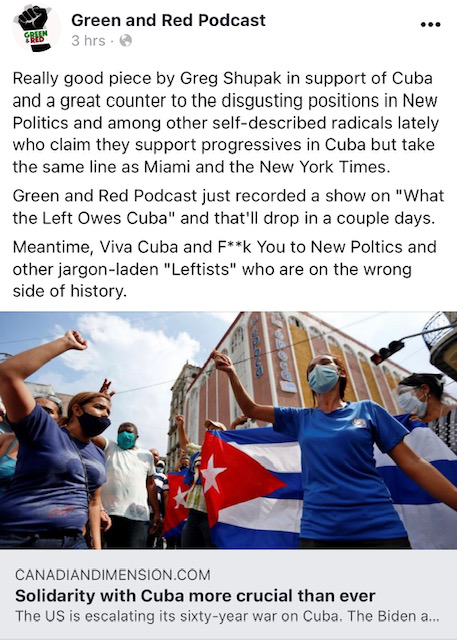
 We welcome the opportunity to clarify misrepresentations of New Politics’ editorial stance about Cuba and US imperialism. We write on behalf of the New Politics editorial board.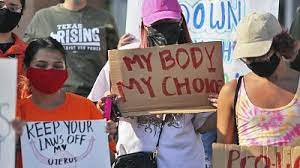
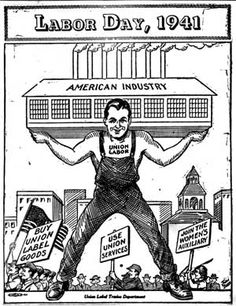
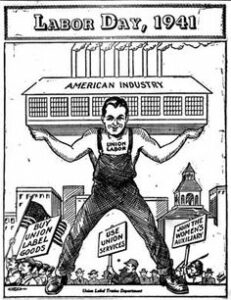 An Economic Policy Institute graph showing the relationship between union density and the concentration of wealth sends us an important message this Labor Day; however it does not, as one well-known writer argues,
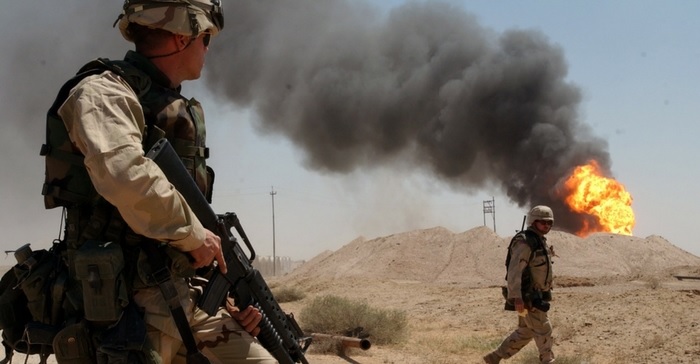
 The September 11th attacks were the first major event I can remember. I was in Grade Eight at the time. We were all sent home where the news played scenes of the carnage over and over again like some kind of Sadean merry-go-round. Even in Canada there was panic that we might be next, with the center of Ottawa locked down and our leaders struggling to one up each other in expressions of remorse and stern concern.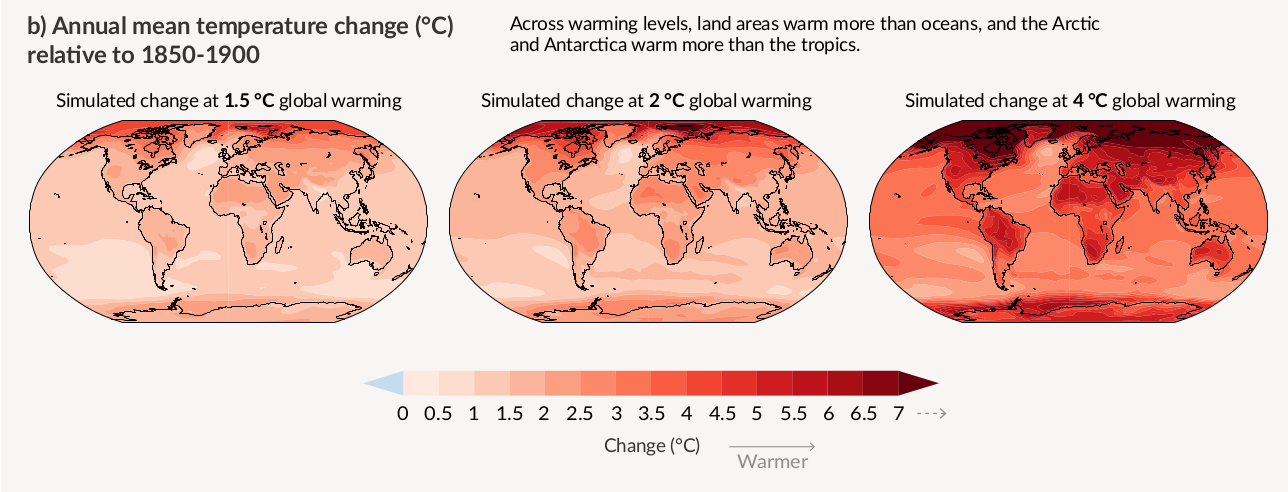


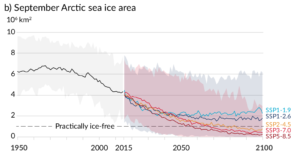
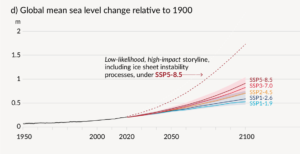
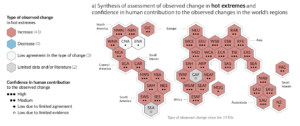
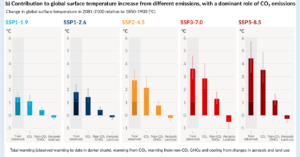
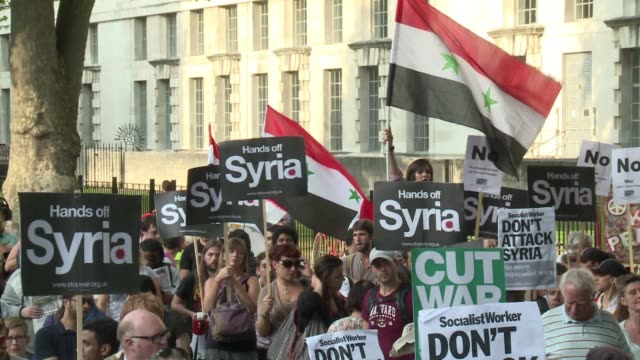
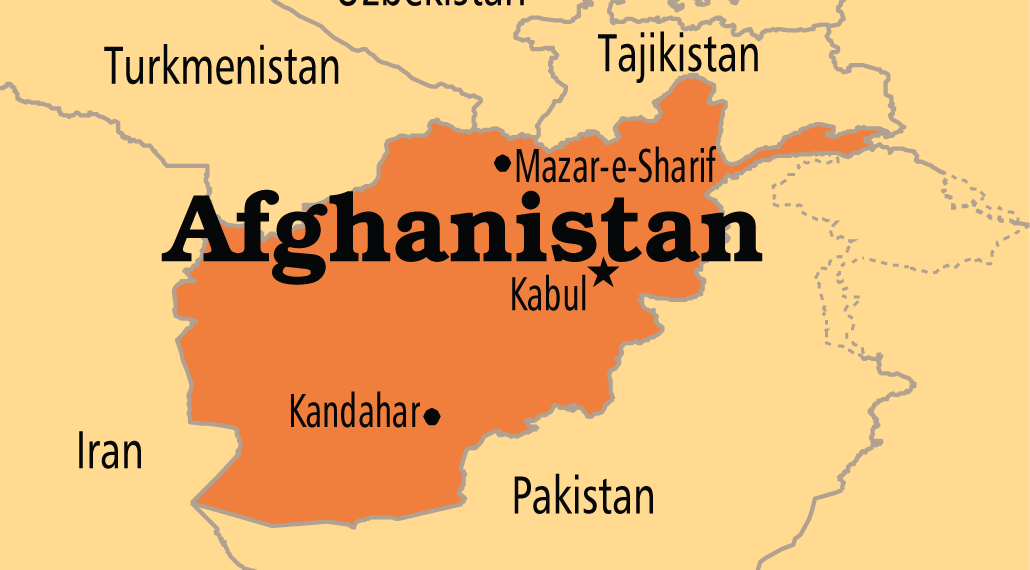
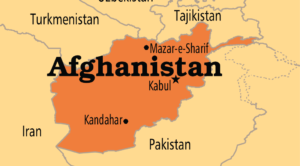 U.S. President Joe Biden invoked Afghanistan’s historical nickname as “graveyard of empires” in order to justify his decision to speed up the withdrawal of American troops from this poor country. He was thus asserting that attempts at securing control over Afghanistan are doomed to fail, while laying the blame on the Afghan government that had been established by the U.S. occupation itself. The tragic pictures of the Afghan government’s collapse along with its state and the panic that got hold of a big fraction of Afghan society, especially in urban areas and above all in the capital Kabul, led to reactions split between two opposite poles: while one pole blamed Biden for having misjudged the situation and having failed to do what should have been done to make sure that the Afghan pro-Western government carries on, the other pole rejoiced and celebrated the magnitude of the defeat suffered by U.S. designs, comparing what took place in Kabul these last days to what happened in Saigon, South Vietnam’s capital, when it was taken over by Communist forces in 1975, two years after the U.S. troops’ withdrawal. It is difficult to decide which of these two reactions is more short-sighted; they both ignore basic facts.
 [Stanley Aronowitz, who died at age 88 in mid August, was to the many on the left who knew and deeply respected him Gramsci’s quintessential organic intellectual. Articulate in prose and breathtaking as a speaker, he was an experienced trade union organizer, prolific author on working-class life, and an academic of the first rank who was himself, as a tenured sociologist at the City University of New York Graduate School, well aware of the limitations incurred by the odious and arbitrary divisions of the social sciences as well as the limitations of contract unionism and its eliding of the capacity for workers to control their own unions, let alone their workplaces.
 Four months ago, 200 academics from the United States, Britain, Europe and Israel published the “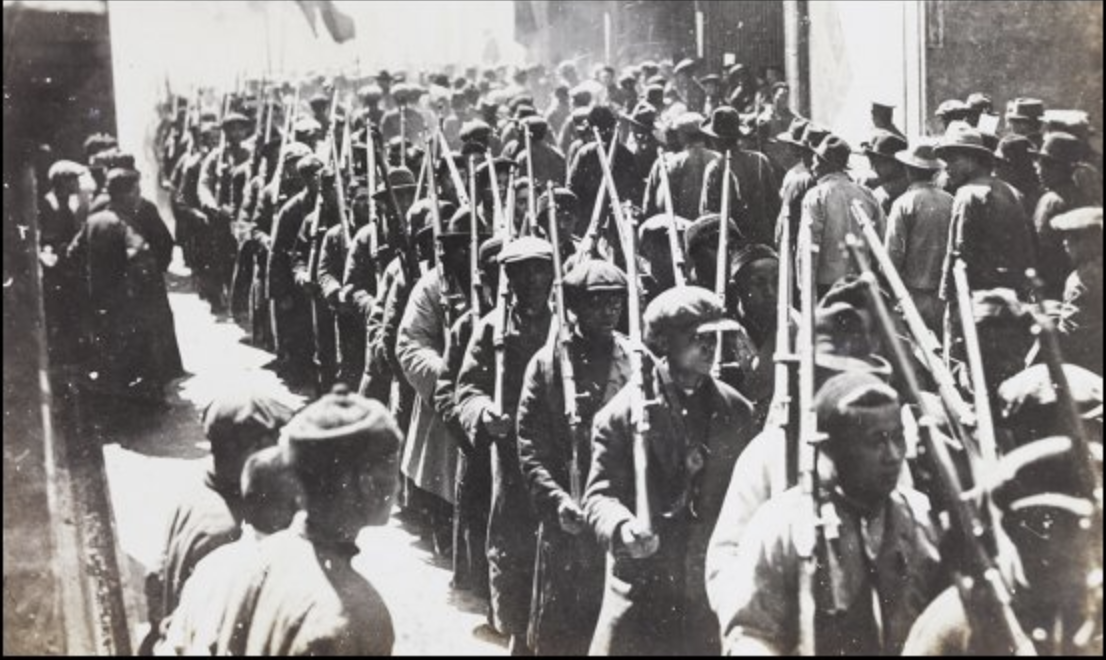
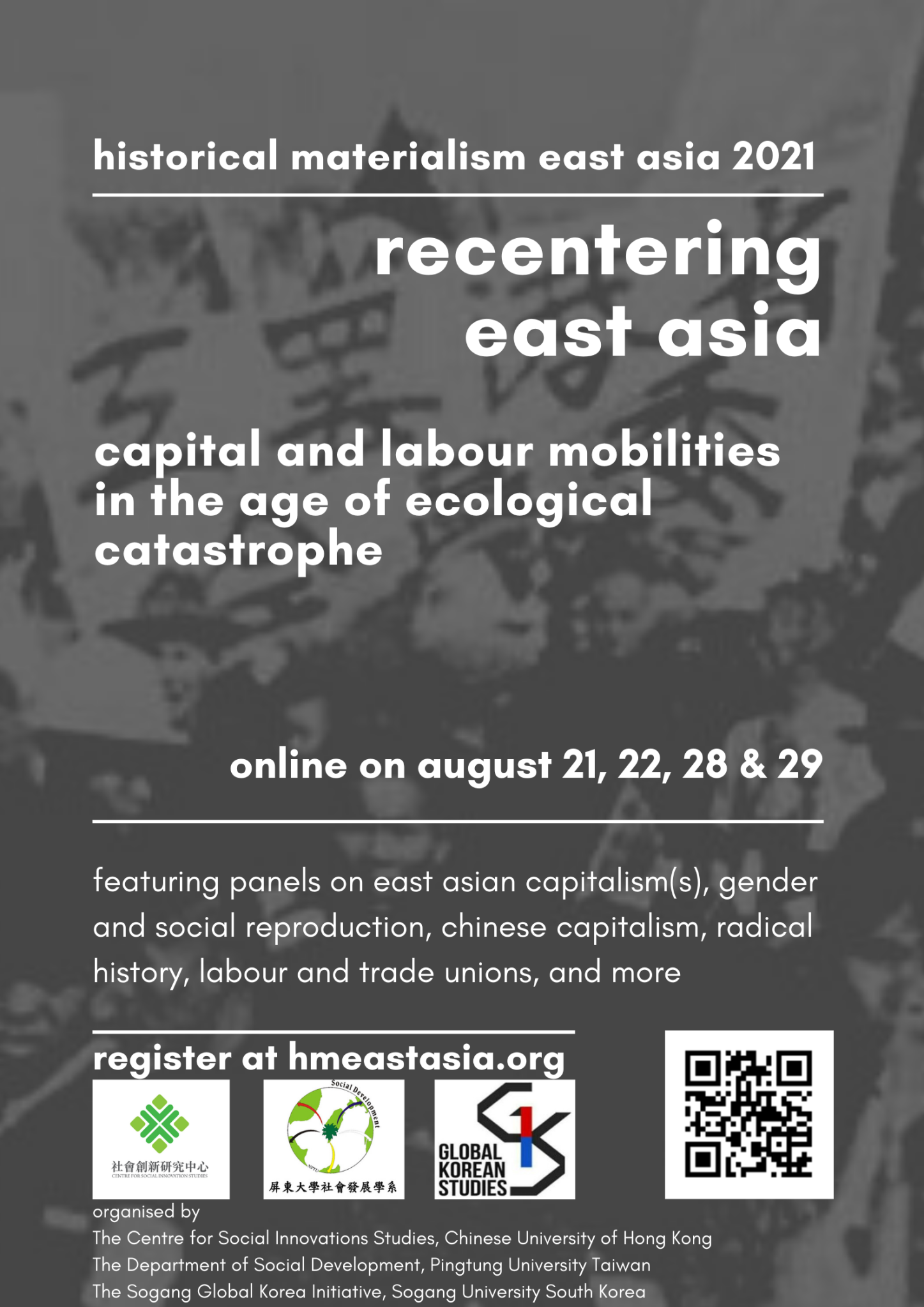
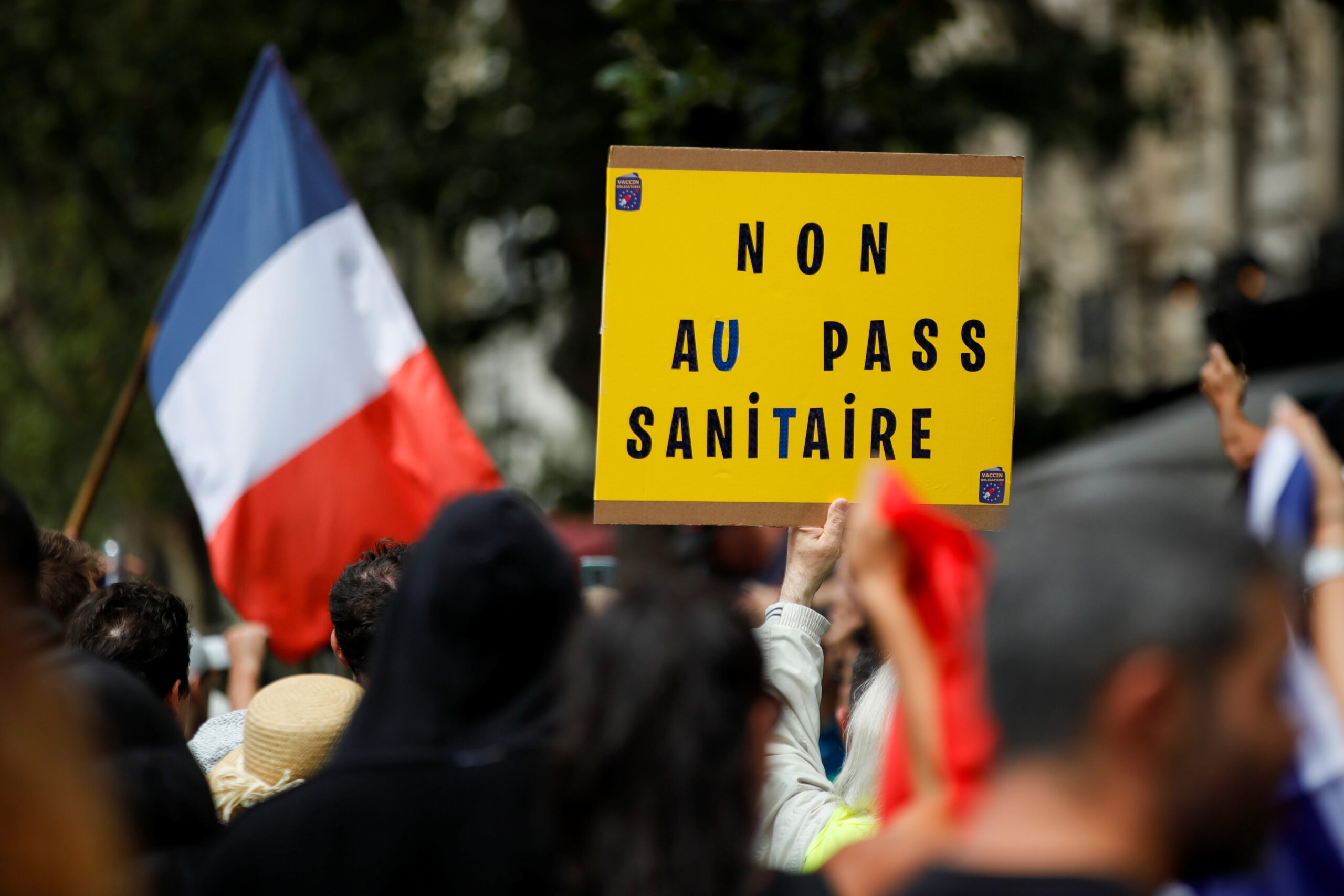
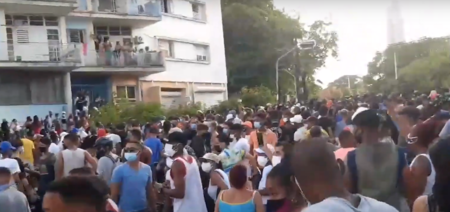
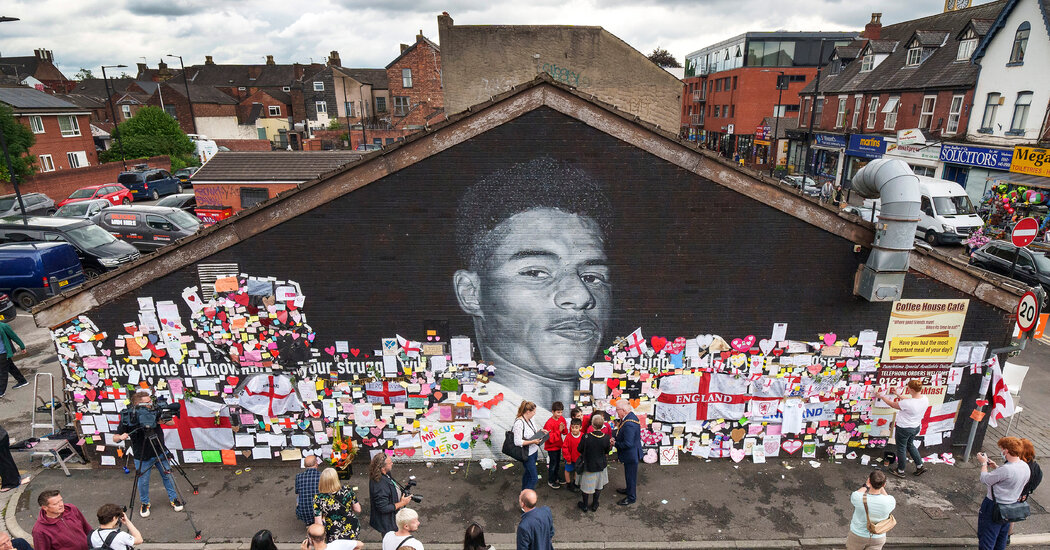
 July’s Euro 2020 international men’s soccer tournament was meant to end in glory for Britain’s Tories. The England team reached the final, and were poised to win their first major international trophy since 1966, to set off an outpouring of national euphoria – and help to secure the 2030 men’s World Cup for Britain.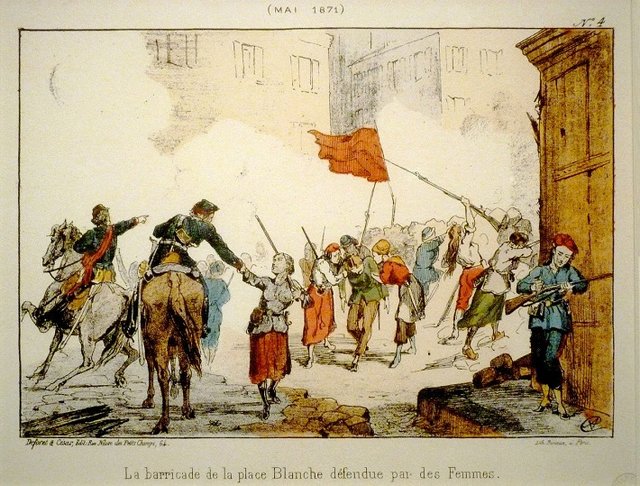
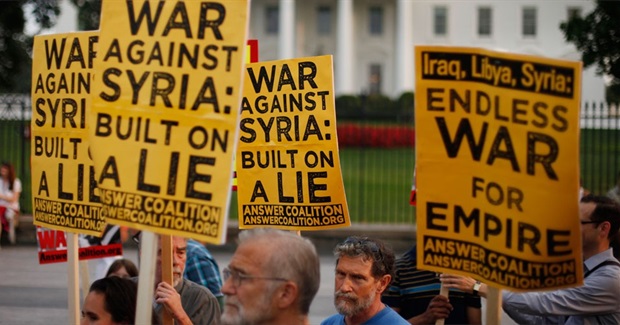
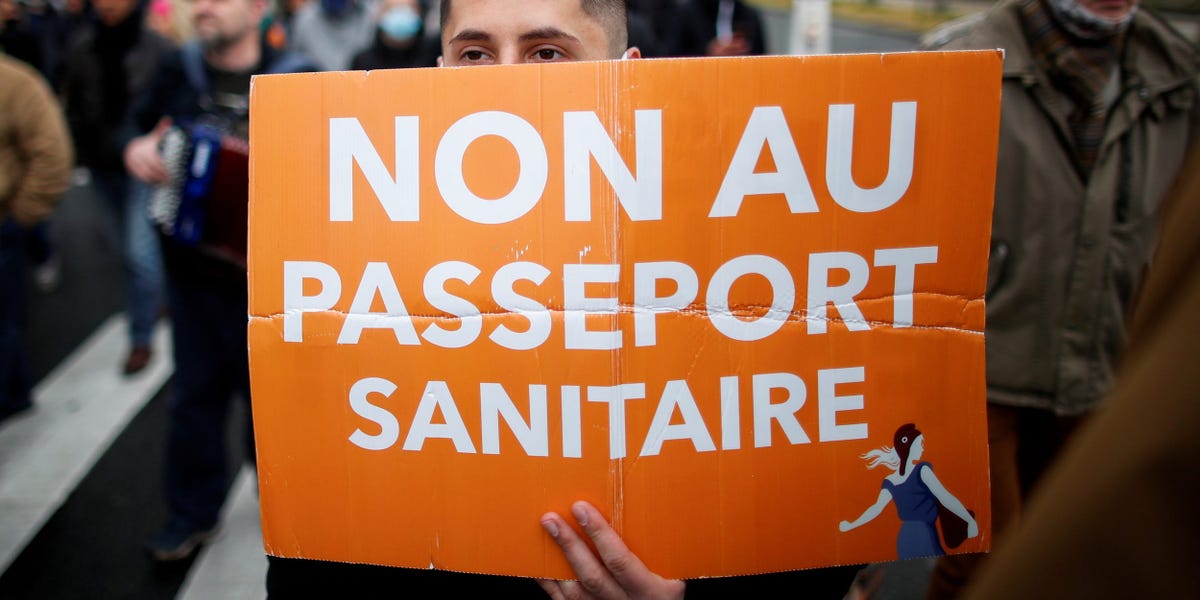
 At least 150,000 French people in cities large and small throughout the country demonstrated on July 24, an extremely large number given that July and August and months in which demonstrations never take place because most French people go on vacation. To get an overview of the size and scope watch this video of the demonstrations: click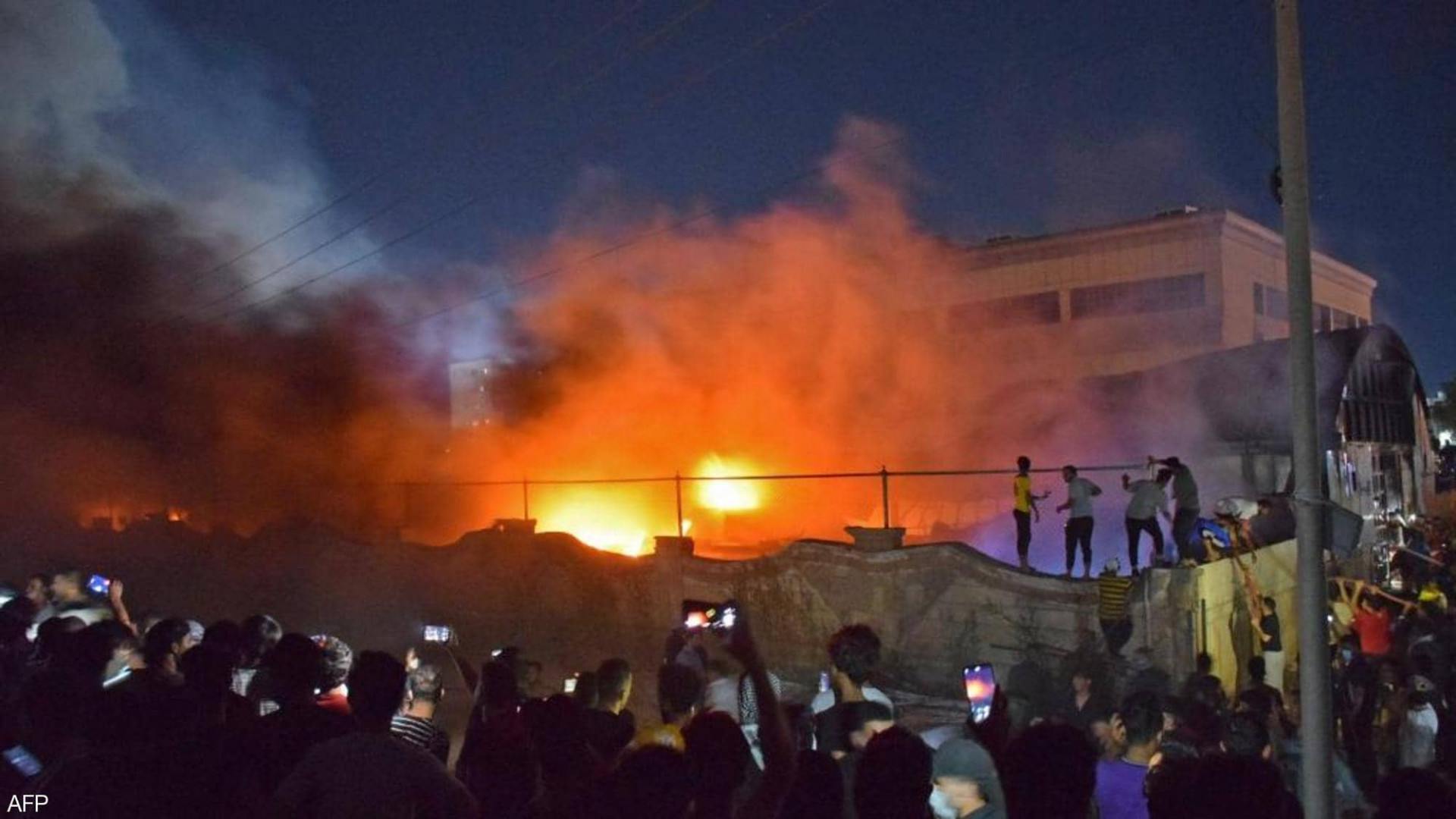
 Iran is experiencing another wave of mass protests and strikes as economic, social, political, environmental and health problems make it impossible for the large majority of the population to have the bare minimums needed to live.