The Democratic Socialists of America has decided that as its international policy, it should principally work to establish political ties to leftist parties that are “mass parties of the working class.” These are parties, like the Workers Party (PT) of Brazil with over 1.5 million members or the United Socialist Party of Venezuela (PSUV) which claims over 7 million members. One can see the attraction: these are parties with not only numbers but also resources, influence, and political power.
The discussion among many in the circles of the DSA International Committee and DSA’s National Political Committee suggests that only such so-called “mass parties” matter, while other organizations don’t merit the group’s attention because they are marginal, insignificant, or described as small sects. The entire emphasis of DSA’s international work is on political parties, with little consideration given to workers’ organizations or social movements.
There’s something very contradictory in this position that needs to be pointed out. The parties that DSA has focused on weren’t always mass parties. Often, they began as just the kind of plebeian networks or far left grouplets that DSA eschews as irrelevant. At the time of their birth, DSA would have ignored them and would have chosen to work with other parties that had a mass working class following. DSA would thus have missed the most important historic developments of the era.
To understand what this means, let’s look back at the history of the Brazilian PT and the Venezuelan PSUV and try to imagine how DSA’s international policy would have worked out in dealing with these parties at their beginnings, that is, had the mass party line been adopted decades ago. Let’s imagine a DSA between the 1970s or 1990s with today’s DSA politics trying to find its way around Latin America at that time.
The Brazilian Workers Party
The Brazilian Workers Party (PT)—before it became a party—began in the 1970s as a movement among metal workers in the ABC industrial region, a movement of workers striking to improve their conditions and their pay but also challenging the military dictatorship that then ruled the country. There was no party back then, neither a mini- nor a mass party, just a network of working-class activists. Then in 1980, inspired by the Solidarity movement then fighting the Communist Party government of Poland, the network decided to found the PT, a move that attracted a variety of other forces: activists from other labor unions, Christian base communities inspired by the theology of liberation, and some small Trotskyist groups.[1]
What would DSA then–with today’s DSA mass party orientation—have done in Brazil in the late 1970s and the early 1980s as this political effervescence was taking place, presuming that DSA had had a mass-party-of-the-working-class line? DSA would probably have oriented to the Brazilian Communist Party (PCB), which was the historic Marxist-Leninist party and which even in conditions of dictatorship had maintained a mass base. In that period the PCB, not the PT was the historic leftist mass party of the working class. Unwilling to relate to radical networks and smaller parties, DSA would have missed the opportunity to relate to one of the most exciting developments in working class politics at the time.
Venezuela’s United Socialist Party
Let’s now turn to Venezuela and take a quick look at the history of the left there. Venezuela was the one Latin American country in the late twentieth century with a mass socialist democratic party, Democratic Action (AD). AD worked closely with and had the backing of the Confederation of Venezuelan Workers (CTV) and of most of the country’s intellectuals. And it had figured out a formula to maintain its power and protect its politicians and its policies. AD had entered into a pact with the conservative Catholic Party (COPEI) to keep the two large parties regularly alternating in power. The Communist Party was small and effectively excluded from politics by the pact. That, it seems, would have made DSA’s choice pretty easy. AD was clearly the mass party of the working class.
But other things were happening. In the late 1970s, Hugo Chávez, an officer in the Venezuelan Army created a secret organization within the army called the Liberation Army of the People of Venezuela and then a few years later, he created another such secret organization, the Bolivarian Army 200. Chávez’s eclectic philosophy combined elements of the thought of Simón Bolívar, Ernesto Che Guevara, and other Latin American radicals. In February 1992, he attempted a coup, but it was thwarted. Given a few minutes to call upon the rebels to lay down their arms, he stated on television that he had failed “for now.”
Those words “for now” made him a national hero. When he was released from prison, he was still thinking of overthrowing the government, so he visited Cuba, establishing a relationship with Fidel Castro. Back at home Chávez drew close to the Radical Cause party (Causa R), a small split from the Communist Party with ties to the steelworker’s union. Francisco Arias Cárdenas, a fellow coup plotter and the leader of Causa R, helped Chávez found the Movement for the Fifth Republic (MVR) in 1997 to support Chávez’s campaign for the presidency. There was tremendous optimism and energy surrounding Chávez and great hopes at the beginning that his presidency might open the way for a socialist movement.[2]
If DSA had had the “mass party of the working class” line then, it would most probably have had to choose to work with Democratic Action (AD), the political party that had the loyalty of the country’s labor union leaders and of most of its left intellectuals. AD leader Andrés Pérez was during his presidency (1974-79) a charismatic popular leader friendly with Castro and opposed to the dictatorships of the Southern Cone. One might compare him to Chávez. Causa R, after all, a split from the Communist Party, was a small, marginal group; one might have even called it a Marxist sect.
While Chávez won the election with the help of MVR, even that organization never became the mass party of the working class. Chávez didn’t even establish the PSUV until 2007, giving the current DSA a party to relate to. But what was exciting about Chávez, a military caudillo coming to power, was not the mass party he created from above, but the turbulent, democratic period early in his presidency that encouraged leftists to organize social movements, labor union caucuses, and many small leftist parties. That movement in the early 1990s might have created a mass revolutionary party. In any case, DSA would have missed all of that if it had looked for the mass party of the working class.
Maybe so, you might say, but isn’t it more important that DSA relates to these mass parties today? Well, that raises a number of other questions having to do with these parties and their particular histories, to which we now turn.
Brazil: From Boom to Bust
In Latin America, the Workers Party and the United Socialist Party of Venezuela both came to power in the 1990s in a period of worldwide economic expansion that led to high commodity prices and brought relative prosperity. It was this period of capitalist expansion that made possible the Pink Tide governments in the region.
In Brazil the PT candidate Luiz Inácio “Lula” da Silva, a former steelworker, won the election in 2002, but his party controlled only 18.4 percent of the country’s highly-fragmented and extremely corrupt legislature, requiring it to block with several other political parties, mostly parties on the left, but sometimes also parties on the right. To win the support of those parties Lula found it necessary to regularly deliver bags of cash to some legislators, the famous scandal of the mensalão, the monthly payment.[3]
With that support in the legislature, Lula was thus able to establish a political program based on an alliance between high finance, big construction companies, the labor unions from which he himself had come, and the poor. The cross-class alliance expanded Brazilian capitalism, raised profits, increased taxes, and thus made it possible for Lula to expand social welfare programs, especially for poor women and children. The PT government’s social programs were accompanied by policies that also opened many doors that had been closed to its people of color. Lula’s support grew in the poorer states of Brazil’s northeast and one might say his base shifted from the organized workers movement to the politically weak rural poor.[4]
Everything was going along well for Lula’s program of expanding capitalism and social reforms until the recession of 2008. Suddenly the prices for Brazil’s oil, iron, and soybeans collapsed. Lula’s hand-picked successor, Dilma Rousseff,[5] who took office in 2011, found that, faced with the economic crisis, the management of the country’s capitalist system required austerity, that is, cuts in the social programs that the party had championed.[6] That led to the erosion of support for Rousseff. The Brazilian right now saw its opportunity to drive the PT from power.[7]
Conservative investigative judge Sergio Moro began an extensive corruption investigation, called Lava Jato (Car Wash), that largely focused on Brazil’s Petrobras Oil Company, and which revealed PT officials among others were involved in a variety of crimes, from extorsion and bribery to fraud and malfeasance. (Eventually Lava Jato and another investigation called Zelotes found that virtually every party and many, many of their politicians were also involved in criminal activities.) The PT’s alliance with conservative parties now proved to be disastrous as Rousseff’s rightwing vice-president Michel Temer turned against her. In the end, the right succeeded in removing Rousseff from the presidency in 2016 and imprisoning Lula in 2018. All of this made it possible for Brazil’s far right to take the initiative and elect the reactionary and dangerous Jair Bolsonaro who took office in 2019. After a year in prison, Lula was released and is now preparing to run for president in 2022 and hoping to bring the PT back to power.
While the PT is the country’s largest mass working class party, it is not the only one. As Lula and the Workers Party turned from the idealism and radicalism of its founding period to more authoritarian leadership and conservative policies, some on the party’s left resisted. In 2004 Lula expelled several PT leaders who opposed him. They subsequently formed the Party of Socialism and Liberation (PSOL), committed to the continuing fight for socialism.[8] While not as big as the PT, the PSOL is also mass party, with 200,000 members and nine members in congress.[9] The party has won city council seats and mayoral elections, as well as other positions. PSOL might support Lula in the coming election, though that is still being debated. DSA’s current leadership would like to create an alliance with the PT, despite its conservative policies and its history of corruption, and presumably would not work with PSOL, because it is less of a mass party.
Venezuela’s Crisis
Hugo Chávez served as president from 1999 to 2013, during which time he created the United Socialist Party of Venezuela (PSUV), pressuring the many small left parties to join together in his party, as he similarly took advantage of his initial support among workers and compelled the majority labor organizations to come together in the new labor federation, the National Union of Workers (UNT). The Venezuelan oil industry (PDVSA), by far the country’s most important industry, had already been nationalized back in 1976 by president Carlos Andrés Perez of Democratic Action. In 2002 Chávez’s majority in the National Assembly passed a new hydrocarbon law and entered into a struggle for control of the PDVSA bureaucracy that he eventually won by firing 12,000 employees and putting his own people in charge.
Chávez used the government to direct the country’s economy. He established some new state-owned industries and nationalized other industrial plants, so that by 2004 there were 95 state-owned enterprises producing 30 percent of GDP, though Venezuela remained fundamentally a capitalist country, with the majority of the economic enterprises in private hands. All of the multinational corporations—Chevron, Shell, Total, Repsol, Mitsubishi, General Motors, Nestle, Toyota, Procter & Gamble, Johnson & Johnson, Haliburton, Roche, Maersk, PepsiCo, Coca Cola and McDonald’s— continued to operate in Venezuela, and profited from extraordinary state subsidies through the allocation of foreign currency. On May 5, 2005 Chávez raised the slogan “towards twenty-first century socialism,” but nothing was being done to collectivize the economy as a whole and to put it under the democratic control of the country’s people—which is, after all, the meaning of socialism.
With oil prices high, PDVSA was quite profitable during the early years of Chávez’s presidency and he used that income to finance a variety of social programs. He established the Bolivarian Missions, social institutions and programs to fight poverty, distribute food, improve health, education, and wellbeing in general.[10] In exchange for Venezuelan oil, the Cuban government provided physicians, other health workers, and athletic trainers to help staff these programs. The Missions did a lot of good for many poor people, though they did not change the fundamental structures or property and social classes.
At the same time, the Venezuelan government and PDVSA bureaucracies created new opportunities for individuals to enrich themselves. Those Chavista bureaucrats who grew rich by creating their own companies to work with government firms came to be known as the Bolibourgeoisie. As long as the economy was doing well, just as in a country like Mexico, corruption could be tolerated, but a downturn would lead to intense struggles for the country’s wealth.
The 2008 recession threw the world economy into crisis and brought a fall in prices for Venezuela’s top commodities: petroleum (representing over 70 percent of export earnings), bauxite, aluminum, and steel. Food, clothing, all of the basic necessities in Venezuela became scarce and expensive. The situation was complicated in Venezuela by the death of Chávez in 2013, the charismatic figure who had held the left and everything else together. His successor, Nicolás Maduro, a working-class leftist, faced greater challenges and had less charm and skill than his predecessor. While he turned to China and other countries for assistance, nevertheless Venezuela’s economy continued to collapse.[11]
The rightwing forces that Chávez had repeatedly defeated in national elections, now supported Assemblyperon Juan Guaidó who has claimed since 2019 that he is the “interim president” of the country. He argues that he represents the last democratically-elected institution in Venezuela, the 2015 National Assembly.
As opposition grew both from the business class and the working class, Chavez’s government became more authoritarian. Maduro’s presidential election of 2018 and especially the legislative elections of 2020 are viewed by many as fraudulent. Meanwhile repression grew. As Amnesty International notes, “People expressing criticism of government policies – including political activists, journalists and health workers – were subjected to repressive measures including criminalization, unfair trials and arbitrary detention. There were reports of torture and other ill-treatment and enforced disappearance of those arbitrarily detained.” Out of a nation of 30.1 million, poverty and violence have led 5.5 million Venezuelans to flee the country, most going to Colombia, Ecuador, and Peru.
Today in Venezuela, what DSA would call “the mass party of the working class” is an utterly authoritarian and corrupt organization presiding over a national catastrophe involving both economic collapse and the COVID pandemic. On the other hand, while there is no other mass working class party, there are socialist groups, independent labor union organizations, and social movements that the U.S. left might work with.
The Problem of Left Politics in the Capitalist State
While some of what is discussed in this short article may come as news to some people in the American left, the degeneration of the PT in Brazil or of the PSUV in Venezuela have been widely discussed in those countries by journalists, by sociologists, by political scientists and historians across the political spectrum and by those in the far left as well as by members or former members of the PT and PSUV themselves.
What has happened to the PT in Brazil and the PSUV Venezuela, while both have been particularly dramatic and tragic, is representative of the kinds of problems that leftists have always faced when they work in electoral politics and particularly when they come to power. As leftist parties become involved in bourgeois politics—even when they do so in the striking ways they have in Latin America—they begin to find their place in the state political system, they form alliances with other political parties, they take responsibility for the budget in good times and in bad, they run the army and the police. Once in power, when they attempt to carry out meaningful reforms, they find it extremely difficult to escape the capitalist banks and corporations in their own countries and from the world capitalist economy that controls access to capital and to markets. And they often also face the threat of sanctions from the United States, European countries, and nations in other regions.
We as American radicals have a responsibility to oppose U.S. sanctions, U.S.-inspired coups, and U.S. military interventions. Ultimately, the frustration of socialist projects in Latin America can only be overcome by building regional alliances of socialist parties, so that several nations attempt to create socialist societies more or less at once. (The Foro de São Paulo is not such an international alliance.)[12] Recently left governments in Latin America have sometimes accepted aid from Russia or China because of U.S. sanctions, but those authoritarian capitalist states are also imperial powers with their own agendas and leftists have to be leery of their influence.
There is no doubt that the capitalist world economy’s booms and busts—in particular the 2008 crisis—rocked the nations of Latin America. And the United States government, that is U.S. imperialism, created enormous pressures on the Pink Tide governments, especially in Brazil and Venezuela. Those pressures led political leaders—at first wanting to preserve themselves in power so that they could continue their reform strategies—to become more authoritarian, to restrain and then repress opposition movements of the working class, and to adopt conservative policies of austerity. While we on the left had never supported Lula or Chávez as individuals, we did in the early days offer their governments our critical support, and we enthusiastically backed the labor and social movements that took advantage of the historic opening that the new governments provided. As time went on though, we became more critical of their governments and began to back the dissident currents that arose in the political, labor, and social movements that resisted turns toward authoritarianism and austerity, such as PSOL in Brazil and Marea Socialista in Venezuela. Of course, there are many other labor and social movement and political organizations that DSA could relate to.
We supported the left oppositions in these countries because we believe that it is not the left’s job to justify and apologize for leaders, parties, or governments that may call themselves socialist. Our job is to analyze the governments and parties and to support the struggles of workers, the poor, the indigenous, the people of color, women, and the LGBT communities. As socialists, we look forward to and support the building of genuine mass, democratic, socialist parties, and believe we should orient to their revolutionary currents. The key thing is not that the party is massive, but that it is genuinely fighting for working people and for a socialist transformation of the society.
Notes:
[1] Margaret E. Keck, The Workers Party and the Democratization of Brazil (New Haven: Yale University Press, 1992) describes all of this at great length and in detail. The excitement of the PT in its early days was also caught in such books as: Emir Sader and Ken Silberstein, Without Fear of Being Happy: Lula, the Workers Party, and Brazil (New York: Verso, 1991) amd Media Benjamin and Maisa Mendonça, Benedita da Silva: An Afro-Brazilian Woman’s Story of Politics and Love (Oakland: Food First Books, 1997).
[2] One can see such optimism in Gregory Wilpert, Changing Venezuela by Taking Power: The History and the Policies of the Chávez Government (New York: Verso, 2007).
[4] André Singer, Os sentidos do lulismo: Reforma gradual e pacto conservador (São Paulo: Compania das Letras, 2012), the most complete overview of Lula’s political system. See also: Wendy Hunter, The Transformation of the Workers Party of Brazil, 1989-2009 (Cambridge: Cambridge University Press, 2010).
[11] See: Simón Rodriguez Porras and Miguel Sorans, “Why Did Chavismo Fail? A balance sheet from the left opposition,” (Buenos Aires: Centro de Estudios Humanos y Sociales, 2018) provides a detailed account of the character of the Chávez and Maduro government.
Ten years have passed since the outbreak of the Arab Spring in 2011. At the time, hopeful, young Arab activists such as myself had grown up only knowing political failure. We were raised watching the United States bomb Baghdad and Fallujah, and Israel doing the same in Gaza. We were raised to the images of Abu Ghraib and the helplessness of our Arab governments – without exception – that so often were too fearful to even say a word. When the uprisings broke out, the feeling of empowerment was one that we had never experienced. We looked forward to reaching out to Western activists and sharing our expertise and stories. When we found them, we were often elated at how much skepticism and opposition to their own governments they displayed. It wasn’t only us!
But one uprising took longer than the others: Syria. And as Syria dragged on, it is there that even those of us who were non-Syrian, gradually learned that much of the solidarity some of us had received – notably on such issues as opposition to the Iraq war or solidarity with Palestine – was conditioned on far more considerations than simple internationalist solidarity. Furthermore, the skeptical analyses we heard around us in the West on the role of Western governments had taken on a life of its own. The analyses were often polar opposite to, and completely divorced from, our own ‘anti-imperialist’ emergent media and activist movements. Our understandings of the role of the West, too, were completely disconnected from one another, and in time, it became clear that many of our Western counterparts – those we laughed naively with and believed were interested in what we had to say, by virtue of our conversations on Iraq and Palestine – were not actually interested in hearing our experiences, or even our analyses of their governments’ roles that may have differed from their own. They knew best. And with time, our confusion and ambiguity at their positions was replaced with clear-eyed clarity. It is in Syria that we were introduced to a new breed we had not known before: the teenage anti-imperialist.
But before we proceed to exploring the concept, let us a decade on from the Syrian uprising bring your attention to a few facts that you perhaps never knew.
To the knowledge of this author, no government in the history of war has used as much airpower inside its borders, including against residential centres, for as long, sustained, and uninterrupted a duration as the Assad regime.
The Western-backed Iraqi military – a product of the US-led 2003 invasion of Iraq – has fought on the side of the Assad regime, and contributed the most ground combatants deployed at a single point in time than any other foreign country to its effort.
The US supported Iranian-backed militias on Syrian territory in an area in which the Syrian regime was accused of using chemical weapons.
These are only a few examples of some largely-unknown facts on Syria. And here the question arises: why are so many Western readers unaware of such facts? I can hear one response: “We are accustomed to often shallow coverage from mainstream media”. True – but considering the huge proliferation of skeptical alternative media in the past few years, can this alone explain the sheer gap in ‘translation’, and the huge disparity of the knowledge of such realities between Arab and Western audiences?
Enter the teenage anti-imperialist.
Introducing the ‘teenage anti-imperialist’ (not the ‘anti-imperialist teenager’)
To start with, the teenage anti-imperialist is not a teenager. Indeed, many politicisied adolescents are amongst the most willing to partake in risks to bring about radical change, their sense of right, justice, and their passion are often a crucial part of activist and advocacy movements. They break from the mould that often surrounds them through their engagement with issues and causes that may be beyond the narrow concerns immediately directly affecting their lives. And while the analyses of young anti-imperialists in their teenage years may often have proved, with time, to have been revealed to simplistic or binary in certain ways – it is the strength of their unbridled empathy, ferocity of purpose, and stronger sense of justice – all features which are often less diluted by the passing of the years – that is crucial for their later development.
In other words, this piece is not about the ‘anti-imperialist teenager’ – who has taken an avid interest in imperialism(s) and its histories and wants to play a part in making a better world. It is about older, often professional, ‘anti-imperialists’ whose analysis is marked so heavily by the most self-centered and reactive (and reactionary) dynamics which are often associated in popular culture with teenage rebellion (though again, such a popular conception may be unfair as such features are by all means not unanimous amongst all adolescents). They possess the same identity conflict that informs a counter-conformity and contrarianism in their analyses and narratives. Yet while teenage rebellions are often time-limited – a short stage in life – and indeed, while not all teenage rebellions are actually superficial, petulant, or contrarian (many teenage rebellions are, in fact, righteous in nature and crucial for their character development) – the ‘teenage anti-imperialist’ in our formulation is the anti-imperialist who has adopted the most superficial and morally-vacuous aspects of ‘rebellion’ – which subsequently is not geographically restricted to their parents at home or time-restricted to the period of adolescence – but rooted in a same superficial, contrarian, identity politics that they then project over faraway conflicts.
So, to commence. The definition of imperialism, for the teenage anti-imperialist, has little to do with the actual policies of the state in question which is accused of being imperialist. It has to do effectively with the state’s racial or ethnic identity, and how it relates to their own. So long as the state in question is not Western – i.e. is not the ‘parent’ they are rebelling against – it could do almost anything. It matters little to the teenage anti-imperialist that Russia is the prime sponsor of the Western far-right, or that it is the prime source of Islamophobia around the world today through its various diversified media channels. It matters little that the Assad regime – which the teenage anti-imperialist says is a victim – declares explicitly (in Assad’s own words) that “terrorism will export itself to Europe through illegal migration”. It matters little that such a regime supported Donald Trump’s racist Muslim refugee ban (at the time when the regime was bouyed by Trump’s initial election victory and his condemnation of the rebels), or that it hosts and welcomes Western far-right delegations in its capital. It matters little that it is a regime that constitutes the single biggest trojan horse of Islamophobia and the War on Terror that the region has perhaps ever seen. And it is of no consequence that that regime is a native client, in every sense of the word: politically, ideologically (this, crucially, crossed geopolitical divides), and militarily – of imperialism, simply because at this particular moment in time, the regime is rhetorically condemned by the (Western) establishment ‘parent’.
Returning to some of the examples offered above, it may surprise readers to know that during the Syrian conflict the Iraqi military – the one installed by the 2003 US-led war which promised democracy – has fought in Syria on the same side as the Assad regime. In 2016, Iraqi Shia militias known as the Popular Mobilisation Units (PMUs) – who have been heavily relied upon by both Western states and Iran as some of the most effective Iraqi fighters in the campaign against ISIS – became legally part of the Iraqi military. Crucially however, the Iraqi PMUs did not only fight in Iraq – they also fought on the side of the Assad regime in Syria, from as early as 2013. A large bulk of these groups are a hybrid: both part of the Iraqi state but also extraterritorially loyal to Iran, with a long record of sectarian abuses in both Iraq and Syria. Over the years, human rights groups called on both Western governments and Iran to cease arms supplies to the PMUs, but to no avail. And although various Western governments were fully aware of the PMUs fighting for the Assad regime in Syria, they placed no conditionalities on Iraq to require their withdrawal from the other side of the border in order to receive support against ISIS – creating the somewhat ironic situation whereby the ‘US-backed’ Syrian opposition would face Iraqi military units armed with US weaponry and even tanks on the Syrian side of the border.
It may surprise readers even more, that the US-led coalition have also provided military support to Iranian-backed militias, including Hezbollah and the PMUs, inside Syria – most notably to capture the iconic city of Palmyra from ISIS (other reports have also taken place in Deir Ezzor). Later, the US instructed a small number of opposition groups that the Pentagon supported exclusively against ISIS (they were not permitted to fight the Assad regime) in the eastern Syrian desert, to surrender territories to such Iranian-backed militias encroaching into the area. When one such faction refused and clashed with an Iranian-backed militia in the desert, the US authorised Assad’s airforce to bomb the opposition faction that it supported within a US-controlled zone. The faction was eventually expelled from the Pentagon’s anti-ISIS coalition and allegedly threatened with US airstrikes.
The teenage anti-imperialist has never reported these realities. Such realities, not least that the US supported foreign Iranian-backed militias on Syrian territory – militias with a track record of abuse, both within Syria and elsewhere – should ordinarily be a matter of genuine anti-imperialist outrage. It is something that will surely, albeit belatedly, make it into the history books. But the reality was in fact that for the anti-imperialist, all these events weren’t important: simply-speaking, they didn’t make the anti-imperialist movie reel cut. In fact, even US officials who took to repeatedlylavishing praise on the Iraqi militias, who were simultaneously fighting for Assad in Syria (and despite their link with Qassem Soleimani – the same Soleimani that Donald Trump later killed) – even that didn’t make the cut. For the teenage anti-imperialist instead distracts their audience with other fictions – that the US was really supporting Sunni jihadists, the likes of ISIS and Jabhat al-Nusra. Instead, it ended up mostly being the much-maligned ‘liberal’ human rights organisations who reported these realities.
The question here is obvious: why would proclaimed ‘anti-imperialists’ ignore such a clear example of US complicity in human rights abuses? The answer is simple: it was too multilayered. The teenage anti-imperialist performs to a market, and requires a product that is graspable, catchy, and quickly disseminable to their consumers. The case of the Iraqi militias didn’t quite fit the “good guy [Iran], bad guy [US]” movie narrative that they have spent years promoting- and which more importantly, they seek to quickly sell. Nuance doesn’t make for convenient mass dissemination, and the consumerist and hobbyist politics of the solidarity industry requires easily-digestible narratives.
In other words, the intrinsically superficial nature of this ‘ideology’ – to the extent that it could be called one – lends itself to a superficial methodology in practice as well: one that fails to accurately relay the true policy of even Western imperialism – never mind those of other imperialisms in which the teenage anti-imperialist is not interested. So long as ‘death to America’ slogans continued to be nominally lifted every now and again in Tehran, it mattered little that Iraqi civilians remain stranded on the shores of the Euphrates, five years on from a ‘liberation’ brought to them by the same militias which refused to let them return home. Militias that received simultaneous US and Iranian backing. To put it simply, US crimes are dropped by the teenage anti-imperialist if they also potentially implicate US ‘adversaries’ that ruin the script of the theatrical exhibition on sale.
This was the degree of the superficial immaturity of the teenage anti-imperialist’s hobbyist politics. Far from a thorn in the establishment parent’s side, nothing made the establishment parent more content than its teenage offspring pointing crowds to alternative realities and caricature fictions. While the teenage anti-imperialist spends most of their time obfuscating whether chemical attacks really happened, or whether Syrians in anti-government areas gassed themselves dozens if not hundreds of times, the teenage anti-imperialist fails to notice when the Obama Administration appeared to dismiss continued chemical attacks when stating that chlorine was not “historically” a chemical weapon. Or when the Obama Administration blockaded Freedom of Information requests by journalists into the supposed surrender of Syria’s chemical stockpile, years before the use of sarin gas indeed reemerged. Indeed, the teenage anti-imperialist did not even notice when the US-led Coalition supported a regime offensive in Palmyra within months after a regime chemical attack was reported in the same area.
For many of those who have closely followed many long years of detailed reporting from the ground, it is often surprising that the notion that US policy promoted the survival of the Assad regime is a minority understanding in so many Western – especially activist – spheres, despite being the norm within the corresponding Arab circles. Instead, the main promoted narratives in Western circles have been that the US has been engaged in a ‘regime change’ operation in the country. This was, of course, a narrative that completely excludes the millions of Syrians who demanded revolution – or ‘regime change’ for those not quite as worthy of the concept as their Western counterparts – as narrativial inconveniences and analytical irrelevancies. Millions whom none other than Bashar Al-Assad himself once acknowledged in a 2014 speech, declaring: “tens of thousands of Syrians have carried up arms against the state, and millions of Syrians are harbouring terrorists”. Thus making his defenders who denied the existence of popular opposition against him, somewhat more defensive of Assad than Assad himself. Alternatively, some may admit that there were millions who called for revolution – but they were nonetheless proxies of Western interests.
Contrarian continuity
The teenage anti-imperialist is reactionary in both a superficial and momentary sense: superficial in that they are less interested in multilayered analyses than single-dimensional ones – through which they can rage against the hypocrisy of the establishment parent in the easiest, least time-consuming, and most marketable ways. Momentary, in that as long as there is a Western condemnation of a regime, it matters little whether the now suddenly-transformed ‘anti-imperialist’ regime was until yesterday collaborating with, and serving the interests of, the same imperialist powers. Nor does it matter how we got here in the first place. It is both those core characteristics which make the teenage anti-imperialist vulnerable to an often intractable web of contradictions. As though simply taking the long way round, these contradictions – in a perverse sort of irony – leads them to in fact unwittingly possess much of the same policy as the establishment parent. This could be perhaps described as a ‘contrarian continuity’ – a somewhat surreal set of contradictions which reduces the teenage anti-imperialist’s prescriptions to mere 360° reflections of those of the establishment parent they believed themselves to be opposing.
To offer some examples of such contrarian continuity, these could include the teenage anti-imperialist angrily demanding that the United States refuses to engage in regime change, when the United States has in fact for years been telling its ‘allies’ that its policy is not to bring about regime change. It could be proclaiming for years that the foremost problem in Syria are religious extremists, an understanding which has long been identical to that of US officials. It could be alleging that there are no moderate alternatives to the regime, when US officials had already claimed this years beforehand. It could be celebrating the calling off of a punitive strike following a chemical weapon, when the strike was called off as part of a deal proposed by Israel. It could be calling on regional states not to arm rebels, when US officials themselves had done so long before them. Indeed, when one puts the statements of some “anti-war” figures and teenage anti-imperialists side by side with those of US officials over the conflict, they would often be hard-pressed to distinguish them.
The reason for the contrarian continuity is that the teenage anti-imperialist in general doesn’t substantively care about imperialist policy: they care about imperialist posture. This is precisely why the teenage anti-imperialist can condemn a good posture while ignoring a bad policy, and why they can unknowingly align with a bad policy because it is under a well-disguised contradicting posture. The teenage anti-imperialist does not question that the policy may not in fact be identical to the posture – and may even be the opposite of it. This is because the teenage anti-imperialist believes that as militaristic imperialists, the Western government’s adversarial posture will never hide a more calculated or less adversarial policy in its relations with an abusive regime. The Western government is all powerful, and it does not need to hide less militaristic motives. It can disguise militarism underneath the surface with a government that it is not hostile to above the surface, but it cannot do the opposite. When the adversarialism rises to the surface, there is no questioning of its implications. This of course, again, is a juvenile understanding of politics, and ignores the role of political legitimation that is required by the Western power.
To put it simply, the teenage anti-imperialist fundamentally misreads imperialist policy. The exhibitionist nature of their act means that they expend much energy mired in the surface level, reacting negatively to basic and expected headlines that are widely available to their target audience – that a Western government, say, distances itself from an authoritarian ‘third-world’ regime. The teenage anti-imperialist, indeed in an archetypically adolescent manner, reacts as if this is a surprise or somehow unexpected. They cannot calmly accept that such condemnation in and of itself does not necessarily mean that the condemner is moral simply without taking into account other considerations (for instance, the Western government’s simultaneous support of other dictatorships). They are unable to consider that there may be other reasons for such condemnation beyond the possible unfair demonisation of a political opponent (which is only one of many possibilities – others include political pressure from various constituencies, the PR need to cater to public opinion and appear as pro-democracy, etc.) – as was indeed the case with the upper echelons of various Arab Spring regimes that were cut loose by the West despite having enjoyed good and collaborative relations with them.
They are outraged that the Western government postures as moral by condemning another government that is immoral, and they want to show that they are angrier than anyone else about it – and they do this in the most ostentatious, exaggerated manner possible. Their solution is to hit back at ‘the opposite’ – for instance in this case, to target the opposition to the dictatorship with which the Western government, again, was naturally expected to have affiliated itself with. This is where the counter-damage has to be done. Meanwhile, the condemned regime is exonerated as innocent, simply for being condemned – as if two ‘bad’ parties cannot be adversarial to one another. The teenage anti-imperialist does not seriously or objectively examine whether there is a serious basis for such condemnations originating from the natives over there; even where some half-hearted questions are posed to give the pretense of homework, their mind is already made up in advance.
Furthermore, a dominant presumption is that the value of Western public opinion counts for nothing in informing their governments’ decision-making on foreign policy – often citing the failure of mass anti-war protests in the UK to stop the Blair Government’s invasion of Iraq. Yet in 2013, the UK parliament did vote against an airstrike against the Assad regime in the basis of a lack of popular support following the experience of Iraq – while the Obama administration repeatedly cited public opinion in the aftermath Iraq to rebut criticisms by critics of his Administration’s lack of a genuine commitment to remove Assad. Yet this did not mean that the population was ‘anti-war’ – as indeed was seen in the opposite UK vote in 2014 to intervene against ISIS, with significant popular support. In other words, a bulk of the British public were aware that Bush and Blair’s invasion of Iraq was a mistake (though not all, and there remained many who supported the British action out of a sense of patriotism), and the anti-war movement played a part in conveying the realities of the occupation to Western audiences. Yet even where the public may have become more opposed to ‘regime change’ adventures, this did not necessarily mean that they were also opposed to the War on Terror more widely.
Syria was the victim of a false conflation of the War on Terror with ‘regime change’ – based on the experience of Iraq – when the War on Terror, even under the influence of the neoconservatives within the Bush Administration – continued to overwhelmingly support preservation of regional regimes, not regime-change, as a necessary cornerstone of the War on Terror. Iraq was an exceptional ‘hybrid’ within the War on Terror – a combination of both ‘regime change’ and ‘targeting Islamists’ – a regime – to be clear, a fascist one – that had exhibited outright hostility to (and went to war with) the US. The Iraqi regime’s refusal to withdraw from Kuwait and choose a military confrontation with the United States stood in marked contrast with the Syrian regime’s swift withdrawal from Lebanon following pressure from the Bush Administration in 2005, or the Iranian Government’s support of the US-led invasion of Afghanistan following the 9/11 attacks.
The market of solidarity politics
The teenage anti-imperialist’s politics is about themselves. It has little to do with internationalism or solidarity, and much to do with how the teenage anti-imperialist can posture to domestic audiences. It only recognises their unit – the West, the parent they are ashamed of – but which, in fact, often quietly carries out much of their preferences. No other unit exists. “My parents are the worst in the world”, the teenage anti-imperialist repeats. On the surface, this statement is supposed to endear them to us natives, because we have indeed been victims of their parents. But we have been victims of other bad parents too. It is the epitome of self-centeredness to deny that there coul be others who are “bad parents”, as if there is a positive racialism and a negative one. As if there is no agency for good or for bad beyond the all-powerful Western establishment. (Except, of course, where some tenuous link is developed – for instance by the West ‘supporting rebel jihadists’. )
Yet here’s the thing: the teenage anti-imperialist also doesn’t really care much if the West supports an authoritarian Arab regime or not. It cares if it does so loudly. This is the key. The level of analysis has to remain within a shallow surface-level, depth – because it is this surface-level analysis that reaches the domestic market of prospective solidarity politics consumers. It is the loud statements of how the US thinks that Assad is bad and should resign that reaches the market, not the plethora of small-print statements that distinguish that while the US wants Assad to resign, it does not want him to fall or “go boom”. That distinguishes that while the US supports the opposition, it does not support a military victory by the opposition. That distinguishes between a transition from Assad, and a transition from the whole set of security apparatuses that underpins the Assad regime. Who has the time to decipher this, when Western mainstream media coverage continues to be so superficial?
Remember, for many – even those who are well-intentioned – solidarity politics can often be hobbyist in nature simply due to the lack of time available to devote to such issues. Of course, a genuine alternative media undertakes this task. But the alternative media of the teenage anti-imperialist is entirely self-interested, and is entirely not interested in deciphering what exists between the lines; it is interested in performing in reaction to what has been said loudly and what audiences have already heard. The teenage anti-imperialist adds their own embellishments, sure: but the starting point which defines the nature of such embellishments is what the establishment parent has originally and loudly said. This is the common ground that the performing teenage anti-imperialist has with their audience, and on which they build. What will be more easy to disseminate, and more importantly, attractive to sell? What is both the easier and sexier narrative?
Take the case of Syria: is it easier to state that “the US wanted regime change in Syria as in Iraq” – or (start taking a breath) that “the US wants the preservation of regime institutions in a post-Assad transition and would ideally like Assad to be pushed out through an intra-regime ‘reshuffling’ coup, as took place in Egypt and Yemen; however, if such a transition could not happen due to the regime’s internal power centres being unwilling to sacrifice Assad, then the US may be willing to prefer the regime – even with Assad at its head – to the prospect of a rebel military victory, which takes not only Assad out but the entire regime”? You can breathe. What flows off the tongue easier? “Another Iraq” was a far more marketable analogy than “another Egypt” or “another Yemen”. Indeed, for many of their Western audiences, how many know what the latter two even mean?
Besides, for the consumer, isn’t it more attractive anyway to state that the US is supporting jihadists than to say that the US wants some form of regime preservation? ‘Jihadists’ capture the popular imagination better than dictatorships; there are many examples of the US supporting dictatorships, but how many times can we ‘reveal’ that our governments are supporting ‘jihadists’ – ‘jihadists’ that can hurt you, o Western consumer. You’re certainly paying attention now.
The fact that the former has been the dominant narrative in Western alternative media, while the latter has been dominant in Arab alternative media, shows how potent the sway that the War on Terror continues to hold within the subconsciouses of Western audiences – even those critical of Western foreign policy. It was far too easy, not helped by shallow mainstream media coverage, to pull off the Islamophobic conflation that Assad’s army of teenage anti-imperialists largely succeded in, by which a revolutionary with a beard was the same as an ISIS fighter with beard – because they were both Muslims and both had beards. This is where the teenage anti-imperialist baulks: revolution, what revolution? You didn’t have social injustice, inequality, or huge discrepancies in services, infrastructure, literacy, malnutrition, and even access to cheap water and medication, between favoured and unfavoured regions in Syria. You didn’t have construction workers, farmers, and labourers populating the ranks of the rebellion’s factions (well, at least they denied their existence rather than disparaged it like Obama). You didn’t have the upper class stick with the regime. None of that existed, the teenage anti-imperialist – unlikely to be able to name any of the country’s provinces (Damascus-excepted) – assures you. In Syria, they insist, the government ‘took care of you’.
Ultimately, the ‘revelation’ that the US supported ISIS proved far more of an ‘explosive’ one than that of the US supporting the survival of Assad (be it with nuance, as a second preference, or otherwise). This is despite the fact that Assad has killed far, far greater numbers than ISIS – and has likely broken the record for any government’s use of an airforce inside its borders for such a prolonged, intense, and continuous a campaign – a record made possible not only by Russian or Iranian support, but both specifically and more broadly by US policy – respectively through preventing third parties from providing anti-aircraft weaponry to the opposition, and through more generally opposing an military defeat of the Assad regime, notably through various operational red-lines on taking key areas, notably provincial capitals.
Crucially, the theatre on which the teenage anti-imperialist relies has to take as its starting point the loud and raucous exchange of statements. It’s important to make this distinction because more nuanced statements that may actually contradict this conflict theatre also exist, but these constitute signalling for specialists – certainly not the hobbyist and exhibitionist teenage anti-imperialist, looking for a quick fix. For every five rote statements of the US condemning Russia or repeating how bad the Assad regime is, there will be a statement or two from either side expressing that the US and Russia actually view the conflict “fundamentally very similarly”, and that neither side want a ‘regime change’. Small-print has no place however within the theatrical, exhibitionist endeavour.
I hate you, mom. You never give me the foreign policy I want (except all of those times)
The teenage anti-imperialist always chides the hypocrisy of their establishment parent figure: “You say you support democracy, but why are you supporting all of these dictatorships, mom?” When grassroots democratic movements then appear however, and the parent does indeed offer it nominal support – as expected by its social peers (namely in this analogy, an international community viewing the events in a 21st century world of social media and instant mass communication) – the teenage anti-imperialist is not satisfied by the parent cutting off relations with the now-former dictator friend. The teenage anti-imperialist has to remain relevant. “The people want the downfall of the regime? Sounds like regime change to me! I thought you stopped regime change after Iraq, mom!”
Eventually the protests metamorphose into an armed rebellion: “I thought you said you’re all for the War on Terror, so why are you supporting Muslim guys with beards taking up guns against the guy who says he’s secular? You’re such a hypocrite, mom!”
The parent starts bombing the Muslim guys with beards – in the case of Iraq, on the same side as other (but good Muslim guys with beards from the ‘rival’ sect) Muslim guys with beards, while maintaining a respectable public distance: “Why don’t you say something nice about Iran if you’re really serious about the [Sunni] jihadis, mom? Is it because they’re mullahs and have beards? You’re such an Islamophobe, mom!” Eventually, the parent actually does say quite a fewnice things about Iran’s guys in Iraq, but by this point the teenage anti-imperialist simply moves their demands back to demanding that something nice is said about the secular guy in Syria. Yet even there, even when the parent does eventually say something nice about the secular guy in Syria (after it procastinated enough until it became more socially acceptable to do so), the teenage anti-imperialist pretends not to hear it.
In Syria, the parent starts bombing the bad Muslim guys with beads tacitly on the same side as the ‘secular guy’ – who is actually mainly backed by the same aforementioned group of (good) Muslim guys with beards. Seeking to conduct what could be best described as a ‘separate-but-joint’ endeavour, the establishment parent again seeks a respectable public distance – quietly telling the Syrian secular guy “I’ll help, but keep it quiet”. Only for the Syrian secular guy to publicly welcome the help and embarrass them. The establishment parent attempts to ignore the beaming grin on the Syrian secular guy’s face and goes back to bombing their designated set of bad guys, while the Syrian secular guy goes to bomb his set (who he’s now freer to hit harder – hence the big smile). But the teenage anti-imperialist wants their establishment parent to be louder about it – which of course, would allow them to then condemn their establishment parent for supporting the dictator (who putting this show aside for a second, we all know is a pretty bad guy). Until then, the teenage anti-imperialist rails: “I don’t believe you’re actually bombing them. It’s all fake. If it’s real, why can’t you just say something nice about the secular guy? This is all a show. You’re such a [Sunni] jihadi supporter and hypocrite, mom!”
Equally, inaction is also used against the establishment parent, as such a poignant and over excitedly-premature case by the UK Stop the War Coalition shows – condemning the US ‘failure’ to support the Kurds in Kobane due to the Kurds being ‘dispensable’, presumably for their left-wing credentials (the US would eventually support the Kurds in Kobane and then expand Kurdish-controlled territory to include Arab-majority areas, providing them with almost a third of the country’s territory; it didn’t age well). The teenage anti-imperialist will also remind their audience how the US ‘betrayed’ the Shia uprising in the 1990s against the Saddam Hussein regime, when of course at the time the teenage anti-imperialist would have been pushing for precisely such a policy.
Alina Barbara López Hernández is a historian, university professor and a friend. Her contributions to La Joven Cuba, one of the most important blogs in the island have been enormous because of her intelligence, political culture, integrity, and courage in the face of a difficult political situation. – Samuel Farber
It hurts to see the social explosion in Cuba; however, it is not at all surprising. The social sciences may not be exact, but they are not blind. If those in power close their eyes to reality, we women and men of science must not do so. Our credibility and, more importantly, the lives of many people and the future of the country are at stake.
The Signals
In an interview for On Cuba a little over a year ago, Alex Fleites asked me if I believed that a new historical moment was incubating on the island and what would be its most visible signs. This was my answer:
Yes, I think. A crisis is not a crisis until social actors become aware of it; that’s when the subjective factor is decisive. It is a kind of malaise of the times, to put it in a way that some critics will find metaphorical. It is almost always related to the exhaustion of a model, note that I am not talking about a system (…).
In my opinion, there are two determining factors that have led to this moment of malaise. On the one hand, the inability of our rulers to channel a successful reform path. It has been more than three decades since the collapse of the socialist camp and two periods of attempted reforms, one in the 1990s and another since 2010, the latter including in a formal way and with a large amount of supporting documentation. On the other hand, there is the ability of citizens to submit this incapacity to public judgment, which is something new. The breakdown of a one-way information channel makes the warning signs visible. And those in power are well aware of this, but have been unable to respond adequately.
My view is that we are witnessing the definitive exhaustion of an economic and political model, that of bureaucratic socialism. Those in power are unable to move the nation forward with the old methods, but are unable to accept more participatory forms, with a greater weight of citizens in decision making.
Twelve months later, I published in La Joven Cuba the article “Cuba, the trees and the forest”, where I stated:
In Cuba, the objective conditions for a transformation have been mature for some time. There is no doubt that the nation has stopped moving forward: the economy has not been growing for years, the foreign debt is steadily increasing, as are poverty levels, and yet reforms have been inexplicably delayed. It is clear that those at the top can no longer administer and govern as before. But what about those below?
Without the maturation of the subjective factor, such a transformation was not possible. It required the will of the people to want to change, a civic energy that had been crushed by political, educational and media conditioning. “Learned helplessness” also exists in a socialist model in which the system controls to some extent how its citizens behave.
In the absence of the subjective factor, objective conditions alone would determine nothing. However, there are now very clear signs of its existence. Such signs have not been understood by the ideological apparatus, which wrongly reduces the manifestations of discontent to “a soft coup,” to “widespread manipulation,” or to “the creation of negative opinion matrices about the government”; without my categorical denial that this is also happening. The leadership of the country has not yet located itself in:
The new environment created by mass access to the Internet and social networks, which has deprived them of the absolute monopoly on information they had for decades and democratized its dissemination and generated the possibility of campaigns and denunciations of arbitrariness.
A state of permanent polemic, visible in the networks and fomented by the country’s own leadership as a result of the popular consultation to draft the new Constitution; perhaps they thought that once the consultation was over and our views were no longer needed, we would stop offering them, naive on their part, we now have the means and don’t need their calls.
The declaration of Cuba as a Socialist State under the Rule of Law, which made the prerogatives of Cuban men and women more visible and forced them to demand the freedoms guaranteed by the Constitution itself.
The existence of young generations, questioning in themselves, which found repercussions in the older generations, already tired of unfulfilled promises and delayed or interrupted reforms.
This coexistence of objective and subjective conditions for social transformation is completely new in the evolution of the Cuban socialist model. The question at stake now is not whether to change, but how to change (…)
At the point where Cuba finds itself today, there are two paths to social change: peaceful or violent. The first, to which I fully subscribe, would mean taking advantage of legal spaces – many of which would have to be created first – to press for economic, political, and legal changes within a national dialogue in which there is no discrimination based on political creed (…)
I warn that this is a very serious moment in this country. A potential for conflict is gathering in a scenario that is being very badly analyzed, not only by the government, but also, unfortunately, by intellectuals and social scientists whose theoretical training and ability to interpret social facts should separate them from a merely ideological statement (…).
They are our girls and boys, let’s dialogue with them and with the Cuban civil society that desires paths of change and peace. If the government chooses violent confrontation as a response, what we have already seen in Vedado can happen on a larger scale: a peaceful group of young people being assaulted with pepper spray; or what happened in Parque de la Libertad in Matanzas on Saturday night: a small group being assaulted by members of the State Security. It doesn’t matter that they prevent access to the Internet for a few hours. Everything is known, and everything is prosecuted.
My conscience does not allow me to remain silent.
The Result
The intellectuals who for months warned the government about the possibility of a social explosion of greater magnitude were called mercenaries. The party and the government apparatus negligently ignored the warning signs. This is the result of their attitude.
On Sunday, July 11, thousands of people demonstrated in many cities and towns on the island. Alongside those calling for change, better living conditions and political freedoms, as is common in any conflict of this scale, there were also those who sought only to commit crimes and vandalize, but this was the exception, not the rule.
President and First Secretary Miguel Díaz-Canel reacted to these events, unprecedented in Cuba’s recent history, with the following appeal: “The order to fight has been given. Let the revolutionaries take to the streets.”
In his first television appearance, he acknowledged that there were confused revolutionary people among the demonstrators. In his second appearance, on the 12th, he claimed that they were all counter-revolutionaries and mercenaries and that what happened was the result of a plan conceived from the outside. This is the narrative that has been sustained ever since. For him, the thousands of protesters are not part of the people. Big mistake.
The forces of law and order – from the Interior Ministry, the FAR, the Special Troops, the cadets from the military academies, and even the reserves – have violently suppressed them. Some groups of protesters have also been violent.
At least one person is known to have been killed and others injured, beaten, and detained. Some of them were released the next day. This has not been the case in other cases, such as that of Leonardo Romero, a young physics student at the University of Havana who was arrested two months ago for raising a banner saying “Socialism yes, repression no.” He was walking near the Capitol with a pre-college student of his. The boy tried to film the huge demonstration that had gathered there. He was viciously attacked. He was a minor and Leonardo defended him. Both were arrested
It is impossible to know exactly what happened, because the internet service in Cuba was cut off at 3 pm that day. We are a blind people, without the right to information and without the possibility to express ourselves. The official journalists show with their attitude that they are merely propagandists for the government. May all the shame of the profession fall on them.
Justified and sometimes incoherent statements have set the tone for the government. The Political Bureau met today in the presence of Raúl Castro, but nothing came of what was discussed. Apparently, there is no roadmap designed to resolve an internal situation like this explosion, which is presented to public opinion as a major international conspiracy that has emerged from the SOS Cuba label.
They have limited themselves to demanding the elimination of the US blockade. Not a single self-critical admission about delayed reforms and constitutional transgressions. Not even an invitation to dialogue. They believe, or want people to believe, that the inconvenient blackouts of recent weeks are responsible for the discomfort of citizens, without acknowledging the immense social debts accumulated over decades.
Bruno Rodríguez Parrilla, the Minister of Foreign Affairs, said in a conference with the accredited foreign press that in Cuba “nobody goes hungry.” This statement is further proof of the government’s level of disconnection with ordinary people. It is comparable only to Raúl’s criticism in his “Central Report” to the 8th Congress as outgoing Secretary General, of the “certain confusion” that some leading cadres had in attacking the “supposed inequality” that dollarized commercialization has created in Cuba.
The desperation of the people threw them into an explosion of mass protests in the middle of the worst moment of the pandemic on the island. One can expect to see a huge increase in contagion, both among the protesters and among the forces of law and order and in the rapid response groups gathered in workplaces to show support for the government.
Added to all this is the political opportunism of some exiled voices calling for a military solution for Cuba. They should know that affecting national sovereignty with the thesis of a humanitarian intervention is totally unacceptable to a large majority of these people, including many of those who are demonstrating today against the government.
Addressing the foreign press, Rodríguez Parrilla argued lightly that this was not the worst moment Cuba had ever experienced. It is true that in the 1990s we had a terrible crisis and maleconazo; however, I remind you that at that time we had a leader with enough vision to offer short-term change and a people with hope that, in the face of the fall of real socialism in Europe, the government would have enough intelligence to channel a rapid and continuous path of change.
None of these things exist today. But asking the Cuban government to listen to signals is, as we have seen, plowing in the sea.
Which way for U.S.-Cuban relations. And which way for Cuba?
This article was written for L’Anticapitaliste, the weekly newspaper of the New Anticapitalist Party (NPA) of France.
As thousands took to the streets in unprecedented national demonstrations in Cuba on July 11 demanding “freedom,” everyone in Cuba and the United States recognized that we are at a critical moment.
The U.S. government has long tried to regain control of Cuba, which from 1898 to 1959 it held in a neocolonial relationship. The Cuban Revolution of 1959 freed the island from U.S. control and nationalized U.S. oil companies and plantations, and its leader Fidel Castro proclaimed the country would establish socialism. In the early 1960s he aligned Cuba with the Soviet Union, which provided economic support, so Cuba became a central issue in the Cold War. The U.S. CIA organized an invasion of Cuba in 1961, and in 1962 Washington became involved in a struggle with the Soviet Union to remove missiles it had placed in Cuba, a conflict that threated worldwide nuclear war. While the missiles were removed, the U.S. tightened its embargo on trade with Cuba that over decades became more restrictive.
The fall of the Soviet Union led in 1991 to a deep economic crisis. Cuba’s government responded by encouraging Spanish investment in hotels, Canadian mining, French development of oil, and billions in other European ventures. Periodically Castro opened markets for Cuban farmers’ products, but failed to carry out a systematic agricultural reform to provide more food. While Cuba had excellent educational and health systems, the standard of living otherwise remained low and democratic rights non-existent. The COVID pandemic, however, led in 2021 to a breakdown of the health system, a lack of medications, and a deepening of the economic crisis. All of this led to July 11.
In the United States—though everyone said they supported “the Cuban people”—responses fell into three categories: Those who wanted to reestablish capitalism in Cuba and U.S. domination, those who supported the Cuban Communist government, and those who called for an end to the U.S. embargo but also for democracy in Cuba.
Former Republican President Donald Trump—no friend of protest in his own country—declared, “I stand with the Cuban people 100% in their fight for freedom.” The Cuban-American community in Miami and across the country organized demonstrations supporting the Cuban protests, with many calling for the overthrow of the Communist government. Some called for U.S. intervention.
At the other extreme, some Americans on the left rallied to support the Cuban Communist government against the protestors. The Democratic Socialist of America’s International Committee issued this statement: “DSA stands with the Cuban people and their Revolution [that is, with the government] in this moment of unrest. End the blockade.” DSA’s support for the Cuban government comes after its recent demonstration of support for Nicolás Maduro’s government in Venezuela.
President Joe Biden, who has been reasserting U.S. power, declared his support for the Cuban protests: “The United States calls on the Cuban regime to hear their people and serve their needs at this vital moment rather than enriching themselves.” He also called Cuba a “failed state” and Communism a “failed system,” but did not support calls for U.S. intervention. He did not, however, lift Trump’s enhancements to the embargo or permit remittances to Cuba.
Alexandra Ocasio Cortez, leading spokesperson for the American left, stated, “I outright reject the Biden administration’s defense of the embargo. It is never acceptable for us to use cruelty as a point of leverage against everyday people.” But she also condemned Cuban President Díaz-Canel for his repression, saying, “We stand in solidarity with the Cuban people and condemn the suppression of the media, speech and protest.” I agree with her.
New Politics publishes here the following statement from the group Comunistas, originally published in English by Socialist Worker (UK). Publication does not signify endorsement but represents our commitment to listen to and help make heard left voices from within Cuba.
This is a translation of an article published originally published in Spanish on the website comunistascuba.org. For the original go here. Thanks to Héctor Sierra for the translation.
Four days after the events and after a thorough analysis, Comunistas reveals its official position on the protests that took place in Cuba last Sunday, 11 July.
Almost simultaneously and with greater or lesser intensity, on Sunday 11 July, Cuba experienced a series of social outbreaks that encompassed at least six of the 14 provinces that make up the country. In the 62 years since the triumph of the revolution led by comandante Fidel Castro, Cuba had not faced a situation like this.
Although the first protests began peacefully, almost all the demonstrations ended up seeing violence, which was carried out by both sides. This series of simultaneous anti-government demonstrations is something never before seen in socialist Cuba. This must be taken into account to understand the events.
It should be remembered that in Cuba, the last massive protests date back to 5 August 1994, later known as Maleconazo, which was contained in a few hours with the appearance of Fidel Castro at the protests.
A demonstration of 200 people chanting anti-government slogans in a central location is something almost inconceivable in Cuban society. Yet, in Havana there has been a spontaneous march of at least 3,000 people.
The events in Havana
The protests—triggered by the demonstration that broke out in the city of San Antonio de los Baños, located no more than 100 kilometers from the capital—quickly spread to Havana. Shortly after 3pm local time, around 200 people took to La Fraternidad Park in the city centre, later moving in front of the Capitolio, the official Parliament building.
During the first hour of the protest, the police arrests were isolated, allowing, at least tacitly, the protesters to march, who moved to Máximo Gómez Park, located between the Spanish embassy and the headquarters of the National Bureau of the Union of Young Communists.
By that time, more than 500 people were peacefully concentrated in the park’s esplanade, while sporadic arrests continued.
Subsequently, a group of approximately 100 people, waving Cuban and 26 July Movement flags, with socialist slogans and in favor of the government, peacefully took the Máximo Gómez Park. At the same time, other groups linked to the Communist Party and the Union of Young Communists, together with Ministry of the Interior cadets, occupied the area.
Voluntarily, the protesters demobilized, and it seemed that at least in Havana, where they had originated, the protests had ended, almost without clashes. However, later it was known that the march turned into a long demonstration that ran through important streets of Havana.
As the protest march progressed, people joined it, and according to data issued by unofficial sources, between 2,000 and 3,000 protesters chanted slogans against the government.
Revolution
The protesters decided to go to the emblematic Revolution Square, where the headquarters of the presidency, the Central Committee of the Communist Party, the Ministry of the Interior, the Ministry of the Armed Forces, as well as the HQ of the main national newspapers are located. Near the Square, the demonstration was resisted by public order forces and pro-government civilian groups, leading to violent clashes, which resulted in an undetermined number of arrests and injuries.
At the same time, in the Calzada de 10 de Octubre, Havana, there were serious violent events, where two police cars were overturned.
Subsequently, videos of serious vandalism have been released, such as the stoning of a children’s hospital. The death of the civilian Diubis Laurencio Tejeda during the protests has been confirmed. So far, no other deaths have been reported as a result of the demonstrations.
Both the protesters and the civilians who came out to confront them used violence, mainly with stones and sticks. The number of those injured by both sides is unknown. The number of detainees at the scene is also unknown, as is that of subsequent arrests related to the protests. We still do not know the number of citizens who, six days later, are still in irregular detention.
While the protests were taking place in Havana, similar events unfolded in the cities of Bayamo, Manzanillo, Camagüey, Santiago de Cuba, Holguín, among others of less significance. These also ended, and in some cases started, violently.
Origin and essence of the protests
Three characterizations of the protests in Cuba on 11 July have been given. The government claims they were a confrontation between counterrevolutionaries and communists; the bourgeois press says they represented the oppressed rising against a dictatorship; others have argued this was a revolutionary working class against a politically degenerate bureaucracy.
None of the three is useful to understand the nature of the protests.
In reality, the 11 July protests brought together the three previous perspectives: the counterrevolutionary organizations—financed by the United States—violently attacking the Communist Party; groups of intellectuals, who feel their civil liberties severely restricted, facing censorship; and the working class demanding that the government improve their living conditions.
However, although the overwhelming majority of protesters belonged to the third category, this cannot be understood as a politically conscious socialist mass, demanding more socialism from a stagnant bureaucracy.
The protests of 11 July have nine essential characteristics:
Most of the protesters were not linked to counterrevolutionary organizations, nor were the protests led by counterrevolutionary organizations. The immediate trigger of the demonstrations was the discontent generated by the terrible shortages caused by the economic crisis, the economic sanctions imposed by the US government and the questionable and inefficient management by the state bureaucracy.
It was the shortage of food and health products, the existence of stores in Freely Convertible Currency that can only be accessed through foreign currency and that hoard supplies of basic products; the long queues to buy food as basic as bread; the shortage of medicines; the restriction of the deposit of dollars in cash in banks; the rise in prices of public services (Havana transport saw a price increase of 500 percent); the cuts to subsidies; the drastic inflation rise; the rising cost of basic products; and the long power outages.
These are the objective factors that created a scenario conducive to a social outbreak.
Crisis
At the same time, Cuba is experiencing its greatest economic crisis in 30 years. For Cuba’s Gross Domestic Product to grow by 1 percent in 2020, the country would have required the visit of 4,500,000 tourists and stable prices in the international market. Instead, in 2020 tourism was down to one and a half million tourists, and the world economy went into crisis.
The decline in foreign visitors caused a loss of around 3 billion dollars in 2020. Cuba imports around 80 percent of its food and the government allocates two billion dollars to this end.
Barring a modest recovery in China, the rest of Cuba’s trading partners fell into economic recession. Up to June 2021, Cuba had only received just over 130,000 tourists. Most of the country’s reserves had been consumed by 2020.
The health emergency response to coronavirus has caused serious damage to the Cuban economy. To this must be added the serious sanctions imposed by Donald Trump, which have not been lifted by president Joe Biden, intensifying the impact of the blockade.
However, the reasons why the Cuban economy is in crisis do not matter to the working family when it comes to putting food on the table, even more so when the political legitimacy of the government is progressively eroding.
The political legitimacy of the government is considerably diminishing. Official political discourse is ineffective and doesn’t reach the youth. The political propaganda of official youth organisations is alien to the youth. This is shown by the large number of young people among the protesters (an exact figure is impossible at the moment).
The wear and tear of several years of crisis and the cumulative errors by the state administration have had an impact. Added to this, the current government doesn’t have the political legitimacy of the historic leadership of the Revolution.
There is a widening gap between the leadership of the country and the working class, with differences in living standards becoming increasingly visible.
The protests originated in the working class neighbourhoods with the greatest social problems. Social inequality is a growing problem in Cuban society. Poverty, social neglect, precariousness of public and social policies, limited supply of food and basic products by the state, as well as poor cultural policies, are characteristic of life in peripheral and lower-income neighborhoods.
In these areas, political consciousness tends to decline, with survival coming before ideology. Political discourse doesn’t address the daily needs of ordinary people. In these socioeconomically vulnerable neighbourhoods, the country’s leadership is perceived to have high living standards.
The protests did not represent a majority. Most of the Cuban population continues to support the government. Although it is true that the protesters had support from the residents of the areas where the events took place, an important sector of the population also has rejected the protests.
Although the protests in Havana generally gathered around 5,000 people, this is not to say the demonstrations had majority support. Despite the political deterioration suffered by the Cuban government, it’s still the repository of the legacy of the Revolution, capitalising on the image of Fidel Castro and maintaining hegemony over the socialist imaginary. It is largely through these mechanisms that it achieves considerable political legitimacy among the majorities.
In the protests there were no socialist slogans. The slogans launched in the demonstrations focused on “Patria y Vida” (Homeland and Life), “Libertad” (Freedom), “Abajo la dictadura” (Down with the dictatorship) and attacks on president Miguel Díaz-Canel. “Patria y Vida” is a slogan drawn from an openly right-wing song, popularised from Miami and by the right-wing opposition.
The other slogans mentioned have the character of claiming civil liberties, which does not imply socialist demands. Beyond the claims against censorship and the demand for greater civil liberties, the slogan “Down with the dictatorship” is frequently used by the Cuban right and counterrevolutionaries.
Comunistas Editorial Board members spoke to protesters who were not against Fidel Castro or socialism, and whose motivation was demanding better lives. However, this differentiation was not made explicit in the protests.
A small number of intellectuals were linked to the protests. A minority group of intellectuals, mainly part of the 27N movement, took part to demand citizens’ rights, centred on the right to free expression and uncensored artistic creation. However, this was not the central character of the protests.
This is because the demands of dissident intellectuals did not correspond to the needs of the majority, who protested to demand basic improvements in life.
The lumpenproletariat played a significant role. These were the groups that carried out looting and violent acts of vandalism, which distorted the originally peaceful spirit of the demonstrations in Havana.
Counterrevolutionary propaganda had a role in organising the protests. Although this was not the main factor that triggered the protests, it is undeniable that a strong right-wing campaign was orchestrated from the United States on social media, openly focused on the overthrow of the Cuban government. This campaign had a strong impact on an important sector of the population. 4.4 million Cubans have access to social networks from their phones.
The demonstrations turned violent. In Havana, initially, except for isolated events, the demonstration took place in a peaceful manner. However, the demonstration degenerated into a serious confrontation with police forces and citizens in favour of the government when the demonstrators tried to access Revolution Square.
Both sides were involved in violent actions, causing serious injuries to civilians. Violent groups carried out acts of vandalism, attacking communist militants and government supporters with sticks and stones.
Why was comrade Frank García Hernández, founder of our Editorial Board, arrested?
Comrade Frank García Hernández, on his way to a friend’s house, with whom he had been since the beginning of the demonstration, accidentally ended up at the site of one of the violent clashes that took place near Revolution Square.
Comrade Frank had been present at the protest since its start, but attending as a member of the Communist Party. When the protesters left the Máximo Gómez Park (around 6pm), Frank and his friend assumed that the protest had ended, which is why they both went home.
The building is located less than 200 meters from where the violent clashes took place between the protesters and the police forces, who tried to prevent the access of the protesters to Revolution Square.
According to Comrade Frank, the moment they reached the corner of Ayestarán and Aranguren streets, shots were heard in the air.
Both ended up in a pro-government group that was marching accompanied by police officers.
At that moment, Comrade Frank accidentally met Maykel González, director of the LGBTIQ rights magazine Tremenda Nota, a publication that has reproduced the texts of Comunistas. Maykel González had participated in the course of events, from the beginning of the march to the violent events between the two groups, taking part in the protesters, although without carrying out any type of violent acts.
When the protests were ending in the presence of Comrade Frank García, a police officer detained Maykel González, falsely accusing him of having thrown stones at the forces of public order. Faced with this, Comrade Frank García, in his capacity as a member of the Communist Party, tried to intercede in a calm manner between the officer and Maykel González.
While trying to convince the policeman, asking him not to arrest Maykel González, Frank García was also detained by this officer. The police officer accused Frank of carrying out violent acts and being on the side of the protesters. Later, the authorities verified the falsehood of this accusation.
Arrest
The arrest took place around 7pm. Both were taken to the nearest police station. Later, around 1.30am, Frank was taken to another detention centre, where the facts were immediately clarified, showing that he had not participated in violent acts, nor in the group opposed to the demonstrations.
Together with the director of Tremenda Nota, Maykel González Vivero, comrade Frank García Hernández was released on Monday 12 July at around 8pm.
During his little more than 24 hours of detention, Frank affirms that he did not receive physical abuse, nor any type of torture. Currently Frank García is not in custody, but rather a precautionary measure where his ability to move is regulated, his movement being limited to his workplace and medical access.
However, Frank doesn’t need to make any statements to the authorities about his daily movements. The legal measure is part of the procedure to follow until their non-participation in violent acts or in the demonstration is officially demonstrated.
The Comunistas Editorial Board appreciates the impressive wave of international solidarity that demanded the release of Frank García Hernández. Soon, Comunistas will publish a detailed report on the internationalist campaign, through which a fair recognition will be given to the people and organizations that fought for the freedom of our comrade.
It is worth noting that during the protests no other member of the Editorial Board, collaborator or comrade close to our publication was arrested.
Because our starting point is our elemental sense of revolutionary justice, this, however, doesn’t prevent us from demanding the immediate release of the rest of the detainees in the 11 July demonstrations; as long as they have not committed actions that have threatened the lives of other people.
Somewhere in Cuba, July 17, 2021, Comunistas Editorial Board
NOTE: At the time this statement was published, Comunistas are aware of the call made by both the government and the opposition to go out and demonstrate in the streets. Apparently, both sides have called to concentrate on the same point in Havana, known as La Piragua. Comunistas rejects both calls, considering it irresponsible, taking into account the seriousness of the coronavirus health situation, with more than 6,000 daily cases. But with greater force we condemn any possible act of violence that may occur in the clash between the two groups.
In May, tens of thousands attended the largest pro-Palestine rally in British history.
It may be hard to believe, but against the background of daily killings of Palestinians and statements of blanket support for Israel by Imperial Leader Biden, there is some good news. Many Israelis are courageously denouncing Israeli apartheid and support for Palestinians has been growing fast around the world and in some unusual places.
A major step was taken by the Israeli group B’Tselem in January. The group had been set up to monitor human rights abuses in the West Bank and Gaza Strip. It would investigate and send complaints to the Israeli military and to the press. A couple of years ago it gave up writing to the military. It was useless. This January it issued a report that for the first time said that Israel (from the river to the sea) was one apartheid system. A couple of months later a strong statement was signed by over 1,000 Israeli Jews. It recognizes Israel’s apartheid status and says, “We refuse to accept the Jewish-supremacist regime and call upon the international community to immediately intervene in defense of the Palestinians in Gaza, the West Bank, Jerusalem, the Galilee, the Negev, al-Lydd, Yafa, Ramleh, Haifa and throughout historic Palestine.”
In May as the IDF savaged Palestinians there were lots and lots of rallies in the U.S. in protest. In Connecticut there were rallies in not one or two cities, but in six. 35,000 turned out in Washington D.C. More importantly demonstrations were held in places one would not suspect of having bases of support for Palestine like Fargo, North Dakota, Birmingham Alabama, New Orleans and in Miami, Florida. Cries of “Free Palestine” rang through the streets of Atlanta. The biggest rally for Palestine was in London. Tens of thousands marched past Downing Street. “Organisers, including the Palestine Solidarity Campaign and Friends of Al-Aqsa, estimated that at least 180,000 people attended the London demonstration, making it the largest pro-Palestine protest in British history. “
An initiative that started in May showed how far things were changing among Jews. A challenge was made to the Zionist holy of holies, the Israeli flag. Approximately 150 Jews called for it to be taken down from its place in synagogues, Jewish Federation offices and the like. The statement said Israeli was “an apartheid regime” and noted that apartheid has been an international crime since the 1970’s. It declared it is “offensive to see Jewish communal spaces wave the emblem of a criminal system.” It likened the Israeli flag to the Confederate flag, an emblem that now is defended only by diehard racists. The wording says that Israel “since its start, has been determined to totally subjugate or remove the indigenous Palestinians from the land they’ve lived in for centuries.” and mentions the long history of Zionist organizations and the State of Israel working with Far Right and Anti-Semitic forces “even though this endangers Jews worldwide.”
The signers include prominent people like Professor of Talmudic Culture Daniel Boyarin, Professor Judith Butler, Rabbis David Mivasai, Lucía Pizarro, and Gabriel Hagai, Rabbi Michael Lerner, Kohenet Rae Abileah, Attorney Margaret Ratner Kunstler, Israeli-German actress Nirit Sommerfeld, and many lesser-known people identified in the statement by activist group, occupation or geographic residence.
Another Jewish letter started independently in May, this at Yale University. 100 Jews there issued a strong statement which said, “As a concerned group of Jewish Yalies, we call upon our peers to speak out against the atrocities committed against the Palestinian people supposedly on our behalf and in the name of our faith. …We implore the American Jewish establishment to stop conflating Jewish identity with the state of Israel.” Mirroring the concerns of the letter above the Yale letter stated, “We also direct our demand toward the Joseph Slifka Center for Jewish Life at Yale, a place where most of us have felt unwelcome since noting its display of the Israeli flag on Wall Street [New Haven]. We unequivocally reject its culture of silence around Palestine.” The letter also affirmed support for BDS.
In late June the Yale College Council, which is the undergraduate student government, debated a resolution on Palestine. Despite opposition from Yale Hillel and Yale Friends of Israel the YCC voted to endorse a statement condemning “the injustice, genocide, and ethnic cleansing occurring in Palestine.”
These moves at Yale are political bombshells. The campus never before criticized Israel, and the statement’s language was fierce. The Jewish establishment noticed the rebuke. There was an article on the Yale vote on the JTA site, the Jewish Telegraph Agency, a 104 year-old Jewish institution and also in the Times of Israel.
Even more startling was the results of a poll by the Jewish Electoral Institute at the end of June. It showed that nearly a quarter of U.S. Jews consider Israel an apartheid state. 22% of those polled said that Israel was committing “genocide” against Palestinians.
Then there was the reaction of U.S. trade unions, unprecedent support for Palestine. That was the judgement of an In These Times (ITT) piece in late May. It talks about a Roofer’s Local in Los Angeles, the NewsGuild-CWA — the union of 24,000 journalists across North America and UNITE HERE locals in the South and in Minnesota. It linked to the tweet of the 8,000 member local of Teamsters UPS drivers in New York City which included the hashtags #SaveSheikhJarrah and #FreePalestine along with the message: “Solidarity with oppressed people across the world.” The union of professors at CUNY, the City University of New York, condemned “the massacre of Palestinians by the Israeli state’’ — and denounced Israel’s “expansionism and violent incursions into occupied territories.” The professor’s union at Rutgers in New Jersey called for the U.S. government to “stop all aid funding human rights violations and an occupation that is illegal under international law.” The group Labor for Palestine urged “labor bodies in the US to join the growing mass protests against apartheid Israel”, supported BDS, and proudly mentioned dock unions around the world that were refusing to handle Israeli goods.
There were interesting developments in U.S. teacher unions. The American Federation of Teachers’ San Francisco local, the Educators of San Francisco, became the first K-12 union in the US to support the BDS movement. Because it was approved by 100 chapters in East LA a resolution will be voted on in the Los Angeles union when schools reopen calling for a cut of all U.S. foreign aid to Israel and for support of BDS. As the ITT article points out this is especially significant since Randi Weingarten the head of the AFT fights BDS tooth and nail and the AFT actually has $200,000 invested in Israel bonds.
The AFT’s larger sister is the National Education Association (NEA). It’s actually the biggest union in the U.S. with three million members. Zionists had near apoplexy when the Seattle Education Association voted in support of BDS and for ending the “Deadly Exchange” whereby Israeli and US police train each other and exchange worst practices. The NEA met online in national convention in early July and voted down a resolution calling for an end to arms sales to Israel and Saudi Arabia by a 3-1 proportion. The vile Stand with Us was pleased, yet considering that delegates representing 700,000 teachers supported the resolution their glee may be short-lived.
Then in the spirit of Sherlock Holmes there was “the dog that did not bark” incident. The Jewish Labor Committee, which always can be relied upon to line up scores of top US labor leaders to support Israeli slaughters or to condemn BDS, did nothing of the sort. This spring it issued its own mealy-mouthed statement and that was that.
Also heartening was an open letter signed by 16,000 artists from all over the world. Among them were six Academy Award winners and eight Pulitzer Prize winning writers. In commenting on the May violence, the letter stated, “To frame this as a war between two equal sides is false and misleading. Israel is the colonizing power. Palestine is colonized. This is not a conflict: this is apartheid.” As for what should be done the signers said, “We ask governments that are enabling this crime against humanity to apply sanctions, to mobilize levers of international accountability, and to cut trade, economic and cultural relations.”
More important than resolutions and letters are direct action and there was some notable success in stopping the Israeli company Zim from unloading its cargo on the West Coast. There’s a group called AROC which stands for Arab Resource and Organizing Center. One of the things they’ve been organizing are crowds that go to ports and set up picket lines. In mid-May while Israeli jets were smashing buildings in Gaza AROC organized to stop Zim in Oakland. On May 17th Zim decided not to risk the crowd’s fury and announced it would not dock. It tried again in June, but on June 4 1,000 people took part in the picket and the dockworkers refused to cross the line. Zim was once again thwarted.
In Seattle AROC kept Zim ships away for weeks. Well-known socialist city councilor Kshama Sawant was present on the line. Port workers honored the line. Finally on June 17 police broke the line with arrests. (By the way Seattle police have trained alongside Israeli cops twice in the last decade. #DeadleyExchange) Note that workers take considerable risk when they choose to honor picket lines. In Prince Rupert in British Columbia 94 port workers who had respected a #BlockTheBoat picket were suspended for 3 days by Dubai Ports World.
Let’s conclude with an individual act of heroism. Nick Georges, disgusted at what he saw Israelis doing to Palestinians on solidarity visits to the West Bank, decided to use his skills to put a Palestinian flag atop a structure for all to see. The structure was a 300-foot-tall crane at a London building project near the US embassy! Georges climbed the rungs, flew the flag and camped out precariously on a set of cords that he had brought up in his backpack. He stayed up in alternately very cold and very hot conditions, amid various threats by police of actions that would surely have sent him to his death. Finally, after 37 hours and in a weakened state he climbed down. Admittedly, 69 year old Georges had some experience with climbing cranes, but his last climb was over 20 years ago! See some video of Georges atop the crane here and an interview I did with him by clicking here.
Brothers, sisters, martyrs, your sacrifices were not in vain. The tide is turning.
Despite recent organizing gains among some contingent faculty members, the adjunctification of higher education has left hundreds of thousands of college and university teachers with low pay, spotty benefit coverage, and little job security. As former adjuncts Joe Berry and Helena Worthen report in their new book, Power Despite Precarity: Strategies for the Contingent Movement in Higher Education (Pluto Press, 2021), an estimated 70 to 80 percent of all contingent faculty in the U.S. still lack union representation.
The rapid, pandemic related expansion of on-line education threatens to further erode employment conditions for the two-thirds to three-fourths of all faculty members who are contingent. (For an analysis of OLE and its impact, see Robert Ovetz’s “Conscious Linkage: The Proletarianization of Academic Labor in the Algorithmic University,” New Politics, Summer, 2021) In the next few years, Berry and Worthen predict, “the institutions of higher education will be more globalized, more on-line” and “and most will try to eliminate tenure and universalize contingency.”
To help the contingent faculty movement prepare for its next big battles, the authors have produced a timely history of union activity among “second tier faculty excluded from the tenure system.” It updates Berry’s previous survey of the field in Reclaiming the Ivory Tower (Monthly Review Press, 2005) and draws heavily on their own experience in California and other states. Their detailed case study of membership mobilization, contract bargaining, and political action by the California Faculty Association (CFA) illustrates many of the continuing challenges facing contingent faculty trying to form their own bargaining units or influence the direction of unions that include tenure line teaching staff with sometimes divergent interests.
As described in Power Despite Precarity, four decades of union building, within the CFA, have produced “the best contingent faculty contract in the U.S,” which now covers seventy percent of a faculty of 28,000 on 23 campuses. Adjuncts–or “lecturers” as they’re called in the California State University (CSU) system– “have taken leading roles throughout the union, which has maintained a high level of internal organization and membership despite the loss of agency fee funding,” due to the Supreme Court’s Janus decision. An internal union body known as the Lecturer’s Council of the CFA continues to be an important locus of struggle “both vis-à-vis the employer and within the union.”
In the 1970s, non-tenure track faculty, hired on a per class, per semester basis, had little voice in CSU workplaces. Many felt constrained from speaking their minds in front of tenure-line faculty, particularly if the department heads supervising them were union members themselves. In 1979, the California legislature authorized collective bargaining for CSU faculty, including lecturers. Three years later, two organizations battled each other for bargaining rights—the United Professors of California, an affiliate of the American Federation of Teachers, and the more conservative Congress of Faculty Associations, which “made no secret of looking down on Lecturers and hoping to split them off into a separate bargaining unit.”
In a run-off vote, the more welcoming UPC was narrowly defeated, in part because it failed to prioritize campaigning among lecturers. Ultimately, the CFA was forced to bargain for both tenure-line faculty and lecturers in the same unit. The CFA also avoided any further election competition from the UPC, when it became part of the Service Employees, via the latter’s larger affiliation with the California State Employees Association.
Circle The Wagons?
For adjuncts, the challenge was the same regardless of their union affiliation. As the authors note, the anti-union climate of the 1980s encouraged many higher ed unions “to assume a defensive circle-the-wagons approach” rather than the “aggressive organizing posture they had taken in the 1960s and 1970s that had led to high-density faculty representation” in states with strong public sector bargaining laws. At the same time, “people working in what felt like the lower depths of college and university systems” were experiencing “bad working conditions, lack of job security, low pay, and lack of opportunities for professional advancement.” In the CFA, this forced them to organize and assert themselves in elections for union office, statewide bargaining committees and contract campaigns, and local contract enforcement.
Berry and Worthen profile Lecturers Council leaders who found creative ways to enforce new contract protections against unfair lay-offs and denial of step increases. In 1994, the CFA helped adjuncts, with sufficient course loads, gain access to employer-paid health care coverage. This new benefit, achieved through legislation rather than bargaining, became a valuable tool for membership recruitment. But members of the CFA “old guard”—the mostly white, older male tenure-line leaders of the union—still downplayed lecturer problems and concerns. In response to an unpopular contract settlement in 1995, that weakened what little job security lecturers had, some started building an opposition caucus within the CFA.
By the union’s next bargaining round, in 1998-99, rank-and-file activists, like Susan Meisenhelder, a former lecturer who had gained tenure, were able to rally members against another bad agreement reached without any workplace agitation or activity. In 1999, Meisenhelder and other reform candidates mounted a re-election challenge to the CFA’s incumbent president, other statewide officials, and members of its board of directors. All the old guard officers were defeated, Meisenhelder became president, and her union vice-president was, for the first time, a lecturer, rather than a tenure track faculty member.
In various ways, the new leadership struggled to replace the “the service-oriented bureaucratic culture of the CFA” with a more activist approach, which included mounting credible strike threats and taking the union’s case to the public. Outside consultants and new staff were hired who could help the union bargain from a position of greater strength, through membership recruitment, education, and collective action. Local rank-and-file leaders were invited to participate in a strategic planning process that included a series of conferences on “The Future of the University.” At these campus gatherings, members critiqued the “corporatization” of higher education and brainstormed about alternatives to the predominant “business model” of CSU administrators. To win a more favorable statewide contract, the new leadership prepared for a system-wide rolling strike, a threat which only became credible after strengthening the role of lecturers in the union and highlighting, rather than ignoring, their bargaining priorities.
A Stronger Union and Better Contract
According to Berry and Worthen, the long-term results of this effort are reflected in both the CFA contract and structural changes within the union. The latter insured that lecturers are now better represented at all levels of the organization and “an important constituency in CFA.”
Contingent faculty members have become particularly active in “an anti-racist and social justice initiative which includes representatives on each campus, a vice-presidential seat on the board, and a robust effort to incorporate these concerns into all aspects of the union’s work.”
The CFA’s current collective bargaining agreement—its tenth since union certification—enables “someone working as a contingent in the CSU system to make enough money to lead a decent life—if they are assigned enough classes and if the live in a part of California where there is affordable housing.” Lecturers who teach 40 percent of a full-time load get job-based benefits identical to the medical, dental, vision, life and disability insurance coverage of tenure-line faculty. Other rights and benefits for adjuncts also provide “a level of contractual equality that is extremely rare,” according to the authors, who also praise CFA bargaining demands “that go beyond traditional job issues and address the quality of education, especially access to it by members of traditional minority populations.”
As the authors note, new adjunct organizing has benefited from an influx of veterans from graduate student employee organizations, affiliated either with the AFT or amalgamated unions like the UAW, CWA, and UE. These grad student unions—representing teaching and research assistants at both public and private universities—have grown steadily over the past thirty years. Some of their activists became so involved in organizing and bargaining that they abandoned academia for trade union careers. As opportunities to obtain tenure track positions continue to shrink for newly minted PhDs, many have joined the ranks of contingent faculty. According to the authors, “new leaders have emerged who are younger, often women or people of color, reflecting the actual workforce more accurately than leaders in the past.”
Faculty Forward
In recent campaigns at private-sector institutions, tens of thousands of adjuncts have become part of SEIU’s “Faculty Forward” campaign, rather than join traditional education unions. One strength of the SEIU approach is what the authors call a “metro strategy,” which means organizing contingent faculty as a regional workforce rather than targeting a single campus. One downside is SEIU’s long-standing propensity for currying favor with potential industry partners before affected workers have much say in the matter. In California, where the union’s membership includes few adjuncts other than those in its statewide CFA unit, the SEIU State Council backed a bill, signed by Governor Newsom last Fall, that will limit lawsuits, under the state’s wage and hour laws, against wealthy private institutions like Stanford University. The legislation does set a new minimum hourly rate for classroom hours worked, which may provide a floor for future wage negotiations by adjuncts able to win bargaining rights with help from SEIU or other unions.
But, in California and Washington state, class action litigation has already netted millions of dollars for underpaid and still mostly unorganized contingent faculty. In Washington, a lawsuit against state community colleges resulted in an out of court settlement benefiting thousands of adjuncts and making benefit eligibility easier, which leads one longtime advocate for adjuncts to question the value of SEIU’s lobbying. “Why on earth would a union representing adjuncts side with private colleges being sued for wage theft for not paying adjuncts for all of the hours worked outside of class?” asks Keith Hoeller, a Part-Time Faculty Association organizer in Washington state and editor of Equality for Contingent Faculty: Overcoming the Two-Tier System. “It’s still not clear to me that AB 736 actually raises pay for current adjuncts at private colleges or will do so in the future. But it does seem like SEIU wanted to get into the good graces of private college administrators and supporting this bill would certainly do that.”
What other lessons can be learned from the experience of adjuncts who have already unionized? The authors argue that contingent faculty–as a majority of the academic workforce and, often, its union ranks as well–should prioritize “democratizing their unions and generating maximum feasible participation in them.” Adjuncts need to develop the “capacity to speak as an independent collective voice within whatever over-arching organization” they choose to affiliate with. They also need to align their own quest for a better deal, within higher education, with the struggles of millions of other precarious workers who lack secure jobs, paid maternity, family or sick leave, adequate unemployment benefits, and affordable healthcare. In that same spirit, Power Despite Precarity is not just a solid guide to best practices in day-to-day trade union work within higher education. It’s also a rousing call for the contingent faculty movement to embrace grassroots, rather than top-down, organizing and break out of the narrow confines of collective bargaining, as traditionally defined.
This article was written for L’Anticapitaliste, the weekly newspaper of the New Anticapitalist Party (NPA) of France.
The Republican Party is engaged in a massive political campaign to take away women’s right to abortion. Because abortion is currently protected by the U.S. Supreme Court case Roe v. Wade, Republicans have for several years been passing state laws to restrict abortions. They have passed 90 such laws in the past year and have introduced another 561 bills in 47 states this year. Five states have banned abortions when there is a fetal heartbeat at six weeks into pregnancy, others restrict who can perform an abortion or restrict abortion clinics. Some would ban abortion altogether. Some of these bills would give rights to the fetus, would ban in vitro fertilization, or stop medical research that uses fetal tissue.
Texas has just passed a law that allows individuals anywhere to sue someone in Texas who performs or helps with an abortion, and gives a $10,000 reward to the person who provides such information. A taxi driver could be sued if he takes a woman to an abortion clinic and the person who identified the driver would get the $10,000 reward.
All of this is leading to the U.S. Supreme Court which is scheduled in October to hear a case regarding a Mississippi law that bans abortions after 15 weeks and which could lead the now more conservative court to overturn Roe v. Wade and end women’s right to abortion in America.
States that restrict abortions typically also have the worst record of protecting women’s and infants’ health, especially the health of Black women and babies. Mississippi with its strong anti-abortion law ranks 50th among the states in protecting the health of women, infants and children.
The anti-abortion movement stands at the center of the Republican Party coalition and abortion is the issue that can consistently mobilize large numbers in protest demonstrations. White Evangelical churches, which are the driving force of the anti-abortion movement, are also a core constituency of the Republican Party and the most fervent supporters of former president Donald Trump. But Black Evangelical churches and the Catholic Church also oppose abortion. The Republican states in the South, Midwest, and West with the most restrictive abortion legislation also supported Trump. Opposition to abortion, like opposition to LGBTQ rights and support for gun ownership, is at the heart of the far-right cultural agenda.
Roe v. Wade, which granted women the right to abortion, was a victory for the women’s movement of the early 1970s. Women by the hundreds of thousands demonstrated for the right to legal and safe abortions, rather than unsafe back-alley abortionists or being forced to abort themselves. While Roe gave all women the right to a legal abortion, the Hyde Amendment forbid federal funds from being used to support abortions, though many working class and poor women could not afford to get an abortion.
A poll last year found that 47% of Americans believed abortion was morally wrong, while 44% thought it was morally acceptable. In terms of the law, 45% of men support women’s right to choose, while 52% of women believe they have that right. Whites, Blacks, and Hispanics support abortion rights in nearly equal proportions.
Women’s organizations such as the National Organization for Women and NARAL Pro-Choice America, abortion providers such as Planned Parenthood, the American Civil Liberties Union (ACLU), the National Association for the Advancement of Colored People (NAACP) and the liberal wing of the Democratic Party all support abortion rights. Some teachers unions, where women make up the majority of members, also support abortion rights. The Democratic Socialists of America and others on the far-left support women’s right to abortion.
While a battle is taking place in state legislatures, the courts and in the media, there is not yet much of a womens movement in the streets, such as there was in the 1970s. Hopefully it won’t take the loss of women’s right to abortion to create one.
In this afternoon’s demonstrations in Havana, Frank García Hernández was arrested, among other members of the Cuban left. This afternoon the Cuban people took to the streets. A people that were not summoned by any organization but by the acute economic crisis facing Cuba and the government’s inability to handle the situation. Cuba took to the streets with the ill advised slogan “Homeland and life”, but they took to the streets for reasons that go beyond a slogan, they took to the streets to demand true socialism from the government. Those in the streets were not only artists and intellectuals, this time it was the people in its broadest heterogeneity.
This note by Comunistas blog does not seek to analyze the situation in Cuba. It seeks to denounce the violent detention of the demonstrators, to denounce that this time the repressive forces of the State put themselves in the opposite place, that they repressed Cubans, that they used pepper spray and all available resources. This note demands the freedom of all the detainees and especially of Frank García Hernández, Cuban historian and Marxist, arbitrarily detained. For Leonardo Romero Negrín, a young socialist student of Physics at the University of Havana. For Maykel González Vivero, director of Tremenda Nota, a marginal magazine. For Marcos Antonio Perez Fernandez, a minor, a student at the Pre-University. For all those violently detained on this black afternoon that Cuba will not forget.
Comunistas appeals to the solidarity of the international Marxist community and also to the conscience of the Cuban government. This time it is about a people that needs answers and dialogue. It is about a civil society that does not want annexation, but to participate and decide the destiny of their nation. Comunistas Blog condemns the repression and says to the bureaucracy: enough.
Yesterday, July 11, 2021, Cubans in several cities took to the streets to protest lack of health care, lack of food, and to demand freedom. Where should socialists stand on these protests and the Cuban government?
First, international socialists like myself, in a variety of organizations or independently, have always supported the right of the Cuban people to self-determination. We believe that the United States should, to use an old slogan, keep its hands off of Cuba.
We have opposed the U.S. embargo and its extension through the Helms-Burton Act because, even though food and medicine have not generally been included in the embargo, we recognize that the reduction in trade adversely affects the Cuban people.
Second, we stand opposed to any U.S. military intervention in Cuba or to any U.S.-subsidized operation by other states or actors.
Third, we have supported the right of Americans and Cubans to freely travel to each other’s countries and oppose restrictions on travel to Cuba.
Altogether, this constitutes an anti-imperialist position.
At the same time, as international socialists, we support the right of the Cuban people to engage in free speech, to assemble together to protest, and to demonstrate on any issue that they choose. Certainly, when the health system fails and when food is not available, we support their right to make demands on their government to rectify those situations, just as we could in any other country.
We also support the Cubans’ right to demand changes in their government. Cubans, we have always believed, should have the right if they wish to challenge the ruling Communist Party that has held power now for more than sixty years and to organize new political parties. We also support their right to organize independent labor unions of their own choice, unions not controlled by the Communist Party and the government.
We therefore oppose today the Cuban government’s repression of the demonstrations. We call for the release of those who have been taken prisoner. We also condemn Cuban President Díaz-Canel statement: “the order to battle is given: revolutionaries, take to the streets.,” which is a call for either vigilante violence or organized political attacks on protestors.
International socialists should support the Cuban people’s right to protest and oppose the Cuban government’s repression. We should attempt to identify within any new movement the genuinely democratic and socialist currents that wish to bring about a democratic socialist society, a democratic government overseeing a collectively owned and managed economy.
If we do identify democratic socialists in Cuba, we should support them and collaborate with them. But in any case, even if we can identify no democratic socialists within the movement at this point, we support the people’s right to make their voices heard.
Iraqi security forces firing tear gas and live rounds into a crowd of demonstrators during the 2019 Tishreen (October) uprising
The last decade has seen historic political upheavals across the Middle East and North Africa: a tsunami of popular uprisings that have brought down several dictators and led to momentous transformations in political consciousness, if not always to democratic outcomes. But the last decade has also seen a concomitant counter-revolutionary roll-back across the region: authoritarian regimes, entrenched elites, ruling classes, deep states, and reactionary forces have marshalled considerable resources to torpedo these movements from below.[1]
Saudi Arabia’s role as a counter-revolutionary force in the Middle East is widely understood and thoroughly documented. Historian Rosie Bsheer calls the Saudi kingdom “a counter-revolutionary state par excellence,” indeed one that was “consolidated as such.”[2] The Saudi monarchy has gone into counter-revolutionary overdrive since the onset of the Arab uprisings, scrambling to thwart popular movements and keep the region’s dictators in power — from Egypt and Bahrain to Yemen and Sudan (and beyond).[3]
What is less understood is the counter-revolutionary role that Iran plays in the region’s politics. This is poorly understood and under-examined because it flies in the face of the dominant narrative, that of Iran as a “revolutionary” state in the vanguard of a regional “Axis of Resistance” to US imperialism and its allies. This view is shared across the ideological spectrum, from neoconservatives and US foreign policy hawks (for whom Iran’s “revolutionary” policies are dangerous and must be contained/confronted) to large swaths of the “anti-imperialist” Left and antiwar movement (for whom Iran is merely defending itself and “resisting” US/Israeli/Saudi belligerence). While the two camps disagree about whether Iran’s “revolutionary” agenda is a good thing, they agree that it is “revolutionary.” This is also the official line of the Islamic Republic itself, whose self-image as a “revolutionary” state in the vanguard of an “Axis of Resistance” is central to its identity — and legitimacy.[4]
Here we have a classic instance of what the sociologist Ulrich Beck calls a zombie category. Zombie categories, he argues, “are dead but somehow go on living, making us blind to the realities” of the world.[5] The view of Iran as a “revolutionary” state has been dead for quite some time yet somehow stumbles along and blinds us to what is actually happening on the ground in the Middle East. A brief look at the role Iran has played over the last decade in three countries — Lebanon, Iraq, and Syria — reveals a very different picture: not one of a revolutionary but rather of a counter-revolutionary force.
Lebanon’s “October Revolution”
In October 2019, hundreds of thousands of people took to the streets across Lebanon in “the most comprehensive anti-government protests the country has seen at least since the civil war ended in 1990, in terms of numbers, geographic spread, and diversity of sects and class.”[6] While the proximate causes were the government’s inept response to the wildfires that engulfed the country and its announcement of a tax on WhatsApp voice calls, the uprising — which came to be known as Lebanon’s “October Revolution” — had deeper roots and gave expression to grievances that had been simmering for several years. The 2015 “You Stink” protests against the disfunction and mismanagement that led to a crisis of uncollected garbage, for instance, in many ways prefigured the 2019 uprising.[7] But the 2019 demonstrations were more far-reaching: people throughout the country — “not only in Beirut but in all major coastal cities and smaller inland ones” — took to the streets “in a show of solidarity never before seen.”[8] They were “rebelling against the socioeconomic violence…produced by the sectarian order” with its “rampant clientelism and corruption,” notes Lebanese political scientist Bassel Salloukh.[9] Along similar lines, Lebanese sociologist Rima Majed characterizes it as a revolt against “sectarian neoliberalism.”[10]
Mass demonstration in Beirut during Lebanon’s 2019 “October Revolution”
There were three distinct “streams” within the uprising, according to Majed. What she calls the “radical” stream “has been thinking intersectionally, centering class inequality, gender inequality…questions of citizenship, race, and refugees. It is mobilizing around all these issues and making links between them, and demanding an overhaul of the neoliberal economic system as well as the sectarian political system.”[11] Majed and Lana Salman note the centrality of a feminist politics in the uprising, one that aims to “dismantle interlinked manifestations of patriarchy, capitalism and sectarianism.”[12] Majed characterizes the second stream as essentially “liberal” and the third stream as “more ad hoc,” lacking a “clear political project or vision.” A spectrum of orientations was thus present in the Lebanese uprising, with a decidedly progressive center of gravity.
Close to a million people — a critical mass in a country of less than 7 million — participated in the demonstrations. An embodiment of what Yasser Munif calls “the politics of life”[13] or what Asef Bayat calls “the politics of fun,”[14] Jade Saab and Joey Ayoub describe the “carnival atmosphere” in Lebanon’s public squares, “with music, dancing, DJs and fireworks at night” and a vibrant intellectual scene with “daily public lectures on the economy, the constitution, history,” and other themes.[15]
“In these ‘classes’ you could see attempts at the creation of a new Lebanese identity,” Saab and Ayoub observe — one that rejects and transcends the “myths of sectarianism.” In the same vein, Salloukh sees Lebanon’s “October Revolution” as a “truly foundational moment” in which “people are redefining their subjectivity.”[16] The uprising, he notes, “has allowed for a reimagining of the Lebanese nation beyond top-down imposed narrow sectarian affiliations.” He detects
a shift in how people define themselves as agents: not as sectarian subjects in a political order cut along sectarian and religious lines, but rather as anti- and trans-sectarian citizens operating in a polyphonic and democratic civic space.…[17]
Counter-revolution
Where does Hezbollah, Iran’s key ally in Lebanon, figure in this picture?
The defining slogan of Lebanon’s uprising — “all of them means all of them” (kellon yani kellon) — called out the country’s entire ruling class, which includes Hezbollah. One pointed variation on the slogan was “All of them means all of them, and Nasrallah is one of them.”[18] Protesters chanting “the people want the downfall of the regime” (the defining slogan of the 2011 Arab uprisings) gathered outside the office of Mohammed Raad, the head of Hezbollah’s parliamentary bloc.
Hezbollah returned the favor: after some initial hedging, the “Party of God” unleashed a mob on Beirut’s main protest site, beating unarmed activists at a peaceful sit-in and burning down their tents.[19] In the southern Lebanese town of Nabatiyeh, according to Human Rights Watch, several hundred Hezbollah supporters “attacked peaceful protesters, with sticks and sharp metal objects, including beating women, children, and older people indiscriminately.”[20] In response to that assault, protesters declared a “day of solidarity with Nabatiyeh” on October 24.[21] “Those who oppress Beirut don’t liberate Palestine,” read graffiti scrawled in downtown Beirut in a poignant critique of Hezbollah.[22]
A Hezbollah supporter (right) attacks a protester at Beirut’s main protest site amid Lebanon’s 2019 uprising. “Party of God” supporters burned down the tents at the encampment and attacked protesters in other Lebanese cities.
Hezbollah’s attacks on the demonstrators were not only physical but rhetorical, framing the popular revolt as part of a foreign plot against Hezbollah and its regional allies in the “Axis of Resistance” — accusations that were “met with ridicule, especially since it was being spearheaded by a party that openly flouts the fact that it is almost exclusively funded by Iran.”[23] Activists fired back with satire, “distributing free sandwiches with ‘funded by [name of foreign government]’ written on them.”[24] Nasrallah is “coming up with conspiracy theories just to get people to stop revolting,” a university student active in the protests, Ahmad Bshennaty, told Al Jazeera.[25] Tehran amplified this line, blaming the protests on “America and Western intelligence services” and warning of the “insecurity and turmoil” they portended.[26] Supreme leader Ali Khamenei invoked a highly revealing domestic comparison: in an apparent reference to the mass protests that rocked the Islamic Republic in late 2017 and early 2018, he said that foreign powers “had similar plans” for Iran, but “the armed forces were ready and that plot was neutralized.”[27]
This “campaign against the protests,” Salloukh notes, “backfired among the public, even inside the Shi‘a community, for it portrayed Hezbollah as the main defender of the sectarian system with all its corruption and distortions.”[28] Hezbollah is “now viewed by many demonstrators as part of the corrupt and morally bankrupt political establishment that must be replaced,” as Joseph Haboush observes.[29] Lebanese activist and podcaster Nizar Hassan characterizes Hezbollah’s role in the uprising as that of a “counter revolutionary guard.”[30]
Hezbollah’s aim was to “end the protest movement by proposing solutions that maintain the Lebanese sectarian and neoliberal framework, while continuing to use intimidation and sometimes violence against protesters,” writes Joseph Daher, author of a book on Hezbollah.[31] Although Hezbollah has been firmly entrenched in Lebanon’s power structure for over a decade — Lebanese author Elias Khoury calls it “the system’s staunchest supporter”[32] — the 2019 upheaval brought what Daher calls “the contradiction between Hezbollah’s proclaimed support for the ‘oppressed’ and its orientation favourable to Lebanese neoliberalism and the country’s elite class” into ever sharper focus.
The Lebanese writer and podcaster Joey Ayoub captures the Orwellian upside-down-ness of this ideological sleight of hand in his formulation “Hezbollah’s Resistance™ against resistance.”[33] Hezbollah, he shows, tries to have it both ways: on the one hand, defending the status quo and maintaining Lebanon’s “sectarian-capitalist structures,” while at the same time banking on its membership in the so-called “Axis of Resistance.” That is, posturing as a force for “resistance” — a zombie category amid Lebanon’s current political landscape — while attacking people engaged in actual resistance to the ruling system and undermining progressive social movements.
Iraq’s Tishreen uprising
The parallels between the Iraqi and Lebanese revolts are manifold, starting with their timing: mass protests engulfed both countries starting in October 2019. Iraqi and Lebanese protesters were conscious of the connections between their struggles: “in the different protest squares people are shouting: ‘One revolution, from Baghdad to Beirut,’” notes Sami Adnan, an activist in Baghdad with the group Workers Against Sectarianism.[34] It’s also important to see the two upheavals in their wider regional context, as part of the “second wave” of Arab uprisings that also included momentous popular movements in Algeria and Sudan — or, as some argue, the uprisings that have been ongoing across the Middle East and North Africa since December 2010.[35] Moreover, all four of these cases were part of a global wave of simultaneous mass protests in late 2019 — in Chile, Hong Kong, India, France, Ecuador, Guinea, Haiti, Colombia, Iran, Argentina, and beyond — which could be “the largest wave of nonviolent mass movements in world history.”[36]
The protests that erupted in Iraq in October 2019 were arguably the “biggest grassroots socio-political mobilization” in the country’s history.[37] At root, that mobilization was “about the poor, the disempowered and the marginalized demanding a new system,” notes the Iraqi sociologist Zahra Ali.[38] The Tishreen (October) uprising, as it came to be known, quickly spread to “cities and towns across central and southern Iraq”[39] and eventually “engulfed virtually the whole country (though they were most concentrated in Baghdad and the Shia-dominated southern governorates).”[40]
By no means did this upheaval come out of nowhere: Iraq has seen a steady stream of protests in recent years — in 2009, 2011, 2015, and 2018.[41] But the 2019 protests represented “the most serious challenge yet to the post-2003 political order,” the Iraq scholar Fanar Haddad observes.[42] The 2019 rebellion was “backboned” by those previous protests — it was the “culmination of a decade of mobilization”[43] — “but its identity was more radical and firmer,” notes Zeidon Alkinani.[44] “People were no longer asking for better job opportunities, electricity or water. They were calling to overhaul the system.”
Alkinani underscores that the movement “classified itself as a ‘revolution’ in terms of discourse, demands, and objectives.” “[E]ven if the current movement fails to achieve a political revolution,” Haddad argues, “and even if it is not a revolution, it is undoubtedly a revolutionary movement that has already achieved a cultural revolution.”[45]
An Iraqi activist being blanket-tossed into the air by fellow demonstrators in Baghdad’s Tahrir Square, the site of what Fanar Haddad calls an “explosion of cultural, political and intellectual expression and creativity” (December 2019)
What were the protesters calling for? First and foremost, “eradicating the Muhasasa system,” Alkinani notes, referring to the ethno-sectarian scheme in which political representation and power are based on sub-national identities (Shi‘a/Sunni/Kurd).[46] This system — established under the US occupation following the 2003 invasion and sustained by both American and Iranian influence in the years since — became “the target of popular rage,” Haddad notes: “rage at the systemic failures, dysfunction and criminality that have marked the post-2003 order.” That order has created a massive chasm, Haddad observes, between “the ruling few and those with connections to them” on one hand and “the vast majority of impoverished and excluded Iraqis” on the other.[47] In 2019, those impoverished and excluded Iraqis rose up “demanding a whole new system,” Zahra Ali and Safaa Khalaf write.[48]
As in Lebanon, Asef Bayat’s “politics of fun” was on full display in Iraq, especially in the epicenter of the 2019 protest movement, Baghdad’s Tahrir Square, home to an “explosion of cultural, political and intellectual expression and creativity,” writes Haddad.
Amidst a forest of tents blaring everything from hip hop to poetry to Shia mourning recitations, reminders of why Iraqis have taken to the streets, and at what cost, abound in the form of pictures, murals, memorials, prayer meetings and other forms of commemoration dedicated to the young men who lost their lives over the course of the past two months of mass mobilisation.[49]
And like Lebanon, the uprising involved an intellectual component. “Tahrir Square in Baghdad today is a revolutionary zone,” says the aforementioned Baghdad-based activist Sami Adnan.
There are places for reading books in one tent, and a medical tent. Some tents represent specific regions of Iraq, or retired people, or professional groups, like unions of engineers, etc. … [People] discuss day-to-day things about what to do, but also questions of leadership, writing a new constitution, or putting on seminars about different political topics.[50]
“A new political awareness and culture have been formed” through the protests, Haddad writes.[51] Indeed, Alkinani argues, the uprising has “opened a new chapter in Iraq’s modern history.”[52] The Tishreen uprising has “opened the door to a new Iraqi identity and national consciousness,” proclaim the editors of Tuk Tuk, a newspaper that grew out of the revolt, on the front page of its second issue.[53]
Counter-revolution
As Berman, Clarke, and Majed note:
A movement demanding wholesale political change represented a real threat to the system of cronyism and rapaciousness that has enriched Iraq’s politicians over the last two decades, and these elites quickly mobilized an array of state and non-state security agents in an attempt to quash this challenge.[54]
Mohammad al Basri, a figure affiliated with Iraq’s paramilitary Popular Mobilization Units, expressed this mindset with rare bluntness: “Do they really think that we would hand over a state, an economy, one that we have built over 15 years? That they can just casually come and take it? Impossible! This is a state that was built with blood.”[55]
Those forces wasted no time in launching a “war against unarmed protesters” that left several hundred dead and several thousand wounded.[56] Amnesty International documented the use of “military-grade tear gas grenades, live ammunition and deadly sniper attacks”[57] in what the organization calls a “lethal campaign of repression against protesters” and an “ongoing wave of intimidation, arrests and torture” of Iraqi activists.[58] Whereas this bloodbath of repression against crowds of protesters has been perpetrated in broad daylight, an ominous chain of assassinations targeting activists connected to the uprising has been happening in the shadows, creating what protesters call “an atmosphere of terror.”[59]
Protest art in Baghdad depicting a demonstrator hit by a tear gas canister during the 2019 Tishreen (October) uprising. A striking array of murals, graffiti, and public art has sprung up within Iraq’s protest movement.
The uprising has been “profoundly shaped by the Iraqi security forces’ violent repression,” Ali and Khalaf observe.[60] Indeed, Haddad notes, the demands of the protesters were “only hardened by the violence that has been unleashed on them.”[61] “The more the political establishment cracked down on protests, the more outrage it triggered, resulting in fresh rounds of mobilization,” write Chantal Berman, Killian Clarke, and Rima Majed.[62]
Iran is deeply implicated in this counter-revolutionary repression — both indirectly, as the chief political ally and patron of the Iraqi government over the last 15 years, and directly, through the web of militias and paramilitary forces coordinated by the Quds Force of the Islamic Revolutionary Guard Corps (IRGC), which have opened fire on protesters.[63] Those militias “committed bloody massacres against peaceful protesters” in multiple Iraqi cities, including Baghdad, Nasriyah, Basra and Najaf.”[64] “The authorities, paramilitary forces and militias connected to the political elite, backed by Iran, are those primarily responsible for killing, beating, threatening and intimidating demonstrators, civil society activists and journalists,” Zahra Ali notes.[65]
Tehran also intervened politically, maneuvering to keep Iraqi Prime Minister Abdel Abdul Mahdi in power in the face of demands from protesters that he step down.[66] (Mahdi eventually did resign, in late November 2019 — a major victory for the protest movement that Tehran endeavored to circumvent.)
Iraqi protesters weren’t just rebelling against Iran’s local allies, but against Iran itself. Protesters in Baghdad’s Tahrir Square smashed banners of Khamenei with their shoes.[67] Others put up a white banner with red Xs drawn through photographs of Khamenei and Quds Force commander Qasem Soleimani, the architect of Iran’s regional policy.[68] “Images of Ayatollah Khomeini were removed from cities like Najaf, and pro-Iran political parties with prominent militias that were involved in the violence against the protesters had their branch offices attacked and burned,” Alkinani notes.[69] Most spectacularly, protesters set fire to the Iranian consulate in Karbala and Najaf amid chants of “Iran out of Iraq”.[70]
Among the demands of the protesters, Adnan notes, are “an end to the rule of militias, and an end to corruption and foreign rule — especially Iranian rule, but also US rule.”[71] “Most Iraqis are increasingly outraged at the way their national sovereignty is constantly infringed” by both Washington and Tehran, notes Middle East scholar Gilbert Achcar.[72] Vividly illustrating this point, Haddad observes that in Baghdad’s Tahrir Square,
while gazing at a mural proclaiming ‘America go out of Iraq’ complete with a depiction of an American dagger bleeding Iraq dry, a looped recording of a voice chanting ‘Iraq is under Iranian occupation’ can be heard.[73]
The Associated Press reported that the very day after the protests began in Iraq in October 2019, Soleimani flew to Baghdad in a helicopter for an emergency meeting with high-ranking Iraqi security officials. According to two of those officials, Soleimani said to them in that meeting: “We in Iran know how to deal with protests. This happened in Iran and we got it under control.”[74]
Despite the many parallels between the Lebanese and Iraqi uprisings, there are two key differences: (1) the protests in Iraq were met with a staggering level of violence, in contrast to the largely nonviolent Lebanese case; (2) Iran played a much more direct role in the Iraqi counter-revolution than it did in Lebanon, where its key ally, Hezbollah, represents and reflects the stance of the Islamic Republic. But what both cases illuminate is this: in the face of popular uprisings expressing emancipatory demands, Iran sides not with the protesters but with the ruling establishments they’re protesting against. And the story is far from over: while the COVID pandemic dampened protests, the issues that gave rise to the uprisings remain unresolved, and activism in both countries continues.[75]
Syria’s forgotten revolution
Moving in reverse chronological order, I’ll now briefly examine Iran’s response to the Syrian uprising in 2011. I will not examine Iran’s role in the Syrian conflict writ large; rather, my focus will be on Iran’s response to the initial, nonviolent phase of the Syrian uprising, from the spring to the autumn of 2011.
With the colossal violence that has engulfed Syria over the last decade, it is often forgotten that it all began with peaceful protests expressing democratic demands. In March 2011, mass demonstrations broke out across the country — in provincial villages and urban areas alike. Syrians representing a cross-section of the country (Sunnis, Alawites, Christians, Druze, Ismailis, Kurds, and others) took to the streets chanting slogans that echoed those of their counterparts in Tunisia, Egypt, and elsewhere across the region, and expressing the same aspirations — for freedom, dignity, social justice, democratic rights, and an end to dictatorship. Because this history has been largely obscured by the calamity that befell Syria, buried under the rubble of the tragedy — in some cases it has been actively erased in the war of narratives over the conflict[76] — it’s critically important to take stock of the emancipatory, visionary, pluralistic, and radically democratic goals of the Syrian uprising. This is not the place for an in-depth discussion of that story, but I want to point to the rich literature on the subject, and to the vital archival and storytelling work of websites like SyriaUntold, Creative Memory of the Syrian Revolution, and 100 Faces of the Syrian Revolution.[77]
Iran’s official narrative is that its role in Syria is all about fighting terrorism — specifically Al Qaeda and ISIS. But this is a classic case of reading history backwards. In fact, Iran rushed to the defense of the Assad regime as soon as the uprising began — when there was no Al Qaeda or ISIS presence whatsoever (the only jihadists were the ones the regime intentionally let out of its prisons as part of its jihadization strategy).[78] “From the very moment Assad faced popular protests, the Quds Force and Tehran were ready to do all they could to save the rule of the Baath Party,” notes Arash Azizi. Indeed, the Islamic Republic’s emissaries “were pushing on Assad to suppress the uprising mercilessly.”[79] And that is precisely what the regime did. As I wrote in 2016:
The Assad regime’s response to those peaceful demonstrations across Syria in 2011 can be summed up in two words: live ammunition. The regime’s security forces fired on crowds of unarmed protestors for upward of six months. The Islamic Republic defended its staunch ally in Damascus, as the latter unleashed a bloodbath of repression against a popular and nonviolent democratic uprising.[80]
Sketch of one of many torture techniques used in the Assad regime’s dungeons (from the Human Rights Watch report Torture Archipelago: Arbitrary Arrests, Torture and Enforced Disappearances in Syria’s Underground Prisons since March 2011)
In his book The Battle for Syria, Christopher Phillips reports that Ali Akbar Salehi, Iran’s foreign minister at the time, “made numerous trips to Damascus to reassure Assad.” Tehran, Phillips notes, provided riot equipment to the Assad regime and dispatched hundreds of Quds Force operatives “to offer security advice.”[81] Jubin Goodarzi, author of Syria and Iran: Diplomatic Alliance and Power Politics in the Middle East, adds:
Iran provided technical support and expertise to neutralise the opposition; advice and equipment to the Syrian security forces to help them contain and disperse protests; and guidance and technical assistance on how to monitor and curtail the use of the internet and mobile phone networks by the opposition. Iran’s security forces had learned valuable lessons in these areas during the violent crackdown against the opponents of President Mahmoud Ahmadinejad that followed the disputed presidential elections of June 2009.[82]
Iran expert Reza Marashi offers a similar analysis. The Islamic Republic’s “first reaction” to the demonstrations in Syria “was to open its own playbook and show Assad pages from the post-election protests in 2009,” he observes. “Decision-makers appear to have hoped that Assad would use enough brute force — arrests, beatings, and a limited amount of killings — to spread fear and quickly re-establish control.”[83]
This “security advice” was augmented by a narrative strategy: Iran helped flip the script and present the Syrian protests not as part of the wave of Arab uprisings — which it decidedly was — but as a foreign-inspired terrorist plot. This rhetorical framing was awkward for the Islamic Republic, which had voiced support for other Arab uprisings — those in Tunisia, Egypt, Bahrain, and Libya. This put Tehran in a bind, praising the people of the region for rising up against the dictators that oppressed them but siding with the dictator in Syria.[84] Amin Saikal characterizes this Syrian exception as “an intervention that ran counter to Tehran’s declared rhetoric of supporting the downtrodden masses.”[85]
Ewan Stein notes that Iran (and its ally Hezbollah) committed to “denying the democratic aspects of the [Syrian] revolution and instead casting it as a terrorist insurgency.” “In so doing,” Stein observes, “they appropriated the discourse of the [Global War on Terror].”[86] This framing allowed Iran to present itself as being on the “right” side of the Syrian conflict: fighting extremists. The militarization and sectarianization of the conflict[87] — processes of which the Assad regime was the principal (though not exclusive) driver — were a godsend for Iran’s war on terror framing: a self-fulfilling prophesy that was very much by design.
Iran has projected this framing backwards, as if fighting terrorists had always been its mission in Syria. But this sleight of hand leaves a fundamental question unanswered: why was the Islamic Republic on the side of the Assad regime when it was shooting, detaining, torturing, and disappearing peaceful demonstrators[88] whose demands and vision were decidedly democratic and emancipatory, well before any jihadist groups were present? And let’s be clear: the Islamic Republic intensified its support for the Assad regime in 2011 but its stalwart support for the dynastic dictatorship in Damascus goes back several decades — and while the Assad regime exponentially heightened its level of repression in 2011, violence has been at the very core of its rule throughout.[89]
The answer is that Iran’s rhetorical posturing aside, its response to the popular uprising in Syria revealed its increasingly counter-revolutionary role in the region — a development that would come into sharper focus with the Lebanese and Iraqi uprisings of 2019-2020.
Paradigms Lost: Time to Dispense with Zombie Categories
Azizi characterizes the contours of Iran’s post-2011 regional policy as follows:
Iran would orient itself to the Arab Spring not in the spirit of revolutionary fraternity but with cold calculation worthy of a scheming monarch. Despite the words that came out of his mouth, Khamenei was now more of a sultan than a revolutionary.[90]
The Islamic Republic is out “not to foster revolutions against dictators,” Azizi notes, but “to preserve its own regime and spread its influence by any means necessary.”[91] Along these lines, Borzou Daragahi observes, “[t]he ‘revolutionary’ slogans of Iran’s ‘resistance’ are empty rhetoric that merely back whatever policies benefit the corrupt ruling elite in Tehran.”[92] In the same vein, Stein argues that the so-called Axis of Resistance, “ostensibly dedicated to furthering the emancipatory aspirations of the Arab and Muslim masses,” has in reality “played a critical role in containing regional revolution and preventing the emergence of a more democratically oriented regional order.”[93]
Syria’s dictator Bashar al-Assad and Iran’s Supreme Leader Ali Khamenei
Indeed, for all the talk of Iran’s “disruptive” role in the region, what the cases of Syria, Iraq, and Lebanon reveal is instead an Islamic Republic hell-bent on keeping entrenched political establishments and ruling classes in power while helping them quell popular movements for social justice, democratic rights, and human dignity. In an insightful essay, Rami Khouri notes this growing disconnect between ideological rhetoric and political reality, in which “‘resistance’ troops try to beat down ‘revolutionary’ protests” across the Middle East.[94]
This development has yet to be properly theorized, but it has not gone unnoticed. Saikal, for example, notes “Iran’s growing shift towards being a middle power supportive of the status quo.”[95] The Islamic Republic “sounds more and more like those same sclerotic rulers it once railed against,” Daragahi observes — “suspicious of any new development that threatens the status quo it dominates.”[96] Even Edward Wastnidge, in a highly sympathetic account of the Islamic Republic’s regional policies, acknowledges that Tehran “is trying to maintain the post-2003 status quo, which has seen its influence in the region grow.”[97]
We need to revise our lexicon to reflect that post-2003 status quo. We need to retire zombie categories — like that of Iran as a “revolutionary” force in the Middle East, and the fiction of the “Axis of Resistance” (a term that should always appear in quotes or be qualified by “so-called,” if not dropped altogether) — that function as distorting mirrors and mystifications.
The idea that Iran is a revolutionary power while Saudi Arabia is a counter-revolutionary power in the region is a stale binary. Both the Islamic Republic and the Saudi Kingdom play counter-revolutionary roles in the Middle East. They are competing counter-revolutionary powers, each pursuing its counter-revolutionary agenda in its respective sphere of influence within the region.
Christopher Davidson speaks to this dynamic when he observes that “Saudi Arabia and Iran’s respective forms of authoritarian theocracy continue to serve as brakes on any prospects for meaningful reform in the wider Middle East.” Both the Saudi Kingdom and the Islamic Republic, Davidson argues, “have an equally vested interest in maintaining the counter-revolutionary status quo in the territories they now contest.”[98]
The counter-revolution confronting the Middle East today in this period of dramatic upheaval is not headquartered in a single capital. Riyadh and Tehran form what we might think of as a regional counter-revolutionary hydra. (Abu Dhabi also belongs in the regional counter-revolutionary discussion — a development worthy of more research than it has yet generated.) With signs now pointing to some sort of rapprochement between the Saudi Kingdom and the Islamic Republic,[99] Davidson’s argument about the counter-revolutionary roles of both states might become less counter-intuitive: the rivalry between the regional hegemons has obscured what the two states share in common.
Danny Postel is Assistant Director of the Center for International and Area Studies at Northwestern University and a member of Internationalism from Below. He is the author of Reading Legitimation Crisis in Tehran (2006) and co-editor of The People Reloaded: The Green Movement and the Struggle for Iran’s Future (2010), The Syria Dilemma (2013), and Sectarianization: Mapping the New Politics of the Middle East (2017). Formerly Senior Editor of openDemocracy, his work has appeared in Boston Review, The Cairo Review of Global Affairs, Democracy: A Journal of Ideas, Democratic Left, Dissent, The Guardian, In These Times, Middle East Report (MERIP), The Nation, New Politics, and The Progressive, among other publications.
[1] See Jean-Pierre Filiu, From Deep State to Islamic State: The Arab Counter-Revolution and its Jihadi Legacy (Hurst, 2015). Also see the interview with Filiu about the updated and expanded French edition of the book (Généraux, Gangsters et Jihadistes: Histoire de la Contre-Révolution Arabe), “Their Dirty Business,” Diwan, 21 May 2018.
[2] Rosie Bsheer, “A Counter-Revolutionary State: Popular Movements and the Making of Saudi Arabia,” Past & Present, Volume 238, Issue 1 (Feb. 2018), p. 240.
[3] See Toby Matthiesen, Sectarian Gulf: Bahrain, Saudi Arabia, and the Arab Spring That Wasn’t (Stanford University Press, 2013); John M. Willis, “Operation Decisive Storm and the Expanding Counter-Revolution,” Middle East Report Online (MERIP), 30 Mar. 2015; and Madawi Al-Rasheed, “Sectarianism as Counter-Revolution: Saudi Responses to the Arab Spring,” in Nader Hashemi and Danny Postel (eds.), Sectarianization: Mapping the New Politics of the Middle East (Hurst, 2017).
[4] See Shabnam J. Holliday, Defining Iran: Politics of Resistance (Routledge, 2011) and Ali Fathollah-Nejad, Iran in an Emerging New World Order: From Ahmadinejad to Rouhani (Palgrave Macmillan, 2021), especially chap. 3 (“Iranian Geopolitical Imaginations: A Critical Account”).
[5] Ulrich Beck, “Goodbye to all that wage slavery,” New Statesman, 5 Mar. 1999. Also see Jonathan Rutherford’s interview with Beck, “Zombie Categories,” in Jonathan Rutherford (ed.), The Art of Life (Lawrence & Wishart, 2000).
[8] Jade Saab and Joey Ayoub, “The Revolutionizing Nature of the Lebanese Uprising,” in Jade Saab (ed.), A Region in Revolt: Mapping the Recent Uprisings in North Africa and West Asia (Daraja Press, 2020), p. 119.
[9] Bassel F. Salloukh, “Here’s What the Protests in Lebanon and Iraq are Really About,” Monkey Cage (Washington Post), 19 Oct. 2019. For an elaboration of Salloukh’s analysis of Lebanon’s ruling system, see his co-authored volume The Politics of Sectarianism in Postwar Lebanon (Pluto Press, 2015) and his chapter “The Architecture of Sectarianization in Lebanon” in Hashemi and Postel (eds.), Sectarianization.
[10] Rima Majed, “Sectarian Neoliberalism and the Uprising,” in Jeffrey G. Karam and Rima Majed (eds.), The Lebanon Uprising of 2019: Voices from the Revolution (I.B. Tauris/Bloomsbury Academic, forthcoming).
[12] Rima Majed and Lana Salman, “Lebanon’s Thawra,” Middle East Report (MERIP) 292/3 (Fall/Winter 2019).
[13] Yasser Munif, The Syrian Revolution: Between the Politics of Life and the Geopolitics of Death (Pluto Press, 2020).
[14] Asef Bayat, “The Politics of Fun,” chap. 6 of his book Life as Politics: How Ordinary People Change the Middle East (Stanford University Press, Second Edition, 2013). Also see Bayat, “Iran: torch of fire, politics of fun,” openDemocracy, 24 Mar. 2010.
[15] Saab and Ayoub, “The Revolutionizing Nature of the Lebanese Uprising,” p. 122.
[16]Interview with Salloukh on the podcast of the Sectarianism, Proxies and De-sectarianisation (SEPAD) project, Richardson Institute, Lancaster University, 22 Oct. 2019.
[31] Joseph Daher, “Hezbollah and the Lebanese Popular Movement,” IEMed Focus 162, European Institute of the Mediterranean, Feb. 2020. For a trenchant leftist critique of Hezbollah, see Daher’s book Hezbollah: The Political Economy of Lebanon’s Party of God (Pluto Press, 2016).
[35] “The emergence of the 2019 wave of the uprisings in Algeria, Sudan, Lebanon and Iraq showed that the Arab Spring did not die,” Asef Bayat observes. “It continued in other countries in the region with somewhat similar repertoires of collective action.” (Quoted in Hashem Osseiran, “‘The Arab Spring did not die’: A second wave of Mideast protests,” AFP, 29 Nov. 2020.) Also on this point, see Jillian Schwedler, “Thinking Critically About Regional Uprisings,” Middle East Report (MERIP) 292/3 (Fall/Winter 2019) and “The Arab Spring, a Decade Later” (interview with Gilbert Achcar, conducted by Jeff Goodwin), Catalyst Vol 4 No 3 (Fall 2020).
[41] On those earlier protests, see Ali Issa, Against All Odds: Voices of Popular Struggle in Iraq (Tadween Publishing, 2015); Renad Mansour, “Protests Reveal Iraq’s New Fault Line: The People vs. the Ruling Class,” World Politics Review, 20 July 2018; and Zahra Ali, “From Recognition to Redistribution? Protest Movements in Iraq in the Age of ‘New Civil Society,’” Journal of Intervention and Statebuilding (2021).
[44] Zeidon Alkinani, “Iraq’s October uprising: Historical context, triggers, discourse, challenges and possibilities,” in Saab (ed.), A Region in Revolt, p. 87.
[77] See, for example: Afra Jalabi, “Anxiously Anticipating a New Dawn: Voices of Syrian Activists,” in Nader Hashemi and Danny Postel (eds.), The Syria Dilemma (MIT Press, 2013); Tamara al-Om, “Don’t ignore Syria’s nonviolent movement,” The Guardian, 7 June 2014; Malu Halasa, Nawara Mahfoud, and Zaher Omareen (eds.), Syria Speaks: Art and Culture from the Frontline (Saqi Books, 2014); “Syria’s good guys — Inside a forgotten revolution,” special issue of the New Internationalist (Sept. 2015, Issue 485); Robin Yassin-Kassab and Leila Al-Shami, Burning Country: Syrians in Revolution and War (Pluto Press, 2016), especially chaps. 3 (“Revolution From Below”), 4 (“The Grassroots”), and 8 (“Culture Revolutionised”); Yassin al-Haj Saleh, The Impossible Revolution: Making Sense of the Syrian Tragedy (Hurst, 2017), especially chap. 1 (“Revolution of the Common People”); Leila Al-Shami, “The Legacy of Omar Aziz: Building autonomous, self-governing communes in Syria,” Fifth Estate # 397, Winter, 2017; Estella Carpi and Andrea Glioti, “Toward an Alternative ‘Time of the Revolution’? Beyond State Contestation in the struggle for a new Syrian Everyday,” Middle East Critique Volume 27, Issue 3 (2018); Anand Gopal, “Syria’s Last Bastion of Freedom,” The New Yorker, 10 Dec. 2018; Wendy Pearlman, “Civil Action in the Syrian Conflict,” in Deborah Avant, Marie Berry, Erica Chenoweth, Rachel Epstein, Cullen Hendrix, Oliver Kaplan, and Timothy Sisk (eds.), Civil Action and the Dynamics of Violence (Oxford University Press, 2019); Wendy Pearlman, “How the Syrian uprising began and why it matters,” The Conversation, 14 Mar. 2019; Yasser Munif, The Syrian Revolution: Between the Politics of Life and the Geopolitics of Death (Pluto Press, 2020); Leila Al-Shami, “Building Alternative Futures in the Present: The Case of Syria’s Communes,” The Funambulist, Issue 34 (Mar.-Apr. 2021); Lewis Sanders IV, Birgitta Schülke-Gill, Wafaa Albadry, Julia Bayer, “Razan Zeitouneh – the missing face of Syria’s revolution,” Deutsche Welle (DW), 15 Mar. 2021; Charlotte Al-Khalili, “Rethinking the concept of revolution through the Syrian experience,” Al-Jumhuriya, 5 May 2021. Also see “The Syrian Revolution: A History from Below,” a series of webinars convened over the summer and fall of 2020.
[85] Amin Saikal, “Iran: Aspirations and Constraints,” in Adham Saouli (ed.), Unfulfilled Aspirations: Middle Power Politics in the Middle East (Oxford University Press, 2020), p. 117.
[86] Ewan Stein, International Relations in the Middle East: Hegemonic Strategies and Regional Order (Cambridge University Press, 2021), p. 196. On this point, also see Edward Wastnidge, “Iran’s Own ‘War on Terror’: Iranian Foreign Policy Towards Syria and Iraq During the Rouhani Era,” in Luciano Zaccara (ed.), Foreign Policy of Iran under President Hassan Rouhani’s First Term (2013–2017) (Palgrave Macmillan, 2020), pp. 107-129.
[87] See Yassin-Kassab and Al-Shami, Burning Country, chaps. 5 (“Militarisation and Liberation”) and 6 (“Scorched Earth: The Rise of the Islamisms”); Charles R. Lister, The Syrian Jihad: The Evolution of an Insurgency, revised and updated edition (Hurst, 2017); and Paulo Gabriel Hilu Pinto, “The Shattered Nation: The Sectarianization of the Syrian Conflict,” in Hashemi and Postel (eds.), Sectarianization.
[89] See Salwa Ismail, The Rule of Violence: Subjectivity, Memory and Government in Syria (Cambridge University Press, 2018), especially chaps. 1 (“Violence as a Modality of Government in Syria”) and 2 (“Authoritarian Government, the Shadow State and Political Subjectivities”); and Yassin al-Haj Saleh, The Impossible Revolution, especially chaps. 2 (“The Shabiha and their State”) and 5 (“The Roots of Syrian Fascism”).
This article was written for L’Anticapitaliste, the weekly newspaper of the New Anticapitalist Party (NPA) of France.
The Democratic Socialists of America (DSA), the largest socialist group in the United States, will hold its biennial national convention during the first week of August, but because of the COVID-19 pandemic, the convention will be a virtual Zoom event. At the center of the convention will be debates about electoral politics and international issues, and while the membership seems largely united around the first, it is divided about the second.
Attending will be 1,300 delegates representing some 91,000 members in 240 chapters. DSA’s separate and subordinate youth group Young Democratic Socialists of America, has some 130 chapters, but holds a separate convention. Without fear of Donald Trump and hope in Bernie Sanders, DSA seems to have lost some of its energy. There has been less membership participation in preparation for this convention. In my Central Brooklyn branch, only 15 percent of members voted for delegates, an accurate reflection of the small percentage of active members.
A few years ago, caucuses played little role in DSA, but today some ten national caucuses are dominant forces and will play a decisive role. Most of them already agree that DSA should continue its involvement in electoral politics by running candidates in the Democratic Party, but some only want to endorse DSA members and others to endorse only candidates who run as open socialists. A tiny minority in the leftwing argue that DSA should build an independent socialist party. While there is some debate about exactly how to do so, one can expect delegates to continue this strategy of endorsing and working for Democratic Party candidates.
In recent conventions DSA debated labor strategy though it is not a major item on the agenda at this convention. That discussion revolved around whether or not to adopt a rank-and-file strategy, that is, to concentrate on organizing rank-and-file workers to fight both labor bureaucrats and the bosses. That issue became blurrier, as work with rank-and-file workers, some argued, could be accompanied by work with leftwing unions, or simply with support for unions in general (without any analysis of the bureaucracy’s conservative role). Everyone agrees that DSA should become a more working-class organization, with more Black members, and more Latinos, and several resolutions propose ways to achieve that.
Most DSA members show little interest in international issues, yet they are likely to be the most contentious issue at this year’s convention. DSA’s International Committee has tended to adopt what has been called “campism,” that is, the notion that the world is divided into geopolitical camps, in one, the United States and its allies, in the other, the “anti-imperialist powers” such as Russia, China, Iran, and Venezuela, which are not to be criticized. Others, like myself, emphasize internationalism from below, solidarity struggles for justice, democracy and socialism, everywhere, including places like Iran, China or Venezuela.
The DSA IC’s campist leadership seeks alliances with the mass leftwing parties of other countries: the Workers Party of Brazil, the Movement for Socialism of Bolivia, or the United Socialist Party of Venezuela, for example. On the eve of the convention, an official DSA delegation visited Venezuela where it met with President Nicolás Maduro, but the delegation failed to meet with the socialist opposition to the government. Support for authoritarian governments doesn’t speak well of DSA’s commitment to democratic socialism.
Many members feel that DSA’s National Political Committee hasn’t been very effective over the last four years, but it isn’t clear that the caucuses fighting for power at the convention can provide a clear path forward. Unfortunately, recent DSA conventions haven’t done very well at making democratic debate over issues possible. One expects that it will be even more difficult at this convention being held virtually over Zoom.
Thanks to Andrew Sernatinger for sharing his views.
In the last thirty years sanctions have become a common tool of geopolitics. Hundreds of unilateral and multilateral sanctions have been enacted to punish human rights abuses and violations of international law, or as part of the toolbox of international conflict. While they rarely have demonstrable effects on the behavior of regimes, they are an alternative to armed conflict or intervention, and can express international solidarity with victims of oppression. But they have also been criticized for harming ordinary citizens more than the responsible parties, and for reflecting the priorities of imperialist powers. Some suggest that the Left should oppose all sanctions even if we agree that targets of sanctions are egregious criminals.
The word “sanctions” is used to cover a lot of different things, however. In this essay we want to review the different kinds of sanctions, the Left’s support for them in cases like South African apartheid and BDS in Palestine, and the current debate over sanctions on the Myanmar military since their coup. We will propose four criteria for sanctions that are more morally and politically acceptable; that they are (a) multilateral, (b) have local, popular support, (c) that they are targeted, and (d) that they focus on the corporate and economic underpinnings of state behavior. On these grounds we then argue that the Left should support the sanctions proposed by the Coalition against Chevron in Myanmar in condemnation of the Burmese coup.
Unilateral vs Multilateral
Americans are probably most familiar with unilateral U.S. sanctions, designed to further U.S. geopolitical strategies and interests. The Office of Foreign Assets Control (“OFAC“) of the U.S. Department of the Treasury, in charge of enforcing U.S. sanctions, is mandated to administer
economic and trade sanctions based on US foreign policy and national security goals against targeted foreign countries and regimes, terrorists, international narcotics traffickers, those engaged in activities related to the proliferation of weapons of mass destruction, and other threats to the national security, foreign policy or economy of the United States.
Under this national security doctrine, the U.S. government has imposed a series of sanctions against foreign governments or individuals beginning in the early 1960s with the embargo against Cuba. Six decades later Washington continues to impose sanctions on Cuba despite almost unanimous opposition from the U.N. General Assembly.
Over the decades this list has grown to include other countries deemed as hostile to U.S. national interests: notably Iraq, Iran, North Korea and Venezuela. These broad economic sanctions cause serious harm to the populations of these countries without actually serving the interests of the American people or even changing the target’s behavior.
But there are also many cases of multilateral sanctions such as those imposed on Russia by the European Union and the United States for the annexation of Crimea and invasion of Ukraine. Multilateral sanctions are, of course, more effective than unilateral sanctions imposed by the United States. Multilateral sanctions on Russia have focused on travel bans and freezing foreign assets of the oligarchs close to Putin and companies profiting from Crimea’s annexation. After Russian insurgents shot down a Malaysian plane killing 298 civilians, the EU and the United States expanded sanctions to the Russian finance, oil, and defense technology sectors. Although Russia has not withdrawn from the Crimea, these sanctions have imposed significant burdens on the Russian economy and probably convinced Putin not to proceed with a military offensive in the Ukraine.
The United Nations Security Council has also imposed sanctions more than thirty times since 1966, using arms embargoes, travel bans, and restrictions on banking and trade to deter terrorism and dictatorship, protect human rights, and discourage the proliferation of weapons of mass destruction. UN sanctions range from economic sanctions enacted in 1965 to censure the apartheid regime of Rhodesia to bans on Yugoslav teams participating in international events in the 1990s. In a 2016 review Ang and Peksen found these multilateral economic sanctions had been effective about a third of the time.
In short, multilateral sanctions regimes are not only more effective but also more politically defensible than unilateral U.S. sanctions.
Do They Have Local Support, as with Anti-Apartheid and BDS?
Another question around the acceptability of sanctions is whether they have the support of popular movements within the country being targeted. Sanctions can be an expression of international solidarity with movements for basic human rights against racist, oppressive and illegitimate governments. The classic example of such solidaristic sanctions is the campaign to isolate and undermine the apartheid regime in South Africa. That international campaign began in the UK in the early 1960s, and then gathered new momentum in the USA in the late 1980s. Throughout the campaign black South Africans and the African National Congress appealed for divestment from and sanctions on the apartheid regime.
Eventually the accumulated pressure from international economic sanctions resulted in large-scale capital flight from South Africa, a defection of its own business elite, and the dismantling of the apartheid regime. The De Klerk government was forced to recognize the legitimacy of the African National Congress and release Nelson Mandela from his 27-year-long imprisonment on Robbins Island. After his release Mandela toured the world, to thank supporters and insist that sanctions not be lifted before a legitimate multi-racial government was established. This led to the first free multi-racial elections and the establishment of an ANC government under Mandela in 1994.
The success of sanctions in fighting apartheid then directly inspired Palestinian activists. Meeting with anti-apartheid veterans at the 2001 World Conference Against Racism in South Africa, Palestinian activists drafted what would become the Palestinian National Committee’s 2005 call for Boycott, Divestment and Sanctions (BDS). BDS calls for sanctions on Israel to force an end to the illegal occupation of Arab lands, ensure the right of return for Palestinian refugees, and protect the rights of Arab citizens of Israel. The BDS movement for sanctions is similar to the anti-apartheid movement in that it is run by Palestinians themselves and broadly supported by the majority of occupied Palestine.
There are circumstances where international sanctions may be defensible even if there is no local, popular movement supporting them. The conditions of repression sometimes make it impossible for victims to organize, and gauging which voices have more local support can be impossible. Usually, however, local movements can be part of the conversation about the role of sanctions in supporting their struggles, and sanction regimes initiated by mass movements in the targeted countries are superior to those without such local support.
Broad vs Targeted: Can we minimize hurting ordinary people?
Many have argued that broad economic sanctions are immoral when they harm civilians. Gordon for instance argued that US sanctions on Iraq, after the invasion of Kuwait and the first Gulf War, violated just war theory by harming civilian noncombatants. In response to criticisms of the devastating impacts of the sanctions on Iraq, the European Union, the UN Security Council and the United States shifted to support more targeted sanctions, such as blocking the travel and foreign bank accounts of specific individuals and companies, or bans on specific goods or arms sales. Since 2012 the Magnitsky Act has authorized U.S. sanctions on specific individuals implicated in the violation of human rights and it has since been applied to more than a hundred political, economic, and military officials, from the killers of Jamal Khashoggi to the Burmese generals responsible for the Rohingya massacres.
While there is a broad consensus that sanctions targeted at specific individuals and companies cause less collateral damage than broader economic sanctions, they are also less effective in changing behavior. Bans on the travel of specific individuals, for instance, have mostly been an inconvenience which can be sidestepped with fake passports, and there is no clear precedent for arresting those found violating a travel ban. Bans on a whole airline, as with the sanctions on Libya for the Lockerbie bombing, have been more successful, but can be sidestepped as happened frequently for instance with the flight ban imposed on UNITA in Angola. Bans on commercial flight also impose significant burdens on ordinary people, preventing the importation of food, and medical and agricultural supplies. The ban on flights to and from Haiti in 1994 prevented hundreds of Haitians from receiving asylum in the United States.
Likewise the more targeted a trade sanction is the less likely it is to impact behavior. Bans on specific items can often be circumvented by disguising their origin, at least without stringent certification procedures like those adopted by the diamond industry to stop conflict diamonds.
Targeting the foreign assets of specific officials or companies is intuitively appealing, but difficult to enforce given banking secrecy. While the sanctions imposed on General Raoul Cedras of Haiti, UNITA officials in Angola, and Serbia’s Slobodan Milošević were relatively successful, Washington’s dramatic expansion of sanctions on groups and individuals suspected of terror ties after 9/11 were far more controversial, overly broad and difficult to enforce. In the absence of an international judicial process to handle appeals, targeted sanctions can violate rights of due process.
In sum, sanctions targeted at individuals or companies can often be sidestepped, can be overly broad, and often have a limited effect on the behavior of states. Nonetheless they are clearly superior on humanitarian grounds to broad sanctions.
Do the Sanctions Focus on Corporations and Exploitation?
Broad economic sanctions not only impose unacceptable collateral damage on civilians, they also reinforce the false impression that “the people” of the targeted country are culpable and that their regimes are subject to democratic pressure. Often the regimes being targeted are authoritarian and ruled by wealthy elites, which is why sanctions on powerful individuals are more appealing. Sanctions on individuals, however, can give the opposite impression, that bad state behavior is the result of a few bad apples rather than a predictable result of a system of exploitation. In between these two extremes, punishing “the people” or punishing individuals, a socialist approach might be sanctions targeted at the corporations and industries implicated in supporting dictatorships and oppression. The 1980s anti-apartheid movement, for instance, successfully convinced more than 155 colleges and universities to divest their endowments from South Africa. The EU/US sanctions on Russia were broadened from individual oligarchs to the industries that enrich them.
If the industry benefiting from a regime’s repression or conflict is central to the economic well-being of a country, as with a state dependent on oil revenues, then a successful ban on trade and investment could have unacceptable impacts on civilians. But when corporations directly benefit from trade with repressive regimes, then calling for sanctions targeted at them and their industry can help focus campaigns on the economic underpinnings of power rather than the malfeasance of whole countries or specific officials.
The Call for Sanctions on the Burmese Military
Following a brutal military coup in Myanmar in 1988 members of the Burmese student movement sought military training from the armed ethnic minorities that had fought the Burmese state for 40 years. Mostly unsuited to guerilla warfare, many Burmese ended up in exile in the USA, Europe or neighboring Asian countries. In the diaspora the Burmese democracy movement teamed up with veterans of the anti-apartheid struggle and began calling for boycotts, divestment and sanctions. Broad economic sanctions and arms embargoes were imposed on the dictatorship for the next thirty years, and were strengthened after mass demonstrations in 2007. (Co-author Paul Garver worked alongside future Burmese union leader Maung Maung and Western human rights activists like Simon Billenness in the early 1990s to successfully persuade Western companies like Pepsi to divest from Burma.)
However, no one in Myanmar, or in the Burmese diaspora, now favor the reimposition of broad sanctions that would add to the enormous suffering of the workers and people of Myanmar. Their three decades of sanctions had a dire impact on civilians, while the entrenched military elite was largely able to ignore them. Myanmar has one of the worst poverty rates, and lowest quality healthcare and education systems, in the region. Most of the national budget went into acquiring military equipment and supplies, buying up enterprises for the military and their families to run, or on luxury goods for top officials.
However, the Myanmar military wanted to buy expensive weapons systems from Russia, so it secured international investment to extract and transmit offshore natural gas. The joint venture was controlled and operated by the French-owned Total, together with American-owned Chevron [then Unocal], and the Thai power company PTT, in collaboration with the military-controlled Myanmar Oil and Gas Enterprise (MOGE). Not only did MOGE receive a 15% share of the profits, but a wealth of taxes and transfer fees began flowing directly into military coffers. Between 2000 and 2009 nearly $5 billion accrued directly to the military through the natural gas joint venture, but less than 1% of this, some $30 million, was reported in the national budget. Little of it was spent on health or education or social services for the people, and certainly not for the ethnic minority areas through which the pipeline to Thailand passed. By 2008 the military regime had accumulated over $3.1 billion in foreign exchange reserves.
After the partial return to civilian government in 2014, government expenditures on health and education increased somewhat, and all international economic sanctions were lifted. But the reelection of the civilian government in November 2020 with an enormous majority of 83% caused the military leadership to panic. One of the first actions of the junta in February 2021 was to restore total control of MOGE into their own hands. This meant securing the largest revenue stream from the formal sector for exclusive military use, allowing it to simultaneously repress the urban insurgencies while waging a wider war against the armed ethnic minorities.
Since the February 2021 military coup in Myanmar, the United States, the E.U., the U.K., and Canada have again enacted sanctions, this time targeted at the generals, their families and associates, and the military-owned firms that enrich them. The United Nations has called for an arms embargo on Myanmar, and the E.U. has forbidden the sale and transfer of weapons to the country.
Notably absent so far are any sanctions on the state-owned MOGE, which is the source of the majority of the junta’s foreign exchange revenues. From the beginning the Burmese resistance has been united in the call for an end to the flow of revenues to the military through MOGE and their multinational natural gas pipeline. This is based on a widespread understanding that previous sanctions were ineffectual, precisely because they did not challenge the profit-taking of Total SA and Chevron and their enrichment of the military regime.
The broad Coalition against Chevron in Myanmar is campaigning to cut off that vital stream of revenue to Myanmar’s murderous military regime. The hope is to weaken the capacity of the coup leaders to suppress workers’ and people’s protests in the cities and to escalate their war against the several ethnic minority armies on the frontiers.
In a recent article in BeyondChron, one of the authors details the growing support for the demands of the Coalition against Chevron in Myanmar, from Burmese diaspora organizations, from the USW president who represents workers at Chevron refineries in the United States, from the UN Human Rights Council’s Special Rapporteur on Myanmar, and even within the U.S. Senate. Forty members of the French parliament have issued a statement supporting the call for Total to suspend payments to the junta. In late May Total and Chevron announced they were suspending payments from the pipeline portion of the joint venture with MOGE. Unfortunately this amounts to less than 10% of the total revenue from the entire natural gas joint venture, about $40 million out of $400 million annually.
Under persistent pressure in France, Total has offered a variety of pretexts for rejecting the demand for complete divestment. It claims that it would cause a humanitarian crisis in Burma, since natural gas from the joint venture generates half of the electricity used in the capital city Yangon. However a credible poll recently conducted in Burma with over 11,000 Facebook users revealed that 98% of those responding agreed that sanctions should be imposed on the natural gas joint venture, even if it would result in cuts to electric service.
Chevron has always successfully lobbied to prevent its natural gas joint venture from being included in earlier sanctions against the Burmese military. On this, as on general climate issues, the Biden administration fears taking on Big Carbon. But, just as Reagan’s veto of sanctions against apartheid in South Africa was overridden by the strength of the popular movement, so might we be able to overcome this corrupt alliance with capital.
In late June there was another global wave of protests against Chevron and Total. It remains unlikely that Chevron and Total will voluntarily go beyond their token gestures, unless they are compelled to do so by multilateral sanctions in the USA and EU. According to Myanmar Now international sanctions on MOGE seem increasingly likely.
In this particular struggle, the Left can choose to support the demands of a popular movement, for multilateral sanctions, targeted at a key but specific industry, and focused on the role that global fossil-fueled capital plays in supporting an authoritarian regime and their kleptocratic elites. The campaign for a ban on Chevron and Total’s ongoing financing for the Matamdaw regime is an ideal case of sanctions that the Left can and should support.
Democratic presidential candidate former Vice President Joe Biden meets with union leaders outside at the AFL-CIO headquarters in Harrisburg, Pa., Monday, Sept. 7, 2020. (AP Photo/Carolyn Kaster)
This expands my remarks in a panel with Joe Burns, Donna Murch, and Paul Kirk-Davidoff, organized by Tempest, about class struggle unionism under Biden. Opening and closing remarks of the session on May 30, 2021 were recorded.
The history of our tendency (I say “our” because I identify Tempest as part of that family tree) offers powerful insights about this moment. In my remarks I look back at the tradition of the Third Camp, articulated in publications of and about the Workers Party (WP) and Independent Socialist League (ISL), as well as my involvement in Berkeley with the Independent Socialist Club (ISC) and the International Socialists when it first formed.
In jettisoning Trotsky’s theory of the Soviet Union as a degenerated workers state, and theorizing instead that Communist regimes represented a historically new social formation, the ISL explored questions about this new social formation that Trotskyists ignored, for example how the ruling class reproduced itself under conditions of nationalized property. The ISL restored and reinvigorated Marx’s theoretical frame that capitalism is a social system. I think this conceptual frame underlies all five volumes of Draper’s series “Karl Marx’s Theory of Revolution” but Volume II, “The Politics of Social Classes,” best clarifies how understanding the state and the economy demands close analysis of social relations.
The concept of capitalism as a social system, inclusive of economic, political, and social relations, captures the current understanding of “racialized capitalism”: Social oppression has been “baked in” to capitalism’s development, and there is no turning back the clock to undo history. Understanding capitalism as a social system centers struggles for freedom, equality, and justice in our political interventions and principles, including work in unions. Thus our commitment to human emancipation as both process and product of the fight for “socialism from below” doesn’t have to be injected into union activity if we look closely at life at the workplace. Because social oppression is embedded in capitalism, all of its forms, including patriarchy, racism, xenophobia, ableism, configure the workplace and work. Social oppression is not external to work and workers’ organization, so struggles for social justice need not be imported as issues. We need only scrutinize manifestations already present and use these insights in organizing. I suggest formulating the dialectical relationship between working class agency and democracy, an idea in the Tempest principles, thus: The fight for the fullest democracy, on the job and in the society, informs working class self-activity, and vice-versa.
Industrialization and the Working Class: Who Counts?
I think Hal Draper’s explanation, in a 1970 class series, conducted in response to debates in the IS about activity in the unions, captures well what class struggle union work means . In Part I of “Marxism and the Trade Unions ” Draper observes
Marxism was and is the only kind of socialism that establishes an integral link between socialism and the struggle for social revolution and trade unionism..which sees the trade union movement as a revolutionary fact, even if and when the trade unions themselves are not revolutionary…It is revolutionaries whose agitation makes reform possible because the reformists give up. Time and again, class collaborationist unions give up the struggle for “more” and settle for less, in order to keep the boss in business, or agree, as in World War II, to no-strike pledges. Only a Marxist revolutionary can mean it consistently.
The struggle for more becomes revolutionary when it goes beyond the capabilities of the system to provide that “more.” That is the link between the Marxist fight for reforms and the revolutionary perspective. It depends on the root idea that the economic problems of the system cannot be solved by the system.. the struggle becomes, in the end, a revolutionary struggle. In the end; but not in the beginning.
In Part II, “Working class lifestyle and the radical sect,” Draper addresses the social and political challenges of industrializing, having students or those with the student “lifestyle” take jobs in unions to do political work. Drawing on the WP and ISL experiences, Draper, as usual, makes his points sharply, clarifying ideas in the question/answer period along with a contribution from Anne Draper. Two points especially relevant to current debates are what I would describe as the Drapers’ essentially uncritical view of industrialization per se and his defense of revolutionary socialists working as paid organizers for unions, which Anne reinforced. But a significant flaw in Hal’s presentation was his overview of women workers, which showed unexamined patriarchal assumptions about work and workers, contradicted by historical evidence as well as conditions of the day:
There is, in the working class, something equivalent to the temporary state of being a student. In the past, it has always been true that women workers, especially young women workers in offices, have been hard to organize because they viewed their jobs as temporary, a situation they pass through on the way to getting married. Whereas the worker who is working in a factory or the like looks upon the union in a totally different way. The union means something different to him than it means to those women workers, or to a certain sector of young workers today who may work for six months and then disappear for a while.
In fact, historically married Black women often worked outside the home whenever they could find paid labor. Despite their wishes, female teachers were forced to quit their jobs when they married, starting with creation of mass public education at the turn of the 20th century until the 1950s. Women worked in the fields organized by the United Farm Workers. And the Amalgamated Clothing Workers, the union for which Anne Draper was an organizer, was involved in the unionization campaign and boycott at the Farah clothing company in the early 1970s in Texas, a campaign driven predominantly by Hispanic women.
In contrast to Drapers’ assessment of industrialization, Phyllis and Julie Jacobson, looking back on the political past they shared in the WP and ISL, [i] viewed the WP’s industrialization strategy more critically, relating its problems to the world view of the sect.
There were some things we did as the Workers Party which we never would have done operating as a league. For example, in the early years we had a policy of sending our members, mostly young people, into industry. And it was wrong, because a lot of people weren’t psychologically prepared for it.
People were talked into leaving white collar jobs, or college, to take jobs in shops…. One of the aims of the industrialization policy was to catch up with what the Communist Party had done much earlier. After all, the CP had been very successful in sending their people into the factories and helping to organize the CIO. We also told people that they had to leave New York and go to Cleveland, or Detroit, or Buffalo, which is what people did.”[ii]
Draper’s intervention about Marxists in the unions responded to debates in the IS in the 1970s about industrialization, the “turn to the working class.” During this time, the IS encouraged members who were in white collar unions, some with substantial reform caucuses led by socialists, to leave these jobs and take work in manufacturing, communications, and transportation. Though city teachers organized militant struggles for collective bargaining in the 1960s, frequently conducting illegal strikes that led to jailings, teachers unions (and other unionized occupations in which women dominated, like nursing and social work, often in the public sector) weren’t seen as valuable sites of struggle for revolutionary socialists. In fact, entering these occupations to organize could have cushioned an adjustment from the “student lifestyle” to the life of work, giving young members valuable union experience from which the Independent Socialist tendency and the labor movement could have benefited. And of course, unbeknownst to those advocating a wholesale shift to the Midwest was how this strategy would be affected by dramatic alterations in work globally, including outsourcing, concessions, and massive job loss. The IS industrialization strategy, based on a flawed assessment of the period and of what constitutes the working class, echoed the WP’s error, made in the expectation of a revolutionary upsurge following World War 2, as well as race and gender blinders about who and what constituted the working class and work.
This history suggests the need for a different approach when circumstances are ripe for socialists to be encouraged to find work that allows them to help build unions and be involved in workplace struggles. That process requires learning from our success and defeats; alertness to the ways social oppression is reflected in and reinforced by the way work is organized; as well as cultural and organizational norms of unions. “Fit” is essential as we support people to industrialize, with an understanding that work and the working class include public employment as well as cultural and knowledge work in the private sector. Moreover, when we value “democracy from below” and a “rank and file strategy,” organizing demands respect for the work’s value, one’s peers, and skills and knowledge needed to do the job well.
The “more” we demand as socialists in unions must include high quality services when we enter public employment. Often plans to send people into teachers unions for strategic reasons contain no explicit caveats about teachers being well-prepared for the jobs they will take. Yet, the most readily available jobs are in settings serving low-income communities of color, in schools that are “hard to staff” – meaning they can’t hold teachers – because the institutions are dysfunctional and the work exceptionally demanding. Taking seriously a union’s obligation to defend workers’ rights on the job means upholding high entry standards, no less for socialists than for others. Centering the needs of people we serve highlights policies and structures configured by injustice and inequality, products of social oppression.
Biden and the Challenges We Face
Having noted how incorrect assessments of the period led to errors in strategy, I’ll suggest a few ideas rather than make predictions. In education it seems we face the iteration of a new neoliberal project. Rhetoric (or more aptly, propaganda) about Biden being the most progressive President in modern history is based mostly on analysis unsupported by close attention to policy specifics, as well as failure to locate Biden’s policies in what has occurred in capitalism’s use of information technology, to alter work and social policy, globally, in particular for “development” in the global South.
For example, liberal accolades about Biden’s willingness to take on “big tech” are less persuasive when located in the World Bank’s 2021 World Development Report (WDR), “Data for Better Lives.” The report insists data and information technologies must be used for “better public policies, program design and service delivery, in addition to improved market efficiency and job creation through more private sector growth” (Concept Note, p. 1). Foreshadowing Biden’s initiatives, the WDR warns about “the accumulation of data by one actor, and the information asymmetries that this creates for other actors” which “leads to a concentration of power” economic and political (p. 5). Socialists should be pushing unions to scrutinize how Biden’s policies compare to the World Bank’s plan, publicizing and opposing measures that intensify privatization through public/private partnerships, especially through use of information technology to alter work and social surveillance. Few unions are ready to ask these questions and time is running out. More than a decade ago British Marxist Ursula Huws, who advised UK unions about how information technology was transforming work and supply chains, observed that by the time UK unions realized what was happening with outsourcing, all they could negotiate was terms of defeat. We see the same phenomenon in U.S. unions and Biden. Mesmerized by possibilities the PRO act will solve labor’s organizing failures, unions and socialist supporters, perhaps DSA most importantly, are missing the opportunity to intervene on policy specifics that are configuring the future of unions.
As Draper explained, class struggle unionism means fighting for “more” when we are told that is not possible. I add to Draper’s explanation of what distinguishes our work as revolutionary socialists that fighting for “more” includes demands that defend equality and justice for all workers. No one can predict how or when we will see a resurgence of workers’ self-activity or emergence of powerful social movements demanding human liberation. The only verity is they will occur.
[i] Worcester, Kent. “Third Camp Politics: An Interview with Phyllis and Julius Jacobson.” Left History: An Interdisciplinary Journal of Historical Inquiry and Debate 18.1 (2014). Reprinted in New Politics.
This article was written for L’Anticapitaliste, the weekly newspaper of the New Anticapitalist Party (NPA) of France.
A year ago, 15 million people nationally participated in the Black Lives Matter protests against police racism and violence. Out of that movement came the demand to “defund the police,” variously interpreted from abolish police forces to redistribute police funds to other agencies. At the same time, last year American cities saw a 33% rise in homicides and increase as well in other violent crimes as well in the country’s 66 largest police jurisdictions. Both BLM and the rise in violent crime made policing the central issue of the New York City mayoral race, even though New York City has lost more jobs absolutely and proportionally than any other city in the country: 500,000 jobs, an almost 12 percent decline.
In New York City, where thirteen candidates ran for mayor, the two top vote-getters were both Black: the former police captain and Brooklyn borough president Eric Adams and the progressive attorney, legal counsel to Mayor Bill de Blasio, and television news commentator Maya Wiley. Adams won 31.7%, while Wiley got 23.3%. Adams and Wiley won every borough except wealthier, whiter Manhattan. Yet because for the first time New York is using ranked-choice voting the final results may not be available for weeks and it is possible that another candidate with more second, third, fourth, or fifth place votes could end up winning. If that happens, the other most likely possible winner is the moderate Kathryn Garcia, a white woman, who won 19.5%.
Still, it is clear that most New Yorkers voted for a Black mayor as their first choice. New York City has only had one other Black mayor, David Dinkins (1990-93) and it has never had a woman mayor. While these are only primary elections, in New York City 70% of registered voters are Democrats and the winner of the Democratic primary is almost sure to win the election.
Most of the New York mayoral candidates, including both leading Black candidates, avoided using the term “defund the police.” Adams appealed to Black homeowners, promising to improve police protection by getting rid of illegal guns, while Wylie, who has been very critical of the police, says she will redistribute funds from the police department to other agencies, such as mental health. Surprisingly in the Democratic Party primary, there more debate about policing than there was about the city’s economic crisis. While all of the candidates talked about reviving the economy and helping workers, those issues were second to policing.
The big surprise of the New York State election, was the victory of India B. Walton, a Black woman and a self-described socialist in the Democratic mayoral primary in Buffalo, New York, a poor city of 250,000 people, 37% Black. She would be the first socialist mayor of an American City in sixty years. Walton, who is 38 and a registered nurse, had a hard life. She had her first child at age 14 and premature twins at 19, an experience that led her to want to study nursing. She became a community activist, and though she had never run for public office, she defeated four-term incumbent Mayor Byron Brown, a former head of the state Democratic Party and an ally of Governor Andrew Cuomo, by 52 to 45%.
Walton first appealed to progressive white voters and won the backing of the progressive Working Families Party and of the Democratic Socialists of America. Then she took her case to the more conservative Black community and its churches and won their support. She did not talk about defunding the police, but about reallocating police funds for mental health, jobs, education, and housing. Brown, believing he would win, would not debate. Walton won in part because her well organized campaign had an advantage in the low voter turnout primary election—just 20 percent—much like Congresswomen Alexandria Ocasio-Cortez’s election. In any case, New York State’s second biggest city is now likely to elect a socialist mayor in November.
Professional politicians are a relatively recent historical phenomenon and their lies are to a great extent a response to social structural imperatives that did not exist in precapitalist societies. Surely liberal capitalist democracy did not invent political lies. Neither did capitalism invent exploitation and oppression. However, as in the case of exploitation and oppression, political lies acquired new content and form under liberal democratic capitalism.
Professional politicians are expected to lie; that has been the accepted norm in the universe of US politics. Presidents, both Republican and Democratic, have lied as a matter of course. Democratic president Lyndon Baines Johnson lied about a supposed incident at the Gulf of Tonkin to justify a dramatic increase of American troops in Vietnam. Republican president George W. Bush lied to justify the military attack and destruction of Iraq.
However, it was only with Donald Trump that political lying began to be questioned and became an issue in and of itself. This was due to Trump’s shameless and brazen misrepresentation of facts, which brought political lying to previously unthought of levels, from his supposed personal talent as a highly successful capitalist investor, to the far more consequential Goebbels-like big lies such as his repeated and totally unsupported claim that massive fraud prevented his victory in the 2020 presidential elections, a claim that has become the keystone to the organization of a Trumpian movement after Trump’s defeat, and a phony excuse to limit voting rights throughout the United States.
Donald J. Trump may not really be, or perhaps has not yet become, a professional politician. Yet his chronic propensity to lie is a caricature-like replica of the long-standing tendency of professional politicians in capitalist democracies to lie as a “normal” feature of their daily political practice. By professional politicians I mean people who are fully dedicated to politics as a lifetime career. John F. Kennedy, for example, was a professional politician who, according to Richard Reeves in his President Kennedy: Profile of Power, explicitly defined himself as such–so much so that on one occasion, he explicitly identified himself with his avowed political enemy Marshal Tito, the head of Communist Yugoslavia, as a fellow practitioner of his chosen profession. Lying was part of the course of his Kennedy’s practice: as he told Walter Heller, the Chairman of the Council of Economic Advisers during his presidency, words could always be explained away. In the international arena that explaining away was undergirded by Kennedy’s awareness of the US as one of the most powerful actors in the world stage, which allowed him to feel he did not need to honor commitments he had made on behalf of the United States. The violation of those commitments could be justified as mere words addressed, for example, to the Communist enemy, as expedient tools for relations that had to be maintained, especially with peoples and countries that did not inhabit the same political and moral universe as the democratic capitalist United States and its allies.
Professional Politicians and their Lies—Structural Basis
In historical terms, the development of professional politicians is a relatively recent phenomenon: It arose only in the 19th century with the development of mass politics, particularly as working class and popular mobilization and struggle brought about the extension of the suffrage in the major capitalist countries to adult men, and later on to adult women in the first half of the twentieth century (with the egregious exception, in the case of the United States, of Black women and men.) The professional politicians that gradually came to dominate the political scene in the capitalist democracies were, for the most part, those who, as Max Weber identified a century ago in his Politics as a Vocation, lived “from politics” rather than “for politics.” Weber was positing two contrasting types of politicians of his time: the independently wealthy notables who could afford to live “for politics,” and the politicians who lived “from politics,” who were not independently wealthy and who turned to politics as a full-time occupation and a life-long career from which to secure their main income. Weber’s framework would have to be modified at least in the case of the United States, where substantial number of lawyers, most of them prosperous, and millionaires like the Kennedys and the Bushes, became professional politicians. Even so, the fact is, that regardless of their economic and social background, most contemporary politicians in the US, as in all capitalist democracies, have made politics into a career rather than an occasional pursuit as in the case of Weber’s notables. That includes also professional politicians hailing from working class social democratic and Communist parties, whose careers began within the organizational apparatus of those parties (and unions) before they “jumped over” to the democratic capitalist municipal, regional and national legislative and administrative bodies.
The lying by these professional politicians is directly associated with the increased competition for votes and for financial support arising from the advent of mass politics. In modern capitalism, the unrelenting pressures of competition and capital accumulation are built into the everyday workings of the system itself. This makes capital accumulation and expansion compulsory and a daily feature of the functioning of capitalists, rather than an option. Either they compete, accumulate capital and raise profits or they go under. Something similar happens in the world of modern politicians and parties in democratic capitalist countries: they cannot escape the pressures of electoral competition and political expansion—parties winning more elected offices—built into the system as the inescapable motor forces beyond the will of any individual professional politician. Not if they are to remain significant players in the political game. The level of electoral competition has escalated with the historic expansion of literacy, and more importantly with the development of increasingly powerful means of communication, which not only play a fundamental role in persuading the electorate, but even more so in manipulating it, thereby creating a sink or swim political universe with its own rules of the game, which are very far from honoring truthfulness.
In European pre-capitalist societies, politics was the exclusive arena of political elites many of whose members inherited by right their political positions. Except for the powerful and extensive slave revolts, the peasant revolts, and urban riots, the masses were excluded as such from politics, they did not play a direct role in the political arena. Niccolò Machiavelli’s The Prince keenly illustrates those realities of precapitalist politics, where the masses are always in the background and remain a mostly irrelevant consideration in the Prince’s political strategy, even when it comes to, as it becomes clear towards the end of the book, attaining the unification of Italy, the issue undergirding Machiavelli’s treatise. It is true that in the context of that unification, Machiavelli does mention the gratitude from the masses with which the liberators of Italy would be met as a factor for the Prince to consider, and elsewhere in the text he advises the Prince of the importance of keeping “the people” satisfied and avoid their hatred and contempt to secure their loyalty and avoid playing into the hands of a hostile conspirator. But overall, the “people” are a peripheral concern: It is the deeds of the rulers and the relations between the political elites that shape the dynamics of the political game. Intrigue, double dealing—lying—are central to the political game of the Renaissance ruler, but they do not arise from the extremely competitive system of mass politics that characterizes capitalist modern democracies.
In the competitive system of mass politics, the political lie is primarily a product of institutional features that are specific to capitalist democracies. Chief among them is the separation between the economic and political spheres. Elected office holders in the legislative and executive bodies, and their appointees in agencies such as the Federal Reserve Board, have only a limited degree of influence over the conduct of the economy through monetary, fiscal and government spending policies. They do not command that economy; they do not control the dynamics of the capitalist system based on competition, accumulation and the rate of profit, the forces that shape capitalist economies. Professional politicians are aware of that reality, they know that their power over the economy is limited, but they rarely acknowledge publicly those limits (unless they are radicals and socialists challenging the system) as they are pressured into promising what they know they cannot deliver in order to win in the electoral game. By the same token, they will also criticize their opponents for economic failures for which they are generally only responsible to a limited degree—JFK and other Democratic politicians referring to the 1957 recession as the “Eisenhower’s recession,” for example. Or they will take credit for economic recoveries for which they may have been responsible to a limited degree.
False economic promises induced by political competition have come up not only in the context of macro-economic problems, national recessions and recoveries being the main example, but also in the context of regional and local issues. One very illustrative example involves the historically coal mining regions in West Virginia. What was once a predominantly Democratic state with a very militant and powerful miners’ union became a heavily Republican and conservative state due, to a substantial degree, to the massive decline and disappearance of coal mining, a result, for the most part, of powerful economic forces such as the competitive advantages and predominance of gas in recent years. Falsely attributing the mines closings to the evil machinations of environmentalists and liberal Democrats, former president Donald Trump demagogically and falsely promised to reopen them, thereby securing West Virginia’s vote for the Republicans in the 2016 and 2020 elections. For their part, the Biden Administration and the Democrats have offered band-aid piecemeal proposals that labor leaders have described as “tinkering around the edges of the real problem.” (Politico, April 18, 2021.) To appropriately address the real problem of unemployment and poverty in the region would require adopting measures–such as the lifetime preservation of miners’ historic salaries accompanied by a comprehensive retraining program for environmentally sound new jobs created by the state and federal governments—that would violate the principles of the capitalist “free” market economy, something they cannot afford to do given the Democratic party’s close ties to capital, even of its liberal wing. That is how the Democratic politicians have reinforced the effectiveness of the demagogic lies told by people like Donald Trump with promises they know will not solve the problems of West Virginia even if they were implemented. In fact, they often seem to have decided they will rather lose the state electorally than the much more powerful financial and electoral support of capital.
Political competition induces economic lying every day even regarding the most local issues. About five years ago one of the few remaining inexpensive supermarkets in my neighborhood in New York City closed due to a steep increase in rent—characteristic of what is going on in the area—it could not afford to pay. At a rally held in front of that supermarket to protest its announced closing, prominent liberal and progressive New York City officeholders addressed the crowd promising to carry various attempts to avert the closing of the supermarket. It was clear that none of the attempts they mentioned, like for example, calling the owners of the building that housed the supermarket to convince them to lower or delay the rent increase, had a chance of succeeding. The elected officers speaking there knew that, but nevertheless they kept mouthing their irrelevant and false promises. Not one of them mentioned proposals that could really make a difference, if not in the present instance, at least for the future such as, for example, establishing commercial rent control. Their mentioning such a proposal would have politically breached the wall separating the economy from the political sphere, thereby limiting the economic power of the real estate market and industry, one of the most politically powerful lobbies in the city and in the state. For these career politicians, breaching that wall would have meant endangering and even destroying their political career.
The fact that political representation is for the most part geographically based is another structural feature of capitalist democracy that reinforces the pressure to lie. This type of representation tends to include class, and other forms of social heterogeneity, particularly when involving sizable geographic areas. Founding father James Madison favored geographically large political units arguing they would contain large number of factions that would be more likely to balance each other politically than would be the case in small republics where, following his logic, one faction would be more likely to emerge dominant. Be that as it may, the social heterogeneity of the constituency of the professional politicians structurally pressures them to moderate their pronouncements and to lie by saying different things to the different constituents of their geographic districts in order to appeal for their support at the ballot box. Trump’s brazen lies and outrageous statements were based on the exact reverse of that same coin: they were aimed at concentrating on and appealing exclusively to his base, thus avoiding a dilution of his reactionary politics. That is why he was the first president in recent history that never obtained a fifty percent approval rating in public opinion polls. At the same time, that was a major reason why his base believed in him and did not waiver in their support for him. It is precisely for reasons such as these that Trump’s politics represent a break reflecting a crisis in liberal capitalist democracy.
Political heterogeneity does not only include differences of class, gender and other social factors. It also includes different levels of political consciousness and awareness even within one single class and social grouping. Classical democratic theory assumes an informed and politically active citizenry, which as we know, contrasts sharply with the on-the-ground realities of capitalist democracies where political ignorance, apathy, and cynicism are in fact encouraged by daily life. That is why in stable capitalist democracies only a relatively small number of people become politicized in what are deeply depoliticized social contexts.
It is this heterogenous level of political awareness and consciousness among the electorate that becomes the breeding ground for the reputational lies manufactured by the career politicians, their supporters and the media to build their career. One example is the myth built around President John F. Kennedy and his Attorney General and brother Robert, as civil rights apostles, second only to Martin Luther King Jr. In fact, however, both Kennedys were at best indifferent to the civil rights movement from the beginning of their political careers and then for a considerable time afterwards. During the early part of his presidency, John Kennedy appointed openly racist judges to the federal bench in the South. And even when the movement grew in numbers and militancy, the Kennedy administration tried to tamper it through the pressures and promises made by RFK in his vigorous but unsuccessful lobbying of SNCC (Student Non-Violent Coordinating Committee) to stop their militant protests in exchange for his promise to get foundations to finance their voter registration activities. It was only the nationwide outbreak of Black protest, particularly in the summer of 1963, that forced the Kennedys to change course and promise some meaningful measures against racial segregation. That was what the Kennedys latched onto to canonize themselves, with the support of the media and liberal organizations, as major supporters of the movement. This reputational lie, which continues alive to this day, was not only bought wholesale by white liberals, but also by Black families (although certainly not by the great majority of Black civil rights militants) who placed pictures of JFK right next to Martin Luther King in their homes as if they were both equal in their commitment to civil rights. This was similar to the way in which many American Jews idolized Franklin D. Roosevelt even though he did nothing to rescue and offer asylum to Jewish victims of Nazism.
A similar reputational lie was manufactured when Lyndon Baines Johnson (LBJ) became President after JFK was assassinated in November of 1963. Under LBJ the Black revolt became even more pronounced as urban insurrections began to take place after Harlem exploded in 1964 (followed by even bigger urban insurrections in Los Angeles, Detroit, Newark and Cleveland among others). It was only the great disruption caused by the explosive mass militancy that accompanied the civil rights movement that successfully pressured LBJ to support truly meaningful civil and voting rights legislation in 1964 and 1965. In fact, this tremendous pressure was felt not only by President Johnson but also by Everett Dirksen, the Republican minority leader in the Senate, who agreed to join with the northern and western Democratic senators in preventing the success of the Southern Democratic filibuster of the 1964 civil rights bill.
Once more, white liberals, and many blacks embraced the lie of LBJ as a friend of Black equality propagated by the media and even some Black organizations. What remained unsaid was the fact that just a few years before becoming president, in his position as Democratic majority leader in the Senate from 1957 to 1961, LBJ had sabotaged the civil rights cause. For Robert A. Caro, in his Lyndon Johnson: Master of the Senate, the main feature of LBJ’s political activity during those years was his strenuous efforts to become president of the United States by cultivating the support of both the Southern block of Democratic senators who were strongly committed to the defense of Jim Crow and racism, and the northern liberals who were trying to approve legislation supporting civil rights despite the repeated filibusters mounted by their Southern counterparts. What emerges from that effort in Caro’s account is an LBJ acting as a political chameleon ready to lie and say what senators on both sides wanted to hear while ruthlessly manipulating the situation to increase his personal political power. While portraying himself as the man responsible for civil rights legislation in the sixties, the fact is that just a few years earlier he had played a major role in diluting the 1957 Civil Rights bill so as to make it acceptable to the Southern Democratic racist senators. Once more, it was only the explosive and disruptive strength of the Black movement that years later forced the hand of LBJ, the Democratic Party and even that of the Republican senate minority to pass the 1964 Civil Rights Bill.
Who is Lying to Whom and for What Purpose?
It would be a mistake to conclude from the above discussion that lying in politics is a problem in and by itself. To be precise, what matters is who is lying, to whom and for what purpose.
In this context, the agreement that JFK reached with Nikita Khrushchev to bring to an end the Cuba blockade crisis of October of 1962, that threatened to unleash a nuclear war between the United States and the USSR, is very illustrative. A central part of the agreement that persuaded the Soviet Union to agree to withdraw its missiles from Cuba was the United States government’s promise to withdraw its missiles from Turkey, which for the USSR represented a big threat given its geographic proximity. Both negotiating parties agreed to keep this part of the agreement secret, which in this context was another way of lying about the agreement’s contents. But from whom were they keeping it secret? Certainly not from the Communist signatories to both the public and secret parts of the agreement. The primary target of secrecy was in fact the American people who were only a few days from voting in the November 1962 midterm elections. Revealing the US concession to the USSR would have undermined President Kennedy’s image of a tough uncompromising leader with the possibly resulting loss of support for the Democratic candidates running for the upcoming election. Thus, JFK, with the complicity of the leaders of the USSR, deliberately lied to the American public effectively manipulating them for electoral purposes, instead of directly confronting the issue politically by explaining and persuading the American people of the reasons for the “concession” to the Soviets on the missiles in Turkey. That is what made this lie matter both politically and ethically: the manipulation of American voters, and of world opinion too, by hiding part of the truth.
In fact, there are situations where lying, or not telling the truth are ethical and political imperatives for people of democratic convictions. Like refusing to cooperate with, and if necessary to lie to, the FBI and other government intelligence agencies on the activities of those who are no more than exercising their democratic right to political opposition and dissent, or of people such as the Muslims in the U.S.A. exercising their right to religious freedom. This is even truer for people living under a dictatorship, especially in political systems such as Fascism, Stalinism and the variety of anti-democratic political regimes that it spawned in countries like China, Cuba and Vietnam. However, in those countries and systems the lies told by the professional party leaders are a response to structural imperatives that significantly differ from those in liberal democratic capitalist countries.
The systemic political lie in capitalist democracies, which is the subject of this writing, only helps to maintain the political status quo, and to consolidate the ruling ideology by fostering powerlessness and the pervasive notion that there is no alternative. It contributes to popular cynicism and apathy that often spills over from the justified suspicion of capitalist professional politicians to political people who are trying to promote a radical political agenda. Popular cynicism and apathy often fails to distinguish among different kind of political messages and messengers.
Systematic political lying constitutes a serious obstacle to achieving the greatest possible objective and truthful knowledge of political and economic relations in society. Capitalist competition and the division of labor lead to an extremely fragmented view of social reality that obscure those relations. This is particularly true of the perennial tendency to blame racial and ethnic minority groups as well as immigrants instead of the systemic impact of capitalism for the many problems facing working people. Georg Lukacs argued in his classic volume History and Class Consciousness, that “as the bourgeoisie has the intellectual, organizational and every other advantage, the superiority of the proletariat must lie exclusively in its ability to see society from the center, as a coherent whole” (69) leading him to conclude that the fate of the revolution will depend on the working class being able to achieve an understanding that lays bare the nature of society. For Lukacs, this understanding is not based on a process of isolated and reified academic education but on a process of active struggle leading to a fusion of theory and practice.
Inevitably, there will be more advanced sections among the working class and its popular allies that will have a fuller comprehension of the social and political reality, and the best possible strategy and tactics to face it. However, the gap between the more and the less conscious sections of the working class could curtail the participation and control by the whole working class and threaten the possibility of a post-revolutionary democratic transition, an issue that revolutionaries might not have sufficiently considered. That is why it is essential to require the fullest transparency of the policies and actions of the revolutionary political leadership, and the complete freedom of discussion and decision-making on all public matters indispensable to democratic control from below.
During the pandemic, hate crimes against Asian Americans have increased by 150 percent, ranging from people being pushed and spat on, to brutal physical attacks. The murder of several people in Atlanta, most of them Asian women, by a lone white gunman in March was the most extreme example of the hatred that many Asians, in particular East and Southeast Asians, have been facing. In fact, even as Covid-19 restrictions are being lifted, many Asian Americans plan on staying inside as much as possible, fearing being attacked if they’re too publicly visible.
Yet even with the increase in attention to anti-Asian racism, understanding of the problem is partial. “We must broaden the contours of what is anti-Asian violence to also include Asian workers being exploited, or Asian women being sexually attacked, a pattern of violence of misogyny and oppression linked to colonialism and white supremacy,” Scott Kurashige, professor of American and Ethnic Studies at the University of Washington Bothell explains.
We need to continue to develop campaigns based on political critique that recognizes the broad forms of oppression that the majority have been made to endure.
THE STATE OF ASIAN AMERICA
Janelle Wong, a professor of American Studies at the University of Maryland who writes extensively on Asian American politics, race, and religion is also a senior researcher at AAPI-Data which gathers critical survey data on Asian an Pacific Islander Americans. Wong observes data paints a more accurate picture of Asian Americans, countering misperceptions. For instance, one could argue Asian Americans are too ethnically and linguistically diverse to work together. Instead, as surveys reveal, a growing number across Asian and Pacific Islander subgroups share similar political views, often leaning progressive on critical issues.
Wang explained “Despite all their differences, this group of diverse people is turning Democrat over time” and share “a remarkable level of consensus” about the government’s role in everyday life. The majority of Asian Americans, regardless of partisanship, endorse a pretty strong government role in terms of the environment, healthcare, gun control and to some extent, redistributive economic policies.”
One could connect this convergence on issues to the shared material conditions that many Asian and Pacific Islanders in the U.S. have been facing over the years, with a significant and growing number trapped in low-wage work, while also dealing with soaring costs of living. Many Asian and Pacific Islander arrive here with very little, to a country they find offers minimal opportunity for social mobility. The anxieties of living under neoliberal capitalism, in which the “entrepreneur” is elevated above the average worker in policy and narrative, has pushed many Asian and Pacific Islander Americans to support progressive politicians, such as Bernie Sanders and Alexandria Ocasio Cortez. Another shared reality among Asian and Pacific Islander Americans, regardless of subgroup/ethnicity, has been domestic violence and sexual assault. According to a report compiled by AAPI-DATA, domestic violence and sexual assault for all Asian women hover at around 20%, which is high considering how underreported domestic and sexual violence situations are. As high as 56% of Filipinas and 64% of Indian and Pakistani women have said they’ve experienced sexual violence from their intimate partners. Since the pandemic, rates of abuse have drastically increased, with many survivors left with no choice but to remain at home with their abusers.
So, what should this mean in light of the recent tragedy in Atlanta and the subsequent protests?
First, to address the various harm and injustices that most Asian and Pacific Islanders in the U.S. face, we need to develop campaigns that aren’t solely focused on hate crime legislation. If movements are truly interested in creating environments in which most Asians feel safe and able to push back against reactionary forces, they must fight for policies such as universal housing and healthcare, which would make it much easier for survivors to leave abusive relationships. They must fight for more protections for workers and for the right for workers to organize for what they need, including higher wages as well as the right to determine the conditions at their workplace. After all, the women who were murdered in Atlanta were workers themselves, caught in an industry that rarely thinks about their safety and concerns.
Alvina Yeh, Executive Director at the Asian Pacific American Labor Alliance (APALA), a constituency group under the AFL-CIO labor umbrella, observes “The issue is not just about hate” because it’s also about “misogyny, it’s about immigration, it’s about workplace status and workplace issues.”
More Asian and Pacific Islanders in the U.S. should be drawn into critical fights over power, alongside other racial and ethnic groups. This is not to say that most Asians now, given their positions as workers in a country that devalues working people and what we need, are budding socialists or even social democrats, or somehow, understand the connections between capitalism, white supremacy and patriarchy. Crisis and deteriorating living and working conditions can, as Gramsci argued generations ago, push people to think differently about the status quo and about themselves. However, unless their anger and frustration are tapped in organizing, they can hold onto ideas and beliefs that are counterproductive, which we see with some Asian Americans clinging onto anti-Black racism and other forms of bigotry that contradict building the solidarity that is necessary to win power. Still, as evidenced in the data, growing numbers of Asian and Pacific Islanders in the U.S. can be organized to battle against business interests and those standing in the way of progressive and socialist change, if organizers and organizations are willing to do the work.
THE POLITICAL HORIZON
Founded in 1992, APALA was created in order for Asian and Pacific Islander workers to be heard above the din of anti-immigrant and anti-Asian sentiment in mainstream labor politics and as a vehicle for Asian and Pacific Islander workers in the U.S. to be able to fight for what they needed materially, which often do not get reflected in mainstream Asian American politics. Issues of class and gender are often left out of discussions about policy and interests of Asian Americans, as usually upwardly mobile Asian Americans, or political celebrities such as Andrew Yang, take up space at rallies and protests and consequently, restrict the discussion of what is needed for Asian Americans to such things as supporting Asian owned businesses, or the desire to support having more police in neighborhoods.
Asian and Pacific Islanders across the U.S. who are working face declining working and living conditions. Many who are women, like those murdered in Atlanta, work in occupations such as the massage parlor industry, that offer few workplace protections and overall, do not consider the well-being of its workers. According to a recent New York Times piece, one of the victims of the shooting worked long hours at the massage parlor, and according to their sons, barely had time to relax or have a life apart from working. We need a multi-level approach/strategy that no longer leaves behind the concerns and interests of women working in massage parlors, women working as home healthcare workers, and as domestic household labor. “You can’t treat any of these issues in a silo,” Yeh explained. “We have to be able to be nuanced and complex and talk about many issues al at the same time.”
Since the murders in Atlanta, the national leadership at APALA has been holding townhall discussions online for its membership across 20 chapters throughout the country on the issue of anti-Asian racism, as well as discussions over forging solidarity across communities of color, as well as providing toolkits for members to rely on when seeking to connect the fight for labor with the fight for racial justice at their own workplaces and unions. There are also other prominent Asian American and Asian organizations, like Communities Against Anti-Asian Violence (CAAAV) and Desis Rising Up and Moving (DRUM), and 18MR, that seek to organize for what most Asians need, as well as cultivate solidarity and a broader understanding of politics among Asian Americans that pushes against the more conservative and even more liberal perspectives on how to address issues impacting Asian America.
What Asians need is systemic changes to how our economy functions in relation to working people as well as policies that address issues like anti-Asian racism, without providing police more resources. To achieve any of this, however, will require solidarity between Asian Americans and other communities of color. “That’s why we need unity, that if we don’t stop the neo-fascist elements, they’re going to take away and wipe out the imperfect forms of democratic representation we have now,” Kurashige warned. “If we want to create a better system than exists now, we need forms of solidarity that recognize unique forms of oppression that indigenous peoples and African Americans have faced, but that also find some way to see these systems of oppression as interconnected and therefore, if we want to overcome them, we need to make those critical connections across community, across these racial and ethnic boundaries.”
Another dimension of this struggle is confronting U.S. foreign policy and the rhetoric surrounding it. Currently, Biden has continued to lean into anti-China rhetoric that the Trump administration also helped spread, especially during Covid-19. U.S. foreign policy remains destructive for the rest of the world and often situates countries like China as an existential threat to the world. Such rhetoric contributes to painting large groups of people, especially Asians, as foreigners, regardless of their actual history in the U.S., and as pawns of the countries that the U.S. is now competing against or bombing.
As Tobita Chow, director of Justice is Global, argues ““When a non-white country is a supposed threat of enemy to the U.S., inevitably people from there or perceived to be from there are also perceived to be threats to American people.” The belligerent rhetoric against China reinforces the perspective among non-Asians and even among some Asians as well that the Chinese people are an international threat that must be stopped. The rhetoric parallels the increase in hate crimes, with examples of non-Asians literally yelling, “Fuck China” as they proceed to harass and intimidate East Asian Americans.
As APALA argues, more funding for police will not change the inequities and vulnerabilities that many Asians in the U.S. are facing, whether as workers, as women, as people lacking critical resources. Instead of more law enforcement patrolling, APALA believes in having a more transformative justice-oriented response, which includes training bystanders on how to intervene when people are being harassed as well as funding for mental health services and other resources that victims of hate crimes would need. Through its toolkits and townhalls and work on the ground that chapters are doing, such as mutual aid, APALA is pushing for people to identify how the problem in the U.S. of racism and exploitation is foundational.
“The violence of poverty, of deportation, of incarceration is all tied together. It is all related to a false sense of economic scarcity,” said Yeh, talking about how people are led to believe that there aren’t enough resources for everyone all the while major business are growing richer, and social programs remain lean.
Neoliberal politicians, corporate interests, celebrity capitalists like Yang, al want to promote an idea of Asian American politics that aligns with their own pro-capitalist, pro-American Dream narratives that refuse to tackle core economic and political issues. Instead, what we must have are campaigns seeking to fight against capital, to fight against patriarchy at the workplace and in the home, and that believe in the strategic and moral necessity of solidarity.
“We have to be willing to put in the work in, to have these conversations with other communities of color,” Yeh said.
Leaders of UNAMOS, the Left Opposition to President Daniel Ortega, who have been arrested by his government.
This article is written as a collaboration between New Politics and Solidarity/Against the Current.
Daniel Ortega, who is running for his fourth consecutive term as president of Nicaragua—his fifth altogether—is taking no chances on losing. Though he has held the presidency since 2007, for almost 14 years, and though he not only controls the executive but also dominates the National Assembly and the Supreme Court, and though he and his family and friends own most of the country’s news media, Ortega still felt it necessary to arrest five of the most prominent opposition presidential candidates and a number of other opposition leaders. Those arrested this month span the entire political spectrum from right to left, several being former comrades of Ortega’s party, the Sandinista Front for National Liberation (FSLN). One has to be struck by the dictator’s fear of the Nicaraguan people.
While for decades there has been nothing progressive or democratic about Daniel Ortega and the FSLN, the current wave of arrests of his political opponents represents a new, even more authoritarian development. Since the 1990s Daniel Ortega had been moving to the right, engaging in corrupt deals with capitalist parties, forming alliances with both domestic capitalists and with the right wing of the Catholic Church, while protecting the interests of domestic and foreign capitalists. He changed the country’s constitution to make possible his continuance in power and to permit his wife Rosario Murillo to become his vice-president. There has been harassment of his opponents in the past, but never the complete repression of all opposition parties such as we now see.
The government argues that its opponents are trying to undermine the country’s sovereignty and are “inciting foreign interference in internal affairs, requesting military interventions and organizing with foreign financing.” Those arrested have been charged with various specious crimes. While there is no doubt that some of his opponents would like to see the United States bring enough pressure to drive out Ortega, the opposition parties are not working to bring about a military intervention. They wanted to oust Ortega through a fair election.
It is also true that the U.S. government’s National Endowment for Democracy (NED) and USAID provide money to various Nicaraguan NGOs some of which may oppose Ortega’s policies, but it is not U.S. money that determines the opposition or even influences it very much. It is Ortega who has created his own opponents over the last 14 years and turned many, perhaps a majority, of the Nicaraguan people against him. Without the U.S. State Department and the CIA, the Nicaraguan bourgeoisie is quite capable of coming up with its own political program for change—though much of it is tied to Ortega—and similarly the Nicaraguan people proved in 2018 that they can create a mass movement of tremendous power without relying on anyone else.
Ortega and the Nicaraguan Crisis
Ortega’s crackdown on the opposition comes as Nicaragua experiences a series of economic, political and public health crises. In 2018 a national political rebellion took place involving hundreds of thousands of Nicaraguans of all walks of life throughout the country who protested Ortega’s violent suppression earlier that year of demonstrations of the elderly and students opposed to a new retirement plan. To suppress the resulting rebellion, police and Ortega’s FSLN thugs murdered 300 people, wounded 2,000, arrested and tortured hundreds of others, and effectively prevented any opposition protests in the country. Opposition media was shut down and NGOs were harassed. All of this led some 100,000 Nicaraguans to flee the country.
Then in 2020 came the COVID pandemic crisis, with the Ortega government flagrantly flouting international health recommendations by ignoring social distancing and holding mass public events both out of doors and indoors. Some 700 Nicaraguan doctors signed a letter “urging the government to acknowledge that the virus was spreading in Nicaragua and to put in place preventive measures recommended by the World Health Organization to limit its further spread.” Based on a study of excess deaths, some media accused the Nicaraguan government of underestimating fatalities by more than 90 percent. Nicaragua has also failed to vaccinate its population. “Nicaragua has administered at least 167,500 doses of COVID vaccines so far. Assuming every person needs 2 doses, that’s enough to have vaccinated only about 1.3% of the country’s population. The country is now scheduled to receive enough vaccine through COVAX to cover 20 percent of its population.
As in other countries, the COVID pandemic also brought an economic crisis. In 2020 Nicaragua, already the second poorest country in the hemisphere (second only to Haiti) with a per capital GDP of under $2,000, saw its economy shrink by 4 percent. On top of the COVID pandemic, in November of 2020, hurricanes Eta and Iona with record winds devastated parts of the country. Nicaragua’s economic crisis also resulted in part, however, from the severe economic depression in Venezuela, which under presidents Hugo Chávez and Nicolás Maduro had been providing billions of dollars to the Nicaragua government. Facing its own desperate economic situation, Venezuela could no longer afford to be so generous.
Nicaragua has depended for decades upon foreign assistance from governments and NGOs in order to attempt to deal with the country’s widespread poverty and social problems. But after the 2018 national uprising against the Ortega government and the accompanying repression, several NGOs assisting with economic development or social services were either driven out of the country or because of harassment left of their own volition, adding to the country’s economic difficulties.
The Repression
Clearly Ortega fears that these various crises have created deep discontent that could lead to one of his challengers winning the election—so he has eliminated them from the contest. Among those candidates arrested by Ortega are some of the country’s most important political figures. Placed under house arrest in early June was Cristiana Chamorro, whose father Pedro Joaquín Chamorro, editor of the country’s leading newspaper La Prensa, was assassinated in 1978, presumably at the order of then president and dictator Anastasio Samoza. Her mother defeated president Daniel Ortega in the 1990 election, serving until 1997. No doubt Ortega feared that Cristiana Chamorro, wealthy, influential, and bearing the famous family name might defeat him in the presidential election. (See this Sept. 2019 interview with Chamorro.)
The Ortega government also detained other moderate or conservative presidential candidates: Arturo Cruz, Félix Maradiaga and Juan Sebastián Chamorro. Other conservative political figures arrested include: José Adán Aguerri, former president of the Superior Council of Private Enterprise (Cosep), Violeta Granera, and José Pellais.
On the left, the Ortega regime arrested several figures associated with the opposition party UNAMOS, a party created by FSLN dissidents. Two of those arrested are veritable heroes of the Sandinista Revolution of 1979: Dora María Téllez, 65, and Hugo Torres, 73, both of whom were once FSLN comandantes. Torres said in a recorded video message that was shared on social media, “These are desperate acts from a regime that can feel itself dying.” He continued, “Forty-six years ago I risked my life to get Daniel Ortega and other political prisoner comrades out of jail. And in 1978 I once again risked my life alongside Dora María Téllez to free about 60 other political prisoners. But that’s how life goes, those who once welcomed principles today have betrayed them.”
Other leftists arrested included another former leading activist of the revolutionary movement of the late 1970s, Victor Hugo Tinco, and two younger women, Suyen Barahona, president of the Sandinista Renovation Movement (MRS), and Ana Margarita Vigil, the group’s former president.
The U.S. Response
Throughout most of Ortega’s presidency in the 2000s, the United States and Nicaragua had amicable relations. The two countries cooperated in a number of areas, including the policing of international drug cartels. Ortega also accepted some U.S. military assistance as well as tolerating various U.S. agencies such as USAID. The reason for the U.S. toleration of the Ortega regime, and vice versa, was that it was good for U.S. business and for the Nicaraguan capitalist class. Sixty percent of Nicaraguan trade is with the United States. Ortega could be relied upon to facilitate such international trade and to prevent the organization of independent labor unions in the country’s maquiladoras.
Now, however, Nicaragua has become a problem. The United States prefers countries with at least a veneer of democratic institutions ad procedures and wants social peace. But since 2018, Ortega has been incapable of delivering either. So, it is not surprising that the United States government has taken strong measures against leading figures in the Ortega government. Following the violent repression of the national uprising in July of 2018, the U.S. government imposed sanctions on Daniel Ortega, his wife and vice-president Rosario Murillo, and on the country’s top police officials.
This month U.S. Secretary of State Antony Blinken called upon Ortega to release the presidential candidates and other opposition leaders as he announced new sanctions against members of the Ortega government and family, including on the president’s daughter Camila Ortega Murillo. These U.S. Treasury Department sanctions affect only he thirty or so individuals who have been named and do not affect the Nicaraguan population as a whole.
“As these sanctions demonstrate, there are costs for those who support or carry out the Ortega regime’s repression,” said Blinken. “The United States will continue to use all diplomatic and economic tools at our disposal to support Nicaraguans’ calls for greater freedom and accountability as well as free and fair elections.”
We know the U.S. government is less interested in elections and democracy than it is in maintaining its role as the dominant power in the Western Hemisphere and that its real concern is that the Ortega government has created instability in a small but strategic corner of the empire. Such instability could lead either to popular rebellion and a left-of-center government or to great-power foreign involvement from Russia or China, neither of which does the United States want.
Since his election in 2007, Ortega has sought a counterweight to U.S. power by strengthening ties to Russia, supporting Russia’s seizure of Crimea from Ukraine in March of 2014 and hosting a visit by Russian President Vladimir Putin in July of that year. Russia has also been rearming Nicaragua and training the Nicaraguan military both in Russian military schools and in Nicaragua.
Then there is China, whose influence has waned. In 2013, Ortega pushed through the National Assembly a plan for a transoceanic canal to be built by the HK Nicaragua Canal Development Investment Group (HKND) headed by Chinese businessman Wang Jing. The canal, which was to begin operations last year, has been a total fiasco and some have called it a scam intended to boost the image of Ortega and to enrich him and his friends. It was farmers’ and environmentalists’ protests against the canal that led to some of the first large public protests against Ortega. The canal seems to have been abandoned in 2017.
In any case, it is clear that, as the editors of Against the Current recently wrote, with President Joseph Biden “Empire is Back,” and his administration may take advantage of the current Nicaraguan situation to assert greater influence. This would likely happen in alliance with the Nicaraguan capitalist class as represented by the Superior Council of Private Enterprise (Cosep) though it would also require brokering by the Catholic Church. No doubt the U.S. State Department and the CIA are already looking for Nicaraguan leaders that they can entice or suborn in order to create a safe capitalist opposition that might help to facilitate the fall of Ortega and his flight with his family to some friendly state.
What Should the Left Do?
We in the U.S. and the international left, while avoiding any ties to the U.S. government and demanding that it keep its hands off, should place ourselves on the side of the movements for democracy in Nicaragua. Unidad Nacional Azul y Blanco that was created in October 2018 has formed the broad umbrella organization of the opposition, but it has been dominated by conservative business elements. The somewhat more left-leaning and activist Articulación de Movimientos Sociales, which brought together students, peasants, social movements, feminists, the indigenous and business groups, proved unsuccessful in providing an alternative. Azul y Blanco has understandably been focused on the elections with the goal of ousting Ortega.
Nicaraguan working people—mostly agricultural workers and government employees, but also some miners and industrial workers, as well as the urban and rural poor–have not succeeded in creating their own political movement or party. The FSLN, which attempted from above to turn itself into such a party in the 1980s, became in the 1990s and 2000s simply an electoral machine. Without independent labor unions and facing severe repression since 2018, it has been virtually impossible to create a political presence for working people.
The left in Nicaragua is extremely weak. The FSLN’s leftwing members resigned one after another during the 1990s and 2000s, forming opposition groups such as the MRS, the Sandinista Renovation Movement and the MPRS, Movement for the Rescue of Sandinismo. These groups, having rejected Ortega and the FSLN’s authoritarianism, tended to adopt social democratic policies, though there were some radicals within them. They failed, however, to establish a base among Nicaragua’s working people and the poor. Nevertheless, their leaders such as Dora María Téllez and Hugo Torres—now both arrested—kept alive both the struggle for democracy and for a more progressive society.
During the upheaval of 2018, some university students involved in the protests in support of the elderly concerned about a social security reform, and then after the initial police killings of students in the national protests, became interested in socialism in one form or another. So far, however, with some forced into exile and others facing the regime’s repression, they have been unable to create an independent party. No doubt the current struggles will create new opposition groups and some of them may become socialist.
We should reject the argument made by some on the left that we have to support the dictator Ortega and his government because the United States is now opposed to it. We on the left should be opposed to both the United States and to the Ortega dictatorship. We in the U.S. left, while supporting the general movement for political democracy and civil rights, should seek to identify and to work with emerging socialist groups in Nicaragua and with workers, feminists, LGBT activists, environmentalists and others. As international socialists, we stand with all movements for democracy, civil rights, and for socialism.
In his article on developments in the Democratic Socialists of America as the organization approaches its 2021 convention, Andrew Sernatinger states: “A priority campaign over immigration received overwhelming support from delegates [at the last convention, two years ago] but never materialized.”
In reality, coming out of the 2019 convention, the national Immigrants’ Rights Working Group (IRWG) spearheaded a national day of action. Planning calls brought in members from across country, culminating that October with actions in 27 cities to #CloseTheCamps, including Chicago, Los Angeles, Newark, and Atlanta just to name a few.
Take the example from Atlanta DSA. The chapter’s immigrants’ justice working group organized a #CloseTheCamps action alongside the Georgia Latino Alliance for Human Rights (GLAHR), Project South, and Black Alliance for Just Immigration to name a few local partners with grassroots working class and undocumented base. Today, Atlanta DSA works with those partners as part of the Close the Jail Atl coalition.
A key component for this work is the sensitivity of organizing in immigrant and undocumented people’s communities. And that sometimes means our role is not in the spotlight. The 2019 mandate called for “immigrants and their communities to lead this struggle and determine its tactics.” This was reflected in the #CloseTheCamp coalitions. The relationship and trust building between bases takes time and showing up is just the start.
In addition, the 2019 convention mandate called for the IRWG to “coordinate activities listed in this resolution and develop a program of education on the history and political economy of immigration, as well as how to argue against right-wing positions and respond to provocations.” To fulfill this, the IRWG created a getting-started Immigrants’ Rights Organizing Guide for chapters and at-large members, this was updated and followed up with an Organizing Action toolkit, with resources that have been helpful for different chapter’s work.
Shifting into COVID, the IRWG focused on producing educational materials by recording webinars covering Immigrants’ Struggles in the Time of COVID featuring comrades in the struggle exposing human rights abuses at ICE detention centers, winning union contracts for indigenous migrant workers, dairy farm workers in Vermont calling on dairy companies to ensure respect for human rights in their supply chain, and the importance of workers’ centers as a place for workers to learn about their rights and organizing. We partnered up with AfroSOC and MiJente for the Eyes On ICE: Stories of Struggle and Resistance forum. And a tremendously successful all in Spanish webinar Quienes somos y qué queremos los Socialistas Democráticos. These resources were created to fulfill the mandate of convention and helped see a 47% growth in the IRWG.
Immigrants in the United States are living under apartheid conditions. Under the U.S. constitution, persons living in the U.S. are promised basic human rights; however, under the current legal framework migrants in the U.S. are disenfranchised from basic legal protections. The migrant working class constitutes at least 20% of the working class. Political projects that do not include a substantive and realistic analysis of the migrant working class fail to understand both race and class in the U.S. and thus fail to address our fundamental political tasks.
Resolution #1 , “On the Defense of Immigrants and Refugees,” reaffirms our commitment to building with working-class communities of color currently outside of DSA. According to the recent chapter survey from the Growth and Development Committee, at least 31 chapters have a formal immigrants rights group and 50 others are interested in forming one. This work, centering the communities impacted means DSA is not always the visible partner; and until the makeup of our base changes, we should not be expected to be leading, but continue to prioritize relationship building and learning to listen to these communities. The heart of these efforts is to educate, agitate, and organize. The best thing we can do now is continue to build on the lessons from the past two years.
Alexander Hernandez is a co-chair of the National Immigrant’s Rights Working Group of DSA and a member of Atlanta DSA.
The Republican Party has gone wacko! The evidence is overwhelming: Some of their members call the January 6th attack on the Capitol a tourist visit. They tolerate Marjorie Taylor Greene’s QAnon, anti-Semitism, space lasers etc. They are trying to re-run the 2020 election after it has been settled for 6 months. They are violating Federal law with re-audits etc. They are trying to suppress the voting rights of Black people and other people of color. Their grasp on reality is looser than the flat earthers.
But why is this? The media says that Congress people are afraid of Trump and the “Trump Base”. They are afraid to lose primaries to Trumpier candidates in the 2022 election. They say he has a magic hold on Republicans — with 53% of Republican voters thinking that Trump won the election. They imply that it is not primarily the ruling class, but a section of the population that is driving the Republicans to the Right and away from democracy.
The media explanation is false or at the very least incomplete. In the Senate, two thirds of Republicans are not even up for re-election in 2022, including Mitch McConnell.
In fact, the current political crisis and irrationalism reflects deeper causes. The Republican Party is divided between the large multi-national, billionaire wing and the smaller corporate capitalists. These smaller capitalists have suffered economically compared to the billionaires for years, but especially since COVID. The billionaires gained $1.3 trillion in new wealth between March 2020 and March 2021.
Most of the smaller capitalists, especially those forced to shut down during COVID have missed out. A disproportionate share of government aid has gone to the billionaire capitalists. The social and economic crisis of capitalism has radicalized sections of the middle class. It has also driven sections of smaller corporate capital in a more desperate right wing direction.
Many of the smaller capitalists supported Trump’s America First protectionism. They didn’t want to pay taxes to defend “American Global Leadership” (American Empire) that they saw as favoring the billionaires. They opposed the COVID shutdowns. In some ways, this division goes back to the isolationism of the 30s, as explained in Doug Henwood’s article in Jacobin.
The larger capitalists are divided. Most of them tend to be more ruling class conscious. They understand that to compete with China, they need to rebuild the infrastructure in the U.S. They are willing to sacrifice some profit in the short term to make the U.S. competitive in the long run. Biden has explicitly motivated his main proposals, the American Rescue Plan, the American Jobs Plan and the American Families Plan on this basis.
Smaller capitalists have less of a secure profit margin which would allow them to think in the long term. They want immediate payoffs in terms of lower taxes and less regulation.
Another important factor for the small corporate capitalists is this: They tend to pay more taxes than the billionaire capitalists. They realize that raising the corporate tax rate is likely to hit them much harder than their bigger competitors. Jeff Bezos has declared he is willing to pay higher taxes to support Biden’s infrastructure plan. This is mighty generous of Bezos since Amazon had paid almost NO federal income tax in the last 3 years!
The largest capitalists tended to support Clinton in 2016 and Biden in 2020. The smaller corporate capitalists tended to support Trump. They did not necessarily support all of Trump’s program. They often found him crude and incompetent. However, they especially liked his business tax cuts and deregulation.
There is a battle for the soul of the Republican Party going on. Historically, the Republicans have been the preferred party of the biggest businesses. However from the Tea Party on, the smaller capitalists have made a play for power within it. They saw Trump as their standard bearer, even with reservations. This is the real source of the radicalization of the Republican Party, not some hypnosis by Trump.
Does this mean that the smaller corporate capitalists support all of the radicalism and irrationality on display in the Republican Party? No — but they are willing to tolerate it for now. In general, they do not support overthrowing the basic institutions of American capitalism. They did not fully back the attack on the Capitol on January 6th. They still want to influence the government in a more conservative direction, not overthrow it. This is a crucial difference between the millionaires and middle class right wing revolutionaries who attacked the Capitol.
However, the millionaires are quite willing to use the “Trump Base” to shift politics to the Right. They will use the foot soldiers of QAnon etc. for their own purposes. As such, their representatives are loath to denounce the conspiracy theories, and post-election audits. They are quite willing to win elections by shrinking the electorate. They are not so much afraid of the Trump base as they see it as useful right now.
As with previous periods, they are not ready to hand power to the middle class right wing radicals but they are willing to use them for now. Just as capitalists in Germany kept the Nazis in reserve during the 20s, the smaller corporate capitalists are willing to tolerate the right-wing revolutionaries and even give them some support.
As always there is overlap but also a distinction between the small corporate capitalists, such as the “pillow guy” Mike Lindell, and the mostly petit bourgeois Trump base. Many workers have been pulled into voting for Trump. However, his most consistent base is the middle class: both the traditional petit bourgeoisie (shop keepers etc.) and its new layers (independent professionals, franchise owners, cops, managers etc.).
This is especially true of the extreme Right part of this base. The “Insurgent Supremacists” (so named by Matthew Lyons and Three Way Fight) are those who actually want to overthrow the government and institute a more right wing one that they feel will represent small property holders. Most of the known Capitol attackers were middle class.
The small scale corporate capitalists are currently allied with the Trump Base in their attempt to take control of the Republican Party from the billionaires. At this point, they seem to be winning. Whether they will continue to win is up in the air.
The billionaire oriented Republicans are extremely concerned by this development. They decry their opponents’ flirting with insurrection. They stress that the institutions of bourgeois democracy need to be respected. They believe that capitalist rule is best secured by stable norms and procedures that can win the trust of the vast majority. They accuse the small capitalist wing of being unpatriotic. Of course they present their position as in the interests of the whole population and American “democracy.” In fact they are concerned about capitalist stability.
The traditional Republicans remain resolutely conservative. Even though their politics on specific issues may be closer to their small corporate capitalist opponents than to the Democrats, they believe that institutional stability is more important than particular policies. For example, many of them also oppose raising the corporate tax rate. However, since they represent the more stable capitalists, they are less desperate to increase their immediate profit. They don’t see the need to even flirt with throwing out the whole system for immediate gain.
This puts these traditional Republicans in a dilemma. They don’t want to abandon their party to the small corporate capitalists. Yet they don’t want to give support to the small corporate capitalists by staying in a party they no longer fully control.
The future is unclear, but one likely outcome is traditional Republicans joining the Democrats either officially or de facto. Some may become independents who actually back the Democrats. The Lincoln Project and the other various anti-Trump Republican formations backed Biden in the 2020 election. This is very likely to create a conservative pull on the Democratic Party. It may become the preferred vehicle of the billionaires.
It seems unlikely that traditional Republicans will be able to create a viable third party. A large part of the potential base of such a party is with the Trump/ small corporate capitalist wing. There seems to be little appeal to the mass of Republican voters for the established wing of the Republican Party as long as there is a Trumpist alternative.
The real policy division in the ruling class is over a move away from neo-liberalism to a more government directed economy. Biden et al. see that the only way to compete with China is with more government intervention. They believe that the U.S. can’t leave the rebuilding of infrastructure to chance. Since private capital will not rebuild the roads, bridges, broad band etc. on its own, the government must. This strategy has nothing to do with socialism. It will give billions of dollars in contracts to private corporations. It is a strategy for the victory of American capitalism over its rivals. It is aimed at longer term capital competition and accumulation. Capital competitiveness as always will involve the reduction of labor’s share of the national income — no matter Biden’s pro-labor rhetoric.
Biden’s strategy is not a complete repudiation of neo-liberalism. Its plans are based on government money going to private corporations to perform work the government could do directly. It only wants to slightly raise corporate tax rates. It will not aim to return to the tax structure of the early 1970s or even to 2016 levels. As time goes on, it will likely reinforce and even increase existing austerity.
The right wing opposition to this is based on the immediate increased costs to small capitalist corporations. It is based on opposition to the regulation needed to carry it out. It is based on extreme short-termism. In mobilizing opposition to this plan, the small corporate capitalists and conservative billionaires raise the spectre of SOCIALISM. For them, socialism means government intervention in the economy — even if that is for capitalist purposes!
How should the Left relate to this conflict? We should oppose both sides! We need to realize that each policy reflects the interests and strategies of different wings of the ruling class, not working class interests. Biden’s plan could for example lead to increased conflict with China — even the possibility of war. We should critically assess any particular plans put forward and only support those that actually help ordinary people. Even this limited support should be critical. We should constantly push for more support to workers and the poor and a real path to environmental sanity. We have no interest in aiding the billionaires against the millionaires or vice versa. Instead, we should use this split in the ruling class to win people to a socialist strategy.
Obviously, we need to actively oppose any attack on voting rights. Instead, we should demand extension of voting rights to all immigrants, prisoners and felons. We should also confront the insurgent supremacists whenever and wherever they appear.
This conflict presents several lessons for us:
1) The ruling-class parties remain ruling class parties. The Trump wing is not attempting to take the Republicans away from capitalists in general. Instead one wing of capital is fighting another for control.
2) The Tea Party strategy is not a useful one for the Left to follow in relation to the Democrats. The TP was an insurgency backed by one wing of capital. It fell off when it shifted the Republicans rightward. It was not an outside takeover of the Republicans. Those who call for a socialist take over of the Democrats do not understand that the Democrats remain a resolutely capitalist party.
3) In fact the conflict within the Republicans is likely to strengthen the corporate domination over the Democrats as ex-Republicans join or at least support the Democrats. The pressure to win over the traditional Republican swing voters will intensify.
4) The current rabidity of the Republicans is the result of ruling class divisions, not the depravity of Hillary Clinton’s “basket of deplorables.” The party system is dominated by the ruling class. The U.S. is undemocratic in several structural ways. These reinforce the normal capitalist domination of politics in all bourgeois democracies.
5) The “Trump Base” is dominated by the middle class. It is internally divided. Only a section of it is hopelessly reactionary and an even smaller section are revolutionary rightists. Large sections of this base especially workers can be won away by resolute Left politics — but not by tepid liberalism.
An effective strategy requires an accurate analysis of US politics. We should not be seduced by the media’s mystification and confusion about the source of the current Republican irrationality. Only with an accurate analysis can we chart our way forward — a way based on resolute working class independence from both wings of capitalism.
[On June 6, 2021, I spoke with two amazing women about uprisings against police brutality/mass incarceration in Myanmar/Burma, U.S., Iran & pathways to solidarity. Romarilyn Ralston is a prison abolitionist scholar and activist in the United States. Debbie Stothard is a Burmese human rights activist.
This one-hour dialogue delves into the similarities and differences between our struggles, and ways to create collaboration among activists from these countries. If there were any doubts about the urgency of addressing these connections, the latest statement of Michael Flynn, a Trump advisor about the need for a Myanmar style military coup in the U.S., shows that the Republicans are drawing connections between Myanmar and the U.S. for their own fascistic purposes.
The video supplements the analysis below, which I wrote two weeks earlier.]
Why is so little explicit connection being made by activists between the Black Lives Matter uprising in the U.S., the current mass uprising in Myanmar, and the ongoing struggles in Iran? Although located in different geographical locations, with different protagonists and histories, these three movements all confront issues of police brutality, mass incarceration, militarism and authoritarianism. In order to create links of global solidarity and to help all of them move forward, we need to understand their specific facts and then begin to draw out their similarities and differences. Finally, we need to look for ways to create collaboration among activists from these three movements.
Obstacles To Ending Police Brutality and Mass Incarceration in the U.S.
The conviction of police officer Derek Chauvin for his murder/lynching of George Floyd on May 25, 2020 was rare in a country in which the legal system has mostly sided with those who enslave, murder, and imprison Black, Brown and indigenous people. This conviction would not have happened without the powerful Black Lives Matter Movement that rocked the United States after the murder of Floyd.
Shortly before the announcement of the verdict however, MaKhia Bryant, a sixteen-year old Black woman was shot dead by a police officer in Columbus Ohio. Shortly thereafter Andrew Brown, a Black man was shot in the back of the head by the police in Pasquotank, North Carolina. According to the New York Times, during the first twenty days in the month of April alone, when the Chauvin trial was in progress, the U.S. police killed 64 people who were disproportionately Black and Latino.
White supremacist forces who carried on an attempted coup on January 6, 2021 with thousands displaying Confederate and Trump flags taking over the capitol building in Washington D.C. still have a strong base. They represent many of the 74 million who voted for Trump in 2020 and continue to deny the legitimacy of the Biden and Harris election and administration
Although, the Biden/Harris administration has made some efforts to challenge these moves, they are not able to pass any meaningful legislation concerning police brutality, voting rights or gun violence because several House and Senate Democrats would not vote for the above. Furthermore, while liberal Democrats support better training and more accountability for the police and have been passing city and state bills toward those aims , many do not support the idea of defunding the police (which requires giving a portion of the police budget to social services and counseling) or abolishing the prison system.
This complex reality cannot be faced by limiting the struggle against police brutality/mass incarceration to the United States. We need to have a global view. Toward that aim, let’s look at the struggles in Myanmar and Iran.
Myanmar’s Uprising Against the Military Continues Under Assault
The official prison population in Myanmar is 80,000 out of a general population of 54 million. That number is increasing on a daily basis because of mass arrests around the country by the army, raids on homes of protesters and leads from a massive network of government informers. The actual number of incarcerated people should also include the Rohingya Muslim population. Since 2017, the military has forcibly removed 700,000 to one million Rohingya from their homes. These refugees are now living in prison-like refugee camps in Bangladesh. Another 600,000 Rohingya remain inside the country. Indeed the United Nations has characterized the Burmese government’s assault on the Rohingya as a genocide. Shamefully, Aung San Suu Kyi, the leader of the National Democratic League, and a Nobel Peace Prize laureate, who was involved in a power-sharing government with the military from 2011 until the recent coup, has downplayed and justified the genocidal military assault on the Rohingya.
In contrast, many protesters in the uprising are now acknowledging that what their government has done to the Rohingya and to other ethnic minorities has been unjust. They are now more open to accepting a federalist alternative that recognizes the rights of historically oppressed minorities who constitute one-third of the population.
The Myanmar uprising however faces severe challenges. The military known as Tatmadaw is a cult-like institution with 500,000 troops. It trains soldiers from a young age to see anyone other than the Bamar ethnic majority as criminal and sub-human. The members of the armed forces live a privileged segregated life and are brainwashed with nationalism and Bamar ethnic chauvinism. The military is also a corporation controlling large investments in Burma and elsewhere. It has its own banks, schools, hospitals, and mobile network. In addition, this brutal military regime is supported by China, Russia and India which have investments in Myanmar. These states sell arms to the government and see the continuation of military rule as necessary for their own immediate and strategic interests in the region.
The combined might of the capitalist state-army promoting religious chauvinism-misogyny, and the important strategic role which Myanmar plays for various global powers, makes its military government very powerful. Thus the struggle in Myanmar cannot move forward without global grassroots solidarity to oppose the military government and to give voice to Myanmar women, striking labor activists and ethnic minorities.
In these respects, Myanmar and Iran have much in common.
Iran’s 2019 Uprising Crushed but Protests Continue
Iran has experienced three waves of mass protests in the last decade. The 2009 Green Movement against the fraudulent election of Mahmoud Ahmadinejad was mainly a reformist movement demanding that votes be counted. The 2017 and 2019 wave of popular protests had a mass working-class character and were led by unemployed youth, women, oppressed minorities, labor activists and students. In essence these were protests against religious fundamentalism, state exploitation, its domestic injustices and its regional imperialist interventions in Syria, Iraq, Lebanon and Yemen. After the 2019 uprising, at least 1500 people were killed by the Iranian regime and over 7000 mostly youth were arrested. Most of those who were arrested are still languishing in prison under horrible conditions. Several including Navid Afkari, a beloved young wrestler have been executed. Many are contracting COVID.
While labor protests and strikes continue around the country, it is the resistance of women and especially women political prisoners that has become a unique symbol of struggles in Iran. Most notable is Nasrin Sotoudeh, a brave feminist human rights attorney who was sentenced to 38 years in prison and 148 lashes for having defended the Girls of Revolution Avenue (women who took off their headscarves in public and refused the compulsory hijab). She has been in and out of prison and on hunger strike multiple times since 2010 and has also contracted COVID. Another feminist political prisoner Narges Mohammadi was serving a long sentence for opposing the death penalty and defending the rights of children. She was recently released and has just published a book in Persian entitled, White Torture, which contains interviews with women political prisoners. Zeynab Jalalian, a Kurdish woman political prisoner, is among various Kurdish and Arab women who have been imprisoned for defending the rights of women and national minorities. Sepideh Gholian, a young woman journalist is serving a long sentence for covering and defending the strikes of sugar cane workers in Khuzestan. She continues to write from inside prison walls about the terrible situation of women prisoners from the Arab ethnic minority. There are so many other political prisoners including labor activists, leaders of the teachers’ union, environmentalists as well as social prisoners who are suffering under intolerable conditions in a country which and has the highest rate of executions after China.
Within the past few years there have been several new waves of mass arrests of Kurdish, Arab and most recently Balouchi activists and intellectuals. Various activists representing these national minorities have been executed. The Iranian regime also murders destitute Kurdish, and Balouch workers who daily cross the border to carry cargo including fuel on their backs in order to earn a meager living. These assaults and murders are further manifestation of a history of oppression of national minorities in Iran. Balouchistan, Khuzestan and Kurdistan are the poorest provinces in the country, the most neglected, the most environmentally damaged, while their labor and natural resources are exploited to promote the Iranian regime’s militarism and regional interventions. Khuzestan and Kurdistan were also the provinces that had the strongest participation during the 2017 and 2019 uprisings.
Although Iran is on the verge of economic collapse due to its military spending and also the U.S. sanctions, the Iranian regime has been trying to strengthen itself through economic, military and surveillance ties with China and Russia. Both China and Russia see Iran as important to their strategic interests in the Middle East where they have now become the new dominant global powers replacing the U.S. The U.S. continues to decrease its military presence in the region and focuses on the Pacific as the key site of its competition with China.
Given these complex realities, it is very important for those opposing police brutality and mass incarceration in the U.S., Myanmar and Iran to come together in solidarity.
How Can U.S. Black Lives Matter, Myanmar and Iran Struggles Help Each Other?
Activists in the U.S. have gained some breathing space after the defeat of the January 6, 2021 fascist-white supremacist coup attempt and with the coming into power of the Biden-Harris administration. However, we need to be fully aware that a scenario like Myanmar or Iran could still be our future. We need to address the global picture.
Discussing this global picture can help activists against police brutality and mass incarceration in the U.S., Myanmar and Iran engage in a productive conversation and move forward.
Each country’s struggles can also offer unique contributions:
*The past and present contributions of Abolitionism in the U.S. as a humanist struggle and body of thought and analysis demands serious engagement by all who call themselves abolitionists around the world. U.S. Abolitionism puts the emancipation of the human being at the center of our struggles and promotes transformative justice as the alternative to policing and mass incarceration. According to U.S. human rights attorney, Bryan Stevenson, emancipation begins with confronting the ideology of white supremacy in which a Black person is viewed as a criminal. The goal of Abolitionism is to challenge any form of dehumanizing or demonizing of the Other. Another unique feature of U.S. Abolitionism is that it has developed a rich body of economic and social analyses through the work of socialist feminist thinkers such as Angela Davis, Ruth Wilson Gilmore, Beth Richie, Joy James and Mariame Kaba. They address the specificities of U.S. racialized carceral capitalism and restate the original connection between Abolitionism and feminism by addressing gender violence.
*In Myanmar, the current effort to challenge misogyny and the dehumanization of the ethnic minorities, especially the Rohingya Muslims is a very important development. If the opposition to the military regime really does succeed in working out a federalist alternative that recognizes the right to self-determination of ethnic minorities and also does away with the misogynist rules that dominate Burmese society, that would be a beacon of hope for the region and the world.
*In Iran, the feminist struggle has been resilient and creative. Women face discrimination, violence and second-class status as daughters, wives, mothers, students, employees, unemployed workers or part-timers, and face even more discrimination if they are members of an oppressed national or religious minority. However, they also represent 60% of university students. They have published a wide variety of novels, and when possible express themselves in blogs and websites, hold study groups, forums, and publish translations of works by international feminists. On March 8, 2021, International Women’s Day, women held small gatherings around the country, opposed new legislation which bans birth control, demanded abortion rights, opposed gender violence and femicide, demanded economic, political and social equality, and called for the release of political prisoners. Since the Fall of 2020, we have also seen a budding # Me Too Movement which has targeted artists, writers, academics, army leaders and members of the parliament as well as abusive fathers, uncles, brothers.
U.S., Myanmar and Iranian activists against police abuse and carceral capitalism need to have forums that bring these struggles in conversation with each other. We need such an effort as a pathway to reverse the current authoritarian capitalist wave around the world.
Please Donate or Subscribe to New Politics!
The New Politics Summer 2026 issue is now in the hands of subscribers, featuring articles on Democracy versus Degeneration in the United States (with contributions by Dan La Botz, Ellen Schrecker on McCarthyism Then and Now interviewed by Elizabeth Rapaport, Ben Silverman on the fascism debate, Samuel Farber on free speech, Samuel Barney on rural prisons, and Raoul Cansino and Bill Kelly on nativism), Imperialism Around the World (with articles by Lisbeth Moya González on Cuba, Husam Mahjoub on Sudan, Siyavash Shahabi and imperialism and the working class, and Matt Benson on the Mapuche in Chile), interviews on labor struggles and Russian political prisoners, a history of the International Socialists, review essays by Frieda Afary on AI, Javier Sethness on Western Marxism, and Peter Drucker on Molly Crabapple, as well as reviews on Ukraine, the Teamsters for a Democratic Union, white rage, South Asia, and Afghanistan, plus a letter on women under the Taliban.
You can help us by making your tax-deductible donation here. Or by subscribing (see options here). Or by doing both. If you’ve already done so, you can close this annoying box with the satisfaction of knowing that you’ve helped us to persist in defending and exploring “socialism from below.”

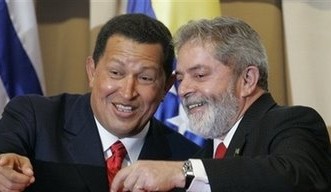
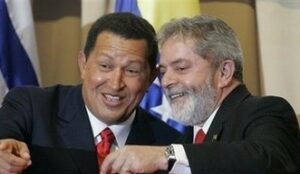
 The Brazilian Workers Party
 Venezuela’s United Socialist Party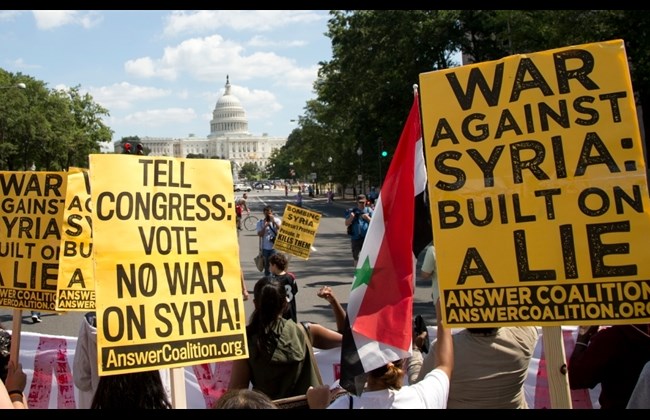
 Alina Barbara López Hernández is a historian, university professor and a friend. Her contributions to La Joven Cuba, one of the most important blogs in the island have been enormous because of her intelligence, political culture, integrity, and courage in the face of a difficult political situation. – Samuel Farber
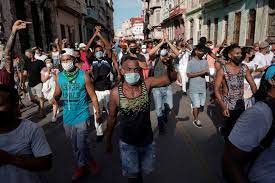
 Despite recent organizing gains among some contingent faculty members, the adjunctification of higher education has left hundreds of thousands of college and university teachers with low pay, spotty benefit coverage, and little job security. As former adjuncts Joe Berry and Helena Worthen report in their new book,
 This article was written for L’Anticapitaliste, the weekly newspaper of the New Anticapitalist Party (NPA) of France.
 July 11, 2021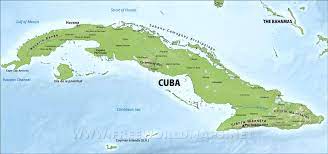
 Yesterday, July 11, 2021, Cubans in several cities took to the streets to protest lack of health care, lack of food, and to demand freedom. Where should socialists stand on these protests and the Cuban government?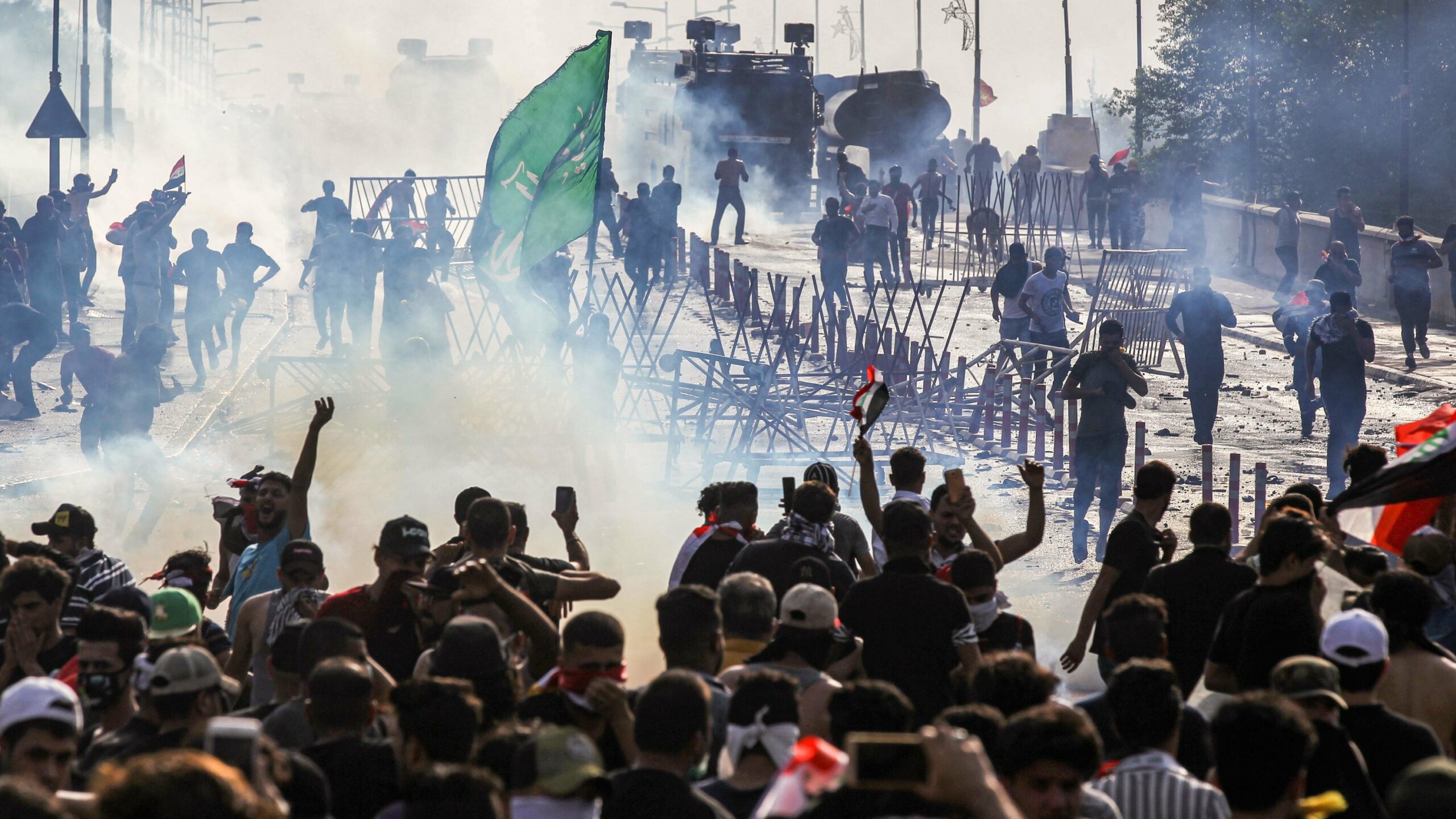

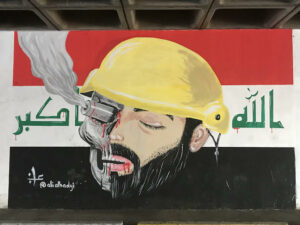
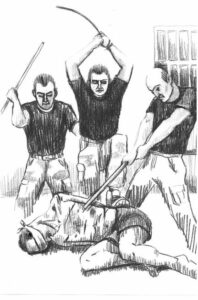
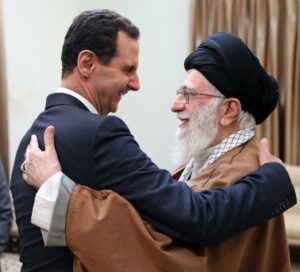
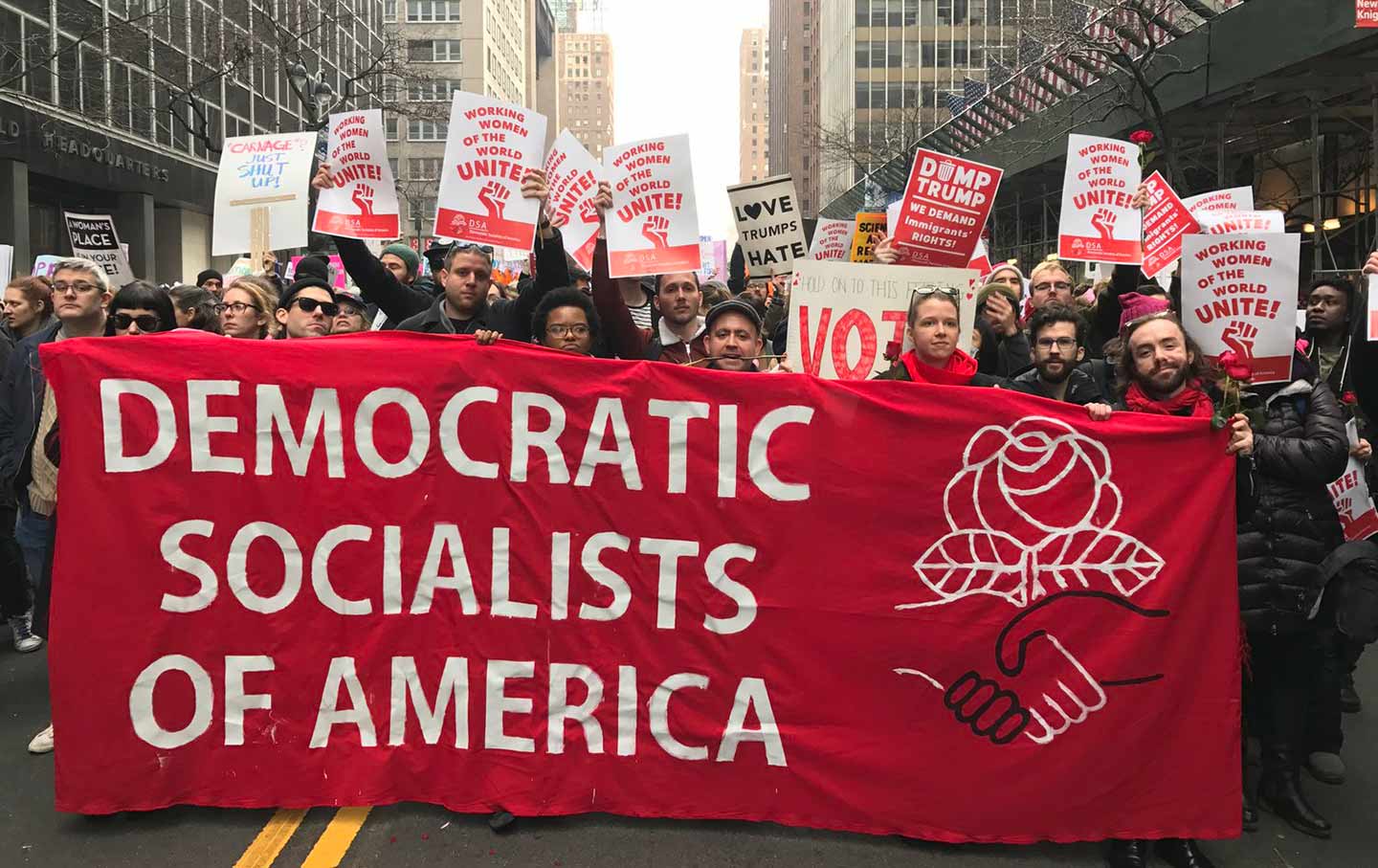
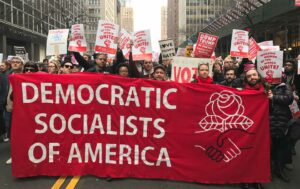 This article was written for L’Anticapitaliste, the weekly newspaper of the New Anticapitalist Party (NPA) of France.
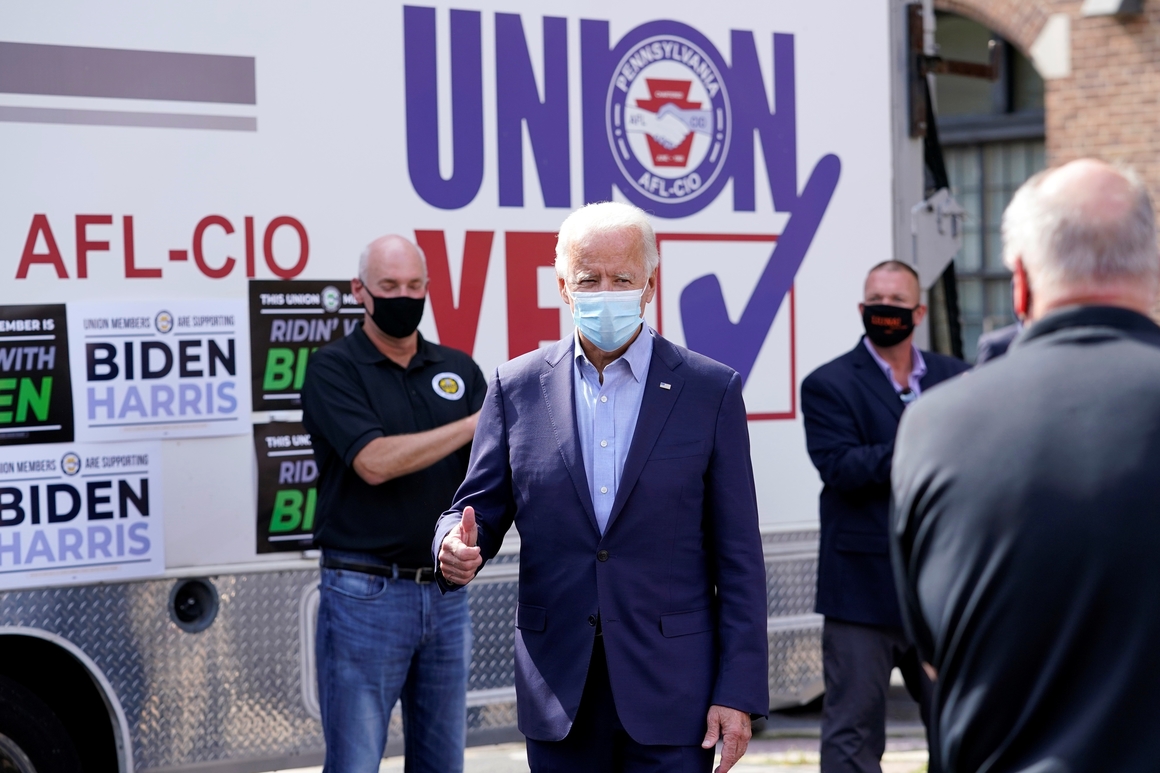
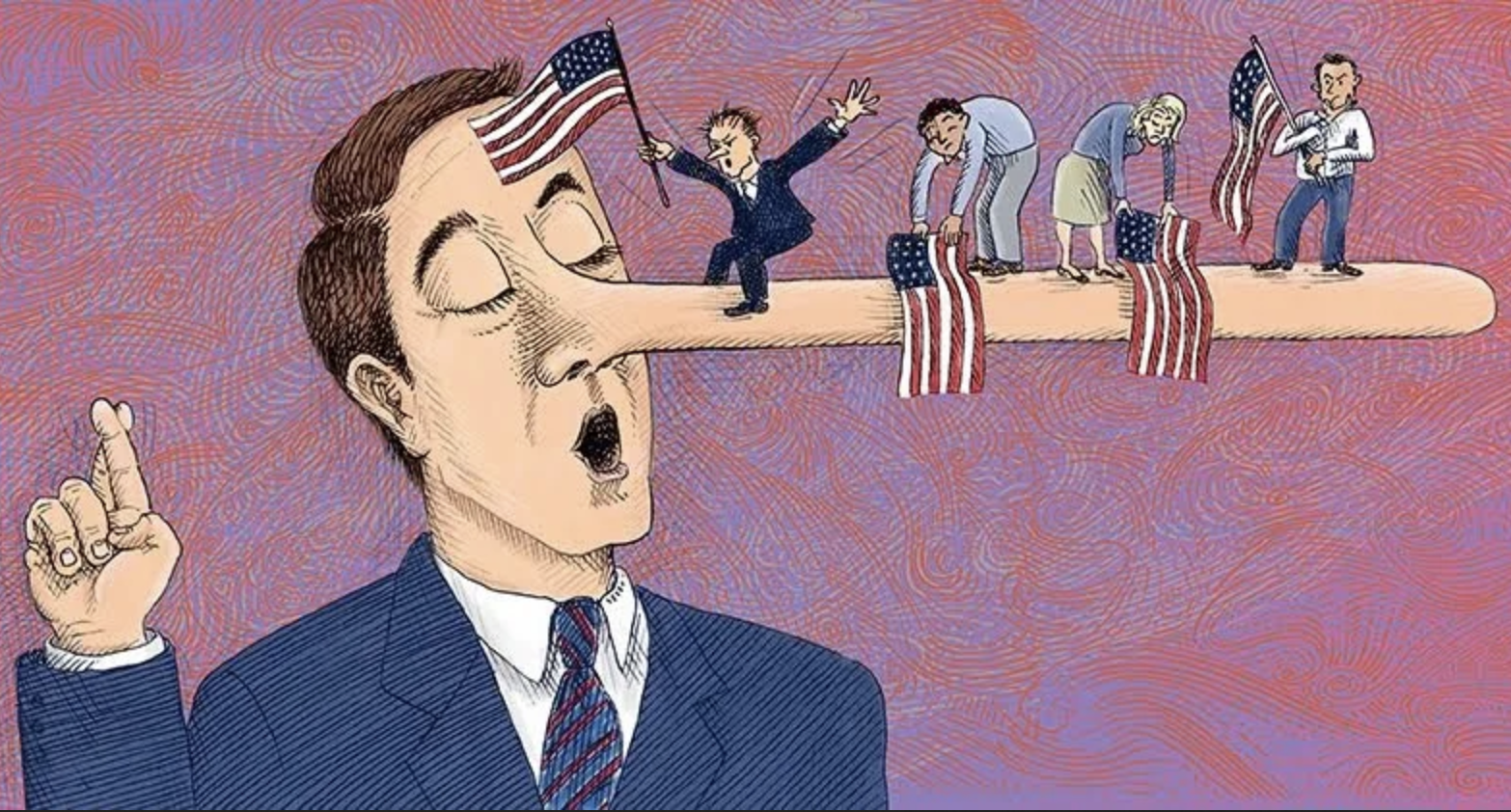
 Professional politicians are a relatively recent historical phenomenon and their lies are to a great extent a response to social structural imperatives that did not exist in precapitalist societies. Surely liberal capitalist democracy did not invent political lies. Neither did capitalism invent exploitation and oppression. However, as in the case of exploitation and oppression, political lies acquired new content and form under liberal democratic capitalism.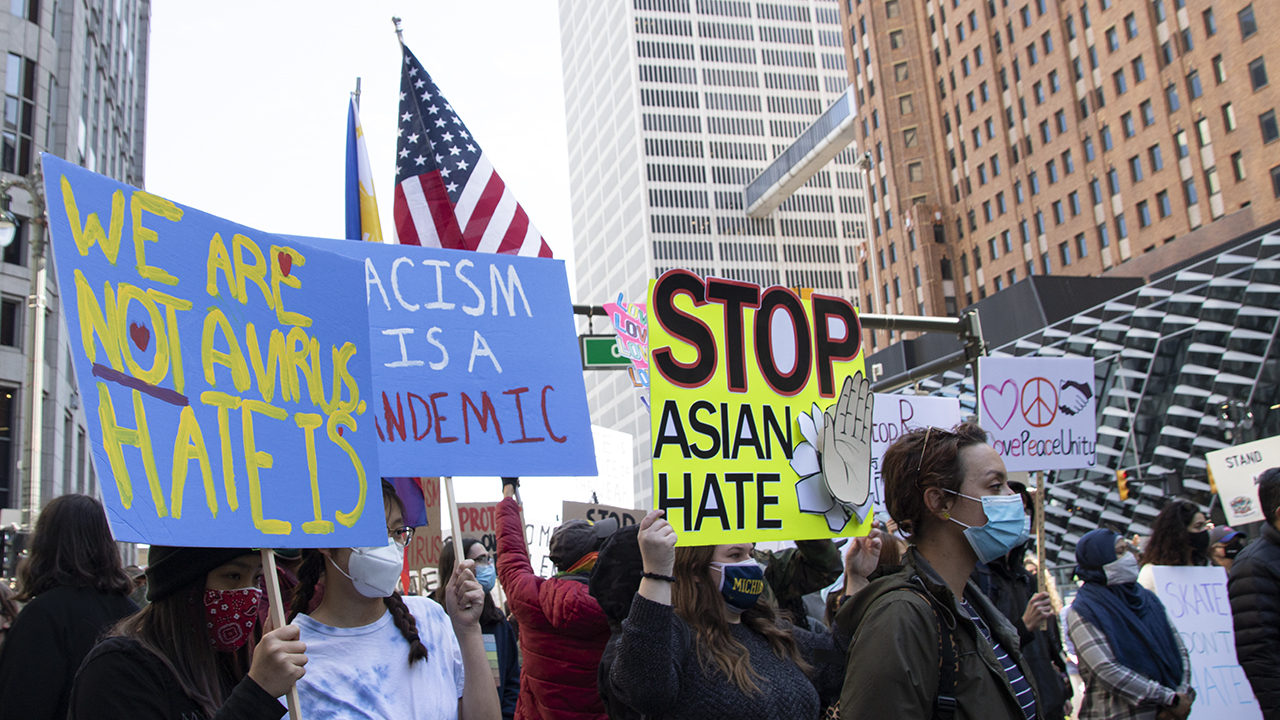
 During the pandemic, hate crimes against Asian Americans have