Blog

  • On Contradiction: Mao’s Party-Substitutionist Revolution in Theory and Practice  – Part 2

    On Contradiction: Mao’s Party-Substitutionist Revolution in Theory and Practice – Part 2

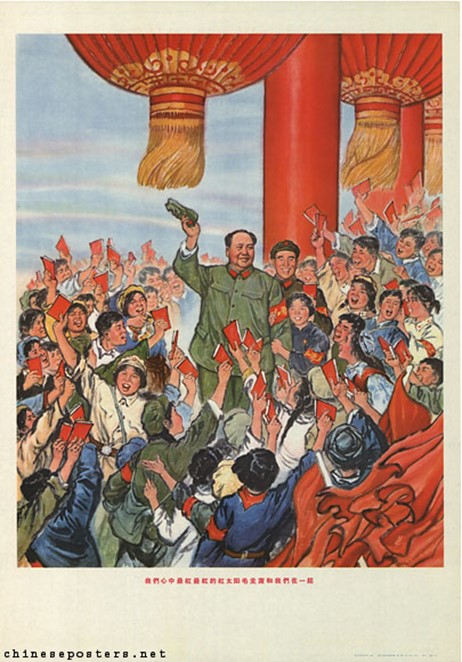
    “The Reddest Reddest Red Sun in Our Heart, Chairman Mao”
    (Women xinzhong zuihong zuihongde hong taiyang Mao zhuxi he women xin lianxin)

    This is the second part of a four-part article. The other parts can be found here:

    Part 1
    Part 3
    Part 4
    IV. THE YOUNG MAO

    Infatuation with tyrants, peasant revolutions, and heroic saviors

    Of all the early founders of the Communist Party, Mao was perhaps the most nationalist and least attracted to Marxism. Born into a middling prosperous rich-peasant-cum-merchant-landlord Hunanese family, Mao was schooled in both traditional Confucian classics of history and literature and then also in the new Western education. His learning was highly eclectic and intensely self-driven. In primary school, as he told Edgar Snow in 1936, “I knew the Classics, but disliked them. What I enjoyed were the romances of Old China, and especially stories of the rebellions. I read … The Water Margin, Revolt Against the Tang, The Three Kingdoms, and Travels in the West…. I was much influenced by such books, read at an impressionable age.”[22]

    For a future self-proclaimed socialist, the young Mao also displayed an inordinate attraction to despots, tyrants, and mass murderers. His boyhood hero was Zeng Guofan, a conservative Confucian viceroy who rescued the Qing dynasty and the gentry-landlord ruling class by bloodily suppressing the massive Taiping rebellion of the mid-19th century. He admired “law and order” authoritarians like Shang Yang, the 4th century BC founder of the Legalist school of statecraft whose anti-feudal reforms underpinned the centralizing and social-leveling state of Qin. Shang Yang is said to have abolished feudalism, replacing primogeniture and feudal land tenure with individual property and a rigid bureaucratic organization into districts. He replaced the Confucian governance of “wise and virtuous ministers” with a system of absolute “rule of law” that imposed draconian punishments. The population was divided into so-called “self-responsibility” groups of 5 and 10. He ordered his ministers to spy on and inform on one another. He instituted the system of mutual responsibility in which whole families were punished for any crime committed by one member. Peasants were barred from any work except farming, women were assigned to sewing. “Let the people be yoked to the land … and their life away from their homes be made dangerous for them. They should not be allowed to migrate.” Merchants “should be hampered as much as possible by heavy tolls … made to live simply, heavy taxes should be fixed for luxuries….” Slavery was widespread. Poverty was universal among the lower classes. “Punish severely the light crimes … and thus people will commit no crimes and disorder will not arise.” Punishments included “branding on the top of the head, extracting of ribs and, for persistent miscreants, boiling in a cauldron.”[23]

    In a school essay written in 1912 when he was 19, Mao wrote:

    Shang Yang’s laws were good laws. If you have a look today … at the great political leaders who have pursued the welfare of the country and the happiness of the people, is not Shang Yang one of the very first on the list? During the reign of Duke Xiao, the Central Plain was in turmoil, with wars being constantly waged and the entire country exhausted beyond description. Shang Yang … unified the Central Plain … then he published his … laws to punish the wicked and rebellious … he stressed agriculture and weaving, in order to increase the wealth of the people … He made slaves of the indigent and idle, in order to put an end to waste. This amounted to a great policy such as our country had never had before.[24]

    The eminent Mao scholar Stuart Schram remarks that “It would be reading too much into a single document to conclude from this class essay that Mao was … a ‘Legalist’ from the beginning. It is nonetheless striking that the corpus of his writings should begin with a celebration of one of the principal founders of this authoritarian school of thought, with its emphasis on harsh punishments and strict state control of all social activity” “The themes enunciated here are so plainly and forcefully stated as scarcely to require comment. In Mao’s view, there must be a strong state, and there must be unquestioning acceptance of its authority. It was the vocation of such a state to ensure the wealth of its people, as well as its own military power.”[25]

    In my own reading the Book of Lord Shang I was astonished at how certain key features — centralized despotic rule, social leveling of classes, farmers tied to the land (by serfdom in his day and by the hukou resident permit system established by Mao’s government from 1949), state assignment of occupations, mutual spying and denunciation, and group punishment of families for the crimes of one individual – were all reproduced de novo in Mao’s barracks communism. Many remain in effect down to this day.

    Among contemporary political figures, Mao applauded the brutal military governor of Hunan province (1913-16) Tang Xiangming aka “Tang the Butcher” (1886-1975) who slaughtered followers of Sun Yat-sen, and even warlord Yuan Shikai (1859-1916) who drove Sun Yat-sen into exile, installed himself as “President” of the Republic, proclaimed Confucianism a state religion, and tried to reestablish the monarchy with himself as first emperor of the Xin (New) Dynasty.[26] In short, “Mao’s esteem for Confucianism was accompanied by an authoritarian preference for ‘law and order.’”[27]

    Confucian schooling inculcates the authority of “superior men” to lift up the “little people”

    Mao read widely in the translated Western texts that influenced the Chinese nationalist modernizers of the early 20th century.[28] But whereas more radical May Fourth intellectuals like Lu Xun, Ding Ling, and Chen Duxiu called for a wholesale rejection of Confucian feudal culture in favor of Western values, Mao felt that traditional Confucianism still had much to recommend it and sought a synthesis of East and West.[29] He bitterly condemned the condition of students and traditional Confucian schools with their pretentious professors who “treat us like criminals, humiliate us like slaves, lock us up like prisoners” in their poorly equipped schools devoid of modern books or laboratories and “forcibly impregnate our minds with a lot of stinking corpse-like dead writings full of classical allusions.”[30]

    Borrowing from the Western Enlightenment Mao praised Rousseau’s method of “self-instruction”[31] and, indeed, he dropped out of his First Middle School because of its limited curriculum to pursue a systematic program of self-directed study at the Hunan Provincial Library, about which he told Snow:

    I was very regular and conscientious about it, and the half-year I spent in this way I consider to have been extremely valuable to me…. I read many books, studied world geography and world history. There for the first time I saw and studied with great interest a map of the world. I read Adam Smith’s The Wealth of Nations, and Darwin’s Origin of Species, and a boon on ethics by John Stuart Mill. I read the works of Rousseau, Spencer’s Logic, and a book on law on law by Montesquieu. I mixed poetry and romances, and the tales of ancient Greece, with serious study of history and geography of Russia, America, England, France, and other countries.[32]

    He also adopted scientific methodology in evidence-based sociological research into rural class structure, which he modeled with his own investigations of rural village class structure in 1926 and would encourage party members to employ to build rural support in the Yan’an years. He likewise condemned the condition of Chinese women locked up in “their various dens, not even allowed to go outside the front gate … [abused by] shameless men who make us their playthings.” “We are also human beings, so why won’t they let us participate in politics [and society]” he wrote, and called for the emancipation of women.[33] After all, as he famously put it “women hold up half the sky.”

    But he cared nothing for “Mr. Democracy” and indeed would later categorically express his hostility to democracy both within the Party and in society in general (see below). His enthusiasm for “Mr. Science” also had sharp limits as from the 1940s, by which time Mao had become a full Stalinist as well, he initiated serial persecutions of intellectuals from the Rectification movement of the 1940s to the Anti-Rightist campaign in 1957 and culminating in his murderous attacks on independent thinkers in every field in the Cultural Revolution. And, remarkably, even though he had waged a decade-long struggle to free himself from his domineering father in order to shape his own career, Mao never fully embraced Western individualism against the crushing conformity of Confucian patriarchy. Instead, as we’ll see, he repurposed Confucian authoritarianism, subordination to the family, sexism and social conformity to serve his own purposes in forging a “substitute proletariat.” Mao’s radicalism was evolving in a different, more authoritarian, direction.

    In 1913 at age 20 he enrolled in First Provincial Normal School, a teacher training college from which he graduated in 1918. His favorite teacher, the Neo-Confucianist Yang Changji, a returned student from England, taught moral cultivation and ethics with a modernist bent. Mao said of him: “He was an idealist, and a man of high moral character. He believed in his ethics very strongly and tried to imbue his students with a desire to become just, moral, virtuous, and useful to society.”[34] Mao spent five years in systematic study of Neo-Confucianism under Yang, particularly its radical, modernized wing, which had fused with nationalism.[35] Yang lamented China’s plight and its weakness in the face of stronger foreign powers. Yang taught that a nation cannot be strong “if many are frail.” People must have “vigor” and “struggle” to obtain its goals. Thus he said, “it’s urgent for us to temper our bodies.” Yang advised his students to engage in “self-cultivation” (xiushen) of both the mind and body as the means to strengthen the nation.[36] Yang’s admonitions were reflected in Mao’s first published essay written in 1917 when he was 23. In “A study of physical education” Mao writes “Physical education complements education in virtue and knowledge…. Among the civilized nations of today, it is in Germany that [physical education] most flourishes … Japan, for its part has bushido. Physical education … also strengthens the will. The principal aim of physical education is military heroism. Such objects of military heroism as courage, dauntlessness, audacity, and perseverance.”[37]

    To this end, while in college Mao organized a political study group with his Hunanese activist friends, the “New People’s Study Society” to study progressive ideas. In his words this was “a serious-minded little group of men [who] had no time for trivialities.” Such groups were popular among New Culture Movement students across China at the time, and Mao’s group was to produce many future leaders of the Chinese Communist Party. Later, Mao told Edgar Snow that

    We also became ardent physical culturists. In the winter holidays we tramped through the fields, up and down mountains, along city walls, and across the streams and rivers. It if rained we took off our shirts and called it a rain bath…. We slept in the open when frost was already falling and even in November swam in the cold rivers…. Perhaps it helped much to build the physique which I was to need so badly later on in my many marches back and forth across South China, and on the Long March from Kiangsi to the Northwest.[38]

    Steeped in neo-Confucianism in the years before the Bolshevik revolution and the May Fourth movement presented other plausible revolutionary agencies, Mao still looked to “sages” and “superior men” to rescue China through their mental and physical heroism. In a letter of August 1917 to Li Jinxi, his former teacher, Mao wrote that China’s people had “accumulated too many undesirable customs” and their mentality was “too antiquated.” The state could become “rich, powerful, and happy” only if there was an elite of “superior men” imbued with “ultimate principles” to “change fundamentally the thinking of the whole country”:

    When little people burden superior men, the gentlemen should be benevolent and seek to save these little people … Superior men already possess lofty wisdom and morality; if there were only superior men in the world, then politics, law, rites, systems, as well as superfluous agriculture, industry, and commerce could all be abolished, and would be of no use. It is different when there are too many little people. The world’s management follows the criterion of the majority, at the expense of the part made up of superior men; that is how little people burden superior men. But the little people are pitiable. If the superior men care only for themselves, they may leave the crowd and live like hermits… If they have compassionate hearts, then they [recognize] the little people as fellow countrymen and a part of the same universe. If we go off by ourselves, they will sink lower and lower. It is better for us to lend a helping hand, so that their minds may be opened up and their virtue be increased, so that we may share the realm of the sages with them…. The great harmony is our goal. Those who are virtuous, meritorious, and eloquent do their best to serve the world. We have compassion within our hearts, which makes us strive to save the little people.[39]

    And in marginal comments written in 1917-18, Mao wrote that

    The truly great person develops the original nature with which nature endowed him, and expands upon the best, the greatest of the capacities of his original nature. This is what makes him great. Everything that comes from outside his original nature, such as restraints and restrictions, is cast aside…. The great actions of the hero … are the expression of his motive power, lofty and cleansing, relying on no precedent. His force is like that of a powerful wind arising from a deep gorge, like the irresistible sexual drive for one’s lover, a force that will not stop, that cannot be stopped. All obstacles dissolve before him.[40]

    Stuart Schram observes that “for all the changes Mao’s ideas underwent during the decade after 1912, his personality (cast of mind) remained strikingly consistent. In particular, the focus on the individual will or consciousness, and on the role of the hero, stands out in all of Mao’s early writings, and indeed throughout his entire life. The emphasis on military heroism, and the martial ethos, is also a recurrent trait, long antedating the beginning of his experience of guerrilla warfare in the countryside in 1927.[41]

    Not only that but even after he converted to Marxism and joined the Communist Party in 1921 Mao still retained his elitist and patronizing Confucianist ethos in which only a self-selected elite of “superior men” (the communist mandarinate he would construct, led by one particular “truly great person”) with mastery of their own “ultimate principles” (Mao Zedong Thought) could lead the national revolution and make China “rich and powerful and happy.”

    The impact of the May Fourth Movement

    After graduation from Normal School in Changsha in 1918, Mao found employment as an assistant librarian at Beijing University under head and professor of politics, history, and economics, Li Dazhao. Li was the first Chinese intellectual to embrace the Bolshevik revolution, although like most neophyte communists of the era, he was more of a nationalist and anarchist than a Marxist. Mao told Snow that Li introduced him to Marxism in 1919. But historian Maurice Meisner writes that “If so, Marxism made little impression on him at the time. What clearly did influence him was anarchism.” Mao was impressed by Kropotkin’s theory of “mutual aid” and combining mental and manual labor, which he would retool as “being one with the masses” and “red and expert.” He was even more deeply impressed by the Russian populist Alexander Herzen’s theory of the “advantages of backwardness.” According to Herzen, the supposed moral and social virtues inherent in its backwardness would enable Russia to “bypass capitalism” and achieve socialism. Li Dazhao embraced this vision and extended it to China with his thesis that China was a “proletarian nation.”[42] The embryo of this idea of “leaping over stages” appears in the final paragraph of Mao’s 1919 populist tract “The Great Union of the Popular Masses”:

    Our Chinese people possess great inherent capacities! The more profound the oppression, the more powerful the reaction, and since this has been accumulating for a long time, it will surely burst forth quickly … the reform of the Chinese people will be more profound than that of any other people … We must all advance with the utmost strength! Our golden age, our age of glory and splendor, lies before us![43]

    Up to 1919 Mao was still looking to a cadre of “superior men” to enlighten China’s masses and transform society but neither he nor the other May Fourth intellectuals had any idea how they might actually transform society. As intellectuals they were few and weak with no real power in society. After the May Fourth Movement protests broke out, Mao says “he took a more direct role in politics.” He founded the Hsiang River Review, an influential student newspaper and was active in student anti-militarist organizing in Hunan calling for equal rights for men and women and bourgeois democracy. But the students were easily repressed and Mao drew the conclusion that “only mass political power … could guarantee the realization of dynamic reforms.” [44]

    The 1917 Russian Revolution and the revolutionary upsurges that followed across Europe, and the May Fourth 1919 outbreak of student protests in Beijing, worker strikes in Shanghai and other cities, and the spontaneous self-organization of trade unions, peasants associations and so on opened the prospect of new agents of social change beyond students and intellectuals. Mao hailed the Russian and European revolutions and championed the emergence of Chinese labor unions. He called for them to federate, form alliances, and ultimately to coalesce into one big union — a “Great Union of the Popular Masses” — sort of a Chinese IWW though at his writing in 1919 still without a program. Moreover, the class nature of this one big union was as yet undefined. “In my opinion,” Mao wrote, “the motive force for the great union of the popular masses of China is to be found precisely [in the] “purely great unions of the popular masses who have risen up to resist the oppressors within and without the country.” But he had to concede that “[a]ll such societies, clubs, general associations, unions must inevitably include a considerable number of gentry (shenshi ) and ‘politicians’ who do not belong to the popular masses….”[45] Mao’s conception of an inclusive “great union” foreshadowed the Communist’s multi-class “New Democracy” program of the 1940s. 

    Conversion to Marxism and communism

    “In the winter of 1920,” Mao told Snow, “I organized workers politically for the first time, and began to guided by the influence of Marxist theory and the Russian revolution.” During his second visit to Beijing he met with Chen Duxiu who greatly influenced his thinking and while there he read intensively about the Russian revolution sought out what little Communist literature was then available in Chinese. Three books especially impressed him and convinced him that Marxism offered the correct interpretation of history: the Communist Manifesto, Kautsky’s Class Struggle, and  A History of Socialism by Kirkup. “By the summer of 1920 I had become, in theory and to some extent in action, a Marxist, and from this time on I considered myself a Marxist.”[46]

    In May 1921 Mao attended the founding meeting of the Communist Party in Shanghai as its Hunan delegate. He was one of just 12 delegates. Yet even with only 59 members in 1921 and barely 300 a year later, the fledgling party set about organizing urban students and workers. Mao threw himself into this work in 1922-23. By May 1922 the Hunan branch of the Party, of which he was secretary, had organized more than twenty trade unions among miners, railway workers, municipal employees, printers, and workers in the government mint. The communists (and anarchists) led many strikes for better wages, better treatment, and recognition of the unions. On May 1st, they organized a general strike. This, Mao recalled, “marked the achievement of unprecedented strength in the labor movement in China.”[47] In the early twenties China’s proletariat numbered around three million but most of those were handicrafts workers and only around 50,000 worked in what was then modern industry. They were neophyte trade unionist and as yet unsophisticated politically but militant fighters and fast learners. However, their gains were short lived. On February 7, 1923 Wu Peifu, the dominant warlord of North China, slaughtered the striking railroad workers in central China. In one blow the “February 7th Massacre” destroyed the most powerful and militant workers’ movement in China, shattered the Party’s proletarian base, precipitated the suppression of radical and labor organizations throughout China, and ended Mao’s brief career as a labor organizer.[48]

    The suppression of the radical working class movement in central and north China made the Communists more receptive to the Comintern policy of seeking alliance with Sun Yat-sen’s nationalist party, the Guomindang (GMD). The failure of proletarian revolutions in Europe left Russia isolated in a hostile capitalist world. With the prospects of world revolution waning, survival dictated that Russia seek alliances with anti-imperialist “bourgeois nationalist” forces in colonial and semi-colonial lands that could offer some political and military support (or at least that was their hope). That in turn required putting the brakes on the embryonic communist movements in those countries. Thus in 1922, the Comintern told the Chinese that the socialist revolution would have to be postponed, that China was still in the stage of “bourgeois-democratic revolution,” and it instructed the tiny CCP (which was still dependent upon the Soviets for funds, training, etc.) to cooperate with the larger GMD (with some 50,000 members) in a common front against foreign imperialism and domestic feudalism. Engaging with the GMD in a United Front would have enabled the CCP to maintain its independence, recruit and build its party, and openly criticize and refuse co-operation when it perceived that the GMD was backsliding on its commitments to the bourgeois-democratic revolution. But the Sun Yat-sen insisted, and the Comintern concurred, that CCP members join as individuals rather than in a United Front, that they subordinate their work to building the GMD, and that they obey the dictates of the GMD without question — a fateful decision that would leave the Communists and the labor unions defenseless when the GMD, under Chiang Kai-shek from 1925, turned on the Communists and massacred the urban party and labor militants killing tens of thousands in 1926-27 and hundreds of thousands in the White Terror that followed.

    Mao’s developing political and strategic vision: a new peasant revolution, this time led by the Communist Party

    By 1923 Mao had abandoned hope that the urban working class could be the agent of revolution in China and he became one of the most ardent supporters of the Comintern-imposed GMD-CCP alliance.[49] Two events seemed to have confirmed his rejection of working class agency: First, the ease with which the warlords could destroy the militant but unarmed workers and their unions in the February Seventh Massacre of 1923. Second, the spontaneous formation of peasant unions in his native Hunan province in the winter-spring of 1925, inspired by peasant uprisings in neighboring Guangdong where the first peasant soviet would be founded that year. Mao told Snow that “Formerly I had not fully realized the degree of class struggle among the peasantry, but after the May 30th Incident [1925], and during the great wave of political activity which followed it, the Hunanese peasantry became very militant. I left my home, where I had been resting, and began a rural organizational campaign. In a few months we had formed more than twenty peasant unions, and had aroused the wrath of the landlords….”[50] Mao was an enthusiastic and the most visible Communist member of the GMD. He rose quickly through the Nationalist Party, was put in charge of training organizers of the peasant movement at the Peasant Movement Training Institute, and was elected an alternate of the GMD Central Executive Committee.[51] His reorientation to the peasantry invited criticism from his comrades in the CCP including Chen Duxiu.

    In January 1927, Mao published his iconoclastic “Report on an investigation of the peasant movement in Hunan.” He wrote this in reply, he said, “to the carping criticisms both inside and outside the Party then being leveled at the peasants’ revolutionary struggle.” In this extraordinary document, one that could have been authored by a Russian Narodnik, he intimated his rejection of Marxist-Leninist orthodoxy and embraced the spontaneity and revolutionary power of the peasantry, declaring that the peasants were the vanguards of the Chinese revolution:

    In a very short time, several hundred million peasants will rise like a mighty storm…. They will smash all the trammels that bind them and rush forward along the road to liberation. They will sweep all the imperialists, warlords, corrupt officials, local tyrants and evil gentry into their graves. Every revolutionary party and every revolutionary comrade will be put to the test…. There are three alternatives. To march at their head and lead them? To trail behind them, gesticulating and criticizing? Or to stand in their way and oppose them? Every Chinese is free to choose, but events will force you to make the choice quickly.[52]

    Impatient like all Chinese nationalists with the Marxist axiom that the socialist revolution must await capitalist development, disillusioned with urban proletarian-led revolution, inspired by romantic visions of China’s historical peasant uprisings, and attracted to idealist narodnik visions of “skipping stages,” by 1927 Mao’s break with Marxist-Leninist doctrine was more or less complete. With the failure of the bourgeois-democratic revolution of 1911-12 and the suppression of the workers’ proletarian-socialist revolution of 1925-27, Mao concluded that in China’s case, only another massive peasant revolution — this time with its own Red Army and led by the Communist Party, stood a chance of overturning the old order. As he famously put it in the summer of 1927: “Political power grows out of the barrel of a gun.”

    The defeat of the worker-led revolution of 1927 ended the only potential socialist revolution China ever knew. It fell to the communist survivors of the 1927 massacres to either try to rebuild the urban-based party underground — which Chen Duxiu and a few hundred Trotskyist oppositionists attempted to do, though their efforts were effectively doomed by the Communist Party’s abandonment of the workers, retreat from the cities, and by the Comintern’s insistence even after Chiang Kai-shek’s coup that the CCP must still subordinate itself to the Guomindang (GMD) and help it win the national revolution and the resistance war agaist Japan[53] — or flee to the countryside to regroup and devise a new strategy. The defeat of the workers’ revolution set the stage for the eventual success of an entirely different kind of revolution, the first peasant-based revolution led by a substitutionist vanguard party.

    The historic saga of Mao’s revolution is well known. It began as communists fled the cities in the late twenties and regrouped themselves into small guerilla military units that evolved into the first Red armies and established the first rural “soviets” in the hinterlands around Canton. Mao led his own Kiangsi mini state-within-the-state containing around three million people with some success from 1931-34, fending off three successive GMD encirclement campaigns. But the fourth campaign cost the Red Army heavy losses and as the fifth campaign loomed, Mao’s main forces broke out of Chiang’s traps in 1934 and embarked on the harrowing 6,000 mile “Long March” to the far northwest of China. In October 1935, the 8,000 or so survivors reached the remote northwest Shanxi-Gansu-Ningxia Border Region where the exhausted Communists established their capital at Yan’an city, Shanxi, and began to reconstruct their party to re-launch the revolution on a peasant base.

    Workers vs. peasants and socialist revolution

    Yet in re-launching the revolution from a rural base the Communists faced a major dilemma. In an economically backward, impoverished and mostly illiterate rural peasant milieu, who could replace the proletariat as the social agency of socialist revolution?

    For Marx and Engels, what distinguished their materialist “scientific” socialism from utopian socialism was their thesis that the industrial working class, and only the working class, could lead the socialist revolution, and that in so doing, the proletariat would become the “universal class,” the universal emancipator of humanity. Why the proletariat and not the bourgeoisie or the peasantry? Because the bourgeoisie and the peasantry could only represent partial interests, not the common interests of humanity. On the other hand, the industrial proletariat worked co-operatively together in specialized and interdependent modern industries, with modern technology and inputs often sourced from abroad and producing for a world market. Thrown together in common experience and struggle, their consciousness was constantly revolutionized:

    When [French] communist artisans assemble [Marx wrote in the Paris Manuscripts of 1844], educationals, propaganda, etc. are above all their end. But at the same time they thereby acquire a new need, the need for fellowship, and what appears as a means has become an end…. [T]he brotherhood of man is not an empty phrase with them but a reality, and the nobility of man shines out to us from their work-hardened figures…. The English proletarian is also making gigantic progress…. But in any case it is among these “barbarians” of our civilized society that history is making ready the practical element for the emancipation of man.

    One must be acquainted [he wrote in The Holy family] with the studiousness, the craving for knowledge, the moral energy and the unceasing urge for development of the French and English ouvriers to be able to form an idea of the human nobility of that movement.

    And their potential: Neither Marx nor Engels invented the concept of self-emancipation. That idea incubated in French artisan circles, and their vision went beyond the factory system to challenge the whole property system that made it possible: “Recall the Song of the Weavers,” Marx wrote in an 1844 commentary, “that bold call to struggle, in which there is not even mention of hearth and home, factory or district, but in which the proletariat at once, and in unrestrained and powerful manner, proclaims its opposition to the society of private property…. Not only machines, these rivals of the workers, are destroyed, but also ledgers, the titles to property.”[54] Only in the abolition of the capitalist property system could they throw off their chains. And only by overthrowing the entire existing social order and replacing it with a workers’ democracy, could they liberate themselves and in the process the whole of humanity.[55]

    The Paris Commune, spontaneously invented by the Parisian workers, was the first example of a workers’ government.

    For Marx, the heroic if brief Paris Commune of 1871 was the world’s first historical example of working class self-rule. As he wrote in The Civil War in France:

    The Commune was formed of the municipal councillors, chosen by universal suffrage in the various wards of the town, responsible and revocable at short terms. The majority of its members were naturally working men, or acknowledged representatives of the working class. The Commune was to be a working, not a parliamentary body, executive and legislative at the same time. . .  the police was at once stripped of its political attributes, and turned into the responsible, and at all times revocable, agent of the Commune. So were the officials of all other branches of the administration. From the members of the Commune downwards, the public service had to be done at workman’s wage…. [56]

    The next example was in Russia. The Czarist government was overthrown in February 1917 not by Lenin’s Bolsheviks (he was exiled in Switzerland at the time) but by a spontaneous revolt of industrial workers and mutinous soldiers and sailors. As historian E.H. Carr wrote:

    The February Revolution of 1917…was the spontaneous outbreak of a multitude exasperated by the privations of the war…. The revolutionary parties played no direct part in the making of the revolution. They did not expect it, and were at first somewhat nonplussed by it. The creation at the moment of the revolution of a Petrograd Soviet of Workers’ Deputies was a spontaneous act of groups of workers without central direction.[57]

    In 1917, the Petrograd proletariat turned it into “a true workers’ parliament acting and taking positions on a great number and variety of questions.”[58] In the first years of the soviets, multiple parties contended in the soviets including Socialist Revolutionaries (SRs), Mensheviks, Bolsheviks, Anarchists, and several other socialist groups. As in the Paris Commune, delegates were elected and subject to recall by their various constituencies. The Czar abdicated in early March and appointed a provisional government. But the government had little support beyond the bourgeoisie and landed classes while the soviets multiplied across the country and enjoyed the support of most workers and peasants. From February to October the soviets ruled in dual power with the provisional government.[59]

    Mao on the limitations of the peasantry

    None of this initiative, collective organization, technological skill, or political vision could be expected from peasants. As both the Russian and Chinese experiences had shown, an aroused peasantry could be a mighty force for revolution, a battering ram. But it was not a force for socialist revolution and could not even lead the national liberation struggle. Physically isolated and atomized in predominantly self-sufficient patriarchal family units of production, shackled by a primitive technology and grinding poverty, limited by a conservative culture, the peasants’ conception of emancipation reflected their existence. Above all this was an essentially negative conception: they sought mainly to get rid of their exploiters, the landlords and tax collectors, to be left alone to enjoy the untrammeled security of their small properties. Their driving interests were not towards socialism, collectivization, industrialization, but toward equal division of the land, toward small property. Their whole perspective was petty bourgeois, localist, and particularist. It was this elemental struggle for the land, born of misery, and desperation that had powered countless peasant revolts in China’s past—each time with the same result: the restoration of gentry rule.

    As Mao himself reported to the Central Committee in Shanghai in February 1929: “It is difficult for them [the peasants] to understand that the Communist Party does not distinguish between national and provincial borders; they even have problems understanding that it does not distinguish between counties, regions, and villages … mechanized industry is beyond their wildest dreams, and they have no conception of imperialism.”[60] The peasantry was incapable of breaking out of this ancient cycle on its own. Without the proletariat, who then could do so?

    [continued in part 3]


    Notes

    [22] Edgar Snow, Red Star Over China (New York: Grove, 1938).

    [23] J. J.-L. Duyvendak, The Book of Lord Shang (San Francisco: Chinese Materials Center, 1974).

    [24] Stuart R. Schram, ed. Mao’s Road to Power, Vol. 1 (New York: M E. Sharpe, 1992), 6.

    [25] Schram, Mao’s Road, Vol. 1, xxii.

    [26] Meisner, Mao, 5-8.

    [27] Ibid., 7.

    [28] Snow, Red Star, 144.

    [29] Schram, Mao’s Road, Vol. 1, xvi.

    [30] Ibid., 382.

    [31] Ibid., 382.

    [32] Snow, Red Star, 144.

    [33] See also Mao’s “The women’s revolutionary army” (July 14, 1919), and “Do you mean to say that walking is only for men?” (July 14, 1919), both translated in Schram, Mao’s Road Vol. 1, 353 and 351.

    [34] Wang Fanxi, Mao Zedong Thought (Chicago: Haymarket, 2021), 69.

    [35] Ibid., 71.

    [36] As recorded in Maos’s class notes from Yang’s lectures. Schram, Mao’s Road, xxvii

    [37] Schram, Mao’s Road, Vol. 1, 113-127.

    [38] Snow, Red Star, 147.

    [39] Schram, Letter to Li Jinxi, Mao’s Road, Vol. 1, 130-36.

    [40] Mao Zedong, “Marginal Notes to: Friedrich Paulsen, A System of Ethics,” (1917-1918), Schram, Mao’s Road, 263-64.

    [41] Schram, Mao’s Road, Vol. 1, xxii.

    [42] Meisner, Mao, 16, 19-20.

    [43] Schram, Mao’s Road, Vol. 1, 389.

    [44] Snow, Red Star, 154.

    [45] Schram, Mao’s Road, Vol. 1, 381-388.

    [46] Snow, Red Star, 154-55.

    [47] Ibid. 158.

    [48] Meisner, Mao, 35.

    [49] Ibid. 36-37

    [50] Snow, Red Star, 159. The May Thirtieth Incident (1925), in China, was a nationwide series of strikes and demonstrations precipitated by the killing of 13 labor demonstrators by British police in Shanghai. This was the largest anti-foreign demonstration China had yet experienced and it encompassed people of all classes from all parts of the country.

    [51] Snow, Red Star, 159-60.

    [52] “Report on an Investigation of the Peasant Movement in Hunan” (March 1927).

    [53] Gregor Benton, Prophets Unarmed (New York: Haymarket Press, 2015), p. 5 and passim.

    [54] Marx, “Critical marginal notes on the article “The King of Prussia and social reform by a Prussian” in Marx and Engels, Collected Works (CW), 3, 201, quoted in Mike Davis, 13.

    [55] Marx, “The Paris Manuscripts of 1944,” “The critique of Hegel’s Philosophy of Right,” “Theses on Feuerbach,” The Civil War in France. Marx and Engels, the Communist Manifesto 1848. See the exegesis by Hal Draper, Karl Marx’s Theory of Revolution, Part 1, chapters 6&7 (New York: Monthly Review Press, 1977), 136-37. Also Mike Davis, Old Gods New Enigmas: Marx’s Lost Theory (London: Verso, 2018) chapter 1.

    [56] Marx, The Civil War in France, Third Address (May, 1871).

    [57] E.H. Carr, The Bolshevik Revolution 1917–1923 (New York: Macmillan, 1951), v1, 70.

    [58] Sam Farber, Before Stalinism (London: Polity Press, 1990), 19.

    [59] Farber, Before, 19-20.

    [60] Gao Hua, How the Red Sun Rose (Hong Kong: Chinese University, 2018,), 4.

  • The Conquest of Ukraine and the History of Russian Imperialism

    The Conquest of Ukraine and the History of Russian Imperialism

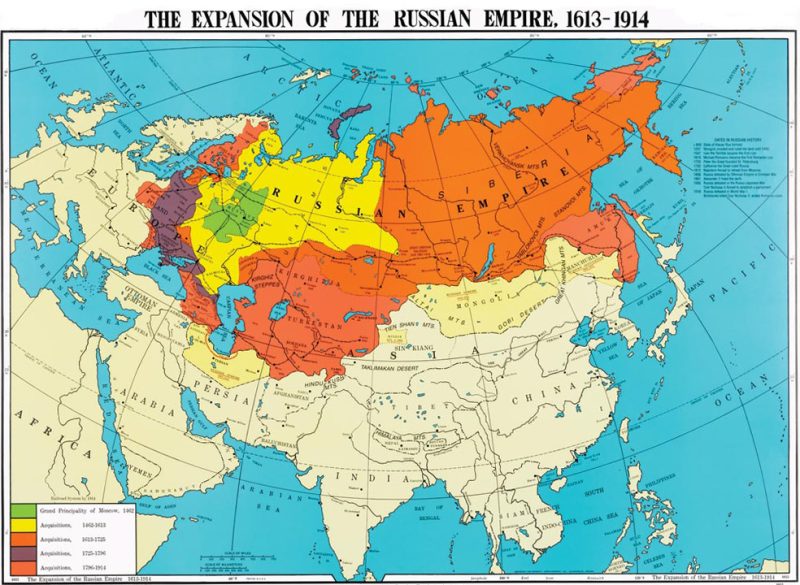
    The Russian Empire in 1914.

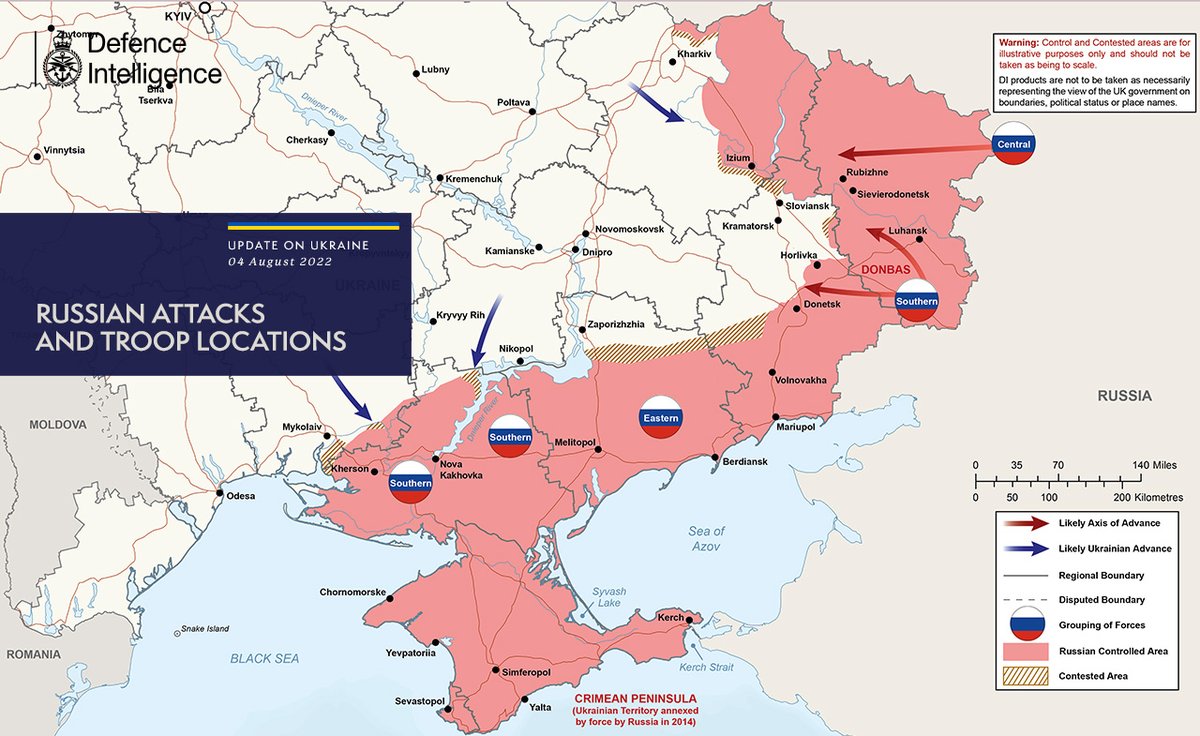
    In this pivotal war on a global scale, the Ukrainian nation is struggling to preserve its independence, obtained only 30 years ago, after centuries of domination and relentless Russification. It rejects the “Trinitarian” Russian nation (Russia, Belarus, and Ukraine) imagined in the tsarist era and claimed by Vladimir Putin. The Russian ruling class is struggling for the revival of a declining Russian imperialism that, without control over Ukraine, risks disappearing from the historical scene.

    In 1937, at a reception on the occasion of the twentieth anniversary of the October Revolution, Joseph Stalin toasted “to the complete destruction of all enemies, themselves and their kin!” As eyewitness Georgi Dimitrov noted in his diary, in making this toast, Stalin explained that the tsars “did one thing that was good—they amassed an enormous state, all the way to Kamchatka. We have inherited that state. And for the first time, we, the Bolsheviks, have consolidated and strengthened that state as a united and indivisible state.” Therefore, “whoever attempts to destroy that unity of the socialist state, whoever seeks the separation of any of its parts or nationalities — that man is an enemy, a sworn enemy of the state and of the peoples of the USSR. And we will destroy each and every such enemy, even if he was an old Bolshevik; we will destroy all his kin, his family. We will mercilessly destroy anyone who, by his deeds or his thoughts — yes, his thoughts — threatens the unity of the socialist state.”[1]

    Historically, Russian imperialism has been based on the ideas of “amassing Russian lands” and building a “unique and indivisible” Russian state. This imperialism has always been – and remains – as specific as the social formation of Russia itself has been and remained the same during the successive historical phases of its development, starting with the Tsardom of Russia (1547-1721). When Vladimir Lenin theorized “modern capitalist imperialism,” he stressed that in Russia “capitalist imperialism is weaker than military-feudal imperialism is.”[2] To describe the latter as feudal was an oversimplification. Probably from the middle of the sixteenth century, in the time of Ivan the Terrible, the Russian social formation was essentially a combination of two different pre-capitalist modes of exploitation. The first, feudal, was based on the fact that landowners extorted surplus labor from peasants in the form of rent. The other, tributary, was modeled on the Ottoman Empire, then the most powerful empire in the world,[3] and was based on the extraction by the state bureaucracy of the tax on the peasants.

    In the Soviet Union, the Stalinist dogma of the unilinear development of humanity, with only five stages, was de rigueur. The tributary mode of exploitation had no place, especially since it could be associated (superficially, but not without reason) with the domination of the Stalinist bureaucracy. Some Soviet historians, without formally transgressing this scheme, cleverly circumvented the ban by calling it “state feudalism” or “eastern” feudalism, different from “private” and “Western” feudalism. From the middle of the seventeenth century and almost until the abolition of serfdom in 1861, the third form of exploitation – and more terrible for the peasantry – was slavery, including human trafficking, into which Russian serfdom actually degenerated.

    Minimal surplus product

    None of these modes of exploitation represented (contrary to supposedly Marxist discursive habits) is a mode of production, because they failed to formally and really subsume the productive forces under them, and therefore did not guarantee their sustainable and systematic development. However, it was on the basis of these modes of exploitation that the Russian state was formed. As pointed out by Ruslan Skrynnikov, one of the leading specialists in the oprichnina of Ivan the Terrible who unleashed the very first Great Terror in Russia and drowned in it, “some of its practices contained, as if in the embryonic state, all the further development of the nobiliary and bureaucratic absolute monarchy.”[4] In fact, not only of Tsardom, but of all Russian despotic regimes up to the twentieth and twenty-first centuries.

    Another contemporary historian, Leonid Milov, puts forward very important theses on the peculiarities of the historical development of Russian society. Starting from the study of the natural and climatic conditions of production, he developed a key conception of “the history of Russia as a society with minimal total surplus product.”[5] The reasons for this are that compared to other agricultural societies, central Russia had a very short agricultural season, which because of the climate lasted only from the beginning of May to the beginning of October (in Western Europe, only in December and January did peasants not work in the fields); and in addition, the land was poor in humus.

    The result was that “until the mechanization of this type of work,” there was low fertility and, therefore, a low volume for society’s total surplus product, which “created in this region, for centuries, a relatively primitive agricultural society.” Therefore, “in order to achieve a minimum result, it was necessary to concentrate the work as much as possible in a relatively short period of time. Individual peasant exploitation could not achieve the indispensable degree of concentration of labor efforts during objectively existing agricultural labor seasons,” so its fragility “has been compensated for through most of the millennial history of the Russian state by the very great role of the peasant community.”[6]

    Unity of opposites

    Peasants’ surplus labor could only be extorted – to a large extent or even entirely – at the expense of the labor necessary for its own reproduction, that is, by methods of absolute exploitation (rather than by relative exploitation based on the increase in labor productivity). This was not possible without imposing on them the harshest possible system of serfdom, especially since, given the general conditions of production, a strong communal organization of labor was necessary. The need “to optimize the size of the total surplus product” – to increase it in the interest of the state apparatuses and the ruling class – was pressing, but “in the way to this ‘optimization,’ that is, the objective need to intensify the exploitation of the peasants, was based on this same peasant community, bastion of local cohesion and means of peasant resistance.”[7]

    From this was born “a kind of unity of opposites: what counterbalanced the inevitable existence of the community was a counterweight in the form of the most brutal and severe variant of the personal dependence of each member of this organism.” The impossibility of overcoming this contradiction without a considerable development of the productive forces, which was not allowed by pre-capitalist relations of exploitation, meant that the role of the state consisted in “creating a monolithic and powerful ruling class, capable of uprooting or neutralizing the defense mechanisms of the agrarian community in the process of daily exploitation of the peasantry.” Summing up, according to Milov: “The inevitability of the existence of the community, conditioned by its productive and social functions, ended up giving life to the most severe and brutal mechanisms to squeeze out as much surplus product as possible. Hence the emergence of the serfdom regime, which was able to neutralize the community as the basis of peasant resistance. In turn, this regime of serfdom became possible only because of the development of the most despotic forms of state power – the Russian autocratic regime.”[8] This is what has united the ruling class.

    Where does the periphery begin?

    At the same time, however, “the extremely extensive nature of agricultural production and the objective impossibility of intensifying it have meant that the main historical territory of the Russian state has not been able to withstand the growth in population density. Hence the constant need, for centuries, for the population to migrate to new territories in search of more fertile arable land, climatic conditions more favorable to agriculture, etc.”[9] Moreover, “migratory processes have gone hand in hand with the strengthening of the absolutist state, ready to control and defend large areas of the country,” and thus with the establishment of huge armed forces, although “the extremely small size of the total surplus product objectively created extremely unfavorable conditions for the formation of the so-called superstructure over the basic elements.”[10]

    This centuries-old colonial, military, and secular state expansion to the south, southeast and east gradually encompassed vast areas, increasingly extensive “alien” peripheral territories and increasingly distant neighboring countries, victims of conquest. This expansion was accompanied by several hundred years of struggle on the part of the Tsardom of Russia and then the Russian Empire (1721-1917) for access to ice-free ports on the seas to the west and east. Hence the legitimate questions that are so difficult to answer correctly: “When did Russian colonization begin – with the occupation of Kazan, an ethnically foreign city, or Novgorod, ethnically close?” The Novgorod Republic fell under the onslaught of the Moscow army in 1478, and the Kazan Khanate in 1552. “Where are the borders of the Russian metropolis, where do the Russian colonies begin, and how can they be distinguished?” Because they have been so mobile, “Russia’s borders expanded both before the rise of Tsarism and during the Tsarist era with such rapidity that the very distinction between ‘external’ and ‘internal’ was fluid and indeterminate.”[11]

    Military-colonial conquests

    The historical formation of Russia was shaped in the process of military-colonial conquests of the Russian countryside and by peasant wars, in fact anti-colonial wars, that they provoked, accompanied by internal and external colonizations, conquests, looting, and colonial oppression of other peoples. As Alexander Etkind rightly puts it, “the Russian Empire was a great colonial system both at its distant frontiers and in its dark heartlands.”[12] Contrary to Russian mythology, the conquest of a country as huge as Siberia did not “extend the territory of Moscow to the border with China,” but turned Siberia into a typical colony. Yet it became common to perceive Siberia as an inseparable part of Russia, as well as later Poland, Lithuania, Finland, the Caucasus, Bukhara and Tuva – among others.

    Some Russian historians, making their theoretical contribution to the construction of the dominant and, as is evident today, timeless “Russian idea,” have very cleverly called this phenomenon “Russia’s self-colonization”: the successive lands it seized did not become its colonies, but they “colonized themselves,”[13] because it was boundless (and, whether openly or secretly, remained boundless in the dominant ideology). After taking left-bank Ukraine in the seventeenth century, Russia’s participation in the partition of the Republic of the Two Nations (Poland-Lithuania) in the last decades of the eighteenth century allowed it to seize most of Ukraine on the right bank of the Dnieper – a total of 80% of Ukrainian land. This proved to be a fundamental strategic gain, reaching deeply into Europe and determining the scope and Eurasian character of the Russian Empire.

    If the Russian nobility was a dominant order, the land never became entirely the private property of the nobles. This would have been contrary to the overriding interests of this imperial state, in the construction of which no social class played as important a role as itself – its apparatuses and bureaucratic personnel. It was not only the construction of a colossal army at the very cost of 25 years of peasant military service and immense military and civilian infrastructure financed by the forced labor of hundreds of thousands of other peasants, belonging both to the state and to the landowners, but also entire brigades of skilled craftspeople sent to truly forced labor in different parts of the country. Moreover, as Milov puts it, “the state machine was forced to advance the process of social division of labor, and especially the separation of industry and agriculture,”[14] against the resistance of dominant modes of exploitation that hindered this process.

    Industrial serfdom

    As a result, “the participation of the state in the creation of industry in the country contributed to a gigantic leap in the development of the productive forces, although the borrowing of ‘Western technologies’ by an archaic society in the seventeenth and eighteenth centuries had a monstrous social effect: a mass of workers appeared forever attached to factories and workplaces (the so-called laborers “subjected in perpetuity”), and it stimulated the slide of society towards slavery.”[15] The enormous Russian military-industrial complex, the nucleus of which was the metallurgy of the Urals, was not established on the basis of the development of capitalist relations, but within the framework of feudal and tributary relations.[16]

    It is true that capital flourished, but it was pre-capitalist and hindered the development of capitalism – “commercial capital developed not deeply, not by transforming production, but broadly, by increasing the radius of its operation,” and “advanced from the center toward the periphery, following the peasant settlers who, in search of fresh lands and freedom from imposts, were penetrating new territory.”[17]

    Based on extra-economic coercion, pre-capitalist modes of exploitation dominated the capitalist mode of production in Russia until the revolution of 1917, not only in agriculture but also in industry, long after the reform of 1861.

    When Russian social democracy was formed as a party, the work of about 30% of the industrial workers was still serf work, not wage labor, which this social democracy, including Lenin’s and Martov’s Iskra, associating industry (i.e., the productive forces, not the relations of production) with capitalism, did not see. “Even at the beginning of the twentieth century, more than half of the industrial enterprises of the main industrial core (the steel industry) were not capitalist in the strict sense of the term,” says Mikhail Voeikov. The pre-capitalist methods of extracting the surplus product of the labor of the direct producers that still prevailed “did not allow national capital to carry out the necessary accumulation,” which is why “foreign capital was so strong.”[18] Where capital already dominated in the Russian economy, it was almost immediately big capital and there were quickly processes of monopolization.

    Multiplicity of revolutions

    In Russia, therefore, “modern capitalist imperialism” was being born, but it was “enmeshed” – Lenin wrote just before the 1917 revolution – “in a particularly close network of pre-capitalist relations,” so close that “in general, military and feudal imperialism is predominant in Russia.”[19] The foundation of this imperialism was “the monopoly of military power, vast territories, or special facilities for robbing minority nationalities, China, etc.,” that is, of the non-Russian peoples within Russia itself and of the peoples of neighboring countries. At the same time, Lenin wrote, this extra-economic monopoly “partly supplements, partly takes the place of, the monopoly of modern, up-to-date finance capital.”[20] Virtually all exegetes of Lenin’s writings on imperialism do not mention this theoretical proposition, which is crucial for the study of the Russian social formation.[21]

    The collapse of this entanglement of Russian “military and feudal” imperialism with capitalist imperialism was not the work of a single revolution, but of various revolutions converging and diverging, forming alliances and clashing violently. The Russian Revolution of October 1917 was one of them. At the center of the empire, it was a worker and peasant revolution; in the colonial periphery, it was based on Russian and Russified urban minorities and settlements. It had a colonizing character, as did the Russian power of the councils it established, as demonstrated by the Bolshevik Georgi Safarov in his once-classic work on the “colonial revolution” in Turkestan. “Membership of the industrial proletariat of a Tsarist colony was a national privilege of the Russians. This is why, here too, the dictatorship of the proletariat has taken on a typically colonizing appearance from the very first moments” (emphasis in original).[22]

    But among the oppressed peoples, the Russian Revolution also sparked national revolutions. The most territorially extensive, violent, dynamic, and unpredictable of these was the Ukrainian revolution. Its outburst, and even more the momentum it gained, was unexpected. A peasant nation, without “its” landowners and “its” capitalists, with a thin layer of petty bourgeoisie and intelligentsia and a forbidden language, did not seem destined or capable of a successful revolution. Since the Russian army wiped out the Zaporozhian Sich, the stronghold of the Free Cossacks, in 1775, the Ukrainian people for the first time proclaimed their independence in 1918. Formally it was done, with great popular support, in January 1918 in Kiev by the Central Rada (Council) formed by petty-bourgeois Ukrainian parties. Frightened by the proletarian revolution that had brought the Bolsheviks to power in Petrograd and Moscow, the Central Rada decided in this manner to separate Ukraine from Soviet Russia, and immediately became involved in a war with the Bolsheviks.

    Ukrainian National Revolution

    Some Ukrainian Bolsheviks (although the percentage of Ukrainians among the members of the Bolshevik Party in Ukraine was negligible) nevertheless also wanted a revolutionary Ukraine, a Soviet one like Russia, but independent. But above all, in the radical left, the Ukrainian Communist Party (Borotbist)—separated from the Bolsheviks and formed by the left wing of the Ukrainian Socialist-Revolutionary Party and part of the left wing of Ukrainian Social Democracy—wanted national independence. Allied with the Bolsheviks, this party had a social base incomparably broader than theirs.

    The alliance of the Borotbists with the Bolsheviks was very difficult. The head of the Bolshevik government set up after the second occupation of Kiev by the Red Army in 1919, Christian Rakovsky, coming from Bulgaria, proclaimed that “decreeing the Ukrainian language as the state language would be a reactionary measure that no one needs,” because in general “the Ukrainian question and Ukraine are not so much a real fact as an invention of the Ukrainian intelligentsia.”[23] He was not alone among Marxists: Rosa Luxemburg asserted that Ukrainian nationalism was a “ridiculous pose,” “a mere whim, a folly of a few dozen petty-bourgeois intellectuals.”[24] Believing that “Ukraine is to Russia what Ireland is to England,” that it was a colony and that its oppressed people should obtain independence, Lenin was an exception, but he said so publicly only once.[25]

    In addition to the Rakovsky government’s policy on the national question, there was an ultra-left policy on the agrarian question, which, unlike the Bolshevik decree on land, was not aimed at the parceling out of land holdings for the benefit of the peasants, but at the transformation of these properties into collective farms. State requisitions of grain and “war communism” in general added fuel to the fire. All this led to a strong tide of anti-Bolshevik peasant uprisings in 1919 (there were 660, large and small), which cut Ukraine off from Hungary and prevented the Ukrainian Red Army from coming to the aid of the Hungarian Republic of Councils, when this was the latter’s only hope of survival. In Ukraine itself, these uprisings defeated totally the policy of “war communism.” The Bolshevik authorities managed to collect only less than 9 percent of the grain that they planned to transport to Russia to feed the starving cities. Moreover, the insurgent wave paved the way for the offensive of General Anton Denikin’s White Guard troops on Moscow.[26] It is true that Rakovsky himself quickly drew serious conclusions from his government’s disastrous policies, but he did so only after its collapse.

    Pro-independence Communists

    In much of the Dnieper and south-east regions of Ukraine, the struggle against the occupation by the Russian White Guard rested on the shoulders of guerrilla and insurgent movements, led by the Communist-Borotbists, who were the strongest underground party, and by the anarcho-communists under the leadership of Nestor Makhno. After the defeat of Denikin, the Red Army, for the third time in a row, guaranteed power in Ukraine to the Bolsheviks. It was only then, in February 1920, that they decided to abandon their doctrinaire approach to the agrarian question and distribute the land to the peasants. The Borotbists were overwhelmingly in the majority among the Ukrainian Communists, and even more numerous than all the Bolsheviks then active in Ukraine, including those sent from Russia. But the Bolsheviks, much stronger with their regular army, accepted them only as very minority partners in the ruling coalition and also strongly tied their hands to limit their political independence as much as possible.

    Lenin was very afraid that once the civil war and foreign intervention were over, there would be an armed uprising of the Borotbists against the Bolsheviks if the latter opposed the independence of Soviet Ukraine. He was well aware, too, that in his own party “scratch some Communist and you will find a Great-Russian chauvinist. (…) He is in many of us and we have to fight him.”[27] He demanded of his comrades the “greatest caution regarding nationalist traditions, strictest observance of equality of the Ukrainian language and culture, all officials to be required to study the Ukrainian language, and so on.”[28]

    He publicly affirmed: “It is (…) self-evident and generally recognized that only the Ukrainian workers and peasants themselves can and will decide at their All-Ukraine Congress of Soviets whether Ukraine shall amalgamate with Russia” into a single Soviet republic, “or whether it shall remain a separate and independent republic” united by a union (federation) with Russia, and, “in the latter case, what federal ties shall be established between that republic and Russia.” On this question, he declared, “there should be no parting of the ways among Communists.” He did not accept a confederation. “One of the things distinguishing the Borotbists from the Bolsheviks is that they insist upon the unconditional independence of Ukraine. The Bolsheviks will not make this a subject of difference and disunity, they do not regard this as an obstacle to concerted proletarian effort” (emphasis in original). Because the Ukrainian nation was historically a nation oppressed by Russia, Lenin explained, “we Great-Russian Communists must make concessions when there are differences with the Ukrainian Bolshevik and Borotbist Communists and these differences concern the state independence of Ukraine, the forms of its alliance with Russia, and the national question in general.”[29]

    “A victory worth a pair of good battles”

    However, exactly the opposite happened, with the Borobtbists having to give way to the Bolsheviks in these areas – and this under the threat of “liquidation.” Behind closed doors, Lenin postulated, “for the time being, an independent” Ukraine “in close federation” with Russia and a “temporary bloc with the Borotbists” together “with the concurrent launching of a propaganda campaign for the complete merger” of Ukraine with Russia into a unitary state. He quickly added that “the struggle against the slogan of union as close as possible” with Russia, i.e. for the national independence, is “contrary to the interests of the proletariat,” so that in Ukraine “all politics must systematically and relentlessly aim at the liquidation of the Borotbists in the near future.” He “urge[d] that the Borotbists be accused not of nationalism, but of counter-revolutionary and petty-bourgeois tendencies.”[30]

    In exactly the same period the so-called “federalist,” in fact pro-independence, faction of the Ukrainian Bolsheviks had been informing Lenin that in Ukraine his “party has no influence in the countryside, which is purely Ukrainian, and does nothing to attract its poorest elements, but on the other hand it admits into its ranks with open arms Russian petty-bourgeois elements and, still more, more or less Russified Jewish craftspeople. The influence of these petty-bourgeois elements in the party is very pernicious.” This is due, they explained, to the fact that “through the entire policy of the [Bolshevik] Communist Party in Ukraine runs like a red thread an extremely suspicious attitude towards the Ukrainian Communist groups and an orientation towards groups, although not Communist, but not infected of ‘separatism’, although these groups have no real force and are a kind of ‘imaginary values’, like the [non-Ukrainian] Mensheviks and Left Socialist-Revolutionaries.”[31]

    The “liquidation” of Borotbists did not take place because, whether for the sake of the cause of the international socialist revolution or simply because they realized that a revolver had been put to their heads, they themselves dissolved their party.[32] As Lenin explained, “instead of an inevitable uprising, (…) all the best elements among the Borotbists have joined our Party under our control and with our consent, while the rest have disappeared from the political scene. This victory is worth a pair of good battles.”[33] Out of 15,000 Borotbists, 4,000 joined in Ukraine the 12,000 Bolsheviks. Less than two years later, after various, especially “anti-separatist”, internal purges, only 118 of them remained in the Bolshevik party. Some for several years occupied prominent state positions in the republic. But the pro-independence Communist currents or milieux of Borotbist origin disappeared very quickly inside the Bolshevik Party.

    In the light of Lenin’s well known ideological struggles for the right of peoples to self-determination to the point of separation, and of his real policy in this area, the way in which he actually conceived of this right inherent in his thought remains, if not a mystery, at least something totally unexplored. Nearly all Marxist literature or that presenting itself as such devoted to his interpretation of this right has the exegetical, apologetic, or epigonic character. Marxists have buried their heads in the sand in the face of the historical fact that everywhere in the colonial peripheries of Russia where the power of his party imposed itself, or more precisely where the Red Army asserted it, this right has not been enforced and there was no way to try to enforce it without being accused of being counter-revolutionary.

    Contradiction at the heart of the revolution

    The revolution in Russia did not destroy Russian imperialism. With capitalism, it overthrew “modern capitalist imperialism” and suppressed the pre-capitalist base (feudal and tributary) of military imperialism. But it did not uproot the conditions for the reproduction of the Russian extra-economic monopoly that constituted it, the extra-economic “monopoly of military power, vast territories, or special facilities for robbing” the other peoples of Russia’s inner and outer peripheries. To the extent that the revolution embraced the periphery and spread there, among the oppressed peoples, in the form of national revolutions, it forced this monopoly to retreat. At the same time, it reproduced it to the extent that it spread from the center to the periphery by means of military conquest. This contradiction, which was at the heart of the Russian Revolution, was inherent in it and impossible to resolve within its own framework. Much now depended on which side of the contradiction would prevail.

    Following the collapse of the Russian Empire, Finland, Estonia, Lithuania, Latvia, and Poland successively broke away from it, and following the disastrous defeat suffered in the 1920 war with Poland, Soviet Russia lost part of Ukraine (and Belarus). For the survival of Russian imperialism, it was decisive whether or not Soviet Ukraine would separate. When the Soviet Union took shape as a state body in 1922-1923, the Ukrainian Bolsheviks spoke openly of the fact that while a sharp struggle was waged against Ukrainian “nationalist survivals” among Bolsheviks, especially those of Borotbist origin, “great power prejudices, nourished by breast milk, had become an instinct among very many comrades,” because “in practice no struggle against great power chauvinism was waged in our party.”[34] At the head of those who still demanded the independence of Ukraine and the creation of a union of independent Soviet states, Rakovsky, now a very popular leader among the Ukrainian masses, fiercely opposed Stalin.[35] They lost, but their defeat was incomplete.

    The Transformations of Russian Imperialism

    The central leadership of the Bolshevik Party, led by Stalin, opposed the aspirations for independence in favor of a linguistic and cultural nationalization of the non-Russian republics. Unexpectedly for its Moscow promoters, Ukrainization turned into an extension of the Ukrainian national revolution, which it revived and remarkably revitalized. It lasted almost 10 years, until 1932. The extermination by hunger (Holodomor) and the crushing of Ukrainization by terror[36] were both constitutive acts of the Stalinist bureaucracy, now separated from the Thermidorian bureaucracy that had ruled until then (and would soon be exterminated by it), and an act of rebirth – this time of Russian military-bureaucratic – imperialism.[37]

    The latter was consolidated by the unification of Ukrainian (and Belarusian) lands following the partition of Poland by Hitler and Stalin, and by the annexation of the Baltic states, accomplished in 1939 and confirmed in 1944, during the victorious war against German imperialism. The gigantic plundering of the industrial resources of the Soviet zone of occupied Germany, as well as the domination over the satellite states of Eastern Europe, kept in check by the permanent threat of Soviet military intervention, have sealed this revival of Russian imperialism.[38]

    The sudden, totally unexpected fall of the USSR in 1991 revealed the nature of this state, created on the basis of Stalin’s Great Terror. What Ukraine failed to achieve during the collapse of the Russian Empire, it was able to do during the collapse of the Soviet Union. It then managed to break away, like 14 other of the largest non-Russian nations. By declaring its national independence, it dealt a decisive blow to Russian military-bureaucratic imperialism.

    Restored on the ruins of the USSR, Russian capitalism remains dependent on the same extra-economic monopoly on which past modes of exploitation depended and, like them, it is distorted by this dependence. The Russian state protects capitalist private property, but at the same time restricts it because this property is subject to state coercion, just as the fusion of the state apparatus with big capitals restricts and distorts competition between them. Thus, under the weight of this monopoly, state oligarchic capitalism and military-oligarchic imperialism have taken shape in Russia.

    The imperative of reconquest

    However, this monopoly itself has suffered enormous, albeit extremely uneven, degradation. Russia retained its “monopoly of military power” to the extent that, after the collapse of the USSR, it remained the world’s largest nuclear power with a huge army. On the other hand, its “monopoly of the vast territories, or special facilities for robbing” of other peoples has declined profoundly. As Zbigniew Brzezinski observed after the collapse of the USSR, Russia’s borders receded dramatically, “rolled back to where they had been in the Caucasus in the early 1800s, in Central Asia in the mid-1800s, and – much more dramatically and painfully – in the West in approximately 1600, soon after the reign of Ivan the Terrible.” Worst of all, “without Ukraine, Russia ceases to be a Eurasian empire” and while “can still strive for imperial status,” the center of gravity would then be shifted and Russia would be doomed to weakness. Brzezinski was right when he wrote that, “if Moscow regains control over Ukraine, with its 52 million people and major resources as well as its access to the Black Sea, Russia automatically again regains the wherewithal to become a powerful imperial state, spanning Europe and Asia.”[39]

    This is why Russian imperialism has embarked on the reconquest of Ukraine, where its very destiny is at stake.

    Originally published in Polish in Le Monde diplomatique – Edycja polska no. 2 (174), 2022, and in French in Inprecor no. 695/696, 2022.

    Zbigniew Marcin Kowalewski served in 1981 as regional leader of Solidarność and as the national leader of the movement of workers’ councils in Poland. He researches revolutionary and emancipatory movements and studies the Soviet-type bureaucratic regimes. He is assistant editor-in-chief of the Polish edition of Le Monde Diplomatique.

    Notes

    Titles remain in their original languages.– Eds.

    1. I. Banac (ed. ), The Diary of Georgi Dimitrov, 1933-1945, Yale University Press, New Haven-London 2003, p. 65.
    2. V.I. Lenin, “The Collapse of the Second International,” Collected Works vol. 21, Progress, Moscow 1974, p. 228n.
    3. С.А. Нефедов, “Реформы Ивана III и Ивана IV: османское влияние,” Вопросы истории no. 11, 2002, pp. 30-53.
    4. Р.Г. Скрынников, Царство террора, Наука, Saint Petersburg 1992, p. 512.
    5. Л.В. Милов, Великорусский пахарь и особенности российского исторического процесса, РОССПЭН, Moscow 2001, p. 7.
    6. Ibid., pp. 554-556.
    7. Ibid., p. 556.
    8. Ibid., pp. 481-482, 556.
    9. Ibid., p. 566.
    10. Л.В. Милов, “Особенности исторического процесса в России,” Вестник Российской Академии наук vol. 73 no. 9, 2003, p. 777.
    11. А. Эткинд, Д. Уффельманн, И. Кукулин, “Внутренная колонизация России: Между практикой и воображением,” in: А. Эткинд, Д.  Уффельманн, И.  Кукулин (eds.), Там, внутри.  Практики внутренней колонизации в культурной истории России, Новое литературное обозрение, Moscow 2012, pp. 10, 12.
    12. A. Etkind, Internal Colonization. Russian Imperial Experience, Polity, Cambridge-Malden 2011, p. 26.
    13. Ibid., pp. 61-71; A. Etkind, “How Russia ‘Colonized Itself’. Internal Colonization in Classical Russian Historiography,” International Journal for History, Culture and Modernity vol. 3 No. 2, 2015, pp. 159-172.
    14. Л.В. Милов, op. cit. p. 777.
    15. Ibid., op. cit. p. 777.
    16. В.В. Алексеев, “Протоиндустриализация на Урале,” in: Экономическая история России XVIIXX вв.: Динамика и институционально-социокультурная среда, УрО РАН Ekaterinburg 2008, pp. 63-94.
    17. L. Trotsky, History of the Russian Revolution, Haymarket, Chicago 2008, p. 641.
    18. М. Воейков, “Великая реформа и судьбы капитализма в России (к 150-летию отмены крепостного права),” Вопросы экономики n° 4, 2011, pp. 135, 123, 136.
    19. V.I. Lenin, “Socialism and War (The Attitude of the R.S.D.L.P. Towards the War),” and idem, “Imperialism, the Highest Stage Of Capitalism. A Popular Outline,” Collected Works vol. 21, pp. 306, 259.
    20. V.I. Lenin, “Imperialism and the Split of Socialism,” Collected Works vol. 23, p. 116.
    21. Cf. Z.M. Kowalewski, “Impérialisme russe,” Inprecor no. 609/610, 2014, pp. 7-9.
    22. Г. Сафаров, Колониальная революция (Опыт Туркестана), Госиздат, Moscow 1921, p. 72. This fundamental work for the development of anti-colonial thought, forbidden and condemned to eternal oblivion by Stalin, was only re-released in 1996 in Kazakhstan. Internationally, it remains almost completely unknown to this day.
    23. П. Христюк, Замітки і матеріали до історії української революції 1917-1920, рр. vol. IV, Український соціологічний інститут, s.l. 1922, p. 173.
    24. R. Luxemburg, The Russian Revolution and Leninism or Marxism?, The University of Michigan Press, Ann Arbor 1961, p. 54.
    25. Quoted after П. Кравчук, “Під проводом благородних ідей (6),” Життя і Слово (Toronto) No. 26 (183), 1969, p. 18. The text of this speech was lost and is known only from the press reports of the time. See R. Serbyn, “Lenin and the Ukrainian Question in 1914. Le discours ‘séparatiste’ de Zurich,” Pluriel-débat no. 25, 1981, pp. 83-84.
    26. Cf. Z.M. Kowalewski, “For the Independence of Soviet Ukraine,” in M. Vogt-Downey (ed.), The USSR 1987-1991: Marxist Perspectives, Humanities Press, New Jersey 1993, pp. 235-255.
    27. V.I. Lenin, “Eight Congress of the R.C.P.(b). Speech Closing the Debate on the Party Programme,” Collected Works vol. 29, p. 194-195. Translation verified with the Russian original and corrected (see В.И. Ленин, Полное собрание сочинений vol. 38, Политиздат, Moscú 1969, p. 183-184).
    28. R. Pipes, David Brandenberger (eds.), Unknown Lenin. From the Secret Archive, Yale University Press, New Haven-London 1996, p. 76.
    29. V.I. Lenin, “Letter to the Workers and Peasants of the Ukraine Apropos of the Victories over Denikin,” Collected Works vol. 30, pp. 292, 294, 296.
    30. R. Pipes, David Brandenberger (eds.), op. cit., p. 76; В.И. Ленин, “Проект резолюции об украинской партии боротьбистов” and “Замечания к резолюции исполнительного комитета Коммунистического Интернационала по вопросу о боротьбистах,” Полное собрание сочинений vol. 40, Политиздат, Moscow 1974, pp. 122, 152.
    31. “Лист представників української комуністичної організації при Московському комітеті РКП(б) до ЦК РКП(б) та особисто Леніна з аналізом та оцінкою політики Комуністичної партії в Україні у 1919 р.,” in: Г. Єфіменко, Взаємовідносини Кремля та радянської України: економічний аспект (1917-1919 рр.), Інституту історії України НАН України, Kiev 2008, pp. 191-192.
    32. The circumstances and course of the self-dissolution of the Ukrainian Communist Party (borotbists) were examined by Д. В. Стаценко, “Самоліквідація осередків Української комуністичної партії (боротьбистів) у 1920-му році (на прикладі Полтавщини),” Iсторична пам’ять. Науковий збірник vol. 29, 2013, pp. 58-70.
    33. V.I. Lenin, “Ninth Congress of the R.C.P.(b). Reply to the Discussion on the Report of the Central Committee,” Collected Works vol. 30, p. 471. Translation verified with the Russian original and corrected (see В.И. Ленин, Полное собрание сочинений vol. 40, Политиздат, Moscú 1974, p. 266).
    34. These are the words of Mykola Skrypnyk, one of the main leaders of the Ukrainian Bolsheviks. Двенадцатый съезд РКП(б). 17-25 апреля 1923 года. Стенографический отчёт, Политиздат, Moscow 1968, pp. 571-572.
    35. Г. Чернявский, М. Станчев, М. Тортика (Лобанова), Жизненный путь Христиана Раковского. 1873-1941. Европеизм и большевизм: неоконченная дуэль, Центрполиграф, Moscow 2014, pp. 165-191.
    36. The most accurate analysis of this event was provided by A. Graziosi, “The Soviet 1931-1933 Famines and the Ukrainian Holodomor: Is a New Interpretation Possible, and What Would Its Consequences Be?,” Harvard Ukrainian Studies vol. 27 no. 1/4, 2004/2005, pp. 97-115.
    37. Cf. Z.M. Kowalewski, “Ouvriers et bureaucrates. Comment les rapports d’exploitation se sont formés et ont fonctionné dans le bloc soviétique,” Inprecor no. 685/686, 2021, p. 35-61.
    38. Cf. D. Logan [J. van Heijenoort], “The Eruption of Bureaucratic Imperialism,” The New International vol. XII no. 3 (105), 1946, pp. 74-77.
    39. Z. Brzezinski, The Grand Chessboard. American Primacy and Its Geostrategic Imperatives, Basic Books, New York 1997, pp. 88, 46.


  • Explaining Sri Lanka’s Economic Crisis

    Explaining Sri Lanka’s Economic Crisis

    Sri Lanka is part of a line of exceptional cases of sovereign default over the past several decades. Like Argentina in 2001 and Greece in the aftermath of the 2008 global financial crisis, the country is experiencing tremendous political upheaval as it deals with the consequences of a balance of payments crisis. In Sri Lanka’s case, this has made it difficult to repay its external debt denominated in dollars. But Sri Lanka’s crisis is also singular in the extent to which it reflects the issues of a contemporary global order on the verge of breakdown. As many commentators have pointed out, external shocks, from the Covid-19 pandemic to the war in Ukraine, have created unprecedented pressures on Sri Lanka as well as other countries in different parts of the global South. These shocks exposed Sri Lanka’s internal vulnerabilities. The latter are both structural, in terms of the country’s overwhelming dependence on the external sector, and political, because of the profound failure of the government led by President Gotabaya Rajapaksa.

    A real solution now depends on proper diagnosis of the causes. That means not only recognizing the scale of the economic depression, but also accepting far-reaching, progressive changes to the relationship between state and society that are required to pull the country out of the abyss. Meanwhile, Sri Lanka’s economic collapse has given rise to a protest movement of a massive scale, as people across the island have come out onto the streets to demand Rajapaksa’s resignation. Around the world, people are receiving news about the political fallout in the country, nearly two months since protestors converged on Rajapaksa’s house in Mirihana, a suburb of the commercial capital of Colombo, on March 31st. The call for Rajapaksa to resign remains the central demand of the protest movement. Still, there is debate over the structural causes of the crisis. This conversation has been challenging because of the unwillingness of elites and the country’s economic establishment to grapple with the consequences of the breakdown of the market. The problem has been further compounded by the intervention of hegemonic external actors, which most recently include the United States, India, and Japan.

    These countries may be considering the possibility that Sri Lanka can become a laboratory for experiments to manage the effects of the global economic downturn on countries in the global South. Toward this end, they endorsed the appointment of Ranil Wickremesinghe to the post of Prime Minister after Rajapaksa’s brother, Mahinda, vacated it on May 9th. Such political maneuvering is a worrying sign of the continued inability of the ruling class in Sri Lanka to accept the need for wealth redistribution and collective mobilization. Wickremesinghe was Prime Minister in the past, and he currently represents a party with only one seat in parliament, after its drubbing in the last elections held in 2020. A wide section of Sri Lanka’s elites has accepted the Faustian bargain of deflecting protestors’ demand for Rajapaksa to resign in the interests of “economic stability.” This decision is ostensibly for the purpose of negotiating an agreement with the International Monetary Fund (IMF). Combined with implicit and explicit repression, the protest movement demanding Rajapaksa’s resignation faces herculean challenges.

    Even more is at stake now, given that food shortages and potential famine-type conditions are fast approaching. Only far-reaching mobilization of the polity will be enough to stave off disaster. Because of the dizzying speed at which political developments are occurring, however, it is useful to start by approaching the questions raised by Sri Lanka’s economic collapse from a longer macroeconomic perspective. The country’s economic establishment has put forward several major explanations for the crisis. The two most prominent are that Rajapaksa’s government engaged in money printing, or loose monetary policy, and that it pursued misguided tax cuts in 2019 when it came into power. Money printing supposedly caused inflation, while tax cuts undermined the country’s revenue base, which paved the way for global ratings agencies to downgrade Sri Lanka’s external debt.

    The downgrading led to Sri Lanka getting locked out of international capital markets. With the onset of the Covid-19 pandemic in 2020 and the collapse in tourism revenues, it became impossible for Sri Lanka to roll over its significant external debt. The two arguments proposed by the economic establishment converge on the idea that ultimately the domestic budget deficit is responsible for the crisis. According to this narrative, Sri Lanka must follow an IMF program with strict conditionalities, which are being negotiated, to recover from collapse. If we are to push back against this solution that could make a terrible collapse even worse, and grapple instead with the real cause of the crisis—Sri Lanka’s overwhelming dependency on the external sector, as reflected in the current account deficit —we must deconstruct the dominant explanations.


    The Impact of Rising Prices

    Throughout the uneven recovery from the Covid-19 pandemic, many heterodox economists around the world have noted that inflation is an abstract and imprecise measure to capture what has been happening in terms of rising prices. In the case of Sri Lanka, as elsewhere, we must specify the causes. Looking at food prices, for example, we see that the phenomenon must be explained on its own terms. Sri Lanka imported about $1.6 billion of food, or about 8% of its import bill, in 2021. Food prices increased by roughly 45% in April year over year. Meanwhile, the UN Food and Agriculture Organization’s (FAO) Food Price Index indicates that global food prices increased by 30% from March 2021 to 2022. The food crisis is far more acute in Sri Lanka because the market has already broken down. Local factors compound rising prices, such as hoarding.

    If rice mill owners, for example, expect prices to increase, they may refuse to sell, increasing scarcity and shortages. The government last year attempted to curtail the hoarding of rice by imposing price controls. But it lacked the political will to be able to enforce these measures on the mill owners, and it soon rescinded them. Moreover, the government failed to address domestic supply constraints, such as low investment in food production. Instead, debt moratoriums for big businesses and loose monetary policy only encouraged further speculation because these measures were not implemented as part of a concerted effort to spend in critical areas of the economy, especially food production. The government’s mismanagement of the crisis, however, does not mean that money printing itself caused rising prices, although as an isolated policy, it clearly failed to ameliorate them.

    Another example of such rising prices is fuel. The price per barrel rose from about $25 shortly after the global Covid-19 pandemic was announced in March 2020, to over $100 in the aftermath of the Russian invasion of Ukraine. Sri Lanka, as a country dependent on oil imports for its energy needs, was severely impacted by this increase. But its vulnerable position was also shaped by elite patterns of consumption, in which luxury high-rise development and private vehicle ownership has taken precedence over, for example, investment in the public transportation system.


    Proposed Solutions and Their Effects

    The government of Gotabaya Rajapaksa made the economic situation more intolerable by banning chemical fertilizers overnight, in April 2021. It originally claimed its goal was to achieve organic agriculture. But the real purpose was conserving precious foreign exchange. This policy undermined Sri Lanka’s self-sufficiency in food production, as opposed to creating a viable path for transforming the country’s agriculture. It threw the food system into crisis, precisely when domestic food production became a critical need. The government further struggled to contain the balance of payments deficit, which widened to $8 billion as imports increased by $20 billion, compared to $12 billion for exports in 2021, despite its rhetoric about import substitution.

    The country also experienced the dramatic collapse of tourism revenue with the onset of the Covid-19 pandemic, which went from about $3.5 billion in 2019, to less than $1 billion in 2020. Migrant workers’ remittances also declined from about six billion dollars in 2020 to about five billion in 2021, as external pressures made it more difficult to attract dollars. The result of these challenges is that the current account deficit widened from roughly 1.5% of GDP in 2020 to 4% in 2021. Sri Lanka’s GDP is roughly $80 billion. Before going into hard default on May 18th, the country was expected to service about $7 billion in external loans this year alone. Rising debt servicing costs are further exacerbated by interest rate hikes by the US Federal Reserve. The worsening current account deficit and the depletion of Sri Lanka’s foreign exchange reserves has made it impossible to import essential goods.

    In the current volatile political moment, the President appointed a new Central Bank Governor in April, after the previous one, Ajith Nivard Cabraal, was forced to quit in disgrace. The Central Bank soon thereafter chose to raise interest rates, from about 6% to 14%. What such rate increases do in an economic crisis is put more pressure on small businesses and other borrowers. But all these efforts have stemmed from the belief that the problem was the previous Central Bank policy of money printing, as opposed to the actual cause, which was rising prices induced by external pressures. The Central Bank itself has recently acknowledged this cause and it may reconsider further rate increases. But in the meantime, such uncertainty will only exacerbate pressure in people’s lives.


    The Decline of Redistributive Taxation and the Shift to External Debt Financing

    Furthermore, the economic establishment has relied on the argument that the Rajapaksa government’s tax cuts in 2019 undermined the proportion of revenue to expenditure, which led to the widening of the budget deficit. It is true that taxes are already low as a proportion of Sri Lanka’s GDP, constituting 9%. Expenditure has been roughly 20% of GDP. But as political economists such as Mick Moore and Ronald Herring have long pointed out, the budget deficit in fact started widening to a far greater degree with the onset of economic liberalization in the late 1970s. Sri Lanka became a poster child for liberalization in the wider South Asian region by becoming one of the first countries to adopt neoliberal policies in 1978 under JR Jayewardene. The framework included slashing import tariffs, cutting the food subsidy, floating the exchange rate, and generally pursuing trade and financial liberalization. As a result of tax concessions—which, supposedly, were incentives to attract foreign investors to, for example, Export Processing Zones—the country’s revenue base was hollowed out.

    Initially, the deficit was not as much of an issue because Sri Lanka could obtain foreign aid and concessional financing. But in the absence of a redistributive tax system to fund public services, non-concessional loans, which included not only bilateral funding but also significant borrowing on financial markets, became a much larger proportion of external debt. The country issued its first sovereign bond, for example, in 2007. Fast forwarding to today, we can see that sovereign bonds in fact constitute roughly 40% of external debt, which in total is about 60% of GDP. Despite claims about the “Chinese debt trap” promoted in international media, the reality is that debt owed to China constitutes around 10% of external debt. Sri Lanka’s financial crisis is the outcome of a history of liberalization policies that have now been exposed by the breakdown of the country’s economy.

    For the economic establishment, however, rhetoric about the domestic budget deficit has offered an opportunity to push for compliance with potentially stringent IMF conditionalities. If an agreement is ratified, it is likely to hinge on hiking interest rates, raising indirect and direct taxes, slashing the public sector, and implementing “cost recovery energy pricing,” or increasing energy prices, to make loss-making State-Owned Enterprises, such as public utilities, profitable. Raising taxes on income and corporations, of course, as opposed to indirect taxes on essential goods, is necessary in the long run. But when incomes are falling across the board in an economic crisis, as Ahilan Kadirgamar has consistently pointed out in the case of Sri Lanka, there must be a wealth tax on property and assets instead.

    Additionally, the economic establishment has proposed cash transfers to the poor and vulnerable. But such transfers will not be effective if both large sections of the population are becoming immiserated—as witnessed by the increasing participation of the middle class in protests—and the price of essential goods is skyrocketing. Instead, as the Feminist Collective for Economic Justice has emphasized, the public distribution system must be revived. But to do so, the rural infrastructure that, despite political rhetoric, has largely been ignored—including the Paddy Marketing Board, Cooperative Wholesale Establishment, and the Lanka Sathosa chain of subsidized retail outlets—requires massive and immediate investment. Those efforts hinge on financing through domestic borrowing in rupees, to prioritize the needs of marginalized communities in the rural and urban periphery.


    The Urgent Need for Self-Sufficiency

    Typically, these issues have been downplayed. Underlying the IMF’s proposals, and the Sri Lankan elite’s shared interest in them, is the goal of further liberalizing trade, despite the widening current account deficit. This contradiction has become the crux of the matter. To confront the problem, we must distinguish rhetoric around the budget deficit from the current account deficit, which implies the critical need to prioritize imports. Such efforts, however, will require far-reaching democratic mobilization to change Sri Lanka’s economy in the direction of self-sufficiency, with an egalitarian emphasis on transforming social relations. The Rajapaksa government ignored this project. Instead, it focused on consolidating its own power through authoritarian methods and divisive Sinhala Buddhist nationalist politics during the time period between when it came to power in 2019 and the current economic collapse.

    While the causes for the government’s failure were its own, however, Sri Lanka is also representative of bigger challenges on a global level. As the UN Conference on Trade and Development noted in an update to its annual report this year, the ratio of external debt to GDP in developing countries rose from 57% in 2020 to 70% in 2021. Similarly, the ratio of external debt to exports has increased from 176% to 252%. Calling for further trade liberalization, then, will not do countries like Sri Lanka any good. Instead, the need of the hour is to re-embed food security in the paradigm of self-sufficiency so that people can be insulated from external shocks. With the ongoing deterioration of the global environment, Sri Lanka’s economic collapse could be a forerunner of trends across other parts of the global South.

    To resolve these issues, progressives abroad should support efforts to actively prioritize a solution that puts the needs of people in places such as Sri Lanka first. Solidarity from abroad must grapple with the fact that even ongoing global campaigns to cancel odious debt and reform the global debt architecture work on a medium to longer term timeline. In the short term, and in the most urgent sense, solidarity with working people’s protests in Sri Lanka means pushing back against imperial intervention by powerful actors that may attempt to rescue a highly unequal, decaying neoliberal system, even while they try to frame the crisis in terms of intensifying geopolitical competition between hegemonic powers in the region. Now, more than ever, we must democratize the global order by heeding the demands put forth by movements on the ground in places like Sri Lanka, where people are experiencing the severest effects of the crisis.


    This article is a revised and expanded version of a talk given for the webinar “What’s Happening in Sri Lanka?” co-sponsored by Internationalism from Below and Haymarket Books.


  • Political Dimensions of the Crisis in Sri Lanka

    Political Dimensions of the Crisis in Sri Lanka

    Let me start with a childhood memory. My father was Tamil, my mother was Burgher – that’s what they call people with European ancestry in Sri Lanka – and we were living in a predominantly Sinhalese neighborhood just outside Colombo. One day in May 1958 our Sinhalese neighbor Menike, who was like a member of our family, came over in great distress, insisting that we leave our home at once and go somewhere safe because a bloodthirsty mob was heading our way. At around the same time my mother’s former student Yasmine, who had become a family friend, also Sinhalese, came over in a car, offering to shelter us at her parents’ place. My mother had been for a walk so my parents knew that Tamils were being attacked, but at that point they refused to leave. They packed off my brother and me and our Tamil grandmother in a taxi with another Sinhalese neighbor to stay with our burgher grandmother, and started making Molotov cocktails to defend themselves and their home. By this time Menike was frantic and threatened to commit suicide unless they left. They finally agreed, and yet another Sinhalese neighbor drove them in his car to Yasmine’s parents’ place.

    Thirty years later, when I was doing research on Sri Lankan refugees and internally displaced people, I came across numerous similar stories in which Tamils had been saved by Sinhalese friends, neighbors, colleagues, or even total strangers. To me these stories encapsulate the divided soul of Sri Lanka: hatred and violence on one side, love and compassion on the other, racism on one side, anti-racism on the other, brutal authoritarianism on one side, a stubborn pursuit of democracy and human rights on the other.

    The divisions were already present at Independence in 1948, when J.R. Jayawardene, leader of the United National Party or UNP, and S.W.R.D. Bandaranaike, who later became leader of the Sri Lanka Freedom Party or SLFP, agreed on one thing: depriving around a million Tamils of more recent Indian origin, most of whom were plantation workers in the central Hill Country, of their franchise and citizenship. The exercise was carried out in a patently discriminatory manner by demanding that these poverty-stricken and super-exploited workers provide documentary proof of Sri Lankan ancestry, which the vast majority of Sinhalese citizens would not have been able to provide. During the parliamentary debates on these bills, the left parties – the larger Trotskyist Lanka Sama Samaja Party or LSSP and the smaller Communist Party of Ceylon (now the Communist Party of Sri Lanka or CPSL) – argued vehemently against them, denouncing them as racist, anti-democratic, and an attack on workers’ rights. The strength of the left and the labor movement in this early period can be gauged from the success of the “hartal” or nationwide general strike they launched in 1953, when the UNP government tried to abolish the highly-subsidized rice ration on the advice of the World Bank.

    In 1956, Bandaranaike and his SLFP came to power on the promise of making Sinhala the only official language. The Official Language or Sinhala Only Act, as it came to be called, discriminated against Tamil-speaking people in government employment, and peaceful protests were launched against it. On this occasion too, the main left parties opposed the bill, although a breakaway section of the LSSP supported it. In 1957, responding to the protests, Bandaranaike signed the Bandaranaike-Chelvanayakam Pact, recognizing Tamil as the language of a national minor­ity and of administration in the Northern and Eastern Provinces. But a year later, in response to militant agitation by right-wing Buddhist monks, he renounced the Pact, leading to a campaign by Tamils in Jaffna blacking out the Sinhala letter sri, which had been substituted for English letters on their license plates. This was what sparked the 1958 anti-Tamil riots in Colombo and elsewhere. As the violence threatened to rage out of control, Bandaranaike handed over authority to the Governor General, who declared an Emergency and clamped down on the mobs. Angry with Bandaranaike for not going far enough, an extreme right-wing Buddhist monk organization, the Eksath Bhikkhu Peramuna, assassinated him in 1959. His widow, Sirimavo Bandaranaike, became leader of the SLFP, which was elected to power in 1960. In 1964 she negotiated an agreement with Indian Prime Minister Shastri to deport over half a million Tamil plantation workers to India.

    In 1964, the LSSP and CP entered into an alliance with the SLFP, and in 1968 formed a United Front with it which came to power in 1970. I feel this was an unmitigated disaster. The left disintegrated as principled members of the parties broke away and then split again, and the LSSP was expelled from the Fourth International. There were no major anti-Tamil pogroms under Mrs. Bandaranaike, but discrimination continued. In 1970 the United Front government introduced a university entrance system that discriminated against Tamils, creating a group of frustrated and embittered Tamil youths. Paradoxically, in 1971 there was an anti-government uprising led by the Janatha Vimukthi Peramuna or JVP, which combined Sinhala nationalism with an authoritarian brand of socialism and drew its membership and support precisely from those sections of the population who should have benefited from Sinhala Only. The uprising was crushed with at least 5,000 people killed. The depth of their dissatisfaction should have alerted the government to the fact that anti-Tamil discrimination was not solving the problems of unemployment and poverty among the Sinhalese, but the anti-Tamil policies continued. In the name of nationalizing the plantations, plantation land was distributed to Sinhalese government supporters under the Land Reform Laws of 1972 and 1975. Tamil plantation workers and their families were assaulted and driven out, their dwellings looted and burned; some were killed, and others were left to starve.

    In 1972, a Republican Constitution was enacted. Ironically, the same Colvin R. de Silva of the LSSP who had in 1958 warned that Sinhala Only would result in “two torn little bleeding states,” now presided over the drafting of a constitution which entrenched Sinhala as the sole official language, provided a special status to Buddhism, and omitted the protection of minority rights. The 1972 constitution also omitted the second chamber of Parliament, the independent Public Service Commission to guarantee impartiality in public service appointments and the Judicial Service Commission, which was intended to guarantee the independence and integrity of the judiciary. Judicial review of legisla­tion was also prohibited. Thus, in addition to further depriving minorities of their rights, the 1972 constitu­tion centralized power in a manner that could be used against the Sinhalese majority.

    After the UNP headed by J.R. Jayawardene won the elections in 1977, he enacted a new constitution in 1978, further centralizing almost unlimited power in the hands of the Executive President – himself. Freedom of expression and other democratic rights were crushed. He set up the Jathika Sevaka Sangamaya or JSS, supposedly a union but more like a government-controlled paramilitary force. JSS gangs were used to intimidate and kill opposition supporters and judges who gave verdicts against UNP criminals. They were used repeatedly against workers and trade unions to break strikes, assault and kill trade unionists, and get members of existing unions dismissed. It was obvious that the JSS had protection from the very top because the police never acted against them, whereas around 80,000 public employees who opposed them and went on strike lost their jobs.

    Starting just a month after the UNP took office, the JSS was used to assault and kill Tamils, loot and burn their shops and homes, and drive them out of the areas where they lived. In 1979, the Prevention of Terrorism Act and provisions of the Public Security Act were used as a cover for the torture, disappearance, and killing of thousands of Tamils by the state. Then in May 1981, violence broke out in Jaffna, and the targets of widespread arson attacks included the Jaffna Public Library, with its 95,000 volumes and priceless manuscripts. This was followed by island-wide pogroms against Tamils, which were only over-shadowed by the even more gruesome massacres of 1983, which left thousands of Tamils dead and turned a simmering conflict into a civil war between the Sinhalese state and Tamil nationalist militias fighting for a separate Tamil state. The most ruthless and powerful of these, the Liberation Tigers of Tamil Eelam or LTTE, became dominant by slaughtering its rivals. Tamil socialists were demoralized. Some drifted into Tamil nationalist parties and militant groups, while others were killed or driven into exile by the LTTE.

    The fighting in the North and East halted temporarily after Jayawardene signed an accord with Indian Prime Minister Rajiv Gandhi in July 1987 granting Tamil the status of an official language and providing for limited devolution of power to the provinces. Fighting shifted to the rest of the country as the JVP launched its second insurrection. Many of its former members who disagreed with its chauvinism and authoritarianism had left, and those who remained were hardliners whose response to anyone who opposed them inside or outside the organization was invariably violent. The state, controlled by the UNP, responded with indiscriminate slaughter of Sinhalese youth. This is what resulted in the grue­some atrocities and massive death toll (estimated at 40,000-60,000) during the second JVP insurgency, which ended in November 1989. On the pretext of fighting the JVP, government death squads killed unarmed critics, political rivals, and even dissidents within the UNP, and this repression went on after the JVP was defeated. In 1990, fighting between the state and the LTTE broke out again. Ranil Wickremasinghe, the current leader of the UNP, was a senior member of the government throughout this period, and therefore shares responsibility for the mass murder of both Sinhalese and Tamils, most of them unarmed civilians.

    What we see here is the trajectory that has led to the political crisis in 2022. On one side, working people have been divided and weakened again and again, on the other side power has been centralized more and more, allowing the Executive President leeway to appoint cronies to key posts and destroy the economy. The struggle over the Constitution is crucial from this point of view, and it has had a roller-coaster ride, partly because courts have held that changing crucial elements of it like abolishing the Executive Presidency itself requires a two-thirds majority in parliament as well as a simple majority in a referendum. When Chandrika Kumaratunga was elected president in 1994 on the promise of ending the war and abolishing the Executive Presidency, democratic rights were mostly restored in the parts of the country under government control. But the LTTE sabotaged her efforts to end the war by assassinating two Tamil politicians engaged in crafting a constitution that would devolve significant authority to the North and East and trying to assassinate her too. Nor did she succeed in abolishing the Executive Presidency. But the 17th Amendment to the constitution was passed, taking away the power of the president to unilaterally appoint people to institutions that ought to be independent, like the Election Commission and the Supreme Court.

    In 2005, Kumaratunga was succeeded as president by Mahinda Rajapaksa, who was then in the SLFP. Human rights violations against Tamils, which had declined under Kumaratunga, increased sharply. In the South, freedom of expression came under severe attack, and death squads targeting critics of the government resurfaced. Among the many victims, perhaps the most famous are Lasantha Wickrematunge and Prageeth Ekneligoda. Gotabaya Rajapaksa, who was Defense Secretary at that time, not only controlled the armed forces and multiple intelligence agencies, but also higher education and urban development. As the war moved towards its terrible end in 2009, the UN estimated that around 40,000 civilians were killed, partly because the LTTE used them as human shields but also because the Defense Secretary directed government forces to bomb and shell civilian targets, including hospitals and safe zones.

    The presidential election of January 2010 in which Mahinda Rajapaksa came back to power was marked by massive irregularities. He used state resources to support his own campaign and vilify his opponent, assault and kill journalists who failed to fall in line, attack opposition rallies, and rig the vote so blatantly that the election commissioner admitted he was unable to guarantee the safety of even a single ballot box. His coalition won the subsequent parliamentary elections, and one of his first priorities was to pass the 18th Amendment that reversed the reforms introduced by the 17th Amendment, allowing him to appoint his family members and cronies to key ministries and all supposedly independent institutions. It also abolished the two-term limit on the presidency. With the LTTE defeated, a new enemy was found to rally the Sinhalese masses behind the Rajapaksas: Muslims. State-sponsored far-right Buddhist monk groups sprang up, driving Muslims from their homes and businesses with arson and murder.

    When the presidential election of 2015 was announced, with Mahinda Rajapaksa standing again, it should be obvious why voters from ethnic minorities would oppose him and vote for the United National Front for Good Governance or Yahapalanaya alliance between an SLFP rebel, Maithripala Sirisena, and Ranil Wickremesinghe of the UNP. But minorities alone would not have been able to defeat Rajapaksa. It was widespread disgust among a substantial section of Sinhalese voters with the scandalous nepotism and corruption of the Rajapaksas that tipped the balance against them, along with courageous campaigning and monitoring of the election by democracy activists. Leaders of the LSSP, CPSL and Democratic Left Front or DLF continued to support the Rajapaksas, expelling members who disagreed with that policy. They remain in the same position to this day, and therefore share responsibility for the current catastrophe.

    Why did these self-professed left leaders betray socialist principles in this way? There seem to be three reasons. One is their belief that nationalization as such is a socialist measure, regardless of the character of the state that is carrying it out. For example, nationalization of the plantations by a Sinhala supremacist state had a devastating impact on Tamil plantation workers, but they didn’t care, despite having fought for the rights of plantation workers in an earlier incarnation. The second reason is their disdain for democracy, which they see as connected to capitalism and the bourgeoisie, whereas I see it as the product of struggles by working people and an essential precondition for a socialist movement. Finally, there is their support for any party that is friendly with the regime in China and rejects what is seen as “the West,” including proposals for any investigation into war crimes by the UN Human Rights Council. They are not alone in taking such positions: a section of the global left takes similar positions in support of brutal authoritarian and even imperialist regimes so long as they are seen as opposed to the West.

    Sirisena was elected president in January. Wickremasinghe was appointed as temporary PM, and after the parliamentary elections in August, he became the PM in the new government. There were some improvements. The Executive Presidency was not abolished, but the 19th Amendment severely curtailed the powers of the president. The revival of freedom of expression allowed long-suppressed grievances to be voiced in public without fear of reprisal, and the Right to Information Act introduced transparency in governance. Some of the land occupied by the army was returned to its Tamil owners, and there was an attempt to protect Muslims from mob violence. Investigations into the crimes of the previous regime also began. But problems soon surfaced. Wickremasinghe’s neoliberal policies were unpopular, and a bond scam in which his protégé was involved sullied the image of the government. He was also accused of holding back on prosecuting major crimes by Gotabaya Rajapaksa and his son despite adequate evidence being available – accusations that gained new credibility recently when Gotabaya chose him as the new Prime Minister despite the fact that Wickremasinghe lost his seat in the general elections and the UNP got a pathetic 249,435 votes out of over 16 million. On the other side, Sirisena too started drifting back to the Rajapaksa camp, now headed by their new party, the Sri Lanka Podujana Peramuna or SLPP, and acting as their agent. The final blow to the Yahapalanaya government was the Easter Sunday bombings of 2019, which killed over 250 people and allowed Gotabaya to campaign in the presidential election on a plank of “national security.” Yet it emerged soon afterwards that the mastermind of the terror attacks Mohamed Zahran and his associates, who had pledged support to Daesh, were being protected and bankrolled by the Rajapaksas themselves through their contacts in the deep state, while Sirisena and Wickremasinghe looked the other way!

    Given this dreadful morass, the 2022 crisis is as much political as economic. For me, the greatest cause for optimism is the participation in political activism of women and young people in large numbers as well as the emerging unity between people of all communities. The sight of Sinhalese and Tamil people celebrating New Year together and joining with Muslims in ifthar parties when they break their fast is heart-warming, but this new friendship could easily melt away. Activists need to spread the message that tolerating the oppression of some members of society leads to divisions that make it easy to attack the rights of all. It won’t be easy, but it’s not impossible. As I mentioned earlier, I came across numerous stories of life-saving solidarity during the war. I also came across prejudice, especially among Sinhalese displaced people, but it’s important to set this in the context of profound ignorance resulting from the language divide created by Sinhala Only, the silencing of dissident voices, and relentless disinformation in the Sinhala media.

    When I was conducting a workshop for garment workers, all of whom were young Sinhalese women, a workshop for young Tamil women displaced from the North by the war was going on in the same conference center, and during mealtimes the Sinhalese women went over to talk to the Tamil women, finding bilingual interpreters to help them to communicate. There was curiosity as well as sympathy for women suffering a different form of oppression from what they themselves suffered. And when I interviewed Sinhalese women whose family members had been killed in the JVP counter-insurgency – an episode that gets far too little attention both in Sri Lanka and internationally – one of the sentiments they expressed was, “If the army can do this to us, what must they have been doing to Tamils?” The shared trauma between all three communities of displacement, disappearances, and mass killings can be one source of solidarity, provided that it is communicated effectively.

    But on the other side of the equation, tackling the huge concentration of power in the hands of a brutal dictator without allowing the situation to descend into violence and chaos is more challenging. The Bar Association of Sri Lanka or BASL has proposed a roadmap that includes, among other things, the creation of an interim government which introduces the 21st Amendment repealing the 20th Amendment and plugging the loopholes of the 19th; abolishes the Executive Presidency within 15 months; dissolves parliament within 18 months; and acts as a caretaker government for a further 6 weeks in order to hold fresh parliamentary elections.

    The first step – appointing an interim government that will carry out this agenda – is in some ways the most critical. It will require sustained pressure from the democracy movement and possibly an indefinite strike until it is accomplished. But it also needs MPs to lead the effort in parliament. Who could these be? The Samagi Jana Balavegaya, led by Sajith Premadasa, is by far the largest opposition party and has apparently agreed to the BASL proposals. The Tamil National Alliance is the next largest, and has played a progressive role in parliament. It should be part of an interim government along with other minority parties which have opposed the Rajapaksas, but they will have to resist being bamboozled or coerced into joining a government appointed by Gotabaya. The JVP is the third largest and has played a progressive role in the struggle for democracy, but its leader, Anura Kumara Dissanayake, will have to understand that forming an alliance with the SJB is necessary in order to move forward. The opposition parties need to enter into urgent negotiations on how to proceed, taking the advice of advocates of economic and social justice as well as democracy and human rights activists.

    As for the SLPP and parties which have been allied to it, including the SLFP and the Tamil, Muslim and Left parties, they are jointly responsible for the current catastrophe. In a longer-term sense, so are Ranil Wickremasinghe and the UNP. They all belong in the dustbin of history.

    Guide to Sri Lankan Parties and Organizations

    Party or Organization Name Abbr. Key Leaders Years in power Political orientation
    United National Party UNP D.S.Senanayake, Dudley Senanayake, John Kotalawala, J.R. Jayawardene, Ranasinghe Premadasa, Ranil Wickremesinghe 1948-1956, 1960, 1965-1970, 1977-1994, 2001-2005 (as PM with an SLFP president), 2015-2019 (as PM with an SLFP president) Centre-right economically and politically, neoliberal and extremely authoritarian after J.R. Jayawardene took over in 1977. Has used Sinhala nationalism to gain and retain power.
    Sri Lankan Freedom Party SLFP S.W.R.D. Bandaranaike; widow Sirimavo Bandaranaike after husband’s assassination 1959; Chandrika Kumaratunga (1994-2005); Mahinda Rajapaksa. Maithripala Sirisena was rebel from party 1956-1960, 1970-1977, 1994-2001 as both PM and President, 2001-2005 as President with a UNP PM, 2005-2015, 2015-2019 Sirisena was president with Wickremesinghe as PM Sinhala nationalist except under Chandrika Kumaratunga’s leadership, in favor of nationalization of banks etc. and a welfare state. Extremely authoritarian after Mahinda Rajapaksa took over in 2005, ended the civil war with great brutality in 2009.
    Lanka Sama Samaja Party LSSP Leslie Goonawardene N.M. Perera, Colvin R. de Silva, Philip Gunawardena, Robert Gunawardena. Currently Tissa Vitharana. Part of United Front 1970-1977. Joined the People’s Alliance government led by Chandrika Kumaratunga 1994-2000. Trotskyist member of the Fourth International until expelled for alliance with SLFP; originally the largest left party but has splintered; supported the Rajapaksas.
    Communist Party of Sri Lanka (formerly Communist Party of Ceylon) CPSL S.A Wickramasinghe, D.E.W. Gunasekara. Currently G. Weerasinghe. part of United Front 1970-1977. Joined the People’s Alliance government led by Chandrika Kumaratunga in 1994. Orthodox pro-Moscow party; supported the Rajapaksas.
    Eksath Bhikkhu Peramuna EBP Organization of rightwing Buddhist monks who first helped to bring S.W.R.D. Bandaranaike to power in 1956 and then assassinated him in 1959.
    Janatha Vimukthi Peramuna JVP Rohana Wijeweera until he was executed in November 1989. Currently Anura Kumara Dissanayake Briefly in power as part of the United People’s Freedom Alliance with the SLFP from 2004 to 2005. Combined Sinhala nationalism with an authoritarian brand of socialism; anti-govt uprising 1971; second uprising 1987-89; has renounced violence, entered parliamentary politics, and supports equal rights for minorities in a united Sri Lanka; today potentially part of pro-democracy forces
    Jathika Sevaka Sangamaya JSS UNP-linked ‘trade union,’ was used as a paramilitary force by Jayawardene.
    Liberation Tigers of Tamil Eelam LTTE V. Prabhakaran Started in 1976; one of several Tamil nationalist militias but became the dominant one by liquidating rival groups. Tamil nationalist, extremely authoritarian, and brutal, tortured and killed Tamils who disagreed with Prabhakaran.
    United National Front for Good Governance or Yahapalanaya alliance SLFP and UNP Maithripala Sirisena and Ranil Wickremesinghe 2015-2019 In 2018 Sirisena tried to replace Wickremesinghe with Mahinda Rajapaksa as his prime minister, but parliament and the courts objected; Wickremesinghe was reinstated but the alliance fell apart.
    Democratic Left Front DLF Vasudeva Nanayakkara Nanayakkara was earlier in the LSSP; supported the Rajapaksas.
    Sri Lanka Podujana Peramuna SLPP Gotabaya Rajapaksa and Mahinda Rajapaksa 2019- The SLPP broke off from the SLFP; essentially consists of members loyal to the Rajapaksas. Gotabaya is president and Mahinda was PM but has been replaced by Ranil Wickremesinghe.
    Samagi Jana Balavegaya SJB Sajith Premadasa SJB split off from the UNP in 2019 alleging lack of democracy; rejects neoliberalism. The largest opposition party; has apparently agreed to BASL proposals to abolish the Executive Presidency; today potentially part of pro-democracy forces.
    Tamil National Alliance TNA R. Sampanthan, M.A. Sumanthiran An alliance of Tamil parties based in the North and East; demand abolition of the Executive Presidency and more devolution of power to the provinces; today potentially part of pro-democracy forces.
    Bar Association of Sri Lanka BASL Association of senior lawyers in Sri Lanka. Has put forward a proposal to abolish the Executive Presidency in accordance with the constitution and the law.


    ROHINI HENSMAN is a writer, independent scholar and activist who has written on workers’ rights, feminism, minority rights and globalization. She is the author of Journey Without a Destination: Is there a solution for Sri Lankan refugees? and Indefensible: Democracy, Counterrevolution, and the Rhetoric of Anti-Imperialism.

  • On Contradiction: Mao’s Party-Substitutionist Revolution in Theory and Practice.  Part 1

    On Contradiction: Mao’s Party-Substitutionist Revolution in Theory and Practice. Part 1

    “The Reddest Reddest Red Sun in Our Heart, Chairman Mao”
    (Women xinzhong zuihong zuihongde hong taiyang Mao zhuxi he women xin lianxin)

    This is the first part of a four-part article. The other parts can be found here:

    Part 2
    Part 3
    Part 4


    Socialist revolution in the third world countries depends on the existence or nonexistence in the population of a sizable element capable of playing the role assigned to the proletariat in classical Marxian theory—an element with essentially proletarian attitudes and values even though it may not be the product of a specifically proletarian experience. The history of the last few decades suggests that the most likely way for such a “substitute proletariat” to arise is through prolonged revolutionary warfare involving masses of people. Here men and women of various classes and strata are brought together under conditions contrasting sharply with their normal ways of life. They learn the value, indeed the necessity for survival, of discipline, organization, solidarity, cooperation, struggle. Culturally, politically, and even technologically they are raised to a new and higher level. They are, in a word, molded into a revolutionary force which has enormous significance not only for the overthrow of the old system but also for the building of the new.

    — Paul Sweezy and Charles Bettelheim[1]

    The great actions of the hero … are the expression of his motive power, lofty and cleansing, relying on no precedent. His force is like that of a powerful wind arising from a deep gorge, like the irresistible sexual drive for one’s lover, a force that will not stop, that cannot be stopped. All obstacles dissolve before him.”

    — Mao Zedong, 1918[2]

    The east is red, the sun is rising
    China has brought forth Mao Zedong.
    He seeks the people’s welfare.
    He is the people’s great savior.”

    — “The East is Red” lyrics [3]

    As U.S.-China rivalry has intensified in recent years many Western Leftists have been confused and divided over how to respond. To date, discussion has mostly centered on whether China is still socialist or has become just another capitalist imperialist superpower in its own right. On the one hand, Maoists like the editors of Monthly Review and the Qiao Collective[4] ardently defend the former view and insist that the Left should support China against U.S. imperialism.[5] On the other, many around New Politics, Tempest, Spectre, Solidarity, and the Fourth International argue that China is capitalist or state capitalist, but either way this rivalry is just inter-imperialist competition and the left should, like Lenin vis-a-vis WWI, side with neither Beijing nor Washington. Looming behind the issue of imperialism is the question of the nature of Mao’s revolution and the social system his party installed. After all, if the left doesn’t have a clear understanding of the nature of the Chinese political economy, how can it take a position on China vis-a-vis the U.S.? Yet as Kevin Lin, Brian Hioe, and Dan La Botz have pointed out, the Maoist and neo-Maoist “anti-imperialist” Left[6] is perversely resistant to examining or even discussing China. Lin writes that “I’ve continually encountered a refusal to seriously discuss China…. Whenever I’ve tried to initiate these discussions, there are people who try to shut it down because they would say they don’t want to criticize China for fear of giving ammunition to the right wing in the U.S…. So that does make it difficult to advance the discussion on China and the U.S.-China rivalry within the U.S. left if the largest political group [the DSA] simply refuses to engage on this question.”[7] Political, theoretical and historical ignorance, though much in vogue these days on the right, is hardly the best basis for the left to develop a robust Marxist socialist position on China. The following essay aims to open up this discussion by interrogating the socialist credentials of the Chinese Communist Party through a re-examination of Maoist theory, the historical rise of Mao Zedong in the 1930s and 40s, and the system he installed in 1949.


    I. THE CHINESE ENIGMA

    How is the left to understand China today? How did a communist party that was once overwhelmingly comprised of proletarians (60% workers in 1926) and in the mid-1920s led the largest workers’ and peasants’ revolt in history, end up installing a Stalinist totalitarian police state?

    Who would have imagined in 1949 that Mao Zedong, who based his entire revolution on the peasantry, would nine years later impose a stunningly brutal forced collectivization that worked and starved to death more than 30 million of the very peasants who powered his party to victory in 1949?

    Who would have imagined that Deng Xiaoping — dedicated communist from the age of 17, proletarian pipe-fitter at Le Creusot Iron and Steel Plant near Paris, France in the 1920s, revolutionary veteran of the Long March, political commissar of the Red Army whose victory vanquished imperialism, landlordism, and capitalism in China — would as his penultimate testament, invite Western capitalists to exploit China’s police-state-enforced union-free, OSHA-free, EPA-free ultra-cheap labor, and then follow this up with his final testament, the massacre of hundreds if not thousands of students protesting in Tiananmen Square against the corruption that his marriage of capitalism and Stalinism wrought in China?

    Or again, who would have imagined that Xi Jinping, son of Xi Zhongxun, political commissar and founder of the Shaanxi-Gansu Soviet base Area (Mao’s home base in the 1930s-40s) who was renowned for his moderate policies and use of non-military means to pacify Tibetans and Xinjiang Uyghurs, then lauded again in 1979 when as governor of Guangdong province he initiated economic liberalization, opening up Shenzhen, the first of China’s Special Economic Zones that powered China’s industrial rise, would reject his father’s easy-going approach to install militarized terror and torture police states in Tibet and Xinjiang, turn the whole country into an Orwellian surveillance state to monitor its 1.4 billion citizens 24/7 to control every moment of their waking lives, crush another student-led democracy movement in Hong Kong and suppress the private sector, expropriating and locking up many of the same Chinese capitalists who led China’s economic miracle?

    But there you have it. Such contradictions have bedeviled western China scholars and Maoist leftists since the first days of the revolution. In 2018, after a visit to Xinjiang where he observed first-hand how the combination of crude Maoist concentration camp brainwashing (on which see below part VII) and Xiist digital totalitarianism are deployed to crush the Uyghurs and erase their culture, leftist University of Sydney professor David Brophy wrote in Jacobin magazine, “How did a revolutionary state, which came to power promising to end all forms of national discrimination, end up resorting to such horrific policies?”[8] Good question.


    II. THE MAOIST MYTH OF CHINESE SOCIALISM

    My approach rejects the orthodox theoretical framework and historical narrative that has shaped discourse about the nature of the Chinese revolution since the 1970s and is taken for granted by Maoist politicos and most China scholars regardless of their attitudes to Mao and the communists — namely that Mao’s revolution installed a socialism of sorts, and Deng Xiaoping “overthrew socialism and restored capitalism” such that China is more or less capitalist today. In Maoist theory there is no necessary connection between the proletariat and socialism and therefore no need for institutions of working class democratic self-rule so long as the “substitute proletariat,” the Communist Party, upholds the “correct line” — “proletarian politics.” Thus despite the fact that the working class played no role in Mao’s revolution or in the post-revolutionary dispensation, China was nevertheless socialist under Mao, they claim, because his revolution abolished capitalism and private property, nationalized the economy, replaced the market with central planning, liberated women, introduced the “iron rice bowl” job guarantees, cradle-to-grave state-provided social services including free medical care, free schooling, childcare and other welfare benefits. By contrast, Deng Xiaoping and his successors abandoned Mao’s “correct line,” re-introduced the market, broke the “iron rice bowl” job guarantees, privatized housing, medical care, schooling beyond middle school; invited foreign capitalists to exploit Chinese workers and promoted the development of domestic capitalists.

    As a Marxist, this Maoist just-so story never made sense to me. In my experience the ideological framework of Maoism has posed an insuperable barrier to understanding the nature of the Chinese revolution and the regime it installed. First, it fails to grasp the theoretical originality and non-Marxist character of Mao’s party-substitutionist “new class” revolution. Second, Maoist theory has no capacity to explain the historical contradictions of the system Mao installed because if China was socialist then its horrors must be explained as aberrations, inexplicable in relation to Mao’s Thought. Thirdly belief in this theory has obliged Maoist China scholars and ideologues to defend (or ignore) indefensible, even criminal practices by the Chinese regime that are blindingly contrary to any common-sense definition of socialism. Fourthly, Maoist theory equally fails to explain why, if Deng Xiaoping and his market reformer successors were “restoring capitalism,” have they systematically subverted their own market reforms precisely to prevent the wholesale restoration of capitalism?[9] In short, the Maoist theoretical framework is not just useless, it’s led scholars and left ideologues to produce empirically untenable analyses, write shelves full of nonsensical books, and proffer morally indefensible apologetics for China that, like an earlier generation of Western apologists for Stalin’s crimes, have only further discredited the very idea of socialism.

    How did Maoism come to dominate Western discourse and China studies despite its manifest contradictions and inadequacies? At least four reasons come to mind. Start with the fact that Marxism never had deep roots in China. Marxism was an import. China’s commercial and industrial proletariat in the early 20th century was miniscule, though learning fast, and China had no tradition of Social Democracy or revolutionary socialist politics. Early 20th century radicals were more attracted to anarchism than Marxism because Marx’ focus on the industrial working class seemed irrelevant in the Chinese context. Indeed, the founders of the Communist Party in 1921 were inspired by the Bolshevik revolution but most had little if any knowledge of Marxism when they founded the Party. They converted to communism before they had read Marx and most never became Marxists at all. They became Stalinists and Maoists or were driven out of the Party in the late 1920s and 30s.

    Secondly, China’s totalitarian police state has been far more effective in completely crushing dissent and erasing virtually all historical memory of non-Maoist currents, the Tiananmen uprisings, the Charter ’08 movement, and so on, than Soviet and East European Stalinist rulers. Mao and his henchmen like Kang Sheng murdered hundreds of Chinese Trotskyists during the 1930s and 40s, and in 1952 locked up the last thousand or so of them for decades, extinguishing the last active alternative socialist political pole of attraction beyond Maoism. There was never space in China for dissidents, samizdat, or a Marxist underground such as the Workers Defense Committee KOR that developed in Poland from 1976 to promote worker self-organization and politicize their movement which ultimately gave rise to the Solidarnósc trade union in 1981.[10] China’s own would-be Marxist theoreticians, socialist labor organizers, and socialist revolutionaries such as 1970s-era Trotskyists and democracy activists Chen Erjin, Wang Xizhe, Wei Jingsheng, Tiananmen and Charter ‘08 democracy advocates including Liu Xiaobo, have all been ruthlessly crushed, murdered, locked away in prisons or labor camps for decades, driven into exile, and forgotten in China.[11] Today, Xi Jinping talks up Marxism all the time. But when Beijing University students took him seriously and initiated study groups to read Marx, they were arrested and disappeared.[12] As a result, since the 1940s all legitimate political discourse in China has been constrained within the Maoist framework.

    Thirdly, there has been nothing in China studies to compare with the debate around the “new class” theories of Russia and the East European Stalinist regimes advanced by Bruno Rizzi, Milovan Djilas, Michael Voslensky, Maria Hirszowicz, Max Schachtman, Hal Draper, and others.[13] Since the 1970s, Marxist mode of production theory has been fruitfully developed to explain the transition (or failed transitions) from pre-capitalist to capitalist societies and to explain the ongoing dynamics of contemporary capitalist economies. But in western China studies, Maoism still rules.

    Fourthly, and closely related to the last point, as Fabio Lanza recently recounts in his history of the Bulletin of Concerned Asian Scholars, the left wing of U.S. China studies was founded by a cohort of young anti-war, Cultural Revolution-infatuated graduate students and young professors in the 1960s and 70s who idealized China and Vietnam in response to U.S. imperialism in Southeast Asia.[14] I would add that they were liberal anti-imperialists, not Marxists. They learned their “Marxism” from Mao who learned his mostly from Stalin. They learned Chinese but could not visit China until after Mao and Nixon broke the ice in 1972. And when they did go in the seventies, as “friends of China” with pre-arranged itineraries and minders to keep them from speaking with ordinary citizens, most bought the Cultural Revolution Potemkin village scenes of “equality,” “mass line politics,” and so on without reservation. As Orville Schell recalls in Lanza’s book, “We were in love with China.” Some didn’t buy it. But most did because they were romantic third worldists who worshiped the Red Sun. As Maoist professors, they have misled generations of students with a delusional ahistorical fabulist vision of China.[15]

    The net result of the foregoing is that, aside from important Trotskyist interpretations by Livio Maitan and Au-Loong Yu, and state capitalist expositions by Ygael Gluckstein and Nigel Harris, there are no other “new class” theorizations of China either in China or the West.[16] This essay and the book it’s drawn from aim to partially fill that gap by presenting a bureaucratic collectivist theorization of Mao’s party-substitutionist revolution, the system he installed, and the contradictions and historical tendencies of that system.

    My argument in brief

    This essay will explain why the contradictions and atrocities noted above cannot be understood as aberrations from socialism but are instead built into, rational, and indispensable to ruling class reproduction in China’s system. Mao’s revolution was the world’s first successful communist party-led peasant-based national liberation revolution and his example and writings provided the model and theory for the entire wave of third world revolutions from the end of WWII through the 1970s. But the strategy of socialism from above, led by self-styled omniscient “savior dictators” like Mao, was doomed from the start in China and everywhere else. Pace Paul Sweezy, for all their years of guerilla-war “plain living and hard struggle” nowhere did a single substitute proletariat install any kind of workers’ government, any kind of socialist government, or even any kind of democracy. In every case they installed “new class” societies of one kind or another, some worse than others. In Yugoslavia, China, North Korea, Vietnam, Laos, and Cambodia they installed Stalinist bureaucratic-collectivist class societies modeled on Stalin’s USSR. In Algeria, Mozambique, Angola, Zimbabwe, and Guinea Bissau they installed one-party (or even one-man) dictatorships and capitalist or state-capitalist regimes. In Cuba, although Fidel Castro, Che Guevara and their comrades weren’t fully Stalinists to begin with, after the imposition of the US blockade they turned to the USSR for support and soon adopted all the trappings of a one-party Stalinist state.

    In China, the prototypical case, I will explain how over the course of Mao’s revolution, the petty bourgeois intelligentsia substitute proletariat developed its own “new-class” interests which were nationalist, bureaucratic, autocratic, anti-democratic, and anti-socialist. While Mao’s strategy of a communist party-led peasant revolution succeeded in overthrowing the old order, his vision of top-down socialism was doomed to fail because the overriding priority of the new national chauvinist ruling class was to “catch up and overtake the West” by means of forced-march self-industrialization, and this could only be financed by decades of coercive surplus extraction from China’s workers and peasants which in turn could only be enforced by a dictatorship that crushed worker struggles for trade unions and all struggles for democracy.

    Thus my response to Professor Brophy’s question is that when Mao’s revolution is understood for what it really was — a revolution of, by and for the Stalinist “new-class” party-army-bureaucracy that seized power and installed a totalitarian police state and bureaucratic collectivist economy, then the apparent contradictions of the system vanish.

    Let’s start with what socialism is not:

    Nationalized property isn’t necessarily socialist. It all depends on who owns the state. In China from Mao to now, society owns and controls exactly nothing. All land and natural resources are owned by the state. Under Mao the economy was entirely owned and run by the state and the state was and is the exclusive property of the collective party-bureaucratic ruling class, a dictatorship beholden to no one. Since Deng’s market reforms, private capitalists have been reintroduced but they exist only at the pleasure of the CCP, as Xi Jinping has recently reminded them.

    Economic planning isn’t necessarily socialist. It all depends. Planning by whom, for whom? In Mao’s China, as in Stalin’s Russia, the economy was planned from the top down by the party-bureaucracy for the interests of the party-bureaucracy while China’s workers, peasants, intellectuals and everyone else were shut out of decision-making about politics, the economy and everything else in China. Since Deng’s “market reform and opening,” central planning has been reduced but by no means abolished. State central planning still overwhelmingly rules China’s economy.

    “Iron rice bowl” job guarantees weren’t necessarily socialist either. Under Mao, workers had the “right” to a state job not because China was socialist but because Mao sought to maximize economic growth by maximizing labor inputs so he needed all hands on deck. In fact they had no right not to work. Similarly, the Party liberated women to join the workforce but never helped them secure equality with men. Under Mao, the state provided industrial workers with jobs, housing, schooling, medical care, and modest retirement benefits because without a market there was no other way for people to access such services. But while the state dispensed those services, the workers lived their entire lives in conditions of unfreedom.

    Nationalization, economic planning, job guarantees, state-provided schooling and healthcare would all be important components of a socialist economy and society but those are hardly sufficient. The key factor is missing: workers’ democracy, mass popular democracy. Without democracy there can be no socialism (and without socialism there can be no real democracy).

    Conversely, Deng Xiaoping did not ditch socialism since there was no socialism to ditch. He threw open the economy to Western investment creating Special Economic Zones to exploit Chinese labor, broke up the rural communes to let peasants farm on their own account, broke the industrial workers’ iron rice bowl job guarantees, privatized schools, medical care, social services, and housing to discipline labor and open it up to deeper exploitation. But he never fully restored capitalism, never restored private property, never privatized significant state-owned industries. Instead, he and his successors introduced measured capitalism to rescue the CCP when Europe’s communists were collapsing, but contained it “as a bird in a cage” as a useful adjunct to the planned economy.[17]


    III. THE SOCIALISM OF SAVIOR-DICTATORS

    I contend that Mao Zedong was first and foremost an ethno-nationalist in the tradition of the “self-strengtheners” of 19th and early 20th century China. From Sun Yat-sen to Mao, Deng and Xi Jinping, China’s leaders have all been obsessed with one overarching goal: to overcome China’s “century of humiliation,” achieve “wealth and power,” “catch up with and overtake the US” in order to reclaim what they have imagined is China’s deserved pride of place as the premier civilization and culture of world history because, in Sun Yat’sen’s words, Chinese “are the finest and most intelligent people in the world,” thus the natural leader of humankind and, in Xi Jinping’s words, the rightful successor to “the declining West.”[18]

    Yet Mao wasn’t just a Han nationalist like Sun Yat-sen. He was also a socialist. But he was not a Marxist. Aside from its versatile vocabulary, he had little use for Marxism with its focus on the industrial proletariat. Mao was, rather, a latter-day pre-Marxian utopian “socialism-from-above” kind of socialist. Mao’s socialism drew not from the working class, democratic, self-emancipation “socialism from below” ideas of Marx and Engels exemplified by the Paris Commune and the Russian Soviets, but from the pre-Marxian “socialism-from-above” ideas of the 18th and 19th century utopian socialists, anarchists, and agrarian populists.[19]

    This was the socialism of self-appointed elites, self-styled “smart guys” convinced that they alone possessed the “correct ideas”: the necessary vision and strategy to create and run a socialist society, thus they should rule as beneficent dictators dispensing socialism to the benighted masses. Such would-be savior-dictators included the Babouvistes who wanted to set up a temporary albeit well-intentioned “educational dictatorship” over and above the people, abolish private property, and construct a society of “absolute economic equality.” And Joseph Proudhon who imagined himself a beneficent “manager-in-chief” ruling a society where trade unions, universal suffrage, constitutions and the like, were all banned (“All this democracy disgusts me” he said). And the fraudulent “anti-authoritarian” Mikhail Bakunin for whom the realm of “absolute freedom” was to be found in absolute conformity to Bakunin’s own “invisible dictatorship” — virtually the model for Mao’s own ultra-authoritarian “anti-bureaucratic” “Cultural Revolution.”[20] And the Russian agrarian populist Alexander Herzen and the Narodniks who claimed that “the advantages of backwardness” could enable agrarian nations to “skip over historical stages” and that “pure” peasants were harbingers of human redemption, a force that could lead Russia to an idyllic rural socialism bypassing the horrors of Western capitalism. Lenin fiercely criticized Herzen’s idealism and voluntarism but Mao appropriated Herzen’s idealist thesis as the basis for his doctrine of socialist construction by means of mind over matter, “red over expert,” the power of human will, etc. in the Great Leap Forward.[21] Mao was an intellectual descendent of utopian socialists, anarchists, and agrarian populists like these.

    How, then, did the Chinese Communist Party, founded with the help of the Bolsheviks, born in the cauldron of workers’ strikes and uprisings in the industrial and commercial cities of Canton (Guangdong) and Shanghai in early 1920s, end up under the leadership of a pre-Marxian utopian socialist? An interesting question, which the rest of this essay will endeavor to explain.

    [continued in part 2]

    Notes

    [1] On The Transition to Socialism (Monthly Review Press, 1971), 52-53.

    [2] Maurice Meisner, Mao Zedong (Cambridge: Polity, 2007), 1-9, 12.

    [3] The East is Red, c. 1930s.

    [4] For the purposes of this paper I group these all under the rubric of “Maoists” because even though some don’t defend Mao or the Cultural Revolution they still maintain that China today is somehow socialist, non-capitalist, or at least more progressive than Western capitalism, and they uphold the Maoist theory of party-substitutionism and look to substitutionist leaders like Mao, Ho Chi-minh, Fidel Castro and so on to lead the socialist revolution instead of socialism from below, workers self-emancipation, and socialist democracy.

    [5] Monthly ReviewNew Cold War” issue; Qiao Collective, “Socialism with Chinese characteristics,” undated. Cf. Brian Hioe, “Manichaeism with Chinese characteristics: a look back on the ‘China and the Left’ conference,” New Bloom, September 30, 2021.

    [6] This paper is narrowly focused on the Chinese case. But the critique I present here of the theory of party substitutionist-led third world revolutions as summarized by Paul Sweezy in the epigraph above, applies generally to all the Maoist-inspired substutionist revolutions from North Korea and Vietnam to Africa and Latin America. See my “Cuba and the end of third worldism?,” Tempest, August 6, 2021.

    [7]China and the U.S. Left,” Spectre, July 17, 2021; Brian Hioe, “The Qiao Collective and left diaspora Chinese nationalism,” New Bloom, June 22, 2020; Dan La Botz, “Internationalism, Anti-Imperialism, and the origins of campism,” New Politics (Winter 2022), 64-74.

    [8]China’s Uyghur repression,” Jacobin, May 31, 2018.

    [9] On this topic see my “The Chinese road to capitalism,” New Left Review 1/199 (May-June 1993), 55-99; and “Why China isn’t capitalist (despite the pink Ferraris),” Spectre, August 17, 2020.

    [10] Jan Jósef Lipski, KOR: A History of the Workers’ Defense Committee in Poland, 1976-1981 (Berkeley: University of California, 1985).

    [11] Louisa Lim, The People’s Republic of Amnesia (Oxford: Oxford University Press, 2014).

    [12] Brian Williams, “Chinese government arrests Marxist Society for union organizing,” The Militant, October 29, 2018.

    [13] Bruno Rizzi, The Bureaucratization of the World (New York: Free Press, 1939); Milovan Djilas, The New Class (New York: Praeger, 1957); Max Schachtman, The Bureaucratic Revolution (New York: Donald Press, 1962); Michael Voslensky, Nomenklatura: Anatomy of the Soviet Ruling Class (London: Bodley Head, 1984).

    [14] Fabio Lanza, The End of Concern (Durham: Duke University Press, 2017), 104; Kin-ming Liu (ed.), My First Trip to China (Hong Kong: Musemag, 2012).

    [15] Lanza, Concern, 114-15.

    [16] Ygael Gluckstein, Mao’s China (London: Allen and Unwin, 1957); Livio Maitan, Party, Army and Masses in China (London: Verso, 1969); Nigel Harris, The Mandate of Heaven (London: Quartet, 1978); Au Loong Yu, China’s Rise: Strength and Fragility (Pontypool: Merlin, 2012).

    [17] “Why China isn’t capitalist,” op cit.

    [18] Sun Yat-sen, San Min Chu I: The Three Principles of the People (New York: Putnam, 1922), chapter 1. For a current and comprehensive exposition of this ethno-nationalist thesis see Liu Mingfu, The China Dream (New York: CN Times Books, 2015). Xi Jinping borrowed this moniker for his own signature China Dream project.

    [19] On this distinction, see Hal Draper’s Two Souls of Socialism (Berkeley: Bookmarks,1966), pp. 10-16. On anarchist influences on Mao, see Arif Dirlik, Anarchism in the Chinese Revolution (Berkeley: University of California Press, 1991), 160-61, 195 and 294-97; and his The Origins of Chinese Communism (New York: Oxford University Press, 1989), 178-70. Also: Robert A. Scalapino, “The evolution of a young revolutionary – Mao Zedong in 1919-1921,” Journal of Asian Studies, Vol. 42, No. 1 (November 1982), 29-61. On populist influences on Mao and his teacher Li Ta-chao, see Maurice Meisner, Li Ta-Chao and the Origins of Chinese Marxism (Cambridge: Harvard, 1967), 262-66.

    [20] On Bakunin’s phony anti-authoritarianism, see besides Draper, Aileen Kelly’s reply to David T. Wieck, “Freedom and anarchy,” New York Review of Books, April 1, 1976. On Mao’s phony anti-authoritarian authoritarianism, see my “Mao and self-limiting ‘Cultural Revolution,’” Against the Current, Vol. 1, No. 3 (Spring 1992), richardanthonysmith.org/articles.

    [21] On Herzen’s influence on Mao, see Maurice Meisner, Mao Zedong (Cambridge UK: Polity Press 2007), pp. 19-20. Lenin’s critique is to be found in “Democracy and Narodism in China,” July 15, 1912, Collected Works, vol. 18.


  • Planning for Prosperity?

    Planning for Prosperity?

    “People are ecstatic” as delegates from the world’s bioregions gather in Raqqa for 2065’s planning session. Although the social-ecological transition is far from over, celebration is understandable. Smokestacks, prisons, slaughterhouses, and warfare are all relics of the past. Leisure time is abundant, and living standards are universally high. The world’s air is fresher than it’s been in centuries, as is the food which is overwhelmingly local, organic, and, yes, vegan. The planet is cooling and will soon stabilize comfortably within 1 degree Celsius of pre-industrial levels. Biodiversity is flourishing, especially in the roughly three-quarters of habitable land that’s protected as wilderness under Indigenous and local communities’ guidance.

    This is the future I achieved in the new digital card game based on Half-Earth Socialism by Troy Vettese and Drew Pendergrass. Like the book–which I’ve reviewed for the upcoming New Politics issue–the game contains a healthy amount of whimsy and humor, with options to increase general happiness through “Champagne socialism” and with anti-vegan extremists forming a “Leather Underground.” When my sixth-grade students caught me playing the game, one described it as “Pokémon for adults.” Although it proved too technical to hold most of these twelve year-olds’ interest for long, one student played it through all the way. (He seemed to take equal delight in endings where the Earth was saved and endings where it was destroyed. Should I be worried?) I could easily see high-school and college instructors including this game in their lessons on climate science.

    After all, the game incorporates serious climate modeling designed in large part by the ecologist and engineer Spencer Roberts who I interviewed last fall. Given his convincing critiques of animal agriculture and capitalist greenwashing, I’m not surprised that this game offers little incentive to adopt destructive regenerative-ranching, nuclear-fusion, ocean-fertilization, and cloud brightening technologies. However, I learned during the interview that Roberts is much less of a Luddite than I am. Perhaps that’s why it’s possible to get high scores by adopting techniques I’d oppose in real life, such as vertical farming, carbon-negative concrete, bioengineered-algae fuels, wooden skyscrapers, biochar, and direct air capture.

    I wanted to see if it was possible to avoid these risky technologies and still achieve the game’s goals of stabilizing warming below 1 degree, ending biodiversity threats, and maximizing human happiness. Yes, it’s possible, although I haven’t been able to do so before 2080. (I’m not counting those few random times when the game supposes an unrealistically low climate sensitivity. You’ll know this happens when warming goes down to 1 degree or lower in 2025, instead of going up to 1.4 degrees.)

    The main obstacles to achieving success decades earlier are political rather than technological. There are a limited number of “political capital” points you can spend on various solutions each round. Increasing the number of points would make the game less challenging but might more closely resemble a revolutionary situation where consciousness has been sufficiently transformed to render once “utopian” objectives feasible. It would definitely enable the player to unlock the crucial “Degrowth in developed areas” and “Global demilitarization” cards much earlier. 

    Within the parameters of the game, I couldn’t implement anything as ambitious as the Total Liberation pathway I recently proposed in the Green Theory & Praxis Journal. But I tried my best to enact, as rapidly as the game would allow, a transition to degrowth, veganism, and 100% (locally-controlled, decentralized) wind-and-solar energy. This trajectory quickly won me the strong hostility of the game’s Accelerationists and Consumerists, and a cold reception from the Malthusians. On the other hand, I won the approval of the Animal Liberationists, Ecofeminists, Environmentalists, Fanonists, and Utopians.

    Here’s are some highlights of what I was able to accomplish:

    • Abolish nuclear power (by 2025)
    • Restore Indigenous sovereignty (by 2030)
    • Phase out hydroelectricity (by 2040)
    • Achieve net-negative emissions (by 2045)
    • Phase out fossil fuels and bioenergy (by 2050)
    • Global demilitarization (by 2055)
    • Limit warming to 1 degree (by 2075)

    The Animal Liberationists were thrilled that society abolished zoos, non-Indigenous hunting, exotic animal trading, and, by 2055, animal agriculture. Although the game seems to require a small amount of cellular meat production in order to eliminate the last vestiges of livestock farming, I don’t see why real-life populations couldn’t turn to lower-tech sources of protein, namely legumes. I’ve previously expressed doubts about the viability of lab-grown meat, especially if it’s going to be produced without fetal bovine serum (procured from slaughter). Indeed, the game’s cellular meat never became a large part of the solution, only producing 5 percent of the meat quantities that humanity consumes today. By the time the technology became available, the world’s animal consumption had already declined by 75 percent and was continuing to decrease even further. The “Vegetarian” and “Vegan” cards proved far more important than the “Cellular meat” card.

    In the game as well as reality, it’s a solid principle to make reducing a greater priority than replacing. The “reduce-reuse-recycle” order of priorities is well known, and energy’s (less catchy) corollary is “conservation-efficiency-clean renewables.” Rather than building a fleet of private electric vehicles, my virtual society rapidly decreased the number of cars on the road and banned them outright by 2035. People didn’t seem to mind the ban, since we’d already been expanding walkways, bike paths, and bus routes for over a decade.

    A rapid roll-out of green hydrogen, generated from wind- and solar-powered electrolysis, was indispensable for the energy transition in the 2030s. However, because green hydrogen requires a lot of energy to produce, it only served as a real solution in the context of drastically reducing fuel usage for heating and transportation. The “Mass electrification” card was essential, since producing combustion-free electricity is way easier than producing combustion-free fuel. Although next-generation solar panels helped increase the efficiency of renewable energy, they didn’t become available until well after fossil fuels had been phased out of electricity production. 

    Since farmers already produce enough food to feed 12 to 14 billion people, eliminating hunger was mainly a matter of redirecting crops to local plates. Still, agroecology has proven remarkably effective at increasing yields, and non-biotech research has been able to produce perennial and drought-resistant crop varieties. As explained in Half-Earth Socialism’s appendix, Vettese and Pendergrass cautiously predict that soil-restoring methods of regenerative agriculture won’t become fully carbon-neutral, let alone carbon-negative. But regenerative farming nonetheless reduced the game’s agricultural emissions to managable levels.

    Global warming hit a peak of 1.5 degrees in 2030, and declined to 1.4 within the decade. By 2080, with warming down to 0.9 degrees, only 22 of percent land was being used for infrastructure and agriculture. They don’t seem to include non-subsistence forestry, which I’ve elsewhere estimated would take up about 3 percent in a radical degrowth scenario. Still, that would leave some three quarters of the planet’s habitable land available for protection and rewilding. “This is probably the first time in centuries,” the game announced, “that we can confidently say we’re leaving a better planet for future generations.” According to the final screen, “Me and the Fanonists ushered the world into a prosperous future.”

    The word “prosperous” seemed odd, since it typically implies material abundance. According to the game, energy usage in 2080 was slightly more than it was in 2022. By contrast, I envision energy usage rapidly declining worldwide and quite drastically in richer regions. Even though the game assumes money has been abolished (as explained on the back of the “Crack down on crypto-mining” card), the designers strangely chose to make a dollar sign the symbol for living standards. They also retain the language of economic “development,” introduced into policymaking by President Harry Truman. Doing so, and by linking world happiness with material wealth, the game’s designers ignore the strong critique that various Global South movements and intellectuals have launched against the development discourse and its generally implicit assumption that the whole world should conform to the obscene affluence of the North.

    Moreso than the game’s designers, I see an urgent need to radically define our understanding of “living standards” (if we hold onto that term at all), abandoning the aspiration for private wealth and instead striving for strong communities, varied experiences, and forms of public affluence such as parks, museums, libraries, cafeterias, and theaters. The dollar sign is practically the antithesis of what we should strive for, and achieving a livable future would be more doable if we replaced the goal of “prosperity” with the South’s alternatives of buen vivir (living well), ubuntu (humanness), and swaraj (self-governance).

    When I tried replaying the same steps in the game, I was consistently able to win by 2080, with warming lowering at that date to 0.9 degrees. Because the game includes a chance-based distribution of political-capital points, it wasn’t always possible to implement everything in the exact same order. But if there wasn’t enough points to implement a solution in one round, it usually didn’t make a difference if I waited to implement it in the next round.

    Various playthroughs labeled me as all the tendencies I’d expect (Animal Liberationist, Ecofeminist, Environmentalist, Fanonist, Utopian). Although I don’t mind the support of the game’s fictitious political parties, I see any parliamentary focus as a dead end in real life. The state, inherently an elitist institution, brings out the most elitist tendencies of whatever parties take power. It’s invariably the moderate “realos” who win out over the radical “fundis” once real-life Green Parties assume state power. Fanon aptly warned about the colonized population’s national bourgeoisie which, after seizing power in a statist revolution, accepts a neocolonial role and “turns its back on the general population.” As I further argue in my upcoming review of the Half-Earth Socialism book, I can’t share the authors’ enthusiasm for state planning.

    In fact, the greenest path would be to dismantle the state as quickly as possible. There’d likely be no need to “Restrict air travel” or “Mandate vegetarianism” (two of the game’s cards) if there weren’t a state that arrested eco-activists who blocked runways, slashed plane tires, rescued animals from farms, and helped Indigenous communities reclaim their territories from cattle ranchers. Without a state enabling capitalists to hoard the world’s wealth, it’s unlikely that there’d be enough desperate workers to keep industrial slaughterhouses in operation.

    A prominent eco-Marxist was once trying to convince me of the necessity for a state, and he said something like “I can’t see anarchists running airports.” Though I can imagine an anarchist-run airport just fine (such as the one envisioned in Albert and Hahnel’s Looking Forward), I don’t see why we’d want such a thing. If an anarchist society couldn’t fly airplanes, that’s a good thing! Let’s shut the airports down. Maybe solar-powered aircraft will one day be a viable option. But until then, there’s no reason why people in an anti-capitalist world couldn’t travel slowly, relaxing and enjoying the scenery on buses, trains, and boats. After all, there would be no full-time jobs for which we’d need to urgently return. Ditto to David Harvey’s complaint that anarchists couldn’t run nuclear power stations. A Libcom article shows how anarchists could theoretically run nuclear power plants far more safely and effecitvely than capitalists do, but I honestly wouldn’t mind Harvey being right. If anarchists can’t run nuclear power plants, that’s all the more reason for anti-nuclear advocates like myself to call for anarchy.

    When the Earth Liberation Front showed up in the game, I cheered at first. If I were a state planner (heaven forbid!), I would welcome the ELF as a radical flank and an ally in dismantling ecocidal infrastructure. But the game’s version of the ELF only slows down the ecological transition, by lowering “world contentedness” and thus impeding your ability to phase out polluting industries. When the ELF attacks in the game, there’s no corresponding decrease of species extinction or of greenhouse gas emissions. Seeing the ELF portrayed as a hindrance in Marxists’ video game couldn’t help but reinforce my conviction that states and central planning won’t protect the Earth. I thought of real-life examples of self-proclaimed socialists repressing ecologically-oriented movements: Bolsheviks attacking revolutionary peasants during Russia’s civil war, France’s Socialist government sinking Greenpeace’s Rainbow Warrior ship in 1985, Bolivia’s Socialist state cracking down on Guaraní land defenders in 2015, Cuba’s Communist state torturing and extraditing former ELF militant Joseph Dibee in 2018.

    To the developers’ credit, they agreed to correct a mistake I pointed out to them. They had falsely attributed a Mexican ecofascistic group’s slogan “misanthropy and wild nature, always” to the ELF. Far from being misanthropic, the real-life ELF advocates “Animal, Human, and Earth Liberation” and supports anarchist and Indigenous struggles against capital. The image may already be corrected by now.

    Maybe the game isn’t far off by associating me with followers of Frantz Fanon who saw anti-colonial violence as a psychological antidote to the “passive and despairing attitude” of the colonized. Although he wrote these words in the context of Algeria’s independence struggle, I think his insights can be applied to some extent even throughout the Global North. Capital has so thoroughly colonized everyday life that we tend to see commodification as inevitable and equality as unimaginable. In this context, I have to agree with those anarchists and critical theorists who say there’s a need for (joyful) militancy to break the spell of complacency.

    I don’t wish to advocate violence unless it’s necessary (the key word in Fanon’s phrase later popularized by Malcolm X), but I do see a dire need for property destruction, monkeywrenching, house visits, and whatever else it might take to radicalize the population and give the Earth a fighting chance. As I conclude this essay, I’m getting ready to write and send letters to incarcerated eco-strugglers. I’d encourage you to do the same by following the instructions on the Earth First! Journal website. If we’re serious about advocating for an ecological revolution, we need to be willing to support the courageous folks who kickstarted the process.

    I look forward to reading what results others receive in the Half-Earth Socialism video game. The game is a fun thought experiment that will get people thinking, dreaming, and envisioning. Here are the steps I took on May 25 that achieved the outcome I’ve been describing.

    2022

    1.1 degrees, 42.9 Gt, 48% land used, 108 PWh

    Production

    Electricity: 15 Hydropower, 5 Solar, 80 Wind

    Fuel: 40 Biofuels, 20 Natural gas, 40 Petroleum (1 planning cycle to complete, decreases emissions by 6%).

    Crops: 55 Industrial, 45 Smallholder

    Policies

    Utopian curriculum, Universal family planning, Marine protected areas, Factory farm reform, Ecofeminist curriculum, Animal liberationist curriculum

    Infrastructure

    1 to Compost, Electrify road transport, Energy conservation campaign, Expand public transit, Expand recycling, Indigenous sovereignty, Passive building mandate and retrofit, Pedestrian and bike-friendly city, Remediate and protect ecosystems

    Research

    2 to Green hydrogen

    1 to High-density batteries

    2025

    1.4 degrees, 35.7 Gt, 54% land used, 112 PWh

    Production

    55 Industrial, 5 Organic ag, 40 Smallholder farms

    Electricity is now 0% nuclear.

    Policies

    Vegetarian mandate, Feminist science and technology studies, Fanonist curriculum

    Infrastructure

    1 to Food waste campaign, Regenerative agriculture

    Research

    Ecosocialist video game

    2030

    1.5 degrees, 27.1 Gt, 29% land used, 115 PW

    Fuel: 25 Biofuel, Green 75 Hydrogen (3 planning cycles to complete)

    Crops: 55 Industrial, 10 Organic, 35 Smallholder

    Policies

    Masculinity de-tox

    Infrastructure

    1 to Battery storage network, Esperanto, Green roofs, Multistrata agroforestry, Reconcile town and country

    Research

    1 to Alternative refrigerants, Drought-resistance crops, Electric-arc furnace, Floating wind turbines

    2 to High-density batteries, Perennial cereals

    3 to Reintroduce apex predators, Cellular meat

    6 to Next-gen solar PV

    2035

    1.5 degrees, 12.2 Gt, 29% land used, 139 PWh

    Production

    Electricity: 10 Solar, 90 Wind

    Fuel: 100 Green Hydrogen

    100 Cellular meat (4 planning cycles to take effect)

    65 Organic ag, 35 Smallholder farms

    Policies

    Vegan mandate, Meatless Mondays, Environmentalist curriculum, Ban high-seas fishing, Ban cars, Abolish prisons

    Infrastructure

    1 to Continental smart grid, Expand nature preserves, Sewage treatment plants

    2040

    1.4 degrees, 1.4 Gt, 23% land used, 134 PWh

    Production

    Electricity: 15 Floating wind, 75 Solar, 10 Wind

    Crops: 70 Organic, 30 Smallholder

    All electricity is now from solar and wind.

    Policies

    Energy quotas, Ban outdoor cats, Abolish zoos

    Infrastructure

    1 to Coastal wetland protection and remediation, Mass electrification, Phase out commercial fishing

    3 to Food waste campaign

    2045

    1.4 degrees, -9.8 Gt, 21% land used, 121 PWh

    Policies

    Degrowth in developed regions, Flexitarian, Restrict air travel, Rien faire comme une bete 

    Infrastructure

    5 to Global demilitarization

    2050

    1.4 degrees, -11.1 Gt, 21% land used, 89 PWh

    Fuel is now 100% green hydrogen

    Crops are 100% non-industrial

    Policies

    Crack down on crypto-mining, Champagne socialism, Ban non-Indigenous hunting, Ban exotic animal trade

    Infrastructure

    6 to Global demilitarization

    Research

    1 to Green container ships, Advances in ecosystem modelling, Long-range electric aviation

    2055

    1.3 degrees, -13.5 Gt, 21% land used, 106 PWh

    Production

    Animal protein is 100% from cellular meat.

    Infrastructure

    2 to Continental smart grid

    Research

    9 to Green container ships, Long-range electric aircraft

    1 to Advances in ecosystem modelling

    2060

    1.2 degrees, -13.3 Gt,  22% land used, 116 PWh

    2065

    1.2 degrees, -13.3 Gt, 221% land used, 120 PWh

    2070

    1.1 degrees, -12.8 Gt, 21% land used, 124 PWh

    2075

    1 degrees, -14 Gt, 22% land used, 127 PWh

    2080

    0.9 degree, -14 Gt

  • The Ukraine War Will End, But How?

    The Ukraine War Will End, But How?

    The Russian invasion of Ukraine caught most observers by surprise. I, for one, didn’t think that the Russian government would be so foolish as to invade. If Ukraine resisted, the Russian military could destroy it with nuclear weapons but couldn’t conquer it with the conventional forces they had deployed to its borders. The Russian ruling class needed a deal, not a war. Ukraine in the European Union and out of NATO, like Finland or Sweden, would have suited it very well. The Russian people certainly didn’t want war.

    The Russian government must have thought that Ukrainian resistance would collapse as soon as the tanks rolled in and the the bombs began falling. Instead, the Ukrainian military held Kyiv and the other major cities outside the south and launched mobile attacks on stalled Russian columns. The Ukrainian government kept its head, and Volodymyr Zelenskyy emerged as an effective media spokesperson. The Ukrainian people rallied around the government in the north and west. The US and NATO flooded Ukraine with arms and munitions.

    The Russian military and government took several weeks to conclude that their blitz had failed and to move on to their plan B, seizing as much as they could of the territory that the Soviet Union had transferred from Russia to Ukraine in 1922, the arc from Kharkiv in the north to Odesa in the south. As of May 15, Russian forces control all of Kherson Oblast, most of Zaporizhzhia and Luhansk Oblasts, two-thirds of Donetsk  Oblast, and part of Kharkiv Oblast. They are making slow progress in a pincer movement to force the Ukrainian troops out of western Donetsk.

    Neither the Ukrainian government nor the Russian government is ready to accept a ceasefire yet, since they still hope to make gains on the battlefield. But as the military situation becomes clearer, so do the lines along which Ukraine is likely to be partitioned after the fighting ends. Revolutionary socialists, however much we might wish another outcome, should consider the one coming into being.

    If the Russian forces drive the Ukrainian army out of western Donetsk, as seems likely, the war will have reached a decision point. Having seized a corridor from Donbas to Crimea, the Russian government could either propose a ceasefire or continue fighting to take Kharkiv, Zaporizhzhia, Odesa, and the rest of the historically Russian parts of Ukraine. Having lost the corridor, the Ukrainian government could either propose a ceasefire or continue fighting to retake it.

    Revolutionary socialists will have no say in the matter, of course, but we will have opinions. Mine is that a ceasefire would be better for Ukraine, Russia, Europe, and the world than prolonging the war. A ceasefire would not be just. Apart from Crimea and eastern Donbas, the populations of the contested areas would not have been consulted as to their wishes. The partition would have been militarily imposed on Ukraine. But prolonging the war would increase the destruction without breaking the impasse.

    Hubris, heroism and the course of the war

    The first days of the war were marked by hubris on the Russian side and heroism on the Ukrainian side. By the numbers, Russia was far more powerful. The Russian government made the mistake of thinking it could simply have its way. A common mistake among imperial powers. Since World War II the US military has lost wars it arrogantly expected to win in Korea, Vietnam, Afghanistan and Iraq.

    The Ukrainian military and government did well, but most of the credit goes to the Ukrainian people. Popular enthusiasm bolstered the morale of the troops. The government, having limited military and logistical capacity, distributed weapons and invited popular initiative. Workers took up arms and organized rescues, repairs, distribution of food and medicine, and more. The image of the Ukrainian people defending their country has been inspiring.

    The image is not the whole story, however. Capitalist restoration left Ukraine impoverished, dominated by oligarchs, vastly unequal, and riddled with corruption. Ukrainian and Russian nationalists provoked conflicts between the Ukrainian majority, concentrated in the north and west, and the Russian minority, concentrated in the south and east. The conflict escalated into civil war in 2014, with fighting all across the arc now being contested.

    The war in the north went badly for the invaders. They had come with too few troops to take Ukrainian cities in street-by-street fighting or to hold the countryside against guerrilla warfare. Russian artillery, bombs and missiles did great damage, but in the end the Russian military had to withdraw from the north and regroup for its plan B, the partition of Ukraine.

    The war in the the south went better for the Russian forces. They moved north from Crimea, supported by their control of the Black Sea and air superiority. The population was more friendly. They took the cities of Kherson, Melitopol and Mariupol, but were stopped at Mykolaiv, on the way to Odesa. The battle of Mariupol was particularly bitter. The far-right Azov Battalion, in charge of the city’s defense, decided to fight to the death, rather than retreat when the military situation became hopeless.

    The main fighting shifted to Donbas in the east, where separatists, supported by Russian troops, already held about a third of Luhansk and Donetsk Oblasts from the 2014 war. Since the invasion Russian forces have taken nearly all of Luhansk and all but a third of Donetsk. They are slowly closing a pincer from the north and south to envelop the Ukrainian troops in western Donetsk and force them to withdraw.

    The battle of western Donetsk will likely conclude soon. Either side could collapse, but more likely they will fight to a standstill somewhere between the current front line and Donetsk’s western border. At that point, the Ukrainian and Russian governments would have a choice: propose a ceasefire, or escalate the war to try to break the impasse. Escalation is not a foregone conclusion, since Ukraine and Russia both have good reason to seek a ceasefire.

    Just or not, war is hell

    The war has been a disaster for Ukraine. The true numbers won’t be known until after the fighting ends, but some 10,000 soldiers and a similar number of civilians have been killed. Seven million have been internally displaced. Six million have fled the country. Many, having gained entry to the EU, will not return. Ukraine’s gross domestic product is expected to be halved this year. The Russian blockade has cut Ukraine off from the Black Sea, and the fighting has destroyed its capacity to export.

    Russian bombs and missiles have targeted Ukrainian airfields, train depots, warehouses, bridges and other infrastructure, but not on the scale that military experts had expected. If the war continues, Russia will presumably intensify its efforts to stop the movement of weapons and munitions across Ukraine. The Russian government may be tempted to escalate the destruction, as the US and Britain did during World War II with the bombing of Dresden and other German cities, and the US did with the fire-bombing Tokyo and the nuclear bombing of Hiroshima and Nagasaki.

    The war has been a disaster for Russia too. Its troop losses are similar to Ukraine’s. It has used or lost vast quantities of arms, munitions and supplies. Replacing them will require diverting production from civilian purposes. Russia’s GDP is expected to fall 10 percent this year, as a result of sanctions and the economic war the US government has initiated against it. The war has cut Russia off from the rest of Europe and motivated some of those abroad not to return.

    The war has been a disaster for the rest of the world. In immediate terms, the cutoff of Ukrainian exports by the fighting and the reduction of Russian exports by sanctions has pushed up the prices of oil, gas, food, and other primary products. This has intensified general inflation, as the world economy, having not yet recovered from the Covid-19 pandemic, is about to plunge into the next recession. In the advanced capitalist countries, workers are suffering, and political tensions are rising. In poor countries millions face starvation.

    US imperialism is using the Ukraine war to try to weaken Russia, threaten China, control its allies, and restore its global hegemony. Outsourcing fighting to Israel, Saudi Arabia, the Kurds, and now Ukraine is far cheaper than sending US forces. But the announcement by the Biden administration that it is sending troops back to Somalia shows that it feels emboldened to act directly, if it can’t find adequate proxies.

    The US government is increasing its military spending and pressuring Germany, Japan, and the other advanced capitalist countries to increase theirs. It is also pressuring them to stop buying oil and gas from Russia, which would require more extraction in the US, Saudi Arabia, and other big producers, as well as reviving nuclear power and coal. The military and energy industries love it, but it’s the death knell for progress on poverty, inequality, or climate change.

    How should socialists respond?

    The Ukraine war is a convergence of three wars: 1) Ukraine defending itself against the Russian invasion, 2) the inter-imperialist cold war between the US-led bloc of the established powers and the Russia-China bloc challenging them, and 3) the civil war between the Ukrainian government and Russian separatists.

    In the Ukraine war so far, the first aspect has dominated. Revolutionary socialists in all countries should support Ukraine against the Russian invasion, since Russia is an imperialist power attacking Ukraine, which is capitalist but not imperialist.

    The best outcome would have been a Russian defeat leading to a ruling-class crisis and a working-class uprising. The scenario has occurred before in Russian history. Defeat in the 1904-05 Russo-Japanese War led to the 1905 Revolution. Defeat in World War I led to the 1917 Revolution.

    A prolonged war could lead to political crisis in either Russia or Ukraine, especially on the losing side, and that could lead to demonstrations, strikes and other working-class action against the government that failed it. Revolutionary socialists would welcome such a development in either country, especially in Russia, where it would change the political dynamic worldwide. But we can’t wish for a prolonged war, hoping that it would lead to revolution.

    After the battle of Donbas is over, there might be an opening for a ceasefire. The governments would not be eager for one, since they would not have achieved their objectives. The Ukrainian government would not have retaken the territory it lost to Russia, and the Russian government would not have taken the territory it sought. But the mutual destruction, military impasse, and popular disillusionment with the war might force them to accept a ceasefire.

    If the Russian government rejected a ceasefire, the character of the war would remain what it is now: predominantly a defensive war by an oppressed nation against an imperialist invader. The destruction would continue with little chance of Ukrainian success until the next impasse.

    If the Russian government proposed a ceasefire and the Ukrainian government rejected it, the character of the war would change. It would become a war to retake territory to which Ukraine has an ambiguous claim. With the deepening dependence of Ukraine on the US and NATO, it would increasingly become a proxy war between the imperialist blocs. Peace would be better than the victory of either side.

    There’s no reason to change position yet, but we should recognize that the longer the war continues, the more destructive and futile it becomes.

    However the fighting in Ukraine turns out, the main task of revolutionary socialists in the US is to defeat the intrigues of our own rulers. US imperialism is exploiting the Ukraine war to escalate its cold war with Russia and, indirectly, China and reassert its imperial hegemony. We need to expose that and help workers understand the connection between imperialist war and domestic reaction.


  • The Necessity of Organizing DSA Members as Workers

    The Necessity of Organizing DSA Members as Workers

    Christian Smalls, founder of the Amazon Labor Union (ALU), second left, and worker-organizers celebrate outside the National Labor Relations Board offices in the Brooklyn, New York on April 1, 2022.

    Author’s note: This is a discussion piece about labor strategy in DSA but has value as part of the discussion that needs to take place in the labor left and the broader left in general regarding the labor movement, its very necessary revitalization, and the role of leftists. The author invites responses and hopes that this is merely the first in a more sustained, critical examination of the present labor movement and the left’s strategy within it.

    With the elections of the third Steering Committee of the Democratic Socialists Labor Commission (DSLC) a few months ago, the Democratic Socialists of America’s (DSA) national labor body has entered its fifth year with much on its plate. DSA’s most recent national convention in August 2021 passed Resolution #5, “Building Worker Power to Win Democratic Socialism: A Labor Strategy for DSA in 2021-2023,” committing the organization to a range of labor-oriented projects from passing the PRO Act and organizing Amazon to transforming unions and connecting members through worker networks. While the approach taken in the resolution leaves necessary space open for experimenting in implementation, and valid criticism notwithstanding about the lack of prioritization within it, what it shows is that the organization is still grappling with the best way to go forward with its labor strategy – that is, where to start, in what proportions, and why?

    It is hardly a light assignment charged to this new generation of socialists who face the not insignificant task of helping to revitalize a moribund labor movement by overcoming the objective and subjective obstacles workers currently face in battling their bosses and the capitalist class. Currently, most of those debating DSA’s labor strategy seem to talk past each other, focusing on tactics removed from material organizational conditions, with little regard to how to tie them together and implement them in a unified actionable strategy. Other more formal elaborations of labor strategy by the organization such as the Rank-and-File Strategy pamphlet recently published by the DSLC also fail to connect the assortment of tactics put forward or to prioritize them. It should be said that the pamphlet is a positive development for DSA with many merits as an introduction to the strategy. But on accounts of the Rank-and-File Strategy itself, it omits the core element of why being in and orienting to the rank-and-file in unions is essential for socialists, eliding the distinction between union officers and rank-and-file leaders in the process.

    Along with the paramount question of how to revitalize the labor movement, other key questions that must be answered are: Why revitalization? What is the role of socialists in that revitalization? How can we better connect the socialist movement to struggles in the workplace and the labor movement? And how do we better build a socialist base in the working class? Still, those questions sit on the level of the near-abstract. To answer those, we must also more concretely ask how we build members’ experience, capacity, and leadership in the labor movement: How do we recruit from it? How do we develop organized currents among both class struggle unionists and as socialists, in workplaces, unions, and industries? How do we develop material political analyses of those various realms so that we might address their particular problems from a socialist perspective; and how do we do this in a sustainable, reproducible, scalable way?

    A primary vehicle for answering these questions and accomplishing these tasks are workers’ circles. These currently go by a variety of names in DSA such as “industry network,” “industry group,” or “labor circle,” their functions and activity varying, existing in chapters, whether Los Angeles, East Bay, San Francisco, Portland, Seattle, Detroit, New York City, or Boston. While the concept is still in its infancy in this organization, it is hardly new to the history of the Left. Work-based socialist organizations of the past allowed for socialists to form and cultivate concrete, collective material expressions of their politics by engaging in grounded day-to-day organizing in their own workplaces, which enabled the creation of a rooted base for those politics and the collectives based on those politics. At present, this type of organization allows for the development of both class struggle and socialist politics through the rebuilding of a militant minority which can merge the socialist and labor movements organically from within, spurring on and leading the drive for the revitalization of the labor movement. Moreover, such organization, when animated by bottom-up class struggle and socialist politics, creates the conditions and capacity for DSA to address several vital organizational issues it faces while tying together various tactics in its labor work into a cohesive strategic whole to carry out and refine.

    Historical Work-Based Organization

    Perhaps the most historically well-known occurrence of work-based organization is the Communist Party’s “shop units” and fractions from the 1920s through the early 1940s and it’s no accident that one of the influential guides for Amazon workers organizing in the Amazon Labor Union was written in that period by a Communist Party leader. Shop units were organizations of the party that consisted of three or more Communists (though usually around ten) working at the same worksite, engaged in spreading the program of the party, developing and broadening a group of coworkers sympathetic to Communist politics, and encouraging militant industrial unionism. Their base of activity was the workplace. They distributed the party’s national daily paper, recruited workers to the party, put on educationals, organized around particular workplace grievances, and put out short, simple, and direct workplace newspapers that focused on the working conditions they and their coworkers faced but also included larger political issues that went beyond the scope of the workers’ immediate grievances and unionism. In a time with intense political repression, shop units faced many difficulties such as isolation, demoralization, and inactivity, but also served as the scaffolding for organizing committees ready to spring to life in the upsurge of a union drive, and they developed credible, experienced organizers and leaders with answers to the pressing problems workers faced in the workplace and their unions.The skeletal organization and the developed leaders laid the groundwork for the networks that brought the CIO to life.

    Fractions, though similar to shop units, were considered independent of the formal party organization and acted as caucuses of party members within unions and their various apparatuses (executive boards, committees, councils, etc). Their base of activity was the union, though it frequently carried over into the workplace. Fractions caucused before union meetings to work out objectives, strategy, and goals to be presented. They also discussed and decided how to apply party policies to the union, thereby developing Communist positions on concrete union issues such as officer elections, union structure, and union programs. In addition to this, fractions deliberated on how to improve the working conditions of union members, how to introduce party campaigns into the union, how to recruit workers from the union to the party, and how to increase the readership of the party’s national daily paper within the union. Oftentimes, the functions of the shop unit and the fraction merged with the unit effectively also operating as a fraction. Though both shop units and fractions attempted to popularize Communist ideas, their secrecy amongst their coworkers, sectarianism towards other Left groups, and substantive errors in political direction and methods often limited their gains.

    In the late 1960s and 1970s with the New Left’s radicalization and “turn to industry,” socialist organizations like the Dodge Revolutionary Union Movement and many with New Communist Movement and third-camp socialist roots further developed the shop unit and fraction, if not in name, then in practice, into the “struggle group.” The struggle group was an organization established in the workplace and union, guided by a program based on the circumstances of the particular site of organizing. The organization was active in the immediate struggles of both workplace and union, but went beyond the two to engage in, draw in, and attempt to link non- or less-directly related struggles, such as the antiwar and Black liberation movements, to their own work-based site of organizing. These groups were intended to be class organizations in the sense that those who were not from the parenting socialist organization could and should be a part of them. It was expected though that members of the parent socialist organization would play a key role in forming the struggle group and maintaining leadership positions in it. In practice, the struggle groups functioned along a spectrum from front groups to caucuses. Their goals were broader or narrower, changing over time, and the groups included sometimes more, sometimes fewer workers, according to the particular parenting socialist organization in question. Many groups that purported to be mass organizations were in reality narrow groups that didn’t collaborate with other socialist groups whose leftist members maintained control in an undemocratic fashion.

    A complete accounting of these and other historical work-based organizations is beyond the scope of this article. However, strengths, weaknesses, and differences aside, what unites these three forms of work-based organization is that they allowed the socialists of the time to deal concretely and collectively with the particular, immediate issues of the spaces they organized in, enabling them to develop and spread concrete manifestations of their politics that were practical and felt by the community of interest in which they organized while also acquiring hard organizing skills, forming deep relationships with a diversity of workers, and cultivating their leadership capacities. By forming organization based on the workplace and union, these radicals recognized that the day-to-day conditions and needs of workers must be the basis of any socialist organizing and that the immediacy of these conditions and needs tends to be the only force galvanizing enough to get workers to push through apathy, fear, cynicism, and hopelessness to act, to take up collective struggle, engendering a sense of agency and power in their lives. At its core, this meant socialists as workers acting as primary agents of change in their own lives and in larger society, not simply active or passive supporters of the struggles of worker “others.” Furthermore, by creating organization based on where workers spend their daily lives, the socialist organization could be brought into the daily lives of the socialist organization’s own members, increasing their involvement and commitment to the organization by decreasing the gap between one’s daily individual activity and that of the organization. For unionists, if they were to be active socialists, this also meant overlapping the work required to organize in two different institutions – the workplace / union and the socialist organization – thereby decreasing the difficulty of involvement in both. While it’s easy to gloss over, work-based organization allowed the basic units of these socialist organizations to be defined through the work their members did in their workplaces. If the power of workers and the working class rests on our ability to stop the creation of surplus value at the point of production, then this is something socialists should not lightly pass over.

    From the Bottom Up and Inside Out

    A workers’ circle, then, is a group of DSA members organized on the basis of the work they do for a living, or in other words, based on their potential power as workers. Workers’ circles can be organized according to workplace, employer, union, industry, or sector, organizing in and across workplaces and unions. Though the particular scope and content of a workers’ circle is dependent on the unique circumstances its participants find themselves in, we can see that organization based on work is essential to socialist organizing, especially if we want to organize as socialists at work.

    Underlying the organizational concept is an analysis of the history of the labor movement in the U.S., which, with the exception of the brief resurgence of the Left in labor in the 1960s and 1970s, has been mostly separated since the post-World War II due to the McCarthy era purges and organized labor’s integration into the Democratic Party, accompanied by the overall decline of socialist organization over the past 50 years. This analysis recognizes that in the past, a key element that has made unions into fighting, democratic organizations able to push past the limits and pressures imposed by capitalism was the presence of organized, experienced, politically developed militant radicals organizing, as part of a larger militant minority, on the shopfloor and extending outward. If one of our chief goals as socialists advancing the socialist project is to revitalize the labor movement – not only to aid in the improvement of workers’ immediate conditions but to midwife working class formation that can effectively fight capitalist exploitation and oppression, serving as a catalyst and base to develop a comprehensive, explicit class political movement that fights for working-class political, economic, and social transformation – then socialists must seek to reunite the socialist and labor movements by helping to rebuild a militant minority within the latter that can develop a class struggle current and a socialist pole of attraction within it.

    For this reunification to occur organically and effectively, it must occur primarily in a bottom-up manner, from the inside out with socialists, either existing or newly-won, as active first-person participants in organized labor and the labor movement, not from the outside in. To do that means encouraging worker-members to organize in their workplaces and unions, and supporting them in doing so by providing them tools and resources including organizational space for political, strategic, and tactical discussions, training, and education as well as facilitating worker-member to worker-member connections.

    The reason it must occur from the bottom up and inside out is that there are strong forces and pressures on unions as institutions and their leaderships that, without a strong organized rank-and-file to exert a more dominant counterpressure, inhibit the union leadership’s ability to develop the consciousness, combativity, and confidence of the workers they represent and without which transformative gains are not possible. These pressures stem not just from the employers themselves, but from capital’s controlling influence on the government, the political parties, the courts, and the economy, all of which are channeled onto the union leadership and the staff they hire, as the representatives of the union, or what’s often called the union officialdom. The potential and real punitive measures these entities dispense range from anti-labor legislation, fines, injunctions, and jailing to backdoor political horse trading, capital flight, and economic depression. Generally, these measures  keep the union and its leadership in line. However, pressures and incentives also arise from the distinct material interests that provide the basis for the distinct social layer of the union officialdom. Though leadership in lots of instances comes from the ranks (and should), once in leadership the worker is no longer in the same social position. The worker, now a union official, becomes responsible for the maintenance and reproduction of the union as an institution – their life, livelihood, and a sustainable career attached to its continued life – often succumbing to institutional conservatism which puts the interests of the union organization above the interests of the workers it represents. In addition to this, the extent to which the leadership no longer work in the workplace, no longer depend on wages directly from the employer for their survival, no longer are directly in touch with (and hence pressured by) the rank-and-file members, and no longer have the same standard of living, social status, and social relations as those of the average member, rising above them, is the extent to which the leadership’s material incentives and interests tend to separate from the workers they represent. Of course, union officials must deliver some minimal conditions, wages, and benefits in order to retain their positions – and this does not discount the commitment and dedication of many hardworking officers and staff to their members’ betterment – but it is all of these immense pressures which make the rank-and-file of any union, new or old, the fundamental driver of change and which make a base in it a necessity for socialists.

    All of this means there need to be strong, organized rank-and-file forces within the union that can mobilize for the workers’ needs and that can keep their leadership accountable, able to push leaders out of the way if need be to act independently, if workers wish to counteract the pressure and influence of the employer and capital on their leadership, and diminish the latter’s institutional conservatism. In this sense, the union officialdom as a social group is wedged between labor and capital, acting consciously or not as mediators between the two with whichever influence is stronger winning out. With organized labor heavily bureaucratized, heavily constricted by capitalist material pressures and ideology, unable to turn the tide of decades of degrading working and living conditions, workers’ struggles against their bosses for better lives inevitably come into conflict with the operation of union officialdom which tends to preserve the status quo. It is the rank-and-file workers who bear the daily brunt of work intensification, short staffing, long hours, insecure scheduling, dehumanizing disciplinary measures, and declining real wages, and it is these conditions that eventually compel them to organize. As such, any socialist organization, or grouping of its members, whose main entry point or organizing position in organized labor is within union leadership and its staff will then be positioning itself in the same social layer that is most affected and conservatized by capitalist pressure, and therefore the least capable of revitalizing the labor movement. Without a healthy base of rank-and-file workers, the fate of the grouping of socialist workers then becomes tied to the fate of the union leaders and staff with which it is associated. As soon as the socialist workers fall out of favor with the union leadership, as soon as union leaders fall out of favor with their rank-and-file members, or as soon as the union leaders lose their formal leadership positions, so will the organizing of the socialist workers lose its influence or fall into disarray.

    Insofar as the Rank-and-File Strategy concerns closing the physical-social gap between the socialist and labor movements as a means to close the breach in class and political consciousness between the two movements, existing socialists must be socially positioned primarily where the logic of class struggle has the most potential to be carried through and where the struggle will occur the most acutely. For the same reason that rank-and-file workers are the main drivers of change in unions and that rank-and-file workers need independent internal organization in their union to keep their union true to the aggressive pursuit of worker and working class interests, socialist workers must keep their socialist organization likewise in the ranks and independent from the union apparatus and leadership if they are to help create a vibrant class struggle unionism. Crucially, by organizing as workers, the workers’ circle allows for the possibility of the growth of a rooted working-class base in workplaces and unions best positioned to navigate and counteract the contradictory, conservatizing, and restraining pressures put on unions as institutions that undercut the advancement of working class struggle, organization, and consciousness – something necessary for any chance at labor revitalization.

    Developing Class Struggle Practices and Socialist Politics

    For socialist workers to find the workers’ circle useful enough to allocate valuable hours of their life to its activity, it must be able to address the practical needs of organizing as socialists. The circle then is based on the understanding that being a unionist by itself does not equate to being a socialist and that being a socialist doesn’t necessarily mean that one is well-equipped to organize in the workplace. If the latter were true, socialists would have a much wider base than they currently have within workplaces and unions. If the former were true, the labor movement and the AFL-CIO would look a lot different today.

    While working in organizing committees and rank-and-file groupings is an essential condition of any work socialists undertake in workplaces and unions, that work by itself tells us little about what we should be doing as socialist unionists and how we should be doing it. How do we as socialists make the organizing committee or rank-and-file grouping as fully class struggle as possible? How should socialists relate to the NLRB in non-union and union workplaces? What are the conditions and preparations necessary to run a successful insurgent campaign that can transform a union? What are the unusual circumstances in which one would want to run as an isolated reform candidate without having built up some culture of rank-and-file initiative or a widely-backed platform to organize around? How should socialists pursue industrial unionism in the age of general unionism? What strategies and tactics do we use? What are the goals that we push for? How do we link to other movements and larger political struggles that may overlap with but that transcend the workplace and the union? Functionally and almost inevitably, there is also the question of how socialists in one group should relate to those in another when organizing in a workplace or union. There’s a necessity to work out a developed socialist orientation to be able to answer these questions both in general and in particular circumstances which just working as a scattering of individuals doesn’t tell us and that non-political worker organization can’t provide by itself.

    The other side to this is that workers’ circles also present a potential ballast for DSA members as they make their way into the difficult world of workplace and union organizing. Without such a ballast in the specific contexts of our particular workplaces and unions, a higher potential danger exists of capsizing or unanchored drifting of our socialist politics, especially since the dominant ideology in any society is the ruling class’ ideology, and business unionism and labor liberalism still reign supreme within organized labor. The issues of Covid safety measures and vaccines, the undemocratic nature of the US political system, the red- and race-baiting of the far right via Critical Race Theory hysteria and law-and-order politics, and the abolition or restriction of abortion rights have to be thought about and dealt with. Being a militant unionist does not inherently provide the basis for socialist solutions to those questions, and application of those solutions to particular arenas of organizing. Furthermore, in this political moment, with the threat to bourgeois democratic institutions from the conspiracy-driven Trumpist right, we leave the larger political terrain of contestation within the unions and the workplace open and susceptible to far right politics if we ignore developing and articulating a socialist politics in these settings while engaged in our unionist work. Undoubtedly, while the basis for an articulation of such a socialist politics, and the creation of a base for them, should take place within a class struggle method of organizing focused on the immediate issues of the the workplace and union, that method does not automatically translate to the creation of those politics and their longer term goals, but must be consciously undertaken. Workers’ circles thus have the potential to keep us grounded in our socialist principles and politics, balancing them with the immediate needs and struggles of unionism.

    Practically, the concept of the workers’ circle acknowledges that to organize effectively, one must organize collectively as a group. Organizing as an individual or a collection of individuals can be a very isolating endeavor, prone to frustration and burnout. The development of organizing skills, the development of a socialist political perspective and strategy for any given domain of activity, the sharing of experiences, the providing of material and non-material aid, and the community of support that comes from all of that, and which is necessary to sustain long-term struggle, must actively be created. It cannot be done by organizing ourselves as socialists based on geography and residence, though those may be suitable characteristics for other non-work-based domains of organizing.

    Hence, the workers’ circle is a stimulant, a vehicle, and an aid for organizing as socialists in workplaces and unions, not a substitute or replacement for that work. Its overall purpose is to organically reconnect current socialists with organized labor and the labor movement, develop them as capable workplace organizers while also attracting new or burgeoning socialist workers to its sphere of activity and DSA as a larger organization, thereby helping to rebuild local militant minorities that can develop local class struggle currents, and socialist poles of attraction within them, within local labor movements that can eventually be connected regionally and nationally, and which can spur on the revitalization of that movement as a whole.

    Addressing Working Class Diversity and Other Organizational Hurdles

     As a part of DSA, workers’ circles would allow the organization to address and remedy, at least partially, several concrete problems it faces generally, and also specifically, in its labor work: organizational composition, capacity, leadership development, and siloing.

    Though both workplaces and unions still struggle with the discrimination of racism, sexism, transphobia, and xenophobia, they are some of the most diverse settings in the U.S., consisting of workers as a class, with union workplaces in particular being more materially equal for workers of color than non-union workplaces. In unions, Black workers are more likely to be union members than white workers and nearly four in ten union members are workers of color. Educationally, slightly more than half of union members have no bachelor’s degree. By being organized around and anchored in work, DSA can better take steps to fix its lack of diversity within the working class, in regards to race and ethnicity, but also in regards to industry and job type. Being able to engage in organizing around the immediate conditions and needs of workers means engaging the vast majority of workers who are rightly cynical and alienated from elections and have a large number of competing demands for their time. Individuals are less likely to be motivated to spend time in activities they see as futile and out of their control, but they can be compelled and motivated to join in activities that can directly address their immediate needs and improve their immediate conditions. Work-based organization and activity thereby allows us to expand outward from the layers of the working class in which we have disproportionate representation and which tend to be better educated, better-off, and whiter. By expanding the diversity in one sphere of our activity, we can then be better positioned to expand diversity within our membership as a whole.

    As mentioned above, those who want to be active in DSA and active in their workplaces and unions have double duty in terms of work and meetings. Organization based on work, while not eradicating the difference between the two sites of activity, overlaps them significantly, making it easier to sustain worker-member involvement in DSA by increasing the incentive to remain involved since their involvement will be directly linked to the improvement of their immediate needs and conditions. The proximity between DSA organization and workplace-union organization also has the potential then to increase our capacity in specific ways such as the ability to conduct organizer trainings, political education, socials, solidarity support, and jobs programs. Worker-members have a direct self-interest and motivation to do these things because they are linked to the desire to better working terms and conditions in one’s own field, and increase the democracy, and hence effectiveness, of one’s union. What this means is that, while our overall experience and knowledge as an organization is generally low and undeveloped in the workplace, organized labor, and the labor movement, workers’ circles offer the long-term organizational basis for developing those in a systematic, self-perpetuating manner. That also means more developed concrete bases in the workplace, strengthening our ties to workers and the working class while at the same time encouraging as wide a swath as possible of our members to think of themselves as workers. This last part bears emphasizing because many DSA members do not think of themselves as a worker or as part of the working class. Though a majority are working class as identified in organizational surveys and therefore part of the working class-in-itself, they have not yet become a part of the self-conscious class-for-itself that socialists strive to form.

    Lastly, the synthesis of skills, experience, and political perspective required in the labor movement, and thereby in DSA’s labor work, are all ultimately based on the experience of organizing in the workplace and in the union. With the long-term development of workers’ circles whose activity is based on organizing in the workplace and union, an engine of leadership development with an active leadership pipeline, grounded in the labor movement, can better be created for DSA in this crucial terrain of struggle. Contributing to this leadership development, because the type of organization is based on and mirrors part of the structure of workers’ daily lives, a more holistic approach to the whole complex of issues workers face – racism, sexism, immigration, environmental degradation to name a few – can be undertaken. Instead of DSA conducting its work primarily based on organization formed around issues abstracted from real life organic structures, it can take up each issue as it manifests itself concretely within the organic everyday institutions of the workplace and the union, grounding and tying together its various strains of work in a comprehensive manner.

    Tying Tactics Together

    Both on the national and local levels in DSA, core areas of DSA’s labor work have included political labor education, strike and solidarity support, electoral and legislative campaigns, organizer development, jobs programs, and connecting DSA members through work-based networks. Each one of these is often listed next to each other on a laundry list of projects to implement with little to nothing yet written on how they might connect with each other and in which order they might be undertaken or prioritized, leaving it up to the smarts and discretion of individual members, chapters, or leadership bodies to figure out what they want to do. The unrecognized potential keystone that can hold together these core areas in a cogent whole, connecting into a political and organizational strategy, are the aforementioned work-based networks, or in other words, workers’ circles.

    Electoral and legislative campaigns (referred to hereafter as “parliamentary campaigns” for short) are the predominant form of DSA activity. Within a workplace and union context, these campaigns tend to do little to immediately address and solve workers’ needs and problems, do little to build workplace organizing skills – skills motivated by a categorically different logic than electoral organizing – and are typically not able to address the political, organizational, and cultural obstacles within unions that create member apathy and cynicism, disrupt solidarity, and encourage top-down business unionist modes of functioning. Leaving aside the question of the desirability of taking up these parliamentary campaigns as socialists within the labor movement (there are times where these would make sense), on both the national and the chapter level, our organization has little or no means to effectively and systematically push these within workplaces and unions. This leaves initiative up to isolated individuals in union locals, perhaps in the best circumstances an uncoordinated handful, with little support in assessing the viability of a particular campaign within their union or in applying the campaign to their union. Unmoored from a rank-and-file organizational expression, DSA, if it wishes to pursue such campaigns, cannot then push for the campaign organically via the needs and will of its dual members – those who are both members of DSA and of a given union – but must push for it artificially from the outside as an institution itself seeking the institution of the union via the latter’s leadership, in short, orienting this activity towards influencing union officialdom, the status quo historical orientation of DSA before its 2016 rebirth. Workers’ circles would allow parliamentary campaigns, when they do make sense, to be carried out in a more systematic, organized, bottom-up fashion.

    Similarly, workers’ circles can add stability to jobs programs that chapters and their local labor formations may decide to take up. While there is still much confusion in DSA about the rank-and-file strategy, demonstrated by the conflation of a single tactic – getting jobs with the purpose of workplace organizing – with the strategy as a whole, proponents of jobs programs should recognize that this tactic is not effective as the central tactic of a labor strategy. It is important that as socialists we’re where there’s the most strategic potential for organizing and this tactic can help with that and has the potential to help address our compositional imbalance as an organization, but it can only do the latter if the worker-transplants stay organizationally linked to DSA in their organizing and the DSA-linked organizing they do is useful in addressing the needs of the worker-transplant, the needs of of the greater workforce at a given employer, and the needs of the the greater membership in a given union. More significant than this though is that, based on this author’s experience in actively developing a jobs program in their own chapter, the tactic of the jobs program only tends to involve the 1% to 2% of DSA membership that wants or needs a new job, has skills and interest in jobs at one of the designated targets, wants to take the leap, potentially lifelong, into workplace and union organizing, and has all other obligations and everything else in their life align. If DSA helps members get jobs, the organization must also create support, training, and development structures for them, otherwise it runs the risk of isolating, overwhelming, and burning them out – a dominant critique featured in the “Socialists on the Job” panels that the DSLC put on last year of New Left industrializers reflecting on their socialist organizations’ experiences in the 1970s and 80s. Political education, organizer trainings, mentorship, a sense of community – the means of support that a worker dedicated to organizing in a new job would want – all of these are things that workers-members in a workers’ circle would provide out of their own collective self-interest in organizing and therefore would not have to be created from scratch. In situations where DSA doesn’t have an existing concentration of members in the employer, union, industry, or sector as the jobs program target, those with the new jobs there will likewise tend to be driven by their own individual and collective self-interest to create these support and organizing structures, first in smaller informal means and then, if the group grows, in a larger more formal manner. Non-union jobs program targets have to operate slightly differently, but the principle remains the same for them too. The organic endpoint if DSA wishes to keep its organizational ties to those who get new jobs and not see them wander off into the distance or burnout is workers’ circles.

    All of the above organizing and support endeavors involved in workers’ circles also serve as a beacon of attraction for non-DSA militant worker reformers and socialists with whom we establish relationships through our strike and solidarity support, making possible the long-term consolidation of relationships formed in those activities and serving as a home for workers-as-workers within DSA. The question we must be asking ourselves is, “why would a worker want to be involved in DSA activity or join DSA – what do we have to offer them?” The answer that most would recognize is that a worker would get involved in or join DSA if they knew it could help them in their struggles, but we must specify further what this means.

    If it just means showing up to support struggles from the outside, then the relationship the worker has with the organization will tend to be a more shallow, transactional one: you come out to support me, I’ll come out for things to support you. In this relationship, DSA is viewed as an institution and as an “other,” separate from the struggles of the worker with little organic connection between the two. If DSA can only provide support for the irregular, big explosions of struggle and the like – which is of course a crucial and important activity – then that is what workers will seek it out for once every three to five years for the duration of their contract-related action before retreating back to their union. If, however, on the other hand, helping workers in their fights means being involved in the daily struggles of the worker, acting as a vehicle and aid for the waging and winning of those struggles, then the relationship the worker has with the organization will be a more personal, transformational one. In this relationship, DSA is viewed from the bottom-up through its worker-members and as a critical, organic part of the worker’s struggles. If DSA can provide support, resources, and community for the day-to-day struggle, acting as an instrument for its development, then workers will seek it out for exactly this, for it is that day-to-day struggle that is the most immediate and the most difficult to navigate as it involves hundreds of concrete mundane actions, events, and decisions that add up to and shape the course of the larger manifestations of struggle as seen in strikes.

    Through workers’ circles, DSA can be a vehicle for the development of workers’ daily struggles. With the same motivation that underscores the drive to get support in these struggles is the drive to connect with others like one’s self in the same employer, industry, or union who are also in struggle or want to be. Once again, the motivation is self-interest: workers want to meet those who they can organize with to better their job and union; they want to meet others who are in the same boat from whom they can get ideas, information, resources, and the support of comradeship; they want to meet those who have already been through battles so they can get advice on maneuvering, tactics, and strategy. Through direct, material self-interest, there’s a motivation to support other workers in one’s industry, union, and employer, not only because individuals are more likely to help those with whom they identify, but because of how the supported workers do in their struggle against their employer determines what sort of pressure, upward or downward, is imposed on their own working terms and conditions, and shapes the strength and quality of the politics and practices of their shared union, adjacent unions, and the local labor movement,

    The workers’ circle is thus the organizational basis for uniting jobs programs, solidarity support, new member recruitment, political labor education, organizer development, and parliamentary campaigns while developing experience, leadership, and class struggle politics as organic actors in the struggle with skin in the game, affected first-hand by both victories and losses. Through involvement in workers’ immediate everyday struggles from the first-hand perspective as workers and animated by a bottom-up, rank-and-file, class struggle politics, it is also the organizational basis on which DSA can fix its compositional imbalance and artificial siloing, and develop its capacity and member leadership. Workers’ circles even present the potential, albeit in embryonic form, for moving towards developing a basic unit of organization within DSA based on work. With its activity driven by the desire for help and support in the striving of its worker participants to improve their working conditions and unions, it has the material basis on which to sustain, reproduce, develop, and expand itself, a class struggle current, and a socialist pole of attraction within the labor movement.

    If workers’ circles are not undertaken in a systematic, collective manner across the organization, DSA can still play a valuable role as a basic entry point to socialist ideas and the progressive wing of the labor movement which includes a tiny minority that are endeavoring to put into practice class struggle unionism toward the ends of working class emancipation. However, its role will end there as it will be unable to develop and provide the masses of workers – not from the outside and top-down but from the inside and bottom-up – with the particular, concrete ideas, strategies, methods, and support they need to overcome the problems and stagnancy of current worker organization in surmounting capitalist influence of unions through labor officialdom, state regulation, legalism, ideological hegemony, political parties, and the organization of labor processes that favor capital. These must be addressed in order for workers to have collective rank-and-file control over their unions, to have unions that will unflaggingly fight for their members and workers everywhere, and to create new unions where none exists that can win transformative changes in the lives of its members and other workers. Workers’ circles with class struggle and socialist politics allow us the opportunity to develop responses to the tough questions of the labor movement in our time. We have a long, steep path before us, and we can start to climb it, but only if we take up as a priority with full support and full resources the project of workers’ circles in and across every chapter of DSA.

  • DSA and the Russian War on Ukraine: Political Paralysis

    DSA and the Russian War on Ukraine: Political Paralysis

    Ukrainian American protest against Russian invasion of Ukraine, New York City, February 2022. No DSA presence.

    This article was written for L’Anticapitaliste, the weekly newspaper of the New Anticapitalist Party (NPA) of France.

    The Democratic Socialists of America, the largest socialist organization in the United States, with about 75,000 members (down from 94,000) in more than 200 chapters, has been unable to play any significant role regarding Russia’s war on Ukraine. Politically divided on the war, unable and uninterested in organizing debates on the issue in the organization, it has made no substantive analysis, published virtually no literature on the subject, and has neither organized nor participated in the few demonstrations about the war.

    The short statements DSA has produced over the past nearly three months of the war have condemned the Russian invasion but placed almost equal responsibility for the war on NATO. DSA has not called for support for Ukraine nor for its victory in the war. Instead, it has said, very abstractly, that it stands with the working classes of both Ukraine and Russia and with the anti-war protestors in both countries and around the world. This position would place DSA in the pacifist anti-war camp that opposes giving weapons to Ukraine and calls for diplomacy, but it has played no important part in that small movement. DSA has not joined in the large Ukrainian American protests in several cities.

    Why is DSA in this anomalous position: A political organization with no useful position on the central foreign policy question of the day? When Senator Bernie Sanders ran for president in 2015 as a democratic socialist, he inspired hundreds of thousands of young people, tens of thousands of whom joined DSA. Becoming political, some DSAers, wanting to be anti-imperialist, were attracted to campist ideas, the view that the United States is the main or only imperialist power and that leftists should support states that oppose it—such as Iran, Syria, China, and Russia, Venezuela and Nicaragua, even if they were authoritarian.

    Having grown to tens of thousands of members, DSA also became a target for infiltration by other left groups, from the Communist Party USA, to several orthodox Trotskyist organizations, and others. The Party of Socialism and Liberation, for example, brought Stalinist ideas into DSA. PSL looks back with regret on the fall of the Soviet Union, it expresses support for North Korea, and in the current Russian war on Ukraine, PSL leans toward Russia. Several such campists or Stalinists won election to DSA’s top leadership body, the National Political Committee, where they faced opposition from an equal number of internationalists, making it impossible for DSA to pass a meaningful position on the Russian war on Ukraine.

    Unfortunately, DSA has neither the political will nor the ability to organize political debates on the Russian war on Ukraine, so discussion then tends to take place in left journals, through the DSA caucuses’ publications or on social media. I and other DSA comrades have written articles arguing for DSA to support Ukraine. A couple of caucuses have published articles supporting Ukraine or sponsored debates in their pages. Others see this becoming a proxy war. On social media—such as DSA’s own discussion board, Facebook, Twitter, and others—the debates are snarky at best and often vicious. It has been suggested that those who criticize China, Russia, Syria, or support Ukraine are State Department agents. Some DSA members have called for “ice-picking” other DSA members who oppose campism. (Ice-picking is an allusion to the murder of Leon Trotsky.)

    A few DSA branches have sponsored Zoom webinars with Ukrainian speakers, including people invited from Sotsіalniy Rukh or Social Movement (SR), a democratic socialist organization in Ukraine that opposes Zelensky’s neoliberal policies even while joining the Ukrainian territorial defense battalions to fight Vladimir Putin’s Russian invasion. We in DSA will continue to push the organization to hold discussions and debates on the war and to support Ukraine and the Ukrainian left in every way possible.

  • Putin’s conquest of southeast Ukraine

    Putin’s conquest of southeast Ukraine

    As Ukraine continues to resist Russia’s horrific aggression and attempt to conquer and annex the south and east of the country, the quantity of arms being supplied to Ukraine by the United States and other western countries has steadily increased. As the country and people suffering from this naked imperialist aggression, the Ukrainians have every right to receive weapons from whoever wants to send them, regardless of the aims of those countries doing so, or the extraordinary hypocrisy of these imperialist powers.

    However, much leftist commentary has increasingly seen this supply of arms as evidence of the war becoming a “proxy” war in which Ukraine, rather than fighting for its very existence, is essentially just acting as cat’s paw for an alleged US imperialist aim of waging “war against Russia,” perhaps even aiming to “Balkanise” Russia. A quick review of some left media just the last couple of days brings up an article that labels the Russian invasion of Ukraine a “U.S. war against Russia” which “threatens world peace;” while even in Socialist Worker, which strongly condemns the Russian invasion and certainly cannot be accused of softness on Putinism, we can read that “today any element of a war of liberation against Russian imperialism is wholly subsumed by, and subordinated to, Nato’s war on Russia.”

    An important part of this discourse is the claim that supplying arms goes against the importance of “negotiations,”, which allegedly the US and western states are vetoing, along with the assertion that the US aim is to “weaken” Russia rather than just help Ukraine. Some of this is based on a number of ‘gotcha’ moments when one or another representative of the US ruling class said something a little out of line. Yet a serious analysis will demonstrate that these assumptions and alleged dichotomies have no basis in reality, and the more serious US imperial analysts highlight interests and fears that not only show the ‘gotcha’ moments have little to do with western policy, but ultimately state very similar fears to many of these leftist analysts regarding the potential for a dangerously destabilised Russia resulting from a loss of Russian ‘credibility’, and therefore advocate rather similar limits to US support and stress on negotiations.

    ‘Negotiations’ versus war?

    Writing in Counterpunch on April 29, Richard Rubenstein asks: “If Putin now offered a ceasefire in order to negotiate the status of the Donbass republics and to assert other Russian needs and interests, would the U.S. and Ukraine be justified in refusing to talk in order to punish or “weaken” him?” And answers: “Of course not!”

    There is just so much unreality in all these discussions that begin with such statements. “Would the US and Ukraine be justified”? The US and Ukraine are two different countries. What the US does is one thing, but Ukraine is under invasion and occupation. Ukraine is fighting for its existence. If it decides it wants to fight on in order to get as much of its country back as it can and to thus have a stronger position at the bargaining table, that is up to Ukraine, not the US or western leftists. If Ukraine decides it cannot handle the superior Russian firepower any longer and is forced to sign a ceasefire with humiliating conditions, that is up to Ukraine, not up to the US or western leftists. Ukraine’s decisions, in other words, should not be subject to the approval of either western imperialism or the western imperial left. Either way, we should simply demand Russia get out.

    Now the first assumption in these endless articles spouting the wisdom of “ceasefire and negotiations” and of Rubenstein’s question above is that Russia is dying to negotiate, and has “reasonable” concerns, or as Rubenstein puts it, “other Russian needs and interests,” which apparently exist inside another sovereign state. I wonder if Rubenstein would seek to justify the ongoing US occupation of part of Cuba’s sovereign territory as due to “US needs and interests.” The related assumption is either that Ukraine is opposed to negotiating, or that many in Ukraine, perhaps Zelensky, would be ready to negotiate, but the US is opposed to negotiations or to any concessions to Russia, and is “banning” Ukraine from negotiating or compromising, or by pumping in arms, it is “encouraging” Ukraine to fight and not negotiate.

    This scenario, however, is entirely fictional. No-one making these endless statements has ever presented any evidence whatsoever. They just make it up, because it fits their schema that this is a “proxy war” being waged by US imperialism, which is apparently using Ukraine and Ukrainian lives for its (the US’s) “war on Russia,” as opposed to the actual war of conquest being waged by Russian imperialism against its former colony that stares anyone in the face who wants to look.

    It is a remarkably western-centric view, even for the always western-centric Manichean “anti-imperialist” left, to imagine that the millions of Ukrainians who have risen up at the grass-roots level in an extraordinary mobilisation to defend Ukraine’s right to exist as a state and nation are not doing so in their own interests but are merely being fooled into being “proxies” for US imperialism’s schemes.

    Ukraine has been either negotiating, or offering to re-start negotiations, more or less continually. It should not be obliged to; Ukraine would be in its full rights to simply say Russian troops need to leave Ukraine and there is nothing to negotiate except the pace and logistics of that withdrawal. But it negotiates anyway because of the position it is in. So when western leftists demand Ukraine do something it is already doing, what they really mean is that Ukraine should surrender to Russia’s “reasonable” demands.

    So they should come clean – what do these wise western sages demand that Ukraine do to satisfy Russia so that it will allegedly agree to a ceasefire and negotiations? For the most part, they demand Ukraine accepts Russia’s full program of Ukrainian surrender.

    Even on paper, Russia’s demands for Ukrainian surrender – no right to join a security alliance of its choice, demilitarisation, recognition of Russia’s annexation of Crimea and of Donbas – look remarkably like Israel’s “reasonable” demands for Palestinian surrender, including recognition of annexation by force and the whole package. In both cases, justification for calling such maximum demands “reasonable” derives easily from the view that “there is no such thing as Palestine/Ukraine.” Just as western imperialist leaders reject one and support the other, the western imperial left do exactly the same but merely reverse them. In contrast, the Russian and Israeli leaders of small-scale imperialist states engaged in old-style conquest-imperialism have long had a healthy respect for each other’s projects.

    Ukraine’s negotiating proposal: No NATO, no military solutions to occupied regions

    But are these “reasonable” Russian demands even what Russia is really waging this war for?

    Let’s take the NATO demand. It is hard to understand why anyone can still think that Russia launched this war due to its alleged “security concerns” about “NATO enlargement.” NATO enlargement took place in 1999-2004, when 10 countries joined, including the only three “on Russia’s borders,” ie, the three tiny Baltic states. The four that have been allowed into NATO at different moments in the last 18 years were small Balkan states nowhere near Russia, often after long and difficult processes.

    Ukraine applied to join in 2008, and the accusation that the US is pushing to “expand” into Ukraine is based on the fact that NATO did not say “no” that year, as its charter prevents it saying no to any European country. Yet 14 years later, Ukraine has still not even been given a Membership Action Plan (MAP), to allow it to begin attempting to meet the conditions of membership. No serious observer thinks Ukraine has any chance of being admitted for many years or decades.

    But in any case, Zelensky made the major concession on NATO in negotiations just a few weeks into the war. It’s full elaboration as a written proposal was on March 30. The first few points of the 10-point plan are as follows:

    Proposal 1: Ukraine proclaims itself a neutral state, promising to remain nonaligned with any blocs and refrain from developing nuclear weapons — in exchange for international legal guarantees. Possible guarantor states include Russia, Great Britain, China, the United States, France, Turkey, Germany, Canada, Italy, Poland, and Israel, and other states would also be welcome to join the treaty.

    Proposal 2: These international security guarantees for Ukraine would not extend to Crimea, Sevastopol, or certain areas of the Donbas [ie, the areas currently controlled by Kremlin stooges]. The parties to the agreement would need to define the boundaries of these regions or agree that each party understands these boundaries differently.

    Proposal 3: Ukraine vows not to join any military coalitions or host any foreign military bases or troop contingents. Any international military exercises would be possible only with the consent of the guarantor-states. For their part, these guarantors confirm their intention to promote Ukraine’s membership in the European Union.

    Note the second point also touches on Russia’s other surrender conditions. One of them, the Crimea issue, is further elaborated on in point 8:

    Proposal 8: The parties’ desire to resolve issues related to Crimea and Sevastopol shall be committed to bilateral negotiations between Ukraine and Russia for a period of 15 years. Ukraine and Russia also pledge not to resolve these issues by military means and to continue diplomatic resolution efforts.

    If anybody can find any evidence of US “rejection” of Ukraine’s plan, any attempt to “ban” Ukraine from making these concessions, please provide sources. Such evidence will not be forthcoming. In late April, during a Senate Foreign Relations Committee hearing, far-right Republican Senator Rand Paul accused the Biden administration of provoking the war by “beating the drums to admit Ukraine to NATO.” In his response, U.S. Secretary of State Antony Blinken stated that the White House would be open to an agreement that resulted in Ukraine becoming “an unaligned, neutral nation.” “We, Senator, are not going to be more Ukrainian than the Ukrainians. These are decisions for them to make,” Blinken told Paul. “Our purpose is to make sure that they have within their hands the ability to repel the Russian aggression and indeed to strengthen their hand at an eventual negotiating table,” he added. While he saw no sign Putin was ready to negotiate, he said “If he is and if the Ukrainians engage, we’ll support that.”

    That is not because Biden or Blinken are great peaceniks or not imperialists. It is simply that the “no negotiations” position imputed to them by many excitable leftists is simply not a position that interests the main body of US imperialism (the odd talking head or armchair warrior notwithstanding).

    As opposed to the imaginary and evidence-free view that Ukraine may want to negotiate but the West will not allow it to, others claim (just as wrongly) that Ukraine refuses to negotiate, but the US and the West must negotiate anyway. This is a rather odd demand – since Russia is not invading the US or western Europe, and they are not invading Russia, what exactly is the US supposed to negotiate about?

    The point being, of course, that these “anti-imperialists” here reveal themselves as super-imperialists: they are demanding that the US and the West negotiate “on behalf of” Ukraine! So presumably, if the US or France “negotiates” with Putin for Ukraine to cede Crimea and Donbas to Russia, Ukraine should happily accept being divided up by imperialist powers, and this Kissingerian chessboard ‘realist’ geopolitics is now supposedly the essence of an emancipatory leftist position!

    Is there a new US aim to “weaken Russia”?  

    On a related track, the statement by US Defence Secretary Lloyd Austin on April 25 that the US aims to “see Russia weakened to the degree that it can’t do these kinds of things that it has done in invading Ukraine” created great excitement. This is supposedly a declaration either of real, or new, US aims in this war. Now, even if interpreted this way, this would prove nothing about the war of resistance waged by the Ukrainian people against imperial Russia’s attempt to wipe them off the map. Obviously, US imperialism has its own reasons for aiding this resistance (indeed, providing large numbers of the very weapons that it not only did not provide to the anti-Assad Syrian rebellion, but actively blocked others from providing). But if the US aims to weaken Russia via supporting this Ukrainian resistance, that is not a choice made by Ukraine; Ukraine did not invade Russia to give the US an avenue to weaken Russia. Russia invaded Ukraine; if Ukraine’s resistance allows the US to weaken Russia by aiding it, Russia can thank Putin for that.

    But in any case, the statement can mean virtually anything; Ukraine simply maintaining its right to existence, or to exist without suffering large territorial losses – a defeat of the aims of the Russian invasion – will weaken Russia. So anyone not advocating a Russian victory over Ukraine could also be considered to be in agreement with Austin. By providing any aid at all since Day 1, the US was helping “weaken Russia.”

    Some proclaim that this was not the original US aim, but Austin’s statement heralded a “new” strategic turn in US policy. But if so, they need to explain what has changed in practice. Previously, they claim, the US was aiding the Ukrainian resistance with the aim of helping Ukraine resist the Russian invasion – for its own reasons, of course, but within these confines. Now the US is doing the same thing, aiding the Ukrainian resistance, but with the aim of weakening Russia. Pardon me for being confused about what has changed in practice.

    A common claim is that by supplying arms to Ukraine, the US aims to drag out the war, so as to bog down and wear out Russia, the weakening of Russia being paid for by Ukrainian death and suffering. Social media is full of western leftist wits proclaiming “the US will fight Russia to the last drop of Ukrainian blood.” Apparently, the reason millions of Ukrainians are resisting the Russian invasion is not because they don’t want to be overrun by a brutal imperialist power, but because they are unconsciously acting against their own interests, dying for a US aim of weakening Russia. If only they knew what these brave and smart western lefties knew, that their real interests lie in accepting colonial oppression, occupation, massacre and dispossession.

    The obvious question arising from this assertion that the US wants to drag out the war to weaken Russia is ‘how can the war end more quickly?’ On the one hand, the assertion could mean that by allowing Ukrainians to better resist Russian conquest, these western arms prevent the rapid end of the war via total Russian victory, with its attendant massacres and war crimes, imposition of a fascistic regime of repression, and annexation of a large part of Ukraine. If these leftists advocate a rapid end of the war via this conclusion, so it is not “dragged out,” they should say so openly and stop beating around the bush.

    But if they do not mean this, the only other way for the war to end more quickly and not bog Russia down would be for a dramatic increase in the quantity and quality of arms deliveries to Ukraine, so that it could convincingly and quickly evict Russia from its territory; while Russia would still be somewhat weakened by defeat, at least the war would not drag on, and hence the alleged aim of getting Russia stuck there and drained would not be fulfilled. In that case they should be denouncing the US for not supplying Ukraine arms of sufficient quantity and quality to do this, but only enough to fight on but not win. But it is unlikely they mean this either.

    So if the idea is not a rapid end to the war via crushing Russian victory, nor via Ukraine swiftly driving out the invader, then the statement has no meaning, it is merely a piece of cheap rhetoric.

    But of course, as tankies become pacifists, it is back to demanding “ceasefire and negotiations.” No rapid Russian victory, no total Ukrainian victory, but also no dragging out the war, because as we know, “negotiations” can end the war. That always works, and no-one ever thought of it before.

    All Ukraine has to do is surrender to Russia’s “reasonable demands,” leading to a satisfied Russia calling a ceasefire; or if not, the US must negotiate this surrender “on Ukraine’s behalf.” Leaving aside how much this Imperial Left stance contradicts leftist stances in virtually every other struggle by a nation and people against imperialist aggression, occupation and conquest, how realistic is this ‘strategy’ on its own terms?

    Russia engaged in a war of old-style conquest imperialism

    To answer this, how has Russia responded to Ukraine’s proposals in March, discussed above, for no NATO, for neutrality with security guarantees, no joining any military blocs, a 15-year negotiation on Crimea with no military solutions? With what we have seen since – the complete destruction of Mariupol, the Bucha massacre, all the rest of the horror since. The last thing Russia wanted was for Ukraine to call its bluff.

    The problem is that this “anti-imperialist” left do not understand the nature of imperialism; or by claiming that Russia is not an imperialist power, but rather just a large capitalist power with average expansionist tendencies, they imagine the same imperialist logic does not apply.

    Russia is engaged in a war of late 19th century style imperialist conquest. Obviously, it is not unique in the world as western media claims, we’ve had Israel, Indonesia, Morocco, Turkey and others engage in wars of conquest and annexation in recent decades, greeted by either western indifference, or avid western and especially US support. Pointing out western hypocrisy is politically important as we confront the onslaught of self-serving and laughable propaganda about the world being divided between “democracy and autocracy,” about there allegedly being a “rules-based international order” that no-one ever violated before Putin did, and so on. But fighting hypocrisy does not inform analysis of a concrete situation. These other cases are all of relatively small countries; the largest, Indonesia, was eventually defeated in East Timor (with the aid of a change in imperialist policy, indeed imperialist intervention in defence of east Timor), though not in West Papua. Turkey held back from formal annexation of northern Cyprus which it still occupies; and although it never faced western sanctions, its puppet ‘republic’ is not recognised by any country in the world. Obviously Israel/Palestine is the most globally consequential of these cases.

    But this is the first time a major global imperialist power has engaged in 19th century-style ‘direct conquest’ imperialism since 1945. This is not a morality contest here, obviously the US invasion of Iraq was extraordinarily brutal and criminal, but the aim was not conquest as such; and of course both the US and Russia and others have engaged in massive and brutal “interventions” after being “invited in,” but once again this has not been about conquest as such. We need to wrap our heads around this fact.

    In late April, Rustam Minnekayev, deputy commander of Russia’s central military district, stated that Russia planned to forge a land corridor between Crimea and Donbas in eastern Ukraine; this is rather obvious anyway – that is why Mariupol had to be conquered and destroyed, being right in the middle and a key port. These are of course Russian-speaking regions, where the ‘liberator of Russians’ slaughtered them. But he went on, noting that “control over the south of Ukraine is another way to Transdniestria, where there is also evidence that the Russian-speaking population is being oppressed.”

    In other words, the entire south of Ukraine, its entire Black Sea coast, is Russian imperialism’s aim. Not only linking Donbas to Crimea, but also seizing Odessa and linking Crimea to the Russian-controlled fake ‘republic’ of Transdniestria, which Russia seized from Moldova decades ago (how amazing that a region under effective Russian control is also “oppressing” Russians now!). And if we take the more extreme ‘Eurasianist’ views into account, Moldova – a neutral state, like Ukraine, outside NATO – should probably also be worrying about its existence.

    Of course, the enormous mobilisation of Ukrainian resistance has probably put the brakes on the more extreme Russian geographic aims – at this stage it looks like Russia will consolidate the Donbas to Crimea link conquest and will not have the capacity to venture beyond to Odessa – but that doesn’t alter the fact that these are Russia’s aims. And even just consolidating this part of the conquest locks Ukraine out from most of the Black Sea.

    The evidence that Russia aims to annex its new conquests can be seen wherein “Russian officials have already moved to introduce the ruble currency, install proxy politicians in local governments, impose new school curriculums, reroute internet servers through Russia and cut the population off from Ukrainian broadcasts” in these conquered regions. Marat Khusnullin, Russia’s deputy prime minister for infrastructure, also stated that Russia intends “to charge Ukraine for electricity generated by the Ukrainian nuclear plant that Russian forces commandeered in the early weeks of the invasion.”

    The Black Sea, of course is full of hydrocarbons. Let’s not make things too complicated. Russian imperialism wants them. It certainly doesn’t want its former colony to share any of them, and by cutting it off from most of its sea coast, can effectively blockade it into submission.

    Where to now for US policy?

    The opinions on where US policy is heading in response to this situation range from ‘the US will continue to escalate until it leads to war with Russia’ to ‘the US will cut a deal with Russia and sell out Ukraine’. The scenario involving the US pressuring Ukraine into making a compromise that is not fully just once it feels Russia has been weakened enough, rather than pushing for full victory, is just as possible, if not more, than the projections of it drifting into war with Russia. Whatever the case, it is clear that the US and other imperialist powers are supporting Ukraine for their own reasons and their interests are not identical.

    What then are the US interests involved? Obviously, US imperialism has already ‘won’ due to Putin’s invasion: US ‘security’ hegemony over Europe is now stronger than at any time since the end of the Cold War, NATO is now adding new members, the many years of the Russian-German gas pipeline development have suddenly come to nothing. Obviously, US and western imperialism more generally does not want a Russian conquest of the entire Black Sea; and allowing Russia conquer much beyond where it already held in Ukraine before the invasion would not be good for US or NATO “credibility.” But once that drive is defeated, there may be little appetite to keep backing Ukraine.

    The simple fact is that US imperialism has not been in any “war drive” against Russia, and has no interest in one. There were no signs of any US build-up against Russia before the war, and while relations have been tense since the annexation of Crimea in 2014, they have been relatively normal, including a great deal of cooperation in places like Syria. While a certain amount of anti-Russian rhetoric may have characterised some US statements in comparison to the more accommodating Franco-German approach, this can be understood as part of keeping NATO – its tool for hegemony in Europe – “relevant”, in particular among some of the more anti-Russian eastern European ruling elites (and even this had been wearing thin before Putin saved NATO – just a few months ago, a string of east European right-wing populist rulers were increasingly close to Moscow).

    But it is important to not confuse this symbolic US-Russia “rivalry” – related to credibility, the size of the countries, military power, Cold War hangovers – to actual inter-imperialist competition. Their economies are just too different in both character and size for the US to see Putin’s hydro-carbon-based economic fiefdom as a serious global competitor – that award goes to rising, hyper-dynamic Chinese imperialism. And getting bogged down in Ukraine is not conducive to the US ‘pivot to Asia’ where its Chinese rival is based, though for this very reason it may be very much in China’s interests.

    Yes, massive quantities of arms have gone to Ukraine, but there have also been clear limits: the US blocking of Poland from delivering warplanes for instance; and a no-fly zone has been placed off-limits by the US and the West from the outset.

    One problem with confusing some rhetorical flourishes with US imperialist policy is that each of these ‘gotcha’ moments has been walked back by other US government figures. After Austin mentioned weakening Russia, Press Secretary Jen Psaki explained this simply meant “our objective to prevent that [Russia taking over Ukraine] from happening … but, yes, we are also looking to prevent them from expanding their efforts and President Putin’s objectives beyond that, too.” When Biden said that Putin shouldn’t remain in power, this was immediately hosed down by others in the US government. And when Rep. Seth Moulton stated “We’re not just at war to support the Ukrainians. We’re fundamentally at war, although somewhat through a proxy, with Russia,” White House spokesperson Andrew Bates responded “President Biden has been clear that U.S. forces are not and will not engage in a conflict with Russia. We are supporting the Ukrainian people as they defend their country.” Finally, in early May, the US government imposed new limits on the intelligence it shares with Ukraine.

    Richard Haas, Thomas Friedman, Eliot Cohen: Voices from the US ruling class

    Indeed, we can also find ‘gotcha’ moments of a different kind. On May 9, Biden expressed concern that Putin “doesn’t have a way out right now, and I’m trying to figure out what we do about that.”

    This concern – to give Putin some “way out” to avoid the kind of destabilisation that could result from an outright defeat for Russia – is likely much closer to real US imperial interests that the imaginary spectre of the US aiming to “Balkanise Russia”, more likely the very thing everyone wants to avoid. Such concerns are consistent with those expressed in several pieces by leading US ruling class strategists in the serious media. While these strategists do not create US policy, the explanations they give for what US policy should be are not only logical, but also coincide with the very limits of Biden’s approach, and express a number of similar concerns.

    The first of these is an article in Foreign Affairs by Richard Haas, President of the Council on Foreign Relations, who has served in various US governments since the late 1970s, including for Secretary of State Colin Powell in the Bush administration, as Director of Policy Planning for the US State Department from 2001 to 2003 during the lead-up to the Iraq war. So no lightweight. Haas begins:

    “In principle, success from the West’s perspective can be defined as ending the war sooner rather than later, and on terms that Ukraine’s democratic government is prepared to accept. But just what are those terms? Will Ukraine seek to recover all the territory it has lost in the past two months? Will it require that Russian forces withdraw completely from the Donbas and Crimea? Will it demand the right to join the EU and NATO? Will it insist that all this be set forth in a formal document signed by Russia?

    “The United States, the EU, and NATO need to discuss such questions with one another and with Ukraine now. … To be sure, the Ukrainians have every right to define their war aims. But so do the United States and Europe. Although Western interests overlap with Ukraine’s, they are broader, including nuclear stability with Russia and the ability to influence the trajectory of the Iranian and North Korean nuclear programs.

    “It is also essential to take into account that Russia gets a vote. Although Putin initiated this war of choice, it will take more than just him to end it. He and Ukrainian President Volodymyr Zelensky will both have to consider what they require in the way of territory and terms to halt hostilities. They will also have to decide if they are prepared not only to order an end to the fighting but also to enter into and honor a peace agreement. Another complexity is that some aspects of any peace, such as the lifting of sanctions against Russia, would not be determined by Ukraine alone but would require the consent of others.”

    Discussing several scenarios, Haas sees the scenario in which Ukrainian success reaches the point that it attempts to take back all territory seized since 2014, rather than only territory seized in 2022, as a destabilising outcome:

    “… it is near impossible to imagine Putin accepting such an outcome, since it would surely threaten his political survival, and possibly even his physical survival. In desperation, he might try to widen the war through cyberattacks or attacks on one or more NATO countries. He might even resort to chemical or nuclear weapons. … Arguably, these aims are better left for a postconflict, or even a post-Putin, period in which the West could condition sanctions relief on Russia’s signing of a formal peace agreement. Such a pact might allow Ukraine to enjoy formal ties to the EU and security guarantees, even as it remained officially neutral and outside NATO. Russia, for its part, might agree to withdraw its forces from the entirety of the Donbas in exchange for international protections for the ethnic Russians living there. Crimea might gain some special status, with Moscow and Kyiv agreeing that its final status would be determined down the road.”

    Discussing the lessons learned from the Cold War and the balance achieved which guaranteed peace (between the superpowers that is), Haas notes that these are consistent with the very limitations of Biden’s strategy:

    “From the outset of the crisis, the United States made it clear that it would not place boots on the ground or establish a no-fly zone, since doing so could bring U.S. and Russian forces into direct contact and raise the risk of escalation. Instead, Washington and its NATO partners opted for an indirect strategy of providing arms, intelligence, and training to Ukraine while pressuring Russia with economic sanctions and diplomatic isolation.”

    From here on “ … success for now could consist of a winding down of hostilities, with Russia possessing no more territory than it held before the recent invasion and continuing to refrain from using weapons of mass destruction. Over time, the West could employ a mix of sanctions and diplomacy in an effort to achieve a full Russian military withdrawal from Ukraine. Such success would be far from perfect, just preferable to the alternatives.”

    The second piece was by long-term imperial columnist Thomas L Friedman in the May 6 New York Times. Like Haas, Friedman is no stranger to being hawkish when he believes such a stance is in US interests, but takes a similar view to what actual US interests are in this case.

    He also warned that certain US actions “could be creating an opening for Putin to respond in ways that could dangerously widen this conflict — and drag the U.S. in deeper than it wants to be,” which is all the more dangerous given Putin’s unpredictability, and the fact that “Putin is running out of options for some kind of face-saving success on the ground — or even a face-saving off ramp.”

    Moreover, for Friedman, the problem is not only Russia, as “President Volodymyr Zelensky of Ukraine has been trying to do the same thing from the start — to make Ukraine an immediate member of NATO or get Washington to forge a bilateral security pact with Kyiv” something Friedman clearly sees as against US interests.

    Like Haas, he ultimately thinks that Biden has the right balance:

    But my sense is that the Biden team is walking much more of a tightrope with Zelensky than it would appear to the eye — wanting to do everything possible to make sure he wins this war but doing so in a way that still keeps some distance between us and Ukraine’s leadership. That’s so Kyiv is not calling the shots and so we’ll not be embarrassed by messy Ukrainian politics in the war’s aftermath. The view of Biden and his team, according to my reporting, is that America needs to help Ukraine restore its sovereignty and beat the Russians back — but not let Ukraine turn itself into an American protectorate on the border of Russia. We need to stay laser-focused on what is our national interest and not stray in ways that lead to exposures and risks we don’t want.”

    While much of the western left sees the US making Ukraine its ‘protectorate’, Friedman sees this as an evil Ukrainian plot which the US must be, and is, on guard against. “But we are dealing with some incredibly unstable elements, particularly a politically wounded Putin. Boasting about killing his generals and sinking his ships, or falling in love with Ukraine in ways that will get us enmeshed there forever, is the height of folly.”

    Before moving to the third, more hawkish, piece, it is worth noting that the editorial in the May 19 New York Times makes similar points to Haas and Friedman. While stating that the US goal to help Ukraine rebuff Russian aggression “cannot shift,” nevertheless “in the end, it is still not in America’s best interest to plunge into an all-out war with Russia, even if a negotiated peace may require Ukraine to make some hard decisions.” The editorial warns that “a decisive military victory for Ukraine over Russia, in which Ukraine regains all the territory Russia has seized since 2014, is not a realistic goal. Though Russia’s planning and fighting have been surprisingly sloppy, Russia remains too strong, and Mr. Putin has invested too much personal prestige in the invasion to back down.” Therefore, “as the war continues, Mr. Biden should also make clear to President Volodymyr Zelensky and his people that there is a limit to how far the United States and NATO will confront Russia, and limits to the arms, money and political support they can muster.”

    So, apart from the odd gaffe, it seems difficult to find serious US ruling class opinion saying what much of the left is claiming it is saying. Actually, they appear to saying remarkably similar things to each other! Perhaps we can find the evidence in a more serious hawk?

    The third piece by Eliot A. Cohen, writing in The Atlantic on May 11, may be such an example. A professor at The Johns Hopkins University School of Advanced International Studies, former Counselor of the Department of State, former editor of The National Interest, the title of his book The Big Stick: The Limits of Soft Power and the Necessity of Military Forcetells us his views on the use military power. Not surprisingly, therefore, this article is more hawkish in tone than those of Haas and Friedman.

    Cohen does not necessarily insist Ukraine must take back all territory lost, but he argues that Ukraine must define what its objectives are and that US policy should recognise “it will be up to Ukraine to decide what it wishes to accomplish.” Having borne “the burdens of blood and sacrifice on a scale not seen since World War II” and with a cause “indisputably just,” Ukraine “has every right to decide what it can and cannot accept and strive for.” This is combined with the fact that Russia “has acted with unspeakable barbarity” and these “moral facts” should therefore “modify or even outweigh coolly geopolitical calculations of the European balance of power.” And when the war ends, western objectives should include helping to put Ukraine “in a condition to defeat further Russian aggression.”

    Cohen is an unalloyed partisan of US imperialism, but, from this, obviously hypocritical, perspective, we can at least say there appears to be more respect for Ukraine’s self-determination than the more geopolitically-oriented views of Haas and Friedman, with their insistence on distinguishing the US from the Ukrainian interest.

    Therefore, it is here we may expect to see some evidence of the alleged US imperialist desire to wage war on, to humiliate, or even ‘Balkanise’ Russia.

    In reality, Cohen warns precisely about the dangers involved in Russia’s defeat. He does not want Russia defeated in Ukraine in order to bring it to its knees and humiliate or ‘Balkanise’ it; on the contrary, he argues that while Ukrainian victory is necessary for other reasons, the negative side-effects of this are nevertheless very much against US and western interests.

    “But all of this leaves the problem of Russia. … If it is convulsed from within, it is less likely to be dominated by liberals (many of whom have fled the country) than by disgruntled nationalists. Putin may go, but his replacements are likely to come from similar backgrounds in the secret police or, possibly, the military.” And it will be “more than usually difficult to bring it back into a Eurasian order that it, and no one else, has attempted to destroy” with its “utterly unjustified” attack on Ukraine with “its exceptional brutality, the shamelessness of Russia’s lies and threats, and the grotesqueness of its claims to hegemony in the former Soviet states.”

    The result will be “the hardest task of American statecraft going forward: dealing with a Russia reeling from defeat and humiliation, weakened but still dangerous.” Indeed, the old Cold Warrior even sees the old Soviet Union as a more “rationalist” enemy, whereas a defeat for Putinist Russia “will be much more like dealing with a rabid, wounded beast that claws and bites at itself as much as it does at others, in the grip not of a millennial ideology but a bizarre combination of nationalism and nihilism.”

    Far from wanting to make “war on Russia”, Cohen thinks that apart from strengthening states on Russia’s borders, all the West will be able to do is “hope against hope that the new “sick man of Europe” will, somehow and against the odds, recover something like moral sanity.”

    All US and western imperialist wars since 1945 have been against countries in regions of the former colonial world that they aimed to maintain domination of – from Indochina to Iraq and Afghanistan to Panama and Grenada and Nicaragua, and the current drone wars – and the list goes on. Quite simply, there has been no US “war drive” against Russia, not because the US does not engage in war drives, but because post-Soviet Russia has neither been an ideological enemy – quite the opposite – nor powerful enough to be a genuine imperialist rival.

    On the contrary, it is Putin’s sudden resort to primitive conquest-imperialism that has thrown the established imperialist modus vivendi between the US, Europe and Russia to the woods, and the western reaction has been crisis management on the run. While the US has, naturally enough, taken full advantage of what Putin has offered them up on a plate by restoring unchallenged US hegemony in Europe via a strengthened NATO, the point is that this is the US goal in itself; there is no US or western interest in massive destabilisation, a huge black hole, in a gigantic country like Russia which, just a few months ago, was plenty lucrative for western capital, and was an integral part of the world capitalist economy.

    This article originally appeared in: Syrian Revolution Commentary and Analysis

  • Report: International conference of European Solidarity with Ukraine

    Report: International conference of European Solidarity with Ukraine

    On May 5 and 6, 2022, a two-day international conference of the European Solidarity Network with Ukraine with the support of the NGO “Social Movement” was held in Lviv, Ukraine. The international delegation included left-wing politicians, parliamentarians, trade unionists, journalists from Austria, Argentina, Belgium, the United Kingdom, Denmark, Spain, Germany, Poland, Finland, France, and Switzerland. Published here is a report by Tom Harris an activist of the Public and Commercial Services Union who attended.

    On 3rd May, I travelled with other British trade unionists on a delegation to Ukraine. We did this to show solidarity with the Ukrainian people against Russia’s vicious imperialist assault, and to try and learn from and make practical solidarity with the Ukrainian left and trade union movement. The delegation was organized by the European Network for Solidarity with Ukraine, and was made up of trade unionists, left-wing parliamentarians, journalists and social activists from Europe and South America. At the conference, we met with Ukrainian trade unionists, leftists, and activists from a broad range of feminist, ecologist, and human rights organizations.

    Before reporting on the conference, I imagine readers will be interested in how Lviv feels and looks at this stage in the war. In Ukraine’s far west, the city is less than 50 miles from the Polish border and many hundreds of miles from the battlefronts in the east and south. As a result, Lviv feels eerily peaceful and ‘normal,’ especially compared with the horrific images of destruction from elsewhere in the country. If you didn’t know otherwise, you might suppose you were in any other elegant old Austro-Hungarian city with its pretty cathedrals, Renaissance architecture and streets lined with restaurants and cafes doing a decent trade.

    A deeper look reveals the truth, though: the military roadblocks here and there, the enlistment points, the soldiers in uniform waiting for trains and buses, the sandbags built up around monuments and sheets of metal bolted over churches’ stained glass to protect them from bomb damage.

    And then there’s the air raid sirens, which sound several times a day. We’d been told in advance what the protocol was (get two walls between yourself and the outdoors, head for a basement if possible) but we’d also been told that virtually everyone in Lviv ignores it. This isn’t quite as reckless as it sounds: whenever a missile is detected heading for Ukraine, alarms sound in every city it could potentially hit. The vast majority of times the sirens go off, nothing is heading for Lviv. “Reassuring!,” we thought, until we learnt that missiles had hit the electricity and rail infrastructure on the outskirts of town the day before we arrived. Two were injured and electricity was cut off to part of the city.

    The disconnection between how we visitors felt we should react to an air raid warning and how the locals reacted was almost funny at times. On our first night at the hotel, we heard the sirens and dutifully made our way to the basement. No one else was there, and eventually some faintly amused security guards turned up to investigate. We reckon they thought we were up to mischief down there.

    Many Ukrainians we interviewed told us that this surreal contrast between Lviv’s relative normality and the horror elsewhere is a terrible thing to endure psychologically, especially if you have recently lived through a siege, or if, as was true of many we spoke to, your friends and relatives are still being shelled or living under occupation. Lviv’s population has been swelled greatly by refugees looking for safety, many of them now living in awful, cramped conditions in cellars or small rooms.

    The conference began by hearing from Ukrainian trade unionists. Oleksandr Skyba, a railworker from Kyiv’s Darnitsya depot and activist in the Free Trade Union of Railway Workers and Transport Builders, described the incredibly dangerous conditions that he and his colleagues had been working under when Russian forces attempted to besiege the capital. The railways are essential for supplying the Ukrainian war effort and consequently were targeted by the Russians, with trains and tracks bombed and rail workers fired upon by Russian troops. Many rail workers have died. In a theme that would crop up again and again at the conference, Skyba described how the work of the union had become centered on keeping its members alive – moving humanitarian supplies, rescuing workers in peril, providing food and support for the many railway workers now fighting in the territorial defense units and the armed forces.

    Oleksandr later told us how he and the union had been visiting members now enlisted in the armed forces to try and make sure they had basic training in first aid and military skills, including identifying mines. Many older Ukrainians have experience of the army, but the war has thrown many less experienced younger workers into army life for the first time, and their old trade union networks are proving crucial sources of support. This was echoed by Yurii Samoilov, a miners’ leader who joined us via Zoom from the industrial city of Kryvi Rih, not far from the front line. He described his union’s efforts to relay information and supplies to their members engaged in combat.

    Other themes emerged from the speeches by trade unionists. Many pointed out how clear it was to workers that their independent organizations stood little chance of survival under Russian occupation. The comrade from Kryvi Rih alluded to the total crushing of trade unionism and all other forms of independent civil society in the Russian puppet-regimes in Donetsk and Luhansk. Serhii and Oksana, trade unionists in the health sector, reported that health workers in the occupied zones had been forced to leave their unions and ordered to join Russian ones instead. This piece of coercion was tied up with the occupiers’ demand that the workers sign new, worse employment contracts. Some of these workers managed to contact their old union. They asked what they should do: risk their lives by refusing, or end up looking like collaborators when Ukrainian forces returned? The comrades from the health unions called on the international union movement to condemn Russian trade unions for their complicity in this.

    Before the war, health workers were already suffering low pay and poor conditions. These workers – four in five of whom are women – are struggling on salaries below the Ukrainian average, and austerity policies had depleted the capacity of the health service to cope with Covid-19. Volodymyr Zelenskiy issued a presidential decree to increase health workers’ wages but cuts to the sector’s budget meant this never materialized. The outbreak of war, and the subsequent ban on health workers leaving the country, has left them caught in a perfect storm of poverty, danger, and the struggle to meet the dire need for medical treatment in a system buckling under pressure.

    The conference also heard from various unions in the energy sector. Vasyl Semkanich from the Independent Trade Union of Miners in the city of Chervonohrad told us how decades of Russian political intervention had made the Ukrainian economy dangerously reliant on imported fossil fuels from Russia. But he didn’t want to absolve Ukraine’s native ruling class. He also pinned blame on the Ukrainian oligarchs, who drag the country’s energy sector further and further from public interest and scrutiny and use it to line their own pockets. He talked about his union’s demands for the industry to be brought into democratic public ownership.

    Pavlo Oleshchuk from the atomic workers union gave an alarming speech about the nuclear industry during the war. The Russian army has repeatedly fired explosives around nuclear power stations, and in the early days of the war the Zhaporizhzhia plant complex, Europe’s biggest, actually caught fire. The plant is now under Russian occupation. Pavlo said that he had worked at the Zhaporizhzhia plant for 17 years and was familiar with the meticulous and careful safety measures that had been developed, many on the union’s insistence, to keep the station and its workers safe. He shuddered to think how many of those measures were still in place. As he understands it, the Russians have imported their own managers to oversee the plant, but the original Ukrainian staff are still operating it and are resisting some of their orders. We were also shown slides of the damage the Russians inflicted on the briefly occupied Chernobyl site. Not only were workers’ facilities completely trashed, but important safety infrastructure like laboratories, health and safety records and computer databases had been destroyed. Pavlo said he couldn’t believe how recklessly the occupiers were behaving, as if “they don’t understand where they are or how dangerous it is.”

    We also heard from feminist activists and campaigns for women’s rights. The war has had a profound effect on women’s lives. Sexual violence has been used as a weapon of war by the invading Russian forces, creating enormous suffering and trauma. The ability for women to access abortion is far from guaranteed. Though abortion is legal in Ukraine, those trying to get one can face social stigma and religious prejudice. Shamefully, many traumatized Ukrainian women who succeed in escaping to Poland discover that they are now in a country where abortion is effectively banned.

    According to Yana Wolf, an activist from the feminist group Bilkis, the militarization of society has also emboldened some men to abuse women. ‘When men join the army, they don’t just get a uniform,’ she explained. ‘They get a sense of power, including over women.’ She explained that women and children often face the fall out when traumatized men get back from the front. ‘That trauma turns to rage when they return,’ she explained, ‘and violence provokes more violence.’

    The Ukrainian women’s movement has achieved much in recent decades, but the infrastructure it has built has been imperiled by war. Marta Chumalo of the group Women’s Perspectives described how some women’s refuges had to close in the face of the invasion. The conditions of many refugee women, including those who have fled to Lviv, are a perfect breeding ground for domestic violence. Marta’s organization had been helping women, one of whom who’d been living 17-to-a-basement, with scant ability to feed and provide for themselves or their children and little recourse to escape violent partners.

    But while women face grave challenges, they have also fought back, both against the invasion and against the oppression of men on their ‘own’ side. Many women have volunteered to fight the Russians, and the percentage of women in the armed forces has shot up to over 15%. A lot of women have demanded they be allowed to take the fight to the enemy, resisting the army’s attempts to allocate them to roles far from combat. Meanwhile, the exodus of refugees to the safer towns of Ukraine’s west has allowed previously disparate campaigners to forge new connections, with Lviv becoming an impromptu center for feminist and LGBT activism. In Kyiv, a feminist collective fighting for LGBT rights votes each month on which military unit they want to donate to.

    Ethnic minorities, too, have been drawn into a common struggle against the occupiers. We heard from human right’s activist Yulian Kondur about the high numbers of Roma people volunteering in the armed forces. The participation of so many Roma soldiers in the war is a big source of pride for the community, he said. And yet the Roma are one of the most marginalized and oppressed groups in Ukrainian society, a systematic disadvantage that has by no means disappeared during war. The collective struggle of the war, Kondur said, has presented new opportunities to combat prejudice, but the difficulties are harsh. Roma continue to find it harder to migrate, including internally, and often struggle to access social provision designed to help the victims of war. Roma have also been the victims of vigilante justice amid the chaos of the conflict, and the speaker drew our attention to a particularly horrible incident in Lviv where Roma girls from Eastern Ukraine were tied up, painted, and humiliated for the alleged crime of petty theft.

    To get a sense of where the socialist left finds itself in Ukraine, we spoke to activists from Sotsialniy Rukh (Social Movement). On the one hand, the war has presented enormous challenges. When the government introduced martial law, the right to strike or organize demonstrations was closed off. The Zelenskiy administration also cut taxes on corporations and diluted workers right’s in what it described as an attempt to stabilize the economy. Social Movement are calling for the restitution of the rights that have been suspended, and positively demanding an expansion and deepening of labor and social legislation, levelled up to the standard of those enjoyed in the EU.

    For some years, Ukrainian governments have implemented ‘de-Communization’ measures aimed at preventing political parties from positively invoking the Soviet past. Earlier in the war, Zelenskyy also banned a series of pro-Russian parties, some of them nominally leftist. We asked Social Movement for their view on this legislation. The problem, they said, is not so much that any of the banned parties were seriously struggling for socialism or workers’ rights (on the whole they were thoroughly rotten bodies of Putin-sympathetic, USSR-nostalgic conservatives, broadening their appeal through Orthodox Christian chauvinism and a few gestures of opposition to benefit cuts). Nevertheless, Social Movement oppose the legislation that banned them. This is partially because of a general interest in democracy and freedom of association, but also because crude bans on leftist iconography and terminology can also be used to crack down on genuine socialists and fighters for workers’ rights.

    Social Movement activist Denys Pilash told us that, in general, it can be difficult to talk about socialism or anti-capitalism in a country which suffered so terribly under a regime that claimed to be a ‘Socialist Soviet Republic’. And yet, most people in Ukraine are keenly aware of the big social inequalities, the hoarding of wealth by the rich, the robbing of society by the oligarchs. Disgust at the rich is so common that anti-oligarch rhetoric is employed even by the oligarch’s parties themselves!

    That sentiment hasn’t disappeared in time of war, either. Social Movement have been able to make progress by pointing out the unfairness with which some aspects of the war are being managed and by telling workers how to invoke their rights. They highlight how the bosses’ selfishness and disregard for workers’ living conditions will weaken Ukraine’s chances in the war. Pilash said that while Zelenskyy’s popularity is very high because of his role as commander-in-chief, many ordinary Ukrainians view the meaner and more unjust policies of his government as somehow unconnected. In this way, popular opinion can be both very pro-Zelenskyy and simultaneously critical of the government.

    In enormously difficult conditions, Social Movement and other genuine leftists are struggling to outline an egalitarian and democratic alternative that the Ukrainian public can grasp, clear and distinct from both the corrupt present and from the dictatorial Soviet past.

    I spoke briefly at the conference, along with Ruth Cashman from UNISON. We outlined the aims we felt needed to be taken up by the trade union movement and left internationally: for arms for Ukraine, for the abolition of the country’s international debt, for the opening of borders to refugees, for our unions to make meaningful and practical links with the Ukrainian labor movement. Some aid convoys are coming from European unions, but more needs to be done. We also discussed the challenges that face us. These include the sluggishness and bureaucratism of a union movement that has been badly demoralized by decades of defeat. We also need to confront the legacy of the Stalinist politics, still present in our movement, that is only capable of seeing imperialism when it comes from NATO, and which turns a blind eye to the imperialism of Russia or China.

    That will be a difficult task, but a necessary one. We talk a lot in the labor movement about international solidarity and mutual aid. If any of that is real and sincere, we need to act on it now. The Ukrainian left is in a life-or-death struggle. We owe them any help we can give.


    STATEMENT of solidarity with Ukraine as adopted at the end of the Lviv conference.

    On February 24, 2022, Russian imperialism launched an open aggression against Ukraine. For more than two months, the people of Ukraine have been fighting an unequal battle with the occupying forces, losing thousands of lives and enduring massive destruction. While a lot of politicians in the west as well as in Russia argued that Ukraine will fall in a few days, great mobilization of Ukrainian people in all spheres of life and heroic fight of the Ukrainian resistance show how misguided this take. Many European countries continue to finance the Russian war machine buying Russian oil and gas.

    At the same time, the people of Ukraine are harmed by reforms adopted in the interests of the richest, before and even during the war. These political decisions result in shifting the burden of war to the majority of the population. Examples are the reduction of labor rights guarantees for employees and the reduction of taxes for business owners. These changes are accompanied by an increasing  reduction in the social sphere, which creates unbearable conditions for the people of Ukraine affected by the war. In such circumstances Ukraine continues to meet its debt obligations to the IMF and other creditors. Instead of enriching creditors and world bankers, this money should go to the defense of the country  and the fulfillment of the basic needs of the population. Through its policy, the IMF continues to promote anti-people reforms in Ukraine and is increasingly dragging Ukraine into bondage, undermining its independence, and making it difficult to rebuild the country.

    The destruction of infrastructure, production, and residential neighborhoods raises the task of rebuilding Ukraine, under what conditions and at what cost rebuilding will take place after the war is an urgent question. Reconstruction based on the primacy of neoliberal politics will lead to even greater poverty and oligarchization. Comprehensive restoration of Ukraine and its role in providing basic goods for the world’s most disadvantaged populations is impossible without changing the course of socio-economic policy at the national and world levels.

    The response to Russian aggression must be the solidarity of the peoples of the world. Ukraine’s victory in the war will weaken authoritarian regimes in Syria, Belarus, and other countries, and this will give the world a real opportunity to move towards democratic development with social and environmental justice.

    Writing off Ukraine’s foreign debt will be a step against the dominance of neoliberalism, built on inequality and exploitation. The precedent of such a policy will pave the way for other countries to have stable development policies that will not punish the poorest people  in favor of the richest through unfair lending.

    Our left, trade union, feminist, and human rights communities, fight to promote Ukraine’s victory and its post-war prosperity, including:

    • Withdrawal of Russian troops from the territory of Ukraine, in particular, from the occupied territories of Donetsk and Luhansk regions and the Autonomous Republic of Crimea.
    • Military and humanitarian aid to Ukraine, as well as the imposition of tough sanctions against Russia.
    • Introduction of a socially-oriented program for the reconstruction of Ukraine, aimed at helping the country’s population, rather than enriching business elites.
    • A Renouncing the purchase of Russian fossil fuels, entering a real energy transition in order to replace fossil fuels without replacing them with purchases from other sources.
    • Abolition of Ukraine’s foreign debt and impossibility of withdrawing funds offshore.
    • Support for all refugees, regardless of their nationality, ethnicity, religion, etc. Abolition of all discriminatory laws and practices.
    • Stopping anti-social reforms in Ukraine and abolishing high administrative fees that hinder the participation of the working class in political life.
  • Fighting for Our Lives in the Draft Aftermath of Roe

    Fighting for Our Lives in the Draft Aftermath of Roe

    I have not (yet) been raped. Unlike most women my age (not quite 50), unlike nearly every adult woman I know, I have never experienced unwanted sexual touch from a man.

    I’ve never had a pregnancy scare. I don’t date men—I’m a lesbian who has been in the same committed relationship since 1996—and the one boyfriend I had in high school was a committed feminist who was ridiculously patient with my sexual confusion and astonishingly respectful about the mixed messages emerging from my adolescent curiosity about desire.

    I’ve been pregnant once and have one child. I’ve never had an abortion. I’ve never even had a miscarriage.

    But I have spent many hours outside the doors of abortion clinics, starting with my senior year of high school, when I woke up early every Saturday and drove downtown to the nonprofit abortion clinic to stand between protestors and the patients they were haranguing.

    The clinic was on a busy city street; there was no shielded entrance. Whether they came by bus or by car, patients had to use the city sidewalk to get to the door. That meant walking through a cluster of protestors who were begging people not to go in, chanting at the patients to change their minds, telling them they were murderers, harlots, fools who were making the biggest mistake of their lives.

    The term “clinic defense” evokes walls or weapons or medieval barricades, but of course showing up in support of the patients and the clinic involved none of those things. What did it involve? We stood so that our bodies blocked the view of the protestors’ graphic signs (you’ve probably seen the ones I mean, those vastly enlarged images of a late-term fetus, with heart-wrenching captions written from the fetus’s imagined point of view). We stepped between the protestors and the patients. We told the patients good morning and hello. We made eye contact. We smiled. If anyone looked particularly freaked out, we offered to walk them to the door.

    Every week, there were stretches of time when no one was walking in or out. We’d stand around on the sidewalk, the clinic defense team chatting, the protestors praying and singing. It was pretty much the same core group of people on both sides who came out every weekend; over time we got to know each other’s faces. Sometimes, with no patients available, the protestors would work on us. They would walk up to us, ask us to justify our positions, explain to us why we had it all wrong.

    One time, an older white man approached me and two other teen girls who were weekend regulars to lecture us about the dangers of getting drawn into Satanic lesbianism. “I know you’re here because you’re lesbians,” he told us, and then five minutes later told us that he knew we were pro-choice because we wanted license to be promiscuous. None of us bothered to point out to him that promiscuous lesbians are unlikely to need abortions to support their sexual license.

    Other protestors approached us because we were the youngest there, the most easily swayed, near-children who must have been misled. They witnessed to us with a deep earnestness that was matched only by the depths of our teenage sarcasm. I remember one woman handing us cartoon Chick tracts, which we took so as not to be rude. “We’re Jewish,” two of us told her. Undeterred, she told us to just look at the tract. In a tone somewhere between a dare and a plea, she urged us to turn to the back and read aloud the words printed there. “If you just say those words out loud, you will be saved.” One of the girls took her up on it, pronounced aloud the pledge to accept Jesus as her savior, and then said, flat as Morales in A Chorus Line, “Nope. I felt nothing. Still Jewish. Still pro-choice.”

    Coming of age in the early 1990s, when one Supreme Court decision after another narrowed access to abortion each year I was in high school, from Webster (viability), to Hodgson (parental notification), to Rust v. Sullivan (gag rule) to Planned Parenthood v. Casey (undue burden), when fundamentalist Christian protestors besieged abortion clinics and called it mercy, while their fringe terrorist vanguard assassinated doctors, my experience of the abortion issue was so deeply political, and the motivations of the abortion opponents I’d encountered so clearly religious, that it was initially surprising to me to learn, decades later, that abortion opposition did not start out as a Republican issue, and that opposition to abortion itself was not even the motivating factor behind the anti-abortion politics of either the Republican Party or the organized evangelical movement.

    What was the initial cause that drove the evangelical Christian movement into using abortion as a springboard for enshrining their religion in national politics? Racial segregation. Specifically, major figures in the white evangelical movement wanted to maintain the ability to run educational institutions that prohibited admission to Black people—and to get tax exemptions for it, civil rights laws be damned. But even in the late 1970s, rallying around segregation academies wasn’t a good look.

    So, as historian Randall Balmer and documentarians Annie Sundberg and Ricki Stern have demonstrated, the white religious right seized on abortion (previously seen as morally neutral among even the most conservative Protestant denominations) as a moral wrong that could drive people to the polls. Defense of segregation academies, not of the “preborn,” was what first caused the religious right to throw their political weight behind the governor from California, instead of the evangelical incumbent president from the Bible Belt. Abortion was just the slingshot they used to throw it.

    Now, with Roe v. Wade on the brink of being overturned, it’s easier to unwind these tangled threads and track more clearly where they’ve been leading all along. Christian theocracy is at the doorstep. Reversing Roe will produce even more Black and Brown death and more poverty, conditions that benefit the very corporate interests that sold us the modern idea of the Christian nation as a way to oppose the godless socialism of the New Deal. (Hat tip to historian Kevin M. Kruse for exploding that mythos.)

    It’s not just the right to an abortion that is under attack. Supreme Court Justices and conservative lawmakers and strategists have signaled that birth control, same-sex marriage, interracial marriage, non-heterosexual sex, and universal public education are all fair game for re-evaluation by a right-wing court. Revanchist white Christian nationalist politics threaten bodily autonomy for women, trans people of all ages, and children of all genders, along with assailing voting rights and the living conditions of workers, poor people, immigrants, and, as always, Indigenous people, Black people, and other people of color. The white Christian right is targeting public schools as sites of “grooming,” “critical race theory,” and social emotional learning—or, put another way, as sites of critical inquiry and empathy, those twin nemeses of authoritarianism.

    We can see the end game: Freedom to discriminate for the few and powerful, self-determination curtailed for the rest of us, public schools eroded, more money for vouchers (neatly restoring public funding for private religious institutions). In sum, a vast dismantling of the social and civil underpinnings needed to build a multiracial democracy free from a hierarchy of human worth.

    Abortion has been considered a single-issue fight for decades. Political parties have used abortion as a wedge issue and courted what the media and strategists alike have termed “single-issue voters” to solidify power. But the truth is, the political struggle over abortion has never actually been a single-issue fight. As much as it’s been about patriarchy and the domination of certain child-bearing bodies, the anti-abortion movement has been fueled by the drive to use the abortion issue to achieve a slew of right-wing goals that run the gamut from cultural to economic.

    In the week after the leak of Alito’s draft opinion striking down Roe, my social media feeds, like those of many on the left, were filled with a back-and-forth about whether it’s appropriate to jump into the implications of which rights are on the chopping block next, or whether it’s essential to take the time to focus on the imminent threat to Roe. But acknowledging the big picture is not the same as moving on from the battle around the end of Roe “too soon.” It’s a matter of paying attention to what’s always been happening with the threat to abortion justice.

    We are in a fight against a white Christian nationalist vision of this country. It’s important to name it—and to act like it. This is a fight against a powerful partnership between religious extremists and the perpetrators of a class war that threatens all but the very richest (and ultimately even the very richest, too, as the climate encompasses us all). It’s a fight for the sovereignty of every person who may ever have an abortion, yes. But it’s also a much bigger fight for the value inherent in every single one of our lives.

    I find myself wondering about the people who stood out on that sidewalk every Saturday over thirty years ago, with their protest signs and gospel tracts. It’s been a long time; some of them were already elderly. But those who are still here, I wonder what they’re feeling these days. Is it triumph? Is it fear of a world changing too fast under their feet? Are they still out in front of clinics or are they at school board meetings now, shouting down librarians?

    There’s a part of me that longs to turn the tables, to be the one who walks right up to them and says, I wasn’t being fooled out there, but you were. To be the one with the set of magic words that could make them see how a force much bigger than themselves took their private religious convictions and exploited them, cynically and skillfully, to build a multigenerational campaign for a sweeping political agenda that is fundamentally disrespectful of life.

    But they’d never listen to me. So instead, I’m talking to you. Because the solidarity required to bring us into the next moment will need to be as broad and as steadfast as the ambitions of the opposition that brought us to this one.


  • Socialism from Below, Women’s Emancipation, and New Politics

    Socialism from Below, Women’s Emancipation, and New Politics

    Shortly after I arrived at UC Berkeley as a freshman in 1966, I learned about and was entirely won over to the idea(l)s of “socialism from below.” Still I was unsure of what these political ideas meant for my life choices – until I met the newly-burgeoning women’s liberation movement. I felt and saw  the shackles of sexism’s permeation of capitalism,  how this had shaped my being. Unpacking how the “personal is political” illuminated and articulated so much of my lived-experience as a woman who had qualities dismissed as “unfeminine” and definitely not sexy. My life as a political activist was decided.

    My first demonstration for free, safe, abortion on demand was in Fall 1969 . The small group of us that marched through Berkeley streets and to the campus, was as I recall, almost entirely women, mostly White, some but not all youthful. Several of the older women (meaning not undergraduates) had experienced dangerous, illegal abortions.  The ad hoc group asked for and received no permission for the march. It was organized through informal networks so as to evade detection until we massed and marched, arms locked.

    I was reminded of this personal history when I saw a picture of demonstrations against Supreme Court Justice Alito at his home. Critics who have been silent about abortion clinic bombings, physical threats to doctors and women seeking abortions deride this modest escalation of protest dangerously undemocratic and personally invasive.  But rather than delve into their predictable, hypocritical opposition to any way we act on our demand to win control of our bodies, I want to point to an aspect of resistance to overturning Roe vs. Wade  that has greatly inspired me as a woman who came of age in a world in which we struggled for and won  the legal right to abortion and birth control.

    My generation, for all its faults and mistakes which we must scrutinize and acknowledge, did something(s) right, visible in these protests. We see male faces in these demonstrations! That was not the case when we first demanded reproductive freedom, childcare, and equal pay for equal work. In fact, members of Berkeley Women’s Liberation were booed and heckled by male students as we marched through the UC Berkeley campus in Fall 1969.  Male comrades were mostly MIA in the demonstration.  Not every face is White in the photo of protests at Alito’s home.  Acknowledging this shift doesn’t absolve us of responsibility for scrutinizing why and how the movement is still crippled by its longstanding complicity with systemic racism.  Despite our failures, it is exhilarating for me to see angry young women taking to the streets, being naughty. We have never won the fight for our rights against oppression by being nice. We win by violating the patriarchal, xenophobic, racist, sexist, classist norms of capitalism, and we should transgress these cultural, economic, and political restrictions proudly.  The current struggle shows, again, our fight is not just for us but for future generations. I am hopeful we can win, and  we must persist and fight smart.

    On another personal note,  although I intend to continue to write for the New Politics print journal and website (and support NP with a subscription and donations – as I hope readers will also do), this is the final piece I will post as a member of the editorial board. I am retiring from the editorial board on June 15, to work on my new book and other political projects. A “perk” of being on the all-volunteer board is those of us who want to can post directly, without review or oversight, as long as we sign the pieces and so use the website as a blog.   I wanted my final post as an editorial board member of NP, a journal that has conveyed my political ideas since its founding sixty years ago, by Julie and Phyllis Jacobson, whom I knew and adored, to be about passing the baton to new movements and new activists, especially those in the streets now fighting for women’s emancipation.

    Here’s to defeating our oppressors.

  • When should we stop excusing the Russian invasion?

    When should we stop excusing the Russian invasion?

    The Russian invasion of Ukraine has been met with strange responses on the part of segments of the USA Left and among many progressives.  While, generally speaking, there has been a strong condemnation of the Russian invasion, there has simultaneously been a tendency to excuse the Russian invasion and place the responsibility for the aggression solely on the US government (and NATO).  Not only is such an analysis factually inaccurate, but it arises from an analytical error rooted in a downplaying of the entire issue of the right of nations to self-determination.

    As two African Americans and one Chicano, we have concluded that it is time to speak out against a misconstruing of what has been unfolding in Ukraine and an inclination to either excuse Russian aggression or to advance a position of neutrality.  As individuals who are socialists and have been integrally involved in our respective people’s struggles for democracy and self-determination, we simply cannot remain silent, even though this puts us at odds with some comrades we have known, respected, and loved for years.

    We submit this paper in order to promote more extensive discussion and debate.  By no means do we assume our views to be the final words on this question.  We do believe, however, that the failure to address the national question has led to errors in analysis, strategy, and response by many on the broad Left and progressive movements in the USA.

    Which side are you on?

    The actions of the Russian government cannot be construed as a “special military operation.”  They represented an unprovoked invasion of a sovereign country.  It is critical that we understand this and not waver.  Russian troops, and not NATO troops, crossed the border into the sovereign territory of Ukraine.  Ukraine never threatened Russia.

    There is no question but that NATO expansionism has been uncalled for.  In fact, we would argue that NATO, which was never a defensive alliance, should have been dissolved as soon as the Cold War ended.  NATO expansion was opposed by various Russian regimes and was unnecessarily provocative.

    Yet what is rarely discussed in US Left circles was the desire of countries in the former Soviet bloc to link to NATO out of fear of post-USSR Russian intentions.  We, on the U.S. Left, can and should be critical of NATO, but we must understand what the underlying fears and concerns were on the part of former Soviet bloc countries.

    It is additionally the case that there was opposition within NATO to the inclusion of Ukraine.  Not only had there been little support within Ukraine—prior to 2014—to entrance into NATO, but preceding the Russian invasion of 2022, there was opposition within NATO to the inclusion of Ukraine.  Since NATO inclusion had to be unanimous, it was unlikely that any steps would have been taken.  The Putin regime knew this.

    The Putin regime claims that it was coming to the aid of the secessionist regions of the eastern Ukraine.  There are a few problems with this assertion, beginning with the fact that in 2014 Russia invaded Ukraine and seized Crimea, and in addition provoked secessionist revolts in the eastern region, including the supplying of unmarked military personnel.

    Some of our friends have argued that the Russians seized Crimea in response to an alleged US-sponsored coup in Ukraine, i.e., the Maiden uprising.  They also say that the revolts in the eastern region were entirely self-motivated.

    First things first.  There is little evidence that Maiden 2014 was a US-sponsored uprising.  This was not Chile in 1973.  There was a mass movement that included a variety of forces ranging from the far Right to the Left—and many in between—engaged in a revolt against the oligarchs, corruption, and the reversal of the administration’s decision to build a relationship with the European Union.  This was an internal matter of Ukraine.  One can have an opinion on the causes and outcomes, but the suggestion that this was primarily driven by the machinations of the USA turns the Ukrainian people into simple puppets of outsiders which flies in the face of reality.  While the USA may have supported a particular outcome of the Maiden uprising, such support is not the same as being the source of the revolt.

    Second, the seizure of Crimea was a blatant violation of the Budapest Accords (1994) whereby Ukraine turned over its nuclear weapons—to Russia—in exchange for a commitment that Russia would NEVER attack Ukraine.  The notion that Russia had a right to seize Crimea disregarded the fact that the territory had been part of Ukraine since 1954.  There has also been a very strange silence by segments of the USA Left on another part of the Crimea question:  the ignoring or the disregard of the question of the Crimean Tatars—the indigenous population—and their replacement/removal by the Russian settlers (going back to the days of Soviet leader Joseph Stalin). Yes, prior to 1954 Crimea was part of Russia.  But it is also the case that Russian settlers displaced the relocated Crimean Tatars, thereby further complicating how one must understand the ‘Crimean Question.’

    As a side note, it has been suggested that the referendum held in the aftermath of the Russian seizure of Crimea somehow made the seizure legitimate.  This, we find to be an interesting position.  To believe that a referendum on the future relationship of Crimea to Russia could be held freely while Russian troops are deployed in full force is, quite literally, incredible.

    Third, the secessionist movements in the Donbas region are reflective of internal challenges of Ukraine.  There have been clear regional and linguistic challenges within Ukraine for quite some time (in the post-Soviet era).  Rightwing forces in Ukraine attempted to suppress the use of the Russian language.  In the so-called People’s Republics (in the eastern region), efforts were undertaken to erase the Ukrainian language and Ukrainian history.  But there is no evidence that these so-called “People’s Republics,” established in 2014 with the assistance of Russia, have anything to do with a legitimate, popular demand for separation; in fact, their level of popular support is highly questionable.  It should be noted that it was only Russia that recognized these so-called People’s Republics, and that recognition came on the eve of the invasion of Ukraine.  This reminds one of the Bantustan/independent “republics” established by apartheid South Africa as a means of legitimating population relocation and total control over South Africa.

    Fourth, according to international law (and the Budapest Accords) there was no right for the Russians to invade Ukraine in either 2014 or 2022.  The rationale used by the Putin regime of neutralization and de-nazification is nothing more than sophistry.  The internal political situation in Ukraine was and is a matter to be faced by the Ukrainian people, not by any outsider.  The US Left should be clear on that, particularly considering its opposition to the USA aggression against Afghanistan and, later, Iraq.

    Fifth, Putin gave away his hole card on the night of the invasion when he described Ukraine as “national fiction” and went on to dispute the very right of Ukraine to exist (including by polemicizing against the theories on national self-determination elaborated by Lenin and Stalin).

    Finally, the appeal to a defense or legitimation of Russia’s alleged regional strategic interests is almost comical on at least two grounds.  First and foremost, the last time that we checked, the Left was not supposed to be proponents of spheres of influence by countries or empires.  When the USA described the Cuban Revolution, the Nicaraguan Revolution, and other Latin American and Caribbean (e.g., Grenada) radical movements and governments as a threat to USA interests, we laughed uncontrollably and fought the various Democratic and Republican administration who articulated such nonsense, tooth and nail.  Yet, in the case of Ukraine, there are respectable leftists who suggests that Russia’s alleged geographic interests should be respected when there has been no threat to them from Ukraine.

    There is a second component to this point, however.  The issue of borders carried militarily strategic implications in the pre-nuclear era when massive land-based military operations were being conducted, e.g., Operation Barbarossa (the invasion of the USSR in 1941).  Today, a massive land-based invasion of a nuclear power is highly unlikely.  Rather, the greater danger rests in tactical and strategic nuclear weaponry and their delivery systems, along with the threat of chemical and biological warfare.  Russia has the largest nuclear arsenal on the planet and a delivery system to reinforce the point.  For nuclear powers, borders are next to irrelevant, at least at the military level.  When it comes to politics and economics, however, borders can be very relevant, pointing us in the direction of some of the real motivations of the Russian aggression.

    There are no defenses of the Russian invasion that pass the straight-face test.  Efforts to justify the invasion based on criticisms of the post-1991 Ukrainian regimes ignore international law prohibition on such invasions.  Only a United Nations sanctioned invasion would have been justified, as anyone familiar with the debates in the lead up to the 2003 US invasion of Iraq would well know.

    What about the National Question?

    Lost on many US leftists was the significance of Putin’s tirade against Lenin and Stalin on the matter of national self-determination.  Unless one was up on the history of early communist movement, it could sound like an exploration of medieval Christian theology.

    The pre-1917 Russian communist movement found itself facing several dilemmas, one of the most critical being the Russian Empire itself, what was once described as a “prison house of nations.”  The Russian Empire had grown through the forced absorption of myriad nationalities stretching from what is now Poland to the Pacific Ocean.  This empire was not a federation but was a formation dominated by the so-called “Great Russians,” i.e., the Russian ethnicity and their monarchical/capitalist ruling class.

    Lenin commissioned Stalin to elaborate a theory on what was called the “national question,” i.e., understanding the exceptional circumstances of nations of people who had suffered a special oppression and domination, in this case by Russia.  The complexities and issues contained in Stalin’s conclusions go way beyond the scope of this paper except in one particular arena:  the notion that nations and peoples who had suffered oppression and domination as nations (including language discrimination; terror; subordination in all spheres compared with the Russian ethnicity; lack of political power) were entitled to the right to national self-determination.  To put it another way, whether they were Finns, Ukrainians, or the peoples of the former Turkestan, amongst others, they had a right to determine their own future without the interference of outside forces.

    The initial Soviet approach to the right of national self-determination was innovative; indeed, revolutionary.  It was crystalized in the notion that the post-revolutionary society needed to be a Union of Soviet Socialist Republics.

    Putin was correct that the Stalin regime was inconsistent—at best—in its approach to the national question and there is no doubt that there was Russian domination of the Soviet state, but that domination was periodically challenged.  Once in power, Stalin evidenced little interest in consistent national self-determination.  The Stalin regime’s implementation of national question policy ranged from innovative— “national territorial delimitation” (the creation of nation-states where peoples had previously lived in semi-feudal conditions, though no practical right to secession)—to outright criminal, e.g., relocating and removing the nationhood (or autonomous) status of fifteen nationalities during World War II (including the Crimean Tatars!) for alleged anti-Soviet behavior.  This latter behavior contradicted the stated intent of Lenin for a voluntary union of equal republics.

    Putin’s tirade demonstrated several things which are worth mentioning in this context.  First, NATO was not the main issue.  Even an incompetent communications consultant would have known to have recommended that Putin focus entirely on NATO as his justification for the invasion as a way of winning, or at least neutralizing global public opinion.  Instead, Putin chose, at the most inopportune of moments, to challenge the national legitimacy of an internationally recognized nation-state.  One must ask, why?

    Second, Putin articulated his vision of the Russian future.  This is a future of the Russian ethnicity united in Russia, Ukraine, and Belarus.  This is not a multi-ethnic Russia, but rather the articulation of an ethno-nationalist Russia.  This vision is completely consistent with the thoroughly reactionary politics of the Putin regime.

    Third, Putin himself is a product of the former Soviet apparatus.  He was not a Marxist, however, but someone who always wanted to be in the KGB.  He used the training and experience of the KGB in order to build the sort of network and political platform necessary for the rise to power.  His tirade against Lenin and Stalin demonstrates his abhorrence for the political project that Lenin was attempting to put into place in order to remedy the reality of the ‘prison house of nations.’  The tirade demonstrated something else, i.e., the revanchism of the Putin regime.  That is, the fury of the Putin regime in response to the USSR’s defeat in the Cold War, on top of which Russia not being fully accepted into the global capitalist bloc.  Putin’s revanchism is analogous to that which dominated rightwing circles in post-World War I Germany where, in the aftermath of the war, the loss of colonies, and the reparations it was compelled to pay, there was a demand for scapegoats and a desire for Germany to retrieve what rightwing circles believed to have been stolen from them.

    Thus, the Russian aggression seems to have derived from specific geo-political ambitions of the Putin regime (fueled by revanchism) combined with an ethno-nationalist critical image of the future, a critical image that shares more in common with that of the Russian “White” forces,” i.e., the counter-revolutionary, restorationist movement after the Russian Revolution, than with the socialist experiment that was attempted.

    The relevance of this analysis is that it focuses on the forces internal to Russia that have driven this aggression rather than viewing Russia as a clumsy minor imperialist power subject to the whims and machinations of the USA and NATO.  Additionally, in reviewing what the Putin regime has written and said, it becomes clear that its ambitions have little to do with neutralizing Ukraine; they concern the neutralizing of Ukrainians.  As such, it appears the Ukrainians have no rights that the Putin regime is bound to respect.

    Two camps vs. opposition to national oppression?

    Much of the debate within the USA Left begins—and ends—by looking at the USA.  The framework is simple:  the USA is the main enemy of the world’s people; the USA permitted/encouraged the expansion of NATO; the Russians opposed NATO expansion; therefore, the USA/NATO provoked the Russian invasion.

    The essence of this analysis is that because the USA is the main enemy of the world’s people this must mean that it is the only significant enemy and further, that in each circumstance, should the USA be involved, it must be the main perpetrator of nefarious activities.

    This is not an analysis.  It is sophistry.  And a particular sort of sophistry that views the struggles on planet Earth as being between the USA and its allies, on the one hand, and those who oppose USA imperialism on the other.  All other issues are subordinate to this contradiction.  Implicit in this analysis is the notion that anyone opposing—verbally or practically—US imperialism must be a friend of the oppressed and, therefore, should be supported.

    This framework does not look at the particularities of any one situation and does not look at the internal factors in any one country (or in countries in conflict), instead it privileges the external factors.  At the philosophical level this is a violation of dialectics which always seeks first an understanding of the internal contradictions and then looks at the broader context.

    In the case of Ukraine, sections of the USA Left have sought answers only through the activities of the USA but have failed to analyze the potential (or actual) motivations of the Putin regime.  Interestingly, most of the Left was entirely wrong about Putin’s preparations for an invasion of Ukraine, suggesting for months that Putin was only hard-bargaining and that the USA and Britain were attempting to provoke the situation by suggesting that a Russian invasion was pending.  Comrades really got that wrong.

    The internal contradictions would also involve looking at the particular and historical relationship between Russia and Ukraine.  Therefore, listening carefully to Putin’s words and those of his propagandists becomes so important.  The Putin regime has gone to great measure to reconfigure the history of the relationship of Russia and Ukraine.  Its was in this context that Putin polemicized against Lenin and Stalin.  Putin does not believe that Ukraine is and ever has been a nation; for him it is part of a Greater Russia.

    Those who ignore Putin’s words are, in effect, complicit in calling for the elimination of Ukraine.  They are also ignoring a long-running debate within Russia and Ukraine regarding Ukrainian nationhood and self-determination.  More perilously, segments of the Left are approaching a point of embracing ethno-nationalism or failing to distinguish it from revolutionary nationalism.

    Ethno-nationalism is an important current within rightwing populism and its subset, fascism.  It identifies nationhood with ethnicity rather than territory, culture, and history.  Hitler used ethno-nationalism to orchestrate the Anschluss (annexation of Austria) in 1938, as well as the demands for the cession of Sudetenland to Germany by Czechoslovakia (also in 1938).  More recently, ethno-nationalism ripped apart the former multinational socialist republic of Yugoslavia and was instrumental in the Rwanda genocide conducted against the Tutsis and their allies among the Hutus.

    The Putin regime articulates ethno-nationalism and has displayed expansionist ambitions.  It seeks to unite the Great Russian ethnicity, as well as reestablish the borders of the former Russian Empire.  It has a name for this:  Eurasian-ism.  This centers on the notion of the development of a pole independent of the “Atlantic” bloc of USA, Canada, and Britain.  While this is a multi-polar notion, it is a multi-polar proposal for a rightwing authoritarian future, not vastly different than that described in George Orwell’s 1984.

    The fight for a multi-polar world has been inherent in capitalism and particularly once it reached its imperialist stage.  While at various moments one or another imperialist state held hegemony, there has always been cooperation and contention among capitalist states, much as there is between capitalist corporations.  Putin’s repositioning Russia is completely consistent with this.

    Thus, the question that immediately emerges is whether the contention between imperialist states, and specifically, the emergence of anti-US imperialist states ipso facto imply that the rising contentious forces are somehow progressive and anti-imperialist?  This is not a new question and there is an historical analogue worth noting, which we shall address in a moment.

    It is worth adding that one of the responses to the Russian invasion, offered by many sincere leftists, is that while the Russian invasion was wrong, we should focus on the role of the USA/NATO since there is little that can be done to influence the Putin regime, but we can influence the US government.

    Regardless of intent, this is effectively an isolationist argument draped as internationalism.  Leftists have historically opposed imperialist adventures by the USA, but also those of other countries where there was no direct US involvement.  The Italian invasion of Ethiopia, in 1935, had nothing to do with the USA, yet leftists (of various stripes and ethnicities), Pan Africanists and Black nationalists responded.  The 1936-39 Spanish Civil War also brought forward global leftist demands for the USA, Britain, and France—each a colonial power—to provide military assistance to the Spanish government in its fight not only against domestic fascists, but against the illegal intervention of Fascist Italy and Nazi Germany.  This call was made even though each of these imperialist powers was conducting its own forms of colonial rule.  Indeed, one could have made an argument that nothing should have been demanded or asked of these governments precisely because of their character.  Yet, the demands were made based on an assessment of the Fascist/Nazi intervention and the broader implications of both the intervention and the resistance to it.

    Japanese Imperialism and the “Pacific Movement of the Eastern World”

    In the aftermath of the Japanese victory over the Russian Empire in the Russo-Japanese War (1904-5) a reverberation was felt within the politics of the colonial and semi-colonial world.  A “non-white” people had decisively defeated a European imperialist power with a sophisticated use of strategy and modern military technology.

    Despite the fact that the emerging Japanese empire had ironically accepted its designation as ‘Asian Aryans’ (a designation encouraged by US President Theodore Roosevelt and later adopted by Hitler), ‘colored peoples’ around the world, i.e., those colonized or semi-colonized, in what we think of today as the global South, by Western imperialism (including but not limited to the USA), saw in Japan a source of inspiration.  One did not need to dig too deeply, however, to understand that the Japanese were constructing their own empire.  This became clearer with the Japanese annexation of Taiwan, Korea, their role in World War I—supporting the Western allies against the Germans, thereby obtaining island bases in the Pacific—and later, with the invasion and annexation of Manchuria, followed by the invasion of the rest of China.

    Despite Japan’s aggressiveness, there remained an appeal that they offered not only in Asia, but also in the United States.  Within Black America pro-Japanese sentiment emerged influencing various forces including, and surprisingly, the great W.E.B. Dubois.  Many apologists for Japan saw it as a strong state standing up to Western imperialism and were prepared to dismiss Japanese oppression and what can only be described as Japanese racism against other Asian populations, despite the Japanese call for a Greater East Asia Co-Prosperity Sphere.

    Within the United States, the Pacific Movement of the Eastern World became an organizing center for pro-Japanese sentiment.  A frequently overlooked movement largely based in Missouri, it was studied and explored by Dr. Ernest Allen of the University of Massachusetts-Amherst.  Though this movement collapsed in the context of World War II, its ideological legacy has surpassed its organizational existence.  Interestingly, it was Asian communists in countries such as China, the Philippines, Korea, and Indochina who unmasked the imperialist objectives of the upstart Japanese Empire, pointing out that Japanese imperialism did not represent a path to liberation.  In the USA, the Communist Party was also among those who challenged this pro-Japanese sentiment.

    The underlying notion that the enemy of my enemy is my friend led to unfortunate acts of collaboration in various countries that the Japanese occupied beginning in 1931.  And the blindness to Japanese atrocities, e.g., the rape of Nanjing, is strangely reminiscent of the manner in which a segment of the US Left has been prepared to turn a blind eye to Russian imperialism, whether in the atrocities in Chechnya, atrocities committed through the Russian intervention on the side of the tyrannical Assad regime in the Syrian democratic uprising, or most recently, in the context of the invasion of Ukraine.  The failure to understand the objectives of the Putin regime is drawing segments of the Left dangerously close to the position taken by those who saw in the Japanese empire the salvation of the colonial and semi-colonial world.

    The ‘enemy of my enemy is my friend’ view need not be as extreme as that held by those who would have collaborated with and/or justified Japanese imperialism.  In the post-World War II environment, national liberation movements and national populist projects (to borrow the term from the late Samir Amin) in the global South were often deeply influenced by the international communist movement and by leftist politics more generally.  Many leaders of these movements received training from the USSR, China, and later Cuba, among others.

    Frequently these nationalist movements in the global South sought independence from both the USA—and its allies—and the USSR—and its allies.  The movements asserted the need for independence and freedom, but in all too many of these countries the social movements for liberation failed to enact a fully transformative platform.

    Leaders in some of these states, e.g., Qaddafi in Libya; Mugabe in Zimbabwe, chose to walk a tightrope in the Cold War, alternating their allegiances and interests between the US-led bloc; the USSR; and, in some cases, the Chinese, all the while proclaiming “non-alignment.”  Internally, their projects were a very mixed bag.  An over reliance on the export of natural materials, e.g., oil, was able to sustain, for a period, some of the national populist projects.  Given uneven national economic investments, a failure to redistribute the wealth, and a lack of economic diversity, not to mention an ambivalence—at best—to people power, this proved to be very risky.

    Thus, there were regimes that had leftist or left-leaning rhetoric, particularly on international issues, but domestically were following a different and frequently non-revolutionary/non-radical course.  In fact, they could be outright repressive.  Zimbabwe is a case in point where the Mugabe government accepted structural adjustment, even though structural adjustment was anathema to the stated politics of the government and its ruling political party.   In the face of protest, there was repression.  More recently a similar phenomenon came on display in Nicaragua with the shell of the former FSLN (Sandinistas) leading the country and following a very conservative approach to social issues and the economy, not to mention, the carrying out of repression of dissent.

    Much of the US Left has been influenced by the rhetoric of alleged anti-imperialist regimes in a manner comparable to that of so many political forces in the pre-1941 period who were influenced by the “anti-imperialist” rhetoric of Japanese imperialism.  It was only when one dug beneath the surface that one could begin to get a better sense of reality.

    It is unclear how many times the US Left must re-learn this lesson.  In the 1970s, the National Union for the Total Independence of Angola (UNITA) presented itself to US Left audiences as a Marxist-Leninist-led national liberation movement.  When the Portuguese withdrew from Angola, in 1975, UNITA demonstrated that they were instead allies of the apartheid South African regime and an enemy of progress.  Yet they had been successful in influencing many Black leftists until that point.  The lack of a concrete analysis resulted in erroneous conclusions.

    Looking at Ukraine; looking at the world

    The conclusions from this are straight forward. First and foremost, begin with the facts on the basis of a concrete analysis.  Look, specifically, at the factors on the ground that are key to understanding a situation.  This means examining the state of the class struggle and the other struggles against oppression.

    A second conclusion is that external forces cannot bring about liberation even with the best of intentions.  This conclusion was reached by the then Russian Bolsheviks in 1921 when they sought to spread the Russian Revolution by invading Poland.  Specifically, the conditions for a revolution did not exist in Poland and the Red Army would not be able to do anything about that other than—had it been successful—imposing its will.  Indeed, after World War II that is precisely what happened in those East European countries that had not liberated themselves (Yugoslavia and Albania had, however).

    The third is that an invasion immediately should call attention to international law and the national question.  International law, particularly after World War II, is clear about wars of aggression, which is precisely why the response by the USA to the Russian invasion of Ukraine is hypocritical when contrasted with their stand on the Israeli occupation of Palestinian territories and the imposition of apartheid, as well as the Moroccan occupation of two-thirds of the Western Sahara.

    A fourth conclusion is that Putin has done more than any leader in the recent past to strengthen NATO.   As of this writing, Sweden and Finland are entertaining the possibility of entering NATO. NATO was, itself, the target of various social movements in Europe who, correctly, saw it as both unnecessary and belligerent. We now have a situation where NATO is being heralded and military budgets in the Western World are being expanded—rather than contracting—with the result being that resources that are desperately needed for social concerns are being slighted in order to favor the ‘gun’.  Further, the Russian invasion has been a setback to efforts to address the climate catastrophe with greater calls for fossil fuels rather than efforts to eliminate the use of fossil fuels (and eliminate the fossil fuel industry!).

    A fifth conclusion is that the Putin regime is expanding the threat of nuclear war.  Through oblique references to major retaliatory actions, and through displays of intercontinental threats, the Putin regime is articulating what can only be viewed as an insane game of ‘chicken’ with NATO, asserting directly and indirectly, what it might do under the right conditions. This may be analogous to Richard Nixon’s famous reference that it was in the interest of the United States that the USSR and China thought him to be a little crazy.  The problem is that when perceived as ‘crazy’ there are many potential responses.  One response is a renewed nuclear weapons race, the conditions for which exist particularly in light of the various treaties from which former President Trump withdrew.

    In addition to matters of international law and the threats of further escalation, it remains vitally important to identify the historical relationship between belligerents.  Given the long history of Russian domination over Ukraine, including what can only be described as a settler-colonial relationship at certain junctures, the Russian invasion cannot be viewed as a benevolent step by an otherwise disinterested party.  Rather, it is the act of aggression by a power which has historically occupied and oppressed the people of Ukraine.

    In that sense, the Left must stand with the Ukrainian people against aggression and occupation.  This is not encouraging a supposed ‘fight to the last Ukrainian’—as if the Ukrainians are simply stupid puppets of outsiders—but, instead, supporting the Ukrainian struggle against aggression and for self-determination, including the right to self-defense.  Solidarity with Ukrainians is not standing with the West and its hypocritical posture on when an occupation is an occupation.  Standing with Ukrainians is an act of international solidarity of the oppressed.  And that solidarity must also include solidarity with those in Russia who are opposing the Putin regime’s repression and aggression.


    To paraphrase Bishop Tutu, there is no room for neutrality in the face of oppression.   Or to put it in a different, though equally familiar way, workers and oppressed peoples of the world, unite!


    Bill Fletcher, Jr. was a cofounder of the Black Radical Congress, a past president of TransAfrica Forum, writer & trade unionist.

    Bill Gallegos is a longtime Chicano Liberation activist and the author of “The Struggle For Chicano Liberation,” and “The Sunbelt Strategy and Chicano Liberation.”

    Jamala Rogers is a fem socialist with deep ties in the Black Liberation Movement as an organizer, strategist, and writer.

  • Ukrainian Feminists under Western Eyes

    Ukrainian Feminists under Western Eyes

    “I define solidarity in terms of mutuality, accountability, and the recognition of common interests as the basis for relationships among diverse communities. Rather than assuming an enforced commonality of oppression, the practice of solidarity foregrounds communities of people who have chosen to work and fight together. Diversity and difference are central values here—to be acknowledged and respected, not erased in the building of alliances. Jodi Dean (1996) develops a notion of ‘reflective solidarity’ that I find particularly useful. She argues that reflective solidarity is crafted by an interaction involving three persons: ‘I ask you to stand by me over and against a third.’ This involves thematizing the third voice ‘to reconstruct solidarity as an inclusive ideal,’ rather than as an ‘us vs. them’ notion. Dean’s notion of a communicative, in-process understanding of the ‘we’ is useful, given that solidarity is always an achievement, the result of active struggle to construct the universal on the basis of particulars/differences. It is the praxis-oriented, active political struggle embodied in this notion of solidarity that is important to my thinking—and the reason I prefer to focus attention on solidarity rather than on the concept of ‘sisterhood.’”[1]

    — Chandra Tapade Mohanty

    When Kurdish feminists challenge Western pacifist feminists

    Several feminist scholars (Dirik, Tank, Şimşek and Jongerden, etc.) have denounced the Western media’s orientalist fascination with Kurdish women fighters. These authors show how the Western media portray Kurdish women as symbols of Western liberation in the East, which is in turn portrayed as barbaric. This Western-centric portrait has the purpose and effect of silencing Kurdish women whose political ideas[2] are never relayed. And for good reason, for if they were, the narrative carried by the Western media would be challenged and invalidated.

    Kurdish feminist Dilar Dirik has also questioned the role of Western feminism in this orientalist discursive construction of Kurdish women fighters:

    “Some western feminists questioned its legitimacy and dismissed it as militarism or co-optation by political groups. Western media narratives have portrayed this struggle in a de-politisized, exotic way, or by making generalized assumptions about women’s ‘natural’ disinclination to violence.  The media reporting was dominated by a male gaze, but this was partly due to feminists’ refusal to engage with this relevant topic. One cannot help but think that one of the reasons for this hostility may be the fact that militant women are taking matters into their own hands impairs western feminists’ ability to speak on behalf of women in the Middle East, projected as helpless victims.”

    In her article “Feminist pacifism or passive-ism?,” she denounces the inability of a naively pacifist feminism to distinguish between violence as oppression and violence as an act of resistance or self-defense:

    “Unlike violence which aims to subjugate the ‘other,’ self-defense is a complete dedication and responsibility to life. To exist means to resist. And in order to exist meaningfully and freely, one must be politically autonomous. Put bluntly, in an international system of sexual and racial violence, legitimized by capitalist nation-states, the cry for non-violence is a luxury for those in privileged positions of relative safety, believing that they will never end up in a situation where violence will become necessary to survive. While theoretically sound, pacifism does not speak to the reality of masses of women and thus assumes a rather elitist first world character.”

    Indeed, it seems to me that the experience of Kurdish feminists challenges — at least partially — the canonical feminist antimilitarist theory. Feminist antimilitarism has emerged from the experience of many women and feminist activists in a wide range of peace movements around the world. However, feminist antimilitarism cannot ignore the experiences of those women and feminists advocating for armed struggle. When these experiences challenge the feminist antimilitarist theoretical framework, this framework needs to be updated by these experiences.  It is not about invalidating the contributions of antimilitarist feminism, but rather about enriching them with new experiences coming from different positionalities.

    In 2015, one of the leading thinkers of Feminist antimilitarism, Cyhthia Cockburn, interviewed two anti-militarist feminists, members of the Women’s International League for Peace and Freedom (WILPF) who had lived under Nazism. She confronted them with what she calls the ‘pacifist dilemma’ by asking them whether they would invite Kurdish women fighters to lay down their arms in the name of pacifism. The interviewees replied:

    “‘I don’t think so. Sitting here safely outside the war zone, we should understand them, not condemn them. To resist is a human right. However, in the long run we should not accept that militarism is the only response. We should seriously begin to build peacemaking mechanisms.’

    “As a Wilpfer I would like to speak with the peshmerga[3] women, hear what they say. Fascism is so dirty. It’s like an octopus, getting its tentacles into society, its racist idea of the superiority of one kind of person over another. I might well agree, and say to the Kurdish women, ‘Yes, you have to fight.’ But, perhaps when it’s over, they themselves might look back on their campaign and say, ‘That was not the way to do it’.”

    I share with these women the following ideas:

    1. our role from outside the war zone is to support, not condemn, women and feminist fighters;
    2. we must always listen to what the people concerned have to say;
    3. supporting women around the world in their struggles, including military struggles, is not incompatible with fighting, in a broader and longer-term context, for the demilitarization of the world.

    Can the Ukrainian feminists speak?

    I recently had a discussion with a Ukrainian feminist who has been involved for a long time in feminist activism and is now a refugee in a Western European country. She told me that she finds it difficult to speak openly about political — and particularly gender — issues existing in Ukraine because she is under the impression that the support of the western feminists and leftists is conditional. In their view, Ukrainian society would have to be perfect — and thus free of contradictions — in order to deserve the full right to fight against the Russian invasion. Faced with this Western injunction, she, like many other women, feels obliged to choose between speaking out on gender issues in Ukraine and seeking support for the Ukrainian resistance from leftists and feminists worldwide. Indeed, feminist injunctions that force women to choose between feminism and their other struggles often result in driving women away from feminism. This is a recurring problem of Western feminism that counter-hegemonic feminists have repeatedly pointed out.

    Yet feminist analysis and activism remain necessary in Ukraine, as everywhere else. In the feminist Collective of the European Network of Solidarity with Ukraine, I have the pleasure to work with feminists involved in grassroots activism in Ukraine. They report that most of Ukrainian society — including many Ukrainian women — is either oblivious or suspicious of feminism, and this situation has worsened with the war. Feminist grassroots initiatives are facing financial difficulties as well as the hostility of landlords when trying to find a space for carrying out their activism. Viktoriia Pigul, a Ukrainian anticapitalist feminist comrade, drawing on several testimonies from Ukrainian women and children, has reported on the multiple forms of violence they are suffering. As is widely known by now, over the past few weeks, a lot of women and children have been brutalized and raped by Russian soldiers. Many of them are helpless. Many of them escape the war by fleeing to Poland, unaware that abortion in Poland — unlike in Ukraine — is banned by the law. In Poland, they are often exposed to new kinds of abuse by men. In this context, feminist activism in Ukraine is more essential now than ever.

    Olena Lyubchenko has recently published a very rich analysis, essential reading, in which she shows  how the militarization of Ukraine in recent years has been linked to austerity measures that have shifted the burden of resistance against Russian aggression onto women at the household level, while at the same time preparing the state for a highly unequal process of ‘Euro-Atlantic’ integration:

    “Militarization, austerity, and aggression in this context act as processes of dispossession and primitive accumulation. They ‘generate global reserves of labor-power whose cross-border movements are at the heart of the worldwide production and reproduction of capital and labor.’ In this way, racialized citizenship reproduces precarity and exclusion for some and security and inclusion for others, just as the Ukrainian working class’s historical differentiation within global capitalism is being rewritten and instrumentalized.”

    Just as Dilar Dirik has denounced the instrumentalization of Kurdish women fighters in the Western media, Olena Lyubchenko denounces in this article the instrumentalization of Ukrainian resistance in Western media and institutional discourses that portray Ukrainians as heroes fighting a war “for Europe.”[4] In this context, and still in continuity with Dilar Dirik’s critique, it seems essential to question the role of Western feminism (and more broadly of the Western left) in this instrumentalization.

    A transnational pacifist feminist manifesto was signed a few weeks ago by 150 prominent feminists from Europe and the Americas, without a single Ukrainian or post-Soviet European feminist among the signatories. Indeed, some Western feminists, close to Ukrainian feminists, refused to sign it. This manifesto reproduces the dominant geopolitical approach according to which the great imperialist powers are the only actors of history. It thus ignores the multi-scale reality and the agency of multiple actors highlighted by the feminist critique of geopolitics. It reduces Putin’s war against Ukraine to a simple inter-imperialist conflict, thus erasing the agency of all Ukrainians. Only one line out of more than thirty is devoted to Ukrainians:

    “We are with the people of Ukraine who want to restore peace in their lives and demand a ceasefire.”

    This is a good example of how, in one sentence, to reduce 44 million people to the cliché of a passive victim who needs, once again, to be rescued by the West. Ukrainians, women and men who are actively and militarily resisting the aggression that has been imposed upon them, are of no interest to Western feminist pacifists, just as they are of no interest to their male Western leftist friends. It seems that Ukrainians deserve our solidarity as victims, but not as resistance fighters. This caricaturing of Ukrainians as passive victims of NATO or European instrumentalization is similar to the Western media portrayal of Ukrainians as “European heroes.” Both discourses erase the political voices and wills of Ukrainians. In fact, many Ukrainian men and women are determined to resist, including by armed struggle. This determination is not imposed by Zelensky or NATO, as shown by the strong involvement of all sectors of Ukrainian society in the resistance.

    While the positions of Western feminists and leftists on issues such as arm supply are unlikely to have an impact on the decisions of Western policy makers, they do have a real impact on Ukrainian feminists and leftists. Indeed, abandoning (in some cases opposing) the Ukrainian resistance has the effect of weakening our Ukrainian comrades within the resistance, and undermining their ability to carry forward an emancipatory political project for all the people of Ukraine.

    For a dialogical internationalist feminist practice

    The Ukrainian resistance is far from perfect and is not free of contradictions. It is riven by conflicts of class, gender, and race, as are all our societies. Ukrainian women are experiencing war, aggression, torture, and mass rape by Russian troops, as well as continuing to suffer the violence they suffered before the war from Ukrainian men and the state. Moreover, the war context reinforces state authoritarianism as well as the sexual division of labor (things like male-only military conscription, reassignment of women to social reproduction work, etc.). The reinforcement of gender relations gives power over women to men and the State while women in turn are disempowered and become more vulnerable and exposed to all kinds of violence. In this context, anti-capitalist feminists, caught up in this intricate multi-scale reality, are struggling with their fellow Ukrainians against the Russian invader while continuing to struggle against part of their own fellow Ukrainians: against Government’s neoliberal policies and employers’ attacks, against sexist, racist or LGBTphobic violence, etc.

    Struggling simultaneously ‘with and against’ can only be incomprehensible to the minority of people who have the privilege of having only one enemy, or engaging only on one front. Counter-hegemonic feminists have taught us that positionality is central to any feminist politics. To take but one example, the Combahee River Collective, one of the most important Black lesbian feminist collectives in feminist history, rejected lesbian separatism as being both analytically and strategically inoperative for Black women who cannot afford the luxury of disassociating themselves from Black men in their common struggle against racism. Barbara Smith goes so far as to say:

    “So seldom is separatism involved in making real political change, affecting the institutions in the society in any direct way. […] We have noticed how separatists in our area, instead of doing political organizing, often do zap acts. For example, they might come to a meeting or series of meetings then move on their way. It is not clear what they’re actually trying to change. We sometimes think of separatism as the politics without a practice.”[5]

    In the current context it is quite consistent for Russian feminists to claim pacifism and categorically disassociate themselves from Putin, from the war he is waging, and from the whole part of Russian society that supports this war. In their anti-war manifesto, Russian pacifist feminists characterize the war as a war of aggression, and Putin as solely responsible. This pacifist position on the part of the Russian feminists is thus perfectly compatible with supporting the armed resistance in Ukraine. On the other hand, it would seem impossible for many Ukrainian feminists to dissociate themselves from their own community (however sexist it may be), if only for the sake of survival. Yet, at the same time, Ukrainian feminists have no choice but to keep leading the feminist struggle within their own society if they do not want to see gender/sexism further reinforced. While lesbian separatism was the privilege of those who experienced oppression only on the basis of gender and sexuality, abstract pacifism is the privilege of those who do not live under bombardment and feel no need to take up arms to defend themselves. Doing feminist politics away from the battlefield is as easy as it is sterile.

    Internationalist feminist politics must take as its starting point the voices of the people concerned. Any feminist politics that is done without these voices will ultimately be done against them, and will thus be detrimental to the construction of global feminist solidarity. How could a position that turns its back on Ukrainian feminists and has the effect of silencing them on gender issues be qualified as feminist or internationalist? The only political actors capable of carrying out an emancipatory political project in Ukraine are those who are on the spot. We should better start listening to them and supporting them, despite any possible disagreements, because it will be them, as they are and with their own contradictions, who will lead the struggle. Or it will be nobody.


    NB: If you want to financially support feminist activism in Ukraine, you can make your donations to the feminist collectives Bilkis and Feminist Workshop or to the anti-capitalist organization Sotsialnyi Rukh, in which feminists carry out specifically feminist political work.


    Notes

    [1]    Chandra Talpade Mohanty (2003) Feminism without Borders: Decolonizing Theory, Practicing Solidarity. Durham & London: Duke. University Press. p.7.

    [2]    For an overview on the ideological and organizational principles of the Kurdish Women’s Movement: Dirik, Dilar (2017) “Self-Defense Means Political Autonomy! The Women’s Movement of Kurdistan Envisioning and Pursuing New Paths for Radical Democratic Autonomy”. Development 60, 74–79. https://doi.org/10.1057/s41301-017-0136-3

    [3]    The use of the word peshmerga to designate Kurdish women fighters is problematic. Peshmerga refers to the Kurdish fighters in Iraq. As Dilar Dirik and Bahar Munzir explain, Kurdish women fighters in Iraq are in a very small minority within the combat units where there is a rigid sexual division of labor, as the two parties leading Iraqi Kurdistan are patriarchal. Yet women fighters in the YPJ and YJA-Star are often mistakenly referred to as peshmerga by the Western media. Cynthia Cockburn reproduces this error in her article, which in turn is taken up by the interviewees.

    [4]    Where the word ‘Europe’ is mostly identified with the European Union as a marker of ‘civilization’ against those considered ‘barbarians’ who don’t belong in it or refuse its discipline.

    [5]    Smith, Barbara and Beverly (2015) “Across the Kitchen Table: A Sister-to-Sister Dialogue”. in Moraga and Anzaldúa (eds.) This Bridge Called My Back: Writings by Radical Women of Color. SUNY Press: New York. p.119.

  • The US Supreme Court is Now a Front for Christian Nationalist Minority Rule

    The US Supreme Court is Now a Front for Christian Nationalist Minority Rule

    [Editors’ note: The Women’s March has called for demonstrations on May 14th in Washington DC and nationwide in support of abortion rights, saying BANS OFF OUR BODIES, and demanding that elected officials take action before the Court gets the chance to overturn Roe v. Wade.]

    The leaked draft majority opinion published by Politico on March 2nd suggests that the U.S. Supreme Court is poised to overturn Roe v. Wade. This is proof of what the court has become – an institution through which an extremist minority of Christian nationalists seek to rule America through the back door.

    The above statement might seem incendiary, but it is time to be real. Yet still some centrist Democrats seem just as likely to attack Bernie Sanders supporters or Jill Stein’s 2016 voters than face up to their own failures. Conservative positions on abortion and LGBT rights are unpopular: moderates will be better served by attacking them rather than progressives.

    The Supreme Court has become a farce. Last year, Justice Amy Coney Barrett had the gall the suggest in a speech that the Supreme Court was not “politically driven.” Barrett was speaking at an event hosted by Republican minority leader Mitch McConnell at the McConnell Centre of all places. The veil has well and truly slipped – there is not even a creditable attempt to pretend to protect the legitimacy of the Supreme Court’s reputation.

    Barrett is a good example. She was nominated by a President who lost the popular vote by almost three million votes. She was confirmed by Republican senators who represented 14.8 million less Americans than those opposed to her confirmation. She seems set to join a judicial majority enacting a decision recent polls suggest only 30% of Americans support.

    People will talk about voting as a solution to what is an attack on the rights of women, ongoing attacks on the LGBTQ+ community and children’s education, and likely will continue to attack the rights of more and more people. But Chief Justice Roberts, and Justices Alito, Gorsuch, Kavanaugh, and Barrett were all nominated by either President Trump or Bush Jr – two presidents who were elected in the first place despite losing the popular vote. It would be foolish to pretend that voting will automatically change the direction of travel. After all, this is happening under a Democratic trifecta.

    Justice Alito’s draft opinion contains his typical inflammatory rhetorical flourishes. My humble academic opinion is that it is one of the most self-indulgent, poorly argued, judicial opinions I have read in my career. If this is how the court ultimately rules, the decision in all likelihood will in time join a list of the Court’s gravest aberrations, alongside Plessy v. Ferguson which established the “separate but equal” doctrine and Hammer v. Dagenhart which struck down a Congressional ban on the worst horrific excesses of child labor.

    In the draft opinion, Alito contends that some non-constitutionally guaranteed rights can be protected in an exceptional circumstance where they have historically proven non-controversial and have in essence become part of the nation’s fabric, identity, and culture. This means there is an open door to strike down almost anything where a vocal minority set their mind and money to it. Alito in practice asserts that if something was not recognized as a fundamental right beforehand it cannot become one, and that no history has happened since 1972. This is utterly ludicrous, even if it can be argued with a certain amount of selective interpretation and legal gymnastics.

    The vital question now is where will this Supreme Court stop? It is a partisan institution, with a majority of Christian nationalists committed to imposing their will on America. If Roe falls, what could fall next? Same sex marriage, the right to contraception, and the federal minimum wage could very quickly land on this Court’s chopping block as could protection from racial segregation. Like abortion rights, all those have had their vociferous opponents in recent history and are thus susceptible to Alito’s reasoning.

    There is a very real prospect that this generation of American children will have fewer rights than their parents. Democratic leaders need to use the powers they have, act now and act decisively. Centrism and appeasement are not viable options.

  • Irresponsible braggadocio won’t help Ukrainians

    Irresponsible braggadocio won’t help Ukrainians

    The Ukrainians are fighting a just war against an imperialist invasion and they therefore deserve to be supported. Their right to self-determination is not only relevant against Russia. It is also relevant to their decision to fight. They alone should decide whether to carry on fighting or accept whatever compromise is put on the table. They don’t have a right to involve others directly in their national defense though: no right to get NATO powers to impose a no-fly zone over their country or to send them weapons and equipment that could widen the war’s scope. They deserve to be supported, but it is only a moral obligation.

    NATO countries, for their part, have no right to dictate to them the terms of a peace deal with Russia and compel them to surrender, or conversely to sabotage the prospect of a compromise and pressure them to continue to fight until exhaustion, thus turning them into a disposable NATO proxy. The statement made by U.S. Defense Secretary Lloyd Austin in Poland on 25 April that “We want to see Russia weakened to the degree that it can’t do the kinds of things that it has done in invading Ukraine” expectedly drew a lot of attention.

    Was it “carefully orchestrated … to set up President Volodymyr Zelensky of Ukraine with what one senior State Department official called ‘the strongest possible hand’ for what they expect will be some kind of cease-fire negotiations in coming months,” as David Sanger explained in the New York Times? Or was it the expression of a shift in U.S. goals towards cynically pressuring the Ukrainians to fight until Washington deems Russia weakened enough? We’ll know from Washington’s attitude over the next few weeks if it is exerting maximum pressure in order to bring the war to a close more rapidly, thus shortening the Ukrainians’ suffering and limiting the damage caused by the war to the U.S. and global economy, or if it is continuing to dangerously play with fire.

    The matter is much less open to question in the case of British warmongering. Beyond Boris Johnson’s obvious headlong rush into the war in the hope that its blast would cover the noise of the many scandals that he provoked, the prime minister and his cabinet have been engaging in a highly dangerous game of one-upmanship. Unlike discreet purveyors of weapons to Ukraine like the French or the German governments, they have publicly boasted about every item they have delivered and every form of military assistance they have provided to the embattled nation. Boris Johnson even brought upon himself a scathing rebuke from a former head of the Polish army who accused him of “tempting evil” after he bragged that “we are currently training Ukrainians in Poland in the use of anti-aircraft defence”.

    More recklessly still, statements by members of the British governments have been quite more provocative than those made in Washington, let alone those of EU member states. Speaking on BBC Radio 4 on 25 April, the UK minister for the armed forces, James Heappey, made a flabbergasting response to the question of whether it is acceptable for British weapons to be used by the Ukrainians against military targets inside Russian territory. The minister asserted that “it is entirely legitimate to go after military targets in the depth of your opponents to disrupt their logistics and supply lines, just as, to be frank, provided the Russians don’t target civilians, which unfortunately they’ve not taken too much regard for thus far, it is perfectly legitimate for them to be striking targets in Western Ukraine to disrupt Ukrainian supply lines.”

    It is of course “perfectly legitimate” for a country whose territory is invaded to strike at military targets inside the invader’s territory, but is it wise for it to do so and, especially, is it wise for a British minister to encourage it to do so? Of course, not – not least because that may incite the Russian aggressor to escalate its bombing across the depth of Ukraine’s territory. Probably realizing that he had blundered, the minister tried to make up for his initial assertion by magnanimously granting the invader an equally “perfectly legitimate” right to do precisely what is to be feared by the Ukrainians if they were to follow his advice!

    In a solemn speech pompously titled “The Return of Geopolitics” delivered on 27 April, British foreign secretary Liz Truss, whose role model is Margaret Thatcher and who seems to confuse the Ukraine war with the Falklands war, declared,: “The war in Ukraine is our war – it is everyone’s war because Ukraine’s victory is a strategic imperative for all of us. Heavy weapons, tanks, aeroplanes – digging deep into our inventories, ramping up production. We need to do all of this. … We are doubling down. We will keep going further and faster to push Russia out of the whole of Ukraine.”

    Unless the British government decided to recognize Russia’s annexation of Crimea, the secretary is thus pledging to partake in prolonging the war, not only until the Ukrainians have repelled Russia’s forces beyond the territories in Donbas where they were deployed prior to 24 February, i.e. beyond the status quo ante, which is in itself reckless enough, but even until they forced Russia out of Crimea, which is utterly irresponsible for both Ukraine and Britain itself. The prime minister must have realized how dangerous the foreign secretary’s words were, for he took special care in his 3 May address to Ukraine’s parliament to amend the impression that her statement had created by emphasizing that “no outsider like me can speak lightly about how the conflict could be settled … no one can or should impose anything on Ukrainians.”

    Noticeably, Boris Johnson bragged a lot in that address about British military aid to Ukraine but did not utter a single word about humanitarian aid, although he did mention that today “at least one Ukrainian in every four has been driven from their homes, and it is a horrifying fact that two thirds of all Ukrainian children are now refugees, whether inside the country or elsewhere.” About those refugees, the prime minister had nothing to boast. The day before his speech, The Guardian had revealed that his crueler-than-thou anti-immigrant home minister Priti Patel is “facing mass legal action over delays that have left thousands of Ukrainians at risk of trauma and Russian bombs, or in limbo in eastern Europe.”

    Meanwhile, the leader of the Labour Party, “Sir” Keir Starmer, whose main obsession is to project himself as anti-Corbyn thus reneging on the pledge of programmatic continuity that he had made in order to be elected head of the party, has kept approvingly silent on the Johnson cabinet’s braggadocio. Ever since he got elected, Starmer has been indeed mostly busy outbidding the Conservatives in pro-NATO and pro-Israel stances. A climate of sacred pro-NATO unity hence prevails in the British parliament, allowing Johnson to carry on outbidding everybody else in perilous warmongering.

  • Voting Ends Soon in UFT Elections: A Referendum on Leadership the Past Two Years

    Voting Ends Soon in UFT Elections: A Referendum on Leadership the Past Two Years

    Unity Caucus Logo

    During the COVID-19 pandemic, the largest teachers’ union local in the country consistently left members unsafe, confused, ill, and even dead. In March 2020, the United Federation of Teachers delayed, and ultimately failed at, securing the safety and health of educators, students, and families in NYC schools. By the beginning of the week of March 16, the schools had finally started to go remote, but only after rank-and-file school workers staged widespread safety sick outs that both the city and the union leadership define as illegal. The deadly virus had spread in schools and communities. The UFT, meanwhile, had been negotiating in private with the mayor and Department of Ed, and eventually – too late – threatened to file an injunction in court to close school buildings.

    If that was the end of the story, then the UFT – representing over 125,000 in-service and retired city educators – wouldn’t have to answer for the rest of its missteps the past two years: negotiating fruitlessly behind closed doors with the city during the spring and summer of 2020, then briefly threatening a strike in the late summer, then failing to organize members credibly for such an action (after decades of telling the membership not to get involved), then consenting to in-person re-opening for the fall semester, and then approving new contract (“Memorandum of Agreement”) behind closed doors without member input or approval, all while the contractual grievance process was still frozen, a favor done by the UFT for the city at the start of the pandemic as educators were sick and dying from COVID-19.

    The biggest blow of 2021 for the UFT leadership was the revolt of retired members upset with the strong possibility of increasing costs and difficult health plan choices as a result of the UFT leadership’s newly proposed, semi-private Medicare Advantage healthcare plan. The majority of retirees demanded out of the plan and the UFT leadership backtracked their support for it, using a successful retiree suit in court against the plan as a convenient cover to hide their affiliation with it during election season, when retirees have an opportunity to vote, usually as a supportive bloc for the ruling caucus.

    After almost 19 months of refusing to allow deliberation and debate for the UFT’s Delegate Assembly – which consists of representatives from each school in the city – at the November DA, UFT President Michael Mulgrew allowed a decent amount of questions, debate, and voting on resolutions. Mulgrew and his “Unity” caucus lost 2 key measures being voted on, including a resolution to class size reductions as a demand in contract negotiations, and nearly lost another resolution that would have required the union leadership to directly get member approval for any changes to healthcare, such as the recent moves to privatize newer and older members’ healthcare and leave them at the whims of the profit-motivated marketplace. Mulgrew and Unity won this latter vote but lost the other two votes. This had not happened in his entire tenure as UFT president even once. The next month, he and his party filibustered the entire time and have not allowed any substantive democratic decision-making since.

    In this spring’s election campaign, all of the major opposition caucuses and groups within the UFT have organized together for the first time in recent decades to oppose the one-party rule that has seen givebacks and setbacks. The history of the UFT shows why the UFT “Unity” leadership group’s strategy won’t be changing anytime soon, and why members need to vote for a new direction in the election happening right now.

    What Is Most Important to the UFT Leadership?

    The United Federation of Teachers was founded in 1960 and within several years established itself as the dominant collective bargaining unit for public school teachers in New York City. In a series of strikes in the 1960s, the UFT solidified not only collective bargaining power but also more decent conditions and benefits for educators. This culminated in the 1968 strike, which pitted the UFT against the communities of the Ocean Hill and Brownsville in Brooklyn. Predominantly black, these neighborhoods wanted community control. They wanted to be able to hire their own teachers. They wanted to be able to control the curriculum to allow ideas and cultures that had previously been overlooked.

    When Rhody McCoy was hired as superintendent of the Ocean Hill and Brownsville district, he implemented these ideals. Handfuls of teachers were transferred, interpreted by union leaders as equivalent to termination. Almost all of the teachers were white and Jewish. For McCoy, it wasn’t about race but about their inability to buy into his and the community’s project. He saw them as aloof, elitist, and unprepared for the work of liberating pedagogy.

    UFT founder and president Albert Shanker mobilized the union against McCoy. Shanker called a strike to shut down NYC schools. Both sides were aggressive and defensive: the local community was accused of anti-semitism, the UFT was accused of racism. It was the longest strike in the history of American schools and the UFT won, at least on the bargaining table. Public opinion on the strike was divisive. Reflecting on the strike years later, author James Baldwin wrote:

       Superintendent McCoy’s] dismissal of the teachers meant that he thought he had the right to dismiss them…That he had no such right had to be made immediately and abundantly clear, not only to protect the power of the United Federation of Teachers, but also to prevent any of the billions of dollars involved in the Education business from being controlled by Black and Puerto Rican communities. Therefore, the head of the United Federation of Teachers, Albert Shanker, called a city-wide strike. This was to put McCoy in his place and to make certain that his exercise of authority would not constitute a precedent.

    For Baldwin, the strike was clearly and classically American in its character: The teachers’ union believed that margainzaled groups, such as African-Americans, could not rise up too far, or too fast, and those making any perceived attempts to do so had to be subdued and neutralized.

    Educator and activist (and HS Executive Board candidate for the opposition slate United For Change in this spring’s UFT election) Ronnie Almonte argues that Baldwin’s critique is sound:

                 The view that the strikes served to protect a system of white privilege was reasonable. Teachers and principals in           New York City were hired off an eligibility list from which Black people were largely absent. The examination  system that determined eligibility was clearly discriminatory. Most of the new principals appointed by the local board of Ocean Hill-Brownsville were, therefore, deliberately selected outside of the list. But the board’s  appointments were opposed by the union. In an unprecedented move, the UFT reached across class lines to join the principals’ union in a lawsuit against the local board’s choice of “ineligible” principals, all of whom were either Black or Puerto Rican. In the lawsuit McCoy’s selection as superintendent was also challenged.

    It is here that we begin to see one of the issues with the UFT’s origin and its approach then and now. It focused on business unionism, meaning larger social dynamics were a secondary concern to helping drive economic production and profit and thereby using that profit to leverage for more benefits and wages exclusively for members, ignoring other common benefits to be gained by organizing with communities (smaller classes, more counselors and support staff, more resources and safer facilities, food and housing security for families, quality healthcare for all, etc.).

    The reverberations of this dark history in Shanker’s UFT are clear. The UFT took the morally incorrect position, and yet the UFT headquarters is still adorned with portraits of Shanker. The consequences were devastating: charter schools, often run by corporate interests, and so-called philanthropists, such as former Mayor Michael Bloomberg, have taken and distorted the idea of community control that the union was unwilling to claim and support.


    Historian Jerald Podair, the author of The Strike That Changed New York , described Shanker and the UFT’s choice between business unionism and social justice unionism as follows in an interview conducted in December 2019:

    The UFT higher ups would say “we are for social justice” and “you know we supported Martin Luther King and all of his campaigns.” He did address the UFT on many occasions, he supported them when they were establishing their own union, and they supported him at the March on Washington, at Freedom Summer. So they thought they had the social justice bona fide. What Shanker and other union higher ups would probably say in 1968 is “you don’t know what it was like to be a teacher in the New York City public schools in the forties and fifties, but we do and what we know is that teachers had no control, no power, no dignity.” So the UFT was founded to change that. As for social justice, at Ocean Hill-Brownsville they were asked to make a choice between the two and the UFT leaders ended up choosing the power of the union and the power of the teacher over ideals of social justice. In other words, they were for social justice but not at their own expense.

    In the Jim Crow South, the UFT was willing to stand up for justice. However, in its own backyard, the UFT rejected the burgeoning civil rights movement in NYC. In exchange, says Podair, the political establishment rewarded the UFT after the 1968 with its biggest prize for bargaining and working conditions:

    The UFT established itself as co-manager of the New York City public school system through the strike, which it was not before 1968. Most of the strikes before had been about money, but Ocean Hill-Brownsville was not about money, it was about control. Before Shanker and the union leaders’ goal was to get money, but control in many ways was more important than money; in other words, if [Mayor] Lindsay tried buy him with money during this trial, if he allowed for everyone in the system to get a check but go back to work in non-teaching roles or reassigned positions, Shanker would have turned that down, because he understood that that would have been a short-term victory but the long-term goal would have been lost: control.

    The UFT’s position as not only a bargaining unit but also a weakly positioned co-manager of the public school system has remained until today. Unfortunately for UFT members and for New York, it hasn’t necessarily been advantageous for communities or educators. And New York is considered to have the most segregated school system in the country.

    The Present UFT Leadership’s Role As Co-Manager of NYC Schools

    So attached to this co-manager role allowed by city governments, the UFT has not used the strike since 1976. In the 2020 school reopening, the union leadership worked in secret throughout the summer with the city, only to acquiesce to rank-and-file pressure and begin half-heartedly threatening a strike as the fall approached. The press conference where the UFT President Michael Mulgrew announced strike preparations featured some of the most powerful Democratic Party figures in the city aside from Mayor DeBlasio: City Council President Cory Johnson and Comptroller Scott Stringer. Evidently, the UFT leaders were only able to stand up to the political establishment with the help of the political establishment itself. No current public school educators, parents, or students were present.

    Since 1968, the UFT leadership has continued nominal support of civil rights struggles and other fights against injustice, but it has relied on functioning as a de facto co-manager of the public school system, which also prevented and prevents it from acting too harshly (strike, etc.) to oppose city governments, corporate power, or even the draconian strike penalties that the union itself uses to dissuade members from taking action. Podair said the following regarding UFT leadership after Shanker (who served for a quarter of a century, setting the tenor for the UFT’s one-party Unity Caucus autocracy):

    They really [have] had the same agenda as Shanker. In other words, they’re all tough union bosses who put the interests of their membership above all. The conceit for the UFT, all through the years, is to say the interests of their members coincide with the interests of social justice and you don’t have to make the choice between one or the other, but of course that’s not always the case as we saw in Ocean Hill-Brownsville. When push comes to shove they’re going to protect members… The social justice component is important but when it collides with the interests of the union members, they come first and I think most union leaders, even the public sector union leaders who say they’re for social justice, they’re going to make that calculation.

    The stridency towards business unionism is apparent from its earliest days to its most recent past. In 1964, the UFT was a growing power in city labor and politics, and it could have lent support to the largest student boycott in the history of the city. The boycott, supported by civil rights leader Bayard Rustin, was against the de facto segregation of New York City schools. Almonte provides the following critique:

    The UFT’s record on civil rights in the city also left much to be desired. The UFT was on the sidelines when in  February 1964 the largest civil rights demonstration in the country occurred. Over 400,000 students boycotted the public schools, demanding that they be integrated. Shanker refused to endorse the boycott, claiming that doing so would constitute violation of the UFT contract’s no-strike clause. To the boycotters, the UFT’s abstention spoke volumes. If the UFT was a bystander in the early 1960s, by 1966 it appeared to have become an antagonist to civil rights. That year Harlem families demanded a Black principal for the newly constructed school I.S. 201. They also demanded community control. When the white principal voluntarily rescinded the job offer, the UFT, without regard to the desires of the Black community, demanded his reinstatement and won.

    The following year, the union seemed to have renewed its attack on the Black community. The UFT tried to negotiate in its contract a “disruptive child” provision, which would have allowed teachers to more easily  remove students from their classrooms. The provision was criticized by the African-American Teachers Association (ATA) for granting police powers to white teachers to remove Black students.

    Again, we return  to the present: From 2017-2019, , at the Delegate Assembly, the UFT’s leadership caucus, Unity, which was founded by Shanker and is currently headed by Mulgrew, fought tooth and nail against the national Black Lives Matter Week of Action in Schools. Then, in 2020, in the wake of the George Floyd uprising, the Unity Caucus surprisingly (or opportunistically) decided to endorse the Week of Action, offering to collaborate with other groups, such as the Movement for Rank-and-File Educators, on a resolution to endorse it at the DA. The DA was allowed to vote to endorse, and it did with over 90% of members. Apparently, the delegates were ready for change.

    The False Dilemma of Community Control vs. Worker Control

    The UFT’s silence in the 1964 student boycott is eerily reminiscent of similar silence in the aforementioned struggles over segregation in New York, which expanded greatly during the mayoral tenures of Guiliani and Bloomberg and was allowed to fester during that of De Blasio. For Black and Latino students, the dilemma is often between attending a subpar local community school versus traveling around the city to another school that may or may not have better resources. Further, adolescent students have to undergo difficult testing and admissions processes that favor white and affluent students.

    My former student Tiffani Torres of Brownsville, Brooklyn, described the horrific high school application process for her just a few years ago:

    Applying to high school was a very stressful time for me. My family was not well-versed in the high school application process, and all I knew was what the 500+ page directory told me. What I noticed during this time was the vast difference in resources available at each school I researched. Some had a plethora of sports and AP classes, while others had a handful. During my time in high school, I witnessed these disparities in practice. A lack of funding for sports and AP classes, and a less than ideal space were issues that all of my peers had to deal with. Students are made to believe that what they are being offered is all that is available, when in reality their more affluent and white counterparts are handed opportunities that my peers aren’t made aware of.

    When I asked Torres, who did organizing work with the student activist group Teens Take Charge, what she would say to those who claim the admissions process is merit-based, she said

    The system of screens under which our school system currently operates can only be merit-based when every student is afforded the same opportunities to prevail. Segregation and inequality begin at the elementary level. While schools in more affluent neighborhoods have loads of PTA funding, extra-curriculars, various guidance counselors and staff available to them, other schools are faced with a revolving door of teachers and staff and a severe lack of funding. The worst part is that students are made unaware of the fact that they are receiving less, believing instead that they are the problem. We are the change that we wish to see. Being submissive to the inequities that continue to plague NYC students will only exacerbate its effects.

    And as for how the UFT is a collaborator with corporate and government forces that maintain segregation, she is clear:

      All of these figures come into play. Anyone who is not actively fighting against a system that perpetuates  inequality is contributing to its development. Unfortunately, students are made to believe that their place in  our society or their school’s insufficiency is a reflection of their own actions when in reality, it has nothing to do  with them, but with privilege. Those in positions of power will not give up that power on their own, and we see  this in parents who fight against the elimination of screens and G&T programs under the guise of meritocracy.

    It’s possible Torres was too soft on the UFT leadership, who did not actively support the protests, demonstrations, and other actions of various student groups during the 2017-18 and 2019-20 school years. The UFT has only really spoken out in vague statements against segregation in general and for integration and equity in general. They propose more committees and task forces, reserving more concrete shifts to only the most clearly objectionable injustices. And yet, as we look at similar unions in Chicago, LA, and Minneapolis, we see that they have fought hard for their most marginalized communities and even worked in coalition with communities to bargain for the common good and win victories for not just the union members but the school system as a whole: smaller classes, more counselors and support staff, and a variety of other improvements in school and city infrastructures.

    Where is the UFT Leadership Today?

    The UFT is consistently soft or silent on inequality issues affecting too many NYC students. Across the country, workers are going on strikes at an increasing rate and teachers’ unions have been tying community struggles to union demands. This spring, there is a united front of opposition groups that is running to support the expansion of community control and bring communities together with teachers and other union members to fight to transform the schools and city itself. Today, The United For Change coalition in the current UFT election wants to bargain openly with community input, which they hope will also allow more leniency for hard bargaining tactics such as strike readiness that the current UFT leadership balks at.

    The Albert Shanker leadership in the late 1960s saw members crossing the UFT’s picket line, in doing so supporting anti-racism and opposing the ill-conceived strike against community control and the “disruptive student.” But these members who crossed the racist picket line weren’t anti-union. Many even had been members in the pre-UFT group known simply as the Teachers Union union group, which represented NYC educators from the 30s to the 50s, until McCarthyites purged and neutralized much of its socialist-leaning leadership and membership. Most who crossed the 1968 picket lines were of such left traditions or of the new 60s culture and were following their own philosophy of how best to be school workers, labor activists, and student advocates. They were called union traitors and sacrificed their own physical safety and job security so that they could stand with communities.


    Nowadays, the union leadership is pretending like it never lost Delegate Assembly votes in the Fall to opposition members and has filibustered recent Delegate Assemblies. If members speak out, they are similarly branded as anti-union and as against the esteemed traditions of the union. And while our union has done many great things and won many great rights and benefits for members, it also has never dealt with its past. Were those teachers who crossed the picket line anti-union? Did they lack solidarity? Most today would probably argue they were justified to oppose their union leadership.

    UFT rank-and-file members have a choice this month. The choice is between union, city, and corporate bosses controlling schools versus workers, educators, and communities controlling schools. The choice is between whether principals should be handpicked by the Department of Education versus whether they should be chosen by workers and communities. The choice is between performatively opposing segregation and inequality in our city versus actually organizing members and their school communities to create schools that are integrated, safe, fair, and democratic. The choice is between whether the union should continue to dig deeper into alliances with corrupt politicians versus whether it should stake its future on members and communities fighting together for stronger contracts for educators and better schools for everyone.

    Turnout was about 24% in 2019 UFT elections, but chances are it won’t be as low this time. The UFT leadership has been on the defensive, with increasing complaints circulating that union resources and positions have been used inappropriately and even in violation of labor law. UFT Secretary Leroy Barr and the Unity-Controlled Executive Board even conceded several violations connected to their use of official union media resources.

    But the election is just part of a larger situation within which the opposition can unite to change the single party control of the UFT in favor of a truly progressive, grassroots approach. A new contract is due to be negotiated this fall. NYC needs a new union leadership to hold the line on elements of the contract that intersect with issues of inequality, such as class sizes and health standards. If the union cannot win the battle against segregation, it can speak out and show where it stands. If desegregation is stalled or slowed, then the push needs to be for more quality and healthy school buildings, which requires funding and staffing, which requires the UFT leadership to speak out more clearly and organize members more aggressively for wealth redistribution from the ultra wealthy, and which all requires working in coalition with communities during bargaining, instead of bargaining against communities.

    All of these fights are intertwined and all of them are urgent. A new union is possible, no matter what any establishment says about being practical. What’s not practical is business as usual in the most segregated school system in the country that just went through a pandemic. NYC’s schools deserve better. The election is almost over. Ballots are due by May 9. When ballots are counted on May 10, and if turnout increases substantially as many expect it will, we will know more precisely how much change UFT members actually want in their union and schools.

    [Editor’s note: Readers may want to read Steve Zeluck’s article, “The UFT Strike: A Blow Against Teacher Unionism,” in New Politics, Winter 1968. We are working to bring the archives to our site but in the meantime, Zeluck’s article can be found here.]

  • The Political Consensus of Extractivism in Bolivia

    The Political Consensus of Extractivism in Bolivia

    Franklin Molina, Bolivia’s Minister of Hydrocarbons and Energy

    Extractivism is the only economic horizon of the Bolivian state, even as narratives shift depending on who is in power

    Text by Huascar Salazar Lohman, originally published by ZUR on April 5, 2022.

    Translation by Devin Beaulieu.

    Since 2019, Bolivia has been submerged in a profund political crisis. Evo Morales, of the Movement Toward Socialism (MAS), was president for 14 years (2006-2019), during which time important alliances were re-established among dominant sectors in the country, and the government became increasingly authoritarian. Within Bolivia, the November 2019 elections were questioned due to a lack of transparency and a series of other issues.

    The entrenched, traditional right took advantage of the political instability linked to the climate of conflict and uncertainty following the elections to assume the presidency. While in power, Janine Añez oversaw brutal political repression and a corrupt and inefficient management of the pandemic. A year later, following the terrible Añez administration, the MAS returned to power with Luis Arce Catacora, Morales’ chosen successor, as the head of government.

    This political crisis accentuated already existing polarization within Bolivian society. The narratives of coup d’état and electoral fraud dominated public debate, but neither was enough to describe the depth of the crisis or the violence that was meted out against the people of Bolivia during October and November of 2019, and during the first months of the pandemic. These narratives have since been converted into discourses of victimization and legitimation by those responsible for the crisis.

    These narratives have also invisibilized the problems inside Bolivian society, problems which—paradoxically and regardless of the positions taken by members of both extremes—have been approached in very similar ways by the MAS government and the old right. One of these problems is the accumulation model, which has been and continues to be sustained by predatory extractivism.

    Since 2005 and, with greater intensity since 2010, the Bolivian economy has been primarily driven by the sharp increase in international commodity prices, raw materials – such as oil, minerals, soybeans – that are traded on, or in reference to, international financial markets.

    Bolivia is an important supplier of natural gas in South America, although less and less so, especially with regards to Brazil and Argentina. When international commodity prices increased in the early aughts the value of gas exports rose from $619 million in 2004 to $6.1 billion in 2013. In other words, the value of Bolivian fuel exports multiplied by ten, though the amount exported only doubled in the same period.

    These fiscal dynamics can be examined to gauge the importance of this price increase on Bolivia’s economy. By 2013 – the climax of the commodities boom – half of Bolivia’s public revenue depended on gas exports. It was during those years that the government, then headed by Morales, began to place much emphasis on a leftist discourse legitimizing extractivism, which sought to discredit and reduce any criticism or questioning of extractivist processes of depredation and dispossession to a simplistic environmentalist position sponsored by imperialism.

    The other problem is that extractivism is addictive. The promise from the left is that extractivism will make it possible to generate a significant fiscal surplus that will then be made available for the common good. They argue that this will lead to the transformation of the country’s productive matrix, which will in turn allow extractivism to be left behind. But experience shows us otherwise.

    An illustrative example is the “Investment Projection of the Bolivian State 2010-2015,” which was presented in 2010 by then Minister of Economy and current President Arce. In the midst of the commodity boom, this plan concentrated 81 percent of public investment in extractive sectors or activities linked to extractivism. Meanwhile, health, education, small scale rural development, science and technology, among many other sectors essential to improve social welfare, did not exceed one percent of total public investment each.

    Thus, when raw materials had higher prices, the objective seems to have been –in the words of a dear friend– “to fill the country with holes, take everything possible, and sell it off.” This logic is not very different from neoliberalism. Both share the notion of uninterrupted economic growth with a short-term vision, without considering the multiple forms of dispossession that are set in motion when growth becomes an end in itself.

    Left-wing and right-wing governments in the region rely on increases in Gross Domestic Product (GDP) as a central indicator to demonstrate the effectiveness of their policies. And not one among them seems to care about the consequences.

    Continuity in Times of Crisis

    International commodity prices have plummeted since 2016. Due to the policies described above, this had a negative impact on Bolivia’s trade balance: exports decreased dramatically and the balance became a deficit. Trade imbalance began to reduce international reserves and gave rise to greater indebtedness.

    The dollars had to come from somewhere to maintain import levels. By 2019, the signs of an economic recession were evident. Subsequently, the post-election political crisis and the coronavirus pandemic pushed the country towards an economic crisis that has not yet hit bottom.

    As in most countries in the world, GDP growth in Bolivia was negative in 2020. However, the previous deterioration of economic indicators, which not only included a decrease in exports, but also an increase in unemployment and a high fiscal deficit meant that the country had to take on new debt to face the crisis.

    Bolivia’s external debt, mainly with multilateral organizations, has been systematically increasing in recent years, so much so that between 2014 and 2021 it doubled, reaching historic records. On the other hand, the internal debt –of which the Central Bank is the main lender– also doubled between 2019 and 2021, going from US$6 billion to more than US$13 billion, according to the latest data published by the Fundación Jubilee.

    All in all, the impacts of the crises in Bolivia are wide-ranging. But there are two dimensions that are worth highlighting: the one that has to do with the decrease in fiscal revenue and the other, which has to do with the increase in unemployment and informality. Both dimensions are accompanied by the reiteration of justifications to give continuity to economic processes related to extractivism.

    Falling fiscal revenue is no small problem for a corporatist state. Over the last year, the Bolivian state has increased resources to finance gas exploration by hundreds of millions of dollars. At this time, the government in La Paz is considering modifying hydrocarbon regulations to encourage the entry of transnational capital.

    Apart from its well-known environmental impacts, the expansion of the gas frontier leads to attacks on Indigenous and peasant community organizations, as is the case in Tariquía, in the south of the country; in the North Amazon, in the department of Pando and in other regions rich in natural gas.

    But the Bolivian state is not only concerned with revenues. It also has to manage social unrest derived from the economic crisis and the increase in unemployment. Bolivia is a country characterized by a high level of informality, however in recent years, informal activities linked to extractive processes have increased substantially. The Bolivian state encourages and allows irregular extractive activities that generate income for social sectors that would otherwise have difficulty obtaining economic income.

    Cooperative mining provides a very clear example. Mining cooperatives, which use socialist symbols and discourses of struggle, have transformed into true extraction companies –mining mainly gold– in different parts of the country. In contravention of mining regulations, they fill Bolivian rivers with mercury, and have been linked with the introduction of non-state armed groups into nature reserves, such as the Madidi National Park.

    Hundreds of thousands of workers are employed by mining cooperatives (an exact number is not known), in addition to upper leadership, that takes home millions in profit, an amount that has increased in recent years as a result of the economic crisis.

    Agribusiness, understood as a neo-extractive activity, has also increased its footprint in recent years and the consequences have become even more wide spread. The expansion of the agricultural frontier for the production of transgenic oilseeds is now the main cause of the forest fires that ravage the Amazon region of Bolivia every year. In recent years, different governments have had a fairly similar policy in this regard: promote the expansion of the agricultural frontier through lenient regulations and economic support, including with funds that should have been used to alleviate the health emergency.

    Extractivism and its attendant socioeconomic effects are becoming a means of managing the economic crisis and consequent social unrest. In its productive and redistributive matrix of capital surplus, Bolivia today does not display significant differences from the country inherited from the colony, from the republic or from the neoliberal state.

    Political narratives can vary depending on the circumstances, emphasizing elements of liberalism or progressivism, depending on who is in power. But no matter who is in the presidency, extractivism is the only economic horizon of the Bolivian state. Questioning extractivism is urgent and necessary: it is not an environmentalist cliché, but rather a profound critique of the way inequalities and hierarchies are built and reproduced on a planet in crisis.

    This extractive horizon doesn’t appear to be negotiable in the short or medium term in Bolvia. Neither the Arce government, nor the left articulated around the MÁS, much less the right, which is trying to take over regional and local governments, have an economic vision sustained in anything other than vulgar extractivism. The most concerning is that this horizon has permeated and become normalized in society as a whole, including among popular sectors. This has been aggravated by intense political polarization, which ends up making the deepest and most serious problems invisible. There are but a handful of renewed struggles, like land defense and feminist organizing, that have the capacity and willingness to incorporate more complex discussions about these issues into their organizing practice.


  • NO to NATO, or the identity crisis of the Spanish left

    NO to NATO, or the identity crisis of the Spanish left

    The terrible images reaching us after the withdrawal of Russian troops from the Kyiv region reveal the scope of the Russian offensive. These images force political leaders to unanimously condemn Putin’s attack on Ukraine, including Putin’s natural allies (the far-right). In this context, some of the most radical among us feel the need to express -if only through an aesthetic gesture- their aversion to national unanimity. For example, Members of Parliament (MPs) from the CUP (Catalan pro-independence radical left) and the BNG (Galician nationalist left) as well as the Secretary General of the PCE (Communist Party) refused to applaud Ukrainian President Zelensky when he addressed the Spanish Parliament.

    This aesthetic gesture is hardly surprising. Rather, it is the logical consequence of the analysis and positions of the Spanish left on the Ukrainian situation. Albert Botrán (CUP MP) explains the meaning of his gesture in his article “Applauding Zelensky,” in which he begins by stating that “Only Putin is responsible for the Russian occupation of Ukraine,” only to contradict himself in the following paragraph by denouncing the “responsibilities” of the other powers and the Ukrainian state. While only four MPs pushed their logic to its conclusion by refusing to applaud Zelensky, the logic of “Well yes, but actually no” is practically unanimous within the Spanish radical left, which (1) designates the NATO as (at least) co-responsible for the conflict, and therefore (2) opposes any concrete material support to the Ukrainian armed resistance in order to “prevent escalation” and (3) systematically points out (and often exaggerates) all the flaws of the Ukrainian government/state. This then serves in practice as a pretext for these leftists keeping their distance from all sections of the Ukrainian population, and leaving them alone in the face of the Russian imperialist attack.

    The inconsistency of this position is striking. The obsession with the responsibility of NATO is not justified by concrete analysis of the concrete situation, as our Syrian and Ukrainian comrades have repeatedly pointed out.

    Although this position is neither unique nor exclusive to the Spanish left — it exists widely throughout Western Europe — the peculiarity of Spain and of other countries in southern Europe is that this position is hegemonic and leaves little or no room for contradiction.

    The analysis that the Spanish left makes of the situation in Ukraine is far from reality. The left does not seek to understand the situation, but rather responds to its own internal interests: the need for a “radical” identity affirmation of an increasingly institutionalised left, combined with a lack of interest in our neighbours on the periphery of Europe that makes them the ideal means of this self-affirmation.

    NO TO NATO: An identity statement

    Opposition to NATO is an identity mark of the “true” left in the Spanish state. Spain’s membership in NATO, which was ratified in a referendum held in 1986, is a major symbol of the institutionalization of the PSOE and its betrayal of the left and the working classes in the country. Indeed, the PSOE came to power in 1982 with the slogan “NATO, no entry yet,” only to lead, in 1986, the “Yes” campaign, which narrowly won in the referendum, despite the massive opposition of the left, which grouped in the Civic Platform for Spain’s Exit from NATO. This left rejection was consolidated shortly after into the electoral coalition Izquierda Unida (United Left).

    Over the past decade, important sectors of the Spanish radical left have moved from a disruptive strategy to a strategy of “governability,” facing numerous contradictions and internal tensions in this process. The trajectories of the CUP since 2011 and of Podemos since 2014 are illustrative of this process of institutionalization of the left, with all its contradictions. Needless to say, CUP and Podemos are very different in terms of their functioning, organization and positioning on the political spectrum. The Catalan and Spanish state contexts are very different, and Podemos is a much more vertical and institutionalized formation than the CUP.

    Despite these notable differences, both formations have gone through a process of institutionalization. As a result, both have suffered moments of internal rupture in the last two years. Both formations constantly strive to distinguish themselves from their institutional allies (from their PSOE partners inside the Spanish government in the case of Podemos). The reality faced by CUP and Podemos is that institutionalization is incompatible with rupture and that, while both might be necessary in any process of social transformation, they can hardly be embodied by the same political agent. The crisis between Yolanda Díaz, Minister of Labour and Social Economy from Unidas Podemos, who supported Prime Minister Pedro Sánchez (PSOE) in supplying arms to Ukraine- and the rest of the Unidas Podemos team who accuse the PSOE of being “the party of war” perfectly illustrates this tension.

    Where do the Ukrainians fit in all this?

    In this context, the war in Ukraine presents itself as an ideal opportunity for demarcation and identity reaffirmation by the radical anti-Atlanticist left, contrasting itself to the institutional, monarchist, Atlanticist “left,” sold to the system and to the US interests, and ultimately embodied by the PSOE. But what allows this in Spain — as in the rest of Western Europe — is that, basically, whatever happens in Ukraine only matters to us to the extent that it can affect us directly: Ukrainians themselves matter little to us. As Oriental “others,” they can be instrumentalized at will to fit the logic of our own narratives.

    This narrative of the Spanish radical left deliberately obscures the participation of socialist, anarchist and feminist comrades in the Ukrainian resistance, while magnifying the weight of Ukraine’s far-right and the authoritarianism of the Ukrainian government. For example, suspicion towards Zelensky and certain sectors of the Ukrainian resistance is repeatedly used by the radical left to justify distancing from the Ukrainian resistance as a whole, and refusing any concrete solidarity. This trend is well illustrated by a recent tweet by Álvaro Aguilera, coordinator of Izquierda Unida (IU) in Madrid, accusing Zelensky of being a “danger to peace” as well as “heir to a coup that outlawed the Communist Party and 11 others.” CUP MP Albert Botrán has also denounced the outlawing of the Ukrainian Communist Party (which actually took place in 2015, before Zelensky came to power in 2019) as well as the recent banning of several parties accused of being pro-Russian. Álvaro Aguilera, Albert Botrán and their respective organizations, of course, do not have -nor have they ever had- any connection with the conservative, racist and anti-feminist Ukrainian Communist Party, which defended the death penalty, the traditional family, opposed the reproductive rights of women and persecuted lgtbqi+ people, despite keeping the “communist party” name for historical reasons.

    There is, however, a feminist, anti-racist and anti-capitalist left in Ukraine that is resisting the Russian invasion with and without arms, while continuing to oppose Zelensky’s policies. Izquierda Unida and the CUP do not have direct relations with this left, because they do not want to. If they wanted, it would be easy, since their partner organizations from countries such as France, Switzerland, Belgium and Germany work closely with this Ukrainian left and other organizations from Eastern Europe in the European Network for Solidarity with Ukraine (ENSU). The representatives of the CUP and IU prefer to pretend that this Ukrainian left and this internationalist space do not exist, and set themselves up as defenders of a fantasized and non-existent left which would not be part of the Ukrainian resistance, but would be squashed by it.

    This logic is not exclusive to IU or the CUP. Podemos participated in the European Forum against the war, held in Rome at the initiative of the Italian coalition Potere al Popolo, with the stated objective to articulate a European anti-war movement but with its first two principles being opposition to supplying arms to Ukraine and opposition to sanctions against Russia. The movement, needless to say, does not have any Ukrainian representatives, and ignores their demands.

    Spanish feminists also launched a transnational feminist manifesto with 150 signatures from prominent feminists from Europe and the Americas. Among them, not a single feminist from post-Soviet Europe. Their absence is obvious in the content, which contradicts the demands of Ukrainian feminists. Indeed, some western feminists who are in close contact with Ukrainian and Polish feminists have refused to sign this manifesto.

    If what was really at stake for the Spanish left was the internal balance of forces of the Ukrainian resistance, wouldn’t it be more logical to establish close ties with the anti-capitalist, anti-patriarchal and  anti-racist left in Ukraine to strengthen it as much as possible? The problem for the Spanish left is that this particular Ukrainian left, the real one, is of no use to them, because it does not fit into their demarcation strategy. In order for them to be able to keep telling the same story, it is necessary to silence and make invisible the progressive sectors of the Ukrainian resistance, denying them any concrete solidarity, which has the consequence of weakening the left in Ukraine. Meanwhile, of course, Ukrainian left activists, however, do not stop challenging us: they participate in the internationalist networks, they write to us from under the bombs and in English, they translate their work into Spanish and they would welcome you with open arms in the European Network for Solidarity with Ukraine (ENSU).

    The confusionist drift and the political responsibility of the left

    The problem with clinging to an identity position is that it locks us into a biased interpretation of reality that runs the risk of entering dangerous waters. By the time the Spanish left finally understands that this one time the problem is not NATO, that Putin poses a real danger to Ukrainians, to Russians, and potentially to the rest of Europe, the conspiracist and denialist narrative will have already taken hold. Actually, it is already in place. The editor of El Diario, Ignacio Escolar recently explained that many readers are unsubscribing, accusing El Diario of being funded by NATO.

    The Spanish and the Western European left’s obsession with NATO has turned many activists into the useful idiots of Russian imperialism, and the main relays of Kremlin propaganda. The made-in-Kremlin rhetoric of “NATO expansion” and “the denazification of Ukraine” is only too reminiscent of the neo-Francoist revisionism which delegitimizes the Second Spanish Republic to justify the fascist coup. Ukraine is far from being a perfect or contradiction-free country, but it is (or at least was before the invasion) preferable to Russia in all areas: democratic participation, civil and political rights, freedom of expression, etc.

    By insisting on this biased reading, the Spanish left contributes to sowing confusion in a historical context marked by political disaffection and distrust of institutions, all of which is conducive to the propagation of conspiracy theories. After Zelensky’s speech before the Spanish Parliament — in which he made a parallelism between the massacres of Bucha and Gernika (Guernica) — the Spanish far-right took refuge in Francoist revisionism to deny Gernika, while denialism about the massacres in Ukraine was deployed in the left-wing sectors of Spanish social media. The communist intellectual and activist Manuel Delgado posted on his social networks “I believe nothing of what they tell us about what is happening in Ukraine. Nothing at all.”

    The only antidote to this denialism, specific to identity withdrawal that turns its back on reality, is concrete internationalist practice. Any political orientation that does not develop in a permanent dialogue with praxis is deficient. The Spanish left will not be able to take relevant internationalist positions until it actively practices internationalism. The Spanish left will not understand anything of what is happening in Ukraine until it becomes willing to discuss with the Ukrainian left.


    This is an English translation of an article that originally appeared in Spanish.

  • Why the Left Must Support Arms for Ukraine!

    Why the Left Must Support Arms for Ukraine!

    [Note: This article was originally submitted to Jacobin in the hope of initiating a debate among the radical left. It was rejected.]

    In a recent article in Jacobin, “What the Left’s Critics Ignore About Military Solutions to Ukraine,” Branko Marcetic argues that the left should oppose Western military aid to Ukraine. Marcetic condemns the Russian invasion and believes the Ukrainians have a right to defend themselves, but he insists they should not get arms from the United States or its allies. His case is quite unconvincing.

    The first thing to note about Marcetic’s argument is that several times he says he is criticizing those leftists who call for sending “offensive” weapons to Kyiv. But this is a totally misleading way of putting things. No one on the left has called for the delivery of “offensive” weapons. An offensive weapon would be one that could attack Russia, rather than defend Ukraine. The distinction between such weapons is not always a sharp one, but, for example, antitank and anti-aircraft weapons can be used defensively against Russian forces in or over Ukrainian territory, while intermediate-range ballistic missiles could reach Russia. The transfer of weapons that would enable Ukraine to attack Russia itself has not been proposed by any one on the left. Those leftists who have explicitly discussed offensive weapons have done so precisely to reject their being provided to Ukraine.

    Marcetic questions whether Western military aid has actually made any difference, suggesting that the Russian Army’s failures were due simply to its incompetence. Does he really think an unarmed Ukraine could have repelled even an inept Russian invasion? But then, he goes on to argue that

    if Western military aid really has prevented a swift Ukrainian defeat against a Russian military not yet fighting at full capacity, then that has also risked simply prolonging the war and Ukrainian suffering, and eventually leading Moscow to ramp up the brutality of its assault as a solution to the stalemate.

    It’s true that fighting back always carries the risk of prolonging a war and the suffering. That’s why we would never press the defenders from afar to fight on. This is a decision for the defenders to make themselves: they will bear the consequences and so only they can decide if the dangers of prolonging the fighting outweigh the costs of defeat. We say, however, that if and only if the victims of an unjust attack want to resist, they should be given the means to do so. Marcetic’s view seems to be that it is up to him and other outsiders to decide whether surrender is a better course than resistance. As Volodymyr Artiukh, a Ukrainian socialist and an editor of Commons: Journal of Social Criticism, a leftwing Ukrainian publication, remarked after Russia’s retreat from the towns and villages around Kiev revealed the brutal and systematic massacre of civilians:

    This is graphic, but not surprising or something one could not predict. There is also no reason to think this will not repeat in other occupied places. This raises the following question. What is the cost of a ban on supplying weapons to Ukraine’s army that many on the left advocate? I think that it is legitimate to debate the issue of supplying weapons. There are reasons pro and contra.

    But those who take a stance should also acknowledge the costs and take the responsibility for such a stance.

    And the possible costs are increasingly looking horrendous.

    Every time people fighting a just war are provided with the means to defend themselves, there is a danger that it will lead to more suffering. Soviet and Chinese arms to Vietnam gave the North Vietnamese and the NLF the ability to fight on and may, in retrospect, have caused more suffering to the people of Vietnam, than, say, the decision of the Danish government not to have resisted the Nazi invasion of its country in 1940. Any feeling person would be concerned about this, but did this mean that the international left should have called for Moscow and Beijing to stop their arms deliveries to Vietnam, to confine their support to non-military approaches? Or should they have left this decision up to the Vietnamese and backed their right to get the weapons they needed and requested?

    Now it might be that at some point in a conflict one has reason to believe that the decision to continue fighting is being made not by the people of the nation under attack but by an elite undemocratically deciding in the name of the people. None of the reporting from Ukraine suggests that Zelensky is compelling the population to fight on against their wishes. And nothing suggests that it is Ukrainian government intransigence in negotiations that is keeping the war going, unless refusing total surrender is intransigence. (Ukraine has offered, in return for international guarantees, to proclaim itself a neutral state, promising not to join any military coalitions or host any foreign military bases or troop contingents and to refrain from developing nuclear weapons, and to resolve issues related to Crimea through negotiations with Russia for a period of 15 years, pledging not to try to resolve these issues by military means.)

    Marcetic asks:

    But is the call for providing offensive support, practicalities be damned, to a country being invaded or repressed by a larger power really a principle today’s liberal interventionists would apply consistently?

    Note again the use of the word “offensive” to describe the weapons. And note his reference to “liberal interventionists” as a way of implying that supporting Ukraine’s right to self-defense somehow necessarily makes you a “liberal interventionist” rather than a socialist internationalist. In any event, however, no one is damning practicalities. No one is proposing taking actions that risk world war. If Marcetic thinks otherwise, he needs to name those who have made such proposals and not imply that this charge applies to those who expressly oppose them.

    Marcetic proposes several analogies to support his opposition to U.S. arms for Ukraine. No one, he says, called for China or Russia to deliver weapons to Iraq in 2003, even though we opposed the U.S. invasion. But the reason no one called for external arms to Saddam Hussein is that he was a murderous dictator ruling over a people unwilling to fight on his behalf, as evidenced by the lack of popular opposition to the invasion. In another analogy, Marcetic asks

    should the Left abandon its demands for Washington to broker and actually implement a settlement between Israelis and Palestinians, and instead push for sending billions of dollars of weapons to Hamas in Gaza?

    But this is silly. Weapons should be sent to allow people to defend themselves in a just war only when there is no non-violent way to defend them. In the case of Israel-Palestine, the United States doesn’t have to apply military force against Israel to get it to remove its boot from the Palestinians’ necks. It needs only to stop supporting Israel. If Washington announced that it was going to support Security Council sanctions against Israel and cut off its military aid, it’s hard to imagine Israel continuing its violations of international and humanitarian law. And if Israel did continue, a Security Council resolution authorizing peacekeepers or a no-fly zone over Gaza to protect Palestinians would be appropriate—and possible if Washington, as in this highly unrealistic scenario, changed its position.

    There are countless cases where the United States had only to give the word to get its brutal subordinates to desist. So in 1986, it was unnecessary to send arms to the People’s Power protesters in the Philippines calling on Marcos to step down. All that was needed was for a Senator close to Reagan to call the Philippine dictator on the phone and say the time had come to leave. Marcos was on the next plane out of the country.

    Marcetic raises the problem of the far-right Azov brigade (and, no surprise, it’s a photo of Azov veterans that accompanies Marcetic’s article). He asks:

    What might happen if such groups have ready access to the copious weaponry now spreading through the country? What might it mean for the future of Ukraine’s brittle democracy or even Zelensky’s rule? What could it mean for vulnerable minorities like the Roma and LGBTQ community, both of which have been serially targeted with violence by these groups? How might it impact the prospects for a lasting peace, or at least stability, in the region once the war ends?

    But what does Marcetic think it will mean for Ukraine’s brittle democracy if the country is conquered by its more authoritarian neighbor?

    What will it mean for Ukraine’s sexual minorities if Kyiv is defeated by an enemy that considers LGBTQ rights to be a weapon used by the West to weaken and destabilize Russia? Societal prejudice has long made life difficult for LGBTQ Ukrainians; nevertheless, Ukraine had been before the war a refuge for LGBTQ people from elsewhere in Eastern Europe. As the co-founder of Ukrainian Pride explained, “If Russia wins, LGBTQ people in Ukraine will lose everything they have achieved in recent years.” This is why many members of Ukraine’s LGBTQ community have been fighting in the Ukrainian army.

    Likewise, Roma have indeed been terribly treated in Ukraine, but their view of what a Russian victory would mean for them can be seen in the fact that they are willingly volunteering to defend Ukraine. As Sean Benstead has written:

    Despite Putin’s bogus claims of a fascist junta in Kiev, the liberal democratic state—however incompetent and corrupted by institutional prejudice—retains semi-responsive democratic institutions, and at least the promise of a return to a less authoritarian order once peace has returned. To Ukrainian Roma, this is worth defending with their lives. Within the scope of the Ukrainian liberal democratic state, however damaged and dysfunctional, it is still possible to build social movements, benefit from the counsel of human rights organizations, and gain concessions from political and civil institutions.

    But of course, neither Roma nor the LGBTQ community nor democratic activists in general can defend the limited rights they have secured if they don’t have weapons.

    Ukraine’s left knows all about rightwing violence; they have faced it themselves. But this has not led them to call for Ukraine to be denied arms. Taras Bilous of the Ukrainian democratic socialist organization Sotsialnyi Rukh wrote on Twitter:

    Before the war, I did everything I could with this problem. After I showed up at an anti-fascist protest with a picket sign calling for the disbanding of the far-Right Azov regiment (pictured) I was threatened and had to hide for some time.

    Nevertheless, he has no doubts that social progress requires Ukraine getting arms to defend itself, even if this means that some of the arms will end up in the hands of far-right fighters, who represent a small fraction of Ukraine’s armed forces.

    Marcetic goes on to discuss the case of the Spanish civil war. While it made sense for the left to call for sending arms to the Spanish Republic, he says, that’s no argument for arming Ukraine: “the Spanish were fighting fascists, while in this case the outcome of Western policy is indirectly arming fascists.” This is a disgraceful formulation. The Ukrainians are “fighting fascists”—they are trying to repel a brutal, rightwing, imperialist, ethnonationalist invader that denies the existence of their state and their people. And recall that there were rotten folks on the side of the Spanish Republic, and indeed they held a much stronger position in Spain than the small number of fascists do in Ukraine.

    But don’t get me wrong, says Marcetic: “That of course doesn’t mean Ukraine isn’t deserving of our solidarity and support, but it does mean one should think carefully about the form that support takes.” Translation: you have our solidarity and support except insofar as it may extend to actually allowing you the means to defend yourself.

    Marcetic worries that U.S. and British officials are hoping to turn Ukraine into a repeat of Afghanistan, creating a quagmire for Russia no matter the human cost. So, yes, if Washington or London were forcing weapons on Ukraine despite its wish to surrender, that would be morally unacceptable. But that is the opposite of what is going on. As Gilbert Achcar has noted, “not a single day has passed since the Russian invasion began without the Ukrainian president publicly blaming NATO powers for not sending enough weapons, both quantitatively and qualitatively.”

    Can we really say to Ukrainians: for your own good we are going to turn a deaf ear to your pleas for the means of defending yourselves?


    Stephen R. Shalom is on the editorial board of New Politics. He is a member of DSA, Internationalism from Below, and Jewish Voice for Peace.