Online Features
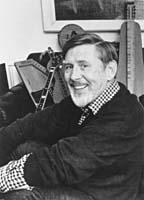
This year marks 100 years since the birth of Ewan MacColl. Born James Henry Miller in Salford on January 25,1915, he adapted the stage name of Ewan MacColl to acknowledge his strong Scottish heritage.
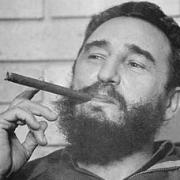
When in 1959 I was fourteen, my socialist, pacifist father gave me a gift subscription to Liberation, the leftist magazine sponsored by the War Resisters League that was published from 1956-1977. My parents had divorced and I lived with my mother in the town of Imperial Beach, California, on the Pacific Ocean and the Mexican border, while my father lived in Chicago. Liberation was my father’s way of seeing to my political education from a distance. In the pages of Liberation I first read C. Wright Mills’ essay (later a book) “Listen Yankee” as well as other articles about the revolution in Cuba.
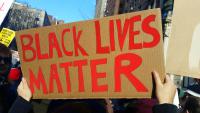 As the shouts of “Black Lives Matter” reverberate from the streets of Ferguson, Missouri to the bridges of New York City, mass protest is once again raising the issue of the persistence of racism, both institutional and individual. Young people, especially from within the black community, have assumed leadership by mo

Last week, as yet another mega-typhoon laid waste to the Philippines, the leaders of 183 capitalist governments met in Lima, Peru to face the imminent threat of climate catastrophe at a U.N. Climate Conference called COP20. (Yawn.) In case you missed the headlines (they were small), the world leaders agreed to nothing.[1]
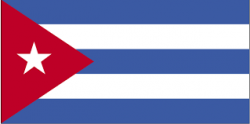
The Democratic Socialists of America (DSA) celebrates the Obama administration’s move toward the normalization of diplomatic relationships between the United States and Cuba. This change in U.S. foreign policy will help bridge the divide between U.S. and Cuban residents.
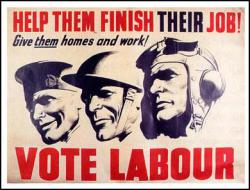
In the United Kingdom, we are accustomed to progressives conducting their arguments in confident terms of complete inevitability. Progress is a one way street, and we are marching ceaselessly along it towards the end of history, almost without trying.
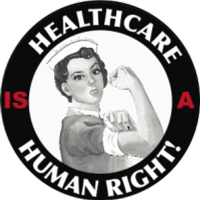
“Vermont…is the only state with universal single-payer health coverage for its residents.”
–James Fallows in The Atlantic, April, 2014
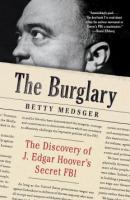 Review of The Burglary: The Discovery of J. Edgar Hoover’s Secret FBI, by Betty Medsger (Alfred A. Knopf, 2014. 596 pages. Notes, Index. Hardcover $29.95; paperback $16.95).

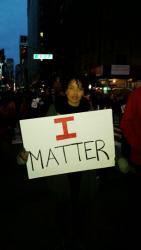
I created #BlackLivesMatter with Patrisse Cullors and Opal Tometi, two of my sisters, as a call to action for Black people after 17-year-old Trayvon Martin was post-humously placed on trial for his own murder and the killer, George Zimmerman, was not held accountable for the crime he committed. It was a response to the anti-Black racism that permeates our society and also, unfortunately, our movements.
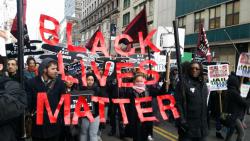
The white supremacist policing practices behind the murder-by-cop epidemic is really a capitalist, white supremacist, heteropatriarchal policing system that must be analyzed and fought as such.”
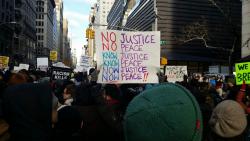
For those continually exasperated by the spate of white denials of racism in the face of blatantly racist police murders, the #CrimingWhileWhite stories on Twitter were a gratifying rebuttal.
- « Newer Posts
- 1
- …
- 172
- 173
- 174
- 175
- 176
- 177
- 178
- …
- 227
- Older Posts »