Blog

  • Our Support for the Open Letter Titled: To Iran’s political prisoners, trapped ‘between two blades of a scissors’

    Our Support for the Open Letter Titled: To Iran’s political prisoners, trapped ‘between two blades of a scissors’

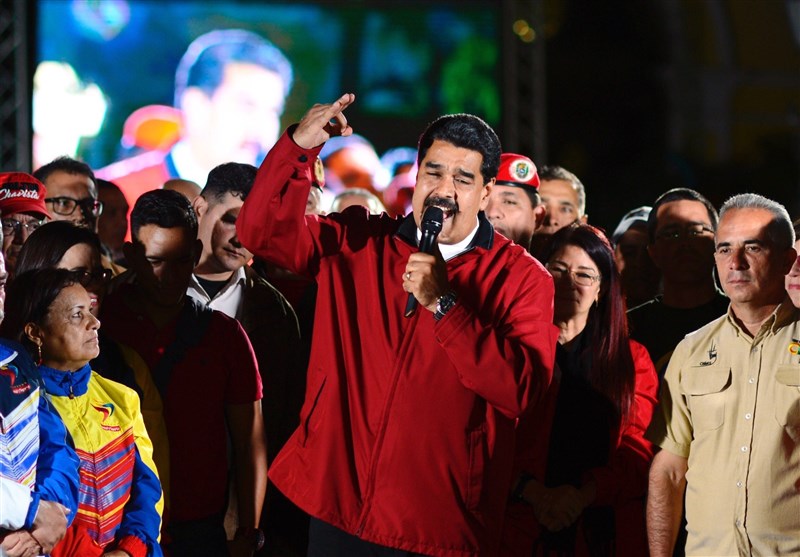
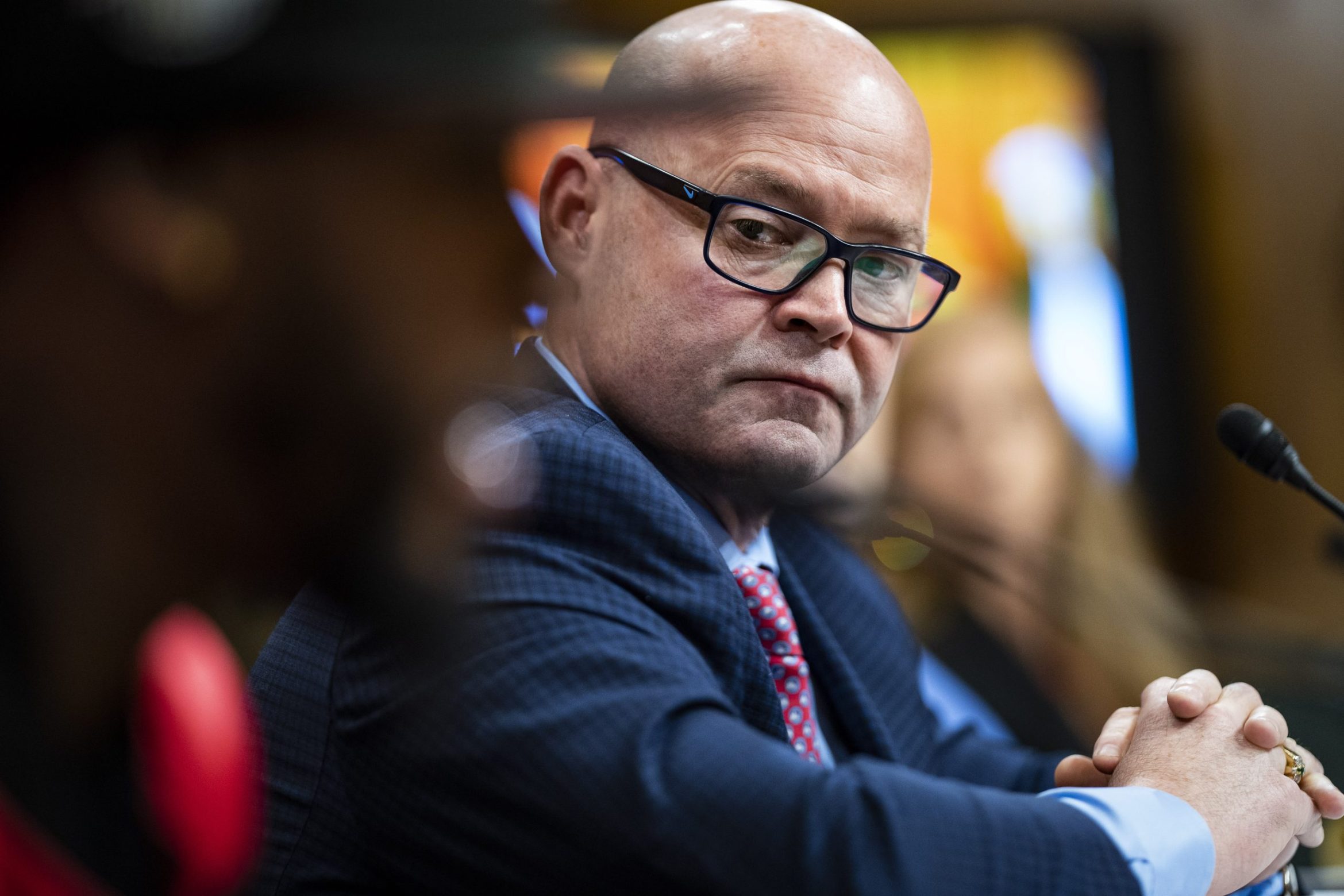
    (Photo by Kena Betancur / AFP)

    As migrants and refugees in diaspora and in exile from Iran, who have our loved ones suffering in the Iranian state’s prisons and facing its gallows, we salute the signatories of the open letter To Iran’s political prisoners, trapped ‘between two blades of a scissors’, published in The Guardian on 20 August 2026. With us stand comrades and organisations from across the world who see this struggle as bound up with their own.

    The open letter was signed by a number of current and formerly incarcerated political prisoners, political organisers and scholars, including Angela Davis, Ruth Wilson Gilmore, Yasin al-Haj Saleh, Ricardo Jiménez, Michael Löwy, and Walden Bello, among others, who wrote to incarcerated people in Iran, “we stand in solidarity with you”. In response to the letter, some on the left have since called on signatories to withdraw, describing the letter as “imperialist-sympathetic”, and three names have been removed. We wanted to respond with an open letter, demonstrating the widespread support from people across the world for those who stand unapologetically with the incarcerated and formerly incarcerated political prisoners of Iran.

    As collectives and individuals who have for years organised against western and Zionist imperialist wars and occupations, as well as against the Islamic Republic’s state violence inside and outside Iran’s borders, we know how difficult it is to step outside mainstream geopolitical framings, familiar but dehumanising, and stand in solidarity with communities whose reality and struggle do not fit the binaries of “good vs evil”, “us vs them”, “west vs the rest”. Yet the communities across the globe who are oppressed by multiple local-global forces at once cannot afford the privilege of choosing between their oppressors as the “lesser evil”.

    At a time when the historical struggle for collective liberation across Iran is besieged by the US imperialist Zionist war and the Iranian government’s mass executions on one side, and pro-war Iranian monarchist zionism led by Reza Pahlavi on the other, the international solidarity articulated by the statement has brought an unexpected fresh breeze of hope and opened new horizons of liberation beyond borders, especially coming from current and formerly incarcerated political prisoners like Mumia Abu-Jamal, Yasin al-Haj Saleh and Ricardo Jiménez, among others.

    As is to be expected, the open letter has led to a wave of condemnations from vanguards and gate keepers of “anti-imperialism” who have long abandoned the very basic principles of the anti-imperialist tradition: international solidarity in support of lives crushed under the hammer of global capitalism, colonialism and imperialism. Instead of calling for the abolition of capital punishment, these vanguards justify the mass imprisonment, torture and executions of our people.

    In the midst of US military and economic war on Iran, the Iranian state has been intensifying the execution of prisoners as a matter of “national security”, by framing the imprisoned protestors as “foreign agents” and “spies” without providing any evidence except forced confessions under torture.

    Meanwhile the real “foreign agents” and collaborators have been operating from within the top layers of the IRGC ruling class, providing US and Israel with intelligence regarding the location of assassinated officials and their meetings. This is not a conspiracy, it has been admitted publicly by high ranking officials such as Araghchi who framed it as an ongoing “security breach” within the system. In other words, in a classic scenario scripted by ruling classes, the wretched of the earth in Iran are being scapegoated and sacrificed as “foreign agents”, so a new arrangement of power in the region could be built on the blood of the oppressed and the colonised.

    The minoritised communities in Iran bear the heaviest brunt of Iranian carceral and border violence. Nearly two million Afghan migrants and refugees have been deported from Iran since the 12-day Zionist war on Iran. The government used the Zionist war as a pretext to intensify the racist and xenophobic campaign of mass deportation against Afghans, committing to the ethnic cleansing of a people who have lived and moved on these lands long before the establishment of the Iranian nation-state and its borders.

    While the prison system in Iran affects the poor and marginalised from all communities, prisoners from minoritised, racialised and internally colonised regions such as Kurdistan, Balochistan, Ahwaz, and Lurestan, are disproportionally targeted by the Iranian state’s system of mass incarceration and executions. In a manner that is not dissimilar to the US where Black, Latinx, Muslim and Indigenous communities are targeted disproportionally by the white supremacist settler colonial patriarchal dual system of mass incarceration and racial capitalism.

    While our position against US imperialism and IRI executions may seem unusual to some, it is in fact a common position among labor unions, student collectives, feminist, racialised and minoritised groups inside Iran and in exile. The most recent statement by the Syndicate of Workers of Tehran and Suburbs Bus Company reads as follows:

    Today, as our country struggles under the weight of devastating economic crises, runaway inflation, the collapse of rial, U.S. and Israeli military attacks, the continuation of a devastating war, economic sanctions, widespread and severe repression, and warmongering policies, the authorities are once again responding to people’s demands for bread, work, justice, freedom, and human dignity, with the most brutal instruments of terror and intimidation: the gallows.

    The statement ends by declaring:

    The death penalty must be abolished immediately! Political prisoners must be released! No to war, intervention, military aggression, and warmongering policies! The path forward for workers and the toiling people is unity and organisation.

    A day doesn’t pass without the families and supporters of prisoners on death row risking safety to gather in front of prisons pleading to stop the execution of their loved ones. Mostly to no avail.

    Between 13 to 28 July 2026, as US bombs were falling on the already racialised and marginalised southern regions of Iran, over 1,500 brave prisoners from Ghezelhesar prison held a mass hunger strike against executions of their fellow prisoners. This happened alongside the weekly prisoner strikes of the “No-To-Execution Tuesdays” campaign, which has been ongoing for 134 weeks across more than 60 prisons, demanding an end to all executions.

    On 28 July, the site of public execution in Isfahan turned into a spontaneous popular protest by people who had gathered to prevent the execution. The protest was suppressed and the execution took place. Even though the executions have continued, the prisoner’s hunger strike together with the families brave resistance and spontaneous protests in Isfahan have empowered a fast growing movement for the abolition of the death sentence, as a unifying demand among different social and political movements inside and outside Iran even as US bombs fall.

    The confidential information published by The Intercept regarding ICE and Iranian state collaboration on deportation in the midst of the war, reveals how police-states work together, and hold diplomatic talks behind closed doors to coordinate mass deportations of migrants and refugees, even as they wage war against each other. The same point holds for recent normalisation of relations between European powers and the Taliban and Al-Sharaa regimes, with the aim of deportations of Afghans and Syrians from fortress Europe.

    Lastly we want to affirm the simple and universal truth that the collective liberation of all war torn, occupied and colonised communities of the MENA/SWANA region and beyond are interconnected.

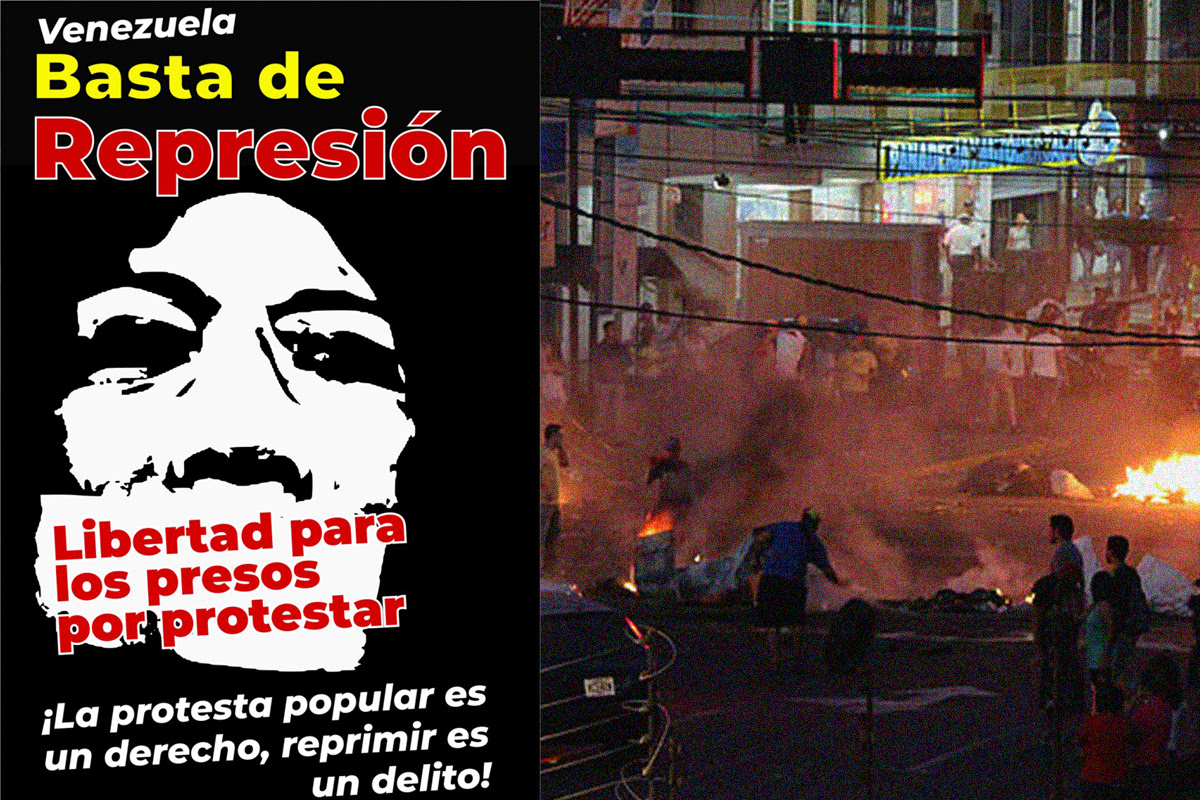
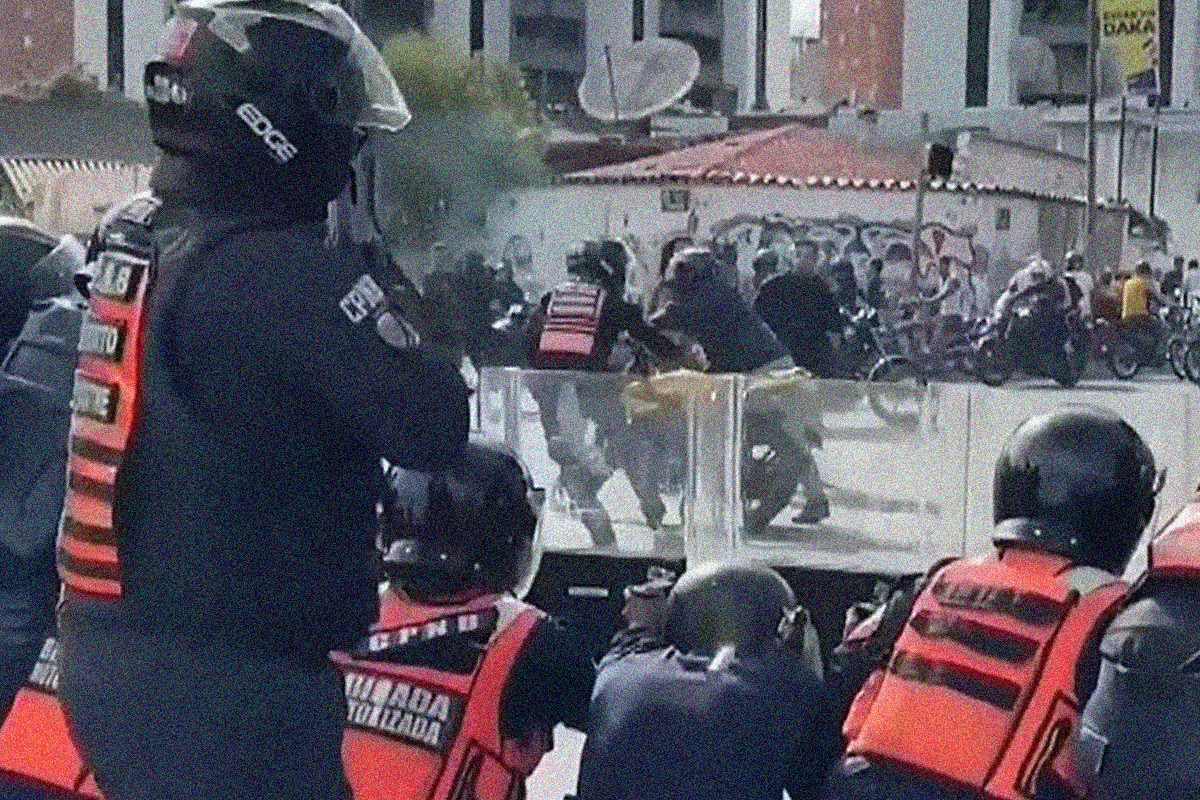
    From the Palestinian liberation struggle against genocidal Israeli settler-colonialism backed by western and US imperialism, to the Sudanese revolutionary struggle against the RSF’s genocidal and SAF’s counter-revolutionary war, backed by different regional and global imperial powers, to the Afghan liberation struggle against the Taliban put back in power by the US after 20 years of “war on terror”, to the Kurdish anti-colonial struggle for self-determination, to the Baloch anti-colonial struggle against Pakistani and Iranian colonial occupations, to the Ahwazi Arab anti-colonial struggle for self-determination, to Congo’s struggle against Rwanda’s military invasion and imperial extractivism, to Haiti’s historical struggle against slavery, debt, and terror backed by western colonialism and imperialism, to Venezuela’s struggle against US neocolonialism and state authoritarianism, to the Zapatista struggle against Mexican mal gobierno (bad government) and US imperialism, to Lebanon and Syria’s struggle against Israeli colonial expansion and sectarian political elites, to West Papua’s struggle against Indonesian colonialism backed by imperial powers, to the Saharawi struggle against Moroccan colonialism backed by Israel, to the Uyghur struggle against the Chinese state’s mass incarceration and surveillance, to the Rohingya struggle against Myanmar’s military genocide, to the Kashmiri struggle for self-determination against Indian and Pakistani military states, to the Ukrainian struggle against Russian imperialism and invasion, European self-serving hypocrisy, and the Ukrainian state’s anti-worker policies; these and all other struggles for collective liberation are inherently interconnected.

    For us the popular slogan “Nobody’s free until everybody’s free” means forging, articulating and building solidarities that may seem to some confusing or unusual in a world where hegemonic and normative politics is defined by a multipolar, (neo)colonial and patriarchal capitalist nation-state system and its borders, borders that have been, and continue fragmenting, dividing, conquering, hierarchising the lands and the peoples of our planet.

    Fannie Lou Hamer’s statement “Nobody’s free until everybody’s free” means rejecting hierarchies of liberation and selective solidarities, even when violent binaries present themselves as common sense. A new world requires new solidarities, rooted in revolutionary imagination and radical love beyond borders and prison walls!

    We take up the demands of the Tehran Bus Drivers and of prisoners organising across Iran: an immediate end to the war and to sanctions, the abolition of the death penalty, and the release of every political prisoner. Each demand needs the other.

    Long live peoples’ struggles everywhere against imperialism, colonialism, statism, capitalism, patriarchy and militarism of all colours!

    Freedom for all prisoners facing tortures and executions in the prisons of Iran, Israel, US, China, Syria, Egypt, and Saudi Arabia!

    Freedom for Mumia Abu Jamal, Fred “Muhammad” Burton, Veronza Bowers and all other Black and Indigenous prisoners in Turtle Island!

    Freedom for Varisheh Moradi, Pakhshan Azizi, Zeinab Jalalian and all imprisoned revolutionary Kurdish women!

    Freedom for Mahrang Baloch and other revolutionary Baloch prisoners in the colonial prisons of Pakistan and Iran!

    Freedom for Dr Hussam Abu Safiya, Khalida Jarrar, Marwan Barghouti and all other Palestinian prisoners fighting for liberation from inside colonial Zionist prisons!

    Freedom for Saadia Mosbah and all other prisoners in Tunisia fighting against the Tunisian state’s anti-Black and anti-migrant policies dictated by European extractivism and border imperialism!

    Freedom for all South Asian & Filipino migrant and domestic workers affected by the war in the region!

    No to war! No to genocide!

    No to executions! No to prisons!

    No to militarism! No to imperialism!

    No to zionism! No to patriarchy!

    No to campism! No to statism!

    No to imperialist regime change, yes to revolution from below!

    Yes to international solidarity!

    Yes to collective liberation!

    Yes to peace, justice and self-determination for all colonised, oppressed and exploited people globally!

    Yes to Land Back!

    Jin Jiyan Azadi!


    See the list of signatories or add your own name here

    Reprinted from Anti-Colonial Iran

  • Letter from Iranian Former Political Prisoners, Writers, Scholars, Activists

    Letter from Iranian Former Political Prisoners, Writers, Scholars, Activists

    We, the undersigned former Iranian political prisoners, activists, writers, artists, intellectuals, academic scholars, researchers, and members of civil society within Iran and in exile, stand resolutely in support of the open letter published in The Guardian on 20 August 2026, “To Iran’s Political Prisoners, Trapped ‘Between Two Blades of A Scissors.

    (more…)

  • On Iranian Political Prisoners: Two Blades, and Who Gets to Hold the Scissors

    On Iranian Political Prisoners: Two Blades, and Who Gets to Hold the Scissors

    The problem with the critics is not that they insist on the imbalance of power. The imbalance is real. The problem begins when the imbalance is used to give the Iranian state political priority over Iranian society. . . Once the unit of analysis moves from social relations to the state, domestic repression becomes secondary.

    ***************************************************

    (more…)

  • A Reckless Drive for More Nuclear Power

    A Reckless Drive for More Nuclear Power

    A structure damaged by a Russian strike in June 2026 near a site where Chernobyl spent fuel rods are stored

    Over the last year the energy and environmental agency of Connecticut’s government held four presentations to encourage more nuclear power plants in Connecticut.  The first thing to say about them is that they start with the wrong assumption.   They assume our biggest challenge is the need for more energy to power data centers so the economy can use more AI.  Wrong.  There is a critical problem, actually an extraordinary crisis, but it’s not the need for more energy.  The crisis is the worsening climate catastrophe, a calamity arriving at lightning speed.

    Back in 2018 the Intergovernmental Panel on Climate Change (IPCC) gave a grim report that said we must cut back greenhouse gas emissions by nearly half by 2030 or face not only many more weather and fire devastations but the prospect of going over tipping points from which humankind could not recover. The massive fires in Europe are a small taste of the calamity we face.

    So we have only a few years to deal with an existential danger. That, and not AI, has to take front and center.  We have to take emergency measures now.  Data centers and AI development belong in the backseat.  The good news is that mitigation of climate ruin is possible and it doesn’t require nuclear power.  In fact, nuclear power is a dangerous diversion.

    At present there’s one nuclear plant running in Connecticut, by the name of Millstone.  There had been a legal ban against more nuclear reactors in the state but that was overthrown by Governor Ned Lamont and the legislature in 2025.  The legislature then appropriated $5 million to find towns that say they are willing to be sites of nuclear power plants.  The presentations from Connecticut’s Department of Energy and Environmental Protection (DEEP) are intended to warm the public to both varieties of nuclear generation, uranium-powered fission plants and deuterium-tritium fusion plants.  Both have inherent defects.

    Fission

    One huge and obvious problem with fission is radioactive waste.   In the nuclear power process radioactive uranium is mined, then enriched and formed into rods and the uranium goes through a process that splits its atoms and gives off energy.  That’s done until the rods are no longer productive.  Then they are classified as “spent”.  However, spent rods are incredibly radioactive and intensely hot.  So these rods are put in cooling ponds of the facility for at least five years.  Then they have to be stored indefinitely.

    Nuclear power waste has been around for more than 80 years, but in all that time there has been no way found to dispose of it permanently. There was a plan to put 90,000 tons of high-level radioactive waste deep under Yucca Mountain in Nevada, but state leadership and the residents were vehemently against it. Nevada’s official position is that the area is “seismically and volcanically active, porous and incapable of geologically containing the waste.”

     So, the high-level and long-lasting radioactive waste produced by the nation’s civil nuclear power plants remains at the 75 sites — both operating and closed – where they were created. The problem is managed by the advanced engineering process called “kick the can down the road.”

    How are they stored on site?  After being removed from the fuel storage pools, the waste is put inside what are called “casks”, stainless steel containers welded shut surrounded my more steel or concrete.   How long will a cask last without leaking?  One speaker at the Connecticut forums, a professor of nuclear engineering named Dr. Sukesh Aghara, said the casks were good for 160 years while Mark W. Goodsbey, who is Director of Safety and Licensing at Millstone said, “Temporary storage is still designed for hundreds and thousands of years of service without any significant impact or concerns to their robustness.”  Thousands of years?  How can you assure us of that?

    Are the storage areas for spent fuel rods hardened against military attack?  The answer is, “No”. To most of us the very question would seem ridiculous.  Who would be stupidly reckless enough to attack a nuclear power plant?  After the attack on the Chernobyl’s New Safe Containment on Valentine’s Day 2025 and the drone attack a few hundred yards from Chernobyl’s spent fuel casks in June 2026, we know that any force ruthless or terrified enough may make such an assault.   There is a concept called Hardened On-Site Storage.  It would require the casks be stored in areas hardened against terrorist and armed force assault in facilities resembling hardened missile silos.  Of course, that would cost a lot of money.  When we see pictures of actual casks, they’re above ground in the open (to shed heat) one next to another.  No U.S. plant is hardened to HOSS standards.

    The speakers at our public meetings here in Connecticut talk about small, advanced power plants that are modular, in that one day their parts could be built in a factory banged out one after another like pre-fab houses.  They use the acronym “SMR” for them (small modular reactor). Paul Dickman of the National Academies of Science stated right out that the large plants (1,000 MW and more) are more efficient than the SMRs.  So why build them?

    A claimed advantage of the SMRs is that they will only need small emergency planning zones around them to protect the public.  The “current fleet” (their words) of reactors typically has 10-mile emergency planning zones around the plants.  With the new SMR’s professor Aghara said “you’re talking about less than 5 miles, ideally about two miles.”  At another point Kati Austgen of the Nuclear Energy Institute said the zone could be “a 400 meter diameter area.” She said a plant might be able to demonstrate to the Nuclear Regulatory Commission such safety measures that the zone would be ending right at the site boundary “meaning there would be no need to pre-plan any sort of evacuation in the area surrounding the plant.”

     No emergency planning zone?  So they want to build these things right in the middle of cities, anywhere, maybe even next to schools and hospitals.  The ancient Greeks called this insolent arrogance “hubris.”

    We haven’t talked about cost.   Professor Aghara says he thinks there will be a “30 to 40% reduction in the cost of energy when you couple nuclear and renewable and storage.”  However, a 2024 report from the Institute for Energy Economics and Financial Analysis states, “A key tenet for SMR proponents is that the new reactors will be economically competitive. But the on-the-ground experience with the initial SMRs that have been built or that are currently under construction shows that this simply is not true. There currently are three operating SMRs worldwide—two in Russia and one in China, plus a fourth under construction in Argentina. Costs for all four have been significantly higher than originally forecast.”

    SMR boosters say assembly line construction of SMRs will save lots of money, but these assembly lines don’t exist anywhere.  At this stage it’s just a theory and with global warming putting us in immediate peril we don’t have time to test it out.  Past experience with large nuclear plants is not encouraging.  Connecticut residents know all about it.  The owner of Connecticut’s Millstone plant, Dominion Energy,  threatened to shut it down because the nuclear plant couldn’t compete with natural gas.  Not until the legislature cut it a deal were the threats tabled.

    One big, supposed advantage for the plants is that they’re super-reliable.  We’re told they function 24/7.  But it’s not true.  For one thing they have to be taken offline for refueling and maintenance. The U.S. Energy Information Administration says that averages 34 days a year.

    And we’re realizing now the plants depend on the weather. When it gets too hot outside they have problems.  Nuclear plants rely on drawing cool water from rivers or the sea to remove heat from reactor systems. But witness France this year. Nuclear power plants there had to shut down already three times this summer.  Hot release water combined with exceptionally warm river water would have killed aquatic life.

    What’s turning out to be a bigger problem is that in heat waves river water levels drop so the water sometimes can’t be drawn upon for use in the plants.  Witness Hungary in August 2026.  It had to shut down its nuclear reactors due to low water levels for the first time in its history.  Its pumps couldn’t get water at so low a level.  Romania shut down its nuclear plant, too.

    And the final problem is time.  Remember there are only three SMRs anywhere in the world. The idea that SMRs could be produced quickly is untested.  Nuclear power plants have been taking 17 years on average to plan, build and get online so SMRs are not going to be of any help in a climate crisis that’s imminent.

    Fusion

    The U.S. started releasing huge amounts of energy from fusion in 1952.  That was the year of first hydrogen bomb explosion. Of course, that energy couldn’t be channeled into anything but mass destruction, but the science was correct.  With enormous heat and pressure, you could set off a fusion reaction.  In the H-bomb enormous heat came from an atomic bomb “trigger”.  Ever since scientists and engineers have been working on how to do fusion on a much smaller scale and in a controlled way.  Magnets, lasers and other means are being tested as ways to confine incredibly hot elements in their plasma state during fusion reactions.

    There’s never been a fusion power plant.  Only in 2022 did the National Ignition Facility arguably produce more energy from a fusion experiment than the amount used by the lasers to conduct the experiment, a net gain of roughly one megajoule of energy or 0.3 of a single kilowatt hour.  Even that is kind of fake.   It didn’t take into account the 400 megajoules of electricity needed to power the lasers!

    But there are tens of billions of dollars floating around for nuclear experiments and construction, so companies are being formed willy nilly to gather in those dollars.  Why not?  It’s very challenging physics and materials engineering, rewarding work which is presumably well paid. Three companies presented at the DEEP forum.  They claim they’ll be producing electricity from fusion in the early 2030s.

    But wait.  There are as they say “challenges”.  I’m relying mostly on an article by Daniel Jassby called “Fusion reactors: Not what they’re cracked up to be.” It was in The Bulletin of the Atomic Scientists in 2017.  Dr. Jassby has serious credentials.  He was a principal research physicist at the Princeton Plasma Physics Lab until 1999. For 25 years he worked in areas of plasma physics and neutron production related to fusion energy research and development. Jassby says there are “four regrettable problems with nuclear energy: radiation damage to structures; radioactive waste; the need for biological shielding; and the potential for the production of weapons-grade plutonium 239.”

    What? Did you read that last one right, the process can create weapons-grade plutonium?  One of the draws of fusion was that it was so safe.  Fusion just used sweet simple hydrogen isotopes for fuel.  Alas, as Jassby puts it, “A fusion reactor can become a source of weapons-grade plutonium simply by placing natural or depleted uranium inside the reactor vessel, where the high neutron flux will produce plutonium 239.”  Fusion of hydrogen produces helium, huge amounts of energy and lots and lots of neutrons.  Stick uranium into the reactor and you can produce plutonium which you can make into a nuclear weapon.

    Shouldn’t that disqualify fusion right from the git go?  Should humanity be building these plants everywhere, giving tyrants and unstable governments the materials to build nuclear bombs?

    Let’s briefly talk about one other problem mentioned by Jassby.   As Jassby explains, fuel assemblies themselves will be transformed into tons of radioactive waste to be removed annually from each reactor as would lots of other parts of the machinery.  In fact, he says, “While the radioactivity level per kilogram of waste would be much smaller than for fission-reactor wastes, the volume and mass of wastes would be many times larger.”  So what’s the gain with fusion?

    Finally, the time problem for fission goes double, triple or more for fusion.  Companies may talk about fusion giving out power in the 2030s but no one knows if it really can be done.  There’s been a fusion project in the south of France called ITER, sponsored by a number of countries including the U.S. and Russia that.  It was thought up in 1985.  Building started in 2010.  National Geographic had a lengthy article about it in its November 2025 issue.  The ITER first “energy-positive” fusion isn’t expected until 2039 (See page 43).  And that energy will be heat not electricity.

    We Don’t Need Nuclear

    We already have the solution, a way of avoiding going over the climate cliff.  It’s a combination of solar, wind, water, batteries, efficiency and mandatory conservation.  Stanford University civil and environmental engineering professor Mark Z. Jacobson has been explaining for nearly 20 years that we can power the U.S. without burning fossil fuels or splitting or fusing the atom.  He demonstrates it in detail state by state and for the entire country.  Part of the solution is efficiency.  The energy with the least waste is the energy not used in the first place. We need a crash program in everything from insulation to triple-hung windows.

    Since America’s leaders on the whole ignored the dire warning of climate scientists and we only have a few years before tipping points are crossed, we have to add to Jacobson’s ideas.  We need to plan a strict conservation system in which we use fossil fuel for what’s absolutely necessary and sharply cut back on the rest.  Data centers and AI should be put on hold. Personal jets should be grounded.  When facing catastrophe you deal with it.  You don’t do business as usual.

    I’m not much good about predictions but I’m going to say these expensive dangerous plants will not be built in CT.  However, a lot of time and effort will be needed to stop them.  It’s time we don’t have.  I mentioned the year 1952 earlier in the article as the date the first hydrogen bomb exploded.  1952 was also the year of the Paley Commission, a project of the Truman administration, which saw the promise of solar and recommended its wide use. Linda Pentz Gunter of the group Beyond Nuclear has written the “Paley Commission’s authors recognized the abundance offered by solar energy, observing in 1952 that, ‘the United States supply of solar energy is about 1,500 times the present requirement.’”   The Commission called for “aggressive research in the whole field of solar energy.”  Unfortunately, the report was ignored.  Eisenhower became president in 1953 and he launched “Atoms for Peace” driving the U.S. down the disastrous path of nuclear power.

    We don’t have the time for another reckless diversion.
  • Anti-Imperialism Without Iranians

    Anti-Imperialism Without Iranians

    I oppose the U.S.-Israeli war on Iran, the sanctions regime that preceded it, and every project of externally engineered regime change. I also oppose the Islamic Republic, a state that has governed for forty-seven years through political imprisonment, executions, gendered coercion, and the methodical destruction of independent organization. I am an Iranian feminist researcher, and I have spent enough time in left spaces in Europe and North America to know that holding both positions at once is still treated, in some quarters, as an incoherence in need of correction.

    The row over the Guardian‘s open letter to Iran’s political prisoners has made the correction unusually visible. What the document actually says is not in dispute. It is addressed to the activists, students, scholars, workers, and artists held in Iranian prisons. It names the systematic use of torture, the unfair trials, and the state executions carried out by the Islamic Republic, and it demands an immediate end to executions and the release of all political prisoners. It also condemns U.S. and Israeli policy toward Iran, cites the Israeli strike on Evin prison in June 2025, and closes by calling for an immediate end to the war and to U.S.-Israeli sanctions. Among its published signatories are Angela Davis, Ruth Wilson Gilmore, Judith Butler, and Yassin al-Haj Saleh. For this the letter was accused of manufacturing false symmetry, of weakening Iran in wartime, of handing ammunition to the enemy. That does not put the letter beyond criticism — there are real questions about whose voices it centers. But those are arguments for taking prisoners’ own political thought more seriously, not for postponing solidarity with them.

    Vijay Prashad put the objection most cleanly. Writing days after the letter appeared, he argued that “there is a time to make a demand and a time to act in solidarity,” that “neutrality or a third space does not exist in the midst of a war of aggression,” and that the scissors image at the heart of the letter — two blades, one body — is “evocative but erroneous,” since it makes the aggressor and the attacked appear as parallel sources of the same danger.

    Prashad is not defending Evin prison, and it is worth reconstructing what he is defending in a stronger form than he states it. Read that way, the argument concerns the political economy of speech: criticism voiced in the metropole during a war of aggression does not travel as criticism, it travels as war material, and Iranians who say these things in English contribute, whatever their intentions, to a discursive infrastructure that ends in cruise missiles. That formulation is mine, not his. It is also the version worth answering, and anyone who has watched Iranian women’s suffering laundered into a case for bombing knows it is not paranoid.

    The argument breaks on contact with the people it claims to protect.

    The prisoner’s calendar

    Begin with the question the sequencing argument never answers: solidarity with whom?

    The Iranian political prisoner does not live in geopolitical time. American bombs do not open her cell. Sanctions do not stay an execution order. The overwhelming asymmetry between U.S. and Iranian military power does not cause her interrogator, her guard or her Revolutionary Court judge to vanish for the duration. Whatever is true at the level of states, at the level of her body two forms of power are operating at once, and neither has agreed to wait for the other.

    Notice, too, that the argument has no exit condition. Who announces that the war is over and criticism may resume? Not the Iranian prisoner. The Islamic Republic has already made its own position clear: it has declared that wartime conditions are precisely the moment when repression must accelerate. Amnesty International documents the judiciary instructing officials in April to fast-track prosecutions with “extreme speed,” the head of the judiciary warning in March that anyone acting in line with “the wishes of the aggressor enemy” would be dealt with “decisively and severely,” and more than six thousand arbitrary arrests, thirty-nine political executions, and an eighty-eight-day internet shutdown since the attack began on February 28. In late July, Amnesty International warned that at least sixty more people faced imminent execution.

    The Iranian state and some of its anti-imperialist critics abroad arrive, for very different reasons, at the same political sequencing: not now. One says: not now, there is a war on. The other says: not now, there is a war on. The prisoner is the only party to the argument for whom the postponement is not rhetorical.

    The blades share a hinge

    The deeper problem with the false-symmetry charge is that it treats the metaphor as if it were a claim about moral equivalence between two states. But the metaphor is better understood as describing a position: the position of people on whom different forms of power act simultaneously. As Farah Mokhtareizadeh has pointed out, the image of the “two blades” was already being used by former political prisoner and labor activist Keyvan Mohtadi after Israel bombed Evin prison, while his wife Anisha Asadollahi remained imprisoned there. The point was not that the two powers were equal. It was that both entered the lived reality of the same people. And once we look at how external coercion and domestic repression reshape one another’s effects, the two pressures cannot be treated as operating in sealed compartments either.

    This is where the debate needs class analysis rather than cartography. Consider what four decades of sanctions have done to Iran’s internal balance of forces. A sanctioned economy does not distribute pain evenly. Sanctions did not create the economic power of Iran’s parastatal and security-linked sectors; decades of state contracting and pseudo-privatization helped do that. But sanctions alter the terrain on which economic actors compete. Small and formally operating firms lose access to finance, technology, and markets, while organizations already embedded in state contracting and informal cross-border networks are better positioned to adapt. The result is not that sanctions leave the ruling elite untouched. They do not. It is that external economic coercion can simultaneously impoverish society and reinforce the relative leverage of institutions already closest to state power.

    The rial closed at 2.02 million to the dollar on August 24, a record. Rice has risen roughly 60 percent since February; beef by more than 150. The IMF’s April projections put Iranian output down 6.1 percent this year with inflation near 69 percent. These numbers describe a working class being ground down. They do not describe a state being weakened in any sense that helps that class, and the ordinary Iranian who cannot buy meat knows the difference.

    Meanwhile the other blade is at work on the same bodies. Between mid-July and the beginning of August, authorities sealed at least forty-two cafés, restaurants, and shops, blocked or seized seventy-two social media pages and accounts, and forced the operators of twenty-one more to publish pledges of compliance — most of it over compulsory hijab. Sealing a café is not only an act of gender discipline. It is a wage cut. The staff are dismissed, the rent still falls due, the loan still accrues interest in an economy where the currency loses value weekly. A researcher I know in Tehran was recently barred from a major library and archive after two hijab warnings, cut off from the material her work depends on; Iran’s National Library did the same to women members in 2023.

    The same worker can be impoverished by the blockade, terrified by the bombing, and then thrown out of work because the state closes her workplace over a headscarf. There is no contradiction in her account of her life. The contradiction belongs to a politics that requires people to have one oppressor at a time.

    Whose testimony counts

    What is really being adjudicated in this debate is not timing but credibility — whose account of Iranian reality carries political authority.

    For Iranians, credibility on parts of the metropolitan left has become conditional in a way that is easy to demonstrate. Speak about the 1953 coup, about sanctions, about Israeli bombardment, and the Iranian is a valuable witness. Speak to the same audience about executions, compulsory hijab, the crushing of the Haft Tappeh sugarcane workers or the teachers’ unions, and a second set of questions appears. Why now? Who benefits from your saying this? Are you reproducing Western narratives? Have you established your anti-imperialist credentials? The testimony is received when it confirms the geopolitical schema and interrogated when it complicates it. Miranda Fricker’s concept of testimonial injustice helps name this credibility deficit: the speaker is wronged specifically in her capacity as a knower.

    There is no single Iranian voice waiting to be heard. Iranian prisoners, workers, feminists, Kurds, Baluchis, and diaspora organizations disagree sharply among themselves — about sanctions, about federalism, about what should replace the Islamic Republic. Those disagreements are political thought, and this is what the current arrangement erases: Iranians supply the testimony, and someone else supplies its meaning. Appointing a different interpreter would not fix that.

    Yassin al-Haj Saleh, who signed the Guardian letter and who spent sixteen years in Assad’s prisons, named the same experience a decade ago. He called it the denial of epistemological agency. Syrians were permitted to supply suffering, anecdote, and quotation; the right to say what Syria meant was retained elsewhere. He was lectured by European leftists on the imperialist character of a revolt he was living inside. His formulation still cuts: an anti-imperialism that can recognize imperial power only when it is headquartered in Washington ends up reproducing an imperial relation in the domain of knowledge itself.

    The tendency has a name. Campism decides in advance which states make up the anti-imperialist camp, then reads every social struggle through that alignment. But this is not a politics of Cold War-style equidistance, and the Iranian position is not a third camp between two governments. As Mokhtareizadeh argues, refusing both imperial war and domestic repression is a claim to political autonomy rather than neutrality. Iranian workers, feminists and leftists are not standing halfway between Washington and Tehran. They are standing somewhere campism’s map does not show.

    Iran has run this experiment

    Iranians do not need a thought experiment about what happens when anti-imperialism is declared the contradiction before which every other struggle must wait. We have the history.

    Women met it within weeks. By early March 1979 the Family Protection Law had been declared abrogated, Khomeini had announced that women could not serve as judges, and the veiling injunction was reaching workplaces. Tens of thousands marched. They were arguing about who the revolution was for. One of their slogans was “Freedom is neither Eastern nor Western — it is universal.”

    Leftist women were among the organizers of those marches, and some currents on the left supported them. But much of the organized left subordinated women’s autonomy to anti-imperialist unity. When the provisional government appeared to retreat on compulsory veiling, some socialist and democratic groups withheld support from the rally called for March 11, arguing that further mobilization would divide the revolution and benefit imperialism. The attack on women could be acknowledged and still filed as a contradiction whose time had not come.

    The contradiction was registered inside the left itself. Homa Nateq — historian, active in the Fedayeen milieu, and a co-founder of the National Union of Women — later gave a harsh account of her own conduct. In a 1984 oral-history interview, she recalled helping to shut the demonstrations down in the name of anti-imperialist unity and described her role as a betrayal of Iranian women.

    None of this makes the left responsible for the repression that followed. That belongs to the state that carried it out. In February 1983 the Tudeh Party, which had gone furthest in reading the Islamic Republic as anti-imperialist, was declared illegal, its leadership arrested, and its general secretary later subjected to televised confession. Five years after that, the state executed thousands of political prisoners, including hundreds of leftists in a later wave in which many were interrogated over religious belief and practice.

    Postponement protected no one. The state used those years, and then turned its prisons and killing apparatus on many who had accepted the postponement.

    Defiance is not emancipation

    Some of what animates this dispute has little to do with Iran. For parts of the metropolitan left, Iran becomes politically legible mainly when the Islamic Republic squares up to Washington or Tel Aviv. The missiles, the speeches, the brinkmanship offer proof that somebody, somewhere, is refusing an order that activists in the West feel powerless to affect. That is an understandable hunger. It is also a substitution of one people’s state for another people’s movement.

    The regional record shows why the two must be held apart. Iranian support for Palestinian resistance has been real and materially consequential. It has also been pursued as part of a regional policy organized around deterrence, strategic depth, and regime security, and it has coexisted with the repression of Iranian Arabs, Kurds, and Baluchis at home. Palestinian liberation and the strategic requirements of the Iranian state are not the same project.

    Iranians know this history from the inside. Iranian Marxists were training and organizing with Palestinian movements before the Islamic Republic existed, and many of them were later executed by it. Anti-authoritarianism and anti-imperialism are not rival traditions in Iranian political history. They have repeatedly inhabited the same movements and the same political lives.

    What solidarity would actually require

    So when Iranians who refuse both foreign domination and domestic authoritarianism enter the conversation, we become inconvenient. We interrupt the spectacle. We are the feminist killjoys of anti-imperialist certainty.

    But an internationalism that needs the people of a country to disappear behind their state is not internationalism; it is a foreign policy position with a red flag on it. The alternative is not neutrality, and it is not a third camp abstracted from the balance of forces. It is an orientation toward people rather than states: stop the war and lift the sanctions because they are destroying the class that could change Iran; oppose the executions and the political imprisonment because the workers, teachers, feminists, and organizers who make up that class are the ones filling Evin, Qarchak, and Ghezel Hesar; support the independent unions, the teachers’ councils, the women’s networks, and the Kurdish and Baluchi organizations that will still be there when this war ends, whatever the outcome. And build relationships with them rather than issuing statements in their name — carefully, because inside Iran a foreign connection is itself treated as evidence, and solidarity practiced carelessly from abroad is paid for by someone else. Refuse, finally, the presumption that a state earns immunity by learning to speak the vocabulary of resistance.

    A left worth the name should be able to say all of it in one breath. No U.S.-Israeli war. No sanctions. No executions. No torture. No political prisoners. No compulsory hijab. No imperial domination, and no exemption for any state that invokes it.

    Iranians do not owe anyone a choice between their killers. Neither do Palestinians, Syrians, Kurds, Afghans, or Ukrainians. If emancipation is universal, our solidarity has to be able to carry more than one truth at a time.


    [This is one of a collection of articles responding to the controversy over the open letter in the Guardian expressing support for Iranian political prisoners and at the same time opposing the U.S.-Israeli war and sanctions on Iran.]


  • War, Diplomacy and Repression: The Three-Pronged Strategy of Iran’s Islamic Republic

    War, Diplomacy and Repression: The Three-Pronged Strategy of Iran’s Islamic Republic

    More than a year has passed since the 12-day war of June 2025, when Israel attacked Iranian military facilities, killed senior military officials and nuclear scientists, and was joined by U.S. strikes on three major Iranian nuclear sites. Iran responded with missile attacks on Israel and on a U.S. base in Qatar before a ceasefire was announced. More than six months have also passed since the 39-day war that began in February 2026. That conflict resulted in the killing of Ali Khamenei, the leader of the Islamic Republic of Iran (IRI), and numerous senior political and military figures, as well as Iranian attacks on U.S. bases in the region. It also produced diplomatic efforts culminating in a memorandum of understanding (MOU) between the United States and Iran, signed by their respective presidents, Donald Trump and Masoud Pezeshkian.

    As discussed elsewhere, both wars emerged from three interrelated dynamics. First, the United States sought to maintain and extend its global hegemony. Second, Israel’s right-wing government and Jewish and Christian Zionist movements sought to advance a vision of Greater Israel. Third, the Islamic Republic’s clerical, military and economic oligarchy sought to preserve and expand its regional influence.

    This article argues that, faced with war and escalating domestic instability, the Islamic Republic has pursued a three-pronged strategy: military responses to continued confrontations, engagement in diplomacy, while intensifying repression at home.

    Although the wars killed thousands, damaged Iranian infrastructure and eliminated much of the Islamic Republic’s senior leadership, they failed to produce regime change. Instead, they exposed the limits of U.S. and Israeli coercive power and left the region facing continued clashes and the possibility of another major war.

    War and Diplomacy

    The 14-point MOU, which, among others, promised the termination of military operations on all fronts, including in Lebanon, removal of the U.S. maritime blockade, a $300 billion reconstruction and economic development plan, and removal of all types of sanctions against the Islamic Republic, including the United Nations Security Council resolutions, was a success for the Islamic regime, and a relief for the botched policy of the Trump administration. In return, the IRI, while maintaining the current status quo of its nuclear program, agreed not to procure or develop nuclear weapons. It also allowed commercial vessels to pass without charge for 60 days between the Persian Gulf and the Sea of Oman, and vice versa.

    The agreement was never implemented, and now the 60-day deadline for the United States and Iran to negotiate the final deal has passed. The Netanyahu government, following its long-time policy towards the Islamic Republic, was vehemently opposed to the deal and was prepared to take whatever measures were necessary to derail it. Among others, on June 14, two days after the MOU was agreed upon, it bombarded the Shia-dominant district of Beirut. At the same time, the Trump administration appears to have believed that by delaying implementation and increasing economic pressure on Tehran, it could compel the Islamic Republic to make further concessions. Tehran, for its part, appears to have calculated that keeping the Strait of Hormuz closed would pressure the Trump administration to make further concessions, particularly as the midterm elections approached and American public disenchantment with the war increased.

    Aside from its offensive missile and drone capabilities, threatening neighboring Arab countries that host U.S. bases, the Islamic regime’s greater resilience is partly rooted in its ideological character and its longstanding disregard for the outcome of the war for Iran and the Iranian people. A similar pattern was evident during the eight-year-long Iran-Iraq War. After Iranian forces expelled the invading Iraqi army from Iranian territory in 1981—effectively defeating Saddam Hussein’s invasion within a matter of months—Iran could have ended the war. Instead, the then Supreme Leader Ayatollah Khomeini and those around him embraced the slogans of “war, war until victory” and “from Baghdad to Quds (Jerusalem),” and continued the conflict for another seven years. Ultimately, in 1988, after suffering huge losses, they were forced to accept a humiliating ceasefire. Although circumstances are different today, with the ruling bloc more divided than ever and the Islamic Republic lacking legitimacy among most of the population, the regime’s hardline factions appear to be pursuing a similar strategy.

    Power Struggle Within the Ruling Bloc

    Differences within the Islamic Republic’s power bloc have existed from the very beginning. At various times, religious pragmatists and religious idealists, identified under different labels, have clashed. During the eras of Ruhollah Khomeini and later Ali Khamenei, the supreme leader managed these disputes. However, the current designated leader, Mojtaba Khamenei, who has not yet appeared publicly and whose condition is unknown, is unlikely to be able to manage these conflicts effectively while remaining out of public view. Statements are presumably issued in his name, and important appointments and personnel changes in the military and security sectors are also issued in his name. He also endorsed the MOU, which was approved by 12 of the 13 members of the then Supreme National Security Council (SNSC), Iran’s highest decision-making body on defence, security and foreign affairs, although he added that “in principle” he held a different view.

    Although almost all those SNSC members who voted in favour of the MOU were hardliners, and two of them were representatives of the Supreme Leader, the mere act of reaching any agreement with the United States deeply angered the hard-line base, who for over four decades had heard anti-American propaganda. The top decision-makers of the regime are fully aware that they need this base, and that without it they will have fewer forces left to confront the dissatisfied majority of the population, which has so far launched six major anti-regime movements.

    The conflict between hard-line conservatives and the pragmatists reached a point where some influential hardliners called for the execution of President Pezeshkian and Mohammad Bagher Ghalibaf, the speaker of parliament and head of the negotiating delegation.

    The leadership reshuffle also reflects the changing balance of power. Mohsen Rezaei, the commander of the IRGC during the Iran-Iraq war, replaced the former SNSC secretary, while new commanders were appointed to lead the armed forces and the IRGC. All are close confidants of Mojtaba Khamenei. In his first announcement, IRGC General Rezaei set conditions for opening the Strait of Hormuz: end all regional wars in the Middle East, Gaza, Lebanon, and Iran’s regional allies; end the maritime blockade against Iran; release Iranian funds; and change U.S. conduct.

    However, this no-war, no-peace stalemate cannot continue indefinitely and could put Iran in an increasingly dangerous position. While a renewed military confrontation would create serious problems for the United States and its regional allies, bombing Iranian infrastructure—including the electrical grid, water system, and refineries—could devastate the country and have catastrophic consequences for its people. The United States pursued a similar strategy during its invasion of Iraq, where millions of Iraqis suffered, and there is no guarantee that it would not adopt comparable measures against Iran.

    Now that the United States has failed to bring the Islamic Republic to its knees militarily, it hopes that by intensifying the economic siege and secondary sanctions, it can force the Tehran regime to surrender or encourage a popular uprising against the regime. As with other sanctions, the main harm will be inflicted on the people.

    The continued maritime blockade and Trump’s new threat of “economic warfare” are already creating serious economic pressures. Iran is reportedly losing close to $500 million a day, and is struggling to obtain essential imports, including gas reliably. This is why parts of the regime’s ruling oligarchy, beyond concerns about its ideological or “heavenly” promises, are also deeply concerned about protecting their substantial material interests and are pushing for a deal and a return to the MOU.

    It remains unclear which side will ultimately gain the upper hand. Nevertheless, the recent reshuffling of military and security leadership suggests that, while the regime has become more militaristic and is preparing for a prolonged war and further confrontation, it is also pursuing a diplomatic solution—particularly in response to the new threat of economic warfare from the United States. At the same time, the regime is deeply concerned about the imminent internal threat of another uprising by a disgruntled population.

    Dealing With the Internal “Enemy”

    Between the above-mentioned 12-day and 39-day wars, in the winter of 2025-26, Iran witnessed its largest protest movement—a movement even larger than the 2022 Woman, Life, Freedom. The protests began in Tehran’s bazaar over rising prices driven by a sharp decline in the national currency’s value and the escalating cost of foreign currencies, which in turn raised the prices of raw materials and imported goods. As with other movements, the protests, despite their economic roots, quickly took on political dimensions in cities across the country. Various segments of the new and traditional middle classes, workers, retirees, students, and, in some cases, farmers—who were protesting water shortages and the government’s failure to pay its debts—joined the movement.

    For its first eleven days, beginning on December 28, 2025, this spontaneous movement resembled previous protest movements, characterized by peaceful demonstrations, skirmishes with security forces and Basij forces, and hit-and-run actions. The movement, however, was subsequently exploited by the Israeli government and by the opportunistic right-wing Iranian monarchist opposition abroad, which has close ties with Israel.

    On January 8, 2026, amid a highly manipulated social-media campaign, Reza Pahlavi, the son of the deposed Shah, announced that help was coming. Larger numbers of people—desperate for any prospect of change, as well as supporters of Pahlavi—took to the streets, often accompanied by their families. The terrified regime responded with unprecedented violence, deploying Ansar-e Hezbollah, Basij forces, and reportedly proxy forces recruited from neighboring countries. The full extent of the killings remains unknown, but estimates suggest that several thousand, including young children, were gunned down over the course of two days. The internet, which had been shut down from the outset, remained blocked despite the enormous economic damage and the loss of millions of jobs.

    It is widely believed that Netanyahu persuaded Trump that, following the killing of the Supreme Leader, Iranians would rise up and overthrow the regime. Much to the disappointment of both Netanyahu and Reza Pahlavi, this did not happen. On the contrary, foreign intervention and the resumption of the war in June 2026 dealt the movement its most devastating blows.

    With the worsening economic situation, rampant inflation and growing unemployment, however, there is a distinct possibility of another major uprising. Hence the strengthening of the regime’s repressive apparatuses. The assignment of Hossein Taeb as the new head of the Basij paramilitary organization, linked to the IRGC and a major instrument of the brutal suppression of social movements, should be seen as part of the strategy vis-à-vis potential protests. Taeb is an IRGC senior member, a close confidant of the new Supreme Leader, and a feared cleric within the security establishment who is known to have supervised the killing and maiming of thousands of protesters. In his declared mission, he is to expand and strengthen the Basij as a ‘people-based intelligence network,’ making ‘every citizen’ a Basij member.

    Already, organized nightly neighborhood rallies in support of war in large cities and the regime’s kangaroo courts issuing death penalties have done much in expanding the reign of terror. According to IHRNGO, Iran Human Rights, in July this year alone 71 people were executed, some of them accused of being an Israeli agent. A total of 444 persons have been hanged in 2026. Many well-known lawyers, academics, journalists, and artists are in jail, including Narges Mohamadi, the prominent feminist and Nobel Peace Prize laureate. The regime has also started to reinforce compulsory veiling, which was virtually abandoned after the stunning Woman, Life, Freedom movement. The regime’s parliament is approving a new bill forbidding all contacts with foreign media and universities, unless approved by the security authorities.

    In Place of a Conclusion

    The Israeli/U.S. military aggression against Iran, rather than weakening the Islamic Republic, has made the regime more radical and aggressive, further divided its opposition, and dealt a severe blow to Iran’s independent social movements.

    Many people outside Iran, including some within progressive circles, have applauded the Islamic Republic and cheered it on as an “anti-imperialist” force, simply because it is seen as the only country capable of standing up to Israeli and U.S. aggression. But it is a serious mistake to overlook the reactionary character of the regime and the enormous damage it has inflicted on Iran and its people. This is precisely the position emphasized by some progressive intellectuals outside Iran, including the open letter signed by Iranian and non-Iranian academics, journalists, lawyers, and human rights activists, which condemns both the U.S./Israeli aggression and the Islamic Republic. Similarly, in a recent letter published in the Guardian and addressed to Iranian political prisoners, signed by prominent non-Iranian scholars and activists, the authors rightly observe that “on one side, you face the domination of the Islamic Republic; on the other, the imperialist forces that the republic claims to stand against.”

    Unfortunately, this important initiative by prominent, progressive, and widely recognized non-Iranian intellectuals was attacked by some who, based on a misguided understanding of the anti-imperialist struggle, support a repressive regime such as the Islamic Republic. This is the same disastrous understanding held by a segment of the Iranian left in the period following Iran’s 1979 revolution: simply because the Islamic regime was in conflict with the United States and because of the hostage-taking at the U.S. Embassy, they regarded the regime as “anti-imperialist.” In response to the attacks on the letter published in The Guardian, a broad group of Iranian intellectuals and academics have expressed their unequivocal support for the signatories of that letter.

    For nearly half a century, the Islamic Republic has devoted itself to reshaping Iran and Iranian society in accordance with its own obscurantist vision. The massive Woman, Life, Freedom movement, which attracted worldwide attention and in which Iranian women and young people played a leading role despite the regime’s brutal repression, was a powerful expression of the failure of its reactionary project. The successive social movements and uprisings of recent decades have demonstrated that it will not be foreign powers pursuing their own hegemonic interests, but the people of Iran themselves, who will ultimately replace the present regime with a genuinely democratic, secular, and progressive republic. This is precisely why opposition to imperialist aggression and opposition to the Islamic Republic must not be treated as mutually exclusive positions. Both are necessary if the goal is to defend Iran’s people and preserve the possibility of an emancipatory democratic future.


    An earlier version was published in Open Canada.


    [This is one of a collection of articles responding to the controversy over the open letter in the Guardian expressing support for Iranian political prisoners and at the same time opposing the U.S.-Israeli war and sanctions on Iran.]


  • Victor Serge: Unruly Revolutionary

    Victor Serge: Unruly Revolutionary

    Victor Serge: Unruly Revolutionary

    By: Mitchell Abidor

    Pluto Press, 2025


    Victor Serge died almost penniless in the back of a taxicab in Mexico City in 1947. He was not yet revered as one of the world’s greatest writers, but he had known some acclaim as an author and activist.

    Excerpts from Serge’s account of his political journey from anarchism via Bolshevism to anti-Stalinism, Memoirs of a Revolutionary (NYRB, 2012), had appeared in English already by 1944. (Wallace Stevens quoted from them in his poem, “Esthétique du Mal.”) And his prominence in French literary circles sparked a ferocious battle after his second arrest in five years in the Soviet Union in 1933. The so-called “L’affaire Victor Serge” ended only with the author’s release from an “isolator” colony near the Ural River and emigration in 1936.

    Yet Serge’s actual achievement took decades to be recognized. An abridged version of Memoirs finally appeared in English in 1963. Much of his work was published (or brought back into print) years later. This effort was spearheaded in the English-speaking world by Richard Greeman, who has translated a number of the Serge’s essential works.

    The self-portrait fashioned by Serge in Memoirs was so compelling that it stood in place of a comprehensive biography in English for many years. Susan Weissman’s pioneering Victor Serge: The Course is Set on Hope (Verso, 2001) skillfully explored Serge’s entanglements in the dense and brutal thicket of Stalinist intrigues in France in the 1930s, but was thin on his early years and his Mexican exile, both of which have attracted increasing attention.

    Mitchell Abidor’s new biography, Unruly Revolutionary (Pluto Press) excited fresh hopes of something more comprehensive. It was begun as a joint project with Greeman, who provided Abidor with his research notes to see the project through to the finish. It also benefits greatly from the author’s significant contributions to Serge scholarship: co-editor with Greeman on Notebooks 1936-1947 (NYRB, 2019) and translator of early Serge writings: Anarchists Never Surrender: Essays, Polemics and Correspondence on Anarchism: 1908-1938 (PM Press, 2015).

    Unruly Revolutionary elaborates upon (and vigorously challenges) long-accepted accounts of key relationships and episodes in Serge’s life. Yet I found it to be surprisingly unsatisfactory. Abidor’s ambivalence about Serge and his intellectual trajectory is woven deep into the book’s narrative. And while the author does sweat the details, vital context often is omitted, elided, or ignored as his arguments march forward.

    These two qualities converge quickly at the beginning, where Abidor offers a meaty account of Serge’s strident anarchism in his formative years as a political journalist—as well as his departure from the ranks. A thread of Serge as a turncoat or betrayer eventually broadens into the spine of the biography as Abidor tackles Serge’s time in Spain, his successes in the Soviet Union, and the self-wound that Bolshevist governance inflicted upon itself at Kronstadt. By the book’s end, the biographer’s discontent with Serge’s path has veered into near certitude about his inevitable apostasy had he lived past that fatal taxicab ride.

    An even deeper problem with Unruly Revolutionary is Abidor’s blunt refusal to bring Serge’s fiction and poetry meaningfully into his biography. It is a bold and faulty gambit that falls predictably flat.

    The biographer’s rationale for doing so is relegated to small type in an introduction to an appendix. While Serge “considered himself above all to be a writer” with works of “artistic importance,” Abidor chooses instead merely to mine his novels “as sources of biographical information.”

    Serge’s vivid poetry (which tells us so much about his life) remains entirely untouched, save for a squib in the appendix. This is a shame bordering on malpractice, since James Brook’s translation of the poems, A Blaze in the Desert (PM Press, 2017) is utterly sublime.

    Tackling the life of one of the 20th Century’s greatest writers in such an intentionally circumscribed fashion is baffling. How did making this art shape Victor Serge’s life? Worse still is that Abidor explores only one of Serge’s major works of fiction – an early novel, Conquered City (NYRB, 2011; translation by Greeman) – in any significant biographical depth whatsoever.

    Manufacturing artificial silos for Serge’s life and art is perhaps why Abidor sounds such an epiphanic klaxon to trumpet the author’s fervent embrace of the philosophy of Personalism—and his correspondence with one of its prominent and controversial French proponents. We know already that Serge’s Personalism was articulated publicly many years before World War II in an open letter published in France in 1933. (The author told us.)

    Yet past biography, anyone who reads Serge’s later works closely not only feels – but knows – that Personalism’s centering of human liberty and dignity is there from the 1930s onward. The key question in each of these books is clear: How do human beings of conviction and conscience navigate the charnel house of totalitarianism, war, and exile?

    For a writer of Serge’s stature, it seems impossible to explore his life in this fashion.

    Unruly Revolutionary is most compelling when it fills in large existing gaps in Serge’s story with Abidor’s accomplished research. Anarchists Never Surrender is essential reading for anyone seeking to know the early Serge. It also sharply interrogates the Memoirs’ version of his proximity and entanglement in the “violence as praxis” activities of the anarchist Bonnot Gang’s crime spree in 1911 and 1913.

    The new account of Serge’s exile in Mexico in Abidor’s biography also possesses a ringing depth and clarity. After all, the Notebooks pose a similar problem to Memoirs. Their dazzlingly rich documentation of Serge’s intellectual life and activities (philosophical reflections, pen portraits, short essays, and reports on works-in-progress) is conveyed entirely from Serge’s point of view. And the Notebooks leave readers with a tantalizing question: why did this extraordinary effluence peter out so spectacularly after July 1945—more than two years before Serge’s death.

    Unruly Revolutionary finds powerful answers in the deepening crises which Serge faced in exile: failing health, the attempted suicide of his third wife, Laurette Sejourné, the growing divide in a close relationship he had enjoyed with his son, Vlady, as well as the increasing penury he suffered as outlets for his freelance articles shrank precipitously.

    Abidor also lays out new details about an even more destructive incident in Serge’s final years: a ferocious battle with exile novelist Jean Malaquais in October 1945 that rocked the anti-Stalinist left in Mexico City. The ripples from the catastrophe eventually left Serge deeply isolated in his already-unhappy exile. His tight band of former allies literally cut ties with him.

    Serge played a large part in engineering his fate through his own powerful intransigence and impolitic unwillingness to let things go. Yet he was also strangely oblivious to the fact that in the tiny but ferocious tempests of any exile community, it hardly matters if one is “right.”

    Serge was good at being right. His sharp pen rips at Malaquais’ callowness and lack of intellectual rigor in the Notebooks even before the bust-up. (Exhibit A in “Victor Serge, First Rate Literary Critic.”) Yet in this case, being right was wrong. There is a palpable sense of devastation as the reader watches Serge obstinately pursue new inquests and refuse arbitration. A giant is laid low by others—and by himself.

    These particular strengths of Unruly Revolutionary do inevitably sharpen the disappointment of discovering where the biography falls short.

    Consider Memoirs of a Revolutionary again. Abidor identifies the core of his enterprise as sorting out the facts of Serge’s life from the embellishments, omissions, or even falsehoods (not so many of those, however) in Memoirs. No argument with that at all. His revelations about Serge’s family history and his depiction of the Bonnot Gang alone are necessary corrections to the overall picture.

    Yet Memoirs is also one of the great autobiographies of the 20th Century. As such, its value lies in much more than its retelling of Serge’s life. It is a mesmerizing masterpiece that captures the essence of a fascinating (and epochal) world. A work of memory and meditation. Not a curriculum vitae.

    Serge’s succinct and vivid pen portraits of figures both monumental and minor in Memoirs have been much remarked upon. Yet his depiction of the agonies of humans as political systems and societies engulfed in terror come apart at the seams is just as masterful. In one passage from the Memoirs, he relates the atmosphere within the doomed resistance to Stalin in the late 1920s:

    Our social tea-gatherings were divided into two parts. From eight to ten at night conversation was conventional and directly inspired by the newspaper editorials: official admiration, official enthusiasm, etc. Between ten and midnight, after a few glasses of vodka had been drunk, a kind of hysteria surfaced, and conversations—now diametrically at odds—were sometimes punctuated by fits of anger or weeping. Face-to-face, no more official speak, but instead an alert critical intelligence, a tragic sorrow, a Soviet patriotism coming from souls being flayed alive.

    As we have seen in the Malaquais episode, Serge possessed character flaws. This is precisely why leveling the silos between life and art is so essential. Serge’s writing is brilliant and principled and humane, but painting him as a secular saint is neither useful nor true.

    The chapter that Abidor devotes to the tragic life of Serge’s second wife, Liuba Russakova, is long overdue. It also cannot help but darken our picture of his character. His portrait of the author’s third wife, Laurette Sejourné, offers a muddier picture streaked with an unseemly glee in the telling.

    Readers are offered a gratuitously prurient look inside Serge and Sejourné’s fraught and fumbling courtship. Abidor even presents an insinuation from Serge’s son that Sejourné may have had something to do with the author’s death. The irony, of course, is that the world would not have Serge’s Notebooks if she had not saved them. Life and art all tangled up again. Sejourné was no saint. But the evidence actually on offer at present suggests a wildly mismatched April/November couple simmering in deep unhappiness.

    Yet it is Abidor’s projection of Serge’s future anti-communist apostasy that is perhaps the most problematic part of the biography. My impression of this was confirmed as I read “ Victor Serge, Turncoat Radical?” —an interview that Abidor gave to Protean Magazine in December 2025. (NB: the title punctuation proves unnecessary.)

    The biographer pushes more deeply into the hunt to find malignancy in Serge’s anti-communism here than he does in the book itself. “I can’t say for sure where he was going,” quips Abidor at one point, “but I’ll say for sure that he was not headed in a good direction.”

    A number of other scholars have weighed significant elements of the evidence offered by Abidor here. They have come to different conclusions. The biographer would no doubt reply that he has added greatly to the evidentiary record, which makes his enthusiasm for an essay by Alan Wald ( “Victor Serge and the anti-Stalinist Left in New York”), which was published in Critique in 2009 so puzzling. In the Protean interview, Abidor states:

    [Serge] wanted to be a New York Intellectual. At the end of his life, if he could have been anything in the world, he would have been a New York Jewish intellectual. He missed his calling. He married a Jew, it didn’t turn him into one. So many of his ideas are the same kind of disabused Trotskyism and anti-communism. Alan Wald’s article about Serge and the New York intellectuals is absolutely spot-on.

    Read Wald’s essay, however, and one finds significantly less certainty. Wald certainly does tote up a series of troublesome events and connections in Serge’s later years, laying them out in a litany at the end of his piece. But he also offers this blunt caution:

    The political evolution of Victor Serge in the 1940s is not testimony to his personal weakness, but to the weight of adverse pressures during the Cold War – pressures intensified by the continuing horrors of Stalinism and the inability of Trotskyism to offer a credible alternative. Anyone who lightly dismisses the change of views of former revolutionaries such as Serge as “sellouts,” naively misjudges the seriousness of the problems confronted by his generation.

    The connection between biography and lived experience seems crucial—especially for a writer such as Serge. So to offer a scrutiny close enough to poke holes in narrative points in Serge’s Memoirs, and yet underplay the book’s sweeping account of Stalin’s devastating purges is to ignore the forest as one gnaws the bark off a tree. Serge witnessed the imprisonment and death of hundreds of friends and colleagues. He experienced the Terror first hand.

    It seems so obvious—and yet so imperative—to say it again: we cannot know what Victor Serge would have done in 1948 or 1952. Let’s say he had been allowed to emigrate to the United States, and that he had tumbled into McCarthyism or its vicinity. If this had actually happened, we simply would not be reading Serge today. We would be pestered only with the occasional monograph about his doomed path to the dark side, or an exploration of his early works that seeks out the unhappy crossroads of his betrayal of ideals and apostasy.

    I would argue that the Victor Serge who wrote this passage in an essay about the poets of the French Resistance who turned a blind eye before the war as Russian writers were murdered likely would have rejected the snares of Tail Gunner Joe and Roy Cohn:

    “What is truth?” asked Pontius Pilate of the condemned man. Thousands of men formed by the intellectual disciplines of scientific thought—it seems—reply in fact: “It is the command of the Leader of my party.” This is the death of intelligence, the death of ethics.

    Reading Unruly Revolutionary was a vexing enterprise. Its significant advances are embedded in a framework of hectoring disapproval. It is a narrative of betrayal and failure. Not a story of change, adaptation, and survival.

    One can choose to see things in that former sense. But it hardly aligns with the greatness of Serge’s writing. Or lived experience, for that matter. Humans move through space in time. They err. They learn. They abandon things no longer useful. They cut their cloth when things get tricky. They can be brave and foolish simultaneously. Flawed and principled.

    I revisit Serge’s Notebooks often. As a dramatist who traffics deeply in questions of history, I return to one devastating passage again and again, detailing his difficulty in finishing his novel about the fall of France— Last Times (NYRB, 2022)—amidst failing health in Mexico City:

    It’s not just the physical breathlessness and the lack of a favorable environment. It’s more that for me a novel must have an inner justification, internal to its characters and its atmosphere, and that in reality all the people I have attempted to bring to life seem to me condemned men walking through a fog. They need a solution. I need a solution for them—and there isn’t one. History can only impose its solutions by walking over their dead bodies.

    When I reflect upon Serge’s sickness and penury in Mexico, the familial fractures, the bitter squabbles, and, at the end, his profound isolation and sadness, I remain astonished that he pulled a book as brilliant as Memoirs of a Revolutionary from inside himself in that moment. (And did so with so many of his papers lost in the Soviet Union and France!)

    Then I remember that in this state of profound disenchantment and peril, Serge also wrote The Case of Comrade Tulayev (NYRB, 2004), Last Days, and Unforgiving Years (NYRB, 2008): three major novels of sustained formal innovation and fluency, suffused with penetrating insights into the politics and culture of an embattled moment.

    This is beyond heroic. A flawed man doing something staggeringly brilliant and brave.

    Anyone interested in Victor Serge will want to read Unruly Revolutionary. Our thirst for more information about his life is that sharp. But one must observe also that there are many grains of salt around the rim of this biography. And those grains are what hit the tongue first.

    This review originally appeared at the Zona Motel website and is reproduced here by permission of the author and the editors.

  • Friedman Replies to Sernatinger

    Friedman Replies to Sernatinger

    The following is a response by Samuel R. Friedman, to Andrew Sernatinger’s review of Friedman’s Teamster Rank and File.

    To the best of my recollection, I have never before written to respond to a review of one of my books. Although Andrew Sernatinger’s review of my book Teamster Rank and File in New Politics 81 (Summer 2026) is generally extremely favorable, its response to my Introduction to the New Edition not only ignores (and misinterprets) what I say about TDU now but includes claims about what I did that are factually incorrect—as any careful reviewer should have understood. Of course, as an author who wrote a book that a reader misunderstood, I apologize to readers of the book and of Sernatinger’s review, and to Andrew himself, for any confusion I have caused.

    First to the clear error in what he wrote: After discussing my inclusion of words by Ken Paff, Sernatinger says that,

    “He does not engage even one other Teamster regarding TDU or O’Brien; not Tim Sylvester, Tom Leedham, or Bill Zimmerman, longtime stalwarts of TDU who were cast out when they voiced their consciences about the disaster of the O’Brien alliance; not Dan La Botz or Mel Packer, or any of the older International Socialists (IS) cadres who founded TDU and are still alive today; not Richard Hooker Jr. or John Palmer who were leading the FEARLESS slate; not Joe Allen who has written extensively on the Teamsters.”

    In doing this, he ignores the fact that the “blurbs” that introduce the book include blurbs written by both Dan La Botz and Joe Allen.  He also ignores the acknowledgements to the new introduction that reads:

    Many people have helped me prepare the Introduction for the second edition of Teamster Rank and File (TRAF). These include Joe Allen, who also originally suggested that a second edition would be timely and useful; Dan La Botz, who has shared his experiences and writings with me and offered valuable suggestions about earlier drafts; Ken Paff, who offered insights and information based on his experience with TDU since its founding; and Brian McDougall, Kevin Anderson, David Camfeld, Howie Hawkins, Tim G, Ian W. Tulloch, and Jerzy Eisenberg-Guyot, who all offered critically important insights and suggestions as they reviewed drafts.

    I have bolded the names of people who have been Teamsters. I did not describe their involvement in great depth, but I got input from all of them, and Dan La Botz, in particular, interacted with me throughout the writing of this Introduction.  Many of the people listed read near-final drafts and made suggestions. (I might also mention that, although this was not alluded to in the book, I attended several events that Teamsters Mobilize put on and interacted with members of this organization.)

    As to the content of what I said about TDU now, Sernatinger and I actually agree on the state of this once-impressive organization.  In spite of his claim that my text fails “to analyze the current role of TDU” and that it gives the “the first, last, and only word on TDU and the Teamsters to Ken Paff,” I carefully analyze the devolution of TDU since the Carey presidency of the IBT, including an analysis of the disaster of TDU’s support for Sean O’Brien.[1]  My discussion of TDU’s role in the non-strike at UPS in 2023 is totally at odds with what Sernatinger claims:

    Even though I had observed the ways in which TDU had become an electorally oriented reform movement over the years, and had in many ways become an ally of union officers and staff who were discontented with the Hoffa leadership and its extreme willingness to accommodate company interests, TDU’s actions in siding with O’Brien and opposing the “vote no” campaign surprised me. In some ways, I see it as parallel to what happened in 1914 when the Social Democratic Parties of the major European countries voted to support “their” countries during the First World War in that it showed the way in which the dialectical process of negation could flip workers’ organizations from one side of the class struggle to the other without it having been visible before a crisis occurred.

    I would think that a claim that TDU had flipped to the other side of the class struggle shows that I have analyzed the current role of TDU (even if I may have gone too far in my rhetoric.) I might add that I describe a number of other ways in which TDU has acted undemocratically and has exerted effort to keep socialist politics out of its annual conferences. My list does not include some of those Sernatinger mentions since they happened after I had sent the final copy of the text to the publisher.

    Sernatinger takes umbrage at my including quotations from my interactions with Ken Paff.  I think he fails to understand what I did in doing so.  As a preface, I want say that I followed the example of many great socialists, including Marx, Luxemburg, Lenin and many others, in presenting the views of highly-articulate holders of perspectives with which they disagreed before critiquing them. Somehow, Sernatinger’s fails to recognize that this is what I did with Paff.  I let him describe and defend both TDU’s other actions and why it supported O’Brien.  I then critiqued these views in ways that are far from giving him the last word. Here is what I said:

    As I see it, and Paff might disagree, these are the responses of an honest and democratic business unionist—the kind of response that Alex Maheras (then the Secretary-Treasurer of Local 208) might have given me in 1974 after he took over leadership after the Trusteeship. It is not a socialist response in any way, nor even the response that a militant steward in Local 208 might have given in the preceding Blackmarr regime of the 1960s when wildcats were part of the workers’ toolkit. It is also not what is needed today, as I discuss in the following section of this Introduction

    I want to emphasize what this means: Paff responded to my questions as an honest business unionist.  This is a tragic fate for someone who was a proponent of socialism-from-below when he helped form TDU decades ago.  A large part of my discussion of TDU focused on analyzing why a rank and file organization founded at the initiative of socialists of our tendency could have led to a business union-focused organization that would support someone like O’Brien and do its best to keep any hint of socialist politics out of its annual conferences.  Unfortunately, Sernatinger missed this, and interpreted it by saying that “Friedman ultimately characterizes TDU as a longtime success. He leans on nostalgia for the IS as he dismisses the many controversies as merely unfortunate.” What is unfortunate is that he dismisses such analysis of how a socialist-inspired project devolved into anti-democratic business unionism as nostalgia and as characterizing TDU as a long-term success.

    Notes

    [1] I might add that I cite works by Joe Allen and Dan La Botz several places in this Introduction, based in part on my conversations with them about how to provide support for my descriptions and analysis.

  • Can CIO Best Practices Aid New Union Organizing Now?

    Can CIO Best Practices Aid New Union Organizing Now?

    Unions, Race, and Popular Democracy: Building a Progressive Labor Movement, by Kim Scipes (Ithaca: ILR Press, 2026)
    Industrial union building in the 1930s has long been the lodestar for the post-New Deal labor left. If organized labor in the U.S. could go from historic membership lows in the 1920s to an early 1950s peak union density of nearly one-third of all private sector workers, maybe that great leap forward could be repeated again, sometime in the future?
    Other than the public sector worker upsurge of the late 1960s and 1970s—which has propped up (with less success over time) overall unionization rates ever since—there has been little sign yet of the second coming of the Congress of Industrial Organizations (CIO), in some 21st century form.
    Unless a union like my own, the Communications Workers of America (CWA), or the Service Employees International Union (SEIU), or the International Brotherhood of Teamsters (IBT) was able to neutralize management opposition, using bargaining leverage with a partially unionized employer, there have been few recent private sector organizing breakthroughs on a large scale, certainly not industry-wide ones.
    Starbucks workers have won hundreds of National Labor Relations Board (NLRB) elections in small retail store units but, so far, have been thwarted in their effort to reach an acceptable national agreement covering thousands of workers. At Amazon, representation votes have been far harder to win; when bargaining rights have been won, union supporters face even longer first contract delays.
    In their own struggle for collective bargaining, workers in basic industry in the 1930s also had to overcome past defeats and find new ways of organizing themselves to change the balance of power between themselves and giant corporations. In his new book, Unions, Race, and Popular Democracy, sociology professor Kim Scipes examines parallel efforts to build two CIO unions in the Midwest—via the Steel Workers Organizing Committee (SWOC) and the Packinghouse Workers Organizing Committee. (PWOC).
    The author is a long-time labor educator and faculty union member, as well as an academic researcher with many prior publications. He has devoted much of his career to mixing theory and practice and is adept at popularizing his findings and ideas to reach a non-academic audience.
    In his detailed case studies, Scipes recounts the key role that rank-and-file activists played in the creation of what became the United Steel Workers of America (USWA) and United Packinghouse Workers of America (UPWA), respectively.
    The book is full of valuable lessons for those hoping to have 21st century success in “developing an inclusive, rank-and-file based unionism guided by democratic decision making,” rather than having full-time officials, far removed from the shop floor, exercise too much bureaucratic control.
    Just like Depression-era radicals in the SWOC and PWOC, activists in present-day networks like the Emergency Workplace Organizing Committee, co-sponsored by Democratic Socialists of America, have to navigate a labor landscape still overly dominated by the latter-type of labor organization.
    Scipes’ book includes a compelling indictment of the US labor movement’s historic failures to resist racism and, in the case of some unions, their disgraceful record of discriminating against black workers and even white women as members.
    He also provides much evidence that denying workers of color an equal voice in union affairs—where and when that was the case—ended up being self-defeating, because it reinforced the divide-and-conquer strategies of management and hampered efforts to raise working class living standards for all. The result was a steady “weakening of labor’s power” and “white workers getting less themselves than they would have gotten had blacks and other peoples of color been included as equals…”
    Among the book’s many strengths is the author’s understanding that rank-and-file militants can also be “marginalized” and deprived of “appropriate attention” in labor history because both academic researchers and authors of labor leader biographies have, in the past, focused too much on the role of top officials.
    The author highlights the UPWA’s exemplary record of developing black leadership in half of its founding locals “in racist, segregated Chicago,” which will be very instructive for seekers of greater racial and gender diversity among elected local officers today.
    Scipes’ discussion of the UPWA’s approach to membership education and political action, building alliances with non-labor groups, and fighting racial injustice on the job and in the community has great contemporary relevance and resonance. Modern day organizers face similar challenges to building unity between “white ethnics,” African Americans, and recent immigrants from Latin America, the Middle East, and Haiti.
    Unions, Race, and Popular Democracy very much follows in the footsteps of Toni Gilpin’s The Long Deep Grudge, a history of the militant, racially integrated, and internally democratic Farm Equipment Workers, a left-led union similar to the Packinghouse Workers in its heyday.
    The evolution of PWOC into a far more democratic and progressive union than the USWA—deeply committed to developing and elevating African American leadership long ago—will be of particular interest to union reformers now seeking to transform the United Food and Commercial Workers.
    That AFL-CIO affiliate, with 1.3 million members, is the conservative amalgamated union that UPWA eventually ended up in, via a series of mergers that much diluted its original organizational heritage and culture.
    As Scipes suggests, if more unions today were like the original Packinghouse Workers, they might not have had such a hard time rallying their own members against the clear and present danger of right-wing, anti-union Republican control of Congress and the White House.
    During three presidential election cycles, Donald Trump’s Electoral College win in 2016 and popular vote victory two years ago exposed how the decline in union social and political influence and membership density in the rust belt has left too many working-class people overly receptive to MAGA appeals, based on “white supremacy” and immigrant bashing.
    The “social justice unionism” that Scipes advocates as a better way forward, now as in the 1930s, definitely proved to be a buffer against fascism during the Great Depression. Readers of Unions, Race, and Popular Democracy will find it to be an important contribution to current discussions about how to create more militant, progressive unions through internal restructuring, democratization, and reform—or starting all over again with independent labor organizations outside the AFL-CIO.
  • The DSA, Fidel Castro, and Cuba

    The DSA, Fidel Castro, and Cuba

    The young Fidel Castro, 1959.

    A few days ago, the Democratic Socialists of America, of which I am a member, posted a statement, the opening paragraph of which reads:

    “Today is the centenary of Fidel Castro, and the Democratic Socialists of America recognize the historic significance of both this day and the man. Fidel was an organizer, a fighter, and endures as a stalwart symbol of anti-imperialist struggle and self-determination for the Global South. DSA has a long history of solidarity with the Cuban people, their revolution, and their self-determination. We choose this historic day to recommit ourselves to acting in solidarity with the Cuban people and to starkly opposing Marco Rubio’s genocidal war against the Cuban people and US imperialism writ large.”

    We concur with the last sentence which calls for opposition to Marco Rubio’s “war against the Cuban people and U.S. imperialism writ large,” (though it is not a “genocidal war).” And we agree with the statement’s list of demands such as ending the blockade, stopping all forms of military threats, and normalizing relations between the U.S. and Cuba. Of course, we must stand against U.S. imperialism.

    But somehow the statement neglects to mention that Castro established a Communist one-party state, of which he himself was the dictator for almost sixty years.

    One has to wonder how an organization that calls itself Democratic Socialists of America tailed to notice the lack of democracy in Communist Cuba. As if the authors of the statement don’t actually care about democracy. How can DSA oppose Trump’s attempt to create a monarchy here—many DSA members marching in the “No Kings” protests—while praising Castro’s monarchy in Cuba?

    In 1959, as a fourteen-year-old boy, as I explained in an earlier essay, I supported the Cuban Revolution, but later became disenchanted with the revolution when Castro who was quite rightly striving to take Cuba out of the U.S. empire then took it into the Soviet empire. Since the revolution, no political elections with opposition parties were permitted. Within a decade Cuba had assimilated to the political and economic structures of the Soviet Union and Eastern Europe. Workers could not organize independent labor unions, and since 1960 the unions were controlled by Castro, and labor unions could not strike. The one-party state also controlled women’s organizations and youth groups. No independent organization of any sort was permitted.

    Social protests were forbidden and when they happened, they were repressed. DSA claims to support the Cuban people, but when in July 2021 there were national demonstrations involving thousands of Cubans who took to the streets to protest economic conditions and demand freedom, with hundreds then arrested and imprisoned, where was DSA? Why didn’t it stand with the people then? As I wrote at the time, socialists, even while opposing U.S. imperialism, should have been standing with the Cuban protestors. DSA didn’t. DSA supported the Cuban Communist government, not the Cuban people.

    I wish I could say that this most recent DSA statement comes as a surprise or that it is an aberration, but I can’t. DSA also supported the authoritarian government of Nicolás Maduro in Venezuela. When DSA visited Venezuela, its members fawned over Maduro and met with government officials, but not with independent labor unionists or socialists in the opposition. And some members of the DSA International Committee also pledge to “support the People’s Republic of China and to promote understanding of Chinese socialism.” China, of course, like Cuba is a one-party state without political democracy or labor rights.

    While DSA issues statements on Venezuela and Cuba about the right of nations to self-determination and national sovereignty, sometimes joins demonstrations in support of those governments, and sends delegations to visit, DSA is not so enthusiastic about Ukraine’s struggle against Russian imperialism. Ukraine has issued two statements on Ukraine, both rather ambiguous. On the one hand, DSA formally condemns the Russian invasion, but implicitly blamed NATO for causing the war. DSA emphasized peace and condemned war rather than expressing solidarity with Ukraine in its fight against Russia. Nor did DSA mention the principle that people fighting for their self-determination have a right to get arms wherever they can get them.

    The DSA, and especially its International Committee, have no understanding of democracy or internationalism, and so it finds itself explicitly or implicitly supporting a series of dictators, from Castro to Maduro to Putin. And the DSA National Committee permits this, while the DSA membership seems to ignores most international questions.

    But let’s return to the subject of Cuba. The United States appears to be poised to take control of Cuba just as it did Venezuela in January of this year. There is speculation that Trump and Rubio might attempt to use Raúl G. Rodríguez Castro, a colonel in the interior ministry, the grandson of Fidel’s brother Raúl, as their tool to administer the island on their behalf. But it is possible, that the Cuban people might take advantage of the breakdown in control by either the Cuban or the U.S. government to launch a rebellion from below, to assert both Cuba’s independence and their own desire for freedom. Samuel Farber has written from a democratic socialist point of view an important article on how we on the left might respond. Future events taking place in Cuba offer the DSA an opportunity to break with its support for the Cuban Communist States and to actually support the Cuban people in a fight for democracy and perhaps even for democratic socialism.

  • Marieme Hélie-Lucas (1939-2026): Transnational Feminist Solidarity, Secularism, and Resistance to Fundamentalism

    Marieme Hélie-Lucas (1939-2026): Transnational Feminist Solidarity, Secularism, and Resistance to Fundamentalism

    Marieme Hélie-Lucas as a young woman.

    We learned of Marieme Hélie-Lucas’s death on August 9, 2026. Her passing marks the loss of an extraordinary feminist intellectual, organizer, and political activist whose influence extended across continents and generations. For those of us committed to gender equality, secularism, and human rights, her legacy will continue to challenge, inspire, and guide us.

    Marieme Hélie-Lucas, born in Algiers in 1939, was an Algerian sociologist, political theorist, feminist activist, and author. She was the founder and former International Coordinator of Women Living Under Muslim Laws (WLUML), an international solidarity network, and later founded Secularism Is A Women’s Issue (SIAWI), an international network dedicated to defending and reclaiming secular spaces for women and girls from all forms of religious fundamentalism.

    I first came to know the name Marieme Hélie-Lucas through Women Living Under Muslim Laws established in 1984 and later more through Women in Black. I subsequently read much of her writing and came to feel a profound intellectual affinity with her analysis of religious fundamentalism, secularism, women’s rights, and transnational feminist solidarity. Her insistence on distinguishing religion as a matter of personal belief from political movements that mobilize religion for political power particularly resonated with me.

    For those of us working on gender equality and human rights in Iran, this distinction is not merely theoretical. Religious fundamentalism is a political project that uses religion to establish, maintain, or legitimize power. Whether expressed through a state or through non-state actors, political Islam can become profoundly repressive when it seeks to regulate individual lives, restrict freedom of conscience and expression, and deny women and minorities equal rights. Respect for universal human rights is, in my view, foundational to any effort to make our deeply troubled world more just and humane.

    Marieme was one of the most formidable political and intellectual forces confronting religious fundamentalism. Her work anticipated many of the debates that have since become central to contemporary feminist politics. For those of us who have witnessed the consequences of the Islamic Republic of Iran over nearly five decades, her analysis carries particular significance. She understood that opposing imperialism, colonialism, racism, and Western domination could never require us to remain silent about fundamentalism or the systematic violation of women’s rights.

    Her feminism was uncompromising in its defense of women’s autonomy, freedom of conscience, and universal human rights. She challenged the tendency to treat women living under religious fundamentalism as passive victims or to romanticize the political forces that sought to control them. Instead, she centered women’s agency and insisted on the right of women everywhere to define their own lives, freedoms, and political futures.

    Marieme’s intellectual courage was matched by her commitment to feminist organizing and transnational solidarity. She helped create spaces in which women from different countries and political contexts could recognize common patterns of oppression while preserving the complexity of their own experiences. Her work reminds us that genuine solidarity does not demand silence about difficult questions; rather, it requires the courage to confront all forms of domination, including those carried out in the name of religion, culture, nationalism, or political ideology.

    Her passing is therefore not only a moment of mourning but also an occasion to reaffirm the principles to which she devoted her life. Marieme Hélie-Lucas leaves behind an extraordinary body of work and a feminist legacy that will continue to shape struggles for secularism, equality, freedom, and justice. We honor her by carrying forward the questions she raised, the boundaries she challenged, and the unwavering commitment to women’s freedom that defined her life.

    Marieme’s worldview was deeply shaped by the Algerian struggle against French colonialism and the war of independence. She experienced both the enormous hope generated by national liberation and the painful reality that women’s liberation can be subordinated, postponed, or sacrificed even within broader struggles for national liberation and political freedom.

    She worked as a senior civil servant during the first three years following Algerian independence before leaving to teach at Algiers University, where she taught for twelve years. Her intellectual formation in sociology, social history, and political economy became central to the way she understood political movements and social transformations.

    She later witnessed the rise of Islamic fundamentalism and its implications for women, minorities, dissenters, and civilians. Rather than treating these developments as simply religious phenomena, she understood fundamentalism as a political force and insisted that the Left develop an adequate political analysis of its rise.

    In a 2015 interview with the socialist journal Solidarity, she explained:

    Solidarity: For many years, large parts of the global left have regarded political Islam as essentially progressive against the dominant (US) imperialism; what do you think about this analysis? What are its roots?

    We can incriminate several factors. The left’s traditional focus on the state impeded its ability to decode in time the warning signs of supposedly religious non-state forces rising as powerful extreme-right political actors. Human rights organisations sorry, comrades, for this unholy comparison but I must make it also have trouble delinking from an exclusive focus on the state and considering these new players for what they really are. I situate this difficulty at the same level as that of re-identifying and re-defining classes today. One badly feels the need for innovative, intellectually fearless, communist thinkers and theorists to account for the many changes in the world in the last century.”

    This analysis was central to Marieme’s political contribution. She challenged the tendency of parts of the Left to regard political Islam as inherently progressive or minimize the atrocities of it because of its opposition to Western imperialism. For her, there could be no progressive politics that required women to surrender their rights or minorities and dissenters to surrender their freedom.

    Marieme also understood that feminist movements were often among the earliest and most consistent forces to recognize the danger posed by religious fundamentalism. As she explained in her interview with Solidarity in French.

    Solidarity: What are the key progressive resistance movements (working-class, feminist, secular-democratic, etc.) to the religious far-right?

    In my experience, the women’s movement has been the most steadily opposed to religious fundamentalists everywhere, for the simple reason that women are their first victims. To start with, under the political influence of the religious far-right, governments are far too happy to negotiate social peace at the cost of women’s rights. Hence, one of the first steps that is generally taken to appease the Muslim far-right is to change the laws on personal status (or family codes) and make them more “Islamic”, i.e. laws which affect primarily women by regulating marriage, divorce, polygamy, repudiation, alimony, custody of children, inheritance, etc.”

    This observation remains remarkably relevant. Marieme understood that the regulation of women’s bodies, sexuality, marriage, family relationships, inheritance, and mobility is often among the first arenas in which fundamentalist “ political projects” as she referred to them seek to establish power.

    Her politics therefore rejected the notion that women’s rights could be deferred until after other political struggles had been resolved. Liberation could not be hierarchical. Opposition to imperialism could not come at the expense of women’s equality; opposition to racism could not require accommodation with religious fundamentalism.

    She expressed this position clearly at the conclusion of the interview with Solidarity:

    “The either/or situation between allying with US imperialism or allying with the Muslim far-right is intolerable. It is for the left to reclaim the lost terrain at international level, and, may I say, some credibility amongst the rank and file in Muslim-majority countries.”

    For Marieme, solidarity was never merely a principle expressed in words, theory, or slogans. She lived solidarity through action. She built networks, brought women together across borders, amplified voices that were often marginalized, and stood alongside women confronting religious fundamentalism and other forms of oppression. Her feminism was not simply something she wrote about; it was something she practiced.

    In 1984, Marieme founded Women Living Under Muslim Laws (WLUML) and served as its International Coordinator for eighteen years, building an international solidarity network connecting women across diverse political, cultural, and religious contexts. In 2004, she founded Secularism Is A Women’s Issue (SIAWI) and continued her international organizing around secularism, women’s rights, and resistance to religious fundamentalism.

    Through these organizations and through her own political engagement, Marieme demonstrated that feminist solidarity requires more than shared language or declarations of support. It requires presence, courage, organizing, and action. She did not simply speak about solidarity she built it, practiced it, and made it a living political commitment.

    Marieme repeatedly insisted that women could not be sacrificed in the name of culture, religion, community, nationalism, or anti-imperialism. Her work challenged the false choices that continue to shape political debates: feminism versus anti-racism, secularism versus cultural diversity, opposition to imperialism versus opposition to fundamentalism.

    Her intellectual legacy is particularly important at a time when religious fundamentalist movements continue to expand their political influence in different parts of the world, while women’s rights are frequently negotiated away in the name of social stability, cultural authenticity, religious identity, or political expediency.

    For Iranian feminists and human rights activists, Marieme’s work has a particular resonance. The experience of the Islamic Republic demonstrates with devastating clarity how a political project that claims religious legitimacy can institutionalize gender inequality and restrict virtually every dimension of women’s autonomy. Marieme understood these dynamics decades ago and insisted that the international Left and human rights movements confront them rather than explain them away.

    As Harsh Kapoor, wrote following her death:

    “I hadn’t lived with Marieme since 2015, but we remained close friends, comrades, and members of the same family. I am devastated, not knowing how to pick up the pieces. But our pact was never to say goodbye, and to preserve all those precious memories. “Lal Salaams” [red salutations] to you, “meri jaan,” who were so full of life… and loved Serge Rezvani and his beautiful song—Le Tourbillon de la vie (from Jules et Jim), performed by Jeanne Moreau.”

    Harsh Kapoor captured her historical significance: “She had already lived half her life when Imet her; she was a true living memory of the Algerian revolution”

    Marieme’s life reminds us that feminist solidarity is not simply a shared identity. It is a political practice grounded in intellectual courage, mutual responsibility, and the willingness to stand with women even when doing so challenges dominant political narratives.

    She thought internationally, documented resistance, connected struggles, and transformed solidarity into action. Despite her advancing age, she remained relentlessly engaged. As Harsh Kapoor recalled, she “bombarded us daily with a dozen or more emails reminding us of another struggle, another injustice, another person who needed solidarity.” Those who worked with her sometimes struggled to keep pace with her. That extraordinary energy was part of her legacy.

    Marieme Hélie-Lucas leaves behind not only institutions and networks but also an intellectual and political method: analyze power critically; refuse false binaries; defend universal rights; listen to women whose voices are marginalized; and transform solidarity into concrete action.

    Marieme’s life spanned the anti-colonial struggle in Algeria, the emergence of transnational feminist networks, the rise of religious fundamentalism, and decades of feminist resistance across continents. She remained committed to the conviction that women’s freedom cannot be postponed and that no political project, religious, nationalist, anti-imperialist, or otherwise, has the right to demand women’s subordination.

    Her death is a profound loss. But her arguments, her networks, her documentation, her mentorship, and the generations of feminists she inspired remain with us.

    Respectful salute, Marieme. You are with us through your writings, your recorded conversations, your organizing, and the countless women and movements whose lives you touched. May your intellectual courage and practice of transnational feminist solidarity continue to guide us.

    August 17, 2026


  • America: How We Got Here and Where We Are Now

    America: How We Got Here and Where We Are Now

    In this video Dan La Botz, an editor of New Politics, discusses two of his recent articles:

    These issues are also discussed in Dan’s article in the current New Politics (Summer 2026) titled: “A Referendum on Democracy? A Chance for a New Direction?

    The interview was conducted by Traven Leyshon and Joseph Gainza for the “Bread and Roses Too” show on Vermont radio, wGDR. 91.1 FM

  • 81 Years in the Shadow of the Bomb

    81 Years in the Shadow of the Bomb

    Eighty-one years ago this week, on August 6 and August 9, United States dropped two atomic bombs  on Japan, the first on Hiroshima and the second on Nagasaki, killing an estimated 200,000 human beings and poisoning and sickening many others. The bombs were dropped unnecessarily since Japan had already been defeated; the islands could have been conquered with traditional strategies and weapons, but the bombs were dropped as a demonstration of U.S. power and a threat to the Soviet Union. Within four years, however, the Soviet Union also had the bomb and not long after so did other nations. Ever since we have lived with the threat of planetary annihilation.

    Now Trump has once again reminded us of the threat of a nuclear war. Last week former Soviet president Dmitry Medvedev and Donald Trump threatened each other and all of us with the use of nuclear weapons, Trump sending two nuclear summaries “to appropriate regions,” that is, closer to Russia. Eighty years later we still live with the threat of the destruction of all life on our planet.

    Six years ago, I wrote an essay titled “A Life in the Shadow of the Bomb,” which I republish here in an updated form, sure that my experience was shared by many others of my generation, and subsequently other generations. I publish it to encourage us to find a way to prevent nuclear war.

    A Life in the Shadow of the Bomb

    I am a child of the atomic age. The atomic bomb, that is, the threat of nuclear war and mass destruction, has been in my consciousness — sometimes in the background but frequently in the foreground — nearly all of my life.

    I was born on August 9, 1945 at the Lying Inn Hospital of the University of Chicago, the day that the second atomic bomb was dropped in Japan on the city of Nagasaki, killing tens of thousands of people. My birthplace, the U of C, was also the birthplace of the atomic bomb, which had been conceived there a couple of years before. Enrico Fermi and other scientists in the Manhattan Project carried out the first chain reaction on December 2, 1942 in a secret laboratory hidden in the university’s football stadium. Of course, when I let out my first shriek at the shock of birth and the awakening into life, I knew nothing of any of that.

    I first became conscious of the issue of nuclear war when I was eight years old. My parents had moved to Whittier, California, where my father was to manage a Co-op Grocery Store. The local public elementary school that I attended held “duck-and-cover” drills and we students had to get under our desks and put our hands over our heads. We were told this would protect us in the event of a nuclear attack. A duck-and-cover public service announcement of the era shows, among other scenarios, an elementary school class much like mine. I don’t remember ever discussing this with my teacher or my parents at the time, though I am sure that it is from that time that I began to experience the vague and chronic nuclear anxiety that so many of us of my generation felt and still feel.

    In 1957 Norman Mailer, after describing the post-war period in America, wrote about that vague anxiety in his famous essay “The White Negro”:

    It is on this bleak scene that a phenomenon has appeared: the American existentialist — the hipster, the man who knows that if our collective condition is to live with instant death by atomic war, relatively quick death by the State as l’univers concentrationnaire, or with a slow death by conformity with every creative and rebellious instinct stifled (at what damage to the mind and the heart and the liver and the nerves no research foundation for cancer will discover in a hurry), if the fate of twentieth century man is to live with death from adolescence to premature senescence, why then the only life-giving answer is to accept the terms of death, to live with death as immediate danger, to divorce oneself from society, to exist without roots, to set out on that uncharted journey into the rebellious imperatives of the self.

    Obviously, I was too young to understand those ideas, but those feeling of existential angst and rebellious attitudes would come to me later.

    Throughout my elementary and secondary school years, first in Chicago and later when I lived in San Diego County, television frequently carried news or programs about the U.S. Strategic Air Command (SAC), a special force of bombers carrying nuclear weapons. We were told that SAC would deter war, but that if it failed to deter, American bombs would obliterate the Soviet Union, as was explained in the film “The Power of Decision” and other U.S. Air Force publicity into the 1960s.

    The military also publicized the U.S. Army’s defensive Nike Missile system deployed in and around cities throughout the country. I remember seeing Nike Missile bases in Chicago along Lake Shore Drive when I returned to visit my father’s family in the early 1960s. The Nikes we were told would defend us from incoming Soviet H-bombs.

    There were also TV shows and films about civil defense and fallout shelters. Some of these suggested that every suburban family should have a well-provisioned underground fallout shelter where mom, dad, and the kids could ride out the storm until the radioactive dust settled. New York, which had a population of 7.7 million, had 18,000 such shelters in 1963 and the Department of Defense had plans for 34,000 more. Where I now live in Brooklyn I occasionally see the yellow and black fallout shelter signs of the 1950s posted on some apartment buildings. Cities all over the country had the shelters. When the TV and radio told us or the alarms went off, we were all to hightail it to the shelter and wait for the all clear that would surely come.

    A small percentage of shelters were fortified underground bunkers stocked with emergency supplies, but these were rare and primarily built for high-ranking government officials. The majority of shelters, including nearly all those that were visibly marked, were known as “community shelters,” and by all accounts, they offered little special protection.

    Many of the New York City shelters reportedly became overrun with rats as big as dogs.

    At the time of the Berlin crisis in 1961, President John F. Kennedy told the country in a nationwide televised speech on July 25, that, “in the event of an attack, the lives of those families which are not hit in a nuclear blast and fire can still be saved if they can be warned to take shelter and if that shelter is available.”

    The president went on say: “We owe that kind of insurance to our families and to our country. … The time to start is now. In the coming months, I hope to let every citizen know what steps he can take without delay to protect his family in case of attack. I know you would not want to do less.”

    Though I do not remember it, in all likelihood I saw Kennedy make that speech, since I watched the national news every evening as we all did then. I was fifteen years old. Did I believe it? I don’t know. Talk of nuclear war and civil defense had by then become normalized, so I suppose I did.

    At the time people discussed, analyzed, and even wrote poems about bomb shelters. One of the questions — the Noah’s Ark question — was whether or not one would have to defend one’s shelter gun-in-hand from neighbors who had had not had the foresight to prepare for the hard rain that was gonna fall.

    But by the time I was in high school, I was aware that all of the duck-n-cover and fallout shelter stuff was nonsense. In part that was because I had read the 1950 book Hiroshima Diary: The Journal of a Japanese Physician by Dr. Michihiko Hachiya, director of the Hiroshima Communications Hospital, who in his diary described the destruction and suffering caused by one A-bomb being dropped on his city.

    One H-bomb could take out the entire city of San Diego. Images of the A-bombs and H-bombs I’d seen in those films destroying actual Japanese cities or test sites with buildings built to be blown apart, were burned into my brain, sometimes actually worrying me, but more often just hovering in the background contributing to a lingering uneasiness.

    Giclee Print, , large

    The 1959 film “On the Beach” (based on Nevil Shute’s novel of the same name) imagined a Third World War in 1964 that because of a mistake or accident brought about global nuclear annihilation. The spectacular cast–Gregoary Peck, Ava Gardner, Anthony Perkins, and Fred Astaire–draws us into the human drama as hope gives way to despair and in the United State and around the world people take suicide pills. The film was as compelling as it was depressing.

    I was a junior in high school during the Cuban missile crisis in the fall of 1962 when it was learned that the Soviet Union had installed missile bases on Cuba that could carry nuclear warheads to the United States. Now, we learned, Soviet bombs were only 96 miles from the United States. President Kennedy demanded their removal. Soviet Premier Nikita Khrushchev and President Kennedy who negotiated the crisis held the fate of the world in their hands. For a couple of weeks, every night on television there were discussions of the dangerous developments and images of nuclear bombs. John F. Kennedy spoke to us through the TV, telling us we were on the “abyss of destruction.” Many people thought we might all be incinerated. When it ended, we were advised that we had escaped the “most terrible threat of holocaust since World War II.” When, we wondered, would it happen again?

    When I was in college, I read Kurt Vonnegut’s book Cat’s Cradle, a darkly comic book about the bomb, about science, technology, and morality. In the book, the dangers of the A-bomb are paralleled by those of the fictional substance ice-nine which has the capacity to turn all water to ice. The book had a big impact on those of us living in the 1960s.

    During the period from my high school graduation in 1963 until I finished college in 1968, nuclear war was not at the forefront of my consciousness. We all had other things on our minds. The television, that had been bringing us images of the civil rights movement through the early 1960s now brought us the Black urban rebellions and the anti-Vietnam War movement. Coming from a socialist, pacifist family, I had registered as a conscientious objector upon my graduation from high school in 1963 and for the moment had a draft deferment as a college student. The possibility of being called up and sent to kill or die in Vietnam pushed the more abstract idea of nuclear war further back into the recesses of my mind.

    After graduating from San Diego State College in 1968, I went for one semester to the Library School at the University of Chicago, returning to the place of my birth, the place of the bomb’s birth. One day, walking through the campus I came upon Henry Moore’s magnificent sculpture “Nuclear Energy,” located more or less on the site where the bomb had been developed. It seemed to me to depict both the atomic bomb and the human brain that conceived it. It appeared to be a tribute to the wonder of human intelligence and to its folly, to our genius and to our stupidity. Moore declined to say exactly what it represented or the source of the imagery.

    Moore, who was British, was himself an opponent of the bomb.

    When the Campaign for Nuclear Disarmament (CND) was launched in 1958, Moore was among its founder members. He had already sponsored its predecessor the National Campaign for the Abolition of Nuclear Weapons Tests (NCANWT). He also supported disarmament groups local to his home in Perry Green such as the Hertford Group of Nuclear Disarmament, which he donated to in 1959.

    Such was Moore’s involvement in the CND that the critic John Berger proposed that his Falling Warrior, 1956–57 (LH 405) be used as their emblem, and a CND sponsored exhibition be held of the sculpture and its preparatory maquettes and working models. The exhibition was never held nor the emblem adopted, however, CND imagery would prove important to Moore.

    In any case, Moore’s sculpture moved me as it had moved others.

    The following year I returned to San Diego and attended the University of California at San Diego (UCSD) to study Literature with Fred Jameson, the literary critic, and occasionally sat in on classes of Herbert Marcuse, the Marxist philosopher. I find it interesting that I don’t remember any discussions of the issue of nuclear arms in those years at UCSD where (despite its implosion at the 1969 convention) SDS — Students for a Democratic Society — was still active on our campus protesting the Vietnam War and there was also a Third World Coalition of students of color protesting racism, while professors and graduate students discussed Marx, Freud, and Sartre day and night. There may have been some anti-nuclear discussions, but not that I remember. Perhaps because Richard Nixon became president and we had entered into a period of détente with the Soviet Union, the bomb became less of an issue. In any case, it was at that time that, after reading Sartre, that I came to think of myself as an existentialist; and perhaps it was living with the anxiety of the bomb, that brought me to that conclusion, as Mailer had suggested a dozen years before that it would.

    I left graduate school in 1971, and once again returned to Chicago as part of the International Socialists’ labor-organizing project, becoming a steel worker for a short while and for several years a truck driver, active in helping to organize Teamsters for a Democratic Union. We on the left — or at least in my part of the left — were well aware of the issue of nuclear warfare, but it seldom came up, since we were focusing on more immediate issues: civil rights, the Vietnam War, and workers’ struggles for a decent life. We on the far left at that time were all engaged in party building, but our various parties, which opposed the U.S. war in Vietnam, only occasionally took up the issue of the atomic bomb.

    Because I had grown up in a pacifist family, I was aware of the anti-nuclear weapons movement, of organizations like the National Committee for a Sane Nuclear Policy, better known as SANE, that had been founded in 1957. In a big city like Chicago where I lived throughout the 1970s and into the early 1980s, one occasionally saw anti-nuclear-weapons activists demonstrating. Some came from the Quakers and the Unitarian Church or from some liberal Jewish Temple, some from the War Resisters League, while others were gray-haired idiosyncratic socialists. Occasionally there were some students, but the Peaceniks, as they were known, tended to be mature people, older folks. Compared to the young people in the streets demanding civil rights or protesting the Vietnam War, the peace and anti-nuclear movement seemed somewhat quaint. Of course, some of these folkloric Peaceniks were heroic draft resisters who had gone to prison for their beliefs and others became founders of the anti-Vietnam War movement. Another group, Women’s Strike for Peace seemed to be made up mostly of older women in the 1960s, but by the 1970s it had been transformed by the new feminism so that it combined the exuberance of the emerging women’s movement with the sense of urgency to end nuclear weapons.

    In 1970 the nuclear powers negotiated the Nuclear Non-Proliferation Treaty to stop the spread of nuclear weapons and they said lead to nuclear disarmament. The non-nuclear states agreed not to acquire nuclear weapons and the nuclear state agreed to help them with the peaceful us of atomic power for energy. But Israel acquire nuclear arms around 1970, India in 1974, Pakistan in 1998, North Korea in 2006. The treath was a failure.

    The Intermediate-Range Nuclear Forces (INF) Treaty (1987), supposedly banned U.S. and Soviet ground-launched ballistic and cruise missiles with ranges between 500 and 5,500 kilometers. Both sides violated the treaty.

    After the fall of the Soviet Union and the end of the Cold War, the START treaty was intned to imit the deployed strategic nuclear warheads and delivery systems between the U.S. and Russia. Once again both sides violated the treaty.

    The problem with treaties was that none of the great powers trusted each other and we didn’t trust them either. Treaty on the Prohibition of Nuclear Weapons (TPNW) was adopted by the United Nations on July 7, 2017, it officially entered into force on January 22, 2021. Today U.S President Donald Trump and Russian President Vladimir Putin both openly threaten to use nuclear weapons.

    It was in 1980s that the anti-nuclear movement suddenly took off. It was not nuclear weapons or nuclear war that so unexpectedly made things nuclear a big deal, it was the nuclear power plant accident at Three Mile Island in Harrisburg, Pennsylvania, that led to a partial meltdown in a nuclear reactor releasing radioactive gases and iodine into the atmosphere. Local anti-nuclear power groups that had existed in various parts of the country prior to the Three Mile Island accident began to mobilize to shutdown nuclear reactors and to organize many local protests and a couple of large scale national demonstrations of between 100,000 and 200,000 people in late 1979. These demonstrations around nuclear power melded with the movement against nuclear weapons.

    Then too, there is the fact that the era of U.S.-Soviet détente had ended and another Cold Warrior had been elected president: Ronald Reagan. Reagan’s anti-Communism was enough to make people worry about nuclear war, but his occasional off-hand remarks about using tactical nukes or fighting an actual nuclear war between the United States and the Soviet Union in Europe added to our anxiety.

    Then too the left took up the issue. In 1980, the great British labor historian E.P. Thompson, author of The Making of the English Working Class, who was also an anti-nuclear arms activist, published his pamphlet Protest and Survive. It was originally a parody of a British government civil defense pamphlet called Protect and Survive. The large English and European anti-nuclear movements, of which Thompson was a spokesperson, had reverberations in America. Another landmark of the anti-nuclear movement at the time was writer Jonathan Schell’s important The Fate of the Earth in which he argued that a nuclear war might destroy all human life and make the planet uninhabitable. We on the left now had a couple of tomes to educate us and provide a direction.

    All of this came together in 1982. I was working as an I.S. staff person and was in New York City on June 12, where I joined the demonstration that day of one million people in Central Park calling for an end to the nuclear arms race; at that time it was the largest political demonstration in U.S. history. Throughout the 1980s the anti-nuclear movement with its slogan — “Never Again” and brandishing Peter Kennard’s horrifying poster (left) — grew, and spread, and became more militant with thousands being arrested. It was about this time too that the Greenham Commons Women’s Peace Camp, protesting the British government’s installing nuclear cruise missiles at the Royal Air Force base there, caught everyone’s attention. Women chained themselves to the fence and many were arrested, and it lasted almost twenty years. The 1983 television film The Day After, about ordinary people and their experience of the the outbreak of a nuclear war between the United States and the Soviet Union, was seen by 100 million people in 39 million households and also contributed significantly to the anti-nuclear arms sentiment at the time.

    In the mid-1980s, my wife Sherry Baron and I moved to Los Angeles where she did public health research at UCLA. I found work with Jobs with Peace, a remarkable campaign mounted by a number of unions and community organizations. Informed by the idea that the Cold War ought to be wound down, Jobs with Peace called for a transition from an economy based on military production — which in Los Angeles meant the aerospace industry producing fighters and bombers — to an economy based on production for society’s needs. The national Jobs with Peace Campaign was associated with SANE/Freeze, so one can say it formed part of the anti-nuclear movement. My work with Jobs with Peace had me knocking on doors in the harbor towns, Wilmington and San Pedro, talking with working class people about the need to make a transition while preserving union jobs, and the response was generally very good.

    In the late 1980s my wife Sherry and I moved to Cincinnati where she had gotten a job with the National Institute of Occupational Safety and Health (NIOSH), part of the Centers for Disease Control and soon we were raising two children. The city was conservative, a political backwater for the left and busy with our family, our involvement in politics declined until the police killings of Black men led to a rebellion there in 2001. Involved in organizing protests against racist police, the bomb was in the background.

    Still, we read the newspapers and followed international events and joined the movement against the first U.S. war on Iraq. I remained a socialist, now in Solidarity, a group formed by the merger of the I.S. and another two groups. We were aware of the tensions in the Middle East and that they might possibly lead to nuclear war and concerned about it, but once again there were other developments competing for our attention. The terrorist attack on the Twin Towers in September 2001 meant that Sherry spent a lot of time in New York City looking into the health affects on first responders and other workers in the area of the explosions as well as creating programs to help them. Once again a more immediate challenge pushed the nuclear question down on the agenda. Then there were the U.S. wars in Afghanistan and Iraq, and we joined the protests against those wars, which terrible as they were, did not seem likely to lead to nuclear war.

    Some people believed that with the collapse of the Soviet Union in 1991 there would be a “peace dividend,” since the United States would no longer have a mortal enemy. The government could spend less money on the military and more on social programs. And perhaps, said the optimists, it would be possible to phase out nuclear weapons. But that did not happen, though with the fall of the Soviet Union the anti-nuclear movements declined, perhaps because people believed war was now more unlikely. But nuclear weapons didn’t go away. As I am sure you know, at least nine nations have nuclear weapons and though five (the U.S., Russia, China, U.K. and France) have signed a treaty to stop the spread of nuclear weapons to other nations and promised — someday — to destroy their current stockpiles — there is no evidence that the number of nuclear weapons is being reduced. Four other nations — India, Pakistan, Israel, and North Korea — also have nuclear weapons but have not signed the treaty. Japan and Iran both appear to have the capacity to make a bomb, but have not done so.

    Now Turkey and Saudi Arabia want the bomb too and the Washington Post suggests that 2020 could be an “especially dangerous year.” What year, I wonder, has not been? In 1947, the Bulletin of Atomic Scientists began to publish the “Doomsday Clock” indicating how close the scientists thought the world was to nuclear war and destruction. In January of this year they announced that we were 89 seconds from Doomsday. We must be even closer now.

    I have been and remain skeptical of the notion that the world’s governments, run as most of them are by groups of political gangsters who serve capitalist moguls, would ever take any step that limited or reduced their power by curtailing nuclear arms. Only a powerful international movement that seeks to change our economic and political system will make possible the elimination of nuclear weapons.

    So, we continue to live with the fear that a nuclear war might be triggered by some incident in the Middle East or in Punjab, in Ukraine or who knows where. And we continue to wear the button with the peace symbol that was created in 1958 by Gerald Holtom for the British Campaign for Nuclear Disarmament (CND).

    Of course now we have the overriding issue of global warming, and pandemics like COVID-19 and perhaps next H1N1. And as in the past, current issues, like the rise of right wing parties throughout the world, push the danger of nuclear warfare into the background once more. Even though those parties’ ambitions may trigger another world war, this time an atomic world war.

    But here it is, August again. I will turn 80 in a few days and so will my age-mate the atomic bomb. You and I will continue, as we know, to live in the shadow of the bomb until we create a movement to rid ourselves of it.

  • Review: Debates in the DSA

    Review: Debates in the DSA

    A User’s Guide to DSA: 5 Debates that Define the Democratic Socialists
    Edited by Stephan Kimmerle, Philip Locker, and Brandon Madsen
    Labor Power Publications, 2025

    In the lead up to the 2025 Democratic Socialists of America (DSA) Convention, members of the DSA caucus Reform and Revolution (R&R)1 published an edited reader, A User’s Guide to DSA: 5 Debates that Define the Democratic Socialists. The book sets out to familiarize uninitiated DSA members with the terms of political debates that are in play nearly ten years after the organization’s resurgence in 2016. Contributions are written by DSA leaders and partisans, either as original essays or reprints of essays that are scattered across the internet. For this effort, the book should be recognized as a democratic contribution to the DSA: information is critical for meaningful democracy.

    Disclaimer: the editors invited another comrade and I from the Tempest Collective to contribute to this book as commentators from outside the DSA. I wrote exhaustively on DSA when I was a member from 2017-2022. For several reasons, we declined to be part of this book. This review is at the request of New Politics.

    Overview

    The editors organize the sections according to five debates, which they define as:

    1. How to Fight Trump and Defend Working-Class and Oppressed People (70 pages)
    2. Electoral Strategy and the Democratic Party (100 pages)
    3. Labor Organizing and the Role of Socialists in the Workers’ Movement (40 pages)
    4. How to Change the World? (i.e. reform or revolution?) (50 pages)
    5. What is Socialist Internationalism? (90 pages)

    These debates are book-ended by an introductory section (“Setting the Stage: What is DSA?”, 50 pages) and some comparative international politics (“Looking Outside: The Experience of New Left Formations Internationally”, 30 pages).

    The space dedicated to each section gives us a sense of the relative weight placed on these issues. As might be expected, electoral politics make up the plurality of the book. Internationalism receives the next most discussion, largely a debate regarding “campism” or “anti-imperialism”, though it should be noted that the essays in this section are almost entirely a debate between Red Star caucus and Reform and Revolution2; Dan La Botz of Solidarity is the only contributor representing the perspective on “anti-campism” (historically Third Camp). Perspectives from the center or right groups are therefore absent, which may obscure more than it reveals for the average DSA reader.

    Understanding DSA

    Since A User’s Guide is aimed at DSA members, I think it makes sense to start with evaluating it as a guide. The book begins with an introduction from Kimmerle, Locker, and Madsen, who are all members of R&R. A User’s Guide lays out some of the questions that will frame the book and front loads their caucus’ positions on various questions. The introduction attempts to guide the reader into the debates while also inserting R&R’s perspectives.

    A User’s Guide then gives the editors’ overview of existing caucuses in DSA, grouped according to where they lie in DSA’s political spectrum. R&R defines these as the “Moderate Wing” and the “Left Wing”. This is a curious construction. Two wings: one left and one…middle wing? Both “wings” are made up of factions that have representation on the present national leadership, the National Political Committee (NPC), and it reads as though the editors are pulling their punches for the sake of internal politics. For some reason, they avoid calling this group the “right” wing and use the less agitational term “moderate” (even though that confuses the metaphor). The remaining caucuses listed as “other caucuses on the left” are not represented on the leadership.

    Regarding caucuses in DSA, the editors posit:

    “Some argue caucuses are divisive and lead to sectarian conflict. It is true that sharp political differences can cause such problems. But regardless of whether there are organized caucuses, there will be different political viewpoints within any healthy organization. The real question is, will these differences be expressed openly, and in a transparent fashion that allows members to democratically consider and decide between the different options?”

    It’s the correct point, but the reader is expected to take it as an article of faith that these differences are clear and transparent to the members of DSA. That a book like A User’s Guide is needed tells us that this is not the case. DSA’s publications don’t play this role, so most debates are not in direct dialog but are scattered across social media, caucus websites, and held between leaders in chapters or the national organization. R&R’s greatest contribution has been organizing online panels that frame questions directly and bring in speakers from assorted factions to clarify these positions.

    Information about the organization, let alone the positions of its caucuses, is not generally accessible to members unless they are part of a caucus that provides it to them. While organized caucuses are important for a multi-tendency organization, it is not a given that they enhance member democracy. A real tension exists between democratic potential and the actuality of backroom dealing between factions.

    History and Conjuncture

    The first collection of essays (“Setting the Stage: What is DSA?”) are not presented as a debate the way the rest of the book is but they situate the reader on the history and contemporary operations of DSA.

    An interview with Megan Romer, former DSA National Co-Chair and member of Red Star Communist Caucus, is a useful overview of how DSA conceives of itself and an honest balance sheet from a top leader. The first word on DSA is about its size and that it is a “big tent”. Romer says candidly of endorsed elected officials, “We’re not great at holding them accountable.” (34)

    The interview expresses contradictions of leadership in DSA, but Kimmerle as interviewer does not really tease this out. For example, Romer explains that on the one hand “we are really committed to doing democracy” (30), but then when asked why DSA doesn’t purposefully move towards breaking with the Democratic Party, Romer responds “A lot in DSA runs on momentum, and things happen because people are there doing them. It’s a little bit of a ‘do-ocracy’. Whoever shows up ready to do the work, that’s the work that gets done.” (40) Later, speaking of the International Committee’s orientation on immigrant rights, she likewise says, “I wish that decision had just been made collectively. It was actually the right decision, and it happened organically.” (40)

    This is a key insight when evaluating the democracy of DSA. Members may vote on their national representatives, but the elected leadership acknowledges that this is not where the power lies. When asked about whether the “left” majority elected in 2023 was able to enact its priorities, Romer responds, “I don’t think things have moved as fast or as far as we would want them to, but it’s a big ship that we aimed to turn around. Before I got elected, I would’ve said ‘change everything’. Well, it’s actually hard to change the direction of things…” (41).

    Bryan Watson’s essay, “A Bridge to a Mass Socialist Force”, analyzes the strengths and weaknesses of DSA. The essay is a sober accounting of DSA’s better and worse characteristics: it’s got thousands of people; it’s a membership organization that is “relatively democratic” (60); it’s the starting place for many young activists today. At the same time, Watson does not hold back in pointing out that “Much of DSA mistakenly believes that elections are the main way to change society” (61), and that “Unfortunately, the Red Star, [Marxist Unity Group (MUG)], and [Bread and Roses (B&R)]-led majority on the National Political Committee from 2022 to 2025…only very superficially changed DSA’s electoral approach.” (65)

    Laura Wadlin of B&R, one of the self-described Marxist caucuses, gives the sole account of DSA’s history. This is a significant weakness of the book. Wadlin’s narrative expresses the common sense of the DSA leadership layers, and without any critical engagement the book tacitly endorses her perspective.

    Wadlin deploys a great man, “Bernie”-centric history of DSA: “there are fundamentally two DSAs: pre-Bernie DSA (1982-2014) and post-Bernie DSA (2015-present).” (48) Wadlin maps the history of the “pre-Bernie” period onto the personal achievements of Michael Harrington and various “high profile leftist[s]” (49) such as Barbara Ehrenreich and Cornel West. The organization is largely dormant through the 1990s and 2000s until new, great individuals shaped the DSA of today. Wadlin names Maria Svart (National Director of DSA from 2011-2024) and Bhaskar Sunkara (founder of Jacobin magazine and—since 2022—president of The Nation magazine) as the two key figures that prefigure the “rebirth” of DSA. There are a few nods to movements like #Occupy, but these are freestanding acknowledgements that don’t relate back to Wadlin’s essay about DSA.

    There’s plenty to pick apart in this narrative, but I would direct the reader to two significant omissions. First, because the narrative is essentially a liberal one, it does not analyze how crises and capitalism had any role in DSA’s “rebirth”. The crisis of 2007 is not mentioned, which is critical for understanding the change in class politics in the 21st century and the ensuing crisis of the political center. This would be basic Marxist analysis.

    The problem with using a subjective explanation is that it doesn’t answer any of the underlying questions: why was there suddenly an audience for left politics? If the right people had been around in the 1990s, would the same growth have been possible for DSA? Obviously not, but that highlights the problem with the analysis for more recent history.

    The second item we have to point out is the complete omission of the “Bowman Affair”, which was the most profound crisis that the DSA faced post-2016. In short, DSA endorsed Jamaal Bowman when he ran for Congress in 2020. Strategically, this was part of DSA’s turn towards Biden’s “Build Back Better” and “Green New Deal for Schools”. Bowman, however, was a liberal Zionist who bucked DSA’s Boycott, Divest, and Sanctions (BDS) Working Group when he was elected to the House of Representatives.

    In 2021, Bowman voted in favor of arming the Iron Dome (Israeli missile defense system) and then took a propaganda tour of Israel with top officials of the settler state. This led to a call to expel Bowman from DSA in the fall of 2021, which the NPC rejected. Instead, it suspended members of DSA’s BDS Working Group. Thousands of members quit DSA during the controversy. While DSA leaders played down the significance of the affair, it would be an important prelude to the renewed attacks on Gaza in 2023 and the campus protests across the United States. This is entirely written out of A User’s Guide.

    Yesterday’s Debates

    There’s plenty more one could say about the sections on electoral politics, labor, strategy, and oppression. Instead, I think it’s more helpful to point out that to the extent the book presents debate, they appear more about degree rather than kind. There’s effectively no debate any more about running democratic socialists in the Democratic Party3; long-time DSA leader David Duhalde’s “dirty stay” position is the common sense in DSA. Duhalde defines the “dirty stay” as,

    “…an observation that, despite DSA’s stated desire to become a political party, its members and activists largely balk at opportunities to do so, and instead continue to use the Democratic Party as an area of struggle instead of other options.” (173)

    As much as we might disagree with the embrace of the “dirty stay”, we can at least appreciate that it does not hide what its about: “I especially want us to stop pretending we are building a third-party when a better and more honest orientation already exists, one in which we are fostering a left-wing faction within the Democratic Party, the party which most members will gravitate toward anyway.” (175-176) The essays in A User’s Guide that continue to press for the “dirty break” thus represent a minority current at best, or a delusion about DSA’s activity at worst.

    I would argue that A User’s Guide therefore represents the results of earlier debates but does not capture the debates within DSA currently.

    The central debate at this point is about what kind of organization DSA aims to be. There has historically been tension in DSA has been between its activist layer, about ten percent of the membership and the majority paper membership. Since 2016, DSA’s strategy, articulated in the document Resistance Rising: Socialist Strategy in the Age of Political Revolution4, attempted to fuse electoral politics with extra parliamentary organizing. With the election of Zohran Mamdani, the influx of new DSA members who joined through the extensive canvassing effort increased the tension and led to debates about the bounds of membership in DSA.

    This does not appear as a debate as such in A User’s Guide, but it is acknowledged by Ty Moore, another R&R member, when he agrees with Eric Blanc’s call that DSA should essentially just be a Berniecrat organization. Moore says of Blanc, “This is an excellent proposal for how to concretely engage Zohran’s huge base… Yet the reaction on Twitter from a number of radical left activists in DSA was to oppose this as somehow a contradiction to building DSA. This is a textbook example of sectarian thinking that must be overcome.” (201) Notwithstanding the quality of debate from Twitter/X, it seems like just the kind of debate that should be fostered to clarify its terms.

    Notes

    1. The editors explain in their overview of DSA caucuses that they are members of Reform and Revolution (R&R), but they are now in a minority current that disagrees with the direction the caucus has gone. Labor Power Publications therefore does not appear to be directly related to R&R.
    2. Reform and Revolution attempt to position themselves somewhere between anti-imperialist “campism” and “anti-campism”, reflecting their heritage as a group descended from the Militant tradition and a Socialist Alternative (US) breakaway.
    3. https://tempestmag.org/2021/06/strange-alchemy/
    4. https://www.dsausa.org/strategy/resistance_rising_socialist_strategy_in_the_age_of_political_revolution/
  • AOC for President? Will She Run? Could She Win?

    AOC for President? Will She Run? Could She Win?

    Alexandria Ocasio-Cortez, the former waitress, member of the Democratic Socialists of America (DSA), and a New York City congresswoman, now in her fourth two-year term, won a recent poll on Democratic Party candidates for president in the 2028 election. In the New Hampshire poll, she won 22%, while former secretary of transportation Pete Buttigieg got 21%, astronaut and senator Mark Kelly received 9% and California governor Gavin Newsom had 8%. An ally of Senator Bernie Sanders, whom she accompanied on his “Fighting Oligarchy” national tour, and of Zohran Mamdani, the DSA member who is now mayor of New York City, she has become the standard-bearer of progressives. So now everyone left of center asks: Will she run? Could she win? [1]

    The national mood makes such considerations possible. President Donald Trump is losing the war on Iran and doesn’t seem able to win or get out. He is once again imposing tariffs that act as a tax on American consumers. Gas prices are up again. Food is costly. Homes remain expensive. Trump’s popularity is at an all-time low. Even his base is turning against him. The Republican Party could lose the midterm elections this November and there is fear Trump might attempt to steal them, even launch a coup.

    Yet the Democratic Party’s popularity is about the same as Trump’s. Democrats and independents are uninspired by Democratic Party leaders like House Minority Leader Hakim Jeffries and Senate Minority Leader Chuck Schumer who seem to have no new ideas and no fighting spirit. Most Americans seem to be increasingly alienated from the parties, from the establishment, and from the whole political system. Yet, DSA candidates have been winning elections and gaining some power in the Democratic Party. It is this that makes an AOC campaign seem both attractive and plausible.

    Yet an AOC presidential campaign would be difficult. Even many of her supporters think that she should run first for the Senate seat now held by Schumer. DSA itself is divided on AOC. While New York City DSA supports her, national DSA withdrew its endorsement of her in July 2024, believing she was insufficiently pro-Palestinian and anti-Zionist, but if that was true in the past, it is not now. She is strongly pro-Palestinian, calls the Israeli war on Gaza genocide, and opposes military aid to Israel. Still the division in DSA itself is less important than other factors.

    The Democratic Party leadership, which acted forcefully to quash Sanders’ presidential bid, loathes the party’s progressives and socialists and would surely use its power to try to crush AOC. Whether or not they could is an open question.

    AOC is a woman and the United States has never elected a woman to the presidency, despite several strong candidates in the past. And she would have to overcome a strong anti-Latino prejudice whipped up by Trump and his followers. While AOC was born in the United States, and while all people from Puerto Rico, a U.S. colony, have been U.S. citizens since 1917, given the long history of U.S. racism and xenophobia and the recent growth of white Christian nationalism, she would still face a barrier of racial animus. AOC has experienced harassment, vandalism, and death threats from both right and left.

    Things in America are changing. A poll last year found 37% of Americans are favorable to socialism, while among young people the figure is about 60%. Still, a socialist for president would be a big leap.

    She says this, “They assume that my ambition is a title or a seat. And my ambition is way bigger than that. My ambition is to change this country.” She added, “Presidents come and go… but single-payer healthcare is forever, a living wage is forever, workers’ rights are forever.”

    First published on International Viewpoint, Jully 26, 2026

  • Jammu-Kashmir progressive organisations call for global solidarity

    Jammu-Kashmir progressive organisations call for global solidarity

    The people of Pakistan-administered Jammu Kashmir are facing one of the bloodiest episodes of state repression in recent history. A mass movement built around economic and democratic demands has been met with curfews, communication blackouts, live ammunition, and collective punishment.

    (more…)

  • The Streets Are Asking Questions the Leaders Cannot Answer in Ukraine

    The Streets Are Asking Questions the Leaders Cannot Answer in Ukraine

    Protest of government’s military decisions in Ukraine

    For the second consecutive day, Ukrainians are on the streets — in Kyiv, Lviv, Rivne, Odesa, Dnipro, Poltava, Mykolaïv, Ivano-Frankivsk, Ternopil, Zaporizhzhia, Kropyvnytskyi, Cherkasy, and in the diaspora. On 14 July, Ukraine’s parliament voted to dismiss the entire government of Prime Minister Yuliia Svyrydenko. Among those who went with it was Mykhailo Fedorov — until January 2026 Ukraine’s Minister of Digital Transformation, then its Defence Minister, and in both roles the principal architect of Ukraine’s drone strategy. When the Koretskyy government was confirmed on 16 July, President Zelensky submitted no candidates for the posts of Defence Minister or Foreign Affairs Minister. Yevhenii Khmara, head of the Security Service (SBU), was named acting Defence Minister. It was that appointment — a security services figure placed at the head of a ministry Fedorov had been reforming around drone technology and distributed warfare — and what it revealed about the direction of military policy, that brought people into the streets. [1] The demands being raised go considerably further than any one government position.

    In Zaporizhzhia, protesters re-enacted the famous Repin painting of Zaporizhzhian Cossacks writing a defiant letter to a foreign ruler, then drafted their own open letter to Zelensky: reinstate Fedorov, dismiss Syrskyi. In Ivano-Frankivsk, the placards read: “Fedorov is Defence Minister!”, “Syrskyi, out!”, “The government is the people!” In Lviv, demands included a full independent audit of the Commander-in-Chief’s activities and the restoration of parliament’s role in forming the government. In Rivne: fight corruption.

    As Oksana Kozlova of the European Network for Solidarity with Ukraine (ENSU, Belgium) puts it: “I would dare to say that they are standing up not so much in support of Fedorov, and even not that much against Syrskyi. They are protesting against an army with ’Skelia’, post-Soviet-style generals such as the 155th Brigade former commander, the criminal ’negligence’ in Vyshneve, the old guard apparatchiki enriching themselves through arms procurement, the absence of transparent digitalised reporting on military budget use, mobilisation squads that resemble mafia gangs, the persecution of independent media.” [2]

    This is not a protest for a minister. It is a protest against a system.

    The cardboard sign has become the symbol of Ukrainian wartime civic life — low-threshold, undeniable, effective. It appeared in July 2025 when the government tried to dismantle the independence of the anti-corruption agencies NABU (National Anti-Corruption Bureau) and SAPO (Specialised Anti-Corruption Prosecutor’s Office), and parliament was forced to reverse course within nine days. [3] The cardboard sign is back now, in greater numbers and with a longer list of demands.

    Two days before Fedorov’s dismissal, activists from Sotsialnyi Rukh (Social Movement), the Pryama Diya (Direct Action) student union and the Pasyazhery Kyiva (Kyiv Passengers) civic group were already outside city hall protesting a near-fourfold rise in public transport fares. [4]

    Families of soldiers have been on the streets since October 2023 demanding defined demobilisation terms and rotation after eighteen months of service. [5]

    Each wave has been distinct. Each has forced a retreat or a concession.

    A crisis with a military logic

    The confrontation that produced Fedorov’s dismissal did not begin with the cabinet reshuffle. It began with a Telegram post. [6] On 10 July, Oleksandr Syrskyi — Commander-in-Chief of the Armed Forces since February 2024 — published a text on Telegram claiming the situation was “far from a turning point in the war” and warning against underestimating the adversary. Nobody disputes the second point. But the first — the denial that anything has fundamentally shifted — is simply false.

    Since the summer of 2025, Ukrainian drones have destroyed a significant share of Russia’s refinery and hydrocarbon export capacity, striking targets deep into Russian territory. Russian advances at the front have slowed and, in several sectors, reversed. The Crimean peninsula is increasingly isolated. Putin’s demonstration of fear at the 9 May 2026 parade has become a political fact that the Russian ruler cannot undo. Ukraine’s 40-day operation, announced by Zelensky on 25 June, combines targeted strikes in Russian territory, front pressure and the continuing isolation of Crimea. Zelensky chose Syrskyi over Fedorov. The streets have responded.

    The connection is not accidental. As French APLUTSOC and ENSU member Vincent Présumey writes, citing the journal Diplomatie: drone warfare requires “a disseminated, not centralised, and democratic, cooperative framework” — the opposite of what Syrskyi represents. The revolution in drone, AI and robotics technology, which has been accumulating since the mass uprising of February 2022, crossed a qualitative threshold at roughly the same moment as the July 2025 cardboard revolution — as Présumey insists, “in no way a coincidence.” Democratic civic mobilisation and distributed technological warfare share a structural logic. Both require initiative from below. Both are weakenedby the apparatus of centralised command.

    This also explains what is at stake economically. As Jean Batou and I recently argued, the Western arms industry covets Ukraine’s drone expertise “exactly as they would a deposit of qualified labour or rare earths.” [7] The push for centralised procurement and large defence contractors serves not only Syrskyi’s military doctrine but the strategic interests of western firms like Rheinmetall. The two logics — authoritarian military command and oligarchic capture of the defence economy — reinforce each other.

    The political consequences of that reinforcement are already visible in the streets. By the second day of protests in Kyiv, a far-right current had appeared within the broader movement. Placards named Andrii Biletskyy — founder of Azov, member of Tryzub (the Bandera organisation), commander of the 3rd Army Corps, and leader of the National Corps party — as the preferred Commander-in-Chief. “Syrskyi is Soviet-era deadweight. Fedorov is digital. Biletskyy is results.” “Fedorov makes deep strikes. Biletskyy holds the front.” [8]These slogans do not represent the protest as a whole, but they document an organised far-right presence attempting to hegemonise a crisis that began elsewhere.

    The question of who replaces Syrskyi, on what criteria, chosen by whom, is not a secondary personnel matter. It is the political content of the crisis. The left might not yet be contesting the question of military command, but the far right is steping in with an answer of its own.

    The demands that could win

    The protests are already raising demands that go beyond personalities. In Lviv, protesters called for the restoration of parliament’s role in forming the government. In Rivne, the demand was to fight corruption. These connect directly to the programme that Sotsialnyi Rukh and the Pryama Diya student union formulated during the July 2025 anti-corruption protests: “We demand the abolition of everything that allows those close to power to steal with impunity, both at the rear and at the front” — an independent anti-corruption investigation, real labour inspection, comprehensive social protection financed by taxation of the rich, financial transparency in times of war, “a fair state, not a state for corporations.” [9] The cardboard sign connects July 2025 to July 2026. The same forces are on the street. The demands have deepened.

    The street ptotests reflect majority feeling that Syrskyi should be dismissed and his conduct investigated. Fedorov himself said at his 16 July press conference that Ukraine cannot “win asymmetrically, with minimum losses” under the current command structure, and called for replacing both Syrskyi and the Chief of the General Staff. [10] He is right. The same hierarchical doctrine that drove Syrskyi to suppress Fedorov’s initiatives produced the failures that soldiers have been publicly documenting for two years. Under Syrskyi, the 36-month service rotation limit was stripped from the mobilisation law before its April 2024 passage. Mobilisation has operated through methods — street round-ups, coercion, the suppression of complaints — that corrode the democratic culture on which Ukrainian resistance depends. Soldiers from the 125th Brigade’s repair battalion — drone repairers, welders, excavator operators — were sent to assault positions with no relevant training; two died. Their collective statement was not a refusal to fight: it was an indictment of command decisions that wasted specialised capacity and killed people unnecessarily. Soldiers of the 48th Separate Assault Battalion publicly opposed their commander’s replacement at a critical combat moment. Patrick Le Tréhondat, translator and ENSU solidarity activist, who brought the 125th Brigade case to international attention, was correct: “Protests within the ranks of the Ukrainian army are not signs of weakness but indices of strength.” [11] Public challenges to military hierarchy that would result in summary punishment in Russia’s armed forces are, in Ukraine, expressions of the democratic vitality that distinguishes this resistance.

    Many feel that Fedorov should be reinstated — not as a personality beyond criticism, but because what his ministry was building must not be defeated by the right and far right. He championed the asymmetric strategy Ukraine needs. An audit of 7.2 billion dollars in defence overpayments was under way on his watch. His neoliberal failings are real, and Sotsialnyi Rukh has documented them consistently — most recently on the Labour Code his government was simultaneously advancing. [12] A critique of his record must be paired with concrete proposals for organising the defence economy in a democratic, cooperative way rather than through Silicon Valley entrepreneurship, deals with the western arms industry and untransparant oligarchic procurement. State coordination, transparency, worker representation, taxation of super-profits: these are the conditions for an efficient defence sector that serves society.

    The soldiers fighting this war have not waited for civilians to articulate their demands. They have been building their own. Veteranka — Ukraine’s first organisation of women veterans, now with over 3,000 members — spent years filling a gap the state refused to fill: producing free women’s uniform sets because the Ministry of Defence issued none until February 2024. Their legislative work has been equally concrete. Their campaign for Bill 13037, adopted by the Verkhovna Rada on 25 February 2026 with 276 deputies voting unanimously on Ukrainian Women’s Day, obliges commanders to investigate every case of discrimination and violence in the armed forces and formally defines sexual harassment as a disciplinary offence requiring emergency response within fifteen minutes. Their head Kateryna Pryimak states plainly what underlies all of this: “The army is the group in society with the fewest rights, and women in the army face the greatest restrictions.” [13]

    LGBT Military for Equal Rights, representing more than 700 openly serving LGBT+ personnel across 59 units, is fighting a different but structurally identical battle: the right to exist legally as the person you are while risking your life for the state. Their core demand is civil partnership rights that would allow soldiers’ partners to visit them in hospital, make medical decisions, inherit property, receive military pensions and arrange funerals. The case of Maria Zaitseva illustrates what the absence of these rights costs in practice. Killed in service, her partner Anna Honcharova could only see her body because “a comrade made arrangements.” When Maria received the Order of Courage posthumously, Anna was not notified — the award went to “next of kin,” a legal category that did not include her. Parliament has not passed the civil partnerships bill. The Parliamentary Speaker has stated it “is not a priority.” [14]

    In June 2026, the Confederation of Free Trade Unions of Ukraine (KVPU) announced the creation of the All-Ukrainian Union of Combatants, Military Personnel and Veterans. Mykhailo Volynets, KVPU president, described the new union’s purpose: veterans and military personnel “must not only enjoy society’s respect, but also have effective mechanisms to influence state policy and defend their civil rights.” [15] This is the first organisational link between the labour movement and the soldiers’ movement. Workers and soldiers share an interest in accountability, transparency, and protection against arbitrary power.

    Taken together, Veteranka, LGBT Military, and the KVPU soldiers’ union represent something the Ukrainian state has consistently failed to ensure: democratic infrastructure within the military. They are not lobbying for abstractions. They are naming specific failures, winning specific legislative changes, and building institutions to defend rights the state denies. They are doing, within the armed forces, what the left needs to do politically in these protests: not just demanding that the system change, but showing what the change looks like in practice.

    The defence sector as a whole needs democratic restructuring that goes further still. Sotsialnyi Rukh’s March 2025 statement “For a Ukraine Without Oligarchs and Occupiers” specifies: 50 per cent worker representation on supervisory boards of infrastructure, defence and mineral extraction enterprises; nationalisation of strategic enterprises under workers’ control; progressive taxation reaching 90 per cent on top incomes; confiscation of oligarch assets for the war effort. [16] Their October 2024 conference resolution insisted that “the unwillingness to nationalize production capacities, tax large businesses, and direct the budget towards rearmament makes it possible to prolong the war at the cost of significant human losses and constant mobilization.” [17]

    Ukraine’s domestic tax revenues currently cover only defence spending. Everything else — pensions, hospitals, schools — depends on foreign loans. This is a political choice, not an economic necessity. And it is the same choice that keeps the labour inspection toothless, the anti-corruption agencies under threat, and the soldiers’ demands unanswered.

    The protests have not yet fused these threads into a single programme. As Kozlova writes, the people on the streets “will not allow an arrogant mob to treat them as cattle born to obey. Not even under the pretext of military discipline.” That refusal is the foundation. But refusal alone does not decide who takes command, how the defence economy is structured, or whether the legal invisibility of women and LGBT+ soldiers outlasts the war. Sotsialnyi Rukh, Pryama Diya, Veteranka, LGBT Military and the KVPU soldiers’ union already have some answers to those questions. The challenge now is to make those answers the content of the protest — before someone else fills the gap.

    18 July 2026

    Source: ESSF.

    P.S.

    If you like this article or have found it useful, please consider donating towards the work of International Viewpoint. Simply follow this link: Donate then enter an amount of your choice. One-off donations are very welcome. But regular donations by standing order are also vital to our continuing functioning. See the last paragraph of this article for our bank account details and take out a standing order. Thanks.

    Originally posted July 20, 2026

    Footnotes

    [1Euronews, “A crisis of his own: Zelenskyy’s wartime reshuffle backfires and leads to protests”, 17 July 2026, https://www.euronews.com/my-europe/2026/07/17/a-crisis-of-his-own-zelenskyys-wartime-reshuffle-backfires-and-leads-to-protests

    [2The 425th Separate Assault Regiment “Skelia” became a symbol of command abuse and impunity after an investigation documented systematic hazing, torture, and the despatch of ill-equipped recruits to front-line positions without training. See Adam Novak, “Ukraine’s Disposable Conscripts and Unaccountable Officers”, ESSF, 27 June 2026, https://www.europe-solidaire.org/spip.php?article79187

    [3Adam Novak, “The Rear Collapses: Ukraine’s Anti-Corruption Demonstrators Confront Wartime Neoliberalism”, ESSF, November 2025, https://www.europe-solidaire.org/spip.php?article77130

    [4Olena Tkalich, “’Transport Is Not a Privilege!’: Kyiv Residents Protest Fare Rise”, ESSF, 14 July 2026, https://www.europe-solidaire.org/spip.php?article79393

    [5Adam Novak, “We fight, we have rights”, ESSF, November 2025, https://www.europe-solidaire.org/spip.php?article77000

    [6Vincent Présumey, “Notes politico-militaires sur l’évolution de la guerre impérialiste russe contre l’Ukraine depuis le 24 février 2022 et le moment présent”, Aplutsoc, 16 July 2026, https://aplutsoc.org/2026/07/16/notes-politico-militaires-sur-levolution-de-la-guerre-imperialiste-russe-contre-lukraine-depuis-le-24-fevrier-2022-et-le-moment-present/

    [7Jean Batou and Adam Novak, “Europe as a Great Power is not Ukraine’s Friend”, ESSF, 30 June 2026, https://www.europe-solidaire.org/spip.php?article79218

    [8Mariya Nazarova and Yan Dobronosov, “’Syrskoho na Biletskoho’: u Kyievi tryvayt protesty cherez vidstavku Fedorova”, Telegraf, 17 July 2026, https://news.telegraf.com.ua/ukr/ukraina/5945587-sirskogo-na-biletskogo-u-kievi-trivayut-protesti-cherez-vidstavku-fedorova-reportazh-yana-dobronosova; “Na protesti proty vidstavky Fedorova zyavylysya plakaty iz zaklykamy zaminyty Syrskoho na Biletskoho”, Gordon.ua, 18 July 2026, https://gordonua.com/ukr/section-politics/news-na-protesti-proty-vidstavky-fedorova-zyavylysya-plakaty-iz-zaklykamy-zaminyty-syrskoho-na-biletskoho-18-07-2026.html

    [9Pryama Diya (Direct Action) and Sotsialnyi Rukh (Social Movement), “Ukraine: anticorruption protests”, ESSF, 23 July 2025, https://www.europe-solidaire.org/spip.php?article75706

    [10Podrobnosti.ua, “Posada radnyka prezydenta, dohany Drapatomy, konflikt iz Henshtabom: holovne iz bryfinhdu Fedorova”, 16 July 2026, https://podrobnosti.ua/2518090-posada-radnika-prezidenta-dogani-drapatomu-konflkt-z-genshtabom-golovne-z-brifngu-fedorova.html

    [11Patrick Le Tréhondat, “Qu’on ne s’y trompe pas, la contestation dans les rangs de l’armée ukrainienne n’est pas un signe de faiblesse, mais un indice de sa force”, cited and discussed in Adam Novak, “Ukraine’s Disposable Conscripts and Unaccountable Officers”, ESSF, 27 June 2026, https://www.europe-solidaire.org/spip.php?article79187

    [12Sotsialnyi Rukh (Social Movement), “Ukraine’s New Labour Code: An Obstacle to the Decent Work Programme”, ESSF, 4 July 2026, https://www.europe-solidaire.org/spip.php?article79274

    [13Adam Novak, “The political economy of Ukraine’s war and the politics of a coming bad peace”, ESSF, May 2026, https://www.europe-solidaire.org/spip.php?article78849

    [14Adam Novak, “We fight, we have rights”, ESSF, November 2025, https://www.europe-solidaire.org/spip.php?article77000

    [15KVPU, “Ukraine: A soldiers’ union is formed”, ESSF, 10 June 2026, https://www.europe-solidaire.org/spip.php?article79016

    [16Sotsialnyi Rukh, “For a Ukraine Without Oligarchs and Occupiers”, ESSF, March 2025, https://www.europe-solidaire.org/spip.php?article74018

    [17Sotsialnyi Rukh (Social Movement), “Ukraine: Conference of Sotsialnyi Rukh (Social Movement), 5–6 October 2024”, ESSF, October 2024, https://www.europe-solidaire.org/spip.php?article72344

  • How Love Survives Loss

    How Love Survives Loss

    NP editor’s intro: This reflection is written by a refugee who left Gaza
    at the end of 2023. It was forwarded to us by a regular contributor who
    has known her for around a dozen years.
    My sister spent more than twenty years as an elementary school teacher.
    To her students, she was far more than a teacher. She was a friend, a
    mentor, and a caring mother who never hesitated to offer guidance,
    encouragement, and compassion to her little students. All she ever
    wanted was to finish her years of teaching, retire, buy a piece of land,
    and build the home she had always dreamed of for herself and her
    children—a home with a large garden where she could plant the trees and
    flowers she loved. She retired at the end of 2022. Then, in October
    2023, the war in Gaza began. Her dreams slipped away, not only the dream
    of buying that piece of land, but even the simple dream of living in
    peace, free from the constant fear of losing the people she loved.
    In May 2025, my sister, her husband, their son, their daughter, and
    their three grandchildren were killed when a missile struck their home
    in the Al-Amal neighborhood of Gaza. They left behind four grieving
    daughters and their youngest son, Mohammed, who had fortunately left
    Gaza in April 2024 to continue his university studies in Egypt. The war
    gave my sister no chance to say goodbye, and it gave us no chance to say
    goodbye to her or to the rest of her family. Eight lives were taken in
    an instant. The youngest was only four years old. The oldest were my
    sister and her husband.
    Now, more than a year after their deaths, I still have not cried for my
    sister as deeply as I thought I would. I have not grieved her as fully
    as I expected because, somehow, she is still alive to me. I still hear
    her voice in my memory. I still find myself expecting my phone to ring
    and her name to appear on the screen, or imagining that she will walk
    through my front door the way she always did, with her peaceful smile. I
    know she is gone, but my heart has not yet learned how to live in a
    world where my sister no longer exists. Perhaps that is why my grief
    still feels unfinished. Not because I miss her any less, but because a
    part of me still waits for her to come back, as though love itself
    refuses to believe what happened.
    For almost a year now, Mohammed has been coming to my home. I am his
    aunt, and I try to make it a place where he can spend time with family,
    enjoy the meals he loves, and feel that he still belongs somewhere.
    After losing his parents, his brother, his sister, and his nieces, I
    want him to know that this is his home too, and that my sons and
    daughters are now his brothers and sisters. Mohammed is in his twenties
    and has always been a shy young man. Even with close family, it took
    time before he felt comfortable enough to simply be himself. What
    strikes me most is how every familiar scent of food brings back a memory
    of his family. Whenever I prepare a meal he has requested, he often
    walks into the kitchen and says, “This smells like sunset during the
    war, when my mother used to cook this.” Sometimes he says, “This is the
    smell of ten o’clock in the morning, when my mother used to fry potatoes
    and falafel for breakfast.” Other times he smiles and says, “This smells
    like Friday lunch, when we all gathered after Friday prayers to eat
    together.” Or he says, “This is the smell of Eid—the meat, the fried
    liver for breakfast, and the aroma that filled our home.” I rarely
    respond. I simply smile, carrying a sadness too deep to be expressed in
    words.
    His memories have made me wonder: Do scents bring the dead back? I am
    sure they don’t. But perhaps they bring back the life that was once
    shared with them. A familiar scent can unlock an entire world: a mother
    standing in her kitchen, a family gathered around the table, the comfort
    of an ordinary morning, or the joy of Eid. In a single breath, the
    people we have lost seem to draw close again as love has found another
    way to remain present. Perhaps that is the gift of scent. It does not
    summon the dead. Instead, it preserves them gently within those who
    loved them. It keeps their laughter, their habits, and the warmth of the
    homes they created alive in our hearts. Every time Mohammed stands at my
    kitchen door and tells me what a meal reminds him of, I realize that,
    for a brief moment, his family is with him again—not in body, but in
    memory, in love, and in the familiar scent of home. Perhaps that is how
    love survives loss, through the memories carried in a photograph, in a
    familiar voice, or in a certain scent.
  • Italy: The Murderous State, Presumed Innocent

    Italy: The Murderous State, Presumed Innocent

    Protesting killing of Abderrahim Fakir

    The death of Abderrahim Fakir in a working-class neighborhood of Bologna on Sunday, July 20, sparked outrage, leading thousands of people to demonstrate to demand “Truth and Justice”; this death is reminiscent of that of George Floyd in Minneapolis in 2020…

    Shooting Burglars in the Back

    On July 15, 2026, Mario Roggero was definitively sentenced to 14 years and 9 months in prison for killing two of the three burglars who had attacked his jewelry store, armed with a toy gun and a knife, as they were fleeing. The footage is crystal clear: the robbers had already left the store, were not threatening anyone, and the jeweler shot them multiple times.

    The entire right and far-right of the government are rallying around Roggero, who is seeking a presidential pardon—already supported by Justice Minister Carlo Nordio, outside any legal framework. Matteo Salvini says he is considering running him as a candidate in the next elections in order to grant him parliamentary immunity. The League is taking this opportunity to introduce a bill that has been a priority for the party since at least the 2018 elections, aimed at expanding Article 52 of the Penal Code, which deals with self-defense.

    Congressman Claudio Borghi has thus introduced this proposal:

    “Any reaction to a criminal act is not punishable, regardless of the proportionality of the means used, the persistence of the danger, and the strictly defensive nature of the conduct.”

    Giorgia Meloni, for her part, was quick to declare that the sentence was disproportionate. Mario Roggero has quickly become the “national hero” of Italy’s right-wing and far-right political spectrum, which remains firmly in power in the absence of serious opposition.

    As for Elon Musk, he is waging a campaign on X against the Italian judges, who he claims should “be imprisoned” for handing down this verdict—in the same vein as his support for Marine Le Pen (“the only hope for France”), whom he claims is a victim of the French justice system.

    Rise in police violence

    On July 17, 2026, several hundred people protested in Venice against the U.S. Ambassador to Italy, Tilman Fertitta, whose mega-yacht — 117 meters long and 30 meters high, as imposing as a six-story building — had dropped anchor right in the middle of the Festa del Redentore, one of the city’s most important festivals, partially blocking residents’ access to the fireworks display. The protesters, dressed in children’s swim rings (frogs, unicorns, and turtles), were violently charged by the police.

    On July 19, Abderrahim Fakir, a 43-year-old Moroccan national who had arrived in Italy from Casablanca at the age of 7, was killed by two police officers in Bologna, in the working-class neighborhood of Pilastro; there, too, the images are as clear as they are unbearable: wounded in the head and in a state of confusion, he pleads for help while two police officers hold him down, handcuffed and facing the ground, after spraying pepper spray in his face; four paramedics watch this man die without intervening… Remember, “I can’t breathe,” said George Floyd, just before he died in Minneapolis.

    On July 20, following the violent death of Abderrahim Fakir, a massive crowd flooded the streets of Bologna, called out by the Democratic Party mayor, Matteo Lepore, to demand truth and justice—while, for the first time since the Security Decree-Law, pushed by the Meloni government, went into effect, police officers and healthcare workers were protected by the “criminal immunity shield” (a more radical law on the presumption of legality for law enforcement shootings had just been passed by the French Parliament by a vote of 313 to 199, supported by the National Rally, The Republicans, and Macron’s supporters). Interior Minister Matteo Piantedosi then felt compelled to argue that Italy was not a “police state”…

    A license to kill?

    As Cecchino Antonini explains https://www.europe-solidaire.org/spip.php?article77985: “The security decree also expands the ‘criminal shield’ for law enforcement, that is, the legal protections for officers who commit offenses in the line of duty under circumstances of necessity. Following President Mattarella’s remarks, the government clarified that this protection applies not only to officers but to anyone in similar circumstances. Indeed, it is worded more cautiously: any person who commits an offense when there is an “obvious cause for justification” is not entered into the ordinary registry of persons under investigation, but into a separate registry, with an expedited procedure that should result in the case being dismissed within thirty days, unless the prosecutor decides otherwise. Politically, this measure introduces a principle of preventive legitimization of the use of force, and the “shield” risks having selective effects by further exposing people considered foreign or marginalized, such as young people and migrants.”

    French law is more radical, as it involves a reversal of the burden of proof by presuming the legality of the act from the outset—which is legally far more radical, and it is precisely this that has led opponents to label the French law a “license to kill.”

    Democracy Gutted

    Democracy thwarted, democracy suspended, democracy gutted: a new political era is dawning in Italy, the United States, and also in France. The piece-by-piece construction of an absolutist governmental sovereignty, which is taking hold by methodically disarming each of the powers that could stand in its way.

    The methods may differ on either side of the Atlantic, but the goals remain hopelessly the same: to strip constitutions of their meaning; to undermine elections (in Italy by proposing a new electoral law that, by combining a disproportionate majority bonus with closed-list systems, guarantees an overwhelming majority for the outgoing right-wing and far-right coalition while giving party leaders the de facto power to decide who sits in Parliament; in the United States, by already doing everything possible to hinder the exercise of the popular vote, and even contesting the results of the midterm elections—as Donald Trump did in his latest speech); undermining the “red” judiciary; attacking democratic freedoms and rights; targeting migrants—and with them, all the exploited—by promoting mass deportation, and incarceration; ensuring control over a single narrative by curtailing the right to information and freedom of expression.

    Such is the case with the various attempts to silence the press (Trump attacks television networks and newspapers), which becomes merely a conduit for a single narrative (a report by a RAI journalist on the death of Abderrahim Fakir was censored by the network). Taken together, these policies paint a picture of the future: the transfer of all legitimate decision-making to a single center, with no authority left capable of challenging it, and the gradual, almost silent erosion of any institutional or social countervailing power.

    This is a gradual shift of the political center of gravity toward a head of government (a monarch and his inner circle) whose actions must be free of any obstacles. A process that began around the turn of the 2000s in Italy and is now accelerating on the Peninsula and elsewhere. On July 20, the rising figure to the right of Giorgia Meloni, General Roberto Vannacci, with his new party “Futuro Nazionale”—which he describes as the “true right” campaigning for “remigration ”—illustrated his “project” by posting a AI video on social depicting the killing, against the backdrop of the Roman Empire, of Elly Schlein of the Democratic Party and Giuseppe Conte of the Five Star Movement.

    In the Face of Increasingly Authoritarian States: Organize and Fight

    On July 16, 2026, under the leadership of Marco Rubio, a “global” summit was held, bringing together more than sixty countries. Its focus: the “resurgence of political terrorism”; Italy sent its Undersecretary of State for the Interior, Nicola Molteni, a member of the Lega. “Political terrorism” is a concept first introduced by the Nixon administration in the context of the Vietnam War, targeting primarily left-wing organizations (ranging from those fighting for civil rights to the Black Panthers).

    Today, it has been revived by the security decree “Combating Domestic Terrorism and Organized Political Violence” (NSPM-7), on the basis of which the first harsh prison sentences have already been handed down in Texas. This “Antifa Summit” introduced the new concept of “far-left terrorism,” (FLT) which, as stated in a White House press release, must “will be treated with the same seriousness and ferocity the world has long reserved for jihadist terrorism.”

    Following this summit, the U.S. State Department released a new report on “ Cuba’s “campaign of subversion against the United States”which reads like a blacklist of left-wing groups and activists: “ Many of the most significant upheavals in recent American political history — from the George Floyd riots to the rise of Antifa to the explosion of pro-terrorist activism on American college campuses — can be linked, in some way, shape, or form, to Cuban influence,” https://www.kenklippenstein.com/p/after-political-terrorism-event-us?publication_id=7677&post_id=207813534&isFreemail=true&r=1om0z2&triedRedirect=true&utm_source=substack&utm_medium=email. The list includes New York City Mayor Zohran Mamdani, Congresswoman Ilhan Omar, Democracy Now! journalist Amy Goodman, Ben Cohen, co-founder of Ben & Jerry’s ice cream, as well as the Democratic Socialists of America (DSA) and Black Lives Matter…

    The steamroller of the powerful right-wing coalition has begun rolling right before our eyes, brandishing the specter of its old demons—the “Reds”—in the face of any social resistance. Its real goal, is to undermine our hard-won freedoms and rights by criminalizing those who are fighting today for equality and emancipation.

    Marx and Engels wrote as early as 1847:

    “A specter is haunting Europe—the specter of Communism. All the powers of old Europe have entered into a holy alliance to exorcise this specter; Pope and Czar, Metternich and Guizot, French radicals and German police spies.”

    Today, the powerful of this world—whether they call themselves centrists, right-wingers, or far-right—have resumed this fight with redoubled energy against democracy, which hinders their absolute freedom to enrich themselves as they see fit.

    It is therefore time to move from the spontaneous organization of resistance to sustainable forms of organization, uniting labor, feminist, anti-racist, and environmental movements on a democratic, class-based foundation, clearly defending an inalienable set of rights and social demands aimed at equality and the collective ownership of our common goods. To achieve this, we must rebuild ties across borders by reviving a militant, enduring internationalism.

    The total state is on the march. It is up to us to grasp the full extent of this reality and equip ourselves to counter it by situating our struggles today within the long-standing fight of the working classes for democracy and social justice.


  • Nicaraguan President Ortega Says, “No More Elections”—What’s Next?

    Nicaraguan President Ortega Says, “No More Elections”—What’s Next?

    Nicaraguan President announes there will be no more elections.

    Daniel Ortega, the 80-year-old president of Nicaragua, announced on July 19, the anniversary of the Nicaraguan Revolution of 1979, that, “There will be no more elections.”. Speaking to a cheering crowd of as many as 100,000 people in the Plaza of the Revolution, Ortega said his government was abolishing elections and political parties to present a U.S. inspired counterrevolution that would bring to power the former dictator Anastasio Somoza’s followers. “The history of parties created by the Yankees and the Samocistas attempting to take power is over. Never again.” With this announcement, Ortega has put the last nail in the coffin of the revolution, the final hammer blow in a long process.

    It might be more accurate to say that Ortega abolished the pretense of elections, which long ago ceased to be free and fair. Since Ortega returned to the presidency in 2007—he had also been president from 1985-1990—he transformed his politics and those of the Sandinista Front for National Liberation (FSLN). He broke with the leftist Theology of Liberation wing of the Catholic Church and turned toward the conservative hierarchy. He and his wife Rosario Murillo married in the church and launched a campaign against abortion. Ortega and other Sandinista leaders enriched themselves and allied with the country’s wealthy businessmen and landlords. He changed the constitution so he could serve another term and then changed it again to make his wife his co-president. He put family members and close friends in charge of the FSLN which became simply a loyal electoral base. Ortega’s government established a modus vivendi with the United States, avoiding conflict while engaging in criticism of the colossus of the North only to maintain its radical reputation. In the last twenty years under Ortega, Nicaragua became a regular capitalist country with an authoritarian government.

    When in 2018 protests against government cuts to pensions merged with demands for democracy from young people in the largest demonstrations in the history of Central America, Ortega sent the police, the military, and the FSLN enforcers, suppressed the movement, killing 350 people and jailing over 700. After that, to Ortega was done tolerating any kind of opposition. Beginning in February 2023, he revoked the citizenship first of 222 political prisoners who were banished from the country, and then of 94 prominent dissidents, who also lost their citizenship and were expelled. Altogether, 450 people were denationalized and had their property confiscated. All of this repression was carried out in the name of defense of the Sandinista Revolution.

    (There is a longer history of Ortega’s and the FSLN’s problems with democracy that I discuss in my book What Went Wrong? The Nicaraguan Revolution: A Marxist Analysis and in an article summarizing the book in New Politics).

    What will the United States do?

    President Donald Trump and Secretary of State Marco Rubio, while actively reasserting U.S. dominance in the Western Hemisphere and particularly in Latin America are unlikely to do anything in the short term. The United States is at present occupied with an enormous, costly, and difficult war against Iran, one that it is losing so badly that it is now turning to attacking civilian targets, leaving itself open to charge of a war crime. Niangua, unlike Venezuela doesn’t have enormous oil resources, and unlike Cuba, it never nationalized its economy, making it a threat to capitalism. Ortega has been careful to maintain a working relationship with the U.S. and to leave channels open for negotiations. A capitalist economy and foreign trade and investment—both of which Nicaragua has—are far more important to the United States than democracy.

    How will the Nicaraguan people react?

    We should not expect to see any immediate reaction to Ortega’s decree fom the Nicaraguan people.

    The tens of thousands in the Plaza of the Revolution, cheered and applauded the announcement, many no doubt feeling that they had better. There are silent opponents of the Ortega regime, some conservative and some social democratic, but given the repression they do not feel they can say a word. Opponents who have been expelled or migrated abroad maintain informal networks but have only tenuous connections to those who remain in the country. There is no united opposition either within or outside of Nicaragua.

    The powerful and wealthy who run Nicaragua, a nation of 7.1 million people, sit atop a society of poor people. Despite the regimes claims of economic development and the welfare of the people, Nicaragua remains the second poorest country in the Western Hemisphere. Only Haiti is poorer. Some 25 to 30 percent of the population, mostly in the rural areas live below the country’s own poverty line. Not surprisingly, doctors and hospitals with adequate staff and supplies are available only to the better off who live in urban areas. But while there are severe social problems, at the moment there are no outbreaks of protest from below.

    When the Nicaraguan people do decide to act to improve their lives and to establish democracy, we should be prepared to help them.

  • The dismissal of Fedorov is not the main issue. The future of Ukraine is

    The dismissal of Fedorov is not the main issue. The future of Ukraine is

    The reshuffle in the Ukrainian government has triggered heated debates. Many discuss personalities: whether Mykhailo Fedorov was an effective minister, whether he became too influential, or whether President Zelenskyy seeks to eliminate potential rivals.

    These questions may be politically relevant. But they miss the deeper issue.

    The real question is what kind of state Ukraine is becoming under the pressure of a long war.

    Sotsialnyi Rukh has consistently criticized Fedorov’s neoliberal agenda. His vision of the “digital state” has too often meant deregulation, outsourcing and weakening labor protections while celebrating Silicon Valley-style entrepreneurship. Workers have every reason to remain critical of this model.

    Yet opposing neoliberalism does not mean supporting the growing political influence of the military command.

    Reports suggesting that the Commander-in-Chief played a decisive role in determining the composition of the civilian government should concern everyone committed to democracy. Military leaders are accountable for military operations. Civilian governments must remain accountable to society.

    The strategic debate goes far beyond one minister.

    Ukraine faces two competing approaches to a long war.

    One approach seeks to compensate for Russia’s numerical superiority through ever larger mobilization, tighter centralization and procurement concentrated among a limited number of large defense producers.

    The other seeks to compensate for Ukraine’s demographic disadvantage through technological innovation, distributed production, competition between developers, rapid adaptation and extensive use of drones, robotics and digital systems.

    For Ukraine, this is not simply a question of military doctrine.

    Russia can afford enormous human losses. Ukraine cannot.

    Every experienced soldier is also a worker, engineer, teacher, doctor or parent whose knowledge will be indispensable for rebuilding the country after the war. A successful defense strategy must therefore maximize Ukraine’s technological advantages while minimizing unnecessary human losses.

    This is not only a military necessity. It is a social necessity.

    At the same time, technological modernization cannot become another excuse for neoliberal restructuring. The defense sector must serve society rather than private monopolies. Innovation should strengthen public capacity, decent working conditions and democratic accountability—not enrich a new generation of oligarchs or foreign investors.

    Ukraine needs both democracy and innovation.

    It needs civilian control over the armed forces.

    It needs technological modernization without neoliberal dogma.

    And it needs a strategy that defends not only the state’s borders, but also the people who will have to rebuild the country once the war is over.

    The future of Ukraine will not be decided by choosing between competing factions of the political elite. It will be decided by whether the country can defend itself while preserving the democratic and social foundations worth defending.


    [This article originally appeared on the website of the European Network for Solidarity with Ukraine.