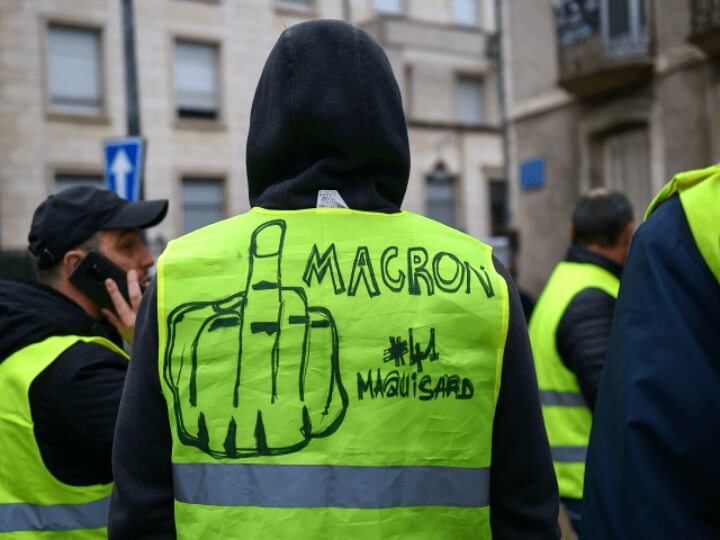

Place: France
On Tues, Feb. 5, as the Macron government pushed harsh repressive laws against demonstrators through the National Assembly, the Yellow Vests joined with France’s unions for the first time in a day-long, nation-wide “General Strike.”
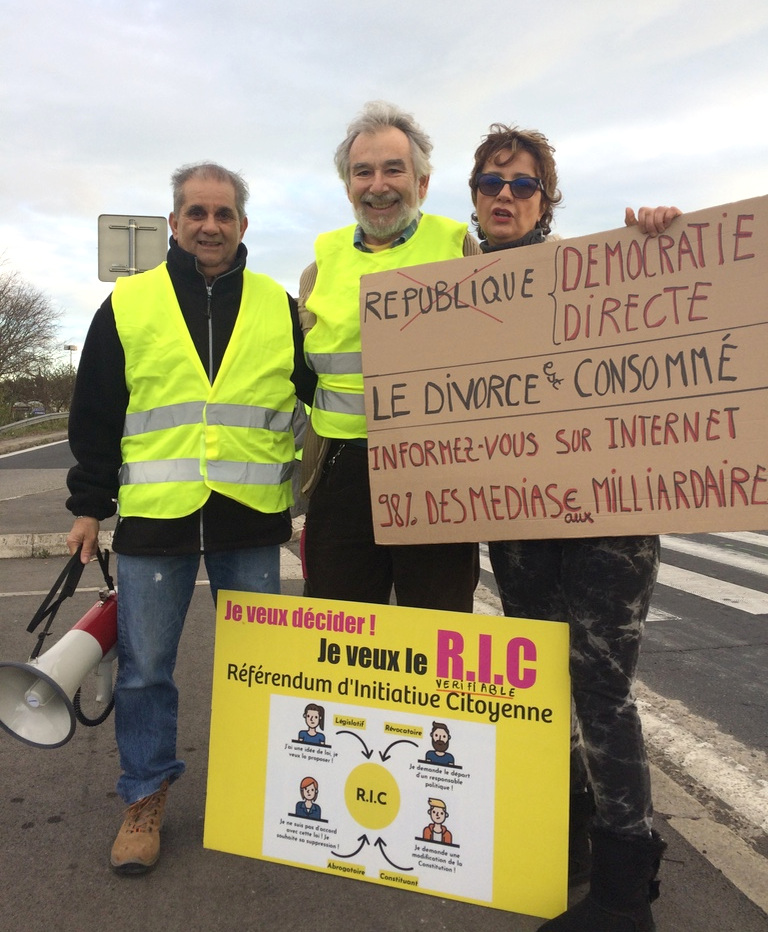 Is the Yellow Vest (Gilets Jaunes) rebellion, now in its seventh week, “petering out?” Such was the near-unanimous pronouncement of the mainstream media, when I returned home to Montpellier, France, eager to participate and to observe first-hand this popular insurrection which I had been afraid of missing.
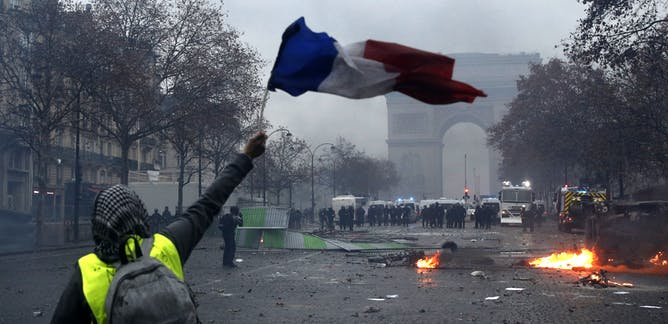
The White-Hot Anger of French Working People as a Real Fact
After rumbling on social media for weeks, the Yellow Vests (Gilets Jaunes) movement emerged suddenly on November 17, when no less than 300,000 protestors occupied roads, traffic circles in exurbs and rural areas. They wore the yellow safety vests the government requires all motorists to purchase, and which immediately became the emblem of the movement. That week and the next, Yellow Vests also ventured into the heart of Paris, blocking the gilded Boulevard Champs-Elysées and almost reaching the nearby presidential palace. From the beginning, women were unusually prominent in the local occupations and the street marches. At the same time, the Yellow Vests chased away many politicians who visited their protest sites, including some from the left.
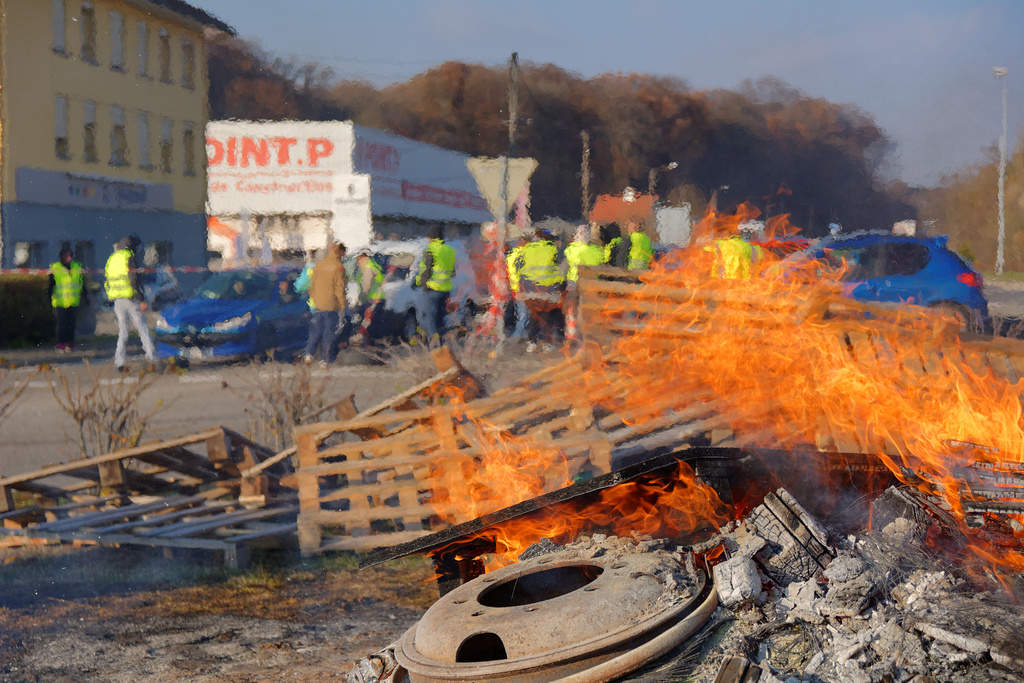
The French government has decided to suspend a planned eco-tax on fuel in response to mass protests. While the movement of the ‘yellow vests’ (gilets jaunes) has turned into a broader revolt against inequality and Macron’s neoliberal reforms, economist and climate activist Maxime Combes (Attac France) argues that as a way to tackle climate change, the tax is neither fair nor effective.
Analysis originally published on the daily internet journal of ideas AOC and translated by Taisie Tsikas.
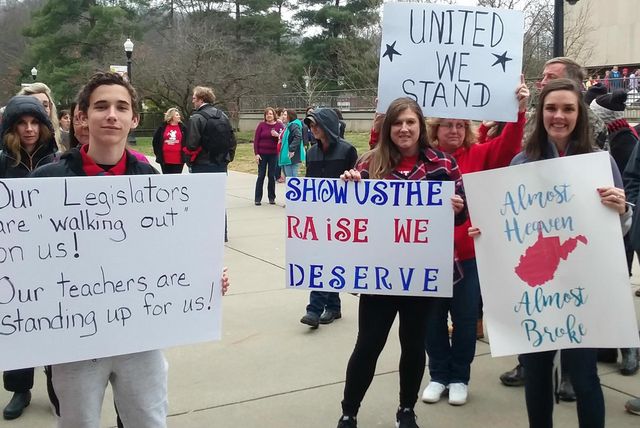 As the French get ready for the “rentrée” – the annual back-to-school/back-to-work day following the August vacation – social peace appears to reign in the land. The long-expected militant strikes and struggles against the neo-liberal counter-reforms introduced by President Macron early last Spring have failed to materialize. Surprisingly, the Macron government successfully force-marched its anti-labor, anti-welfare, pro-business agenda through parliament with little effective resistance by the unions and Left parties. Meanwhile, in the U.S., a wave of spontaneous teachers’ strikes spread from West Viriginia to other conservative ‘Red’ states, winning significant victories and surprising the media and the labor leadership. The contrast is surprising.
Adapted from a presentation to the Chicago Convention of the International Marxist-Humanist Organization, July 13, 2018.
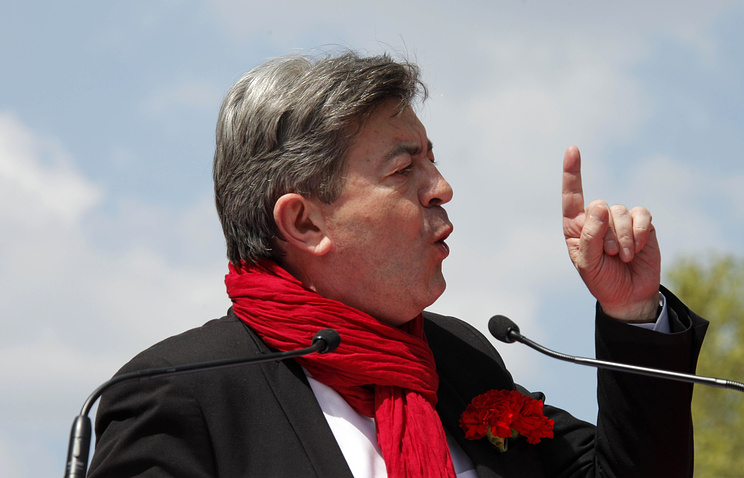
This is a declaration signed by two French militants and a young Ukrainian left-wing activist describing the details of Jean-Luc Mélenchon's trip to Russia not long ago, and the scandal of the ignorance of part of the left under the pretext of anti-imperialism.
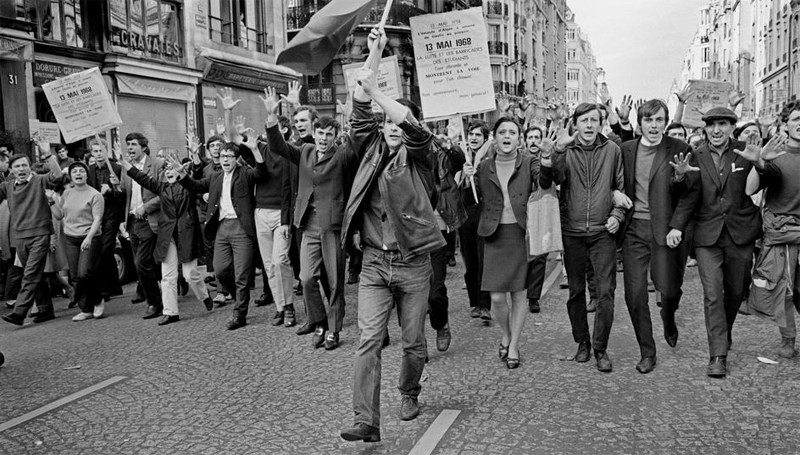
Where Are the Riots of Yesteryear?
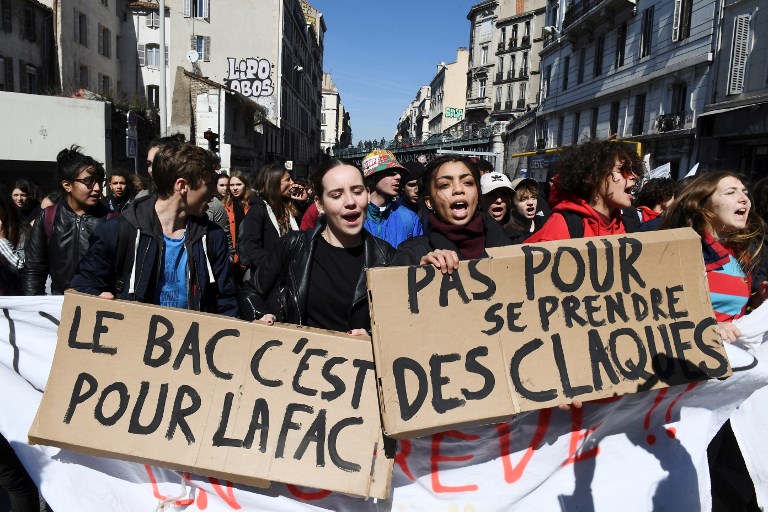
Not an April Fool’s joke. Here are the facts: Four days ago (March 29) the ultra-conservative Dean of the Montpellier University Law School was summoned to police headquarters, interrogated, hauled into court, and held over in jail for arraignment by the Chief Prosecutor – all on the complaint of nine student strikers, who claim to have been brutally assaulted with Dean Philippe Pétel’s active complicity while ‘occupying’ a school auditorium.
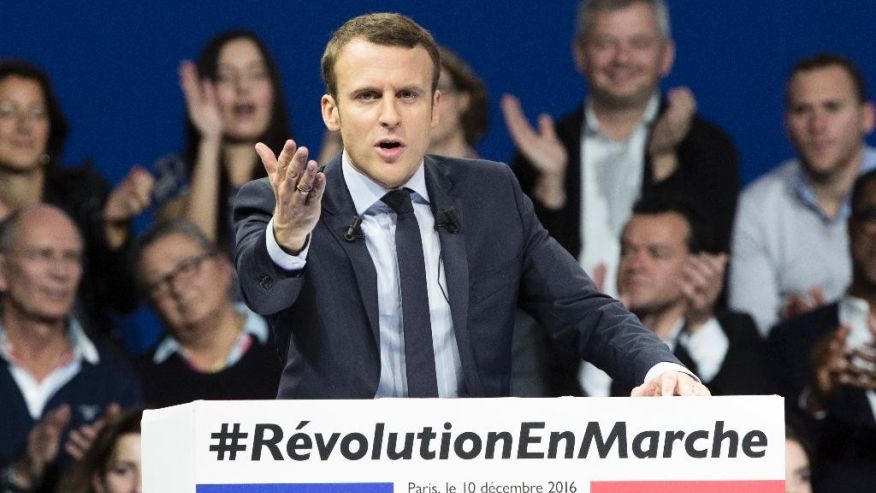
At one level, France’s 2017 elections were a huge triumph for global capital. A young and very modern neoliberal candidate, Emmanuel Macron, won huge majorities for his new political party, On the Move (En Marche), in both the presidential and the legislative elections. At another level, however, Macron’s pathway forward is fraught with challenges, both from a long stagnant economic and a restive French public, many of whom stayed away from the final round of voting.
The good news this May was that French voters rejected far-right Marine Le Pen by a two-to-one margin in the second round of the Presidential election.
The bad news was that France ended up electing Emanuel Macron, an efficient technocrat who consciously incarnates French capital’s need to eliminate the "French exception" and level the wages, rights and benefits of the French common people down to the average of the European Union (which includes Romania and Bulgaria).
This essay was originally written as a letter to the editor of La Gazette de Montpelier. Translated from the French by Nancy Holmstrom.
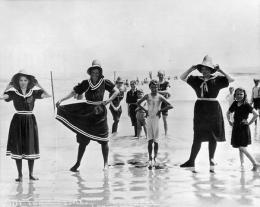
As a retired American historian, specialized in French civilization, and for the past 20 a resident at the Mediterranean costal town of Palavers-les-Flots, permit me to remind the mayors of our beach towns as well as the Prime Minister of the Republic, of a little historic fact forgotten by those who make an affair of state of modest women who wish to remain covered when they take their children bathing at the beach. This practice is nothing new. It was in almost identical dress that my grandmother and my aunts went bathing around 1900, without anyone being scandalized. (see the attached photo). On the contrary, in that period and up to the 1960s, the girl who wanted to present herself (except on nudist beaches) in a bikini risked being reprimanded by the police and given a ticket – as happened to a woman in a burkini yesterday at Cannes.
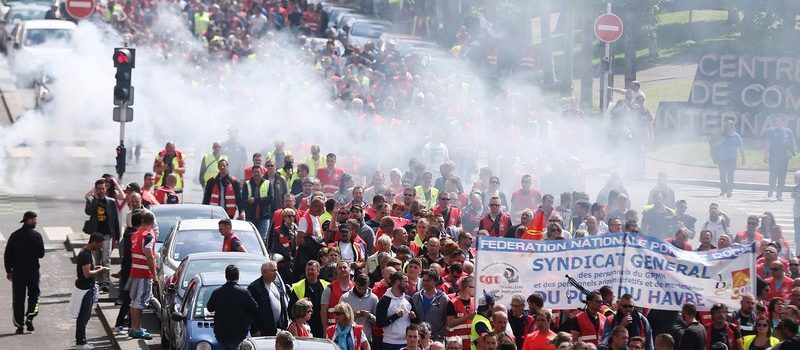
As France prepare to host millions of visitors at the Euro 2016 Football Championships, a state of emergency has been extended in the country as it faces its largest protests in recent history.
Hundreds of thousands of citizens have taken to the streets in France, amounting to what some are calling the new French Revolution amid a total media blackout in Western news outlets.
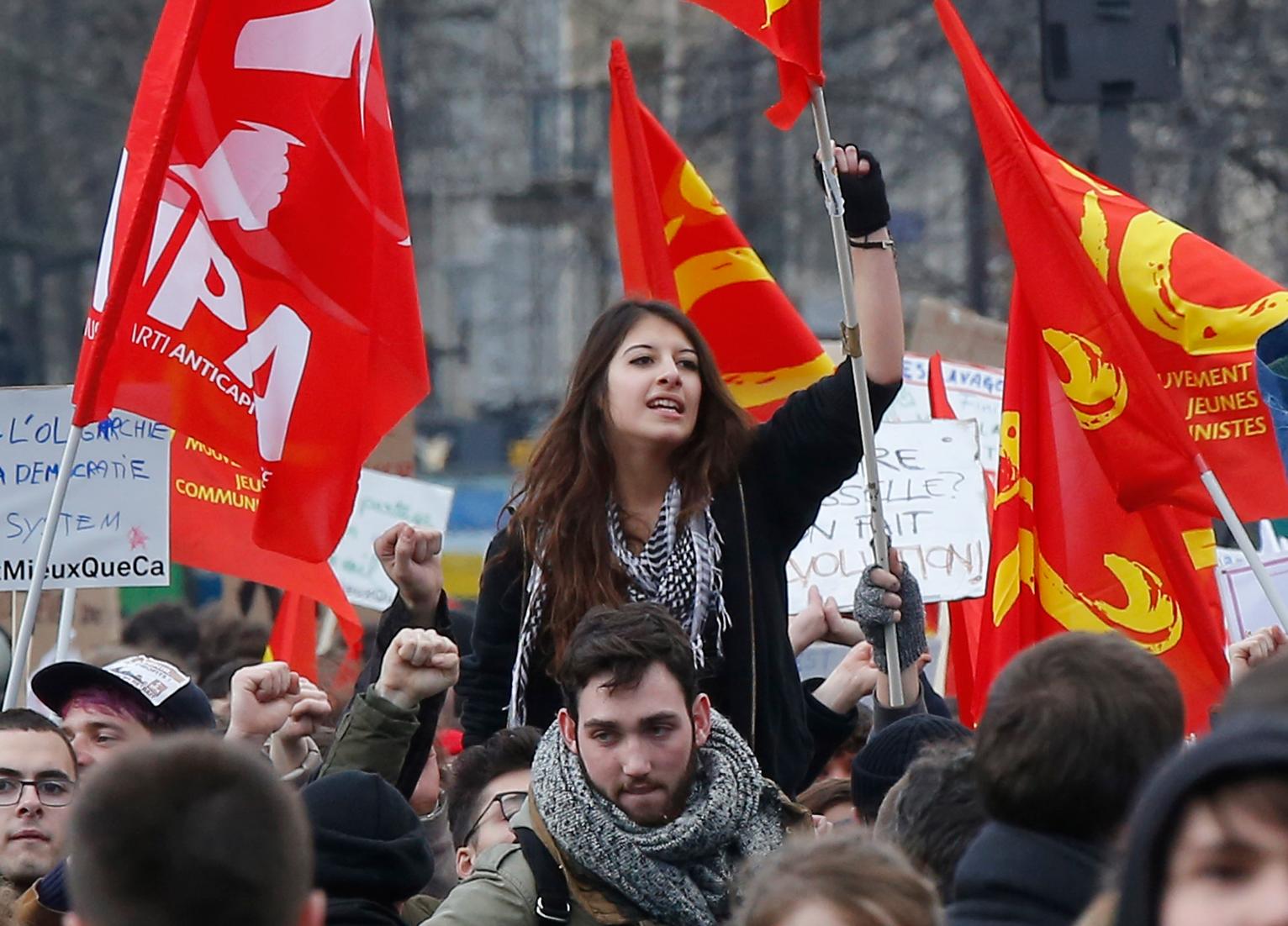
“The 49-3 is a brutality. The 49-3 is a denial of democracy.” Despite François Hollande’s opinions on this article of the French constitution in 2006, his government under Manuel Valls (who had himself been among the MPs proposing it be suppressed in 2008) used it to force through the unpopular law proposed by Minister for Labour Myriam El Khomri on May 10. This provoked an immediate reaction from the coordinating committee of workers’ and students unions calling days of national mobilisation and strikes on May 12, May 17, May 19, to continue on May 26 and June 14. [1]
[Montpellier, May 26, 2016] “We’ve had enough” is the phrase on everyone’s lips as – against all expectations — the wave of strikes, blockades, disruptions and mass demonstrations begun eleven days ago continues to develop throughout France. Indeed, in the past couple of days, two new strategic groups of workers have joined the protest. Technicians at France’s nuclear power plants are now cutting back on production of electricity, and the railroad workers have massively joined the street protests while cutting back on trains. Meanwhile, there are long lines at the gas pumps as petroleum workers continue to blockade France’s major oil refineries.
 While in Paris in mid-April, I had conversations with a number of mostly older, leftist intellectuals: professors, publishers, editors and writers. These are men and women who historically have had close ties and involvement in the labor and social movements. I also went to political protests and attended a socialist meeting. Here are my impressions, just impressions of a few days in Paris.
The following piece was written for Kojkkino, the theoretical magazine of the Greek organization DEA. Though quite long, it does not claim to cover all sides of the question. Indeed, it’s the kind of article that is never really finished and that has to be constantly reworked and supplemented. Its main objective is to stimulate collective thinking about the lessons of the successes and failures of the NPA from its birth to the present day.
Radical Left organizations in Europe have tended to focus their attention on the major political and electoral experiences that have stood out in the recent period – beginning with Syriza in Greece, Podemos in the Spanish State and the Left Bloc in Portugal, and often also including Die Linke in Germany, Rifondazione Comunista in Italy, the Red-Green Alliance in Denmark (RGA) and others. This is entirely justified. Still, other attempts at “doing something new” merit analysis, even where their successes were fewer or shorter-lived. They provide food for thought about a broader range of national contexts.
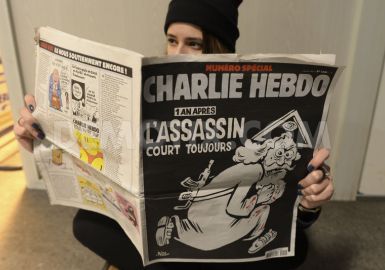
Two French Islamist gunmen of Algerian descent entered a newspaper office in Paris a year ago today and gunned down a generation of Europe’s greatest political cartoonists – many from an anarchist, anti-racist tradition – along with their co-workers and those protecting them, who also included people of Algerian descent. In case anyone is confused about the politics of this – it was a far right attack on the left.
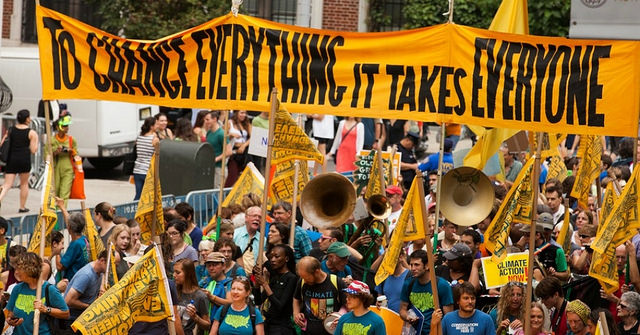
An international coalition of NGOs, civil society groups and political figures such as Naomi Klein and Susan George have called on the French president to lift the ban on protests during the COP 21 climate talks in Paris, which began on November 30th.
Following November’s terror attacks in Paris, the French government has imposed a temporary state of emergency that has prevented any protests from taking place in France. The local coaltion of NGOs and trade unions in in France, Climat 21, had planned a series of protests in Paris before, during and at the end of the climate talks which have now been banned.
It is a far from straightforward decision to found a union in a sector in which such an organisation has never existed before. For the most part, trade unions today have a (long) history: it may not be rare for workers to join a union, but it certainly is for them to participate in one’s founding and initial building. It is acutely challenging when the work itself to be organised is not entirely legal; when most of the workers are migrants in very precarious situations, who are regularly arrested and deported; when the legal context overlooks, and contributes to, high levels of violence and exploitation; and when, as if all of this was not enough, those who should be showing solidarity are on the other side, fighting to increase the criminalisation of the workers’ activity.
The November 13 attacks in Paris: the terror of the Islamic State, the state of emergency in France, our responsibilities
November 13 represents a change in the national and international political situation. The Islamic State (IS, Daesh) has struck again; and even more strongly. In January, the targets were the journalists of Charlie Hebdo, police and Jews. This time, it was the youth of the country that was the target. They did not kill just anyone, just anywhere: they attacked young people, young people in all their colours, whatever their origins, their religion (if they had one), their political beliefs. At least 130 dead, over 350 wounded – at the very least a thousand direct witnesses of the carnage. Many of us have relatives among the victims and, if not, we have friends who have. The shock wave, the emotion, is profound.