Blog

  • Rev. Jesse Jackson, 1941-2026

    Rev. Jesse Jackson, 1941-2026

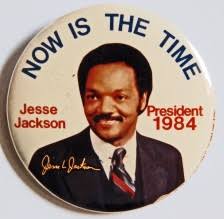
    Rev. Jesse Jackson, civil rights leader and two-time candidate for president, died on February 17, 2026 at the age of 84. The leading social and political figure of Black people in the United States in the later twentieth century, he suffered from Parkinson’s disease and died of progressive supranuclear palsy. The story below, originally published in December 2023 in New Politics, deals principally with his two presidential campaigns.

    Jesse Jackson for President 1984 and 1988

    Rev. Jesse Jackson was the most significant Black leftist political candidate of the twentieth century, running for president in 1984 and 1988, coming in third and second in the Democratic primaries in his first and second campaigns respectively. Though in places his campaign took on the character of a movement, nevertheless he not only failed to win election, but also failed to convince Democratic Party to adopt his progressive program. While many Black voters and others admired and took pride in his achievement, some on the left felt he had ultimately served the Democratic Party establishment.

    Jesse Jackson was born in Greenville, South Carolina to 16-year-old Helen Burns; his father was her neighbor, Noah Louis Robinson. Jackson was tormented by the stigma of his illegitimate birth. “When I was in my mother’s belly, no father to give me a last name, they called me a bastard and rejected me.” (Marshall Frady, Jesse: The Life and Pilgrimage of Jesse Jackson New York: Random House, 1996), p. 78.) Reading his biography, one has the sense that this initial stigmatization and rejections remained at this center of his psyche and that in reaction to that sense of rejection it provided him with his driving ambition.

    A year later, his mother married Charles Henry Jackson, a maintenance worker who adopted Jesse and gave the boy his last name though over the years he largely neglected him. Jesse Jackson grew up in a poor Black community, protected as he said by “the triangle,” of which the first corner his mother and grandmother, the second his school teachers, and the third the church. (Fraday, Jesse, p. 101.) Mother, preacher, and teacher all demanded that the young Jesse prove himself, that, as he might have said later, he “be somebody.” As one biographer writes, “In fact, the strenuous discipline in which he was raised left him forever after obsessed with the traditional rectitudes of grit, pluck, industry, pertinacity—these staunch verities that, as he saw it, provide his deliverance from the claim of the futility of and the abjectness of the communing enclosing him.” Those tenets and what he himself calls his “conservative Christian orientation” provided Jackson his moral compass. (Frady, Jesse, p. 106.)

    Even as a youth others recognized his perceptiveness, his “flair of phrase” and his “ambitiousness.” Others told him that he was special. When he was a teenager he told his biological father that he had had a dream. “I dreamed I was a preacher, leading the people through the rivers of the waters.” As a leader of the church youth group he frequently spoke in church. “Church was my laboratory where I could develop and practice my speaking powers with more and more confidence.” When he was 15, he told a friend, “I want to be a minister.” (Fraday, Jesse, pp. 111-16.)

    Jackson attended Sterling High School, segregated like all southern schools at the time, where he was elected class president, earned letters in football, basketball, and baseball, and in 1959 finished tenth in his class. As a high school student, following the victory of the Montgomery, Alabama bus boycott led by Rev. Martin Luther King, Jr, Jackson made the daring and risky move of sitting in the front of the bus in Greenville. Home from college, in 1960 he and half a dozen other students engaged in a small sit-in protest to desegregate the Greenville public library, his first civil rights activism, but when his step-father objected to his getting arrested, he left the growing movement.

    Like many Blacks, Jackson hoped to escape the South’s stifling racism by going north. A talented quarterback in high school, he turned down the offer of a minor league football contract and accepted a football scholarship to the University of Illinois at Urbana in 1959, proud to be at a Big Ten school. There, however, he had no chance of becoming a quarterback, a position reserved for white athletes. And he was warned “not to socialize” with the white coeds. Though he had left the South, he had not escaped America’s pervasive racism. On campus he was part of “an isolated minority” and fell into depression. He later said his experience at the U of I “came close to breaking my spirit.” (Fraday, Jesse, pp. 138-40.)

    Into the Civil Rights Movement

    So, after several unhappy months at the U of I, Jackson left. He now enrolled at the North Carolina Agricultural and Technical College, a mostly Black school in Greensboro. It was there that he met Jacqueline Lavinia Brown, courted her, and when she became pregnant married her. He and his wife began their family and he focused on his studies, and though the civil rights movement was burgeoning all around him, he kept his distance. Still he found time to attend the March on Washington in March, 1963.

    Then one day that same year, urged by mentors and friends to join the movement, he gave his first speech to a rally of about 100 students preparing to take action. Jackson rose and spoke: “History is upon us. This generation’s judgment is upon us. Demonstrations without limitation! Jail without bail! Let’s go forward!” And the group moved out. At that moment Jackson found his voice, demonstrated his charisma, and took up his calling. (Fraday, Jesse, p. 173.) He organized more protests and a warrant was issued for his arrest and he was jailed, taking advantage of the situation to write a “Letter from a Greensboro Jail” in imitation of Martin Luther King’s famous missive. Thousands of people marched through Greensboro demanding his release, giving proof that the movement would support him and lift him up and as a result, he went free.

    After graduating with a degree in sociology from North Carolina A & T, Jackson received a scholarship to attend Chicago Theological Seminary and moved his family to the Windy City. He got a job organizing for the Coordinating Council of Community Organizations (CCCC), a local civil rights group. In 1965 he joined the march from Selma to Montgomery, Alabama and his drive and organizational ability caught the attention of King and other SCLC leaders. He asked to speak to King and urged him to take his movement north to Chicago. A month later King brought Jackson on to the SCLC staff, at 24 years of age the youngest of King’s aides. Jackson was put in charge of SCLC’s economic campaign called Operation Breadbasket, organizing mass boycotts of white companies to pressure them to hire Black workers and buy from Black-owned businesses.

    Jackson came on board just as King was preparing to transform his civil rights campaign in the South into a national movement. So he succeeded in getting King to come to Chicago where King led a march into the suburb of Cicero and was met by hate filled demonstrators who left him shaken. A “Summit” with Mayor Daley produced a document full of hollow promises. “Most Black Chicagoans regard it as a sell-out.” The SCLC leadership was aware that they had failed to meet their goals. (David Levering Lewis, King: A Biography, Urbana: University of Illinois, 1970, p. 351.)

    Just three courses short of earning his master’s degree, Jackson left the seminary to throw himself into the civil rights movement. He soon began working with Rev. Martin Luther King, Jr. participated in the famous civil rights marches in Selma, Alabama, and  worked in the Southern Christian Leadership Conference that King had founded. In 1966, King made Jackson head of the Chicago branch of Operation Breadbasket, an organization led by Black ministers and businessmen to economically improve Black people’s lives . In that capacity, Jackson organized a “selective patronage” campaign to reward stores that hired Black people and boycot those that didn’t. When Operation Breadbasket became a national organization in 1967, King made Jackson the national director. Under Jackson’s leadership, some 40 companies were pressured to hire several thousand Black workers.

    However, Jackson’s political style and personal ambition brought him into conflict with Rev. Ralph Abernathy, who had become head of SCLC after King’s 1968 assassination. Jackson then created his own organization, Operation PUSH: People United to Save Humanity. Jackson’s break from SCLC and establishment of PUSH coincided with the migration of the civil rights struggle from the South, where it had fought de jure (legal) segregation, to the North, where Black people confronted systemic de facto segregation in all areas of life. Northern society and urban politics differed fundamentally from the South and required different political analyses, strategies, and rhetoric.

    King’s anti-Vietnam War position and his failure in Chicago left him more criticized and more isolated, nevertheless he turned toward the organization of the Poor People’s Campaign, seeking alliances with other minority groups like Mexicans, Puerto Ricans, Native Americans and Asian Americans in order to change the country’s economic agenda. The goal was to bring economic justice to working class and poor Americans by improving their employment and housing.

    In March of 1968, a strike by 1,300 Black garbage workers in Memphis, Tennessee came to King’s attention and he decided to go there and stand in solidarity with them. The Memphis workers’ strike was a way both to continue the civil rights movement in the Southin which he had been involved for almost 15 years and to take up the issue of economic inequality which was his new cause. The strikers carried signs reading, “I am a man,” conveying their demand for fair treatment, respect, and equality. King spoke inspiring words to the strikers expressing his confidence in the justice of their fight. Jackson, part of King’s inner circle, went back to the motel with him, and there on the balcony on April 4, 1968 King was assassinated.

    Operation PUSH

    Back in Chicago immediately after King’s murder, Jackson was a guest on the Today Show, where he was asked about the assassination. The highly emotional Jackson said, “I come with a heavy heart because on my chest is the stain of blood from Dr. King’s head…He went through literally, a crucifixion. I was there. And I will be there at the resurrection.” Jackson’s presence at King’s assassination allowed him to claim legacy. King was dead, Jackson would continue his work.

    Jackson would work from his base in Operation PUSH, which he now called a “Rainbow Coalition,” a term meaning unification of Blacks with Latinos, Native Americans, Asians, and progressive whites. Jackson appropriated and gave different content to that term coined by Fred Hampton, leader of the Black Panthers in Chicago, who had been assassinated by police in 1969; while the Panthers had preached revolution, Jackson advocated Black capitalism and political reform.

    To finance PUSH, Jackson raised money from a variety of Black politicians, business people, and artists, among them  Manhattan Borough President Percy Sutton; Gary, Indiana Mayor Richard Hatcher; singer Aretha Franklin; football star Jim Brown; and actor Ossie Davis. Black community leader, physician, and businessman T.R.M. Howard, a major figure in the fight for civil rights in the South, served on the PUSH board and headed its finance committee. PUSH ran a variety of educational programs, pressured Anheuser Busch (Budweiser, etc.) and Coca Cola to institute affirmative action, and produced radio broadcasts about Black issues. PUSH also established ties with such important Democratic Party leaders as President Jimmy Carter, to Secretary of Health, Education, and Welfare Joseph Califano, and Secretary of Labor Ray Marshall.

    Operation Breadbasket and Operation PUSH gave Jackson a strong base in Chicago’s enormous Black population, which reached a peak of 1,187,905 in 1980. And PUSH’s national campaigns gave it a reputation of fighting for justice among 26.5 million Black people, who then made up 11.7 percent of the total U.S. population. Jackson had networks of Black supporters among political, business, sports, and arts elites. And in a community in which Protestant ministers had historically played the role of spokesmen, he was himself a Black Baptist preacher. Driven by ambition and well aware of these assets, Jackson decided to run for president in 1984. Linked as he was to Chicago’s Black bourgeoisie and to the Democratic Party, it would be hard to deny that he was a capitalist candidate for president. Yet he was also a populist with a large Black proletarian following. A master politician, he was able to juggle the two roles. While he was based in Chicago, he was the most prominent spokesperson for Black people in the late twentieth century.

    Jackson’s social and political platform as a Black leader was in the tradition of FDR’s New Deal and LBJ’s Great Society, combining calls for economic programs for the working class and the poor with demands for civil rights. But nothing in it challenged the fundamentals of capitalistism itself. Jackson was an ardent advocate of social reform, but certainly no revolutionary. In any case, continuing his work through the next decade and a half, he decided to enter electoral politics.

    Jackson for President

    Jackson’s decision to run for president in 1984 was an expression of what Bill Fletcher, Jr. has called a “Black political insurgency in the late 1970s, early 1980s” that included the 1983 mayoral campaigns of of Mel King in Boston in and of  Harold Washington in Chicago. , both of which found supporters among progressives on the far left, particularly among the Maoists.

    Jackson’s 1984 campaign had many of the characteristics of both a social movement and a protest campaign. His activist campaign linked his presidential bid to the struggles of Blacks and Latinos, poor communities, labor unions, and workers. In sharp contrast to other earlier  Black presidential  candidate s, his vote totals  were impressive:  3,282,431, or 18.2 percent of the primary votes. He won five primaries and caucuses: Louisiana, the District of Columbia, South Carolina, Virginia, and one of two separate contests in Mississippi making him the first African-American candidate to win any major-party state primary or caucus.

    Writing at the time, Prof. Cornel West, who is running for president in the 2024 race, praised Jackson’s campaign, but criticized both the white and Black left. Of the Black movement, West wrote,

    “First, Jackson’s charismatic style of leadership accentuates spontaneous and enthusiastic attraction at the expense of constructing enduring infrastructures. Second, Jackson’s most loyal constituency—the Black community and especially the Black churches–presently seems to lack the patience, resources and ideological wherewithal to engage in prolonged political organization. And lastly, to certain extent Jackson’s allegiance to the Democratic Party diffuses energies which could be directed toward alternative political mobilization.”[i]

    Unfortunately,  this critique was – and remained – accurate.

    Of the white left, West said, “the American left continues to hold black radicalism at arm’s length.”[ii] But this was not completely true. Though not many, some white liberals and progressives rallied to Jackson’s 1984 campaign , and more did so in 1988. For example, Bernie Sanders, Mayor of Burlington, Vermont, backed Jackson, saying he believed that he could win white working class votes. Of left organizations the Communist Party, in a demonstration of political triplicity, worked in the 1988 Jackson and Mondale campaign, even while running its own Hall-Davis campaign. Most involved were the    Maoists who had become the dominant trned of the far left of the 1970s (as even their opponents recognized), but who were discarding revolutionary politics for electoral populism.

    The Maoist movement had gone into crisis not long before Jackson’s campaign. A group of talented organizers in the Revolutionary Communist Party left in 1977 to found the Revolutionary Workers Headquarters, while the Communist Party Marxist-Leninist (previously the October League) dissolved in 1980. The League of Revolutionary Struggles (LRS), founded in 1978, similarly dissolved in 1990. The Maoists, those still in organized groups and those now without a party, threw themselves into both Jackson campaigns, particularly in 1988.

    Bill Fletcher, who came out of that milieu, viewed the 1988 campaign very favorably: “The campaign sought out the sectors of society that were ignored, that were marginalized, reaching out to white farmers in the Midwest…reaching out to the workers that were on strike, that were being crushed, speaking to them.” He argues that the 1988 Jackson campaign:

    “…brought together a very broad segment of left and progressive forces, many of whom had not been able to work on anything for years, but suddenly realized that they shared something in common. That was what was unique. People on the left made a decision that this campaign was strategically critical; [and they] got into the campaign, dug in deep, and started building, building labor constituencies, building farmers [groups]….This was the work of people on the left and I think it was exceptional.”

    Jackson found support not only from Blacks, but also from Puerto Ricans, Mexican Americans, and Native Americans. He crisscrossed the country, speaking in Black, Latino, and white working-class communities. He showed up at union picket lines and marched with immigrants. He seemed to be everywhere demanding change.

    Jackson did exceptionally well in 1988 more than doubling his votes in the 1984 campaign. He received 6.9 million votes and won 11 contests: seven primaries (Alabama, the District of Columbia, Georgia, Louisiana, Mississippi, Puerto Rico and Virginia) and four caucuses (Delaware, Michigan, South Carolina, and Vermont): he won 29.7 percent of the vote compared to the 42,2 percent for Governor Michael Dukakis of Massachusetts.

    The Aftermath

    The leftists who had supported him believed that his campaign had laid the basis for an ongoing movement. And perhaps it might have, but Jackson wasn’t interested. As Fletcher says,

    “After the November election there was a great debate that took place in Rainbow circles and the question was: What happens to the Rainbow?. There were many promises about how the organization would be built. We were told that it would be a mass, democratic organization that we would be building around the country, that would basically take the approach of working inside and outside the Democratic Party. That was thrilling.

    “There was an element within Jackson’s constituency that started to make the argument that the Rainbow’s future was to be determined by Jackson. Not to be determined by the thousands of people who had dedicated themselves to his campaign. When you’re dealing with a charismatic figure, it is very hard to rein them in.

    “Jackson misanalysed that moment at that juncture and thought that a permanent Jackson wing of the Democratic Party had emerged as a result of the 1988 campaign. And it hadn’t. In March of 1989 there was a meeting of the executive board of the Rainbow. To the surprise of many people, myself included, Jackson came forward with a plan to reorganize the Rainbow into what was a personal or a personalist organization.

    “I don’t think that we recovered. Things didn’t play out as we hoped, but it was pathbreaking, in terms of the issues that were brought to the surface, not like anything that had arisen perhaps since the 1940s. Despite any weaknesses on Jackson’s part as an individual, he has to be credited with understanding the moment up until late 88, and that’s when the songs of the sirens misdirected him.”

    Jackson persisted. The Rainbow disappeared.

    With his base in Operation PUSH in Chicago and his relationships with Black business people, corporations, and the Democratic Party, Jackson remains a prominent Black political figure. He has never deviated from his commitment to social reform—but within the limits of the Democratic Party and Black capitalism. He is reputed to have a personal wealth of $9 million. In 1996 he established the Wall Street Fund to support “minority vendors,” that is Black business, though in 1999 praised Donald J. Trump. He remains today both a major African American leader and a contradictory figure.

    Conclusion

    As we have seen, when Black candidates have run on third-party presidential or vice-presidential tickets—whether Communist, Socialist, or Peace & Freedom—they received few votes and seldom contributed to building the social movement or changing American society. But when they ran in the Democratic Party, as Chisholm and Jackson did, they could receive significant numbers of votes, and in the latter’s case, even create around the electoral campaign the feel of a movement, but because they remained tied to the Democratic Party,, it absorbed the candidates and their supporters but gave little in return.

    Thanks to Michael Letwin for his comment on an earlier version of this article.

    Notes:

    [i] Cornel West “Reconstructing the American Left: The Challenge of Jesse Jackson,” Social Text , Winter, 1984-1985, No. 11 (Winter, 1984-1985), pp. 3-19

    [ii] Ibid.

  • Ukraine Solidarity Network Statement on Iran Uprising

    Ukraine Solidarity Network Statement on Iran Uprising

    It is time for Iranian and Ukrainian progressives to come together in solidarity and find ways to help each other on the basis of allegiance to human rights and democratic principles.

    ***************************************************************************

    (more…)

  • The Kurdish Question: A Left-Wing Vision

    The Kurdish Question: A Left-Wing Vision

    In January 2026, Syria witnessed a military escalation between the Syrian army and its allied militias on one side, and the Syrian Democratic Forces (SDF) on the other. The agreement reached in February 2026 between the “Syrian government” and the SDF constitutes — regardless of one’s political stance toward either party, and despite all reservations and differences — a rational, peaceful step in the right direction. It spares the population from destructive military conflict. These developments once again raise the central question of the Kurdish issue and the national question in the Middle East.

    This region has endured bloody national conflicts that have left millions of victims and displaced persons in their wake. The Kurdish people today are dispersed across four states: Turkey, Iran, Iraq, and Syria. The fundamental question remains: what is the possible solution? Does it lie in building separate nation-states, or in the struggle for a citizenship-based state grounded in equal rights?

    A History of Oppression

    The Kurds have been and continue to be subjected to severe national oppression. In Iraq, the brutality reached its peak with the Anfal campaigns and the chemical bombing of Halabja, as well as Arabization policies. In Syria, it manifested through the Arab Belt project and the 1962 census, which stripped hundreds of thousands of their citizenship. In Turkey, Kurds were classified as “Mountain Turks” and thousands of villages were destroyed. In Iran, they faced complex repression, executions, and economic marginalization.

    Yet these policies were not directed solely at the Kurds, for the dictatorship that crushed Kurdish identity is the same one that oppressed all citizens. The struggle against national oppression is part of the broader fight against tyranny. Confronting genuine oppression does not come through replacing one dominant nationality with another, but through dismantling the very foundations of the exclusionary nation-state and building a democratic state based on equal citizenship.

    Experiences of Power and Bets on External Actors

    In the Kurdistan Region of Iraq, the once-oppressed nationality transformed into a ruling power, confronted with accusations of repressive practices and organized corruption. The two ruling parties, the Kurdistan Democratic Party (KDP) and the Patriotic Union of Kurdistan (PUK), established hereditary family rule, curtailing democratic rights and the rotation of power. In Syria, the Syrian Democratic Forces evolved into a centralized structure with limited space for pluralism. Despite some progressive reforms, numerous human rights violations were documented, including the recruitment of children. This demonstrates that the flaw lies in the very structure of the exclusionary nation-state itself.

    Some Kurdish national movements relied on American support for their projects. Yet America has backed reactionary regimes and has never stood on the side of oppressed peoples. Its alliance with Kurdish forces served to fill a vacuum created by the absence of large American ground troops. More recently, this alliance in Syria has tilted toward the central government. Betting on the great capitalist powers is betting on a political mirage.

    Marginalizing Class Struggle and the Danger of Civil Wars

    National conflicts drive societies toward fanaticism and civil wars, turning the masses into fuel for conflicts that do not serve their interests. The exclusionary nationalist discourse transforms the conflict, diverting the class confrontation between workers and ruling classes into a false identity conflict. It uses national antagonisms as a tool to weaken class struggle and deflect attention from questions of rights, labor, and social justice.

    Under the pretext of defending nationality, class struggle is marginalized, exploitation is justified, and the powerful are shielded from accountability. The task of the left is to draw on human and internationalist identity, and to stand in solidarity with the suffering of all civilian victims of violence and war — without ethnic or religious discrimination. Selective solidarity is an inhumane way of thinking that entrenches fanaticism and weakens every emancipatory project.

    Is the Nation-State Achievable Today?

    The objective conditions do not appear to be in place for a Kurdish nation-state project. Kurdish territories are surrounded by hostile regional powers, and national movements lack genuine international support. American support is transient and tied to immediate interests. And even if a Kurdish entity were to be realized, what would guarantee its survival or prevent its transformation into yet another authoritarian model? The experience in the region, and in Syria in particular, speaks clearly: partisan-tribal governance, autocracy, corruption, and human rights violations.

    There is a demographic reality that cannot be ignored: in many areas, no single nationality constitutes a clear majority. How can a national project be built on territories inhabited by citizens of other nationalities? This reality generates sharp tensions and opens the door to accusations of Arabization, Kurdification, or Turkification. It is difficult to erect a nation-state in multinational spaces without producing new national injustices.

    The Citizenship State and Rights Grounded in Human Identity

    It is necessary to distinguish between demanding cultural, linguistic, and administrative rights and demanding a separate nation-state. These rights are legitimate demands that every left-wing person should support. But the struggle for them is more realistic within the framework of an equal citizenship state — a state founded on the full equality of citizens before the law, without national or religious discrimination, and one that transcends national and sectarian affiliations in its political structure. The viable alternative today is a citizenship state that neutralizes nationality and religion in the exercise of power, and that limits the formation of parties on national or religious grounds.

    Far-reaching powers can be granted to regions, which would strip the conflict of its ethnic charge. This goes hand in hand with a comprehensive constitutionalization of rights, the building of oversight institutions, and an independent judiciary. The citizenship state may appear to be an ideal dream, but the project of a separate nation-state is even more idealistic and further removed from reality. Speaking of an independent, stable Kurdish state surrounded by hostile states, without international support and in multinational spaces, is a distant dream. The citizenship state, by contrast, is a gradual project that begins with concrete steps: the constitutionalization of rights, the construction of democratic institutions, the implementation of decentralization, and the strengthening of the rule of law.

    The Right to Self-Determination and Realistic Rationality

    While fully supporting the right of the Kurdish people and all peoples to self-determination, including secession, the current conditions are not suited to the proclamation of new nation-states. What is needed is a rejection of forced unity and support for voluntary unity. The foundations of equal citizenship, just as the defense of the right to self-determination, must lead to greater rights, more equality, and a better life.

    This position is not hostility toward Kurdish national liberation, but a defense of the very essence of liberation against the distortion inflicted upon it by bourgeois national projects. Under present circumstances, the masses are driven into wars and national conflicts, plunging into ever-deeper crises for the sake of entities threatened with transformation into further authoritarian models. For Marxists and left-wing activists, this means applying scientific rationality, studying conditions, balances of power, and realistic possibilities, and avoiding dragging the masses into lost and destructive wars. Trust must be placed in rationality, not in national heroics or national pride, for such discourses lead to more wars and more destruction.

    The Tasks of the Left

    The task of a genuine left is to draw its political line apart from all parties to the national conflict, and to fight for a state based on citizenship, equal rights, and social justice — not on national or sectarian foundations. The road is long and arduous, but it is the only path to a genuine and lasting solution. The left can organize itself in practical terms by building organizations that transcend nationalities and sects, that start from the common interests of the working class, and that link the struggle for national rights to the social struggle against exploitation, corruption, and despotism.

    The fundamental struggle is the dismantling of the chains of this exploitation and the building of a democratic, socialist, and humanist space. The road to the rights and freedoms of the Kurdish people runs through the rights and freedoms of their Arab, Turkish, Syrian, and Iranian neighbors, in a state that does not question its citizens about their origins, that guarantees them bread and freedom, and that respects their human dignity.


  • Build, Expand, Liberate!

    Build, Expand, Liberate!

    Of all the global liberation struggles, Iran’s situation is one of the most paradoxical and confusing. The Islamic regime is a theocratic modern capitalist state that dominates the lives of Iranians through a military corporation, the IRGC. It came to power through a violent counter-revolution where autonomous networks of worker councils were systematically targeted. The daily rule of the clerical aristocrats is brutal to everyone yet has upheld an ethnic hierarchy pitting Persians against other groups. The loudest and most vocal opposition to this military corporation’s rule is a coalition of right-wing activists who loudly denounce leftists, want a Western friendly government, and want to proclaim a king. Support for this state built on environmental injustices against minorities comes from anti-capitalist groups who have been hosting workshops on how to resist militarism for decades. 

    While many are still in denial, the truth about the Iranian regime is that it is a deeply authoritarian, oppressive, violent project meant to bring about a messianic liberation for Shiites. And yet it even oppresses Muslims with persecutions against Ismailli communities and Sufi collectives. It has consistently failed to provide a basic standard of living for most and yet seems to have all this money for its ideological projects with low support. Protests and desires for the regime to fall have been present since its inception. There have been several mass protests movements from the reformist “where is my vote” protests in 2009 which united millions in calling for reform to more recent protests that are calling for the abolition of the state. 

    In every situation the formula is the same, a shocking level of mass violence and a ruthless manipulation of geopolitics. There is not genuine free speech and organized political opposition is not allowed. After 4 decades of crushing any alternative, the only organized political opposition has been in the diaspora. The failure of the left to help build an alternative political movement has allowed for the son of the former dictator and right-wing allies to fill that gap. Many Iranians who would never think to go back to his rule have been gradually courted into this coalition which started subtly and increased declarations of support for Reza Pahlavi over time. Many are not ideologically believing the West needs to intervene, but are deferring to the only large political coalition that is firmly against the Islamic Regime’s rule.

    The current coalition leading Iran’s protest claims to have clarity in its stated goal of bringing down the Iranian regime and installing Pahlavi as a transition leader or monarch, depending on who you ask. They have built networks that highlight the regime’s undeniable crimes while publicizing and naming the victims. They also loudly advocate for stronger sanctions, labeling the state on a terror list, and taking action to protect protesters (although the level of military intervention they are asking is unclear and generally kept vague). There isn’t a fundamental safety in this approach as it is at the whim of a notoriously flaky aspiring despot to press the “final” button to end the regime. They fundamentally believe Trump’s rhetoric on being a strongman whose status as a wildcard can be used to break the regime. This ignores multiple major retreats after big threats (to the chagrin of neocons) including the U.S.-North Korea confrontation in his first term, allowing a Turkey-backed government in Syria to develop (instead of deposing Iran’s ally Assad), and keeping the Venezuelan state apparatus intact.

    This flawed analysis and one dimensional strategy doesn’t account for Trump’s tendencies nor does it account for genuine political disagreements in the regime’s opposition. The Pahlavi coalition also failed those in Iran after encouraging protesters to take unprecedented risks in their desire to change. They were told that mass IRGC defections were around the corner and they had convinced international powers to intervene. Iranians used this information to escalate their protests believing that help was imminent. To understand the context of the pro-Shah chants, Chowra Makaremi and Amir Ahmadi Arian describe the situation as one where Iranians already believed that action was taken. These chants were more a celebration of a perceived victory than a strong ideological current towards monarchy. What followed is one of the most tragic memories in all of Iranian history. The current death toll has different estimates but even the lowest reliable estimate by the Iranian human rights organization HRANA (6,800) is a testament to the terrifying mass murder capacity. The diaspora organizers need to be accountable to inform us whether the coalition was given bad information or are they using Iranian grief as a political tool?

    On the other end of the spectrum you see a broad coalition of liberals, leftists, antiwar activists, pro-Palestine groups, and human rights coalitions failing to live up to the moment. While there is disagreement among these groups, and plenty of exceptions (especially with individual Palestinian calls for solidarity) this end of the political spectrum is struggling to have real relevance with Iran politics. Within this broad coalition there are some common currents to how Iran is talked about. 

    1. Directly calling for solidarity with the Iranian government and supporting their actions as an act of resistance against imperialism. This is a vile position espoused by people who host regime-connected figures such as Mohammad Marandi on the Electronic Intifada or Mint Press.
    2. Acknowledging Iran’s oppressive nature but believing their role in an anti-imperialist struggle requires us to ignore their “contradictions.” This a worldview that robs Iranians of their agency and ignores working class struggles. It is very similar to Western war hawks’ views of civilians as disposable agents for a larger strategy. This worldview is common in figures like Vijay Prashad and a popular Palestine advocacy page SavesheikJarrahNow which fundraised for war victims in Palestine but has used the platform to encourage people to ignore Iran protests
    3. Perpetually confused activists who know something is wrong but their worldview doesn’t allow them to witness a dynamic solution. These are people who will stand in solidarity with folks in the global South through anti-war activism. They don’t have an answer when U.S. rivals commit atrocities. They will likely say something along the lines of “I criticize my own government first” which is limiting and unhelpful in this context.
    4. Organizers who care deeply about Iran and Palestine and are overwhelmed at the political divisions. They try to raise awareness and some even raise funds but generally we are at a loss. I am in this camp.

    Much of the U.S. left has gladly used the Pahlavi coalition’s manipulation as an excuse to demonize Iranian protesters and betray working class resistance. These polarizing narratives do not serve anyone living under the boot of the current fascist Iranian state. 

    I desire an activism to bring down the Islamic Republic and preserve the rebel heart of Iranian society. I believe this can be done with a deep understanding of the dynamics of resistance without an organized figure. 

    The purpose of this article is not to propose a concrete strategy. That is a loaded prospect should not fall on one person. I write this article as guidance for building a liberatory political strategy that embraces the diversity of popular struggle against the Islamic Republic. I hope this helps people discover points of unity around Iran that allow them to form creative coalitions and develop an emergent strategy. At the end of this article I will propose 6 concepts that can nourish a liberation movement. These include non-partisan rallies, getting money into hands of Iranians, supporting smaller disruptive protests over mass rallies, building diverse coalitions, disrupting propaganda, and a transitional council with many leaders. 

    Beyond Persians and Iranians

    When we talk about the repression of the Iranian state we are not only talking about Persians. This struggle includes Iraqis whose government has been taken over and acts as a puppet for the IRGC. It can include Yemenis and Afghans whose nations have been intervened with by the Islamic regime, as well as the diverse ethnicities living within Iran. 

    The past 100 years at least, Iran has gone through a deep centralization hoping it would foster modernity and development. The reality is that it has strengthened inequality and resorted to the central state to repress people’s dreams and even movement. Alborz Ghandehari writes: 

    “The Islamic Republic, like the Pahlavi monarchy before it, has also pursued centralist development policies which have enriched the country’s Persian centre while institutionalizing the organised abandonment of peripheral regions populated by national minorities including Kurdish, Baluch, Arab, and Lor communities.”

    At the heart of Iran’s struggle is also a divide between ethnically Persian groups and many other ethnicities, some brought into the state through force in the early 20th century. These are the most likely to put out statements against all interventions and occupiers. 

    In Southwest Iran, the Ahwazi struggle has its own character and list of grievances. In the late 2010s, the UN came out with a report naming Ahwaz as one of the world’s most air polluted cities. It has also dealt with regular strikes due to water shortages from industries that inefficiently use water depriving the region. To try to weaken opposition, the government has started bringing in unemployed Persian workers from central regions to displace workers. Different Ahwazi groups on social media bring further attention to their struggle. There are many parallels between how Iran has treated non-Persians and racial/economic injustice in the U.S. Kurdish people are 10% of Iran’s population yet 50% of its prisoners. There’s long history of Kurdish resistance against the Shah’s and Islamic regime and they were at the forefront of the Women Life Freedom protests. Originally a slogan used for Kurdish guerrilla fighters, they have been appropriated by monarchists without respecting their origin. The current Iranian government doesn’t allow for traditional Kurdish names to appear on government documents. When Jina Amini was murdered, both the Persian diaspora and regime insisted on using the name “Mahsa” which was forced on her.  

    These are only a couple examples of Iran’s tremendous ethnic diversity and there needs to be more of a focus on bringing their voices and perspectives to the mainstream. This round of protests featured prominent anti-regime and anti-Pahlavi slogans among Azeri’s in Iran. Using divisions to enable autocracy must be stopped and we need a move towards pluralism.


    Outdated tools – Who’s still talking about sanctions?

    As an antiwar activist who opposes imposing sanctions as an act of warfare, I don’t endorse them as a strategy. I do however witness the strategic dilemma where advocating for sanctions relief could cause harm. The last time there was sanctions relief almost all the money was sent to Iran’s foreign interventions including IRGC war crimes in Syria and supporting its sectarian proxies in Iraq to put down popular uprisings. Any strategy that utilized sanction relief needs to have a strategy to get that money to everyday people. Whether sanctions have succeeded or failed (I believe the latter view) people need to realize taking an action that improves the material conditions for a regime is also a form of harm. There isn’t any evidence that regime members being able to access funds will leads to a return of wealth to the working class. Therefore organizing around this topic is not considerate or effective around this time.

    The Iranian regime is a predatory apparatus that chronically steals from Iran’s working and popular classes. There needs to be a strategy to weaken the power of the state or at least gain significant concessions from it. The reform strategies of working with the reformist coalition have failed and used by the state to create an image of being to modernize. In reality, Iran has pursued ruthless neoliberal policies and modernized its surveillance apparatus while keeping the country backwards, the people oppressed, and opportunities limited. 


    Iran’s dynamic labor struggle

    Iran shows that there is a fundamental need to organize in a new way. In absence of organized clear political opposition, much of the resistance to the Islamic Republic operates like a shadow. Large labor unions are replaced with a labor council that could disappear tomorrow due to threats, and another one may reappear a few days later. 

    The left holds this idea of an industrial formal working representing working class struggle while missing that Iran’s working class struggle is largely in informal and feudal-like sectors of the peripheries. This can look like Kurdish “Koolbars” passing goods between borders and regularly dealing with violent border patrol or arbitrary extraction. Fishers in Ahwaz who use it to feed the communities. Fuel transporters in Baluchistan have also organized and faced abuse. These are lifestyles and survival strategies with a very distinct relationship to labor so more education is needed among the left. Small collectives of domestic workers may get together to organize a mutual aid drive after a disaster then disperse or organize secretly once their organization takes a form that the state can grasp. It’s different local committees in non-Persian areas in the peripheries who are even more abused and failed by the government.  

    A lot of people who are leftist or anti-war lack this fundamental understanding of progressive forces in Iran. Long-term durable organizations are replaced by short term-charters offering a pathway to organize. As an example during the Women, Life, Freedom uprisings, 20 organizations including unions, professional organizations, and collectives put out a 12 point statement declaring goals for the revolution. This document called for free speech & freedom of religion as well as emphasizing demands not as present in diaspora protests such as LGBTQ protection and dismantling state capitalist institutions and directing the funds through educational and environmental initiatives.

    Another prominent labor struggle (ignored by most labor radical activists) was the Haft Tappeh Sugar Cane privatization struggle. Workers in the Haft Tappeh factory revived a union and started selecting leaders to expand the labor struggle. Women’s right’s activist Sepideh Gholian was arrested for her journalism uplifting the labor struggle. Note this confluence of labor and media activists coming together to highlight a shared struggle. contrasts to the diasporic loud expressions of indignation, these activists use the little resources they have to tell a story and push for a better life.

    Due to intense repression of labor unions by the Iranian government, workers would often go weeks or more at a time without sharing updates. When I was trying to uplift this struggle, I was always anticipating an update or hoping for a concrete step to support. I learned that the needs of the people are dynamic and changing according to the freedom they can breathe when given the opportunity. I believe there is a lesson here for every political faction to challenge what solidarity means to them.

    This is not a vague idea of the past, since labor organizing & progressive struggles are still very much alive in Iran and does not get the support it needs. During this uprising, a joint statement was put out by student activists from multiple universities in solidarity with the protests:

    “Today these crises have accumulated upon on another: poverty, inequality, class oppression, [the long list continues….] and the environmental crisis. All are direct products of a corrupt and worn out system: the naked embodiments of the policy of repression revealing its bloodthirsty face more clearly than ever.”

    It continues, “Neither Pahlavi nor the regime,” and, “The University has once again reminded us that it stands against despotism.” The full statement can be found by activists who translated their statements. Another statement was put out by the syndicate of bus workers in Tehran which named this round of violence as one of the worst killings in this regime’s history while condemning foreign interference and Pahlavi’s opportunism. 

    When statements like these are released, they show that people on the ground still have hope for change and believe there are still ways to resist without depending on intervention. Instead of building relationships and dreaming strategies to support them, all the political coalitions choose to ignore these voices for their convenience. We need to support the Iranian labor and popular coalitions for a free Iran and prioritize protecting their organizing. 


    Analyzing the state and understanding Iranian capitalism

    A lot of the modern left doesn’t have an astute analysis of the nature of the Iranian state’s brand of capitalism. I’ve even seen some pages boast about their generous welfare programs. While there have been some social programs implanted, their effects can vary and are subject to cuts during neoliberal austerity phases. Most union activity is banned as this counterrevolutionary government consolidated its power in the early 80s through a mass murder of union activists and the violent closure of many labor councils that held sway during the revolutionary transition. Iran does have state intervention but even the state industries are run privately and for profit, often by untalented government cronies

    Wages are low for most with stark inequality and a high unemployment rate. Reducing international tariffs devastated some local industries including Haft Tappeh Sugar in favor of inviting private capital. There is also rampant predatory behavior by private institutions that goes unregulated. Fake visa processing or property sales can leave someone walking into an empty office to realize all the money they’ve spend was a clever scam. People who fell victim to these convincing frauds are almost never able to recuperate their money as the government allows predatory industries to be unregulated. Iranians are used to their currency being low value so they have to wager their currency against expensive gold coins hoping they appreciate in value. In this area there are some similarities with the current status of US capitalism where some people gamble on crypto to make up for the weakness of the labor market.

    Ironically, one of the biggest failures of the anti-imperialist movement is failing to recognize the Islamic Republic as an imperial project. The amount of denial from many progressive groups about Iran’s interventions has been curious. During the Syrian uprising Bashar Assad’s government, on the verge of multiple crises, survived longer than expected thanks to Iranian military intervention. In the book Syria After the Uprisings, Joseph Daher documented that shortly after sanctions relief Iran invested $40 billion in Syria over a few years and had thousands of troops there. 40 billion is an amount that would be significant investment in the U.S. In Iran it could revitalize an entire industry and pull millions out of poverty. They also sell missiles to other members of the axis of resistance including militias in Iraq, the Houthis who played a role in putting down the Yemeni uprising of 2011, and Hezbollah. All of these countries has mass protests against Iranian influence in their economy which were not supported by anti-imperialists. The crimes committed against their opposition, especially in Syria, are truly a tragic chapter in the history of Middle East warfare. The people of Iran witness these major investments and make the connection to their government’s imperial actions and their own poverty. Paria Rahimi writes:

    “Inside Iran, people have long rejected this rhetorical trap. One of the most common protest slogans of recent years—’Neither Gaza nor Lebanon, I will sacrifice my life for Iran’—is not a chauvinist or xenophobic rejection of international solidarity. It is a refusal to be sacrificed in the name of an opportunistic, imperialized version of anti-imperialism. It is also a direct inversion of the regime’s founding slogan,  “Neither East nor West, Islamic Republic,” and its project of dissolving the nation into an abstract Islamic ummah while exporting violence beyond its borders to enforce a Shiʿa imperial doctrine rather than any emancipatory project.”

    Seeing billions of dollars go into foreign interventions has enraged almost everyone living in Iran deeply. There is a long list of investments people would like to see including more efficient environmental projects that protect water. Instead a number likely reaching over 100 billion was spent on spreading the government’s Shiite sectarianism. Seeing the violence of this interventionist project and a lack of a solution from activists, many have started to turn to the West for support, tired of anti-imperial slogans that ignore their lived experience.


    The failures of the left & long term liberation in Iran

    After decades of failures from progressive and left organizers, the loudest and most organized opposition is right wing. There are a loud number of voices outside (and increasingly in) Iran who think Pahlavi as a transition leader is the only option. I personally fear a coalition that acts with foreign money and behaves in a dictatorial manner in the safety of the diaspora. Their uncritical use of AI, contributing to a global water crisis, is a testament to their hostility towards other human rights and environmental causes. Right now Iran’s injustices are deeply rooted in environmental damage, and if they can’t use better tools out of concern for the world’s drying waters, how can they be expected to fix Iran’s water crisis? I don’t believe contracts with more bids will fundamentally make the Iranian economy more sustainable. 

    I fear their political alliances will make Iran a state that will experiment with deeper resource extraction and predatory contracts from outside power. They will also continue much of Iran’s surveillance and oppression of the peripheries with a few concessions, such as no mandatory hijab. The coalition is still focused on humanitarian appeals for Trump to help, offering political cover for his many scandals and failures.

    While he may intervene, it will come at a cost of giving him positive media attention. He will use our community to build his base teasing Iranians with the promise of change. He’s using rhetoric to build political capital and build and may escalate but historically he uses strategic or symbolic strikes over actual overthrows. Much of the Iranian opposition isn’t interested in a long-term strategy as they have convinced themselves for decades that the regime’s fall is around the corner. While this unpredictable situation may be the end, we must still build a movement. The recent overthrow of Assad took 13 years after multiple disasters early on seeming to spell the end. A new kind of emergent strategy is needed whether the regime survives this crisis, or the Pahlavi supporters get their way and install him in power. 

    The other angle is that there is no guarantee Trump will pick Pahlavi, as he is notoriously unpredictable and goes for situations he can control. If the West does win and installs their own oppressive agenda, the Western powers will have the Islamic Republic to thank for decades of preventing organized and popular resistance of gaining a foothold. Pariah Rahimi writes: 

    “The left must confront an uncomfortable fact: the Islamic Republic is, in practice, one of the most advantageous adversaries the United States can have in the Middle East. Its permanence stabilizes regional antagonisms, legitimizes militarization, and sustains the circuits of global capitalism far more effectively than a nationalist, secular, right-leaning political order ever could. Any agreement with this regime does not weaken imperial power; it consolidates it.”

    For the left to gain relevance, the first step is to apologize and admit the failures of these coalitions that were supposed to be liberatory. There needs to be accountability to listen and communicate with Iranians in general. There needs to be an updated analysis, and there needs to be new coalitions with the courage to “cancel” certain long term propagandists. There can’t be any change if organizers can’t get the first step: acknowledgment.


    Let’s build a coalition

    Overall there is a new form of organizing needed, one that witnesses and supports the diversity of Iran’s ethnicities, movements, and tactics. 

    1. Hold non-partisan rallies

    Much of the failure to respond to the current crisis is people’s commitment to their ideology. Monarchist protesters hold “pro-democracy” rallies where they tell people who the next KING is. Anyone who speaks against this will be escorted out or even risk physical violence. People deserve to attend rallies where their choice and agency can be respected. It should also be a place of open debate and sharing where people can learn about actions they can take. For this reason I don’t even support framing the protests as “anti-war” or “leftist” as we want a diverse range of voices to be present. Pahavi supporters can show up as their own contingent, not the stated voice of “the Iranian people.”

    2. Get money and power into the hands of Iranians.

    At this point I’m not focused on sanctions, be it putting more in or removing them, though I don’t endorse them as a strategy. We need to hone in on our goal to get actual funds to people in Iran. No one really knows how the Pahlavists spend their money on Iran. But I can’t seem to find any indications that they’re supporting labor strikes and uplifting non-Persian voices. To fill this gap, targeted fundraising needs to help localized networks and unions to build capacity under the shadows. There needs to be maximum pressure on the regime that any funds, made by its ruling class or potential sanctions relief, need to go to civil society organizations rather than furthering repression (The last time–2015–when there was sanctions relief, almost all the money was sent to Iran’s foreign interventions including IRGC war crimes in Syria and supporting its sectarian proxies in Iraq to put down popular uprisings)  The Iranian regime is a predatory apparatus that chronically steals from Iran’s working and popular classes. There needs to be a strategy to weaken the power of the state or at least gain significant concessions from it for a sanctions removal strategy to be worthwhile or effective.

    3. Supporting smaller, localized and disruptive protests.

    The current Iranian uprising is incredibly brave and deeply inspiring which makes their repression and betrayal more tragic. Unfortunately, this regime has survived by developing strategies to break mass protests. Much of Iranian resistance has for purposes of safety gravitated towards smaller protest that can be dispersed quickly for protesters safety. Mass protests are a language that many in the West can understand but they may be too risky of a tactic for this context. Many resisting authoritarianism in this past century have offered a range of tactics that can keep a movement alive without encouraging hypervisibility. Mass protests can be taken out when organizers on the ground decide the risk is worth it and it is the responsibility of those in diaspora to provide them with accurate information about their level of support.  These movements can gradually be built into diverse opposition parties as the safety of the situation will allow.

    4. Organizing Diverse coalitions

    The current movements don’t account for deep movement building and depend on figureheads and figures on limited strategies. Everyone has their own language but when it comes to Iran I think of it as a struggle for “victims/targets/resistance of/to the IRGC” as much as if not more than “Iranian voices.” While identifying as Iranian can be supportive this nuanced understanding is an invite to bring in a larger coalition. Iran’s oppression is not limited to Persians, though both Shah supporters and tankies find convenience in framing it as such. There are ethnic groups within Iran that aren’t Persian and need a voice. There are Afghans and Arabs who have had the IRGC intervene in their economy.

    Beyond ethnic diversity we also need political diversity. A lot of political organizing around Iran targets major governments. I believe organizing should encourage solidarity between U.S. and Iranian labor unions and strikers. There should also be a shared struggle with U.S. anti-authoritarian protests as in Minnesota are standing up to government that acts as an occupier and increases it’s daily intrusions in people’s lives.

    There are also increasing collectives of activists in the U.S. who create their own networks to counter the major protests. In 2022 in response to Persian hostility towards Kurdish protesters, groups like Feminists 4 Jina were created to honor the Kurdish origin of the Woman Life Freedom slogans. They also held political education reminding people of the brutality of the Pahlavi regime towards Kurdish areas and how the current movement is whitewashing the history while appropriating their slogans. At a major Iran protest in New York a few weeks ago, different groups created an anti-monarchist contingent to share solidarity with Iranian protesters.

    5. Disrupting propaganda networks with grassroots power

    All propaganda networks (right and “left”) that promote a reductive narrative on Iran without highlighting protesters’ views need to be condemned. A recent analysis of Iranian media analyzed thousands of clips of protests and found that pro-Shah chants were shouted at just 17% of protests in Iran. Major “Iranian voice” outlets mostly highlighted only those favoring Reza Pahlavi. They generally won’t publish statements by union activists and student groups, or periphery focused groups because it’s easy to ignore their condemnations of Pahlavi. More and more Iranians are reporting it is hard to attend support rallies as they are increasing their partisan disposition towards Reza Shah and bringing Israel flags. There are also reports of people facing violence for speaking out.

    On the other side, any of the major “anti-war” coalitions that host “hands off Iran” rallies will have an awful pro-regime slant. People who know literally nothing about Iran will have the mic praising the government purely because of its rhetoric. Much of the pro-Palestine movement allowed sectarian voices to be present at their protest. There were many joint solidarity articles and statements, but many protests were taken over by sectarian leaders. A lot of these voices fill the internet with false information and gaslit the thousands of people that trusted them to be a voice for peace. With some exceptions, organizers as a whole were unable to take stances for other countries. This coalition rightfully called out the inhumane siege of Gaza but were praising the Houthi’s who at the same time were carrying out their own siege of Taiz in Yemen.

    All of these voices are religiously anti-intersectional and awful spokespeople for a politics that can bring hope. We have a region plagued by war and tyranny and yet we keep producing political leaders who find a way to grift and continue the peoples suffering. Both these polarizing narratives must be challenged whether it be at their protests or public exposure campaigns.

    6. Call for a transitional council where people of different backgrounds and views nominate 20-100 people to act as a shadow government.

    They can nominate their own leader with their definition of a quorum. One thing that is perplexing to me in this moment is the sheer number of Iranian leaders I have seen over the years that have shown brilliance and courage and inspired millions. And yet these protests are honed in on one figure who hasn’t been to Iran. He can give good speeches but most of his policies are generic templates of policies one can print out from any think thank or UN working group. I refuse to believe that  we can’t do better. My personal nomination is Nasrin Sotoudeh as she is an international lawyer who knows the Iranian legal system well and has worked officially and unofficially in Iran. I still believe if we have a nominating system,we can put the true desire of Iranian people to the forefront.

    This shadow government should be independent and can play a role in strategic fundraising and international pressure. It can hold votes virtually for members who register and can define who participates.


    The 120-year liberation struggle against authoritarianism started in 1906 and continues to this day. I have walked the streets of Iran many years ago. I see a spirited people whose essential gentleness and buoyant optimism in hard times as a source of inspiration. I have also seen the spiritual, emotional, and physical toll this regime has taken on the collective dignity. There is no doubt they need to go and reformism is doomed to fail especially in this context.  I, however, see people outside Iran needing to do better. We don’t know what it will take to finally break this regime, but we can still get together and dream of a new coalition to carry Iran forward.

  • The Origin of the Australian Working Class:  Convicts and Free Workers Unite

    The Origin of the Australian Working Class: Convicts and Free Workers Unite

    This is an interview with Michael Quinlan, Emeritus Professor of Industrial Relations, University of New South Wales done on January 20, 2026 as he drove me and my wife Sherry Baron through northwestern Tasmania. – DL

    View near Woolwich in Kent showing convicts working in the shipyard, Museum of New South Wales.
    Convict James Wilson organized a rare successful excape by Irish Fenian convicts who were picked up by a U.S. ship in 1876. See more here.

    DL – When we were in the Woolmer’s Estate UNESCO Convict site in Northern Tasmania  we came to an exhibit where you actually appeared in a video speaking about convict labor. You were explaining the convict laborers’ extraordinary rates of conflict and you said to me, “That’s forty years of work,” meaning 40 years of your work and that of Hamish Maxwell-Stewart. So, in those forty years—of research and writing on convict labor, what were you searching for and what did you discover?

    MQ – I started a project on the origins of worker organization in Australia from 1788 to 1900 back in 1982. I wanted to identify every worker organization, union, and informal alliance, political or industrial and put them into a large database. I then started working with Hamish Maxwell-Stewart, a professor of digital history at University of New England in New South Wales who was working on another large database on all convicts transported to Tasmania. With both databases we had a lot of quantitative information on convict workers and we also collected and analyze a lot of qualitative information. I didn’t include convicts initially in my database, but then I did because there were 165,000 convicts who were transported to Australia between 1788 and 1868, and they made up the bulk of the country’s workforce up until about 1840.

    Flogging of a convict.

    After serving their sentences some convicts became small landholders but many shifted to wage labor. Around 60 percent of convicts were assigned to private employers; this usually occurred shortly after they arrived. They could remain assigned until they served out their sentence or received a ‘ticket of leave’. Transportation was typically for 7 or 14 years or life, though few returned. If assigned convicts committed offences punishments included being sent to a jail, road gang or penal station. A shorter sentence meant the convict could be returned to their master unless the master specified, they didn’t want them back. Masters tended to hang on to highly skilled convicts.

    Catherine Bartley, convict,

    DL – And did these conflicts involve both men and women?

    MQ – Yes, both men and women, though predominantly men, but among the women, if anything, their levels of dissent, such as absconding, were much higher.

    My colleague Hamish had a database of every convict transported to Tasmania, about 78,000, so that is about half the total that were transported to Australia. Unlike slaves, while convicts were unfree workers they remained controlled by the state. While over half were lent out to private employers, their private employers could not directly punish them for offences but had to prosecute them before a court. And his database had all the details, all the times they were bought before the courts.

    DL – And what did you learn from those records.

    MQ – What we found was that convicts were charged on numerous occasions, usually at least four times each on average. The workers with higher skills got charged less. Those offences were largely work-related dissent. About two-thirds of those charges were for dissent at work, for refusing to work, for go-slows, all that sort of stuff.

    There were hundreds of thousands of cases where convicts were tried for work-related dissent in both Tasmania and New South Wales, which were the two early colonies. So, then we started to count them. We went through the bench books, that is, the magistrates court’s records. Because they were not slaves, they had to be brought before a court. But even better than those records, in one sense, were the conduct records.

    The convict system was run by an enormous bureaucracy and they had an archive in Tasmania called CON-31, which was a summary file for every transported convict, every time they’d been brought up before the courts, before they either died
    or were freed. So even when the court records had disappeared, the CON-31 records contained a summary of the case. So, the incredible bureaucracy had everything recorded in double or triplicate, a wonderful resource for historical research.

    So, we went through all the bench books and CON-31 records, and what we found was that convicts were being brought up and tried for work-related dissent at virtually every district bench on a daily basis, including collective action. That is, convicts taking action, and being charged with insolence (i.e., talking back to their masters), striking or engaging in a go-slow or setting fire to a barn. All of this was happening on a really regular basis, and even really small things ended up in the courts.

    The latest count we have is that there were over 11,000 instances of collective action by convicts between 1788 and 1883 and including over 1,700 strikes involving about 50,000 convicts.

    In this painting, it looks like convicts are receiving their ration of break. Employers kept good records that can aid historian in reconstructing the past of convict labor.

    DL – So you’ve discovered this tremendous number of convicts acts of resistance from absences from work to outright rebellion.

    MQ- Yep. And there were more violent ones than people had ever realized.

    DL – What do you mean by a violent rebellion?

    MQ – Well, open revolts where they went out and basically plundered estates or tried to actively resist colonial authority. The biggest single one was in 1804 when about a third of the convict population revolted near Sydney in New South Wales.

    DL – Did you then publish your findings?

    MQ – Yes. We put all that together and wrote a book called Unfree Workers, which was just on the convict resistance. [Unfree Workers: Insubordination and Resistance in Convict Australia, 1788-1860 (Palgrave Macmillan, 2022).] And this research also forms the basis for “Unshackled: The True Convict Story” which has been exhibited in various places and is now housed at the Woolmers Estate Museum.

    DL – And so what was new or important about your research? What did you add to the field of labor studies?

    MQ – I think our research alters our understanding of both Australian history and labor history more generally. In terms of Australian labor history, it shows that you can’t understand what happened with free workers unless you look at convicts and semi-free workers. In fact, the first major crisis of worker control in Australia was not in the 1890s when the big maritime and pastoral strikes on the sheep stations occurred, but rather in 1833 to 34 when convicts revolted against the system at a massive scale.

    There were over 600 instances of collective action in that one year. And so that was one thing that actually broke the convict system. The convicts early on had been paid, that is up until the early 1820s, but then in 1824 authorities tried to treat them like slaves and convict resistance grew, driving up the price of labor and peaking in 1833-34.

    Australia’s first major exports were whale oil and wool. Fine wool was exported to the textile mills of Europe. At that time, you needed products that weren’t perishable, given the distance, and wool was valuable. So, convicts really provided the workforce for the pastoral industry. They also built all the infrastructure, the roads, the bridges, the public buildings, a lot of private buildings, port facilities, all that sort of stuff that actually made capitalism grow very rapidly.

    In addition, because they got paid initially, convicts were important consumers. And this is why Australia didn’t turn into a gulag like some other convict penal settlements.

    Most of the convicts were transported for petty property crimes, but a significant minority of them were political dissidents and industrial activists. Some 4,000 to 5,000 of them were actually industrial activists or political rebels. This made it possible for the convict laborers to join forces with the free immigrant laborers to create a working-class movement. Together, ex-convicts and free emigrants formed a very effective labor movement, which in the 1850s has secured the eight-hour day and also won political representation that was on a par with the United States.

    The alliance that was formed between the workers the free and the ex-convict working class—and this is a very important thing—there was no division. It didn’t matter whether you were transported or had arrived free. There were no divisions within the labor movement on that score. And it was really part of the democratic push in Australia.

    There was a revolt by miners at Ballarat in Victoria in1854, where the potential of breaking into open revolution was such that the colonial authorities caved in and Australia got representative government. There was an attempt to create the equivalent of a house of lords in New South Wales which was labeled the “bunyip aristocracy,”

    William Charles Wentworth, one of the wealthiest colonists, proposed to establish a hereditary peerage, an Upper House of lords, in the Colony of New South Wales, Daniel Denihay, a politician and the son of a convict, ridiculed the idea, calling it the “bunyip aristocracy,” The bunyip was a legendary, frightening creature of Australian Aboriginal folklore that lurked in swamps and billabongs to take small children.

    Denihay talked about the bunyip aristocracy, all these lords on acres that were actually just jumped-up squirts, basically, of no consequence. And then went back to the early corruption of the colonial period and suggested one landholding family (the Macarthurs) should have a coat of arms consisting of two rum kegs because they’ve been associated with the Rum Core, a corrupt group of military officials who had usurped power in the early colony and used rum as currency. The popular satire of a bunyip aristocracy lampooned the idea of a heredity aristocracy out of existence. So therefore, no House of Lords was established. There are no unelected upper houses in Australia. You’ve got elected representatives in upper houses where the election system wasn’t very good, but that’s true of many countries. But we never got a completely unelected body. We never got a peerage in Australia.

    New South Wales Mounted Police attacking Aboriginal warriors during the Waterloo Creek massacre of 1838

    DL – What was there any relationship between these convict labors and the indigenous Australians?

    MQ – That is a tortuous story. There were no alliances like you might have seen with slaves with native populations in other countries. But there were tensions because the convict communities were very gender-imbalanced societies. Some convicts on remote estates stole aboriginal women, which led to problems. And so there was payback. In Tasmania, most Aborigines today, the great bulk of them, are descended from families where the women were kidnapped by seal hunters.

    Then too, the convicts were used by the big landholders to exterminate the native population. And, on the other hand, on occasion, the threat of aboriginal payback caused the convicts not to want to work in conflictive areas or to demand higher wages to work there. So generally, it’s not a good story.

    William Buckley; (1780 – 30 January 1856) was an English convict who was transported to Australia, escaped, was given up for dead and lived in an Aboriginal community for many years.

    The biggest state owners did attempt to stop that practice of kidnapping the women from the indigenous people only to the extent that it was causing problems with the Aboriginals themselves. In Tasmania, the Aborigines only started to resist quite actively in the 1820s, but by then it’s too late. There were not enough of them left. And the Europeans got very good at harassing them until they tribal groups collapsed.

    On the biggest estates in the Hunter Valley in New South Wales, the Aboriginals were hired to track escape convicts running away. So there were no alliances really formed between the convicts and the Aboriginals.

    And unlike some colonial societies, the indigenous population wasn’t an important workforce except as domestics and pastoral workers in remote areas.

    DL – You’ve told us a lot about the content of your study of convicts. But what’s important in terms of methodology? When we talked earlier, you said that you were critical of contemporary labor history methodology. What is different and important about your methodology?

    MQ – Well, I see myself very much in a Thompsonian tradition of bottom -up history. E.P. Thompson, the British labor historian, wanted to look at all worker organization. He talked about the importance of recovering lost ideas and small groups from history, those that were no longer seen to matter. But actually, they had an influence and it’s important to look at all those individuals and groups.

    The great thing about a database is that you can actually include every single individual or organization in that database and it means that every bit of data you pull out leaves a little imprint of that group. But more than that, you can recover those groups because there’s qualitative information on them in the data base. You can talk about those groups in detail and you can discover networks as Monika Schwarz, Hamish, I and others have been doing. You can use the court records in relation to, say, particular convict gangs to find out through the pattern of who’s been in every instance of collective action, who the ringleaders are what are the networks you know these are things that people never thought they’d ever be able to recover.

    The problem with a lot of history today, in my view, is it’s been affected by neoliberalism. It has become too individualized. Collectivities are important as agents of resistance and change, particularly formal collectivities, though informal collectivities are also important. And one thing my database enables you to do is to systematically look at both informal collectivities like a temporary association of workers with unions and political parties that are more formal. And so you can get to see that relationship systematically. And that’s what the database shows. There’s a substitution effect over time from informal to formal organization, though informal organization never disappears.

    There are today people looking at the slave experience and the convict experience. Well, that’s all interesting and worthwhile. But it’s the collective action that actually changes things. It’s the networks that change history, not the experience of individuals. And what these databases enable you to do is recognize the networks. We’re labeled digital technocrats or numbers-driven by cultural historians but more so than narrative historians when we pick an example, we know that it’s representative.

    We also know the limits of our data, so we say in our book on convicts, we say well mostly it comes from court records and police reports, and there are lots reporting collective action. But there is a bias to instances where convicts are defeated. We don’t know the number of instances where they made successful demands because many such victories never went to court. We know victories were more common because of indirect reporting of it. But we don’t know all the instances where they won. There’s no record.

    And so, we admit there are limits. But at least when we pick cases or examples to illustrate a point or describe something in detail, we can pick ones we know are representative. When a qualitative historian goes through it, they’ll take an example. But they rarely  really explain why it’s typical or how it’s typical. They just select it. Now, I’m not criticizing qualitative history. We use it. Our work is not just statistical. We integrate it with qualitative analysis to flesh things out. This allows us, for example, to describe what happens to a particular road gang like Notman’s road gang near Launceston.

    Robert (Bobbie) Notman was the superintendent of a northern road gang near Launceston that acted as a mobile penal station in the period of the early 1830s when one major penal station in Tasmania, namely Macquarie Harbor, had closed and its ultimate replacement Port Arthur was yet to operate. Notman was harsh as were the punishments the magistrates inflicted and notoriously the gang was named after him. Road gangs typically had 100-200 convicts and Notmans was typical in this respect but not in terms of the level of punishment which exceeded all penal stations including Macquarie Harbor which was worse than the better known Port Arthur.

    We used both quantitative and qualitative information to explain why that road gang’s dissent eventually changed the system. The impact of the gang on authorities came out of narrative records. But we were only aware that that road gang was the most really active road gang in Australia through statistical research, and before that it was unknown to other historians. Australia has a very important role for convict labor but is convict labor typical of many societies. There were convicts and slaves here; and in the Caribbean you had convicts and slaves; and in America you had indentured workers, slaves and transported convicts,

    DL – As well as enslaved Indians.

    MQ – Yes, and you need to look at all of them. And so that’s one lesson that Australia is a particularly well documented position on convicts, but we’re also looking in other categories of labor, like indentured workers and free workers, who were also heavily subordinated. But the lessons from our research isn’t just about convicts. It might also be tried more systematically with slaves. We know slaves resisted and rebelled. Mary Turner’s work [Mary Turner, ed. From Chattel Slaves to Wage Slaves: The Dynamics of Labour Bargaining in the Americas, (Bloomington, Indiana University Press, 1995).] was really excellent on that and both from the stage of absconding or running away through to strikes and open revolts. But just like the convicts, we don’t know the scale of that we don’t know now it’ll be harder because the slaves did not have to be brought before the court to be punished but there are records, absconding notices, the estate record, the plantation records. What we need is people systematically using those records to try and construct that experience.

    And that means all resistance. Some historians argue, that when people strike that’s resistance, but when they’re bargaining, that’s not resistance. But bargaining is resistance because basically you’re trying to change the terms of the conditions under which you’re employed. Making a demand is resistance. Simply going up and saying, “we want this” is resistance and organization.

    So, we need a broader understanding of that and a more systematic study to be able to see both things in the database. I’ve got in worker organization and convicts. Hamish’s database has been integrated, which is what we’re trying to do now and put them on an open platform where everybody can use them into the future long after we’re gone. So common access to these huge databases, because they take an age to construct, but also be templates for other countries to build similar ones. And we’d be able to build a much richer and more comprehensive understanding of the history.

    You know, the history of the labor movement in the United States is not simply the history of unions alone. It’s the history of all categories of labor and the levels of resistance. they put up and we needed integrated story. The big explosion in 1833
    -34 in Australia, involved free workers. There is a spike in free worker resistance as they form unions too, but the bulk of the spike was due to the convicts.

    So, and it doesn’t matter at the end of the day. Free and convict workers reshaped Australian society. When free labor was arriving in large numbers, they’ were arriving into a society that’s was already riddled with decades of industrial conflict.


  • Is It Islamophobic to Support Iranian Protesters?

    Is It Islamophobic to Support Iranian Protesters?

    Almost all Shi’a mosques host Basij centers. Basij is the popular arm of the IRGC, directly controlled by “the Supreme Leader.” These Basij centers are the primary reason Iranian protesters have been targeting mosques …Iranian protesters do not need Israeli instigation when they have no political freedom, elections are rigged, the economy has collapsed, government corruption is systemic, and Islamic laws are forcibly imposed on everyone.

    ****************************************************************************

    (more…)

  • Minneapolis General Strike as Federal Agents Murder Another Person

    Minneapolis General Strike as Federal Agents Murder Another Person

    The day after a remarkable one-day general strike in Minneapolis held to protest federal agents’ murder of Renée Nicole Good, on January 24 federal agents murdered a second person, Alex Jeffrey Pretti, an intensive care nurse at the Veterans Affairs Medical Center. Federal spokespeople immediately declared that Pretti was a domestic terrorist who had intended to “massacre” federal agents who, they said, shot him in self-defense but videos of the event contradicted the government’s claim.

    One can see clearly in the videos that Pretti, holding a telephone in his hand to video ice agents, stepped up to assist a woman who had been pushed down, when he was attacked by seven agents who knocked him to the ground, pepper sprayed him, and beat him. The agents then discovered that Pretti was carrying a concealed handgun, as he was permitted to do under state law, though he never brandished the weapon. Agents took his gun from him and then Border Patrol agents shot him ten times, killing him.

    As had happened earlier with Good’s murder, Federal agents took command of the shooting site, and even though state officials with a judicial warrant demanded a right to examine the scene the Department of Homeland Security refused. Despite the below zero temperatures (-6 degrees Fahrenheit, -21 Celsius), hundreds of people took to the streets to protest Pretti’s murder and thousands showed up for a spontaneous outdoor memorial service for him.

    Governor Tim Walz, who had earlier ordered the National Guard to stand ready, now mobilized it to keep order in Minneapolis. Local activists have been angered to learn that he is sending it to protect the Whipple Federal Building which houses the federal court and U.S. Immigration and Customs Enforcement detention center rather than to stop ICE from attacking people in their neighborhoods.

    There are already 3,000 Immigration and Customs Enforcement (ICE) officers in the Twin Cities of Minneapolis and St. Paul. President Donald Trump, a Republican, has threatened to invoke the Insurrection Act which allows the president to mobilize the U.S. military to occupy the city. He now says that Democratic governor Walz and Democratic Mayor Jacob Frey “are inciting Insurrection, with their pompous, dangerous, and arrogant rhetoric.” So far, Trump has not sent in the military troops though his Justice Department is investigating the governor and mayor for allegedly impeding ICE agents.

    The people of Minneapolis and the entire country have been shocked and appalled to see ICE agents breaking down doors and entering homes without warrants. ICE officers stop people of color on the streets demanding to see their identification and proof of citizenship. ICE went to one home, arrested a five-year old boy, and then accused his father of abandoning him before sending the whole family to detention in Texas. A handicapped woman in a car on her way to a doctor’s appointment had her car window broken and was dragged out of her car, then passed out and was taken away in an ambulance. These violent attacks on many residents, both immigrants and U.S. citizen, which have become everyday events, have frustrated and angered the people of the Twin Cities. After the ICE murder of Good, people were prepared to act.

    The Minneapolis general strike against ICE on January 23, the day before Pretti’s murder, was supported by labor unions, religious groups, and community organizations mobilizing under the slogan “Day of Truth & Freedom” and calling for “no work, no school, no shopping.” It virtually stopped economic activity in the city. The idea of a general strike arose from the ranks of activists who saw it as the necessary next step. While many unions and union members participated, none of the unions called a strike, which would have been a violation of their collective bargaining agreements with employers and could have led to legal and economic penalties. Many workers called in sick, using one of their sick days to take the day off, while in other cases hundreds of small businesses closed down to support the strike, releasing their workers for the day.

    Thousands of Minneapolis and St. Paul residents participated in dozens of self-organized committees that responded to the ICE and Border Patrol in their workplaces and communities. Local groups have been organizing for months. Neighborhood groups come out with shrill whistles when ICE agents are spotted on the streets and some use their cars to block streets. Teachers organized in their schools and then helped organize parent groups so that both could respond to ICE officers who shot chemical agents at students and arrested teachers. In a few cases these informal networks have created neighborhood or workplace assemblies, though such assemblies are not yet common.

    On the day of the strike, one hundred clergy members who gathered at the airport and blocked the facility were arrested for failure to comply with police and then released, while tens of thousands marched through downtown Minneapolis in sub-zero temperatures. Everywhere people shouted “ICE out.” There were also protests in other cities across the country, many demonstrating in that half the country in sub-zero temperatures, with snow, sleet and ice.

    Trump has now begun to change his approach under pressures from Democrats, some Republican legislators, and conservative pro-gun organizations. The rightwing gun groups believe Americans need their guns so that, if necessary, they can fight the federal government, so they are outraged that federal officers killed a man who had a legally registered handgun that he never brandished and that was taken from him before he was shot several times in the back. Trump has asserted that he and Democratic Governor Walz are “now on a similar wavelength.” Trump is replacing the head of the Minneapolis deportation operation, the notoriously violent Gregory Bovino, a Border Patrol commander-at-large, with Tom Homan, the White House “Border Czar.” Trump also changed his view of Good, the first Minneapolis ICE murder victim, after he learned that her father was a fervent Trump supporter.

    Trump’s attack on immigrants and citizens continues to expand with “Operation Catch of the Day” in Maine which, as in Minneapolis, is targeting Somali immigrants. With a budget of $85 billion dollars and 22,000 agents, ICE has the power to continue to wreak havoc on other U.S. cities as it has on Minneapolis. ICE funding comes up again in the federal budget on January 20 and Democrats are threatening to refuse to vote for any bill that contains ICE funding. Whether they can and will stop the vote for more money for ICE remains to be seen.

    The Minneapolis general strike has been a significant step. Unlike Europe or Latin America, we don’t have general strikes in the United States. The Minneapolis general strike is unprecedented in contemporary America. Not since 1934 has there been a general strike in Minneapolis and no other city has gone on strike since the Oakland general strike of 1946. But it has also been a long time since federal officers have beaten, gassed, and murdered white U.S. citizens with impunity. We have gone beyond the reactionary McCarthyism of the 1950s. The events in Minneapolis confirm that we now live in the grip, the death grip, of an authoritarian government, but also that there is a powerful, popular resistance. We are in a struggle for justice, for democracy, and for our lives. And that struggle goes on, most intensely in Minneapolis, but also everywhere else in the country. And the end is not in sight.


  • Lipstadt’s Zionist Distortions

    Lipstadt’s Zionist Distortions

    Deborah Lipstadt became famous for standing her ground against a nasty Holocaust-denier named David Irving.  Once considered a capable historian, Irving moved steadily into absurdity, denying Auschwitz had gas chambers, denying the Holocaust, denying Hitler wanted to kill the Jews.  Lipstadt wrote a book Denying the Holocaust castigating Irving.  In 1995 Irving sued her for libel.  The judge found that Irving was in fact a Holocaust denier, racist, etc., etc.  A good outcome.

    Except that Holocaust historian Deborah Lipstadt is a died-in-the-wool Zionist and that’s completely colored and warped her thinking. In 2011 she wrote The Eichmann Trial; Denial: Holocaust History on Trial whose major point was to attack the legendary Hannah Arendt who in her Eichman in Jerusalem reminded the world of Zionist deals with the Nazis and who was scathing about the Jewish leaders on the (Nazi-created) Jewish Councils. Arendt had written, “Wherever Jews lived, there were recognized Jewish leaders, and this leadership, almost without exception, cooperated in one way or another, for one reason or another, with the Nazis. The whole truth was that if the Jewish people had been really unorganized and leaderless, there would have been chaos and plenty of misery, but the total number of victims would hardly have been between four and half and six million people.” 

    Lipstadt, was appointed by Biden as Special Envoy Combating Global Antisemitism in 2022 and served until January 2025.  In September of 2024 she apparently gloried in the Israeli attack on Hezbollah by responding to a comment about Oct. 7 possibly showing Israeli weakness with the quip “Want a beeper?”  The beeper attack largely on Hezbollah men in their homes killed over 30 people and blinded and otherwise injured 3,000 others. It was called “terrorism” by none other than Leon Panetta former director of the CIA. Responding to her joke the Council on American Islamic Relations called (vainly) for her resignation. 

    She denies that Israel has conducted a genocide in Gaza.  Instead, she told Time magazine late last October, “You can say this was a tragedy.”  It’s a “tragedy”, meaning there’s no criminal responsibility.  It was just one of those sad moments in history. 

    On January 21, 2025, Washington D.C. saw a huge antisemitic provocation.  In front of a Republican crowd celebrating the inauguration of Trump, Elon Musk did two stiff-armed salutes wide seen as Nazi salutes.  Millions saw it live and on video.  Musk at the time was the darling of the new Trump Administration. He was normalizing conduct that which for 90 years was beyond the pale.  Anyone who had any sense was disgusted.  Predictably the ADL dismissed this staggering act as an “awkward gesture.”

    So what did the now retired Special Envoy in combat with antisemitism have to say? Lipstadt told the Jewish Telegraph Agency, “I believe we have much, much bigger things to worry about regarding contemporary antisemitism than this particular issue.”  saying she was referring both to Musk’s salute and the ADL’s response.  What were the “much bigger” things she thought we should be worrying about?  One of them evidently was students protesting on campus against Israeli genocide.  After her term as Special Envoy she was offered a position at Columbia University and wrote a screed “Why I Won’t Teach at Columbiafor Bari Weiss’s right-wing The Free Press.    In it she recalled as she had watched at times “in horror,” as, “administrations coddled anti-Israel protesters who broke university regulations, harassed other students, and prevented the normal learning process from proceeding.”  Good god, they violated REGULATIONS, they harassed students [largely a lie] and they hindered the LEARNING PROCESS.  Nowhere does she mention the atrocities these RULE-BREAKERS were protesting.  Columbia and other colleges were purged; college presidents were hauled before Congress and later fired.  But that was not good enough for Lipstadt.

    On January 11, 2026, Mississippi’s largest synagogue burned in an arson attack.  Lipstadt retweeted news of this with the comment, “This is a major tragedy. But it’s more than that. It’s an arson attack and another step in the globalization of the intifada.”  She did this without knowing anything at all about the details of the attack.  It came out that the alleged arsonist was a teenager who hated Jews and saw the synagogue as having “Jewish ties” and being a “synagogue of Satan.”  In answer to the reading of the charges he replied, “Jesus Christ is Lord.”  There was no connection at all to Palestine, the Middle East or the “intifada”.  It was just the same moronic and vile antisemitism that has plagued the world for 2,000 years. 

    Holocaust expert Lipstadt could have apologized for her error and then moved on, but three days later in a retweet she wrote, “True — the Mississippi arson suspect isn’t Islamist. But if you use ‘intifada to mean indiscriminate attack on Jews, then it’s correct usage. Fahoud, the murderous Islamist attack on Iraqi Jews (sic) 1941 is often called a pogrom, a Russian word. Is that wrong?”  Several things to unpack here.  She writes “if you use ‘intifada’ to mean indiscriminate attacks on Jews…”  But only fascist-minded people say “intifada” means that.  “Intifada” is Arabic for “shaking off.”  It was a term popularized in the late 1980’s when masses of Palestinians justifiably took action (almost all of it unarmed) after decades of Israeli oppression.  Her claim ranks with the lie that “Globalize the Intifada” means “Kill the Jews.”  Second, the attack in 1941 was carried out by pro-Nazi Iraqi nationalists.  It had nothing to do with Palestinians or Zionism and it’s even unclear how much religious hatred was involved, let alone “Islamism.” Third, slandering Palestinian victims of genocide and the people who support the victims by connecting them to an unrelated Mississippi arson is simply despicable.

    Lipstadt’s Zionism fatally overcomes and distorts her knowledge about the Holocaust and antisemitism. Mehdi Hasan sums up in a tweet, “Lipstadt is a liar and an anti-Palestinian bigot bent on smearing the Palestinian cause.”  In a conscious or unconscious rebuke of Lipstadt the main picture in The New York Times article about the Mississippi synagogue on January 20 shows from the back a young man wearing a watermelon-colored kippah, the kind that shows solidarity by Jews for Palestinians.

  • Should Kurdish freedoms be sacrificed for Syria’s centralisation?

    Should Kurdish freedoms be sacrificed for Syria’s centralisation?

    Reposted from The New Arab

    Despite a ceasefire between al-Sharaa’s government & SDF, the president is not providing enough assurances that Syrian Kurds are protected, argues Joseph Daher.
    Syrian President Ahmed al-Sharaa sighned a ceasefire agreement with the Kurdish-led Syrian Democratic Forces (SDF) on January 18, 2026. [GETTY]

    Despite Ahmed al-Sharaa’s government and the Kurdish Syrian Democratic Forces (SDF), agreeing on another ceasefire on Tuesday, infighting and tensions in the country continue.

    The SDF have called on a general mobilisation of Kurds to defend their territories amidst the government’s military offensives that seek to consolidate their power in Syria.

    Weeks of clashes saw government armed forces advance into the Kurdish majority neighbourhoods of Sheikh Maqsoud and Ashrafiyeh in Aleppo, which resulted in the forced displacements of over 100,000 civilians. This culminated with government forces capturing large parts of the provinces of Deir Ezzor and Raqqa, following the withdrawal of the SDF.

    Damascus’ military offensive in Aleppo, as well as other SDF-controlled areas, took place after the expiration of the 31 December 2025 deadline stipulated in the 10 March 2025 agreement. Brokered by Washington between the interim Syrian president Ahmed al-Sharaa and Mazloum Abdi, the head of the SDF, the agreement sought to integrate both civilian and military wings of the SDF into the state. However, the political deadlock remained.

    What’s more, the military escalation took place just two days after a meeting in Damascus between the Syrian authorities and the SDF, which had US military personnel in attendance.

    It’s clear that during the ongoing negotiations, the Syrian authorities were developing a plan to first launch a military operation in Aleppo, and then extend it to other SDF controlled areas. They rallied various Arab tribes – which have been in contact with al-Sharaa for some time now – in Deir Ezzor and Raqqa in order to prepare a general offensive against the SDF.

    This was all done with the support of Turkey, as well as a green light from Washington.

    Uncertainty

    The initial 18 January ceasefire and 14-point agreement, provided for the entry of Syrian armed forces into the northeast of the country and the integration of the SDF into the national army. Nevertheless, this did not stop government military escalation.

    A new agreement was settled on Tuesday 20 January. Syrian Arab News Agency (SANA) announced that Syrian government armed forces will not enter the centres of the cities of al-Hasakah and Qamishli. They will remain on the outskirts.  Damascus also stated that Syrian military forces will not enter Kurdish villages, and that no armed forces will be present in those villages other than local security forces drawn from the residents of the area.

    In addition, according to SANA, Abdi is expected to ” propose a candidate from the SDF for the position of Deputy defence minister, as well as a candidate for Hasaka governor, names for parliamentary representation, and a list of individuals for employment within Syrian state institutions.” However, many uncertainties remain regarding the viability of this agreements and its implementation.

    At the same time, the situation in the notorious al-Hol camp in Hasaka – which houses families and affiliates of the Islamic State (ISIS) – is generating genuine fear, with alarming reports regarding the escape of hundreds of ISIS members.

    Foreign support

    Whilst the US (along with France) had officially been working to de-escalate tensions between the two actors, and despite being the SDF’s long-standing partner in the fight against the Islamic State (ISIS), Washington has not imposed any meaningful pressure to stop the Syrian government’s military actions.

    In fact, the US has become an important supporter of the new ruling authorities, as evidenced by the multiple meetings between Trump and al-Sharaa, as well as the removal of Caesar sanctions in December 2025.

    On its side, Ankara has been pressuring the SDF to dissolve and integrate into the Syrian army. It is worth noting that Turkey considers the group an offshoot of the Kurdistan Workers’ Party (PKK), which it classifies as a terrorist organisation. Turkish officials have reiterated, on multiple occasions, since the beginning of the Syrian government’s military offensive that it is willing to fight Syrian Kurdish-led forces alongside the Syrian Army.

    Turkey also shelled areas of Qamishli last night, and it is widely believed it provided significant logistic assistance in the latest military operations.

    Following the fall of the Assad regime, Turkey has become one of the most important regional players in Syria, particularly in the north of the country. By supporting the Syrian authorities dominated by Hay’at Tahrir Sham (HTS), Ankara has consolidated its influence over the country.

    Other than pushing for the return of Syrian refugees and seeking to profit from the economic opportunities offered by reconstruction, Turkey’s main objective is to deny Kurdish aspirations for autonomy, perceived as a national security threat, and dismantling the Autonomous Administration of North and East Syria (AANES).

    Weaknesses

    In just a few days, the Syrian ruling authorities captured two-thirds of the territories held by the SDF. Beyond the immediate geo-strategic aspects, this rapid advance also demonstrates the limitations of the AANES’ political project amongst non-Kurdish populations, especially Arabs. Over the years, sections of the Arab population have protested against discrimination, targeted ‘security’ practices, and imprisonment of activists, as well as lack of real representation within AANES institutions.

    Instead of trying to develop strategies to win consent of Arab popular classes in the areas under their control, SDF leaders have instead collaborated with tribal leaders in order to manage the local populations. However, these tribal leaders are known for changing their loyalty according to who the most powerful political actors of the moment are, and focusing on defending their own material interests. As the balance of forces have progressively shifted in the favour of Damascus, the tribal leaders followed suit.

    Furthermore, the SDF’s leadership misplaced confidence regarding continued US support, as well as their lack of interest in building wider and deeper political alliances with the country’s democratic and progressive forces, weakened the sustainability of the SDF’s political project.

    Centralising power

    Ultimately, the recent military offensive by the government’s armed forces should be read as part of the continued attempt by current Syrian ruling elites to centralise power and its rejection of a more inclusive path for Syria’s future.

    This has been the case since Assad’s fall. In the months that followed, significant human rights violations were committed under al-Sharaa’s leadership, notably the massacres of Alawite and Druze populations on the coast and in Sweida.  Alongside these attacks, the ruling authorities have also sought to curb democratic rights and freedoms.

    Furthermore, the ruling authorities and their supporters are accused of entertaining an aggressive discourse against Kurds and the SDF, with allegations of significant racism and human rights violations committed by government forces and affiliated armed groups.

    For example, Syria’s Minister of Endowments, Mohammad Abu al-Khair Shukri, issued a religious directive urging mosques across the country to celebrate what he described as “conquests and victories” by Damascus-aligned forces in eastern Syria, and to pray for the success of the Syrian Arab Army’s soldiers.

    Furthermore, by specifically encouraging the mention of verse six of Surah al-Anfal from the Holy Quran, it suggests that he intended to make a reference to the 1988 Anfal military campaign. This was carried out by Saddam Hussein against Kurds in today’s Kurdistan Iraq, which was marked by chemical attacks, mass killings, and widespread destruction.

    Despite this concerning context, regional and international rulers have continued to support the Syrian ruling authorities, legitimising and strengthening their power over the country.

    Therefore, despite al-Sharaa granting linguistic, cultural, and citizenship rights to the Kurdish population in Syria, as well as official positions within the state, legitimate fears remain.

    A top priority now for progressive and democratic forces in Syria is to stop the bloodbath, allowing for the safe return of displaced civilians, and struggling against hate speech and sectarian practices in the country. Syria’s future is at stake. Indeed, the new ruling authorities have shown that their plans are not a radical rupture with the authoritarian practices of the former regime.

    No plans for democratic and inclusive political representation and sharing of power are currently provided by Damascus. All Syrians seeking democracy, social justice and equality should be worried about these dynamics, and should struggle against them with all their might.

  • Beyond the Tragic Nature of Contemporary Uprisings in Iran

    Beyond the Tragic Nature of Contemporary Uprisings in Iran

    Regarding the current catastrophic repression of the mass uprising in Iran, an urgent task is to stand collectively against further mass killings by the Islamic Republic, whether on the streets or in prisons. This must be aligned with a collective stance against any form of warmongering under the guise of saving the Iranian people.

    (more…)

  • Minneapolis Resists ICE Occupation

    Minneapolis Resists ICE Occupation

    NP editor’s note: These three excerpts provide anonymous accounts from Minneapolis of resistance to ICE’s occupation of the Twin Cities since early December. The first two reports describe protests following ICE agent Jonathan Ross’s murder of Renee Good on January 7th and the shooting of a Venezuelan immigrant on the 14th. The third describes rapid response networks organized to monitor ICE and warn neighbors about their whereabouts. Click on the headlines to read the full reports as published by Crimethinc.


    Minneapolis Responds to ICE Committing Murder

    An Account from the Streets


    Yesterday, on January 7, I went to the Bishop Henry Whipple building at 8 am with a friend. The Whipple building is the ICE headquarters for the entire Upper Midwest; it is where they stage before carrying out their raids. I took pictures of their license plates for about an hour. A third friend planned to join us. Then she texted me that she couldn’t make it because ICE had shot someone.

    My friend and I left Whipple and sped towards Portland and 34th, where the shooting had just taken place. When we arrived, Signal stopped working for both of us, as if our phones were being jammed. There was yellow crime scene tape up and dozens of MPD officers were protecting ICE officers in full tactical gear. The cops had a Bearcat with an LRAD on top. Greg Bovino himself, the “commander at large” of Border Patrol, was standing there in tactical gear. A crowd was forming—not just recognizable activists, but also ordinary neighbors who lived on that block coming out to cuss at them. We started a chant: “Cops! Pigs! Murderers!”

    Things heated up when an agent tackled a protester about a block away. He grabbed them by their clothing and tried to force their hands behind their back in a snowbank. Somebody else body-checked the agent, knocking him down. A few people from the crowd ran over to see what was happening. A middle-aged local demanded to know why they were arresting the person.

    “She was slashing tires,” the ICE agent answered.

    The man yelled back, “I’m gonna do that too, motherfucker!”

    There was a standoff for a couple minutes until the agent let the person go and retreated to the larger group of ICE agents.

    The crowd started to gain confidence, getting in the faces of the ICE agents and chanting more aggressively. MPD cleared an exit for ICE to leave by heading south on Portland Avenue; they began to drive their vehicles out. Some people started shouting for people to get into the street to block them. The crowd hesitated at first, but a few people got into the street and blocked an ICE vehicle. Seeing this, more people began to get into the street. MPD officers shoved them out of the way. People kicked the ICE vehicles as they sped off. One person almost got hit.

    As more of the crowd blocked Portland Avenue, the cops tried to clear a different exit for them, aiming to enable them to head west on 34th. People started chanting “Fists up, feds down, get the fuck out of town!” ICE guys with less-lethal launchers and shotguns were guarding an SUV as it tried to leave. People started throwing snowballs. The crowd surged forward and I came face to face with an ICE agent sticking the barrel of his launcher in my face.

    “What are you gonna do,” I demanded, “shoot me too?”

    He shot the launcher at my face at point-blank range. My first thought was “I just lost an eye.” That’s how it felt. Street medics pulled me back and started flushing my eyes. Off to my right, I could see people chasing some ICE agents into an alley behind some houses. I saw the same middle-aged man who had intervened on behalf of the other protester also take a pepper ball to the face at very close range. The agents shot tear gas and tackled somebody else.

    Two comrades who were helping to give me medical treatment assisted me in moving to a house two blocks away to get cleaned up. I showered and put gauze on the wound on my face. When I got out of the shower, I saw more commotion down on the sidewalk. It was hard to tell whether ICE was chasing people or people were chasing them.

    Some people erected a barricade at Portland and 33rd, a block away from where Renee was murdered. The barricade remains there today, with protesters camping out there—including some familiar faces who held down the George Floyd Square autonomous zone half a mile away for over a year.

    The barricade at Portland and 33rd, a block away from where Renee was murdered.

    I went home to nurse my wounds and wash the pepper spray out of my clothes. A couple hours later, I heard reports that ICE was raiding Roosevelt high school and had rammed an observer’s car with one of their cars, weaponizing their vehicle as we’ve frequently seen them do. A fight broke out outside the main entrance. They arrested a protester, but they failed to catch the student they were trying to kidnap. This should remind everyone that they aren’t invincible: when we commit ourselves to our actions, we can beat them.

    At about 4:30 pm, a group of 30 or 40 protesters breached the doors of the Federal Courthouse downtown. As security guards pushed back against the revolving doors to keep them out, someone smashed out a window. No one was arrested there. The spontaneity of the moment and the sheer number of little protests flaring up around the Twin Cities made it impossible for the authorities to react to all of them.

    That night, there was a mass vigil to mourn Renee’s death. Some ten thousand people came out, crowding around burn barrels as they flooded Portland Avenue as far as the eye could see. It felt like everyone on the Southside was there.

    People stand vigil for Renee Good after ICE agent Jonathan Ross murdered her.


    North Minneapolis Chases Out ICE

    A Firsthand Account of the Response to Another ICE Shooting

    I had two hours left at my work shift when my phone started blowing up. Several comrades didn’t know where I was and thought I might be out in the street.

    “Where are you?”

    “You OK????”

    “Shots fired at 24th and Lyndale”

    “They just shot another person”

    Every rapid response group chat was talking about the same thing. All kinds of rumors were flying around. Did they shoot one person or two? Were the victims alive or dead? Somebody said ICE had shot a 12-year-old Venezuelan boy in the leg. Somebody else said the victim was hiding in his house for fear of arrest and desperately needed medical attention. I didn’t know what to believe.

    It’s always like that when a new emergency is going down. In the course of the past 45 days of federal occupation, scrambling through a fog of war to find out what just happened has become a familiar sensation. Somebody sent me a livestream of a crowd running away as ICE agents shot tear gas grenades and flashbangs at them.

    Time slowed to a crawl. I hurried to finish up the drudgery I was working on as fast as I could. When I felt like I could get away with it, I told my coworkers I had a family emergency and I had to leave early. I jumped in my car and ran every stop sign on the way to 24th and North Lyndale.

    I ran into a crew of street medics two blocks north of the crowd. They told me about what they’d seen before I got there. ICE had snatched two kids suspected of throwing a firework at them—20 masked thugs charging up to grab the kids, only to release them half an hour later under intense pressure from the rest of the crowd. The medics warned me that they were going to get out before the cops started mass-arresting people. In their opinion, I was walking into a kettle. The air already stank of tear gas.

    At 24th Street, I found a crowd of about a hundred people facing off against a skirmish line of Minneapolis Police Department pigs in riot gear. The feds had already left and handed over the situation to the local cops. Somebody was slowly beating a drum. To my right, kids stood up on an elevated front lawn, screaming “Fuck ICE!” and “Fuck 12!” down at MPD. Somebody was brandishing a tear gas canister that had been fired at them, showing it off to their friends. A TV news crew was there. They tried to talk to me. I pushed my way through the crowd to get away from the cameras. Beyond the skirmish line, a block south on Lyndale near 23rd, I heard the sound of shattering glass.

    I doubled back and went around the block. I came out on the other side of the skirmish line. There was a crowd of young people on this side, too. They were smashing up two SUVs that I recognized immediately as ICE vehicles by their blacked-out windows and out-of-state plates. Guys were trading kicks at the glass. Somebody was proudly displaying a big Mexican flag. One young person jumped up on the hood and stomped her foot through the windshield. Somebody with a can of red spray-paint tagged “HANG KRISTI NOEM” on the side of the other car.

    A graffiti artist identified the ICE mercenaries for what they are: Nazis.

    A few people pulled a locked gun safe out of the trunk of one of the cars. Somebody dumped a fingerprinting kit on the ground. Someone else was rifling through a folder of documents at a frantic pace, snapping pictures of each one with a cell phone. There was an ICE face mask in the driver-side door of the nearest SUV. Appropriately enough, there was an ice scraper on the floor of the vehicle.

    Suddenly, I heard a loud bang behind me. The familiar acrid taste of tear gas filled my nostrils. I started running south with the rest of the crowd. When we got to the next intersection, however, I turned around and saw that the cops were pulling back, shooting projectiles at the crowd as they moved east on 24th. The crowd got its bearings and we turned around and ran back up to 24th. There were such huge clouds of tear gas to the east of us that I couldn’t see the cops anymore.

    “This is one! This is ICE!” I heard somebody yelling excitedly. She was pointing at another silver SUV parked on 24th. I checked the plates against the database of ICE vehicles that activists keep, saw that she was correct, and instantly felt silly for doing clerical work in the middle of a riot. Someone started whacking one of the side windows with the ice scraper that had been in the previous vehicle, striking it as hard as possible. After a few swings, there was a satisfying crunch as the window gave in. People around me began kicking in these windows, too. Somebody got the driver’s side door open and threw a firecracker inside.

    Some overzealous cameraman—I couldn’t tell if it was the same guy from before—muscled his way through the crowd to get a shot of the ICE vehicle receiving this treatment. “No video!” someone roared at him. “If you let him take pictures of this shit, somebody is going to jail!” A few people forcefully encouraged the cameraman to turn around and leave the area.

    When the tear gas cleared, I saw that the cops were gone. It seemed too good to be true. I ran up a couple blocks to scout the perimeter. They were nowhere to be seen.

    I went back to where the two smashed-up ICE vehicles were. A festive block party mood had set in. People were setting off fireworks. Somebody was trying to pry open the gun case. Someone was dancing on top of a vehicle again while someone else blasted “I Don’t Fuck With You” by Big Sean. Young folks passed around a bottle of Hennessy. A lane of traffic had opened up. Some passing motorists raised their fists out the window and shouted “FUCK ICE!”

    The Surge

    During the months preceding the surge of ICE agents to the Twin Cities, local people and organizations created a relatively centralized rapid response network, in which observers would submit sightings with varying levels of substantiation to an admin on a mass text system. As soon as admins could intake, reformat, and verify the reports, they would blast it out on the system and people nearby would converge. This seemed to work for turning people out to major operations, like a raid on an apartment complex, but began to falter as ICE experimented with faster, more lightweight operations.

    Then, around December 1, the raids essentially stopped, and the influx of agents began a campaign of door knocks and snatch-and-grabs. The previous model was immediately rendered obsolete, because the window of time to intervene shrank to a matter of minutes. Community members who were wanting something more confrontational than the existing legal-observer-style bottle-necked system started to build out a parallel system to fill the gaps and move more nimbly.

    This new system began with a large-scale chat for Southside reports, where anyone can drop an alert of any kind. As ICE operations accelerated in volume and speed, the open, more nimble chat grew in members and became a space that attracted those who wanted to do more than simply record ICE operations. People integrated the existing whistle program to alert targeted people about ICE’s arrival and to harass the agents, then increasingly got in the way—blocking ICE vehicles with personal cars, using their bodies to block agents, using crowds and car patrols to intimidate small groups of agents into withdrawing.

    As the chats got larger, more chats were made to break the city up into smaller and smaller segments—some of which have gotten as small as a four-block radius. This allows people to see reports directly relevant to them and respond to nearby sightings quickly and effectively.

    Counter-Surveillance

    These networks have benefited greatly from a program of counter-surveillance at the local ICE headquarters. The Whipple, a federal building in Fort Snelling on the outskirts of the Minneapolis and St. Paul, has long been a regional headquarters for ICE, having previously housed other federal agencies. The complex is located across the street from a National Guard base, down the road from a military base, and next to the preserved fort itself. The fort sits on the sacred site of the convergence of two rivers. It was one of the earliest sites of colonization in the area; at one time, it was a concentration camp holding native Dakota people.

    The Whipple includes offices, processing and detention facilities in the basement, and a sprawling parking lot. Community members identified this complex as a key location over the summer; they have maintained a presence there since August.

    The building is hemmed in by two state highways, two rivers, and an airport. With only two vehicle exits, tracking ICE vehicles entering and exiting the facility is easy. Whipple Watch, as it’s called, has involved protesters and observers stationed there for months, gathering intel on the convoys headed into the city or taking detainees to the airport, identifying patterns of operations such as surge days and times, and carefully cataloging the plates of vehicles going in and out. This database of plates gets near constant daily use, enabling rapid responders on foot and in cars to confirm known ICE vehicles in real time. ICE has begun swapping out cars and plates throughout the day to undermine this counter-surveillance, but the volume of submissions pouring in is only growing.

    Whipple Watch describe their goals as threefold:

    • to provide an early warning system about surges and convoys to the local rapid response networks,
    • to gather data with a special focus on the license plate database, and
    • to ensure that ICE knows they are being watched, even on their own turf.

    Whipple Watch has undeniably succeeded in achieving these particular goals, even in the face of a hostile militarized force.

    Much of ICE watch consists of patrollers in cars or on foot, monitoring and reporting on the movements of federal agents.

    How It Works

    Each chunk of the city (Southside, Uptown, Whittier, and so on) has rotating shifts of dispatchers, who admin a running Signal call throughout operational hours. Sometimes, multiple dispatchers overlap to split up the extra tasks of watching the chat, relaying reports to other channels, and checking license plates. Dispatch also helps people evenly distribute patrols across an area, takes notes, and assists people through confrontations. All patrollers in cars and on foot and stay on the call throughout their patrol. There is a constant flow of information, allowing other cars to decide whether they are well-positioned to join in, take over tailing the car, or continue searching for additional vehicles.

    Since the structure has divided up into more granular neighborhood-based zones, people in many areas have also developed a daily chat system, with chats that are re-made and deleted each day to keep them clear and not maxed out of participants (as the maximum number of members of a Signal group is capped at 1000). Various areas of the cities and the suburbs have replicated the basic structure of this system but with slightly different models, chat structures, vetting systems, and data collection.

    A data collection team collects anonymized data submitted from Whipple Watch and many of the local rapid response chats, aggregating them into consumable formats, such as interactive maps of hotspots. This team also admins the searchable database of license plates sorted by “confirmed ICE,” “suspected ICE,” “confirmed not ICE,” and other categories.

    Additional place-based chats have emerged around school systems, faith communities, mutual aid grocery deliveries, and the like. Another development was the Neighborhood Networks intake chat, which acts as a clearinghouse for incoming volunteers. New people from anywhere in the city—or anywhere in the state of Minnesota—can be added and oriented to a list of chat options, and admins will add them to the open chats or connect them to the vetting and training processes for the more closed chats.

    Most recently, dispatchers have experimented with a relay system in which patrollers who tail vehicles to the edge of their zone can communicate through dispatch across chats to pass off the vehicle to a patroller in the next region. This allows the patrollers to remain in tighter and tighter routes, which they can swiftly come to know intimately well in order to navigate them better than any ICE agents.

    Finally, Spanish language relayers copy ICE alerts from dispatch calls and local chats, translate them, then send to large Spanish-language Signal and WhatsApp networks.

    What might look from the outside like an over-formalization of chats for different kinds of information, or else like too little structure in the completely open calls that all patrollers for a given zone join in simultaneously, coheres into a highly effective, self-organized, and well-maintained communication ecosystem. Information moves reliably across scale through the chats and dispatchers, and patrollers quickly adopt cultural practices that enable them to avoid talking over each other and to relay information in a clear and organized manner. Volunteers self-select into shifts of varying lengths, deciding what routes to run based on their knowledge, skill, interest, and availability.

    This system is constantly shifting, highly adaptable, somewhat difficult to explain to outsiders, and surprisingly easy to integrate into—once you get over the shock of receiving over 1500 new messages per day.


    “You Don’t Know How Crazy It Is Here”

    The response from ICE has been measurable. They have changed their tactics. They have been chased out of neighborhoods during operations. They have been caught discussing how scared they are and the fact that many of them have left.

    They’ve also continuously and aggressively escalated their violence against observers. Patrollers who follow ICE too closely or for too long will often be boxed in so that between four and ten officers can surround the car, beat on the doors, yell, film, and threaten them with arrest. Patrollers who have blocked ICE with their cars have been rammed, have had their windows busted in, have been pulled out to be detained or arrested. People have been put into ICE vehicles, driven miles away, then thrown out of the car. Agents have taken people out of their cars, then driven their cars several blocks away and left them running in the street. Recently, agents have been pepper spraying cars—sometimes trying to fill the interior of the vehicle in order to force people out of it, other times just using the chemical weapon to brightly mark the cars for further harassment and targeting.

    Recently, ICE agents threw a tear gas canister out of their vehicle while driving on the highway to try to deter someone from following them. Agents have not only followed patrollers home, but have identified the driver or vehicle following them and led drivers to their own home addresses as a form of intimidation. Patrollers shared with us that agents have beaten them, have tried to run them over, have driven directly at their vehicles head on, held them at gunpoint, shot out their tires, and dragged them out of moving vehicles. While the murder of Renee Nicole Good shocked the nation, it came as no surprise to those who have been on the streets of the Twin Cities over the past six weeks.


  • The Islamic Republic of Iran and the Question of “Regime Change” and “Leader Change”

    The Islamic Republic of Iran and the Question of “Regime Change” and “Leader Change”

    Iran is once again in turmoil. Street uprisings have shaken the very foundations of the clerical regime, and its apparatus of repression is brutally killing unarmed demonstrators. The current movement shares both similarities and differences with the previous mass movement of 2022, Woman / Life / Freedom. That earlier movement was primarily social and cultural in nature: Iranian women, supported by youth, rose against the compulsory hijab policy. Despite paying a heavy price, they succeeded in pushing the regime back. Today, among predominantly Muslim countries in the Middle East, Iran has the highest number of unveiled women visible in public spaces.

    That movement, despite its magnitude and the global attention it attracted, failed—contrary to the expectations of many and the claims of parts of the Iranian “opposition”—to overthrow the regime.

    The current movement, while a direct continuation of the previous uprising and earlier ones, is primarily economic in character. It began in the bazaar and coincided with the rapid collapse of the national currency, the loss of nearly 90 percent of most people’s savings, runaway inflation officially reported at over 48 percent (and in reality reaching up to 70 percent for some basic goods), and other economic pressures that ignited the present explosion. Shortages of water, electricity, and gasoline—stemming not only from sanctions but also from regime incompetence—have alienated ever-larger segments of the population and seriously undermined the regime’s legitimacy.

    Another major difference is the Islamic Republic’s severely weakened regional and international position. Not only have all its proxy forces in the region been badly damaged, but Israeli attacks killing numerous IRGC commanders and nuclear scientists, the destruction of Iran’s missile defences, and the subsequent U.S. strike on nuclear infrastructure have gravely eroded the regime’s authority. Once again, expectations of regime collapse are running high. But is the Islamic Republic truly on the verge of falling?

    To answer this question, we must examine the four actors in the current movement: the ruling regime, the people, the opposition, and external forces.

    The Regime

    The Islamic Republic is a clerical–military–economic oligarchy with a multilayered system of governance: the Supreme Leader’s apparatus, the government, the Revolutionary Guards (IRGC), and religious foundations. It also maintains a loyal opposition under the banner of “reformists,” whose primary demand is a greater share of economic benefits.

    Although the Supreme Leader wields absolute power and his death or removal could open the door to significant change, it would not in itself bring down the regime. The regime’s complex military–security structure makes any coup extremely unlikely. There is no doubt that parts of the power bloc and oligarchy are concerned about their economic interests and favor moderating anti-Western policies, but right-wing and hardline religious factions still dominate.

    The oligarchs themselves were once part of the religious hardliners but soon discovered their promised paradise in luxury homes in northern Tehran and control over monopolies. Religious foundations and IRGC-linked economic institutions, which control over 40 percent of GDP, are exempt from taxation and oversight. While the state pursues neoliberal policies and cuts subsidies, it has significantly increased funding for the useless Islamic propaganda organizations and seminaries.

    Overall, due to widespread corruption and incompetence, the regime has lost its legitimacy in the eyes of the majority of the population. Its ideological and propaganda apparatuses have become completely ineffective. Economically, the regime is bankrupt; its redistributive capacities are severely constrained. What keeps it in power for now are its multilayered repressive apparatuses.

    The People

    Although the majority of Iranians desire a change of the Islamic regime, a significant segment still supports it. In addition to millions employed in the military, security, judicial systems, and the militia Basij, millions receive stipends from religious foundations such as the Imam Foundation, Martyrs Foundation, and Foundation of the Oppressed. The regime also commands a sizable lumpen element in urban neighborhoods, which it mobilizes as a rent-a-crowd when needed—as it did by organizing a large pro-regime march in Tehran after more than two weeks of street clashes and the killing of protesters.

    However, most of the country’s youth (who constitute more than 30 percent of the population), most women, most retirees, national and religious minorities, large segments of the new middle class and workers, and now significant portions of the traditional middle class oppose the Islamic Republic. These groups have driven successive protest movements with diverse demands. Yet, due to the lack of organization—something the regime systematically prevents—despite achieving partial successes and forcing tactical retreats, they have been unable to overthrow the system on their own.

    The Opposition

    One of the Islamic Republic’s greatest strengths is the weakness and fragmentation of the opposition. Since no opposition party or organization can operate legally inside Iran, the so-called Iranian opposition exists mainly abroad and consists largely of remnants of socialist, liberal, nationalist, and secular religious currents [that is, Muslim reformers who openly favor the separation of religion and state] from the 1979 revolution. Numerous attempts to form republican movements have failed due to fragmentation and lack of financial and media resources, leaving them disconnected from the movement inside Iran.

    Meanwhile, monarchists—backed by significant financial resources and Israeli support—have gained prominence and promoted Reza Pahlavi, son of the former Shah, as the leader of the opposition. One slogan in the 2022 women’s movement praised Reza Shah (Pahlavi I), implicitly referencing his confrontation with clerics and the unveiling of women. Monarchists claimed this indicated popular support for restoring the monarchy.

    Until the Woman / Life / Freedom uprising, Reza Pahlavi had largely avoided politics and lived privately in the United States. Yet, due to his family name, he was the most recognizable opposition figure abroad. He had the potential to play a symbolic leadership role within a democratic opposition coalition; some even imagined a post-Franco Spain–style scenario in which he might serve as a symbolic monarch in a constitutional democracy.

    However, once he hesitantly entered politics, it quickly became clear that he lacked independent agency and was guided by absolutist monarchists rather than constitutionalists. Although he presented himself as a democrat, he failed to respond to divisive actions and attacks by his supporters, including his wife, against other opposition currents. Media outlets funded by foreign support promoted him heavily and glorified a supposedly “golden” pre-1979 era, presenting him as the movement’s leader.

    Undoubtedly, given the misery under the current regime, a growing number of Iranians favor monarchy by comparison, but they remain a minority, hoping to gain power through direct Israeli and U.S. support. In addition to monarchists, the Mujahedin-e Khalq (MKI)—an authoritarian religious-military cult left over from the revolutionary and Iran–Iraq war era, with strong finances and close ties to U.S. neoconservatives—also claims leadership of the movement.

    Opposed to these forces is the absence of a progressive bloc composed of democratic socialists, progressive liberals, and secular religious figures, capable of gaining international progressive support. Such a bloc could independently support the internal movement and prevent it from being hijacked by reactionary forces.

    Foreign Powers

    Due to its reckless policies, the Islamic Republic has no true allies in the Middle East or globally. China and Russia have opportunistically supported and exploited the regime, but in a real confrontation with the United States, both would abandon it. Israel—especially its right-wing and religious factions—has benefited from the regime’s existence but remains one of its fiercest enemies. However, Israel alone cannot achieve regime change in Iran, hence its efforts, through Netanyahu’s alignment with Trump, to draw the U.S. into the conflict.

    Despite its aggressive rhetoric, the Trump administration—mindful of failed regime-change experiences in Afghanistan, Iraq, and Libya—has little appetite for regime change in a country as large as Iran. Some, inspired by the attempt to abduct Maduro in Venezuela, fantasize about “leader change” in Iran—an illusion given Iran’s power structure.

    Trump’s threats to attack the regime if protests were suppressed, combined with Israel’s open support for the movement, along with Reza Pahlavi’s call for staying in the streets, handed the Islamic Republic the perfect pretext to massacre protesters as alleged Israeli and American agents. With the internet and communications completely cut, the killings proceeded. Exact figures are unknown, but reports suggest hundreds killed and hundreds more wounded.

    [Update, Jan. 21:  Because of the complete internet and communications blackout, the full magnitude of the massacre of protesters was unknown at the time this was originally written. Now, even the Ayatollah Khamenei has acknowledged that “several thousand” have been killed, and other credible estimates are higher. This has been the bloodiest massacre of protestors by the Islamic regime in Iran.]

    Foreign intervention to overthrow the Islamic Republic would not bring Iran closer to democracy; it would lead to fragmentation and chaos—instability that would engulf the Middle East and disrupt the global economy.

    Desirable Change from Within Iran

    Overthrowing the Islamic Republic and replacing it with a democratic, secular, and progressive republic has long been a central demand of large segments of Iranian society. Contrary to those who believe mass movements can succeed without organization or strategy, I believe more than ever in the necessity of both. Movements can achieve important gains, but without expanding organization at each stage, they either repeat themselves or gradually dissipate. The stronger and more violent the ruling system, the harder the organization becomes—especially since the movement must continuously draw in broader social strata.

    Different social components—classes, women and gender groups, nationalities, religious minorities, and youth—have diverse and sometimes conflicting demands. At various moments, one component may become dominant and win partial victories, but none can confront the entire system alone. Overemphasis on one element minimizes others. Without a guiding structure, a movement cannot optimize these aligned demands.[i]

    Structural change without optimization of diverse demands is impossible. Yet two clarifications are necessary. First, a guiding structure does not mean traditional centralized leadership, but rather a coordinated, participatory framework. Second, prioritizing the whole does not mean postponing or suppressing the legitimate demands of any group. It would be wrong—based on past mistakes—to insist, for example, that women delay feminist demands until after resolving the “national question,” or that minorities silence their claims. Still, it is equally mistaken to assume that any group can achieve its ultimate goals immediately. Learning from history, activists must continuously align their demands with the broader movement.

    Elsewhere, I have argued that advancing the movement requires coordinated unity across four arenas: streets (cities and neighborhoods), workplaces (factories, mines, ministries), educational institutions (schools and universities), and places of business (bazaars and shops). Building sustained, organized links among these arenas nationwide is extremely difficult, but without them, even the most massive street protests dissipate. In recent movements, some coordination occurred—especially between the street, universities, and bazaar—but in the crucial arena of workplaces, it was minimal. What ultimately broke the Pahlavi regime was workplace strikes, councils (Showras), and their integration with the other arenas.

    Here, the role of the opposition becomes critical. At this stage, due to repression, there is no formal opposition organization inside Iran, and the diaspora opposition remains fragmented and disconnected. If we map the Iranian opposition as a multidimensional matrix—left/right, secular/religious, moderate/extreme—only a subset composed of democratic leftists, secular liberals, nationalists, and secular religious forces seeking a democratic secular republic can realistically cooperate. A broad progressive front abroad, with proper organization, could mobilize significant human, financial, and technical resources in support of the internal movement.

    Our history shows that, aside from imperialism, three interrelated obstacles—personalized power, centralization, and lack of secularism—have blocked democratic outcomes. Iranian history is largely one of authoritarianism, capital-centered decision-making, and the fusion of religion and state. Any organizational and strategic effort must consciously address and prevent the repetition of these patterns.

    [i] https://pecritique.com/2023/12/16/%D9%85%D8%AF%D9%84%DB%8C-%D8%A8%D8%B1%D8%A7%DB%8C-%D8%A8%D8%B1%D8%B1%D8%B3%DB%8C-%D8%AC%D9%86%D8%A8%D8%B4-%DA%98%DB%8C%D9%86%D8%A7-%D8%B3%D8%B9%DB%8C%D8%AF-%D8%B1%D9%87%D9%86%D9%85%D8%A7/

  • ICE Murder of Minneapolis Woman Leads to Grief, Anger, Sparks National Protests

    ICE Murder of Minneapolis Woman Leads to Grief, Anger, Sparks National Protests

    [Updated, Jan.. 10, 2026]

    Millions of Americans are deeply saddened and increasingly angry about the murder of a mother of three by Immigration and Customs Enforcement (ICE) and thousands are protesting in hundreds of cities and towns around the country. A profound shift in sentiment is taking place. More Americans now support protests more than they do ICE. “ICE Out For Good” protests are planned nationwide for Jan. 10 and 11 and it is likely that tens or even hundreds of thousands will march. This appears to be a tipping point in American culture and politics, but it is still too soon to tell.

    ICE officers murdered Renée Nicole Good, a 37-year-old white mother of three children, who was present at the scene of an ICE operation on January 7, 2026 to show solidarity with her community and its immigrants. When approached by agents, she attempted to drive away from the scene, but an agent fired three shots into the car, killing her. Good, an American-born U.S. citizen, who was described as a “devout Christian,” was a writer and poet.

    President Donald Trump, Vice-President J.D. Vance, and Department of Homeland Security (DHS) Secretary Kristi Noem all claimed that Good was attacking the ICE agents. Noem called her a “domestic terrorist,” saying she had been following and harassing the agents all day.” The conservative news media and bloggers magnified the claims against Good, blaming her for her own murder.

    State and local officials decried Good’s killing, blaming ICE for creating chaos, bringing violence and causing her death. Minneapolis Mayor Jacob Frey, a Democrat, told the press, “I have one word for ICE. Get the fuck out of Minneapolis. We don’t want you here.”  Local authorities stated that ICE was preventing them from investigating the killing and demanded they be allowed to investigate. Minnesota governor Tim Walz, also a Democrat, called Good’s killing, “preventable” and “unnecessary.” We have someone dead in their car for no reason whatsoever.”  He declared that protesting the killing was “a patriotic duty.”  He also said he was calling up the National Guard.

    We can imagine a possible confrontation between the state National Guard commanded by Democratic governor Walz and ICE commanded by Trump. Such a confrontation would allow Trump to invoke the Insurrection Act and send in the U.S. military to control the state.

    “The killing of Renee Nicole Good was an abomination, a disgrace, and blood is clearly on the hands of those individuals within the administration who’ve been pushing an extreme policy that has nothing to do with immigration enforcement connected to removing violent felons from this country,” said House minority leader Hakeem Jeffries. Senator Chris Murphy, a Democrat, is preparing legislation that would require ICE agents to have warrants for arrests and ban them from wearing masks when engaged in enforcement activities and prevent Border Patrol agents from operating far from the border. Some Democrats are threatening to withhold funding from ICE. “Democrats cannot vote for a [Department of Homeland Security] budget that doesn’t restrain the growing lawlessness of this agency,” said Murphy.

    The killing of Good was hardly a unique incident. On January 8, two Border Patrol agents stopped a car and shot two Venezuelan immigrants in Portland, Oregon. The administration claims that one was a member of Tren de Aragua, a Venezuelan gang, but little information has been forthcoming. Congresswoman Maxine Dexter of Oregon stated, “ICE has done nothing but inject terror, chaos, and cruelty into our communities. Trump’s immigration machine is using violence to control our communities—straight out of the authoritarian playbook. ICE must immediately end all active operations in Portland.”

    ICE has shot at least 16 people since Trump returned to office and has killed four. At the same time 32 people have died in ICE custody from a variety of causes. The Trump administration has deported 605,000 immigrants so far, while 1.9 million have “self-deported,” usually to avoid being removed. Those who self-deport sometimes receive plane fare and a financial payment of $1,000.


  • Where Are Iran’s Protests Going in 2026?

    Where Are Iran’s Protests Going in 2026?

    The unrest is growing and now includes a Kurdish general strike and participation by the Baluch and Azeri ethnic minorities.

    *******************************************************************************

    (more…)

  • Iran’s Prisoner-Led Campaign Against the Death Penalty

    Iran’s Prisoner-Led Campaign Against the Death Penalty

    We are in the 102nd week of the ‘No to Execution Tuesdays’ campaign, while the execution government of Iran, over the past year (2025), has hanged more than 2,200 of our fellow citizens on the gallows.

    ***************************************************************************

    (more…)

  • Monroe Doctrine Reloaded

    Monroe Doctrine Reloaded


    Stanley Heller: It’s January 5th, 2026. I’ll be speaking to Simón Rodríguez, a Venezuelan socialist and journalist who edits VenezuelanVoices.org. He’s presently in the Dominican Republic. We’re speaking just a couple of days after the US aggression against Venezuela in the kidnapping of Nicolas Maduro and his wife and the killing of scores of Venezuelans and Cubans. Good evening.


    Simón Rodríguez: Thank you for having me.


    SH: So, what do you hear about what’s happening in the streets of the Venezuelan cities? Have crowds turned out to support the Chavista government? Are supporters of the far right taking over? Are things quiet? What’s the situation as far as you know?


    SR: The reports one can have and also speaking from people inside Venezuela is that basically the streets are very quiet. There very little activity. In fact on the 3rd most commerce activity was paralyzed. There have been a couple of demonstrations mainly in Caracas and basically from very hardcore activists and members of the government.  So  this is in stark contrast to what happened  23 years ago when Chavez was subjected to a coup and kidnapped by the coup plotters when there was a massive  response to that. But in this case in fact there have been neither celebrations nor important protests just governmental  marches.  Even in the official discourse the minister of defense has in fact called people to  go back to work to go back to normal activities to be calm. This call to calm is very different from a call for mobilization or for any sort of resistance. So  that’s mainly what has been happening and of course increased police and military presence in the streets.


    SH: What about the ultra-right? Are there signs that they’re going to try to take over?


    SR:  No, there is no  indication of of any far-right activity. One has to be clear. In fact, far-right as such, you know, paramilitary or armed groups, this is is almost non-existent. So calls for for public manifestations have not occurred. So it’s mostly a tense calm what we are seeing in the in the country.


    SH: So surprisingly, to me anyway, was that Trump says he will run Venezuela. Were are you surprised  about him dismissing the stature of his far-right Venezuelan political ally Maria Machado?


    SR: This has happened before. Remember when she received the Nobel Peace Prize, Trump was very dismissive. He said, “Oh, I don’t know this person.” Although it’s obvious he knew who she was. But regarding this idea that the US will run the country directly as has happened often with Trump’s remarks afterwards Marco Rubio the Secretary of State has to come and do a translation of what this actually means and what he said which bears resemblance to what Trump had previously said is that  they expect the interim president Rodriguez to comply with  US expectations especially regarding oil  exploitation by US companies.  so it they would not be directly running the country but rather indirectly doing so  by the continued military pressure. For example, the fact that there is still this  sort of naval blockade against oil exports from Venezuela.  so the idea is that through continued pressure the interim government would comply with any demands from the US. We have to be very clear in in condemning  the attack that happened on January 3rd.  The images were very shocking for most Venezuelans. , regardless of what most Venezuelans think about the regime, the fact that Caracas was bombed, other cities , were also bombed, civilian infrastructure such as the port of La Guaira, which serves the city of Caracas, is about 45 minutes drive away from Caracas.  also electric  the electrical grid was bombed  taking out power from from the capital.  this these images were really really shocking. The death toll up to what we know is around 80 people, but the government has not issued a detailed list of injured or dead people. So the number could be actually higher.

    Just to to give an idea of the brutal and imperialist nature of this attack which has nothing to do with restoring democracy or democratic rights of the Venezuelan people. Trump was very recently asked if he would put pressure on Delcy Rodriguez to release political prisoners. We have to remember that some of these political prisoners are from left or center left political affiliations, union leaders and so on. For example, the presidential candidate that was endorsed by the [Venezuelan] Communist party in the 2024 elections who has been for 10 months illegally detained. And the answer Trump gave was, well no, we are concerned with the oil now after the situation is controlled and we get what we want we’ll speak about other things.

    So really the rights of Venezuelans are nowhere in in the radar of Trump’s concerns or interests. And this of course by can be illustrated very easily by seeing the treatment he is giving Venezuelan migrants in the US where Venezuelan migrants are being massively targeted, deported, stigmatized. Trump has said that  Venezuelan migrants have been sent by the Maduro regime, taken from jails and asylums, mental asylums and sent to the US as a sort of weaponized migration. And this is something that has been backed by Maria Karina Machado. She has legitimized this, therefore legitimizing the persecution of Venezuelan migrants. So the rights of Venezuelans don’t matter to this far-right government either in the US or or in Venezuela itself. They have made very clear that they want to control natural resources.  There have been many layers of the official US discourse. They have said it’s about drugs.  it’s very clear it’s not about drugs. they said it’s about oil and  also about  what they call narco-terrorism and this fusion of the discourse of war on terror and war on drugs. I think when when one looks at the strategic document of the US government which is this national security document they issued in in November.  It becomes clear they  want to concentrate the efforts of US imperialism in dominating the region do dominating the hemisphere.  this was said at the beginning of Trump’s off term in second term in office by Marco Rubio when he said  the US  after the cold war ended seemingly wanted to control all of the world but it can’t it cannot do so because there are other competing world global powers so it should concentrate its efforts and this pointed to what is then  in in the text of this national security document which reinforces this idea of sort of a strategic retreat  into the region and it it’s one of the reasons why we can see a strengthened pressure on not only on Venezuela. Venezuela is perhaps the most dramatic case but it’s against all of Latin America and the Caribbean.


    SH: I have a couple questions about the acting Venezuelan President Delcy Rodriguez. Yesterday, she struck a defiant tone, but today she said, “We invite the US government to collaborate with us on an agenda of cooperation oriented towards shared development within the framework of international law.” kind of a curious statement towards a country that just mounted an aggression. So, who is she and what do you think of this recent statement?


    SR: Well, Delcy Rodriguez is the sister of Jorge Rodriguez who’s also a high ranking government official in the Venezuelan government.  She has served in several different  posts. She was  minister of communication, and minister of foreign relations. She was a president of this sham Constituting Assembly in 2017.  So she has been in the in the high ranks of Venezuelan power for quite a long time.  basically with Maduro, not so much with Chavez. This is something to to take into account. and  she was participating in the secret talks with the US government that had been ongoing  throughout all of this military campaign that started late last year.  This has led to speculation about the possibility that there was some kind of understanding between Rodriguez and other sectors of the Venezuelan government with the US  to sacrifice Maduro in order to maintain power and to maintain the structure of the  government. Up to now, we can’t be certain about any of this. Of course, a lot of it is speculation, but up until now, it seems well the Minister of Defense and all of the military has shown a cohesive face around Delcy Rodriguez, the maximum court in Venezuela  created an interpretation of the of the current situation whereas she’s  in in an interim presidency but in in a way that is not what is explicitly contemplated by the constitution. The constitution says if there is an absolute absence of the president, the acting president, the interim presidency should have the role of organizing elections. But the wording that the court has used leaves room for  a “state of exception” whereas  she doesn’t have to comply with any of these  limits and simply  is in indefinite  interim presidency.

    The statement you mentioned is worth   reflecting upon it because at first she said well they consider Maduro to be the president and they demand that the US  hand them back to to the Venezuelan authorities, to to send him back to Venezuela and even showed an accounting  where they say one day kidnapped. So the idea was they would they would be counting every day that Maduro remains kidnapped by the US. But then she issues this statement basically saying she is willing to cooperate with the US.  Of course, if they were serious about  considering Maduro to be to be kidnapped and to do anything that was within their power to get him back, then  this statement doesn’t make too much sense.

    So also this statement  fits into the interpretations which say perhaps this was agreed upon. And looking back also, you can see that for example, the New York Times wrote a piece about Delcy Rodriguez where they portrayed her as a moderate, as someone who would be legally entitled to succeed Maduro if Maduro was no longer in in power. So we can see that there have been movements around this and also because many of these bits of information come through leaks from the US government. One can have  skepticism because it can be part of psychological warfare. But it was leaked at different points in in these last months that the Venezuelan government was offering to the US  a transition  which would lead to Maduro stepping  out of the presidency.  So these are all elements that we will still have to be, you know, waiting for more clues and for more information as the days go by.


    SH: She [Delcy Rodriguez] also said something curious that the abduction of Maduro had Zionist overtones. What do you make of that?


    SR:  In Latin America, I’ll make my own interpretation, I’m not sure what she meant, but  from my own experience and background I can say that there is the perception that Israel is  a very powerful military  superpower which they can do very spectacular things.  They can infiltrate any government. Their spies are are the most powerful ones and they can do daring stuff and can be almost unstoppable. So, it would seem that she’s suggesting that maybe Israel had something to do with the planning or execution of this operation. That’s what it suggests to me, but it’s very  ambiguous to say the least.


    SH: So, a $64,000 question. Why was it so easy for the US to capture Maduro? I saw a Facebook post of yours in which you speculated, as you’ve said just a little while ago, that some in the Chavistas  collaborated with the attackers. Have you learned more since you made that post?


    SR: Well, again,  some of the information comes from US sources.  The Reuters Agency  reported that the US relied on CIA informants from the Venezuelan government. So that’s what’s publicly at least up to now  been said.  The problem with the way that  events happened is that it seems there was resistance  in in the last ring of Maduro security and it seems many of his bodyguards and the people that were closest to him were actually killed. So at that point it seems there there was exchange of fire. The problem is where were sophisticated military equipment such as air defenses bought from China and Russia.

    The fact that this attack was something that was  announced months ago. The Venezuelan government was expecting an attack to happen since very long ago.  So the surprise factor would have been at least minimal.  And yet the US says it had zero casualties. Of course this this could also be later turn out to be false because the US government lies a lot. But from the information that we have that it was in in such a short time the operation was so successful and  the capacity of the of the military to resist was so low.  Even the fact that Maduro was relying on Cuban security because perhaps he did not trust  the Venezuelan military enough.  These Cuban security personnel endured some 32 casualties in in this operation and yet  the defenses seem to seem to fail spectacularly. This leads many commentators, not only myself, to question if  there was besides what has been said about CIA collaborators in in the government, other forms of collaboration aiding the US effort. If we see it from the perspective of the US government, would they have been willing to launch an attack risking perhaps having dozens of US military deaths and some high percentage of of the possibility of a failure. I think that when they sent the attack, they were pretty certain that it would be successful because a failure would have been very very costly politically.  it remains to be seen if even the success can have a political cost because obviously it’s an illegal, aggressive action by the US government but to have failed would have been much much more costly. So this leads me to to speculate but as the time goes by we will have more information but at least from first appearances it seems very strange that this could have been carried out without internal collaboration. Also some sources which claim to have some  affinity or  closeness to the US government have said that in fact the Venezuela government collaborated with Maduro’s  capture but  I think if  it was, you know a  negotiated clearcut deal it would have been much easier to have Maduro exiled and to not have the risk of a military intervention.

    Then this leads to to the hypothesis that that it wasn’t the government as a whole but really a sector of the military or a sector of the government.


    SH:  So what was Maduro’s strategy for warding off a US attack? I mean from here it looks like his only idea was to offer more and more concessions to Trump. Did he try to unify the country and put it on a war footing,  unite the entire left or what was his strategy other than to offer concessions?


    SR:  There was no attempt to expand the social base of the government. For example, there are dozens of hundreds of of political prisoners, many of which oppose US intervention in Venezuela. Something that many leftist  organizations said, well, release all of the political prisoners who are against a US invasion. This would be seen as a gesture towards the Venezuelan people.  in fact  creating a broader social base to to resist  imperialist pressure and attack. But this was never done in in fact  the the strategy in terms of of internal policy is still very much repressive and this is one of the reasons why the government has very very little support and is very weak.


    SH:  In fact, is there even now a idea from the government to try to  liberate the left prisoners? Do they even mention it now?


    SR: Well, this has not been mentioned. This idea has not been floated by anyone in the government. Regarding the strategy, you know, , there was a debate during the Chavista years with , this general, retired general whose last name was Müller Rojas. , he was debating the then minister of defense Raul Badwell who then years later became a political prisoner ironically.  But Badwell represented the official stance of the military doctrine of the Venezuelan government which was to increase conventional spending  in in a conventional strategy of arming the country having a big budget,  a lot of  equipment like jets, fighter jets, tanks and so on.  and the idea that Müller Rojas has put into this debate was that conventional warfare is useless against the external attack of an imperialist power which is much more powerful. Defense should rely on a doctrine of military popular defense.  taking  knowledge from other experiences such as the warfare in Vietnam and so on where it has been possible to resist and even to defeat  imperialist aggression not by having more and more tanks, more and more jets because obviously you cannot compete at that level with the most powerful  military entity in the world.  but the the government sided with Badwell and this was the model that was developed in later years. They incorporated this idea of the militias and so on but it was always for internal repression and for internal control, never as a popular defense strategy such as the one that Mueller Roja said was necessary to develop. So this is part of the failure and the the defeat of the Venezuelan government. The fact that because it had  so such a big  rejection of the working class and popular sectors because of the austerity it had applied for years against the Venezuelan people  the corruption, the huge social inequalities  and the fact that it never really relied on the idea of arming the people because it knew if it  armed the people then it would be the end of the government itself.  These are all elements that fed onto this failure and  the morale of the of the military itself probably is not high. This is a military that is more accustomed to internal repression fighting against people who cannot defend themselves than fighting against a very powerful enemy.  So all of these elements I think also fed into the situation the country now is in.


    SH:  Final question.  Can you give us some  suggestions  for the protests in the US and other countries? What kind of slogans what kind of themes should we be doing that would be supporting the Venezuelan people?


    SR:  I think the focus needs to be in rejecting the Trumpist project for Latin America and for Venezuela which is one of oppression, subordination, control,  extracting wealth.  this has been very clear on on the part of the of the US government and it it’s  it’s a part of a of a world perspective where they would not mind if other  imperialist powers such as Russia  exert the same arbitrariness, the same violence and the same brutality in their own spheres of influence as this is seen by the strategists of the US imperialist regime.


    SH: So you have suggested that protest should center on objecting to this project of the US empire swallowing up the hemisphere. What do we say about Maduro himself?


    SR: Yes, this I say because evidently the US government is threatening to expand military operations to Colombia, Mexico and other countries. So it’s evidently a regional project.  The problem that arises sometimes when commenting the US aggression against Venezuela is that  there are political currents that embellish or romanticize or present the Venezuelan government as a revolutionary anti-imperialist government and even deny the fact that it’s a dictatorship. And I think this is wrong for two reasons. For one thing,  the US does not have the right to invade any country or to intervene militarily regardless of what kind of regime it is.  To invade Iraq was wrong regardless of the fact that Hussein was a dictator,

    To invade Panama was wrong, even if Noriega was an drug trafficking dictator, regardless of what those regimes were, because the content of these actions was undemocratic and had nothing to do with  upholding rights or any of sort of thing.  similarly in the case of Venezuela, it’s a capitalist dictatorship that has  undermined working class rights and democratic rights of the people.  So there’s no need to lie about that. Of course,  the US government does lie a lot about the government in Venezuela when it says it represents a narco-terrorist threat to the US. This is false. It’s like the weapons of mass destruction of Iraq.  There were many things to criticize about Hussein, but evidently those weapons did not exist. In the case of Venezuela, it has been said that it’s all sort of things, even that it stole oil from the US. This is all patently false. The nationalization of oil took place in the 1970s and it was an agreed, nationalization where US companies were paid handsomely.  So to debunk the lies of of the US government regarding Venezuela to justify this aggression is important but reality has to be taken into account.  What socialists in Venezuela left oppositionist and the workers organizations denounce and say has have to also be be taken into account.  So I think this would inform a  better and more internationalist policy that does not throw under the bus  the rights of of Venezuelan people when they are violated by the US imperialist regime or by the Venezuelan regime.

    The destiny of the Venezuelan people and of the country should be in the hands of Venezuelans. It should be Venezuelan people who decide who runs the who is in government and  what do we want to do with the natural resources and so on. This is  something that Venezuelans should decide. Not the US regime, not the Venezuelan military, not any local oligarchy, but the Venezuelan people. That would be my central message.


    SH: Thank you so much for this interview.

  • From Caracas to Kyiv to Gaza: total rejection of imperialist aggression!

    From Caracas to Kyiv to Gaza: total rejection of imperialist aggression!

    Fightback unreservedly condemns the murderous attacks by United States forces on Caracas, Venezuela, which have resulted in 40 deaths and the kidnapping of President Nicolas Maduro and his wife, Cilla Flores.

    By this act of naked aggression, the Trump regime has declared war on every country in the Americas. US imperialism has taken the mask off and no government which dares cross the whims of the personalist autocracy in Washington DC can feel safe. Donald Trump and his Secretary of State, Marco Rubio – considered to be the brains behind this escapade – are explicitly threatening Mexico, Cuba, and Colombia in particular.

    With a few noble exceptions – for example, Spanish prime minister Pedro Sanchez – allies of the United States have cravenly refused to condemn this act of naked force and contempt for even the rhetoric of international law. By this, “Western” governments lose any moral authority to condemn Russian aggression in Ukraine, or China’s threats to Taiwan.

    Amazingly enough, at this time it appears that there has not even been a regime change in Caracas. Maduro’s government, under Vice President Delcy Rodríguez, appears to still be in control. There have been conflicting statements from Trump and Rodriguez over whether the PSUV leaders are cooperating with the US, but it seems clear that the Maduro regime is not capable of defending Venezuela’s national sovereignty.

    There has been considerable opposition within Venezuela to Maduro’s policies, particularly his conduct of the 2024 election, the results of which are widely believed to be falsified. But only the Venezuelan people have the right to judge Maduro, and he and Flores must be returned to Venezuela so that can happen.

    We call for nationwide emergency demonstrations across Aotearoa New Zealand, to demand that our own government condemn the “Donroe Doctrine”. We also call for New Zealand’s sporting organisations to boycott the Los Angeles Olympic Games, and the FIFA World Cup games to be held in the United States this year. In 2014, Putin’s Russia waited for the Sochi Olympics to finish before beginning their aggression against Ukraine. Will Trump and Rubio wait for the closing ceremonies before giving the “Maduro treatment” to the President of World Cup co-host Mexico?


    From Caracas to Kyiv to Gaza: total rejection of imperialist aggression!

  • We categorically reject the United States’ aggression against Venezuela. Trump out of Venezuela and Latin America!

    We categorically reject the United States’ aggression against Venezuela. Trump out of Venezuela and Latin America!

    The Socialism and Freedom Party (PSL, for its initials in Spanish), Venezuelan section of the International Workers’ Unity-Fourth International, strongly condemns the brutal military aggression perpetrated by US imperialism against our country.

    In the early hours of Saturday, January 3, at approximately 1:50 a.m., the government of far-right leader Donald Trump launched a bombing campaign using helicopters and drones against various military and civilian installations in Caracas and the states of La Guaira, Miranda, and Aragua. According to available information, several sites were bombed at Fort Tiuna—which also houses the Ministry of Defense—as well as facilities at the port of La Guaira, the country’s most important port, military installations in Maracay—a city located in central Venezuela an hour and a half from the capital—and civilian airports in Miranda. All of these locations are near Caracas.

    The imperialist attacks occurred in densely populated areas, and the extent of the damage in terms of human and material losses is still unknown. However, official information from the Venezuelan government and from Trump himself announces the capture of Nicolás Maduro and Cilia Flores by US forces, and we therefore join in the demand for proof of life and information on their whereabouts and the conditions of their detention.

    In Fort Tiuna, numerous residential buildings were reportedly damaged by the bombings, as was the case in Maracay, one of the country’s most populous cities. Attack helicopters and special forces units allegedly carried out the operation, despite the government’s declaration that it possessed the necessary defenses to repel any aggression.

    Since September, the country had been the target of threats from US imperialism, with a massive military deployment in the Caribbean, the largest in the region since the invasion of Panama in 1989. In recent weeks, the military operation that the US called “Southern Spear” has grown increasingly larger: more than 20 bombings of vessels with a death toll of more than a hundred; the blockade of Venezuelan oil shipments; the seizure of ships and, more recently, the attack on a dock in La Guajira.

    This is an unprecedented attack against Venezuela perpetrated by the US, the world’s leading imperialist power.

    Our strongest condemnation to this criminal and cowardly attack against the Venezuelan people comes from a Left-opposition perspective. Maduro leads a repressive and authoritarian regime with hundreds of political prisoners and is implementing a brutal capitalist austerity, subjecting the working people to starvation wages and terrible public services.

    We call upon the Venezuelan working people to reject this aggression against our sovereignty. Likewise, we urge the peoples of the world, and especially those of Latin America and the Caribbean, to take to the streets of their countries to protest this latest US aggression against a country in the region—yet another in its long list of interventions, now carried out under the guise of the so-called “Trump Corollary,” enshrined in the recently approved US national security document that seeks to reimpose the Monroe Doctrine in Latin America and the Caribbean.

    Trump out of Latin America and the Caribbean!

    January 3, 2026


    Reposted from Venezuela Voices


  • A Year in an Israeli Hell

    A Year in an Israeli Hell

    December 27 marks one year after the abduction of Dr. Hussam Abu Safiya and other medical workers from Kamal Adwan Hospital in Gaza.  He was taken to a number of Israeli prisons like the infamous Sde Teiman in the Negev Desert and Ofer Prison in the West Bank.  He’s only had very sporadic meetings with an attorney.  The last one was in August when he had a hearing of sorts and when the Israeli judge gave him six-months more in prison for supposedly being an “Unlawful Combatant.”

    In Connecticut a “Campaign to Free Dr. Abu Safiya” was formed after he received the Middle East Crisis Committee’s Courage Award on Nov. 22.  At the end of the ceremony a “Poster Shout Out” was held.  At a subsequent meeting North Carolina doctor Mark Perlmutter and Gaza doctor Ali Tahrawi told in harrowing detail of disgusting Israeli military abuses.  We were able to get an opinion piece about the doctor’s imprisonment in many Connecticut newspapers.

    Just before Christmas the group started an open letter calling for Abu Safiya’s release.  Some of the signers are quite well known like Dr. Zaher Sahloul, founder of MedGlobal, Bill McKibben writer best known for his climate writings, Craig Mokhiber, International Human Rights lawyer, Ira Helfand who is past president of the Nobel Prize winning organization, International Physicians for the Prevention of Nuclear War, refugee from Nazi Germany Lillian Rosengarten, Rabbi Brant Rosen and a number of artists, professors and doctors.  That effort is ongoing. See FreeDrAbuSafiya.org.

    On the 27th the group is sponsoring a Zoom reading of the last posts he wrote at the end of 2024. Eight readers will tell of his increasing peril and what he wrote on December 27, 2024 hours before he was forced to walk a gauntlet and into an Israeli APC. This is the link to register.
    A final note. After World War 2, some Nazi doctors were punished for atrocities. None were punished for their services for German civilians or even for German soldiers. In contrast, the Israelis punish Palestinian doctors like Dr. Abu Safiya for saving the lives of Palestinians.
  • A Reflection on the Outcome of the Climate Summit, Brazil-2025

    A Reflection on the Outcome of the Climate Summit, Brazil-2025

    In the final agreement of the UN Climate Change Conference (COP30 / in Blem, Brazil), no mention was made of fossil fuels as the main cause of the climate warming/crisis.

    (more…)

  • Mapuche resistance, a beacon of hope in Chile

    Mapuche resistance, a beacon of hope in Chile

    When Chile’s social uprising erupted in October 2019, we had no idea that six years later, we’d find ourselves where we are today. The December 14 presidential elections saw 7.2 million people (58 percent of voters) vote for José Antonio Kast, the favored, far-right candidate who is now president elect.

    The days of the 2019 uprising are fresh in my memory. I remember the huge Mapuche star that was installed in Dignity Plaza—as we called Plaza Italia at the time—the epicenter of the capital city of Santiago. Hundreds of thousands of us chanted afafanes (protest slogans) as Mapuche flags waved in the wind.

    If there was a symbol that embodied the rebellion and resistance of the uprising, it was the Mapuche flag. Its star brought up our deepest feelings around the injustices that plague our country.

    It’s true that no one can take away what we experienced during the Estallido, as the uprising is called in Chile. But the way in which our shared collective sense has been diluted weighs on me when I recall how the right began to claw back votes beginning in May 2023. Since then, the far right’s ability to capitalize on exhaustion, fear, and depoliticization in a country that had just a few years earlier demanded profound changes has been on full display.

    When I left Chile in late 2020, the priorities were the same as those raised in 2019 under the rallying cry “until dignity becomes the norm.” We sought decent wages, an end to the AFP pension system, free public education without university debt, universal public healthcare, decent housing, freedom for political prisoners jailed during the uprising, and the recognition of Mapuche territorial and political rights.

    I returned to Chile four months ago, and today, it feels like a different country. One could be convinced that the main problems now are security, order, and immigration. Social inequality is no longer discussed, nor is the uprising, or the thousands of times the Mapuche flag was raised as an emblem of dignity.

    In this context, as debates are stifled and election campaigns imposed a polarizing agenda, it’s worth paying close attention to how the ruling class has regrouped. The counteroffensive, now led by the far right, has been remarkably effective in reinstating the neoliberal order that the Estallido threw into crisis.

    The 2025 election is but the latest chapter in a plan to seal shut the cracks that opened up in 2019, and to uphold a regime of colonial and extractivist violence that is especially harsh here in Wallmapu (Mapuche territory). 

    This violence did not end with Gabriel Boric’s government; on the contrary, he reinforced it through further militarization, legal persecution, and the banalization of repression. The disappearance of Julia Chuñil is a key thread we can use to understand that continuity.

    A year without Julia Chuñil

    Julia Chuñil is a papay (elder), leader, and Mapuche land defender from the rural area of Máfil, in the Los Ríos region of southern Chile. She was  disappeared over a year ago in lands reclaimed by her community. Her whereabouts remain unknown. 

    The investigation by the Public Prosecutor’s Office has been marred by irregularities: the family has been kept completely in the dark, there’s been a lack of transparency, and evidence has been lost. Officials have failed to carry out critical protocols and made explicit attempts to depoliticize her role as a land defender, as well as participating in the unlawful coercion and incrimination of one of Chuñil’s daughters.

    I arrived in Wallmapu on September 30, the same day Karina Riquelme, the lawyer for the Chuñil family, shared some terrible news.

    That day, Riquelme condemned irregularities in the investigation and disclosed the fact that two phone calls had been intercepted from one of the main suspects—forestry tycoon Juan Carlos Morstadt Anwandter, the legal owner of the land recovered by Chuñil’s community—in which he claimed that she had been burned.

    The news caused an immediate outcry. 

    The next day, we took to the streets in cities and towns across the country to protest, demanding truth and justice for the papay. Her name is constantly on our lips, and she has been honored in marches, vigils, ceremonies, cultural events, and rallies organized by Mapuche, feminist, and environmental organizations.

    Chuñil’s disappearance is another in a devastating historical pattern that continues on repeat. The cases of Nicolasa Quintremán (2013), Macarena Valdés (2016), and Emilia Bau (2021), all Mapuche defenders murdered in the last two decades, demonstrate the persistence of a regime of colonial extractivist violence that targets Mapuche women who defend their territory.

    Incessant militarization in Wallmapu

    The presidential elections on November 16 and December 14 were not experienced the same way across the country. Not everyone voted under the same conditions.

    Wallmapu has been under a state of exception since October 2021. First declared by Sebastián Piñera’s government, it was extended without interruption by Gabriel Boric’s administration. This enabled militarization, especially in so-called “conflict zones” where Mapuche territorial recovery efforts have gained momentum.

    There’s no public, up-to-date information on the total number of police and military personnel, their bases, checkpoints, or intelligence teams operating in Wallmapu. What we do know about are the special reinforcements, like the 2,500 military personnel sent to guard polling stations in La Araucanía, and the repeated reports of police violence and abuse, especially against Mapuche children and young people.

    We also know that daily life has changed, and not only in the stigmatized “conflict zones.” In cities such as Temuco, finding public transportation after nine at night is a challenge. The streets empty out, and shops and restaurants close, as if under an undeclared, de facto curfew.

    Although this wave of militarization has been going on for more than four years, it’s nothing new for the Mapuche people. It also took place during Pinochet’s dictatorship (1973-1989), and if we go back a little further, just three generations earlier, in the mid-19th century, the Mapuche suffered invasion by the Chilean army, the dispossession and colonization of nearly 95 percent of their ancestral territory, and annexation. This open and persistent structural wound continues to mark the present.

    This is compounded by the criminalization of the Mapuche through the creation of a political, media, and legal climate in which being Mapuche, defending the territory, being a community leader, or participating in restitution processes is considered a threat or a crime against private property, public order, and national security.

    The most alarming expression of this is the fact that there are more than 100 Mapuche political prisoners in Chilean prisons, according to Radio Kurruf. That number has increased steadily since the post-dictatorship period, as well as during Boric’s administration.

    In order to understand the full picture, we must also consider impunity. By this I mean not only criminal impunity, but also political and structural impunity: the slow investigations, the procedural omissions, the tacit cover-ups, and the absence of punishments for businesspeople, and employers who arm themselves and benefit from dispossession. We are deeply affected by the case of Julia Chuñil because in it, these aspects are all operating simultaneously in a way that’s fully visible to the public.

    Militarization, criminalization, and impunity are not isolated or circumstantial phenomena. They’re parts of a strategy of territorial control deployed by the state to protect the interests of extractive, colonial capital. Together they produce counterinsurgency strategy based on territorial, legal, and media control, as well as militarized accumulation that seeks to neutralize the defense of the territory and the ways of life that the Mapuche people sustain and resist.

    Seeing the present, beyond the elections

    Having clarity about this allows us to understand that what Alondra Carrillo calls the neoliberal consensus is, in reality, inseparable from a  colonial consensus: a tacit agreement that government after government, will normalize violence against Mapuche people, and enable criminalization, silencing, and impunity.

    We are confronted with this uncomfortable truth in the Chuñil case. Despite the reactionary offensive and the closing of the horizons opened up by the social uprising, Mapuche resistance persists, anchored in a long memory of territorial defense against colonial projects that never fully disappear.

    Faced with the advance of the far right—and the realignment of elites seeking to protect the neoliberal order—embracing Mapuche struggle as a political north star is not a symbolic gesture, but rather a guide to the present. It calls up practices that do not yield to state violence, and that weave community networks in the face of militarization and extractivism.

    Today, Julia Chuñil’s name challenges more than just the state. Her memory is a living force that nourishes struggles to come, in a context in which, under Kast’s government, promises to become even harsher. Her name illuminates a horizon of dignity, autonomy, and territorial defense. Perhaps that—and precisely that—will become the brightest beacon as we navigate the dark times ahead.

    First published by Ojalá.