
Blog

  • The Test That Cannot Be Passed

    The Test That Cannot Be Passed

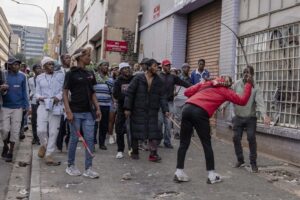
    Peter Burka, CC BY-SA 2.0 <https://creativecommons.org/licenses/by-sa/2.0>, via Wikimedia Commons

    The article “Abolition for Affordability” by Hegde, Thomas, and Durham in New Politics, April 29, 2026, argues that any socialism not calling for police abolition is “white socialism,” incoherent, self-defeating, and fake.

    The article’s main arguments are as follows: First, it claims that capitalism in the United States is fundamentally inseparable from settler colonialism and white supremacy, and so any socialist movement that does not center the abolition of the police is missing the core of the problem. Second, it argues that the origins and practice of policing are rooted in the enforcement of racial hierarchy, making police abolition the true litmus test of anti-capitalist politics. Third, it criticizes left-wing elected officials—specifically Zohran Mamdani and Katie Wilson—for not campaigning on defunding the police, suggesting that their focus on broader economic reforms betrays the abolitionist cause. The article cites Ruth Wilson Gilmore but lacks substantive analysis. It simultaneously wishes the new mayors well while accusing them of betraying abolitionist values. This type of argument is common; it matters not for its logic but because its structure is harming the left right now.

    I want to break down three main arguments from the piece: its mistake about capitalism, its view of policing’s history, and its use of a litmus test. After that, I’ll discuss what kind of politics leads to this approach and what it leaves out.

    Capitalism is not “the economic way of talking about” settler colonialism.

    Let’s start with the main claim: “capitalism is the economic way of talking about settler colonialism.” While this sounds serious, it oversimplifies. Capitalism is a social system based on producing goods for sale and extracting surplus value from workers’ labor. Over time, it has used many types of forced labor—like slavery, indentured servitude, debt peonage, sharecropping, and prison labor—and various means of land and resource expropriation, including but not limited to settler colonialism, to grow and spread. Workers in Manchester, Bengali peasants whose industries were destroyed by British rule, enslaved Africans in Mississippi, mill workers in Lancashire, and Irish laborers were all tied into the same global system. (Stallard and Mohdin 2023) What connected them was the flow of capital, not just land seizure.

    This matters because reducing capitalism to settler colonialism puts race before class, so the politics that follow focus on moral support for racially oppressed groups instead of looking at real conflicts and power. It’s clear that the original piece hardly mentions the working class—workers only appear once, as victims of tariffs. For example, there is little discussion of issues such as wage theft, unsafe workplaces, the lack of affordable health care, housing insecurity, or the erosion of union rights—the everyday realities that shape the lives of millions of working people. Problems such as stagnant wages, rising living costs, and barriers to union organizing are absent from the analysis, even though they are urgent concerns raised by workers themselves. The real focus of socialist politics, the multiracial working class organizing for its own freedom, is left out. The ruling class is described as “overwhelmingly white” instead of as the group that owns the tools and resources for production. (Braverman 1974) When whiteness replaces ownership as the main issue, the politics that follow can’t address the real needs of working-class people, because they don’t see those needs apart from race.

    This confusion isn’t new on the left: replacing a political-economic idea with a moral one weakens socialist analysis. For example, Max Shachtman did this with bureaucracy, separating it from class and leading to poor political approaches. (Shachtman 1953) The point isn’t that race is irrelevant—it is that race gains meaning through its connection to class. When the left reverses that relationship, it ends up embracing a type of politics that doesn’t work. Next, we see a similar pattern in how the history of policing is misunderstood.

    Slave patrols, Pinkertons, and the Battle of Blair Mountain

    The piece treats the idea that American policing comes from slave patrols as if it’s the whole story. But that’s only one part of a mixed history. Police forces in the North, like the NYPD and Boston Police, were modeled on the London Metropolitan Police and were created to control unrest among immigrant workers. (“The Mapping Project, Entity: Boston Police” 2021) Groups like the Pinkerton Detective Agency, the Coal and Iron Police, and private armies used against strikes didn’t come from slave patrols. (“Coal and Iron Police” n.d.) They stemmed from the broader role of the armed forces in capitalist society: protecting property and controlling workers. (Dahlberg and Dalgaard-Nielsen 2020)

    Reducing policing to just its slave-patrol roots is bad history and leads to bad politics. If we see the police mainly as a racial institution, then only Black and Indigenous communities and their allies are seen as the ones who can challenge them. These groups are important and have fought bravely, but they aren’t large enough on their own to take down the prison system. Focusing only on them leaves out the multiracial working class, who are also policed as a class. Latino warehouse workers in Joliet, white Amazon drivers in Bessemer, Black nurses in Detroit, and Vietnamese line cooks in Houston all face police watching, arrest, eviction, and punishment for poverty because they are workers, not just because of their race. (Logan and Oakley 2017) If politics can’t see this, it can’t organize these workers.

    But there are practical ways to bridge abolitionist and class-based organizing. Campaigns can connect demands for decarceration, police budget cuts, and community-based crisis response directly to workplace struggles for higher wages, union rights, and dignified conditions. Joint coalitions can demand both an end to racialized policing and expanded public services in working-class neighborhoods, building alliances across labor unions, tenant associations, and groups advocating for criminal justice reform. Strikes and workplace actions can highlight how policing is used against organizing efforts and link workplace safety to freedom from police violence. By aligning abolitionist and class demands in local campaigns, town halls, and political programs, the left can unite the broadest possible coalition—one that recognizes the full picture of who is targeted and why, and that is actually capable of winning transformative change.

    The Black radical tradition recognized this point. C.L.R. James wrote about it. Du Bois discussed it in Black Reconstruction. The founders of the League of Revolutionary Black Workers also wrote about it. In the 1930s, the Communist Party in Alabama organized both Black sharecroppers and white industrial workers, understanding that the police were tools of the bosses and that the way to fight back was to build a strong, united working class. (Bogues 2011, 484-499) This approach fits with abolitionism—it’s what abolitionism looks like when it’s connected to real class politics.

    The litmus test is a form of organized failure.

    The key move in the piece is the litmus test: police abolition becomes the sole standard of true socialism versus white socialism. Mamdani and Wilson fail this test. The author both offers them good wishes and brands them inconsistent. This contradiction defines political paralysis. The litmus test is not a real strategy—it is a tool for moral posturing when winning feels out of reach. Anyone building real worker coalitions or winning office cannot pass, because the goal is not success but the claim to a true socialist identity. Thus, real organizing is sidelined while moral certitude dominates.

    Instead of relying on exclusionary litmus tests, socialist organizing can be more effective by embracing criteria that advance collective power and measurable change. For instance, a positive framework could include: building durable, multiracial working-class coalitions; winning concrete improvements in living standards, such as better housing, healthcare, or wages; democratizing economic and political institutions; and expanding participation, leadership, and political education among people who have historically been excluded. Strategic standards like these do not abandon moral vision, but connect it to building broad alliances, sustaining momentum, and actually shifting power. When movements evaluate their efforts by whether they build strength, win victories, and involve more people in collective action, they move beyond purity tests toward the kind of organizing that can win lasting change.

    Mamdani won by running on rent control, free buses, and universal childcare in a city where high rent is the biggest problem for working people. Wilson won in Seattle by supporting social housing. (Higham 2025) These are real demands from the working class, achieved through real organizing, even though the political establishment saw them as radical and risky. They aren’t everything socialism stands for, but they are the kind of wins that make bigger victories possible. Calling these efforts white socialism just because they didn’t also campaign on defunding the police shows a misunderstanding of strategy—so much that it seems like understanding strategy was never the goal. Universal childcare is a reform that changes the system. So is social housing. So is free public transit, because it reduces the police’s control over poor people’s daily lives. So, possibly, is unarmed crisis response paid for by cutting police budgets, which is closer to what the new administrations have actually proposed than the original piece allows. (Levin 2021) The mayors are working on the strategic ground Gilmore described. Their critics are working on the moral ground that lets them criticize anyone working on the strategic one.

    What “white socialism” forecloses

    Calling something “white socialism” actually weakens the left. It treats the multiracial working class as just a social problem, not as a group that can act politically. It focuses on moral identity rather than on working together. This leads to a kind of politics where the left cares more about staying pure than about winning. As a result, the left can’t respond to the current moment, because it has lost the tools it needs to understand what’s happening.

    The path to socialism has never depended solely on abolitionists. It was laid by abolitionists, IWW organizers who united Black and white workers in Louisiana in 1912. Philip Randolph and the Brotherhood of Sleeping Car Porters, Communist Party efforts in Birmingham during the 1930s, Detroit autoworkers who formed DRUM and FRUM in 1968, Lordstown strike committees in 1972, and postal workers who struck in 1970. (Salter 2007) These movements recognized that while race divides and shapes the working class, socialism’s force comes from uniting workers against those who own everything. Abolitionism is one important part of this broader struggle—not a substitute for it. Recognizing this connection is essential for addressing current challenges.

    If the left can’t say this, it will keep losing. It will lose loudly, using fancy words, and claim that losing proves it is right. It will criticize those who actually win, keep records of disagreements, and focus on fighting so-called white socialists. Meanwhile, bosses, police, landlords, and the carceral state will keep doing what they always do, unaffected by a left that mistakes moral boundaries for real political struggle.

    The mayors will either succeed or fail in their goals. We can work to push them further left, organize the people who elected them into independent working-class groups, and build the strength needed for future battles. Or we can just keep writing more articles about white socialism. The first choice is harder. The second is easier. But it’s easier for a reason, and that’s why it’s the wrong choice.

    If we choose the first path, there are direct ways to start. Organize listening sessions in neighborhoods most affected by both policing and economic injustice to find urgent needs and build relationships. Form coalitions among tenant associations, labor unions, and criminal justice reform groups to develop unified demands, such as reallocating police funds to social housing, public health, and free transit. Support candidates by volunteering for campaigns that center material needs alongside abolitionist policies, and hold them accountable after elections with regular public assemblies. Build organizers’ skills—door-knocking, digital outreach, and political education workshops—so more people can join the fight no matter their background. Plan targeted campaigns: for example, press city councils to expand unarmed crisis response and link that demand to jobs programs or expanded tenant protections. By taking these steps, activists can turn broad principles into concrete action, creating momentum that lasts beyond any single mayor’s term and building a movement that is strong enough to win real change.

    References

    Stallard, Matthew, and Aamna Mohdin. “Cotton Capital: how slavery made Manchester the world’s first industrial city.” The Guardian, April 2, 2023. https://www.theguardian.com/news/ng-interactive/2023/apr/03/cotton-capital-how-slavery-made-manchester-the-worlds-first-industrial-city

    Braverman, Harry. Labor and Monopoly Capital: The Degradation of Work in the Twentieth Century. Monthly Review Press. https://en.wikipedia.org/wiki/Labor_and_Monopoly_Capital

    Shachtman, Max. Max Shachtman: Bureaucratic Collectivism – Two Eras (1953). The Donald Press. https://www.marxists.org/archive/shachtma/1953/xx/burcoll.html

    “The Mapping Project, Entity: Boston Police.” Mapping Project. 2021. https://mapliberation.org/plain/entities/BostonPolice.html Accessed May 1, 2026

    “Coal and Iron Police.” Britannica. https://www.britannica.com/topic/Coal-and-Iron-Police Accessed May 1, 2026

    Dahlberg, Rasmus, and Anja Dalgaard-Nielsen. “The Roles of Military and Civilian Forces in Domestic Security.” Handbook of Military Sciences (2020). https://doi.org/10.1007/978-3-030-02866-4_33-1 Accessed May 1, 2026

    Logan, John R., and Deirdre Oakley. “Black Lives and Policing: The Larger Context of Ghettoization.” Journal of Urban Affairs 39, no. 8 (2017). https://doi.org/10.1080/07352166.2017.1328977 Accessed May 1, 2026

    Bogues, Anthony. “C.L.R. James, Pan-Africanism and the Black Radical Tradition.” Critical Arts 25, no. 4 (2011): 484-499. https://doi.org/10.1080/02560046.2011.639957 Accessed May 1, 2026

    Higham, Aliss. “Mamdani’s Plan For Universal Child Care In NYC.” Newsweek, November 25, 2025. https://www.newsweek.com/mamdani-plan-universal-child-care-in-nyc-11098439

    Levin, Sam. “These US cities defunded police: ‘We’re transferring money to the community’.” The Guardian, March 10, 2021. https://www.theguardian.com/us-news/2021/mar/07/us-cities-defund-police-transferring-money-community

    Salter, Daren. “Brotherhood of Sleeping Car Porters (1925-1978).” BlackPast.org. 2007. https://blackpast.org/african-american-history/brotherhood-sleeping-car-porters-1925-1978/ Accessed May 1, 2026

  • Interview with an American Volunteer Fighting in Myanmar’s Civil War

    Interview with an American Volunteer Fighting in Myanmar’s Civil War

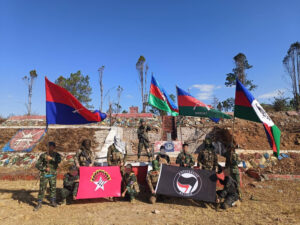
    Members of allied anti-junta militias pose following their victory in the battle of Falam in Spring 2025. From left to right, the displayed flags represent (top row) People’s Defense Force – Zoland, Chin National Organization, Chin Defense Force – Mindat, Chin National Defense Force, (bottom row) Anti-Fascist Internationalist Front, and Anti-Fascist Action.


    Since a 2021 military coup initiated by the Tatmadaw (state armed forces) shattered a short and historically unprecedented period of civilian rule in Myanmar, the country has been embroiled in a bloody civil war. Nearly 100,000 people have been killed in the conflict so far and more than 3 million have experienced displacement.

    Armed groups opposing the new military junta, ranging from ethnic militias to student and worker organizations, have largely consolidated under the People’s Defense Force (PDF) and align with the National Unity Government (NUG), the latter being composed of exiled members of the Myanmar parliament.

    Enter into the fray a small but dedicated cadre of self-described revolutionary internationalists operating as the Anti-fascist Internationalist Front (AIF). These foreign fighters are not mercenaries but politically committed freelancers who cut their teeth on the battlefield in North East Syria (in Kurdish: Rojava) serving in the militias of the Syrian Democratic Forces (SDF).

    Though I maintain my own political and strategic differences with the AIF, I am hopeful that the analysis and rationale presented here might serve as a provocation for an international socialist left that has so far remarked little on the civil war in Myanmar.


    1. First, could you tell me about yourself?

    I am H., a member of Anti-Fascist International Front (AIF) from California. I have previously participated in the revolution in Rojava and now find myself in the works of the revolution in Myanmar. My primary responsibility in the AIF is in the political commission.

    2. The civil war and revolution in Myanmar has received relatively little attention when compared to other recent conflicts, why do you think this is?

    It is not surprising that our comrades in Myanmar remain neglected by the global mainstream in each of its colors. Myanmar has been pressed to the very bottom of international consideration throughout its history. The region is on the periphery of the global periphery, tucked between the marginalized extremities of northeast India and the isolated frontiers of Laos and Thailand, sharing just enough of a border with the Chinese state to get occasional attention from its oligarchy. Following World War II, the last colonial gaze at the eastern edge of British occupation gave way to failed CIA anti-communist operations in the north of the country, desperately scrambling for a new puppet regime which never manifested.

    In recent times, Western eyes have been drawn north of the Andaman Sea mostly for the political plight of imprisoned Nobel Laureate Aung San Suu Kyi, and the profitable trauma porn of the Rohingya genocide. Aside from brief mentions of the coup and youth-driven uprising dominated by the occasional article from BBC or al-Jazeera, the Western sphere has seen little use in acknowledging Myanmar.

    The current phase of the revolution in Myanmar began after the coup d’etat in 2021, during which the Burmese military overthrew the preeminent National League for Democracy after many years of grappling for political power within the state. While this phase of the resistance has been its most intense and decisive in decades, the war for liberation from the Burmese military has existed in many areas of Myanmar ever since the state’s independence, and even previous to this, frequent wars of self-defense from the communities of the margin against the coercive Burmese kingdoms of the lowlands for centuries. So we see in this stage of the revolution not just a fight against a coup, but the manifestation of centuries of self-defense against the central power structures of the Burmese state. This revolution thus has an unprecedented opportunity to completely overhaul the state’s coercive foundations, and in it there exists a basis for internationalist praxis. I will not repeat so much of what has already been spoken by many comrades from Myanmar already, as any understanding of the revolution’s timeline and preconditions can and should be sourced from the many local perspectives that are not our own.

    3. The AIF is a recent formation, announcing its presence in Myanmar in late 2024. What is the AIF? What are its aims? Where does it have a presence and what activities does it undertake?

    The Anti-Fascist Internationalist Front was formed just before the Battle of Falam by international comrades in cooperation with our allies in the Chin Hills to directly support revolutionary developments in Myanmar, and also as an internationalist structure inspired by the paradigm of democratic modernity and the Kurdish freedom movement.

    The AIF operates in multiple regions of Myanmar and our comrades go where their responsibilities are most needed. Since its foundation, the structure has played a role in the liberation of Falam, maintaining a militant presence both on the frontlines and in the rear lines, while also holding trainings for our allies.

    We are antifascist, but to us this is something that goes beyond just confronting fascism. All of our practical work is predicated on communal development and ideological struggle. We see little meaning in handling a weapon without this social and political foundation in our work. We would not and cannot exist without it. So, while we are a military structure, our daily works are not exclusively military. Our work is equally political, diplomatic, social, and our program is organized accordingly.

    We fight alongside our comrades here for a world free of domination, and that is what our struggle is predicated upon. Working together not just with the existing organizations but also with local women in their pursuit of autonomy and liberation is a major part of our responsibilities here as internationalists. Our struggle is thus not just an externalized object that comes out of a gun, it is something that begins in each comrade’s heart. Liberation struggles both within and around us, from the individual to the constellations of global society.

    So, the future of the organization will flow with this collective struggle and operate according to the necessities of the revolution. Our energy will continue to be exacted against the prevailing domination of the junta until its demise. Meanwhile, our struggle of revolutionary development continues regardless of the surrounding conditions, both in Myanmar and abroad.

    4. As a U.S. citizen, what motivated your decision to travel to Myanmar and take up arms?

    For me personally, I was organizing with comrades of the Myanmar diaspora for some time, and comrades in the community encouraged me to go forth in joining the struggle at the source. So when it became possible for me to do so, I did. Having engaged with revolutionary movements and struggles across the international front, comrades have found an opportunity for me to bridge further solidarity with other comrades and communities in the world. It made a lot of sense to contribute to the revolution here in this way.

    In my perspective, the revolution in Myanmar takes on a number of internationalist responsibilities. One of them is owed to my generation, Gen Z, which has initiated much of the current phase of this revolution. Our Gen Z comrades here have found no time to waste in seizing revolutionary responsibility, and they have done so very well. Any internationalist must not neglect the sacrifices our Gen Z comrades in Myanmar make to realize liberation. For internationalist comrades of Gen Z, there is a particular global urgency that ought to be known and internalized by the inspiration our comrades here are creating. It is your responsibility to carry this fire as well, dear comrade.

    Another major factor for any internationalist to consider, which also holds a role in my decision to struggle here, is the Israeli state’s deep and longstanding investment in the junta. The Israeli state designed the Burmese military’s weapons, supplies parts for its aircraft, and maintains a not-so-visible economic partnership. Though it may not be obvious, this struggle is absolutely a major front against Israeli imperialism in Asia.

    Nonetheless, our presence here does not have to be justified by how close or how distant our immediate enemy is to Israel, as the struggle of internationalism is not simply a game of power structures. The global resistance against genocide is just as political and social as it is material, and this entails a vast range of internationalist responsibilities. While the genocide in Palestine has been the primary driver of internationalist organizing recently and very rightly so, it is important to consider that Israel is not the only state actor committing genocide in the world right now.

    5. How do you conceptualize internationalism? Why, for you, does it necessitate participating as an armed combatant?

    It is a reality that the spectacle of war gains attraction from the consuming and extracting forces of the neoliberal order, and even so, there is so much marginalization of Myanmar from global power systems that even war is not enough of a spectacle for much of the neoliberal order to bat an eye.

    Yet, our presence here is also an immediate defense against the opportunism of the states that we were born under. The scramble to control the jade mines of Kachin region, for example, is an active flashpoint in which the US and Chinese state are competing with one another, far away from the global spotlight. There are lobbies connected to both respective ruling classes whose full time responsibility is to monitor and act upon opportunities to extract from Myanmar, almost exclusively through cooperation with the junta.

    Our relationship with war intends to dispel and subvert the liberal hypothesis of simply going and helping because people are suffering, and then to feel morally validated. There is no transaction to our work here. I would argue that our practical work is hardly even deployed here because of war, but rather because of the immediate necessity of defense against genocide. The interconnectedness of this revolution with the realities of many other communities in self-defense, as well as the intersecting powers of the global system that allow a broader force of the enemy to develop here, necessitate an active internationalist consciousness for and within this revolution.

    The paradigm of democratic modernity teaches us a significant concept as it pertains to revolutionary people’s war: the wextê alozî (chaos interval). This is a volatile period in any society within which there is a finite window of opportunity for a high degree of revolutionary change. The 2021 coup created this wextê alozî for the communities of Myanmar in which we are currently struggling, and it is directly connected to how we approach internationalism.

    As a structure, we have been invited here by local revolutionary movements with whom we work closely, and it is on this basis of direct cooperation that we engage in revolutionary work. Within this wextê alozî, we are guided by the immediate needs of local comrades here, and we do not intend to insert ourselves into an environment that we predefine from the outside. We navigate it through struggle and adjustment, not self-validation.

    It is crucial to consider that the revolution in Myanmar is not a political monolith. Some may confuse liberal forces for being the primary political force because they have been able to communicate most conveniently and effectively with bourgeois power systems in the Global North. The political reality on the ground here is more complex and messy. No political force has a real hegemony in the revolution, which means it is broadly decentralized.

    As anti-fascists, it is easy for our eyes to look directly toward the leftmost formations in the revolution, but only looking where our eyes move most easily denies us of understanding the broader picture. Our communist comrades in the Communist Party of Burma hold their own umbrella of revolutionary forces while socialist-adjacent groups such as Bamar People’s Liberation Army and Buffalo Soldier Freedom Force all frequently cooperate on the basis of shared principles. But, this does not stop them nor does it stop us from fighting alongside more populistic forces like the National Unity Government or Kachin Independence Organization. In Myanmar the revolution takes the form of a united front against the fascist junta, and it is for a future where communities can determine their own realities without the immediate threat of genocide. What that future looks like is not for us to determine, but we are willing to give our lives to defend the opportunity for communities here to determine it themselves.

    A Kurdish comrade in the People’s Protection Units once said during the defense of the Tişrîn Dam: “If the PKM doesn’t work, the BBC won’t talk about us, friends! You need to understand — if this doesn’t work, no one will even acknowledge us. If this fails, our language will vanish. Our traditions will be erased. If this fails, our cemeteries will be desecrated. If this fails, our mothers will be left defenseless. But if we have this, we have everything. Without it, I swear to you — nothing will remain. Ourselves won’t remain. They will take us out one by one.”

    6. What is your relationship to the citizens of Myanmar who you’ve embedded alongside? Do they share your internationalist perspective?

    Until the AIF, most foreigners in the Chin Hills had either an overtly transactional or extractive relationship with local communities. We come here asking for nothing, and this is a strange thing to see for a community that has been subjected to a cocktail of British colonization and American evangelism.

    We don’t barge into the hills acting like we own the place. Our internationalist praxis here begins in asking what we can do as internationalists to deepen the defense against the junta and expand connection with other comrades in struggle across the world. Internationalists in AIF hold a particular responsibility in bridging solidarity with the communication we have developed on the international front, this is a major piece of our political work.

    It is worth noting that this solidarity has also already been expressed in the revolution without our help in various ways. Karenni National Defense Forces comrades in the east of the country have expressed solidarity with the revolution in Rojava, for example. Women comrades of the Chin National Defense Forces, on their own initiative, have exchanged messages of solidarity with the autonomous women’s forces of Rojava. We work to initiate more cooperation with democratic forces in the world to deepen and expand this kind of

    solidarity on a more practical basis.

    Crucially, internationalism is in the struggle for women’s liberation and does not exist without it. The struggle against 10,000 years of patriarchy is just as real in the Chin Hills as it is anywhere else in the world, from the subtleties of established gender roles within the revolution to the overt patriarchal violence committed by the junta. In international connection between women’s movements there exists a new seed for women’s liberation to blossom. We are thus here to facilitate a broader people’s diplomacy that actively allows space for the local women’s struggle to deepen.

    How we struggle against patriarchy within our structure directly relates with how we interact with patriarchy in internationalism, within local society, and the structures of our allies. We have, for example, created a program for men in the unit to deconstruct patriarchal tendencies and apply this deconstruction in our interactions with society. As an integral praxis of internationalism, we intend to contest in our daily life the patriarchal norms legitimized here by imperialistic forces, whether coming from Yangon or London or Ohio.

    7. Where can people learn more about the situation in Myanmar and the AIF?

    Organize with local Myanmar diaspora communities and simply include Myanmar in your internationalist praxis, whatever that may look like in your locale. We encourage comrades to organize solidarity events involving the revolution in Myanmar and the AIF. We are happy to support these events and participate in Q & As. Do not let our revolutionary comrades in Myanmar be silenced.

    You can find the AIF’s blog here: https://aifmyanmar.noblogs.org/

    You can also find more regular updates from AIF on our Instagram: https://www.instagram.com/aifmyanmar/

  • Does Confronting ‘Techno-Feudalism’ Require Aligning with Pre-Feudal Forces?

    Does Confronting ‘Techno-Feudalism’ Require Aligning with Pre-Feudal Forces?

    Seventeen years ago, in the wake of the Green Movement’s uprising and its suppression — when Iran had once again drawn the attention of right- and left-wing analysts worldwide — I wrote an article titled “The Tragedy of Left Discourse on Iran,” in which I critiqued the mistaken views of several prominent left theorists, including James Petras, Azmi Bishara, Slavoj Žižek, and contributors to MRZine, the Monthly Review-affiliated website, all of whom had, in various ways, sided with the Islamic Republic. I noted there that “the voices we hear today from parts of the left are tragically reactionary. Siding with religious fundamentalists on the wrong assumptions that they are anti-imperialist and anti-capitalist is aligning with the most reactionary forces in history. This is a reactionary left, different from the progressive left, which has always been on the side of the forces of progress.”

    “Which Side Are You On?”

    Now, seventeen years later — following the December/January massacre of tens of thousands of demonstrators across Iranian cities by the Islamic regime, and the joint US/Israeli military attack on Iran — we are witnessing the same responses. I will not address the “leftist axis of resistance” within Iran here — those who, oblivious to their own historical errors and those of the former socialist camp, continue to repeat lines from nearly half a century ago that dealt the greatest blow to the credibility of the Iranian left. The position of right-wing and non-left analysts who openly defend the US and Israeli stance and blame all problems on the Islamic regime is equally clear. For instance, Jack Cunningham, writing in an article titled “Is War with Iran ‘Legal’? And How Much Does It Matter?” in Open Canada, argues that “Iran has been effectively waging aggressive war with both the US and Israel at least since the mid-1980s, and their actions, including the current attacks on Iranian targets, are best understood as acts of self-defense, not aggression.” In an earlier article on the same site, he had declared that “Iran has been the greatest threat to Israel and the most disruptive regional actor in the Middle East.” Regardless of how familiar such analysts are with Middle Eastern and Iranian affairs — or whether they know but conceal it — this reflects the binary worldview prevailing in the West: that America and Israel are champions of peace and democracy fighting warmongering elements in the region. Right-wing currents among the Iranian diaspora, especially the monarchist circles around Reza Pahlavi — with their extensive media networks built with foreign support and their skillful exploitation of Iran’s cultural, political, economic, and environmental disarray under clerical rule — advance exactly these positions.

    We witness a similar one-sided view in the camp of critics of US policy: it is solely American imperialism and global Zionism that are responsible, and the Islamic Republic is being attacked without cause. Here we have, on one hand, staunch supporters of the Islamic Republic’s positions, figures like Trita Parsi. The internet is also full of interviews and analyses by prominent figures such as John Mearsheimer, who — despite his extensive knowledge and rightly addressing imperialist aggression — makes not the slightest mention of the Islamic Republic’s destructive policies. The same is true of numerous talks by Ben Norton, Jeffrey Sachs, and others.

    The focus here is on the socialist left, which also addresses only one side of the conflict — American imperialism. Gary Wilson, in the article “Iran Today, China Tomorrow: The Strategy Behind the War” on Monthly Review Online, correctly describes the war with Iran as “…the outcome of global class war — the drive of monopoly capital to maintain control over the world’s resources, markets, and labor at any cost,” and addresses various issues including the killing of schoolgirls in Minab, the confrontation between low-tech resistance and high-tech military force, and the role of finance capital in the closure of the Strait of Hormuz. Yet he makes not the slightest mention of the Islamic Republic’s role and destructive policies. Part of the article addresses the damage this war has inflicted on the working class across different continents. Still, there is no mention of the misery of Iranian workers — including the majority of oil and petrochemical workers who, due to Islamic Republic policies, worked without any security in contractor companies and, with the outbreak of war, lost even those precarious, unstable jobs. Around a hundred thousand workers at various tiers of oil contracting companies — companies created and sold to the cronies of the regime, subject to no oversight — have been left without protection. The National Iranian Oil Company has outsourced most of its operations to these companies to avoid responsibility for workers’ conditions. The regime even invented the term “third-pillar workers” to make clear it bears no responsibility for these workers’ conditions.

    Wilson concludes his article: “The war was planned. The suffering was predictable. Which side are you on?” The real question, however, is this: if we rightly condemn American imperialism (and of course the Israeli right-wing coalition’s aggression), must we therefore stand on the side of the obscurantist fundamentalists ruling Iran?

    An example of more direct left support for the Islamic Republic is Radhika Desai of Geopolitical Economy’s interview with Dimitri Lascaris, a journalist with the Reason2Resist channel. Returning from a ten-day trip to Iran, Lascaris claims that of approximately a hundred people he interviewed in various Iranian cities, he “…didn’t find a single person criticizing the government,” and that he was deeply impressed by the “near unanimity” of anti-war sentiment and support for the regime. Regarding war damage, he says that, contrary to Western propaganda claiming the war caused widespread destruction, he saw very little ruin. In a situation where not only independent foreign journalists, but even non-regime-affiliated domestic journalists cannot report freely from Iran — and where many young people have been arrested, tortured, and in some cases executed merely for forwarding a photograph on social media — Lascaris may have apparently not realized he was conducting his reporting on a regime-guided tour. He needed only to have glanced at Iranian news and asked himself: why, just before the war, did the regime gun down tens of thousands of Iranians in the streets of various cities? Why are there so many political prisoners, including prominent women such as Narges Mohammadi, Nobel Peace Prize laureate, and Nasrin Sotoudeh, and many others, still behind bars? Why, according to the UN Human Rights Office, has the Islamic regime already executed 21 people and arrested more than four thousand during this very war? As for not seeing much destruction, did his guides take him to Mobarakeh Steel in Isfahan, the largest steel plant in the Middle East, where around 20,000 workers are directly employed and around 100,000 indirectly through supply and value chains, which Israel forced into shutdown through repeated attacks? Did he visit the massive chemical and petrochemical plants bombed by Israel? Did he see the results of the bombardment of the Pasteur Institute, one of the oldest and globally recognized pharmaceutical research institutions? Instead of confronting these realities, he concludes that the war produced results for Iran that were the opposite of what the US and Israel expected, and actually elevated Iran’s standing in the world. Desai also conducts an interview with Mohammad Marandi, a staunch pro-regime academic and effectively a regime spokesperson, on “Iran’s Historical Role in the Decline of Imperialism,” which requires no further comment.

    Most important of all, however, is Yanis Varoufakis — the prominent theorist and founder of Greece’s radical socialist party SYRIZA and the European Realistic Disobedience Front, and author of the influential book Techno-feudalism: What Killed Capitalism — who announced on his X account that he and another leader of the party had visited the Iranian embassy in Greece. This news came as a great surprise to Iranian leftists who respect Varoufakis and whose works have been widely translated into Persian. In this post, Varoufakis states, among other things, that “We are here because of the 180 girls whom the United States and Israel killed in Minab. We are here because the U.S. president has declared a cultural war against one of the oldest civilizations of humanity.” By doing so, Varoufakis — regardless of his stated opposition to a theocratic system — has, unfortunately, taken the side of the Islamic Republic. Expressing solidarity with the crime of killing innocent girls by imperialist and Zionist forces is certainly a worthy act. But when the government that this ambassador represents gunned down protesters in the streets of Iranian cities, did Varoufakis protest at the Iranian embassy? It is also true that Trump made those absurd remarks about Iranian civilization — but is the Islamic Republic really the representative of “one of humanity’s oldest civilizations”? The truth is that through its reactionary and destructive policies, this regime has been one of the greatest enemies of that very civilization. I am aware of the polemical nature of the title I have chosen for this piece, and perhaps it is unfair to Yanis Varoufakis, for whom I have genuine respect. But what he did was also unfair to the left and to Iran’s progressive forces.

    Background to the Three-Sided War

    In contrast to these one-sided approaches and the tendency to take sides in this terrible war — which has set back and continues to set back Iran, the region, and the world — one must attend to its roots and to the role of each of the main actors. This war has three interrelated dimensions, and without entering into historical detail, a brief overview is in order.

    With the Iranian Revolution of February 1979, the US and Israel lost their most important regional ally: Iran. Although the Shah of Iran lacked the nerve to maintain a formal ambassadorial relationship with Israel, Israel’s unofficial “embassy without a nameplate” in Iran was highly active; the Mossad and CIA were the primary supporters of the regime’s apparatus of repression, and Iran was the largest purchaser of military equipment from both countries. Even when the Shah tried to create some distance in this dependent relationship — as when he attacked the Israeli lobby in America in a 1976 interview with Mike Wallace — he had no choice but to submit to those who had restored him to power through the 1953 CIA coup against Mossadegh’s democratically elected government.

    Washington’s primary focus in the Middle East during the Cold War was directed against the Soviet Union and left-wing movements, and toward strengthening Islamist currents and creating a “Green Belt.” SAVAK, the Shah’s brutal security apparatus, with help from the Mossad and CIA, was mainly focused on leftist and nationalist progressive movements and paid little attention to the growth of Islamism. The 1979 Revolution and the subsequent hostage-taking at the US Embassy occurred in this anti-American/Israeli atmosphere. Khomeini, in line with his reactionary beliefs and the hope of bringing the Palestinian movement under control, raised the slogan of Israel’s destruction from the very beginning.

    Then, during the Iran-Iraq War, the United States — especially after Ronald Reagan came to power — provided extensive financial, technical, intelligence, and military support to Saddam’s regime. Israel, however, which at that time feared the Arabs more, secretly provided Iran with arms and intelligence in various ways during this war. American sources have estimated Israel’s arms sales to Iran during the 1980s at close to two billion dollars per year, part of which was paid through the delivery of Iranian oil to Israel.

    Then, in 1982, when Israel had occupied southern Lebanon, the Iranian regime established Hezbollah in Lebanon with the help of part of the Shia population there. In 1983, Iranian regime agents in Lebanon bombed the US Marines headquarters in retaliation for American support of Iraq, killing more than 240 Americans and wounding over a hundred. During the Lebanese civil war, especially after 1982, the Islamic Republic, through its agents, carried out numerous hostage-takings — primarily of Americans — which led to arms-for-hostages exchanges and the notorious Iran-Contra affair.

    Over the years, Iran was subjected to the most severe economic sanctions. The Islamic Republic, in pursuit of its ideological and expansionist goals and the dream of leading the Shia and Islamic world, adopted a three-pronged strategy: building proxy forces in the region, developing missile capability, and pursuing nuclear capacity. It simultaneously continued its anti-Israeli and anti-American rhetoric and its financial and military support to its proxies.

    Saddam’s folly in invading Kuwait in 1991, and more importantly, the US invasion of Iraq in 2003, strengthened the Islamic Republic’s regional position. Later, the JCPOA agreement in 2015, while severely limiting Iranian nuclear program, placed vast financial resources at the regime’s disposal, and the Islamic Republic continued its adventurist regional policies.

    Israel, throughout this process, greatly benefited from the Islamic Republic’s adventurism. The Israeli right, to advance Zionist policies — which can be summarized in two main objectives: territorial expansion and population displacement — has always claimed to be faced with existential danger. After neutralizing neighboring Arab states — Egypt, Jordan, Syria, and Lebanon — the Islamic Republic of Iran and its affiliated proxies provided the best pretext for advancing Israel’s right-wing policies while simultaneously striking at the Palestinian movement.

    A very important turning point was Hamas’s brutal attack on Israel on October 7, 2023. Although it was a blind radical reaction to 75 years of displacement, 56 years of occupation, and 17 years of complete land and sea blockade, it provided the greatest opportunity to Israel’s extreme right, which proceeded recklessly and with American backing to launch broad regional offensives. After the destruction of Gaza and the genocide of Gaza’s Palestinians, and increased assault on the West Bank, Israel dealt its greatest blows to Lebanon’s Hezbollah.

    With the proxies weakened, Israel moved directly against the Islamic Republic itself. To provoke the Iranian regime, Israel attacked Iran’s consulate in Damascus in April 2024 (exactly two years ago) and killed several senior IRGC commanders. In response, the Islamic Republic launched a barrage of missiles and drones against Israel. This was what Israel was looking for, preparing for the war against Iran. There was also a bitter irony: Iran had built its proxies to protect itself, and now it was the regime itself trying to protect them in return. The fall of Assad’s regime in Syria deprived the Iranian regime of its last serious support base.

    With the proxies lost or severely weakened, Israel found itself in a position — coinciding with the rise to power of one of America’s most reactionary presidents — to conclude that it could eliminate the Iranian regime. Netanyahu and his religious right-wing coterie’s first hope was regime change in Iran; together with their Iranian monarchist allies, they hoped that within days the people would take to the streets and topple the regime. When they realized this was not achievable, they decided to turn Iran’s regime into a failed state, dreaming of reducing it to the fate of Somalia, Yemen, and Ethiopia that I have discussed elsewhere. The attacks on infrastructure, and especially on intermediate industries such as steel and petrochemicals, on research institutions and the scientific departments of major Iranian universities, were carried out for exactly this reason. Had it not been for pressure and threats from the Trump administration — in hopes of imposing some sort of agreement with the Islamic regime — Israel would have destroyed the main electricity grid, water networks and refineries as well, and even now it awaits the resumption of war to advance this savage policy.

    Unlike Netanyahu, Trump, who has dispensed with the customary niceties of international relations and is openly advancing an imperialist domination agenda in the region and the world, harbored the illusion that he could pursue a “leader change” similar to Venezuela, rather than a “regime change” policy in Iran, which I have discussed elsewhere. But he and his advisors failed to account for two factors: first, Iran’s ability to regionalize and globalize the conflict by closing the Strait of Hormuz; second, the regime’s resilience, which itself has several dimensions. One is its ideological/religious structure, which, despite losing several tiers of its most important leaders, did not collapse. A second factor in this resilience is its prioritization of self-preservation at any cost — even at the expense of Iran and its people. Like Hamas in Gaza, the regime is less concerned with whatever damage the country sustains in this war. A related factor is that in the event of defeat, the clerical/military/economic oligarchy, with its vast webs of family and marital connections, has nowhere to flee, and thus has no choice but to fight on.

    Meanwhile, the conflict increasingly took on religious and fundamentalist dimensions: American Christian Zionist evangelicals — seeking to hasten the return of the Christian messiah — joined with Jewish fundamentalists awaiting the coming of the Jewish messiah, in confrontation with Shia fundamentalists awaiting the Shia messiah, the Mahdi.

    In summary, the 12-day and 39-day wars against Iran, and whatever further military confrontations may lie ahead, are the product of three interrelated historical currents, each bearing a degree of responsibility: American imperialism in its drive to maintain and extend global hegemony; Israel and global Zionism in its pursuit of a Greater Israel; and the clerical/military/economic oligarchy of the Islamic Republic in its drive to maintain and expand its own religious dominance.

    This war has not been, in any respect, a just war. The aggression by the US and Israel is clear: they had no “right” to go to war, and they showed no “just conduct” in war — their war crimes require no elaboration. But though the US and Israel have not been fighting a just war, this doesn’t mean that Iran has justice on its side. For the regime bore its own responsibility for bringing it about, and its conduct — both toward the Iranian people and toward neighbouring countries — has not been righteous. More importantly, despite the nature of the imperialist aggression, the Iranian people do not see this as a patriotic or liberatory war; they see it as the war of a governing apparatus that does not belong to them. Some analysts of Iranian affairs in the West, and the overt or closeted supporters of the regime, have mistakenly attributed the absence of a large anti-regime movement during the war to patriotism and popular support for the regime. As was mentioned earlier, this is a government that gunned down its own people to terrorize them and prevent another mass uprising. Some have wrongly compared this war to the Vietnam War as a war of liberation. In the Vietnam War, American (and before them, French) soldiers were baffled by how ordinary Vietnamese people fought the invaders with great determination. In the war against Iran, a genuine portion of the population actually hoped for further blows to be dealt against the regime.

    In contrast to the reactionary left — which, by solely condemning US/Israeli military aggression, took the side of the backward-looking and anti-popular Islamic Republic regime — Iran’s progressive left, along with many progressive lefts from different countries, have both condemned the Islamic Republic, not only for its adventurist and expansionist policies, but also for its anti-popular policies and political and cultural repression, and at the same time categorically condemned imperialist and Zionist aggression. One example is an open letter signed by more than one hundred prominent left-wing figures, from around the world, following a letter signed by over three hundred Iranian academics, lawyers, journalists, and artists.

    The Islamic Regime vs. the Iranian People

    Setting aside those segments of the population that support the regime for religious reasons or financial dependency upon it, and the confused so-called “leftist axis of resistance” who defend it; and setting aside the monarchists who dream of an Israeli/American victory in this war to bring Reza Pahlavi to power — the majority of the people of Iran see this war as a devastating blow to their own authentic movement, and are searching for a path to overthrow this regime and transition beyond it.

    One of the most critical issues facing the regime is the ever-widening gap between civil society and the political society, where neither has the slightest trust in the other. The situation within the power bloc is also uncertain: will the more hardline fundamentalists maintain the upper hand, or the oligarchs who have discovered paradise on earth? In any case, one can predict that in the first instance, civil society and social movements will not consciously enter the arena, because the wounded regime will not hesitate to intensify repression. One can see the regime’s fear and terror in the fact that during the war, it filled the streets with armed Basiji and Hezbollahi thugs, and at night, they continue their religious gatherings in different neighbourhoods to prevent any anti-regime demonstration. Simultaneously, it continues its mass arrests and executions, and despite the catastrophic economic cost, continues its devastating internet blackout out of fear of the people.

    Economic problems will be among the regime’s greatest challenges. Inflation, unemployment, the costs of rebuilding damaged infrastructure and industries, shortfalls in foreign currency and export revenues, and so on. If sanctions continue, the ability to circumvent them — which had primarily been done through various shell companies in the UAE, especially in Dubai — will be vastly more difficult, due to the souring of that relationship after drone and missile strikes on UAE installations. Rebuilding infrastructure, industries, and residential units in cities will require billions of dollars that the regime does not have. Moreover, since the regime will certainly prioritize the restoration of its military capacity, it will allocate even fewer resources to improving citizens’ living conditions, resulting in even greater anger and discontent.

    As noted earlier, one of the greatest economic damages of the war has been to industry. Contrary to various theories that either deny that Iran’s economic system is capitalist or qualify it with various adjectives, or characterize it solely by plunder and destruction, Iran is a relatively advanced industrial capitalist country. No one disputes the corruption, theft, and oligarchic control of these industries, but whatever they are, they are capitalist industries based on the exploitation of labor, combining neoliberalism with state intervention. The industrial sector accounts for roughly 35% of GDP, and 33% of the labour force works in industry. Iran’s top 100 companies (of which roughly 10% are banks) account for 11% of GDP and 91% of non-oil exports. Iran’s non-oil exports in 2025 were approximately $32 billion, while oil exports for that year were projected at around $43 billion.

    Rising unemployment will be a major burden for the regime. Tens of thousands of insured workers have become unemployed. The Social Security Organization, which was already facing serious problems before the war, will have lower revenues with more workers unemployed while simultaneously facing higher expenses, including unemployment insurance. Approximately 14 million households are covered by this organization, and it has had and will continue to have difficulty. The government also has large unpaid debts to the organization. And these are only the workers covered by social security. All employees of workplaces with fewer than ten workers — which account for more than 80% of industrial units — are excluded from this coverage. The fifty-plus-day internet blackout has bankrupted tens of thousands of small businesses. The Deputy Minister of Labor has referred to the loss of more than one million jobs, though precise figures are not yet available. Added to this, we also have the drastic situation of the so-called “third-pillar workers,” mentioned earlier.

    The war has dealt a severe blow to Iran’s working class and impoverished. In addition to unemployment and rising prices, the work environment during and immediately after the war has become far more securitized, making it much harder to advance even trade union demands, let alone political ones. Organizing in the workplace — always among the most difficult tasks — has become vastly more difficult. However, one must hope that organizing at the neighborhood level in working-class areas can proceed with the necessary precautions.

    The most important blow has fallen on popular movements. Without doubt, had the war not occurred — and had the neo-fascist monarchist intervention, with the open support of Israel and Mossad, not driven the regime into a panic and provided it the pretext for savage repression and mass killing — the continuation of the Woman, Life, Freedom movement in 2023 and the December 2025 and January 2026 movements would have been certain. Under current conditions, it is entirely understandable that the movements have retreated sharply. Yet there is no doubt that if Iran is not destroyed, the Islamic Republic and the problems and crises that lie ahead of it will face further major movements from civil society. It is true that the Iranian people and the toiling classes are the greatest losers of this war. But the Islamic Republic will no longer be the same, and civil society will be able, by linking together the quadripartite arenas of social movement: the street, the workplace, the place of education, and the marketplace, to ultimately bring down the regime. No regime devoid of legitimacy can long endure.

  • Rutgers Labor Center to Celebrate Life and Legacy of Tony Mazzocchi

    Rutgers Labor Center to Celebrate Life and Legacy of Tony Mazzocchi

    In the 1960s and 70s, conservative leaders of the AFL-CIO and many national unions viewed militant activists in the civil rights, anti-war, environmental, and women’s movements with alarm. When student radicals started migrating from campus and  community organizing to unionized workplaces, the labor officialdom did not welcome them.

    But a World War II veteran from Brooklyn named Tony Mazzocchi did. Mazzocchi had risen through the ranks of the Oil, Chemical, and Atomic Workers (OCAW), a CIO union which had a strong tradition of rank-and-file activism and internal democracy. He welcomed Sixties’ radicals into the ranks of labor and went on to personally mentor them. Many of these unofficial Mazzocchi students became effective organizers, grievance handlers, contract negotiators, strike leaders, and movement builders.

    Mazzocchi was a role model and catalyst for activism on issues ranging from civil rights to labor-based environmentalism, job safety reform, single-payer health care, nuclear disarmament, and union democracy. His story is recounted well in Les Leopold’s 2007 biography, The Man Who  Hated Work and Loved Labor. As an OCAW local officer in New York, legislative director in Washington, and later the union’s national secretary-treasurer, Mazzocchi managed to juggle day-to-day union responsibilities with a tireless commitment to building workers’ political power.

    A hundred years after Mazzocchi’s birth, and nearly a quarter century after his death in 2002, several hundred of his friends and allies, new and old, are gathering at the Rutgers University Labor Center on June 4-5, for an in-depth discussion of his life and legacy.

    Tony’s path was unusual. After combat duty in the Army, he went to work in a Queens cosmetics factory and joined OCAW Local 149. As a union shop steward, organizer, and eventually president, he helped triple his local’s size. He built a strong cadre of shop floor leaders, started a book club and credit union, and, according to his biographer, sponsored a “vast array of social activities” that “combined to create a remarkable new spirit at work.” Even though Local 149’s membership was 95 percent white, it allied itself with the rising civil rights movement.

    In 1957, Mazzocchi helped launch the Committee for a Sane Nuclear Policy (SANE) to oppose atom bomb testing. His longtime involvement with SANE put him in touch with leading scientists, environmentalists, and activists who later joined him in building a new movement for occupational safety and health.

    Within the 200,000-member OCAW, Mazzocchi helped elect a new national union president in 1965, after a bitter struggle with top OCAW officials linked to CIA meddling in foreign labor movements. He became the union’s national legislative/political director.

    The Labor-Environment Connection

    In this Washington, D.C. role, Mazzocchi linked emerging public concern about environmental pollution to the source of the problem—workplaces where workers were exposed to toxic chemicals at much higher levels than anyone in surrounding communities. At his initiative, organized labor began to shift from a traditional emphasis on job safety ( protection against injuries) to dealing with the causes and long-term health effects of occupational hazards. A high-school dropout himself, Tony recruited a high-powered network of medical researchers to provide documentation for lawsuits, reports, press releases, hearing testimony, and investigative reporting. He regularly dispatched these allies to probe for the causes of members’ illnesses. He also organized non-stop “road shows” that brought workers together with those experts—and forced lawmakers to listen to both.

    Mazzocchi’s drive to pass the Occupational Health and Safety Act in 1970 is a case study in building effective labor clout. (His critical role in OSHA’s passage was even noted by President Nixon.) From MassCOSH in Boston to Work Safe in the Bay Area, the local occupational safety and health coalitions that Mazzocchi helped create are still fighting for job safety and health.

    Political Setbacks

    Mazzocchi ran twice to become president of OCAW. But in hotly contested convention elections in 1979 and 1981, members in the nuclear industry proved to be his Achilles heel. Conservative opponents critical of his “anti-nuke” politics and “incessant boat-rocking” mobilized against him, and he suffered narrow defeats.

    But Tony confounded his foes, per usual, by making an unexpected political comeback. In 1988, he returned to OCAW leadership as national secretary-treasurer. He used that post to promote worker education initiatives, like the Labor Institute, and to fight for a new labor-based political party.

    The Labor Party got off to a promising start in 1996 amid growing rank-and-file disillusionment with the Clinton Administration. Its founding convention in Cleveland drew 1400 delegates, including rank-and-file activists, local officers, some national union officials, and labor-oriented academics.

    During the LP’s early years, Mazzocchi’s relentless personal barnstorming around the country helped generate much of its labor funding and support. Unfortunately, dreary and divisive left sectarian squabbles soon paralyzed some chapters. The election of President George Bush in 2000 and resulting Republican attacks on labor drove almost all unions back into the Democratic Party fold.

    Mazzocchi’s Legacy

    Two key Labor Party demands—single payer health coverage and “Free Higher Ed”—the latter inspired by Mazzocchi’s own experience with the original GI Bill became centerpieces of Bernie Sanders’ presidential campaigns in 2016 and 2020.

    As Les Leopold, a Rutgers conference organizer and Labor Institute founder, points out,  Mazzocchi always raised hopes and expectations by “conjuring up a labor movement that… would be militant and green. It would bring about radical changes that would stop global warming. It would give workers real control over the quality and pace of work and over corporate investment decisions. It would champion the fight against militarism and for peace and equality. It would win free health care. It would dare to create a new political party to counter the corporate domination of the two major parties.”

    In a period of declining union density, many union leaders are now in a Trump-inspired defensive crouch. Few project anything like Mazzocchi’s expansive vision. But among working people, there’s evidence that support for working-class-centered politics is building.

    The two-day event in New Jersey will begin with panels and workshops featuring speakers who worked with Mazzocchi or whose current organizing was inspired by him. Organizers say it will also include a more “interactive, worker-centered, action-centered day of strategizing, learning from the lessons of the past and applying them to the present and future.”

    The conference will officially unveil the Tony Mazzocchi Archive, to be permanently housed at the Rutgers Labor Center. It will feature not just OCAW-related documents but a wide-ranging oral history project, capturing the voices of workers influenced by the visionary leadership and pragmatic radicalism that Brother Tony embodied.

    (For schedule and registration information, see here.)


  • Review: Colonizing Kashmir

    Review: Colonizing Kashmir

    Colonizing Kashmir: State-Building Under Indian Occupation

    By: Hafsa Kanjwal

    Stanford University Press, 2023

    This is an excellent book by historian Hafsa Kanjwal about the colonization of Kashmir that the Indian State has carried out since gaining independence from the British Empire and undergoing the tragedy of Partition. As the British overlords withdrew in August 1947, the subcontinent was split into India and Pakistan according to senseless imperial design—a tumultuous event that exploded in sectarian mass-violence, with an estimated million people killed. The Partition crisis immediately gripped the princely northern state of Jammu and Kashmir (J&K), too, which had been dominated for a century by the Hindu Dogra dynasty operating under indirect British rule.

    Professor Kanjwal explains that, prior to the Dogra Maharaja Hari Singh’s infamous decision to accede to India rather than Pakistan in October 1947—despite the fact that J&K was majority-Muslim—his army joined forces with militants from the Hindu-nationalist Rashtriya Swayamsevak Sangh (RSS) and troops from another princely state to kill an estimated 250,000 Muslims in Jammu, displacing several hundred thousand more to Pakistan in the process. These oppressive policies of the maharaja sparked the first India-Pakistan War (1947–48), which established the “line of control” that currently divides Kashmir between the hostile neighbors.

    Aptly defying the simplistic scholarly narrative that “see[s] colonialism as emerging only from the West to the Global South,” Professor Kanjwal in Colonizing Kashmir chronicles the “third world imperialism” that has been practiced by the Indian ruling class in this mountainous occupied territory over the past eighty years (13–14 [emphasis in original], 22). The unwilling host to up to 750,000 Indian troops who have been engaged in “massacres, human rights violations, and war crimes” for decades, Kashmir has widely been considered the world’s most-militarized region since an indigenous armed uprising began in the late 1980’s (273). To date, the Indian State continues to systematically deny millions of Kashmiris—the majority of whom are Muslim—their right to self-determination. As such, it is in violation of United Nations Security Council Resolution 47 (1948), which mandates a plebiscite to decide the territory’s fate: namely, whether it is to become independent, merge with Pakistan, or remain with India.

    Besides the devastating effects this unresolved international crisis has on healthcare access and womens rights in Kashmir, it has led to multiple wars between India and Pakistan since decolonization. One of these conflicts—the Kargil War (1999)—broke out after both countries had acquired nuclear weapons, thus coming dangerously close to the nuclear threshold. The threat of regional escalation to nuclear war is ever-present now, as the brief armed conflict that broke out between the neighboring countries in May 2025 after a militant attack on Hindu pilgrims in occupied Kashmir—a war that President Trump has wrongly credited himself with ending—reminds us.

    In this sense, Colonizing Kashmir is a courageous challenge to “the sovereignty claims of the (post)colonial nation-state,” and to the triumphalist idea that decolonization has necessarily been a liberatory process (22). It is a call “for the creation of a historiography of states that do not exist, have not been allowed to exist, and peoples who have been denied self-determination and the right to exercise their sovereignty” (20). Beyond Kashmir and Kashmiris, these include “Hawaii, Puerto Rico, Palestine, Hong Kong, Tibet, East Turkestan, Chechnya, and Western Sahara,” indigenous peoples of the U.S., Canada, and Australia, plus “the Kurds, Papuans, and Oromo and Tigray people” (20). Likely as retaliation to its author’s principled truth-telling and apt criticisms, the Indian State outright banned the book in August 2025, mandating all its possessors to forfeit their copies!

    In this review, we will examine Professor Kanjwal’s brilliant elucidation of state-building in Kashmir, before concluding by considering some of the parallels between Kashmir and Palestine.

    Colonizing Kashmir

    During the initial rule of Sheikh Mohammad Abdullah (1947–53), the first prime minister of occupied J&K, Articles 35A and 370 were added to the Indian Constitution. These articles authorized local authorities to restrict land ownership to Kashmiris, and granted them uniquely autonomous powers, respectively. However, by ordering the ouster of Sheikh Abdullah over concerns about his loyalty and replacing him with a client regime led by Bakshi Ghulam Mohammed, Jawaharlal Nehru, India’s first prime minister and leader of the Congress Party, showed his true interest in intensifying India’s colonization of Kashmir. It is on Bakshi’s controversial rule (1953–63), which advanced capitalist modernization, normalization of relations with India, and “emotional integration” to distract Kashmiris from their right to self-determination, that Professor Kanjwal focuses her book (9, 32, 130–1).

    Despite Nehru’s proclamation of a secular-democratic political orientation (while hailing from a Kashmiri Pandit [Brahmin, or upper-caste Hindu] background), his centralist subjugation of Muslim-majority Kashmir arguably anticipated the current Hindu-fascist Prime Minister Narendra Modi’s brazen 2019 abrogation of Kashmir’s constitutional autonomy. (Modi is a long-term member of the RSS, and as Chief Minister of Gujarat, he oversaw pogroms orchestrated by Hindu mobs in 2002 that killed hundreds, if not thousands, of Indian Muslims.) As Professor Kanjwal notes in an article written after the sudden cancellation of Articles 35A and 370, not only does Modi’s unilateral action effectively serve to annex Kashmir, but it also “enables people from India to buy land and property in Kashmir,” thus raising fears that direct rule by New Delhi will “change the demographics of the Muslim-majority region.”

    As Colonizing Kashmir elucidates, Naya (“New”) Kashmir refers to a progressive manifesto written in 1944 by leaders of Kashmir’s National Conference about the region’s post-independence future. Affiliated with the Congress Party, the National Conference was a political formation to which both Sheikh Abdullah and Bakshi belonged. By contrast with the despotism of contemporary Dogra rule (and of Hindu nationalism), Naya Kashmir envisioned a voice for J&K’s Muslim majority, pluralistic respect for its religious minorities (Hindus, Sikhs, Christians, and Buddhists), equality before the law, decentralized parliamentary governance, the abolition of feudalism, and cooperativism.

    In this vein, Sheikh Abdullah actually avoided forging closer ties with Pakistan after Partition, partly out of fear that its feudal elites would block the implementation of Naya Kashmir, and he opted for continued accession to India instead. (While not necessarily committed to Naya Kashmir, the Communist Party of India and the Soviet Union appear to have shared similar views about the feudal character of Pakistan, which soon became a close U.S. Cold-War ally.) In 1950, Sheikh Abdullah’s government successfully passed reforms that redistributed lands without compensation to their former owners, in a move that empowered Kashmiri Muslim peasants while antagonizing Hindu landlords.

    In their leadership style, both Sheikh Abdullah and Bakshi were authoritarian: they banned opposition parties and wielded a great deal of control over press and radio coverage in and about Kashmir. Foreign journalists exaggerated Kashmiri Muslims’ support of Bakshi, in line with the local and central governments’ self-presentation as advancing secular and pluralistic politics. Tourism revolving around Kashmir’s natural beauty and supposed exoticism, the promotion of Hindu pilgrimages, the production of superficial films, large-scale infrastructure projects, economic modernization, and corruption were all utilized by Bakshi to further bind occupied Kashmir to India. Moreover, Bakshi personally directed Kashmir’s police and associated paramilitaries while clamping down on dissent.

    Furthermore, Sheikh Abdullah and Bakshi’s regimes mobilized an artistic vanguard to promote Kashmiri cultural nationalism and deepen ties with the Indian State. This ended up being a dialectical process that backfired to some extent, given the call’s resonance among Indian and Kashmiri leftists alike, together with its indirect encouragement of satirical and subversive commentary. For instance, Kashmiri literature entered a “decade of despair” following Sheikh Abdullah’s ouster, and several Kashmiri writers focused on “themes of corruption, greed, obsession with money, loss of moral values, and lack of loyalty” during Bakshi’s reign (210, 222).

    While the vision of Naya Kashmir and the implementation of land reforms may have been progressive, they ultimately served to integrate Kashmir into India and derail fundamental questions about popular self-determination. In fact, Sheikh Abdullah conspired with Prime Minister Indira Gandhi in 1975 to drop his demand for a plebiscite, in return for his being re-installed as Kashmir’s political boss.1 This fraught history set the stage for the present.

    Parallels with Palestine

    Tragically, the ongoing genocide carried out in Gaza by Israel and the U.S. since October 2023 may preview the fate of Kashmiri and Indian Muslims at the hands of the Hindu-fascist State. Especially following the revocation of J&K’s special status in 2019, the risk of genocide in Kashmir has been escalating, as Professor Kanjwal and Farhan Mujahid Chak have warned. Indeed, in the context of Hindu-supremacists wantonly lynching Muslims in Indian cities, many of Kashmir’s Pandits have welcomed the abrogation of Articles 35A and 370, while many Muslims have opposed it—in an alarming dynamic that ominously recalls Partition. As Azad Essa explains, the cancellation of Article 370 has been a long-term goal of the now-hegemonic Bharatiya Janata Party (BJP), led by Modi.2

    In 2019, the Indian diplomat Sandeep Chakravorty blatantly called for the implementation of the “Israeli model” in Kashmir, by which he presumably meant dispossessing and ethnically cleansing Kashmiri Muslims to make way for settlement by India’s Hindu majority. Moreover, in 2021, Hindu nationalists publicly endorsed the genocide of Rohingya Muslims carried out in 2016 by the Burmese military and affiliated paramilitaries as inspirational.3

    On its own, then, Hindu nationalism is toxic enough: its main theorist Vinayak Damodar Savarkar (1883–1966) openly supported Nazism, and sought to rid post-independence India entirely of its Muslim minority.4 Yet, when India, which has long been Israel’s largest arms importer, is emboldened by the utter disregard evinced by its ally for international humanitarian law in its prosecution of genocide against Muslim-majority Palestinians (as well as its success to date in ensuring impunity for the same), the stage is set for a synergistic effect that could prepare the ground for genocide against Kashmiris—just as the unjust settlement of the Russo-Ukrainian War being pushed by the Trump and Putin regimes arguably encourages Xi Jinping to invade Taiwan.


    1Azad Essa, Hostile Homelands: The New Alliance between India and Israel (London: Pluto, 2023), 150–1.

    2Ibid 98.

    3Ibid 141.

    4Ibid 74–83.

  • Abolition for Affordability

    Abolition for Affordability

    Peter Burka, CC BY-SA 2.0 via Wikimedia

    Socialism is having a moment. The most prominent examples, whose campaigns we supported, mayoral victories in New York and Seattle provided a glimmer of light in the darkness for anyone who scorns the capitalist duopoly. The organizing efforts that landed Mayors Mamdani and Wilson in office were herculean for many reasons, chief among them that they openly associated themselves with democratic socialism, electoral faux pas heretofore.

    It is perhaps the variety of socialism or its framing that proved effective. Now famously, Mamdani campaigned on rent stabilization, free buses, and universal childcare, all relatively modest goals that would meaningfully help New Yorkers survive this economic nightmare. On the opposite coast, what inspired Wilson to enter the mayoral race was to safeguard Seattleites’ commitment to social housing. In the weeks since, mainstream liberals capitalized on the success of these campaigns by coining the “affordability crisis” and touting corresponding “affordability agendas,” as if to take credit for the organizing that produced these wins, as if they were allies all along. (They weren’t.)

    The affordability crisis is simply racial capitalism operating as intended. That people cannot afford their lives is the designed outcome of an economic system that hoards resources for billionaires, exploiting workers to insulate the overwhelmingly white ruling class. Tariffs and stock-market declines were only ever going to harm workers and renters, not the corporations themselves. It is because they refuse to confront the capitalist contributors to expensive eggs, much less exorbitant rents and for-profit healthcare, that so-called affordability agendas are doomed to fail. And it is socialism, in turn, that would render affordability for all.

    New York DSA poster child, Mamdani delivered an impressive performance on the debate stage in June last year during which he sanitized his candidacy by promising, “I will not defund the police.” In Seattle, Wilson, too, has committed to expanding unarmed crisis response and community safety, but, mirroring Mamdani, insists on enabling police forces to persist according to their training, especially in the context of a growing homelessness crisis. It may now be politically tenable to run on socialism, it seems, but abolition remains a step too far. If only we understood that the first requires the second.

    Abolitionists do. In a sense, capitalism is the economic way of talking about settler colonialism, the propagation of which required the stolen labor of enslaved Africans and stolen lands of Indigenous people through erasure and genocide. Slavery is a colonial enterprise. It is not sheer cruelty that inspired the capitalist state to enslave but its economic function to grow and uphold white property. And the more resources the capitalist state accumulated, the more it sought to protect it through violent means: a steadily formalized and militarized police force.

    A major precursor to American policing is the slave patrols: the weapon by which the ruling class exacts its anti-Blackness for the purpose of ensuring exploitable labor to maximize profits. The contemporary movement to abolish the police (and all carceral systems of state violence and social control), therefore, constitutes the punctuated but unbroken continuation of the historical movement to abolish slavery. One might expect, then, that anyone who denounces slavery would reject the battalions assembled to sustain it.

    No one owns the definition of socialism, of course, but its elevation in the popular consciousness relies on an antithesis to capitalism. Everyday people may not comprehend the nuances of assembling socialist governance, but, increasingly, they understand that capitalism is why their rents are too high, quality healthcare is reserved for the affluent, and a college degree is no longer worth it. If capitalism explains the affordability crisis, socialism is the antidote. Due to law enforcement’s function of protecting capital and exacting social control, however, to insist on a socialism that keeps the police state intact is logically inconsistent. “[A]ny strain of the socialist movement that does not hold as central the general politics of antiracism and police abolition is incoherent and self-defeating,” says brian bean. Moreover, it reinforces the stereotype about the DSA you would think they hope to avoid: a predominantly white institution more comfortable for Ivy-League philosophy bros than Black and Indigenous revolutionaries. This pro-police left may be a socialism, but it is a white socialism if so.

    As intimated above, we are unsurprised that Mamdani and Wilson have shied away from even “defund” talking points and sincerely wish their administrations well. We want them to succeed. What really deserves the Left’s attention is the ideological rift represented by those who assert a socialism that will cozy up to mass incarceration versus those who understand socialism as an anticapitalist, anticolonial, abolitionist struggle for collective liberation better suited for the lineage of Black revolt. Such is the movement tradition with which we identify. If anyone really does seek success for Mamdani and Wilson, we must remember that the road to socialism was paved by abolitionists.

    Fortunately, those same abolitionists offer us guidance that would benefit any mayor who listens. Take, for example, the notion of “nonreformist reforms” discussed by Ruth Wilson Gilmore. Sure, many of us believe the world would be better off if we disappeared law enforcement tomorrow even if we had not yet cultivated the conditions for genuine community safety today. But nobody expects that to happen. Instead, we must take steps in the direction of liberation; some steps reinforce the carceral state while others undermine it. Socialists can expand the police state by repurposing some as pretend social workers under the guise of community safety and betray their abolitionists forebearers – they can choose white socialism. Or we can robin-hood police budgets to invest in what people actually need to be safe: to afford their lives.

  • Stand with Kali Akuno

    Stand with Kali Akuno

    Reposted from Chuffed

    Kali Akuno—co-founder of Cooperation Jackson and a lifelong movement builder—is facing a serious and urgent health crisis. He needs immediate access to specialized cardiac care that he simply cannot get in Mississippi.

    For decades, Kali has shown up for our movements. It’s our turn to show up for him!

    The Situation

    Kali is currently facing urgent new health challenges. Many of you know that he has struggled with significant health issues for years. He has a serious blood clotting disorder and has had 3 heart attacks between 2008 and 2011.

    He now has a blood clot in his left ventricle—a potential ticking time bomb that requires constant monitoring. He is facing chronic heart failure and a significant decline in heart function.

    Sadly, it has become clear that he cannot get the care he needs in Mississippi, and must travel to access the specialized care needed to stabilize his condition and begin recovery. Decisions about next steps are happening now.

    Kali is not just a public figure—he is a father, friend, mentor, and comrade to so many of us. His loss or long-term disability would be profound across the communities he has helped build.

    The Ask

    We are asking his friends, allies, and everyone inspired by his work to promote our effort to secure the funds he needs for the care he needs.

    We are setting an initial goal of $80,000 to support Kali’s medical and holistic care and recovery, knowing the full need may exceed this.

    These funds will cover urgent travel to specialized cardiac centers, the cost of privately paid for advanced testing and treatment, and the living expenses he will face while focusing fully on recovery.

    How Funds will be Used

    • Immediate specialized medical care and advanced testing
    • Ongoing treatment and monitoring
    • Rehabilitation and long-term recovery
    • Travel and related living expenses during recovery

    All funds raised will go to Kali directly, and will be managed by him. 

    Kali in his own Words

    This is hard for me to write, and I am grateful to my friends and comrades who encouraged me to make this public appeal. 

    I’ve always believed that our strength comes from how we show up for one another.I’m deeply appreciative of the care, love, and solidarity people have already shown. I’m committed to doing everything I can to slow down, focus on healing, strengthening my body and recovery—and your support makes that possible.

    Call to action

    If you’ve been impacted by Kali’s work—or believe in the world he has fought to build—this is the moment to show your support.

    Please donate what you can today, and share this campaign widely.

    Thank you from the Support Team:

    Ajamu Baraka 

    Blair Evans 

    Boots Riley 

    Brian Drolet 

    Brooke Lehman 

    Cindy Weisner 

    David Cobb

    Emily Kawano 

    Firoze Manji 

    Hakima Abbass

    Joshua Dedmond 

    Kamau Franklin 

    Matt Meyer

    Michelle Eddleman McCormick

    Monadel Herzallah 

    Nadine Naber

    Rick Wolff

    Sara Kershnar 

    Tom Goldtooth

  • Israel, Apartheid and the Death Penalty, Codifying War on Palestinian Life

    Israel, Apartheid and the Death Penalty, Codifying War on Palestinian Life

    Israel, Apartheid and the Death Penalty, Codifying War on Palestinian Life

    Rezgar Akrawi

    On March 30, 2026, the Israeli Knesset passed a law imposing death by hanging on Palestinian prisoners and detainees convicted by military courts in cases involving lethal attacks, with the sentence to be carried out within ninety days of conviction. This is not a criminal law. It is a codified tool of ethnic cleansing operating within a documented apartheid system.

    What distinguishes this law is not that it significantly increases the number of victims; extrajudicial killing has been an entrenched Israeli practice for decades. What is new is that the state has elevated killing from a concealed practice into a declared policy, codified with a parliamentary stamp. The significance lies in the brazenness of public normalization, not in the invention of new mechanisms of execution.

    Apartheid here is not a rhetorical description or a poetic exaggeration. It is a precise legal term defined in international law as a system of systematic institutional domination by one national group over another, based on discrimination in rights, movement, and legal existence. This system enjoys unprecedented American political cover.

    To understand what has happened, we cannot begin with the law alone. We must begin with the entire structure that produced it, the capitalist system that protects it, and the organized Western hypocrisy that prolongs its life.

    1. The Death Penalty, The Cheapest Solution for a Failed State

    From my principled and human position, I reject the death penalty completely and categorically. The right to life is an inherent right, inseparable from a person’s humanity, and no state, no matter what legitimacy it claims, has the right to take it away. This rejection does not waver when the law comes from a state that presents itself as democratic, nor does it waver when it comes from a state that practices vile national oppression in full view of the world and with its implicit blessing.

    No one is born a criminal or violent. Every human being is born in a state of complete innocence. It is certain conditions and circumstances that turn a person into a criminal: poverty, unemployment, the absence of social protection, tyranny, in addition to national, religious, and class discrimination and oppression. The death penalty provides failed governments with a ready-made pretext to evade their real responsibility in addressing the underlying roots of crime and violence.

    In the context of vile national discrimination, it goes even further: it is a tool for liquidating resistance, criminalizing the victim, and turning a people subjected to oppression into defendants before the very courts of their oppressors, in a scene where the absence of justice reaches its absolute extreme.

    It is the easiest and least costly solution, while addressing the roots of crime and violence is costly and requires serious and genuine work, something corrupt and incapable authorities do not seem interested in undertaking.

    When that authority is founded on injustice and national discrimination, the question of the roots of violence becomes an eminently political question, because the answer is already known in advance: the root of violence is oppression itself, the poverty it creates, the displacement it produces, and the daily humiliation it feeds.

    The death penalty is, in its essence, a violent, retaliatory, and inhuman punishment, based on the logic of revenge, not on the logic of rehabilitation and reform. It is also, by its very nature, a class-based and discriminatory punishment everywhere and at all times.

    The overwhelming majority of those sentenced to death in the world belong to working-class people, marginalized communities, and national and religious minorities, those who cannot afford lawyers and have no connection to centers of power and influence.

    We rarely hear of a wealthy person or someone with political weight being executed for a criminal offense. This is not a coincidence. It is the very essence of the system itself, which protects the privileged and punishes the dispossessed.

    Moreover, it is an irreversible punishment in a world where courts are tainted by grave judicial errors, and where the majority of confessions are extracted under coercion, torture, and psychological and physical pressure. When the death penalty is carried out against an innocent person, there is no possible return and no compensation, and this alone is enough to reject this punishment at its root.

    How much worse is the situation when the court is not independent to begin with, but is itself part of the machinery of national oppression and one of its instruments.

    The societies that are most humane in their treatment of crime and most just in the distribution of wealth are the ones most capable of reducing violence. Killing in the name of the law does not produce security. It produces a state that masters revenge and fails at reform, a state that entrenches through execution a culture of death and killing and spreads it throughout society.

    When such a state is founded on injustice and vile national discrimination, this culture of killing does not remain confined within its borders. It becomes a model exported, legitimized, and emulated by every system of domination searching for legal cover for its crimes.

    This position is not limited to Israel. The death penalty is widespread across the Middle East, North Africa, and much of Asia. Saudi Arabia is among the world’s leading executioners, with a striking proportion of death sentences falling on impoverished migrant workers from Asia and Africa, as well as political opponents and anyone deemed a threat to the ruling order.

    Palestinian factions also apply this punishment, most notably Hamas, which has carried out field executions on various charges. All of this makes the rejection of the death penalty a comprehensive humanitarian principle, not a selective political stance directed at one party over another. The right to life is indivisible regardless of who violates it.

    2. The New Law, From Practiced Killing to Codified Killing

    The current Israeli government is the most right-wing, most extreme, and most racist in the entire history of Israel. Its cabinet includes ministers who describe Palestinians in language that explicitly strips them of their humanity, and who openly defend forced displacement, annexation, and physical extermination as official state policies.

    These ministers do not hide their intentions, nor do they soften their rhetoric, and yet they sit at international conference tables and are received in certain Western capitals. This glaring contradiction between most Western capitalist discourse on human rights and its actual practice is the true face of international politics when it collides with strategic interests.

    This government was not born in a vacuum, nor did it rule in isolation. It has reached this level of audacity in codified crime because it knows that it is protected to a large extent at the international level, and that the price it will pay will not, so far, be high enough to alter its calculations.

    The most important political cover today comes from Washington. The Trump administration, which expresses American national-populist right-wing politics in its most unrestrained form, provides Israel with unconditional strategic support that surpasses everything previous American administrations granted it. Historical honesty, however, requires stressing that this support is not a Trumpian invention.

    It has been nurtured by Democratic and Republican administrations alike, even if its degrees and forms have varied. What Trump has done is raise the ceiling of this support to a new level of shamelessness and publicity, stripping it of every diplomatic fig leaf that had previously softened its impact.

    This support is not merely a diplomatic stance. It is an organic ideological alliance between two racist right-wing movements that are closely aligned at their core: both regard national domination as a source of legitimacy, both use the discourse of security and terrorism to justify crimes against oppressed peoples, both work to dismantle international oversight institutions that might hold them accountable, and both represent different expressions of a single capitalist order that places the interests of domination above every human or legal consideration.

    Washington and Tel Aviv appear here as two inseparable expressions of one system that makes force into law, national injustice into civilization, and resistance into terrorism.

    This alliance gives the Israeli right everything it needs to escalate its violations: protection in the Security Council through the repeated and systematic American veto, media cover through the digital machinery of the American right that reframes genocide as self-defense, and international support that presents vile national discrimination as legitimate defense and apartheid as a security necessity, and that treats an explicit racist law as part of the system of international governance.

    What is new here does not lie in the act itself. Israel has for decades practiced extrajudicial execution through assassinations, field liquidations, and the direct bombardment of civilian populations. Many of these operations killed dozens of civilians surrounding their alleged targets, turning them into a form of mass execution wrapped in the language of security and deterrence.

    The most blatant and outrageous model of all is what has been taking place in Gaza since October 2023, where the number of direct victims exceeded seventy thousand according to initial documented figures for the first year alone, while peer-reviewed scientific studies including those published in The Lancet estimate the overall toll, when indirect deaths from the collapse of the healthcare system, famine, and disease are counted, to be many times higher. The overwhelming majority of the victims are civilians, in a scene explicitly described by UN officials and international law experts as genocide.

    What makes this scene even more horrifying is that many targeting operations were carried out through artificial intelligence systems and pre-programmed algorithms that choose targets and issue kill orders without real human intervention, in an unprecedented development in which mass execution was turned into an automated decision carried out at the press of a button. This is not a military operation.

    It is a fascist form of mass extrajudicial execution without any trial, carried out before the eyes of the world.

    What is new today is that the state no longer confines itself to killing in secret. It now does so openly, granting it legislative legitimacy and incorporating it into its declared legal arsenal. This is not courage in admitting what is happening on the ground. It is audacity in normalizing and legalizing crimes in their filthiest forms.

    3. The Settlement Movement, From the Margins to the Heart of Decision-Making

    This escalation cannot be separated from the growing role of the racist settlement movement in the West Bank, which over the decades has transformed from clusters on the margins of the political map into an influential political force within the very structure of the Israeli state. This movement did not reach this pivotal position in isolation from the international context.

    It grew and flourished under continuous American funding, uninterrupted economic partnerships, and normal diplomatic relations that were never severed even in the worst and most aggressive phases of settlement expansion. This movement now pushes toward more extreme policies, and drives the expansion of tools of repression and punishment, including harsher legislation such as the law recently passed.

    This transformation is the product of a systematic strategy to build a demographic and political presence in Palestinian territory, accompanied by ongoing government funding and permanent military protection.

    Israeli settlements in the occupied Palestinian territories constitute a clear and documented violation of international law, and this is an unambiguous legal judgment. Article 49 of the Fourth Geneva Convention prohibits an occupying power from transferring its citizens into the territory it occupies.

    The International Court of Justice confirmed in its advisory opinion of 2024 that the continuing Israeli occupation and the establishment of settlements are unlawful under international law, and called for their termination. UN Security Council Resolution 2334, issued in 2016, unanimously affirms that the settlements have no legal validity and constitute a major obstacle to peace.

    On the ground, the number of settlers today exceeds seven hundred thousand people, in a situation that fragments Palestinian geographic continuity and turns the West Bank into isolated islands. Despite all this, many Western states continue to import settlement goods, finance companies operating there, and conclude trade agreements with Israel, proving that their verbal condemnation of settlement expansion is not worth the ink with which it was written.

    Representatives of this movement today hold key ministerial portfolios, and what used to be considered a marginal extremist agenda has become, to a large extent, official state policy translated into binding laws that directly affect the lives and rights of Palestinians.

    4. The Dual Legal Structure, Two Paths to Execution

    This law does not emerge in a legal vacuum. It falls within a dual legal structure that has existed for years, based on two different tracks that may lead to death sentences. The civil track inside Israel defines certain acts within the framework of terrorism and sets special legal conditions that may theoretically open the way to applying the penalty.

    This track may include some Palestinian Arabs inside Israel, or prisoners and detainees held in connection with events such as October 7, 2023, according to some analyses. The military track, meanwhile, is applied in the West Bank and the Gaza Strip to Palestinians subjected to a system of vile national discrimination, within a completely separate judicial order that is governed neither by the standards of civil justice nor by its elementary guarantees.

    This legal dualism reflects a deliberate repressive structure that places two human groups under two radically different legal systems: one system for the settler and another for the oppressed, one system for the person with full rights and another for the one who has been turned into a security threat merely by existing on the land of his ancestors.

    The death penalty in Israel is not entirely new, but historically it was nearly frozen and rarely applied, and was used only in extremely limited exceptional cases, most notably the execution of Adolf Eichmann in 1962. The current transformation does not consist merely in reactivating it.

    It goes further, expanding its scope, facilitating its application, and stripping its victims of every procedural guarantee, within a political and repressive context that leaves no room for interpretation as to its true intentions.

    What this abhorrent law criminalizes is not crime in its true legal sense. It criminalizes resistance itself in all its forms. Those who fall into captivity should be treated under international humanitarian law as prisoners of war, not as criminal offenders, and this is a status guaranteed by the Third Geneva Convention, one that the occupying power deliberately ignores in order to transform a liberation struggle into a crime warranting execution.

    The Palestinian in the territories under Israeli occupation is not tried before a system of legal equality. He is tried before a military court operating within a structure of vile national oppression, stripped of the most basic guarantees of a fair trial, with conviction rates approaching totality according to Israeli and international human rights organizations, and with the majority of confessions extracted under coercion and psychological and physical pressure.

    These courts are not justice in any real sense of the word. They are a bureaucratic procedure that gives a false legal appearance to decisions taken in advance in other rooms.

    5. Details of the Law, Brutal Execution Without Guarantees

    What distinguishes this law from other criminal legislation is not just the punishment in itself. It is the systematic and deliberate design to remove every legal guarantee that might prevent its implementation. The public prosecutor does not need to request the application of the death penalty, and a simple approval from a panel of three military officers is enough to issue a death sentence.

    Judges are required to record exceptional justifications if they wish to replace execution with life imprisonment, which turns the logic of justice upside down in a way that reveals the true nature of this law: execution has become the default and mercy the exception, meaning that the judge must justify why not to kill, not why to kill.

    The avenues of appeal and review are severely restricted, with any possibility of pardon eliminated, while those convicted are held in near-total isolation with harsh restrictions on the right to legal representation, as the lawyer is allowed to communicate with the client only through a video call, in a flagrant mockery of the principle of confidentiality between the accused and counsel.

    Alongside this enacted law, there is another bill still under preparation before the Knesset, known as the law on prosecuting participants in the events of October 7. It creates exceptional military courts with retroactive powers to prosecute those accused of participating in the attacks of October 7, 2023. These courts are authorized to depart from standard rules of evidence and procedure, and to impose the death penalty by simple majority without the public prosecutor requesting it.

    Taken together, the two laws constitute an unprecedented expansion in the scope of execution, remove some of the procedural guarantees that had constrained its application for decades, and represent as a whole a qualitative leap in the path of entrenching legal extermination in its most fascist forms.

    Conviction is nearly predetermined before the trial even begins. By contrast, the Jewish Israeli citizen who commits documented crimes against Palestinians, including killing, displacement, and the burning of villages, is tried within a completely different legal system, or is not tried at all, as investigations into most settler crimes frequently end in files being shelved and closed without accountability.

    This discrimination is not a flaw that can be corrected by amending a text. It is the essence of a legal structure that divides human beings into unequal categories of life and rights, which constitutes at its core the precise legal definition of apartheid.

    When such a system is given the authority to execute a person within ninety days on the basis of a military trial with near-automatic conviction rates, we are not dealing with a criminal law. We are confronting a codified tool of ethnic cleansing bearing the parliament’s signature and the state’s seal.

    6. Apartheid, A Legal Characterization from the Ground of Reality

    Describing Israel as a system of racial segregation is no longer merely a political discourse. It has become a documented legal characterization supported by major international human rights organizations. In its 2022 report, Amnesty International concluded that Israel practices a system of apartheid against Palestinians based on systematic oppression and institutional discrimination, extending across the Palestinian territories and within Palestinian communities inside Israel itself. Human Rights Watch also confirmed in its 2021 report that the Israeli authorities are committing the crimes of apartheid and persecution through policies aimed at entrenching the domination of one national group over another.

    In 2024, the International Court of Justice issued a historic advisory opinion affirming that the continuing Israeli occupation is unlawful under international law and calling for its immediate end, in an international legal precedent that has not yet found its way into any enforcement measure.

    These conclusions come from reputable international organizations and recognized international courts, working according to rigorous legal methodologies and precise field documentation. They are not ideological publications by pressure groups.

    They can only be rejected by invoking the same defensive logic once used by the architects of apartheid in South Africa when they described international criticism as interference in internal affairs and as a failure to understand the particularity of their security situation. History judged those people, and it will judge these as well.

    On the ground, this system is manifested in an integrated set of tools: laws under which Palestinian land is granted to settlers and confiscated under the pretext of absentee property and other devices, a permit regime that tightens its grip on Palestinian movement between their cities, villages, and workplaces, a separation wall whose illegality was confirmed by international justice itself, Jerusalem neighborhoods whose homes are demolished in order to replace them with settlers, and the siege of Gaza, which has turned the Strip into an open prison where two million people live in conditions documented internationally as a deliberate humanitarian catastrophe. This is not a temporary security policy. It is a permanent structure designed to entrench national and racial domination.

    The bitter irony is that most Western governments that acknowledge these reports and praise their methodology continue their diplomatic and economic relations with the state they describe as apartheid, in a double standard that can only be explained by the logic of naked capitalist strategic interest. When the new death penalty law is placed within this context, it becomes clear that it is a logical link within an integrated system of domination that controls land, movement, and identity, and that today adds direct control over the right to life itself. Apartheid does not merely suppress the other.

    It works to undermine his human value to the point of making him fit for subjugation and extermination, without provoking a proportionate moral response from most of the major powers that sponsor this system, fund it, arm it, and content themselves with weak verbal condemnation whenever its brutality intensifies and exceeds the limits of what can be overlooked in the media sphere.

    7. Comprehensive Global Isolation, The Weapon the Apartheid System Fears

    The apartheid system in South Africa did not fall because of a sudden awakening among its ruling elites, nor did it fall because of the verbal condemnations issued by many Western capitals with one hand while economic relations with Pretoria continued with the other.

    It fell under the weight of accumulated pressures coming from multiple directions: comprehensive international isolation, political, economic, academic, and cultural, when that isolation was real rather than rhetorical, a long and costly internal struggle, and a gradual erosion of the regime’s legitimacy when the costs of isolation began to affect expanding sections of white society itself.

    This is the historical lesson that cannot be ignored, and current experience proves that the West knows it well and deliberately ignores it when it comes to Israel.

    Today, every state in the world is called upon to impose comprehensive international isolation on the Israeli apartheid state. This is not a call for symbolic solidarity or quickly forgotten rhetorical declarations.

    It is not a demand for more written statements and condemnations that have proven utterly incapable of changing anything on the ground. It is the description of a binding political and moral obligation for every state that claims to respect international law and human rights.

    Severing diplomatic relations, imposing economic sanctions, freezing arms agreements, withdrawing investments, imposing academic, cultural, and sports boycotts, and prosecuting officials before international courts are all available, necessary, and lawful tools.

    The current international situation reveals that there is a real and tangible shift worthy of note and appreciation: many European states have begun moving beyond the limits of verbal statements toward bolder and more effective positions, taking concrete steps in the direction of recognizing Palestinian rights and pressuring Israel.

    In Latin America, a wide wave of courageous positions has emerged, leading the world in rejecting the Israeli apartheid system and demanding accountability. This shift in public opinion and in the international mood proves that accumulated popular pressure produces real results, and that balances of power are not fixed.

    By contrast, many Western states, and even some Arab states, continue to strengthen their relations with Israel and mute their practical criticism out of fear of right-wing American pressure and out of dread of accusations of anti-Semitism, which have become a political weapon for silencing every legitimate criticism.

    That is why popular pressure in these countries, through social movements, forces of the left and progress, human rights organizations, and labor and mass unions, remains the necessary tool to break this complicit silence and compel governments to move from verbally condemning the apartheid system to actually demanding its isolation and dismantlement.

    At the same time, external pressure alone is not enough. Any radical change requires the struggle of all those living on this land, Arabs and Jews and all other nationalities and religions, against the system itself.

    The voices of the left and of progressives among the inhabitants of the country who reject this path do exist, and they pay a heavy price in their own society for opposing it. These are voices that deserve support, solidarity, and joint work.

    8. The State of Citizenship, Neutralizing Nationalism and Religion from the State

    The struggle against this racist death penalty law is not an isolated legal battle. It is part of a broader and deeper struggle aimed at dismantling the entire structure of national-religious discrimination and domination, and at searching for a real alternative that places the human being, not identity, at the center of the state and the law.

    Building a genuine and equal state of citizenship is not a romantic slogan or a utopian wish. It is the most realistic and just political option for those who truly want to get out of this historical impasse rather than merely manage it and reproduce it generation after generation.

    A democratic secular state in which Arab, Jew, Christian, Muslim, secular, atheist, and others are equal citizens before one law, in which nationalism and religion are neutralized from authority and transferred to the sphere of personal freedom and cultural life.

    Nationalism is a cultural identity, and religion is a personal conviction. Every human being has the right to carry them and take pride in them, but they stop at that point and do not become a source of legal privilege or a justification for rights above the rights of others.

    A state that derives its legitimacy from one particular religious or national identity inevitably turns into an instrument of exclusion against everyone who does not belong to it, and this is exactly what produced the Israeli apartheid system and continues to nourish it to this day. This is a lesson taught not only by ideas, but also by long authoritarian nationalist experiences in the same region.

    This approach does not imply any equivalence between occupier and displaced person, nor any moral equality between a state practicing apartheid and a people resisting under siege, repression, and occupation.

    The issue is in truth immensely complex, with intertwined historical, geographical, demographic, and legal dimensions, and it allows for multiple serious perspectives even within the ranks of the left itself. Yet I am inclined, on the basis of a reading of geographical and demographic reality, toward the view that a one-state solution under another name, based on equal citizenship, is the most just and realistic over the historical horizon, and that the two-state project on an ethnic basis as currently circulated deprives the Palestinian people of their rights and creates new problems instead of solving the existing ones.

    The deep demographic intertwining between Palestinians and Jews on this land, the existence of more than two million Palestinians inside Israel who suffer documented institutional discrimination in their civil, political, and economic rights and for whom no partition-based solution offers a just answer, and the Palestinian geographic fragmentation produced by decades of forced displacement, which has shattered any geographic contiguity and makes the idea of a viable Palestinian state closer to illusion — all push toward this option.

    At the center of all these considerations lies the right of return, that deeply rooted human and legal right guaranteed by UN Resolution 194, the right of millions of displaced Palestinians and their sons and daughters scattered in a forced diaspora extending from the camps of Lebanon, Jordan, and Syria to the far corners of the world. The state of equal citizenship is the only framework that allows genuine recognition of this right, because its reference point is citizenship, not ethnic majority.

    Any serious approach must also acknowledge the broad and historically understandable Palestinian opposition to integration with settlers who occupied their land and continue to practice violence against them. This opposition is a legitimate political position rooted in lived experience. Nor can the comparison with South Africa be taken as straightforward: the proportion of non-indigenous residents in historic Palestine is far higher, and the depth of religious and nationalist extremism on both sides makes coexistence considerably more difficult. These obstacles must be acknowledged plainly, not glossed over.

    And yet the question of what the real alternative is remains entirely legitimate. The two-state project has been made impossible by continuous settlement policies. The state of equal citizenship is not an easy path — it is arduous and long-term — but it remains the only framework capable of genuinely accommodating all the people of this land on the basis of real equality.

    The debate over the optimal form of this state is legitimate and open, whether it takes the shape of a unified state under a new name with broad administrative decentralization guaranteeing the rights of all its components, or a federal entity guaranteeing self-rule for its components while preserving unity of citizenship and rights, or a confederal union between two entities equal in rights and sovereignty, or any other formula agreed upon by the people of this land through free will.

    The only fixed standard in all these formulas is full equal citizenship and human rights, not national or religious identity. Religion is a private matter, not a matter of state, and nationalism is a cultural heritage celebrated in the social sphere.

    This alternative is not a utopian dream detached from reality. It is today being discussed with growing seriousness among left and progressive forces worldwide, after the Israeli apartheid system has sabotaged the two-state project through its continuous settlement and aggressive policies.

    Whoever says that this project is utopian should remember that no one once imagined that the apartheid system in South Africa would collapse despite all the enormous political, military, and economic power it possessed.

    Yet local and global popular struggle, together with accumulated international pressure, proved that collapse is possible when real will and genuine solidarity exist. History does not move in a straight line, and systems that seem entrenched begin to crack when the cost of their continuation exceeds what can be borne.

    9. Against a Logic, Not Only Against a Punishment

    The discourse of the left and of liberation must be grounded in honest criticism, even in the harshest moments. Resistance to occupation and national injustice is a moral and legal duty beyond dispute, but this does not remove a parallel duty: frank criticism within the same camp.

    The Palestinian experience itself offers two clear examples: one movement that sank into corruption and managed security coordination with the apartheid system until it lost its liberatory compass, and another that established a one-party order that imposed a form of religious guardianship over public life, while international human rights organizations documented the systematic violations of human rights committed by both sides.

    Their internal fighting led to a political disaster that deepened Palestinian fragmentation and weakened the alternative project in the face of an enemy that fully exploits this division.

    Movements that carry within their discourse the seeds of religious-national and political closure and authoritarianism, and that throw the masses into unequal wars in which innocent lives pay the highest price, do not build a genuine liberation project. Rather, at best, they may produce a reversed version of their enemy under another name.

    Among the practices that demand explicit condemnation in this context are the field executions carried out by Hamas outside the bounds of any genuine judicial process, targeting Palestinians on charges of collaboration with the enemy, political opposition to the movement, or moral and religious pretexts, publicly documented by Amnesty International and Human Rights Watch.

    Beyond executions, there is a systematic pattern of violations encompassing torture, arbitrary detention, suppression of freedom of expression, and restrictions imposed on women and minorities.

    These violations do not in any way diminish the brutality of the occupation’s crimes or reduce the justice of the liberation cause, but they constitute a betrayal of the very humanitarian principle on which that cause should stand, and they hand the apartheid system free ammunition to discredit the entire liberation project. Honest criticism therefore requires condemning them by name, with the same clarity and the same standard applied to the crimes of the occupier.

    This criticism is not a retreat from the Palestinian right, nor is it any kind of questioning of the justice of the cause. It is a call to develop it toward alternatives that are more just, more humane, more rational, and open to socialist horizons, alternatives capable of building a genuine liberation project on the ground.

    Hence comes the role of left and progressive forces in all their factions in putting forward the alternative of a secular state of citizenship, which cannot be built except on the shoulders of a liberation project grounded in neutralizing nationalism and religion from the state, and in equal citizenship, freedom, equality, and social justice as the standard for all without exception.

    Justice is not achieved through killing or revenge. Crime and violence are social phenomena deeply rooted in injustice, poverty, displacement, and oppression accumulated across generations. When a state practicing vile national discrimination resorts to the death penalty against a people crushed under oppression, it is not addressing violence. It is inflaming it, reproducing it, and adding a new layer of injustice and grievance.

    The true responsibility lies with the structure of national discrimination and oppression that produces violence and feeds it generation after generation.

    The genuine struggle is not confined to one particular legal punishment, no matter how grave it may be. It targets an entire logic that turns the state into a tool of killing, the law into a cover for discrimination, and national belonging into a criterion for the value of life.

    Those who feed this logic and protect it, whether through direct support or through timid condemnation that conceals actual complicity, bear their full historical and moral responsibility, whether they sit in Tel Aviv, Washington, Brussels, London, Paris, or in Arab capitals.

    The struggle for the abolition of the death penalty, the dismantling of the Israeli system of discrimination and national injustice, and the isolation of the global alliance that protects it are not separate battles. They are multiple expressions of one liberation struggle that places every human being, without exception, at the center of value, right, and equality.

    In this context, the abolition of the Israeli death penalty law issued on March 30, 2026 becomes an immediate and urgent demand, because it is a brutal and racist law, a codified tool of ethnic cleansing, a war crime, and a flagrant violation of international humanitarian law. Demanding its repeal is a moral and legal duty that falls upon all left, progressive, and human rights forces, and upon every state that claims to respect international law and human rights, alongside the duty to provide protection for Palestinian prisoners in the prisons of the Israeli system of national oppression.

    Let us bring down the apartheid system in Israel, and let us execute the death penalty itself, not only in Israel but in every country of the region and the whole world. Let the death penalty itself be the last victim from which there is no return.

    ________________________________________

    Related links

    I. The New Israeli Death Penalty Law

    Amnesty International (March 30, 2026). Israel – Occupied Palestinian Territories: Newly Adopted Death Penalty Law Must Be Repealed. https://www.amnesty.org/en/latest/news/2026/03/israel-opt-newly-adopted-death-penalty-law-must-be-repealed/

    II. Israeli Apartheid

    Amnesty International (February 2022). Israel’s Apartheid against Palestinians: Cruel System of Domination and Crime against Humanity. https://www.amnesty.org/en/documents/mde15/5141/2022/en/

    Human Rights Watch (April 2021). A Threshold Crossed: Israeli Authorities and the Crimes of Apartheid and Persecution. https://www.hrw.org/news/2021/04/27/abusive-israeli-policies-constitute-crimes-apartheid-persecution

    III. Gaza Death Toll

    Khatib, L., McKee, M., & Yusuf, S. (July 2024). Counting the Dead in Gaza: Difficult but Essential. The Lancet, 404(10449), 2088–2089. https://www.thelancet.com/journals/lancet/article/PIIS0140-6736(24)01169-3/fulltext

    Jamaluddine, Z., et al. (January 2025). Traumatic Injury Mortality in the Gaza Strip from Oct 7, 2023, to June 30, 2024: A Capture–Recapture Analysis. The Lancet, 405(10474), 243–253. https://www.thelancet.com/journals/lancet/article/PIIS0140-6736(24)02678-3/fulltext

    IV. Genocide in Gaza — UN Reports

    United Nations Special Rapporteur on the Situation of Human Rights in the Palestinian Territory Occupied since 1967 (October 20, 2025). Gaza Genocide: A Collective Crime (A/80/492). https://www.un.org/unispal/document/special-rapporteur-report-gaza-genocide-a-collective-crime-20oct25/

    V. Violations by Palestinian Armed Groups

    Amnesty International (December 2025). Targeting Civilians: Murder, Hostage-Taking and Other Violations by Palestinian Armed Groups in Israel and Gaza (MDE 15/0282/2025). https://www.amnesty.org/en/documents/mde15/0282/2025/en/


  • Trump’s War and its Consequences for the People of Iran and Ukraine

    Trump’s War and its Consequences for the People of Iran and Ukraine

    Recording of webinar sponsored by Haymarket Books & Ukraine Solidarity Network (U.S.).  (more…)

  • The U.S. War on Iran Hurts Ukraine and Helps Russia

    The U.S. War on Iran Hurts Ukraine and Helps Russia

    The U.S. government spent more money attacking Iran in the first two weeks than it did on military aid to Ukraine over four years.

    The United States is estimated to have spent $100 billion bombing Iran in the war’s first two weeks. Over the first four years of Russia’s full-scale invasion, Ukraine received $70 billion in U.S. military aid.

    Incidentally, ninety percent of that $70 billion in aid was spent within the United States, paying for U.S. factories and workers to produce weapons that were either shipped to Ukraine or used to replenish stocks of U.S. weapons the Pentagon sent to Ukraine.

    An additional $59 billion in military aid to Ukraine remains technically in the pipeline from five congressional appropriations under the Biden administration between 2022 and 2024. But the Trump administration has cut military aid deliveries to Ukraine by 99 percent since taking office.

    The U.S. war on Iran hurts Ukraine and helps Russia in three ways.

    • Military resources that could have aided Ukraine’s self-defense are being diverted to the war against Iran.
    • Surging oil and gas prices are refilling the coffers of Russia’s war machine.
    • International solidarity with Ukraine is being countered by a Kremlin geopolitical narrative that portrays Ukraine as supporting the U.S.-Israeli war on Iran.

    Ukraine President Volodymyr Zelensky knows the war on Iran is not good for his country. He told Axios on March 30, “I am sure Russia wants [a] long war. They have benefits: The U.S. is focusing on the Middle East and may decrease military help to Ukraine. Sanctions are partially lifted. I see only benefits for Russia from the war with Iran continuing.”

    Military Aid Diverted from Ukraine to the Middle East

    The world supply of Patriot interceptor missiles that Ukraine desperately needs to shoot down incoming Russian missiles is being rapidly depleted in the Iran war. The United States, Israel, and the Gulf States fired off 800 Patriot missiles in the first three days of the Iran war. The United States produces only 750 a year. Ukraine has received only 600 over four years.

    Ukraine’s air defense needs are immense. Ukraine’s military command reported in August 2025 that since its full-scale invasion started in February 2022, Russia had fired at Ukraine more than 9,600 ballistic and cruise missiles, nearly 5,200 of which were targeted at civilians and civilian infrastructure— residential buildings, hospitals, schools, power plants, transportation, and other non-military infrastructure. Over the same period, Russia hit Ukraine with nearly 14,000 kamikaze drones and 33,000 precision-guided glide bombs fired from long distance by aircraft over Russian territory. The numbers of Russian air strikes have increased at an accelerating rate over the last two years.

    Military morons that they are, President Trump, Secretary of Defense Pete Hegseth, and their minions are overspending their military budget and depleting their stocks of weapons, particularly air defense missiles and precision-guided offensive munitions. They have been firing high-priced interceptor missiles — $4 million Patriots and $13 million THAADs — to shoot down cheap $20,000-$50,000 Iranian Shahed drones when much cheaper $1,000-$2,500 Ukrainian interceptor drones could do the job.

    The Trump administration is asking Congress for another $200 billion supplemental appropriation for the war on Iran. On top of that, Trump is asking Congress to increase military spending by 40 percent in fiscal year 2027 to $1.5 trillion. Nothing in these proposed appropriations is for Ukraine.

    The Ukrainians have developed the world’s most effective system for defending against the thousands of Iranian Shahed drones and their licensed Russian jet-powered upgrades called Gerans that have been fired at Ukraine over the last four years. This system is multi-faceted and multi-layered, with sophisticated radar detection networks, electronic warfare, command-and-control software, interceptor drones, and experienced battlefield operators who have used the system under constant attack, along with ground-level machine gun batteries for close-range low-altitude defense.

    Ukraine offered to send its interceptor drones and know-how to the United States last August in exchange for more Patriot air defense missiles in a power point presentation inside the White House. Washington rejected the proposal. Ten days into the Iraq war, the United States turned around and asked for Ukraine’s help countering Iranian drones. But then a few days later, Trump, the vain fool that he is, told Fox News on March 14, “No, we don’t need [Ukraine’s] help in drone defense. We know more about drones than anybody. We have the best drones in the world, actually.” Later that day, he told NBC News, “The last person we need help from is Zelensky.”

    Meanwhile, Gulf States are signing 10-year deals with Ukraine for interceptor drone systems, maritime drones to defend the Strait of Hormuz, and the expertise to use them in exchange for Patriot interceptor missiles, fossil fuels, and joint production and investments in Ukraine. With Washington showing itself to be inept and unreliable for its traditional allies in Europe and the Middle East, Gulf States are turning to Ukraine and Ukraine to the Gulf States for more reliable allies.

    That no doubt irritates the hell out of Trump whose animosity toward Ukraine and Zelensky in particular has been displayed many times since Trump first ran for president. That may explain why Trump insulted Saudi Crown Prince Mohammed bin Salman (MbS) in Miami on March 28 in front of a room full of 1,500 elite Saudis, wealthy international investors, and sovereign wealth fund managers. Trump said because of the restoration of U.S. power under his reign, “[MbS] didn’t think he would be kissing my ass. He really didn’t. And now he has to be nice to me. You tell him he’d better be nice to me. He’s got to be.”

    Trump did not help himself with these insults in keeping the Saudis and other Gulf States in his corner. They are furious at Trump for thoughtlessly not anticipating that his war on Iran would bring the Gulf States under Iranian bombardment and close the Strait of Hormuz, the pathway for their oil and gas to get to market.

    What U.S. Military Aid to Ukraine?

    One of the unintended consequences for Trump in starting the war on Iran may help Ukraine. With the drone defense deals with Gulf States, Ukraine may have acquired new extremely wealthy allies in the Middle East whose fuels and investments could replace the help Ukraine no longer gets from the Washington, as miserly and slow as that aid has been. These new allies reduce the leverage the Trump administration has had over Ukraine in negotiations where it has threatened to eliminate all support for Ukraine unless it capitulates to Russia’s demands for more Ukrainian territory, limits to size of Ukraine’s military, and no security guarantees from international allies.

    The Trump administration is planning to divert weapons already bought and in the pipeline for delivery to Ukraine and redirect them to the war on Iran and replenishing the Pentagon’s depleted stocks. The United States no longer supplies military aid directly to Ukraine, but the Trump administration has agreed to sell weapons to European nations who then pass them on to Ukraine through a program called Prioritized Ukraine Requirements List (PURL). Now Trump may delay these shipments to Ukraine, divert them permanently even though they have been paid for, or kill the PURL program completely.

    This is not the first time weapons intended for Ukraine were diverted to a war in the Middle East. In October 2023, when Ukrainian artillery was being outshelled by Russian artillery by a 10 to 1 margin, the Biden administration diverted tens of thousands of 155 mm artillery shells intended for Ukraine to Israel for its ground invasion of Gaza.

    During the Obama, the first Trump, and the Biden administrations, Washington was slow to provide Ukraine with the weapons it requested in the quantities they needed. Biden’s policy of “escalation management” since 2022 has been seen by many analysts in the United States, Europe, and Ukraine as “giving Ukraine enough military aid to survive, but not enough to win,” as a Newsweek analysis reported. “[Washington] fears that a strategic Kremlin defeat in Ukraine could prompt chaos within Russian borders, perhaps the unseating of President Vladimir Putin, and a vicious regional struggle to fill a power vacuum littered with weapons of mass destruction.”

    The reluctance to aid Ukraine goes back to the initial Russian invasion of Ukraine in 2014. The Obama/Biden administration refused to send weapons to Ukraine after Russian forces intervened to support pro-Russian coups in Crimea, Donetsk, and Luhansk and attempted coups in Kharkiv, Zaporizhzhia, Kherson, Mykolaiv, and Odesa oblasts. Obama would justify this policy with a classical imperialist spheres-of-influence rationale: “Putin acted in Ukraine in response to a client state that was about to slip out of his grasp….The fact is that Ukraine, which is a non-NATO country, is going to be vulnerable to military domination by Russia no matter what we do.” In 2019, Trump was impeached for a protection racket kind of attempt at extorting Zelensky for dirt on Biden before he would release a congressionally-mandated weapons package to Ukraine featuring shoulder-fired Javelin anti-tank missiles.

    In the months leading up to Russia’s full-scale invasion in 2022, as Russian troops amassed on Ukraine’s borders, the Biden administration only provided body bags and light arms. Biden’s team anticipated a quick successful regime change operation by Russia. So it provided supplies suitable for a post-coup guerrilla resistance by Ukrainians. But popular outrage at Russia’s invasion compelled the Washington to provide heavier arms, especially after Ukraine defied both Putin’s and Biden’s expectations by defeating the Russian attack on the capital of Kyiv and stopping and substantially reversing Russian advances elsewhere. However, Biden repeatedly resisted for months or years before finally relenting on providing the advanced weapons systems requested by Ukraine, including Patriot air defense systems, Bradley infantry fighting vehicles, Abrams battle tanks, HIMARS rocket artillery, ATACMS rockets, and F-16 fighter jets. Even after finally agreeing to provide these systems. the United States was slow on delivering them. Many Ukrainian and European officials say these weapons arrived “too little too late” to enable Ukraine to defeat the Russian army in Ukraine.

    While Ukraine received $70 billion in U.S. military aid in the three years from 2022 to 2024 and virtually none in 2025, Israel has received up to $34 billion for two years of its military operations between October 2023 and October 2025 against Gaza, Iran, Syria, and Lebanon. $22 billion was direct provision of U.S. weapons. Another up to $12 billion was spent supporting Israel with air strikes on the Houthis in Yemen and Iranian nuclear facilities in June 2025.

    Rising Oil and Gas Prices Bail Out Russia’s War Machine

    Oil and gas revenues have funded 30 to 50 percent of Russia’s national budget over the last decade. Russia is spending about 40 percent of its national budget on its military. Thus it is clear that oil and gas revenues have been funding Russia’s war on Ukraine.

    In 2025, however, Russia’s oil and gas revenues dropped by 24 percent from 2024 due to low oil prices, partial international sanctions, and Ukraine’s increasingly effective “kinetic sanctions” of drone and missile strikes on Russian oil refineries, pipelines, storage tanks, depots, ports, and tankers. The decline in oil and gas revenues for the Russian petro-state accelerated as 2025 moved into 2026, with oil and gas revenues down by about 50 percent in December, January, and February year-on-year. Russia went into 2026 with a fiscal crisis in a stressed economy that jeopardized funding for its military budget. Russia’s declining oil and gas revenues combined with already deep deficit spending, inflation, and a fast-depleting sovereign wealth fund was making it harder to fund its war on Ukraine.

    But since the February 28 launch of the war on Iran, oil and gas prices and Russia state revenues surged in March. They are estimated to rise to $12.8 billion in April from $5.35 billion in February. The windfall in revenues for Russia could be as much as $252 billion in 2026, far more than its $162 billion military budget for 2026, which is four times larger than it was in 2021 before its full-scale invasion of Ukraine. Russia just reversed its planned 10 percent budget cuts for 2026. Funding may not be a restraint on Russia’s war against Ukraine if the Iran war is drawn out. In an impotent attempt to lower oil prices after his war on Iran started, Trump dropped sanctions on shadow tankers at sea carrying Russian oil, making it easier for Russia to get its oil to market.

    In response, Ukraine has stepped up its “kinetic sanctions” on Russia fossil fuel export revenues. On the night of March 25, long-range Ukrainian kamikaze drones struck Russia’s two major oil exporting ports on the Baltic Sea, incapacitating at least 40% of Russia’s oil export capacity.

    Russia’s oil revenues come from taxes on extraction, not oil sales. “Kinetic sanctions” on Russia’s oil export capacity immediately affects companies that ship and sell the oil, but their reduction of Russian state revenues will likely take longer to develop. To the extent Russia cannot get its oil to market, drilling may be reduced because Russia’s oil storage capacity is limited and also under Ukrainian attack.

    Another factor affecting Russian oil and gas revenues is whether Western governments and energy companies use the high fossil fuel prices as an excuse to ease sanctions on Russian fossil fuels, which many of them have wanted to do all along. The European Union has spent more on fossil fuel imports from Russia than it has given in aid to Ukraine since Russia’s full-scale invasion began.

    Geopolitics vs. International Solidarity

    For Ukraine, Iran is an enemy aggressor that participates in Russia’s invasion. Iran provided Shahed drones to Russia and sent Islamic Revolutionary Guard Force specialists to the front lines in the southern and eastern Russian-occupied Ukrainian territories, where they participated in targeting and controlling the flight paths of drones aimed at Ukraine in the course of training Russians how to use them. It is therefore not surprising that Ukraine has agreed to provide the anti-drone systems that it has developed against Iranian drones to several Gulf States and offered them to the United States.

    Sending anti-drone defense systems to the Gulf is not Ukraine’s first military action against Russia and its allies outside of Ukraine. Ukraine has already been fighting a shadow war in Africa against Russia’s mercenary Africa Corps, the nationalized and rebranded Wagner Group, the state-funded private military company that was notorious for its white-supremacist neo-Nazi leaders and units. Ukrainian special forces have fought Wagner Group/Africa Corps in Libya, Sudan, and Mali.

    Russia and its defenders have jumped on these Gulf State drone deals to portray Ukraine as part of the U.S./Israeli war of aggression even though Ukraine is only providing defensive systems against Iranian drones, not supporting offensive operations against Iran. Nonetheless, the war on Iran has become a new war front for both Russia and Ukraine in their conflict using both military means and propaganda narratives.

    This situation makes it difficult for Ukraine to appeal for solidarity from those who are horrified by the U.S.-backed Israeli war of genocide against Gaza, land seizures in the West Bank, Syria, and Lebanon, and the war on Iran. Despite themselves being the victims of aggression, despite their intervention in the Middle East providing only defensive systems, Ukraine finds it difficult to distinguish its values and objectives from those of the United States and Israel in this war. Ukrainian leaders are walking a tightrope diplomatically, trying not to alienate U.S. and Western support on the one side and, on the other side, appealing for the solidarity it would hope to get from the Global South that has been the victim of centuries of Western imperialism just as Ukraine has been the victim of centuries of Russian imperialism.

    Trump has used the Iran war to put forward his own anti-Ukraine threats. On April 1, he demanded that European countries intervene militarily to open up the Strait of Hormuz or else he would stop selling the weapons that Europe is buying for Ukraine.

    Those of us who are consistent anti-imperialists and socialist internationalists should listen to and support the popular movements and progressive forces on the ground in these conflicts. Geopolitical analyses of state interests that rationalize support for one bloc of capitalist states against another will not end imperialist wars. We should not pick sides in inter-imperialist conflicts. We should side with peoples, not states.

    To counter the pro-Russian propaganda narratives we should provide concrete analyses of complex conflicts and listen to what the progressive voices on the ground want in solidarity from us, from Ukraine to Palestine to Iran. This will not be easy when so many people in the anti-war movement settle for simple timeless formulas, like the enemy of my enemy (U.S./Western/Israeli imperialism) is necessarily my friend (the militarist fascists ruling imperial Russia, the clerical fascists ruling theocratic Iran).

    That simple formula often yields the correct answer on who to oppose because U.S./Western/Israeli imperialism has been so vicious in the lifetimes of living generations, from Vietnam to Iraq to Gaza. But it does not give the correct answer in every case, such as Ukraine where U.S. military aid, as limited as it was under Obama and Biden and as absent as it is under Trump, was what the progressive democratic movements in Ukraine called for. The simple formula does not give the correct answer for Iran where we should oppose the U.S./Israeli war on Iran without supporting the brutally repressive Iranian government.

    An important part of countering pro-Russia propaganda will be explaining that Ukraine is not allied with Israel on Palestine or Iran. Ukraine has consistently supported UN resolutions against Israel’s occupation of Palestinian territories since its independence. Ukraine first recognized Palestine as a sovereign state in February 1992 just two months after its own independence was confirmed in a December referendum that received 92 percent support. Although President Zelensky supported Israel’s right to self-defense in the immediate aftermath of the October 7, 2023 of the Hamas attack, his message changed as the Israeli invasion of Gaza proceeded and the massive slaughter and infrastructure annihilation was clearly not self-defense. On June 2, 2024 Zelensky declared, “Ukraine recognizes two states, both Israel and Palestine, and will do everything it can to convince Israel to stop, to end this conflict and prevent the suffering of civilians.” Israel, on the other hand, took a posture of neutrality on Russia’s war on Ukraine. It never provided military aid to Ukraine and did not grant legal residency to Ukrainian war refugees. On February 24, 2025, the third anniversary of Russia’s full-scale invasion, Israel joined Russia and Trump’s USA in voting no on a UN General Assembly resolution demanding that Russia stop its military operations in Ukraine and withdraw its forces back to Russia.

    We should argue for a consistent anti-imperialism that opposes both Russia’s war on Ukraine and the U.S./Israeli war on Iran. We should call for a consistent socialist internationalism that supports progressive forces in Ukraine fighting both Russian aggression and the Western-backed neoliberal policies of the Ukrainian state and that supports progressive pro-democracy movements in Iran that oppose both the U.S./Israeli bombing of Iran and the oppressive government that rules over them.

    Trump has been repeatedly threatening in recent weeks to do to Iran in mere days what Putin has been trying to do to Ukraine for years, and what Israel has been doing to Gaza and now Lebanon for more than two years. Targeting civilians and civilian infrastructure are indisputably war crimes. Trump has been threatening to destroy power plants, bridges, and even desalination plants that provide life-giving water to millions of Iranians who depend on them for drinking water and crop irrigation in an arid country. Putin has been hitting power plants that are essential in Ukraine for heating to survive the cold winters as well as bombing civilian residences, schools, hospitals, buses, and passenger trains. The only difference is that Trump has much more firepower at his disposal. Ukrainian air defenses have made it too risky for Russian jet bombers to rain death from the skies directly over Ukraine while Palestinians and Lebanese people have virtually no air defenses against Israel’s war crimes that are being committed with the full backing and criminal liability of the U.S. government.

    Our job is to do all we can to stop Trump, Putin, and Netanyahu from continuing their war crime sprees while giving moral, political, and material support to the progressive democratic movements in every country under assault.

  • Anti-Regime and Anti-War Statement

    Anti-Regime and Anti-War Statement

    The United Nations Human Rights Council has rightly described the situation of the people of Iran as being caught between two major dangers: external attacks and severe internal repression.

    The unjust war between the regime of the Islamic Republic on one side, and the United States and Israel on the other, has created dire conditions that are highly likely to lead to the danger of breaking out of civil wars and the expansion of ethnic, cultural, and religious cleansing. This situation will destroy, or severely limit, the possibility of advancing progressive, democratic, and participatory struggles from below, which are the main foundation for the growth of a democratic alternative.

    Responsibility for igniting this destructive war lies with two forces: first, the policies of repression, discrimination, inequality, and the imposition of economic hardship by the Islamic Republic regime, along with its destabilizing regional interventions; and second, the aggressive , dominating and colonial policies of Benjamin Netanyahu and Donald Trump.

    Recent efforts by Trump and Netanyahu to open proxy fronts among Kurdish and Baluch nationalities are not aimed at achieving democracy, but rather at fuelling civil wars and a “war of all against all” scenario in Iran, in which the suffering people would be the primary victims.

    The Baluch people, who live in a strategic region and have long been subjected to oppression and discrimination under both the Pahlavi regime and the Islamic Republic, may partially fall into the grave mistake of seeking their salvation through reliance on foreign powers such as the United States and Israel. Ignoring the reality that the region, due to cross-border extremist and jihadist activities, is on the verge of “Somalisation” will have irreversible consequences.

    We believe that the real solution lies in solidarity with progressive, anti-war, and anti–Islamic Republic struggles: an effort to build a democratic and decentralized country that rejects all forms of ethnic, national, religious, gender, and regional discrimination. Only within a decentralized and secular structure of power, emphasizing equal citizenship rights, fair participation in economic resources, and cultural freedoms, can real conditions for eliminating discrimination be achieved.

    Accordingly, we, a group of Baluch abroad, while opposing this reactionary war and emphasizing the necessity of overthrowing the Islamic Republic, declare our solidarity with Iran’s progressive forces. We consider the approach of opportunistic forces and “ethnic” puritan policies, those that resort to foreign dominating and destructive powers, as contrary to the realization of equal rights for the Baluch people and all oppressed people of Sistan and Baluchistan.

    In conclusion, alongside all progressive forces across the country, we call for the immediate release of all political prisoners and the abolition of executions and torture.

    If you wish to add your name to the list of signatories or have any questions, please contact the email below. A pseudonym will only be accepted if your real name is also provided.

    Email: azadi.statement@gmail.com

    The list of signatories can be seen in Persian Statement on بیانیه ضد رژیم و ضد جنگ | تریبون زمانه

  • The End of Communist Cuba?

    The End of Communist Cuba?

    Fidel Castro and his men in the Sierra Maestra, 1956. Unknown photographer.

    A shorter version of this article appeared in Foreign Policy in Focus on April 7. 2026.

    The Cuban government established by the Revolution of 1959 and Communist since the early 1960s seems destined to disappear within a few months and certain to be overturned one way or another by the end of the year. President Donald Trump recently said,

    “I do believe I’ll be … having the honor ​of taking Cuba. That’s a big honor. Taking Cuba in some form. I ​mean, whether I free it, take it. [I] think I can do anything I want with it, [if] you want to know the truth.”

    At the moment, this seems to be true. The Cuban economy has collapsed and none of its former allies have come to the country’s aid. The government has lost popular support. As we have seen in Venezuela and Iran, Trump is prepared to use military force to accomplish his aims. There seems to be nothing at present to stop Trump from terminating the Cuban Communist government.

    How did we get here? What will happen to the Cuban people? What can be done to help them? And in particular what has been and what is the role of the U.S. left? As I argue here, the U.S. left made serious mistakes in its dealing with Cuba since the revolution. We should do better in the future. But to do so, we need to know something of Cuba’s history, the role of the United States, and the role of the U.S. left in the past. Those of us who lived through this period, from the Cuban Revolution to today, as I did, know this history but younger people will find it useful to recount it, so that we can prepare for tomorrow.

    Cuba: An American Colony, from 1898 until 1959

    At the end of the nineteenth century the United States became a major investor in Cuba which at the time was fighting for its independence from Spain. The United States intervened in support of the Cuban struggle for independence, leading to the Spanish-American War. Victorious in the war the United States took the Philippines and Puerto Rico and made them U.S. colonies, while Congress passed, and Cuba was forced to accept, the Platt Amendment, which gave the United States the right to intervene militarily in Cuba. Thus, Cuba became a virtual colony and a valuable one. The Platt Amendment ended in 1934, but in exchange Cuba granted the United States the Guantanamo Naval Base in perpetuity, but in any case, the U.S. continued to exert its influence on future Cuban governments

    The U.S. government protected the interests of American companies and their investments in Cuba in utilities, railroads, about half of the island’s sugar production, as well as the hotels, gambling casinos, and brothels run by the Mafia, that made Havana a center of international tourism. Fulgencio Batista played a central role in Cuban politics from 1933 when he and four others led a coup, then in 1940 was elected president, and finally in 1952 led another coup and backed, by the U.S. government, U.S. corporations, and rich Cubans, became the country’s dictator. Under Batista, all civil rights and workers’ rights were abolished, ans students and others protested, but hundreds and perhaps thousands murdered.

    In January, 1959, Fidel Castro and his band of guerrillas in the mountains, supported by people in Havana and the smaller cities, overthrew the Batista government and took power.[1] The Cuban people with the exception of the governmental and financial elite overwhelmingly supported the revolution. It led to the total political and economic transformation of the island.

    I Followed and Supported the Revolution

    When I was a teenager in high school, just fourteen years old, my father bought me a subscription to Liberation magazine, the radical pacifist journal founded in 1956. Editor David Dellinger supported the Cuban Revolution and the journal published radical sociologist C. Wright Mills’ essay “Listen Yankee!” (Later a book.) I followed the revolution in the pages of Liberation. Mills convinced me that after more than a half century of U.S. domination, Cuba was engaged in a fight for national liberation that deserved my support.[2]

    In 1959 Ed Sullivan, the liberal host of a television variety show watched by tens of millions of Americans including my family, saying, “Freedom is everybody’s business,” went to Cuba to interview the Revolution’s leader Fidel Castro. Castro promised to end dictatorship in Cuba forever and to strengthen the country’s democratic institutions. Many of the leading U.S. newspapers also at first presented Castro as the democratic leader of a national revolution who looked forward to working with the United States. (See, for example, early coverage in The New York Times.) Many Americans admired Castro and looked forward to a new democratic government in Cuba, as I did.

    The Cuban-U.S. honeymoon was short-lived. By April of 1959 the American press was accusing Castro of being a Communist. Speaking on Meet the Press he denied it, saying. “I am not a Communist.” While it may be true that he was not at that time, a Communist, both his brother Raul Castro and his close collaborator the Argentine doctor Ernesto “Che” Guevara were Communists. Castro promised to strengthen democratic institutions, but he did not organize elections and instead appointed a provisional government. In March of 1959 he promised democratic elections “in two years.” But they never came. Castro, it became clear, would rule the country.

    Immediately following the 1959 revolution, the new Cuban government established revolutionary tribunals that quickly found guilty and executed more than 500 people, most of them former Batista government officials or police, guilty of capital crimes against the Cuban people. These kangaroo courts could not by any stretch of the imagination be said to have carried out fair trials, though there was much popular support for them. And Castro did not tolerate critics within his movement. Commander Huber Matos, a comrade in arms in the July 26 Movement opposed the influence of Communists and in protests publicly resigned his position, for which he was accused of treason and sedition, tried, convicted and sentenced to twenty years in prison in late 1959 and remained imprisoned until 1979. Eleven others, captains and lieutenants, were also tried and imprisoned at the same time. The new government later established concentration camps called “Military Units to Aid Production” (UMAPs) in 1965, through which 30,000 people, gays, religious people, and other “anti-social elements” passed before they were abolished in 1968 because of criticism from abroad. Virtually no left organization criticized the lack of due process in all of this.

    Cuba’s serious problems with the U.S. government may be said to have begun on May 17, 1959 with the agrarian reform law that seized mostly large, foreign, corporate landholdings, many belonging to U.S. companies. The Eisenhower administration began to contemplate the overthrow of the new revolutionary Cuban government that year.

    Fidel Castro and Soviet Premier Nikita Khrushchev embrace.

    In March of 1960, Cuba signed a trade agreement with the Soviet Union, as Castro began to see the Soviet Union’s as an alternative to the U.S. sugar market.

    The U.S. government, concerned about defending American property and businesses and concerned about Cuba’s turn to the Soviet Union, now began to take action against Castro. On March 17, 1960 U.S. President Dwight D. Eisenhower ordered CIA director Allen Dulles to begin training Cuban exiles for a covert invasion of Cuba to overthrow Castro’s government. At the same time, U.S. Secretary of State Lester Mallory wrote a memo argued for an embargo, “…inconspicuous as possible, [which] makes the greatest inroads in denying money and supplies to Cuba, to decrease monetary and real wages, to bring about hunger, desperation and overthrow of government.”  On July 5, 1960 Cuba nationalized all American business and property in Cuba, ending any possible accommodation with the United States.

    At the same time, Cuba’s former government officials, wealthy landowners, businesspeople, and professionals decided this was not their revolution and between 1959 and October 1962 some 200,000 to 250,000 fled the island, most settling in the Miami, Florida area. They proclaimed that they were not immigrants but exiles who would return to Cuba to overthrow Castro and reclaim their property. They created a powerful lobby that would become a permanent part of American politics, always on the right.

    The Cuban Missile Crisis

    Things were moving rapidly now. At a meeting of the United Nations in September 1960, Castro publicly embraced Premier Nikita Khrushchev, making clear his orientation to the Soviet Union. Dark clouds were gathering. A few months later, on January 3, 1961, the United States broke off diplomatic relations with Cuba. Cuba’s course seemed set. On April 16, 1961 Castro declared, “This is a socialist revolution right under the nose of the United States. This is a socialist revolution that we will defend with these rifles.”

    The next day, in a plan conceived by President Eisenhower and carried out by President John F. Kennedy, a group of 1,400 Cuban exiles called the Democratic Revolutionary Front (FDR), directed and financed by the United States, invaded Cuba at the Bay of Pigs. Within three days the FDR had been defeated by Cuban troops personally commanded by Fidel Castro, enormously enhancing his prestige. In July of 1961 Castro’s July 26 Movement merged with the pro-Soviet People Socialist Party, adopting the name Communist Party of Cuba in 1965.

    Later that year, on December 2, 1961, Castro declared, “I am a Marxist-Leninist, and I shall be a Marxist-Leninist to the end of my life,” sealing his alliance with the Soviet Union. Some liberal and left historians have argued that the United States forced Castro to become a Communist. Certainly, the United States was in those first years of the revolution putting enormous pressure on Cuba. But, as Samuel Farber has argued persuasively in his book The Origins of the Cuban Revolution Reconsidered, early on Castro made a conscious, independent decision to become a Communist and orient to the Soviet Union.[3]

    In February 1962 President Kennedy made formal an on-going embargo of Cuba that continues until this day, and consequently Cuba became largely dependent on the Soviet Union and the Eastern European Communist states for many of its imported manufactured goods and for petroleum.

    Later that year, October 1962, U.S. spy planes discovered that Soviet Union had secretly installed nuclear missiles and had sent thousands of Soviet troops in Cuba. The Soviet Union also sent freighters loaded with arms to Cuba. Kennedy responded by establishing a blockade, what he called a “quarantine” of the island. Would the U.S.-Soviet conflict over Cuba break out on the high seas? From October 16 to 28, people everywhere feared the outbreak of a nuclear war between the Soviet Union and the United States. I was a junior in high school at the time and remember the tremendous anxiety in my hometown in the San Diego area and throughout the country. We all feared that a nuclear war might break out at any moment and we feared dying in it.

    Khrushchev and Kennedy negotiated, and in the end the Soviet Union removed its missiles and Kennedy publicly stated that the United States would not attempt to invade Cuba. Fidel Castro was furious, accusing Khrushchev of reneging on its promise to protect. In a secret addendum to the agreement, the United States agreed to remove its Jupiter missiles from Turkey near the Soviet Union.

    Che Guevara

    Che Guevara

    Che Guevara, who had fought alongside Castro in the July 26 Movement, served in the government as head of the National Bank from 1959 to 1961 and then as Minister of Industries from 1961 to 1965. A romantic and utopian, he dreamed at creating a “new man,” a socialist inspired by high ideals. He proposed that workers in Cuba’s centralized, nationalized industries should be motivated not by higher wages but by their revolutionary idealism and should contribute voluntary labor. His economic policies failed while at the same time he had become critical of Castro’s alliance with, dependency upon, and fealty to the Soviet Union.

    By 1965 Guevara decided to turn his attention to exporting Cuban-style guerrilla revolution to colonial countries. First, Guevara with 125 soldiers went to the Congo where the U.S.-backed government had assassinated Patrice Lumumba and there joined rebel forces. He never found his way there. He himself called the mission and failure.

    Guevara next went to Bolivia, a country with strong labor union and socialist traditions, but ignoring those, he went to the rural Cordillera province where he attempted to establish a guerrilla foco, that is a guerilla nucleus, to overthrow the government of René Barrientos and launch a revolution that he believed would spread throughout South America. But his guerrilla center was found by the Bolivian Army and Guevara was assassinated there on October 9, 1967.[4]

    French leftist Régis Debray had at the time popularized Guevara’s idea of organizing guerrilla focos, in his book Revolution in the Revolution, published in 1967 in French and English. The example of the Cuban Revolution and Che’s theory of the guerrilla foco as put forward by Debray, appealed to young people throughout Latin America and they attempted to implement it just as U.S.-backed coups brought dictators to power throughout the continent, leading to a disastrous period for the Latin American left in which thousands died in attempts to carry out guerrilla revolutions. (Debray himself later criticized the guerrilla foco tragedy in his book A Critique of Arms.)

    Most of the far left, in the United States and around the world, loved Castro, Che, and the Cuban Revolution. Castro after all had led a revolution that overthrew a dictator who had been supported by the United States. And Castro won freedom for Cuba. Millions of Latin Americans, especially the young, were thrilled. In 1969 Students for a Democratic Society (SDS) and officials of the Cuban government established the Venceremos (We Will Win) Brigade which took supporters to Cuba to help bring in the sugar harvest. Eventually over 50 years about 10,000 leftists went and volunteered work for Cuba.

    There was in fact a “revolution in the revolution” as Debray had put it, though not exactly the one he meant. Some Communist parties in various countries, especially in Latin America, broke up leading to many Fidelista or Guevarista parties. The left everywhere believed that Cuba was producing a new leftism, an alternative to the old, gray Communists of the Soviet Union—even as in those years Cuba was becoming part of the Soviet sphere.

    Cuba Becomes Communist

    Cuba began to assimilate politically and structurally to the Soviet Union and the states of the Communist Bloc, a process completed by 1970.[5] Cuba became a one-party state where the ruling Communist Party now owned and controlled the economy that had been entirely nationalized from the largest businesses to the smallest farms and shops. We cannot call this the socialization of industry since there were no democratic institutions by which the Cuban people might have taken ownership and control of the country’s industry and businesses. Run by Castro, his closest associates, and the country’s new rubber stamp parliament, it was this Communist Party that took ownership and control of industry and that became the employer of Cuban workers. In 1972 Cuba also formally became part of COMECON, the Council for Mutual Economic Assistance, the Soviet Union’s international economic organization. Cuba now had a new Communist ruling class.

    In the new Communist Cuba, no other political parties were permitted to organize and there were no legitimate elections where people might choose between candidates of diferent parties with different programs. The Communist state-party controlled the official labor unions, and no other unions were permitted to compete with them, nor could the unions strike. Similarly, the Communist state-party controlled all social organizations in the country: women’s groups, student organizations, sports leagues. Democratic civil liberties—freedom of association, the right to assemble and protest, the right to independent newspapers or independent radio and TV broadcasting—were all abolished. The Soviet Union’s secret police, the KGB helped Cuba to create an intelligence service and its own secret police, the Cuban General Directorate of Intelligence (DGI) along the same lines as the Soviet Union’s. In addition, Cuba’s machista culture created new forms of oppression as homosexuality, a “bourgeois perversion,” was made illegal until 1979 and gay Cubans found themselves harassed, arrested, and condemned to forced labor in concentration camps.

    Like the Soviet Union and the Communist Bloc nations of Eastern Europe, Cuba became a totalitarian society where the Communist Party controlled virtually everything. However, unlike the Eastern European Communist countries, most of which had had their Communist government imposed by Soviet tanks, Cuba’s government had come to power through a widely supported revolution and the country was ruled by an enormously popular charismatic leader, Fidel Castro. In the 1960s, the Cuban people were enthusiastic about the revolution and its leader, were proud of the overthrow of Batista and the wresting of independence from U.S. imperial domination. It would take a few decades and a few generations before the popularity of Castro and the Communists would subside.

    In that period of the mid- to late-1960s, I had gone to college and then to graduate school and become part of the anti-Vietnam War movement and the other social movements of that era. I was disappointed to see the Cuban Revolution that I had supported in 1959 and 60 become a Communist state now modeled on and allied with the Soviet Union. In those years, attracted by its slogan “Neither Washington nor Moscow,” I joined the International Socialists (I.S.) and became a Third Camp socialist organization opposed to both capitalism and to the bureaucratic collectivist Communist states like the Soviet Union, China, and Cuba. While I still supported Cuba’s right to self-determination, I was opposed to its Communist government. It was clear that Communist Cuba—with a capital C—had nothing to do with the socialist ideal of communism. I hoped that the Cuban people and democratic socialists in Cuba would find a way to change their government.

    I was appalled by Cuba’s foreign policy. Castro’s loyal to the Soviet Union can be seen in his reaction to the Prague Spring of 1968, a movement in Communist Czechoslovakia calling for the democratization of the government. When the Soviet Union and the Warsaw Pact nations of Communist Eastern Europe invade Czechoslovakia to crush the movement, Castro publicly supported the Soviet Union invasion, calling the democracy movement counter-revolutionary. Similarly when in 1980 Polish workers created the enormous national Solidarity union movement calling for democracy in that nation, Castro supported its crushing by General Wojciech Jaruzelski.

    The Far Left and the Cuban Revolution

    Throughout these years from 1959 until today, most group on the far left—from the Communist Party USA, to the Trotskyists, and later the Democratic Socialists of America (DSA)—supported what they called “socialist” Cuba. (The Maoists initially supported the Cuban Revolution but turned against it when Cuba allied with the Soviet Union which the Maoists believed had become capitalist. But by 1980 the Maoist groups had collapsed and the tendency became irrelevant.) While some left groups had reservations and critique, in the end, they were nearly all supporters of the Cuban state. When Cubans engaged in large scale social protest against food shortages and the lack of democracy in 1994, 2021, and repeatedly from 2024 to today, virtually no group on the left gave full throated support to the Cuban people. And few criticized the Cuban Communist state for its repression.

    (The old Democratic Socialist Organizing Committee and early Democratic Socialist of America in the era of Michael Harrington criticized Cuba’s authoritarian government, but they supported the Democratic Party. The Democrats of the 1970s were no longer so hostile to Cuba, but their call for diplomatic relations and normalization or economic ties was clearly meant to bring Cuba back into the capitalist world. DSA since 2017 supported Communist Cuba.)

    Very seldom did leftists declare that they supported the Cuban people, the poor and working-class Cubans protesting in the streets, against the Communist government. Only a few small socialist organizations, such as the International Socialists (I.S.) of which I was a member, and later the International Socialist Organization (ISO), criticized the Cuban Communists. This journal, New Politics, comes out of that tradition. The tiny anarchist left in the U.S., Europe, and Latin America also criticized the Cuban government and supported leftist dissidents.

    Toward the Cuban Crisis

    From 1970 until the twenty-first century, Cuba remained relatively stable. The U.S. trade embargo had begun in 1962 and had been strengthened by the Helms-Burton Act of 1996. At the same time, Soviet trade and aid were absolutely critical to the survival and function of the Cuban economy between 1959 and 1989, accounting for up to 70% of its trade and subsidizing over 20% of its GNP in the 1980s. The Soviets provided nearly all of Cuba’s oil, grain, and machinery, while purchasing its sugar at inflated prices, thus enabling the survival of the Cuban state despite the U.S. embargo. At the same time, Cuba’s government, modeling its programs on those of the Nordic countries, created excellent health and education systems, with low infant mortality, high life expectancy, and universal literacy. Cuba’s health system’s results were comparable to those of Sweden.

    During the Special Period, now without Soviet oil for cars, buses, and trucks, horses pulled wagons

    Toward the end of the twentieth century, however, Cuba’s stability became stagnation, principally because of the fall of Soviet Communism. With the end of the Soviet regime, Russia suffered its own economic and social crisis and was no longer able to subsidize Cuba. Russian trade and aid—which had provided most of the country’s economic resources—virtually vanished. Fidel Castro, still the ruler of the country, named the new economic era that began in 1990 the “Special Period in Time of Peace.” Cuba’s GDP shrunk by 35%, agricultural production fell by 47%, construction by 75%, and manufacturing by 90%.

    To survive, the Cuban government took several steps that changed the nature of the economy, if not its top-down administration. The country had to carry out dramatic cuts in the national budget, though it protected and maintained the education and health budgets. Cuba found itself unable to import enough goods to feed the population, resulting in widespread hunger. The citizens’ caloric intake declined by 27%; people ate about 1,000 fewer calories per day. So, a new emphasis was placed on food production. And without money for fertilizers and pesticides, Cuba turned toward organic produce. The government created limited free markets for food and some other products. Without fuel, Cubans rode imported Chinese bicycles and vehicles were pulled by horses, mules, or oxen.

    The government now encouraged investment from Western capitalist countries. Canada invested in the nickel industry; Canada and France invested in petroleum; Spain became the principal investor in the tourist industry building hotels. Several other nations were also involved in each of those sectors. International tourism replaced sugar as the country’s principal source of revenue, and by the late 1990s it grew from 340,000 to over one million tourists per year. In the decade of the special period.

    After the fall of the Soviet Union, lack of oil was the biggest economic problems of Cuba. Then in 1999, Hugo Chavez, an admirer of Castro and the Cuban Revolution, became the president of Venezuela. Chavez began in 2000 to send about 100,000 barrels of oil per day to Cuba, about half of the country’s requirements, in exchange for Cuban doctors, teachers, sports coaches, and military and security officers. And Mexico continued to provide subsidized petroleum to Cuba. Those two nations made it possible for Cuba to continue to provide energy to homes and industry.

    In 2008, Fidel Castro, in failing health, retired and was succeeded by his brother Raul, also a veteran of and leader of the Cuban Revolution. His succession insured the continuity of the leadership and the perpetuity of the system.

    Tourism, Trump, COVID-19, and the Crisis 

    Tourists in Cuba in 2016, during the tourism boom. AP image.

    So, Cuba’s economy stabilized in the 2000s. When Barack Obama eased restrictions on Cuba, the tourist sector boomed. “Annual overseas visitors to Cuba rose markedly between 2014 and 2017 to reach 4.65 million. U.S. tourists alone accounted for over 40% of that growth even though there was a surge in arrivals from traditional European source markets such as Germany, France, Italy, Spain, and the United Kingdom (ONEI 2020).” In 2017, the best year for Cuban tourism, hard currency revenues reached 2.3 billion.[6] Then Donald Trump was elected president in 2017, reimposed travel restrictions, resulting in fewer American tourists, and with that Cuba’s tourist business and revenues began to decline.

    Raul Castro, gave up the presidency in April 2018 and retired as First Secretary of the Communist Party of Cuba in April 2021. Miguel Díaz-Canel replaced him in both of those roles. For the first time in many decades a Castro no longer ruled Cuba. Díaz-Canel was chosen for his reliability. The system remained unchanged.

    Then came COVID-19, with widespread sickness and death around the world, and Cuba closed its borders to tourists from March to November 2021. Not surprisingly tourism, the country’s leading industry, “fell from nearly 4.3 million in 2019 to less than 1.1 million in 2020 and to just about 356,000 in 2021.” While Cuba saw some increase in tourism in the next few years, it never fully recovered. “Cuba is going through its worst economic crisis in thirty years, exemplified by plummeting real wages, frequent power outages, shortages of food, water, medicines, and fuel, crumbling infrastructures, a severe liquidity crunch, and a record-breaking mass emigration.”[7] Tourists went elsewhere. The decline of tourism is the decline of the contemporary Cuban economy. Communist Cuba is going out of business.

    Cuba, which depended for years on Mexican and Venezuela for petroleum (Mexico providing 44% and Venezuela 34%) is no longer receiving their oil. The U.S. has imposed an embargo on petroleum shipments to Cuba, permitting only one Russian tanker to make a delivery. The U.S. captured and removal of Nicolás Maduro and established a new relationship between the United States and Venezuela. Acting president Delcy Rodríguez agreed to work with Trump and the United States largely took over the Venezuelan oil industry. Mexican President Claudia Sheinbaum, who expresses her sympathy with Cuba, has been under enormous pressure from Trump who threatens highr tariffs, trade sanctions or even the invasion of Mexico to crush its cartels, so she has stopped shipping oil.

    Tourism, the leading industry and principal source of revenue for Cuba, cannot survive without fuel Cuba’s powerplants than can no longer provide electricity as the country has often gone dark. Without hard currency, Cuba has experienced critical shortages of food, medicine and had to turn to other countries for humanitarian aid. Now, without petroleum, which means without, electricity, businesses, hospitals, schools, and universities no longer function. The economy is in free fall.

    Not surpassingly, in the last four years one million of Cuba’s 11 million people have left the island nation. Migrants were able for a time to go to Nicaragua without visas and then head north toward the United States, but that is no longer possible. As with most countries, Cuban migrants tend to be the healthiest, best educated, and most ambitious young adults, a great loss to the country. We are at the end of an era though what comes next is not clear.

    Cuba’s Military Industrial Complex – GAESA

    Yet it’s hard to accurately assess Cuba’s economic situation because of the opaque military entity called GAESA, Grupo de Administración Empresarial S.A.. run by the Cuban military, which plays such a huge. Role in the national economy. The Cuban public knows nothing about GAESA and neither did anyone else until a leak published in El Nuevo Herald. An article in the Columbia Law Journal analyzed the data:

    The GAESA conglomerate dominates the country’s most strategic and profitable economic sectors. Through its affiliate Gaviota (Grupo de Turismo Gaviota S.A.), it controls a large share of tourism; through affiliates CIMEX and TRD Caribe, retail and wholesale trade, respectively; and through RAFIN S.A. and the Banco Financiero Internacional (BFI), the Cuban financial system.

    It also manages remittance businesses, logistics, and storage—including the Port of Mariel—while participating in construction, transportation, and foreign trade. In practice, it administers the country’s main foreign-currency flows, making it the most influential economic actor in Cuba.

    GAESA’s gross profits on sales represent close to 37% of Cuba’s GDP, which means that more than one-third of the country’s total value added is generated within the military conglomerate.[8]

    GAESA is run by Cuba’s top military leaders who are all Communists, and the public has never had any control over or even a voice in its affairs. With its tremendous GAESA has been called a “state within the state.” This is of course completely consistent with the entire history of Communist Cuba where the people never head a role in running the economy.

    Trump says he can take Cuba. We have to defend the Cuban peoples’ right to self-determination. Image from CiberCuba

    What Will Happen to Cuba

    At present Cubans are suffering, suffering from the lack of nearly everything. If such conditions continue, it could lead to more social protests or to increased crime and violence. It would not be to the benefit of either the current Cuban rulers, the United States, or anyone else to see current conditions continue and worsen

    The Trump administration and Secretary of State Marco Rubio, son of Cuban immigrant, will see no need to militarily conquer Cuba. And the idea that the Cuban Communist state-party would organize a military resistance to U.S. conquest is out of the question given the economic collapse and recent anti-government protests. So, the future of Cuba revolves around what sort of negotiations and can and will be made.

    Donald Trump has frequently said that the U.S. capture of Maduro and his replacement by the more amenable Delcy Rodríguez was a. model operation. He apparently thought he might do something similar when he launched his war on Iran, but as he has learned, that will not be possible. But it might well be possible in Cuba, a small country, near the United States, and now collapsing.

    U.S. Secretary of State Marco Rubio has said, “Cuba needs to change. It needs to change. And it doesn’t have to change all at once. It doesn’t have to change from one day to the next. Everyone is mature and realistic here. And they need to make dramatic reforms. And if they want to make those dramatic reforms that open the space for both economic and eventually political freedom for the people of Cuba, obviously the United States would love to see that.” Rubio seems to be suggesting the Venezuela strategy.

    Raúl Guillermo Rodríguez Castro

    Raúl Guillermo Rodríguez Castro, 41, grandson of former Cuban President Raúl Castro, appears to be the current candidate to be Rubio’s interlocutor in discussions about the island’s future. Known as Raulito, Little Raul, he has been seen frequently lately in the company of Cuban President Díaz-Canel and it is rumored that he has been talking with Rubio. Raul Rodríguez Castro has both a military education and degrees in finance and accounting from the University of Havana. He rose through the army to the rank of colonel and became the head of the General Directorate of Personal Security (DGSP), the equivalent of the U.S. Secret Service, that protects Cuba’s leaders. But he does not have an important position in either the party or the government. His father, General Luis Alberto Rodríguez López-Calleja, was the head of GAESA. Despite his relative insignificance, with the Castro name he might be exactly the person that Marco Rubio would want to head Cuba’s government during transition to a capitalist economy with a liberal state allied with the United States.

    Within the year, it seems very likely that Cuba will have a new ruling group, perhaps evolving out of the current Communist leadership and likely joined by Cuban Americans from Miami. The transition to capitalism at the highest level would be relatively easy given that foreign capitalists already control much of the commanding heights of Cuban industry, the Spanish in hotels and tourism and the Canadians and French in minerals and petroleum. As in the former Soviet Union when its economy collapsed, we could see Cuban Communists, such as those who run GAESA, taking over state enterprises for themselves.

    The Cuban economy will revive only slowly given its current state, and the country will for sometime be dependent upon foreign aid. How many Cubans return to their country and at what rate remains to be seen.

    The United States, and the new Cuban government it creates, will at first dominate the political sphere, but Americans may well prefer to see Cuba with a conservative and a liberal capitalist party, but history suggests that the Communist Party might survive and a democratic socialist labor party develop. Workers will once again fight to create independent labor union with the right to strike and to negotiate contracts.[9]

    The Role of the Left Today

    Clearly neither American capitalism nor the United States government can offer Cubans what they need today. The American capitalist system that exploits workers at home cannot liberate workers in Cuba. And the U.S. government with its racist attitudes and its reactionary social policies cannot lift up the Cuban people.

    What about the U.S. left? The U.S. left never got the Cuban issue right. Understandably thrilled by the revolution and captivated by Fidel Castro and Che Guevara, most leftists gave up their critical faculties and quickly became uncritical supporters of the Cuban Communist state. For more than 60 years the left support a government where the people had no democratic rights and workers had no right to unions of their own choosing. The historic leftist tendencies in the United States, Communists, most Trotskyists, and Democratic Socialists of America all continue to support the Cuban Communists government today.

    Why was it impossible for most leftists to say, as some of us did, we oppose U.S. aggression against Cuba, and we support Cubans’ right to self-determination, but we will not support an undemocratic government where neither citizen in general nor workers in particular have any rights.

    It is time to start anew and to begin by supporting the Cuban people and the Cuban working class in the midst of the collapse of their old state, its economy, and their society, as they attempt to find their place in whatever new order develops. We should oppose U.S. domination of Cuba and defend the Cuban peoples’ right to self-determination. We should support Cuban workers’ demands for economic security, democracy, civil rights and labor rights. There are democratic socialists in Cuba and we should support them when they are able to organize.

     Notes:

    [1] On the background of the Cuban Revolution see Samuel Farber, Revolution and Reaction in Cuba, 1933-1960: A Political Sociology From Machado to Castro (Middletown, Connecticut: Wesleyan University, 1976).

    [2] In 2014 I wrote “Cuba: A Personal Reflection,” https://newpol.org/cuba-personal-reflection/

    [3] Samuel Farber, The Origins of the Cuban Revolution Reconsidered (The University of North Carolina Press, 2007), passim.

    [4] For an excellent account see: Samuel Farber, The Politics of Che Guevara: Theory and Practice (Chicago: Haymarket, 2016.)

    [5] Samuel Farber, Cuba Since the Revolution of 1959; A Critical Assessment (Chicago: Haymarket, 2011).This book remains an excellent overview of what the mature Cuban Communist system and society looked like.

    [6]  Paolo Spadoni, “Lagging Behind Competitors: The Cuban Tourism Industry in the Post-COVID Era,” Columbia Law School,” Dec. 16, 2024, https://horizontecubano.law.columbia.edu/news/lagging-behind-competitors-cuban-tourism-industry-post-covid-era

    [7] Spadoni, ibid.

    [8] Pavel Vidal, “GAESA, the Invisible Elephant in Cuba’s Macroeconomic Stabilizationm,” Columbia Law School, Dec. 19, 2025, https://horizontecubano.law.columbia.edu/news/gaesa-invisible-elephant-cubas-macroeconomic-stabilization#!#text-5976

    [9] See here two other interesting interpretations of the Cuban situation: Jon Lee Anderson, “Is Cuba Next?” The New Yorker, March 23, 2026 at: https://www.newyorker.com/magazine/2026/03/30/is-cuba-next. And Samuel Farber, “Trump’s mounting threats against Cuba: An interview with Samuel Farber,” Tempest, March 16, 2026 at: https://tempestmag.org/2026/03/trumps-mounting-threats-against-cuba/  


  • Demonstrations and Demographics

    Demonstrations and Demographics

    Black Women Said We’d Sit ‘No Kings’ Protest Out, But I couldn’t
    No Kings protest in Atlanta, Georgia, Saturday, October 18, 2025 | Photo by Nehemiah D. Frank for The Black Wall Street Times.

    In the aftermath of the “No Kings Day” demonstrations of March 28th, there has been renewed interest—and concern—that in many cities the participation of people of color generally, and Black people specifically, has been limited.  To my knowledge, no one has done any study on this, so we are forced to rely on a combination of anecdotal information and historical analysis and patterns.

    What is completely obvious to anyone who looks at our situation is that the victories won by progressive social movements in the ‘1960s’ have been set back over a more than forty-year period of relentless attacks.  Focusing on the Black Freedom Movement for a moment, these setbacks have been resisted over time and taking many forms.  The Black-led electoral upsurge that began in the late 1970s and lasted through the end of the 1988 Jesse Jackson Presidential campaign is a case in point of that resistance.  That said, the combination of repression (including assassinations of leaders and activists), strategic confusion and disagreements, and the decline in active mass democratic organizations among African Americans, contributed to a growing malaise, tending towards despair.  Not altogether different from the twenty-year aftermath of the defeat of Reconstruction, there started to be a noticeable though not overwhelming turn inward, with parallels in the direction of the politics and philosophy of Booker T. Washington.

    In our era, the 1995 Million Man March was an example of this turn inward in the aftermath of defeat.  The march had two significant downsides.  First, it was all-men.  To paraphrase the late Amiri Baraka, one does not go to war and leave half the army at home.  Second, there were no demands on the state or corporate America.  The march was very much focused inwardly on Black America and, specifically, on Black men.  Though mass activism certainly did not disappear in the 1990s, the fact that more than a million people would converge on Washington, DC and not place demands on the state given what was happening—and continued to happen—to Black America was phenomenal.

    Over time and with the exception of the trade union movement, non-profit advocacy rose to largely replace mass organizing and the building of member-controlled mass democratic organizations.  While those engaged in the advocacy work are overwhelmingly dedicated and very much committed to justice and democracy, the large-scale turn away from building personal connections with the grassroots along with challenges associated with the growth of social media, the increased environment of isolation has had a noticeable impact on the willingness of many people to engage in struggle, at least over the longer term.

    2020, and the rebellions and protests that followed the murder of George Floyd may appear to be an exception to this but one must be careful with such a conclusion.  The 2020 revolt was both amazing and historic.  Black-led but multi-racial, it appeared to shake the foundations of the country.  In fact, the protests resulted, almost immediately, in shifts in policy by government and corporations alike.  I would further argue that it contributed to the defeat of Donald Trump in the 2020 elections.

    Nevertheless, that movement failed to build and sustain a progressive institutional presence.  While many organizations received significant financial grants to do their work, few of them turned in the direction of mass organizing and the building of mass democratic organizations.  There was also little attention paid to the inevitable counterattack that we should have all been expecting from the far Right.  When that counterattack occurred, specifically in the context of the attacks on alleged Critical Race Theory, along with the hysteria built by the far Right in connection with Latin@ immigration, the progressive movements of color were caught flat-footed.  Of course, there was resistance but the momentum arising from 2020 was lost during the remaining Covid years and the period of the Biden administration.  The far Right was able to shift the narrative and, along with frustration and anger in connection with Biden’s support for the Israeli genocidal war against the Palestinians in Gaza, cynicism, nihilism and paralysis grew.

    Thus, today we have found ourselves attempting to come to grips with a level of despair and demobilization that is the result of a combination of the pounding that Black America in particular has received, as well as the absence of a counterstrategy that will take us to a post-Trump/post-neo-liberal USA.  Arguments about African Americans being fearful of demonstrating are ludicrous, though there are some African Americans who have promoted such a fear, encouraging us to sit home lest we somehow provoke Trump to bring about martial law.  Those who say that the demonstrations fail to address the demands of Black people have only an element of truth in that, yes, the demands need to expand.  That said, Black folks have marched many times under banners that have not specifically addressed us.  Ask any number of Black trade union members who have gone on strike over wages, hours and working conditions (sometimes with demands that ignore outright the issues faced by Black workers).

    If anything, I would suggest that there is a challenge for the Black Left and, for that matter, all leftists of color.  During the Vietnam War it was not unusual to see antiwar demonstrations that were overwhelmingly white.  Though people of color were always active in such demonstrations, things tended to change when leftists of color organized and mobilized their respective constituencies to engage.  Probably the most notable example among people of color was the 1970 Chicano Moratorium against the Vietnam War that mobilized tens of thousands of Chicanos in the streets of Los Angeles.  Within Black America, significant work was done by the Black Panther Party, SNCC and others to reach Black America in connection with the war, not to mention the impact of the oration of Dr. Martin Luther King during the final year of his life.  The antiwar work among Black Americans also included organizing among enlisted personnel in the military.  The Young Lords Party, the Puerto Rican Socialist Party, and other Puerto Rican radicals mobilized Puerto Ricans on the island and the mainland in opposition to the war.  There was nothing short of a ‘rainbow’ of opposition to US aggression and the growing Right led by then President Nixon.

    Today’s Black Left—indeed, all leftists of color—needs to make it their mission to replicate such an approach but under 21st century conditions.  There is nothing wrong with having our own contingents in larger rallies; there is nothing wrong with specific outreach to our constituencies.  In fact, that is precisely what we need to do.  But we must also connect this to a fight for what many people refer to as a Third Reconstruction, that is a progressive future grounded in demands we articulate right now which reflect the needs and aspirations of the oppressed.

    A few weeks ago, I was invited to address a community gathering in Baltimore, Maryland that a friend of mine helped organize.  The aim was to speak about ICE and the threat that it held for not only Latin@ immigrants but for all immigrants of color and for non-immigrant populations.  Perhaps thirty people in the room.  They were Black Baltimore residents, many of whom had little to no historical background on ICE, nativism in the USA, and the threats to democracy that are hiding behind the sophistry of the Trump administration.  They sat there and listened; they asked great questions; and many of them wanted to do something as a result of the meeting.  They were not viewing this gathering through a computer screen, doing their email at the same time.  They were there in-person and were engrossed.  That’s how we begin.

    This article was originally published in Z Net.

    Bill Fletcher, Jr. is a longtime trade unionist, cofounder of the Black Radical Congress, past president of TransAfrica Forum, cofounder of standing4democracy.org, and an author of fiction and nonfiction.

  • Peoples’ Unity Against Fascism is slippery in action: A reflection on campism in our midst

    Peoples’ Unity Against Fascism is slippery in action: A reflection on campism in our midst


    After a busy first day of meetings, discussions, and panels that were challenging in good ways, as revolutionary activists from different countries, involved in different struggles, shared and contrasted their ideas, the end-of-day panel came as a shock. Speakers called for criticism of Venezuela’s Maduro government to be silenced, denounced Ukraine for slaughtering Russians in the east, and, most alarmingly, denounced young demonstrators in Iran as brainwashed agents of Hollywood. Although there was not an opportunity for rebuttal, other speakers on the same stage anticipated these claims and took them apart, countering them with a consistent anti-fascist, anti-imperialist, feminist critique.

    What became clear is that a deep fracture underlies the “peoples’ unity against fascism,” which was the title of this particular panel and a central premise of the Porto Alegre anti-fascist conference. Do we mean unity of peoples in struggle? Including when they move against the same states that are targeted by US imperialism? Or must the unity of the people be organized through the nation-states that pretend to represent them?

    Through a “campist” maneuver, the “peoples” are collapsed into the tidy forms defined by nation-states. Blanca Eekhout, congresswoman and president of the Simon Bolivar Institute in Venezuela, exemplified this approach when she said, by video message, “It is impossible to fight and defeat imperialism without the unity of the peoples. Not a unity that repeats the lies of the imperialist press, but a real, deep unity… That’s the solidarity that can defeat fascism.” With such a “deep unity,” no dissent or critique can be part of the support of states against imperialism. There can be no texture to the composition of our cooperation: deep unity must be a smooth unity, a unity polished like stone ground down and made smooth.

    Is this anti-fascism? Is it anti-imperialism? The Cuban delegate didn’t think so. Fernando Rojas from Havana’s Casa de las Americas also called for unity, but as “integrative lines” between places and movements, for the sake of “our own existence and our own struggles.” His brief talk, which was written before he could have heard Venezuela’s conditions, read as a retort against demanding uncritical support. Rojas said, “The defense of Cuba must be militant: not uncritical, not artificially sweet, but militant. There are concrete examples of solidarity like this conference. We are here not only to receive support but also for critical exchange. We are giving time to this work.”

    There is a programmatic problem here. The unity of peoples-as-states presupposes that state repression is legitimate and necessary to its appearance as a unified body, something that is impossible and requires a suspension of disbelief. This is also a philosophical problem. If we must accept rigid formulas in place of careful research, and rhetoric and slogans in place of critical thought, then we will be disarmed before the rise of new fascism. Fascism is not intelligent, but we must be intelligent to understand it and to fight it.

    The next morning and throughout the second day of the conference, I talked with people about that “unity” panel. A comrade from Puerto Rico said it shows the need for discussion and debate, or else the differences that lurk beneath our slogans for unity will weaken this desperately needed coalition. I decided to focus on this problem with this report in order to make a contribution to that discussion, in the interest of deepening our unities, understanding each other, and also to work on the problem of action. I fear that a unity that is so broad that it includes both states and the peoples they repress will not be a coalition capable of common strategic action against fascism and imperialism.

    The “antifascist” defense of Putin

    There was only one speaker on the “Unity of the Peoples” panel who supported Putin’s invasion of Ukraine, and he was included as a respondent, not a full panelist, but the callousness of his claim that Ukraine is the butcher of Russians, not the other way around, stood out for its audacity. What he said is not new, it is a Putin talking point, and it is consistent with the general argument against Ukraine’s war of self-defense. And it represented the feelings of an important political current at the anti-fascist conference.

    Earlier that night, Rafael Bernabe, former Puerto Rico senator, addressed this problem. “In the name of our struggle against US imperialism, we cannot afford to ignore the repression and brutality and complicity of other states,” he said. “We condemn Israel for genocide in Palestine. And we also condemn the Russian Federation for its military invasion and aggression in Ukraine. And we condemn the theocratic and authoritarian brutality of the Iranian government against their people.” And he added, “We are aware of the arguments against our position: that Putin was responding to encirclement of Russia. But that encirclement is a product of the competition between rival imperialist powers, with Russia’s imperialist designs on Ukraine being one side of that competition. And people say Zelensky’s is a rightwing capitalist government. That’s why we don’t support them but do support the Ukrainian people’s fight for their sovereignty. We affirm that union rights, freedom of assembly and association, the right to strike, the rights and freedoms of women: these are not Western values. These are values held by the international working class.”

    Sushovan Dhar, from the Committee for the Abolition of Illegitimate Debt (CADTM) India, argued that uniting international anti-fascism with and behind repressive states is a false start. Dhar said, “As we fight imperialism, we must be careful not to create new imperialisms. Multipolarity is a counter against the existing US world order, yes. But does it offer us a different path to a better future? No. Look at BRICS.” He said, “It is composed of countries that rule without respect for the rights of people, for democratic rights, that have economies based on extractivism. These countries will not lead us out of the imperialist, capitalist trap we are caught in.”

    Rafael Bernabe said uncritical unity also defers political action and decision-making to governments of so-called progressive states, which are busy navigating Trump’s pressures in the interests of maintaining their own capitalist economies. That means subordinating the defense of those countries directly under attack to the whims of their erstwhile allies. Bernabe said, “Solidarity with Cuba must also extend to so-called progressive governments. By bowing to Trump’s pressure to cut off oil to Cuba, they think they are buying time and currying favor with Trump. But by allowing Trump to control their actions and to attack Cuba, they are guaranteeing their weakness before Trump’s aggression.”

    At a breakout panel on the second day, Eric Toussaint said the old camp of for-or-against the US makes less sense than ever with a shakeup in the organization of global power. “Trump said he wants to convince Putin to stop cooperating with China,” Toussaint said. “For him, relations with Russia are about reducing the influence of China. Trump said, Let me do whatever I want with Iran and Cuba, who are your allies, and I’ll leave you alone about Ukraine.”

    Vasyl, a Ukrainian trade unionist, said, “Ukraine has been subjected to control by great powers because Ukraine also has many natural resources: gas, minerals, as well as agricultural products and land. Russia’s war is about domination of Ukraine’s land and resources. And now, with Trump, we also see that he too is hungry for resources.” The Ukrainian constitution says that the resources of the nation are to be held and enjoyed by the people. In fact, Vasyl said, “That’s not how it goes.” Corporations control and profit from the exploitation of the Ukrainian people’s resources. It is necessary now to defend Ukraine’s sovereignty from Russia’s assault because the conquest of Ukrainian lands by Russia would even further interrupt and set back class struggles against corporate power, whether EU/US or Ukrainian.

    It is true that US and EU imperialists have their own designs for Ukraine’s energy wealth and sovereignty, but that does not mean socialists elsewhere should wash their hands of the Ukrainian war of national self-determination. To the contrary, it demands solidarity with the Ukrainian working class regardless of the forms their struggle takes, based on the imperialist pressures they face on all sides.

    Disposing of women to defend Iran

    More outrageous was the inclusion on the panel of Hossein Khaliloo, from the Iman Al Mahdi Dialogue Center in Brazil, as an informal ambassador for the Islamic Republic of Iran. Khaliloo said that US imperialism has entered Iran “through the economy, through the culture, through the cinema, in order to get into the minds of the new generation.” Referencing the mass protests of December and January, which were put down with bloody violence by government forces and the Revolutionary Guard, Khaliloo blamed Hollywood for colonizing the minds of young Iranians. After being exposed to “imperialist and Zionist” culture and cinema for a while, “the imperialist culture grows in the country,” he said.

    Of course mass cultural propaganda pours out of US culture factories. But the argument that these ideas take root and rot the minds of young people is idealist. People make use of cultural products through their own activity, interpreting and reworking cultural products as historical agents themselves. Culture does not make the world in a unitary, top-down, conspiratorial way. The idea that people are puppets mastered by a vast cultural apparatus has its roots in authoritarian politics, in patriarchy, and leads to antisemitic conspiracy theories. The truth is more challenging because it requires anti-imperialist and socialist forces to deal with fundamental contradictions in society, including their expression and reiteration culturally. If ideas do not contribute to understanding or resolving contradictions, then they do not take root.

    The same respondent who rolled out the Putinist talking point about Ukraine also reinforced Khaliloo’s argument that uprisings in Iran have roots in foreign intervention. Acting flummoxed that anyone could criticize Iran for criminalizing, sexually regulating, and, just weeks ago, slaughtering women, he said that 60% of Iranian medical students are women. This, evidently, was his proof that regardless of the theology of the government, women are not really oppressed in Iran. It’s impossible to take seriously the patriarchal foundations of fascism and capitalism and say these things.

    Although she spoke before them, Patricia Pol, from Attac in France, offered a feminist critique of this disposal of women in the name of anti-imperialism. Pol said, “A social dynamic that allows Trump, Bolsonaro, Millei, Netanyahu to develop fascist politics and policies is misogyny. We cannot fight fascism without fighting patriarchy.” She said, “We need a war on war. A war on sexism. A war on fascism.” Feminist social movements, she said, must be built up in and against the home and in the streets, in workplaces and in movements, persistently and regardless of the popularity of feminist slogans — especially when feminist politics are under attack — in order to counter the patriarchal assault. That includes centering the freedom movements of women in countries targeted by imperialism as constitutive of the militant anti-imperialist struggle.

    We can talk, but can we act?

    A couple months before the conference began, I reached out to other socialist groups in the US and Canada and encouraged them to endorse and send people to the conference. Some replied with hesitation, saying they heard it was being led by campists, groups that support Putin against Ukraine and politically support Maduro, so didn’t want to go. That’s why it wasn’t a surprise to me to hear these sentiments at a main panel, though I admit the degree of support, particularly for the Iranian government, was a shock. Solidarity knew about these dynamics and decided to go anyway because we also knew a lot of groups were going, especially those affiliated with the Fourth International, who support peoples movements against their governments, even when those governments are also at odds with the US.

    The overly broad terms for inclusion in the antifascist conference has not hampered good discussion and sharp, open-hearted critique. It’s been encouraging to be amongst so many critical, curious, and militant thinkers. But sharing a table with parties calculating the practical needs of BRICS alliances and people who dogmatically support any governments under attack by the US has its limits when it comes to strategy and action. And there are hard political and strategic questions that need to be answered by the end of this conference. Alongside commitments to building a mass feminist, anti-racist, pro-migrant, pro-LGBTQ+, anti-fascist movement, I want a conference resolution that calls on Brazil and Mexico to ship oil to Cuba. I want solidarity with Palestine against Israel and with Ukraine against Russia. I want a declaration that refuses the US war on Iran, while offering our hand in political solidarity to the working class and oppressed nationalities in Iran.

    That is unlikely. So, what strategic actions can we take? And what organizational forms can we use, if this whole body can’t move effectively as one? It seems to me that more discussion is needed, with a focus on common action and strategies to effectively confront the coordinated imperialist assault on our world. But to have the unity needed to go beyond discussion and take common action, we’ll have to be clear that states and their defenders cannot be part of our peoples’ unity against fascism.

    Republished from Solidarity

  • Zionist expansionism in Lebanon seizes upon Hezbollah as a pretext

    Zionist expansionism in Lebanon seizes upon Hezbollah as a pretext

    Never had a military initiative of the Lebanese Hezbollah (literally, Party of God) been so much repudiated in Lebanon as its decision on March 2 to launch rockets across the country’s southern border with the Israeli state, in retaliation against the killing of Iran’s Supreme Leader Ali Khamenei. This opening salvo was immediately seized upon by the Zionist state as a pretext to launch a long-premeditated invasion of southern Lebanon.

    The Lebanese people have every right to be overwhelmingly angry at what they perceived as their country’s entanglement in a confrontation beyond its capacity, through a decision made unilaterally by a military organization operating on behalf of a foreign state, parallel to the country’s official institutions. This is especially understandable since these institutions’ legitimacy from the electoral democratic standpoint is beyond question, especially when compared to the regional political context.

    What has exacerbated the public anger is that the cause for which Hezbollah reignited the war with the Zionist state is not one on which a larger segment of the population may agree – unlike solidarity with the Palestinian people in general, and the people of Gaza in particular, in the face of the genocidal war they endured. Indeed, the cause for which Hezbollah entered the fray this time is not even an object of consensus among the Lebanese Shiites themselves, the religious sectarian social base among which the party has built its constituency. The party’s initiative to launch missiles at Israel was ostensibly in retaliation for the assassination of the head of the Iranian state, the Guardian Jurist or Theologian (Vali-ye Faqih in Farsi), according to Iran’s theocratic constitution.

    Hezbollah has never hidden its affiliation to the Iranian state. Its late Secretary-General, Hassan Nasrallah – a cleric himself according to the theocratic rule that presides over the party’s organization in accordance with the Iranian model – once famously boasted: “We are the Party of the Guardianship of the Jurist” (Wilayat al-Faqih in Arabic). This is a fundamentalist theocratic doctrine elaborated by the founding father of the Islamic Republic of Iran, Ruhollah Khomeini, a Grand Ayatollah (Great Sign of God), one of the highest-ranking clerics of Twelver Shiism (the mainstream branch of Shiism) and one of the millions of alleged descendants of the Prophet of Islam, recognizable among clerics – like his successor Khamenei, or Nasrallah himself for that matter – by the black turban they wear, which distinguish them from the rest of clerics who wear a white turban, and by the title of Sayyid (master or lord).

    Khomeini’s doctrine was never consensual among Shiite clerics. Its fundamentalist political interpretation deviated significantly from the original strictly religious understanding of the attributes of the Guardian Jurist. This became even more salient when the same position, at Khomeini’s death in 1989 and as a result of political maneuvers within the new regime, was entrusted to Ali Khamenei, who had only attained the lower rank of Hujjat al-Islam (Argument of Islam). This move necessitated a constitutional change, removing the requirement of the supreme theological degree for the Guardian Jurist, who is elected by the Assembly of Experts – an assembly composed of 88 clerics elected after vetting by the Guardian Council’s twelve members, half of whom are appointed by the Guardian Jurist.

    The same pattern of appointment of a lesser-ranking cleric to the supreme position was repeated with Khamenei’s son, Mojtaba, who like his father at the time of his accession to power, has not gone beyond the rank of Hujjat al-Islam. Thus, the Guardianship of the Jurist, as interpreted in the Islamic Republic of Iran, has become a mere ideological veneer for a regime that is theocratic in form, but lacks spiritual requisites and relies instead on very temporal institutions and interests. Central to these institutions is the Corps of Guardians of the Islamic Revolution, better known in English as the Islamic Revolutionary Guard Corps (IRGC), which is the major ideological component of Iran’s armed forces and controls an economic empire – a military-industrial-social complex funded with Iran’s oil revenues.

    Lebanon’s Hezbollah was founded with direct Iranian involvement amidst the resistance against the 1982 Israeli occupation of half of Lebanon. It thus combined the characteristics of an organization resisting occupation with those of a local armed tentacle of the Iranian regime. This duality became most evident when the party intervened massively in the Syrian civil war, starting from 2013, to shore up a regime that bore no connection whatsoever to Khomeini’s ideology, but rather claimed adherence to an ideology rather opposed to it (Arab nationalism and “socialism”). That involvement constituted the main component of Iran’s intervention on behalf of the Syrian Baathist Assad regime, which was guided by Iranian state interests and only ended with that regime’s collapse at the end of 2024.

    From this perspective, Hezbollah’s initiative to ignite a new war with the Zionist state, as part of the Iranian regime’s strategy of regional expansion of its resistance against the U.S.-Israeli aggression launched on February 28, is the second major act that confirmed in the eyes of most Lebanese the party’s prioritization of the Iranian regime’s interests over the interests of its own country and people, including the interests of its own popular base already exhausted by the two-year war that the party has waged in solidarity with Gaza starting from October 2023 – more specifically in support of Hamas, another ally of Tehran, but one that is also an anti-Zionist fighting force, unlike the Assad regime.

    However, there is a clear common thread between the current Zionist onslaught on Lebanon and the onslaught on Gaza following Operation Al-Aqsa Flood of two and a half years ago. Like for the latter operation, Hezbollah’s launching of its rockets has been seized as a pretext by the current Zionist government – the most rightwing extremist government in the history of the State of Israel – to pursue long-standing expansionist ambitions that lie at the heart of the original Zionist ideology and are fervently upheld by the Israeli far-right, dominant in the present Israeli cabinet. Indeed, the parallel is striking between the way Israel invaded the Gaza Strip, ordering a gradual displacement of its population north to south, and what it is now doing in southern Lebanon.

    And as with Gaza, the most extreme members of the Zionist cabinet are revealing the true objective their government is pursuing. Finance minister Bezalel Smotrich declared on March 24 that “the Litani River must be our new border” with Lebanon (the river is 15 to 30 km – 9 to 19 miles – north of the present border, delimitating a region that constitutes over 10% of Lebanon’s area). Smotrich advocated Israel’s permanent seizure of this portion of Lebanon just as it occupies a portion of the Gaza Strip, with the intention of perpetuating the occupation and annexing it later. On the same day, minister of war Israel Katz, a member of Netanyahu’s Likud party, declared that the coveted region constitutes Israel’s “security zone.”

    In these wars, the Israeli government is exploiting the presence at the White House of a president who is certainly the most lenient toward Zionist ambitions of all U.S. presidents, a Donald Trump who, during his first term, had already been the first U.S. president to recognize the annexation of East Jerusalem and the Syrian Golan Heights, occupied by Israel since 1967. He was also willing to support the annexation of most of the West Bank, had it not been for the Gulf monarchies’ veto, including the “red line” set by the closest of them to Trump, the rulers of the United Arab Emirates. Benjamin Netanyahu and his cabinet hope that the U.S. president will turn a blind eye to their invasion of Southern Lebanon, if not openly support it. They have retained control of more than half of the Gaza Strip, in the hope that Trump, or the failure of his “peace plan,” would allow them to prolong the occupation with a view to later annexing most of the Strip. They also contemplate annexing most of the West Bank, which is undergoing violent creeping appropriation and population displacement by Jewish settlers with governmental support.

    The far-right Zionist government hopes to replicate this situation in southern Lebanon, whose territory it is currently in the process of occupying after emptying it of most of its inhabitants. Just as it uses the continued existence of Hamas and the threat it poses to the State of Israel as a pretext for the perpetuation of its occupation of Gaza, it intends to use the existence of Hezbollah and the threat it represents to its state as a pretext for a long-term occupation of southern Lebanon. From this perspective, Hezbollah’s resistance to occupation, like Hamas’s resistance, is turned into an argument for implementing and perpetuating the occupation.

    But a renewed Israeli occupation of southern Lebanon can only bolster the national legitimacy of Hezbollah’s resistance. It confers renewed rightfulness on its fight against the occupation, in the hope that its harassment of the Israeli army could ultimately force its withdrawal, like what the Hezbollah-led resistance of the 1990s achieved in 2000. True, that withdrawal was carried out by a government led by the Zionist Labor Party, and it is unlikely that the current Israeli government would repeat it. But the Israeli government could change hands in the not too-distant future.

    Under these circumstances, the best that the Lebanese government can do is to actively lobby the Arab states, particularly those with the greatest influence on the White House, i.e. the Gulf monarchies, to bring them to exert pressure on Trump in order to prevent a prolonged occupation of southern Lebanon. These monarchies surely understand that the Israeli occupation of part of Lebanon in the last two decades of the 20th century led to the rise of Hezbollah and the regional expansion of Iranian influence. They thus have a vested interest in preventing a repeat of this scenario. This is what the Lebanese government should focus its efforts on in the face of Israeli aggression – not on disarming Hezbollah under U.S. pressure, a task that is beyond its capabilities.

    Worse still, the Lebanese government has clearly seen that, despite the withdrawal of Hezbollah’s forces from the region south of the Litani River and the deployment of governmental Lebanese Armed Forces (LAF) troops there, in accordance with the ceasefire agreement of November 27, 2024, Israel has not stopped its airstrikes and incursions in that region. And yet, the Lebanese government’s reaction to the new Israeli invasion was to withdraw its troops from the south and raise its voice against Hezbollah, declaring its military action illegal at the most inappropriate moment.

    The country’s best interests require it to aim at a peaceful agreement to integrate Hezbollah’s armed forces within the LAF – a move that will only become possible when the regional equation undergoes a fundamental shift. Any attempt to disarm Hezbollah by force is but a recipe for a renewal of civil war in a country that has already been devastated by fifteen years of such war, between 1975 and 1990.

    * This article is adapted and expanded from an Arabic original published in Al-Quds al-Arabi on March 24, 2026.

  • International Women’s Day Protests in Latin America

    International Women’s Day Protests in Latin America

    Below are two reports from Mexico and Chile reprinted from the Mexico-based journal, Ojala:

    (more…)

  • Using Worker’ Inquiry to Organize and Fight the Boss

    Using Worker’ Inquiry to Organize and Fight the Boss

    In late December 2025, tech, legal, nonprofit, education, and café workers and union organizers, gathered in the East Bay Democratic Socialists of America (DSA) office to talk about their working lives and organizing on their jobs. There have been one-on-one conversations and other workplace organizing workshops in that space, but this training was a little different.

    “Using Workers’ Inquiry to Organize and Fight the Boss” takes its inspiration from Karl Marx’s last published article A Workers’ Inquiry” that appeared in 1880, and has motivated projects such as Notes from Below publishing inquiries in the UK with a UK and sometimes global focus, Long-Haul Magazine in the US, and others ever since.

    “The workshop opened a space for workers to take stock of their productive lives and ruminate on their own knowledge of and ideas about their experiences working and surviving in the Bay Area,” Althea, a union organizer form Oakland, CA shared. These conversations were cathartic and generative, deepening our collective understanding of our shared struggle against wage slavery and the diverse class composition.”

    While often associated, at least in the United States, with Italian Operaismo, workers’ inquiry begins with Marx and has divergent histories. A new form of proletarian literature” later emerged in the United States in 1947 with the publication of The American Worker pamphlet, and has considerable impact in France and Italy where it’s translated in 1949 and 1954 respectively.

    “What workers’ inquiry seeks to accomplish is to understand production and the experience of work from workers’ own perspective,” we shared on a recent episode of Economic Update with Rick Wolff. A workers’ inquiry allows workers to identify how work is organized by the boss to adapt the tactics and strategies of their existing struggles.

    Workers’ inquiry seeks to understand the class composition—that is, workers’ power vis-à-vis boss in their workplace—that workers can use to foster their own class consciousness, advance organizing efforts, read and circulate these struggles, and to understand what the workers are thinking and doing while actually at work.”

    As a conceptual tool we can use class composition to understand how work is organized, or the technical composition, and how workers can adapt their strategies and tactics to it, or the political recomposition. These can help workers identify and transform their struggles in response to the boss and the state’s attempts to decompose its power and reimpose work. Using workers’ inquiries will allow us to overcome the limits of the labor movement so that we can widen, expand, circulate and amplify existing class conflict. The objective is not just a first or better contract, stronger unions or higher union density but organizing the refusal of work that can disrupt production so that workers can control and democratize work to organize a society beyond capitalism.

    As with Notes from Below, we see class composition as a framework” to understand the political power of the working-class as it confronts capitalism in the workplace and across industries to build collective power. As British militant and translator of Italian movement texts Ed Emery famously wrote, there is No politics without inquiry!” This is echoed by the DSA Communist Caucus which argues in its founding Statement that inquiry is necessary for building collective power.”

    Practicing workers’ inquiry adds to the tools and skill sets already deployed by Left labor and union organizers, socialists and militants in the United States today by encountering workers where they are rather than where we want them to be. surveys, interviews, and worker-to-worker organizing are essential parts of an inquiry that can help workers understand and analyze the production process from their own perspective.

    As workers’ inquires circulate they complement reports and stories of organizing found in the labor press by focusing on how workplaces operate, formally and informally, prior to an organizing drive. They serve as strategic interventions to grasp power in the workplace and identify informal work groups and divisions within the class, forms of mutual aid and informal organization, organic” leadership that aid organizing efforts.

    Workshop participants had the opportunity to practice a workers’ inquiry to understand the position of their work in the current capitalist economy to develop new tactics and strategies to build our power. As Robert Ovetz noted, this willprovide a model for workers to emulate in their own struggles elsewhere” and build working-class power to take on fascism.

    Participants met in small groups based on the industries in which they work. They co-interviewed each other asking, Can you tell us a little about your work: what do you do all day, how was the work divided up, what are working conditions like, and what is going to work every day like for you?”

    A legal worker shared how they never catch up on work tasks because their bosses assigned more and more cases which resonated with a nonprofit worker in their group. Both shared how they were concerned about their working-class clients” and the services they endeavor to provide them.

    The lack of worker control over work tasks, specifically in education and café work, took on deeper meaning for participants. They discussed the questionsDescribe how management manages. Describe how your work is organized, work rules, processes and procedures, etc.”

    Identifying widely felt issues is a core component in workplace organizing conversations covered in trainings by Labor Notes and Emergency Workplace Organizing Committee. Participants inquired as toWhich issues at and away from work are most widely effecting your co-workers and why?” These questions allowed them to understand their workplaces as to share their findings and stories with other workers in an attempt to recognize common problems across workplaces and industries.

    Tech workers using Bay Area Silicon Valley company shuttle buses taking them back and forth from home to work recognized it as a space to organize a #NoTechForApartheid campaign against the use of their work products in Gaza. One tech worker talked about how these shuttle buses served as a basis for recent meetings, communications, cooperation, or organizing about these issues.” Following the firing of Independent Workers of Great Britain members at Rockstar Games in November 2025, those outside the sector have noted the uptick in organizing, although those in the sector have been building “worker power” for some time.

    Workers’ inquiry is increasingly being used by organizers. Kevin worked with cafe workers who carried out their own workers’ inquiry of the sector which they published as Class Composition in the Café Sector in 2025. Robert authored the forthcoming Rebels for the System: NGOs, Capitalism and the Labor Movement that does an inquiry “from above” of the non-profit/NGO industry. A grocery workers’ inquiry was just launched with support of members of Trader Joe’s United and New Seasons Labor Union-UE Local 1010.

    Workers’ inquiries in the US and across the planet are identifying working-class self-activity in various sectors, understanding the class struggle from the working-class point of view, and allowing workers to develop their own knowledge of who their work is organized in order to identify vital new tactics and strategies that can allow them to push their struggles forward.

    A Marx declared, workers’ inquiry is by and for the class to whom the future belongs.”

  • Petition: Stop the War Immediately!

    Petition: Stop the War Immediately!

    This statement, endorsed by over one hundred academics, cultural figures, and human rights and political activists from various countries, opposes the ongoing war between Israel/The United States and the Islamic Republic of Iran, and calls for its immediate end.

    Stop the War Immediately!

    Under the long-standing and mutual tensions between the Islamic Republic of Iran, the United States, and Israel, Iran once again became the target of the heaviest military strikes by Israel and the United States amidst negotiations. These strikes, violating established principles of international law, are claimed to aim at weakening, coercing, or overthrowing the government. However, their fallout has been extensive destruction, damage to the country’s vital infrastructure, and an increase in civilian casualties.

    From our perspective of “No to war and no to the Islamic Republic,” this conflict is an absolute evil. It neither brings democracy nor security and well-being for the people. It has been launched in accordance with the interests of the United States and Israel. Humanity lies buried beneath the rubble of bombings, and the lives of millions of innocent people—who were already suffering under the repression and violence of the Islamic Republic—are now subjected to even greater destruction. The killing of children in a school in Minab and attacks on hospitals, medical centres, refineries, and other civilian sites show that the claim of “precision targeting” and purely military objectives is just a lie; it largely results in the deaths of those who have no role in these conflicts.

    Alongside these aggressions, the policies of the Islamic Republic — from the very beginning until now — through the suppression of citizens’ rights, the killing of protesters, anti-Western rhetoric, slogans calling for the elimination of Israel, regional adventurism, and support for proxy forces that have no connection to the national interests of Iranians, have become one of the main sources of instability in the region. A government that, even in the midst of war and after the horrific killings in January, continues to threaten its own people cannot claim to defend them or pursue a just and lasting peace.

    The clash of these two conflicting policies has ultimately resulted in a conflict that has expanded through attacks by the Islamic Republic on neighbouring countries, spreading across the region and threatening the security of both the people of Iran and the wider area. However, we should not forget that the primary responsibility for starting this war lies with the United States and Israel.

    We, the signatories of this statement advocating for a democratic transition in Iran, firmly reject war as a means of resolving international disputes. We highlight the Iranian people’s right to shape their own future and achieve political change within Iran, rather than through foreign intervention. We urge everyone to become independent voices for peace and democracy. This voice does not support aggression, occupation, repression, or authoritarianism, but instead stands with the people suffering under the rubble of war and destructive government policies.

    We call on the global community, international peace and human rights organizations, media outlets, governments, and progressive political groups, not to stay silent, and to condemn any form of providing direct or indirect support for war. Instead, they should back peace initiatives and utilize all political and diplomatic tools to promptly halt the war, prevent its spread, and stop military assaults. Protecting human lives — especially those of children and vulnerable groups — must come before any political or military interests. Hospitals, schools, and homes must become safe sanctuaries. It is also vital to ramp up international pressure for the release of political prisoners whose lives are at risk and who may be the first to fall victim to government retaliation.

    Only through the immediate cessation of war from both sides, adherence to international rules, a return to diplomacy and political solutions, and the adoption of humane approaches can the current deadly cycle be overcome. Such a solution would make possible a future in which security, peace, freedom, and human dignity are not sacrificed to power rivalries. In this regard, the formation of the broadest possible global will against war is an urgent necessity.

    Signatories*:

    Angela Y. Davis,  scholar and activist, USA
    Ervand Abrahamian Professor Emeritus, Baruch College, CUNY, USA
    Gilbert Achcar Professor of Development Studies and International Relations SOAS, University of London, UK
    Stephen R. Shalom, Professor Emeritus of Political Science, William Paterson University, USA
    Robin D.G. Kelley, Distinguished Professor of History, UCLA, USA
    Greg Albo, Associate Professor of Political Science, York University, Canada
    Sam Gindin, Professor Emeritus of Political Science, York University, Canada
    Kevin Anderson, Distinguished Professor of Sociology, University of California, Santa Barbara, USA
    Susan Buck-Morss, Distinguished Professor of Political Philosophy, The Graduate Center, City University of New York (CUNY), USA
    Dan La BotzNew Politics editorial board, USA
    Mehrdad Darvishpour, Associate Professor, Mälardalens University, Sweden
    Kazem Kardavani, Emeritus Professor of  Sociology, Germany
    Hassan Etemadi, journalist, Sweden
    Hedayat Matin-Daftari, Lawyer, Human Rights Advocate, France
    Asghar Rastegar, Yale University School of Medicine, USA
    Farhad Nomani, Emeritus Professor, American University of Paris, France
    Sohrab Behdad, Professor of Economics, Denison University, USA
    Thomas HarrisonNew Politics, USA
    Hassan Hakimian, Professor of Economics, SOAS, University of London, UK
    Haideh Moghissi, Professor Emerita of Sociology, York University, Canada
    Saeed Rahnema Professor Emeritus, York University, Canada
    Tania Das Gupta, Professor of Sociology, York University, Canada
    Mohammad-Reza Nikfar, Lecturer in Political Philosophy, Iran Academia (The Netherlands), Germany
    Mehrdad Vahabi, Professor of Economics, Université Sorbonne Paris Nord, France
    Atif Kubursi, Professor Emeritus of Economics, McMaster University, Canada
    Wenona Giles, Professor Emerita of Anthropology, York University, Canada
    Thabit A.J. Abdullah Professor of History, York University, Canada
    Mark Goodman, Professor Emeritus, Sociology, York University, Canada
    Mojtaba Mahdavi, Professor of Political Science, University of Alberta, Canada
    Hanieh Bahmanpour, Human Rights Lawyer, Canada
    Nancy Holmstrom, Professor Emerita of Philosophy, Rutgers University, USA
    Dan FischerNew Politics editorial board, USA
    Fauzia Ahmed, Associate Professor of Sociology, Miami University, Ohio, USA
    Arang Keshavarzian, Associate Professor of Middle Eastern Studies, New York University (NYU), USA
    Nasser Mohajer, Historian, Researcher, France
    Mahnaz Matin, Researcher, Author, France
    Nayereh Tohidi, Professor of Gender and Women’s Studies, California State University, Northridge, USA
    Ali Akbar Mahdi, Professor of Sociology, California State University, Northridge, USA
    Mohsen Kadivar, Islamic Studies Scholar; Research Professor of Islamic Studies, Duke University, USA
    Mansour Farhang, Former Iranian Diplomat; Professor of International Relations (Retired), Bennington College, USA
    Massoud Karshenas, Professor of Economics, SOAS, University of London, UK
    Kazem Alamdari, Sociologist, Academic Researcher, and Author, USA
    Ashkan Behzad, Composer, Pianist, and Music Educator, Manhattan School of Music, New York, USA
    Esfandiar MonfaredZadeh, Composer, Musician, USA
    Shahram Homayoun, Journalist, Media Host, and Founder of Channel One TV
    Bahareh Dehkordi, Writer, Researcher, USA
    Stanley Heller, Administrator, Promoting Enduring Peace, USA
    Puya Gerami CUNY School of Labor and Urban Studies, USA
    Tyler Olsen, City University of New York (CUNY), USA
    Fatemeh Haghighatjoo, Scholar of Democracy and Human Rights; Former Member of the Iranian Parliament USA
    Ali Afshari, Political Analyst, Activist, USA
    Matthew Mautarelli City University of New York (CUNY), USA
    Laura Altinsoy, Graduate Center, City University of New York (CUNY), USA
    Saira Rafie, City University of New York (CUNY), USA
    Iraj Eshghi, Researcher, New York Genome Center, USA
    Reza Goharzad, Journalist and Political Commentator, USA
    Parvin Ardalan, Writer, Journalist, Human Rights Activist, Sweden
    Alireza Behtoui, Professor of Sociology, Södertörn University, Sweden
    Carl Ulrik Schierup, Professor Emeritus, Linköping University, Sweden
    Diana Mulinari, Professor of Gender Studies, Lund University, Sweden
    Erik Olsson, Professor of Philosophy, Stockholm University, Sweden
    Annika Rabo, Professor Emerita of Social Anthropology, Stockholm University, Sweden
    Ingrid Esser, Professor of Sociology, University of Gothenburg, Sweden
    Håkan Thörn, Professor of Sociology, University of Gothenburg, Sweden
    Fataneh Farahani, Professor of Ethnology, Stockholm University, Sweden
    Soheyla Yazdanpanah, Senior Lecturer in Sociology, Södertörn University, Sweden
    Shahla Aliyari, Senior Lecturer in Social Work, Södertörn University, Sweden
    Angelika Sjöstedt, Associate Professor, Gender Studies, Mid Sweden University, Sweden
    Magnus Granberg, Senior Lecturer, Mid Sweden University, Sweden
    Karin K. Flensner, Senior Lecturer, University West, Sweden
    Zahra Bagheri-Shad, Gender Studies, Åbo Academi University, Finland and Sweden
    Parastou Forouhar, Artist, Visual Arts and Political Art, Germany
    Faraj Sarkouhi, Writer, Journalist, Literary Critic, Germany
    Monireh Baradaran, Writer, Human Rights Advocate, and Former Political Prisoner, Germany
    Arash Sarkohi, Writer, Journalist, Germany
    Hassan Yousefi Eshkevari, Theologian, Researcher, Political Commentator, Germany
    Mihan Rousta, Women’s Rights Activist and Writer, Germany
    Elisabeth Abendroth, researcher in social history and anti‑Nazi resistance, Germany
    Herbert Kramm‑Abendroth, retired high school teacher (Liebig Schule Frankfurt), Germany
    Schoole Mostafawy, Baden State Museum, Karlsruhe, Germany
    Jan Keetman, Journalist and Former Correspondent on Türkiye and Iran, Germany
    Behroz Khaligh, Political Activist, Germany
    Mehdi Fattapour, Political Activist, Germany
    Zhaleh Vafa, Political Activist and Writer, Germany
    Homayoun Mehmaneh, Political Activist and Republican, Germany
    Asghar Izadi, Political Activist and Writer, Germany
    Azadeh Kian, Professor of Sociology and Gender Studies, France
    Saeed Paivandi, Professor of Sociology of Education, Université de Lorraine, France
    Babak Kia, Socialist Solidarity with the Workers of Iran, France
    Houshang Sepehr, Editor of Iran Echo and Activist, France
    Shahram Ghanbari, Political Activist and Writer, France
    Alain Baron, Labour Unionist, France
    Taghi Roozbeh, Political Analyst, Writer, and Leftist Thinker
    Mohsen Yalfani, Playwright and Writer, France
    Hadi Khorsandi, Satirist, Writer, UK
    Randa Alami, Lecturer in Economics, SOAS, University of London, UK
    Nalini Vittal, Lecturer in Economics, University College London (UCL), UK
    Lucia Kula Researcher, SOAS, University of London, UK
    Enayat Fani, Journalist and Political Analyst, UK
    Richard Parncutt, Professor of Systematic Musicology, University of Graz, Austria
    Behrooz Bayat, Nuclear Energy Expert and Physicist, Austria
    Shohreh Zamini, Women’s Rights Activist and Writer, Austria
    Hassan Nayeb-Hashem, Physician and Human Rights Advocate, Austria
    Thomas Weyts, Member, Europa’s Netwerk in Solidariteit met Oekraïne, Belgium
    Mansoureh Shojaee, Women’s Rights Activist, Researcher, Netherlands
    Behzad Karimi, Political Activist and Writer, The Netherlands
    Mehdi Noorbaksh, Senior Professor of International Affairs and Business, Harrisburg University of Science and Technology, USA
    Azar Malouhjian, Writer and Translator, Sweden
    Mehdi Ebrahimzadeh – Political Activist (Germany)

    * Affiliations for identification purposes only

    The Farsi version was signed by over 350 Iranian academics, journalists, lawyers, and human rights activists in different parts of the world.


  • Cesar Chavez: Horrifying Abuse, but One of Many Errors of Judgement

    Cesar Chavez: Horrifying Abuse, but One of Many Errors of Judgement

    We have all been horrified to learn of Cesar Chavez’s sexual assaults and rape of young girls and women. We who worked for years as volunteers or supporters of the United Farm Workers, even those of us like myself who were critical of Chavez, never expected anything like this. The story recently published in The New York Times, carefully investigated and documented, leaves no doubt that Chavez violated those girls as well as betraying the trust that so many had placed in him.

    When I wrote my biography César Chávez and La Causa twenty years ago, part of the Library of American Biography series made up of books to be read by college freshmen and sophomores, I thought about the young Mexican Americans and other Latinos who might read my book and be influenced by it. So, I attempted to give a balanced view of a man who, despite his significant faults, might still inspire young people.[1]

    Chavez for most of his adult life worked to promote the well-being of the Mexican American people, who in the U.S, Southwest in the early twentieth century still faced racial segregation and discrimination. In the 1950s, Chavez was hired by the Community Service Organization, which was backed by labor organizer Saul Alinsky, to registered people to vote. Later through the farm worker organizations that he founded he worked to improve the working conditions and wages of agricultural laborers. In the 1960s Chavez not only headed the United Farm Workers union, but had also become one of the outstanding leaders of the Latino civil rights movement and helped Mexican Americans to play a prominent role in American society and politics. Many believed his achievements were comparable to the work of the Rev. Martin Luther King, Jr. in Black America.

    Chavez’s Political Problems

    But Chavez was not without his political faults and weaknesses. In fact, there were many. In 1965 Chavez merged the predominantly Mexican American National Farm Workers Association (NFWA) that he and Dolores Huerta (one of his rape victims) had founded with the Filipino American Agricultural Workers Organizing Committee (AWOC) to form the United Farm Workers (UFW). Chavez, however, soon pushed the Filipino workers aside, so that the Spanish language, Mexican nationalism as represented by figures like Emiliano Zapata, and Mexican Catholicism with the symbol of the Virgin of Guadalupe became the public image and culture of the union. Arab workers’ identity also became erased in the Mexicanized union. Under Chavez, the United Farm Workers gave a political voice to working class and poor Mexican workers, but to the neglect of the Filipino and Arab workers.

    Chavez based the UFW on the Mexican American Workers who were U.S. citizens, most of whom lived permanently in rural communities. At the same time, he was a strong opponent of undocumented immigrant workers since he felt it would be impossible to organize the vast immigrant Mexican workforce. I remember once in the late 1960s, California Congressperson Lionel Van Deerlin and Cesar Chavez together entered fields in Southern California to drive out the workers that Chavez called “wetbacks” and “illegals.” As a young leftist in my early twenties, I was shocked, but this was Chavez’s position and he went on to organize a “Campaign against Illegals.”

    Chavez extolled the union’s ideology of “mutualismo,” that is of cooperativism, the notion that the members were pooling their resources to support each other. But this was contradicted by the union’s dependence on federal government funds for much of its social work. The UFW received those funds because Chavez formed an alliance with Democratic Party officials, in particular with Robert Kennedy, a Roman Catholic. Chavez hitched the union’s fortunes to the Democrats, who in turn provided the union with money for its social programs to support farm worker families. Chavez and Kennedy turned the UFW into part of the Democratic Party political machine.

    Chavez also virtually turned the UFW into a Catholic union, the faith of most of the union’s members. While Protestant churches and preachers also provided much assistance to the union, as did Jews who were involved as top advisors. Most of the unions Arab members were Muslims, and while the leaders of the Filipino workers were Communist and secular. Yet the union marched under Catholic banners of the Virgin of Guadalupe.

    Chavez also worked to concentrate all power in his own hands. The UFW leadership bodies were made up of Chavez’s long-time associates and family members. Unlike most unions, Chavez did not permit the organization of union locals in different regions of California because he feared he couldn’t control the rank-and-file members who might oppose him. Chavez parodically purged the union of dissident and critics, whether rank-and-file workers, staff, or advisors.

    Chavez was an authoritarian leader in the union, who oversaw everything from labor and political strategy to the management of the everyday affairs of the union office such as who was cleaning the bathrooms. Without consulting the members or his leadership circle, staff or advisors, he often made controversial decisions such as dropping everything to go on a hunger strike. He had the first and last word on virtually everything the union did.

    In the mid- to late-1970s, Chavez became connected to Charles Dederich, the founded of Synanon, the drug rehabilitation program that developed into a cult that controlled its members personal lives. Chavez adopted and brought into the union Synanon’s practice known as “The Game,” a practice of psychological manipulation and vebal abuse. Chavez used The Game to insure the loyalty of his leadership, staff, and union members. Chavez stood by Dederich even when the cult leader had a rattlesnake placed in the mailbox of Paul Morantz, an attorney who had sued Synanon. The snake bit Morantz who became seriously ill and might have died.

    While Chavez succeeded in creating the first stable farmworkers union in California in the 1970s, by the 1980s the union had begun to lose its contracts. Chavez turned toward the organization of a nebulous poor people’s movement. The UFW began to disintegrate. Today less than 1% of U.S. farmworkers are represented by labor unions. There are over one million wage-earning farmworkers, but the unionized percentage is among the lowest of any sector. Only 54,000 to 60,000 workers were covered by collective bargaining agreements as of 2022-2023. Chavez died on April 23, 1993, at the age of 66.

    Chavez’s Pedophilia and Rape

    During his lifetime, his family, friends and associates knew that he had had many sexual affairs that he and they worked to keep secret from his wife Helen Fabela Chavez, mother of their eight children, who died in 2016. Some people in the UFW we now know, thanks to the New York Times reporting, also knew back then about his sexual relations with young girls, some as young as thirteen.

    Dolores Huerta raises a sign saying “Strike” in 1965.

    Let us let Dolores Huerta, Cesar Chavez’s partner in the organization of the union, reveal her experience and how she sees it.

    “As a young mother in the 1960s, I experienced two separate sexual encounters with Cesar. The first time I was manipulated and pressured into having sex with him, and I didn’t feel I could say no because he was someone that I admired, my boss and the leader of the movement I had already devoted years of my life to. The second time I was forced, against my will, and in an environment where I felt trapped.

    “I had experienced abuse and sexual violence before, and I convinced myself these were incidents that I had to endure alone and in secret. Both sexual encounters with Cesar led to pregnancies. I chose to keep my pregnancies secret and, after the children were born, I arranged for them to be raised by other families that could give them stable lives.

    “I carried this secret for as long as I did because building the movement and securing farmworker rights was my life’s work. The formation of a union was the only vehicle to accomplish and secure those rights and I wasn’t going to let Cesar or anyone else get in the way. I channeled everything I had into advocating on behalf of millions of farmworkers and others who were suffering and deserved equal rights.”

    So, for sixty years Huerta kept her personal experience a secret, as did the other women in the UFW.

    Huerta has attempted to put these issues into perspective, writing,

    “The farmworker movement has always been bigger and far more important than any one individual. Cesar’s actions do not diminish the permanent improvements achieved for farmworkers with the help of thousands of people. We must continue to engage and support our community, which needs advocacy and activism now more than ever.””

    While appreciating the pain, suffering, and humiliation of Huerta’s experience, and valuing her thoughts, I believe we need a critical analysis of Chavez’s leadership role and of the structure and culture of the union. We need to analyze the patriarchy characteristic of governments, corporations, and labor unions, and its expression in the machismo of Chavez and the other men who ran the union. I think there is a connection between the political issues that I discussed in my biography of Chavez and the rape and abuse of women and girls. 

    The authoritarian leader always stands above the rest, always in charge, always unchallenged, always permitted everything he wants. Chavez and the union he created, the union that kept his secrets, as several people have pointed out, violated the very principle of the union, its members and supporters, that is, the protection and advancement of society’s exploited and oppressed. And who among them was more oppressed than the farmworker women?

    [1] My book César Chávez and la Causa (2005) is no longer in print, but it can be found as a PDF in the Internet Archive and used copies are available from second hand book dealers online.

  • The U.S. & Israeli War with Iran:  What Is a Needed Approach for a Principled Socialist Left?

    The U.S. & Israeli War with Iran: What Is a Needed Approach for a Principled Socialist Left?

    Below is the revised text of a presentation by Frieda Afary to the South African organization, Zabalaza for Socialism on March 15, 2026. You can also listen to the article by clicking on this audio file link

    (more…)

  • Assassination of Yanar Mohammed, Iraqi feminist human rights defender

    Assassination of Yanar Mohammed, Iraqi feminist human rights defender

    On the morning of March 2, 2026, as Yanar Mohammed was leaving her home in Baghdad’s Al-Bunouk district, she was targeted in an armed attack. Two assailants on a motorcycle fired several shots at close range. Although she was immediately transferred to the hospital, the severity of the wounds to her head and chest prevented doctors from saving her life.

    *****************************************************************************

    Yanar Mohammed: A life of Courage, a Legacy of resistance

    The assassination of Yanar Mohammed on March 2, 2026, in Baghdad is not merely the killing of a feminist activist; it symbolizes the continuation of structural violence and systematic repression that has overshadowed Iraqi society for years. A society in which nationalist-religious ruling forces and their affiliated militias have not only dominated economic resources and state institutions but have also taken citizens’ civil and political freedoms hostage through various tools of repression. In such an environment, protest and demands for rights are often met with bullets, imprisonment, torture, and physical elimination.

    Within this context, women, who make up half of Iraqi society, face multiple layers of discrimination and violence. In addition to the broader social problems of poverty, unemployment, and insecurity, they must also confront deeply rooted gender discrimination. Laws influenced by tribal traditions and conservative religious interpretations frequently limit women’s basic rights. Phenomena such as honor killings, forced marriages, domestic violence, and trafficking of women still exist in many parts of Iraq, and victims often lack adequate legal and social protection.

    Under such conditions, women who advocate not only for women’s rights but also for values such as freedom, secularism, and social equality face even greater risks. Feminist activists, and human rights defenders in Iraq are not only subjected to social pressure and constant threats but are frequently targeted directly by armed groups and extremist forces. In recent years, targeted assassinations of political and civil activists have become a method of silencing dissent.

    In this context, Yanar Mohammed was one of the most prominent figures in this struggle. Born in 1960, she was an Iraqi architect and graduated from the Department of Architecture in 1984 and completing a master’s degree in 1993.  The war and sweeping international sanctions imposed on Iraq during the 1990s severely destabilized Iraqi society and created widespread economic hardship. As living conditions deteriorated and opportunities for professional and civic life diminished, Mohammed and her family left Iraq. In 1995, she relocated to Canada with her husband and young child, joining a growing Iraqi diaspora shaped by displacement and exile.

    While living in Toronto, Mohammed became active in diaspora networks concerned with the situation in Iraq. In 1998, she founded the Defense of Iraqi Women’s Rights, a Canadian-registered NGO dedicated to raising international awareness about the worsening conditions facing Iraqi women during the sanction era, including poverty, reduced access to education and employment, and increasing exposure to social and domestic violence.

    Her activism later expanded beyond advocacy to direct intervention. In 2001, she helped establish a women’s shelter in the Kurdistan Region of Iraq to support women fleeing forced marriage and gender-based violence. Following the 2003 invasion of Iraq and the collapse of state institutions, Mohammed returned to Baghdad and founded the Organization of Women’s Freedom in Iraq (OWFI), which became one of the most prominent feminist organizations working to defend women’s rights and carried out extensive efforts to combat violence against women, honor killings and human trafficking amid the country’s post-war political and social transformation.

    One of Yanar Mohammed’s most significant initiatives was establishing the first network of secret safe houses for women whose lives were in danger. At a time when the Iraqi government refused for years to legally recognize such shelters, this network managed to save the lives of hundreds of women threatened by domestic violence, tribal retaliation, or attacks by armed militias. This courageous initiative made her one of the most well-known women’s rights activists in the region.

    Yanar Mohammed was also a strong advocate of secularism and the separation of religion from the state. She repeatedly spoke out against the influence of extremist religious currents in Iraqi politics and warned about the dangerous consequences of religious interference in civil law. Her outspoken criticism of religious fundamentalism and regional political influence made her a target for extremist groups.

    Her extensive work in the field of human rights also received international recognition. In 2016, she received the Rafto Human Rights Prize, and in 2018 she was named by the BBC as one of the 100 most influential women in the world. Nevertheless, despite this global recognition, her life was constantly under threat.

    An insightful article by Dr. Mehiyar Kathem Al Sa’edi, published on March 7 via Counterfire, offers a glimpse into her grassroots authenticity and leadership. As he writes:  “A distinctive aspect of OWFI under Mohammed’s leadership was its commitment to grounding feminist activism in the lived experiences of Iraqi women. In contrast to many newly established non-governmental organizations that operated primarily within donor-driven frameworks, Mohammed sought to ensure that OWFI’s work remained closely connected to the social realities of Iraqi communities. She was particularly critical of the increasing professionalization of the NGO sector, arguing that civil society work could become detached from genuine social transformation when it was primarily structured as a career-oriented field supported by international funding.

    To counter this tendency,  Yanar actively recruited and employed women who had previously sought refuge in OWFI’s shelters. Many survivors of violence eventually became staff members or volunteers within the organization. Over time, the organization developed a structure in which women with direct experience of gender-based violence played a central role in shaping the organization’s activities. This approach reflected Mohammed’s belief that feminist activism should empower those most directly affected by injustice.”

    Her grassroots activism, authenticity, and unwavering commitment to feminist principles were reflected in her organization’s decision to decline the U.S. State Department’s International Women of Courage Award in 2017. The decision underscored her political integrity and critical stance toward the consequences of the Iraq war. On the website of the Organization of Women’s Freedom in Iraq (OWFI), she stated: “OWFI refuses to accept the award from the U.S. government, which was responsible for the destruction that occurred in Iraq and the ongoing violations against the lives and freedoms of Iraqi women.”

    Yanar and the Organization of Women’s Freedom in Iraq (OWFI) faced heightened public scrutiny and backlash in a society where such agendas were widely contested. With little to no domestic funding available for women’s rights work more than two decades after the invasion of Iraq, OWFI remained heavily dependent on foreign support, which often required adopting the language and priorities set by international donors. Responsible for sustaining OWFI’s expanding work—including six shelters—Yanar found herself navigating growing political and social pressure, including legal petitions calling for the organization’s dissolution.  Despite these mounting challenges and attempts by authorities to restrict OWFI’s activities, Yanar Mohammed continued her work with remarkable determination.

    Just a day before her assassination, an untimely passing, she and her colleagues organized and participated in a conference in Baghdad addressing sex trafficking and accountability for crimes committed against women by members of the Islamic State in Iraq and Syria.  Yanar Mohammad was a secular, grassroots feminist leader who combined outspoken advocacy with frontline protection work for Iraqi women and girls. Despite persistent threats, restrictions on her movement, and repeated death threats, she remained courageous and steadfast in her mission. Pragmatic and deeply service-oriented, she dedicated more than two decades to protecting women at risk and played a direct role in safeguarding hundreds of women from domestic violence and honor killings.

    Yenar was among a generation of women human rights defenders whose values resonated strongly with Iranian feminists and human rights activists. Left-leaning, visionary, and authentic in her leadership, she maintained an unwavering commitment to defending women’s rights in Iraq and confronting violence against women in both private and public spheres, including abuses carried out by state authorities and through tribal practices.

    She always expressed strong solidarity with Iranian feminist activists and frequently spoke about the destabilizing role of the Islamic Republic of Iran in Iraq. The shockwave of her assassination extended well beyond Iraq’s borders, raising troubling questions about the safety of this generation of feminist activists across the region and the growing risks faced by women human rights defenders in fragile political contexts.

    After her tragic assassination, many human rights defenders, civil society organizations, and freedom-loving forces in Iraq and around the world honored her memory. They believe that although the enemies of freedom were able to take her life, they cannot silence the voice that rose for justice and equality.   The name and memory of Yanar, a women human rights defender and a fierce critic of political Islam, will remain forever in the collective memory of freedom movements in the region.

    May she rest in power!