
Blog

  • Flipping burgers and school reform

    Fast-food workers are striking today throughout the US. Tweets are flying with new hashtags announcing strike actions. While it’s unscientific, I grant, to judge anything just by twitter activity, I’m impressed by the reach of the strike, including the South (Durham, NC) and small depressed cities in the Northeast (my hometown, Wilmington, DE), as well as big cities in the West (like Denver). Chicago has lots going on, with considerable support by the Chicago Teachers Union.


                            This struggle is going to change kids’ lives. While what we do in our classrooms “counts” it isn’t the one “true path” out of poverty, as Arne Duncan says.  School reform Is not a substitute for creating good jobs.


                            Stop by a (ubiquitous) fast-food restaurant today and tell the workers you support their struggle for a living wage. If you’re a teacher, let them know that you think a living wage will do more for kids than the money being poured into testing, testing, testing and the reforms making teaching more like flipping burgers than touching kids’ lives.

  • A Comintern International Agent: The Talented and Reviled Pepper

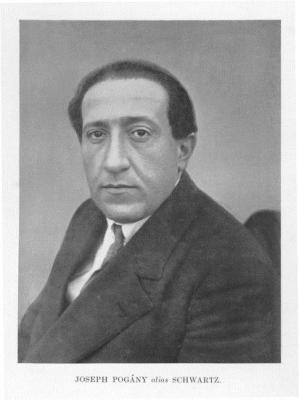
    ImageReview: Thomas Sakmyster. A Communist Odyssey: The Life of József Pogány / John Pepper. Budapest-New York: Central European University Press. 2012. Photos. Bibliography. Index. 249 pp.

    During normal times in a capitalist society, skill and drive are harnessed by the corporations, the labor union bureaucracy, and the political parties, but when the crisis comes a revolutionary party must harness the most talented and most ambitious for its purposes. The idealistic and the opportunistic, the selfless and the self-aggrandizing, the ruthless and the kind, the brave and the cowardly among those most determined and striving souls must somehow be made use of for the higher purposes of the revolution and ultimately for of all of humanity. The revolutionary movement must bring out the best in them, for we are the only material we have.

    The great European revolutionary epoch of the post war period from the 1910s through the 1920s provides endless biographical material revealing all that is best and worst in the human material of revolution, the Russians having been the most studied, providing shelves of biographies of Lenin, Bukharin, Stalin, and Trotsky. Among other figures of the era from various countries we also have remarkable women like Clara Zetkin, Rosa Luxemburg and Alexandra Kollontai and men such as Grigory Zinoviev and Karl Radek, all of them with their strengths and weaknesses. If perhaps Victor Serge represents the most idealistic and heroic, then József Pogány, also known as John Pepper, embodies all that is the most opportunistic and morally reprehensible. Yet he too under the impulse of revolutionary forces and within the structures of what was for a while a revolutionary organization made his contributions.

    Pogány/Pepper—who like other Communists of the era used several other pseudonyms as well—remained something of a mystery until now. Before this book, Hungarian historians knew of József Pogány who had been a major figures in the Hungarian Revolution and the Americans knew John Pepper who had played a key role in the American Communist Party, but now we have the full picture of this fascinating figure in a highly engaging and illuminating biography. My former colleague at the University of Cincinnati, now Professor Emeritus, Thomas Sakmyster, a scholar in the area of international relations, Communism, and Hungary, making use of Hungarian, Russian and American sources from the archives of the Communist International to the records of the FBI, as well as the memoirs of Pepper’s wife and many other papers, has produced the first comprehensive biography of Pogány.

    And a great story it is. A Social Democratic and then a Communist leader in the Hungarian Revolution of 1918-19, Comintern agent in the German Communist March Action of 1921, and a central leader of the American Communist Party in the 1920s, arrogant and opportunistic, Pogány stirred up controversy wherever he went. The words most commonly used to describe him, writes Sakmyster, were “loathed,” “detested” and “reviled.” Yet he also won the favor of top Communist leaders such as Zinoviev and Bukharin, charmed and captivated audiences of soldiers, workers, and leftists, had a tremendous career as a writer, and, despite his philandering, never lost the love of his wife Irén. What makes such a man? How does a person so difficult also remain so influential? Why was he tolerated for long? And what eventually brought him down?
    Image

    Pepper was born in 1886 as József Schwartz, the son of a middle class Jewish family. Jews in Hungary faced less discrimination than in other European countries, and József was able to attend the prestigious Barcsay Gimnázium and then go on in 1904 to the University of Budapest.  At the age of 17 he changed his name to Pogány, a name with a Hungarian ring to it, though it means “pagan or heathen” and may have been his way of breaking with Judaism and all organized religion. At the university he studied Hungarian and German language and literature at a time when Hungarian literature had become a call progressive change. He, his friend Ernő Czóbel and his sister Irén Czóbel, became involved with a group of radical students, began reading Népszava (The People’s Voice), and subsequently secretly joined the Social Democratic Party of Hungary, secretly because the government forbid students joining political parties. As part of his studies Pógany spent six months in Berlin and six months in Paris, attending some classes but spending more time with the labor movement and the socialist parties before returning to finish his dissertation on the Hungarian poet János Arany, graduating summa cum laude. Having earned his doctorate, Pógany married Irén Czóbel in 1909.

    After finishing his studies, Pógany wrote for Munka Szemle (Labor Review) and Szocializmus (Socialism) and the newspaper Friss Újság (Fresh News) as well as the most influential Hungarian magazine of the day Huszadik Század (Twentieth Century). He wrote from a Marxist perspective on literature, history, current events, contemporary social problems, particularly the lives and conditions of working people. With his friend Czóbel he joined the Demokrácia Lodge of the Masons, putting him in touch with other progressive intellectuals. In 1912 he was proud to become a writer for the socialist paper Népszava, the dream of every young radical. He soon became an editor writing on political issues and especially on foreign affairs. During the period from 1912 to 1914 he was a sharp critic of the Austrian Hungarian Empire. One of his articles attacking the Austrian Hungarian imperialism led to a trial—where he was also accused of lèse majesté—and sentenced to six months and jail The outbreak of World War I saved him from serving any time.

    Image

    Jozsef Pogany became a writer for Népszava,

    the Hungarian socialist newspaper.

    Though Pogány had written editorials strongly criticizing Austria Hungary for its imperialistic policies in the spring and early summer of 1914, when the war broke out he aligned himself with the Social Democratic Party leadership, supporting the war and a truce in the class struggle for the duration. Drafted, he served in combat alongside the German forces against the Russians, suffering a serious chest wound. Once well enough to work again, he became a correspondent for Hungarian, German and Swiss commercial and socialist newspapers, some of his articles being published as pamphlets during the war. He cultivated relationships with the military officers and he opportunistically self-censored his own pieces, going so far as to celebrate Austrian Hungarian military campaigns and victories over Russia. On the other hand, Pogány focused much of his writing on the ordinary infantry soldiers who endured the brunt of the battles, sympathizing not only with Austrian-Hungarian and German soldiers, but also the Russian and Italian enemy soldiers. 

    During early 1918 Pogány followed closely the events in Russia where workers and soldiers had created soviets (councils), and the Bolsheviks had taken power under the leadership of a virtually unknown figure named Lenin. By January of 1918 workers in Budapest were engaging in large scale demonstrations and some workers and leftwing socialists called for revolution, but Pogány warned that without support from the peasantry and the other nationalities and, in particular, without support from the soldiers a revolution would be doomed.

    By October 1918 the Habsburg Empire was collapsing, strikes were spreading, street demonstrations a daily occurrence. Dual power developed, with the Habsburg monarchy being challenged by a National Council made up of the renegade Count Mihály Károlyi, the Radical Party, and the Social Democratic Party. Pogány opposed the SPD participation in the coalition government but he had little chance of influencing its decisions. Following his “political instincts,” Pogány began to agitate among the rank-and-file soldiers. “In fiery speeches, sometimes seven or eight a day, he urged the soldiers to repudiate the hated Austro-Hungarian army, which he denounced as a tool of the capitalists and imperialists.”

    After the king appointed Károlyi prime minister, he in turn appointed Pogány the commissioner to the Soldiers’ Council upon which the National Council government depended. At the same time, Pogány continued his agitation among the soldiers, telling them to refuse to be disarmed and to maintain their discipline in the face of provocation. The soldiers, seeing they had a champion in Pogány, elected him president of the Soldiers’ Council. As both commissioner and president Pogány called for the election of officers and purge of counter-revolutionaries. When on more than one occasion the National Council government attempted to limit and reduce his power, Pogány responded by mobilizing the soldiers in street demonstration and marched on the Buda castle and succeeded in bringing down two minister of defense. His resolute actions won him the support of the left wing of the SDP and made him a significant political figure.

    The situation became more complicated in November of 1918 when Béla Kun arrived in Hungary coming from Russia with former prisoners of war who had been converted to Communism. While this new Communist Party was small it was also quite active. Its cadres agitated at factories and in street demonstrations, distributing their newspaper Vórős Úsjág (Red News), and winning support from both the left and from the poor. The CP’s presence also “exacerbated differences among the factions of the SPD,” now divided between those who supported the Károlyi government and those who were increasingly critical of it.

    Some SPD leaders such as Győrgy Lukács, a leading leftwing intellectual, quit and joined the Communist Party. Communists and SPD dissidents were now holding secret meetings. Pogány initially resisted Communist overtures, but by March 1919 he had become an advocate of an alliance between the SDP and the Communists in Hungary and on an international scale between Hungary and Russia. With other leftwing SPD members he voted for merger with the Communists. Having helped to negotiate the merger of the parties, he raced to the Soldiers’ Council to put forth and pass a resolution calling for a government of the newly merged Socialist Party and for the dictatorship of the proletariat. The new party took power.
    Image

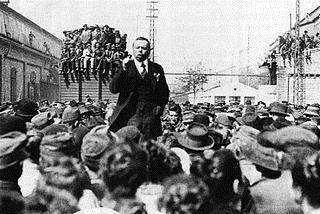
    Béla Kun, leader of the Hungarian Soviet Republic

    The Hungarian Soviet Republic lasted only 133 days with Béla Kun as head of state and Pogány serving both as Commissar for War and as a member of the five-man executive committee of the Revolutionary Governing Council. Forced to resign as Commissar for War, he was later appointed a minor military commander and finally made Minister of Education. Pogany was a strong advocate of an alliance with the peasants. He argued that the government should give up its attempt to collectivize agriculture and instead distribute land directly to the peasants. His position might have made a difference, but it was too late. The Hungarian Soviet Republic was disintegrating. When the Western powers presented the Clemenceau Note to the Hungarian Soviet Republic demanding that it cede the territory that its Red Army had recently conquered, Kun recognized that the government would have to acquiesce. The Hungarian Communist revolution had been defeated. On August 1, 1919 the Revolutionary Governing Council turned over power to the moderate Social Democrats who had sat out the revolution. Kun and other Communist leaders left Budapest by train for Austria eventually reaching Vienna.

    By August 1920, Kun and Pogány had arrived in Moscow to put themselves at the service of the Communist International (the Comintern). While still in Vienna Pogány had written a book on the counterrevolutionary government in Hungary titled The White Terror that, translated into German and Russian, enhanced his reputation among Communists in those countries. In Moscow he met the Russian revolutionary leader Grigory Zinoviev, worked as an assistant to the German Communist Karl Radek, was sent to Vienna to participate in a Comintern conference on the Balkan countries, and then dispatched to the Southern Front in the Crimea where the Red Army defeated General Wrangel’s forces. Back in Moscow where Trotsky and Lenin were debating Zinoviev on the need for a “breathing space” in the ongoing post-war revolutions, Kun and Pogány sided with the latter. Pogány was the most ardent advocate of continuing the revolutionary drive.

    When in February of 1921 the Comintern decided to send a delegation to Germany, it included Kun and Pogány. Ordered by Radek not to “let slip a decisive moment,” Kun and Pogány pushed for a revolutionary rising and found themselves in conflict with Klara Zetkin and Paul Levi who urged caution. On March 23, at the urging of Pogány and others, the action went forward despite a last minute attempt by the German Communist Party to call it off in Hamburg and Central Germany. The March Action, unsupported by the majority of German workers, led to thousands of casualties and to mass resignations from the Communist Party. When Kun and Pogány returned to Moscow, they were criticized and privately reprimanded by Lenin and Trotsky for their adventurism. Nevertheless, they continued to be advocates of the revolutionary offensive. During this period, Trotsky and Pogány developed a mutual contempt that only grew deeper over time.

    With not only Trotsky but also Radek tiring of his irascible behavior and knowing that he had to find a new project, Pogány offered to go to the United States as a representative of the Comintern, though his exact role remained unclear throughout his American stay. The American Communist Party of 1922—known at the time as the Workers Party—was small, only about 6,000 members, many of them immigrants organized in foreign language federations of Italians, Poles, Finns and so on. Pogány soon reorganized the Hungarian Federation and refurbished its newspaper Új Előre (New Forward) which he was soon proud to call the leading leftwing Hungarian newspaper in the world.

    At the same time, since he was seen as the Comintern representative, Pogány was soon a major figure in the Workers Party, speaking in German which was understood by many Communist leaders and members. They called him the “Hungarian Columbus” for he had discovered America. Within a year he had taught himself English well enough to deliver speeches, to debate and to write articles and pamphlets. Now, using the name John Pepper, he was able in English to express himself with the usual sarcasm and vitriol for which he was so well known and so disliked. He put forward positions that were central to the transformation of the Workers Party over the next several years, arguing that American Communists had to learn to speak English, to create an aboveground political party, to work to organize a broad labor party, and to become advocates of the rights of Negros.

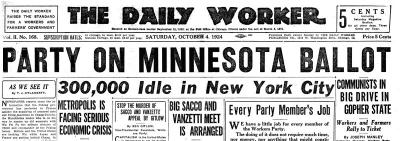
    Pepper was everywhere. He helped to create the Daily Worker and to make it into a genuine socialist labor newspaper for which he wrote frequently, as he did for the party monthly The Liberator.  He wrote a pamphlet For a Labor Party that argued in popular language for the creation of a working peoples’ party in America. He became a member of the Central Executive Committee and secretary of the Political Commission, as well as a member of the Secretariat, three powerful positions. Not surprisingly he was soon referred to as the “Czar and commissar” of the party. There was hardly an aspect of the Workers Party upon which he did not have an impact, and generally for the good.
    Image

    Yet Pepper can also be held responsible in large part for the greatest debacle of the American Communist movement’s early years, its role in wrecking the attempt to create a labor party in the early 1920s. At the time, the Chicago labor movement was led by militant unionists Edward Nockles and John Fitzpatrick. They had led organizing drives among packinghouse and steelworkers in Chicago and William Z. Foster, a leader of the Communist Party, had worked with them. They had created a Chicago Labor Party in 1918 and then an Illinois Labor Party in 1919, part of the broader Farmer Labor Party movement, and were now attempting to create a national labor party. The Communists wanted to participate and Fitzpatrick was willing to let them, but told them up front, “Let’s get the record straight—we are willing to go along, but we think you communists should occupy a back seat in this affair.”

    Pepper saw the organization of a labor party as a major breakthrough and wanted the Communists to be in the front seat, if possible in the driver’s seat. He soon overcame the caution of the Communist leadership and persuaded them to take an aggressive role. He used every trick he had learned in the European and American socialist movements to artificially increase the Communist Representation to the founding convention held in July 1923 in Chicago, so that when it began, out of 550 delegates, about 190 were Communists who with their effective floor leadership and discipline were able to play a leading role. Communists made up a majority of the new party’s executive committee and controlled the party journal. Furious, Fitzpatrick withdrew as did most of the labor unions that had been involved. As a St. Louis labor newspaper later wrote, “Workers’ Party Captures Itself and Adopts a New Name.”

    During his first stay in America, Pepper had become embroiled in heated faction fights. He was aligned with Charles Ruthenberg and Jay Lovestone against a faction that included William Z. Foster and James P. Cannon among others. The conflict in the American Communist Party was like other issues at the time to be settled in Moscow, so after two years in the United States, Pepper—once again Pogány—returned to the Soviet Russian capital in time for the Comintern’s Fifth World Congress. Through Zinoviev’s good offices, Pógany was appointed to the Political Commission and presented its theses on the economic crisis as well as speaking on revolution in China and criticizing the British Communist Party’s position on the Labor Party. The Congress adopted Zinoviev’s “Bolshevization” program and Pogány was sent to Sweden to implement it there in August of 1924. Back in Moscow, Pogány became director of the Comintern Information Bureau and a member of its Negro Commission.

    Pogány was at the height of his influence at the Comintern in 1926. He spoke before the Comintern executive on international labor. He wrote for the newspaper Pravda and journal Imprecorr. He served on the American Commission and became secretary of the British Secretariat and in that role wrote the pamphlet The General Strike and the General Betrayal. He worked closely with Zinoviev on the campaign against Trotsky, but when Zinoviev fell from favor, he transferred his allegiance to Bukharin and Stalin. Privately he commented, “Just now I’ve discovered that…I’ve been kissing the wrong ass!”

    Yearning to become a Comintern agent in China where he saw a revolutionary future, he worked to become an Asian expert, becoming a member of the Japanese Secretariat and of a commission on China, but his plans backfired when he was sent to Korea, referred to as the “graveyard” of Comintern agents. Afraid of traveling in disguise to Korea, he went instead to Tokyo, Kobe and Yokohama as well as Shanghai, and though he met with Korean Communists in those cities, he never carried out his assignment to meet with Korean Communists in Korea. Returning to Moscow he filed a false report claiming he had visited and met with Koreans in Seoul, a report that later came to haunt him.

    Fearing that his prevarication would be uncovered, he was anxious to flee Moscow and once again asked to go to the United States. Permission was granted in February and by mid-March 1928 he was back in New York where he quickly made himself the expert on the American Negro Question, becoming chair of the Negro Commission and in that capacity setting up the American Negro Labor Congress (ANLC). He rejected the idea of self-determination for the black population, believing that African Americans wanted “equal rights for all nationalities and races.” He argued that the Communists should “fight for the Negroes as an oppressed race.” Pepper also became an advocate of the theory of “American exceptionalism,” that is, the notion that the theories and policies being applied by the Comintern in Europe did not necessarily apply to the United States. Little did he realize that his positions on the Negro question and American exceptionalism would be his undoing.

    At the Sixth World Congress of the Comintern held in Moscow in July and August of 1928 Pogány found himself under attack from Stalin and his group for his theory of American exceptionalism, but many others piled on as well. He quickly shifted his position on the Negro Question, rejecting the slogan of equal rights for self-determination and saved himself from abuse there. He returned to the United States and actually ended up drafting the party pamphlet American Negro Problems which remained an important CPSU publication for several years and continued to be consulted for decades after. But, though he seemed to be once again back in the swings of things, the game was up.

    In January 1929 he was ordered to return to Moscow and forbidden to attend the Workers Party convention but decided to say in the United States. He told the American Communists that he was going to Moscow, but hid in an apartment in New York in order to continue directing the Lovestone faction. At the same time, he became embroiled in love affairs with two of his secretaries, one of whom had a jealous boyfriend. When Pogány finally returned to Moscow he told the Comintern leadership that fearing the U.S. authorities were on his trail he had gone to Mexico, but then decided not to take the ship from there and returned to the U.S, which was why he had been delayed. Meanwhile the true story of his hiding out in New York and his love affairs had come to light. The executive committee of the American Communist Party expelled him, but later rescinded the expulsion, arguing that that should be left to the Comintern.

    When he arrived in Moscow in April, he was excoriated by Stalin and his group for his theories of American exceptionalism and his position on the Negro Question. Expelled from the Comintern in the summer of 1929, he was put to work in the Soviet bureaucracy until his reinstatement in the Comintern in May of 1932. Once again he spoke, wrote and translated furiously and made a name for himself, while on important matters he echoed the opinions of Stalin and vilified Trotsky and Bukharin. But he had no real future. He had not only offended Stalin, but too many others as well. Finally in July of 1936 his time came. The secret police arrested him and he was imprisoned as were his wife and daughters. On February 8, 1938, Pepper was tried, convicted, and shot. After Khrushchev’s revelations of Stalin’s crimes at the Twentieth Party Congress in 1956 Pogány was posthumously rehabilitated.

    Pogány’s political life was marked by a series of major disasters: the Hungarian Revolution, the March Action, and the Labor Party fiasco in the United States. Yet at the same time, his fundamental program for the Workers Party—Americanization, building an aboveground party, creating a broad labor party, and fighting for Negro rights and equality—represented the necessary steps to create real left party in the United States. The revolutionary forces of the period and the Communist Parties, however, proved unable to harness Pogány. He was one of the ambitious ones whose egotism makes them unable to work collectively and to contribute to the common cause. Ultimately as Sakmyster writes, the combination of Pogány’s vanity and arrogance and the transformation of the Communist Party into Stalin’s dictatorship came together in such a way as to destroy him. We should remember that the revolutionary movement that produced Pogány/Pepper also produced Victor Serge and many other noble and idealistic men and women for whom the building of a democratic socialism was more important than either their own personal careers or the demands of Stalin’s bureaucracy. In any case, we have to go forward, for we are the only material we have to work with.


     

  • A Black, Working Class March on Washington: But We're Still Waiting for the Beginning of a New Movement

    The Fiftieth Anniversary March on Washington for Jobs and Freedom on August 24 was a mostly African American working class event of tens of thousands. They came to celebrate the struggles and victories of a half century ago and to put on the agenda for today the issues of racial profiling and stand-your-ground laws, the country’s unemployment rate and growing economic inequality, and new restrictions on voting rights. Some of those on the dais before the magnificent Lincoln Monument, like Representative John Lewis, had spoken there in 1963, while others like Newark Mayor and New Jersey Senate candidate Cory Booker were, as he said, not even born then. Where fifty years ago the civil rights leaders had come to implore the Democratic Party politicians, at this march the Democratic Party politicians came to try to mobilize politically—and immobilize socially—their ever more discontented if still incredibly loyal base.


    March on Washington, 1963

    March on Washington, 1963

    The presence on the platform of key figures of the Obama administration, such as Eric Holder, and of the leading Democrat in Congress, Nancy Pelosi, gave the event a quasi-official character in stark contrast to the 1963 march that maintained its distance from the administration by having no political or governmental speakers. While many in the crowd of the 50th anniversary march have good reasons for feeling frustration and anger about government policies and the state of the country, the tone of the event was one of pride in black struggles of the past and pleasure in being present with tens of thousands of others like ourselves who believe in a more democratic, just and decent society. The rally and march, however, did not create the impression that a new movement was being launched (as I had hoped it might; audio), though it did at least show that the unions and civil rights organizations still exist and can still march to the capital to petition for jobs and justice.

    UAW Marchers

    The words one saw most often and the most common image was Trayvon Martin, the young man’s whose death has made him the symbol of racial profiling and persecution, killed for no good reason, his killer set free by a system that simply cannot respond with justice to the murder of a young black man. Trayvon was everywhere, on caps and t-shirts, on placards and banners. Many of those present had no doubt participated in protests of the verdict of not guilty in the trial of Martin’s killer George Zimmerman or in protests against stop-and-frisk policies in New York, but those activists did not set the tone for the 50th anniversary march.

    Trayvon Martin

    While there were clusters of militants here and there, the crowd had been brought to Washington by the labor unions and the African American civil rights organizations, such as the National Association for the Advancement of Colored People (NAACP) and the National Action Network (NAN) who place their hopes in the Democratic Party to solve their problems. Not surprisingly given the makeup of the crowd, there were no signs and banners criticizing President Barack Obama or  his policies. On the contrary, the crowd cheered loud and long for Nancy Pelosi, the Democratic Party’s House minority leader, herself a veteran of the 1963 march.  The union members who were there clearly took pride in following in the footsteps of those who came before, but one had little sense that they had come to open new paths to the Promised Land.

    HateLove


    I have seldom been in a mass political demonstration of hundreds of thousands where one felt such fellowship and good will. This was more a picnic in the park than a protest against the powers. If there was no militancy in the rally and the march, there was a great sense of pride and common purpose: these were people who want the country to be better, are willing to work to make it so, and are prepared themselves to shoulder their portion of the burden, and more. Yet, in a certain sense, that was the problem. While people spoke out against racial injustice, there was no sense of a rejection of either the corporations or the government and its policies.. With the exception of small numbers of radicals and socialists, the march saw itself as influencing the system—not challenging it.

    The left was present, of course. The Democratic Socialists of America (DSA) had endorsed it, and at the rally one saw banners of the Communist Party and the Socialist Party and a spirited march of a few hundred against the new Jim Crow led by the International Socialist Organization. While the ANSWER Coalition and the ISO had printed thousands of placards that one saw scattered throughout the crowd, those who carried them did so because they supported the slogan “Dr. King’s Legacy: Jobs not War” or “End Mass Incarceration and the New Jim Crow,” not because they supported socialism. We on the left were a drop in the bucket of the sea of black working people who continue to place their hopes on making the system work, rather than on the hope of creating a new system.

    Image

    Yet all the problems remain, not only the injustice of the justice system, but also the continuing economic problems of high unemployment and growing inequality as well as the attack on voting rights. Health care remains an issue, for Obama Care (never really what we needed) has not yet come and will not come to many states; the public schools and teachers remain under attack; the immigration issue remains unresolved; and everywhere American working people face the government’s austerity program, cutting public services and public employees. The military interventions continue and threaten to expand and the national security state continues to grow, eavesdropping on millions. The Democrats on the dais stand on the wrong side of almost all of these issues, their only real concern to protect voting rights because the Republican attack on their voters endangers their political positions.  

    Image

    This massive March for Jobs and Justice fifty years later was a missed opportunity  to launch the movement we so badly need. Yet we can count on the irrationality of the economic system, the unfairness of the political system, and the continuing desire for justice on the part of all of those walked in Washington to give us one more chance. Let it be soon, for every day that passes there is another Trayvon somewhere, another foreclosure, another unemployed worker, another homeless family on the street. Let it be soon, and when it comes, let it be powerful and “Let justice roll on like a river, righteousness like a never-failing stream!”

    Image

    (All 2013 photos by Dan La Botz.)

  • Egypt: The Revolution at the Crossroads

    As I write, a horrible tragedy is unfolding in Egypt. The old order has reasserted itself with a vengeance. Nevertheless, it is hard to imagine that Egypt will ever again be what it was before 2011.

    Many aspects of the situation remain murky. First, there is the question of how many of Morsi’s supporters have been slaughtered. The New York Times accepts the figure of 1,000, with 4,000 wounded (this includes a relatively small number of police and army, as well as anti-Muslim Brotherhood civilians) in the initial attack on the protest camps and during the four or five days afterwards. We may never know the true casualty figures, but there is good reason to believe that they are much higher than this. Certainly the number of deaths will continue to rise if Egypt descends into civil war, which seems to be happening.

    Then there is the question of Washington’s role. According to reporting in the Times, American and European diplomats tried to broker a deal between the SCAF (Supreme Council of the Armed Forces) and the Brotherhood in order to prevent the massacre, but the military “brushed them off.” At the same time, Israel, the Saudis and the United Arab Emirates lobbied the U.S. not to pressure the Egyptian generals. Though the American ambassador in Cairo was considered to have friendly relations with Morsi, Obama made no public comments on the coup for several days, even after the army committed its first large-scale killings. Secretary of State Kerry actually praised the military for “restoring democracy.” Obama condemned the butchery of August 14, but his administration bears some of the responsibility for it by having given de facto support to the July 3 coup and thus signaling to the SCAF that they might escalate the violence with impunity. Moreover, in the aftermath of August 14 it was instantly made clear that Egypt’s $1.5 billion, mostly in military aid, would not be in jeopardy no matter what the army did – although under pressure (from Republicans, mostly) Obama is now hinting at some reductions in subventions to Egypt.

    It is a scandal that the fight to cut off U.S. aid to this murderous regime is being led by elements on the right, like Robert Kagan, even though most of them, such as John McCain and Lindsey Graham, call only for its temporary “suspension.” Earlier, on July 31, a Senate attempt to block military aid, led by Rand Paul, was defeated 86-13, after intense lobbying by AIPAC, with every Democrat voting against. Even now, among Democrats there seems to be almost no interest in a cutoff. Some have used the pathetic excuse that Egypt would always be able to get military aid from Russia, Israel or the Saudis instead (true), and “we” would thereby lose our “leverage” with Cairo. Others are simply following the AIPAC line. But for most, as usual, it comes down to a reluctance to trouble their friend in the White House.

    The argument about “leverage” is largely specious because U.S. aid does offer Egypt access to some very sophisticated weaponry and maintenance contracts for its existing arsenal. The United States and Egypt have long been highly integrated at the military and diplomatic levels, and if Obama were to act in a principled way it might very well have a sobering effect on the SCAF. In fact it seems possible that if Washington had forthrightly denounced the July 3 coup and threatened to cut off aid immediately, the massacres of August 14 might have been avoided.

    In any case, it is certain that none of this was considered by the Obama administration and will not be in the future unless there is a determined campaign by the peace, human rights and social justice movements. American progressives should demand the termination of aid, not only because it is immoral to supply mass murderers with weapons, but because cutting off aid to the generals would offer comfort and solidarity to the Egyptian victims of the army’s repression and encourage those in the Arab and Muslim world who yearn for real democracy.

    When Mubarak fell, it was generally assumed in the West that Egypt’s masses were so deeply attached to Islamic conservatism that the Muslim Brotherhood would win power by a sweeping majority. That condescending view quickly proved unfounded. Morsi and the Salafist candidate together won only 42 percent in the first round of the presidential election, and Morsi himself garnered only 51 percent in the second round – a victory, but hardly a landslide, much less a popular mandate to gather all power to himself and the Muslim Brotherhood, and to impose a sharia state. But that is what Morsi proceeded to do, albeit gradually.

    Juan Cole has called Morsi’s presidency “a slow motion coup.” In light of the current, much more repressive military regime, it is easy to forget the sectarian and anti-democratic thrust of Morsi’s policies. The president quickly began to act as though he was above the law. He pushed through a new constitution, based on sharia principles, that was endorsed by a referendum in which only 30 percent of Egyptians participated; effectively a mass boycott. The new constitution made “the principles of Islamic law (sharia) the main source of legislation,” as did the old constitution, but it added language that more specifically defined sharia in terms of "evidence, rules, jurisprudence and sources" accepted by Sunni Islam – suggesting that sharia-mandated punishments for theft, adultery, and blasphemy might soon be imposed. Indeed, Coptic teachers were charged with blasphemy under the constitution. All of this was far from a Taliban-style system, of course, and far less than Salafists demanded. But it was ominous, and millions of Egyptians clearly believed that worse was to come if Morsi remained in office.

    Above all, Morsi was flagrantly attempting to create a one-party state, asserting the right to rule by decree, attempting to pack the courts with pro-Brotherhood judges and accusing all his critics of being part of a foreign conspiracy. Morsi’s political style took on a very ugly, authoritarian and paranoid cast. Anti-Copt rhetoric, which had always been a staple of Brotherhood discourse, was strident. The police turned a blind eye to Brotherhood vigilantes who attacked Christians and Shias. Islamist gangs assaulted leftist demonstrations and imposed the jizya on Coptic communities – the tax on non-Muslims levied in the past by Islamic rulers, including the Ottomans. Morsi clamped down hard on freedom of expression, closing several newspapers and prosecuting bloggers.

    Popular revulsion at these trends, including from millions who had voted for Morsi, contributed to the explosion last June. But the thing that turned most Egyptians against his rule was terrible economic hardship. Morsi unhesitatingly did the bidding of the IMF. The result was a massive increase in Egypt’s already catastrophic unemployment, scarcity of food and fuel and rising prices for staples. Of course, continuing austerity and the whole neoliberal project were exactly what the Egyptian ruling class expected Morsi to impose. In return for their support or acceptance, however, he was also expected to end the revolution. Egypt’s elite, including the military brass, hoped the Muslim Brotherhood’s efficient machine could co-opt and neutralize the disaffected masses, but it did not, and this is what prompted the elite to abandon him.

    The revolt, or Tamarod, of June 30 was complex. The Tamarod organization itself was an extremely loose alliance of youth from the Social Democratic Party, the Socialist Popular Alliance Party, Mohamed ElBaradei’s Constitution Party, and the Revolutionary Socialists (RS). None of these groups, except the RS, are actually socialist or even very left; Hazem Al-Beblawi, for example, a founder of the Social Democrats, is the current prime minister. But behind the Tamarod were millions of Egyptians who wanted Morsi’s ouster and prompt new elections. Some 22 million signed the Tamarod petition calling on Morsi to step down, and an estimated 17 million demonstrated in Cairo on June 30 in what may have been the largest mass demonstration in history. These figures represent around one fourth of the country’s population, or about half of all Egyptian adults; a comparable number in the United States would be 78 million – more than voted for Romney or Obama. (Some have questioned these numbers, but no one, as far as I know, disputes that they were enormous and far larger even than the turnout in January 25, 2011.) In a democracy, no president is entitled to stay in office in the face of this kind of opposition. The Egyptian people, like citizens everywhere, have a moral right to recall governments that have lost their confidence, a right that for Americans is enshrined in the Declaration of Independence. Morsi should have stepped down – but then there should have been new elections as quickly as possible. This is what many, probably most, Egyptians expected, but it was not what the army planned when it stepped in to “carry out the will of the people.” Nor, it seems, was this what most of the Tamarod’s leaders had in mind.

    Adam Shatz, writing in the London Review of Books, cited a friend with “contacts in the [Egyptian] security establishment” who claims that the coup of July 3 was coordinated with Tamarod, which provided it with populist cover. In view of the fact that Tamarod’s leaders have vociferously supported Gen. Al-Sisi and are calling for vigilante attacks on the Muslim Brotherhood, there is good reason to suspect a degree of cooperation between them and the Egyptian army. Moreover, it was no secret that the movement as a whole always included supporters of the old regime and the army, who wanted to crush the Brotherhood at any cost. The bewildering aspect of all this, however, is how quickly and easily the democratic elements in Tamarod, especially the Revolutionary Socialists, were sidelined by the authoritarians.

    Nevertheless, the mass outrage of the movement that culminated on June 30 was real and sprang from deep, legitimate grievances. Those millions of demonstrators were not mere pawns of the SCAF and the activists of Tamarod. Among them were workers who had seen their strikes broken and their unions throttled by the Morsi regime, women who knew that their rights were threatened, Egyptians who were disgusted by the government’s encouragement of sectarianism and hatred for religious minorities, and the poor and underemployed demanding what the revolution had promised: bread, freedom and social justice. It was a tragedy of epic proportions that there was no leadership that could offer a consistently democratic perspective to the mass movement, one that clearly distinguished between a demand for Morsi’s ouster and a military takeover.

    What now? The SCAF is conducting a reign of terror, and their targets will be labor and human rights activists as well as Islamists. The military’s ferocious attack on Egyptians’ freedom already makes Morsi’s authoritarianism pale in comparison. We who are outside Egypt should do everything we can to make this a pariah regime. It is imperative for the Egyptian left to defend the victims of the military’s savage repression, especially those Muslim Brotherhood members and supporters protesting the coup. At the same time, there should be concerted efforts to protect Egypt’s ten-million strong Coptic community against the ongoing pogroms carried out by Brotherhood and Salafist gangs. Al-Sisi’s government clearly intends to ban the Brotherhood, and when and if it permits new elections these will be fatally compromised as long as the imprisonment of opposition leaders and restrictions on political freedoms continue. Morsi, the Brotherhood leaders, and all political prisoners should be released, the state of emergency lifted, and free elections held as quickly as possible.

    Egypt has gone backward. The revolution has suffered a terrible defeat, and the old regime has arrogantly taken back nearly everything it had lost in 2011. The crowning insult is the possibly imminent release of Mubarak himself. What cannot be restored however, is the crippling passivity of the masses before 2011. Egyptians have seen the power of great numbers in the streets – their power. They know that it was Egypt, after Tunisia, that unleashed the magnificent Arab spring. Under the generals, Egypt is now entering a very dark time. Leaderless, disoriented, millions of Egyptians are right now under the terrible illusion that the army has “saved” them and will take care of them. They will learn, and quickly. It is impossible to believe that the darkness will last for more than a short time. We have not heard the last of the Egyptian Revolution.


    Thomas Harrison is on the editorial board of New Politics and co-director of the Campaign for Peace and Democracy.

  • Letter to Supporters

    The following statement from the Egyptian Revolutionary Socialists makes a powerful case for socialism from below in the context of the Egyptian coup, the massacres carried out by the military and their horrific impact on the nation's democratic upsurge. Like others, the Revolutionary Socialists is evolving its point of view, challenged as it is with understanding first the election of a repressive right-wing Muslim government on the heels of a healthy mass movement, and then the shocks from a bloody military coup. We think it important to share their statement on the situation and, along with the Campaign for Peace and Democracy and others, we are republishing it as a contribution to the general discussion.

    Down with military rule …
    no to the return of the old regime …
    no to the return of the Brotherhood

    Terrible massacres and violent repression, a huge escalation in attacks on Egyptian Christians and churches, the consolidation of the repressive military state continues apace. These are the momentous political developments we have experienced during the last few weeks.

    They pose enormous challenges to the revolution, but they also contain opportunities to prepare for the coming waves of the revolution, which the Revolutionary Socialists can use effectively to build the movement, provided that we develop tactics capable of dealing with changing circumstances.

    Revolution or military coup?

    After millions took to the streets to topple Mohamed Morsi and Al-Sisi made his declaration removing him from the presidency, there has been widespread debate about how to characterise these events. Was this a revolution of the masses, or a military coup aimed at removing the president in order to establish a military dictatorship? The answer to the question “revolution or coup?” lies in its importance to the development of a strategy for the months, and perhaps the years to come of the Egyptian revolution.

    Whoever dismisses the intervention of the gigantic mass movement which launched the new wave of the Egyptian revolution is fleeing from dealing with its inherent contradictions, and thus from both the new challenges in front of the Egyptian revolution, and the opportunities that the future holds. Unsurprisingly, the revolutionaries who dismiss the value of the intervention of the masses – or at least consider the masses to be simply the object of a counter-revolutionary game – are suffering today from deep frustration as a result of what they call the retreat or end of the Egyptian revolution, and their denial of the available opportunities.

    Nor are they alone in dismissing the direct intervention of the masses in Morsi’s downfall, and the downfall of the legitimacy of the ballot box with him. Almost all the forces intervening in the political situation today, including the international forces, dismiss the role of the masses.

    The exception here is the military establishment, which was burnt by the fire of the mass movement previously, and thus was unable to ignore or overlook it. Rather, the prospects and development of the mass movement are the principal factor determining its policies and interventions. The military establishment represents the mainstay of the ruling class, the regime and the state. It is the spearhead of the counter-revolution which imposes itself on the mass movement as a fait accompli, even while it sows panic about the possibility of the development of the mass movement and strives by every possible means to either contain it within a specific framework which does not threaten its class interests, or by direct repression as happened in the past.

    The army certainly wants to contain the gigantic mass movement demanding Morsi’s downfall within the limits it sets and the steps it calculates. It wants to prevent the movement from escaping from the framework of Morsi’s downfall to become a deeper challenge to the regime in its entirety. The primary goal of the military was return of the millions who filled and controlled the streets to their homes in the shortest time possible, and to stop the movement at the limit of overthrowing the head of the regime and getting rid of him. This goal was compatible with the aspirations of the military after Morsi’s failure to abort the revolution in face of the confusion which had gripped the ruling class in the face of the revolution throughout his year in office.

    For after Morsi’s rise to power last year, with the blessing of the US, the military establishment, and a large section of the business elite, he failed to achieve the objectives of the ruling class in aborting the Egyptian revolution. Morsi was initially a better option for the majority of the ruling class, as he adopted the neo-liberal project and aligned himself with the interests of business. He had no qualms about alliance with the US and was careful not to disturb the Zionist state, in addition to being the first elected president after the revolution. Most importantly, he had a base in the largest mass organisation in Egypt, an organisation which works on the ground with hundreds of thousands of members, sympathisers and supporters. They would be able to absorb the anger of the people and convince the masses of the neo-liberal project and the cruel plans for austerity which accompany it, sparing the ruling class the danger of a mass uprising during its attempts to deal with the economic crisis – or at least to mitigate its effects – at their expense.

    Instead, the economic crisis and the failure of Morsi to implement the demands of the revolution (or more accurately his explicit challenge to these demands and objectives) led to a decline in his popularity and the popularity of his organisation to the extent that the ruling class and its institutions could no longer rely on them in the face of the masses.

    When it became clear that popular anger had risen enough to overthrow Morsi, it became necessary for the most powerful and cohesive institution in the ruling class – the military – to intervene quickly to contain the anger of the masses and implement their demand. It was necessary to get out of a losing bet on the head of the regime and to rearrange and unify the ruling class around new leaders who would appear as heroes, carrying out the people’s demands and uniting with the people in “one rank”.

    The army was really caught between two fires. The first was the fire of the mass movement, and the possibility of it breaking through its limits in the event of Morsi continuing in power. The second was the fire of the Brotherhood and the Islamists in the streets, and with the opening of complex fronts in Sinai to a greater extent and some areas of Upper Egypt to a lesser extent, in the event of Morsi’s overthrow. Not to mention the differences which would develop with the US administration and the threat of what they call “the democratic path”.

    The Army chose to avoid the fire of the mass movement, despite the consequences. It decided to knock out Morsi, while absorbing the masses and stopping the development of their movement, and face the fire from the Brotherhood which was less threatening than that of the masses. As for the US administration, and the EU to a lesser extent, they have long-term strategic relations with the Egyptian military establishment which are capable of absorbing any tensions caused by the overthrow of Morsi. Thus the military panicked about the possibility about the development of the mass movement and its escape from its leash. The other option was fraught with danger, for if the army did not overthrow Morsi, and the movement developed in a more radical and deeper direction, the confidence of wide sections of the masses in the army – a confidence which was born out of the absence of any other alternative which could deal decisively with Morsi – would be shaken. This was a factor which could push the movement off its tracks.

    In order to complete the work of containing the mass movement, the military appointed an interim president and a new government as a civilian face. The aim was to preserve firstly all its powers and privileges and its interventionist role in violent repression when necessary. Secondly, it aimed to complete the project of counter-revolution at both a political and economic level. This did not mean a retreat of the military from power, but rather the opposite. For in spite of the military’s retreat behind the civilian cloak of the new government, it still manages everything just as it did during the year and a half of the Military Council under the leadership of [Field-Marshal] Tantawi and [General] Anan.

    So we have witnessed the mass wave of protest on 30 June and the few days which followed, and seen the military riding on the revolution after 3 July in order to cut the road to the development of the mass movement. The mass movement could have developed greater and more radical dimensions, in particular with the beginning of partial strikes in the Public Transport Authority, the railways, in Mahalla, and among the civil servants at the Cabinet Offices and many others. We are also seeing the return of the ruling class with its military symbols and old leaders in full force, after the expulsion of the Brotherhood from the state, in order for the military to lead the ruling class and the forces of counter-revolution to achieve what Morsi failed to do. That is, to abort the revolution and a hugely confident mass movement, which was however full of contradictions in consciousness and organisation. Inevitably, we have to deal with the movement including its contradictions and exploit the possibilities inherent in it to prepare for the stronger waves of the Egyptian revolution to come.

    From this angle, 11 February does not exactly resemble 3 July 2013, and is in fact completely unlike it in many aspects. In the first case, the ruling class was forced to get rid of the head of state and open the door to greater confusion among its own ranks. The state was in a condition of much greater weakness than it appears today, after the collapse of the Interior Ministry and the extreme hostility to Mubarak’s cronies. In the second case, however, the ruling class got rid of the head of the regime in order to unite its own ranks, shuffle the cards in its hand, and mend the cracks in order to prepare for attacks on all revolutionary movements. But this does not mean that the political and economic crisis of the ruling class has ended.

    In the face of Morsi’s overthrow, the Brotherhood and their Islamist allies sought to escalate their mobilisation on the ground with sit-ins and marches in order to restore the “legitimacy” overthrown by the masses along with their failed project hostile to the goals of the revolution. In the process they have committed heinous crimes which cannot be forgiven in many areas and provinces, as well as their sectarian rhetoric and their incitement against Christians, by pouring their anger out on them and attacking churches. As Revolutionary Socialists we must stand firmly against this aggression and any attack on the Christians of Egypt: this is a matter of principle for us.

    We are well aware that for the Brotherhood this is a battle for survival and they will not easily surrender. In parallel to the Brotherhood’s attacks and crimes they themselves are facing violent repression at the hands of the military and the Interior Ministry, beginning with the massacre at the Republican Guards HQ, and ending with the barbaric breaking up of the protest camps in al-Nahda Square and Raba’a al-Adwiyya, not to mention the killing of three of their women members in Mansoura, and so on.

    The crimes of the Brotherhood have led most factions of the left to take an extremely opportunistic stance and to ally themselves with the military and support the repressive state, even repeating the same lies of the bourgeois and feloul media, and completely abandoning any revolutionary or class position. This perspective is built on a catastrophic analysis which considers the Muslim Brotherhood and its allies to be the greatest danger to the Egyptian Revolution, while in reality, if the Brotherhood poses a danger to a certain extent, the institutions of the state which monopolize the means of violence represent a far greater danger to the revolution. This is manifested in the return of the repressive state in all its brutality, in the dictatorial Constitutional Declaration, in the appointments of provincial governors from military and police generals and the old regime and the attack on the Suez Steel strikers and so on.

    In addition to the opportunistic and treacherous position of so-called liberals and leftists in support of the military (led by those who participated in Al-Sisi’s government), there are many who see the battle between the Brotherhood and the new/old regime as a battle which means nothing to the revolution and the revolution has no stake in its outcome. From this perspective, revolutionaries must take a neutral position, as if the two parties to the conflict are of equal strength and represent the same danger to the revolution. These views are extremely short-sighted. They do not see the real meaning of the current regime’s actions, and the grin on the military's face in the face of the Islamists as they crush the sit-ins at Raba’a al-Adawiyya and al-Nahda. These massacres are a dress rehearsal for crushing the Egyptian Revolution, and will be repeated tomorrow against any genuine opposition force which appears on the scene, particularly the labour movement. This is what we saw a glimpse of in the attack on the Suez Steel strike. The massacres against the Islamists are only the first steps along the road map towards counter-revolution, and we must expose this in sharp and principled attacks on them.

    Today we are exposed to a great deal of attacks on our position for condemning the violence of the institutions of repression against the Islamists, and for our attacks on Al-Sisi as the leader of the counter-revolution. But this will not lead us to dilute our position by creating a kind of “balance” in our attacks on the military and the Islamists as if there was equality between them in terms of the danger they represent to the revolution. We are in the process of a comprehensive and sweeping counter-revolution and the crushing of the Muslim Brotherhood’s sit-ins and protests is only the first step. We will not waver in our firm position against the military and its fierce repression. “Balance” between the two sides would only reflect hesitancy and indecision instead of taking clear and bold position against the repressive state. We cannot be silent about the military’s massacres which have killed dozens of Islamists and we cannot support the state in crushing their sit-ins. Nor can we stop recalling the military’s crimes, and warning about the Interior Ministry and demanding the prosecution of their criminals at every opportunity. Likewise we must warn of the return of Mubarak’s state and its repressive institutions in full force, and direct our attacks against it.

    Nor must we be driven behind the attempts of the supporters of the old regime and their thugs to harass the Islamists and kill them in the streets. There is a vast difference between the self-defence of the masses –even if by violent means – in the face of attacks by the Brotherhood as we saw in Manial and Bayn al-Sayarat and Giza a few weeks ago, and the violence of the institutions of repression and the thugs of the old regime against the Muslim Brotherhood. The latter is not violence defending demonstrators and the revolution, but rather an attempt to stabilise things in the hands of the new regime without opposition from any quarter. The army, police and old regime elements did not intervene, not even once, during the last few weeks, to protect local people or protesters in any of the clashes. It is in this context that Tamarod “Rebel” movement and the left which is stuck to the military’s boots, is calling for popular committees to protect the state and the institutions of repression and to help them crush the Islamists. These are fascist calls and we cannot accept them or repeat them.

    We must confront the lies the media which give political cover to pinning all the crimes of the military and the old regime on the Muslim Brotherhood. We must challenge the obnoxious narrative which seeks to erase the revolution of 25 January and replace it with the 30 June revolution, in which “all classes” participated, which was not about “burning police stations” and “attacking institutions”. This narrative presents the January Revolution as a pure conspiracy by the Brotherhood, which required a revolution against them and not a revolution against the ruling class and its state and repressive institutions. In addition, we hear hateful racist rhetoric against the Palestinians and the Syrians.

    The state is mobilising almost all political forces and (formerly) revolutionary forces behind it, and large sections of the masses, in order to confront the Muslim Brotherhood and the Islamist alliance around them. In what they call the “war on terror”, they are whipping up a disgusting nationalistic atmosphere, claiming that “there is no sound louder than the sound of battle” in order to suppress and garble the demands of the revolution.

    As for the talk of “exclusion” [from the political process] and “reconciliation”, the Revolutionary Socialists cannot build their position on this issue in isolation from the moods of the masses and their orientations– in spite of their strong internal contradictions. These masses will not accept reconciliation with the Muslim Brotherhood. As one of the statements of our movement stated, “beating the drum for reconciliation suggests equality between murderer and victim, which is completely unacceptable, without bringing the killers of the martyrs, all the martyrs, and the instigators of violence, to a fair trial”. If the masses, under the influence of the media and bourgeois propaganda, want to exclude the Brotherhood, while ignoring the old regime elements and the military, we must also attack the return of the old regime supporters and the return of Mubarak’s state under Al-Sisi’s flag. All of them are enemies of the Egyptian Revolution and its future prospects, and Al-Sisi is much more dangerous than [Muslim Brotherhood leader] Muhammed al-Beltagi by any measure.

    In these circumstances, we must directly and boldly and clearly and without any hesitation raise the slogan “Down with military rule… no to the return of the feloul … no to the return of the Muslim Brotherhood”.

    Are we afraid of isolation?

    There is no doubt that the tactics of Revolutionary Socialism depend fundamentally on determining the level of development of the consciousness of the masses and of the working class at their heart and their vanguard on the one hand, while assessing the possibilities and opportunities for the development and deepening of the mass movement during the course of the revolution, on the other.

    The mass movement today suffers from great contradictions within it, and faces great challenges, and perhaps the greatest of these is the apparent reconciliation between a section of the masses with the institutions of the state, and particularly the military and the Interior Ministry – the head and heart of the counter revolution. Yet despite the massive frustration which affects large sections of revolutionaries who fought against the Military Council during a year and a half of the revolution, and who continued their struggle against Morsi’s regime, there is no other way to carry out a living role within a mass movement, except to deal with it as it is and to understand its contradictions without either overlooking or exaggerating its current potential.

    The alliance of the old regime elements and liberal media, with the security services, military and Interior Ministry has succeeded to a large extent in swaying the masses by projecting a false image of the neutrality of the military and the Interior Ministry who they portray as being aligned with the people against Morsi, the Brotherhood and their Islamist allies, in an attempt to also erase the crimes of the state in murder and torture from the memory of the masses. Many political forces, most notably the opportunistic National Salvation Front, the Tamarod campaign, and the Popular Current, have played the most opportunistic and dirty roles in burnishing this image through calls for “unity in the ranks”. They praise the national role of the army and the state institutions in meeting the demands of the people to finish with the Brotherhood regime, which they considered to be the biggest and only danger to the Egyptian revolution. However, this perspective only represents a thin crust around the consciousness of the masses. True, it is a solid crust, and almost all parties are working to harden it further, but underneath lies a genuine consciousness of the demands of the revolution and its goals of bread, freedom and social justice.

    We cannot lose sight of the fact that, in the midst of these contradictions in consciousness, large sections of the masses have great self-confidence, despite all the distractions and the fog of the “war on terror”. The masses have genuinely imposed their will and overthrown two presidents and four governments since the beginning of the revolution. This confidence which lies under the crust of contradictory consciousness, is what prompted the masses to rise up against Morsi in the first place, and it is this which allows some to prepare gradually to complete the struggle against the new government, as its economic and political policies opposed to the demands of the masses becomes progressively clear. This is despite the partial hope among some sectors of the masses that the government will meet the demands of the revolution.

    At this stage we have to find every way possible to reach the genuine core of the poor and working masses’ consciousness, in whose fundamental interests it is to continue the revolution and implement its demands. We must continue to emphasize the giant capabilities that the masses exhibited in the wave of 30 June and the previous waves of the revolution by spreading the genuine demands of the Egyptian revolution, and mobilising for them in every province and every workplace. But this cannot and should not push us to hide or delay some of our policies and principles in order to enjoy the temporary, close support of the masses behind our rhetoric and our slogans.

    On the contrary, concealing some of our slogans or our policies in order to achieve short-term political goals will only lead to opportunism. This is not the way that the Revolutionary Socialists work, and we have completely avoided opportunism as we have built our organisational project in the midst of the masses and for the victory of the Egyptian revolution. For example, we cannot slacken in our attacks on the lies presented by the media of the old regime and the bourgeois liberals, or stop our attacks on the rehearsals for counter-revolution which the military and the Interior Ministry are carrying out today. We cannot stop recalling the criminal history of the Military Council and Mubarak’s cronies, and demanding that they be put on trial side-by-side with the Brotherhood’s leaders who have excelled during the last few weeks in incitement to violence and killing, and the unleashing of disgusting sectarianism. We cannot, in any event, slacken in directing political attacks against the old regime elements and the opportunists in Beblawi’s government, the clear liberal tendencies of this government, and the consolidation of the repressive state by the appointment of new provincial governors. We cannot relent in our attacks on the huge powers and privileges which the military enjoys according to the constitution, and its control of around 25 percent of the Egyptian economy, and on the continuation of the humiliating Camp David agreement and so on. We have to deal with these things in a strictly principled manner.

    Belittling the return of Mubarak’s state and the military repression is extremely dangerous. The state of Mubarak, which – it is true –did not disappear from the scene since the beginning of the revolution, returns today with its full powers, free of internal crises, and with the support of wide sections of the masses. It is this situation which forces us to go onto the attack, immediately against this state, and its symbols, which will not wait long before launching attacks on all who call for the demands of the revolution.

    Our principled position may result in our temporary isolation in the midst of the masses. Our message will not generally find a wide reception in the masses, despite all the efforts we will expend in work and activity in the workplaces, the university campuses and the local neighbourhoods. This isolation had already begun in reality before 30 June, as a result of our principled position against the military, the old regime and the Brotherhood. But we must not allow ourselves to give into any degree of frustration, for as long as contradictions continue in the consciousness and capacity of the masses to organise themselves, the mass movement will remain a vehicle which can be affected by many intersecting factors, which force it to proceed along winding roads and not constantly along a straight and rising path. The real content of the repressive regime now in power will be revealed before the eyes of the masses who will gradually begin the struggle against it.

    This does not mean complete isolation and separation from the masses, as there are tens of thousands of revolutionary youths who fought fiercely against military rule in the waves of the Egyptian revolution, and who completed the struggle against Morsi’s regime. Their memories are still rooted in revolutionary principles, they have fewer contradictions in their consciousness, and they are not betting on the institutions of the state, particularly not on the military, the backbone of the counter-revolution. These will find the principled position of the Revolutionary Socialists attractive, in the light of the wholesale drift of the political forces to the side of the military and the new government it has appointed. From this angle, the situation is better than it was after February 11 2011, when for months, only the Revolutionary Socialists and few individual activists would speak out against the Military Council.

    In the weeks and months to come, we have the opportunity to attract and win some of these revolutionaries to strengthen our ranks, in order to play a more vibrant and stable role in the coming waves of the revolution. But at the same time we also want to integrate workers and the poor who made the revolution and participated in the last wave of 30 June for the goals of the revolution which were never realised. Here it is of the utmost importance to revive the project of the Revolutionary Front with principled parties which do not drift into the arms of the state and the new government, neither are they allied with the Islamists against the state and which adopt a programme of the demands of the revolution and its goals.

  • Dream Sequences: Marching on Washington, Fifty Years On

    It is the age of Barack, the age of Trayvon; a time for imagining post-racial transcendence, a time for recognizing obdurate injustice. As we mark the fiftieth anniversary of the March on Washington this month, as new generations surround the reflecting pool, we will ask whether we yet judge each other by the content of our character rather than the color of our skin.

    The answer, of course, will be no, and also yes. The reality of race today is nebulous, flecked with shadings, neither a utopia of little black boys and girls walking hand in hand with little white boys and girls nor merely a slew of racial slurs. History’s etchings on our psychology ensure that between awareness and callowness, solidarity and enmity, comprehension and smallness, lie infinite gradations.

    Were it not but a phantom of memory, the euphoria of election night 2008 might have caused a smug national self-satisfaction in commemorating the March on Washington. Instead, disquietude is felt after the Florida jury’s acquittal of George Zimmerman, the Supreme Court’s striking down of key Voting Rights Act provisions, and Detroit’s bankruptcy. Martin Luther King’s dream holds lasting power not for its eloquence alone but because the American present is still so separate and still so unequal.

    Conservatives during King’s lifetime reviled him. They now embrace the dream, reducing its meaning to simple race blindness. If racism is a bygone irrelevancy brought up only by liberal scolds, then political correctness is all that divides us and inequality is a result of irresponsibility, as shown in teen pregnancy data or statistics that blacks are far more often killed by other blacks than whites. Slavery and segregation are over: stop blaming others.

    In this manner an outward commitment to color blindness sustains the pathologizing of black America, an outlook patently shaped by the very history it denies. The slave system deprived black Americans of compensation, property, literacy, and citizenship while unleashing ferocity upon any hint of independence. In the white mind, fear of black violence commingled with moralism, engendering a psyche that fancied itself the chivalric defender of civilization against animality.

    It is an old story, and in moments like Trayvon Martin’s murder we doubt the white republic has left us. We all know, however, that our present is not monochrome. A black First Family resides in the White House, and our own families and friendships are criss-crossed in black, white, yellow, brown, and red. More and more, Americans identify as multiracial when census takers knock at their door.

    We are in the midst of a third great American system of race and class, the successor to chattel slavery and formal Jim Crow. Unlike its predecessors, the current system—which operates so subtly that it gives only the barest appearance of being a system—maintains diversity as an ideal even as it continues to produce injustice in the aggregate. Understanding it requires that we overlay our narratives of race upon our narratives of capitalism, taking them as one despite their partitioning into the separate academic disciplines of cultural studies and economics.

    Between the 1960s and 1970s, a new regime of capitalist accumulation came about. Not by accident did this neoliberal form of capitalism coincide with the rights revolution. Just as a global free trade regime required the dismantling of colonialism, so the logic of deregulation found an elective affinity with the end of formal segregation. While freedom songs were being sung in the Student Nonviolent Coordinating Committee and Southern Christian Leadership Conference, libertarianism was being generated in the Mont Pelerin Society and Chicago School.

    Since white supremacy’s pervasiveness owed much to its immense profitability, the idea that a free market would best serve race blindness required conservative ideologues to improvise a dreamscape. In Capitalism and Freedom, published one year before King’s 1963 speech, Milton Friedman argued that the invisible hand cared only for the content of one’s character. “An impersonal market,” he stated, would best protect black Americans “from being discriminated against in their economic activities for reasons that are irrelevant to their productivity.”

    To sustain this reverie, wide swathes of history had to be bracketed off as mere “residual discrimination,” the detritus of the past of slavery and segregation, when market individualism was not yet in full sway. While others argued that economic exploitation explained the persistence of slavery and segregation, the neoliberals glimpsed utopia in a pure capitalism.

    So it is that the black freedom movement and its crowning achievements, the Civil Rights Act, Voting Rights Act, and advent of a black elected officialdom, coincided with the consolidation of an elite consensus that removed constraints on corporate activity, cut tax rates on the wealthiest and social spending for the most needy, and instituted more flexible world trade regimes.

    The result for black America, plain by the 1980s, was a flight of capital from urban centers in search of cheaper labor, the rout of labor unionism, the devastation of black working-class prospects, a decline of urban tax bases, and the centrifugal deterioration of social life. Black neighborhoods in deindustrialized cities became prime territory for the drug trade, which doubled as an escape from despair and a lucrative growth field for black youth without occupational alternatives.

    Far from an “impersonal” market, studies find call-back rates for job interviews consistently lower for applicants with stereotypically “black” names. In every significant metric—income, wealth, employment, education, housing, poverty, debt, longevity, incarceration—black Americans fare much worse than whites. The carceral state has ballooned, with supermax facilities substituting for leg irons. From 200,000 in prison or jail in 1970, the ranks of the confined have swelled to well over two million, most of them black and Latino men under 40.

    The black freedom movement coincided with its neoliberal claimant, but they were always distinguished by a major difference of emphasis. Black leaders never imagined liberation to be genuinely possible without economic equality. Bayard Rustin and A. Philip Randolph, the now-forgotten socialist architects of the March on Washington, demanded “jobs” as well as “freedom.” In Malcolm X’s more militant cadence, “You can’t have capitalism without racism.”

    A redistributive outlook underlay King’s late-life criticism of the Pentagon as the world’s greatest purveyor of violence; his call for putting social needs first in the national budget; his organizing of a Poor People’s Campaign that prefigured Occupy by planning mass encampment on the Washington mall; and his support for striking sanitation workers in Memphis at the time of his 1968 assassination.

    In 1964, King wrote,

    "The Negro today is not struggling for some abstract, vague rights, but for concrete and prompt improvement in his way of life. What will it profit him to be able to send his children to an integrated school if the family income is insufficient to buy them school clothes? What will he gain by being permitted to move to an integrated neighbourhood if he cannot afford to do so because he is unemployed or has a low-paying job with no future?"

    If King’s “I Have a Dream” speech emphasized law and attitude, his broader career indicates that his unfinished agenda is more structural, economic, and social. Race is sunk in ’hood and ’burb, in property values and school district boundaries, in wage differentials and portfolios, and in credit ratings and loan rates.

    Race is still perceptual, as when a hoodie functions as synecdoche for threat and makes walking while black a capital crime. And the law remains crucial, as the Supreme Court’s evisceration of the Voting Rights Act demonstrates. We should oppose “stand your ground” laws that pervert self-defense doctrine, justifying lethal force by subjective fear rather than demonstrated responsibility for a life-threatening altercation; demand an end to long mandatory sentences for nonviolent drug offenses; and oppose constrictive voter I.D. laws.

    When freedom is confused with equality and diversity confused with justice, however, conservatives can assume that racism is in the past because of a Clarence Thomas on the Supreme Court, a Colin Powell or Condoleezza Rice in the cabinet, or a black as McDonald’s CEO. The same confusion of diversity for justice allows liberals enamored of progress in symbolic representation to ignore how Obama’s team and policies favor Wall Street, blaming his shortcomings wholly on Republican nullifiers.

    There is still a color to money. Black homeowners were most fleeced by subprime mortgages, and black unemployment is double the national rate. Blacks are far more likely than whites to have a negative net worth. Blacks, along with Latinos, fall disproportionately among the working poor. A diversity ethic correlates with globalized capitalism, wary of offending any market segment, but it has primarily opened a narrow set of opportunities at the top, creating a black 1 percent ensconced in boardrooms and country clubs that encounters the underclass rarely, if at all.

    While supersession of neoliberalism is not on the agenda any time soon, better apprehension of its race and class terrain might spur fresh thinking about how to parry inequality. At least it should help to rule out two kinds of one-sidedness endemic on the left. The first reduces race to economics and emphasizes class solutions exclusively, like those who speak of “the trouble with diversity” or see only fragmentation in identity politics. The obverse embraces black leadership as progressive regardless of whether its programs serve corporate interests. Both are limited by partiality given a system with coordinates of class and race.

    Our politics must combine race with class, just as reality does. We might begin by brainstorming inventive race-class demands. A Robin Hood tax on all financial transactions, for example, might be used not only to reduce financial speculation but to make possible zero-interest loans for building health clinics, food co-ops, and the like in black-majority areas (or barrios or Indian reservations). Stringent fines on polluters might be allocated to funds for creating green spaces and self-managed organic farms in current urban wastelands. Banks and corporations whose profits derived from slavery might be pushed to atone by giving grants to shore up underfunded municipal pension plans for public workers, since cities and public sector workforces have higher concentrations of people of color and their pension plans support urban economies.

    We face a social system, not merely a set of attitudes. Redress will not come from good will alone, but from an erosion of the material foundations of bigotry. We need a contemporary theory and practice—not abolitionist, not “civil rights,” but suited to our day. Equality and justice are freedom’s prerequisites. To rescue the dream from descent into nightmare requires nothing less than social reconstruction.


    Christopher Phelps teaches American Studies at the University of Nottingham. This article first appeared on the website of Dissent. Thanks to Chris Phelps and Dissent for permission to repost.


  • Giroux on the War on the Young

    Review of Henry A. Giroux, America's Education Deficit and the War on Youth, Monthly Review Press, 2013.

    Henry Giroux is a key figure in the critical pedagogy movement, editor of the Review of Education, Pedagogy and Cultural Studies with his wife Susan Searls Giroux, and a prolific writer, speaker and public intellectual.  His on-going column for Truthout – from which most of the contents of this book are pulled together with some enhancements – has proved essential reading for educators and students during the latest financial crisis.  Giroux has argued tirelessly and passionately that with the rise of market fundamentalism and the ensuing economic and financial meltdown youth are facing a crisis unlike that of any other generation. 

    There is an awful lot to contemplate here but all is relevant and compelling, making this an excellent introduction to the author's general project [1] and an especially fine choice for a study group.  From the opening sentence, Giroux positions his argument to a broad audience, appealing to those who would side with “democracy” against the “corporate- and state-sponsored assaults.”  “As a right-wing juggernaut attempts relentlessly to destroy the social state, worker protections, unions, and civil liberties, it is easy to forget that a much less visible attack is being waged on young people, and especially on public schools and the possibility of critical forms of teaching.” (130) 

    For the most part these are purposeful occasional pieces that piggy-back off the latest tragedy in order to repeat a set of prepared diagrams that remain a little short on immediate prescriptions.  Perhaps as a mark of respect for the Occupy movement's resistance to demands (see chapters 7 and 8), the 'programmatic' content is largely reserved for the ninth chapter. Titled 'Neoliberalism's War against Teachers in Dark Times: Rethinking the Sandy Hook Elementary School Killings,' here Giroux excels in precise cultural critique, also exemplified by Chapter 3's focus on U.S. popular culture and military-like values, where the argument that a general acceptance of violence pervades everything that children learn well into adulthood proves most compelling.  While strong on the subject of violence, one wants to hear more substantial ruminations about the context of fear that has made academic repression expand under the Obama regime. [2] Giroux's target remains those social relations that promote material and symbolic violence and the message is clear that any education system decided by the capitalist process cannot address basic human needs or foster broad-based prosperity.

    While among the better essays to read 'around' the topic, Chapter 4's analysis media representations of the tragic death of Trayvon Martin does not perhaps go far enough in honing in on the case at hand or tying its points back to the main thread of the collection.  This said, it does perform a fine structural analysis of the US’s national stereotypical obsession with nihilism as being endemic to black youth culture.  Chapter 5 pans back out in order to explore the “suicidal state” where “the government works systematically to disenfranchise its own youth, thus attacking the very elements of a society that allow it to reproduce itself,” (24) though a more thorough analysis of the role women necessarily play in this process is absent in the short overview. [3]

    The lack of more in-depth analysis and reflection on concepts reveals the limitations of the 'op. ed.' style used for the purpose of these pieces original publication. [4] Chapter 7 exposes some of the 'disappearing acts' of corporate-funded, anti-public intellectuals who erect walls around knowledge, while simultaneously rendering invisible disadvantaged populations who are deserving of compassion and social protections.  But more could be said, in terms of 'ideological critique', about how these gated intellectuals, often abetted by the dominant media, use privilege and ideological narrowness to divorce themselves from understanding the systemic elements that contribute to social and economic injustice. 

    Despite an annoying non-European habit of associating “authoritarianism,” “fascism” and “proto-fascism” with anything that thwarts democracy (this, despite his own repeated warnings to avoid such a crude binary logic), Giroux generally produces a hopeful tone that nonetheless respects Noam Chomsky's repeated warnings of creeping American fascist gloom.  The result is a level of righteous discourse that on some occasions is pitched just short of exaggeration, able to match adversaries in the 'fire and ire' department. [5] 

    There are moments where his otherwise finely-honed passionate rhetoric spills over into the kind of apocalyptic anger familiar to readers of his fellow Truthout columnist, Chris Hedges, with whom he shares a hint of cultural reductionism with the slightly-snobbish, certainly bourgeois idea of America as “a culture of [largely civic] illiteracy” and a corresponding lack of appreciation for how consumers of popular culture and mass media are able to disagree with and subvert the message-as-massage.  Still, you can't argue with the book's opening salvo: “it appears that the nation has entered a new and more ruthless historical era, marked by a growing disinvestment in the social state, public institutions, and civic morality.” (9) 

    Acutely aware that the failure and fraudulence of Obama-led liberalism has opened a door for the like of the loony fringe Republicans and Randroids, Giroux saves one of his scathing critiques for the libertarian-Right's “theocratic economic fundamentalist ideology” that “destroys any viable notion of civic virtue in which the social contract and common good provide the basis for creating meaningful social bonds and instilling in citizens a sense of social and civic responsibility.  The idea of public service is viewed with disdain just as the work of individuals, social groups, and institutions that benefit the citizenry at large are held in contempt.” (12)  The ideas of science and language, as vehicles for truth, are also viewed with disdain, leaving us with a President well-versed in double-speak who claims he wants to reduce the deficit but instead spends billions on the defence industry and wars abroad.

    In conclusion, Giroux has written one of those explosive little books that might spur you to buying multiple copies in order to leave on the bus or on the coffee table in the office or teachers' lounge.  His description of an as-yet uneducated America provides one of the most passionate and convincing cases to deepen and develop the anti-capitalist preconditions for a politically engaged and engaging democracy.  “Pedagogy in this sense becomes central to any substantive notion of politics and must be viewed as a crucial element of organized resistance and collective struggles.” (18) 

    Notes

    1. The reader will find the same themes treated in more detail in Giroux's other collections: Against the Terror of Neoliberalism: Politics Beyond the Age of Greed (2008), Youth in a Suspect Society: Democracy or Disposability? (2009) and Zombie Politics and Culture in the Age of Casino Capitalism (2011).  Giroux's choice of titles are as subtle as a sledgehammer and the repetitious content of these books serves to highlight how little has changed following the victory of Wall Street's hopes for its candidate.  “[T]he same people who gave us the economic recession of 2008, lost billions in corrupt trading practices, and sold fraudulent mortgages to millions of homeowners have ironically become sources of wisdom and insight regarding how young people should be educated.” (161)

    2. Giroux takes up Obama’s educational failures in Henry A. Giroux (2010), Politics After Hope: Obama and the Politics of Youth, Race, and Democracy. Boulder: Paradigm Publishers.

    3. Giroux emphasises notions of masculinity in crisis that are produced through gruesome revelling in gun culture, constant bombardments of hyper-competitive sports, US commitments to military aggression and massive Pentagon spending, and blood filled spectacles of militarism. He is conspicuously short on advice for parents and barely scratches the surface of the fundamental role that universal child-care and young women's education will have to play in any coming democratic society.

    4. One wants to know why Giroux sees some concepts, such as 'common sense' (by which he means Gramsci's “forma mentis”) and 'the market' as irredeemable, while others like 'common deliberation' or 'the public sphere' are unconditionally worth saving and not subject to critical examination (e.g. we must ask Who can speak in this public sphere?  How will it be different from the old liberal-bourgeois public sphere?).  To be fair, he does elaborate on this privileging of terms in previous works but readers new to his oeuvre may feel disorientation by the self-assured, slightly testy manner in which he wields his overworked keywords.  (It's high time we had a Giroux Glossary compiled and posted online.)  We must also commend his urgent and necessary efforts to call the subaltern elements’ attention to the tensions and possibilities within popular – 'mainstream' – common sense, and to the social implications and the political ramifications that these possibilities can bring.  Paine and Gramsci united at last!

    5.  He writes with the indirect voice of experience, having spent considerable time on U.S. campus environments where he witnessed first-hand some of the situations resulting from the general culture he describes.  Both Giroux and his one-time close colleague at Miami University, Oxford-Ohio, Peter McLaren, have been subject to harassment and intimidation, both on- and off-campus, from those willing to represent them as posing a threat to national security.  Giroux currently holds the Global Television Network Chair in English and Cultural Studies at McMaster University, Ontario.


    Dick Dunbar is an unemployed educator in the U.S. of A.  This review is dedicated to his step-children, who are their own writing of radical hope.

  • How (not) to push back on the power elite's destruction of public education

         A former PR apparatchik in the US Dept. of Education (DOE) in Obama’s first term, Paul Cunningham, has penned a snarky attack on Diane Ravitch, the best known liberal opponent of the bipartisan “reforms” of public education that are destroying it.

    Beyond revealing that the DOE “monitors criticism” Cunningham’s “rant” is fairly dull. However, what’s worth noting is that he tries to cast Ravitch as someone who doesn’t care about inequality in schools because she says that not all kids should have to attend college. 

         Ravitch’s point is one I made in an article outlining a program for progressive education reform, but I argue we have to make sure that as a society we maintain options for people to enroll in free, quality public higher education when they mature and/or want it. Many years ago, the American Federation of Teachers (AFT) created such a proposal, modeled on Medicare. (AFT dropped the program, fast.) We also have to create good-paying jobs that allow kids who aren’t interested in academics to support themselves and their families.

         One trope of the White progressive pushback has been that there was no crisis in education until the most recent wave of corporate school reform. That argument won’t cut it with parents and community who couldn’t find a local school they trusted, whose kids were told by counselors that they weren’t college material.  While teachers cannot be held responsible for the structural inequality in schools, well-documented by a generation of sociologists and anthropologists, we must start our critique by acknowledging that many public schools did not serve poor kids of color well. Inequality has been exploited by powerful elites who aim to marketize public education, eliminate democratic oversight, turn teaching into contract labor, and destroy teachers unions (perhaps allowing them to remain as dues-collectors but without any clout.) To defeat them we must be forthright that there was no “golden age” to which we can return. Unequal schools are imbedded in an unequal society, and we have to face that uncomfortable (for liberals) reality.

         We are finally starting to see democratic stirrings within the teachers unions, inspired by events in Chicago. Reformers gathered in early August in Chicago to strategize about transforming the unions. The President of the National Union of Teachers in the UK, which this autumn will hold a joint national strike with the second largest UK teachers union, spoke to the group. Together these unions represent the vast majority of UK teachers. We’re finally seeing formation of a new global network of teacher union activists. Bravo! (I’ll discuss this in my Labor Day article in The Jacobin.)

         Another promising development is Barbara Madeloni’s campaign for President of the Mass. Teachers Association, the state affiliate of the National Education Association. She is using the campaign to spark formation of a caucus of members to create a social movement union. They have a great program. I’ve made my check to the campaign (payable to The Committee to Elect Barbara Madeloni) and mailed it to The Committee to Elect Barbara Madeloni, 43 Munroe Street, Northampton, MA 01060. I hope you do the same.

         You can follow me on teaching, schools, and education on twitter , Facebook, as well as my blog at New Politics. Look for that new piece in The Jacobin, on Labor Day.


  • Fighting the Landlords from Stuy-Town to Detroit

    Books reviewed:

    Charles V. Bagli, Other People’s Money: Inside the Housing Crisis and the Demise of the Greatest Real Estate Deal Ever Made (Dutton, 2013).

    Laura Gottesdiener, A Dream Foreclosed: Black America and the Fight for a Place to Call Home (Zuccotti Park Press, 2013).

    In October 2006, the New York City-based real estate firm Tishman Speyer won the right to pay $5.4 billion for the sprawling Stuyvesant Town-Peter Cooper Village complex on Manhattan’s East Side, where more than 11,000 apartments — then mostly rent-stabilized — housed more than 25,000 residents. Add $240 million in acquisition costs and $650 million in reserve funds for contingencies and the total $6.3 billion cost for the iconic near-waterfront property was the biggest residential fish ever landed. The price alone made it a trophy, and the bidding war that took place for the property offers a prime example of the Grand Casino temper that pervaded the real estate industry on the eve of the Great Recession.

    The sale also illuminates the risks to existing tenants of a threatened conversion of affordable housing to market rates. On top of that, it underscores the dangerous absence of a sane national housing policy in a context where homelessness is rife and even middle-income renting tenants — the schoolteachers, nurses, police, firefighters, young families and the elderly who traditionally populated the complex — are at risk.

    Within 18 months of the purchase, the complex’s value had plummeted by half and Tishman Speyer was paying more on mortgage repayment that it was receiving from rents. After eating through its reserve funds by January 2010, Tishman Speyer defaulted on the mortgage, making it the largest commercial mortgage default in U.S. history. It avoided bankruptcy by handing the complex to its creditors, and in the process, lost nothing.

    Bagli Other People's MoneyAs New York Times reporter Charles V. Bagli writes in Other People’s Money: Inside the Housing Crisis and the Demise of the Greatest Real Estate Deal Ever Made, it was what the trade calls OPM, or other’s people’s money, that was lost, mostly in investments from pension funds that were then bundled and sold as mortgage-linked securities. With many mortgages shaky, these securities made for a toxic stew, and that practice nationwide fed the housing collapse and the onset of the Great Recession in late 2007. Bagli’s book is key not only in charting the decline of middle-income housing in New York City, but also for laying bare how shabbily the real estate game is played and how socially irresponsible the players are.

    The deal, as Bagli shows in detail in this example of the still-fresh utility of long-form journalism, could only have worked through another trade slogan: “aggressive management.” That would mean evicting rent-subsidized tenants, who were ostensibly subletting illegally but were in many cases the legitimate renters, and turning the property into market-rate housing. Building towers on the green spaces, themselves among the complex’s signatures, was another part of the plan.

    But among the impediments to the grand scheme was a strong tenants association. Add to that the dubiousness of marketing the complex — which lacks doormen, and for the Stuyvesant Town component, two-bathroom apartments — as luxury rentals. It also presupposed no interruption in the then-booming housing market.

    As Bagli writes, “Wall Street lenders were willing to lend 70, 80, even 90 percent of the property’s value, making a bet that the real estate boom would continue. The change in approach on underwriting fueled a surge in prices. Why not? The mortgages quickly dropped off their balance sheets, after being combined with other loans into a security and sold to other investors. On the first day a new landlord took over [the complex] the rental income wouldn’t even cover the debt service. But buyers, lenders and investors imagined that revenues would increase quickly in an ever-rising market.”

    When in October 2009, the state Court of Appeals ruled in a lawsuit initiated by the tenants that MetLife, the seller of the complex, and its new owners were double-dipping by charging market-rate rents for thousands of apartments while taking special tax breaks from a city housing program meant to keep rents affordable, Tishman Speyer walked away from the properties.

    With the complex under new management and efforts by the tenants association to buy the property underway, the tenants are secure for the moment. However, the underlying problem of debt outstripping rental income remains.

    While Bagli mostly focuses on the big players in the housing market, Laura Gottesdiener writes in A Dream Foreclosed: Black America and the Fight for a Place to Call Home about the grassroots side of it. Focusing on the epidemic of homelessness caused by the ruin of formerly stable low-income communities through foreclosures, evictions, gentrification and the leveling of public housing, she pays specific attention to four families in Sanford, N.C., Chattanooga, Tenn., Detroit, Mich. and Chicago, Ill. The latter is the scene of a burgeoning anti-eviction movement.

    Gottesdiener, Dream ForeclosedWhile her case studies may seem different from Bagli’s, the context is the same. Gottesdiener’s is a wrenchingly effective and brilliantly informed tone poem — one only awaiting orchestration — about the consequences of the housing crisis on the poor, the psychic harm done to people without a home and the power that comes from fighting back. Where Bagli shows the systematic stupidity of those involved in the mammoth New York deal, Gottesdiener demonstrates the deceitfulness of the mortgage industry, its predatory lending practices and racial steering not only of property but of mortgage rates at a time when all levels of government are moving away from supporting — if not sabotaging — public housing.

    Like Bagli’s, Gottesdiener’s book is thoroughly researched, including extensive interviews and use of material from the invaluable Center for Responsible Lending. Unlike Bagli, she focuses on the families themselves and how they transformed from being powerless objects of a fraudulent system into active agents and even leaders in a series of fightbacks.

    With all of their rich detail, neither book is obviously prescriptive. While Bagli portrays the tenants' leaders and local officials — especially Councilmember Dan Garodnick, a lifelong Stuyvesant-Town Peter Cooper resident — as bullheadedly determined to give the tenants voice in any management decision, he leaves much of it at the level of voicing legitimate tenant dissatisfaction, including the well-founded suspicion that any improvements in the property would come at their expense. His recounting of the failed attempt to make a tenant-backed counteroffer and the ongoing push of activists to effect legislation and enforcement of strong rent-regulation laws is rich in detail. Yet it’s hard to find strategic lessons in his work, at least when the case is made so well that the impetus for the sale was in retrospect a kind of hubristic madness abetted by a feral political economy. In the best of circumstances, the sale’s success was a long shot, which Bagli masterfully shows.

    Gottesdiener, whose writing is informed by her commitments as an Occupy activist (the book is one of a handful of small works by the start-up Occupy-inspired Zuccotti Park Press) emphasizes “land reclamation” and direct action as the outcome of the work of those she profiles so well. She is better at imagining a just future in the corrupted present than in framing the mechanics of building those bridges to the future. These aren’t necessarily weaknesses in books by authors who cover their topics so well. Both lay excellent groundwork for readers and are plainly key texts for anyone looking to understand why housing in the United States is in crisis today and will likely continue absent mass upsurges for housing justice. It’s the strategic getting there that’s the tricky part.


    New Politics magazine's Michael Hirsch is a longtime labor and political writer and a resident of New York's Stuyvesant Town for more than two decades. The above first appeared in The Indypendent, #189, August 17, 2013.


  • Marot's October Revolution

    Review of John Eric Marot. The October Revolution in Prospect and Retrospect: Interventions in Russian and Soviet History. Chicago: Haymarket, 2013.  References. Index. 274 pages. $28.00.

    Since the October Revolution of 1917, a great deal of writing about socialism has revolved around questions about the nature of that experience, some of the most important of which are: What was Lenin’s conception of the Bolshevik party and of the workers’ role in it and of their role in the making of the revolution? Was October 1917 a genuine workers’ revolution or a Boshevik coup? How did Stalin rise to power? and Why did Trotsky fail to stop him?

    The nine essays by John Eric Marot collected in his book The October Revolution in Prospect and Retrospect: Interventions in Russian and Soviet History, now available for the first time in paperback, may be said to attempt to answer these questions. A Marxist historian of the Russian Revolution, Marot’s “interventions” as he calls them, tackle the issues by debating other historians who have addressed them and, in Marot’s view, failed to answer them. The first two essays that discuss Trotsky’s theory of the peasantry and Tony Cliff’s views of Trotsky—making up about 100 pages—will be most accessible to those general readers who come to the book as leftists; the other essays, were written for specialists in the field, and, though they are not without interest and importance for leftists, they will be hard going for some readers. Still, anyone who takes the time to read this book will learn a great deal about the historiography of the Russian Revolution and about the ideas and politics of its major figures.

    Rather than proceeding through the chapters in sequence, let me take up in order the questions I raised above, which have to be answered by moving almost backwards through the book, from the end to the front. Marot’s essays are detailed, precise, carefully argued, and based on the original sources in Russian and on the work of historians, most of whose writing is available in translation in English. My summaries of Marot’s essays here simply tries to capture the gist of his positions and present it clearly, recognizing that I fail to do justice the author’s carefully crafted arguments.

    First, Lenin. Marot (in Chapters six, seven, eight and nine) deals with Lenin principally in a series of essays about the Russian revolutionary leader’s differences of opinion with Alexander Bogdanov, another Bolshevik, the leader for a few years of a group called Vypered (Forward). Marot argues against other historians who he believes mistakenly have written that Lenin’s and Bogdanov’s differences arose either over the question of participating in elections to the Duma, the Russian parliament, or that they fell out over differences principally about philosophy. Conceding that there is reason for confusion about the former and some truth to the latter argument, Marot, however, argues that the two revolutionary’s differences were principally over politics, over the question of how workers come to be socialists fit to make a revolution.

    Bogdanov believed that workers were victims of the dominance of bourgeois culture that undermined their understanding and ability to act. To change that, Bogdanov believed, they would have to be educated in proletarian universities by socialist intellectuals. That is, for Bogdanov, socialist education and propaganda were all important and preceded action. Lenin on the other hand, after the Revolution of 1905, came to believe that through their own experience of the class struggle workers could arrive at a socialist consciousness. Socialist education and propaganda could help to clarify and solidify their evolving consciousness, but could not create it. What this debate makes clear is that for Lenin, workers should not operate under the tutelage of intellectuals, but rather could learn through their own experience and therefore become the agents of both the party and of the soviets that formed the basis for the revolution.

    I should note, since it forms such an important part of the Stalinist and capitalist characterization of Lenin, that Marot, following Alexander Rabinowitch, rejects the idea that Lenin created an authoritarian, undemocratic and conspiratorial party. In fact, he considers this question to have been resolved. As Marot writes in a footnote, “Thanks largely to Rabinowitch’s scrupulous scholarship, the open and deliberative character of the Bolshevik party in 1917, so controversial when Rabinowitch first broadcast it, is now widely accepted; convention, perhaps.” The Bolshevik Party (originally a tendency within the Russian Social Democratic Labor Party)  had controversies and tendencies, debates and disputes, and Lenin sometimes lost those, though he often won them. First among equals, Lenin was not a dictator in the often tumultuous Bolshevik Party.

    Marot does not deal in this section with what happened to the party after Lenin, but I would argue that while Lenin may have had an authoritarian streak, that flaw did not determine the character of the Bolshevik Party. The idea of the monolithic Bolshevik Party was the creation of Zinoviev’s “bolshevization” campaign launched at the Fifth Comintern Congress in July 1924, half a year after Lenin’s death. Stalin’s counter-revolution from roughly 1927-1937—with its purges of old Bolsheviks, its cohering of a new ruling elite, and its “Lenin levy” filling the party with new recruits—transformed that bolshevized workers’ party into the party of the new bureaucratic ruling class. Stalin’s Communist Party was an altogether different organization than Lenin’s in terms of its class character, its ideals, its organization, and its program.

    Second, on the question, October 1917: revolution or coup? (Marot takes this up in Chapters 4 and 5). The Cold War political historians of Russia, argued in the 1950s and 1960s, and John Keep argues today, that Lenin and the Bolshevik Party had manipulated the working class, carrying out a coup and then convincing or forcing the workers to accept it. Marot contends that the Russian social historians who began to write in the 1980s (such as Dianne Koenker, William Rosenberg, David Mandel, and Ronald Grigor Suny) have demonstrated beyond a doubt that the Russian workers had been fully involved in the labor and social movements and the upheavals that created the soviet and then made the revolution. He criticizes them, however, for creating a kind of teleological explanation, that is, for arguing that their lived conditions of exploitation and political oppression and their factory life experience led them to turn to Bolshevism almost automatically.

    Marot argues that the social historians have to take a page from the political historians, showing how workers made a choice for revolution. That, he contends, can only be done by showing how at various points of the process workers chose between rival political organizations and their programs. The October Revolution of 1917 was not a coup, but a genuine revolution, the end process of a series of political choices by workers that led them to choose Bolshevik leadership.

    On the third question of how Stalin came to power (taken up in Chapter 1), Marot makes an original argument, based on the methodology he learned, as he explains, from his teacher, Robert Brenner. His argument is based on the debate that took place over the nature of the post-revolutionary Russian peasantry.

    After Lenin died in 1924 several of the Bolshevik Party’s leaders—in a series of shifting relationships—contended for leadership, among them Kamenev, Zinoviev, Bukharin and Trotsky. One can argue that Stalin won principally because the other failed to unite against him. And why was that? In particular, why couldn’t the two most likely leaders, Trotsky and Bukharin, unite?

    Marot’s answer is that the roots of the problem lay in Trotsky’s misunderstanding of the nature of the peasantry. (This is not the old Stalinist argument that Trotsky “underestimated” the peasantry.) Trotsky believed and feared that the peasantry was a proto-capitalist class, waiting only for encouragement from government policies to lead a full-scale resurgence of capitalism in Russia. But no, says Marot—following Brenner—peasants such as those in Russia tended to create a self-sufficient and non-commercial peasant economy and society, inimical to capitalism (as it was to socialism).

    So, because Trotsky failed to recognize this and believed the peasantry was proto-capitalist, he was extremely hostile to Bukharin whom he perceived as the representative of that proto-capitalist peasant class. Consequently, Trotsky disdained the idea of an alliance with Bukharin, the alliance that could potentially have blocked Stalin from coming to power. Unwilling to enter into that alliance, it was impossible for Trotsky to mobilize workers and peasants against  Stalin's dictatorship and his counter-revolution.

    Finally, why was Trotsky unable to lead a fight to unseat Stalin and remove him from power? (This is taken up in Chapter 2.) Here Marot debates Tony Cliff, founder and principal intellectual leader for many years of International Socialism (later the Socialist Workers Party of Great Britain) and author of a four volume biography of Trotsky. Marot begins by expressing his admiration for Cliff’s attempt to carry out a sustained critique of Trotsky’s “substitutionist” politics (that is, substituting the Communist Party for the workers), a critique says Marot that is absent from the work of Isaac Deutscher, Ernest Mandel, Pierre Broué, or Max Shachtman.

    Marot agrees with Cliff that Trotsky had failed to recognize soon enough that the Russian Communist Party and the Third International were, in Cliff’s words, “dead for the purposes of revolution.” He also agrees with what Cliff describes as the central contradiction of Trotsky’s thinking in this period: “On the one hand the party was strangled by the bureaucracy, but on the other Trotsky was unwilling to call on social forces outside the party to combat bureaucracy.”

    Marot believes, however, that Cliff doesn’t take his analysis far enough. The real problem, says Marot, is that Trotsky failed to realize that the bureaucracy was “a social force with its own interests.” Trotsky thought that Stalin and his followers represented a vacillating center caught between those in the party fighting socialism on the one hand and those who consciously or unconsciously were supporting capitalism on the other.

    For Trotsky, socialism in Russia was embodied in nationalized property and its development. So when Stalin called for a state program of industrialization and for the collectivization of agriculture, Trotsky and his followers supported him; and when peasants and workers resisted those projects Trotsky refused to back them. Similarly, when Bukharin supported the continuation of the New Economic Policy (NEP) that had allowed restricted markets and small business, Trotsky opposed him as representing the tendency to capitalist restoration. Trotsky’s misunderstanding of the nature of Stalin’s politics tended ironically to drive him and his followers to offer it cover and support, while driving them away from other Communists with whom they might have resisted Stalin.

    These problems were compounded by Trotsky’s belief in “unitary, single-party rule.” He refused, for example, to support the early oppositions, such as the Workers’ Group that arose in 1923, and when they were persecuted, declined to speak out on their behalf. Marot summarizes: “First, the Left Opposition could not organize a struggle against the bureaucracy, since it did not see the bureaucracy as a ruling class in its own right. Second, it could not organize against Stalin’s program, since his program was to industrialize. Third, it could not organize on the issue of the Communist Party’s monopoly of political power, since Trotskyists still acknowledged it to be the vanguard of the working class….In light of the foregoing, the Left Opposition put itself in a very poor position to organize workers’ resistance to Stalin.” It was these positions, says Marot, that explain why so many Trotskyists including many of the most prominent ones—such as Preobrazhensky and Christian Rakovsky—went over to Stalin.

    Some Communists, such as V. Smirnov and T. Sapronov, leaders of the Democratic Centralists (Decists), had concluded that the Communist Party was not reformable because it represented the interests of a new ruling class. They called upon workers to resist Stalin’s policies and some lower level Trotskyists supported them, though the Trotskyist leadership condemned them and urged the Left Opposition not to call for political strikes against a “workers’ government.” Trotskyist opposed an emerging working class opposition to Stalin because that suggested the creation of a new and separate workers’ political party, an idea anathema to Trotsky and his followers at the time.

    I have to confess that before reading this book I had already come to conclusions similar to those of John Marot on all of the major issues he takes up. So this book did not so much provide me with new ideas and arguments as confirm me in my existing views. On only one point do I differ with Marot, and that is not an essential one. In dealing with the arguments between Lenin and Bogdanov, Marot enters into long discussions of Lenin’s book Materialism and Empirio-Criticism. The book is a response to the relatively new post-Newtonian physics which had introduced to the world notions such as “relativity” and generally shaken up earlier epistemological theories. Lenin responds to Ernst Mach and the Neo-Kantians with a defense of materialism that Marot defends as bending the stick in opposition to a resurgent idealism, but which I think—with its passive “photographic” theory of consciousness—is simply crude, unsophisticated, and utterly uninteresting and unconvincing. But that is a small point and not one essential to Marot’s arguments in general.

    In essence, this book is a defense of what is best in the Marxist tradition and in Lenin, and a powerful refutation of what is worst in Trotsky. I will keep it in my library.

  • Yes, We Can

    Continental CrucibleWe hoped that our book, Continental Crucible, would open up a discussion of the future of the North American Left and labor movement, a discussion that is urgent in the face of the relentless capitalist offensive of the last forty years. Dan La Botz’s generous, thoughtful, and critical review of our book, Continental Crucible, advances that discussion in important ways and we hope that others will join in the discussion. We argue that workers’ struggles, while remaining grounded locally, need to simultaneously expand their geographical terrains to match those of capital, that these struggles must move beyond sectionalism and economism towards class-wide, anti-racist, feminist, inclusive, internationalist and transformational goals and that unions themselves have to be transformed into participatory, democratic, and class-political organizations. These are daunting but unavoidable challenges that face the Left and the working class. We also argue that transformed unions—and certainly not unions as they presently exist—are essential for any effective challenge to the power of Capital.

    The absence of a significant revolutionary left in all three NAFTA countries creates a major obstacle to this necessary transformation of unions. But that is the unfortunate and difficult reality. The transformation of existing unions and the rebuilding of a revolutionary, non-sectarian left will have to proceed simultaneously if either is to be successful. But there is no other way to effectively challenge the rule of capital and its determination to level downward the working conditions, standards of living, and environmental conditions in all three countries, a determination consciously cultivated by the leading political organizations of the capitalist class in all three countries, as we discuss in Chapters 1-4.

    The mass protest movements that have erupted world-wide have, in general, lacked a consciously organized working class core with the ability to give the movement organizational solidity and political direction. The absence of this working class core speaks to the failure of the revolutionary left as well as the cooptation, corruption and sectional economism of much of the union movement. The labor movement has responded with ineffective, rearguard actions while the capitalist class has been transforming the system.

    The mass anti-neoliberal protest movements (the Quebec students, the Occupy movement in the US, the anti-media duopoly/electoral fraud youth movement in Mexico), can at best slow down the neoliberal offensive at certain points or win victories, albeit important, (tuition raise reversal in Quebec) that leave intact the power of capital to renew its offensive when these movements have ebbed in energy and organization. Only a solidly institutionalized movement based on the working class and with a left transformatory perspective can give solidity and durability to these movements of students, the middle sectors, and workers.

    We think that there’s basic agreement on these points. Our differences reside both in Dan’s pessimism and in some of his specific reading of our views. Where Dan seems to see relative hopelessness at this moment, we see possibilities, possibilities that face great obstacles, but possibilities nevertheless. There is a murmur of discontent in important sectors of all three countries that occasionally erupts in significant struggles. There have been important episodes of resistance, impressive but fragmented– the Oaxaca uprising of 2006, the resistance of miners in Mexico against great odds, the Madison insurgency, the Quebec student movement. Indeed, these encouraging episodes float in a sea of continuing defeats.  There are many good reasons for pessimism. But it’s crucial to cultivate the seeds of resistance—as Dan does in his practice—even in a historical moment of great defeats Popular discontent, even if not expressed in actions, is being  kept alive by the relentlessness of the capitalist offensive and the deliberate slamming shut of the doors of reform. There is a real potential for the emergence of radical, class-based struggles against the capitalist offensive but the path will not be easy. It will require the development of a non-sectarian radical left with a class struggle orientation.

    Before summing up our arguments, we’d like to explore three areas in which Dan presents critiques of our perspective on the current situation.  Dan argues that we “tend at times to exaggerate the existing level of struggle, to misunderstand the complexity of the situation of Mexican workers in the U.S., and to overestimate the likelihood of revolutionary developments in Mexico in the near future.” We’ll comment on these critiques one by one.

    1.  “Exaggerate existing level of struggle”

    The level of labor resistance to the capitalist offensive is at a nadir. The forty year assault by Capital and the short-sighted responses of labor have brought the union movement to an incredibly weak position. Our statement in the introduction that the clash between the capitalist offensive and the “forces of resistance” was heating up was a bit exaggerated—or premature, we hope.

    But, nevertheless, we are more optimistic than Dan about the potential for resistance. The most important reason for optimism is the very success of the capitalist offensive. In the last forty years, both in periods of economic expansion and economic crisis, the capitalist class has been successful in creating more inequality, more human suffering, more poverty, more environmental destruction alongside a consumerist ideology of higher living standards. The capitalist offensive will continue and workers will respond individually and collectively. The heterogeneity within the working class means that there will be a variety of responses that will vary in different moments and different contexts. Despair and feelings of personal failure will mingle with anger and rebelliousness not only in the class but in the minds of individual workers. The rebelliousness for some could turn into reactionary radicalization or class-conscious left radicalization. There is danger and opportunity.

    This “American (and Mexican and Canadian) Dream”—which has been a sustaining factor in capitalist domination as well as providing important underpinning for narrow, economistic unionism, is in process of destruction by the very success of the capitalist offensive. The despair that people feel will make them open to new alternatives. In the case of the U.S. and, to a lesser degree Canada, it could make sections of the working class open to right-wing, racist, anti-immigrant demagoguery. This alternative is very unlikely for the Mexican working class because of its different ethno-racial make-up and history of racial victimization in both Mexico and the U.S. as well as the very different character of Mexican popular culture.  But for Canada and the U.S., the absence of both a working-class oriented Left and class struggle unionism leaves the door open for a reactionary radicalization of the working class. But the despair felt by workers in all three countries only creates a potential for left radicalization of the working class. It requires ideological-political leadership to win over workers’ to the notions that their suffering is the result of capitalism and not of this or that political party or immigrants, definitions widely offered by sections of the media. The potential of left radicalization of the working class needs to be politically nurtured by the interconnected rebuilding of the Left with a working class orientation and the transformation of the labor movement in ways that we discuss and on which we all are in agreement.

    We are also more optimistic than Dan because of the surprising—and generally unexpected—insurgencies of recent years, insurgencies that have both been inspiring and at the same time, have contained severe limitations. We are in a period both of great working class defeats and massive popular insurgencies. These insurgencies nevertheless represent a re-entry throughout the world of the masses as political actors. They have (re)established a model of mass direct action as a model of struggle, a model that is crucial not only for the struggle against authoritarian institutions but also has pointed to a necessary alternative to the compromised politics of much of the electoral left. The Arab Spring, the Quebec student movement against tuition increases,  the 2012 Mexican movement against electoral fraud and the media, the Madison occupation, the Greek and other European fightbacks against the collective punishment of austerity, the Turkish uprising, and most recently the Brazilian mass insurgency. These insurgencies show the potential for the emergence of mass and unexpected resistance to neoliberalism, though these issues have been intertwined with or submerged within broader, more diverse, and sometime ambiguous demands. These insurgencies have inspired each other. While the cases of insurgency are very heterogeneous, we can suggest that the challenge is the same as mentioned above—the development of a Left with a class struggle and revolutionary perspective within these broad and diverse movements.

    The internal diversity of these movements has been both a strength in mobilizing vast and heterogeneous social sectors and a limitation in consolidating these movements or achieving social transformation. These movements, in general, have lacked leadership that could create cohesion and clear direction, a leadership with a mass of rank and file leaders within the movement. A radical working class movement could provide that leadership and the solidity of organizational structure within these diverse movements. But unions and the working class more broadly have lacked this seasoned base and transformational vision to play that role. Its absence has left many of these mobilizations subject to ideological cooptation and/or simply withering away. This argument, of course, would need qualification and greater specificity given the variety of cases.

    The labor movements in Canada, Mexico and the U.S., with their lack of transformational vision, their present politics, and their existing organization are not able to play this role. The limitations of the labor movement in Mexico have important differences with the limitations of unions in the U.S. but even the best unions in all three countries have limitations that derive from bureaucratization, sectionalism, and economism as well as from the intrinsic tensions of unions within capitalism, The necessity of bargaining within the system, even when your goal is to transform the system, creates dilemmas and tensions whose progressive resolution requires an overall vision of strategy and politics. But the economistic sectionalism which was successful for some sectors of the working class in the post WWII “golden age” of capitalism has proven totally inadequate to even defend those segments of the working class in this new period, let along the rest of the working class. In fact, this narrow form of economistic unionism has facilitated the playing off of sections of the working class against each other.

    We discuss these issues at length in Chapter 8 of our book in the sections, “The Limits of Presently Existing Unionism,” “The Limits of Presently Existing Solidarity,” and “Transforming Unionism, Transforming Solidarity, Transforming Society.” We argue that the working class is the necessary central backbone to any transformational struggle in all three NAFTA countries, all of which have a vast, if very heterogeneous, working class majority. We argue that unions cannot play a leading role in transformational struggles without transforming themselves. These limits of unions and the necessity of their transformation are a key part of our discussion, as Dan notes. This is why we agree with Dan’s pessimism about presently existing unionism and specifically about US-Canadian international unions as they now exist. But we maintain a cautious optimism that the relentless assault of capital and the models and embers of resistance provide a potential that could lead to a new workers’ movement. We argue that the larger unions in the U.S. and Canada have the organizational and financial wherewithal to play a key role in the development of a new workers’ movement in all of North America—though as currently constituted, they lack the politics and the will. An upsurge of   rank and file militancy is necessary to challenge these old structures and politics.

    1. “Misunderstand the complexity of Mexican workers in the US”

    Dan argues that our characterization of the protests of Latino immigrants lacks complexity and that we’re wrong to view them as having a radical character. He qualifies this critique by saying “if what we mean by radical is a challenge to the established economic, social and political order. Immigrants…were demanding…the right to participate in American society, not a fundamental change in American society.”  We would argue that, while the demands did not have an explicitly radical character, they nevertheless had—and have—a tacitly radical character. There are different potentials in the non-revolutionary demands of the immigrant movement. Reformist demands have radical and radicalizing potential if the system cannot grant them or, if their granting has the potential, to radicalize the struggle. The radical and radicalizing potential of demands lies not simply in the demand but in the context in which it is made. Just as with trade union struggles that can only achieve limited successes within capitalism, they have the potential to radicalize the working class movement in their course of struggle.

    There is great heterogeneity in the Latino community and some immigrants do achieve relative success, as Dan points out. However, the proportion of the immigrant community that is able to be successful has been sharply diminished by the structural changes to the economy brought about by the corporate offensive as compared to earlier generations of immigrants. The whole downward harmonization of the labor market has sharply decreased possibilities of mobility for immigrants as well as hopes for a better future for their children. And, yes, there is improvement in absolute poverty levels for many immigrants but that improvement comes at a very high human cost. While health and safety conditions for all workers have deteriorated, the greatest deterioration has been for those on the bottom end of the labor market where immigrants are concentrated. And the very act of migration is an act fueled by hope for a better life in the U.S. as well as desperation about possibilities at home. These raised expectations smack up against the reality of the neoliberal offensive. Raised expectations, disappointing realities, super-exploitative conditions, all create a potential for radicalization.

    The immigrant rights’ movement was a very broad movement and, as in all very broad movements, there is, of course, a struggle for hegemony in the movement between liberal, reformist forces, socially conservative forces, and left radical forces just as is the case with the broad insurgent movements mentioned above and the labor movement more broadly. And, as in those cases, the weakness of the Left is the Achilles heel of the struggle.

    1. “Overestimate the likelihood of revolutionary developments in Mexico in the near future”

    Mexico is not in a pre-revolutionary situation; it is in a deep organic crisis, a catastrophic equilibrium and an implosion and/or explosion of the regime is quite likely in the near future. In fact, it can be argued that an implosion is well underway and that an explosion may well be brewing under the surface, an explosion that may only emerge in fragmented ways and therefore be subject to containment, cooptation and defeat but also may spread. That implosion and/or explosion could lead to a variety of outcomes including a more brutal and more authoritarian regime and/or an intensified and more brutal internal war.

    We are more optimistic than Dan about the potential for a workers’ insurgency in Mexico in the coming period. There are numerous obstacles and problems but the continuing and now speeded-up neoliberal transformation of the economy as well as the continuing repression and denial of workers’ rights have closed off reformist solutions that, along with repression, have previously worked so well in 20th century Mexico. Contrary to the systematically promoted myth of an economic renaissance in Mexico, the economy continues in semi-stagnation with deteriorating standards of living for most of the population (Cypher 2013). The terrible and worsening reality for most of the Mexican population does not guarantee a workers’ insurgency but increases the potential for one.

    The weakness of the union movement as well as of the revolutionary left in Mexico does not preclude popular uprisings but makes their success more problematic. Again, the challenge is how to simultaneously rebuild a revolutionary left with a working class orientation and a workers’ movement, of which unions would be a key component. We also believe that radical traditions of popular insurgency and class struggle are still alive in important sectors of the working class in spite of their manipulation and abuse by the regime and the union officialdom. A renewed workers’ movement in Mexico will unavoidably clash with the very structure of the political regime as  the whole strategy of the regime is low wages and intensified worker exploitation based on repressive labor control. Workers, with rare exceptions, can only make significant and durable gains in organization, wages, and conditions by transforming the regime.

    A workers’ insurgency in Mexico, if at all successful, would immediately be attacked by both the Canadian and U.S. regimes. The imperial interventions as well as the insurgency itself would have popular reverberations among the vast Latino population of the U.S. An insurgent workers’ movement, even if contained or defeated, could have a big and radicalizing influence on the Mexican working class in the US, especially in the context of the continuing repression of unions and wage cutting in the US.

    We believe that a workers’ insurgency in Mexico could be the spark for a new wave of North American class struggle. But there is no guarantee that there will be a big wave of workers’ insurgency in Mexico or that it will have a wider continental impact. But there is a significant potential for a popular explosion in Mexico along the lines of ones that have recently occurred in other parts of the world. The example of Oaxaca 2006 though limited by its local character and tolerated by the national regime for tactical reasons for a period, shows how quickly the combination of militancy around trade union demands by the teachers’ of Oaxaca combined with repression by the regime to produce a genuine popular uprising that controlled Oaxaca City for five months (Roman and Velasco).

           Conclusion

    There are reasons to despair about the prospects for the workers’ movement and the Left in North America at the present moment. But there are also strong reasons for a cautious optimism. Both the obstacles in the way of a revival of the labor movement and the Left as well as the pressing necessity of such a revival—and transformation—are powerful. The challenges are enormous but not impossible. The labor movements of North America and the North American Left can be and must be revived and transformed. Yes, we can.


           References

    James M. Cypher, “Mexico: Prosperous, Competitive, Undergoing an Economic Renaissance?” in NACLA Report on the Americas, Summer 2013.

    Richard Roman and Edur Velasco, “Mexico’s Oaxaca Commune,” in Socialist Register 2008 (edited by Leo Panitch and Colin Leys).


  • Mexican President Proposes Opening State Oil Company To Private And Foreign Investment; U.S. Corporations Line Up To Return

    Mexican President Enrique Peña Nieto and his Institutional Revolutionary Party (PRI) have proposed constitutional changes and legislation that would for the first time since 1938 allow foreign companies to explore for and produce oil in Mexico. While this is not the full-scale privatization of the oil industry desired by conservative business interests in Mexico and by U.S. and other foreign oil companies, it is a big step toward opening up the industry in a country where the government’s ownership of the oil has been virtually sacrosanct. Even with these dramatic changes, the state-owned Mexican Petroleum Company (PEMEX) will, at least in theory, remain the dominant force in the Mexican oil industry. The oil industry proposal is also linked to opening up the electric power industry, and legislation on that will also be forthcoming from the president.

    The president, the PRI, and other parties argue that permitting private and foreign investment is necessary in order to fund the  industry’s modernization.  At the same time, Exxon, Chevron, and Royal Dutch Shell have expressed their interest in participating in the Mexican oil business. For some this will be a return to the oil fields that they once controlled 65 years ago, before Mexico nationalized the industry. One could say that the greatest achievement of the Mexican Revolution of 1910-1940 is being reversed as profits from the country’s most precious resource will again flow into the coffers of U.S. corporations.

    A Clever Strategy

    Peña Nieto has cleverly positioned his party and his proposal, which calls for sharing profits with foreign companies,  midway between the conservative National Action Party (PAN), which has called for privatizing the company through the sale of shares or the granting of concessions, and the left-of-center Party of the Democratic Revolution (PRD), which rejects any measures that would open the company to large-scale private and foreign investment. Andrés Manuel López Obrador who was the PRD’s second -place presidential candidate against Peña Nieto in 2012 and has since gone on to form his own political organization, the Movement for National Regeneration (MORENA) also strongly opposes Peña Nieto’s proposal. Peña Nieto’s plan, which will radically transform the Mexican oil industry if it passes, thus appears to be the more moderate of the two alternatives now put before the Mexican Congress.  

    The president can expect to win enough support not only from his own PRI, but also from the PAN, and probably also from enough PRD legislators to pass the constitutional amendments and new laws that are needed to make his proposal a reality. The Green Ecologist Party (PVEM), which despite its name is a satellite of the PRI and not an authentic Green party, will also support the measure. The leftist Workers Party (PT) of Maoist origin and the middle-class Citizens Movement (MC), which together have only a few votes in Congress, are intransigent opponents who have called the idea of opening up the industry to private, foreign investors “treason.”

    Continuing the Neoliberal Trend

    The proposal of Peña Nieto continues the neoliberal policies initiated by President Carlos Salinas de Gortari (1988-94) who carried out the privatization of hundreds of the approximately 1,000 state-owned companies that existed when he came to office. Salinas sold off to private and foreign investors, among many other enterprises, the Mexican National Railroads to Southern Pacific and Kansas City railroads—and the Mexican Telephone Company (TELMEX) to a consortium comprising  Mexican magnate Carlos Slim, France Télécom, and Southwestern Bell Telephone. After Salinas, the drive to continued privatization stalled, largely because of the tremendous national sentiment in favor of retaining the country’s oil in the government’s hands and the existence of an organized movement against privatization.

    Why is Peña Nieto now in a position to procede with privatization where other PRI and PAN presidents have failed? First, Peña Nieto, as we have argued before, is on a roll. Even before becoming president, he succeeded in getting the major opposition parties to join his own in the “Pact for Mexico,” a political compact based principally on a series of political and economic reforms which he then moved ahead to pass. Since being elected president he has succeeded in passing a Labor Law Reform bill, an Education Reform bill, and then a highly contested Telecommunications Reform Bill. He jailed on charges of embezzlement the controversial labor and political leader Elba Esther Gordillo, the head of the Mexican Teachers Union (el SNTE). He has also proposed to give pensions to all Mexican workers over 65 years of age, though that has yet to become a bill. These reforms and proposed reforms have been popular with large sections of the Mexican elite and middle class as well as with much of public at large, giving his administration tremendous momentum at this time.

    Second, the left opposition to privatization has suffered a series of defeats. The principal party with a nationalist economic program, the PRD, has seen its candidates Cuauhtémoc Cárdenas and López Obrador go down to repeated defeats in national elections several times (though two of those defeats, one for Cárdenas in 1988 and one for López Obrador in 2006, may have been the result of fraud). The nationalist economic program has been rejected overwhelmingly by the voters.

    At the same time, the anti-privatization movement has suffered a defeat. The Mexican Electrical Workers Union (SME) that headed up the National Front against Privatization was virtually destroyed by former President Felipe Calderón of the PAN when he used police and army troops to occupy the Mexican Electrical Company facilities, liquidated the company and fired 44,000 workers in 2009. With the SME preoccupied with fighting for the jobs of the 16,000 members who did not accept their severance, the front has been dormant. Calderón also persecuted Napoleón Gómez Urrutia, head of the Mexican Miners and Metal Workers Union (SNTMMRM), forcing him into exile in Canada while working with Grupo Mexico mine company to destroy the important union local at the Cananea Copper mine, thus keeping that union too preoccupied with defending itself and making it less likely to take up the privatization issue.

    Back to the Future

    Mexican oil was once in private hands, the very hands that today desire to return. Oil was first discovered and developed in Mexico in the period between 1900 and 1910. The two biggest figures in the industry at the time were the American Edward L. Doheny owner of the Huasteca and Mexican oil companies, and by the Englishman Weetman Pearson, Lord Cowdray, who created the Mexican Eagle Petroelum Company. Doheny sold his interest to the Standard Oil Company of New Jersey and Lord Cowdray sold his to Royal Dutch Shell.

    So, by the 1920s Mexican oil was in the hands principally of those two and a number of other foreign oil companies. Mexican communities in the Faja de Oro, the Gold Belt along the Gulf Coast, feel aggrieved by the foreign companies because of the environmental damage they caused, while workers experienced intense exploitation and low wages, as well as segregation that kept them from moving into skilled or management positions. The country as a whole resented the fact that so many of Mexico’s natural mineral and petroleum resources as well as its industries and agricultural exports were in the hands of foreign capital, mostly American, English and French.

    The Nationalization of the Oil Industry

    The Mexican Revolution of 1910 to 1940 was fought principally over the demand of the peasants for land taken from them over time by the great haciendas, but it was also a nationalist revolution against foreign ownership of the country’s resources and industries. In 1917, the Constitutionalist forces led by Venustiano Carranza called a convention at which the Constitution was rewritten. Article 27 of the new Constitution of 1917 stated that the nation owned the natural resources and held the power to expropriate them, though it required indemnification of the former private owners. President Plutarco Elías Calles ordered the foreign companies to register their properties and limited their concessions to 50 years, but under constant threat of invasion by the United States throughout the 1920s, Mexican leaders hesitated to act on their legal right  to nationalize until 1938.

    President Lázaro Cárdenas (1934-1940), taking advantage of the European War, finally acted to nationalize the oil industry on March 18, 1938, paying the foreign corporations on the basis of the low estimates of value they had earlier presented to justify their low tax payments. While Soviet Russia had earlier nationalized the Baku oilfields in 1918, Mexico’s was the first major Latin American nationalization of oil, followed later by Argentina in 1949, Brazil in 1953, and Venezuela in 1976. (Argentina had actually fisrt nationalized its oil fields and created a state oil company in the period of 1918-1922, but at that time its oil industry was not very significant.) )  

    The Power of PEMEX

    Mexico’s nationalized oil fields, pipelines, port facilities, and refineries were combined into the Mexican Petroleum Company (PEMEX) which came to be the largest and most important sector of the country’s economy for several decades. Only since the 1980s have manufacturing, tourism, and out-of-country workers’ remittances come to represent as large a proportion of the economy. PEMEX is today the world’s seventh largest oil concern. Some 70 percent of PEMEX profits are turned over to the Mexican government to meet its budget, making up one-third of the government’s entire revenues. Critics of Peña Nieto’s plan for private and foreign participation in the industry argue that if the government taxed the wealthy and the corporations appropriately it would not have to rely upon PEMEX; and that by taking the company’s revenues for government operating expenses, it has kept PEMEX from modernizing.

    PEMEX incomes and expenses have always been surrounded by mystery because the highly corrupt corporation has been such a source of embezzlement by politicians, government officials, labor union leaders, and organized crime. PEMEX collects dues for the corrupt and authoritarian Mexican Petroleum Workers Union (STPRM), lets contracts to the union, and makes other payments. Many union officials are involved as individuals in business deals with the company or its officials. Union officials sell union jobs to workers who also become beholden to the officials who hired them.

    The most famous recent case of PEMEX and STPRM corruption was Pemexgate, when the PRI illegally ordered the STPRM to support the presidential campaign of Francisco Labastida in 2000. Those accused were not found guilty of the most serious charges, though some were found guilty of electoral fraud; the PRI was fined US$90 million for its role. Company and union officials also work with criminal organizations that siphon petroleum out of the pipelines. How many hundreds of millions of dollars flow out of the oil fields and into the pockets of parasites all along the line may never be known, but the sums must be astronomical.

    Peña Nieto’s constitutional and legislative changes opening up Mexico’s oil industry to private and foreign investors will not solve the economic problems of the majority of Mexicans, but it will create an opportunity for a lot of business people in Mexico and in America of make money. As we wrote at the opening of this article, in a sense, the Mexican Revolution’s most historic achievement is being undone. The oil may still formally belong to all of Mexico, but its wealth will accumulate in a few hands there and in the U.S.

  • Statement from the Egyptian Revolutionary Socialists on the Massacre in Cairo

    The bloody dissolution of the sit-ins in Al-Nahda Square and Raba'a al-Adawiyya is nothing but a massacre—prepared in advance. It aims to liquidate the Muslim Brotherhood. But, it is also part of a plan to liquidate the Egyptian Revolution and restore the military-police state of the Mubarak regime.

    The Revolutionary Socialists did not defend the regime of Mohamed Mursi and the Muslim Brotherhood for a single day. We were always in the front ranks of the opposition to that criminal, failed regime which betrayed the goals of the Egyptian Revolution. It even protected the pillars of the Mubarak regime and its security apparatus, armed forces and corrupt businessmen. We strongly participated in the revolutionary wave of 30 June.

    Neither did we defend for a single day the sit-ins by the Brotherhood and their attempts to return Mursi to power.

    But we have to put the events of today in their context, which is the use of the military to smash up workers' strikes. We also see the appointment of new provincial governors—largely drawn from the ranks of the remnants of the old regime, the police and military generals. Then there are the policies of General Abdel Fatah Al-Sisi's government. It has adopted a road-map clearly hostile to the goals and demands of the Egyptian revolution, which are freedom, dignity and social justice.

    This is the context for the brutal massacre which the army and police are committing. It is a bloody dress rehearsal for the liquidation of the Egyptian Revolution. It aims to break the revolutionary will of all Egyptians who are claiming their rights, whether workers, poor, or revolutionary youth, by creating a state of terror.

    However, the reaction by the Muslim Brotherhood and the Salafists in attacking Christians and their churches, is a sectarian crime which only serves the forces of counter-revolution. The filthy attempt to create a civil war, in which Egyptian Christians will fall victims to the reactionary Muslim Brotherhood, is one in which Mubarak's state and Al-Sisi are complicit, who have never for a single day defended the Copts and their churches.

    We stand firmly against Al-Sisi's massacres, and against his ugly attempt to abort the Egyptian Revolution. For today's massacre is the first step in the road towards counter-revolution. We stand with the same firmness against all assaults on Egypt's Christians and against the sectarian campaign which only serves the interests of Al-Sisi and his bloody project.

    Many who described themselves as liberals and leftists have betrayed the Egyptian Revolution, led by those who took part in Al-Sisi's government. They have sold the blood of the martyrs to whitewash the military and the counter-revolution. These people have blood on their hands.

    We, the Revolutionary Socialists, will never deviate for an instant from the path of the Egyptian Revolution. We will never compromise on the rights of the revolutionary martyrs and their pure blood: those who fell confronting Mubarak, those who fell confronting the Military Council, those who fell confronting Mursi's regime, and those who fall now confronting Al-Sisi and his dogs.

    Down with military rule!
    No the return of the old regime!
    No to the return of the Brotherhood!
    All power and wealth to the people

    The Revolutionary Socialists
    14 August 2013

    revsoc.me/statement/ysqt-hkm-lskr-ysqt-lsysy-qyd-lthwr-lmdd


  • A (Tiny) Treatise on Human Nature

    In the left-academic circles in which I travel, the March release of Vivek Chibber’s book-length critique of Subaltern Studies caused quite a stir. Chibber debated one of his antagonists, Partha Chatterjee, at a plenary session of the Historical Materialism conference in May, a confrontation which provided endless fodder for debates on FB and within the Left blogosphere. For two examples, see Kafila.org’s coverage (make sure to read the comments section), and the debate between Chris Taylor and Paul Heideman.

    There’s no doubt that, at times, some of this can be discouragingly parochial — intelligible only, perhaps, to people who’ve spent far too long with the relevant texts. This is exacerbated by some academics’ habit of speaking in tongues. As Derrida was reported to have confessed, sometimes the ruling maxim is that you don’t understand something unless you can’t be understood while explaining it.

    Nonetheless, Chibber’s long interview in the most recent issue of Jacobin showed that there are real issues at stake, here. The debate has the virtue of demanding clarity from Marxists about Marxism’s fundamentals: what we argue about human nature and thus the premises on which we rest our theory of history, how we make sense of the heterogenous development of capitalism around the world, how we understand divisions within the working-class, and much, much more.

    Below, I’ve posted an excerpt from my own review of Chibber’s work—the full piece is available at the Pakistani webzine, Viewpoint. The review covers many of the mentioned issues in some detail, but I’d like to note a few things about the argument about human nature, a dispute which took center-stage in the HM debate between Chibber and Chatterjee.

    Chibber, as I write in the review, argues that Marxism’s theory of historical change makes little sense unless one presumes an unchanging, ‘transhistorical’ core to human constitutions (i.e., a human nature). Marxists hold that the particular ways in which agents are arrayed with productive resources (peasants with usufruct rights to land versus proletarians with nothing to lose but their chains, say) shape the laws of motion of the social formation they comprise (feudalism versus capitalism). But this can only be true if these agents behave in predictable ways, across space and time. In short: without claims about invariant human drives, our theory of history flounders.

    If left at this, though, one might not think the issue merits the hubbub it has inspired. Why should your non-academic take any interest, if all that’s at stake is the internal consistency of this or that tweed-clad academic’s account of the transition from feudalism to capitalism?

    But there’s more to this debate than meets the eye. At stake in this tussle are also, I think, intrinsically political questions of how one makes sense of socialization (i.e., the process by which individuals come to accept certain norms, and reject others). Arguments like Chibber’s, which attributes to humans a ubiquitous interest in securing the satisfaction of our basic needs, suggests that, in effect, socialization can’t go ‘all the way down.’ Norms incompatible with the struggle for one's daily bread will be resisted and re-shaped. This is, to make it explicit, the kernel of the Marxist defense of materialism. Life shapes consciousness, and not consciousness life.

    One moment during the question and answer session at the HM plenary attests to the significance of this point. Chatterjee made an off-hand remark about the recent spate of farmer suicides in India. Suggesting that comparable levels of indebtedness in ‘Western history’ have inspired revolt, he concluded that the absence of such resistance in India must have something to do with the content of peasant culture.

    Those familiar with his work will notice that his argument here draws on larger claims about peasant consciousness in Indian history–that, pithily put, socialisation meets with no limits. There, he argues that it's only in cultures that celebrate individuals that one finds agents committed to the defense of their individual interests. In those places not (yet) steeped in the values of the self-regarding bourgeois, agents are composed of different stuff altogether. They are liable to put communities, elders, and/or the spiritual before themselves.

    Now, in other contexts, related arguments meet with the ire of progressives. In debates about Chatterjee's claim, I referred to the parallels with rants attributing suicide bombing to Palestinian culture, so consider a different case: Bill O'Reily's bilious harangues about Black culture. His tired, predictable thesis–that black culture encourages violence, discourages endeavour, fractures families, etc.–is, of course, an attempt to dress the political economy of white supremacy in the blind, happy tropes of Horatio Alger groupthink. But when we, as progressives, recoil, we summon certain convictions about human behaviour about which we may or may not be aware.

    The counter-arguments take two forms: those that deny the premise, and those that explain it away. First, norms glorifying violence aren’t at all unique to African American communities, and are anyway far more frowned upon than embraced; and norms discouraging enterprise don’t really exist. These are lullabies the wealthy feed themselves about the poor and the disenfranchised in every society, at all times.

    But on the assumption that less-exaggerated differences do exist, the argument from culture obviously inverts cause and effect. As Stephen Steinberg writes in a must-read review of the return to academic fashion of ‘culture of poverty’ arguments, critics do not always “deny that the culture of poor people is often markedly at variance with the cultural norms… in more privileged sectors of society. How could it be otherwise? The key point of contention [is] whether, under conditions of prolonged poverty, those cultural adaptations ‘assume a life of their own.’” Children don’t bear these norms as hand-me-downs from their parents, Steinberg insists, but because “'the son goes out and independently experiences the same failures, in the same areas, and for much the same reasons as his father.’”

    And critically, the argument continues with a counterfactual. Were available jobs remunerative and plentiful, the reigning culture would be readily cast aside—something progressives can argue precisely because we model modal behaviour on the assumption that people, everywhere, are animated by a more or less stable set of needs, a drive which trumps whatever cultural rationalizations their milieu might produce.

    Note, also, that arguments like Chatterjee’s don’t really have the intellectual resources to make sense of social change. As many an undergrad in my intro sociology classes has observed, this problem bedevils all theories that see agents as nothing more than the repository of the norms they inherit or the structures they inhabit: how do agents transform a world that makes them entirely in its image? How could quiescence ever become resistance?

    Well, if we agree that people aren’t ever disabused of these drives to safeguard their livelihoods and their autonomy, norms are understood to go only so deep. On this model, quiescence in the face of obvious injustice is better understood as an index of the implausibility of resistance, rather than the swallowing whole of ruling norms. Revolt is precluded by the fact that the opposition is too strong, and/or our side too weak. And thus movements emerge not when norms change, but when the broader environment weakens one’s enemies and strengthens one’s allies. So, the Civil Rights movement arose not because young men and women opted, one day, to no longer accept the rationalizations of the Southern power structure (after all, if that’s the argument, what changed?), but because the transformation of the cotton economy led to the migration of masses of black people to Southern and Northern cities, in turn endowing them with the organizational resources to fight back. Which they promptly and heroically did.

    There is, of course, always much more to say. Socialization is certainly more complicated than the simple reproduction of ruling-class ideas. But caveats aside, this is the primary dividend of this postulate about an invariant human nature: it anchors the materalist theory of history and historical change.

    This disagreement about human nature extends, also, to the normative justification of our political project. We are, of course, outraged by institutions that deny to individuals the right to live free and full lives. But why? Obviously because something essential and common to all humanity, we think, is being stifled in a world in which not everyone has enough to eat, and in which the vast majority lack meaningful autonomy over their lives. Yet if, as Chatterjee would have it, Sanjay is constituted entirely by the injunctions of his elders, it would be difficult to protest, say, their decision to flog him for absconding with the love of his life. He has to care about his individual interests for us to be incensed by their non-satisfaction.

    In the HM debate, Chatterjee responded to this point with some jibes about the larger, contractarian tradition of political philosophy with which he associated it. His argument was unclear, but the implication was straightforwardly mistaken: that because these premises are shared by people on the other side of the barricades, we are obligated to reject them. Arguments about individuals, invariant constitutions, and the priority of individual interests can of course sanction visions we reject, but this is a battle over the additional postulates that elaborate the content of justice. I challenge anyone to develop a way of thinking about what’s just that doesn’t take the interests of individuals (and thus, assumptions about the transhistorical existence of these interests) as its starting-point. Toss the bath water, sure, but you can’t do without the baby.

    There’s more to say about this, too, but I’ll save it for a future post. A relevant portion of my review of Chibber’s book is posted below.

    …Recall the second of Subaltern Studies' arguments about the bourgeois revolutions. What these were understood to have transformed, in Europe, was not just property arrangements and the political order, but agents' world-view. Because the bourgeoisie abandoned its tasks in India, the individualism that is the hallmark of bourgeois ideology never seeped into Indian culture. Put differently, bourgeois heroism in the West explained why Westerners are individuals before they're anything else; bourgeois timidity in India explained why brown people are community-oriented, first and foremost. On the terms of their argument, showing the bourgeoisie were never heroic invites confusion.

    This is where Chibber's book is at its most important. Against the thesis that Western subalterns are made of different stuff, Chibber argues that human beings are, at their core, not that different across contexts. The winds of history and culture may change many things, but human constitutions do not. His defense of this argument sets the stage for what, in my opinion, is the most deliberate, careful explication of the key tenets of historical materialism that I have read.

    This argument is that humans, everywhere, take an interest in defending their well-being and their dignity. Chibber offers three reasons to believe this (though he doesn't say this explicitly). First, it's an entirely reasonable assertion about (gasp) human nature. Second, it seem inductively true–everywhere we look, people seem to act accordingly, when they're able. In one of the most gratifying parts of the book, Chibber shows that the evidence Partha Chatterjee advances to prove Indian peasants' non-bourgeois socialization actually illustrates the tenacity of individual interest. And third, it can be derived from another postulate about humans in society: namely, that individuals have to secure a basket of necessities if they're to survive, one day to the next. So, while it's undoubtedly true that individuals can assimilate all sorts of norms and injunctions, to the extent that this socialization interferes with the task of surviving to fight another day, it will have to be resisted. If it isn’t, the agent who bears these norms (and thus these norms themselves) won’t live on. All cultures have to accommodate themselves to this constraint.

    In the debates that have followed this book's release, I've been struck by how much this argument seems to have bothered Chibber's antagonists. I can only interpret the anxiety as an index of the left's confusion. That claims about human behavior across time and space can trigger mass palpitation in a tradition that brought us 'the history of all hitherto existing society is the history of class struggle' is a sad sign. A Marxist without transhistorical commitments is a bit like the Pope in a world without God–feel free to go through the motions, but forgive the rest of us if we can't take you very seriously.

    Some have perhaps confused Chibber’s argument with the flagship postulate of neoclassical economics–that humans, everywhere and always, are utility-maximizers. But whatever we think of that argument (and I agree it's a stretch, though it's hardly the most unconscionable thing they’ve ever said), it is not Chibber's. To argue that individuals seek to maintain a basic level of well-being and defend it against attacks is a much weaker wager.

    Nonetheless, what follows from this claim about human nature is actually quite profound. For if it's the case that individuals everywhere can be expected to behave in ways broadly consonant with a defense of their well-being, important aspects of their behaviour become explicable. Not everything, let me stress–historical materialism doesn’t explain the sex appeal of skinny jeans. But the Marxist argument is that it explains much of what strikes us as politically and morally relevant, as revolutionaries: the pace of productivity improvements, the distribution of resources, the allocation of capacities with which to fight that distribution, the broad patterns of political contestation, the sorts of ideas that will circulate and thrive (more on this soon), etc. An excellent example of this approach is Robert Brenner's work on the transition from feudalism to capitalism, to which Chibber's debt is clear. Distinct social relations yield distinct 'rules of reproduction' for individuals, Brenner argues, which aggregate to explain distinct developmental trajectories.

    This, then, is Marxism: an approach which is unabashed in its use of universalizing categories, which grounds this universalism in transhistorical expectations about individual agents, and which does it all for a good reason. It might well be possible that others have mounted as explicit and watertight a defense of its orienting propositions as Chibber has, in this book. My only claim is that, in several years of amateur Marxism and four years of graduate school, I have yet to come across them…

  • A PEOPLE’S HISTORY OF THE MEXICAN REVOLUTION

    Book Review of Stuart Easterling. The Mexican Revolution: A Short History, 1910-1920. Chicago: Haymarket, 2012. Ilustrations. Chronology. Index. Notes. 167 pp.

    The Mexican Revolution—dated variously from 1910 to 1920 or from 1906 – 1940—was an enormous, long, and complicated series of events encompassing conflicts between a dictator and those who wanted democracy, between landlords and peasants and between factory owners and workers, as well as involving shifting alliances between rival revolutionary bands. We have all heard some of the names of the most famous revolutionary leaders—Francisco Madero, Pancho Villa, Emiliano Zapata, Venustiano Carranza, and Álvaro Obregón—though the forces they represented and the programs they fought for may have eluded us. While beginning in northern Mexico, the revolution eventually spread throughout the country as armies of tens of thousands clashed, leaving one million dead while another million migrated to the United States. The great upheaval swept away the dictatorship of Porfirio Díaz and los científicos, the small coterie of hacienda owners, industrialists and professionals who surrounded him, together with the crony capitalism that they had created. Out of the revolution rose a new elite of revolutionary generals who through their populist program and reforms won the support of peasants and workers and succeeded in creating a more broadly based and remarkably stable capitalist state.  

    Though the most violent stage of the revolution ended in 1920, militant agrarian reform movements, workers strikes, and political protests continued into the 1930s. Finally, during the presidency of Lázaro Cárdenas (1934-40), the revolutionary government fulfilled the revolution’s goals: the hacienda virtually disappeared as ten million acres of land were distributed to peasants, labor unions were recognized, and the foreign owned petroleum industry was nationalized. Yet at the same time Cárdenas incorporated into the ruling revolutionary party the army, the peasants' leagues, workers' and public employees' unions, and the organizations of the self-employed, creating a corporate party that evolved into the authoritarian and corrupt Institutional Revolutionary Party (PRI) that ruled Mexico until 2000 and, after a 12 year hiatus, rules Mexico today.

    Stuart Easterling does a very fine job of telling this complicated story in an extremely economical way in The Mexican Revolution: A Short History, 1910-1920, fleshing it out with a few anecdotes that give us a feel for life at the time, some thumbnail sketches of revolutionary leaders, and most important an explanation of the social forces that they represented. (1) (This is not an easy task as I know from my own attempts.) The historic photographs and woodcuts complement the text nicely. With its large type and generous leading, the book is an easy read.

    As the writing shows and the endnotes confirm the author has a command of the extensive literature of the Mexican Revolution, yet the book is written in a popular style; it is a kind of “people’s history” of the Mexican Revolution, without academic or political jargon. It is the kind of book one could use in a college survey course in Latin American History or in a study group for young activists interested in knowing about this tremendously important revolution that took place in North America only a century ago. It is a good introduction to the subject for the general reader.

    Since it is a popular book, Easterling addresses himself to really popular misconceptions about Mexican history and history in general, such as what might be called “the Great Man theory.” He points out that some historians try to explain the Mexican revolution in terms of the striking characters and personalities of leaders: the naïveté of Madero, the integrity of Zapata, or the volatility of Villa. Less important than their personalities, argues Easterling, was their relationship to the social groups of which they were a part: Madero’s connection to the landowners and businessmen who had been excluded from the dictator's inner circle, Zapata’s rootedness in the peasantry of the State of Morelos, and Villa’s experience among the bandits, ranchers, and workers of the North.

    The Mexican Revolution has raised many fascinating questions. Easterling only spends much time on one: Why didn’t the campesinos take power? Following Adolfo Gilly (more about him below), he argues that the peasants and ranchers could not overcome their parochialism and develop a national strategy. Another important question, that Easterling does not discuss, is: What was the nature of the group that actually seized power?  Manuel Aguilar Mora argued in his El Bonapartismo Mexicano (1982) that, when peasants, workers and the capitalist class proved incapable of taking power, a Bonapartist figure, first Álvaro Obregón and then his successor Plutarco Elías Calles, took power, balancing above all of the classes.

    Karl Marx and Friedrich Engels had developed this analysis earlier to explain the coming to power of Louis Napoleon Bonaparte in France and also used it to analyze Otto von Bismarck’s Germany. While Mexico had a capitalist economy, Aguilar Mora suggested, it did not have a capitalist ruling class. Nora Hamilton looked at this idea of the relative autonomy of the state from social classes in her book The Limits of State Autonomy: Post-Revolutionary Mexico also published in 1982. For political activists in Mexico, one’s attitude toward the Mexican state was all important. The Mexican Communist Party (PCM), later the Unified Socialist Party of Mexico (PSUM), and Lombardo Toledano’s Popular Socialist Party (PPS) suggested that the Mexican state should be supported and pushed to fulfill its revolutionary potential, while the Trotskyist Revolutionary Workers Party argued that the state should be opposed and overthrown. Perhaps, by simply writing a narrative, Easterling missed a chance to raise some important theories about the nature of revolutions. 

    Nor does Easterly have anything to say about the historiography of the Mexican Revolution, which is a fascinating one which even novice might like to know something about, at least in broad outlines. Frank Tannenbaum, a former member of the Industrial Workers of the World who became a historian, first argued to the American public that Mexico had had a genuine social and political revolution in his book Peace by Revolution: An Interpretation of Mexico (1933). It was he suggested a progressive revolution that had expanded democracy and created a more just society. Reissued as a paperback in 1966, Tannenbaum’s book was the standard text and the common dog-eared textbook into the 1970s.

    Then in the conservative 1980s regional studies began to dissolve the Mexican Revolution into a series of local events while, particularly in European studies, post-modern attacks on the very idea revolution—bourgeois or socialist—and the rejection of narratives of social progress, tended to undermine the whole enterprise. Many young academics came to reject economic and social explanations or the idea of revolution altogether. Revolutions? Some said, there never were any. Other said, oh, yes, there were, but they’d all gone bad, inevitably. This was reflected in studies of the Mexican Revolution in Eduardo Ramón Ruiz argued in The Great Rebellion (1980) that Mexico’s upheaval should not be called a revolution, since the overthrow of a capitalist dictatorship had led to its replacement by….a capitalist dictatorship. A year later Friedrich Katz broke new ground, however, by placing the Mexican Revolution in the context of the machinations of the great imperial powers in The Secret War in Mexico: Europe, the United States, and the Mexican Revolution (1981).

    Allen Knight weighed in on the debate over the revolution with his exhaustive, two volume The Mexican Revolution (1986), synthesizing the enormous academic literature into a powerful argument that reaffirmed Tannenbaum’s claim that indeed, there had been a a political and social revolution in Mexico. At the same time, two other scholars expanded our understanding of the Mexican Revolution by placing it in a longer timeframe and in a broader international context. John Tutino’s From Insurrection to Revolution in Mexico: Social bases of Agrarian Violence, 1750-1940  (1986) suggested that the roots of the Mexican Revolution had to be found in the two-hundred year long struggle of Mexican peasants for the land taken from them by the Spanish conquers and colonizers. A year later, John Mason Hart’s Revolutionary Mexico: The Coming and Process of the Mexican Revolution (1987) undertook to compare the unfolding of the Mexican Revolution with the experiences of revolutions in Iran, China and Russia.

    The trends changed once again in the 1990s from this focus on social classes, revolutionary processes, and the state with what has been called post-modern cultural turn in Mexican Revolution studies, as exemplified in the collection of essays titled Everyday forms of state formation: revolution and the negotiation of rule in modern Mexico (1995) edited by Gilbert M. Joseph and Daniel Nugent.

    One of the peculiarities of American academic scholarship is that it tended to ignore Mexican writing on the Mexican Revolution. Back in the late 1960s and early 1970s, Adolfo Gilly, the Argentine born revolutionary sat in his cell in the Lecumberri Prison, jailed for his role in the 1968 political protests. While in prison he wrote La Revolución interrumpida, Mexico, 1910-1920: una guerra campesina por la tierra y el poder (1971), a Marxist analysis of the Mexican Revolution that had an enormous impact on the subject in Mexico. What made the book so fascinating at the time was its footnotes citing the texts by Karl Marx and Friedrich Engels that were used to elucidate Mexico’ revolutionary experience. Octavio Paz, the most famous Mexican writer, essayist and poet of the time stopped the presses on a forthcoming book in order to include a chapter review Gilly’s book. Not until 2005 was Gilly’s important history published in English under the title The Mexican Revolution by the New Press; in 2006 New Press reissued it as part of it Peoples History Series.

    Easterling has written a fine introductory book, though we will still turn to Gilly for its explicitly Marxist interpretation and to Knight for the encyclopedic account. For those who after reading Easterling might want to take a somewhat deeper plunge in this pool, I would recommend Michael J. Gonzáles’s The Mexican Revolution, 1910-1940 (2002), also an introduction, though at 307 pages about twice as long as Easterling’s.

    —–

    1. Easterling’s history first appeared in three successive issues of the International Socialist Review, number 74, 75 and 76.

  • Wild Socialism

    Wild SocialismBook Review of Martin Comack. Wild Socialism: Workers Councils in Revolutionary Berlin, 1918-1921. New York: Rowman & Littlefield, 2012. Chronology. Bibliography. Index. 97pp. Paperback or e-book: $24.99

                Martin Comack—who proudly lists on his book his checkered career as soldier, merchant seaman, civil servant, and university lecturer—tells us that it was his encounters with the German anarchist Augustin Souchy and with the German anti-Bolshevik Communist Paul Mattick in the 1970s that first led him to take an interest in independent workers councils as an alternative to both Social Democracy and Communism. With a renewed interest in what could be called “left communism” since the eruption of a series of mass protests from the Indignados  in Spain to Occupy Wall Street to Gezi Park in Turkey, this book is timely. Especially after Occupy Oakland helped to shut down the Port of Oakland, people have been asking about the relationship between union officials and rank-and-file workers and between the organized and the unorganized. Many young people have been attracted to anarchist, syndicalist, and left communist theories, experiences, and organizations. This book will certainly interest them.   

                In his short but tightly packed Wild Socialism: Workers Councils in Revolutionary Berlin, 1918-1921, Comack presents a sympathetic but hardly uncritical account of the radical German workers’ movement of those years. Comack’s narrative history—a mere 76 pages of actual text organized in 12 little chapters—is located within the broader context of Germany industrialization and the rise of the Social Democratic Party and its trade unions. It focuses on the development during the First World War of a particularly radical group of workers based in heavy industry in Berlin and their evolution through a series of events and organizations. At the center is the Revolutionary Shop Stewards (Revolutionäre Obleute or RO) led by Richard Müller, a lathe operator, which grew from 50 or 80 in the metal industry in 1916 to several thousand in a variety of industries by 1918. The RO proved capable of organizing mass political strikes of hundreds of thousands under the conditions of a virtual military dictatorship in Germany during the war.

                Comack argues that the RO could be considered the core of the German working class, but they were not the only leftists. The Social Democratic Party and its Free Trade Unions, which had in 1914 supported the war and entered into a partnership with the Imperial government, maintained a grip on the majority of workers. The Independent Socialists were a coalition of several radical socialist tendencies and worked closely at times with the RO. The Spartacist League (which later became the Communist Party of Germany or KPD) led by Rosa Luxemburg and Karl Liebknecht led wave after wave of street actions which were disdained by the RO as exhausting the working class in useless struggles. All of these groups attempted to provide leadership to the German Revolution of 1918 which broke out at the beginning of November after naval mutinies in the fleet’s bases in Kiel and Wilhelmshaven spread through the country.

                As the German Empire collapsed, throughout the country workers and soldiers formed councils that took over factories and temporarily ran municipal governments. The German workers councils (Arbeiterräte), unlike the Russian soviets, generally did not see themselves as an alternative to parliamentary government, but rather generally conceived of themselves as supplementing bourgeois democracy. The RO, which for a moment stood at the center of the workers council movement in Berlin, contemplated a coup to take power—but failed to act. While the RO hesitated, Friedrich Ebert, head of the Social Democratic Party, under pressure from massive strikes and demonstrations, proclaimed a republic. The RO, still seeing revolution as a possibility, then occupied the Reichstag, the German legislature and elected a Council of People’s Commissars as a provisional government, but they took no decisive action to actually seize power.

                The very next day Ebert changed the name of his cabinet to the Council of People’s Representatives and incorporated into it three Independent Socialists, one of whom was a shop steward and a member of the RO. The cooptation of the more moderate Independent Socialists was one part of his strategy, a deal with the military was the other. While the RO and the rest of the far left continued to make vague revolutionary gestures, Ebert made a pact with General Wilhelm Groener who offered to support the new republic if he could have a free hand to crush Bolshevism and the councils. Ebert agreed and the die was cast.

                The German capitalists and the Social Democratic trade unions also had their plans. The General Commission of the trade unions and the German Employers Association met and on November 15 adopted a social pact (Zentralarbeitsgemeinschaft or ZAG) that not only legally recognized the unions and outlawed company unions but also created works committees under the supervision of the unions in all workplaces of more than 50 employees. Unlike the workers councils, some of which saw themselves as not only taking over the factories but also as the basis for an alternative government and society, the works committees confined themselves to workplace problems and economic issues. The Ebert government, in a clever move to compete with the workers councils, arranged elections to these works committees by all white collar and blue collar employees. At the same time the unions grew rapidly. Unions which had had 1,500,000 members in 1914 had 7,300,000 by 1919—as the workers councils withered.

                    By December 1918, Ebert and the Social Democratic government had succeeded in winning the support of the financiers and industrialists, the army, the enormous government bureaucracy, most of the working class and the general population. When the First German Congress of Workers and Soldiers councils met in Berlin, a quarter of a million workers demonstrated outside calling for all power to the councils, while inside the Social Democrats held a majority that blocked radical resolutions. The Spartacist Week that opened on January 5 with the dismissal of Emil Eichorn of the Independent Socialists from his post as police chief saw protests by the RO, the Independent Socialists, and the Spartacists. Karl Liebknecht joined a Revolutionary Committee made up of the Independent Socialists and the RO that called for the overthrow of Ebert and said it was taking over the government—but failed to seize any government buildings and didn’t attempt to seize power. The next day the Spartacists issued a call for a council republic, but Müller and other RO council leaders withdrew from the Revolutionary Committee.

                Ebert had appointed Gustav Noske to be Minister of Defense, who hired and deployed Freikorp units, rightwing mercenaries, to suppress the radicals and the councils, leading to the murder of Liebknecht and Luxemburg and the summary execution of a number of others on January 15. A few days later, on January 19, the Social Democratic Party won 38 percent of the vote for parliament, much larger than any of the other socialist groups—the Spartacists had boycotted the election—though the center and right parties won a majority. The Weimar Constitution adopted in August 1919 included an Article 165 on the councils, intended to encourage worker participation in industry, though workers were to increase production, not infringe on management’s power.

                While Comack does not explain this, Müller and the RO refused to join in the initial formation of the Spartacist League, which became the German Communist Party (KPD), because it refused to participate in elections or in the Social Democratic Trade Unions. Müller and the RO saw that as a sectarian policy. At the same time, the RO stood apart from the attempt to build a revolutionary party. Only later in October 1920 did many of the revolutionary shop stewards join the KPD, though by then the immediate post-war revolutionary moment had passed.

                Comack writes: “The last months of 1918 and the early weeks of January 1919 had seen the high tide of political power for the workers council organizations of Berlin. They would never again regain such direct influence over government policy.” One wants to ask: What influence over government policy? The RO had at least twice called for revolution and failed to organize to seize power. The Ebert government had outflanked them in the workers councils themselves, in the establishment of the rival works committees, and in the elections to parliament. Most important Ebert and Noske controlled not only the army—not all of which could be relied upon—but also the rightwing Freikorp units and had used them to suppress strikes, councils and left parties. In the new Weimar government parliament the Social Democrats also defeated the councils’ calls for the socialization of industry, arguing that the country could not socialize industry while it was surrounded by hostile capitalist powers and while the nation’s economic situation was so dire.

                The Social Democrats and especially their labor unions, as the workers council activists realized, had become the principal bulwark against socialist revolution. Why did German workers generally reject the left socialists and in particularly the workers council advocates? Comack suggests several reasons. First, most workers remained loyal to the Social Democrats and their unions, the historic organizations of the labor movements. Second, workers were “indifferent or confused” by the proliferation of left groups and programs. Third, most workers—with the exception of those in Berlin—saw the workers councils as useful adjuncts to trade unionism, not as autonomous organizations and certainly not as an alternative form of government. Based on Comack’s description one could say that working class consciousness was highly uneven throughout Germany, with only pockets of revolutionary workers organizations in a sea of mostly reform-minded workers. The workers councils, however, based in heavy industry in Berlin, were not capable of overcoming this problem.

                Defeated by 1919, the council advocates retreated from the political sphere to the economic, rooting themselves in the factories; their slogan: “Make every factory a fortress.” They also took up education and produced a theory: workers councils represented the road to socialism. The workers councils began to produce a  newspaper Die Arbeiter-Rat (The Workers Council) and other literature on the idea of council communism, much of it written by the socialist journalist Ernst Daumig. Müller, the outstanding leader of the RO became editor of the Metall-Arbeiter-Zeitung (the Metal Worker Times) newspaper with the goal of creating first an economic and then a political system based on workers councils, though he lasted in that position only six months.

                Still the struggle continued. The Kapp Putsch of 1920, an attempt by the Prussian civil servant Wolfgang Kapp to seize power and overthrow the Social Democratic government led to the mobilization of all of the country’s left parties and labor unions—from the Socialist to the Catholic unions—in the organization of a general strike. The independent workers councils revived briefly, but remained a minority movement and increasingly isolated.

                In the early 1920s, a variety of anarcho-syndicalist, council communist, and left communist groups sprang up in Germany. Rudolf Rocker and Augustin Souchy returned from exile to found a syndicalist labor federation that “embraced the idea of workers councils.” Another independent, leftist labor federation involved members of the German Communist Party (KPD). The anti-parliamentary German Communist Workers Party (KAPD) also became a small force at this time with about 40,000 members. Many of those in these organizations saw the workers councils not simply as a means or locus of struggle but as the organizations through which workers could take power, as the basis for socialism. Vladimir Lenin, leader of the Russian Communist Party, polemicized against these left communists, arguing that their abstention from elections and refusal to join the Social Democratic labor unions made them irrelevant to the real struggle for power. After the Communist Party’s March Action in 1921, a failed attempt at a mass workers’ uprising, the initial revolutionary period in post-war Germany had passed. The council movement subsided, reduced to just a few thousand.

                Comack admires the workers councils in Germany and in other parts of Europe in that era for their horizontal and decentralized organization based on the solidarity of the workplace or the neighborhood, a form of organization that he implicitly counterposes to the centralized party form of organization, whether of the Social Democratic or Communist model. His own account, however, suggests that the council movement never became very significant outside of Berlin, and that during the period from 1918 to the early 1920s, its attractiveness actually declined. Most significant, Comack’s account suggests that the council form of organization proved incapable of acting decisively when the opportunity presented itself and its parochialism proved an obstacle to building a revolutionary party.

                The German councils did not become, as the Russian soviets had been, the parliament of the labor movement where all Russian working class organizations were represented both in 1905 in Petrograd and initially in all of the urban centers of Russia in the period from 1917 to the early 1920s. The German revolutionary shop stewards and the workers councils seemed to function as just one more organization on the splintered revolutionary left. On the basis of Comack’s book, the German councils appear to be a model not to be embraced, but to be eschewed. Had the shop stewards or later the councils become organically linked to a national revolutionary communist movement, whether Luxemburg’s and Liebknecht’s Spartacist League or the later German Communist Party, German history might have developed differently. As it was, the RO stood apart, and the left remained divided in the early 1920s.

                One could argue another and perhaps more important point here. Comack has provided convincing evidence that a revolutionary left existed within the Social Democratic Party before World War I. The failure of that left to leave the Social Democratic Party and create a revolutionary party before the outbreak of the war meant that German workers would face the task of attempting to create a revolutionary party in the midst of a revolutionary situation, an extremely difficult, if not impossible task. One could argue that what the Social Democrats derided as “Wild Socialism” was this frantic and failed attempt to build a party in the midst of the crisis. Comack, who is not interested in such a revolutionary party or who rejects the idea of a revolutionary party, favoring the workers councils as an alternative, is not interested in this problem and does not discuss it.

                A final word or two. If the virtue of this book is that it is short and dense, the weakness is that it does not take enough time to explain the political positions of the various groups and the differences between them. Those who want a much more complete story will want to read Pierre Broué’s The German Revolution, 1917-1923 published by Haymarket.

  • Getting personal: An open letter to TFA recruits in Chicago

    Dear New TFA recruits in Chicago,

    Can we talk about your teaching plans, as if you came to my office, as do lots of students and college grads thinking about becoming a teacher?

    First off, I’ll explain that I understand why you might want to take that TFA job you’ve been offered in a Chicago school this coming year. You think you have something to offer and you want a stab at testing yourself. You don’t know if you want to stay in teaching (I didn’t either, incidentally) and TFA offers a way for you to explore this option and do some good, you think. On the other hand, there’s so much contradictory information, vociferous debate. What should you do?

    I’ve been involved in this urban teaching thing for quite a while. I first learned about Teach for America (TFA) in a doctoral seminar at Harvard Ed School, in 1988. The instructor worked at Brookings and Wendy Kopp’s honor’s project had just started wowing powerful policy folks. I was on leave from my teaching job in the New York City schools, and my doctoral work was on urban teacher preparation. The instructor pressed me for my reaction to Kopp’s project.

    TFA was ill conceived, I said, because city teaching is tougher than any other kind and requires the best prepared teachers who will stay in hard-to-staff schools, helping to stabilize them. I spoke from experience at that point. I had taught for 7 years in three different suburban school districts before becoming a NYC teacher, but my first term in NYC school was a shocker. I knew what new teachers faced, that they would get the hardest teaching slots in the schools with the most challenges. And I had seen first-hand how kids’ lives were destroyed when teachers bolted in the first months of the term – as did those without adequate preparation.

    Now, 20-some years later, after a career as a researcher and teacher educator who specializes in urban schools, I hold the same opinion of TFA.  Except now we have solid research that the teacher shortage TFA aimed to correct didn’t exist – and doesn’t now, if what you consider a shortage is an inadequate number of people educated to be teachers. The problem was – and is – teacher retention and turnover (except maybe in math and science on the high school level).  It should be no surprise that schools that have high turnover and are hard to staff have rotten working conditions. Of course, this fact creates an unpleasant choice for people who want to find solutions to unequal educational opportunity that ignore deep inequality in our society. We’d have to greatly improve conditions in the most challenging city schools to retain teachers: more funding for smaller classes; more parent and student involvement; better professional development; supervisors who know good teaching and how to relate respectfully with teachers.

    I totally get the reasons people can’t always go through university-based programs, and I've even advised two graduating seniors to apply to TFA.  They were Hispanic women who lived in the communities where they wanted to teach. They supported their families and couldn’t afford to take off a semester to student teach. I knew from research they would likely hold their own in a traumatic first year (count on that first year being a doozy, no matter how well prepared you are) and subsequently be a valuable resource to the  school and the community. But here’s the catch: TFA rejected them because it aims to put young, high-status (mostly white, mostly female) college grads into classrooms teaching other people’s children.

    I know some TFA alums who managed to use TFA. They became wonderful teachers – and union activists.  Real leaders! But following their path, using TFA for your own purposes and ignoring what the organization does, is not an option for you now in Chicago.  When Wendy Kopp did her thesis project, the neoliberal project was just getting started in this country. As powerful business interests who want to make education their vehicle for controlling what kids learn have ripped apart school systems, TFA has morphed into their partner. Nowhere is this clearer than in Chicago, with  TFA partnering with CPS to retaliate against Chicago teachers and parents for their resistance to “reforms” imposed by the business elite that runs the schools. The first retaliation was school closings. The second was layoffs. The third is hiring TFA recruits to replace experienced teachers who have lost their jobs.

    If you permit TFA to place you in Chicago for this coming school year you are allowing CPS and TFA to exploit you in a very old strategy used to break unions, replacing older workers with new ones.  In my book of advice to new urban teachers, I ask that people consider carefully how their colleagues will regard them if they are seen as being used by the administration.  My prediction here is that if you take this job with TFA, you will be seen – forever – as having taken a job that was not rightfully yours. That’s hard to forgive and never forgotten, especially when teachers are being punished for fighting so bravely to improve conditions in the CPS.

    TFA in Los Angeles says it won’t take jobs away from LAUSD’s experienced teachers. Frankly this is a shell game, with TFA and its billionaire funders supporting creation of schools that take kids from LAUSD so as to shrink enrollments in the publicly-controlled system. But let’s take TFA LA at its word: Experienced teachers have priority. This stance, which articulates a return to TFA’s original mission of staffing schools with shortages, puts you in a strong position to say “I won’t take a job away from an experienced teacher. I won’t teach in CPS until all the teachers who have been laid off are rehired.

    Please don’t let TFA use you in this evil project.  It doesn’t matter if TFA leaders and supporters don’t realize it’s evil. Sometimes, good intentions don’t count. All that matters is whether you show up – on the right side, and in Chicago this is the side resisting TFA’s grab for political power at the expense of Chicago’s children and parents.

    Questions? Please contact me privately.

    Professor Lois Weiner

    Readers can follow my thoughts on teaching, schools, and education on twitter , Facebook, and here on New Politics.

  • White Racial Delusion

    “There is not a Black America and a White America….there’s a United States of America.” So proclaimed Barack Obama, to wild applause, at the launching of his national and global celebrity in his instantly lauded 2004 Democratic Convention Keynote Address. 

    Polls taken in the wake of the jury verdict that exonerated George Zimmerman for stalking and killing Trayvon Martin do not jibe well with that nationalist and color-blind claim. Fully 87 percent of black Americans questioned in an ABC News/Washington Post poll found that Zimmerman’s murder was “unjustified.” This opinion is shared by just one third of white Americans. A third of the whites polled said the killing was “justified” and another third were “unsure” – this despite the fact that the armed Zimmerman rejected a police dispatcher’s order that he stop following Trayvon and leave the matter (young Martin walking around with candy, that is) to public authorities. ABC reports further that:

    By a vast 86-9 percent, African-Americans…disapprove of the verdict acquitting George Zimmerman….while whites approve by 51-31 percent. Blacks, by 81-13 percent, favor federal civil rights charges against Zimmerman; whites are opposed, 59-27 percent….More broadly, 86 percent of African-Americans say blacks and other minorities do not receive equal treatment as whites in the criminal justice system. Again, far fewer whites, 41 percent, share that view – a division that has prevailed, to varying degrees, in ABC/Post polls dating back 20 years.” [1]

    The refusal of 59 percent of whites to admit the widely documented fact of anti-black bias in the criminal justice system is consistent with the findings of a Tuft’s Harvard survey two years ago. That survey found that for the first time a majority of whites preposterously believed that “whites have replaced blacks as the primary victims of racial discrimination in contemporary America [2]. 

    The notion that whites are more discriminated against than blacks in the U.S. today finds no evidence in the nation’s social and economic outcomes. Fully 28 percent of African Americans, and 37 percent of black children, are officially poor, compared to 10 percent of whites and 13 percent of white children.[2A] Thirteen percent of blacks are officially unemployed, compared to 7 percent of whites. “As of 2010,” the New York Times reported last April, “white families, on average, earned about $2 for every $1 that black and Hispanic families earned, a ratio that has remained roughly constant for the last 30 years.” But blacks have suffered a far bigger fall in income since 2007 than any other racial group and their net worth (disproportionately concentrated in housing) has fallen to its lowest level in decades. A recent Urban Institute study shows that the wealth gap between blacks and whites, “already dismal” before the onset of the Great Recession, has widened in the wake of the latest economic downturn. As Times reporter Anne Lowery observes:

    “when it comes to wealth — as measured by assets, like cash savings, homes and retirement accounts, minus debts, like mortgages and credit card balances — white families have far outpaced black and Hispanic ones. Before the recession, non-Hispanic white families, on average, were about four times as wealthy as nonwhite families, according to the Urban Institute’s analysis of Federal Reserve data. By 2010, whites were about six times as wealthy. …The dollar value of that gap has grown, as well. By the most recent data, the average white family had about $632,000 in wealth, versus $98,000 for black families and $110,000 for Hispanic families.”[3]

    To make matters worse, black Americans make up 40 percent of the nation’s globally unmatched prison population of 2.3 million, even though they comprise less than 12 percent of the U.S. A minority within a nation that makes up just 5 percent of the world’s population, Black Americans make up 11 percent of all people behind bars on Earth. [4] A shocking 1 in 3 adult black males carry the crippling lifelong stigma of a felony record, a critical barrier to employment, housing, and much more.[5]

    Whites’ new majority notion that they are more discriminated against than blacks is also unsupported by carefully controlled studies of racial bias in hiring, lending, home-selling and renting, and service provision. Perhaps nobody has done more to demonstrate the persistence of anti-black racial prejudice than Princeton sociologist Devah Pager. As she explains on her faculty Web site, she “investigate[s] discrimination in low wage labor markets by hiring young men – who differ only by race, ethnicity, or criminal background – to pose as job applicants, presenting identical qualifications to employers for real entry level jobs.” Her work “shows substantial evidence of hiring discrimination, with black men receiving call-backs or job offers at only half the rate of equally qualified whites. In fact, a young black man with a clean record does no better in his search for low wage work than a white man with a felony conviction.” [6]

    Pager’s research demonstrates that black men pay a much higher job search price than do white men for possessing a felony record.  More remarkable, however, is her finding that whites with criminal records do as well as blacks without such records in the search for employment – a stunning outcome that has been demonstrated across different experiments in different U.S. locales.[7]

    Where do so many whites get the kind of racial attitudes and beliefs that lead them to approve a thuggish and armed white watch captain’s vicious stalking and killing of an unarmed black teenager and to think – against all evidence – that Caucasians have replaced blacks as the leading victims of racial discrimination in the U.S.? While a full explanation would have to go back to the origins of North American racial oppression in the rise of black chattel slavery during the 17th century, part of the contemporary explanation comes from a deadly interaction that has developed over many decades between racial segregation on one hand and the picture of black America many whites get from mass media on the other hand. Persistent strong residential and social separation means that most whites have little direct or proximate contact with the mostly working and lower class black population and community. The large number of black Americans who struggle to get by with hard work in a terrible job market (particularly bad for black Americans) and under an unjust plutocracy are largely invisible to white America. The white population’s main source of “information” on black Americans comes from the mass media, where two predominant black images prevail: (a) dangerous and threatening lower-class and ghetto-dwelling black criminals (mostly male) and gang-bangers; (b) highly successful blacks who have “made it to the top,” even to the White House. The first category (a) are a regular staple on the local evening news and the local newspapers, their alleged hideous crimes and violence routinely reported without the slightest hint of any historical or socioeconomic context on the savage paucity of economic opportunity in the highly segregated, poverty-concentrating communities to which they are consigned. The second category (b) deceptively suggests the abundant presence of black faces in high places, feeding the inaccurate white sense that black Americans (still the poorest racial group in the U.S. except for the miserably oppressed and forgotten Native Americans) have somehow outpaced the white majority on the whole. And since the dominant white culture since slavery has long painted the black population with the terrible brushes of laziness, brutishness, irresponsibility, the only way that many whites can or will understand this alleged black rise is in terms of “reverse racism” – purported endemic anti-white discrimination. 

    It doesn’t help that considerable white majorities have long drastically over-estimated the percentage of the U.S. population that is black and minority – something that only feeds whites’ fears that they are being flooded out of opportunities by hordes of blacks, Latino/as, and Asians. Or, of course, that a vast arch-reactionary right wing propaganda machine – proto-fascistic FOX News and the Teapublican talk radio empire being the most obvious representatives – is in place to regularly stoke white racial fears with fantastic claims that a liberal and even “leftist” government is using affirmative action and other terrible schemes to achieve supposedly undue racial reparations and that the current conservative and ostensibly black president is a radical Marxist Black Nationalist. 

    The fact that a black family sits in the White House holds no small symbolic importance in undermining many white Americans’ willingness to acknowledge that white racism still poses any serious barriers to black advancement and equality. It is the last nail in the coffin of that lost willingness for millions of whites is my sense.   

    Also reducing the likelihood that whites are going to question and shed their racial delusions is the in fact terrible economic prospects faced by many millions of Caucasian Americans, especially but not exclusively working class whites, in the current American New Gilded Age. A recent exclusive Associated Press story based on some innovative research by Washington University sociologist Mark Rank reports that 79 percent – 4 out of every 5 – of U.S. adults now “struggle with joblessness, near-poverty, or reliance on welfare for at least parts of their lives, a sign of deteriorating economic security and an elusive American dream.” The number includes 76 percent of whites who are now “engulfed” by “economic insecurity” by the time they turn 60, with economic insecurity defined as 1 year or more of periodic joblessness, reliance on government aid (e.g. food stamps) or income below 150 percent of the poverty level. As the AP reports, citing liberal Harvard sociologist William Julius Wilson on the risks of growing “white alienation”:

    “Nationwide, the count of America’s [officially] poor [as measured by the federal government’s notoriously inadequate poverty level – P.S.] remains stuck at a record number: 46.2 million, or 15 percent of the population. Whites poverty rates for blacks and Hispanics are nearly three times higher, by absolute numbers the predominant face of the poor is white (emphasis added)More than 19 millions fall below the poverty line of $23,021 for a family of four, accounting for more than 41 percent of the nation’s destitute, nearly double the number of poor blacks.”[8]

    No wonder working class whites are gloomy about the future. According to the latest biannual General Social Survey at the University of Chicago’s NORC, just 45 percent of white Americans believe their family has a good chance of enhancing their economic status “based on the way things are in America today.” Just 49 percent of “working class whites” (defined as whites without college degrees) think their children will do better than them. By contrast, even though the economic plight of minorities is considerable worse, two-thirds (67 percent) of nonwhite working class Americans believe their children will be better off. 

    “It’s time,” Wilson tells the Associated Press, “that America comes to understand that many of the nation’s biggest disparities, from education and life expectancy to poverty, are increasingly due to economic class position.” [9]

    But it doesn’t seem very likely that the nation’s dominant ideological institutions are going to advance an honest discussion of class inequality – and class oppression – in America. Those institutions are themselves owned and controlled by the same very disproportionately white “1 percent” (the real economic elite is much smaller) that has been pulling the political and policy levers for decades to distribute wealth and power ever upward, to the point now where the 400 richest Americans possess as much wealth as the bottom 50 percent of the nation [10] and U.S. is more comparable to Latin America and Africa than it is to Western Europe and much of Asia when it comes to inequality. The reigning cultural and ideological authorities prefer to keep the nation stuck in endless partisan battles and debates pitched around race, gender, sexual orientation, guns, religion and other “values” and identity-based “wedge” issue and divides – anything to keep the real economic ruling class and power elite in the shadows. As the prolific left author and commentator Chris Hedges recently noted on The Real News Network, “both sides of the political spectrum are manipulated by the same forces. If you're some right-wing Christian zealot in Georgia, then it's homosexuals and abortion and all these, you know, wedge issues that are used to whip you up emotionally. If you are a liberal in Manhattan, it's–you know, they'll all be teaching creationism in your schools or whatever…Yet in fact it's just a game, because whether it's Bush or whether it's Obama, Goldman Sachs wins always. There is no way to vote against the interests of Goldman Sachs.” [11]

    The real pressure for a class-based understanding of American inequality will have to come from outside the system and the bottom up. Such understanding will have to challenge the elite’s longstanding game – as old as British Colonial North America and the early Republic [12] – of racial divide and rule. That challenge cannot be effective if it comes from a position of delusion and ignorance, white or otherwise, about the depth and degree of racial inequality and the rooting of that inequality in persistent white-supremacism and the ubiquitous demonization and shaming of black Americans and other minorities. White Americans need to shed their racial delusions and fears not in order to subordinate working class consciousness and activism to a strictly racial paradigm but in order to more effectively reach out to nonwhite fellow majority working class Americans in common struggle against the 1 percent, also known as the capitalist ruling class. 


    Selected Endnotes 

    1. Gary Langer, “Vast Racial Gap on Trayvon Martin Case Marks a Challenging Conversation,” ABC News.

    2.Whites Believe They Are Victims of Racism More Often Than Blacks: In Zero Sum Game, ‘Reverse Racism’ Seen as Bigger Problem than Anti-Black Racism,” Tuft’s University Web site (May 23, 2011).

    2A. Frederick C. Harris, “The Price of a Black President,” New York Times, October 27, 2012.

    3. Anne Lowery, “Wealth Gap Among Races Has Widened Since Recession,” New York Times, April 28, 2013; Harris, “The Price.” Many experts,” Lowery noted, “consider the wealth gap to be more pernicious than the income gap, as it perpetuates from generation to generation and has a powerful effect on economic security and mobility. Young black people are much less likely than young white people to receive a large sum from their parents or other relatives to pay for college, start a business or make a down payment on a home, for instance. That, in turn, makes their wealth-building prospects shakier as they move into adulthood.”

    4. NAACP, Criminal Justice Fact Sheet.

    5. Paul Street, The Vicious Circle: Race, Prisons, Jobs and Community in Chicago, Illinois, and the Nation (Chicago: Chicago Urban League, October 2002); Michelle Alexander, The New Jim Crow: Mass Incarceration in the Age of Colorblindness (New York” New Press, 2010).

    6. www.princeton.edu/sociology/faculty/pager/

    7. Paul von Zielbauer, “Race a Factor in Job Offers for Ex-Convicts,” New York Times, June 17, 2005; Devah Pager, MARKED: Race, Crime, and Finding Work in an Era of Mass Incarceration (Chicago: University of Chicago Press. 2007); Devah Pager, Bruce Western, and Bart Bonikowski, "Discrimination in a Low Wage Labor Market: A Field Experiment," American Sociological Review, vol. 74 (Oct. 2099):777-799; Devah Pager, and Lincoln Quillian, “Walking the Talk: What Employers Say Versus What They Do,” American Sociological Review, vol. 70, no. 3 (2005):355-380;  Devah Pager, 2005, “Double Jeopardy: Race, Crime, and Getting a Job,” Wisconsin Law Review , 2005 (2):617-660; Devah Pager, “The Mark of a Criminal Record,” American Journal of Sociology , vol. 108, no. 5 (2003):937-975; Devah Pager and Eric Grodsky,  “The Structure of Disadvantage: Individual and Occupational Determinants of the Black-White Wage Gap,” American Sociological Review, vol. 66, no. 4 (2001):542-567;  Devah Pager and Lincoln Quillian, “Black Neighbors, Higher Crime? The Role of Racial Stereotypes in Evaluations of Neighborhood Crime,” American Journal of Sociology, vol. 107, no. 3 (2001): 717-767.

    8. Hope Yen, “Exclusive: 4 of 5 in U.S. Face Near-Poverty, No Work,” Associated Press, July 28, 2013, 1:59 PM EDT.

    9. Yen, “Exclusive: 4 in 5.”

    10.400 Americans Have More Wealth Than Half of All Americans Combined,” March 2011, Journal-Sentinel PolitiFact Wisconsin.

    11. Chris Hedges, “America is a Tinderbox,” July 24, 2013.

    12. A classic text is Edmund Morgan, American Slavery, American Freedom: The Ordeal of Colonial Virginia (New York: W.W. Norton, 1975).


    Paul Street (paulstreet99@yahoo.com) is the author of many books including Racial Oppression in the Global Metropolis (Rowman&Littlefield, 2007), Barack Obama and the Future of American Politics (Paradigm, 2008), and They Rule: The 1% v. Democracy (Paradigm, forthcoming January 2014). He is also a contributing essayist in Francis Goldin et al., eds. Imagine: Living in a Socialist USA (New York: HarperCollins, forthcoming in October 2013)

    This article was reprinted from ZNet, Aug. 1, 2013.

  • Liberals, ideology, and Teach for America (TFA)

    Liberals have taken way too long to understand that the bipartisan educational agenda, which started with the so-called “excellence” reforms in the 1990’s, has done harm. The good news is there’s liberal push-back now on TFA (Teach for America), which is replacing experienced teachers laid off in Chicago with new recruits who have several weeks of training.  Bruce Dixon argues this makes TFA “scabs.”

    What too many liberals still don’t get it is that this is an ideological struggle. The two sides are clear in this petition Bruce Dixon of Black Agenda has written, demanding that Tim Wise, a White progressive who writes and speaks about racism and White privilege, step away from his involvement with TFA. Wise’s explanation for working with TFA  perfectly illustrates liberals’ confusion.


    Wise is perplexed about why he shouldn’t work for TFA.  TFA is not “fundamentally more unjust” than “other institutions where I try and bring antiracist messages.” Why should anyone want Wise to “refuse to attempt to educate folks” in TFA?


    Here’s why: TFA was, from its inception, rooted in the idea that teaching doesn’t require much skill or experience.  TFA was predicated on the assumption that we don’t need teachers who make teaching a career. A revolving door of hard-working people who become exhausted after a few years is fine. They can be replaced by others. TFA presumed that if we could just change teachers, we would solve educational inequality.


    These ideological assumptions underlie what is known throughout the world (except here in the U.S.) as the neoliberal project. (Analysis about “disaster capitalism” also fits.) These ed policies have been imposed on Asia, Africa, and Latin America as a quid pro quo for development aid. TFA’s unique contribution has been to recruit the “best and brightest” who will alter the social class composition of teaching while simultaneously allowing teaching to become contract labor (a reform the World Bank says is essential). 


    Liberals want to believe that to judge whether a policy (or candidate) is worthy of our support we look at intentions. What they should know by now is that we have to look at evidence and ideology. What are the principles underlying the reforms? How do they correspond with what we believe and want?  On both counts, TFA is clearly the foe of poor children of color, despite its propaganda and self-conception, and has been from its start.


    Should we be challenging TFA recruits to leave their new employer? I’ll weigh in on this in another blog, shortly, here on New Politics. In the meantime, you can follow me on twitter and Facebook.


  • As the 1 Percent Leaves the 99 Percent in the Dust, Bush’s Chief Economist is Smiling

         Perhaps you shouldn’t be surprised that the chief economist during George W. Bush’s presidency seems happy that economic inequality in our country is at its most extreme since the Great Depression.

         After all, the Bush administration delivered huge tax breaks to the wealthy, the very people described by the former president as his political base.

         N. Gregory Mankiw, chair of Bush’s Council of Economic Advisers from 2003 to 2005, advisor to Republican presidential candidate Mitt Romney and now chair and professor of economics at Harvard University, created a stir with his pre-publication release of a new paper entitled, “In Defense of the One Percent.”

         Author of the college textbook Principles of Economics, Mankiw stands behind conservative political and economic policies whose success has come at a high social cost.
    In his essay, Mankiw lays out his moral and technical justification for meritocracy and inequality. In so doing, he also exposes the ideology behind the agenda of our country’s conservative ruling elite.

         Mankiw begins with a tale about a utopian society in which everyone is equal. The egalitarian structure breaks down when an entrepreneur sells a $100 product that everyone wants. The entrepreneur, likened to Steve Jobs, Steven Spielberg and J.K. Rowling, becomes vastly richer than everyone else.

         “In my view, this thought experiment captures, in an extreme and stylized way, what has happened to US society over the past several decades,” writes Mankiw, suggesting that our sharp inequality is simply a reflection of how our economy works and that we can do little about it without rupturing the rules of the game.

    Inequality and Public Policy

         While he acknowledges that economics has limited explanatory power, Mankiw goes on to use the “dismal science” and anecdotal observations to justify the deep class division that exists in the United States, which has the most extreme inequality amongst the world’s developed countries. His paper leaves the impression that inequality results from a natural process when in fact the full story is much more complicated—and ugly. No, our inequality reflects political, economic and social power.

         For several decades, a ruling elite has governed the country with public policies—often the products of conservative think tanks–favoring corporations and their owners and managers. These policies include tax breaks for businesses and the rich, deregulation, weakening unions, privatization and attacking government, which from the New Deal until the 1970s served as our society’s great equalizer. But government—which plays a major role in the distribution of wealth and income through its economic and social policies and taxation—is notably absent from Mankiw’s utopian society.

    Elitism and Meritocracy

         The title of Mankiw’s paper—“In Defense of the One Percent”—is unabashedly provocative. It is unsettling because inequality goes against our sense of fairness. Even many conservative Americans—blue-collar Tea Partyers come to mind–are uncomfortable with inequality.

         But Mankiw believes the rich deserve their “just deserts.” He’s unapologetic about a miniscule percentage of our population pocketing a disproportionate share of the wealth.

         “My own reading of the evidence is that most of the very wealthy get that way by making substantial economic contributions, not by gaming the system or taking advantage of some market failure or the political process,” Mankiw writes. No, he argues, “…the most natural explanation of high CEO pay is that the value of a good CEO is extraordinarily high.”

         But the “just deserts” argument doesn’t account for how government tax policies partly explain our growing inequality.

         Between 1979 and 2007, about 30 percent of the increase in the rise in inequality resulted from regressive budget and tax policies, according to an Economic Policy Institute report, “Rising Income Inequality and the Role of Shifting Market-Income Distribution, Tax Burdens, and Tax Rates,” released in June. “The rising share of investment income—heavily concentrated at the top of the income distribution—at the expense of labor income explains much of the rise in income inequality in recent decades. Roughly one-third of the rise in the total share of income accruing to the top 1 percent of households, which more than doubled from 9.6 percent in 1979 to 20 percent in 2007, is attributable to the shift from labor income to capital income.”

         But from Mankiw’s “just deserts” standpoint, the wealthy are accumulating what they deserve. Moreover, inequality isn’t harming our society. “If the growing incomes of the rich are to be a focus of public policy, it must be because income inequality is a problem in and of itself,” he writes. We haven’t reached the breaking point yet, according to Mankiw.

    Too Much

         But, really, how much is too much?

         The Democratic staff of the U.S. House Committee on Education and the Workforce, in a report in May on the impact of Walmart’s low-wage business model on the economy and taxpayers, said that, “The most recent decade proved to be a ‘lost decade’ for most working families—the average family’s income is lower today than at any point in the last ten years. Income inequality is more extreme today than at any point since before the Great Depression, with the top 1 percent of income earners receiving 93 percent of income gains in the recovery. In the third quarter of 2012, corporate profits reached $1.75 trillion, their greatest share of GDP in history. During that same quarter, workers’ wages fell to their lowest share of GDP on record.”

         The same report notes how much the Walton family—heirs to the founder of the retail empire—has enriched itself by paying domestic employees low wages and importing products from China. From 2007 to 2010, the wealth of six heirs of the Walton family increased from $73.3 billion to $89.5 billion, while the median family wealth fell by 38.8 percent. These six heirs own as much wealth as the 48.8 million families at the bottom of the country’s wealth distribution (41.5 percent of all American families combined), the report says.

         High inequality reflects how the economy isn’t functioning for the poor and middle class. Class polarization in the United States increasing resembles that of Latin America. Symptoms of our broken, unequal and unfair economy:

    • 46 million people, or 15 percent of the country’s population, lived below the official poverty line in 2011, according to the U.S. Bureau of Labor Statistics;
    • the working poor—comprised 10.4 million people, or 7.2 percent of the work force in 2011;
    • the median financial net worth of all U.S. households, excluding homes and cars, is $10,890, according to Edward N. Wolff, an economics professor at New York University;
    • 46.2 million people lacked health insurance coverage in 2011, according to the U.S. Census Bureau; and
    • the median wealth of white households is 20 times that of African-American households and 18 times that of Latino households, according to the Pew Research Center.

    You would think a country with 56 million impoverished and working poor people, half its adult population with only $10,000 in savings for retirement and nearly 50 million people without health insurance would be in trouble and cry out for the strengthening of its safety net. Apparently not for Mankiw.

         Since inequality isn’t a problem for Mankiw, it’s only logical that he claims that the wealthy pay enough in taxes and there’s little need for the government to redistribute income and wealth. He says, “the average person in the top 1 percent pays more than a quarter of income in federal taxes, and about a third if state and local taxes are included. Why isn’t that enough to compensate for the value of government infrastructure?”

         But our tax system is hardly progressive, especially compared to Europe. Economist Joseph Stiglitz says, “What should shock and outrage is that the top 1 percent has grown extremely rich, the tax rates they pay have markedly decreased. Our tax system is much less progressive than it was for much of the 20th century. The top marginal income tax rate peaked at 94 percent during World War II and remained at 70 percent through the 1960s and 1970s; it is now 39.6 percent. Tax fairness has gotten much worse in the 30 years since the Reagan ‘revolution’ of the 1980s.

    Corruption and Capitalism

         In justifying high executive pay, Mankiw ignores the corrupting influence of the U.S. corporate compensation model.

         “Today, a top executive who pumps up his company’s stock price by faking high profits can walk away with vast wealth even if the company later collapses, and the small chance he faces of going to jail isn’t an effective deterrent,” economist Paul Krugman wrote in a 2006 Rolling Stone magazine article, “The Great Wealth Transfer,” in which he analyzed how the Bush tax cuts were worsening inequality in the United States. Krugman noted that statistical evidence show that “unequal societies tend to be corrupt societies.” After the experience of the dot.com and housing bubbles is there any doubt that corruption is a problem in Corporate America?

         While Mankiw argues that the 1 percent deserve their wealth because of their contributions to our economy, he also attributes their success to their natural superiority.

         He writes, “…parents and children share genes, a fact that would lead to intergenerational persistence in income even in a world of equal opportunities. IQ, for example, has been widely studied, and it has a large degree of heritability. Smart parents are more likely to have smart children, and their greater intelligence will be reflected, on average, in higher incomes. Of course, IQ is only one dimension of talent, but it is easy to believe that other dimensions, such as self-control, ability to focus, and interpersonal skills, have a degree of genetic heritability as well.”

    Unequal Opportunity

         Mankiw rejects the argument that unequal opportunity is a major factor accounting for income inequality. That conveniently allows him to dismiss class-based factors that prevent upward mobility. And it allows him to dismiss the important role government plays in helping individuals and businesses prosper (and, by inference, to discount the need to pay sufficient taxes to maintain an interventionist government).

         Instead, Mankiw relies on anecdotal evidence to conclude that the 1 percent and the 99 percent have equal employment and educational opportunities.

         “My view here is shaped by personal experience,” Mankiw writes. “I was raised in a middle-class family; neither of my parents were college graduates. My own children are being raised by parents with both more money and more education. Yet I do not see my children as having significantly better opportunities than I had at their age.”

         Mankiw’s elitism, of course, plays down or ignores social factors that influence upward mobility. Acknowledging that class background plays an important role in your educational and career success would suggest that inequality is a societal problem. As the author of a manifesto for the 1 percent, Mankiw obviously can’t do that. Once you admit inequality is a problem, you should—God forgive—look to government to adopt public policies to address it.

         But it is absurd to suggest that equal opportunity exists in the United States.

         Children in our budget-strapped public schools are at a disadvantage when they compete with privileged children whose upbringing includes private schooling—from kindergarten through high school—in the rat race for college. Today, skyrocketing tuition effectively blocks more and more poor and middle class students from being able to enter the country’s top colleges and universities. When they do make it, they become prisoners of debt after graduation.

         Inequality is worsening within professions. Being a lawyer nowadays no longer guarantees you a huge salary unless you graduate from the best law schools. Blue-collar workers no longer can count on the solid middle-class salaries and workplace benefits they once could obtain before the country’s manufacturing industry was destroyed and union representation dropped to a mere 7 percent in the private sector.

    Technology and Inequality

         While discounting the roadblocks to upward mobility, Mankiw goes on to argue that technological change has contributed to inequality as highly-paid CEOs of high-tech companies have been rightly compensated for their contributions to the economy. He writes, “…it seems that changes in technology have allowed a small number of highly educated and exceptionally talented individuals to command superstar incomes in ways that were not possible a generation ago.”

         So, Mankiw apparently is OK with Larry Ellison of Oracle—the highest-paid CEO in 2012—raking in $96.2 million in 2012, an increase of 24 percent from his 2011 salary of $77.6 million. Ellison’s salary, however, improved more than his company did. In 2012, Oracle’s income grew by 17 percent, but its stock price decreased 22 percent. More than $90 million of Ellison’s 2012 compensation was in stock options.

         But with technology, we enter a complicated terrain that mainstream economics, with its focus on a productive economic actor, cannot fully explain. Mankiw only mentions CEO salaries while failing to discuss technology’s role in exacerbating inequality by destroying well-paying jobs and contributing to globalization, which has put downward pressure on wages at home while helping corporations find cheaper labor abroad. The smashing of unions and government trade policies that hurt domestic manufacturing (factors ignored by Mankiw in his paper) have fueled this process. The decline in unions mirrors the worsening of inequality. So does the decline in the federal minimum wage.

    Ideological Indoctrination

         At Harvard University, students have taken Mankiw over his neo-classical economics perspective and view on inequality. Dozens of students walked out of his Economics 10 class in 2011 in solidarity with students who face barriers to education across the country. The demonstration took place as the Occupy movement protested rising inequality and the growing concentration of power in the United States.

         “We believe that Professor N. Gregory Mankiw, a former economic advisor to President Bush, played a key role in creating the policies which have exacerbated economic inequality and led to financial instability and collapse,” students Gabriel H. Bayard and Rachel J. Sandalow-Ash wrote in an article titled “Tune In, Walk Out” in the university’s newspaper, The Crimson. “We argue that it is unfair that he teaches this foundational course, which greatly impacts the attitudes of Harvard students, every year.”

         Unfortunately, Mankiw has also greatly impacted the minds of our country’s elite.


    Gregory N. Heires is a New York City-based labor writer.

    This was posted on www.thenewcrossroads.com on July 15, 2013.


  • JUSTICE FOR TRAVVON PROTESTS + MARCH ON WASHINGTON = A CHANCE

    The coincidence of the “Justice for Trayvon” protests all over the country and the 50th anniversary of the March of Washington for Jobs and Freedom presents the African American people and all of those concerned with social justice a real opportunity to revive the black freedom and equality movement in the United States. Hundreds of marches and demonstrations have taken place in cities and towns throughout the nation in the last few weeks in a call not only for justice for Travyon Martin but also for an end to racial profiling and to “stand your ground” laws. Those involved in these demonstrations have been mostly African Americans, though Latinos—who face similar issues—were numerous in California and white allies were present in small numbers everywhere. Young African American men and women as well as teenagers showed up in large numbers, easily identifying with Trayvon’s all too common tragic experience.

    Rev. Al Sharpton, with a keen sense of opportunity and with a national organization, the National Action Network, called for demonstrations on Saturday, July 20, and tens of thousands—perhaps hundreds of thousands—responded in cities across the nation. President Barack Obama’s response to the growing discontent in the African American community — holding a press conference and discussing his own experiences as a black man with white racism — has contributed to a sense that the issue is before us and something must be done.  Though strangely, at the same time, Obama considers appointing New York Police Chief Ray Kelly, responsible for the city’s racist stop-and-frisk policy, to be head of Homeland Security. 

    The Underlying Problem: the Economy

    Underlying these demonstrations about Trayvon Martin, racial profiling and what so many perceive as the “criminal injustice system,” is a deeper desire to end racism—economic, social, and political—in America once and for all. Economic inequality stands at the center of the country’s racial problems: the gap between African Americans and other Americans continues to grow. While the United States has its first black president, African Americans have not been so badly off in comparative economic terms for decades. The economic crisis of 2008 may have ended for banks and businesses and for a layer of more prosperous mostly white Americans, but it has not ended for millions of black Americans. While the monthly national unemployment rate remained constant at 7.6 percent, for African Americans it increased to 13.7 percent from 13.5, almost twice that of other Americans.

    While joblessness is the immediate problem, the deeper issue is that African Americans have been seeing their assets—bank accounts, pensions, homeownership, automobiles—decline in comparison to those of whites. A study a year ago by the Pew Research Center based on 2009 data found that, “The median wealth of white households is 20 times that of black households and 18 times that of Hispanic households….From 2005 to 2009, inflation-adjusted median wealth fell by 66% among Hispanic households and 53% among black households, compared with just 16% among white households. As a result of these declines [in homeownership and housing values], the typical black household had just $5,677 in wealth (assets minus debts) in 2009; the typical Hispanic household had $6,325 in wealth; and the typical white household had $113,149.”

    The Obama administration has not simply neglected the African American population; it has actively pursued policies which are inimical to it. President Obama negotiated NAFTA-like trade deals that lead to a loss of job security and lower wages. He froze federal workers’ wages. He and his Secretary of Education Arnie Duncan have worked to weaken the teachers unions and promoted charter schools, policies that affect the employment and wages of black teachers, and harm African American communities, and students. Obama’s bailout of the auto industry at the beginning of his first term saved the corporations, but several auto plants were closed, thousands of jobs lost, and workers’ wages, conditions and benefits were sacrificed. As corporate taxes have been cut and jobs lost and workers’ wages lowered, the tax base has been eroded, which in turn becomes an excuse for cutting services and laying off public employees, many of whom are black. The bankruptcy of the auto industry capital, Detroit—a bankruptcy that is principally an attempt to eliminate the city’s obligation to pay pensions to about 6,000 retired workers—in a city that is 83 percent African American and 7 percent Latino, symbolizes the state of black America in the era of Obama.

    African Americans may be marching now principally because of Trayvon Martin and may also march in August 2013 to commemorate Rev. Martin Luther King Jr.’s great “I Have a Dream” speech and all that it implied—but they will also be marching because the American economic system is failing them and the American political system and its first black president has not stood up for them. Even as African Americans for completely understandable reasons remain loyal to President Obama, still proud of the accomplishment of election the first black president, they increasingly find intolerable the economic crisis and the continuing racism of American society and begin—if not to criticize the Obama administration—to demand an improvement in the economic and social situation, that is, to demand once again as they did fifty years ago “Jobs and Freedom.” We may be seeing—we hope we are seeing—the beginning of a longer march not simply to Washington and the reflecting pond, but of a march through America from sea to sea.

    Lessons of the Past

    African Americans facing today a deteriorating economic situation and continuing racial discrimination will have to create their own leadership to take them forward. The Civil Rights Movement of the 1960s—the greatest labor movement in U.S. history since the 1930s—was largely a movement in the South of poor farmers, agricultural laborers, domestic servants, and service and industrial workers (such as sanitation workers and steel workers), as well as of high school students and some college students. Yet, while it was a movement of working people, driven by anger and indignation at their super-exploitation as black workers and at their oppression under the Jim Crow system and white violence, in few places did black working people control the movement.

    The movement thrust up from below new organizations—the Southern Christian Leadership Conference (SCLC) and the Student Non-Violent Coordinating Committee (SNCC)—and pushed forward new leaders, many of them local activists in churches and labor unions, many of them the women of the black communities. Women and men with radical backgrounds, like the modest Ella Baker, played a significant role. The African American poor of the South and the ghetto dwellers of the North pushed forward mostly male leaders of whom the most famous is Martin Luther King, Jr. almost all of them from the black middle class. Yet at the same time this middle class movement was pushed to take up the economic and social demands of its working class base.

    While it was a movement against Jim Crow and lynch laws and for civil rights, the civil rights movement was also from the beginning a fight for jobs and higher wages as well and it was economic necessity as much as a demand for social equality that drove it. African Americans made significant strides in the late 1960s and 1970s, winning greater access to corporate jobs and other employment, though mostly in the lower echelons. Yet, the hope for a genuinely more just society for all was not achieved, and the frustration of the movement in the 1960s and 1970s led to the emergence of the more radical Black Power movement, largely destroyed by repression before turning in a nationalist and ultimately pro-black business direction courted by Richard Nixon who embraced the term “black power” and created the Office of Minority Business Enterprise.

    A Movement under Middle and Upper Class Leadership

    Everywhere, the leadership of the African American civil rights movement was grasped by the historic black business and professional class and by a newly emerging group of corporate black leaders created by the movement’s very success. The black upper- and middle-class professionals tended to have their own understanding of the movement and its goals, which were not necessarily those of the black working class majority. They used the movement to advance their interests in politics, government, and business. Since the end of the 1970s the leadership of the African American community has been in the hands of its traditional and moderate civil rights organizations such as the National Association for the Advancement of Colored People (NAACP) and the SCLC, of black ministers such as Rev. Jesse Jackson and Rev. Al Sharpton, though in every city African American corporate executives, labor union officials, and Democratic Party politicians have played a somewhat less visible but usually more decisive role.

    The “participatory democracy” proposed by Ella Baker and SNCC was obscured by a narrowly construed, financially corrupt, and morally bankrupt electoral democracy dominated by party political machines, political action committees, and advertising and the media. The African American organizations—like the AFL-CIO labor unions and like the National Organization for Women—counted upon the Democratic Party as their shield if not their sword. It failed them. The Democrats, dependent on funding from the world of high finance and big business had no desire to and could not go after the banks foreclosing on black people or the corporations busting unions.   

    A New Opportunity

    The mass movement for Justice for Trayvon, the 50th Anniversary of the March on Washington, and the economic crisis facing the black community represent an opportunity for the reconstruction of a civil rights movement. Once again it will principally be youth and working class African Americans and white allies—and today their Latino allies as well—who will propel the movement forward. What is missing in the equation at present is an independent black workers’ movement that could give the movement both the truly representative character and the power that it would need to change our economy, society and government. While black workers make up a disproportionate share of service and industrial workers and of union members, they have yet to wrest the unions from leaders committed to partnership with the employers and dependence on the Democratic Party. To change that situation it black workers will have to join with their white, Latino and other immigrant coworkers to build a broad rank-and-file movement that can turn the unions from compromise followed by retreat to conflict followed by advance. We are not yet there.

    When we do get there, when we have that combination of African American working class power, a broad social alliance with Latino and white workers, and an independent political movement, the goal will be to wrest power form the banks and corporations and to create a democratic and egalitarian society. A working class movement in America, of which African Americans will form a leading component, will put back on the American agenda the demand for jobs for all, for a living wage, for free public education from K to Ph.D., and for an end to corporate health care and instead free universal health care. Implicit in every modern struggle for justice is the struggle against the corporations and against capitalism and for the alternative whose historic name is socialism. It is not surprising that A. Philip Randolph, Bayard Rustin, James Farmer and other African American socialists were among the organizers of the great March on Washington in 1963.

    We are not there yet, but we may be on the cusp of a new African American movement with the possibility of reviving the labor movement and through independent political action challenging the vicious two-party system which holds us all prisoners. We will be marching for Trayvon in our hometowns, we will be marching in Washington in August, and we will be either activists or allies of the new African American movement on which the fate of democracy and social justice in America will once again rely to carry us forward.