
Online Features
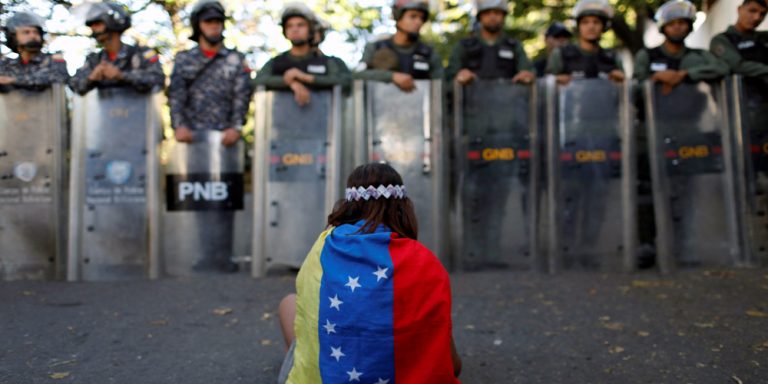
The tremendous economic, political and moral crisis that Venezuela is going through has not only sunk millions of people’s living and working conditions, but also the political programs that appear confronted to the death in a highly politicized stage. It

Last month Branko Milanovic published a blog post about the Yellow Vest movement against the fuel tax in France. He was worried – like many analysts – that the uprising proves it will be virtually impossible to roll out the policies necessary
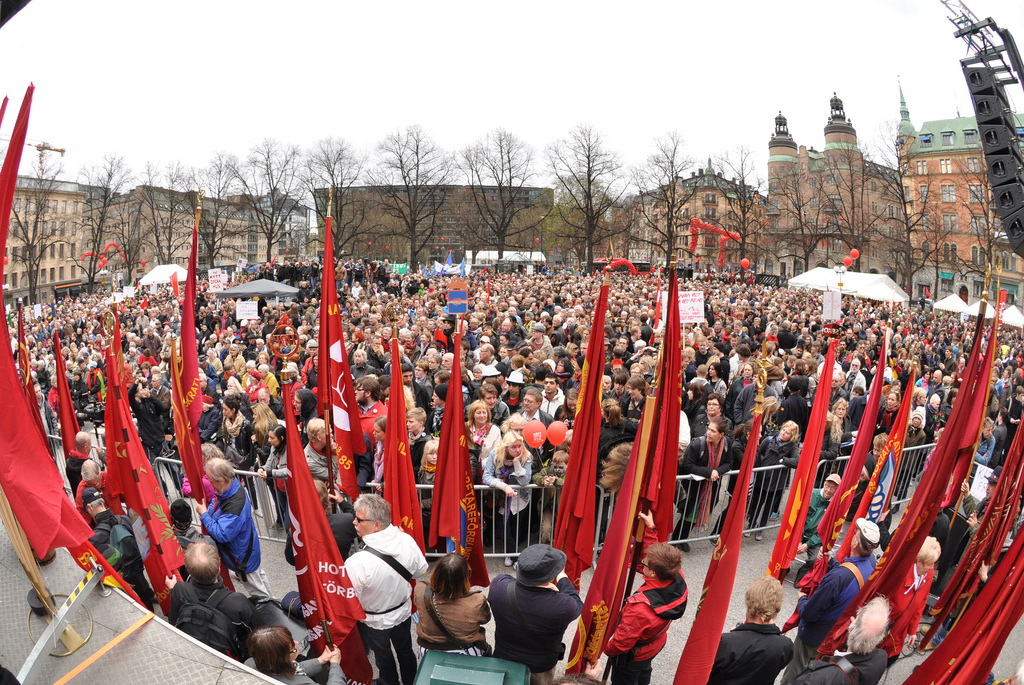
The Wage-Earner Funds in Sweden is one of the few serious attempts in an advanced capitalist society to socialize the means of production. Developed by Rudolf Meidner and Anna Hedborg, two economists at the powerful social-democratic union confederation LO, the
The following statement was issued by Marea Socialista, a Venezuelan organization.
Only the sovereign mobilized people can decide its destiny, in a referendum and general elections
The Venezuelan people, mobilized along all social sectors and taking to the streets from the poor
Only the sovereign mobilized people can decide its destiny, in a referendum and general elections
The Venezuelan people, mobilized along all social sectors and taking to the streets from the poor

Who ended the shutdown? The Democrats? Nancy Pelosi? Mitch McConnell? None of the above.
The shutdown got shut down when workers took Laguardia Airport off-line on Friday, January 25. A rolling disaster of massive commercial disruption was about to unfold for
The shutdown got shut down when workers took Laguardia Airport off-line on Friday, January 25. A rolling disaster of massive commercial disruption was about to unfold for
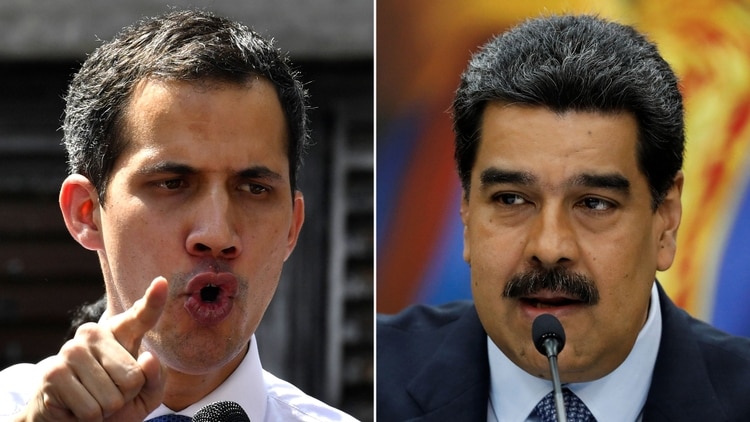
Right-wing opposition leader Juan Guaidó has declared himself interim president of Venezuela against sitting President Nicolás Maduro, and he was immediately recognized by the U.S. government and a range of authoritarian leaders in Latin America. Here, the International Socialist Organization states its
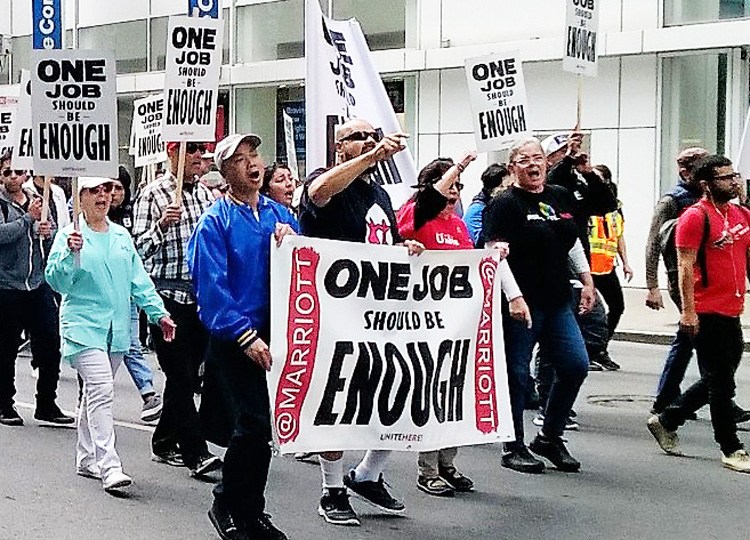
Organized labor has an opportunity to play an important role in the upcoming selection of a presidential candidate in the Democratic Party’s primaries and the eventual November 3, 2020 U.S. presidential election. The stakes couldn’t be higher, not only for

Things are approaching a crisis point in the long battle of wills between Venezuela and the White House. Juan Guaidó, president of the opposition-controlled National Assembly, swore himself in as the country’s “interim president” before a crowd of tens (by
This statement was issued by the PRT, Mexican section of the Fourth International, on 23 January 2019.
The Workers’ Revolutionary Party (PRT) stands emphatically against the new attempted coup d’état and imperialist intervention against Venezuela. In an open and cynically orchestrated

In the days since Donald Trump’s announcement that the US was to rapidly withdraw its 2,000 troops from Syria, an enormous amount of speculation about what this means has taken place. In my initial piece, I expressed a number of views that are not widely shared.

I campaigned for governor with the slogan of “Demand More!” because Gov. Cuomo has governed as a social liberal but as an economic conservative. Although he touts the agenda he outlined in his January 15 State of the State and Budget presentation as “progressive,” New York progressives should not be satisfied. It is still a conservative economic program. Progressives must demand more.

The deaths of Rosa Luxemburg and Karl Liebknecht have haunted the imagination of the left for a century. Joe Sabatini reviews a recent publication exposing the events of their deaths, Klaus Gietinger’s The Murder of Rosa Luxemburg, as well as providing an introduction to some of the literary works inspired by the events of 15 January 1919.
- « Newer Posts
- 1
- …
- 105
- 106
- 107
- 108
- 109
- 110
- 111
- …
- 227
- Older Posts »