Issue number: 58
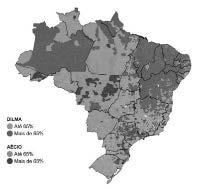 Election day came lazily in Santarém, a mid-sized city and trading entrepôt at the junction of the Amazon and Tapajós rivers, the halfway point between Amazônia’s primary metropolises of Manaus and Belém. The internet was out of service in this sleepy Amazonian town, as were two out of the four major cellphone carriers, and the streets were nearly empty.
 Dilma Rousseff of the Workers Party (PT) won Brazil’s presidential election on October 26, meaning that when her term ends her party will have held the nation’s top office for a remarkable 16 years, longer than any party in Brazilian history.
 “¿Qué Nueva, Qué Nueva, Qué Nueva Mayoría? ¡Si van a gobernar pa’ la misma minoría!” (“What New Majority? They’ll rule for the same old minority!”)
FEL student demonstrators
 This article and its title are based on a presentation made at the Mapping Socialist Strategies Conference, hosted by the Rosa Luxemburg Stiftung–New York Office at the Edith Macy Conference Center, New York, August 1-4, 2014.
The killings of Michael Brown and Eric Garner, by police who were not indicted by grand juries in Missouri and New York, represent only the latest in a string of such police or vigilante killings—sometimes clearly murders—of African-American or Latino men.
Contemporary capitalist society faces multiple crises: environmental catastrophe, proliferating wars, multiplying authoritarian governments, inequality, poverty, and failing health and education systems. Everywhere new democratic and progressive social movements continue to arise, from Ferguson, Missouri, to the Climate March in New York City, to the movement for democracy in Hong Kong. And yet, in most countries the democratic socialist left is small, weak, and divided.