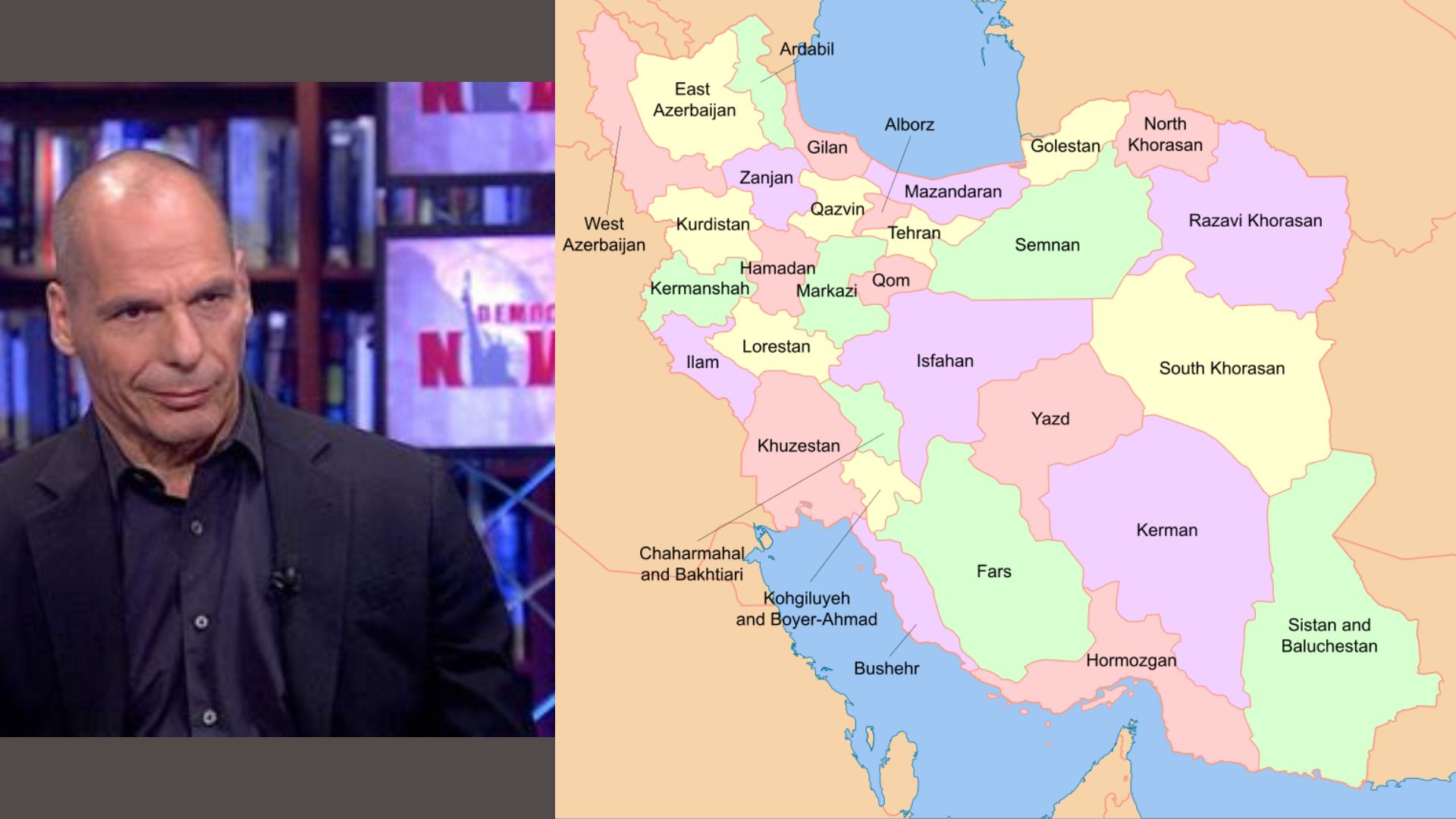

Place: Greece
A living, relevant left must learn to listen to the voice of the oppressed wherever it speaks—not only when it matches familiar Western narratives. It needs to offer a true emancipatory vision and not just slogans.
The wave of hope that emerged during those years was defeated by the retreat of workers’ struggle after the incredible climax of 2010-15 and the defeat of the left within the Syriza party by the coalition of forces united under the banner of staying in the Eurozone at any cost.
The restriction of academic asylum in Greece under the new right-wing government has become – again – the epicenter of an intense debate. The debate over academic asylum has both a pretense and a rationale. The pretense is about “safety
Adults in the Room: My Battle with the European and American Deep Establishment
By Yanis Varoufakis
Farrar, Straus and Giroux, 2017
And The Weak Suffer What They Must?
By Yanis Varoufakis
Nation Books, 2016
Along with French economist Thomas Piketty, former Greek finance minister Yanis Varoufakis is making economics sexy again. Journalists enjoyed snapping photos of Varoufakis, clad in a black leather coat, commuting to the finance ministry’s offices on his Yamaha motorcycle. But his short tenure in the Greek government was marked by clashes with the country’s creditors and ultimately with the leadership of Syriza, the left-wing party that came to power in Greece in early 2015.
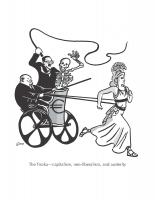
In very different ways, Helena Sheehan’s The Syriza Wave: Surging and Crashing with the Greek Left and Looting Greece: A New Financial Imperialism Emerges by Jack Rasmus look back over the period of the Greek debt crisis, and the parallel rise and fall of Syriza, and try to take stock.

Dear Friends and Family,
I've been in Salonica just over a month. All my time here has been as a volunteer in the Elpida Refugee Center, working mainly in the communal kitchen or in the food distribution center.
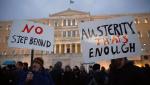 The month of May witnessed the second round of massive general strikes to hit Greece in 2016. Mobilizations on May Day were followed by four days of strikes in the lead-up to the Syriza government passing its austerity pension bill.

This talk was given at the Washington State Council of Fighters Educational Convention for 350 Delegates in Spokane, Washington, on April 20, 2016.
 If nothing else, phase one of Syriza’s tenure has revealed the limits of reformism in a period of stagnation and global economic integration.
The Greek Drama of 2015: What Next?
a talk by Nicholas Levis (Nikos Evangelos)
The preliminary report of the parliamentary Truth Committee on Public Debt declared the entire Greek debt to be odious, unethical, unsustainable and illegal. Do they have a case?
Sunday, September 13, 2015
2:00 – 3:00pm
International Affairs Building, Room 409
Columbia University, Manhattan
Entrance at 118th Street and Amsterdam
This is a video of a recent debate between Leo Panitch and Richard Fidler who discuss their differing socialist analyses of the politics of SYRIZA.
The debate was moderated by Susan Spronk.
The video is from Links: Journal for International Socialist Renewal but the debate was organized by the Socialist Project (Canada).
While in Athens, I have gotten into the habit of ending the day by enjoying an iced coffee with cream in an outdoor cafe in a park about one mile from my hotel. It is there that I have been writing these dispatches. As I remarked in my first report, the park the cafe is in is filled with children, teenagers, young couples, the middle-aged, and old people until quite late. The cafe does not start to empty until after midnight.
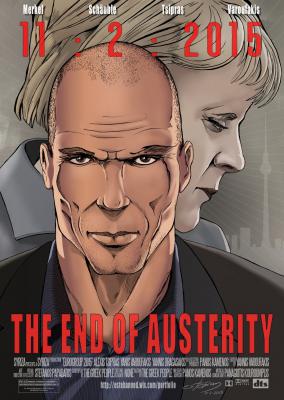
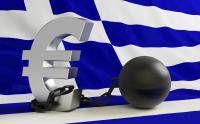 If the ongoing standoff between the Syriza government and the Troika of the European Union (EU), European Central Bank (ECB), and International Monetary Fund (IMF) could be boiled down to its essentials, it would be this: The “institutions” will only equip the Greek economy with enough operating funds to manage a bare-bones o
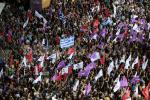 In the weeks following its historic victory in the Greek elections on January 25, 2015, Syriza has been engaged in a bitter struggle.
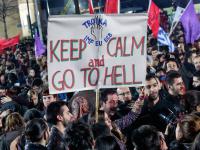 Since the pressures of international financial capital and its subservient political elites will continue with the same if not greater intensity, it is also certain that a new cycle of social mobilization in Greece and the rest of Europe will begin again.
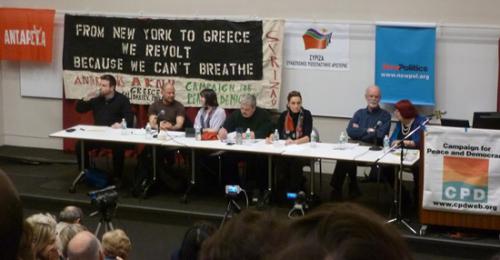
New Politics has previously posted a video version of a Feb. 6 New York City panel discussion sponsored by the Campaign for Peace and Democracy (CPD) entitled “After the Greek Elections: The Future of Austerity in Greece, Europe and Beyond.”
CPD has now posted text versions of the talks, along with separate updates by each of the speakers.

The agreement signed between Greece and the EU after three weeks of negotiations is widely lamented on the left as a setback, if not a defeat, for Syriza. The two sides emerged from the agreement, if that is an accurate description, with different interpretations of the memorandum, signifying perhaps that no real deal was made after all. Greece obtained brief reprieve. Its banks will remain liquid for the next few months. The next phase will not be about what can be extracted from the troika, as much as what Greece can do despite and in defiance of the troika. That is what will be discussed here.
The Campaign for Peace and Democracy sponsored a panel discussion Friday evening on "After the Greek Elections: The Future of Austerity in Greece, Europe, and Beyond." A standing-room-only audience heard speakers address the success of the Syriza coalition party in the recent Greek elections and how it is dealing with the austerity crisis.
 For Syriza to triumph, it is not enough for it to play tough with the European Union. not enough to bypass the structure of the European Central Bank to find individual national allies, not enough to refuse to cooperate with capitalist auditors. Greece has already lost 30% of its GDP since the peak before the crisis, with unemployment standing at 25%, a decline only comparable to that seen in the US during the Great Depression.
[Ed. note: The list of signatories to this declaration includes seven out of nine German trade union presidents, all members of the executive boards of the German Trade Union Confederation (DGB) and IG Metall, plus some (primarily social-democratic) politicians at the Bundestag and European Parliament levels, including the vice-chairman of the SPD, as well as numerous academics.]
The political landslide in Greece is an opportunity, not only for that crisis-ridden country but also for a fundamental reassessment and revision of EU economic and social policy.
It was always going to be messy and it has gotten so remarkably quickly. The decision by the Syriza leadership to form a coalition government with the anti-immigrant Independent Greeks (ANEL) party has rightly shaken progressives who hoped that the Greek elections would rapidly transform politics to the left. Instead, we have been harshly reminded that the logic of electoral politics can be dangerously compromising for the left.