
Place: China
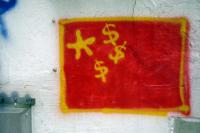 One of the most important issues in world politics today is China’s rise as a great imperialist power. Most left-wing writers consider China either as a “socialist country,” a “deformed workers’ state,” or as a “dependent capitalist country” exploited by Western monopolies.
The election last week of Xi Jinping to the chairmanship of the Chinese Communist Party (CCP), together with six others who with Xi constitute the Standing Committee of the Political Bureau of the party, represents entrenchment of what the Chinese Marxist intellectual Au Loong Yu has called “bureaucratic capitalism.”[1] The bureaucratic capitalists, many of them princelings, that is, sons of the founders of China’s Communist government, have through their control of the state and crony state-corporation relationships come to dominate the heart
To call this feature-length film xenophobic, fear-mongering and hysterical almost understates the case. The whole thing is so over-the-top that, like a bad horror movie where you can see the strings moving the monster, it leaves us numbed and bored or perhaps laughing. Yet it’s not funny.
The publisher of Wang Hui’s book described it as follows: "arguing that China’s revolutionary history and its current liberalization are part of the same discourse of modernity, Wang Hui calls for alternatives to both its capitalist trajectory and its authoritarian past."
What follows is our review of the book in the light of this description: how far this assessment is correct, and how relevant it is for those social activists who are pursuing just such an alternative in China.
Do elections of self-governing Village Committees in China's signify a major step towards democracy? How, if at all, do these elections affect power relations among various groups, class strata, and nascent or even actual classes in the Chinese countryside? Inside and outside of the villages, who makes decisions about how the village will evolve or develop?
CHINA’S THIRTY YEARS OF NEARLY UNINTERRUPTED HIGH GROWTH has encountered great challenge as the global economic crisis has hit China’s export hard. Since China’s trade as a percentage of GDP is as high as 70 percent, the export-led growth mode has practically ended. The Chinese Communist Party (CCP) is aware of this. Back in April, 2008 President Hu Jintao spoke of the need to change the mode of development from export-led growth to domestic-led growth by expanding domestic demand.
- « Newer Posts
- 1
- 2
- 3
- 4
- 5
