The unrest is growing and now includes a Kurdish general strike and participation by the Baluch and Azeri ethnic minorities.
*******************************************************************************


The unrest is growing and now includes a Kurdish general strike and participation by the Baluch and Azeri ethnic minorities.
*******************************************************************************

We are in the 102nd week of the ‘No to Execution Tuesdays’ campaign, while the execution government of Iran, over the past year (2025), has hanged more than 2,200 of our fellow citizens on the gallows.
***************************************************************************
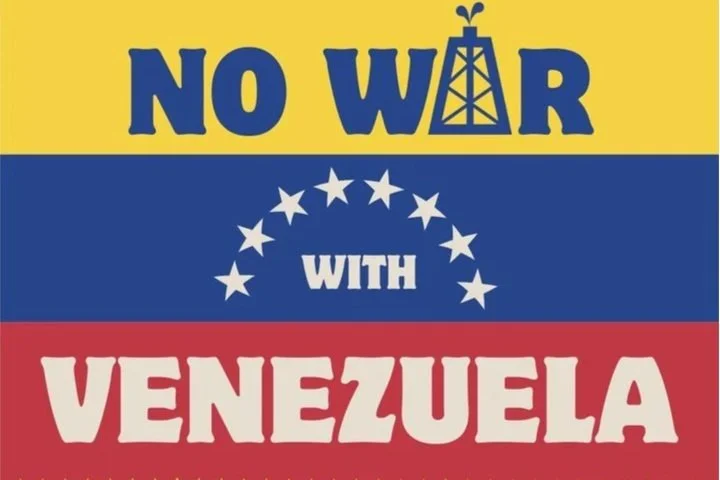
Stanley Heller: It’s January 5th, 2026. I’ll be speaking to Simón Rodríguez, a Venezuelan socialist and journalist who edits VenezuelanVoices.org. He’s presently in the Dominican Republic. We’re speaking just a couple of days after the US aggression against Venezuela in the kidnapping of Nicolas Maduro and his wife and the killing of scores of Venezuelans and Cubans. Good evening.
Simón Rodríguez: Thank you for having me.
SH: So, what do you hear about what’s happening in the streets of the Venezuelan cities? Have crowds turned out to support the Chavista government? Are supporters of the far right taking over? Are things quiet? What’s the situation as far as you know?
SR: The reports one can have and also speaking from people inside Venezuela is that basically the streets are very quiet. There very little activity. In fact on the 3rd most commerce activity was paralyzed. There have been a couple of demonstrations mainly in Caracas and basically from very hardcore activists and members of the government. So this is in stark contrast to what happened 23 years ago when Chavez was subjected to a coup and kidnapped by the coup plotters when there was a massive response to that. But in this case in fact there have been neither celebrations nor important protests just governmental marches. Even in the official discourse the minister of defense has in fact called people to go back to work to go back to normal activities to be calm. This call to calm is very different from a call for mobilization or for any sort of resistance. So that’s mainly what has been happening and of course increased police and military presence in the streets.
SH: What about the ultra-right? Are there signs that they’re going to try to take over?
SR: No, there is no indication of of any far-right activity. One has to be clear. In fact, far-right as such, you know, paramilitary or armed groups, this is is almost non-existent. So calls for for public manifestations have not occurred. So it’s mostly a tense calm what we are seeing in the in the country.
SH: So surprisingly, to me anyway, was that Trump says he will run Venezuela. Were are you surprised about him dismissing the stature of his far-right Venezuelan political ally Maria Machado?
SR: This has happened before. Remember when she received the Nobel Peace Prize, Trump was very dismissive. He said, “Oh, I don’t know this person.” Although it’s obvious he knew who she was. But regarding this idea that the US will run the country directly as has happened often with Trump’s remarks afterwards Marco Rubio the Secretary of State has to come and do a translation of what this actually means and what he said which bears resemblance to what Trump had previously said is that they expect the interim president Rodriguez to comply with US expectations especially regarding oil exploitation by US companies. so it they would not be directly running the country but rather indirectly doing so by the continued military pressure. For example, the fact that there is still this sort of naval blockade against oil exports from Venezuela. so the idea is that through continued pressure the interim government would comply with any demands from the US. We have to be very clear in in condemning the attack that happened on January 3rd. The images were very shocking for most Venezuelans. , regardless of what most Venezuelans think about the regime, the fact that Caracas was bombed, other cities , were also bombed, civilian infrastructure such as the port of La Guaira, which serves the city of Caracas, is about 45 minutes drive away from Caracas. also electric the electrical grid was bombed taking out power from from the capital. this these images were really really shocking. The death toll up to what we know is around 80 people, but the government has not issued a detailed list of injured or dead people. So the number could be actually higher.
So really the rights of Venezuelans are nowhere in in the radar of Trump’s concerns or interests. And this of course by can be illustrated very easily by seeing the treatment he is giving Venezuelan migrants in the US where Venezuelan migrants are being massively targeted, deported, stigmatized. Trump has said that Venezuelan migrants have been sent by the Maduro regime, taken from jails and asylums, mental asylums and sent to the US as a sort of weaponized migration. And this is something that has been backed by Maria Karina Machado. She has legitimized this, therefore legitimizing the persecution of Venezuelan migrants. So the rights of Venezuelans don’t matter to this far-right government either in the US or or in Venezuela itself. They have made very clear that they want to control natural resources. There have been many layers of the official US discourse. They have said it’s about drugs. it’s very clear it’s not about drugs. they said it’s about oil and also about what they call narco-terrorism and this fusion of the discourse of war on terror and war on drugs. I think when when one looks at the strategic document of the US government which is this national security document they issued in in November. It becomes clear they want to concentrate the efforts of US imperialism in dominating the region do dominating the hemisphere. this was said at the beginning of Trump’s off term in second term in office by Marco Rubio when he said the US after the cold war ended seemingly wanted to control all of the world but it can’t it cannot do so because there are other competing world global powers so it should concentrate its efforts and this pointed to what is then in in the text of this national security document which reinforces this idea of sort of a strategic retreat into the region and it it’s one of the reasons why we can see a strengthened pressure on not only on Venezuela. Venezuela is perhaps the most dramatic case but it’s against all of Latin America and the Caribbean.
SH: I have a couple questions about the acting Venezuelan President Delcy Rodriguez. Yesterday, she struck a defiant tone, but today she said, “We invite the US government to collaborate with us on an agenda of cooperation oriented towards shared development within the framework of international law.” kind of a curious statement towards a country that just mounted an aggression. So, who is she and what do you think of this recent statement?
SR: Well, Delcy Rodriguez is the sister of Jorge Rodriguez who’s also a high ranking government official in the Venezuelan government. She has served in several different posts. She was minister of communication, and minister of foreign relations. She was a president of this sham Constituting Assembly in 2017. So she has been in the in the high ranks of Venezuelan power for quite a long time. basically with Maduro, not so much with Chavez. This is something to to take into account. and she was participating in the secret talks with the US government that had been ongoing throughout all of this military campaign that started late last year. This has led to speculation about the possibility that there was some kind of understanding between Rodriguez and other sectors of the Venezuelan government with the US to sacrifice Maduro in order to maintain power and to maintain the structure of the government. Up to now, we can’t be certain about any of this. Of course, a lot of it is speculation, but up until now, it seems well the Minister of Defense and all of the military has shown a cohesive face around Delcy Rodriguez, the maximum court in Venezuela created an interpretation of the of the current situation whereas she’s in in an interim presidency but in in a way that is not what is explicitly contemplated by the constitution. The constitution says if there is an absolute absence of the president, the acting president, the interim presidency should have the role of organizing elections. But the wording that the court has used leaves room for a “state of exception” whereas she doesn’t have to comply with any of these limits and simply is in indefinite interim presidency.
The statement you mentioned is worth reflecting upon it because at first she said well they consider Maduro to be the president and they demand that the US hand them back to to the Venezuelan authorities, to to send him back to Venezuela and even showed an accounting where they say one day kidnapped. So the idea was they would they would be counting every day that Maduro remains kidnapped by the US. But then she issues this statement basically saying she is willing to cooperate with the US. Of course, if they were serious about considering Maduro to be to be kidnapped and to do anything that was within their power to get him back, then this statement doesn’t make too much sense.
So also this statement fits into the interpretations which say perhaps this was agreed upon. And looking back also, you can see that for example, the New York Times wrote a piece about Delcy Rodriguez where they portrayed her as a moderate, as someone who would be legally entitled to succeed Maduro if Maduro was no longer in in power. So we can see that there have been movements around this and also because many of these bits of information come through leaks from the US government. One can have skepticism because it can be part of psychological warfare. But it was leaked at different points in in these last months that the Venezuelan government was offering to the US a transition which would lead to Maduro stepping out of the presidency. So these are all elements that we will still have to be, you know, waiting for more clues and for more information as the days go by.
SH: She [Delcy Rodriguez] also said something curious that the abduction of Maduro had Zionist overtones. What do you make of that?
SR: In Latin America, I’ll make my own interpretation, I’m not sure what she meant, but from my own experience and background I can say that there is the perception that Israel is a very powerful military superpower which they can do very spectacular things. They can infiltrate any government. Their spies are are the most powerful ones and they can do daring stuff and can be almost unstoppable. So, it would seem that she’s suggesting that maybe Israel had something to do with the planning or execution of this operation. That’s what it suggests to me, but it’s very ambiguous to say the least.
SH: So, a $64,000 question. Why was it so easy for the US to capture Maduro? I saw a Facebook post of yours in which you speculated, as you’ve said just a little while ago, that some in the Chavistas collaborated with the attackers. Have you learned more since you made that post?
SR: Well, again, some of the information comes from US sources. The Reuters Agency reported that the US relied on CIA informants from the Venezuelan government. So that’s what’s publicly at least up to now been said. The problem with the way that events happened is that it seems there was resistance in in the last ring of Maduro security and it seems many of his bodyguards and the people that were closest to him were actually killed. So at that point it seems there there was exchange of fire. The problem is where were sophisticated military equipment such as air defenses bought from China and Russia.
The fact that this attack was something that was announced months ago. The Venezuelan government was expecting an attack to happen since very long ago. So the surprise factor would have been at least minimal. And yet the US says it had zero casualties. Of course this this could also be later turn out to be false because the US government lies a lot. But from the information that we have that it was in in such a short time the operation was so successful and the capacity of the of the military to resist was so low. Even the fact that Maduro was relying on Cuban security because perhaps he did not trust the Venezuelan military enough. These Cuban security personnel endured some 32 casualties in in this operation and yet the defenses seem to seem to fail spectacularly. This leads many commentators, not only myself, to question if there was besides what has been said about CIA collaborators in in the government, other forms of collaboration aiding the US effort. If we see it from the perspective of the US government, would they have been willing to launch an attack risking perhaps having dozens of US military deaths and some high percentage of of the possibility of a failure. I think that when they sent the attack, they were pretty certain that it would be successful because a failure would have been very very costly politically. it remains to be seen if even the success can have a political cost because obviously it’s an illegal, aggressive action by the US government but to have failed would have been much much more costly. So this leads me to to speculate but as the time goes by we will have more information but at least from first appearances it seems very strange that this could have been carried out without internal collaboration. Also some sources which claim to have some affinity or closeness to the US government have said that in fact the Venezuela government collaborated with Maduro’s capture but I think if it was, you know a negotiated clearcut deal it would have been much easier to have Maduro exiled and to not have the risk of a military intervention.
Then this leads to to the hypothesis that that it wasn’t the government as a whole but really a sector of the military or a sector of the government.
SH: So what was Maduro’s strategy for warding off a US attack? I mean from here it looks like his only idea was to offer more and more concessions to Trump. Did he try to unify the country and put it on a war footing, unite the entire left or what was his strategy other than to offer concessions?
SR: There was no attempt to expand the social base of the government. For example, there are dozens of hundreds of of political prisoners, many of which oppose US intervention in Venezuela. Something that many leftist organizations said, well, release all of the political prisoners who are against a US invasion. This would be seen as a gesture towards the Venezuelan people. in fact creating a broader social base to to resist imperialist pressure and attack. But this was never done in in fact the the strategy in terms of of internal policy is still very much repressive and this is one of the reasons why the government has very very little support and is very weak.
SH: In fact, is there even now a idea from the government to try to liberate the left prisoners? Do they even mention it now?
SR: Well, this has not been mentioned. This idea has not been floated by anyone in the government. Regarding the strategy, you know, , there was a debate during the Chavista years with , this general, retired general whose last name was Müller Rojas. , he was debating the then minister of defense Raul Badwell who then years later became a political prisoner ironically. But Badwell represented the official stance of the military doctrine of the Venezuelan government which was to increase conventional spending in in a conventional strategy of arming the country having a big budget, a lot of equipment like jets, fighter jets, tanks and so on. and the idea that Müller Rojas has put into this debate was that conventional warfare is useless against the external attack of an imperialist power which is much more powerful. Defense should rely on a doctrine of military popular defense. taking knowledge from other experiences such as the warfare in Vietnam and so on where it has been possible to resist and even to defeat imperialist aggression not by having more and more tanks, more and more jets because obviously you cannot compete at that level with the most powerful military entity in the world. but the the government sided with Badwell and this was the model that was developed in later years. They incorporated this idea of the militias and so on but it was always for internal repression and for internal control, never as a popular defense strategy such as the one that Mueller Roja said was necessary to develop. So this is part of the failure and the the defeat of the Venezuelan government. The fact that because it had so such a big rejection of the working class and popular sectors because of the austerity it had applied for years against the Venezuelan people the corruption, the huge social inequalities and the fact that it never really relied on the idea of arming the people because it knew if it armed the people then it would be the end of the government itself. These are all elements that fed onto this failure and the morale of the of the military itself probably is not high. This is a military that is more accustomed to internal repression fighting against people who cannot defend themselves than fighting against a very powerful enemy. So all of these elements I think also fed into the situation the country now is in.
SH: Final question. Can you give us some suggestions for the protests in the US and other countries? What kind of slogans what kind of themes should we be doing that would be supporting the Venezuelan people?
SR: I think the focus needs to be in rejecting the Trumpist project for Latin America and for Venezuela which is one of oppression, subordination, control, extracting wealth. this has been very clear on on the part of the of the US government and it it’s it’s a part of a of a world perspective where they would not mind if other imperialist powers such as Russia exert the same arbitrariness, the same violence and the same brutality in their own spheres of influence as this is seen by the strategists of the US imperialist regime.
SH: So you have suggested that protest should center on objecting to this project of the US empire swallowing up the hemisphere. What do we say about Maduro himself?
SR: Yes, this I say because evidently the US government is threatening to expand military operations to Colombia, Mexico and other countries. So it’s evidently a regional project. The problem that arises sometimes when commenting the US aggression against Venezuela is that there are political currents that embellish or romanticize or present the Venezuelan government as a revolutionary anti-imperialist government and even deny the fact that it’s a dictatorship. And I think this is wrong for two reasons. For one thing, the US does not have the right to invade any country or to intervene militarily regardless of what kind of regime it is. To invade Iraq was wrong regardless of the fact that Hussein was a dictator,
To invade Panama was wrong, even if Noriega was an drug trafficking dictator, regardless of what those regimes were, because the content of these actions was undemocratic and had nothing to do with upholding rights or any of sort of thing. similarly in the case of Venezuela, it’s a capitalist dictatorship that has undermined working class rights and democratic rights of the people. So there’s no need to lie about that. Of course, the US government does lie a lot about the government in Venezuela when it says it represents a narco-terrorist threat to the US. This is false. It’s like the weapons of mass destruction of Iraq. There were many things to criticize about Hussein, but evidently those weapons did not exist. In the case of Venezuela, it has been said that it’s all sort of things, even that it stole oil from the US. This is all patently false. The nationalization of oil took place in the 1970s and it was an agreed, nationalization where US companies were paid handsomely. So to debunk the lies of of the US government regarding Venezuela to justify this aggression is important but reality has to be taken into account. What socialists in Venezuela left oppositionist and the workers organizations denounce and say has have to also be be taken into account. So I think this would inform a better and more internationalist policy that does not throw under the bus the rights of of Venezuelan people when they are violated by the US imperialist regime or by the Venezuelan regime.
The destiny of the Venezuelan people and of the country should be in the hands of Venezuelans. It should be Venezuelan people who decide who runs the who is in government and what do we want to do with the natural resources and so on. This is something that Venezuelans should decide. Not the US regime, not the Venezuelan military, not any local oligarchy, but the Venezuelan people. That would be my central message.
SH: Thank you so much for this interview.
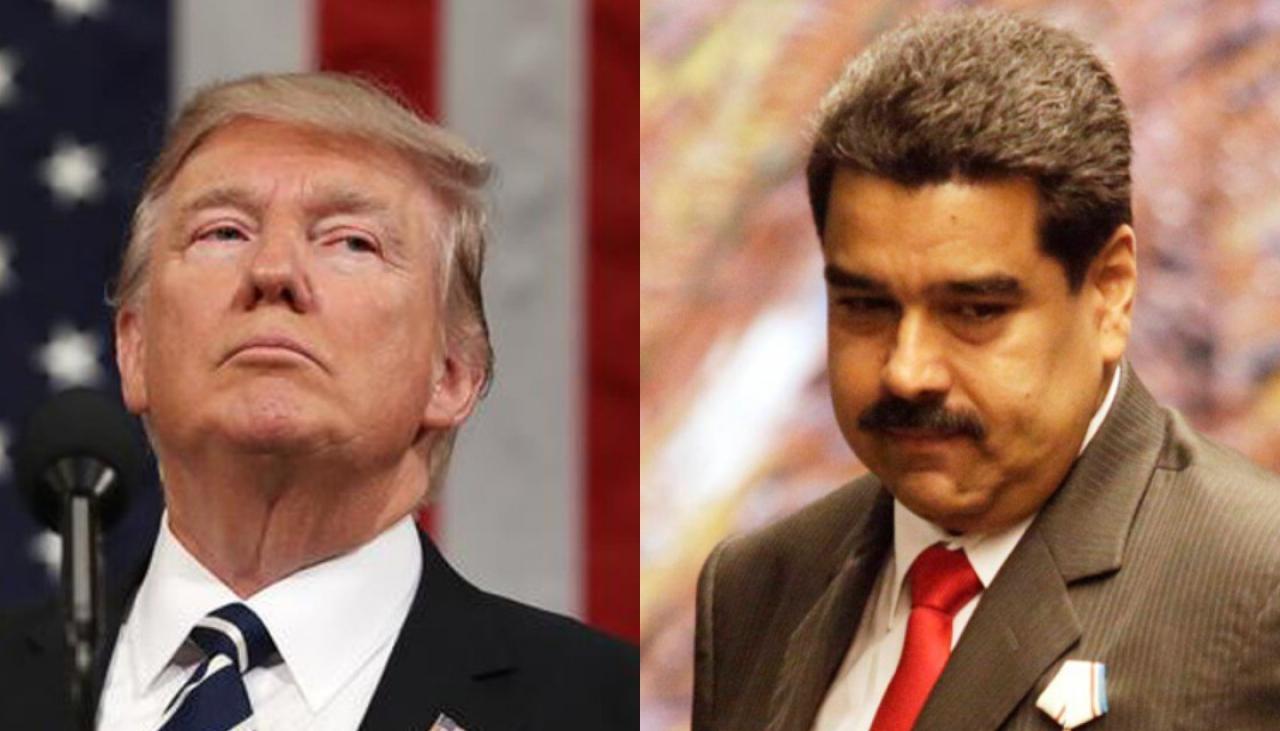
 Fightback unreservedly condemns the murderous attacks by United States forces on Caracas, Venezuela, which have resulted in 40 deaths and the kidnapping of President Nicolas Maduro and his wife, Cilla Flores.
By this act of naked aggression, the Trump regime has declared war on every country in the Americas. US imperialism has taken the mask off and no government which dares cross the whims of the personalist autocracy in Washington DC can feel safe. Donald Trump and his Secretary of State, Marco Rubio – considered to be the brains behind this escapade – are explicitly threatening Mexico, Cuba, and Colombia in particular.
With a few noble exceptions – for example, Spanish prime minister Pedro Sanchez – allies of the United States have cravenly refused to condemn this act of naked force and contempt for even the rhetoric of international law. By this, “Western” governments lose any moral authority to condemn Russian aggression in Ukraine, or China’s threats to Taiwan.
Amazingly enough, at this time it appears that there has not even been a regime change in Caracas. Maduro’s government, under Vice President Delcy Rodríguez, appears to still be in control. There have been conflicting statements from Trump and Rodriguez over whether the PSUV leaders are cooperating with the US, but it seems clear that the Maduro regime is not capable of defending Venezuela’s national sovereignty.
There has been considerable opposition within Venezuela to Maduro’s policies, particularly his conduct of the 2024 election, the results of which are widely believed to be falsified. But only the Venezuelan people have the right to judge Maduro, and he and Flores must be returned to Venezuela so that can happen.
We call for nationwide emergency demonstrations across Aotearoa New Zealand, to demand that our own government condemn the “Donroe Doctrine”. We also call for New Zealand’s sporting organisations to boycott the Los Angeles Olympic Games, and the FIFA World Cup games to be held in the United States this year. In 2014, Putin’s Russia waited for the Sochi Olympics to finish before beginning their aggression against Ukraine. Will Trump and Rubio wait for the closing ceremonies before giving the “Maduro treatment” to the President of World Cup co-host Mexico?
From Caracas to Kyiv to Gaza: total rejection of imperialist aggression!
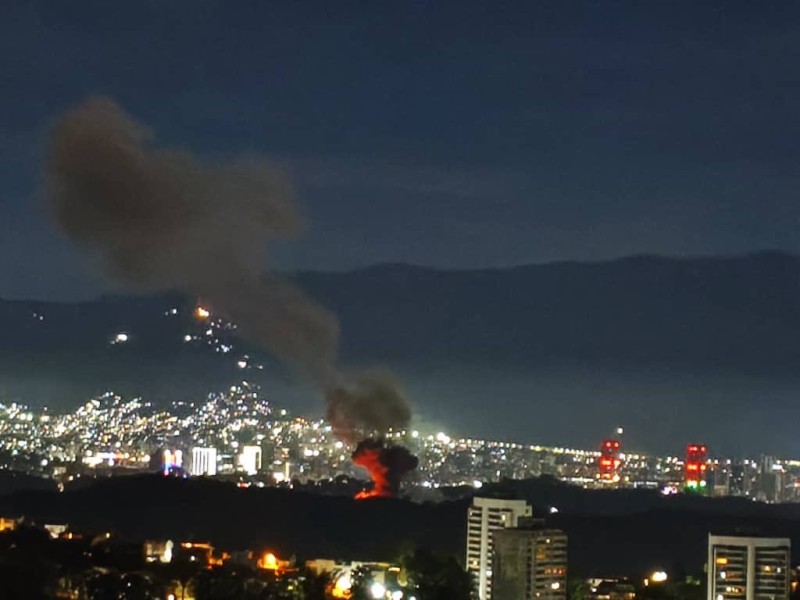
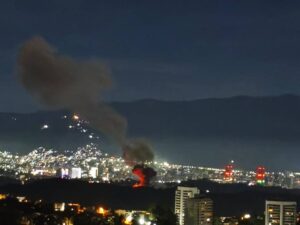
The Socialism and Freedom Party (PSL, for its initials in Spanish), Venezuelan section of the International Workers’ Unity-Fourth International, strongly condemns the brutal military aggression perpetrated by US imperialism against our country.
In the early hours of Saturday, January 3, at approximately 1:50 a.m., the government of far-right leader Donald Trump launched a bombing campaign using helicopters and drones against various military and civilian installations in Caracas and the states of La Guaira, Miranda, and Aragua. According to available information, several sites were bombed at Fort Tiuna—which also houses the Ministry of Defense—as well as facilities at the port of La Guaira, the country’s most important port, military installations in Maracay—a city located in central Venezuela an hour and a half from the capital—and civilian airports in Miranda. All of these locations are near Caracas.
The imperialist attacks occurred in densely populated areas, and the extent of the damage in terms of human and material losses is still unknown. However, official information from the Venezuelan government and from Trump himself announces the capture of Nicolás Maduro and Cilia Flores by US forces, and we therefore join in the demand for proof of life and information on their whereabouts and the conditions of their detention.
In Fort Tiuna, numerous residential buildings were reportedly damaged by the bombings, as was the case in Maracay, one of the country’s most populous cities. Attack helicopters and special forces units allegedly carried out the operation, despite the government’s declaration that it possessed the necessary defenses to repel any aggression.
Since September, the country had been the target of threats from US imperialism, with a massive military deployment in the Caribbean, the largest in the region since the invasion of Panama in 1989. In recent weeks, the military operation that the US called “Southern Spear” has grown increasingly larger: more than 20 bombings of vessels with a death toll of more than a hundred; the blockade of Venezuelan oil shipments; the seizure of ships and, more recently, the attack on a dock in La Guajira.
This is an unprecedented attack against Venezuela perpetrated by the US, the world’s leading imperialist power.
Our strongest condemnation to this criminal and cowardly attack against the Venezuelan people comes from a Left-opposition perspective. Maduro leads a repressive and authoritarian regime with hundreds of political prisoners and is implementing a brutal capitalist austerity, subjecting the working people to starvation wages and terrible public services.
We call upon the Venezuelan working people to reject this aggression against our sovereignty. Likewise, we urge the peoples of the world, and especially those of Latin America and the Caribbean, to take to the streets of their countries to protest this latest US aggression against a country in the region—yet another in its long list of interventions, now carried out under the guise of the so-called “Trump Corollary,” enshrined in the recently approved US national security document that seeks to reimpose the Monroe Doctrine in Latin America and the Caribbean.
Trump out of Latin America and the Caribbean!
January 3, 2026
Reposted from Venezuela Voices
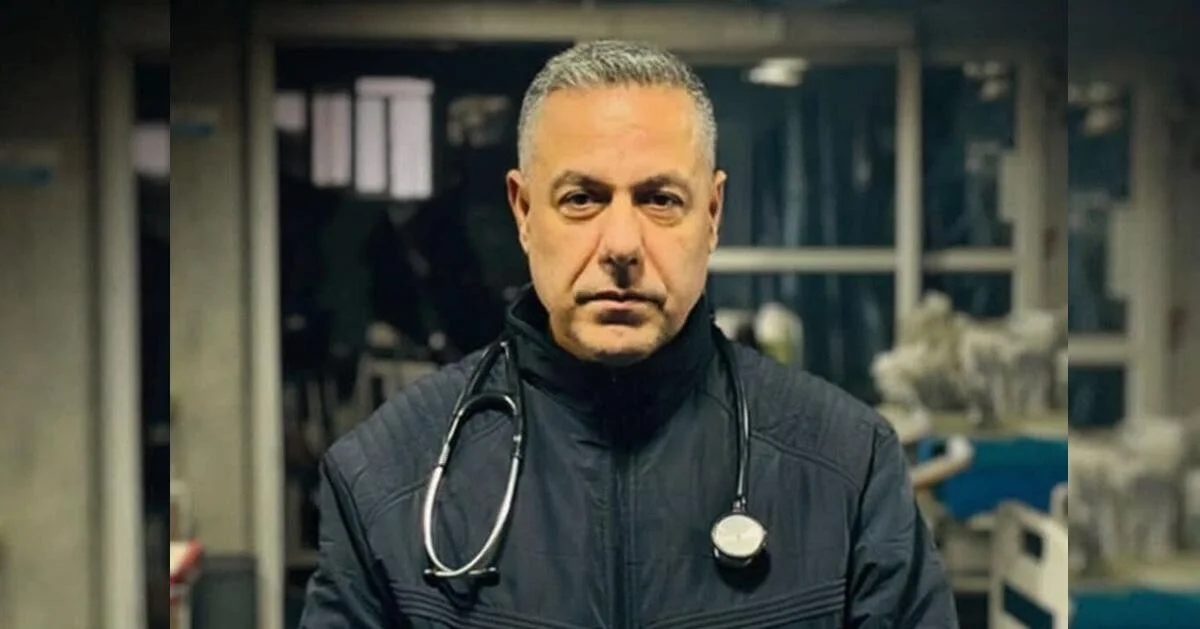
December 27 marks one year after the abduction of Dr. Hussam Abu Safiya and other medical workers from Kamal Adwan Hospital in Gaza. He was taken to a number of Israeli prisons like the infamous Sde Teiman in the Negev Desert and Ofer Prison in the West Bank. He’s only had very sporadic meetings with an attorney. The last one was in August when he had a hearing of sorts and when the Israeli judge gave him six-months more in prison for supposedly being an “Unlawful Combatant.”
In Connecticut a “Campaign to Free Dr. Abu Safiya” was formed after he received the Middle East Crisis Committee’s Courage Award on Nov. 22. At the end of the ceremony a “Poster Shout Out” was held. At a subsequent meeting North Carolina doctor Mark Perlmutter and Gaza doctor Ali Tahrawi told in harrowing detail of disgusting Israeli military abuses. We were able to get an opinion piece about the doctor’s imprisonment in many Connecticut newspapers.
Just before Christmas the group started an open letter calling for Abu Safiya’s release. Some of the signers are quite well known like Dr. Zaher Sahloul, founder of MedGlobal, Bill McKibben writer best known for his climate writings, Craig Mokhiber, International Human Rights lawyer, Ira Helfand who is past president of the Nobel Prize winning organization, International Physicians for the Prevention of Nuclear War, refugee from Nazi Germany Lillian Rosengarten, Rabbi Brant Rosen and a number of artists, professors and doctors. That effort is ongoing. See FreeDrAbuSafiya.org.

In the final agreement of the UN Climate Change Conference (COP30 / in Blem, Brazil), no mention was made of fossil fuels as the main cause of the climate warming/crisis.
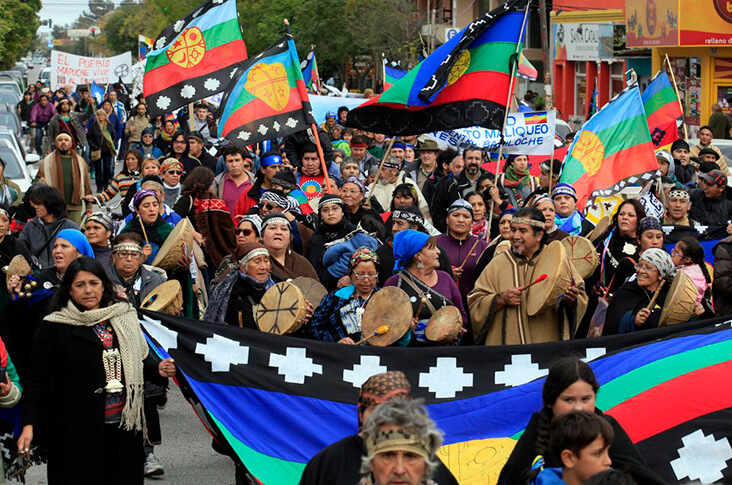
 When Chile’s social uprising erupted in October 2019, we had no idea that six years later, we’d find ourselves where we are today. The December 14 presidential elections saw 7.2 million people (58 percent of voters) vote for José Antonio Kast, the favored, far-right candidate who is now president elect.
The days of the 2019 uprising are fresh in my memory. I remember the huge Mapuche star that was installed in Dignity Plaza—as we called Plaza Italia at the time—the epicenter of the capital city of Santiago. Hundreds of thousands of us chanted afafanes (protest slogans) as Mapuche flags waved in the wind.
If there was a symbol that embodied the rebellion and resistance of the uprising, it was the Mapuche flag. Its star brought up our deepest feelings around the injustices that plague our country.
It’s true that no one can take away what we experienced during the Estallido, as the uprising is called in Chile. But the way in which our shared collective sense has been diluted weighs on me when I recall how the right began to claw back votes beginning in May 2023. Since then, the far right’s ability to capitalize on exhaustion, fear, and depoliticization in a country that had just a few years earlier demanded profound changes has been on full display.
When I left Chile in late 2020, the priorities were the same as those raised in 2019 under the rallying cry “until dignity becomes the norm.” We sought decent wages, an end to the AFP pension system, free public education without university debt, universal public healthcare, decent housing, freedom for political prisoners jailed during the uprising, and the recognition of Mapuche territorial and political rights.
I returned to Chile four months ago, and today, it feels like a different country. One could be convinced that the main problems now are security, order, and immigration. Social inequality is no longer discussed, nor is the uprising, or the thousands of times the Mapuche flag was raised as an emblem of dignity.
In this context, as debates are stifled and election campaigns imposed a polarizing agenda, it’s worth paying close attention to how the ruling class has regrouped. The counteroffensive, now led by the far right, has been remarkably effective in reinstating the neoliberal order that the Estallido threw into crisis.
The 2025 election is but the latest chapter in a plan to seal shut the cracks that opened up in 2019, and to uphold a regime of colonial and extractivist violence that is especially harsh here in Wallmapu (Mapuche territory).
This violence did not end with Gabriel Boric’s government; on the contrary, he reinforced it through further militarization, legal persecution, and the banalization of repression. The disappearance of Julia Chuñil is a key thread we can use to understand that continuity.
Julia Chuñil is a papay (elder), leader, and Mapuche land defender from the rural area of Máfil, in the Los Ríos region of southern Chile. She was disappeared over a year ago in lands reclaimed by her community. Her whereabouts remain unknown.
The investigation by the Public Prosecutor’s Office has been marred by irregularities: the family has been kept completely in the dark, there’s been a lack of transparency, and evidence has been lost. Officials have failed to carry out critical protocols and made explicit attempts to depoliticize her role as a land defender, as well as participating in the unlawful coercion and incrimination of one of Chuñil’s daughters.
I arrived in Wallmapu on September 30, the same day Karina Riquelme, the lawyer for the Chuñil family, shared some terrible news.
That day, Riquelme condemned irregularities in the investigation and disclosed the fact that two phone calls had been intercepted from one of the main suspects—forestry tycoon Juan Carlos Morstadt Anwandter, the legal owner of the land recovered by Chuñil’s community—in which he claimed that she had been burned.
The news caused an immediate outcry.
The next day, we took to the streets in cities and towns across the country to protest, demanding truth and justice for the papay. Her name is constantly on our lips, and she has been honored in marches, vigils, ceremonies, cultural events, and rallies organized by Mapuche, feminist, and environmental organizations.
Chuñil’s disappearance is another in a devastating historical pattern that continues on repeat. The cases of Nicolasa Quintremán (2013), Macarena Valdés (2016), and Emilia Bau (2021), all Mapuche defenders murdered in the last two decades, demonstrate the persistence of a regime of colonial extractivist violence that targets Mapuche women who defend their territory.
The presidential elections on November 16 and December 14 were not experienced the same way across the country. Not everyone voted under the same conditions.
Wallmapu has been under a state of exception since October 2021. First declared by Sebastián Piñera’s government, it was extended without interruption by Gabriel Boric’s administration. This enabled militarization, especially in so-called “conflict zones” where Mapuche territorial recovery efforts have gained momentum.
There’s no public, up-to-date information on the total number of police and military personnel, their bases, checkpoints, or intelligence teams operating in Wallmapu. What we do know about are the special reinforcements, like the 2,500 military personnel sent to guard polling stations in La Araucanía, and the repeated reports of police violence and abuse, especially against Mapuche children and young people.
We also know that daily life has changed, and not only in the stigmatized “conflict zones.” In cities such as Temuco, finding public transportation after nine at night is a challenge. The streets empty out, and shops and restaurants close, as if under an undeclared, de facto curfew.
Although this wave of militarization has been going on for more than four years, it’s nothing new for the Mapuche people. It also took place during Pinochet’s dictatorship (1973-1989), and if we go back a little further, just three generations earlier, in the mid-19th century, the Mapuche suffered invasion by the Chilean army, the dispossession and colonization of nearly 95 percent of their ancestral territory, and annexation. This open and persistent structural wound continues to mark the present.
This is compounded by the criminalization of the Mapuche through the creation of a political, media, and legal climate in which being Mapuche, defending the territory, being a community leader, or participating in restitution processes is considered a threat or a crime against private property, public order, and national security.
The most alarming expression of this is the fact that there are more than 100 Mapuche political prisoners in Chilean prisons, according to Radio Kurruf. That number has increased steadily since the post-dictatorship period, as well as during Boric’s administration.
In order to understand the full picture, we must also consider impunity. By this I mean not only criminal impunity, but also political and structural impunity: the slow investigations, the procedural omissions, the tacit cover-ups, and the absence of punishments for businesspeople, and employers who arm themselves and benefit from dispossession. We are deeply affected by the case of Julia Chuñil because in it, these aspects are all operating simultaneously in a way that’s fully visible to the public.
Militarization, criminalization, and impunity are not isolated or circumstantial phenomena. They’re parts of a strategy of territorial control deployed by the state to protect the interests of extractive, colonial capital. Together they produce counterinsurgency strategy based on territorial, legal, and media control, as well as militarized accumulation that seeks to neutralize the defense of the territory and the ways of life that the Mapuche people sustain and resist.
Having clarity about this allows us to understand that what Alondra Carrillo calls the neoliberal consensus is, in reality, inseparable from a colonial consensus: a tacit agreement that government after government, will normalize violence against Mapuche people, and enable criminalization, silencing, and impunity.
We are confronted with this uncomfortable truth in the Chuñil case. Despite the reactionary offensive and the closing of the horizons opened up by the social uprising, Mapuche resistance persists, anchored in a long memory of territorial defense against colonial projects that never fully disappear.
Faced with the advance of the far right—and the realignment of elites seeking to protect the neoliberal order—embracing Mapuche struggle as a political north star is not a symbolic gesture, but rather a guide to the present. It calls up practices that do not yield to state violence, and that weave community networks in the face of militarization and extractivism.
Today, Julia Chuñil’s name challenges more than just the state. Her memory is a living force that nourishes struggles to come, in a context in which, under Kast’s government, promises to become even harsher. Her name illuminates a horizon of dignity, autonomy, and territorial defense. Perhaps that—and precisely that—will become the brightest beacon as we navigate the dark times ahead.
First published by Ojalá.


Review of Yakov Rabkin, Israel in Palestine: Jewish Rejection of Zionism (Diversified Graphic, Atlanta, 2025)
These days, when criticism of Israel is labeled by many as “antisemitism,” it is an effective antidote and enlightening to read a 112- page booklet full of documented and thoroughly researched and well- supported criticism of Israel by a scholar, a professor of history at the University of Montreal, and a devout Jew.
Anyone reading this book who does not come away with a jaundiced view of Israel is probably a chauvinistic supporter of “my country, right or wrong,” impervious to the facts. Further, they cannot (or can they?) call Rabkin antisemitic. They would have to resort to the presumably lesser charge of “self-hating Jew.” He is obviously neither.
The subtitle of Rabkin’s book is, “Jewish Rejection of Zionism.” Rabkin speaks first of the well-known opposition of orthodox Jews to the creation of the state of Israel, which they, of course, believe should happen only with the coming of the messiah. Among many revered rabbis, Rabkin cites Rabbi Yoysef Khayim Sonnenfeld, “one of the pillars of the pious Jewish communities in Palestine” (1848-1932) as a “convinced antizionist.” (Is this rabbi antisemitic?)
Rabkin quotes many prominent and famous Jews in their skepticism of or opposition to Zionism and the founding of a Jewish state, among them Freud, Einstein, Rabbi Judah Magnes, Rabbi Zvi Duschinsky, Martin Buber, Hannah Arendt, and Ernst Simon. He quotes Albert Einstein as saying, “It seems to me a matter for simple common sense that we cannot ask to be given the political rule over Palestine where two thirds of the population are not Jewish.” He is also quoted as saying about the party that would be elected in 1977 to govern Israel that “it is closely akin in its organization, methods, political philosophy, and social appeal to the Nazi and Fascist parties.”
Why Jewish rejection of Zionism? To answer that question, Rabkin begins by quoting Vladimir Jabotinsky–an “admirer of Mussolini and the founder of the political movement that produced Benjamin Netanyahu (whose father was Jabotinsky’s secretary)–as saying, “The Bible says, ‘You shall not oppress a stranger…seeing you were strangers in the land of Egypt.’ Contemporary morality has no place for such childish humanism.”
Rabkin tells us of the rise of “ ‘National Judaism’…a relatively recent form of Judaism rooted in Israel.” Although followed by only about a fifth of the Jews in Israel, it is “the dominant ideology of most of the settlers in the West Bank, including their vigilantes, who have stepped up the harassment, dispossession, and murder of Palestinians in the West Bank….Followers of National Judaism may have more in common with those who idealistically embraced National Socialism in Germany and ended up committing genocide,” rather than with traditional Judaism the ethical principles of which are “rooted in justice, compassion, and the sanctity of human life,” says Rabkin. National Judaism aside, Rabkin says Israel in general fosters a new kind of civil religion, which places the individual’s relationship to the nation at its center rather than traditional Jewish values.
Rabkin traces the origins of the violence characterizing much of the Zionist endeavor to the revolutionary movements that many Jews participated in in Eastern Europe in Czarist times. The socialist Zionists from Eastern Europe who dominated Israeli politics between 1948 and 1977, are totally diminished and without power now. They have been replaced by right wing political parties. Rabkin quotes Yitzhak Herzog, who warned, a few years before becoming president of Israel in 2021, “Fascism is touching the margins of our society.” Rabkin quotes Bezalel Smotrich, finance minister since 2022 and leader of the Religious Zionist Party, as declaring he is a “fascist homophobe”; Miri Regev, former brigadier general and IDF spokesperson declared she is “proud to be a fascist”–she was appointed minister of culture; Ayelet Shaked, Israeli parliamentarian, said about the Palestinians in Gaza,
They have to die and their houses should be demolished so that they cannot bear any more terrorists. They are all our enemies, and their blood should be on our hands. This also applies to the mothers of the dead terrorists.
Israel, states Rabkin, claims to be a state of the Jewish people worldwide. This claim, says Rabkin, “has led to the open transformation of major Jewish organizations around the world into vocal advocates and lobby groups for Israeli state interests, such as AIPAC,” which spends millions of dollars to defeat any candidate who dares to criticize Israel. Zionist organizations, such as Canary Mission, Betar, and the Israel Project, Rabkin tells us, supply the names of pro-Palestinian students, and critical academic and university curricula to the government, educational institutions, and employers. This results in individuals “being fired, banned from public events, expelled from academic institutions, arrested and deported.”
Even before the current Gaza crisis, Gaza has been described as “the world’s largest prison.” Israel, says Rabkin, in cooperation with Egypt, “controlled every entry and exit and determined the amount of food and medicine allowed in….80% of the people depended on international aid, water was rationed, electricity was available only two hours a day, and food shortage was chronic. Peaceful demonstrations by Gazans were met with deadly fire from Israeli soldiers stationed across the border fence. Gaza was also subjected to regular military incursions, which Israelis referred to as ‘mowing the grass,’ operations that routinely left hundreds of dead and wounded.”
In 2017, Bezalel Smotrich, the official in charge of administering the West Bank, wrote a Decisive Plan that asserts that “Jewish and Palestinian aspirations do not allow for compromise, reconciliation, or partition….the plan calls for full annexation of the West Bank and a strong ultimatum to Palestinians where they must choose between an officially inferior legal status if they stay, or emigration….any armed resistance is to be met with the killing of Palestinians, including civilians and children.”
“In the space of a few months,” Rabkin tells us, “the Israeli military dropped more explosives, killed and wounded more civilians, and caused a higher civilian-to-military casualty ratio, estimated 4 to 1 in May 2025, than Russia has in over three years of war in Ukraine.”
Many American Jews are protesting the actions of Israel. Rabkin tells us that in November 2023, Jewish protesters unfurled banners at the foot of the Statue of Liberty reading, “Palestinians should be free” and “Never Again for Anyone,” and that in July of 2025 a coalition of Jewish organizations and 28 rabbis held up a banner at the Israeli consulate in New York saying, “Jews Cry Out.” There are Jewish-led demonstrations by such groups as Not in My Name and Jewish Voice for Peace. Rabkin says the following, “Accusing Jews of antisemitism is becoming less and less credible as prominent Jewish intellectuals and activists worldwide, including some from Israel, continue to denounce Israel’s actions and remain among the most consistent critics of Zionism.”
In July 2025, according to Rabkin, the Israeli parliament, on a vote of 71-13, called for the annexation of the West Bank, saying it was “an inseparable part of the Land of Israel.” This would make the “two-state solution” altogether impossible, assuming it was even a realistic possibility, given the settlements. Rabkin says “the total ethnic cleansing (through displacement, emigration, or genocide) of indigenous Palestinians from the Zionist state” has been a century- long Zionist project.
Rabkin points to the conflation of Judaism and Zionism, encouraged by Israel and American Zionists, as likely leading to antisemitism in America, as more and more people turn against Israel for its atrocities in Gaza and the West Bank. Hostility to Israel turns into hostility to Jews and Judaism, since the Zionists and Israel have conflated the two in the public mind. Rather than diminishing antisemitism worldwide, as it once claimed, Israel and Zionism are increasing it.
Israel is a great and willing supplier of surveillance technology to repressive governments worldwide, technology it has developed in its surveillance of the Palestinians, according to Rabkin.
As for Jewish criticism of Israel, Rabkin cites the following:
The largest Jewish organization critical of Israel is Jewish Voice for Peace, which has close to 800,000 members and supporters in the United States and 2.37 million social media followers.
Rabkin quotes Ben Gurion as having expressed the view that Judaism is “the historical misfortune of the Jewish people and an obstacle to its transformation into a normal nation.”
According to Rabkin, Boaz Evron, a noted Israeli intellectual, calls for a reimagining of Israeli identity, suggesting a regional federation of Israel and her Arab neighbors, saying that “only within such a federal structure will it be possible to overcome the self-segregating, communal and protofascist tendencies gathering strength inside Israeli society.”
Rabkin concludes the last of his chapters with the following: “As John Mearsheimer, a prominent scholar and world authority on international relations has stated: ‘What the Zionists and now Israel has done to the Palestinians over time is one of the greatest crimes in modern history.’”
If this incredible, fact-filled survey of Israel and Zionism seems one-sided, it is obviously a side that is not being heard sufficiently.
There is a very significant and old example of Jewish rejection of Zionism that deserves mention in Rabkin’s book that is nowhere to be found in it, and that is the Jewish Labor Bund’s opposition to Zionism from its very beginning. The Bund, as it was usually referred to, had hundreds of thousands of adherents in prewar Poland and around the world. One of its revered and beloved leaders, executed by the Soviets in 1942, had this to say in 1938 about Zionism:
What can a Jewish Palestine be under the best of circumstances? If a Jewish state should arise in Palestine, its spiritual climate will be eternal fear of the external enemy (the Arabs) and the eternal struggle for every foot of ground and for every bit of work with the internal enemy (Arabs). Is this a climate in which freedom, democracy and progress can grow? Indeed, is it not the climate in which reaction and chauvinism ordinarily flourish?
The Bund died at the hands of Hitler and Stalin, but these days young Jews are attracted to it. Rabkin overlooked an old and significant source of Jewish resistance to Zionism.
But that is a cavil, because Rabkin’s book is an extraordinary and well written compendium of information about this most important subject.
 In recent decades, the old notion of blaming the victims for causing the problems of racial minorities and other oppressed groups had receded somewhat as the political weight of these groups had apparently risen. This was especially the case after the 2020 Black Lives Matter movement had obtained concessions such as the DEI (Diversity, Equity and Inclusion) programs promoted by a significant number of corporations. Such modest advances had taken place among sections of the US population while other Americans were seething with resentment towards the supposedly favored racial and gender minorities.
This resentment greatly facilitated the growth of right-wing reaction and the decline of the advances made by oppressed groups in the United States under the hateful rule of Donald Trump. He has set the tone for the new blaming the victim offensive in the U.S. whether these are hardworking immigrants, racial minorities, and foreigners that Trump often attacks with a total lack of respect or even a minimum of decency.
Besides the aggression directed at oppressed groups, particularly undocumented immigrants and people of color, the rise of blaming the victim has had the less visible effect of creating a far more unfavorable environment for social and political self-reflection among the mass of the oppressed and exploited groups whose awareness of the strengths and weaknesses of their own community is a crucial, indispensable tool for radical, let alone revolutionary, democratic movements. However, this public self-reflection presents problems of its own. Among oppressed people—as well as among the left—it is often, and understandably, regarded as a potentially dangerous give away to the other side who might wield it against them.
Growing up as the youngest son of Polish Jewish immigrants to Cuba in the shadow of European Nazism, I understand very well this attitude. We were repeatedly warned by the elders in the Jewish community in Havana that criticism of Jews was to be kept exclusively within the Jewish community, out of the hearing of the “goyim.” (gentiles) This was mostly rooted in their history and fear of antisemitism and their belief that any public self-critical evaluation would inevitably be used by antisemites for their own purposes. A couple of decades ago, while discussing comedian Bill Cosby’s criticisms of the values and practices of the Black community (this was before the revelations of his sexual assaults on women), a Cuban Jewish relative told me that, in his view, the main problem was not whether Cosby was substantially right or wrong, but that he should not have discussed those issues before white audiences.
It is against this backdrop that the work of the Italian Jew Primo Levi is so unusual. Looking at reality squarely in the eye and ignoring the potential fallout of his critical approach to an extremely sensitive issue for the Jews, he richly documented the reactions of the victims of the Auschwitz concentration camp, of which he was also a victim, to the psychological and physical injuries that left a mark on them. He wrote how
The harsher the oppression, the more widespread among the oppressed is the willingness…to collaborate: terror, ideological seduction, servile imitation of the victor, myopic desire for any power whatsoever, even though ridiculously circumscribed in space and time, cowardice, and, finally, lucid calculation aimed at eluding the imposed orders.
However, far from even remotely blaming the victims, Levi insisted on the critical distinction between the guiltless victims and their murderers, adding that to confuse victims and murderers “is a moral disease or an aesthetic affectation or a sinister sign of complicity; above all, it is a service rendered (intentionally or not) to the negators of truth,” while pointing out that the “greatest responsibility lies with the system, the very structure of the totalitarian state.”
It is in that context that his biographer Ian Thomson (Primo Levi. A Life, New York, Metropolitan Books, 2003) pointed out that to survive, Levi had to steal. As Levi put it, “stealing from the Germans—blankets, oil, anything—was considered a matter of pride, especially if the prisoner was not caught.” (162) And instead of piously moralizing and condemning from on high, Levi argued that any judgment should be entrusted “only to those who found themselves in similar circumstances and had the opportunity to test for themselves what it means to act in a state of coercion.”
Primo Levi’s profoundly humanist and analytical sharpness contrasts with Elie Wiesel’s view that the Jewish Holocaust in its infinite record of martyrdom could not be subjected to historical analysis and compared to similar experiences suffered by other peoples. As political scientist Corey Robin put it, “more than anyone, Wiesel helped sacralize the Holocaust, making it a kind of theological event that stood outside history, ‘the ultimate event, the ultimate history, never to be comprehended or transmitted,’ was how he once put it.” (Jacobin, July 6, 2016)
Moreover, while Levi did see the state of Israel as a “life-raft” of the Jewish people and a testament to their will to survive, he was very troubled by the Arab refugee problem and dismayed by the lack of interest shown in his work in Israel. Levi was problematic for the Israeli public because his books did not recommend life in Israel or some other redemptive solution to catastrophes such as Nazism. In addition, Levi sharply criticized Israel’s invasion of Lebanon in 1982 and referred to Israel’s Defense minister and military leader of that invasion, General Ariel Sharon, as a “hard, unscrupulous soldier.” (416) Wiesel, for his part, as a Zionist supporter of that invasion, criticized Levi for his critical views on the conflict.
African Americans and Self-reflection
African Americans tend to share the same notion on the potential dangers of public self-criticism as my family did regarding any public criticism of Jewish Ashkenazi customs. The concern often expressed by many African Americans is based on the specific objective realities that they confront, such as, for example, the crude racism of right-wing social scientists espousing the shameful lie of the supposed genetic inferiority of Blacks, as well as the racism of supposedly liberal social scientists and opinion leaders who, pretending to address the problems of Black poverty and crime, often end up pointing at Black people themselves as the main cause and source of their problems.
An influential example of this insidious white liberal “blaming the victim” posture is Daniel Patrick Moynihan’s 1960’s thesis pointing at the “weakness” of the Black family—especially single motherhood and desertion—as a major cause of poverty among African Americans. Inverting causation, Moynihan did not seriously consider that such problems–to the extent that they were real, which has been a highly controverted issue– could be the result, and not the cause of poverty and discrimination. His arguments provided the ideological justification for ignoring the economics of racism and for the shrinking of the welfare state, even though he actually advocated its selective expansion, by changing the subject and shifting the public emphasis from Black people’s long history of economic and social oppression and exploitation to the supposed social deficiencies of the African American community.
The Resurgence of “Culture” and Blaming the Victim
The right-wing approach to social reality was presented by the current vice president J. D. Vance back in 2016 with the very successful publication off his Hillbilly Elegy. A Memoir of a Family and Culture in Crisis (New York: Harper. An Imprint of Harper Collins Publishers). At the time, the author was certainly writing as a self-declared conservative, but he was not yet the vile extreme right-wing vice-presidential candidate who proclaimed that the hard-working Haitian immigrants in Springfield, located in his home state of Ohio, were stealing pets to later eat them. In 2016, he was a more respectable conservative who, while recognizing Trump’s supposed positive contributions to American politics such as his disdain for elites (262), also had enough reservations about him that led him to vote, not for Trump, but for an independent candidate for President in the 2016 elections. At the time, Vance dutifully criticized the welfare system (sharply reduced after the Republican Congress and Democratic president Bill Clinton transformed it in 1996), but he simultaneously criticized conservatives for not realizing that the welfare system had diminished much human suffering including that of his own “hillbilly” grandparents. (261)
But who or what was responsible for the bad situation of poor “hillbilly” whites in places like the rural Kentucky where he was born? Here, Vance joined “liberal” Daniel Patrick Moinyhan in declaring “culture” the main culprit responsible for all these problems. In that context, Vance endorsed Moynihan’s declaration that “the central conservative truth is that it is culture, not politics, that determines the success of a society.” (262) And while Vance demonstrated some ambivalence about the white Appalachian culture he was complaining about, he did not flinch from describing it as afflicted by drunkenness, drug consumption, violence, and the inability to hold on to a job, much less aspire to be promoted to a higher position at work.(40-46) Evidently, as Vance saw it, the world view of “hillbillies” was thoroughly pervaded by fatalism.
To undo the effects of “hillbilly” culture and its fatalism, Vance adhered to an extreme individualism rooted in the attitudes of his grandparents who had an “almost religious faith in hard work and the American dream.” For them hard work mattered more than the wealth and privilege of people they disdained. As his grandma put it, “never be like these fucking losers who think the deck is stacked against them. You can do anything you want to.” (35-36)
According to Vance, two experiences were critical in determining his successful path in life aside from his grandparents’ influence. One was joining the Marine Corps that, on one hand, greatly reinforced his existing “hillbilly” patriotism (156-7) rooted in his grandparents’ teaching him that “we live in the greatest country in the world” (190). But, on the other hand, as he describes the Marine Corps, it was a school of military discipline as well as a kind of “life disciplinarian” that taught its members even how to get the kind of car that would be the best buy and forced recruits to take mandatory classes about balancing a checkbook, saving, and investing. The Marines also showed him, just like his grandmother taught him, to excise, like a surgeon does a tumor, the feeling that choices don’t matter, a feeling that according to Vance, is common among white workers. (177)
Vance also received another very important source of institutional help from Yale Law School who offered him a financial package that exceeded his “wildest dreams.” And, as he pointed out, “that wasn’t because of anything that I’d done or earned—it was because I was one of the poorest kids in school.” (176-77) Vance reflected at length of his experience at Yale citing a New York Times article reporting that the most expensive schools are paradoxically cheaper for low-income students. Vance was star struck as he found out that Yale Law School had educated several Supreme Court Justices and the then secretary of state Hillary Clinton. Not least, Vance also had the opportunity to be mentored by Law School professor Amy Chua, of tiger mother fame. In short, he had met and got to know elite America.
Considering his experiences at Yale, Vance asked himself why he was the only graduate from his high school to make it to the Ivy League and why people like him were so poorly represented in elite institutions. (198-207) But in none of his reflections did he question the key individualist notion that people could rise by their own individual effort something that was clearly not his case considering Yale’s affirmative action efforts to benefit him as a low-income white student. At the time, Yale also had an affirmative action program to benefit racial minorities, a fact that goes unmentioned by Vance. As it eventually turned out, in 2023 the conservative Supreme Court, which included three right-wing justices appointed by Trump in his first term, declared affirmative action unconstitutional in its Students for Fair Admissions versus Harvard decision.
In addition to the color-blind pretentions of this book, Vance was allergic to a fundamental analysis of the socio-economic order that prevails in the United States. Take for example his analysis of the crisis in Middletown, the Ohio city to which he and his family moved after leaving Kentucky. This is a Middletown blighted by poverty across racial barriers and substantially decayed public facilities including even parks. According to Vance, Middletown used to have a very busy downtown with active shopping centers, restaurants, and bars, but by the time Vance published his book, “downtown Middletown was little more than a relic of industrial glory with broken windows lining the heart of downtown.” (50)
Vance did identify the principal cause of Middletown’s decay to the sharp decline of Middletown’s principal employer, Armco Kawasaki Steel. After initially attributing the few hours people work in Middletown to laziness, Vance steps back and recognizes that there is not much work available because the Armcos of this world are going out of business. (57-58) But he did not ask himself what allowed those companies to disappear and leave people unemployed. Was it an act of nature like the weather that you can do little or nothing about? Or was it the product of a system where an unplanned anarchic process of corporations searching for the highest rate of profit has little if any room left for the security and needs of working people? It was the unstinted effort and support of his grandparents that according to Vance saved him from the undesirable destiny that affected most of his classmates in Middletown. But did that prove that it was responses like the individual effort of his grandparents to save him from disaster that could generally be counted on to save people from economic and social disaster? Or was it rather that economic disasters, while they are uniform in the force of their impact, are less uniform in their individual effects because even the relatively minor differences among families and individuals may allow some to avoid or escape the worst effects of a crisis? It is the depth of a crisis and its inevitable effects on most people that is properly the principal subject of public policy, not the individual capacity of a few to escape its worst effects.
Undoubtedly, the profound crisis of deindustrialization and the abandonment of its victims by the Democratic and Republican parties alike, except perhaps for some programs that place a band aid where major surgery is required, demoralized some people to such an extent that they could not even take advantage of the rare opportunity to stay at a promising job. But these attitudes will not significantly change if the objective situation remains the same because even if some take advantage of the infrequent existing opportunities, other people will replace the previously unsuccessful people in the ranks of the hopeless. Thus, Vance’s premise is misleading when he states that his 2016 book is about “the lives of real people when the industrial economy goes south. It is about reacting to bad circumstances in the worst way possible. It’s about a culture that increasingly encourages social decay instead of counteracting it.” (7) This is a not too subtle way to “blame the victims” instead of the awful circumstances that systematically produce failure and demoralization.
It is worth noting in this context that the millions of people who died and were injured and maimed by wars, do not constitute a cause of the horrendous decay caused by war. They are instead an awful symptom of them. The relatively greater willingness of conservative opinion in the United States to offer aid to veterans who have illnesses such as PTSD (Post-Traumatic Stress Disorder) is not only due to patriotism but to the fact that the injuries to be remedied are totally transparent in their causes and consequences while this is not the case for the victims of the Schumpeterian destruction caused by capitalism. The impersonality of market forces reinforced by market fetishism hides our perception of material reality.
Moreover, Vance did not consider that even culture is not a fixed phenomenon as it appears to him in Appalachia. There is such a thing as cultural change. For example, Spain and the Republic of Ireland have been societies where Catholic cultures and the conservative precapitalist values they promoted predominated for centuries. Yet, during the last seventy years they have become substantially different cultures. Major economic development and political changes played the most important role in these processes. In these two countries cultural change was the effect of major economic and political changes, not the cause of them.
Vance and the Politics of Resentment
Where does the radical individualism of people like J.D. Vance lead when it inevitably fails to succeed for millions of people? I would suggest that in the absence of a radically progressive collective alternative based on the widespread mobilization from below of working people, extreme individualism will likely lead to a particular kind of politics of resentment. This politics leads to the implicit if not explicit conclusion that the problem is not that there is something wrong with the social order itself but instead with many privileged people who have the wrong values and politics but nevertheless occupy positions of power in that social order. At bottom this attitude unconsciously, if not consciously, cries out with the popular Spanish language expression “quitate tu para ponerme yo” (“you should step aside so I can occupy your place”), rather than changing the class and hierarchical structure of the social order to benefit most people. This view of the world comes up in Vance’s own analysis of why Obama was unpopular with many people. While Vance wrongly dismisses racism as one of the causes of anti-Obama sentiment, he does suggest other credible reasons for why people dislike the first and so far, the only African American president in U.S. history. As Vance points out, Obama is brilliant, wealthy, self-confident and speaks well, and is a constitutional law professor. But, according to Vance, he “came on the scene right as so many people in my community began to believe that the modern meritocracy was not built for them…Barack Obama strikes at the heart of our deepest insecurities.” (191) Elsewhere in this volume, Vance is even more explicit when he concedes that “for my entire life, I’d harbored resentment at the world”; he was mad at his parents, mad at his clothes, having no car, and living in a small house among other indignities. But eventually, he began to appreciate how lucky he had been for being born “in the greatest country on earth,” and being able to enjoy every modern convenience, and the love of his family. (173)
Progressive Self-criticism and its Problems – The Case of Richard Wright
It is precisely in light of the real obstacles that African Americans, like other discriminated-against groups, face as an oppressed minority in engaging in the process of self criticism, that the work of Richard Wright (1908-1960) merits special attention. A prominent African American intellectual and writer from the 1930s until his early death in 1960, he engaged some of the most important intellectual and political currents of his time. In 1932, he joined the American Communist Party from which he broke in 1944, because of its oppressive discipline and politics. However, he remained, broadly speaking, a person on the left, although with a recurring tendency to side with the West in the Cold War. He also became involved with existentialism, and eventually moved after World War II, like so many other Black American writers and artists of his time to France, where he developed a personal friendship with Jean Paul Sartre and Simone de Beauvoir. In 1948, he collaborated with Sartre in the leadership of the short-lived Rassemblement Démocratique Révolutionnaire (RDR), an organization that advocated a revolutionary and democratic socialism, which rejected the Stalinism of the French CP and the reformism of the French socialists, and the politics of both Washington and Moscow. Profoundly identified with Black Africa, Wright also became involved in the anti-colonial movement of the postwar period in support of Pan Africanism, having become a friend of George Padmore, a major figure in Pan African politics, who had left the American Communist Party in 1934 after playing an important role in the Communist International.
It is in his political writings on Africa, where he lived in 1953 as a guest of Kwame Nkrumah—the leader of the anti-colonial movement against Britain that led to the independence of Ghana—that Wright’s criticism is most acute. In the impressions and reflections of this visit, which he recorded in his 1954 book Black Power, he registered his strong critique and opposition to tribalism (as well as African religion and superstition), not so much because of their political character and consequences, but because of the magical, irrational, and antiscientific beliefs and behavior they fostered. For Wright, an individual described by Cornel West as a true representative of the Enlightenment, the Pan-African anti-colonial movement had to open the path to an African modernity built on a “secular religion” that held people together as they refused to imitate West and East.
Wright could justly be criticized for making little if any effort to understand the causes and belief systems of tribalism in its own complex terms—after all, to understand the causes and nature of a body of beliefs and practices does not necessarily lead to their justification or support. However, he did not “blame the victim,” but the very opposite. Thus, he unambiguously asserted in Black Power that absent colonialism, the Africans “could have created conditions much better…if they had been left alone” and concludes that “…colonialism develops the worst qualities of character of both the imperialist and its hapless victim.” Aware of the racist paternalism of colonial rule, and notwithstanding his belief in scientific education, progress, and modernity, Wright insightfully described the fate of the elite educated African living in the European white world: although “he will have a place of honor, that place will be with the lower and subject races” where he will soon know “that he has to avoid saying certain things; for example, if it’s known that he’s a nationalist, he will surely not pass his bar examinations. Inhibition sets in and he must choose whether he’s to be among the favored or the scorned.”
True to his critical mind, Wright also expressed his skepticism about the concessions that Nkrumah, his host, had granted to the British to obtain Ghana’s independence, not because Wright thought that there was anything improper in doing so, but because of its political consequences in terms of the divisions and demoralization they created in the nationalist camp. Yet, Wright’s own political approach is tinted with a degree of left elitism and politics from above. As Cornel West notes in his introduction to the very valuable collection that he compiled under the title Black Power: Three Books from Exile (Harper Perennial, Modern Classics, 2008), which includes Black Power as well as The Color Curtain and White Man, Listen, Wright called on Nkrumah to act as a kind of national commander insisting that he “improvise, industrialize for peace, service and production and ‘to free minds from mumbo-jumbo.’” And while claiming to oppose any kind of military dictatorship, he also called for a “firm social discipline,” of “hardness” and “coldness” that builds a “bridge between tribal man and the twentieth century.” (West, XI)
It is worth noting that W. E. B. Dubois, the highly influential Black sociologist and thinker, was elitist too, with his emphasis on the “talented tenth” of the black community, and his harsh treatment of the illiterate and uneducated black masses as living in “dumb misery” and “childlike-ness.” although much more explicitly so than Wright. But as Aldon Morris insisted in his book The Scholar Denied. W.E.B. Dubois and the Birth of Modern Sociology, (University of California Press, 2015), Dubois explained this misery as an outcome of white oppression, which is the same spirit in which Richard Wright approached the matter. Nevertheless, this points to the risk that any self-critical evaluation of oppressed communities runs the risk of getting into an elitist mode despite coming from an ultimately progressive perspective.
In his Black American centered fiction, Wright’s critical assessments are also a mix of brilliantly stark and questionable characterizations. Based on the “naturalist” and “urban realist” tradition he adopted in his literary writing, where paradoxically, considering his rationalism in politics, he also incorporated an element of existentialism and a sui generis kind of nihilism. As in the case of his novel The Outsider—he presents Black America as he sees it without adornment or idealization. In the remarkable Black Boy, an autobiographical novel full of contained fury in its scalding exposé of American racism (which he also exposed in his short stories in Uncle Tom’s Children), he laments too what he sees as
the strange absence of real kindness in Negroes, how unstable was our tenderness, how lacking in genuine passion we were, how void of great hope, how timid our joy, how bare our traditions, how hollow our memories, how lacking we were in those intangible sentiments that bind man to man, and shallow was even our despair.
Wright’s characterization was meant to respond to “those who felt that Negroes led so passional an existence! I saw that what had been taken for our emotional strength was our negative confusions, flights, fears, our frenzy under pressure.” (45)
In his fiction, Wright avoids exploring the possibilities of Black personal and/or collective resistance and transformation. His harsh characterization of Black Americans was denounced, by James Baldwin among others, as stereotyped, as ignoring their complexities as full human beings with contradictory good and bad traits, as capable of agency or intelligence. Some critics fault him for his preachiness and didacticism, particularly in his famous Native Son, which he wrote when he was still a member of the Communist Party, for his introducing Communism and Communists into the drama from the outside instead as growing organically from the story itself, and imposing it as it were from the top, as the guiding light of goodness and the noble.
However valid, these criticisms do not detract from the overall artistic merit and integrity of Wright’s uneven but great oeuvre. His work continues to be an exemplary attempt to look at one’s community without blindfolds. It is also an example of the risks and obstacles in surmounting problems of critical self-evaluation: it is difficult to maintain a critical view of one’s own oppressed community without falling into an unduly harsh or negative perspective that besides possibly providing ammunition to enemies, contributes to demoralization and powerlessness rather than the development of the self-confidence necessary to fight back. It is likely, as the critic Robert A. Bone has argued, that the “profound disgust” scarcely acknowledged by the conscious self that Wright felt towards “the self-limiting tendencies in Negro life” led him to underestimate his black heritage.
Conclusion – Self-Criticism and Opposing the System
Self-criticism is an indispensable tool for social movements. This becomes evident particularly in revolutionary situations where the future fate of the oppressed community is at stake, when it becomes necessary to adopt a critical stance and act against drug addiction and drug traffic, alcoholism, widespread corruption, petty crime and other social ills afflicting people if for no other reason that they are true obstacles—through the fears and profound demoralization that these ills often perpetuate in the communities of the oppressed–to the struggle for liberation. This has been the road taken by revolutionaries like Malcolm X and the Algerian Ali-La-Ponte, who not only transformed himself by abandoning his life as a small-time hustler but, as accurately described in the film The Battle of Algiers, led the struggle to clean the Casbah of crime and drugs as a condition of the success of the Algerian revolutionary struggle against French colonialism.
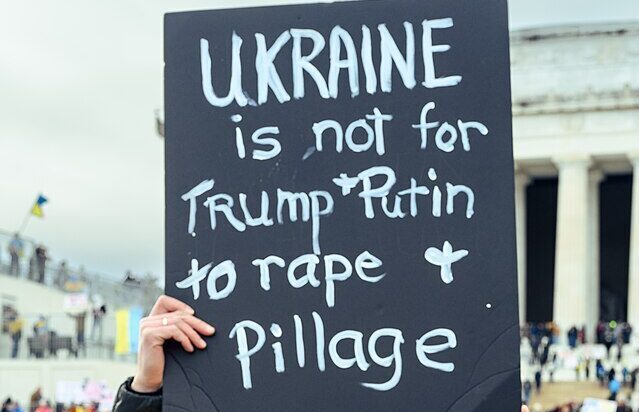
IMPERIALIST BULLYING IS rarely so open and brazen. Donald Trump demanded last week that Ukraine accept his surrender plan for Ukraine by Thanksgiving Day, November 27, or lose what little remains of U.S. support for Ukraine, which is the sharing of satellite intelligence about Russian military positions and the sale of arms to Ukraine via European buyers. Trump stopped all other military and economic aid to Ukraine when he returned to office in January.
Trump Always Chickens Out when it comes to threatened pressure on Russia. All the pressure has been on Ukraine to capitulate. Trump’s so-called “peace” plan gave him the excuse to not enact the secondary sanctions on countries buying oil from the Russian oil companies Lukoil and Rosneft that were scheduled to go into effect on November 21.
Trump’s new plan is the fourth iteration of basically the same so-called peace plan that Trump has proposed this year. The plan supports Russian war aims and withdraws all U.S. support from Ukraine. This version was negotiated between U.S. and Russian representatives without Ukrainians present. It is being presented to Ukraine as a take-it-or-leave-it done deal. Among the provisions in its 28 points are:
• Ukraine disarms. Its military forces are cut back to 600,000, or 40% of its current forces. Russian forces in the Russia-occupied territories of Ukraine have no limits.
• Ukraine can have no foreign troops on Ukrainian land. Russia’s deployment of North Korean and foreign mercenary forces in Russian-occupied Ukrainian lands is not restricted.
• Ukraine can receive no arms and military assistance from outside Ukraine. Russia’s continuing receipt of arms from Iran and North Korea and essential components for military equipment from China is not restricted.
• Russia’s war of aggression is rewarded with recognition by Ukraine and the United States as Russian territory of lands taken by force, plus a bonus reward of 2,500 square miles of Donbas lands that are now under Ukrainian control. Unacknowledged in the “peace” plan is that this land transfer will put an additional 250,000 Ukrainians under Russian occupation on top of the more than 3 million Ukrainians already under Russia’s repressive rule in the currently occupied territories.
• Russia gets amnesty for its war crimes, starting with the supreme war crime of aggression from which flows all other war crimes, as the Nuremberg Military Tribunal proclaimed in 1946 and became enshrined in international law, from the United Nations Charter of 1946 to the 1998 Rome Statute establishing the International Criminal Court. The International Criminal Court currently has arrest warrants out for Russian President Vladimir Putin and his Children’s Rights Commissioner for the war crime of abducting of tens of thousands of Ukrainian children to Russia and for four top Russian military commanders for the war crimes of deliberately targeting bombs at civilians and civilian infrastructure far from the frontlines and for the detention, torture, rape, and execution of Ukrainian POWs and civilians loyal to Ukraine living in the occupied territories. The amnesty would cover the Russian FPV (First Person View) drone operators who conduct “human safaris” to murder Ukrainian civilians in cities and villages near the frontlines and boast about it in the snuff films they post in social media online.
• Rather than saying “Russia will not invade neighboring countries,” the plan says “Russia is expected not to invade neighboring countries, and NATO will not expand further.” The so-called peace plan is full of such ambiguities and loopholes favorable to Russia.
• “A dialogue between Russia and NATO, mediated by the United States, will be held to address all security issues.” The supreme commander of NATO is American and the US is now allied with Russia. This “dialogue” would be one-sided with Ukraine excluded.
• Sanctions on Russia will be lifted and the U.S. and Russian oligarchs will resume business with each other.
• “US$100 billion of frozen Russian assets will be invested in U.S.-led efforts for Ukraine’s reconstruction and investment. The United States will receive 50% of the profits from this initiative.” It is all about the money with Trump, not social justice, human rights, or international law.
• “A joint U.S.-Russia security working group will be established to facilitate and ensure implementation of all provisions of this agreement.” Ukraine is again excluded, as are its European allies.
• “Ukraine will hold elections in 100 days.” This appeals to Russia’s rhetoric about “denazification,” i.e. regime change to a Russian puppet. Free and fair elections in Russia are not part of the deal.
• No ceasefire until this final agreement is signed by Russia and Ukraine. Ukraine has been calling for a ceasefire to set the conditions for productive negotiations toward a sustainable peace settlement. Russia insists on a final settlement before a ceasefire. This peace plan affirms Russia’s position.
• The agreement’s “implementation will be monitored and guaranteed by a Peace Council chaired by President Donald J. Trump.” This provision is like the Board of Peace chaired by Trump for his Gaza “peace” plan.
Trump’s 28-point plan for Ukraine is much like his 20-point plan for Gaza. Neither enforces international law, protects the victims, or holds the perpetrators of colonial aggression and occupation accountable. Both punish the victims and reward the aggressors. Both exclude the colonized from governance in the occupied territories. With their failure to exercise their veto when the UN Security Council adopted the Gaza foreign occupation plan, Russia and China became complicit in the colonial occupation of Gaza. Now Russia, its silent partner China, and the US are carving up Ukraine among themselves for imperialist plunder. Both deals have characteristically Trumpian pre-occupations with real estate development and business deals. Palestine is slated to be developed as a new Riviera for affluent foreign tourists, not indigenous Palestinians. Ukraine is slated to become a source of cheap and ultra-exploited labor, minerals and fossil fuels extraction, and fuels pipeline transit while the US and Russian oligarchs make money in Russia in, as the Trump plans says, “the spheres of energy, natural resources, infrastructure, artificial intelligence, data centers, Arctic rare-earth mining projects, and other mutually beneficial corporate opportunities.”
The Ukraine Solidarity Network (USN) denounces this attempt to impose a settlement that is not acceptable to the Ukrainian people. USN continues to support the right of the Ukrainian people to self-determination and to decide for themselves what are acceptable terms for a peace deal.
USN will continue to build moral, political, and material support for the people of Ukraine in their resistance to Russia’s invasion, to its occupation of Ukrainian lands, and to its brutal rule over people in the Russian-occupied territories. USN will continue to support Ukraine’s war of resistance, its right to determine the means and objectives of its own struggle, and its right to obtain the weapons it needs from any available source.
• We demand the full and complete withdrawal of Russian troops from all of Ukraine.
• We support the armed and unarmed resistance of Ukrainians against the Russian invasion.
• We support economic sanctions against Russia’s war machinery, including its political, military, and economic elite, its access to the international financial system, its imports of weapons-related technology, and its exports of fossil fuels that fund and fuel Russia’s war machine.*
• We demand that all Russians incarcerated for war resistance and political dissent be freed.
• We demand that the tens of thousands of Ukrainian children kidnapped to Russia and Belarus be returned to Ukraine.>/p>
• We demand that the tens of thousands of Ukrainian civilians from Russian-occupied territories incarcerated for opposition to the occupation be released and returned to Ukraine.
• We support asylum in the United States for Ukrainians, Russians, Belorussians, Palestinians, Sudanese, Haitians, Venezuelans, Afghans, and all people seeking refuge from political repression and war.
• We oppose amnesty for Russian war criminals.
• We demand the cancellation of all of Ukraine’s illegitimate and unjust foreign debts.
• We demand the confiscation of Russian assets abroad to be used to support Ukraine’s military self-defense, social services, and post-war reconstruction.
• We demand that Russia pay reparations to fund a full post-war reconstruction of Ukraine.
• We oppose the U.S. policy of imposing a neoliberal economic agenda on Ukraine today and for its post-war reconstruction. The Ukrainians’ struggle for self-determination, democracy and social justice will continue. We support the political struggles of Ukrainian trade unions, women’s organizations, environmental initiatives, and progressive political organizations to reverse the neoliberal anti-labor and anti-social policies of the Ukrainian government, to expand social, labor, and democratic rights, to clean up public corruption, and to implement a just and ecological reconstruction of Ukraine.
We will continue to build material aid and public education campaigns linking trade unions, civic organizations, and progressive political organizations in the US with their counterparts in Ukraine.
We urge all opponents of imperialism to join us.
* The question of sanctions is complicated and controversial among activists committed to Ukraine’s struggle. It’s especially important in the US that we do not accommodate to the predatory politics of the imperialist US state. The Ukraine Solidarity Network will be discussing these issues as the betrayal of Ukraine unfolds in collaboration with our Ukrainian comrades whose lives and national freedom are on the line.
November 23, 2025

The Cuban government is preventing Alexander Hall, young Afro-Cuban scholar and social movement specialist from leaving the country to continue his education in Ecuador. Sign this petition to demand that he be allowed to leave. (more…)
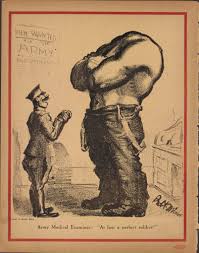
In an extraordinary video that went viral, six Democratic Party lawmakers, speaking directly to U.S. military personnel, said soldiers can refuse to obey illegal orders. Two senators and four representatives, all veterans of the U.S. military or intelligence agencies, saying that “threats to our Constitution aren’t just coming from abroad, but from right here at home,” tell active-duty troops “you can refuse illegal orders” and “you must refuse illegal orders.”
While they did not say why they made this video at this time, it is clear that it was prompted by two recent developments. First, since June, President Donald Trump has been sending troops to American cities such as Los Angeles, Chicago, Washington, D.C., and Portland Oregon to repress protests, over the objection of mayors and governors who have sued in the courts, arguing that US law prohibits the military from acting as domestic law enforcement. And second, since September the U.S. military has destroyed 22 boats and killed at least 83 people supposedly for drug smuggling. In clear violation of U.S. and international law, these people were never tried, and no evidence was presented; these are clearly murders on the high seas.
President Donald Trump called for the arrest of the six legislators saying that they were guilty of “sedition, punishable by death.” He added “Each one of these traitors to our Country should be arrested and put on trial.” Many were outraged by his remarks, leading him to say he had been misunderstood and didn’t want them killed.
Many people, including some veterans, were angry at Trump’s remarks. In fact, the U.S. military tells troops during training that they have the right to refuse and must refuse illegal orders that violate the law or the Constitution.
The U.S. military has a long bloody history of egregious violation of human rights.
And we could list many other such atrocities.
International law forbids the military killing of civilians in war, yet we see it go on daily by Israel in Gaza and by Russia in Ukraine. If the U.S. should attack Venezuela, as seems possible given the massing of U.S. massing of ships, planes, and troops near that country, it is practically inevitable that civilians will be bombed or shot. Unless soldiers refuse to do so.
Critics of the Democrats who made the video argue that it is too hard for ordinary troops, for corporals or privates to know whether they are committing a war crime. And if they refuse to drop the bomb or to pull the trigger, that they could be subject to military discipline. But soldiers don’t have to understand international law or the uniform code of military justice to know that murdering unarmed men, women, and children is wrong. They have only to think about their own families and communities and look into their own hearts.
The six Democrats by making their video have challenged Trump and they have done a great service to our country, to those in the military, and to those at home or abroad who might be victims. This too forms part of the growing, complex resistance movement.
 Haymarket Books has just issued a paperback edition of Nancy Holmstrom’s From a Marxist-Feminist Point of View: Essays on Freedom, Rationality and Human Nature. Nancy talked to the publisher about her intellectual and political history, and some of the themes in the collection.
It certainly did, but not at first. My interests in philosophy at the time were philosophy of mind and metaphysics. Analytic philosophy was rigidly differentiated from history and social theory. I viewed philosophy as essentially apolitical. It was only when I started teaching at the University of Wisconsin in 1970, when radical and feminist philosophers were beginning to organize, that I began to connect my political and philosophical interests. I wrote my first article from a Marxist point of view, “Free Will and a Marxist Concept of Natural Wants” in 1975 where I critiqued the dominant theory in the free will debate. Later, I integrated feminism into my account of freedom, in “Against Capitalism in Theory and Reality.”
This transition in the type of philosophy I was doing hurt my academic career. I was denied tenure at Wisconsin and got a job at Rutgers U at Newark, where I was denied tenure again. However, Rutgers had a union, which finally won my job back with tenure. After 18 years as an Assistant Professor, however, I was more estranged from academia than ever, and my writing over the years reflects it. My style became more direct, more explicitly political, and I no longer limited myself to philosophy journals.
Then and now most who call themselves Marxist-feminists (within the broader category of socialist feminists) want to signal that capitalism is primary, that the mode of production is foundational to all other kinds of oppression.
There are many new developments in Marxist feminism since I first began writing on the subject, and talked about biology from within a materialist framework. There was a huge debate about human nature (biologically oriented versus social constructivist). Marxist-feminists also theorized more fully the connection between the emergence of gay identities/gay sexuality and capitalist class relations; “Queer Marxism” was coined. The discussion of gender fluidity and trans issues is new but much of what I wrote is compatible with it. Ecosocialist feminism has become more important. Social reproduction feminism, which theorizes the crucial importance of social reproductive labor, done primarily by women, to the reproduction of capitalist society, has emerged as a distinct current of Marxist feminism.
But many Marxist feminist theorists today do not try to theorize at the level of abstraction that characterized earlier work. Rather, theoretical frameworks are elaborated and applied in analyzing particular social, economic, political, cultural issues in particular periods and places. (This was also true of socialist feminists as I showed in my book The Socialist Feminist Project.)
I would like them to take away a non-deterministic, non-reductive materialist approach and an excitement about the continuing relevance of core Marxist concepts and applying these concepts to analyze the changing nature of capitalist societies and the global capitalist system in which they are embedded. To see how the workings of the capitalist mode of production place fundamental constraints on social change, helping us understand why, after 50 years of feminist organizing, women’s oppression has changed shape but has not been eliminated.
Also, I would hope that readers understand that the way in which the core concepts of freedom, rationality and human nature are understood within capitalism are capitalist ideology and need a radical critique that a Marxist-feminist point of view can provide.
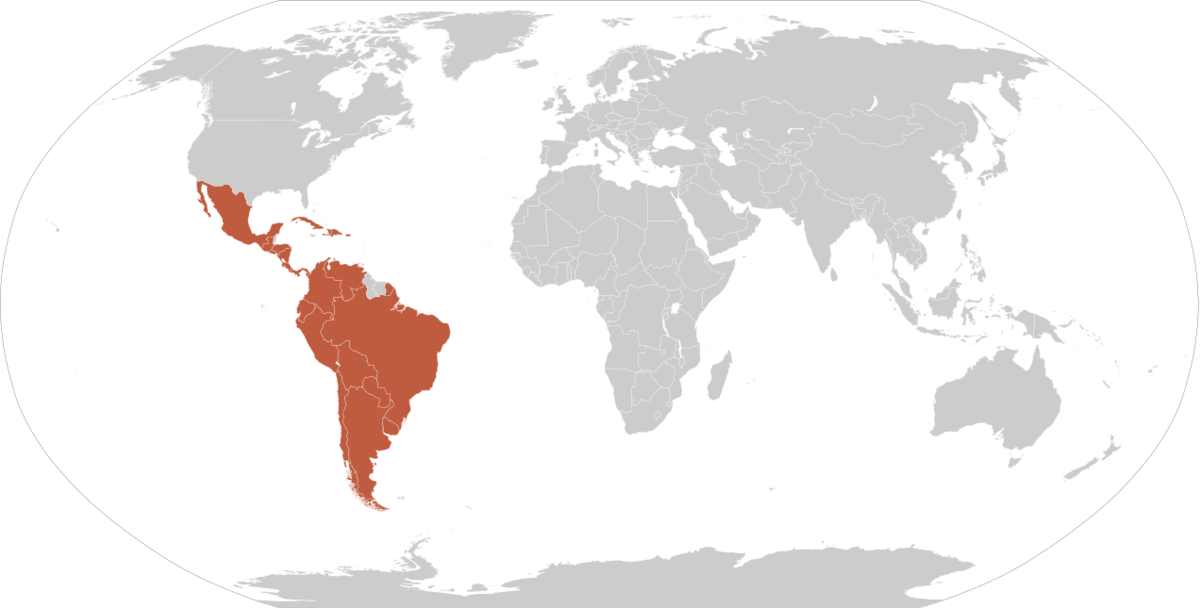
Online Presentation by Lisbeth Moya Gonzalez to Northeast Los Angeles Alliance for Democracy on November 15, 2025.
The (new) genocide carried out by the RSF in El-Fasher and Darfur has been a consequence of direct support from the UAE and covert backing from Western states and Russia. Condemning RSF and its diverse supporters must be accompanied by a broader analytical and political perspective.
*********************************************************************

Summary: The people of Afghanistan and Pakistan are trapped in the same vicious circle — victims of their ruling elites, militaries, and clerics who use religion and war for power and profit. It is time both nations’ ordinary people recognize their shared pain, common enemies, and mutual destiny — to break free from the chains of extremism and exploitation that have enslaved them for generations.

 Teamsters for a Democratic Union, which will be celebrating the group’s fiftieth anniversary at its convention being held in Chicago this November 7 to 9, has for decades been known as the voice of reform in the Teamsters Union. But this year there will be those inside and outside the convention hall challenging TDU’s direction and arguing that it has abandoned its ideal. At the center of the controversy is TDU’s support for Teamster president Sean O’Brien who is allied with President Donald Trump.
Some Teamsters no longer see TDU as fighting for reform but rather as part of the establishment. They are appalled that O’Brien has aligned with President Donald Trump who has fired hundreds of thousands of federal workers, torn up their contracts, and effectively destroyed their unions, while at the same time he has reversed decades of Black workers’ achievements, and attacked immigrants. TDU’s alliance with O’Brien and thus with Trump has tarnished its reputation as a movement for union reform and social justice, while isolating the Teamsters from the majority of the labor movement.
For a number of TDU members and other Teamsters, TDU’s alliance with O’Brien and his support for Trump have become the central issue. Leonard Stoehr, a longtime Teamster now living in the Atlanta area, is an over-the-road driver for ABF company. Stoehr says, “I think a plurality of Teamsters voted for Trump, but without full information. They thought he was going to have a laser-like focus on the economy to help working people, but, once he took office, he went right back to representing the oligarchy, which is where he comes from. We will absolutely raise the Trump issue at the TDU convention, because support for Trump is a death-wish for organized labor.”
Dave Robbins, now retired, was a Teamster for fifty years and served as a steward or local officer in several local unions; he first joined TDU in 1977. He spent his life fighting for the union’s members. He will be going to the TDU convention with his wife Sol Rodriguez, also a TDU member. Dave doesn’t mince words. “Sean O’Brien is a terrible general president for so many reasons, but primarily for remaining silent about Trump’s racism, anti-immigrant attitudes. He’s a traitor, a class-traitor, and he should not be endorsed by TDU. Sean O’Brien is a pro-fascist, Trump-supporter.”
David Levin, TDU’s national organizer, the top staff person, disagrees. As he wrote to me, “Endorsing Sean O’Brien and the Teamsters United Slate does not mean endorsing Donald Trump or attacks on workers. TDU has been, and will continue to be vocal in our opposition to attacks on the working class, including OSHA, the NLRB, immigrant workers, and union-busting of federal worker unions.” He argues that since O’Brien real gains have been made. “Under new leadership, the IBT is standing up to employers and mobilizing members.”
Or as Peter Landon, a longtime TDU activist and former TDU staff person puts it, “I don’t support O’Brien. I do recognize the opportunities he has created for the membership to play far more of a role in the union.”
Some in TDU appear to have bought the argument that though Trump is an authoritarian, a union-buster, a racist and a sexist, who dispatches ICE, the National Guard, and active-duty troops to our cities, nevertheless they will continue to back O’Brien as long as it gives TDU more latitude for organizing in the Teamsters. This is the devil’s bargain that TDU has made. They are willing to endorse O’Brien, accepting his alliance with Trump as long as he tolerates the TDU’s organizing in and through the union.
At this convention, TDU will be holding a vote on whether or not to endorse O’Brien for union president for five more years. If TDU does endorse him, it will renew the devil’s bargain in both senses of that phrase, making a morally compromised decision that accepts a short-term gain for a larger, long-term loss. Such an endorsement would be made with eyes wide open and the knowledge that Sean O’Brien is comfortable with the Teamsters carrying the mantle of MAGA’s favorite union.
TDU in its Heyday
Teamsters for a Democratic Union began fifty years ago as a small group of rank-and-file activists committed to union democracy and militancy. I was one of them. After its founding, TDU opened a national office and hired a small staff paid modest wages made possible by the members’ dues and by grants from progressive foundations. (Today according to public documents TDU has revenues of over $300,000 and its educational and legal arm, Teamster Rank And File Education And Legal Defense Foundation raised $1.43 million in 2023. These are modest amounts compared to the Teamsters union’s treasury and to the wealthy corporations against which TDU for years fought for the members rights.)
TDU fought for things like elected rather than appointed union stewards and ran reformers for local union office as well as for top offices of the international union. When the U.S. Justice Department brought a RICO suit against the union and threatened to take it over, TDU argued that instead, as the feds removed the mafia. it should allow the membership to have free elections with the right to vote on the union’s top officers. The Justice Department and the courts agreed with TDU and rank-and-file Teamsters won a real victory for democracy.
For nearly all of its history, TDU was in the opposition and often persecuted by the Teamster leadership and company bosses. TDU members elected to the top offices of local unions found themselves blocked at every turn by the Teamsters’ national leadership. Only for five years, during the presidency of Ron Carey, whom TDU had helped to elect, was TDU not only tolerated but accepted by the union leadership. Carey and TDU, while they did not always see eye-to-eye, collaborated on local elections and contracts. It was TDU’s heyday. That was the TDU that I described in my book Rank-and-File Rebellion: Teamsters for a Democratic Union published back in 1990.
TDU Makes a Deal with the Devil
Under Jimmy Hoffa, Jr., who served as Teamster general president from 1998 to 2018, that is for twenty-five long years, TDU was a persecuted opposition. Veteran TDU leaders like Ken Paff, and his successor David Levin yearned to come in out of the cold, to be able once again to operate with the support of the union leadership as they had when Ron Carey was president. The 2022 Teamster presidential election provided that opportunity.
Sean O’Brien, the head of Boston Local 25, was running for President of the Teamsters Union and remaking himself as a Teamster reformer. The head of Boston Local 25, he had a reputation as a thug. For example, he intervened in 2013 in the local election in Teamster 251 in Rhode Island, threatening the TDU activists there who were running a slate against his preferred candidate. “They need to be punished,” said O’Brien. The Teamsters Independent Review Board charged O’Brien and found him guilty of violating the Teamster Constitution and federal law when he threatened TDU members and he was suspended for two weeks.
Yet in 2022, in their campaign for the union’s top offices, O’Brien and his running mate Fred Zuckerman, known as the OZ slate, put themselves forward as reformers. Seeing an opportunity, Paff and Levin, negotiated with O’Brien to form an alliance, and eventually won over the TDU leadership and the TDU convention. O’Brien, with TDU’s support, won the election and became Teamster president.
The first item on O’Brien’s agenda was the UPS contract set to expire in August of 2023. He gave the impression he was prepared to lead a national strike to win the union’s demands. Back in 1997, President Ron Carey working with TDU had led UPS workers in a tremendous strike and won a real victory. The slogan for that strike had been “Part-Time America Won’t Work,” and the union forced the company to agree to create 10,000 new full-time jobs. It was one of the most important strikes by any union in that era and many Teamsters now wanted to repeat it. To prepare, TDU worked with O’Brien on planning the strategy and tactics needed to educate and organize the members.
But the strike never happened. O’Brien negotiated a contract with the company, which TDU proclaimed a historic victory, and there were some significant gains, but it was, in fact, weak in several areas. Most importantly it failed to end part-time status for workers who now made up 60% of the workforce. As Sam Gindin, former research director for the Canadian Auto Workers wrote, “The union made big gains — but in opting not to strike over demands beyond wages, the Teamsters may have passed up a transformative opportunity for the labor movement.”
Having won the Teamster presidency and having settled the UPS contract in August 2023 without a strike, O’Brien went off to Mar-a-Lago to kiss Trump’s ring, and then in July of 2024 O’Brien spoke at the Republican Party National Convention. While the Teamster leadership had declined to endorse either Kamala Harris or Donald Trump, O’Brien’s speech was clearly a tacit endorsement of Donald Trump. To quell any doubts about where the union stood, the Teamsters made large financial contributions to Trump and other Republican candidates. So, TDU, now allied with O’Brien, has come full circle, from fighting the powers-that-be to joining them.
Teamster Reform in a New Era
The TDU convention this year will be different from others because there will be vocal opposition to the leadership both within and without the convention. In an attempt to diminish the opposition, TDU steering committee members and staff have called some dissident members and suggested, “Maybe it would be better if you don’t come this year.” Still there will be dissident members on the floor.
Some opposition will come from organized groups who oppose TDU’s current course. One such activist group within the union is Teamsters Mobilize (TM).
One member of TM is Jennifer Hancock of Local 322 , a part-time UPS employee in the warehouse, a sorter at the Coach Road hub and package car center in Richmond. “I’ve been doing it for 34 years,” she explains. “I’m also the political coordinator for Teamster local 322. We support candidates who support labor,” and most of those she says are Democrats
A few years ago, Hancock got involved in a TDU discussion group among UPS part-timers, mostly young people, a group that subsequently evolved into Teamsters Mobilize. “The general word about part-timers is that we’re lazy, we’re stoned, etc. But a few years ago, a bunch of us on a TDU part-timer chat decided to put together a group hoping to influence the next contract. At that time, we were still trying to work with TDU, so we went to the TDU convention. We wanted a part-timer caucus. There were Black caucuses, Latino caucuses, and women’s caucus. So why not a part-timer caucus? We finally got a watered-down resolution passed, but then it just disappeared. We’re told we couldn’t organize a caucus and would just have to rely on grievances. So, our hands were tied behind our backs.”
Teamster Mobilize went from being a part-time employee caucus to a more general reform group within the union. Their website says, “Teamsters Mobilize is a grassroots organization of Teamster activists organizing to build up real worker power in our union against our employers and their cronies, to expose corrupt Teamsters leadership, and to build brick-by-brick a genuine fighting labor movement.” A statement that sounds like TDU back in the 1970s and 80s when it was fighting Teamster presidents Frank Fitzsimmons, Roy Williams, and Jackie Presser.
This year it seems Hancock won’t be going to the convention. “I’m still a member of TDU, but I’m not allowed to come to the convention.” David Levine wrote her saying she couldn’t attend because she and Teamsters Mobilize members intended to “crash’ the convention. Levine wrote, “TDU is not going to allow non-registrants to crash our Convention or the Convention hotel and we are not going to allow TM to have a mixed group of registrants and crashers.”
But Hancock doesn’t believe that’s the real reason she is being excluded. “I believe there is going to be a floor vote on Sean O’Brien and they know that we would be against that. So, they’re putting their finger on the scale to get the result they want. I would not have voted for Sean O’Brien in any case. I don’t support Sean O’Brien because he is not supporting labor. Everything Sean O’Brien has done has been about supporting Sean O’Brien. His support for the Trump administration is also a big issue.”
She gives the example of Donald Trump’s firing of Gwynne A. Wilcox, removing her from the NLRB. When that happened, my principal officers and others went up to Washington, D.C. to protest—but the O’Brien and the International officers did nothing.”
Overall, says Hancock, “I am very disappointed in TDU. When I first joined TDU, this was before Sean O’Brien’s election, everyone told me what a great organization it was. We took TDU’s word and campaigned for Sean O’Brien. Then TDU snuggled up to the O’Brien administration and now there’s no light between them.”
John Palmer of the Hooker Slate
John Palmer, hails from San Antonio, Texas a member of Local 657 was a freight driver for ABF for years but is now international vice-president-at-large, elected on the O’Brien-Zuckerman slate. “I was played,” he says. I knew what O’Brien was, I had sat next to him for five years, but Fred Zuckerman convinced me that O’Brien had found religion and would be a reformer.”
Palmer soon learned that was not so. “It started when I objected to the UPS contract. I was the only one on the executive board who raised an objection. And I did it in public. I went to the press about it.” At a meeting to discuss the tentative contract, “I was attacked by all of the other executive board members. When they were done, I told them, ‘I appreciate the dogpile. Now I’m going to put together a slate,’ ” meaning an opposition slate to run against them. And he did. Today Palmer is running on the Hooker Fearless Slate for the same position he now holds.
When O’Brien organized a meeting with presidential candidate Donald Trump, Palmer explained, “I refused to meet with Trump. I know who Trump is. I wouldn’t sit in the same room with him for two reasons. First, he was a draft dodger. I’m a veteran and my dad and his brothers all served. Second, he’s a scab.”
Like some of the others with whom I talked, Palmer is also disappointed in TDU. “How can TDU be a democratic membership organization, when so many decisions are made by the national organizer,” for 45 years Ken Paff and now David Levin.
Palmer says, “I won’t be going to the TDU Convention, but I and many of our slate members will be at the hotel in Chicago. “I’m not coming to raise a ruckus. I’m 67 years old. I’m past that. But I’ll be talking with the members.”
Richard Hooker, Candidate for General President
Richard Hooker is the secretary-treasurer, the top officer of Philadelphia Teamster Local 623. Before becoming a full-time union officer, he was a UPS worker. “I’ve done every job you can think of at UPS.” The son of a preacher, he began working at UPS while attending Drexel University, and is now married and the father of four children.
“I’m not going to the convention, but I will be in the same hotel, collecting signatures from those who are there. The signatures are to become an accredited slate, though if we have to, we could still get on the ballot at the convention. But the TDU convention is a good opportunity to listen to and to talk with our members.”
While not a TDU member, Hooker says, he used to support TDU. But no more. “I’m shocked by TDU’s support for O’Brien. Even though I never was a member I always respected their fight, their being there. From the very beginning I never supported Sean O’Brien because of his intimidation, retribution, and retaliation. He has a history of doing that. He’s also known for failing to win strong contracts. He has a history of concessions, 13 of the last 18 years we have had concessions and he has a lot to do with that.”
Like others, Hooker criticizes O’Brien for “his fascination with Trump. He’s decided to go along with Trump and everything that he’s done. But not just Trump, also the ruling class, the employer class, the billionaire class, because that’s who Trump represents. He doesn’t represent the workers.”
Hooker is also critical of O’Brien’s actions within the Teamsters. “If you look at what O’Brien did when he first got elected. He eliminated a lot of people from the staff and 70 percent of them black and brown people.” As a result, Hooker explains, “The union, that is the union’s members, had to pay 2.9 million dollars as a result of a discrimination lawsuit. And then he fired three other officials for their support of the rival Steve Vairma slate. The union members had to pay 2 years back wages to each of those people. His policies don’t work for the Teamsters or for the broader working class.”
Hooker is disappointed with TDU today. “They have a go along to get along attitude. No matter what O’Brien does, they refuse to speak out against him. TDU was built to educate and empower and to call out wrong-doing.” But today, he says, TDU doesn’t speak out. “When you are silent, you have taken the side of the oppressor. That is what TDU has done because they refuse to speak out against the oppressor of the Teamsters. They have become what they fought against.”
Sean O’Brien, candidate for reelection, will be speaking at the TDU Convention, though he is not a member, and Richard Hooker, also not a member, will not be given such an opportunity. Levin wrote to Hooker, “TDU is not going to spend the members’ time or funds to host a campaign speech by you.” While TDU certainly has a right to determine who speaks and its conventions, it seems a shame not to allow the two candidates for Teamster president—the only two so far—to debate or at least speak. What an educational opportunity for the members! But Levin, clearly committed to O’Brien, has no interest in helping his opposition.
What Next for TDU?
With its fifty-year history, its substantial and expanding foundation fundraising capacity, its permanent staff, the continuity of its leadership, and its conviction that it’s the genuine voice of Teamster members, I think of TDU as something like a miniature version of the labor bureaucracy. Not financially privileged like most union officials, not corrupt like some officials have been, not tied to a political party, at least not until recently, but still a power center in the union which despite its theory and its genuine attempts to root itself among them remains separate from the union members.
Given all of this, TDU seems unlikely to change course, though there is the possibility that this convention could realign the organization, that it could return to its more militant roots. Denying O’Brien its endorsement would reestablish TDU as an independent organization speaking up for the Rank & File and holding leadership accountable, regardless of the risk. Not unlike the original founders of TDU some fifty years ago.

Since I have lived in Ecuador, I receive prayer chains. In my circle, there are mothers of friends, elderly ladies whose contacts I have by chance, who send me “God bless you” stickers every morning. In those ladies there is a monastic loneliness and in their gesture a kind of affection that I welcome into my atheist heart.
When the national strike began in Ecuador, on September 22, I started receiving more prayers than usual and decided to read them. One of them read: “Lord, I beg you to help President Daniel Noboa cleanse Ecuador of narcos, criminals, terrorists, the corrupt, and social resentfuls, so that we can once again be a country of peace.”
Two days after the Confederation of Indigenous Nationalities of Ecuador (CONAIE) declared a national strike against Executive Decree 126 — which eliminates the diesel subsidy — President Daniel Noboa said in a public event for the delivery of bonuses in the province of Imbabura:
“They want to walk and protest against us, we’ll do it first; they want to say they expel us from their territories, then we’ll expel them from the whole country. But coming here with that story that they are sovereign, that they are the representatives of the people, and then in an election they get 3%, that stupidity we will never believe again.”
“They,” those of the strike, are the peoples and nationalities of Ecuador, the artists, the queer organizations, the students of public universities, the leftists, the unions. They are the social resentfuls that the lady who sent me the prayer speaks of, and those whom Daniel Noboa, barely as the protest days began, called terrorists — and whom “justice” began to prosecute under that charge.
In The Origins of Totalitarianism (1951), Hannah Arendt warns how totalitarian regimes make people expendable, destroying their political humanity.
Arendt argues: “Totalitarian domination strives to organize the infinite plurality and differentiation of human beings as if all humanity were just one individual,” as if there were a “them” and an “us,” in Noboa’s words. In that work, Arendt analyzes the phenomenon of fascism.
Later, in 1963, she wrote Eichmann in Jerusalem, focusing on the “banality of evil,” a concept that deals with how evil is not the conscious hatred of some subjects toward others, but indifference, that gradual dehumanization that feeds on routine and obedience.
There are countless authors who talk about domination, but I focus on the ancient and Western Arendt because she spoke on the edge of World War II — but above all, because she spoke of fascism in its purest state.
We fear fascism. We are terrified by the image of Auschwitz, of bodies entering the gas chambers, thin and malnourished bodies. We are terrified by those white bodies dying by the millions, but we are not terrified enough by the fascism we live today embodied in less white bodies, in Palestinian bodies. What may happen to Indigenous, Latin American, or non-Western bodies becomes increasingly blurred by the shock effect, à la Naomi Klein, in which we remain after a global pandemic or under the communicational smoke cloud in which the right-wing rises. Evil becomes increasingly banal, subtle, everyday in the Arendtian sense — and it articulates itself from social media and political propaganda (which now blurs with commercial advertising) up to power itself: Trump, Milei, Noboa, Bukele — all inhabit the same logic.
We must speak of fascism to understand the strike in Ecuador, not only because during the passage of an allegedly humanitarian convoy, the Otavalo community member Efraín Fuérez was shot at point-blank range by the army and his friend who tried to help him was beaten until he was left dying. We must speak of fascism because, as the conquerors did when they arrived in Abya Yala, many community members had their braids— symbols of dignity and identity in the Andean worldview — cut off as a sign of domination, or because as soon as the president knew there would be protests, he declared a state of emergency due to severe internal commotion in seven provinces of the country.
States of emergency are a common tool of political reaction for neoliberal governments in Ecuador (Lenin Moreno decreed 18, Guillermo Lasso 11, with three renewals, and Daniel Noboa already more than 7). It consists of the militarization of public space and the elimination of the right to assembly or protest. It is common in Noboa’s administration to use the “legitimate monopoly of state violence” for the fight against drug trafficking and organized crime — which is no minor issue in Ecuador — but in the process, it sweeps away every citizen right in the name of pacification.
Black Mirror Ecuador
Returning to the phenomenon of the rise of fascism — which I will call the “black mirror” effect, as a nod to the well-known British series that portrays technological and political dystopias — in the case of the strike in Ecuador it became clearer than ever the government’s ability to manipulate reality, investing millions in publicity. It is outrageous that, as I write this article, very few Ecuadorian media outlets address the national strike without justifying the violence of repressive forces or without stigmatizing protesters as terrorists.
The construction of reality is such that it has been proven, through citizen complaints and the nonexistence of any aid delivered, that under the pretext of being a humanitarian convoy to help those affected by the protests, the government sent several war convoys that delivered bullets, tear gas, and death to the communities. In the midst of the national strike, Noboa reported two attacks: one allegedly against his false convoy and another by poisoning — neither of which has been proven.
But if we speak of dystopias, the explosion of a car bomb in the Mall del Sol in Guayaquil on October 14 is alarming. Ecuadorian lawyer Pedro Granja points out that several explosions in recent months have been politically motivated, and that in the case of Mall del Sol: “There is no mention in the prosecutor’s file of the Porsche Cayenne, license plate GRY 3452, owned by Industrial Molinera (a company linked to Daniel Noboa’s family).”
It’s like a script in which a crisis is created over pre-existing conditions, thousands of dollars are invested in advertising so that people become aware — to omit or distort realities — and the president “saves” the situation through measures that dig into citizens’ and the State’s pockets or reduce political rights. For example, after the declaration of an internal armed conflict on January 9, 2024, due to a series of simultaneous attacks by organized criminal groups, including the takeover of TC Television in Guayaquil during a live broadcast, the president managed to raise the VAT to 15% in order to “fight violence.”
Since then, death has become nothing but ordinary. In the first half of 2025, there were 4,619 intentional homicides, a 47% increase compared to the same period in 2024, representing the highest figure in the country’s recent history. By September 2025, there had been 6,797 violent deaths, and if the trend continues, it is estimated that by the end of the year there will be more than 9,000 homicides — a rate above 50 per 100,000 inhabitants, according to the Ecuadorian outlet Primicias.
Meanwhile, in 2024, the government executed only 54% of the Annual Investment Plan, leaving sectors like health out in the open, which received USD 1.249 billion less than in previous periods. By July 2025, the government had executed only 11.8% of the budget allocated to the health sector, leading the system to collapse: 12 newborns died in Guayaquil because of it, and dialysis patients continue to protest as their treatments are being reduced, for example. But there is a budget to deploy the 5,000 military troops who repressed the protesters, and to triple the acquisition of military equipment in 2024 — with Israeli weapons.
Since his appointment as President of the Republic in April 2025, Daniel Noboa has promoted a series of laws regressing rights and concentrating power. For instance, in June 2025 the National Security Law was approved, which allows him to declare the existence of an internal armed conflict, granting repressive forces the authority to use lethal force and conduct raids without a judicial order. Subsequently, the Intelligence Law was enacted, regulating the functions of the National Intelligence System and expanding the State’s powers in security matters. That law has generated controversy due to potential violations of privacy and fundamental rights.
Another law approved during his term was the Law on Credit Strengthening and Sustainability, paving the way for a possible privatization of the Ecuadorian Social Security Institute (IESS). However, the call for a referendum and popular consultation on November 16, 2025, represents Daniel Noboa’s most controversial and radical intervention in the Ecuadorian State, since if it passes, a new constitution would be approved under his government.
“The 2008 Constitution (known as Montecristi’s Constitution) marked a new era in Ecuadorian constitutionalism: it modified the State’s institutional structure with five branches, strengthened the Executive, enshrined direct citizen participation, was based on the guarantee principle over the broadest individual, social, labor, collective, and nature rights, strengthened state capacities, guided the economy with a national and highly social vision, established a redistributive tax system of wealth, prioritized the social and solidarity economy, and particularly devoted Title VI to the ‘Development Regime’ and Title VII to the ‘Good Living Regime,’ which are fundamental axes for building a different society,” explains historian Juan J. Paz-y-Miño Cepeda in a text published in Rebelión magazine.
Daniel Noboa put his hands in Ecuadorians’ pockets to militarize the country and reduce the right to protest. The Malvinas case, in which the army murdered and disappeared four poor Black children, is an example of how such militarization only helps centralize violence in marginalized bodies, by the hand of the State — just as Arendt points out. However, he went further: as explained earlier, he ensured laws that institutionalize citizen surveillance and the privatization of health and retirement insurance for workers.
Through the referendum, the president of Ecuador seeks: the establishment of foreign military bases on national territory to increase U.S. and Israeli presence; the elimination of political party financing so that access to power is limited to the economic elite; and the reduction of the number of assembly members while his party holds a majority and monopolizes all branches of government. In those hands, stained with the blood of poor children and protesters, in the hands of the author of the greatest regression of rights in Ecuador’s history, will fall the task of drafting and approving a new constitution.
In a text I recently published in the Mexican magazine Ojalá, I stated that Ecuador is not a country that tolerates dictators. Ecuadorians have overthrown governments such as those of Abdalá Bucaram (1997), Jamil Mahuad (2000), or Lucio Gutiérrez (2005). In 2018, with Lenín Moreno, the neoliberal cycle came to power, and since then there have been three national strikes (2019, 2022, and 2025) to defend the fuel subsidy.
The national strike of 2025 was officially lifted on October 22, one month after it began. However, some Indigenous organizations, among them the Union of Indigenous and Peasant Organizations of Cotacachi (UNORCAC), reject that decision and continue in resistance. For social organizations, the strike was a process that led to the fight for a NO vote in the referendum of next November 16 — and that NO is also in the name of those who fell during the protests and against the authoritarianism of Daniel Noboa’s government.
As of October 18, 2025, the 27th day of the strike, there had been 117 recorded cases of repression, including three alleged extrajudicial executions, 38 injuries, and 57 incidents of detentions, according to the violence-monitoring platform Persecución Ecuador.
State repression manifested itself through financial harassment by freezing the accounts of social leaders; attacks on journalists; Internet signal inhibition during episodes of state violence; arbitrary detentions; live ammunition and massive tear gas use causing the death of an elderly person; intimidation and closure of media outlets; entering medical centers to prevent care for the wounded; and the militarization of the Central University of Ecuador (UCE), among others.
Mapping of resistance reports that by October 15, 2025, there had been 547 collective actions, including vigils, symbolic actions, marches, roadblocks, sit-ins, assemblies, and pot-banging protests (cacerolazos).
Ecuadorian civil society reached the national strike weakened. Although it is a social muscle with memory that knows how to organize itself, the neoliberal cycle has left scars: a left divided between correísmo and anti-correísmo, a labor movement increasingly less unionized due to the impossibility of creating sectoral unions, an Indigenous movement eroded by three strikes in a short time and by internal divisions in its leadership, and a series of social movements increasingly aligned with corporate interests. Nonetheless, the strike generated new alliances among peoples, nationalities, and dissident groups, and the voices for a NO in Daniel Noboa’s referendum are already being heard.
On November 16, the fate of Ecuador will be decided, and I hope that the ladies who send me prayers will be consistent with their Christian faith at the polls. As I recently told one of them: “Those resentful and terrorist people they talk about are the poor ones to whom their hero, Jesus, spoke first — and as their Bible says, it is easier for a camel to pass through the eye of a needle than for a rich man to enter the kingdom of heaven. May their God protect Ecuador from fascism”.
Texto y Fotos: Lisbeth Moya González.
Desde que vivo en Ecuador me llegan cadenas de oraciones. Hay en mi círculo, madres de amigos, señoras mayores cuyos contactos tengo por azar, que me mandan stickers de “Dios te bendiga” cada mañana. Hay en esas señoras una soledad monacal y en su gesto un cariño que acojo en mi corazón de atea.
Cuando comenzó el paro nacional en Ecuador, el pasado 22 de septiembre, comencé a recibir más oraciones que de costumbre y me dispuse a leerlas. Una de ellas versaba: “Señor, te suplico ayudar al presidente, Daniel Noboa, a limpiar el Ecuador de los narcos, delincuentes, terroristas, corruptos y resentidos sociales, para que volvamos a ser un país de paz”.
Dos días después de que la Confederación de Nacionalidades Indígenas del Ecuador (CONAIE) se declarase en paro nacional contra el Decreto Ejecutivo 126- que elimina el subsidio al diésel-, el presidente Daniel Noboa dijo en un acto público de entrega de bonos en la provincia de Imbabura:
“Ellos quieren caminar y hacer una protesta contra nosotros, nosotros la hacemos primero; ellos quieren decir que nos expulsan de sus territorios, nosotros los expulsamos de todo el país entonces, pero ya venir con ese cuento de que ellos son soberanos, de que ellos son los representantes del pueblo y después en una elección sacan el 3 %, esa estupidez no la vamos a creer nunca más”.
Ellos, los del paro, son los pueblos y nacionalidades del Ecuador, los artistas, las organizaciones queer, los estudiantes de la universidad pública, las izquierdas, los sindicatos. Ellos son los resentidos sociales de los que habla la señora que me envió la oración y a los que Daniel Noboa apenas comenzó la jornada de protestas llamó terroristas y la “justicia” comenzó a procesar bajo ese cargo.
En “Los orígenes del totalitarismo” (1951), Hanna Arendt advierte cómo los regímenes totalitarios convierten a las personas en prescindibles, destruyendo su humanidad política.
Arendt argumenta: “La dominación totalitaria intenta organizar la infinita pluralidad de los seres humanos como si toda la humanidad fuera un solo individuo”, como si hubiera un “ellos” y un “nosotros” en palabras de Noboa. Arendt analiza en esta obra el fenómeno del fascismo.
Posteriormente, en 1963, escribe “Eichmann in Jerusalem” y se centra en la “banalidad del mal”, concepto que aborda cómo el mal no es el conjunto del odio consciente de unos sujetos hacia otros, sino de la indiferencia y de esa deshumanización que de a poco se alimenta de la rutina y la obediencia.
Existe un sinniúmero de autores que hablan de la dominación, pero me centro en la tan antigua y occidental Arendt, porque hablaba al filo de la segunda guerra mundial, pero sobre todo, porque hablaba del fascismo en su estado más puro.
Le tememos al fascismo. Nos aterra la imagen de Auschwitz, de los cuerpos entrando a la cámara de gas, cuerpos delgados y desnutridos. Nos aterran esos cuerpos blancos muriendo por millones, pero no nos está aterrando lo suficiente el fascismo que vivimos hoy encarnado en cuerpos menos blancos, en cuerpos palestinos. Lo que pueda sucederle a cuerpos indígenas, latinoamericanos o no occidentales se matiza cada vez más con el efecto de shock a lo Naomi Klein en que permanecemos tras una pandemia global o tras la nube de humo comunicacional en que ascienden las derechas. El mal se vuelve cada vez más banal, sutil, cotidiano en el sentido arendtiano y se articula desde las redes sociales y la propaganda política -que ya se confunde con la publicidad comercial- hasta el poder: Trump, Milei, Noboa, Bukele, todos habitan en la misma lógica.
Hay que hablar de fascismo para entender el paro en Ecuador, no solo porque durante el paso de un convoy dizque humanitario al comunero otavaleño, Efraín Fuérez le disparó el ejército a quemarropa y a su amigo que intentó ayudarle lo golperaron hasta dejarlo moribundo. Hay que hablar de fascismo, porque a muchos comuneros, como hacían los conquistadores al llegar al Abya Yala, les cortaron las trenzas– símbolo de dignidad e identidad en la cosmovisión andina- en señal de dominación o porque a penas el presidente supo que habrían protestas declaró estado de excepción por grave connmoción interna en siete provincias del país.
Los estados de excepción son una herramienta común de reacción política de los gobiernos neoliberales en el Ecuador (Lenin Moreno decretó 18, Guillermo Lasso 11, con tres renovaciones y Daniel Noboa ya va por más de 7). Se trata de la militarización del espacio público y la eliminación del derecho a reunión o protesta. Es común en la gestión de Noboa el uso del “monopolio legítimo de la violencia estatal” para la lucha contra el narcotráfico y el crimen organizado, que no es menor en el Ecuador, pero que en el proceso arrasa con todo derecho ciudadano en nombre de la pacificación.
Black Mirror Ecuador
Volviendo al fenómeno del ascenso del fascsimo, al que llamaré efecto “black mirror”, en un guiño a la tan conocida serie británica que aborda distopías tecnológicas y políticas, en el caso del paro en Ecuador quedó más claro que nunca la capacidad de manipulación de la realidad de un gobierno que invierte millones en pauta. Resulta escandaloso que mientras escribo este artículo muy pocos medios ecuatorianos aborden el paro nacional sin justificar la violencia de los cuerpos represivos o sin estigmatizar a los manifestantes como terroristas.
La construcción de la realidad es tal, que está comprobado por la denuncia ciudadana y por la inexistencia de donaciones entregadas, etc, que bajo la excusa de ser un convoy humanitario para ayudar a los afectados por las protestas, el gobierno envió varios convoys de guerra que entregaron bala, gas y muerte a las comunidades. En medio del paro nacional Noboa denunció dos atentados: uno por un supuesto ataque a su falso convoy y otro por envenenamiento, ninguno de los dos han sido probados.
Pero si de distopías hablamos, la explosión de un coche bomba en el Mall del Sol en Guayaquil el 14 de octubre es alarmante. El abogado ecuatoriano, Pedro Granja, señala que diversas explosiones en los últimos meses han estado motivadas por razones políticas y que en el caso del Mall del Sol: “No consta en el expediente fiscal ninguna alusión al Porsche Cayenne de placas GRY 3452 de propiedad de Industrial Molinera (empresa vinculada a la familia de Daniel Noboa)”.
Es como un guion en que se crea una crisis sobre condiciones pre existentes, se invierten miles de dólares en pauta para que la gente se entere, para omitir o para tergiversar realidades y el presidente salva la situación mediante medidas que meten la mano en el bolsillo de la ciudadanía y el Estado, o reducen los derechos políticos. Por ejemplo, tras la declaración de un conflicto interno armado, el 9 de enero de 2024, por una serie de ataques simultáneos de grupos delincuenciales organizados, incluyendo la toma del canal TC Televisión en Guayaquil en una transmisión en vivo, el presidente logró subir el IVA al 15% para luchar contra la violencia.
Desde entonces, la muerte no ha hecho más quevolverse común. En el primer semestre de 2025 se registraron 4.619 homicidios intencionales, un aumento del 47% respecto al mismo periodo en 2024, lo que representa la cifra más alta en la historia reciente del país. Hasta septiembre de 2025, se contabilizaron 6.797 muertes violentas, y si la tendencia continúa, se estima que al final del año se superarán los 9.000 homicidios, con una tasa superior a 50 por cada 100.000 habitantes, explica el medio ecuatoriano Primicias.
Mientras, en 2024, el gobierno ejecutó solo el 54% del Plan Anual de Inversiones, dejando a la intemperie sectores como la salud, que recibió USD 1.249 millones menos que en periodos anteriores. Hasta julio de 2025, el gobierno había ejecutado solo el 11,8% del presupuesto destinado al sector salud, lo que ha llevado al sistema al colapso: murieron por esa causa 12 recién nacidos en Guayaquil y los pacientes de diálisis no paran de protestar porque les están reduciendo los tratamientos, por ejemplo. Pero sí hay presupuesto para desplegar a los 5000 efectivos militares que reprimieron a los manifestantes y para triplicar la adquisición de equipamiento militar en 2024 con arsenal israelí.
Desde su nombramiento como presidente de la República en abril de 2025, Daniel Noboa ha impulsado una serie de leyes de regresión de derechos y de acumulación de poder. Por ejemplo, en junio de 2025 se aprobó la Ley de seguridad nacional que le permite declarar la existencia de un conflicto armado interno, otorgando a los cuerpos represivos facultades para emplear fuerza letal y realizar allanamientos sin orden judicial. Posteriormente, se dio paso a la Ley de inteligencia, que regula las funciones del Sistema Nacional de Inteligencia, ampliando las competencias del Estado en materia de seguridad. Dicha ley ha generado controversia por posibles afectaciones a la privacidad y derechos fundamentales.
Otra de las leyes aprobadas en su mandato fue la de Fortalecimiento y Sostenibilidad Crediticia que da paso a una posible privatización del Instituto Ecuatoriano de Seguridad Social (IESS). No obstante, la convocatoria a un referéndum y consulta popular para el 16 de noviembre de 2025 resulta la intervención más polémica y radical de Daniel Noboa en el Estado ecuatoriano, ya que si gana, bajo su gobierno se aprobaría una nueva constitución.
“La Constitución de 2008 (llamada de Montecristi), marcó una nueva época en el constitucionalismo ecuatoriano: modificó la institucionalidad del Estado con cinco funciones, fortaleció al Ejecutivo, consagró la participación ciudadana directa, se fundamentó en el principio garantista sobre los más amplios derechos individuales, sociales, laborales, colectivos y de la naturaleza, robusteció las capacidades estatales, orientó la economía con criterio nacional y muy social, determinó un sistema tributario redistributivo de la riqueza, privilegió la economía social y solidaria, y particularmente dedicó el título VI al «Régimen de Desarrollo» y el VII al «Régimen del Buen Vivir» que son ejes fundamentales para la construcción de una sociedad distinta”, así explica en un texto publicado en la revista Rebelión, el doctor en historia Juan J. Paz-y-Miño Cepeda.
Daniel Noboa metió sus manos en el bolsillo de los ecuatorianos para militarizar el país y reducir el derecho a la protesta. El caso Malvinas en que el ejército asesinó y desapareció a cuatro niños negros y pobres, es un ejemplo de como esa militarización solo contribuye a centralizar la violencia en corporalidades excluidas de mano del Estado, tal y como señala Arendt. No obstante, llegó más allá, como se explica anteriormente, aseguró en leyes la vigilancia de la ciudadanía y la privatización del seguro de salud y jubilación de las y los trabajadores.
Con la consulta, el presidente de Ecuador, pretende: la instauración de bases militares extranjeras en territorio nacional, para dar mayor entrada a EEUU e Israel; la eliminación del financiamiento a partidos políticos, para que el acceso al poder se reduzca a la élite económica; la reducción del número de asambleístas mientras su partido es mayoría y acapara todos los poderes del Estado. En esas manos manchadas de sangre de niños pobres y manifestantes, en manos del autor de la regresión de derechos más grande de la historia del Ecuador, caerá el peso de que se elabore y apruebe una nueva constitución.
El costo de la distopía
En un texto que publiqué recientemente en la revista mecicana Ojalá afirmé que Ecuador no es un país que tolere a dictadores. Las y los ecuatorianos han derrocado gobiernos como el de Abdalá Bucaram (1997), JamilMahuad (2000) o Lucio Gutiérrez (2005). En 2018 llegó con Lenin Moreno el ciclo neoliberal al poder y se han sucedido desde entonces tres paros nacionales (2019, 2022 y 2025) para cuidar el subsidio a los combustibles.
El paro nacional de 2025 fue oficialmente levantado el 22 de octubre, un mes después de que empezó. No obstante, algunas organizaciones indígenas, entre ellas la Unión de Organizaciones Indígenas y Campesinas de Cotacachi (UNORCAC) desconocen esa decisión y continúan en resistencia. Para las organizaciones sociales el paro fue un proceso que condujo a la lucha por el NO en la consulta del próximo 16 de noviembre y ese NO es también en nombre de los caídos durante las protestas y contra el autoritarismo del gobierno de Daniel Noboa.
Hasta el 18 de octubre de 2025, el día 27 del paro, se habían registrado 117 casos de represión, entre ellos tres presuntas ejecuciones extrajudiciales, 38 lesiones y 57 eventos de detenciones, según la plataforma de monitoreo de violencias Persecución Ecuador.
La represión estatal se manifestó en el acoso financiero mediante el bloqueo dehttps://persecucionecuador.org/mapa-resistencia/ cuentas a líderes sociales; los ataques a periodistas; la inhibición de señal de Internet durante episodios de violencia estatal; las detenciones arbitrarias; los disparos de bala y empleo de gas lacrimógeno en grandes cantidades causando la muerte de una persona de la tercera edad; la intimidación y cierre de medios de comunicación, el ingreso a centros médicos para impedir la atención de los heridos, y la militarización de la Universidad Central del Ecuador (UCE), entre otras.
El mapeo de la resistencia informa que hasta el 15 de octubre de 2025, se han contabilizado 547 acciones colectivas, entre ellas vigilias, acciones simbólicas, marchas, cierres de vías, plantones, asambleas y cacerolazos.
La sociedad civil ecuatoriana llegó al paro nacional debilitada. Si bien es un músculo social que tiene memoria y sabe cómo organizarse, el ciclo neoliberal ha dejado secuelas: una izquierda dividida entre el correísmo y el anticorreísmo, un movimiento obrero cada vez menos sindicalizado por la imposibilidad de creación de sindicatos por rama, un movimiento indígena erosionado por tres paros en corto tiempo y por divisiones internas en sus liderazgos y una serie de movimientos sociales cada vez más alineados a intereses corporativos. No obstante, el paro generó nuevas alianzas entre los pueblos, nacionalidades y disidencias; y las voces por el no en la consulta de Daniel Noboa ya se hacen sentir.
El 16 de noviembre se decide el destino del Ecuador y espero que las señoras que me mandan oraciones sean consecuentes con su fe cristiana en las urnas. Así le dije recientemente a una de ellas: “Esos resentidos y terroristas de los que habla son los pobres a quienes habló su héroe, Jesús, en primer lugar y como dice su biblia, primero pasa un camello por el hueco de una aguja, que va un rico al reino de los cielos. Que su dios ampare a Ecuador del fascismo”.

 Millions of people in 2,600 cities in all 50 of the United States participated in the second round of “No Kings” protests against President Donald Trump’s increasingly authoritarian and inhumane government. [1] I was one, marching in a labor union contingent in New York City. The organizers claimed that at least seven million of us marched and rallied across America, which would make it the largest protest in U.S. history.
What were we protesting against? According to the protestors’ signs, chants, and comments, people are angry about the cruel and violent Immigration and Customs Enforcement (ICE) raids, about Trump’s dispatching the National Guard and active military units to several cities, about the firing of hundreds of thousands of federal workers from their jobs, about the attacks on health, education and housing programs, about the suppression of free speech and academic freedom, and about the racism of policies, such Trump’s changes in the refugee program to favor white people.
No Kings is organized by a coalition of 200 groups, the most important being Democratic Party groups like Indivisible and MoveOn, NGOS like Public Citizen and the American Civil Liberties Union, and activist network 50501. The latter sparked the broad resistance movement with its call several months ago for 50 protests in 50 states on one day.
Trump, Vice-president J.D. Vance, and other Republicans have claimed preposterously that the rallies and marches are filled with paid protestors, paid by George Soros, the Jewish billionaire and liberal philanthropist and Democrat. They suggest the protests are organized by “antifa,” a nickname for the broad antifascist movement, which they claim is a violent terrorist organization, though there is no such organization. Asked about the demonstrations, Trump’s spokeswoman said, “Who cares? The rest of America will be watching college football.” But the president couldn’t ignore them and he posted an AI-generated video of himself as a fighter pilot wearing a crown, flying over the demonstrations and dumping shit on them, a demonstration of the contempt in which he holds the American people.
People carried banners and signs reading “No kings, No tyrants.” In demonstrations everywhere people chanted, “No hate, no fear, immigrants are welcome here.” Everywhere the demonstrations were peaceful, and while those protesting were angry, the rallies often had a celebratory character, celebrating being together in the resistance and fighting for progressive values. While the protests were serious, some also made sure that they were fun. Some protestors, imitating recent demonstrations in Portland, Oregon, dressed up in much larger-than-life animal costumes, the kind that one sees at children’s parties, intended to show how ridiculous it was to claim that these were terrorists’ violent protests.
For decades the left shunned the American flag, seeing it as a symbol of racism at home and the U.S. wars against Vietnam, Iraq, and Afghanistan. But now many protestors fly the flag, reclaiming America for democracy and social justice. One protestor carried a sign saying “Make America America Again,” with a list of what he saw as American values: Free Speech, Science, Free Press, Rule of Law, Democracy, Choice (meaning the right of women to choose abortion), Due Process, and Diversity.
No Kings was a success, but we need a more militant movement, one with strikes and disruptive protests that can really challenge Trump’s aggressive attacks on our rights and our welfare. [2]
19 October 2025
Netflix is streaming a film called “A House of Dynamite” starting on the 24th of October. Directed by Academy Award winner Kathyn Bigelow it shows what happens when a lone missile with presumably a nuclear bomb in its nosecone is shot towards Chicago. CBS Sunday Morning News did a piece detailing how the movie accurately shows what goes on inside the military’s nuclear war chain of command and among the president and his advisors.
The bible on public information about nuclear warfare is the 2024 book titled Nuclear War: A Scenario by Pulitzer Prize finalist Annie Jacobsen. She researched enormous amounts of unclassified documents and interviewed something like 50 former high officials and experts who dealt with nuclear weapons including former Secretary of Defense William Perry (1994-1997). The book is a “scenario” of a minute-by-minute account of what happens over 72 minutes starting when a missile from North Korea is sent flying towards Washington D.C (spoiler alert – the scenario ends in utter catastrophe). The missile is detected within 3 seconds after launch. After 3 minutes of multiple confirmations the president is notified. He then has 6 minutes to decide what counterattack to make. “The president has no idea that as soon as he is briefed on what is happening, he has six minutes to deliberate and decide which nuclear weapons to launch in response.” Six minutes. (p.64)
While he or she is trying to deliberate a whole host of military, advisors and Secret Service will be calling out for his attention. Part of his brain is surely in shock. Jacobsen says he’s surely “underinformed” about nuclear weapons issues. (p.64) He has not been trained how to respond. Nuclear war military personnel undergo constant drills. The president does not. Retired Lt. General Dan Karbler, consultant and actor in “A House of Dynamite”, said in the CBS news segment, “I believe the last president to have participated in one of the exercises was President Reagan,”
Yet in a sense a path is predetermined. U.S. policy is “launch on warning”, says Jacobsen. It means military policy is not to wait and see if the attack is real. It is not to absorb the first blow. Instead, the plan is to send off a nuclear response as soon as electronic warnings are confirmed. George W. Bush during his 2000 campaign that “high-alert hair-trigger status is another unnecessary vestige of the Cold War”, but neither he nor the presidents who came after him did anything to change the policy. (p.59)
Well, what about the anti-missile systems? The U.S. has spent enormous amounts of money on a system to destroy income missiles. In a 2023 poll “46 percent of Americans say they are at least somewhat confident” the US missile defense system will protect them. Unfortunately, this is a complete illusion. “Ground-based Midcourse Defense (GMD)” as it is called is designed to launch a missile to hit an incoming missile that is traveling around 30,000 miles per hour. It’s as difficult as it sounds. Joe Cirincione(who is a national security analyst with 40 years in the field) wrote on his “Strategy and History” Substack, “We have actually sunk $63 billion into … the Ground-based Missile Defense system (GMD). It is part of the $453 billion that the Congress has spent on failed national missile defense systems since Ronald Reagan launched his Strategic Defense Initiative (SDI) in 1983. The best contractors, the best scientists, a fire house of money and…nothing has worked.”
In tests, many of them scripted to take place under ideal conditions for detection, the interception fails half the time. A pro-missile defense site notes there have been only 20 tests of GMD and the success rate is just 57%.
After spending $453 billion there are just 44 of these GMD’s operational. Cirincione states, “The GMD system is so bad that the Department of Defense has canceled both the interceptor program and the kill-vehicle program and gone back to the drawing boards for a new system.”
There is a complete alternative idea to the fool idea of security through perfection of anti-missile defense. It’s the “Back from the Brink” campaign. From its website we learn the campaign advocates nuclear bomb abolition and to effect that goal it calls “on the United States to lead a global effort to prevent nuclear war by:
Now the Left historically pooh-poohs arms control as naïve and believes that total capitalist system overhaul or abolition has to come first. Yet in the 1980’s nuclear weapons treaties did have a major impact. Ronald Reagan’s USA and Soviet Union were at each other’s throats but Reagan and Gorbachev made agreements that eventually cut the world’s nuclear arsenal from 64,000 to 10,000 nuclear weapons. Supposedly a huge influence on Reagan was the film “The Day After” which aired in 1983 and which showed hideous effects of nuclear war on the U.S. Hopefully we can use “A House of Dynamite” to same effect. Back in 1983 “The Day After” was shown on national TV and educators spent days in class talking about it. Let’s get teachers, their unions and others in education to mount a similar effort.

The New Politics Summer 2026 issue is now in the hands of subscribers, featuring articles on Democracy versus Degeneration in the United States (with contributions by Dan La Botz, Ellen Schrecker on McCarthyism Then and Now interviewed by Elizabeth Rapaport, Ben Silverman on the fascism debate, Samuel Farber on free speech, Samuel Barney on rural prisons, and Raoul Cansino and Bill Kelly on nativism), Imperialism Around the World (with articles by Lisbeth Moya González on Cuba, Husam Mahjoub on Sudan, Siyavash Shahabi and imperialism and the working class, and Matt Benson on the Mapuche in Chile), interviews on labor struggles and Russian political prisoners, a history of the International Socialists, review essays by Frieda Afary on AI, Javier Sethness on Western Marxism, and Peter Drucker on Molly Crabapple, as well as reviews on Ukraine, the Teamsters for a Democratic Union, white rage, South Asia, and Afghanistan, plus a letter on women under the Taliban.
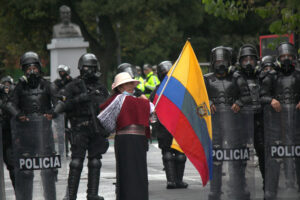 [
[