
 In the early 1970s, when many student activists were migrating from campus to industrial jobs to promote working class radicalization, no labor film was more influential than Salt of the Earth.
This pioneering docudrama was made two decades earlier by a producer, writer, director, and several actors who were unemployable in Hollywood, due to McCarthy era-blacklisting.
This left-wing creative team recruited a cast of workers and their families from the International Union of Mine, Mill, and Smelter Workers (IUMMSW) to play themselves in a fictional account of a long strike at the Empire Zinc Company in Grant County, New Mexico.
Local 890 members knew something about red-baiting too. Shortly before their 1951 fight for better conditions and an end to wage disparities between Anglo and Chicano workers, Mine, Mill was expelled from the Congress of Industrial Organizations (CIO), along with the left-led United Electrical Workers (UE) and west coast longshore union, the ILWU. In
In real life, and later on screen, the key to the success of this mining community struggle was the militant participation of strikers’ wives, mothers, daughters and sisters after their own mass picketing is enjoined by a local judge.
In Salt of the Earth, this picket-line replacement strategy, which challenged and changed traditional gender roles in a socially conservative company town, is heatedly debated by film’s two lead characters.
Blacklisted and Deported
Playing the role of Ramon Quintera, Juan Chacon, an actual IUMMSW local president, initially objects to the strike activism of his fictional wife Esperanza, played by Mexican actress Rosaura Revueltas (who was deported for making the film). Other members of an entirely male and largely Latino workforce are similarly conflicted about the emergence of a vocal and empowered women’s auxiliary.
When Esperanza and her fellow female pickets are arrested, she takes her small baby behind bars with her. The resulting boisterous jail house protest—which prefigures southern civil rights and peace movement tactics in the 1960s–forces the sheriff to release them all. The miners’ subsequent defense of the Quintera family–when the company tries to evict them–becomes a turning point in the long strike which ends in a contract settlement.
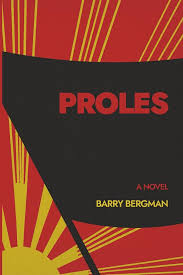
Berkeley journalist and now first-time novelist Barry Bergman was among the many young radicals much inspired by this now iconic depiction of Mexican-American labor struggle. Before Bergman relocated to California and began a long career as a newspaper reporter, magazine writer/editor, and communications specialist for UC Berkeley and numerous non-profits, he worked for several years in a copper smelter near Tucson.
That experience as a rank-and-file member of the United Steel Workers (USW)–which gobbled up the IUMMSW, after years of raiding it–led to his writing Proles (Serving House Books). Bergman’s novel is a funny, moving, and historically accurate account of workplace “colonizing”—or “salting” as it’s called today– told from the point of view of the author’s fictional alter-ego.
Via a college course entitled “Celluloid and Social Change,” Simon Bussbaum learns about a film called City of Emeralds. He is captivated by its depiction of “dirt-poor Chicano miners in the Southwest” and their humble but charismatic leader, Naldo Galvin.
Art Imitates Life
Simon does further research and discovers that Galvin—like the real-life Juan Chacon in the 1970s—has become a dissident in the Steel Workers. The former strike organizer—and Salt of the Earth co-star– is now rallying his co-workers against “a class collaborationist union which muscled its way into zinc and copper mines in the Sun Belt” by marketing itself as a labor-management partner, rather than a class struggle foe.
The bookish film buff from Queens (the author’s hometown as well) leaves anti-war politics behind for a very different blue-collar life in open shop Arizona. Arriving for his first shift at Cobra Copper Company (aka “ThreeCo”), Simon walks into a scene lifted from the film that inspired his turn toward the working class.
“Outside the giant garage doors that opened out from the smelter’s shell, hundreds of men clustered in small groups, coveralls gone or dangling at their waist. Some were standing, others lying on bare ground or using their hardhats for seats. A handful were shirtless, glistening in the sun. It might have been a disorderly line at the Fillmore East, save for the work clothes and industrial boots.”
A new co-worker, a “hard-looking Chicano with a missing tooth, a Fu Manchu mustache and a cobra tattoo on his right forearm” tells Simon what’s going on. “It’s a ‘wildcat,’” explains Snake, who seems happy to follow the crazy “white dudes” who started it all by “waving their arms, walking out, and shouting, ‘Join us!”.
Other hard hats in the now idle crowd are pissed off about losing a few hours pay. “Anarchists,” one grumbles. “Commies and agitators. They don’t like it here, can’t blame them for that. But you can’t strike till the contract’s up. That’s the law.”
A manager addresses the crowd with a bull-horn and repeats the same message. “This is an unlawful work stoppage. Your local union has not authorized this action, and joins us in ordering you to immediately cease and desist. This is your final warning.”
A Tactical Error?
The “cadre” organization members–who have inducted Simon into their small circle at a local radical bookstore–are among “the twelve people pegged as troublemakers and fired.” After this “tactical error,” Simon attends his first Steelworkers local union meeting. There, he encounters bureaucratic lethargy and business union routine familiar to many rank-and-file activists, then and now.
Only a smattering of members show-up—at a VFW hall with an “American flag on the pole outside the building and another hung on a wall behind the podium.” Much time is spent on the financial report and a reading of minutes from the last meeting. The biggest agenda item is the e-board’s unanimous decision “not to pursue grievance arbitration cases for employees who were terminated.”
As the union treasurer explains, this will result in “a big savings for the local because we could not have prevailed in defending an action that went against the ‘no strike’ clause in our own contract.” (“Good riddance,” blurts out the local’s business manager, “a pudgy man in a short sleeved white shirt,” who gavels the meeting to a close soon thereafter.)
Bergman’s workplace descriptions are equally on target. Some of the best parts of Proles are reminiscent of The Jungle, Upton Sinclair’s fictional account of job hazards in mid-western meat-packing plants a century ago or Emperor of Gladness, Ocean Voung’s novel about low wage work in 21st century New England.
“The smelter, known as ‘Freako,’ was a cavernous, ramshackle Big Top featuring spark-spewing furnaces, splashing cauldrons dangled from the cranes like murderous marionettes, rapids of liquid fire tumbling down in harrowing dayglow ribbons. Danger was everywhere, lurking beneath the dull roar and the rotten eggs stench. Everything black and orange, darkness and firelight, a waking nightmare Halloween that left him in terror of any possible misstep.”
Unfortunately, the hottest shop floor issue is not the threat of being scalded to death or maimed and killed in many other ways. It’s ThreeCo’s controversial decision to hire its first female laborer, a feisty former high school athlete, who is a half-Latino and a single mother. It’s 1973, after all, and the era of equal opportunity is dawning.
As the fictional reincarnation of Esperanza, Samantha Tanager is not just showing that she can, in a pinch, take a man’s place on the picket-line; she’s going to join them on the shop floor, in a fire-resistant orange jump suit, aluminum hard-hat, and steel-toed boots. But the sudden arrival of a “fetching copper miner’s daughter,” as a local newspaper describes her, proves to be very triggering for Bullock.
He’s the big, tobacco-chewing redneck with “a natural talent for cruelty” that Bussbuam is assigned to work with. Already suspicious of Simon’s rather obvious East Coast Jewishness and college boy ways, Bullock views “Tanager’s admission to the sacred sanctum of the smelter as sacrilege, a grievous affront to the Code of the Working Stiff, Nonferrous Division.”
Besides, he believes that Samantha is a lesbian. (Spoiler alert: much to Simon’s love-struck chagrin, Bullock’s gaydar is correct.)
Casual Racism
Simon’s New Left idealism is now further tested amid Freako’s “dark, depraved beauty, which reeked of musty maleness that gave rise to a loose-knit, shambling ‘esprit de corps,’ wrapped in a kind of casual racism and sexism so expansive, so deeply rooted, it had started to feel—Simon not being of this world, and without standing perhaps to judge his co-workers’ cultural values—like just another flavor of assholism.”
When that assholism takes the form of a nasty campaign by Bullock to make Tanager’s life miserable on the job, Simon’s own personal class struggle ends in a parking lot brawl between two “union brothers.” It doesn’t end well for the new hire and little resembles more heroic scuffles, between labor and management, in Salt of The Earth.
But it does lead Bussbaum to bid blue-collar life adieu and head for the greener pastures of California. (Tanager and her female partner leave for the more tolerant Texas oasis of Austin.)
Proles was definitely not written as a how-too manual for members of the Rank-and-File Project, a present-day effort to “recruit, educate, and support a new generation of activists who will join the fight for working-class power by taking union jobs on the shop floor.”
Nevertheless, this novel is highly recommended reading, in such circles today, due to its deft exploration of the nexus between the personal and the political. Any left-wing “salt” trying to befriend un-class conscious (and sometimes weird) co-workers, while dealing with draining night shifts, imperious managers and not much nicer union bosses, will find humorous respite in Barry Bergman’s fictional rendering of his real-life experience with the “salt of the earth” in Arizona fifty years ago.
 If you’ve read this far, you were pretty interested, right? Isn’t that worth a few bucks -maybe more? Please
Leave a Reply