
Place: Germany
I would like to comment on the Leninist critique of my book Wild Socialism: Workers Councils in Revolutionary Berlin, 1918-21 by Dan La Botz on your website. His review contains several errors and misinterpretations.
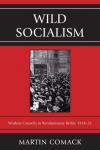 Book Review of Martin Comack. Wild Socialism: Workers Councils in Revolutionary Berlin, 1918-1921. New York: Rowman & Littlefield, 2012. Chronology. Bibliography. Index. 97pp. Paperback or e-book: $24.99
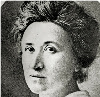
There seems to exist a secret complicity between the rediscovery of Rosa Luxemburg and rebellious times. The last period when her life and writings raised much interest was in the 1960s and 70s, during the “street-fighting years” (Tariq Ali’s expression). Could the recent publication of several of her works, in many parts of the world, be the sign of a new “critical” epoch? In the English speaking world, the good news is the project of publishing The Complete Works of Rosa Luxemburg in fourteen volumes, five of which only with her correspondence.
The book’s title translates a term, "Rote Kapelle," that the Gestapo applied to a relatively small circle of men and women in Berlin, active in seeking to weaken the political authority of the Hitler regime during the 1930s and early 1940s. The term, however, was meant to convey the notion that the group was involved in a Soviet conspiracy — a notion that survived the war and was perpetuated in the ensuing climate of a public opinion shaped by the cold war and hostility to the Soviet Union.
German industrial and financial power is the key to understanding the complex and often confusing international maneuvers around the Crisis of the Euro. Germany is Europe’s industrial powerhouse, the only country that has survived the Great Recession with a healthy economy, low unemployment, rising GDP, social stability and a favorable balance of trade. Yet, only within the solid framework of a strong European Union can Germany, Europe’s principal creditor nation, ever hope to collect on her Southern European loans and investments.
[The publication in 1963 of Eichmann in Jerusalem: A Report on the Banality of Evil by Hannah Arendt provoked a storm of controversy which has been going on for decades. Arendt, the author of the famed The Origins of Totalitarianism claimed that Eichmann, organizer of the Holocaust, was not a fanatic who hated Jews but a normal man, and that Jewish leaders and organizations cooperated with him to an extraordinary degree.
