
Blog

  • Two Stories, One Position

    Two Stories, One Position

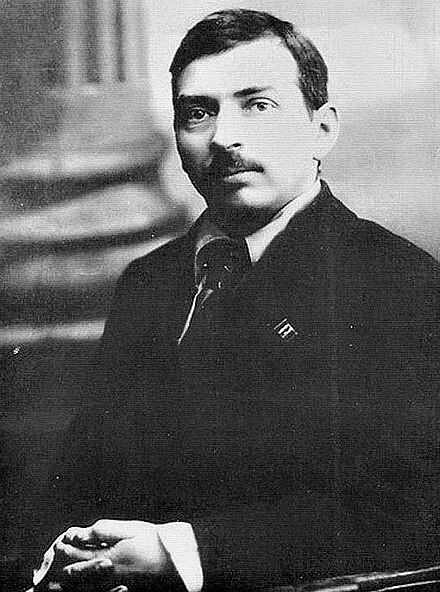
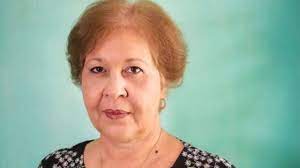
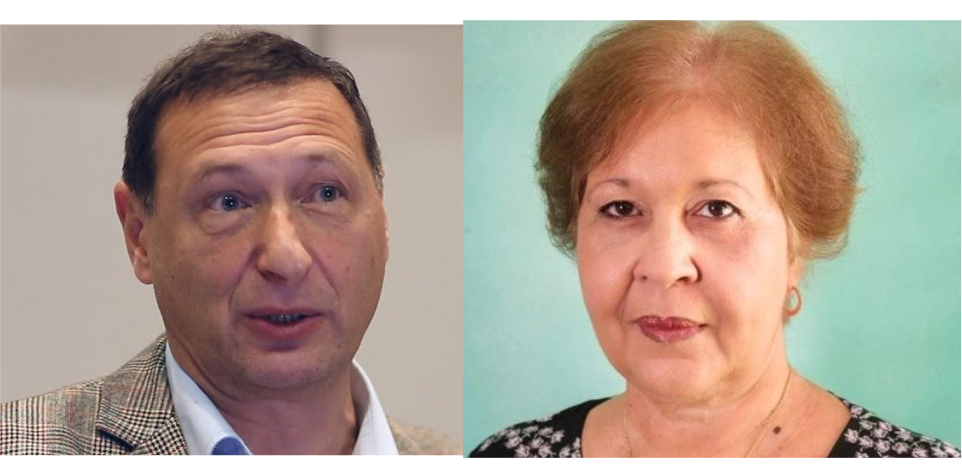
    Boris Kagarlitsky and Alina Barbara López Hernández

    Understanding is not condoning. One can understand the logic behind authoritarian behavior, without endorsing the pretexts it often uses to punish its victims. Understanding is important to anticipate the actions of the repressors, dismantle their lies, and generate solidarity with the persecuted.

    As I write (and you read) these lines, two intellectuals, two friends, are persecuted by the respective governments of their countries. Alina Barbara López Hernández in Cuba, and Boris Kagarlitsky in Rusia.[i] Both face spurious criminal proceedings, deployed against them in a punitive environment where the basic guarantees provided by Cuban, Russian and international legality have been violated. Alina awaits her hearing in freedom, Boris has been imprisoned.[ii] The two continue, in their situations to confront the power that threatens them. And also their accomplices.[iii]

    Both have revealed the ideological and political incoherence of power. The lie become the state’s (un) reason. Because Alina is a socialist intellectual persecuted by a government that declares itself socialist while carrying out a brutal economic reorganization on the backs of its workers. While, Boris is an anti-fascist punished by a regime that presents its invasion of a neighboring country as anti-fascist.

    Both belie the fatalisms instilled in power. They come from generations formed under the propaganda and education forged by the Mass-Man; but they have become citizens and behave as such. They have avoided confusing their rejection of Stalinism with the denunciation of the entire left tradition. Both decided to continue thinking, educating, resisting… In the same land ungoverned by its repressors.

    Their stories contrast with those of courtly intellectuals who, in Havana or Moscow, have chosen to shut up, flatter or ramble while their nations are crushed by selfish, exploitative, cynical, abusive governments. The mere existence of Alina and Boris (and the thousands of Alinas and Boris who learn, right now, that another way of being is possible), is a cause of gossip and badmouthing by those who have chosen to put their knowledge at the service of oppressive powers.

    Both make us remember the reasons why silence, in cases like this, sooner or later reaches us all; why it makes as little sense to push anyone to sacrifice – Alina and Boris have never demanded that others immolate themselves for them – as to remain impassive before the dignified position they hold. If Cuba and Russia are ever again worthy of a full and happy life, it will be due to the Alinas and Boris who still resist.

    That’s why we can’t leave them alone.[iv] There are many ways to be supportive of your “cases.” Taking their messages to the international press; supporting their causes on the WEB (right now putting  a like is a sign of civic courage in Russia and Cuba), or accompanying them in court. Giving all the necessary support to their loved ones, leaving the greatest possible warning to their repressors. Everyone does what, according to choice and circumstances, they can, but paralysis is not an option.

    Hanna Arendt once wrote: “Nobility, dignity, perseverance and a certain laughing courage. Everything that constitutes greatness remains essentially the same through the centuries.” It is just that, a struggle for one’s own dignity and that of others, embodied in the fragile matter of two human beings, of two people like us, that is at stake now. You decide.

    Notes:

    [i] (https://es.wikipedia.org/wiki/Borís_Kagarlitski)

    [ii] https://www.counterpunch.org/2023/08/17/letter-from-prison/

    [iii] https://www.nuso.org/articulo/Rusia-Putin-guerra-Ucrania/

    [iv] https://nuso.org/articulo/Kagarlitski-Rusia-guerra/


  • Adalah’s Statement following the Extreme Violence in Gaza and in Israel since Saturday 7 October 2023

    Adalah’s Statement following the Extreme Violence in Gaza and in Israel since Saturday 7 October 2023

    Oct. 11, 2023

    Adalah calls on the international community to intervene immediately to protect the lives of civilians in Gaza, most of whom are Palestinian refugees, who are now subject to Israel’s ruthless retaliatory actions. Israeli Prime Minister Benjamin Netanyahu clearly declared on 9 October 2023 that Israel “will exact a price that will be remembered by them [Hamas] and Israel’s other enemies for decades to come”. Yoav Gallant, Israel’s Defense Minister, stated that, “We are imposing a complete siege on [Gaza]. No electricity, no food, no water, no fuel – everything is closed.” These announcements and the ensuing retaliatory actions indicate the intent to commit war crimes against the civilian population in the Gaza Strip.

    These acts, which violate international law, come after the unprecedented, brutal and illegal attack by Hamas militants in Israel against civilians. According to Israeli sources, more than 1,200 people were killed and 2,900 injured, most of whom were civilians, and over 100 individuals (including children, women and the elderly) were taken as hostages into Gaza. While the Palestinian people are entitled to resist the Israeli brutal and prolonged occupation under international law, the killing of civilians, the holding of civilian hostages, and the holding bodies for any political purposes are completely prohibited means and constitute war crimes.

    The root causes – the illegal 56-year-old Israeli military occupation, the longest occupation in modern history; the killing of tens of thousands of Palestinians; the blockade on Gaza; Israel’s settler-colonial policies in the West Bank, including East Jerusalem; and the denial of the inalienable right of the Palestinian people to self-determination – as well as the total disregard by the international community of its obligations to fulfil UN resolutions – provide the context to these events.

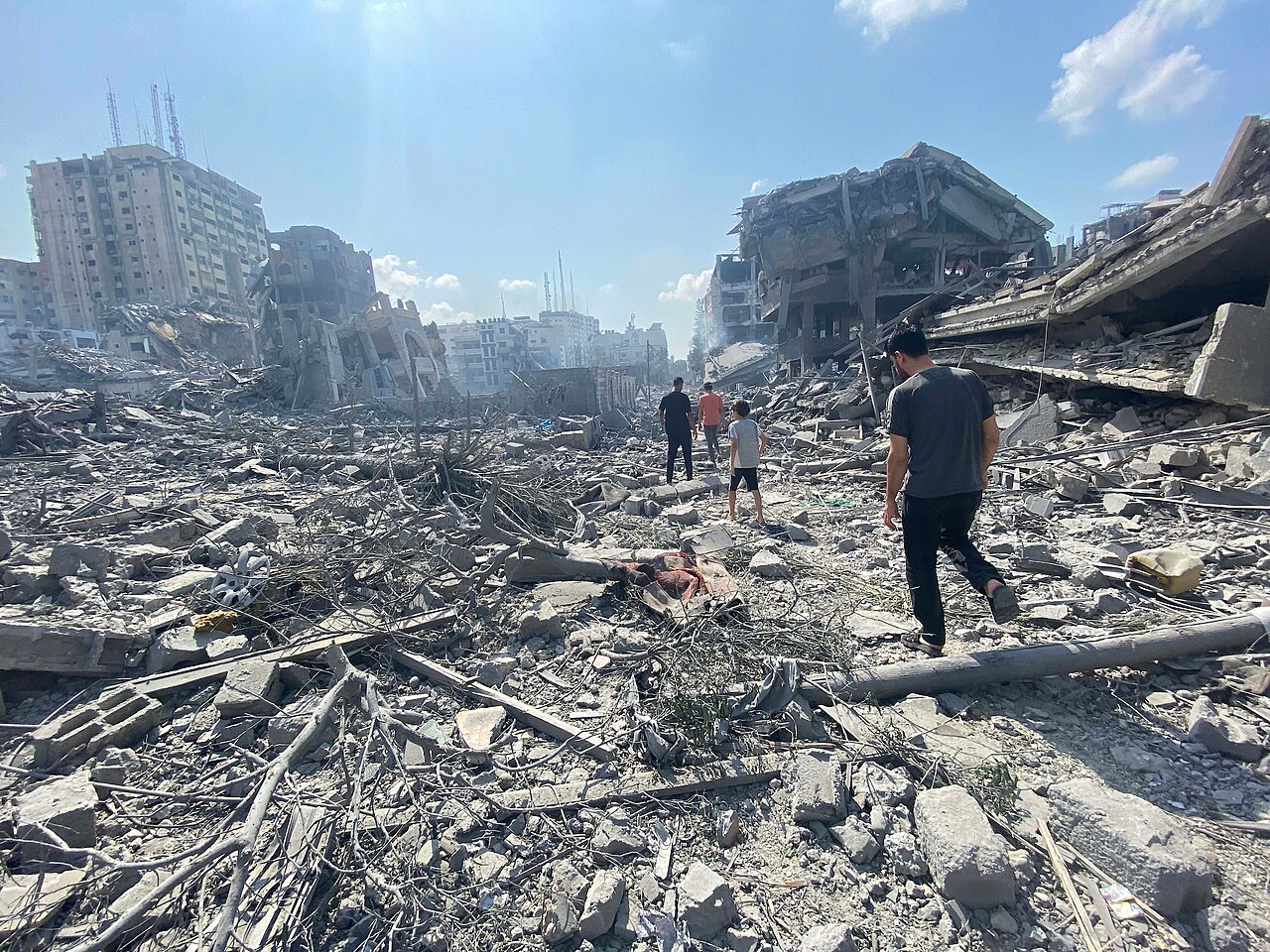
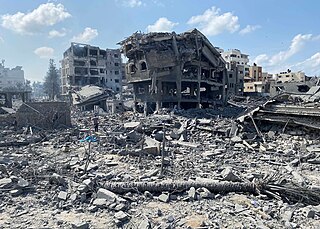
    The extremist, racist Israeli government is using the attacks by Palestinian militants as a pretext to launch illegal attacks and commit war crimes toward ethnic cleansing against the Palestinian people in Gaza. As of 11 October 2023, the death toll in Gaza has risen to 950 people, most of whom are civilians, with over 5,000 individuals injured as a result of the ongoing Israeli attacks, and over 185,000 Palestinians displaced in Gaza. Israeli forces killed an additional 19 Palestinians, including one child, in the West Bank. The dead, wounded and displaced of the last few days join the tens of thousands of Palestinian victims of earlier Israeli military offensives in Gaza, primarily airstrikes. The Israeli military is also striking and destroying infrastructure, including water and sewerage systems, cutting off electricity and humanitarian supplies, and targeting medical facilities and personnel and journalists, creating one of the cruelest humanitarian crises in the world.

    We call on the Israeli and Gaza authorities to cease all violations of international humanitarian law and to release all civilian hostages and bodies. We call on the international community to protect the Palestinian people in Gaza from Israel’s brutal and illegal actions, to stop the inhumane blockade on Gaza, and to put an end to the Israeli prolonged occupation, in order to uphold Palestinians’ right to self-determination.

  • Imagine a Country

    Imagine a Country

    Bedouins in a camp in South Hebron Hills. Palestine 2011.

    Let’s imagine the following story. A country is occupied, its people systemically oppressed. The policies of the occupying state encourage the installation of new permanent colonizers — settlers. The struggle for emancipation by this oppressed people receives insufficient support from progressive forces outside the country, and is marginalized and ignored by the world’s leading states. Then reactionary forces take up the cause of national liberation and recruit from the population that suffers daily injustice. Their methods increasingly involve terrorist acts. The colonizers’ government brutally represses the movement and the resistance is increasingly radicalized, giving rise to an ultra-right-wing, ultra-reactionary organization.

    At some point, the international balance of power begins to shift: emerging ultra-reactionary imperialist forces gain in power, bourgeois democracies find themselves increasingly weakened, discredited and losing their position of absolute hegemony, not least due to their internal political crises. Emerging imperialisms provide support for the reactionary organization claiming to represent national emancipation movement, which has become the bearer of the ideology of hatred.

    At some point, under the impetus of external actors and under the weight of internal oppression that was only growing year by year, the organization intensifies acts of violence against the civilian population of the oppressing nation: hostage-taking, rape, murder. In Ukraine’s history, we’ve already had a story that strongly resembles this scenario. It was when the Ukrainian Insurgent Army under the leadership of the Organization of Ukrainian Nationalists (OUN), our very own Hamas, massacred entire villages of Poles in Volhynia and Eastern Galicia in 1943.[1]

    I’m deliberately giving a simplified and generalized description, because I’m trying to see the structures that make it possible not to exoticize Palestine, but to make it potentially comparable to other situations of colonial oppression and legitimate resistance carried out nonetheless by ultra-right-wing, ultra-reactionary organizations. This is not to say that Hamas and the OUN are the same thing, but I do think the comparison has a place and helps us to understand the systemic dynamics underlying conflicts of this kind.

    Today, to remain silent about apartheid and systemic violence against Palestinians and to side with Netanyahu’s regime, which wants to wipe out 2 million people in Gaza, is unacceptable. To say that Hamas’ murder of civilians is somehow justifiable, or to pretend that Hamas currently represents the Palestinian people’s struggle for freedom, is equally unacceptable. Hamas and Netanyahu are not only two reactionary forces, they both openly declare that the civilian population of the adversary is a legitimate military target.

    In this situation, the only reasonable thing would be to support what’s left of the Palestinian emancipation movement, which is able to fight without falling into ultra-reactionary delirium. And also to support those Israelis who actively oppose their ultra-right colonialist regime and support the Palestinians’ right to self-determination. But where are they after more than half a century of endless horror? They still exist, but the fact that they are so weak is also our fault. We haven’t done enough to support them and make them strong in the face of the reactionary forces. We have betrayed them, thinking that expressing solidarity is the same thing as concretely helping the resistance of the oppressed. No, it’s not.

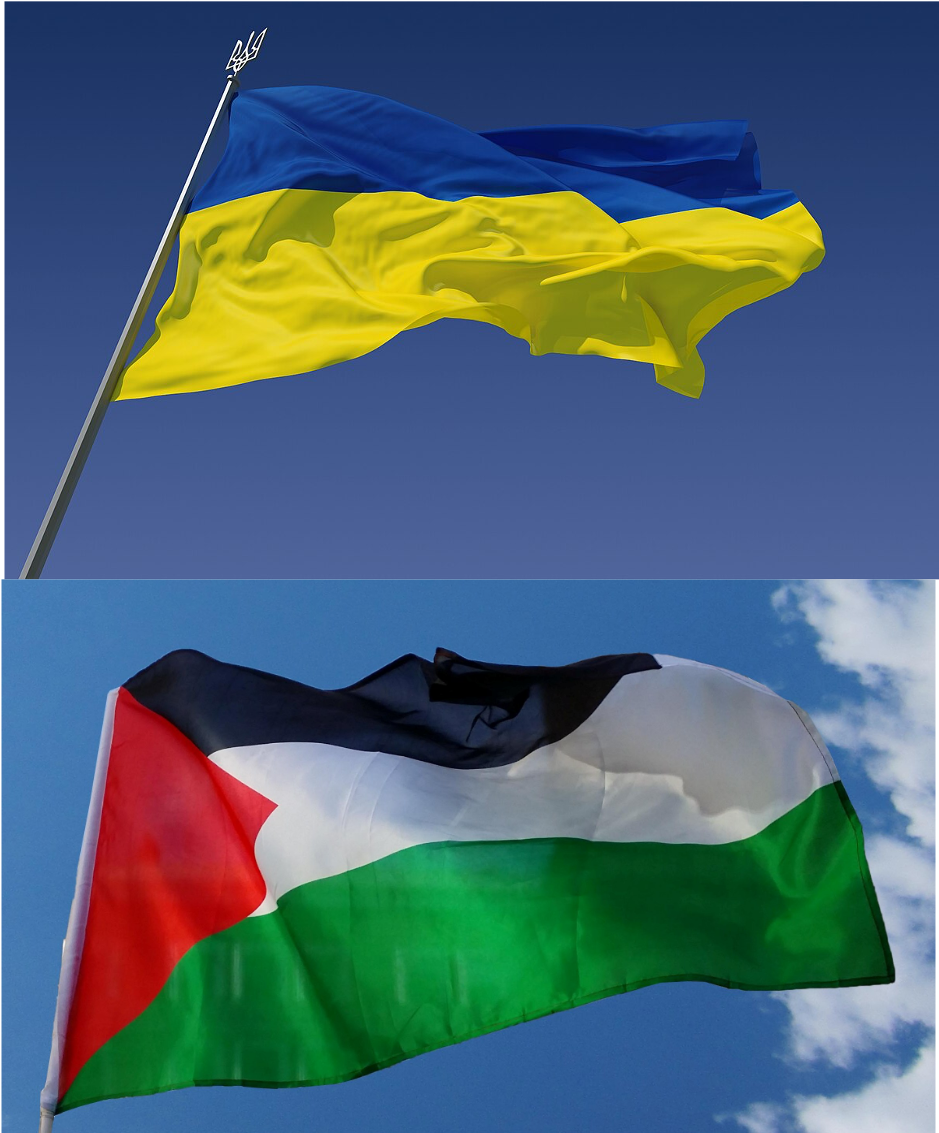
    And if we carry on like this, if our political activism today is limited to posting flags on social networks or writing endless comments on Facebook – we’re going to have a second Palestine with its Hamas, except that it will be in the middle of Europe and taking hostage the population of over 40 million. Yes, that’s very likely what will happen if we betray the Ukrainians and allow their country to be partitioned in the name of “peace”. What’s worse is that this is exactly the kind of scenario some left-wing activists would have preferred. If Ukraine had been occupied and subjugated, it would be so much more comfortable to express solidarity with the Ukrainians. And yes, I’ve heard this reasoning with my own ears.

    Unlike Hamas, the fascist Azov isn’t in power (yet) and isn’t slaughtering whole families of Russian civilians that have moved to the occupied Ukrainian cities. Ukraine is still defending the democratic project and there are still many forces fighting against the occupier, but defending the project of a secular, open, anti-authoritarian, socially conscious and just Ukraine. But it seems that for some on the left, this is not enough to get them to support the struggle of a people who accept American weapons. On the other hand, supporting those who take up arms from the Iranians has never been a problem for much of the “western left.”

    I’m shocked by the reaction of many left-wing organizations. People are celebrating what’s happening in Israel/Palestine as if it were “an opening” to something good, to the liberation and emancipation of the oppressed. For me, what’s happening is a failure of humanity and especially of all those who identify with the forces of the left. What’s happening today is an acknowledgement of the powerlessness of all progressive forces, who have not done enough to support the cause of the oppressed. Not in Palestine, not in Iran, not in Syria, not anywhere else. Waving Palestinian flags was cool for the good conscience of anti-mainstream activists, but it wasn’t enough. The real Palestinians were still alone in the face of the horror of occupation.

    We need to realize this and acknowledge our failure as soon as possible. We need to stop fooling ourselves and finally start thinking seriously about what we can do concretely today to oppose the fascism that’s spreading like a virus, and to really help those fighting for their emancipation before they fall into the cycle of despair and insurmountable hatred.

    [1] The OUN is a Ukrainian far-right movement founded in 1929 and responsible for numerous massacres against Poles and Jews during the Second World War. Stepan Bandera headed one of its factions – the OUN(b).

  • JVP calls on all people of conscience to stop imminent genocide

    JVP calls on all people of conscience to stop imminent genocide

    The Israeli government has declared a genocidal war on the people of Gaza. As an organization that works for a future where Palestinians and Israelis and all people live in equality and freedom, we call on all people of conscience to stop imminent genocide of Palestinians. 

    Jewish Voice for Peace mourns deeply for the over 1,200 Israelis killed, the families destroyed, including many of our own, and fears for the lives of Israelis taken hostage. Many are still counting the dead, looking for missing loved ones, devastated by the losses.

    We wholeheartedly agree with leading Palestinian rights groups: the massacres committed by Hamas against Israeli civilians are horrific war crimes. There is no justification in international law for the indiscriminate killing of civilians or the holding of civilian hostages.

    And now, horrifyingly, the Israeli and American governments are weaponizing these deaths to fuel a genocidal war against Palestinians in Gaza, pledging to “open the gates of hell.” This war is a continuation of the Nakba, when in 1948, tens of thousands of Palestinians fleeing violence sought refuge in Gaza. It’s a continuation of 75 years of Israeli occupation and apartheid.

    Already this week, over 1,000 Palestinians in Gaza have been killed.  The Israeli government has wrought complete and total devastation on Palestinians across Gaza, attacking hospitals, schools, mosques, marketplaces, and apartment buildings.

    As we write, the Israeli government has shut off all electricity to Gaza. Hospitals cannot save lives, the internet will collapse, people will have no phones to communicate with the outside world, and drinking water for two million people will run out. Gaza will be plunged into darkness as Israel turns its neighborhoods to rubble.  Still worse, Israel has openly stated an intention to commit mass atrocities and even genocide, with Prime Minister Netanyahu saying the Israeli response will “reverberate for generations.”

    And right now, the U.S. government is enabling the Israeli government’s atrocities, sending weapons, moving U.S. warships into proximity and sending U.S.-made munitions, and pledging blanket support and international cover for any actions taken by the Israeli government. Furthermore, the U.S. government officials are spreading racist, hateful, and incendiary rhetoric that will fuel mass atrocities and genocide.

    The loss of Israeli lives is being used by our government to justify the rush to genocide, to provide moral cover for the immoral push for more weapons and more death. Palestinians are being dehumanized by our own government, by the media, by far too many U.S. Jewish institutions. Defense Minister Yoav Gallant said that Israel is “fighting human animals” and should “act accordingly,” As Jews, we know what happens when people are called animals.

    We can and we must stop this. Never again means never again — for anyone.

    We call on all people of conscience to stop the imminent genocide of Palestinians. We demand our government work towards de-escalation, that it immediately stop sending weapons to the Israeli military. A future of peace and safety for all, grounded in justice, freedom and equality for all, is still the only option.

  • Statement from the Leadership of Religion and Public Life on the Current Spate of Violence in Palestine/Israel

    Statement from the Leadership of Religion and Public Life on the Current Spate of Violence in Palestine/Israel


    This statement was authored by leaders of Harvard Divinity School’s Religion and Public Life program.


    October 11, 2023

    “The Palestinian poet Mourid Barghouti writes that if you want to dispossess a people, the simplest way to do it is to tell their story and to start with, ‘secondly.’ Start the story with the arrows of the Native Americans, and not with the arrival of the British, and you have an entirely different story. Start the story with the failure of the African state, and not with the colonial creation of the African state, and you have an entirely different story.” -Chimamanda Ngozi Adichie, “Danger of a Single Story” TEDGlobal, July 2009


    Start with the rockets fired into Israel by Hamas on October 7, 2023 and not with the illegal occupation of Palestinian land by Israel and the blockade of Gaza since 2007, and you have an entirely different story.

    We are horrified by what is unfolding in Palestine/Israel. We recognize the pain, loss, and humanity of Palestinians and Israelis and are in touch with family, friends, and colleagues in the region as we are able. There is still so much that is unknown and unfolding.

    What we do know is that single story narratives are dangerous. To acknowledge the context out of which this latest spate of violence arises is not to diminish the pain and suffering of Israeli and Palestinian victims. We agree with UN special rapporteur on the Occupied Palestinian Territories Francesca Albanese who is “shocked and appalled” by the violence unfolding in the region and “horrified by the narrative, by the discourse, because it is possible, and necessary, to stand both with the Palestinians and the Israelis without resorting to ethical relativism, to selective outrage or worse, calls for violence.” Albanese calls for the international community to be “wise and even-handed” when confronting the result of “decades of oppression imposed on the Palestinians…”

    When these “decades of oppression” are left out of the story about Hamas’ horrendous attack on Israeli civilians, a narrative about an “innocent” state of Israel’s right to “defend” itself against supposedly “unprovoked” aggression is legitimized. The reality is much more complex, and that complexity must be confronted if there is any chance to avoid endless cycles of dehumanization, destruction, and death.

    In this time of sorrow and pain, may we all challenge single story narratives that justify vengeance and retaliation. Pathways out of the catastrophic events in Palestine/Israel and regionally cannot be military ones but must involve diplomacy, historical accountability, dismantling the structures of violence, and retraining the political imagination to disrupt exclusionary and ethnocentric conceptions of belonging.

    May we be mindful of each other at this moment. May we put into practice all we have learned and the values we hold dear as we continue to pursue a just world at peace.

    Diane L. Moore, Associate Dean of Religion and Public Life, Harvard Divinity School

    Hilary Rantisi, Associate Director of the Religion Conflict and Peace Initiative, Religion and Public Life, Harvard Divinity School

    Atalia Omer, T. J. Dermot Dunphy Visiting Professor of Religion, Violence, and Peacebuilding and Senior Fellow in Conflict and Peace, Religion and Public Life, Harvard Divinity School

    Hussein Rashid, Assistant Dean of Religion and Public Life, Harvard Divinity School

    Susie Hayward, Associate Director, Religious Literacy and the Professions Initiative, Religion and Public Life, Harvard Divinity School

    The views expressed here represent those of the signatories.


  • CARICOM must say no to UN intervention in Haiti

    CARICOM must say no to UN intervention in Haiti

    [This is the text of a statement written by Eusi Kwayana and open for signatures by others. The introduction states: This petition/open letter is a counterproposal for the gathering of forces instead of current United Nations (UN) policy toward Haiti. Signatories are asked to endorse broad consultation and a Caretaker government to guide transition out of the disturbing circumstances in Haiti. This counterproposal is in opposition to the policing action under Ariel Henry’s authority.]

    The grandfather clock of foreign armed intervention is ticking again, this time again for the republic of Haiti. Those inspired by the historical Haitian Revolution (1791-1803) must remind global citizens this is not a minor event for an obscure small territory in the Caribbean Sea. We must draw a line of steel between the Haiti, characterized as exhibiting perennial chaos, and the Haiti that has always had a large vision and been at the center of democratizing world civilization.

    A conquered people who organized a powerful war of liberation against the slavery and empires of the French, Spanish, and English, has also since 1915-1934 been intermittently occupied in the last 100 years by the USA. Haitians, women and men, have conducted profound experiments in self-government and expressed solidarity to both whites and people of color on a world scale in their times of need. The signatories bear witness that Haiti has never been forgiven for its search for identity and autonomy.

    On October 2, the UN Security Council adopted resolution 2699 (2023), clearing the way for a multilateral armed force into Haiti as the supposed means of solving what is described as a regime of disorder due to the activity of armed gangs in that country.

    The public has not been offered by the august body of the UN an explanation of the origins and causes of this disorder. Hence it is no surprise that to many including those who signed this statement the situation is much like a team of medical experts prescribing deep surgery for a patient without letting the diagnosis be known. Before drafting this statement those who signed it have spent much time inquiring into the texture and present motion of Haitian society, which for many years has been denied the right of self-determination.

    Some features of the UN resolution need to be recalled. Most noteworthy is the fact that 13 nation-states voted in favor and two abstained. The People’s Republic of China and the Russian Federation, which along with the UK, France, and the USA have the power of veto, abstained at the time of voting for this critical resolution of the Security Council. China and Russia had also abstained in 2011 when the UN Security Council voted to impose a no-fly-zone, leading to a USA-led war against Libya.

    The most recent resolution of the Security Council purports to authorize or invite armed intervention to pose as a police action into Haitian society. It seems to approve and welcome the offer of the government of Kenya to lead this intervention with a police force of 1000, an offer that was quickly approved by the USA in its pledge to contribute $100 million dollars to the implementation of this unfortunate mode of conflict resolution.

    Though some are satisfied, some are disturbed in the Haitian and Caribbean community by Kenya’s role. Certainly, there is agreement among many that Kenya is fronting an initiative by the USA. But more is required of us.

    We must remember that the CARICOM governments not only endorsed the intervention in Haiti. The smallest territories including St Lucia, Antigua & Barbuda, and Grenada are federated through the RSS (Regional Security Service) project.

    The RSS proudly traces its history to taking part in the US invasion of Grenada in 1983 and claims to be a project of Pan Caribbean unity. Even the larger territories including Guyana, Jamaica, Trinidad, and Barbados are affiliated.

    The RSS has been trained by the US, UK, and Canada. Its major contemporary mandate for existence is to fight “gangs” and “firearms proliferation.” It is peculiar that we don’t hear much about the RSS at this moment of danger. Whatever their well-wishers say, all the CARICOM governments are taking part and are complicit in this policing action in Haiti. That is why the RSS exists. It might be renamed “the Rulers Security Service.”

    The USA seems sensitive to not placing CARICOM RSS toward the front of this Haiti intervention – even though they have been trained explicitly among other things to fight gangs and firearms proliferation. They are of course concerned about protests close to home. Kenya’s taking of the initiative is also a grave and disturbing maneuver.

    In our view, the UN organization has had a series of mishaps in its efforts to intervene in Haiti and is on the verge of implementing another project, the failure of which is even more predictable than those that have gone before.

    It should be made clear that in this critique of UN activity, the signatories have doubts about the UN’s capacity to aid the Haitian people. This is consistent with vigilant global citizens who desire accountability and increasing power over our lives including in foreign affairs.

    It is clear that the voices of Haitians who do not want intervention express serious concerns. Past policing actions in Haiti have been widely acknowledged as reasons for the Haitian masses to question UN prescriptions or designs for their delivery.

    Before making any attempt at proposing alternative measures, the signatories affirm that the basic statutes of the UN organization and in particular the 1948 Universal Declaration of Human Rights, with their amendments, appear to be reliable guidelines to be applied in the case of the disorders in Haiti.

    Our first proposal is that the resolution of October 2 should be revisited for reconsideration and improvement in light of the fact that there has been little or no consultation with formal or informal associations representing or reflecting the opinions of the mass of the population outside of government, official, and pseudo-official positions.

    It is therefore urged that in revisiting the resolution of October 2, the Secretary-General with the help of others should arrange for genuine consultations in Haiti, or at the site of the UN, with a cross-section of opinion reflecting what can be called, without a general election, the will of the people. This should be carried out at the expense of the United Nations.

    The will of the people is not an easy standard to achieve but when it is considered that the future of Haitians of various strata, classes, opinions, and generations is involved, all people of good will should agree that making the effort, is a worthy endeavor.

    It is our hope that what can emerge from such consultations, in the place of support for a transitional government headed by a controversial present office holder placed there by ill-considered intent expressed in high places, is a Caretaker government of plural origins. This Caretaker government should represent the widest possible cross-section of Haitian society. Such a Caretaker government of many strata, including women, men, and youth, not excluding the humblest, will have a far better likelihood of leading a transition to a society far more conducive than the present for growth and development of humanity in Haiti.

    The resolution of the Security Council contains, so far as it is known, one element worthy not only of universal support but of strengthening and expansion. It is the proposal for an embargo on arms sold or delivered to Haiti. There are Haitians today who believe that the official security forces are unable to import or receive equipment they need to contend with gangs, whereas they experience that the gangs seem to have no difficulty obtaining weapons that they use for domestic terror.

    There can be justifiable arguments against some of the recommendations in this statement. Yet on examination it will be found that the measures modestly recommended here will result in far less conflict, far less disorder, and far less arbitrariness in attempts to implement the Security Council’s resolution. It is hoped that this letter, this statement, offers new hope of coming to grips with the unfortunate developments in Haiti without a resort to, and reliance on, brute force, which is the logic of the present resolution we criticize. Hence, we have taken the liberty of offering this counter-proposal.

  • Israeli Conscientious Objector Haggai Matar: Hamas Attack Reflects Israeli Violence in Palestine

    Israeli Conscientious Objector Haggai Matar: Hamas Attack Reflects Israeli Violence in Palestine

    Israel has mobilized some 300,000 army reservists as it ramps up its war on Gaza following a devastating surprise attack by Hamas militants on Saturday that killed hundreds inside Israel, including many civilians. Journalist Haggai Matar of +972 Magazine says that while the violence shocked Israelis, the unending military occupation and apartheid set the stage for this weekend’s events. “There is no military solution. These recurring attacks on Gaza bring nothing but death and destruction, and no hope for any of us,” says Matar, a conscientious objector who refused service in the Israel Defense Forces.

    Transcript

    (This is a rush transcript. Copy may not be in its final form.)

     AMY GOODMAN: This is Democracy Now!, democracynow.org. I’m Amy Goodman, with Juan González.

    Israel is continuing its bombardment of Gaza City, has extended its mobilization of reservists. For more, we’re joined by Haggai Matar, an Israeli journalist and activist who serves as the executive director of +972 Magazine. That’s the area code of Israel and the Occupied Territories. Haggai Matar is a conscientious objector who refused to serve in the Israeli army. His new piece is headlined “Gaza’s shock attack has terrified Israelis. It should also unveil the context.”

    Welcome back to Democracy Now!, Haggai. As we speak to you in Tel Aviv, tell us the context that you feel is so important.

    HAGGAI MATAR: Thank you, Amy.

    I think when I wrote that piece already on Saturday, the shock was just in its initial phases. We had not yet learned the entire scope of the horror of the atrocities in the south of Israel, the hundreds of people who were massacred in their homes and at a music festival, just entire communities decimated. Those stories were just seeping through gradually, and the shock of that tragedy, that atrocity, was just beginning to land.

    And what I felt important to say, while also recognizing this collective shock and the dreadfulness of this attack, was also to understand the history of this, how we, as Israelis, for many years have become — have developed a sense of immunity, that in the context of Gaza wars, for example, Israel could bomb Gaza, as it is doing now, and wipe out entire families, destroy entire neighborhoods, not be held accountable, and when Gazans throw rockets back, almost all of them are intercepted by the Iron Dome. So the casualty rate between Israelis and Palestinians in these past wars over the past decade or so has been one to 100, one to 200 or so. Just now, actually, there were air sirens here in Tel Aviv, and I didn’t move from my desk, because I know there’s Iron Dome, and I feel pretty safe. That feeling of safety was cracked and went away with one whiff of that attack on Saturday. But it was important for me to remind Israelis and people abroad that that feeling of defenselessness is one that Palestinians have experienced for the past few decades, definitely people in Gaza who have been attacked routinely by Israel.

    So, when we think about how we understand the Hamas attack, without justifying it, but also recognizing that it is not unprovoked or unilateral, on the one hand, and also as we think about the next steps, we need to understand there is no military solution. These recurring attacks on Gaza bring nothing but death and destruction, and no hope for any of us.

    JUAN GONZÁLEZ: And, Haggai, about this issue that’s been raised that this was an unprovoked or unilateral attack, you’ve written that, quote, “The Israeli army is routinely raiding into Palestinian cities and refugee camps. The far-right government is giving settlers an entirely free hand to set up new illegal outposts and launch pogroms on Palestinian towns and villages, with soldiers accompanying the settlers and killing or maiming Palestinians trying to defend their homes.” Could you talk about how the Palestinians have experienced this new right-wing government, especially this extreme right-wing government in Israel in their daily lives?

    HAGGAI MATAR: Sure. So, I think, first of all, for context for that, as well, we need to remember: Nothing about what this government is doing is entirely new — the attacks on Gaza, the settlement expansion, the attacks on Palestinian communities in the West Bank. None of this is unprecedented. This far-right government is only taking things one step further, which, you know, needs to be contextualized, but also we need to recognize the places where these things are getting worse.

    And we are definitely seeing, since the election of this government, a much freer hand for settlers to do basically whatever they want in the West Bank. There’s absolutely no guard rail, no limitations on what settlers can do. If they want to attack Palestinian communities and set their houses ablaze, they will have soldiers accompanying them and [inaudible]. If they want to set up new outposts on private Palestinian land, they can do that. If they want to go into the middle of Nablus to pray in the middle of one of the biggest Palestinian cities in the West Bank, they can do that, and soldiers will accompany them and protect them.

    So, what Palestinians are feeling, very much related to what I was saying before, is being defenseless, because the Palestinian police is not allowed and does not offer them defense, and when they try to defend themselves, soldiers would shoot them to death. So, that is the reality that Palestinians have been feeling for a very long time, and increasingly over the past few months.

    JUAN GONZÁLEZ: And this whole issue of how the United States and other countries, major countries in the world have essentially ignored the unresolved Palestinian-Israeli question now for years, hoping to negotiate just with the governments of the region and not deal with the central issue, what do you — how do you think that this has played a role in the desperate attacks now of Hamas into Israel?

    HAGGAI MATAR: I think it is very much connected, as we’re talking about the tools Palestinians have for resistance and the bargaining chips they can bring with them to the negotiating table. Palestinians never had too much to offer. Basically, they’re asking Israel, rightly, to leave their territory, to have an independent state. But all they can offer in return is the lack of violence, so peace. And they used to have this other bargaining chip, which is, if you make peace with us, you will get as a bonus the entire Arab world, the entire Muslim world, that was committed, at least outspokenly committed, to supporting Palestinians and not normalizing relations with Israel.

    Ever since the Abraham Accords, championed by President Trump, in 2020, 2021, and now with the normalization deal that is being brokered by President Biden with Saudi Arabia, Palestinians are seeing those last bargaining chips just slipping away. Netanyahu has always said, “We can have peace with the Arab world without Palestinians. We can just go over their heads.” And Arab nations and countries and governments and the U.S. government, in brokering this, have proved Netanyahu right. So, Palestinians, without those abilities, are seeing fewer and fewer options to claim their just cause against Israeli apartheid.

    I don’t think that justifies massacring hundreds of people in their homes and destroying entire communities of civilians. But at the same time, I understand the context in which Palestinians are feeling more and more desperate and pushed to the point of doing these things.

    AMY GOODMAN: Haggai Matar, you were a conscientious objector in the Israeli military. You refused to serve. Can you talk about overall Israeli reaction right now? And are Israelis concerned about the total siege of and possible ground invasion of Gaza, which the U.N., by the way, the siege, has called illegal?

    HAGGAI MATAR: No, not at all. It’s actually deeply troubling to see how much rejoicing there is in the siege, in the attacks. We’re seeing people, even people associated with the center and with the left, talking. Haaretz journalists, for example — not all of them, obviously, but some — have said this is a time to cause great damage to Gaza, this is a time to extract many deaths in Gaza. So, it is very, very troubling and painful to see how, out of a very understandable feeling that I myself also share of shock, of defenselessness, of the tragedy of the massacres in the south, people are taking that and translating that into saying the only answer is revenge. I think it is a very dark mirror to look at when you understand that these same atrocities committed by Hamas came out of that feeling of anger, anguish and dread of Israeli attacks. And now, as a response to those atrocities, Israelis are supporting their own atrocities again against Gaza. And this seems like a dead end, almost literally, for both of us.

    AMY GOODMAN: Haggai Matar, Israeli journalist, activist, executive director of +972 Magazine, Israeli Jewish conscientious objector. He refused to serve in the Israeli army.

    This article was originally posted on the Democracy Now! Website, https://www.democracynow.org/2023/10/10/haggai_matar_israel_reservists_palestine.

    The original content of this program is licensed under a Creative Commons Attribution-Noncommercial-No Derivative Works 3.0 United States License. Please attribute legal copies of this work to democracynow.org. For further information or additional permissions, contact us.

  • Misguided Award from an Anti-Nuclear Group

    Misguided Award from an Anti-Nuclear Group

    The Nuclear Age Peace Foundation was formed in 1982 and says it is made up of 50,000 individuals and groups worldwide. It works to build a world “free of nuclear weapons.” This is indeed a worthy goal. So, it’s shocking that the foundation is giving a peace award in October to a man who has repeatedly appeared on the TV shows of a Russian known as Putin’s chief propagandist while Putin wages a murderous war of aggression against Ukraine, a propagandist who has called for Russia to drop nuclear bombs on Ukraine.

    The man is economist Jeffrey Sachs and the propagandist is Russian TV talk show host Vladimir Solovyov. Last November (2022) after mentioning nuclear weapons, Solovyov said,

    “If we have weapons that secure total victory it would be strange not to use them. Otherwise, why did we even make them? If we think that our lives have no value anyway and that nuclear weapons are not necessary because the wonderful Western world has to remain but Russia can be destroyed.”

    On January 25 of this year a Russian Member of Parliament said on Solovyov’s show that using nuclear weapons would be a “dangerous trend.” Countering him “Solovyov replied that ‘not using nuclear weapons is a dangerous trend’ as he said that Russia should make the most of its ‘superiority in tactical nuclear weapons.’” On June 22, he said,

    “They’re striking bridges on the border between Crimea and Kherson region. We no longer have any option. We must wipe them from the face of the earth… their decision-making centers. If our tactical nuclear weapons give us an advantage, maybe it’s time? Maybe we simply need to batter them.”

    On August 22 he tore away any ambiguity: “Why are we still dancing around? I think we should strike. As soon as they officially deliver [F-16s], we conduct a strike with tactical nuclear weapons,” suggested Solovyov. “They’re convinced we won’t do it. This is why it should be done.” He said nuclear weapons would work “wonderfully in Ukraine.”

    Solovyov was awarded the Order of Alexander Nevsky by the Kremlin in 2014 “for objectivity in covering events in Crimea.” He is a fierce supporter of Putin and of the Ukraine War. “He not only calls Ukrainians Nazis but insists they’re now working in league with LGBT activists to destroy Russia.” In March of 2022 he said: “And if you think we’re going to stop with Ukraine, think 300 times, I will remind you that Ukraine is merely an intermediate stage in the provision of the safety of the Russian Federation.” This is the fellow Sachs chats with.

    To be clear Sachs was not on Solovyov’s program when the latter called for the nuclear strikes, but he could hardly not have known about Solovyov’s monstrous proposals. In late March of this year a statement by scores of economists via an open letter to him noted that “Vladimir Solovyov (apart from calling to wipe Ukrainian cities off the face of the earth, … called for nuclear strikes against NATO countries)”. Despite this open letter, Sachs appeared on Solovyov’s talk shows four more times. Needless to say, he didn’t do this to debate Solovyov or denounce his calls for genocide via nuclear weapons.

    Sachs came to international prominence in the ‘90’s while as a Harvard professor when he advised a “shock therapy” regimen for a quick leap to free-market capitalism for Russia as it emerged from the ruins of the Soviet Union. It didn’t work so well. One critic said, “Between 1991 and 1997, Russian GNP – i.e. the value of all goods and services that Russia produces – went down 83%. Agrarian production decreased 63%. Investment decreased 92%.” Russia started on a deep dive in population. Sachs defended himself by saying Russia didn’t adopt his playbook at all.

    In the new century Sachs reinvented himself as a friend of the poor. In 2005 he wrote The End of Poverty: Economic Possibilities for Our Time, how one could reform capitalism and eliminate extreme poverty by 2025 in a “Big Push.” The grand idea was to send poor countries lots of targeted development aid. He became advisor to a number of UN Secretaries General on poverty eradication. The U.A.E. gave him $3 million to study positivity and he issues a “World Happiness Report.”

    Somewhere along the line Sachs decided he was an expert on diplomacy and geopolitics. The day before Russia’s 2022 invasion of Ukraine, as tens of thousands of troops were on Ukraine’s border, Sachs, then a professor at Columbia, was on Bloomberg denouncing U.S. policy as provocative because it was supposedly expanding NATO.

    By June 2022 he was blaming the Russian invasion completely on the United States. In an article on Tikkun he declared, the war was a“30-year project of the American neoconservative movement.” I did my best to tear his piece apart in this article. One does have to admit that Sachs became popular in the media. He appeared on CNN, Bloomberg, the Economist, the New Yorker, Fox Business, CNBC, Hungary Today, Democracy Now!, and more. One of his appearances on Democracy Now! garnered three million views on YouTube, which I suspect was a DN! record. Just a year after the invasion (on Feb. 27, 2023), Sachs was addressing the U.N. Security Council, sharing his supposed expertise to talk about the explosions at the Nordstream pipelines. It wasn’t as big a deal as it sounds, though. He was there as a guest of the Russian Federation.

    The Nuclear Age Peace Foundation (NAPF) started announcing its upcoming award to Sachs over email in mid-August 2023. It intends to honor him as a “Distinguished Peace Leader” on October 18 in Santa Barbara, California. In September, on behalf of the peace, anti-nuclear, and environmental group Promoting Enduring Peace (PEP), I wrote letters of protest to NAPF. There was no answer. So, some Ukraine solidarity activists started an open letter to the NAPF.

    The signers of the letter are scientists, economists, professors, and writers who praise the anti-nuclear goals of the foundation, but fiercely criticize Sach’s view of Russia’s invasion of Ukraine and his appearances on the programs of Russian TV presenter Vladimir Solovyov.

    There were 175 initial signers including Anastassia Fedyk, UC Berkeley economist; noted Black feminist author Barbara Smith; Dr. Zaher Sahloul and Mayson Almisri, co-winners of the Gandhi Peace Award; Joseph Cirincione, national security analyst and author; Yuriy Gorodnichenko, professor of economics, UC Berkeley; writer Adam Hochschild; Denys Bondar, Associate Professor of Physics, Tulane University; and Bill Fletcher of the National Writers Union.

    The letter notes Sachs’ endless claims about U.S. and NATO “provocations” and remarks that he ignores the Nuclear Age Peace Foundation’s own “Declaration of Concern” which says that the attack is “a violation of the Budapest Memorandum of 1994” (a document signed by representatives of Russia, the United States, and the U.K.). The letter asks how an organization dedicated to avoiding nuclear war could honor someone who has appeared on a program with a man who has repeatedly advocated for the immediate use of nuclear weapons. It calls on the foundation to withdraw the designation of Sachs as a “Distinguished Peace Leader” and to withdraw the invitation to Sachs to speak at their meeting.

    The full letter with hyperlinks and current signers can be found at: https://bit.ly/44JSACHS. New signers are welcome. The Nuclear Age Peace Foundation email is info@napf.org. If you write to them and they respond, please let me know.


  • Ukraine: arms, alliances, and the logic of internationalism

    Ukraine: arms, alliances, and the logic of internationalism

    This is a reply to Gilbert Achcar, following his initial article, my first reply, and his reply to that, concerning two topics: the supply of arms to Ukraine, and the politics of international military alliances in the context of Russia’s invasion.

    Despite my criticisms here, Achcar’s position is a considerable improvement on that of much of the left: it represents a real attempt to develop a position that is rooted neither in kneejerk support for, or opposition to, the interests of this or that geopolitical bloc.

    Yet his position is unsatisfactory because rather than committing to the policy necessary to realize his stated objectives in the context of a full account of Ukraine’s reality, Achcar instead tries to reconcile those goals with certain conventions derived from the broad-left and peace movement of the late 20th and early 21st Centuries. That reconciliation, I believe, is a failure.

    Arms

    On arms, Achcar begins with the right idea: “The starting point is support for Ukraine’s right to get what it needs to defend itself and push Russian troops back from the territory they grabbed since last year’s invasion.” Unfortunately, he precedes to establish a series of principles that ensure that, if followed, that goal will not be met. The result is a well-meaning case study in the impossibility of useful comment on any war without understanding its material-technical realities.

    This is evident in four areas.

    First, the distinction between offensive and defensive weapons is not merely “not clear-cut”; it is close to non-existent. Achcar attempts to distinguish the former from the latter, in a theoretical innovation hidden to generations of military theorists, first by saying that any weapon with the prefix “anti” is defensive, and second by saying that “long-range missiles and planes” are offensive. Let’s consider the second of those conditions. How long-range does a weapon have to be before it counts as offensive? The range of standard GMLRS ammunition (90km)? ATACMS (up to 300km)? The Storm Shadow (up to 400km)? And why is that the important figure? Defensive strategies necessarily involve a) offensive tactics (rendering any such distinction irrelevant, even if it could be coherently described) and, b) in particular, long-range missiles, as the example of the GMLRS in stabilizing Ukraine’s lines last summer shows.

    Second, limiting the range of munitions supplied by the West is not an optimum tool to manage escalatory risks supposed to be associated with strikes “deep into Russian territory.” There are four important considerations that disrupt the relationship between the range of the matériel the West supplies, and such strikes:

      1. Ukraine’s suppliers have insisted that technologies that they send, at least beyond the range of conventional tube artillery, not be used to target sites within pre-2014 Russian territory. This restriction has been observed. The reason it has been observed is that, as I mentioned in my previous piece, Ukraine’s supporters have the ability to close off, at any time, an ammunition and matériel pipeline that operates on a basis somewhere between just-in-time and definitely-too-late. This is also the reason that a Ukrainian attempt to take Crimea or the Donbas by force could be prevented by Ukraine’s external backers. There is an overriding incentive for Ukraine to abide by such restrictions.
      2. Several technologies have facilities that allow their target locations to be restricted, independent of their range. We know this includes the HIMARS (and therefore M270) launchers that fire both standard GMLRS and ATACMS munitions. It may cover the Storm Shadow or other air-launched munitions too: a similar modification was made to counter-battery radar given to Ukraine in 2015. In such cases, the same weapon, situated in Kharkiv can target sites in Crimea, hundreds of kilometres away, yet not target sites in Russia a few dozen kilometres away.
      3. Ukraine is not going to get air superiority, because it is not going to get F-35s. Russia’s air defense envelope extends even into Ukrainian territory. Even with longer range air-launched munitions such as the Storm Shadow, Ukraine’s aviation reach into Russian territory will always be fundamentally limited. The function of jets is to extend range through air-launched munitions fired from well within Ukrainian-held territory – as the Storm Shadow is already doing.
      4. Ukraine is manufacturing its own long-range strike drones, which have already conducted strikes up to 600km inside Russian territory – considerably further than even the Storm Shadow could penetrate.

    In this context, preventing Ukraine from receiving ATACMS, jets, or more air-launched cruise missiles is neither necessary nor effective as a means to limit strikes deep inside Russia: its only function would be to make Achcar’s purported objectives harder to realize.

    Third, it is part of Achcar’s declared purpose that Ukraine should retake land. Retaking land means offensives. Offensives require offensive capacities. As a matter of logic, a policy that deliberately restricts some category of weapons on the grounds that they have offensive potential cannot meet this declared aim. Thus, if there were a distinction between offensive and defensive weapons, it would be incoherent with his own stated objectives to enforce a policy built on that foundation. As a matter of observation, long-range strike capacities are vital for these offensives; as we saw in Kherson a year ago, and as is being demonstrated in Zaporizhia today. Neither defense nor offense can succeed without systematic measures to destroy and push back command and logistic nodes: that needs range.

    Although cluster munitions are opposed by Achcar on different grounds, it is important to note that the current offensive would already have had to stop were it not for the US decision to provide these munitions, due to a shortage of conventional 155mm shells. Because these munitions are being fired into the middle of heavily mined areas, there are fewer humanitarian concerns than in other use cases: these areas will be inaccessible to civilians pending future one of history’s largest demining operations. The transfer of cluster munitions thus had more upsides and fewer downsides than were contemplated by those countries – not including Russia, the US, or Ukraine – which have agreed to proscribe them.

    Fourth, and perhaps most importantly, Achcar shows no understanding of the dynamics of escalation as they have played out in the war. (I gave examples in my previous piece, which he did not address.) Both sides will make use of all escalatory mechanisms within their grasp, and will do so irrespective of whether their opponent adopts a given escalatory step themselves. The reason for this is simple: to do otherwise would amount to willingness to accept defeat unnecessarily. Both Ukraine and Russia are rapidly expanding their production of long-range suicide drones, with greater range than anything the US will provide to Ukraine. The idea that either would halt production if only their counterparts were unable to produce the equivalent munitions is baseless invention. The qualitative limit to this escalation is set by the two parties’ international partners: the use of chemical, nuclear, or biological weapons will not be permitted; and fortunately so.

    Achcar expects the delivery of F-16s to be a “qualitative escalation of U.S. and NATO participation” that will lead Moscow to “do anything in its power to prevent their use (such as pounding Ukraine’s airports) and conduct further murderous onslaughts on the country’s civilian population in retribution.” If anything, it is more likely that Russian attempts to strike military runways (F-16s need very level tarmac) will redirect Moscow’s limited stock of ballistic strikes away from their usual, civilian targets. Even if a flurry of attacks on civilian targets greets the first use of an F-16, there is no reason to think that over time equivalent attacks would not have happened anyway: to believe otherwise is to be credulous about Moscow’s own restraint.

    F-16s do not, in fact, represent a drastic qualitative escalation; particularly in the form of the Mid-Life Update model currently promised. As usual Achcar does not say what he thinks this qualitative edge is supposed to be. F-16s will allow Ukraine access to a number of slightly more sophisticated air-to-air missiles, and additional air-to-ground munitions similar to those it already has. They will allow it to maintain and perhaps marginally expand the size of its air force, which otherwise would inevitably become unviable due to wear and tear: there is only so long that whole new airframes can be cannibalized for spare parts.

    Undoubtedly, F-16s represent less of a qualitative escalation than did the MiG-21s which the USSR supplied to North Vietnam. In that case, Achcar has already argued, the supply of such armaments (and even the occasional direct involvement of military advisors in fighting) did not amount to the participation of the USSR in the war for the purposes of his theoretical framework.

    Achcar wants Ukraine to mount offensives against prepared positions without offensive weapons, and specifically without being able to fire over a certain (unstated) range. He wants it to do so with a quantitative disadvantage in matériel (a given), and, perhaps, no qualitative advantage in certain crucial types of matériel (as a matter of policy). He wants Ukraine’s partners to supply it, but not to increase net expenditure to do so (he never explains why this principle is so important, or how he is so sure it can be reconciled with his battlefield objectives), and also not to draw down existing stocks where these are problematic (as with cluster munitions). Something has to give. There is a need to bring objectives and means into alignment. On the basis of the means Achcar proposes, Ukraine could likely not even manage a sustainable defense, let alone the offensive action he seems to want.

    Alliances

    Achcar agrees with my characterization of the multiple causes of Russia’s invasion, and is nearly correct that I insist on a defensive alliance involving the United States as a necessary means to prevent it – I wrote that the other option was that European countries considerably expand their military-industrial base. Achcar has two arguments against my position.

    The first is that I’m wrong to dismiss the OSCE and UN as guarantors of Ukraine’s security because, although they are presently unable to fulfil those roles, they could be “revamped and enhanced so as to be effective guarantors of world peace.” But absent some account of what these enhancements would look like, and how they could either neutralize the sources of Russia’s aggression or deter it through credible threats to deploy countervailing force, this merely moves the abstraction to another set of terms, in a manner reminiscent of the most utopian versions of liberal institutionalism.

    Achcar’s second argument is that there was an alternative means available to prevent the sources of Russia’s external aggression reemerging after the 1990s. He writes that the neoliberal “shock therapy” of that decade initiated the hyper-nationalist, externally aggressive version of Russian politics that we see today, and implies that were it to have been avoided “collective security organizations” would be sufficient to deal with the reduced pitch of tensions. This argument has several difficulties.

    The first problem is that although Russia’s path to its present condition ran through the economic catastrophe of the 1990s, history is replete with other paths to authoritarianism and imperial reassertion. There is a path leading not through recent national humiliation, but through wealth and power. That is the path that the US followed into the Iraq war, and that, perhaps, China is following now in respect of its intentions toward Taiwan. As a large hydrocarbon economy with a compact political elite steeped in an imperial ethos and weak civil society, the pressures in Russia toward authoritarianism and militarism were always going to be strong (compare Azerbaijan, the UAE, Saudi Arabia). Augurs of resurgent Russian revanchism were, contra Achcar, visible during the 1990s: in Transnistria, Chechnya, and Abkhazia, and in the Russian diplomats who told their Eastern European counterparts that Kyiv would soon be under Moscow’s control again. (See D’Anieri, Ukraine and Russia: From Civilized Divorce to Uncivil War. 2nd Ed. Cambridge: Cambridge Univ. Press, 2023, pp. 54-56.) This is why Ukraine sought the Budapest Memorandum: as a hedge against an evident danger.

    M.E. Sarotte, who is a skeptic of NATO enlargement, in her conclusion to Not One Inch, accepts that while it is “reasonable to speculate” that rising tensions between Russia and NATO may have been contained without the latter’s expansion, she admits that it is “impossible to know” whether Russia would not have chosen to engage in aggression anyway. We might also wonder whether the leaderships of NATO countries would really have moved, as Sarotte recommends, to admit frontline states to membership in the context of escalating Russian ambitions, should these have emerged anyway. It may have been that the late 1990s and early 2000 were a unique political window that made possible the expansion of NATO to the Baltics and Poland possible, and thus their ongoing security against Russian invasion.

    Once this double uncertainty is admitted – that Russian aggression may have emerged whether the crisis of the 1990s was much softer or not, and whether NATO expanded or not – any worthwhile security policy, one with the interests of Eastern Europeans at its heart, must inevitably take place in that context. That implies deterrence, which for small states implies alliance politics.

    The second problem is that, even if a different economic approach to Russia’s 1990s crisis would have made all the difference, that recognition is wholly useless a) once the opportunity to act differently had passed, and b) to any actors who did not have the capacity to deliver that different economic policy. It therefore implies nothing in policy terms a) since the mid-1990s, or b) to anyone save the most powerful actors within the US (and perhaps West European) political system that had the capacity to provide the necessary billions of dollars. What use is it to say to the Ukrainian majority who now favor NATO membership that the progressive alternative involves a time machine? What use is it to criticize the Polish and Czech leaders, who were so crucial in driving NATO expansion, on the grounds that there was an alternative route to their security that they had no capacity to enact? None at all.

    Another world is possible. But it has to be dragged out of the sludge of the present through means available to specific actors at the moments in which policy is enacted, not established by pure critique of the aggregate consequences of historical development. Political actors, no matter how radical, propose their policies in a world in which the conditions of their action are defined by the mistakes, the practical limitations, and the deliberately vicious decisions of their predecessors. The subsequent policy debates are not primarily opportunities to rerun the debates of the past, with a view to proving one’s own political current to have previously been correct. Rather, they are primarily invitations to take responsibility for certain reasonably foreseeable consequences in the deplorable conditions of the present.


  • The Article on Ukraine that DSA Suppressed

    The Article on Ukraine that DSA Suppressed

    DSA has now answered that question — by removing the article from its website.

    This is the result of a decision taken yesterday by the organization’s National Political Committee.

    Thanks to New Politics for publishing it here.

    Please read it, share it, and spread the word.

    We will not be silenced. – Eric Lee


    Notes from Kyiv: Which side are we on?

    Kyiv: A temporary memorial to those who have given their lives to defend Ukraine. Photo by Eric Lee

    by Eric Lee

    As I walked around Kyiv on a beautiful, sunny morning in early September, I noticed the scaffolding in the city’s squares.  Statues had been covered up to protect them from bomb damage. Later, I saw a statue with no protection around it– a graffiti-covered memorial to a Red Army general whose name nobody remembered. I was told that this statue had been covered by protective scaffolding before the war. The protection was removed when the war broke out. There was some hope that Russian bombs might solve the problem of what to do with this relic of Soviet rule.

    You cannot understand the war in Ukraine without knowing its history. This was made very clear to me in a conversation I had with Olesia Briazgunova, who works for one of Ukraine’s two national trade union centers, the KVPU (Confederation of Free Trade Unions of Ukraine).  I suggested that I saw some similarities between the situation in Ukraine today and the Spanish Civil War.

    Olesia stopped me right there and  asked if there had been genocide in Spain.  I said there hadn’t been. She said, “Well there’s genocide here — and the Russians have been trying to wipe out the Ukrainian nation for a very long time.”  I thought of Stalin’s terror-famine of the early 1930s, which Ukrainians call the Holodomor, and which they rightly consider an act of deliberate genocide.  She had a point.

    Eric Lee (center) and the KVPU’s Mykhailo Volynets and Olesia Briazgunova look at film to be used to cover windows shattered by Russian artillery and bombs. The film is part of aid being collected for workers and their families. Photo by KVPU

    History surrounds you in Kyiv.  You hear it in conversations, you see it in the street names, and you breathe it in the air.  The Solidarity Center, which is the AFL-CIO’s global workers’ rights project, is located on a street once named after Stalin’s Communist International.  The street was renamed in honor of Symon Petliura, a leader of the Ukrainian People’s Republic and a deeply controversial figure in the country’s history.

    In addition to renaming streets with Soviet connections, the city seems to be removing much of its Russian history, too.  At one point I was directed by Google Maps to Pushkin street.  But Pushkin street no longer exists.

    When I interviewed Georgiy Trukhanov, the leader of the 1.2 million member teachers union in Ukraine, about their relationship with the teachers union in Russia, he told me that those Russian teachers were partially guilty here. “Guilty of what?” I asked. All the Russian soldiers currently fighting in Ukraine, all of them, studied in Russian schools, he said. They were taught to be what they have become — killers and rapists.

    The war has united Ukrainian society as never before. The unions are fully signed up. The FPU president, Grygorii Osovyi, told me that 20% of Ukrainian trade union members are now serving in the armed forces. Georgiy Trukhanov told me that teachers could not be drafted as they are considered essential workers — so thousands of them have volunteered.

    I spoke with many union leaders about the situation in what Ukrainians call the “temporarily occupied territories.” Russian occupiers have essentially banned the Ukrainian language from classrooms. Many workers have fled those territories, and unions are doing an amazing job of helping them, collecting aid, providing accommodation, and much more. Union offices I visited were full of boxes of aid, including plastic sheeting to replace windows destroyed by Russian artillery. Mykhailo Volynets, a former miner and head of the KVPU, told me that there was an urgent need for bandages.

    Amid the horrors of the war, there are occasional bits of very positive news.  An LGBTQI activist explained to me how Putin had weaponized homophobia in Russia, including spreading rumors that Ukrainian president Volodymyr Zelensky and other leaders were gay. Meanwhile, in Ukraine, there has been a huge shift in public opinion regarding LGBTQI people, many of whom are serving at the front. This is a part of the world where homophobia has run rampant, and even turned violent, as we have seen in countries like Georgia. But in Ukraine, the war has helped change attitudes in a positive way.

    I spoke with Ukrainian socialists, with young workers who organize couriers, with aviation workers and railway workers. I was interviewed by women members of the nuclear power workers union — who are staying at their posts at Europe’s largest nuclear power plant in Zaporizhzhya, now under Russian occupation.

    The message I got from everyone could not have been clearer:  The Ukrainian labor movement and Left stand fully against the Russian invasion.  They want and expect solidarity from the labor movement and Left in other countries.  They enormously appreciate everything from solidarity gestures such as the visits of leading trade unionists, including the American Federation of Teachers’ president Randi Weingarten, and donations from unions ranging from generators to much-needed bandages.

    Despite the differences, I still see this conflict as the Spanish Civil War of our time.  The many young men and women who have come to Ukraine to join the fight are inspiring in the way that the International Brigades were some 90 years ago.  The Spanish Republic was defeated in large part because many democracies failed to come to its aid, while the fascists were fully backed by Nazi Germany and Fascist Italy.  Will the same thing happen in Ukraine?

    Putin’s regime is a fascist one, and the war on Ukraine is an illegal, imperialist war. Ukraine is not a perfect society, and its government is not a perfect government. Nor was the Spanish Republic.  But in the fight against fascism, we need to ask ourselves, to paraphrase the old song, which side are we on?

  • Oppenheimer: Global Empire Trumps Good War

    Oppenheimer: Global Empire Trumps Good War

    Oppenheimer (directed by Christopher Nolan, based on the book American Prometheus: The Triumph and Tragedy of J. Robert Oppenheimer, written by Kai Bird, of The Nation, and Martin J. Sherwin, a historian of foreign policy who died in 2021) is a morality play in which big personalities forcefully negotiate conflicting world views during and after the frantic drive to build the atomic bomb that would beat Hitler.

    After the bait-and-switch bombing of Japan, the appalled leader of the Manhattan Project, J. Robert Oppenheimer, embarks on a public crusade for a future free of nuclear holocaust, thinking that great minds will save the people. Truman dismisses the nerdy do-gooder as a useful policy advisor, and the cold-warriors proceed with planning their ascent into the new American Century. By the 1950s they’re thinking that having an articulate, technically astute, progressive critic inside the war machine was a bad idea and that potentially the guy was a damaging loose cannon in public discourse. Oppenheimer earlier had friends, including a girlfriend, in the Communist Party (CPUSA); he was a fellow-traveler on progressive issues. Did he share a Marxist perspective on social class or was he just a leftist dilletante? We don’t find out. The war planners could overlook this problem when they needed the bomb; now he had to be defrocked, eliminated. There were important issues and debates that accompanied these events and we need to understand the insights of leftists at that time, or the lack thereof. For that the film is not helpful. It’s worthwhile to think about what the film could have been with different objectives, and what Oppenheimer might have done differently at some points.

    The technical challenge of the Manhattan Project was producing a special form of uranium – U-235 – which is a very minor component of refined uranium ore, and then designing a device that can suddenly smash U-235 material into a very compact sphere so fast that the resulting nuclear chain-reaction goes to completion and the murderous deed is done before it blows itself apart (which would interrupt the chain-reaction). At Los Alamos, they cheered when they got an 80% yield!! This all has to happen in hundredths of a second. The film doesn’t quite explain this task. To make this bomb required significant innovation in conventional explosives design and high-speed electrical circuitry (hence the drama of special-effects explosions in the film).

    One can assume that Oppenheimer discussed with some friends his pending decision on whether to take the job of leading the bomb project. It would have been credible if his CP girlfriend had said in passing “you know, this whole war didn’t have to happen; it was predicted by high-level establishment strategists at the close of WW I because the terms of the settlement were so onerous, placing massive burdens on the German working class, while most of the ruling class got off almost scot-free.” A German Trump was predictable. Fascism happened for material historical reasons.

    One wonders if the CPUSA position on defending the Soviet Union at all costs from Nazi defeat played a role here. The CP endorsed the “no-strike pledge” in the unions of the corporate war-profiteers, and shut down their comprehensive network fighting Jim-Crow racism in the South to smooth the war effort. The film provides few hints of debate on these underlying strategic choices. Although the bomb team comprised a broad spectrum from progressives like future Nobel Prize winner Isidor Isaac Rabi to right-wing anti-communists like Reagan’s future star-wars hero, Edward Teller, both of whom are in the film, it’s not clear whether Oppenheimer had comrades there who were conversant in the class struggle, or that he even wanted that conversation. The bomb team was more focused on the drama of our future with the bomb.

    When the full significance of the bomb attacks on Japan sunk in for the bomb builders, Oppenheimer and some colleagues sought to use their public importance and authority to guide a public conversation on the future of nuclear energy and weapons policies. Their naivete was rewarded with dismissal and charges of betrayal. Was this approach of hoping to use positions of influence to change policy an instance of the “burrowing from within” strategy of the CP, thinking that if we just get the right people in positions of power, we can fix things? All social movements burrow from within; it’s called “politics.” Not too long ago having a Catholic President (John F. Kennedy) was considered risky, not to mention having socialists in office and administrative positions today. It seems like Oppenheimer and his leftist friends had put aside a social-class conflict perspective denying ruling class power in their appeal to public judgement on an existential issue. For dissenting participants within societal civic institutions, this can be a slippery slope with no hand-holds.

    The 1954 hearings where the cold-warriors went after Oppenheimer were classic Joe McCarthy anti-communism, very convincingly portrayed in the film, so much so that one forgets that the agenda is a bigger one than merely the career moves of the director of the Atomic Energy Commission (AEC), Lewis Stauss. Were they afraid that he was a communist – corrupting their institutions – or that he wasn’t a communist – a credible, honest liberal promoting dangerous public dissent? From the film, we don’t know. Although Strauss was the bad guy, he actually opposed Truman’s bombing of Japanese cities in favor of demonstrating the bomb’s power by the annihilation of a large deserted island. The intent of the hearings was to deny Oppenheimer a security clearance, essential for any further work in weapons development and any related scientific research, and to eliminate his political persona. Dealing with star-chamber bullies was not generally well-strategized by the CP (with some notable exceptions where the victims turned the tables on the bullies and scored big in public; they usually pleaded the Fifth Amendment) and we don’t know from the film what if any CP input there was. Clearly better advice was needed.

    The question is: Why did Oppenheimer still want a security clearance? It’s very unlikely he had wanted to help General Douglas MacArthur use the bomb on China in the Korean War, and he opposed development of the H-bomb. Why didn’t he denounce the new imperialism from post-war Greece and Korea to, in 1954, Iran, Guatemala, and Vietnam. In terms of terrible weapons, why didn’t he point to the war-crimes in the horrendous fire-bombing of cities in Japan or Dresden in Germany. Oppenheimer visits an important period in our history, provides many lessons and poses challenges for progressive thought and action and for highly placed progressive intellectuals regarding their political options.

  • The Left and Ukraine: Anti-Imperialism or Alter-Imperialism?

    The Left and Ukraine: Anti-Imperialism or Alter-Imperialism?

    Note: Recently, several sites have published translations (https://links.org.au/war-ukraine-four-reductions-we-must-avoid) of some of my articles (https://www.momentocritico.org/post/la-guerra-en-ucrania-cuatro-reducciones-que-debemos-evitar) on the Russian invasion of Ukraine. I thank them for this. Yet, I feel it is important to update some of these interventions, some of which were written more than a year ago.

    Seeking to navigate in an increasingly unstable and complex international situation, the left should keep three fundamental principles in mind:

    1. Consistent anti-imperialism
    2. Recognition of the right of peoples to self-determination
    3. Support of the struggles of the exploited and the oppressed in all states and nations

    Surely, the first point includes the struggle against US and NATO imperialism. We reject the notion of NATO or its member states as a democratic force.  Some NATO members (Turkey) are far from being democratic governments, even by the least demanding criteria. Some NATO allies are downright undemocratic (Saudi Arabia). On more than one occasion NATO members have supported the overthrow of democratically elected governments and protected those who overthrew them. Simply put: NATO is an arm of Western imperialism and of US imperialism within the Western imperialist bloc (tensions exist and have existed within that bloc).

    The idea that NATO would dissolve after the disappearance of the Soviet Union and the Warsaw Pact was based on the appreciation that its raison d’être was the Cold War against the Soviet Union and its allies. But that was part of its objective: the broader objective is the defense of Western imperialist (and capitalist) rule on a global level, against any threat. In recent decades this has included the imposition of the neoliberal order across the planet. This is why the demise of the Soviet Union and the Warsaw Pact, far from leading to the dissolution of NATO, was followed by its eastward expansion and its redefinition as a “security” pact, enabled to act beyond the borders of its members states. And the frictions caused by this expansion led to the aggravation of tensions which is undoubtedly one of the causes of the present conflict between NATO and the Russian Federation. Those who denounce the role of NATO expansion in the preparation of the conflict are right. That is undoubtedly an aspect of the war that we cannot lose sight of.

    How should the left respond to NATO expansionism and Western imperialist policy? The general line of this response is well known. It includes building a defense of the living standards and immediate interests of the majority; linking that defense to an anti-military, anti-interventionist policy, while struggling to give that movement an increasingly clear anti-capitalist orientation.

    Nevertheless, while we fight US and NATO imperialism, we must not reduce imperialism to its Western variant. The transformations in Russia and China during the last decades have created two great capitalist powers interested in consolidating their own zones of influence and political, economic, and military control and the projection of their interests beyond their borders. The fact that these imperialist projects are weaker than Western imperialism does not change their content or their nature. We are, as Lenin described in his classic study, faced with a world of growing inter-imperialist conflicts. NATO’s eastward expansion clashes with the Russian Federation’s attempt to create its own zone of influence in territories of the former Soviet Union. The preponderance of the United States and its allies in Asia and the Pacific clashes with China’s objective of carving out its sphere of influence in that vast region.

    Those who argue that Putin or China are reacting to Western imperialism are right: Western imperialism is a dominant and aggressive force. But it must be underlined that the Russian and Chinese governments respond, not as anti-imperialist forces, but rather with their own plans for control and dominance. The invasion of Ukraine by the Russian federation is part of that imperialist policy and, as such, an evident violation of the right of nations to self-determination. Affirming that right, we must recognize Ukrainian resistance as a just war against imperialist aggression. We reject NATO expansionism, but rejection of NATO expansionism does not imply support for Russian expansionism, if we are to abide by the first two principles mentioned above. We support the movements in Russia that are campaigning against Putin’s war on Ukraine.

    Some on the left insist that Putin’s arguments regarding NATO’s expansion and US imperialism are true. The West, Putin has argued, has no moral right to speak about democracy. Indeed, there are enough crimes of US and NATO imperialism around for anybody, including Putin, to point out and denounce. This is why we resolutely oppose Western imperialism. But Western imperialism’s crimes are no reason to support Russian imperialism. What moral standing does the Russian capitalist oligarchy have to speak about democracy? Neither Western imperialism nor Putin have any standing in this regard.

    Working class and oppressed peoples must fight NATO expansionism through organization and mobilization against militarism and imperialism, linked to the fight against neoliberalism, austerity, and the many-sided employers’ offensive (against pensions, wages, labor rights, social provisions) and in defense of democratic rights (women’s, reproductive, LGBTQ). An anti-imperialist government in Russia (or elsewhere) would link-up with these movements. It would, along with them, denounce the massive waste of resources in military projects, while itself adopting and implementing a working-class and democratic agenda. But this is not Putin’s agenda or program. As the representative of a capitalist oligarchy this is not how he responds to NATO expansionism. Rather, he enacts his own imperialist agenda, a mirror image of his imperialist rivals. As anti-imperialists we reject both NATO imperialism and Putin’s imperialist reaction to it, as well as the anti-working class and anti-democratic policies that go with it.

    It should be stressed that, since all imperialisms are aggressive and predatory, their mutual accusations are often true. During the First World War, German social patriots denounced the despotic character of Tsarism and French imperialism denounced German militarism. After the war, German imperialism denounced the abuses of the Versailles peace and Japanese imperialism denounced the excesses of Western imperialism in Asia. They were all true accusations. But none of them justified supporting German, Russian, or French imperialism during the war, or German rearmament after the war, or Japanese imperialism against Western imperialism, let alone supporting the Japanese invasion of Indochina, Indonesia, or the Philippines. Similarly, our rejection of NATO and Western imperialism cannot lead us to support (or tolerate or fail to denounce) the invasion of Ukraine by the Russian Federation.

    After the First World War, the imperialist victors imposed harsh and humiliating terms on a defeated Germany. As some already predicted at the time, this helped nurture the rise of a reloaded German nationalism and imperialism, seeking to break out of the limits imposed on it. The left could and did denounce many of the terms imposed at Versailles and the imperialist victor’s vindictive policies. But that did not turn the resurgent German nationalism and imperialism into a progressive or anti-imperialist force. The same applies to the catastrophic consequences of the capitalist shock therapy promoted in Russia by the United States and its allies in the 1990s. This surely was one factor that nurtured a nationalist reaction under Putin, seeking to repair some of the economic damage done under Yeltsin (and US advisors, such as Jeffrey Sachs). We can and should point out the West’s role and partial responsibility in all of this, but, as in the case of a resurgent German nationalism in the 1930s, this does not make Putin an anti-imperialist.

    The left is now faced with a major danger. If, in a world of intensified inter-imperialist conflict it clings to the notion of the US and its allies as the sole imperialism, it runs the risk of sliding from anti-imperialism to alter-imperialism: not opposing all imperialist powers and projects but rather opposing one or some, while explicitly or tacitly supporting another.

    In short, we reject NATO imperialism, but not to support the expansionism of the Russian Federation headed by Putin. We do not reject one imperialism to support another. We are anti-imperialists, not alter-imperialists. Therefore, while denouncing Western imperialism, we unequivocally reject the invasion and occupation of areas of Ukraine by the Russian Federation.

    The same is true on the other side of the current inter-imperialist conflict. Our opposition to Russian expansionism cannot lead to any sympathies or illusions regarding NATO imperialism. That too would be a slide from anti to alter-imperialism.

    Support for Ukrainian resistance does not imply or require an endorsement of Zelensky’s government. This corresponds to the third principle presented above. It is true that Zelensky’s government has perpetuated or initiated frankly anti-democratic, repressive, anti-worker and neoliberal measures. These policies must be denounced. Those resisting them must be supported. 

    But it is one thing to oppose Zelensky or Zelensky’s policies, quite another to support Putin’s intervention or Russian occupation. Zelensky’s reactionary politics are a reason to oppose him or his government, not to support Putin’s invasion. The left cannot embrace Putin as the agent of its democratic agenda. If Zelensky needs to be removed, this is a task for the Ukrainian people, not Putin. 

    Different voices have denounced the presence of far-right forces in Ukraine. Their weight is a matter of dispute. Yet, the same point applies: their presence must be opposed and denounced, but their presence does not justify the invasion led by Putin or support for that invasion. 

    Let us recall the precedent of China and Japanese imperialism. During the 1930s, the international left supported China in the face of Japanese aggression. The left sided with China even though its government was controlled by the repressive and corrupt Guomindang apparatus, headed by Chiang Kai-Shek (fiercely anti-communist and perpetrator of the 1927 massacre), a government supported by western imperialism. Chinese resistance was a just fight against Japanese imperialism, despite the nature of its government and of the support it received from rival imperialisms. Similarly, Ukrainian resistance is a just fight against Russian aggression, despite the nature of its government and of the support it received from rival imperialisms.

    The position outlined here closely follows Lenin’s views on this question. Lenin underlined the need to fight all forms of national oppression, which in turn required the recognition of the right of nations to self-determination. Tsarism had nurtured hatred against Russia among many in the oppressed nations of the empire, including Ukraine. The end of that oppression and the hope of reconciliation between the peoples estranged by Tsarism demanded the recognition of the right to self-determination, among other measures. In his own way, Putin understands this quite well: he openly blames Lenin for Ukraine’s independence, which he considers a crime against Russia that his invasion seeks to rectify. Logically, he also repudiates Lenin’s doctrine of the right of nations to self-determination, which he considers absurd and untenable. Consciously or not, those in Russia (or elsewhere) struggling against Putin’s war and defending Ukraine’s right to self-determination are recuperating Lenin’s orientation.

    But Lenin also argues that all national cultures and all nationalisms, including the nationalism of the oppressed, contain aspects that are undemocratic, oppressive, discriminatory, and chauvinistic. The same democratic impulse that inspires the fight against national oppression commands us to struggle against these oppressive aspects present in all national cultures and characteristic of all nationalisms. In the struggle against US colonialism in Puerto Rico (to speak of the struggle in which I have been involved since the 1970s) we must also fight against the conservative, sexist, racist aspects of Puerto Rican culture, for example. This applies to Ukraine and all nations under imperialist aggression. While struggling against Russian imperialism, a fight must also be conducted against the reactionary dimensions of Ukrainian nationalism. Fighting Russian aggression but ignoring this would be inconsistent from a democratic and liberating perspective. Nor is it permissible to deploy the reactionary aspects of Ukrainian nationalism to support Russian aggression: this would be equally inconsistent from a democratic and anti-imperialist perspective.

    To resist, Ukraine must obtain weapons wherever it can. Without recognizing this right, the denunciation of Putin’s invasion becomes an empty gesture. In the present context, Ukraine may only obtain these weapons in the NATO imperialist camp. There is no contradiction between denouncing NATO imperialism and supporting Ukraine’s use of its military supplies to resist Russian aggression. Unlike many in Ukraine, we foster no illusions regarding NATO, nor will we call for an end to the flow of military material required for an effective resistance. The same applies elsewhere. Faced with US aggression, we recognize the right of Cuba, or Venezuela, for example to seek material and military support wherever they can obtain it, including a rival imperialism, such as Russia. We would foster no illusions regarding Putin, nor would we call for an end to the flow of military supplies required for an effective resistance to US aggression. Again: this is the only way of remaining consistent anti-imperialists instead of embracing some version of alter-imperialism.

    Alter-imperialism would have us choose between imperialisms. For some, any opposition to NATO implies support for Putin. To oppose Russian imperialism, they would have us side with NATO imperialism. For others, opposition to Putin is an indication of pro-NATO sympathies. To fight NATO imperialism, they would have us embrace Russian imperialism. We reject both formulas, based on the same alter-imperialist logic. We can and should stand against both NATO and Russian imperialism, and with the victims of their aggression, be they Cuba or Venezuela, or Ukraine.

    Similarly, to call for an end of military aid to stop the war, despite the humane intentions of many, in practice disarms Ukraine in the face of Russian aggression. It plays into Putin’s hands. It means peace at the cost of Ukrainian capitulation. If the US were to invade Cuba or Venezuela, would we seek to disarm them to bring about an end to the war? Surely, we would campaign for an end to US aggression, while hoping that Cuba or Venezuela arm themselves to resist as best they can, using whatever sources they have at their disposal no matter how unsavory. The same position must be adopted regarding Ukraine and Russian aggression. 

    Sometimes, the rise of China and Russia as rivals of US imperialism is presented as the emergence of a multipolar world, no longer under the thumb of the latter. But the contrast of unipolar and multipolar is too abstract. We must ask: what kind of “multipolarity” is crystallizing in today’s world? We should remember that the world order that produced the first and second world wars was a multipolar world. In other words, a world of inter-imperialist conflicts is a multipolar world. In such a world the role of the left is not to cheer or celebrate the rise of multipolarity given the consolidation of new competing imperialist projects but rather to clearly position itself against all such projects.

    We recently encountered the argument that “Whatever you think about Ukraine, in Africa, Russia is fighting imperialism.” The premise here is that anybody clashing or in tension with Western imperialism is anti-imperialist. Again, the example of Japanese imperialism is illustrative. During the 1930s did it clash and fight Western imperialism in Indochina, Indonesia, the Philippines, etc.? Yes. Was it fighting imperialism? No: it was advancing its own imperialist project. In other words, rival imperialisms conflict with each and the fact that Russia clashes with Western imperialism does not make it any less imperialist.

    Imperialist powers normally embellish their plans with reference to admirable ideals. US and NATO imperialism act in the name of freedom and democracy and, more recently, of anti-terrorism and even women’s rights. The left rightly dismisses these proclamations as the deceptions that they are. It seeks to demonstrate the stark realities that they hide. But this is and will be equally true of new imperialist projects. They will speak in terms of multi-polarity, cooperation, anti-hegemonism, etc. (Japanese imperialism once presented its Pacific empire as a “co-prosperity sphere.”) They will justify their denial of democratic rights as a sovereign act or as an alternative to degenerate or decadent Western culture and denounce any criticism as a foreign intervention or as eurocentrism. The left must also see through this rhetoric and teach others to see through it. Otherwise, it will be lured from anti to alter-imperialism while embracing the ideological justifications of one imperialist camp or another.

    We similarly must reject such notions as the “Asian” sources of Russian imperialism, counterposed to “European” democratic values (there are many variations of this). If anything, little is more typical of Europe than imperialism, which has been part of European development since the rise of capitalism. Contemporary Russian imperialism is no less capitalist than its tsarist predecessor (both with diverse non-capitalist admixtures) and its present rivals: its roots are capitalist, not “Asian.”

    It is a fact that inter-imperialist conflict creates some space for maneuver for non-imperialist countries in the Global South seeking concessions from the major powers. It is legitimate to play one power against another, to seek more aid, better trade arrangements, debt forgiveness, etc. But often governments may go beyond this to assume the perspective, orientation, or politics of their closest imperialist ally, be it US imperialism or Russian imperialism. Anti-imperialists must not follow them down that path if they wish to avoid the drift toward alter-imperialism.

    In the present context it is easy to fall into a one-sided perspective. Faced with US and NATO aggression, military buildup, and propaganda (in Latin America, for example), it’s easy to lose sight of the need to confront Russian and Chinese imperialism or the need to support Ukrainian resistance. Faced with Russian aggression, it’s easy to lose sight of the need to oppose NATO imperialism. An internationalist left must offer a perspective which integrates the struggle against all imperialist camps, while defending the right of peoples to self-determination and the struggles of the exploited and oppressed in all states and nations, including those under imperialist attack. This is the perspective we have tried to present in this text, a perspective that can bring together progressives fighting in different fronts: those conducting working class struggles in Western Europe, those directly confronting US and NATO imperialism in the Global South, those struggling against Putin’s capitalist authoritarianism in Russia, and thus resisting Russian aggression in the Ukraine, while struggling for a democratic transformation of their own country (against the reactionary forces within it). This is not a program, but only a general framework. It must be developed by the participants in all those struggles. But it can be a shared starting point.

  • Zionist Volksgemeinschaft

    Zionist Volksgemeinschaft

    Hawara checkpoint in the occupied West Bank (Photo by Magne Hagesæter)

    Despite brilliant work on the question of Palestine from Marxists, often Arab or anti-Zionist Jewish, many on the left continue to have an inadequate understanding of Zionism. In this essay, I attempt to offer a Marxist examination of Zionism and some of its essential features: its völkisch character, its settler colonial character, and its relation to imperialism.

    Origins of Zionism

    Zionism arose out of Europe’s antisemitism, 19th century nationalism, race pseudo-science, and colonialism. It is the distinct origins of the movement with which we must start our examination.

    In Europe, modern antisemitism was a tool of “landowners and capitalists [trying] to divert the hatred of the workers and peasants who were tortured by want against the Jews.” Russian Jews lived under brutal oppression at the hands of wretched Tsarism, confined to ghettos and subject to the Cossack’s sword. While the Jews of Western Europe saw assimilation and integration following the French Revolution, a reactionary turn occurred during the era of the Dreyfus Affair in the 1890s, which “had its social origin in the hatred of the aristocracy for the Jewish bankers who had bought up their castles, and of the sons of aristocrats who saw the careers that formerly had been ‘reserved’ exclusively for them now occupied by these dangerous competitors.” There were a range of responses to antisemitism. One with the least support among Europe’s Jews was Zionism.

    Zionism from its genesis was a reactionary bourgeois nationalist movement, entirely völkisch and influenced by other bourgeois ethnonationalist, i.e., national exclusivist, tendencies. Zionism based itself upon the reactionary notion of a Jewish nation. While the Yiddish-speaking Jews of Russia and Eastern Europe arguably comprised of their own nation, the Jews of Western Europe were assimilated, linguistically diverse, and took the nationality of the state in which they lived; as the French socialist Alfred Naquet proclaimed: “although I was born a Jew… I do not recognise Jewish nationality…. I belong to no other nation but the French.”i The reactionary Jews who called themselves Zionists rejected the progressive process of assimilation, calling it impossible.

    Zionism fully endorsed European racial pseudo-science both in seeing the Arab natives of Palestine as inferior and in adopting the position of antisemites that Jews were a race. This most notably reached its climax with the Zionist Federation of Germany agreeing with the Hitlerian distinction of “Ayrans” and “Jews” as separate races. The father of political Zionism Theodor Herzl embraced the forces of antisemitism as the movement’s greatest allies: “the anti-Semites will become our most dependable friends, the anti-Semetic countries our allies.” In Der Judenstaat, he stated: “The Governments of all countries scourged by Anti-Semitism will be keenly interested in assisting us to obtain the sovereignty we want.” Unlike the Zionist propagandists of today, who slander all anti-Zionists as antisemites, Herzl came to far different conclusions:

    In Paris, then, I gained a freer attitude toward anti-Semitism which I now began to understand historically and make allowances for…I recognized the emptiness and futility of efforts to ‘combat anti-Semitism.’”

    The Board of Deputies of British Jews, of the Anglo-Jewish Association, protesting Zionism in a 1917 letter, well understood the absurd notion of “a secular Jewish nationality, recruited on some loose and obscure principle of race and ethnographic peculiarity.” They remarked that the “establishment of a Jewish nationality in Palestine, founded on the theory of Jewish homelessness, must have the effect throughout the world of stamping Jews as strangers in their own native lands and of undermining their hard-won positions as citizens and nationals of those lands.” As the late Noel Ignatiev put it:

    The claim that the Jews have a special right to Palestine has no more validity than would an Irish claim of a divine right to establish a Celtic state all across Germany, France, and Spain on the basis that Celtic tribes once lived there. Nevertheless, on the basis of ascribed descent, the Zionist officials assign those they have selected a privileged place within the state. If that is not racism, then the term has no meaning.”

    Just as reactionaries in Germany viewed Lebensraum, i.e., the colonization of Eastern Europe and removal of its native populations, as the mystical destiny of the German nation, some reactionary European Jews viewed the colonization of Palestine as their destiny. Zionists aimed for the creation of a state in Palestine for the Jewish Volk through means of colonization.

    Lenin wrote in Imperialism, The Highest Stage of Capitalism:

    We [saw] that the development of pre-monopoly capitalism, of capitalism in which free competition was predominant, reached its limit in the 1860s and 1870s. We now see that it is precisely after that period that the tremendous “boom” in colonial conquests begins, and that the struggle for the territorial division of the world becomes extraordinarily sharp. It is beyond doubt, therefore, that capitalism’s transition to the stage of monopoly capitalism, to finance capital, is connected with the intensification of the struggle for the partitioning of the world… The more capitalism is developed, the more strongly the shortage of raw materials is felt, the more intense the competition and the hunt for sources of raw materials throughout the whole world, the more desperate the struggle for the acquisition of colonies.”

    As Lenin so correctly observed, the development of capitalism towards its highest stage, i.e., imperialism, and its eventual realization in the 1890s, was entirely responsible for the explosion of colonization around the world by the “great” powers of the time. It was precisely in this period to which political Zionism came into being and sought its own colonial conquest.

    Palestinian historian Fayez Sayegh noted:

    The frenzied ‘Scramble for Africa’ of the 1880s stimulated the beginnings of Zionist colonisation in Palestine. As European fortune-hunters, prospective settlers, and empire builders raced for Africa, Zionist settlers and would-be state-builders rushed for Palestine…. Under the influence of the credo of Nationalism then sweeping across Europe, some Jews had come to believe that the religious and alleged racial bonds among Jews constituted a Jewish ‘nationality’ and endowed the so-called ‘Jewish nation’ with normal national rights…. If other European nations had successfully extended themselves into Asia and Africa…the ‘Jewish nation’ – it was argued – was entitled and able to do the same thing for itself…. For, Zionism, then, colonisation would be the instrument of nation-building, not the product of an already-fulfilled nationalism.”

    Edward Said, too, observed:

    For although it coincided with an era of the most virulent Western anti-Semitism, Zionism also coincided with the period of unparalleled European territorial acquisition in Africa and Asia, and it was part of this general movement of acquisition and occupation that Zionism was launched initially by Theodor Herzl.”ii

    Transition into the imperialist stage drove the colonization of the entire planet by the “great” powers, and it was the resultant colonial conquests that inspired Zionism’s aims. While recognizing the other unique social origins of Zionism, we can deduce that transformation into the monopoly stage of capitalism, i.e., imperialism, was responsible for the colonial ambitions and character of the Zionist movement (as it was for other völkisch movements). It is only through a scientific understanding of imperialism that we can trace the creation and development of the Zionist movement.

    As we shall continue to see, Zionism is inseparably connected with imperialism.

    Settler Colonialism and Al-Nakba

    Much ignorance concerning Zionism stems from a poor grasp of settler colonialism. Settler-colonialism is the process in which a foreign body of settlers forcibly remove and replace an indigenous population to establish themselves as the majority on expropriated land. As Patrick Wolfe elaborated, settler colonialism “strives for the dissolution of native societies…. it erects a new colonial society on the expropriated land base…. settler colonizers come to stay: invasion is a structure not an event.” Mark Muhannad Ayyash adds:

    To be sure, all modern nation-states have annexed land in certain respects, but the settler-colonial state’s distinguishing feature is that it does not come into being and cannot continue to exist without claiming sovereignty over land that is forcefully taken from its native inhabitants. In short, the settler colony can only claim its sovereignty through the eradication and erasure of native sovereignty…. their underlying logic: the expulsion of native people from their lands.”

    The distinct difference between settler-colonialism and colonialism is demonstrated in the case of Zionism, as Fayez Sayegh observed:

    Zionist colonisation could not possibly assume the physical proportions envisaged by Zionism while the Arab people of Palestine continued to inhabit its homeland; nor could the Zionist political aspirations of racial self-segregation and statehood be accomplished while the nationally-conscious Arab people of Palestine continued to exist in that country. Unlike European colonisation [in 19th and 20th century Africa and Asia]…the Zionist colonisation of Palestine was essentially incompatible with the continued existence of the ‘native population’ in the coveted country.”

    Edward Said put it this way:

    Zionism (like the view of America as an empty land held by Puritans) was a colonial vision unlike that of most other nineteenth-century European powers, for whom the natives of the outlying territories were included in the redemptive mission civilliance.”iii

    This is the principal feature of the Zionist project. The movement’s ideological and political leaders emphasized: to achieve Jewish Lebensraum in Palestine, the natives must be dealt with. Herzl wrote of an “involuntary expropriation” of Palestinians being a requirement for the establishment of a Jewish settler state.iv He was chillingly correct. In 1917, when the Balfour Declaration was made, Jews comprised 6% of the population in Palestine and owned about 2.5% of the land. Despite an influx of 376,415 settlers from Europe between 1920-1946, Jews only owned about 6% of the land in historic Palestine, the rest inhabited by the indigenous Arabs who made up 67% of the total population. Despite this, the absurd UN partition plan of 1947 gifted to the Zionists 55% of historic Palestine, the rest left for Palestinians and Jerusalem to be internationally governed. To the Zionists, however, this was not enough, partition was always viewed as a temporary demand in the process of colonizing the totality of Palestine, if not further. The time for the longstanding Zionist goal of ethnically cleansing Palestinians to fulfill their Lebensraum had arrived.

    In 1947-48 the Zionists launched their campaign of expulsion and expropriation. Massacres, terror, rape, theft, and vandalism were the means by which Israel was forged. Zionist militias and, after May 1948, the Israeli military operated (and still does) on a doctrine of expulsion: “destruction of villages as much as possible.” The Zionist usurpers ethnically cleansed 750,000 Palestinians from their homelands and destroyed over 530 villages; in doing so the settlers now controlled 78% of historic Palestine. During the 1950s, tens of thousands of the minority of Palestinians who remained within the new Israeli state were subsequently expelled. Later during the Naksa, Israel’s predatory 1967 war against the Arab states, 430,000 more Palestinians were ethnically cleansed as the Zionists captured the Syrian Golan Heights and the rest of historic Palestine, i.e., East Jerusalem, Gaza, and the West Bank. Today through continued settlement, massacres, blockade, systematic economic deprivation, arbitrary arrests, apartheid, and restrictions on every aspect of life, Zionism aims to be rid of Palestinians or to “finish the job” as current Israeli Finance Minister Bezalel Smotrich put it. These are all not merely isolated events; the Nakba is an ongoing process of extirpation necessary for the existence, survival, and expansion of the Zionist state.

    Zionism and Imperialism

    If you wish to colonize a land in which people are already living, you must provide a garrison for the land, or find some rich man or benefactor who willprovide a garrison on your behalf. … Zionism is a colonizing adventure and therefore it stands or falls by the question of armed force.”

    Ze’ev Jabotinsky, founder of the Irgun terrorist organization.

    Throughout its entire existence, Zionism has served and depended on imperialism. From their movement’s inception, Zionists always maintained the necessity of having a patron “great” power to enable the colonization of Palestine. Herzl vied for the German Kaiser’s support. Moses Hess, the German idealist who Marx and Engels famously ridiculed in the Manifesto, attached his ambitions to France, “the savior.”v Jabotinsky infamously proclaimed that “Zionist colonisation…can proceed and develop only under the protection of a power that is independent of the native population-behind an iron wall, which the native population cannot breach,” and he was entirely correct.vi

    Ultimately it would be the British who became the Zionists’ vital imperialist sponsor. London strategically wished to establish a faithful European outpost in Palestine to manage any sort of Arab rebellion in the region, along with securing their control of the Suez Canal. As the first military governor of Jerusalem Ronald Storrs stated, Zionism “[formed] for England ‘a little loyal Jewish Ulster’ in a sea of potentially hostile Arabism.”

    British imperialism enabled the colonization of Palestine, British imperialism enabled the Nakba, British imperialism made Herzl’s dream of creating “a rampart of Europe against Asia” a reality. It was British imperialism that had condemned the Palestinian people to their tragic fate when Balfour made his infamous declaration in 1917. Zionism had become official policy of the world’s most powerful empire. Rashid Khalidi, analyzing the favors done by the British for their Zionist colonial protégés, observed in his book The Hundred Years’ War on Palestine:

    Of all the services Britain provided to the Zionist movement before 1939, perhaps the most valuable was the armed suppression of Palestinian resistance in the form of revolt…The savage British repression, the death and exile of so many leaders, and the conflict within their ranks left the Palestinians divided, without direction, and their economy debilitated by the time the [1936-1939] revolt was crushed…. This put Palestinians in a very weak position to confront the now invigorated Zionist movement, which had gone from strength to strength during the revolt, obtaining lavish amounts of arms and extensive training from the British to help them suppress the uprising.”vii

    The martyred democratic revolutionary and theorist Ghassan Kanafani described how:

    The foundations of the Zionist military apparatus were laid under British supervision. The Zionist force which had been entrusted with the defence of the Haifa-Lydda railway was later given the defence of the oil pipeline in the Bashan plain. This pipeline, which had been recently constructed (1934) to bring oil from Kirkuk to Haifa, had several times been blown up by the Palestinian rebels….The British in an early stage were able to see the strategy called by the Americans 30 years later ‘Vietnamization’. This was extremely important, because it was this incident that strengthened Britain’s conviction that the formation of a Zionist striking force would solve many problems connected with the defence of Imperialist interests accompanied by efforts to form a Zionist armed force to protect these interests.”

    Zionists commonly claim their violent confrontations with the British following the 1939 White Paper (which restricted Jewish settlement of Palestine) were an anti-imperialist or national liberation struggle.viii This is as ridiculous as claiming the same for the Anglo-Boer Wars or Rhodesia’s declaration of independence from Britain! The truth of the matter is evidenced by a 1937 statement before the Royal Commission on Palestine:

    Zionism in Palestine could not exist for a single day without the assistance of British ‘imperialism’. While Zionism therefore opposes ‘imperialism’ in all other countries, it is its ally in Palestine.”

    Shortly after their supposed struggle for liberation, the Zionists were more than happy to employ themselves and their predatory ambitions for their former so-called “occupier” Britain, most notably against Gamal Abdel Nasser’s Egypt in 1956.

    By 1967 John Bull was replaced by Uncle Sam. Israel became the privileged and reliant servant of American imperialism. For most of its existence, the Zionist state has been nothing less than a US semi-colonial protectorate. Israel ultimately fulfills the same role for the Americans that it did for the British, and its importance to US imperialism has never been lost on Washington. The Americans have aided the settler state with over $50 billion since 1949, with defense aid to the tune of $3.8 billion per year having become the present status quo. The US House passed a resolution by a vote of 412-9, in July of this year, affirming that “the United States will always be a staunch partner and supporter of Israel.” (emphasis added) As President Joe Biden said as recently as July 18: “If there wasn’t an Israel, we’d have to invent one.”

    Israel through its very existence not only serves imperialism but is dependent on it. The Palestinian struggle against Zionism is a struggle against imperialism.

    The Zionists’ Political Economy

    The German word Volksgemeinschaft translates roughly to English as “national [or] peoples’ racial community”. It is commonly associated with the Hitlerian vision for the so-called Aryan race (though it had its origins in earlier German völkisch movements). Zionism is a racist blut und boden (blood and soil) ideology and Israel, the settler colony established and maintained through the ethnic cleansing and expropriation of Palestinians, is a racial state. It maintains itself through apartheid, systematically discriminating against all Palestinians, who are seen as undesirables. Rights in Israel are determined based on one’s ethnicity (“nationality” as it is called and designated by the state). Today Palestinians living within the territories seized and annexed by the Zionists in 1947-1948 are subject to systematic racial discrimination; there is an entire database of such racist laws. Palestinians and Syrians living in the West Bank, Gaza, East Jerusalem, and the Golan Heights, places where Zionist settler-colonialist ambitions have ultimately failed thus far, are forced to endure deplorable standards of living, economic strangulation, further settler invasions and violence, and savage, racist colonial-military rule; all the consequences of a völkisch state and ideology. This is well summarized by Noel Ignatiev:

    Israel is a racial state, where rights are assigned on the basis of ascribed descent or the approval of the superior race. In this respect it resembles the American South prior to the passage of the Civil Rights and Voting Rights acts, Ireland under the Protestant Ascendancy, and, yes, Hitlerite Germany.”

    Zionism has managed to embody and re-employ the oppression Jews faced in Europe onto Palestinians, this time through the means of their own völkisch movement.

    Thus, Israel certainly fits the bill for an existing Jewish Volksgemeinschaft, and this is once again evident when observing the settler state’s economy.

    Zionist leaders recognized that to establish a Jewish supremacist state, only Jewish labor would be tolerated in a “closed”, segregated economy; the “conquest of labor” in all sectors was the means to achieve this. Ghassan Kanafani explained how “the slogan of ‘Jewish labor only’ was to have grave consequences, as it led to the rapid emergence of fascist patterns in the society of Jewish settlers.” Palestinian trade unionist George Mansour detailed how:

    The attitude of the Mapai [Zionist Labor party of David Ben-Gurion] now towards Arab labour, then, is that of any other colonising immigrants towards the native inhabitants, very much intensified by the fact that Zionists regard the indigenous inhabitants as inconvenient interlopers in a land that ought to be entirely Jewish.”

    Kanafani described how consistently “Zionism, in collaboration with the mandatory power, successfully undermined the development of a progressive Jewish labor movement and of Jewish-Arab Proletarian brotherhood.”

    The general völkisch character of Israel’s economy is well summarized by Sumya Awad and Daphna Thier:

    Israeli workers continue to be committed to apartheid and the racist ideology enabling it…. This is the nature of labor in an apartheid economy. Almost complete separation means that, by design, Jews and Palestinians rarely work alongside one another as coworkers. Instead, they are segregated in ways that entrench racism and ensure that national loyalty trumps class consciousness…. Palestinians occupy the lowest rungs of the economy, making less than minimum wage with no benefits or pensions. Attempts by Palestinian workers to organize for better conditions are met with the threat of permit revocation. Undocumented workers are in even more precarious situations…. Desegregation of the Israeli labor market would mean competition for jobs, the return of stolen wealth, and potentially economic free fall for many Jewish Israeli workers. The end of occupation threatens these workers’ material standing. This is why the majority of Israeli workers oppose democratic rights for all: Zionism prevents working-class solidarity.”

    The Present

    Recently, bitter internal rifts have exposed Israel’s cracks. Civil conflict amongst the settlers, largely between the fascist and liberal camps, threatens to steer the Zionist state into “an abyss”, in the words of Arnon Bar-David, the head of the Histadrut, the Israeli trade union federation. Sacked Defence Minister Yoav Gallant proclaimed “The deepening split is seeping into the military and defence institutions…. [it’s] a clear, immediate and real danger to Israel’s security.” It is not uncommon to hear talk of civil war thrown around in discussions of these fractures in Israel’s settler society.

    Israelis have also, for the last two decades, lost their demographic majority in historic Palestine which, in itself, was established through ethnic cleansing. This is no insignificant fact. Professor Joseph Massad notes:

    One of the key factors in the survival and irreversibility of white European settler-colonies around the world has been demography. If white colonists are unable to eliminate the majority of the native population, their fate, no matter how long their rule lasts, is ultimately sealed…. That Jewish colonists have again become a minority in historic Palestine is what precipitates the reasonable expectation that Jewish settler-colonialism has become reversible.”

    This fact is essential to understanding the intensification of Israeli killings of Palestinians, which already this year have surpassed 2022 as being the deadliest on record in the West Bank since such figures started being recorded in 2005. The massacres, colonial punitive raids (particularly in Jenin), airstrikes in both Gaza and the West Bank, settler pogroms, and calls from Zionists for a “final war” against Palestinians to “subdue them once and for all”, as an Israeli MP recently put it, “are desperate measures of a settler-colony that knows its fate is now sealed, even if it will take a number of years before the final collapse.”

    Simultaneously, we are nearing (or at the start of) an inevitable third Intifada as “many young Palestinians are increasingly getting frustrated, and becoming more determined to strike back.” The Palestinian anti-colonial resistance is taking a new form. Palestinian youths, in new community-based armed resistance groups such as Lions’ Den and the Jenin Brigade, have brought the fight to the Israeli occupiers with “independent resistance, free of the shackles of the old political factions.” An anonymous young Palestinian man of the Lions’ Den stated these new resistance groups “brought people together, to create one united resistance, without political factions…. Entire nations have tried to do this and failed.” This has caused serious trouble for the Israeli occupiers who, militarily, have been strategically defeated and tactically outsmarted by the new Palestinian resistance groups.

    We are now at a pivotal moment for the Palestinian struggle as a revolutionary situation is simmering into fruition. There must be no illusions or ignorance about Zionism or what it is amongst revolutionary Marxists. If we are to see Zionism to its end, to cast it into the dustbin of history where it belongs, we must understand it. In contemporary discussions of Israel, the term apartheid is commonly used to describe Israel, but this is not the most fitting descriptor; not because apartheid does not presently exist in the Zionist state (it most certainly does as detailed), but because apartheid arose naturally from Israel’s blut und boden ideology. We first and foremost must emphasize the völkisch, settler colonial, and pro-imperialist nature of Zionism in our agitation against and analysis of this ideology/Israel. We too must stress that Zionism fundamentally violates Palestinian self-determination, an essential democratic demand of all serious internationalists. Our staunch campaign against Zionism must be matched with ardent support for the Palestinian national-revolutionary struggle.


    i The Yiddish-speaking Jews of Eastern Europe, with their distinctive language, culture, geographical location, etc. comprised a nation. It is a reactionary notion, however, to consider this Yiddish-speaking nation one with the Jews of Western Europe who were assimilated into the nation-states of their residence (France, Britain, the Low Countries, Austria, etc.) or to the Jews of the Middle East, North Africa, and the Caucasus who were rightly viewed as Arabs, Persians, Georgians, etc. who practiced Judaism.

    ii Edward Said, The Question of Palestine, New York, Vintage Books, 1979, p. 69.

    iii Ibid., p. 68.

    iv Ibid., p. 71.

    v Ibid., p. 67.

    vi Rashid Khalidi, The Hundred Years’ War on Palestine: A History of Settler Colonialism and Resistance, 1917-2017, New York, Metropolitan Books, 2020, p. 13.

    vii Ibid., pp. 44-47.

    viii While the White Paper marked a change in British policy, London “never seriously intended for one moment to be faithful to its promise,” said Husayn al-Khalidi, who foresaw that it was a means “to please the Arabs so they would stop their revolution,” and to allow the British imperialists “time to catch their breath as war clouds gathered.” This aside, “Britain had already more than done its duty to its Zionist protégé.” From: Khalidi, p. 49.

  • Clifton DeBerry for President – 1964.

    Clifton DeBerry for President – 1964.

    This is the second of a series of article about Black political candidates for the two highest offices of president and vice-president of the United States. The idea of writing this series originally begun when Cornel West announced his candidacy, the story of Black political candidates for the highest offices take on a new significance in light of Kamala Harris’ current campaign. This is the list of candidates that we discuss in this series, though the four candiates of 1968 are discussed in one article.

    • George Edwin Tayler, candidate of the National Negro Liberty Party, sometimes known as the National Liberty Party in 1904;
    • Clifton Berry, of the Socialist Workers Party in 1964;
    • Charlene Mitchell of the Communist Party in 1968;
    • Eldridge Cleaver with the Peace & Freedom Party in 1968;
    • Dick Gregory as a write-in candidate in 1968;
    • Channing Emery Phillips as a Democrat, all in 1968.
    • Shirley Chisholm, Democrat, in 1972;
    • Angela Daniels,  Communist Party for vice-president in 1984 and 1988;
    • Jesse Jackson, Democrat, for president in 1984 and 1988;
    • Ron Daniles, People’s Party candidate in 1992;
    • Cynthia McKinney, Green Party candidate 2008;
    • Cornel West, independent, in 2024;
    • Barack Obama, Democratic candidate in 2008 and 2012;
    • and finally Kamala Harris for vice president in 2020 for president in 2024.

    We are currently (first week of August) editing these pieces. The essay on George Edwin Taylor has yet to be posted.

    Clifton Berry for President – 1964

    Clifton DeBerry, the nominee of the Socialist Workers Party in 1964, ran against right-wing Republican Barry Goldwater and liberal Democrat Lyndon B. Johnson. Harassed by the FBI, DeBerry would have a tough row to hoe.

    DeBerry was born on September 18, 1923 in Holly Spring, Mississippi. His family was part of the Great Migration of African Americans to the North, traveling like many on the Illinois Central Railroad to Chicago, Illinois. He attended Wendell Phillips High School, named after the famous abolitionist, in Bronzeville, the first Black neighborhood in Chicago.

    DeBerry became an organizer for the Communist-led Farm Equipment Workers Union, later affiliated with the United Auto Workers Union, working in the Midwest and the South. Later he became a house painter. He was a delegate to the Negro Labor Congress convention held in Cincinnati, Ohio in 1950 and then to the founding convention of the Negro American Labor Council in Detroit in 1960. When the Montgomery, Alabama bus boycott began in 1955, DeBerry organized Station-Wagons-To-Montgomery to support the boycott[1].

    DeBerry’s party, the Socialist Workers Party, had been formed by former-Communists who had been expelled from the CP because they supported the Russian revolutionary Leon Trotsky and criticized Joseph Stalin’s leadership of the Soviet Union and the Communist International. After leaving the CP, the Trotskyists played a leading role in the Minneapolis Teamsters strikes of the 1930s that transformed the Teamsters and turned it into a powerful industrial union. President Franklin D. Roosevelt, concerned about “fifth column” organizations that might undermine U.S. war production and empowered FBI head Herbert Hoover to carry out investigations.

    In June 1941 the FBI arrested twenty-nine party members, fifteen of whom also belonged to Teamsters Local 544. They were tried under the Smith Act, that is, the Alien Registration Act of 1940, a peacetime sedition law that limited free speech such as the advocacy of revolution. Eighteen of the defendants were convicted under the Smith Act, and in December sentenced to prison terms ranging from twelve to sixteen months. The Communist Party foolishly cheered the convictions under the act which would later be used against it. The arrest of so many key leaders of the party’s most important labor work had a devastating impact from which the party never recovered.

    The SWP was far smaller than the Communist Party, which at the end of World War II had about 100,000 members and one million in its periphery, and the SWP suffered splits that carried away many of its members. In the late 1940, Max Shachtman led about half the SWP’s members to leave that party and from the Workers Party, while in 1959, Sam Marcy led another large group out of the SWP and in a  Stalinist direction. Then in 1954 the SWP expelled the followers of Bert Cochran.  Still, greatly reduced in numbers,  the SWP continued to behave as if it were a mass party, putting forward its Teamster leader of the 1930s Farrell Dobbs for president in 1948, 1952, 1956 and then in 1960. In 1960 Farrell Dobbs, received 60,166 votes or 0.06% of the total votes cast.

    In the early 1960s, the SWP began to revitalize by relating to the Black civil rights movement and supporting the Cuban Revolution of 1959 through the Fair Play for Cuba Committee. Dobbs and other SWP leaders visited Cuba and DeBerry played a major role in the attempt to develop relations to the civil rights movement. In the early 1960s, DeBerry became the branch organizer of the Socialist Workers Party in New York City and later the New York State organizer. In 1963, he ran as the party’s candidate for the Brooklyn Councilman-at-Large and he also conducted a national speaking tour discussing the Black “Freedom Now Struggle” and supporting the Freedom Now Party that the SWP had created.

    At the SWP’s Convention in January 1964, Farrell Dobbs nominated DeBerry to be the party’s presidential candidate. The vote for DeBerry was unanimous, the party’s newspaper, The Militant, reported. The Militant noted: “DeBerry is the first Negro in U.S. history to be chosen by a political party as its presidential candidate.”[2]

    DeBerry spoke out strongly against bothDemocratic candidate Lyndon B.  Johnson and Republican nominee Barry  Goldwater. His campaign literature laid out his party’s program in brief, combining the demands of the Black movment, the labor movement, and the anti-imperialist left.

    In 1963, when DeBerry appeared at a hall in Chicago to give a campaign speech, he was arrested by the Chicago Police at the request of the Cook County Department of Welfare for failure to make child support payments. He was taken to the police station, immediately released on bail, and returned to make his speech. The FBI had been behind the whole business, having investigated DeBerry and learned he wasn’t paying child support, the FBI contacted the Welfare Department and the Chicago Police. DeBerry was subsequently convicted and given a six-month jail sentence, but allowed to go free when he agreed to make the back child support payments. The FBI sent reports of DeBerry’s personal problems to newspapers editors and reporters. While the FBI was responsible for the harassment, DeBerry was responsible for failing to support the child he fathered.[3] Those events were an embarrassment to the campaign.

    The FBI also sowed discord between DeBerry and others on the Black left. According to an SWP suit against the U.S. Attorney General,

    In May 1964 the New York FBI office made an anonymous mailing to various persons, including Daniel Watts and Harold Cruse, editors of a publication called ‘Liberator.’ The anonymous mailing suggested that the SWP was trying to manipulate the civil rights movement for its own benefit. Cruse later wrote articles in “Liberator” attacking DeBerry and the SWP. An FBI memorandum indicated satisfaction with this, reasoning that these articles would hinder any SWP efforts to form an alliance with the “rising tide of Negro radicals.[4]

    Still, despite the FBI’s dirty tricks, the campaign continued. On Saturday, October 31 at the Woodstock Hotel in New York City DeBerry spoke with three other Black men Slater King was the head of the SWP-led Freedom Now Party in Albany, Georgia and a Milton Henry a Freedom Now Party candidate for Congress, but more importantly James Shabazz, an aid to Malcolm X and representative of Muslim Mosque Incorporated. Other SWP members would establish a relationship with Malcolm X before his assassination in 1965. In the end, DeBerry got 32,327 or 0.5 percent of the votes cast, little more than half of Dobbs’ campaign four years earlier. The Freedom Now Party which  DeBerry had been active in building died the following year.

    Whatever the problems and whatever the vote, DeBerry’s 1964 run for the presidency was historically significant. At the height of the civil rights movement, the SWP had the political savvy to put forward a Black man for president. Moreover, DeBerry’s biography was typical of millions of Black Americans as part of the Great Migration from the South who had become part of the working class in the North. As union organizer and party staffer, he represented the commitment to the working class and socialism that the party espoused. His campaign as the first Black man to run for president was pathbreaking, opening the way for Communist Charlene Mitchell to be the first Black woman candidate in 1968, and for the others: Eldridge Cleaver, Dick Gregory, Shirley Chisholm, Reverend Jesse Jackson, and Barack Obama.

    Notes

    [1] Biographical information from several sources including Fred Halstead, “Socialist Walkers Party Nominates DeBerry as Candidate for President,” The Militant, January 13, 1964.

    [2] Fred Halstead, “Socialist Walkers Party Nominates DeBerry as Candidate for President,” The Militant, January 13, 1964.

    [3] Socialist Workers Party v. Attorney General of US, 642 F. Supp. 1357 (S.D.N.Y. 1986)

    US District Court for the Southern District of New York – 642 F. Supp. 1357 (S.D.N.Y. 1986)
    August 25, 1986, at:

    https://law.justia.com/cases/federal/district-courts/FSupp/642/1357/2398821/

    [4] Ibid.


  • In Niger, Neither Generals Nor ECOWAS

    In Niger, Neither Generals Nor ECOWAS

    While the coup plotters in no way represent an alternative for Niger, the economic sanctions and threats of military intervention by ECOWAS (Economic Community of West African States), backed by Macron, are a real danger for the population.

    General Abdourahamane Tiani, head of the presidential guard, is no exception to the rule, justifying his coup d’état in the name of safeguarding the homeland. The other senior officers of the various army corps followed suit to avoid a bloodbath, they said. As for the deposed president Mohamed Bazoum, he is still imprisoned in the basement of the palace.

    Greed and Demagoguery 

    However, most of the coup plotters contributed to the policies pursued for years by Bazoum, such as Salifou Modi, the former chief of staff who is now vice-president of the junta.

    Beyond the grandiloquent declarations, the reasons for the coup are more prosaic. Bazoum’s desire to thoroughly reorganise the presidential guard risked costing Tiani a position he had held for more than a decade and which had made him considerably richer.

    Unlike their peers in Mali and Burkina Faso, the putschists in Niger are part of the country’s ruling elite.

    What’s more, in a few months’ time Niger is set to become a major oil exporter, a fact that is stirring up a great deal of envy in the various spheres of power.

    General Tiani is skilfully exploiting the desire for change and the exasperation of the people of Niger in the face of a social and economic situation that continues to deteriorate. And ECOWAS is making his task much easier.

    A Clique Called ECOWAS

    ECOWAS has instituted a total economic blockade. The President of Nigeria, who also heads the regional organisation, immediately stopped supplying electricity to Niger. In this landlocked country, as always, the first to suffer from these sanctions are the people.

    Humanitarian organisations such as the International Rescue Committee are calling for humanitarian corridors to be set up to deliver medicines and nutritional support, which are beginning to be in short supply.

    ECOWAS, which is headed by heads of state, is largely exceeding its prerogatives. In fact, the Court of Justice of the West African Economic and Monetary Union (WAEMU) had already ruled that the sanctions against Mali were illegal.

    Not content with setting up an economic blockade, ECOWAS is planning a military intervention in the name of democracy. It’s hard to take seriously leaders who keep themselves in power in their own countries by tampering with the constitution and manipulating elections.

    Aggressive Policy

    Many are worried about ECOWAS’s bellicose course. Civil society organisations, while not supporting the coup plotters, are opposed to armed intervention, which would solve nothing of substance. The African Union Peace and Security Council is also opposed. Algeria, aware of the risk of destabilising the region, is trying to promote a political transition. The USA is also reluctant to take armed action. Only one warmonger stands out: Emmanuel Macron. He claims to be the herald of democracy, even though he has endorsed all the electoral misdeeds of his friends, the African autocrats.

    The latest revelations in Le Monde sweep aside the cliché that Françafrique is behind us. We learn that French troops stationed in Niger to fight the jihadists were ready to launch a coup de force to free Mohamed Bazoum. It was only Bazoum’s refusal to do so that stopped the intervention. Macron had already used French troops from Operation Barkhane in Chad to bomb columns of Chadian rebels who had nothing to do with the jihadists in order to save the dictator Déby.

    Given the instability in several French-speaking African countries and Macron’s bellicose policy, the demand for French troops to leave Africa is one of the most pressing issues of the moment.

    September 7, 2023

    Translated by International Viewpoint from l’Anticapitaliste.


  • The Struggle to Stop Cop City—By Any Means Necessary

    The Struggle to Stop Cop City—By Any Means Necessary

    Reposted from The Forge: A history of Stop Cop City and the struggle to defend the Atlanta Forest. A must read for anyone interested in getting the whole story and understanding the strategic thinking informing some of the most important organizing in the country or understanding the stakes of the 61 indictments against protesters involved in the movement.

    Cop cars on fire. Occupations of the Weelaunee Forest. Weeks of action. Volunteers with clipboards, collecting referendum petition signatures in the summer heat. Weekly canvassing. Town halls and open mic sessions. Direct action and civil disobedience. Record-breaking numbers of people showing up for public comment (on three separate occasions!). Regular food distributions and mutual aid. Surveillance cameras smashed. Music festivals in the forest. Comrade care clinics. Protests outside the homes of politicians and CEOs. Trivia night fundraisers at local restaurants. Shareholder divestment campaigns. Wheatpasting, movement art, and diss track competitions. Children marching in the streets. Political education and community journalism. Jail support crews sitting vigil for people whose freedom was purchased by bail fund organizers. Bank ATMs vandalized. Corporate pressure campaigns. Marches, demonstrations, and solidarity actions across the globe. Construction equipment burned.

    These are all scenes—by no means the full story—from the movement to Stop Cop City: a decentralized, autonomous movement that has worked since the spring of 2021 to stop the destruction of the Weelaunee Forest and the creation of a more than $90 million urban warfare training center, backed by a coalition of public and private Atlanta elites, in a majority Black working class community.

    They are also all activities that the state is aggressively seeking to criminalize, most recently with a sprawling indictment filed days ago that charged 61 people with domestic terrorism and RICO (“racketeer influenced and corrupt organization”). The indictment is a blatant attempt to intimidate local organizers and movements across the country who are challenging the violence of policing, and to influence public opinion against the popular community-based struggle to stop construction of the facility.

    The Stop Cop City movement has made Atlanta an epicenter of abolitionist organizing, weaving together movements for racial, economic, and environmental justice. The movement has no single unifying political framework; it includes abolitionists, anarchists, communists, liberals, libertarians, environmentalists, voting and civil rights activists, Indigenous and anti-settler colonialism organizers, and many more who may not identify with a particular political philosophy but who all choose trees over cops, transparency over backroom deals, and community resources over a burgeoning police state.

    The movement’s decentralization and diversity of tactics has been one of its greatest strengths, building an astonishing breadth and depth of local, national, and international support. While comprising many different streams of action and thought, each has fed into the movement’s broader strategy: call it starving the beast, a war of attrition, or even just throwing everything at the wall and seeing what sticks, the ethos of the movement is that community members must engage on all fronts to make Cop City as untenable, toxic, and challenging as possible for those working to build it. That we must stop Cop City by any means necessary.

    The movement’s focus extends far beyond Atlanta’s elected leadership, focusing also on the Atlanta Police Foundation and its private backers, project contractors, corporate media, Republican state leadership, and “public private partnerships” such as the Atlanta Committee for Progress that form the bedrock of the city’s broader ruling class structure. The struggle has clarified the fundamental nature of Atlanta politics, as the so-called liberal Black Democratic mayor of Atlanta, the conservative white supremacist Republican governor of Georgia, and the web of corporate interests behind them both have coalesced in their attempts to destroy the movement, reinforcing the reality that the two party system remains united on issues of cops and capitalism. But just as the ruling class has consolidated behind Cop City, the Atlanta left is forging its own solidarities and fighting across tendencies and frameworks for a new city altogether.

    The Birth of a Movement

    The plans for Cop City were first proposed by the Atlanta Police Foundation (APF) as early as 2017, but it was not until the 2020 uprisings calling for a total transformation of the status quo that the City dusted off those plans. As the protests raged in response to the police murders of George Floyd, Breonna Taylor, and Atlanta’s Rayshard Brooks, the city’s ruling class actors quickly consolidated around Cop City as a multifaceted solution to the threats of uprisings, white elite fear, crime panic narratives, police protest, and the corporate desire for stability.

    Shortly after the announcement of the plan in January 2021, organizers began canvassing their neighborhoods and building community opposition to the project. A coalition began to formalize in early summer 2021 as organizations like Defund APD, Refund Communities (DARC), Community Movement Builders, A World Without Police, the Atlanta Sunrise Movement, the South River Forest Coalition, and others came together to organize residents against the plan.

    Much of the summer 2021 organizing involved engagement with City Hall over the proposed legislation to lease hundreds of acres of forest land to the Atlanta Police Foundation, rallying residents for public comment, protesting outside council members’ houses, researching the network of corporations behind the proposal, and building public pressure through political education, banner drops, petition circulation, demonstrations, and town halls.

    Atlanta leadership had initially expected the plan to sail through with little resistance. APF is an exceptionally influential actor in Atlanta politics, and few politicians would dare—or even desire—to challenge them. But significant public pressure generated by the campaign successfully delayed the Cop City legislation at the Atlanta City Council’s August 2021 meeting in a narrow 8-7 vote. While many expected the legislation to be approved at the following meeting, the delay opened up space to continue organizing and to win minor concessions, while giving corporate donors pause and building the nascent movement’s power. In September 2021, residents called in virtually to offer over 17 hours of public comment, the vast majority of which opposed the facility, while activists protested outside the homes of council members (and were promptly arrested). Despite the pressure, the Council approved the legislation with only four dissenting votes.

    For many campaigns, a major legislative setback is the time when things fall apart. And in some ways, they did: one organization involved in much of the early organizing, DARC, dissolved in response to attempted co-optation and anti-Blackness, and many organizers experienced the characteristic burnout following a major setback.

    But instead of collapse, a new tactic was born and the movement was given new life.  Following the September 2021 vote, in the long tradition of land defense, forest defenders took to the Weelaunee Forest and began camping out, building tree huts, erecting campsites, and challenging initial deforestation efforts.  Forest defense created a rush of new energy in some of the darkest moments of the struggle to #StopCopCity with an uncompromising call to defend the forest by any means necessary—in the process, deepening analysis of and resistance around the connections between police militarization, climate disaster, environmental racism, Indigenous displacement, genocide, and more. By putting their bodies on the line, forest defenders clarified the stakes of the struggle and made clear that nothing about Cop City would end on the powerful’s terms. City Council could approve the project, APF could secure contractors, and the funds could be raised—but none of that means Cop City will be built.

    The forest defenders’ direct action garnered national and international attention and, alongside other organizing, successfully delayed the issuance of the permits needed to begin construction. Its success was also the reason that city and state leadership eventually resolved to crush it.

    While police had terrorized protesters since the beginning of the movement, the end of 2022 marked a new phase of escalation in police violence and repression. In mid-December 2022, police began to intensify raids on the forest encampments, charging six forest defenders that month with domestic terrorism as part of a plan orchestrated by a newly developed task force including APF, the Georgia Bureau of Investigations, DeKalb and Atlanta police, the Federal Bureau of Investigations, the Department of Homeland Security, and others. Just days later, developer Ryan Millsap—who illegally claims to own the county-owned public land adjacent to the city-owned Cop City site—sent a team to demolish the entrance to the park, where much of the organizing and public events had taken place, in a clear act of retaliation against the movement.

    The following month, a joint task force marched into the forest on what would become a deadly day. In addition to arresting seven more forest defenders on domestic terrorism charges, police opened fire on Manuel Paez Esteban Terán, known as Tortuguita, ending their life in an act of cold-blooded murder while Tortuguita sat with their hands raised and legs crossed on the ground. More domestic terrorism arrests followed at a protest held just days after Tortuguita’s murder, in which a cop car was burned and windows of APF donors were smashed in acts of righteous rage against the system that murdered their comrade.

    Having taken control of the forest and cordoned it off to begin clearcutting, the state may have once again expected the movement to end. Instead, it only grew as national and international attention on Atlanta intensified and new people joined the fight. A March 2023 Week of Action was declared as local organizers invited people from across the country to join the fight for the forest. Once again, the state responded with escalated force, descending on a music festival held in the forest and charging 23 people with domestic terrorism in response to incidents nearly a mile away from the concert. Repression would continue in following months with more arrests, intimidation of activists, and the political arrests of bail fund organizers with the Atlanta Solidarity Fund. Most recently, the state announced a RICO indictment of 61 people allegedly involved in Stop Cop City efforts, representing yet another escalation in the state’s attempts to criminalize and cage the movement out of existence.

    Organizing on All Fronts

    Despite the repression, and in some cases because of the repression, the movement continued to grow and work on many fronts against Cop City. Activists continued to pressure contractors, while others worked through courts and the county commission to challenge the project’s construction permits. Canvassing around the forest continued, as organizers hosted town halls and block parties for residents surrounding the forest to get more deeply involved. Movement journalists and researchers with the Atlanta Community Press Collective continued to file open records requests and shed light on the backroom dealings of APF and the city, while attorneys and jail support organizers built out infrastructure to support criminalized protesters. Student organizers became activated and held demonstrations on and off campus, while an infusion of energy and resources from nonprofits who had previously stayed on the sidelines brought more attention and support to organizers on the ground. Others focused on media narratives, working to shape public understanding and combat the city’s attempted misinformation, gaining a decisive upper hand in the narrative war online and in national media—even as most local media continues to be a megaphone for powerful Atlanta interests.

    While City Hall was a central site of struggle in the early phase of the movement, it was not until  the spring of 2023—after years of canvassing, movement building, and consciousness raising—that many in the movement once again engaged heavily with the Atlanta City Council. Through information obtained by movement journalists, organizers learned that legislation would be introduced on May 15th to authorize $67 million in public funding for Cop City—over double of what was originally promised by the City. Organizers rallied residents to City Hall for public comment, resulting in a record-breaking 7 hours of public comment that unanimously opposed the facility. Three weeks later, on June 5th, Atlanta and DeKalb County residents shattered the record they had just set, speaking for over 14 hours against the proposed funding.

    Though the City Council voted to approve the funding, as many expected, these days of public comment were revealing about the state of the movement and the extent to which abolitionist frameworks have taken root in Atlanta. Hundreds who spoke articulated not just what they do not want—Cop City and the destruction of the forest—but also what they do want to see in their communities. Listen to the public comment from June 2023, and you will hear many who may not identify as abolitionists, but for whom an abolitionist ethos has clearly sunk in as they speak to a vision of safety that include well-funded schools, mental and physical healthcare, affordable housing, street lights and paved streets, bike lanes, parks and greenspace, public transportation, arts and culture, child care, and an array of other public services—not more police.

    Following the Council’s approval of the funding for Cop City in spite of broad opposition, the movement has continued to organize on many fronts. Many have pressed further into the strategy of pressuring contractors and corporations away from the project. Organizers called the movement’s sixth Week of Action for the last week of June, during which time activists continued to protest key corporate Cop City backers and deepen base building efforts.

    Meanwhile, activists in Atlanta and across the country have continued to engage in direct action against funders and contractors working to build Cop City. In the last month alone, ATMs were glued shut and windows were spray painted with #StopCopCity messaging at a Chase Bank in Michigan; bricks have been thrown through the windows of UPS stores in Oakland and Bank of America ATMs were destroyed in the Bay Area. In Atlanta,  two machines owned by contractor Brent Scarborough were burned, and the home of an executive for general contractor Brasfield & Gorie was tagged, protests were held outside the house of an Atlas Consulting project manager’s house (during which time they learned that Atlas pulled out of the Cop City project because, as he put it, “you guys are fucking nightmares and you broke all of our fucking windows”).

    At the same time, a newly formed coalition announced a referendum effort to put Cop City on the ballot just days after the funding was approved (though the plan itself had been in development for some months). To put the issue on the ballot, the coalition must gather close to 70,000 signatures, which would trigger an election for Atlanta residents to vote on whether the project moves forward (an effort that is being challenged in court by the City, which has also announced its use of known voter suppression tactics such as signature matching to disqualify signatures).

    Solidarity and Care 

    While opinions vary on the political utility of the referendum strategy—in part over well-founded concerns that an infusion of larger nonprofit resources can co-opt radical energy and threaten to deradicalize movements in pursuit of vague notions of respectability and palatability—the Cop City referendum has been vocal about its support for a diversity of tactics. In June 2023, the coalition released a statement declaring full throated solidarity with the Stop Cop City Week of Action and abolitionist organizing in Atlanta, and rejecting the framing of nonviolent vs. violent resistance “at its very core.” When a coalition spokesperson was asked for comment about a small fleet of APD motorcycles that was burned —perhaps an attempt to pit the above-ground effort against the underground one—he responded: “Compared to arresting 76-year-old women and shooting activists who had their hands up? No, we’re not worried about the motorcycles.”

    Mutual aid has been a foundational framework throughout the course of the Stop Cop City movement, with regular food distributions, lending closets, care clinics, and more across Atlanta and in the forest. An ethos of care pervades much of the movement, through both direct support for community members and the creation of infrastructure to defend those targeted for their involvement with the movement. The Atlanta Solidarity Fund (ASF) and legal nonprofits have built out protester support infrastructure to bail out criminalized protesters and match them with attorneys—even as ASF organizers have become targets of political prosecutions themselves.

    The movement’s decentralization has made it slippery, posing a challenge for carceral forces trying to pin it down or determine a structure. Police warrants—and most recently, a bogus RICO indictment against 61 defendants— regularly refer to the “Defend the Forest” group, though no such group exists. There are Defend the Forest social media accounts that share information about the movement, but more broadly, Defend the Forest is simply a rallying cry for many working to prevent the destruction of one of the four lungs of Atlanta.

    On the flip side, the decentralization sometimes makes it challenging for national organizations to know how to plug in. Many nonprofits learned the importance of “following the lead of organizers on the ground” in past years (while some simply learned the importance of saying they’re following the lead of local organizers), but what does that mean when there’s no clear leadership structure or organizing committee? These are challenges, but by no means insurmountable as national organizations have connected with organizers and local formations to lend support.

    Many different tendencies and political frameworks also raise the potential for internal conflict. But in general, to the movement’s credit, organizers and supporters have kept tensions mostly offline, recognizing a common enemy and resolving to work through differences where the state is not watching. This isn’t to say there are no tensions, disagreements, or shortcomings of the movement, but rather that working through them in relationships and community has been critical. The movement has largely rejected attempts by corporate media outlets to pit “good” activists against “bad” ones, or feed the narrative that radicals or “violent” protesters are jeopardizing “peaceful” protesters. Despite differences and disagreements, this is a movement defined by solidarity and collectivity – in spite of the RICO indictment’s blatant effort to criminalize these very concepts.

    Movement Wins

    Through a diversity of tactics, the Stop Cop City movement has scored an array of wins on the way to its goal of not just stopping Cop City and defending the Weelaunee Forest, but of creating a new Atlanta altogether.

    The first summer of the movement resulted in the delay of the legislation (a move that gave financial backers of the project pause) and ultimately a reduction in the authorized acreage for the facility—minor wins that nonetheless exposed early cracks in the project. The organizing also led to the creation of a community advisory board—which, as predicted by organizers, was a complete sham meant to provide cover for APF. Nevertheless, the board’s  continual blunders and scandals have further politicized residents and embarrassed the City. In the election following the Cop City vote, both the lead sponsor and a vocal proponent of the plan lost their City Council seats. Perhaps most importantly, the first summer of the movement laid the foundation through canvassing and base building for what would grow into a mass movement in the coming years.

    In April 2022, construction company Reeves Young became the first contractor to bow out of the project following consistent pressure and direct action. Reeves Young would later be followed by Quality Glass Company and Atlas Technical Consultants, while the City of Atlanta and APF spends millions in attempts (thus far, futile) to secure the construction site.

    The movement has continued to draw metaphorical blood, working toward death by a thousand cuts for Cop City and the ruling class structure behind it. The cost of the project has continued to climb. APF has struggled to secure the private funding it needs. The repression has been repeatedly denounced by free speech experts. The Democratic National Convention that Mayor Dickens worked desperately to attract to Atlanta chose Chicago instead. The city has faced a barrage of lawsuits and an avalanche of negative media coverage. The Atlanta Journal-Constitution’s function as a megaphone for corporations has been exposed. Lawmakers have been forced to make statements questioning political arrests and calling for an independent investigation into the murder of Tortuguita. The web of corporations behind so much of Atlanta’s inequality has been brought to the fore and the previously secret influence of APF over city affairs has been put on display again and again. The fight to Stop Cop City has become an international cause, and even mainstream commentators are predicting the staying power of the movement in future elections. The Atlanta ruling regime is crumbling as residents are being radicalized against the status quo.

    In short, despite setbacks and extreme state violence, the movement has accomplished massive victories. Perhaps most plainly, APF declared in April 2021 that Cop City would open in under two years. Today, two years since the passage of the initial legislation, the project is nowhere close to completion.

    One thing has been made clear: Stop Cop City activists are dedicated to stopping the project by any means necessary, whether it’s through a referendum, an inability to find contractors willing to continue work on the project, the loss of corporate funding, the Mayor and City Council canceling the lease, or by other means.

    In any case, the movement to Stop Cop City by any means necessary is here to stay.

  • Struggle for Memory Continues 50 Years After Chile Coup

    Struggle for Memory Continues 50 Years After Chile Coup

    Political prisoners in Chile’s national stadium after the coup

    Today marks 50 years since the civil-military coup led by General Augusto Pinochet in Chile. Fifty years since the bombing of the seat of government at “La Moneda,” fifty years since air force planes strafed the skies, fifty years since rows of military tanks filled the streets of Santiago, fifty years since uniformed soldiers and police were deployed to torture, shoot and disappear anyone committed to change in Chile.

    To this day, images of these events continue to reverberate and paralyze us with the horrors and crimes of the State terrorism imposed by the dictatorship, which lasted until 1990, and radically transformed Chilean society.

    According to official numbers from Chile’s Ministry of Justice and Human Rights, during 17 years of dictatorship, 40,175 people were persecuted, tortured, executed and disappeared. Of these, it is believed at least 3,200 were executed and disappeared. To date, only 307 have been found and identified.

    Where are our dead? This basic question remains unanswered. There is no justice, only impunity. Our wounds are still open.

    The silencing of memory

    I was born in 1987, three years before the dictatorship ended and the “democratic transition” began. On March 11, 1990, Pinochet handed the presidential banner over to Patricio Aylwin, who was elected President of Chile. Pinochet stepped down as president, becoming the Commander in Chief of the Army, thus assuming a role as “protector” of the Institutional Bases of the State through his leadership of the armed forces, as enshrined in the 1980 Constitution.

    During the first decade after the dictatorship, virtually no one I interacted with spoke about what had taken place in the years previous. Not in my home, nor in the homes of relatives or friends. This history was not taught in schools: after 1979 history as taught in schools ended abruptly in 1970. There was no need to tell an official history, or to recover the narratives of those close to us who had lived through it. The past was silenced in hopes it would be forgotten.

    The first two transitional governments followed the logic of silencing memory that was implemented during the dictatorship, and not just in education. From the outset, these governments were criticized for promoting reconciliation and national unity policies in a context in which criminals of the dictatorship went unpunished and enjoyed benefits and prestige in the armed forces and the police. So it was that the so-called unity and reconciliation contributed more to the maintenance of impunity and the silencing of memory than to truth and justice.

    Denialism, relativism and justification

    It wasn’t until I was a 15-year-old high school student in Santiago that I learned what happened during the dictatorship in Chile. I remember a persistent effort on the part of our teachers to stick to an interpretation that tended to neutralize history and justify the coup. According to this telling, Salvador Allende was an idealist responsible for a terrible economic and social crisis. We were taught that though Pinochet’s “military regime” committed crimes and disappeared people, it also imposed a new economic model that saved the country from crisis.

    Twenty years later, that crude narrative continues to resonate. It is one of several provocative discourses the right wing is once again emphasizing in public debate, charging the atmosphere as Chileans prepare to commemorate the 50th anniversary of the coup d’état. The right wing, represented by the Renovación Nacional, Unión Demócrata Independiente, Evópoli and Republican parties, has introduced denialist and relativist discourses and even justified the coup in an attempt to minimize the dictatorship and promote a liberal and hyper-capitalist state. Together, these parties enjoy a representative majority in both the Senate and the Constitutional Convention.

    On August 23, after 19 years of legal proceedings, Chile’s Supreme Court convicted former agents of Pinochet’s secret police for crimes of torture and sexual violence in the clandestine prison and torture center known as the “Venda Sexy” (now the Iran Memory Site 3037). That same day, in a clear example of denialism, Congresswoman Gloria Naveillán, a former Republican Party activist, suggested political sexual violence during the dictatorship “is part of urban legend.”

    Then there are revisionists such as constitutional assembly member Luis Silva. “One should not simplify or reduce, in all seriousness, those 17 years to human rights violations, I think in doing so, we deprive ourselves as Chileans of a balanced understanding of our history,” Silva said on May 31. In his version of history, the dictatorship was required in order to restructure the state and restore economic stability.

    There are yet are other supporters of the dictatorship who justify the coup. A motion presented August 22 by right-wing parties involved the endorsement and reading of the August 22, 1973 resolution declaring Allende’s government unconstitutional. Last month’s motion was adopted by the House of Representatives.

    For their part, the government and the ruling parties have refuted and denied the actions and speeches of the right wing, in a context in which they have framed the commemoration of the 50th anniversary of the coup and the beginning of the dictatorship without euphemisms. But in its attempt to set out a progressive reading of Chile’s history, Gabriel Boric’s government has appeared weak in the face of the country’s powerful right.

    The fight for memory

    The discourses surrounding the 50th anniversary of the coup d’état in Chile remind us that that the struggle for memory is a permanent exercise. It is not just a matter of reacting to the barbarities expressed by the powerful that rule the tribunes, or trying to refute each of their points. In fact, to do so is a trap that forces us into the logic of their terms.

    Instead, fighting for memory implies a process of recovery and the reconstruction of stories of struggles and resistances that do not appear in official history, that have not yet been told from the perspective of the defeated, and that can play a role in building the emancipatory possibilities in the present.

    Memory is alive. Our memories are embodied and help inform our praxis and forms of active resistance. Living memory contrasts with the kind of memory that fits neatly into dominant and hegemonic discourses, or that is crystallized in specific locations, which can then become spaces of institutionalization and whitewashing, as has taken place with some memorial sites.

    This is what the Collective of Women Survivors in Permanent Resistance called out in a statement it published at the beginning of September: it matters what is remembered. There is no room for neutral memory, for memory that sanitizes torture centers, for patriarchal memory that invisibilizes disappeared women detainees and survivors, for memory that expropriates struggle, or that puts itself at the service of the accumulation of capital. Quite the contrary.

    This is why the commemoration of the 50th anniversary of the coup in Chile is itself a site of struggle. This fight survives as life is breathed into the memory of struggle and organization through vigils for our dead and those who fought against the dictatorship, and into actions and protest against impunity and state crimes.

    We must continue to remember so that no one is forgotten, so that no face is forgotten, and so that our experience is not forgotten.

    First published by Ojalá.

  • How GM Destroyed Poletown

    How GM Destroyed Poletown

    A block of Poletown.

    The deadline for the current United Auto Workers (UAW) contract covering the Big Three automakers is fast approaching. While it is unknown which company will be the target to be struck, or if all three automakers will be struck at the same time, one of the plants that may be picketed is GM’s Detroit/Hamtramck Assembly, the Poletown Plant. The story of the construction of the Poletown plant is illustrative of many tendencies in American political and economic history, such as the collaboration between big business and government, the failures of business unionism, and the shortcomings of liberals and the Communist Party. Given this, it’s worth knowing this history for all those involved in the labor and socialist struggles, whether Detroiters or not.

    Detroit in the 1980s was the site of a bonanza of large-scale developments pushed by Democratic Party Mayor Coleman Young in order to revive the cities’ flagging economy. Young had made a name for himself as a radical, and according to conservative historians he was a member of the Communist Party. If he was not a member, he certainly was a fellow traveler given his membership in the National Negro Labor Council and Henry Wallace’s Progressive Party. Young ran for mayor in 1973 as an aggressive proponent of affirmative action in city hiring and as a fierce opponent of the police department’s STRESS (Stop The Robberies Enjoy Safe Streets) program. Under STRESS, there were four hundred warrantless police raids and twenty-two police killings of Black civilians, giving Detroit’s police the highest number of civilian killings per capita in the country (Rich, 208). STRESS officers even raided a card game attended by Wayne County deputy sheriffs when they mistook the deputies for criminals. The resulting shootout led to the death of one deputy, Henry Henderson (Boyd, 227).

    However, during his mayoral campaign and after, Young began tacking towards the center. His campaign literature promised to “lead a business resurgence that will produce jobs by the thousands, revitalize our downtown, and our entire city.” While some viewed the coalition that elected Young as a repeat of the one that elected Marxist Justin C. Ravitz to a judgeship, the difference was that “the radicals set the ground rules in the Ravitz effort with the liberals playing a supporting role, while with Young’s campaign the opposite would be true.”(Georgakas & Surkin, 222-224)Young’s lengthy term in office showed even more clearly who was calling the shots.

    Shortly after Young was sworn in he reneged on a promise to support the United Farm Workers grape and lettuce boycott. By the late 70s-early 80s his administration was actively steering federal Housing and Urban Development (HUD) community development money to rich businessmen like Al Taubman and Max Fisher. The city promoted luxury apartment complexes downtown that most city residents could never afford. One of these, the Millender Center, cost $71 million with only one-tenth of that being paid for by developers. The public footed the rest of the bill. Young’s economic prescription was Motor City Reaganism, make the rich richer and the benefits would trickle down.  What became the Poletown Plant fitted into this theory of growth.

    Poletown was a neighborhood bordering Hamtramck, originally settled by Polish immigrants in the late 19th century. Unfortunately for the working-class people living there, many of them senior citizens, GM wanted the site for a new factory. The area GM selected was 465.5 acres in size, and contained 1,176 buildings, 16 churches, 2 schools, and a hospital. The area was also home to over three thousand people. GM promoted the factory as a way to create jobs, even though they were also shutting down two factories in Detroit, leading to a net loss of auto manufacturing jobs. Mayor Young and the City Council were all in favor and would pay $200 million to clear the site and give the company a 12-year tax abatement. They also made use of a new “quick take” law that made it easier to use eminent domain to seize private property for “public purposes”. It was only the tenacity of Poletown residents and the Poletown Neighborhood Council (PNC) who stood in their way. 

    Given that the struggle to save Poletown pitted working-class residents against the government and a powerful corporation, one would think that the organized Left would be strongly supportive. This was far from universally true, though. Due to its deep respect for Mayor Young’s radical past, the Communist Party put out a statement absolving the Mayor of his complicity in the destruction of Poletown (Wylie, 102). The Party later panned the documentary film made about the struggle, Poletown Lives!. Nominally, they did so because of the references to the Solidarity movement in Poland, but it is also possible that their feelings were colored by their closeness to Mayor Young. Also on the Stalinist left, the Communist Workers Party made mention of the destruction of the neighborhood in Workers Viewpoint, contrasting the expense involved with Young’s claims that Detroit was broke and needed concessions from the unions and a tax increase. 

    On the Trotskyist Left, things were a little better. Jeannine Wyle, author of Poletown: Community Betrayed said that the Bulletin, put out by the Workers League, was a favorite among locals. It gave them a forum for their unedited opinions, especially given how universally pro-GM the mainstream media was (Ibid. 99). But, when Ralph Nader got involved in the campaign, the Workers League backed out and warned residents against trusting the legal process”(“Beware Nader’s Raiders”). The Socialist Workers Party invited Thomas Olechowski of the PNC to address its Detroit Militant Labor Forum, where he called GM’s plan “an economic abomination”, and the Party’s mayoral candidate cited the fight as an example of Mayor Young’s pro-big business policies. But, the SWP did not take a leading role in fighting the displacement. Easily the socialist group most involved in the fight to save Poletown was the Revolutionary Socialist League, a spin-off of the International Socialists. The Revolutionary Socialist League covered Poletown extensively in their publication The Torch. The League also helped organize a protest march through the neighborhood that drew out 150 people on a bitterly cold December day.

    The National Organization for an American Revolution, associated with Detroit’s Grace Lee Boggs, issued the leaflet “What’s Good for GM is Not Good for America” which pointed out that “GM comes like a knight in shining armor to revitalize our communities when, in fact, it is destroying the few communities that still remain.” But the organization did not play a role in organizing resistance to the city government and GM. Boggs reported that some members felt opposing Mayor Young was a betrayal of Black unity (Boggs, 179-180).

    If the Left was divided, the United Auto Workers was actively hostile. UAW researcher Dan Luria bluntly said “I don’t believe in community” and that the Poletown struggle was “petit bourgeois” (Wylie, 102) The President of UAW Local 22 said, “I can’t in good conscience speak out against the plant when there are so many families around here out of work”(Brown). When Poletown resident Walter Duda, an early UAW organizer, went to the union’s headquarters in Detroit, he was told that the union couldn’t help him. While some auto workers centered around the rank-and-file newspaper Fighting Chance opposed the demolition of Poletown, they were not able to alter the course of the wider union.

    On the city council, the only firm opponent of the Poletown land grab was Ken Cockerel, a Marxist veteran of the League of Revolutionary Black Workers. Cockerel opposed giving GM a tax abatement saying “I don’t see how we can justify giving a multibillion dollar corporation tax relief, when we are asking our citizens to dig down into their own pockets” (Jackson “Tax Break for GM Unsure, Council Says”). Young shot back that Cockerel was wrong on “the whole question of whether GM needs the money. They ain’t running no…welfare program” (McGraw, 8). Emmett Moten, advisor to the Mayor, and director of the Community and Economic Development Department had to admit that earlier promises of 6,150 jobs being provided by the project were “psychological grantsmanship” (Rich, 188), i.e. not true. In response Cockerel said “You talk about ‘new’ jobs, and keep pumping up the ‘big lie,’ while anyone questioning the administration’s credibility is considered stupid. It’s beginning to sound like a shell game” (“GM Plant Won’t Add to Job Rolls”).

    Other politicians were almost uniformly in favor of the project, from Republican governor William Milliken to liberal Democratic Senators Don Reigle and Carl Levin. Riegle, who refused to meet with Poletown residents, stated that community resistance to the Poletown project “borders on the irresponsible.” Congressman John Conyers, a member of the Democratic Socialists of America, was the only member Congress from Michigan to criticize the project and offered to hold congressional hearings on the matter. They were never held. The other DSA Congressman from Michigan, David Bonior, made no comment on the project.

    The PNC tried a variety of approaches to stop the destruction of their neighborhood. At first, they asked GM to reconsider the footprint of the area requested. For example, the Immaculate Conception Church would be flattened for a parking lot rather than GM building a vertical parking structure. The company wasn’t interested. They petitioned public officials and the UAW to try to sway their opinion. As previously mentioned, those entities didn’t want to hear it. Some of their protests were quite creative. For example, they hired out a bulldozer and parked it in front of GM chairman Roger Smith’s house the day before Mother’s Day, 1981. Taped messages on the bulldozer read “GM, Don’t Bulldoze our Church” and “Happy Mother’s Day, Mrs. Smith, Talk to Roger.” All the while, the group continued with their lawsuits against the city questioning the legality of using eminent domain to take private property to give to a private corporation. The PNC were assisted in their work by the Poletown Support Team, a Ralph Nader affiliated group. When Mayor Young heard about Nader’s involvement, he went berserk saying “This man [Nader] has a phobia. Whenever you mention General Motors he foams at the mouth” (Doerr and Blankenship). His verbal attacks escalated, calling Nader a “carpetbagger” (Roach and Tucker) and a “publicity-grubbing prick.” (Binelli, 132) Young’s vitriol for Nader exceeded his volleys at Poletown, which he derided as “imaginary” and “so-called Poletown.”

    While Poletown residents were fighting in the courts and in the streets, GM and their friends were pulling out all the stops to ensure the project moved forward. Not content with the fawning coverage in the media, they bussed in pro-plant demonstrators to make it seem like GM had more support than it did (Jackson “Buses Help Swell Ranks at GM Rally”). Signs contained slogans like “Import Jobs Deport Nader” and “Nader is a Lemon.” It wasn’t until a month after the rally that newspapers picked up the story that attendees were not Poletown residents. Much more sinisterly, Detroit Police arson investigator Robert McClary suggested that the city or GM could be behind the rash of fires in Poletown in an attempt to burn residents out. He told PNCl members “With enough money, you can do anything” (Wylie, 121).

    The PNCl’s case against the legality of the use of eminent domain was appealed all the way to the Michigan Supreme Court. In a 5-2 ruling, the court found in favor of the city of Detroit in taking the property. Incredibly, despite the property being seized solely for the benefit of a multinational corporation, the majority opinion proclaimed “The benefit to a private interest is merely incidental” (Jackson “Court Paves Way for GM Project). After the Supreme Court decision, activists shifted their focus to saving the Immaculate Conception Church, which had housed PNC meetings. The church’s priest, Joe Karasiewicz, affectionately known as Father Joe, had supported the PNC’s efforts. Although Father Joe was supportive of saving the church, Cardinal John Dearden of the Detroit Archdiocese was not. Dearden, who Poletown residents derided for blessing a Gucci store in Sterling Heights after selling the neighborhood’s churches (Bullard), flat out refused, along with Coleman Young, an offer from GM to save the church. Given that GM promised to pay for all costs in moving and refurbishing the church two possibilities arise as to motive. Parishioner and PNC member Walter Jakubowski articulated one, that GM’s offer was a “charade, fabricated to counteract the bad publicity the automaker has been receiving over the Poletown issue” (Ewald). The other possibility is that Dearden and Young were so incensed by the opposition from the PNC that they decided to destroy their meeting place out of pure spite.

    Undeterred, 12 people occupied the church from June 17 through July 14 in an attempt to prevent its demolition. The same police department that was apparently helpless to stop the epidemic of arson in Poletown mustered together a SWAT team to clear the church of demonstrators, several of whom were senior citizens. On that day, a group of protesters gathered outside GM headquarters downtown. There, they spray painted a car with slogans “Boycott GM” and “GM Destroys Churches” and began destroying it with crowbars and picks in act of revenge against the company that was destroying their church. This protest was a reversal of the protectionist events organized by the UAW where foreign cars and motorcycles were similarly destroyed.

    In 1981, the same year Poletown was demolished and GM gifted over $250 million, Young began a campaign to raise city taxes and extract concessions from the city’s public sector unions. The Mayor claimed that the city was facing bankruptcy and a takeover by the state unless his plans were enacted. The ballot issue for the tax increase was bankrolled heavily by large corporations like Ford, GM, Chrysler, Michigan Bell, Detroit Edison, and the National Bank of Detroit (Fireman).  After the tax increase passed in a landslide, Young turned to wringing concessions out of the unions. While many AFSCME locals resisted, with the president of one local complaining “we already gave. We gave in 1974 and 1977 when we gave up the Cost of Living allowance…the city’s problems are not our fault” (Roach “Survival Plan Suffers Wages, Bond Setbacks”) the unions would eventually agree to the concessions.

    The Poletown plant was delayed several times. In 1983, construction workers picketed the site over attempts to build the plant with non-union, out-of-state workers. Of the 6,000+ jobs promised by General Motors, only 3,700 ever materialized. Even if GM had employed 6,000 people, the city would have spent between $40,000 and $50,000 per job. Liberal city councilman Mel Ravitz admitted “the large corporations have directly benefited from these economic subsidies and political strokings and have eliminated over 50,000 jobs” (Ravitz, 19). To rub salt in the wound, Michigan Supreme Court overturned the Poletown decision in 2004, over two decades too late for Poletown residents.

    The human cost of the Poletown plant is more difficult to calculate in terms of dollars. Former residents dispersed across the Detroit metro area, to Sterling Heights, Warren, Eastpoint, Shelby Township, and more. Many of them complained that their new neighborhoods were disconnected and unfriendly. Poletown had been their home and now it was gone. Father Joe died December 14, 1981. Some said it was of a broken heart over his church. Pieces of that church were also scattered. The bells of the Immaculate Conception Church ended up at St. Margaret of Scotland in St. Clair Shores, while pieces of the altar and the statue of the Virgin Mary went to St. Hyacinth in Detroit. Poletown resident Jim Jackowski saved some pieces of the church to build a shrine in his Roseville backyard. 

    Ken Kockrel, member of the Detroit Common Council.

    The lessons of Poletown and the PNC campaign are fairly clear. One is the unreliability of liberals and the Communist left. The Democrats and Coleman Young were unwilling to listen to their constituents and identified more with the corporate titans than the citizenry. Compare this to Marxist Ken Cockrel’s firm opposition to the project. Another lesson is of the insufficiency of business unionism and the “team concept” in which unions do their best to help out the corporations. While it’s unknown whether UAW opposition would’ve stopped the destruction of Poletown, by going along with the project they helped ensure its annihilation. They sold their souls, but didn’t gain the world in doing so. 

    Bibliography

    “Beware Nader’s Raiders,” Bulletin February 20, 1981

    Mark Binelli Detroit City is the Place to Be (New York: Metropolitan Books, 2012)

    Grace Lee Boggs Living for Change: An Autobiography (Minneapolis: University of Minnesota Press, 1998) 

    Herb Boyd Black Detroit: A People’s History of Self-Determination (New York: Harper Collins, 2017)

    Warren Brown “Balancing the Pain” Minneapolis Star February 26, 1981

    George Bullard “Blessed Are the Soles at Gucci’s” Detroit Free Press May 5, 1981

    Barbara Doerr and Karl Blankenship “‘Mention GM, Nader Foams,’ Young Claims,” Detroit News March 12, 1981

    Thomas Ewald “GM Offers Poletown a Reprieve” Michigan Catholic May 22, 1981

    Ken Fireman “Tax Hike Supporters Spent $427,000” Detroit Free Press August 31, 1981

    Dan Georgakas & Marvin Surkin Detroit, I Do Mind Dying: A Study in Urban Revolution (New York: St. Martin’s Press, 1975)

    “GM Plant Won’t Add to Job Rolls,” Detroit News October 22, 1980

    Luther Jackson “Buses Help Swell Ranks at GM Rally” Detroit Free Press April 17, 1981

    Luther Jackson “Court Paves Way for GM Project” Detroit Free Press March 14, 1981

    Luther Jackson “Tax Break for GM Unsure, Council Says,” Detroit Free Press April 2, 1981

    Bill McGraw the Quotations of Mayor Coleman A. Young (Detroit: Wayne State University Press, 2005)

    Mel Ravitz “Economic Development: Salvation or Suicide” Social Policy (Fall 1988)

    Wilbur C. Rich Coleman Young and Detroit Politics: From Social Activist to Power Broker (Detroit: Wayne State University Press, 1989) 

    Robert Roach “Survival Plan Suffers Wages, Bond Setbacks” Detroit News July 7, 1981

    Robert Roach and Michael Tucker “Young Assails Nader for Backing Poletown,” Detroit News February 1, 1981

    Jeanie Wylie Poletown: Community Betrayed (Urbana and Chicago: University of Illinois Press, 1989)

  • Nicaragua – Statement on the Situation of the Universities and the Central American University

    Nicaragua – Statement on the Situation of the Universities and the Central American University

    Students protest the government takeover of the University of Central America by the Nicaraguan government.

    August 21, 2023 -The cry of alarm of academics, teachers and university workers (including CETRI – Tricontinental Center*) in the face of the new escalation of the offensive of the Ortega-Murillo regime against Nicaraguan universities. First signatories below. 

    As academics, teachers and university workers, we would like to make public our deep concern at the alarming news reaching us from Nicaragua that shows a new escalation of the offensive that the Ortega-Murillo regime has launched against Nicaraguan universities.

    Since the end of 2020, taking advantage of reforms to the General Law on Education and the Law on the Autonomy of Higher Education Institutions, more than 26 universities have been closed and their property confiscated. Together with the assets of some of these universities, new public universities were created without following the procedures established for this purpose, which aggravated the situation of confusion and anxiety for students that already existed in the country’s higher education subsystem. This time, a new threshold has been crossed in the actions carried out for years to threaten, weaken, isolate and finally close one of the most important universities in the country, the Universidad Centroamericana (UCA).

    As reported by the Central American Province of the Society of Jesus in a statement dated August 16, 2023, “the serious accusations brought against the UCA in the official notice issued by the Tenth Criminal Court of the District of Managua on August 15, 2023, in which it is described as a ‘center of terrorism’ and accused of having ‘betrayed the trust of the Nicaraguan people’ and of having ‘transgressed the constitutional order,  the legal order and the order governing the country’s institutions of higher education” are absurd and deceptive. We share this view all the more because no fair and independent judicial body has presented evidence to support these accusations.

    On the basis of these accusations, the order was given to freeze bank accounts, expropriate property  and the de facto takeover by the  National Council of Universities (CNU), which has become the state organ of repression and submission of universities to absolute political control. Not content with disrespectfully and irresponsibly endorsing the extinction  of the UCA, the CNU rushed to appoint new authorities to run the university without the support or agreement of the UCA academic community.

    In its 63 years of existence, UCA has become one of Nicaragua’s leading and even the leading university and is considered a model of the kind of university that should be established in poor countries with poor education systems, weak democracies and development models based on extractivism and the supply of cheap labour. UCA has demonstrated that it is possible to provide quality higher education to all sectors of the population and to contribute to the creation of a truly humane and sustainable development model.

    Since its foundation in 1960, UCA has contributed to the development of science and research at national and international level, offering young people and professionals a comprehensive academic training with criteria of excellence and based on humanistic values. This vision led this institution to become a space for open debate and promotion of social and political rights during the years of the Somoza dictatorship.

    During the 1980s, the UCA preserved its founding principles and maintained a relationship of respect with the new authorities, while some of the decisions taken by the higher education governing bodies of the time had undermined the structure and functioning of the UCA.
    Since its inception, the UCA has been the headquarters and actively supported the work of the Nicaraguan Academy of Sciences, which never received state support and was eventually closed along with thousands of other civil non-profit organizations.

    Through its research and social intervention centres and institutes, UCA has invested in areas such as education, sustainable development, regional history, science and has provided social services such as legal advice and psychological support, both to the educational community and to society at large.

    It also played an important role in the processes of dialogue, promotion of peace and recognition of multiculturalism after the armed conflict of the 1980s. Its rector had been invited, with the agreement of Daniel Ortega’s government, to participate in the search for a peaceful solution to the serious socio-political crisis that erupted in April 2018.

    In 2010, the World University Ranking, published annually by the Spanish National Research Council, ranked the Central American University of Nicaragua first among the 52 institutions and centers of higher education operating in Nicaragua. It is also among the top ten on the long list of universities in Central America.

    In 2012, UCA achieved another important academic recognition when it was included by  the Quacquarelli Symonds (QS) ranking in the list of 250 institutions considered the most prestigious centers of higher education in the Latin American region, where more than 7,000 higher education institutions operate, of which nearly 2,000 are universities. UCA is the only Nicaraguan university to be included in this list. Throughout its history, UCA has been an internationally recognized space for knowledge production, connected to different international networks that connect academic centers in Latin America, North America, Europe and Asia.

    All of the above highlights the intentions of the Ortega-Murillo regime to close all spaces that encourage critical thinking, the free exchange of ideas and informed debate on issues of concern to the country. Ortega’s plan to establish a dynastic dictatorship in Nicaragua, equal to or worse than those that plunged Latin American countries into pain and doldrums for many decades, is no longer in doubt. Free and autonomous universities have no place in this project and that is why they want to destroy the UCA.

    As academics, Nicaraguans or from other countries, we, who have had the privilege of knowing and working with colleagues of the UCA or who know its trajectory, because it has been an example for those who want to build free educational institutions committed to the future of our countries, we want to make our protest heard against what is currently happening in Nicaragua and we call on university organizations,  rectors’ conferences, professors and students from all over the world, men and women who love justice, peace and freedom, to condemn the Ortega-Murillo regime for its senseless attacks on Nicaraguan universities.

    We support and take up the requests of the Central American Province of the Society of Jesus addressed to the Ortega-Murillo regime:

    that the severe, abrupt and unjust measure adopted by “justice” be immediately annulled and corrected;2. an end to the growing government aggression against the University and its members;3. that a rational solution be sought in which truth, justice, dialogue and the defence of academic freedom prevail.

    Given the arrogant and disrespectful manner in which the CNU-appointed authorities presented themselves on the UCA campus, we demand respect for the physical integrity and freedom of all UCA staff. We demand respect for the job stability of all academic and administrative staff and the prompt delivery of academic records to all students who request them.

    We call on the international academic community to be attentive to the events in Nicaragua, to raise their voices in protest and to express their solidarity with the UCA through concrete actions.

    Today, more than ever, the motto with which Dr. Mariano Fiallos Gil, “father of university autonomy” in Nicaragua, undertook the struggle for the autonomy of universities and for their transformation into institutions committed to the nation that welcomes and supports them must be heard:

    “FOR THE FREEDOM OF THE UNIVERSITY”.

    University centres, groups and collectives

    Institute of Regional Studies of the University of Antioquia (Colombia)

    Institute of Social and Human Sciences of the Rafael Landívar University (Guatemala)

    Institute for Development Policy, University of Antwerp, Belgium

    Institut de Hautes Études de l’Amérique latine (IHEAL), Université Sorbonne Nouvelle

    Working Group of the Latin American Social Science Council (CLACSO) “Gender, (in)equality and rights in tension”

    CLACSO Working Group “Borders, Regionalisation and Globalisation”

    CLACSO Working Group “Political Ecology(s) from the South / Abya-Yala

    University of the Land of Puebla (Mexico)

    Utopía Collective, Puebla (Mexico)

    Geobrujas – Community of Gerographers, Mexico City (Mexico)

    Latin American Institute for the Study of Peace and Citizen Coexistence (ILEPAZ), Mexico City, Mexico

    Initiatives of Bridges for Students of Nicaragua (IPEN), Costa Rica

    Flora Tristan Centre for the Study and Promotion of Gender Equality, National University of Misiones (Argentina)

    Alba Sud, Barcelona

    Aula abierta, NGO for the defense of universities in Latin America

    Association of World Citizens (AWC)

    Tricontinental Centre – CETRI (Belgium)

    Argentina

    Horacio Tarcus, historian

    Carmen Elena Villacorta, National University of Jujuy (UNJU), Central American Articulation O Istmo (Argentina)

    Belgium

    Bernard Duterme, director of CETRI (Centre tricontinental), UCL Louvain, sociologist and journalist. Former university cooperant at UCA

    Geoffrey Pleyers, Professor at the Catholic University of Leuven

    Éric Toussaint, PhD in political science from the universities of Paris 8 and Liège

    Marleen Goethals, Master in Urban and Spatial Planning, Urban Development Research Group, ISTT Research Unit, University of Antwerp

    Devanshi Saxena, PhD, Researcher, and Senior Lecturer, Faculty of Law, University of Antwerp

    Brazil

    Salvador Schavelzon, Professor at the Federal University of São Paulo

    Ana Mercedes Sarria Icaza, Professor, Federal University of Río Grande do Sul, Porto Alegre

    Vera Bornstein, Professor, Ecole Polytechnique (EPSJV), FIOCRUZ Foundation

    Humberto Meza, PhD in Political Science. Researcher at the Federal University of Rio de Janeiro

    Canada

    Anne-Emanuelle Birn, MA, ScD, Professor, Global Development Studies and Global Health, University of Toronto

    Ruth W. Millar, author, former journalist and bookseller

    Chile

    Pablo Abufom, researcher at the Institute of Anticapitalist Studies Alternativa, editor of the journal Posiciones

    Juan Cornejo Espejo

    Colombia

    José Luis Socarrás Pimienta, Dean of the Faculty of Cultural Heritage Studies

    Maria Lucia Rapacci Gomez, Professor, Pontificia Javeriana University, Bogota

    María Margarita Echeverry B., Professor, Pontificia Javeriana University, Bogotá

    Luis Ramírez Zuluaga, Professor, Institute of Regional Studies (INER), University of Antioquia

    Sara Yaneth Fernández Moreno, Colombian teacher, feminist activist, in exile

    Catalina Toro, Associate Professor in the Department, Environmental Policy and Law Group – A – Colciencias, Faculty of Law, Political and Social Science, National University of Colombia

    Costa Rica

    Dr. Mario Zúñiga Núñez, University of Costa Rica, CLACSO Working Group “Violence in Central America”

    Dra. Denia Román Solano, professor and researcher at the University of Costa Rica, CLACSO working group “The Central American Isthmus: Peripheral Epistemological Perspectives” O Istmo – Articulación Centroamericanista

    Dr. Onésimo Rodríguez Aguilar, Director of the Center for Anthropological Research (CIAN), Lecturer School of Anthropology of the University of Costa Rica

    Abelardo Morales Gamboa, National University of Costa Rica

    Carlos Sandoval García, National University of Costa Rica

    M.Sc. Carolina Sánchez Hernández, School of Sociology, National University of Costa Rica

    Celia Barrantes Jiménez, Acting Professor, School of Anthropology, University of Costa Rica

    Dr. Jorge Rovira Mas, Professor Emeritus of the School of Anthropology of the University of Costa Rica

    María Esther Montanaro Mena, Public Servant, University of Costa Rica

    Óscar Montanaro Meza, retired professor, University of Costa Rica

    Claudine van Gyseghem Szabo, Retired Professor of Anthropology, University of Costa Rica

    Saray Córdoba González, retired professor, University of Costa Rica

    Eugenia Solís Umaña, Retired Professor, University of Costa Rica

    Dr. Alexis Segura Jiménez, Coordinator of the PhD in Social Sciences, National University of Costa Rica

    Elthon Rivera Cruz, President IPEN

    Denmark

    Susanne Lysholm Jensen, Syddansk University, Roskilde University Center (RUC), , UPOLI, Nicaragua

    Else Mikél Jensen, Spanish Master’s degree, University of Aarhus

    Alejandro Parellada, IWGIA (International Organization for the Rights of Indigenous Peoples)

    Gorm Rasmussen, writer and journalist, member of PEN

    Gertrud Permin

    Jan Franck, Financial Advisor

    El Salvador

    Dr. Carlos Gregorio López, Bachelor of History Teacher, University of El Salvador

    Karina Esther Grégori Méndez, WG Feminisms, Resistances and Emancipation Processes-CLACSO, Central American Sociological Association-ACAS

    Jorge Alberto Juárez Ávila, historian

    Spain

    Fernando Harto de Vera, former Vice-Rector of the Faculty of Political Science at the Complutense University, Madrid

    Jaime Pastor, professor of political science and editor of the journal Viento Sur

    Marcos Roitman Rosenmann, Professor, Complutense University, Madrid

    Juan José Tamayo, Secretary General of the Spanish Association of Theologians of the Ignacio Ellacuría Chair of Theology and Religious Studies, Carlos III University, Madrid

    Lola Cubells Aguilar, Professor of Constitutional Law, Jaume I University (Castellón de la Plana)

    Teresa Virgili Bonet, Professor of Economic Policy, University of Barcelona, Doctor Honoris Causa of UNAN Managua

    Benjamín Bastida Vilâ, Professor Emeritus of the University of Barcelona, Honoris causa of UNAN Managua

    Dra. Aurelia Mañé-Estrada, University of Barcelona

    Carmen de la Cámara, Retired Professor at the University of Barcelona

    Rafael Grasa Hernández, Professor of International Relations at the Autonomous University of Barcelona

    Francesc Carmona Pontaque, Professor, Department of Microbiology, Genetics and Statistics, Faculty of Biology, University of Barcelona

    Xavier Martí González, Associate Professor of World Economics, University of Barcelona

    Albert Puig, Professor, Universitat Oberta de Catalunya

    José Ignacio González Faus, Lluís Espinal Foundation, Catalonia

    Sara Porras Sánchez, Professor of Sociology, Complutense University, Madrid

    Omar de León Naveiro, S.D. Applied, Public and Political Economics, Complutense University, Madrid

    Rafael Díaz-Salazar, Faculty of Political Science and Sociology, Department of Applied Sociology, Somasaguas Campus, Madrid

    Rafael Ruiz Andrés, Professor of Sociology, Complutense University, Madrid

    Ph.D. Juan Ignacio Alfaro Mardones, teacher and researcher, Asturias.

    Amparo Madrigal, PhD in Social Psychology from the University of Valencia and former graduate in Psychology from the Central American University of Nicaragua (UCA).

    United States

    William I Robinson, Professor Emeritus of Sociology, University of California, Santa Barbara

    Samuel Farber, Professor Emeritus of Political Science, Brooklyn College, New York University (CUNY)

    Mary Ellsberg, Director of the Global Women’s Institute, Washington DC

    Dr. Julia Ahmed, Independent Consultant (Sexual Reproductive Health & Rights; Mainstreaming Gender Equality & Health System Strengthening)

    Dr. Samira Marty, Binghamton University

    Jorge Mauricio Herrera Acuña, Mellon Faculty Fellow, Department of Spanish and Portuguese, Dartmouth College (Hanover)

    Ignacio Ochoa, Latin American Studies, San Diego State University

    Dr. Tom Hare, University of Notre Dame

    María Estela Rivero Fuentes, Doctor of Law, Central American Research Alliance (CARA) Co-Director, Pulte Institute for Global Development, University of Notre Dame

    France

    Michael Löwy, Emeritus Research Director, CNRS

    Eleni Varikas, Professor Emeritus, Paris 8

    Henri Saint-Jean, doctor in social psychology Clipsy laboratory of the University of Angers, former trainer at CEFORSE of Managua

    Robi Morder, Associate Researcher at Laboratoire Printemps, Université Paris-Saclay

    Jean Malifaud, retired professor of mathematics, Paris-Jussieu University

    Hubert Krivine, physicist

    Antoine Hollard, honorary professor in preparatory class for engineering schools

    Pedro Vianna, university teacher, economist, poet, theatre man

    Pierre Salama, Professor Emeritus, Sorbonne Paris-Nord University

    Christian Tutin, Professor Emeritus of Economics, University Paris-Est Créteil

    Roland Pfefferkorn, Professor Emeritus of Sociology, University of Strasbourg

    Samy Johsua, Professor Emeritus, University of Aix-Marseille

    Philippe Enclos, lecturer and researcher in law, retired, University of Lille

    Jean-Paul Bruckert, historian, emeritus university professor, Besançon

    Jacques Fontaine, geographer, professor emeritus, University of Besançon

    Silvia Fabrizio-Costa, Professor Emeritus of Italian Language, Literature and Civilization, University of Caen

    Djaouidah SEHILI, sociologist, professor, Institut national supérieur du professorat et de l’éducation (INSPE), head of the Department of Human and Social Sciences, Centre d’études et de recherches sur les emplois et les professionalisations (CEREP), Université Reims-Champagne-Ardenne

    Laurence Proteau, sociologist, Associate Professor, University of Picardy/ EHESS/France

    Frank La Brasca, retired professor, Centre d’études supérieures de la Renaissance de l’Université de Tours

    Georges Ubbiali, sociologist, University of Burgundy

    Serge Aberdam, researcher at INRA, retired

    Hubert Cochet, professor, AgroParistech, UFR Comparative Agriculture and Agricultural Development

    Dr Christian Castellanet, agronomist and ecologist, former scientific director of GRET, Nogent-sur-Marne

    Isaline Réguer, agronomist

    Michel Dulcire, retired agricultural development researcher

    Florent Maraux, agronomist, former aid worker in Nicaragua

    Laurent Levard, contract professor at the University of Paris-Saclay and the Sorbonne Institute of Development Studies, former professor and researcher at UCA

    François Doligez, associate researcher at the University of Paris-Pathéon-Sorbonne, former cooperant in Nicaragua

    Anaïs Trousselle, researcher in geography, former visiting PhD student at the Nitlapán Institute (UCA)

    Odile Hoffmann, Research Director, Geographer at the Institut de recherche pour le développement (IRD)

    Eric Léonard, Research Director at the Institut de la recherche pour le développement (UMR SENS), Montpellier

    Lucile Medina, Professor of Geography, Université Paul-Valéry Montpellier 3, Laboratoire de géographie et d’aménagement de Montpellier (LAGAM)

    Jean-Marc Touzard, Research Director, INRAE, University of Montpellier

    Catherine Samary, researcher in political economy, member of the French Association for Research on the Balkans

    Jules Falquet, Professor of Philosophy, University of Paris 8 – Saint-Denis

    Fabien Granjon, sociologist, University of Paris 8

    David Dumoulin, sociologist, Institut des Hautes Etudes de l’Amérique latine (IHEAL) Université Sorbonne nouvelle

    Sébastien VELUT, Professor of Geography, Institut des Hautes Etudes de l’Amérique latine, Sorbonne Nouvelle University

    Juliette Dumont, Researcher, Institut des Hautes Etudes de l’Amérique latine, Université Sorbonne Nouvelle

    Mathilde Allain, Researcher, Institut des Hautes Etudes de l’Amérique latine, Sorbonne Nouvelle University

    Capucine Boidin, Researcher, Institut des Hautes Etudes de l’Amérique latine, Université Sorbonne Nouvelle

    Carlos Quenan, Researcher Institut des Hautes Etudes de l’Amérique latine, Sorbonne Nouvelle University

    Marie Laure Geoffray, Researcher, Institut des Hautes Etudes de l’Amérique latine, Université Sorbonne Nouvelle

    Laurent Faret, Professor, CESSMA, Université Paris-Cité

    Delphine Lacombe, sociologist and political scientist, researcher at CNRS, CEMCA, USR 3337

    Natacha Lillo, Professor of Contemporary History of Spain, Paris-Cité University

    Carlos Agudelo, associate sociologist at the University of Paris

    Michel Cahen, CNRS Emeritus Research Director, Sciences-Po Bordeaux

    Pierre Blanc, lecturer and researcher in geopolitics, Sciences-Po Bordeaux, Bordeaux Sciences agro

    Franck Gaudichaud, Professor of Latin American History, Jean-Jaurès Toulouse University

    Olivier Neveux, Professor, ENS Lyon

    Laurent Ripart, professor at Savoie Mont Blanc University (Chambéry)

    Dr. Catherine Bourgeois, URMIS associate researcher, Paris-Nice

    Daniela García, researcher in the energy industry

    Christophe Aguiton, retired researcher in the telecommunications sector

    Pablo Krasnopolsky, teacher

    Robert March, Teacher, ENSAPVS

    Patrick Silberstein, MD, editor of Syllepse

    Dr Christine d’Yvoire-Doligez, pediatrician

    Jean Puyade, retired language teacher

    Patricia Pol for the International Knowledge for All Collective (IDST)

    François Laroussinie, computer scientist, University of Paris-Cité, SNESUP-FSU

    Jean Pierre Debourdeau, former member of the FSU departmental office (Côte-d’Or)

    Maurice Brochot, Departmental Manager (Côte-d’Or) of the FSU

    Josette Tract, academic, member of SNESup

    Philippe Cyroulnik, Art Critic (AICA)

    Finland

    Dr. Florencia Quesada Avendaño, Associate Professor of Latin American Studies, University of Helsinki

    Barry K. Gills, Professor of Global Development Studies, University of Helsinki

    Guatemala

    Ana Silvia Monzón, sociologist

    Prof. Simona Violetta Yagenova, FLACSO Guatemala

    Carmen Rosa de León-Escribano, sociologist

    Honduras

    Efraín Aníbal Díaz Arrivillaga, economist, consultant and university teacher, UNAH

    Miguel Alonzo Macías, Professor-Researcher, Department of Sociology, UNAH

    Mexico

    Dr. Gilberto López y Rivas, Professor-Researcher, National Institute of Anthropology and History, Morelos Regional Center

    Aida Luz López, National Autonomous University of Mexico

    Dr. Juan Manuel Sandoval Palacios, coordinator of the permanent seminar of Chicana and Border Studies, Directorate of Ethnology and Social Anthropology INAH

    David Fernández Dávalos, Commissioner of the Historical Investigative Mechanism of the Truth Commission 1965-1990

    Víctor Manuel González Romero, former Rector General of the University of Guadalajara, member of the Mexican Academy of Sciences

    Verónica Rueda Estrada, Autonomous University of the State of Quintana Roo

    Raúl Arístides Pérez Aguilar, Autonomous University of the State of Quintana Roo

    Adela Vázquez Trejo, Autonomous University of the State of Quintana Roo

    Enrique Joel Burton Mendoza, Teacher, Autonomous University of the State of Quintana Roo

    Dr. Francisco Javier Güemez Ricalde, Professor-Researcher, Autonomous University of the State of Quintana Roo

    Dra. Natalia Armijo Canto, Research Professor, Autonomous University of the State of Quintana Roo

    Horacio Pablo Espinosa Coria, Autonomous University of the State of Quintana Roo

    Emilia Velázquez Hernández, CIESAS Golfo

    María Teresa Rodríguez, teacher-researcher, CIESAS-Golfo

    Dolores Figueroa Romero, University Professor CONACYT-CIESAS, Mexico City

    Regina Martínez Casas, teacher-researcher, CIESAS, Mexico City

    Carolina Rivera Farfán, CIESAS

    Xochitl Leyva Solano, CIESAS Sureste y GTCuter Clacso

    Sabrina Melenotte, CIESAS/IRD

    Delphine Prunier, Institute of Social Research, National Autonomous University of Mexico

    Rosa Torras Conangla, National Autonomous University of Mexico, Mérida, Yucatán

    Dra. Eva Leticia Orduña Trujillo, Researcher, Center for Research on Latin America and the Caribbean, National Autonomous University of Mexico

    Dra. Alicia Castellanos Guerrero, UAM

    Jorge Alonso, National Researcher Emeritus

    Dr. Mauricio Genet Guzmán Chávez, Full Research Professor B, Anthropological Studies Program

    Dra. Alma Amalia González Cabañas, Researcher B, UNAM

    Cristóbal Santos Cervantes, Agricultural Engineer specializing in Rural Sociology, Autonomous University of Chapingo

    Elisa Cruz Rueda, lawyer and anthropologist, research professor at the School of Management and Indigenous Self-Development, Autonomous University of Chiapas

    Gisela Zaremberg, FLACSO teacher-researcher

    Dra. Mónica Toussaint, teacher-researcher, Mora Institute

    Bruno Baronnet, sociologist, University of Veracruzana

    Yerko Castro Neira, Research Professor, Department of Social and Political Sciences, Iberoamerican University

    Carlos Mario Castro, Professor at the Iberoamerican University

    Cecilia Zeledón, alumnus of the Ibero-American University of Puebla

    Enrique Lavín, alumnus of the Iberoamerican University CDMX

    Dr. Jorge Ceja Martínez, University of Guadalajara, former cooperant in Nicaragua (1984-1985)

    Dr. Miriam Cárdenas Torres, University of Guadalajara, former aid worker in Nicaragua (1984-1985)

    Salvador Lazcano Díaz del Castillo, civil engineer, consultant in the field of geotechnical engineering and holder of a master’s degree from ITESO and Pan American Universities of Guadalajara

    Dr. Alberto Bayardo Pérez Arce, Professor, Department of Sociopolitical and Legal Studies, ITESO, Guadalajara

    Luis Ignacio Román Morales, teacher, ITESO, Guadalajara

    Efrén Carrillo L, Former student of the Society of Jesus

    Ramón Martínez Coria, Chairman of the Board of Directors of the Forum for Sustainable Development

    Rafael Ibarra Garza, Coalition for Academic Freedom in the Americas

    Luis de Tavira, playwright, theatre director, La Casa del Teatro. A.C., Mexico

    Alfonso Castillo S. M., Director of the Union of Efforts for the A.C. Campaign

    Gabriela Fenner, Institute of Geography for Peace

    Juan Carlos Núñez Bustillos, journalist

    Fernando Valadez Pérez, psychoanalyst

    Salvador Alonso, Anaesthetist

    José Luis Hernández Ayala, member of the Mexican Union of Electricians

    Nicaragua

    Cristian Ernesto Medina Sandino, former Rector of UNAN-León y UAM

    MSc. Marco Aurelio Peña. Economist, lawyer and academic. Former professor at Paulo Freire University and Juan Pablo II Catholic University, associate researcher at the Center for Transdisciplinary Studies of Central America (CETCAM) and member of the Board of Directors of the Central American Philosophical Association (ACAFI).

    Diego, former student at UCA

    María Castillo, university professor in exile

    Azahalia Solís Román, lawyer, feminist and human rights defender, in exile

    Haydee Castillo, former president of the Leadership Institute Foundation of Las Segovias – ILLS, and member of the Women’s Initiative for the Defense of Human Rights in Nicaragua, in exile

    Netherlands and Aruba

    Margreet Zwarteveen, Professor of Water Governance, IHE Delft Institute for Water Education and University of Amsterdam

    Dr. Julienne Weegels, researcher and professor at CEDLA, University of Amsterdam

    Irene van Staveren, Professor of Pluralistic Development Economics, International Institute for Labour Studies, Erasmus University, Rotterdam

    Dr. Max Spoor, Professor Emeritus, International Institute for Labour Studies, Erasmus University, Rotterdam

    Nanneke Winters, Associate Professor of Migration and Development, International Institute for Labour Studies (ISS) – The Hague

    Helena Pérez Niño, Associate Professor, International Institute for Labour Studies (ISS) – The Hague

    Georgina M Gómez, Associate Professor of Local Development, Governance and Development Policy, President of the Research Association on Monetary Innovation and Complementary Currencies.

    Luisa González, PhD student at the Centre for Research and Documentation on Latin America, University of Amsterdam

    Marianne Eelens, Public Health Consultant, Aruba

    Paraguay

    Fernando Masi, Director of the Centre for Analysis and Dissemination of the Paraguayan Economy – CADEP

    Lilian Soto, CLACSO Working Group “Gender, (in)equality and rights in tension”
    United Kingdom

    Lyla Mehta, Professor, Institute of Development Studies

    Sweden

    Eva Zetterberg, former Swedish Ambassador to Nicaragua (2003-2008), former Deputy Speaker of the Swedish Parliament 1998-2002

    Switzerland

    Stéfanie Prezioso, Professor of History, University of Lausanne

    Sébastien Guex, Honorary Professor, University of Lausanne

    Janick Schaufelbuehl, Associate Professor, University of Lausanne

    Lene Swetzer, Anthropologist, Geneva Graduate Institute

    Venezuela

    Nelson Rivas, researcher at the Human Rights Observatory of the University of the Andes

    Alexis Mercado, Professor, Central University of Venezuela

    Alba Carosio, Full Professor, Central University of Venezuela

    Hebe Vessuri, Central University of Venezuela

  • Angela Davis for Vice-President 1984 and 1988

    Angela Davis for Vice-President 1984 and 1988

    This is the fifth of a series of article about Black political candidates for the two highest offices of president and vice-president of the United States. The idea of writing this series originally begun when Cornel West announced his candidacy, the story of Black political candidates for the highest offices take on a new significance in light of Kamala Harris’ current campaign. This is the list of candidates that we discuss in this series, though the four candiates of 1968 are discussed in one article.

    • George Edwin Tayler, candidate of the National Negro Liberty Party, sometimes known as the National Liberty Party in 1904;
    • Clifton Berry, of the Socialist Workers Party in 1964;
    • Charlene Mitchell of the Communist Party in 1968;
    • Eldridge Cleaver with the Peace & Freedom Party in 1968;
    • Dick Gregory as a write-in candidate in 1968;
    • Channing Emery Phillips as a Democrat, all in 1968.
    • Shirley Chisholm, Democrat, in 1972;
    • Angela Davis,  Communist Party for vice-president in 1984 and 1988;
    • Jesse Jackson, Democrat, for president in 1984 and 1988;
    • Ron Daniels, People’s Party candidate in 1992;
    • Cynthia McKinney, Green Party candidate 2008;
    • Cornel West, independent, in 2024;
    • Barack Obama, Democratic candidate in 2008 and 2012;
    • and finally Kamala Harris for vice president in 2020 for president in 2024.

    We are currently (first week of August) editing these pieces. The essay on George Edwin Taylor has yet to be posted.

    Angela Davis for Vice-President- 1984 and 1988

    In the 1980s, voters had an opportunity to support Black candidates for the nation’s highest offices in two different parties. Angela Davis, for vice-president on the Communist Party ticket in 1980 and 1984, and Rev. Jesse Jackson for president in the Democratic primaries in 1984 and 1988. We look here at Davis’ campaigns.

    Davis was born in Birmingham, Alabama in 1944 to a working-class family with connections to the Communist Party. Her paternal grandfather had been a member of the Communist Party. (Angela Davis, An Autobiography, New York: Bantam Books, 1974, p. 84.) Her father was a gas station owner and her mother was an elementary school teacher. Her parents were involved in civil rights organizations and also in the orbit of the Communist Party, as were family and friends. She grew up in this Black Communist milieu.

    An outstanding student, virtually her entire education came through scholarships. As a teenager she moved to New York and lived with a white family of party fellow travelers while she attended Elisabeth Irwin High School, a private progressive high school some of whose teachers were Communists who had been blacklisted and couldn’t teach in the public schools. In her high school she became interested in the utopian socialists and their communities and read The Communist Manifesto, which, she wrote, “hit me like a bolt of lightning.” (Davis, Autobiography, p. 109). At about the same time, at around the age of sixteen, she was invited to join Advance, the Communist Party Youth Group filled with the children of national leaders of the Communist Party. Many of Advance’s meetings were held in the home of Communist historian of African American slave rebellions Herbert Aptheker whose daughter Bettina was a leader of Advance. (Davis, Autobiography, p. 111.) Through her mentor Herbert Aptheker she was inculcated in the most Stalinist version of Communist politics.

    Thanks to  her Communist Party connections, she attended the Eighth World Festival for Youth and Students held in Helsinki, Finland in 1962. It had been organized by The World Federation of Youth and Students, a Soviet dominated organization. There she had an opportunity to meet Communist youth from other countries. Throughout her youth and young adulthood, the Communist Party guided and assisted Davis as she moved from country to country in Europe and from city to city in the United States. Though she did not join the CP until later. The party did not have to direct her, because she had grown up in it and shared its positions and outlook, though her involvement in the militant and armed Black movement represented her own decision.

    She enrolled at Brandeis University in 1961 where she studied modern French literature and became interested in the existentialists like Jean Paul Sartre and Albert Camus. While there she was impressed to hear a talk by Malcolm X, then still a leader of the Black Muslims. She took advantage of an undergraduate program to study in France spending time in classes in Biarritz and Paris. While there she learned of the racist bombing of the Sixteenth Street Baptist Church in Birmingham on September 15, 12 where four girls ages 11 to 14 had been killed, all from families that were friends of her family.

    When she returned to Brandies, she began to attend the lectures of the German Marxist philosopher Herbert Marcuse. He was not a Communist but rather a member of the Frankfurt School for Social Research. He began to meet regularly with him to discuss the history of philosophy. Those discussions led her to decide to pursue a career in philosophy, going off to Frankfurt to study with Theodor Adorno, also of the Frankfurt School.

    In West Germany she participated in the radical social movement of the era led by SDS (Sozialistische Deutsche Studentenbund or German Socialist League of Students). She also visited East Berlin, part of Communist East Germany, a thorough-going police state, for which she expressed naive admiration. But she was feeling out of touch with the growing and ever more militant Black wanted to get back to the United States. She persuaded Herbert Marcuse to take over the supervision of her PhD at the University of California at San Diego from which she received her doctorate.

    Herbert Marcuse and Angela Davis at work on philosophy together.

    Davis found the San Diego Black movement to be a backwater, so she began to become involved in the more sophisticated and militant Black milieu in Los Angeles. In 1968 she was invited to a meeting of the Che-Lumumba Club, the Black collective within the Communist Party and was impressed by a talk by Charlene Mitchell, the club’s leader. Still Davis declined to join the CP at that time. She did, however, join the Black Panther Party and soon became involved in its fights with a rival faction, buying and carrying a gun to defend herself. She also joined and became active in the Student Nonviolent Coordinating Committee (SNCC), which was trying to expand its West Coast presence. Through her role in these groups and the campaigns to free jailed leaders Huey Newton of the Panthers and Rap Brown, head of SNCC, she met many national leaders of the black movement.

    When the Los Angeles movement went into crisis and the local SNCC chapter collapsed, Davis decided to more seriously consider joining the CP. She began to meet and talk with veteran CP leader Dorothy Healey and she read Lenin’s What Is To Be Done? and W.E.B. DuBois’s essay on his decision to join the Communist Party. In July 1968 she joined the Che Lumumba Club and the Communist Party. (Davis, Autobiography, pp. 185-88.) When her CP membership became an issue within the Panthers, at about the same time as the murder of three L.A. Black Panthers, Davis returned to UCSD in La Jolla and began to work there with the Black Student Council. Their demand was that UCSD’s third college campus be called the Lumumba-Zapata Campus and the Council organized protests, won the support of Marcuse and some other professors, and organized a brief take-over of the registration building.[1]

    That summer of 1969, Davis went to Mexico City and then to Havana, Cuba to work for a while in the cane fields as Fidel Castro pressed Cubans to harvest ten million tons of sugar. Davis, like many young people of the time, was swept up in the romance of the Cuban revolution and what she saw as a socialist society. As she wrote, “The Cuba trip had been a great climax in my life.” (Davis, Autobiography, p. 215.) While a sharp critic of the United States, Davis was blind to Cuba’s problems at the time—the persecution of LGBT people, the persistence of racism, the dismantling of Black cultural organizations, the state’s control of the labor unions, and the complete lack of political democracy. Just as when she visited the GDR, as a Communist she saw everything in Cuba through rose-colored glasses.

    When she got back to Southern California, she found herself embroiled in another controversy. She had received a one-year appointment as an assistant professor to teach philosophy at the University of California in Los Angeles, but Governor Ronald Reagan had pressured the regents of the university and the chancellor to fire her because she was a Communist. Rightwing activists were also demanding she be fired. She received hate mail and death threats and at that time her brother-in-law Ben was shot by the police and he and his wife Fania charged with murder. Shortly afterwards some 100 police surrounded the L.A. Panther offices, an event protested by a movement of thousands. Still, she toured the state organizing meetings on college campuses to defend her job at UCLA.

    At the same time, she became involved in the movement to defend the Soledad Brothers, three men—George Jackson, John Cluchette, and Fleeta Domingo—accused of murdering a guard in Soledad prison. She combined organizing to defend her right to her job with demands that they be freed from prison. The Minute Men and the Ku Klux Klan appeared at her rallies and the continued to receive death threats. In the midst of those events, the Regents met and announced that they were not renewing her contract. Because of a court ordered injunction, they could not fire her for being a Communist. So, they justified not renewing her contract because she had given speeches “unfitting a university professor.” But as Angela later wrote in her autobiography, the truth was, “I had just been fired from my teaching position at the University of California by Ronald Reagan and the Regents because I was a member of the Communist Party.” (Davis, Autobiography, p. 6.) Now without a job, Angela returned to work on her dissertation, wanting to complete it so that she could look for another academic job.

    On August 7, 1970 at a court hearing at the Marin County Civic Center for Black Panther James McClain, who had been accused of stabbing a prison guard, Judge Haley, who was also the judge in the Soledad Brothers’ case, was presiding. George Jackson’s 17-year-old brother Jonathan Jackson, carrying three weapons, attempted to kidnap Judge Haley in order to force Jackson’s release from prison. Jackson tossed one weapon to McClain and then gave another to another prisoner, Black Panther William Arthur Christmas.  A witness in the McClain hearing, Ruchell Cinque Magee, went to free the other prisoners. Those four men then took five hostages, including the judge and the district attorney to a van waiting outside. As they drove from the courthouse, they were stopped at a roadblock a gunfight broke out and four people, including Jonathan Jackson and Judge Haley were killed, and three others wounded. Angela had not been present when these events took place.

    FBI Wanted Poster for Angela Davis.

    Shortly after those events, a warrant was issued for the arrest of Angela Davis who had own the guns used in the courtroom attac. She fled secretly to Chicago where she met up with David Poindexter Jr., an under-the-radar Communist, who took her to Florida. Davis changed her appearance, cutting her famous Afro, and used false identities and then went to New York City. The FBI found her there at a Howard Johnson motel on October 13. She was charged as an accomplice to conspiracy, kidnapping, and murder and extradited to California for trial.

    The Communist Party provided her with one of its most experienced attorneys, John Abt. The state introduced evidence that the guns used in the attempted kidnapping had belonged to Davis and that she had been corresponding with the men involved. During the long, drawn out legal proceedings, Davis spent 16 months in jail during which time the Communist Party and many other organizations created Angela Davis Defense Committees around the country and some spang up in foreign countries as well. Thousands around the country participated, many from churches. The Soviet Union and East Germany organized campaigns for her release as well. In 1971, John Lennon and Yoko Ono even wrote the song “Angela” for the campaign. Remarkably Abt and her other lawyers convinced the jury that she had had no knowledge of the events and had not been involved in planning them or carrying them out. Incredibly, on June 4, 1972 the all-white jury in Santa Clara County found her not guilty.

    Once free Davis spoke in several American cities at large rallies of thousands celebrating her victory. Davis also visited Cuba, East Germany, and the Soviet Union where she also received praise.

    When in the 1980s the Communists were considering candidates for national office, it is not surprising that they would have chosen Davis. First, “Angela Davis” had become a household name, known to millions of Americans, perhaps more than any other Communist since Paul Robeson. All of the events described here had constituted the daily news for years. True, many white conservatives reviled her, but she was admired by millions of young Blacks, Latinos, and whites. Second, Davis was an absolutely loyal Communist who never criticized the CPUSA, the Soviet Union, or other “socialist” countries.

    Raised in Communist milieu, as an adult Davis was a dedicated member of the Communist Party, even if her rhetoric was sometimes more revolutionary than her party’s. She supported the Party’s domestic strategy, including its alliance with the labor bureaucracy and its tacit support for liberal Democrats. When Soviet tanks rolled into Czechoslovakia to crush the Prague spring reform movement, she supported the repression. And when in 1972, Jiří Pelikán, a leading Czech dissident wrote an open letter asking her to support Czechoslovak prisoners, she refused, arguing that the prisoners had been trying to overthrow Czech socialism. Nor would she support prisoners in the Soviet Union’s gulags. She taught in several California colleges in the 1970s and 80s, though found it difficult to advance her career. She similarly remained loyal to the Party and the Soviet Union even as Polish Marshal Jaruzelski, with Soviet approval, crushed the Solidarność labor union movement that was fighting for workers’ power and an end to the Communist state.

    Davis’ loyalty to the  CP led her in 1980 and 1984 to accept the party’s assignment that she be the running mate of diehard Stalinist party leader Gus Hall. A former lumberjack and steelworkers, Hall, who traveled to Moscow every year to be reconfirmed and reanointed by the Soviet Communist leadershi, had first become party leader in 1959. He had run for president in 1972 and 1976 with another Black vice-presidential candidate, Jarvis Tyner. In those two years the votes for Hall were few, respectively 25,595 and 58,99, miniscule percentages of the national vote. Though it ran its own candidates, the Communist Party permitted and even often encouraged its members and followers to work and vote for Democrats.

    Angela Davis, as a veteran of SNCC and the Panthers, and famous for her trial and victory in the courts, should have helped the party. Yet, despite Davis’ fame, the CP’s vote declined from 43,871 in 1980 and 36,386 in 1984. As the New York Times wrote of Hall’s campaigns, “Mr. Hall’s message won few converts, and his four presidential campaigns, from 1972 to 1984, met with yawning indifference.”  In all fairness, however, some Communists, many in the CP’s periphery, and many others who admired Davis, likely voted for Jimmy Carter in 1980 and for Walter Mondale in 1984 in order to stop Ronald Reagan’s Republican candidacies.

    The Hall-Davis campaign, taking place as the social movements of the two previous decades had subsided and the country turned to the right, could not have advanced either the movements or the left. While they won more votes than Charlene Mitchell, the Hall-Davis campaign was a similar electoral fiasco. One has to wonder if the campaign might not have been more effective if Davis rather than the aging Stalinist bureaucrat Hall, had headed the ticket. Or if she had run as the candidate of the Black movement rather than the Communists

    [1] I was at the time a graduate student in the Literature Department at UCSD and part of the local chapter of Students for a Democratic Society. At an SDS rally on campus, Angela Davis showed up with a column of Black and Latino students and said they were taking over the registration building and said that if we supported their demand to create a Lumumba-Zapata Campus, we could join them. Angela and the Black Student Council had never come to SDS to discuss their plan to take over the registration building, they simply told us to follow., Irritated that we in SDS had not been consulted from the beginning, I and my friend Helene Frances, stood at the door for a while before we too decided despite our objections to join the occupation. Once inside, the doors were barricaded, some students rifled through the files, and my friend Ran Mitra, who was close to Angela, came up to me and told me that some of her Black Panther friends form L.A. had also occupied the building and were armed. I thought that was something we should have been told before joining the occupation. The occupation only lasted a day; there was no violence and the administration punished no one.


  • I’m Sick to Death of Florida’s Racism

    I’m Sick to Death of Florida’s Racism

    Before the Florida Department of Education issued its curriculum directive that slavery in the United States did, after all, produce “personal benefits” for the enslaved in the form of a well-stocked resumé of trades, useful after Emancipation in 1863, the board members might have consulted a seminal document in the literature of the oppressed—Angela Davis’s 1971 essay, “Reflections on the Black Woman’s Role in the Community of Slaves.”

    These days we’ve rightly exchanged the conditional designation, “slave,” for enslaved person. Fifty years ago, Davis prophesized this nominative shift; she cataloged the means by which Black women resisted the shackles. Among the first scholars to gather the evidence, Davis argued that a woman (daughter, mother, wife) was equal to a man in attacking bondage, surreptitiously and openly, at her peril. “If she was burned, hanged, broken on the wheel, her head paraded on poles before her brothers and sisters, she must have also felt the wedge of this counter-insurgence as a fact of her daily existence.”

    Where did the woman’s skill in improvising defiance with her wiles and deceit come from? Obviously, such resistance wasn’t taught by any master or wife and was not covered in the McGuffey Reader in a chapter on treachery. Her refusal to kowtow lies in the organic ingenuity and duplicity oppressed people adopt. Any “personal benefit” was invented on the spot by and for the enslaved.

    According to Davis, here’s some of the devious tactics women parlayed against the master and his mistress: poisoning food and medicine with subtle folk remedies; fawning praise and obsequity to earn and undermine trust; caretaking children with moral instruction and compassion; disrupting schedules and household tasks; pilfering, breaking tools, overcooking oatmeal, fouling crops, slowing work details, exercising indolence, and exacting all sorts of domestic sabotage.

    Some women outright rebelled—and, if caught, paid the price. They started fires in homes and outbuildings as payback or as cover for revolts. They hid runaways and staffed escape routes. They helped children feign illnesses. And some even killed their babies rather than have them live a life of forced labor.

    She would ferociously attack and brawl if the master tried to “take” her. Much written and oral testimony backs this up, the violence waged against sexual conquest, the mental strain Black mothers faced, trapped between raising children (mulatto, maroon) and seeking retribution with the “fathers.” This managing of her choiceless condition was often met by cruelty from a slaveholder’s wife who may have slaveholder’s wife herself been raped.

    A few historians before Davis (Herbert Aptheker was one) wrote of the skills at insurgency developed by U.S. slaves. Today, we recognize how resistance was practiced by women, their opportunities perhaps more available than the men’s—in the field, in the house, on the underground railroad, and in the domestic survival of an enslaved family.

    But these things are hardly what the Florida educators mean by “personal benefits.” No, this is authoritarian conservatism, the dictates of white nationalists, fashioning policy. They are speaking to parents of the state’s blank slates who believe “fairmindedness” is in order when teaching American slavery, that, after years of bad press, they need to rehabilitate the slavers and the cause of the South.

    If you like, here’s another way: African adults were forced into bondage in the Atlantic trade only to have their offspring, mercilessly, born into it, separated from their parents, sold, and worked to death as a matter of course.

    The implication of Florida’s directive is as clear as a desert sky. Some contemporary white apologists seek to redefine slavery as an “issue” of a well-meaning rabble of their forebears, who designed the practice so as not to be that bad or even all bad. Human slavers must have some back-pocket redemption built into their patronage. Surely, there were kind masters here and there, a doting mistress of home and hearth, either of whom taught an enslaved woman to read, to ride a horse, to decorate a supper table, to treasure keepsakes, to sew nightgowns, and to speak the King’s English. Surely.

    Didn’t such benevolence accrue later goodness? Eventually, Africans took on the Christian faith and were saved. Freed Africans were given tenant farming as compensation. And, most astonishing, Africans gave birth to a world-renowned artistic child—blues, jazz, gospel, R&B, soul—which we now regard as the core of American music. Surely all these things are plusses.

    Logic that enables and excuses suffering is fuzzy and full of holes.

    I’m sure the pedophile priest was nice to his altar boy at first. I’m sure a kind hangman granted a last sumptuous meal to the leader of a slave rebellion. I know that Primo Levi’s captors in Auschwitz used him as a chemist in an on-site lab producing synthetic rubber but, alas, his fate was not extended to the 1.1 million who were murdered. I doubt poets and proletarians chained to walls in gulags during Stalin’s Great Terror from 1936 to 1937 said to themselves, “Now, Dmitri, what can you learn about your survival skills during this unfortunate detention?”

    To end on a serious note: We can never say that slavery is essential to the idea of a redeemed, and redeemable, American identity. Some sins are unforgivable. The world that both compelled slavery into existence and the world that came out of the horrid institution is characterized succinctly by Toni Morrison: “The desire for freedom is preceded by oppression; a yearning for God’s law is born of the detestation of human license and corruption; the glamor of riches is in thrall to poverty, hunger, and debt.”

    Which is to say it’s the psychological and physical damage endured by captured Africans, child laborers, the disabled, the uneducated, over generations, that engenders the by-any-means-necessary call to liberation. Slavery’s historic crime cannot be scrubbed or blunted by the canard that suffering produces a good work ethic, solid training from which future employers will profit.

    The American value, “the desire for freedom,” was not abetted by the masters’ munificence, their sunup-to-sundown classes in ditch-digging and cotton-picking, but by the collective human resourcefulness of those who opposed, in all aspects of their daily lives, what Angela Davis defines as “male supremacist structures.” Look to “the perpetual assault on slavery” by Black women, she writes, to find the true story of how the personal begat the political.