
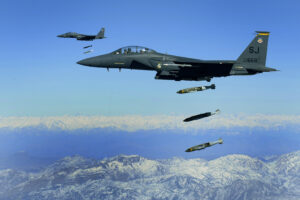
Published on the cusp of wars on Iran and Venezuela (and possibly Cuba), Propaganda, Communication and Empire: Western Intervention in Afghanistan is an ominously timely intervention to document and theorize Empire’s media and propaganda warfare through the already forgotten Afghan war post-9/11.
Jointly edited by Sumanth Inukonda, Oliver Boyd-Barrett, and Lara Martin Lengel, this tome brings once-fashionable Afghanistan back on the academic agenda.
This rather voluminous (15 chapters) book is neatly divided into three sections. Part One, consisting of six chapters, begins with a ritualistic Introduction. The declared aim the editors set for their investigations is to interrogate “mediated politics of western intervention in Afghanistan from the perspective of long-established critiques of such interventions with a view to a deeper understanding of the U.S. occupation of Afghanistan 2001–2021 within the violent, broader transition toward a multipolar global order” (p. 2). A cogent critique of Herman and Chomsky’s “Propaganda Model,” in the Introduction deserves attention from every reader with an interest in media studies. It really helps extend Herman and Chomsky’s framework.
The next chapter, by Boyd-Barrett, offers the context to the study and outlines the theoretical perspective. He reminds his readers that from 2001 to 2021, Afghan casualties amounted to between half a million and a million dead and wounded while 2,488 U.S. troops were killed and 20,722 wounded (p. 20).
Boyd-Barrett claims that because a “comprehensive understanding of the reasons for war is incompletely available to those involved in the fighting and immediate impacts of war,” therefore, we must distinguish between the causes of war; the explanations that participants, journalists, and scholars articulate to explain to themselves and to others; and the pretexts that authoritative participants provide as (self) justifications. While causes “may be established with reference to empirical evidence…[e]xplanations are more subjective, and they may or may not align with causes. Pretexts have a more formal character. They may or may not align with either explanations or with causes, but they are more likely to align with explanations than with causes” (p. 13). Furthermore, “the pretexts may be selected not so much because they are necessarily real or authentic, but because they are more likely than others to command consensus across the internal boundaries of war coalitions and/or more likely than others to excite the attention and enthusiasm of mainstream media.… [T]he pretexts most likely will evolve, change, or adapt to new circumstances” (p. 13), while “causes may be subterranean, may lie beyond awareness or articulation, even as they contribute to the shaping of decisions that people take about the war. Such factors include demography, economic strength and weakness, employment trends, supply chains, and changing temperatures, factors that may play out over many decades or more” (p. 14). After an exhaustive review of the conceptual debate, Boyd-Barrett convincingly concludes, “The recent history of Afghanistan is in part a history of false or problematic pretexts for the actions of invaders, actions that invariably cause or provoke reactions, both predictable and unanticipated” (p. 19). Prophetically, long before the formulation “Donroe Doctrine” gained currency, Boyd-Barrett presaged Empire’s obsession with the Monroe Doctrine. By anchoring the Afghan war in the Monroe Doctrine, he demonstrates that the Democrats are as hawkish as the Republican Trump and his MAGA base:
Whatever the explanations and pretexts (overt and covert) for why the USA embarked on the invasion…underlying U.S. motivation [was] an extension of the 1823 Monroe doctrine from a commitment to preserve the Americas from European interventions to a more modernized version that establishes and preserves U.S. hegemony over the world order, first adumbrated in the Wolfowitz doctrine of 1992 and formalized by the Bush doctrine of 2002. I shall further argue that this history must be understood with reference to the parallel U.S.-led invasion and occupation of another predominantly Muslim country, Iraq (p. 21).
In chapter 3, Sumanth Inukonda foregrounds the Afghan war’s class basis and the nature of imperial aid to periphery states: “Around 80–90 percent of the U.S. $2.6 trillion invested in Afghanistan has been routed back through defense contracts. Russia Today reported that Raytheon, Boeing, Lockheed Martin, and Northrop Grumman’s returns were in hundreds of percentage points during the war” (p. 39). From an AfPak perspective, the following claim, albeit unsubstantiated, holds great value in view of Pak-Afghan skirmishes since the summer of 2025: “As it became apparent that the occupying forces could not defeat the Taliban, the U.S. adopted the Pakistani narrative of good Taliban-bad Taliban. This narrative laid the foundation for negotiations in Doha regarding the Taliban’s potential integration into the Afghan government” (p. 39).
Inukonda’s claim (p. 57) about Doha investing in U.S. academics and holding academic conferences to pave the way for the good Taliban PR campaign (again unsubstantiated) provides intriguing clues to future research on Qatar’s role in regional geopolitics.
The next chapter (no. 4) by Boyd-Barrett and Lara Martin Lengel, in a way, extends the theoretical concepts offered in chapter 2 through the notion of “narrative consolidation.” This notion builds on their previous framework of strategic narratives which helps us understand “how power and influence work in political discourse, international relations, and other geopolitical discursive contexts” (p. 62). Down the line (chapter 6), Lengel scans the Afghan war through this lens. Meantime, in chapter 5, Daniel Boroudy and David Ulvag brilliantly flag the role of Okinawa as a key strategic location in the global war on terror.
Despite many merits, this section, however, is not lacking in contentious claims. From the outset, a campist perspective informs the narratives (for instance, uncritical justification of the Russian invasion of Ukraine and claims that Washington wanted to unseat Assad [p. 25]). Likewise, while chapter 4 flags important aspects that 9/11 investigators ignored, the text smacks of conspiracy theory. It is true that the 9/11 investigations don’t answer a host of questions, yet the fact is: Al-Qaida did not categorically deny responsibility. Narratives rescuing Al-Qaida dangerously legitimize Islamic fundamentalists whose prime targets are Muslims in the Muslim world. Certain erroneous terminologies, for instance “Afghani” as the term for the citizens of Afghanistan (pp. 16, 17, and later in chapter 9, p. 162), betrays the lack of an intimate familiarity with the case study. Afghani is the country’s currency while the people are Afghans. Afghan nationals, justifiably, are irritated by this confusion. Another term: “radical Islam/Islamists (p. 5) is also problematic (see, inter alia, Sulehria 2022). An appropriate term would be Islamic fundamentalist. Similarly, the claim based on Lucy Edward’s research that a clownish character such as Abdul Haq was an alternative to the Taliban (p. 28) hardly gels with reality.
Lengel’s claims, contrasting 9/11 coverage in the UK and U.S. press, is also rather one-sided. Lengel says, “in the UK…there were more rigorous analyses and instances of counternarratives to the largely acritical U.S. reporting” and she cites Seumas Milne, Comment Editor for The Guardian, as an instance (p. 116).
The UK media were hardly critical in this case.
The watchdog Media Lens, for instance, was indeed critical of British media, particularly the BBC, and its coverage of the Afghan and Iraq wars. (See, inter alia, Media Lens, 2002; Nikolai Lanine and Media Lens, 2007; Media Lens, 2010.)
Geopolitics and Imperialism
Part Two, consisting of four chapters, contextualizes the Afghan case against a global backdrop. It begins with Raghwa Sharma’s brilliant indictment of Moscow, Beijing, Tehran, and Islamabad (though New Delhi is a glaring absence here) for their opportunistic politics in the context of the Taliban and Afghanistan. Philip Munch (chapter 8) skillfully outlines narratives and counternarratives on the Afghan war. Likewise, Pablo Sapag’s chapter (10) adeptly documents Spain’s role in Afghanistan. In Spain, the right- and the left-wing governments adopted different positions on the Afghan and Iraq wars, yet, both used the “war on terror” to serve their domestic agendas and revive Spain’s de-glossed imperial past. Spain’s case also reflects, pre-Trump, the imperial paradigm constructed by Gilbert Achcar (2010) whereby the United States plays the role of an overlord while key EU countries acted as Empire’s vassals.
Inukonda and Lengel (chapter 9) contribute perhaps the topically most relevant text in this section, in the context of Afghanistan post-9/11. One of the pretexts to occupy Afghanistan was women’s liberation, igniting an oceanic debate at the time. Although Inukonda and Lengel, to their credit, revive the debate and also shed light on the plight of religious minorities, nevertheless an important opportunity was missed to question both liberal and Islamic feminists. While liberal feminists lent support to the invasion, Islamic feminists seized the opportunity to discredit AfPak Marxists-feminists. Anybody opposing the Taliban and exposing their barbaric anti-woman agenda was cast as a suspect, if not an imperial agent by the Islamic feminists. The Taliban’s return to Kabul and post-2021 Afghanistan and their establishment of Women’s Apartheid prove liberal feminists as wrong as their Islamic counterparts. Inukonda and Lengel somehow avoid this primary debate. Instead, this chapter descends off-ramp when Noble laureates, Malala Yousufzai and Nadia Murad are binarized.
Media and Global War on Terror
Part Three opens with an excellent but complicated (for an audience unfamiliar with the AfPak context) study, by Syed Irfan Ashraf and Azmat Khan (chapter 11), with global relevance. On both sides of the AfPak border, another tragic legacy of British colonialism, the Pashtun tribes dominate the region. The Afghan Jihad in the 1980s turned Peshawar, a sleepy little town, into a nodal point for global media. Serving as the capital of the Pashtun-majority province, Khyber-Pukhtunkhwa (formerly, North Western Frontier Province), was a media outpost for the mainstream Pakistani press before the 1980s. To cover Afghanistan, Peshawar-based Pushto-speaking journalists were employed as authentic “insiders.” These journalists, on the one hand, served as fixers for global media outlets, gathering information, on the other hand, their authenticity—as Ashraf and Khan skillfully demonstrate—was questionable since they had their own ideologies, prejudices, and biases. Notably, the authors demonstrate that a global conflict, the Afghan Jihad with 9/11 as a blowback sequel, sculpted the political economy of media in Peshawar besides shaping journalistic practices.
The next chapter by Christina Smith problematizes Sharbat Gul’s iconic image, flashed for the first time on the cover of National Geographic in the 1980s. Gul’s case demonstrates the power of imperial media. They can beautify a tragedy in line with Western aesthetics. Likewise, imperial media, as this chapter shows, can rescue individuals but destroy nations. This chapter is built upon secondary sources. An effort to reach and interview Sharbat Gul, giving words to her voice, would have lent this otherwise rich text a new empirical and conceptual value. The next two chapters (13 and 14), expertly establish Hollywood’s imperial role in two ways. In chapter 13, Mathew Alford interviewed by Ben Arthur Thomason, cites a number of Hollywood productions “directed” by the U.S. Department of Defense or the CIA. Inukonda, likewise, in the penultimate chapter delicately demonstrates various patterns of on-screen urban destruction in Hollywood productions, before and after 9/11. For students and scholars of film studies, both these chapters offer new empirical and conceptual insights. The book rounds up with an Afterword by Boyd-Barrett.
All in all, the book is a well-timed (albeit inadvertently) intervention. Not merely media scholars and students can benefit from this work as a framework to study imperial media’s role in the ongoing wars in the Middle East and Latin America. Although one may disagree with certain contentions in the book, the rigor in research and conceptual richness that inform the debates turn this book into an indictment of imperial media.
References
Achcar, G. (2010). “Rethinking imperialism: past, present and future.” International Socialism. 2, 126. Spring
Achcar, G. (2021). “How to avoid the anti-imperialism of fools.” The Nation. April 6
Media Lens (2002). “BBC Director-General Given an Easy Ride by The Independent.”
Media Lens (2010). “Were Afghan Children Executed by U.S.-Led Forces? And Why Aren’t the Media Interested?”
Nikolai Lanine and Media Lens (2007). “Invasion—A Comparison of Soviet and Western Media Performance”
Sulehria, F. (2022). “Pakistan as an ‘Islamic Zion’.” South Asian Survey, 29:1, 61–80.
White House. The (2025) National Security Strategy of the United States of America
 If you’ve read this far, you were pretty interested, right? Isn’t that worth a few bucks -maybe more? Please
Leave a Reply