Author: Kevin B. Anderson
KEVIN B. ANDERSON is Professor of Sociology, Political Science and
Feminist Studies at University of California, Santa Barbara. He is the author of Lenin, Hegel, and Western Marxism: A Critical Study (1995) and Marx at the Margins: On Nationalism, Ethnicity, and Non-Western Societies (2010) and the co-editor of the Rosa Luxemburg Reader (2004).
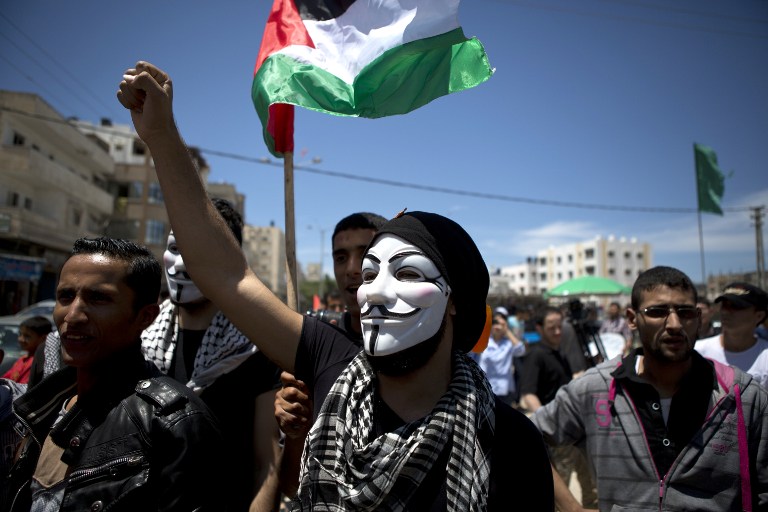
US President Donald Trump’s ripping up of the Iran nuclear pact, his shocking relocation of the US Embassy to Jerusalem, and Israeli Prime Minister Netanyahu’s equally shocking mass murder of peaceful Palestinian demonstrators has revealed the utter depravity of today’s rulers. Despite their sometimes chaotic and reckless appearance, however, these moves amount to nothing short of a breathtaking attempt by the US, with its Israeli and Saudi allies, to realign Middle East politics by creating an uncontested hegemony for the entire region. To this end, Iran must be crushed as a rival subimperialist power, Russia and Turkey dealt in or sidelined, and both the remainder of the Arab revolutions and newly resurgent Palestinian movement repressed.
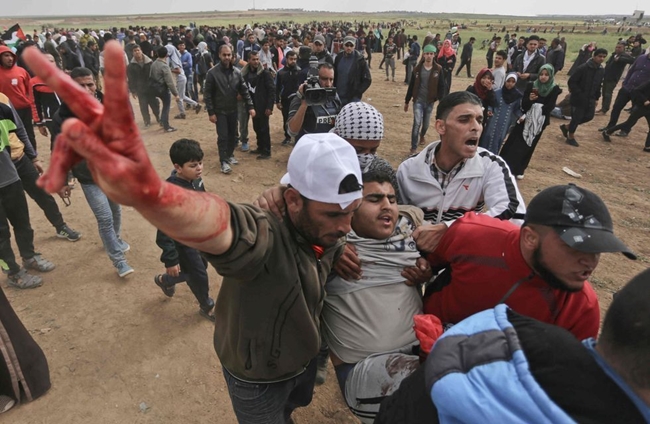 On March 30, over 30,000 Palestinians – children, women, and men – gathered near the Gaza border with Israel. As they assembled several hundred yards away from the border fence, 18 peaceful demonstrators were gunned down by Israeli military snipers using live ammunition, with over a thousand reportedly suffering bullet wounds. Many of the demonstrators had come as whole families, with picnic supplies.
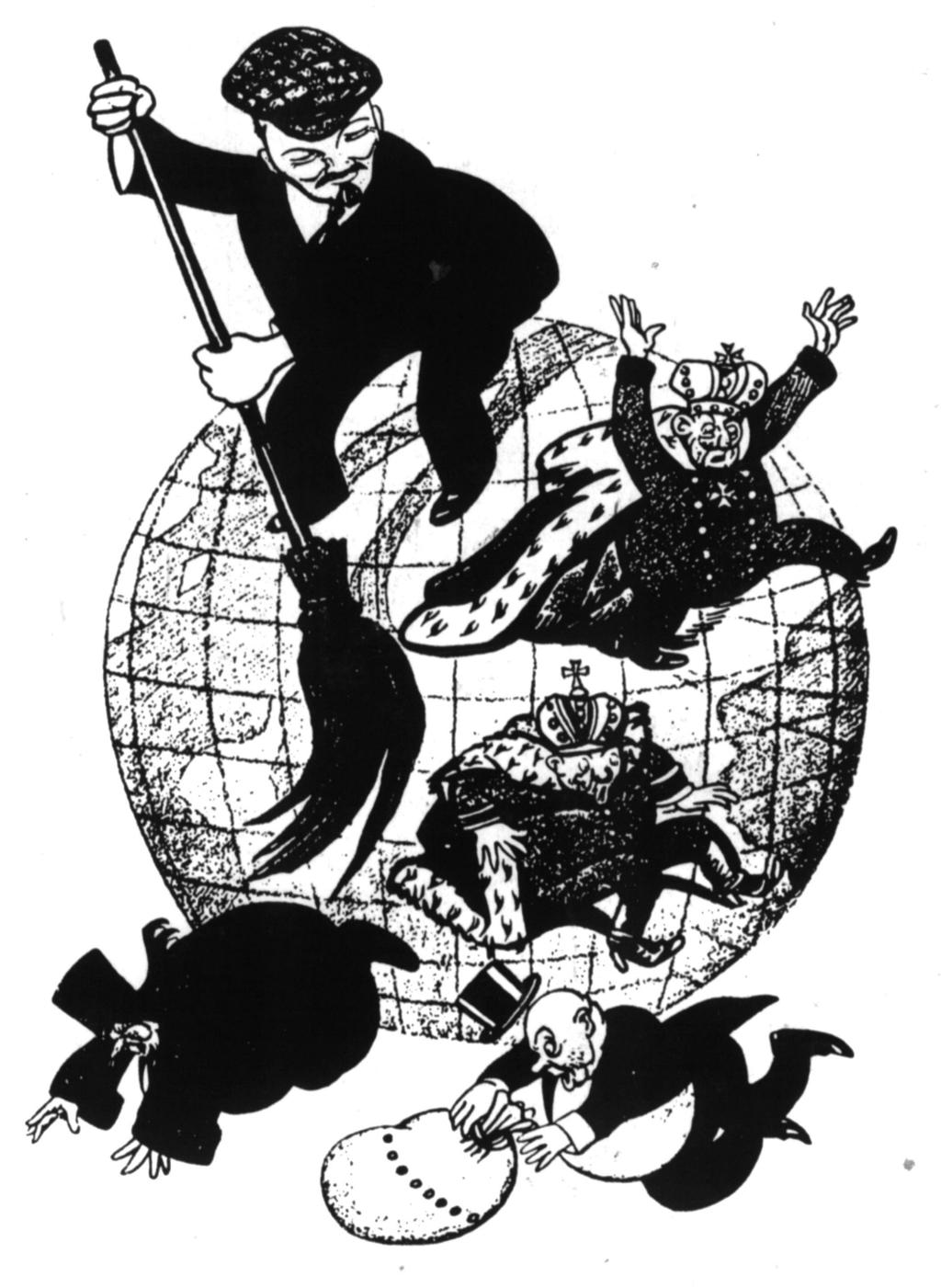
Often, it seems that the legacy of the Russian Revolution of November 1917 lays like a dead weight upon the living. Everywhere voices are raised – from anarchists to social democrats and from liberals to conservatives – telling us that we need to jettison its legacy of authoritarian socialism, of prison camps, and ultimately, of economic and social collapse. At the same time, the left of today stands for grassroots democracy, opposition to war and imperialism, opposition to racial and gender oppression, and once we move to the left of social democracy, abolition of capitalism and of the state.
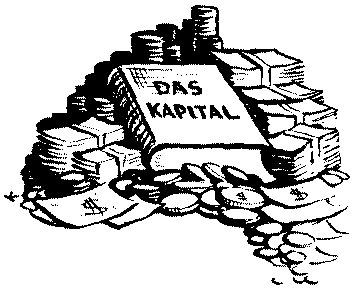
What does it mean to celebrate and concretize for today Marx’s greatest work, Capital, Vol. I? Such a discussion is terribly important at this juncture, when we are in a new situation where even some sectors of the right have started to attack neoliberalism. The Brexit vote in the UK, the large vote for Le Pen in France despite her eventual defeat by a neoliberal candidate, and above all, the Trump campaign have placed on the agenda a new form of right-wing populism with neofascist overtones that breaks with some key features of neoliberalism, such as free trade pacts, somewhat more open borders, and “humanitarian” intervention. At the same time, Trump as president has put forth an incoherent agenda that contains major continuities with neoliberal austerity and old-style militarism, above all in the attempt to gut Obamacare.
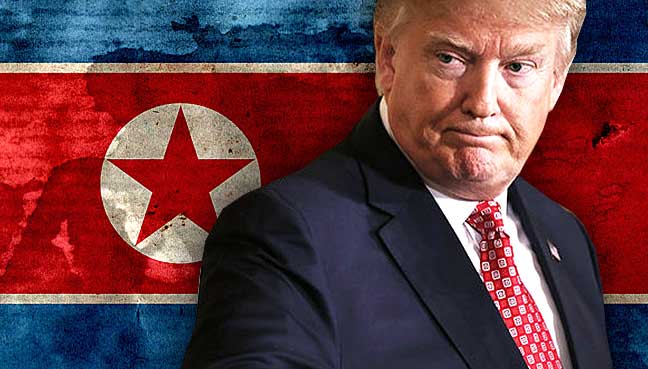 U.S. President Donald Trump crossed to new stage in the annals of warmongering in his United Nations speech of September 19 when he declared, “The United States has great strength and patience, but if it is forced to defend itself or its allies, we will have no choice but to totally destroy North Korea.” This threat to incinerate an entire nation of 25 million people amounts to nothing less than genocide. At the UN itself, the speech was met with stunned silence, with one major exception, vigorous applause from the militaristic Prime Minister of Israel, Benjamin Netanyahu.
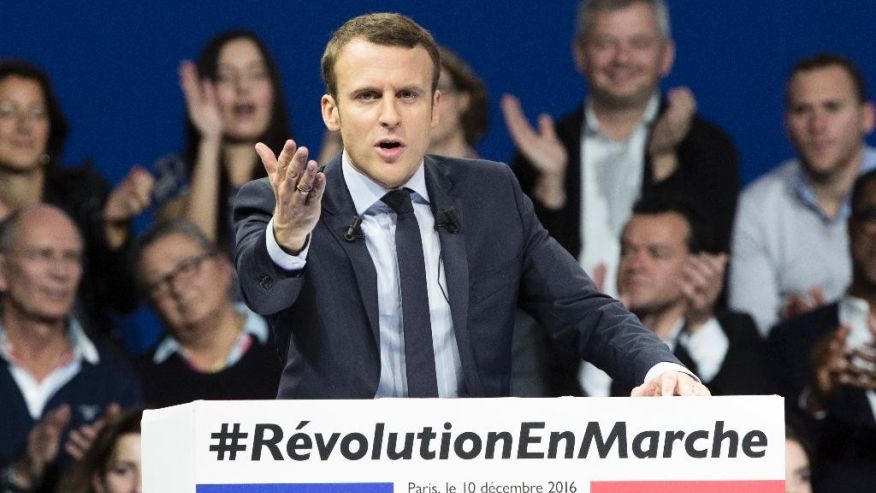
At one level, France’s 2017 elections were a huge triumph for global capital. A young and very modern neoliberal candidate, Emmanuel Macron, won huge majorities for his new political party, On the Move (En Marche), in both the presidential and the legislative elections. At another level, however, Macron’s pathway forward is fraught with challenges, both from a long stagnant economic and a restive French public, many of whom stayed away from the final round of voting.
Within a few days in April, the Trump administration pivoted away from its nearly open support for the Assad regime to a military attack on it. This was followed by harsh language against Russia, the setting off of a huge bomb in Afghanistan, and the dispatch of an aircraft carrier armed with nuclear weapons toward North Korea.
The despicable ISIS attacks on Paris and elsewhere have unleashed intensified war and imperialist machinations over Syria and Iraq, as well as repression of immigrants and renewed Islamophobia. Can the left oppose the carnage on all sides without losing sight of its emancipatory aims?
Ukraine constitutes a test not only for democratic movements, or the unevenly matched imperialisms of the U.S./EU and Russia, but also for the global left. As with other “difficult” moments like the wars in Bosnia and Kosovo, Iran 2009, or the Libyan uprising, our support for democracy and human rights has in some quarters come into conflict with the long held stance that neoliberal capitalism, led by the United States, is the main danger confronting humanity.
February 2004 marked the twenty-fifth anniversary of the Iranian Revolution. From September 1978 to February 1979, in the course of a massive urban revolution with millions of participants, the Iranian people toppled the regime of Muhammad Reza Shah Pahlavi (1941-1979), which had pursued a highly authoritarian program of economic and cultural modernization. By late 1978, the Islamist faction led by Ayatollah Ruhollah Khomeini had come to dominate the antiregime uprising, in which secular nationalists, democrats, and leftists also participated.