War, Diplomacy and Repression: The Three-Pronged Strategy of Iran’s Islamic Republic
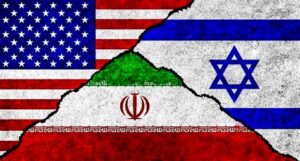 More than a year has passed since the 12-day war of June 2025, when Israel attacked Iranian military facilities, killed senior military officials and nuclear scientists, and was joined by U.S. strikes on three major Iranian nuclear sites. Iran responded with missile attacks on Israel and on a U.S. base in Qatar before a ceasefire was announced. More than six months have also passed since the 39-day war that began in February 2026. That conflict resulted in the killing of Ali Khamenei, the leader of the Islamic Republic of Iran (IRI), and numerous senior political and military figures, as well as Iranian attacks on U.S. bases in the region. It also produced diplomatic efforts culminating in a memorandum of understanding (MOU) between the United States and Iran, signed by their respective presidents, Donald Trump and Masoud Pezeshkian.
As discussed elsewhere, both wars emerged from three interrelated dynamics. First, the United States sought to maintain and extend its global hegemony. Second, Israel’s right-wing government and Jewish and Christian Zionist movements sought to advance a vision of Greater Israel. Third, the Islamic Republic’s clerical, military and economic oligarchy sought to preserve and expand its regional influence.
This article argues that, faced with war and escalating domestic instability, the Islamic Republic has pursued a three-pronged strategy: military responses to continued confrontations, engagement in diplomacy, while intensifying repression at home.
Although the wars killed thousands, damaged Iranian infrastructure and eliminated much of the Islamic Republic’s senior leadership, they failed to produce regime change. Instead, they exposed the limits of U.S. and Israeli coercive power and left the region facing continued clashes and the possibility of another major war.
War and Diplomacy
The 14-point MOU, which, among others, promised the termination of military operations on all fronts, including in Lebanon, removal of the U.S. maritime blockade, a $300 billion reconstruction and economic development plan, and removal of all types of sanctions against the Islamic Republic, including the United Nations Security Council resolutions, was a success for the Islamic regime, and a relief for the botched policy of the Trump administration. In return, the IRI, while maintaining the current status quo of its nuclear program, agreed not to procure or develop nuclear weapons. It also allowed commercial vessels to pass without charge for 60 days between the Persian Gulf and the Sea of Oman, and vice versa.
The agreement was never implemented, and now the 60-day deadline for the United States and Iran to negotiate the final deal has passed. The Netanyahu government, following its long-time policy towards the Islamic Republic, was vehemently opposed to the deal and was prepared to take whatever measures were necessary to derail it. Among others, on June 14, two days after the MOU was agreed upon, it bombarded the Shia-dominant district of Beirut. At the same time, the Trump administration appears to have believed that by delaying implementation and increasing economic pressure on Tehran, it could compel the Islamic Republic to make further concessions. Tehran, for its part, appears to have calculated that keeping the Strait of Hormuz closed would pressure the Trump administration to make further concessions, particularly as the midterm elections approached and American public disenchantment with the war increased.
Aside from its offensive missile and drone capabilities, threatening neighboring Arab countries that host U.S. bases, the Islamic regime’s greater resilience is partly rooted in its ideological character and its longstanding disregard for the outcome of the war for Iran and the Iranian people. A similar pattern was evident during the eight-year-long Iran-Iraq War. After Iranian forces expelled the invading Iraqi army from Iranian territory in 1981—effectively defeating Saddam Hussein’s invasion within a matter of months—Iran could have ended the war. Instead, the then Supreme Leader Ayatollah Khomeini and those around him embraced the slogans of “war, war until victory” and “from Baghdad to Quds (Jerusalem),” and continued the conflict for another seven years. Ultimately, in 1988, after suffering huge losses, they were forced to accept a humiliating ceasefire. Although circumstances are different today, with the ruling bloc more divided than ever and the Islamic Republic lacking legitimacy among most of the population, the regime’s hardline factions appear to be pursuing a similar strategy.
Power Struggle Within the Ruling Bloc
Differences within the Islamic Republic’s power bloc have existed from the very beginning. At various times, religious pragmatists and religious idealists, identified under different labels, have clashed. During the eras of Ruhollah Khomeini and later Ali Khamenei, the supreme leader managed these disputes. However, the current designated leader, Mojtaba Khamenei, who has not yet appeared publicly and whose condition is unknown, is unlikely to be able to manage these conflicts effectively while remaining out of public view. Statements are presumably issued in his name, and important appointments and personnel changes in the military and security sectors are also issued in his name. He also endorsed the MOU, which was approved by 12 of the 13 members of the then Supreme National Security Council (SNSC), Iran’s highest decision-making body on defence, security and foreign affairs, although he added that “in principle” he held a different view.
Although almost all those SNSC members who voted in favour of the MOU were hardliners, and two of them were representatives of the Supreme Leader, the mere act of reaching any agreement with the United States deeply angered the hard-line base, who for over four decades had heard anti-American propaganda. The top decision-makers of the regime are fully aware that they need this base, and that without it they will have fewer forces left to confront the dissatisfied majority of the population, which has so far launched six major anti-regime movements.
The conflict between hard-line conservatives and the pragmatists reached a point where some influential hardliners called for the execution of President Pezeshkian and Mohammad Bagher Ghalibaf, the speaker of parliament and head of the negotiating delegation.
The leadership reshuffle also reflects the changing balance of power. Mohsen Rezaei, the commander of the IRGC during the Iran-Iraq war, replaced the former SNSC secretary, while new commanders were appointed to lead the armed forces and the IRGC. All are close confidants of Mojtaba Khamenei. In his first announcement, IRGC General Rezaei set conditions for opening the Strait of Hormuz: end all regional wars in the Middle East, Gaza, Lebanon, and Iran’s regional allies; end the maritime blockade against Iran; release Iranian funds; and change U.S. conduct.
However, this no-war, no-peace stalemate cannot continue indefinitely and could put Iran in an increasingly dangerous position. While a renewed military confrontation would create serious problems for the United States and its regional allies, bombing Iranian infrastructure—including the electrical grid, water system, and refineries—could devastate the country and have catastrophic consequences for its people. The United States pursued a similar strategy during its invasion of Iraq, where millions of Iraqis suffered, and there is no guarantee that it would not adopt comparable measures against Iran.
Now that the United States has failed to bring the Islamic Republic to its knees militarily, it hopes that by intensifying the economic siege and secondary sanctions, it can force the Tehran regime to surrender or encourage a popular uprising against the regime. As with other sanctions, the main harm will be inflicted on the people.
The continued maritime blockade and Trump’s new threat of “economic warfare” are already creating serious economic pressures. Iran is reportedly losing close to $500 million a day, and is struggling to obtain essential imports, including gas reliably. This is why parts of the regime’s ruling oligarchy, beyond concerns about its ideological or “heavenly” promises, are also deeply concerned about protecting their substantial material interests and are pushing for a deal and a return to the MOU.
It remains unclear which side will ultimately gain the upper hand. Nevertheless, the recent reshuffling of military and security leadership suggests that, while the regime has become more militaristic and is preparing for a prolonged war and further confrontation, it is also pursuing a diplomatic solution—particularly in response to the new threat of economic warfare from the United States. At the same time, the regime is deeply concerned about the imminent internal threat of another uprising by a disgruntled population.
Dealing With the Internal “Enemy”
Between the above-mentioned 12-day and 39-day wars, in the winter of 2025-26, Iran witnessed its largest protest movement—a movement even larger than the 2022 Woman, Life, Freedom. The protests began in Tehran’s bazaar over rising prices driven by a sharp decline in the national currency’s value and the escalating cost of foreign currencies, which in turn raised the prices of raw materials and imported goods. As with other movements, the protests, despite their economic roots, quickly took on political dimensions in cities across the country. Various segments of the new and traditional middle classes, workers, retirees, students, and, in some cases, farmers—who were protesting water shortages and the government’s failure to pay its debts—joined the movement.
For its first eleven days, beginning on December 28, 2025, this spontaneous movement resembled previous protest movements, characterized by peaceful demonstrations, skirmishes with security forces and Basij forces, and hit-and-run actions. The movement, however, was subsequently exploited by the Israeli government and by the opportunistic right-wing Iranian monarchist opposition abroad, which has close ties with Israel.
On January 8, 2026, amid a highly manipulated social-media campaign, Reza Pahlavi, the son of the deposed Shah, announced that help was coming. Larger numbers of people—desperate for any prospect of change, as well as supporters of Pahlavi—took to the streets, often accompanied by their families. The terrified regime responded with unprecedented violence, deploying Ansar-e Hezbollah, Basij forces, and reportedly proxy forces recruited from neighboring countries. The full extent of the killings remains unknown, but estimates suggest that several thousand, including young children, were gunned down over the course of two days. The internet, which had been shut down from the outset, remained blocked despite the enormous economic damage and the loss of millions of jobs.
It is widely believed that Netanyahu persuaded Trump that, following the killing of the Supreme Leader, Iranians would rise up and overthrow the regime. Much to the disappointment of both Netanyahu and Reza Pahlavi, this did not happen. On the contrary, foreign intervention and the resumption of the war in June 2026 dealt the movement its most devastating blows.
With the worsening economic situation, rampant inflation and growing unemployment, however, there is a distinct possibility of another major uprising. Hence the strengthening of the regime’s repressive apparatuses. The assignment of Hossein Taeb as the new head of the Basij paramilitary organization, linked to the IRGC and a major instrument of the brutal suppression of social movements, should be seen as part of the strategy vis-à-vis potential protests. Taeb is an IRGC senior member, a close confidant of the new Supreme Leader, and a feared cleric within the security establishment who is known to have supervised the killing and maiming of thousands of protesters. In his declared mission, he is to expand and strengthen the Basij as a ‘people-based intelligence network,’ making ‘every citizen’ a Basij member.
Already, organized nightly neighborhood rallies in support of war in large cities and the regime’s kangaroo courts issuing death penalties have done much in expanding the reign of terror. According to IHRNGO, Iran Human Rights, in July this year alone 71 people were executed, some of them accused of being an Israeli agent. A total of 444 persons have been hanged in 2026. Many well-known lawyers, academics, journalists, and artists are in jail, including Narges Mohamadi, the prominent feminist and Nobel Peace Prize laureate. The regime has also started to reinforce compulsory veiling, which was virtually abandoned after the stunning Woman, Life, Freedom movement. The regime’s parliament is approving a new bill forbidding all contacts with foreign media and universities, unless approved by the security authorities.
In Place of a Conclusion
The Israeli/U.S. military aggression against Iran, rather than weakening the Islamic Republic, has made the regime more radical and aggressive, further divided its opposition, and dealt a severe blow to Iran’s independent social movements.
Many people outside Iran, including some within progressive circles, have applauded the Islamic Republic and cheered it on as an “anti-imperialist” force, simply because it is seen as the only country capable of standing up to Israeli and U.S. aggression. But it is a serious mistake to overlook the reactionary character of the regime and the enormous damage it has inflicted on Iran and its people. This is precisely the position emphasized by some progressive intellectuals outside Iran, including the open letter signed by Iranian and non-Iranian academics, journalists, lawyers, and human rights activists, which condemns both the U.S./Israeli aggression and the Islamic Republic. Similarly, in a recent letter published in the Guardian and addressed to Iranian political prisoners, signed by prominent non-Iranian scholars and activists, the authors rightly observe that “on one side, you face the domination of the Islamic Republic; on the other, the imperialist forces that the republic claims to stand against.”
Unfortunately, this important initiative by prominent, progressive, and widely recognized non-Iranian intellectuals was attacked by some who, based on a misguided understanding of the anti-imperialist struggle, support a repressive regime such as the Islamic Republic. This is the same disastrous understanding held by a segment of the Iranian left in the period following Iran’s 1979 revolution: simply because the Islamic regime was in conflict with the United States and because of the hostage-taking at the U.S. Embassy, they regarded the regime as “anti-imperialist.” In response to the attacks on the letter published in The Guardian, a broad group of Iranian intellectuals and academics have expressed their unequivocal support for the signatories of that letter.
For nearly half a century, the Islamic Republic has devoted itself to reshaping Iran and Iranian society in accordance with its own obscurantist vision. The massive Woman, Life, Freedom movement, which attracted worldwide attention and in which Iranian women and young people played a leading role despite the regime’s brutal repression, was a powerful expression of the failure of its reactionary project. The successive social movements and uprisings of recent decades have demonstrated that it will not be foreign powers pursuing their own hegemonic interests, but the people of Iran themselves, who will ultimately replace the present regime with a genuinely democratic, secular, and progressive republic. This is precisely why opposition to imperialist aggression and opposition to the Islamic Republic must not be treated as mutually exclusive positions. Both are necessary if the goal is to defend Iran’s people and preserve the possibility of an emancipatory democratic future.
An earlier version was published in Open Canada.
[This is one of a collection of articles responding to the controversy over the open letter in the Guardian expressing support for Iranian political prisoners and at the same time opposing the U.S.-Israeli war and sanctions on Iran.]