Saito’s Degrowth Communism
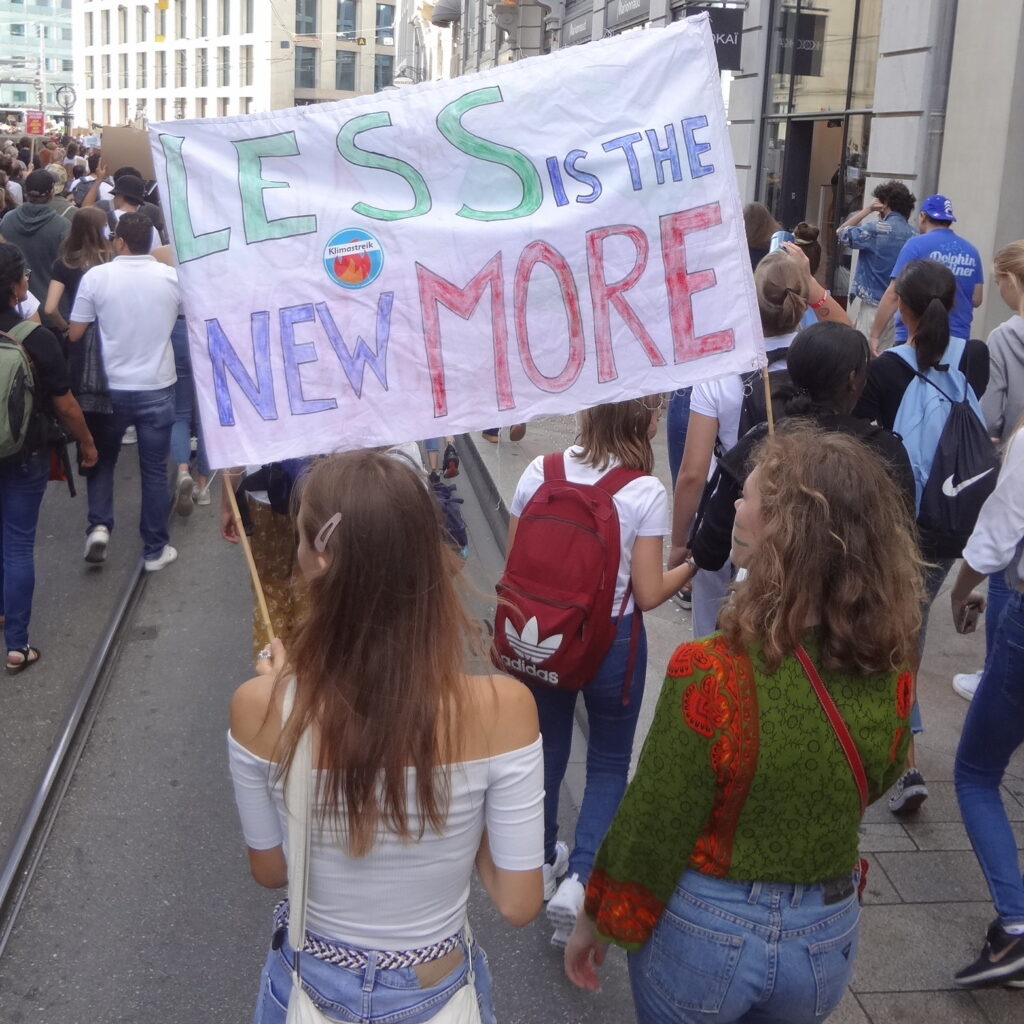
“Capitalist production … only develops the techniques and the degree of combination of the social process of production by simultaneously undermining the original sources of all wealth—the soil and the worker.”
Karl Marx, Capital, Vol 1, 638
“The tradition of the oppressed teaches us that the ‘state of emergency’ in which we live is not the exception but the rule. We must attain to a conception of history that accords with this insight. Then we will clearly see that it is our task to bring about a real state of emergency, and this will improve our position in the struggle against fascism.… The current amazement that the things we are experiencing are ‘still’ possible in the twentieth century is not philosophical.”
Walter Benjamin, Theses on the Concept of History, VIII
The first Earth Day was over half a century ago. For more than thirty years since then, climate scientists have been warning the world about the catastrophic implications of continuing to burn oil, coal, and gas. World leaders have met periodically in climate summits to set goals for reducing and eventually phasing out greenhouse gases, only to then ignore them. Temperatures are rising, as are the seas and people’s anxiety. Wildfires burn in cities like Los Angeles, hurricanes and tornadoes become increasingly destructive, and new phrases like heat dome, bomb cyclone, and atmospheric river enter everyday use. Fairly recently, advocates of a Green New Deal talked about slowly switching out the fossil fuel energy sources of the capitalist economy for one based on renewable energy. Environmentally conscious liberals thought that the climate and larger ecological crisis could be solved by painting the capitalist behemoth green.
When I first began thinking through the role of capitalism in changing the planet’s climate almost twenty years ago, I asked several older Marxists I knew and respected whether they thought capitalism is capable of adapting to the ecological crisis it had created. Is green capitalism possible, one that employs an energy system not dependent on fossil fuels, one that doesn’t endanger human civilization while continuing to exploit human labor? Alternatively, as seems now to be the case, I wondered, would capitalism continue seeking to maximize profit and accumulate as much capital as possible while viciously running humanity and the rest of nature further into the ground? I really struggled with the question of whether a significant enough percentage of the ruling class had the foresight to reform capitalism so as not to destroy society and the natural environment, the very sources of its vast wealth? I was deeply disappointed in my Marxist elders’ responses.
Some of them had obviously never really thought about this, seeming to be confused and a bit flustered by the question; after stumbling around, reciting various maxims about the falling rate of profit and primitive accumulation, they had no answer. Others dismissed environmental issues as simply being “bourgeois concerns,” presumably not worth considering, a distraction from class struggle at best.
In sharp contrast, Kohei Saito, the Japanese Marxist scholar and author of several books, including Slow Down: The Degrowth Manifesto and Marx in the Anthropocene: Towards the Idea of Degrowth Communism, has thought a great deal about these very questions. He addresses this conundrum directly:
… capitalism can keep going beyond these natural limits and accumulate more wealth. In contrast, the current level of civilization cannot sustain itself beyond a certain point precisely due to objective natural limits. As far as the logic of capital’s accumulation is being estranged from human life and sustainability of the ecosystem, the capitalist system might continue to exist, even if all the planetary boundaries are exceeded, but many parts of the earth will be unsuitable for civilization.1
So far, this is the best answer I’ve heard.
Saito stands against those Marxists who advocate a kind of Marxist Prometheanism. Prometheus is a Greek Titan known for stealing fire from the Olympic Gods, giving it to humans in the form of knowledge, technology, and civilization. Qualifying Marxists as Promethean indicates that they share a belief that capitalist productive forces and technological innovation, controlled instead by the hands of workers, will bring about the good life for all. It is the same type of worldview that guided the project of really existing socialism, or state capitalism, that led its designers to embrace rapid industrialization in its competition with the West, but largely failed to be less environmentally destructive or provide the type of human freedom Marx envisioned. In his opposition to this belief, Saito joins other Marxists who take ecological issues seriously, such as John Bellamy Foster, James O’Connor, and Jason Moore.
Since the fall of the Berlin Wall and collapse of the Soviet Union, Marxists grouped around both Monthly Review and Capitalism, Nature, Socialism have examined Marx’s late-in-life research into the natural sciences, elaborating its implications for a different understanding of Marx. With contemporary concerns for the state of the natural world in mind, these thinkers went back to Marx to see what insights could be achieved in analyzing capitalism’s impact on non-human nature. Saito correctly concludes that both camps “demonstrated convincingly that a Marxist approach is useful to comprehend the ecological crisis as the manifestation of systematic contradictions of the capitalist mode of production” (15). O’Connor and his cohort brought us the “Second Contradiction of Capitalism,” while Foster and his colleagues introduced the concept of “metabolic rift.” Both concepts are helpful to those thinking through the causes and possible solutions to the increasingly threatening ecological crisis in which we are enmeshed.
The Second Contradiction of Capitalism
Starting with his 1988 theoretical introduction to the journal Capitalism, Nature, Socialism, James O’Connor theorized what he called the “Second Contradiction of Capitalism.” The first contradiction is that between the forces of production and capitalist social relations: in essence, the historic struggle between workers and capitalists. This contradiction, O’Connor points out, “is internal to the system, it has nothing to do with conditions of production, where these are interpreted economically or in sociopolitical terms.”2
The second contradiction, intimately related to the first, involves the conditions of production: the opposition between capitalism and nature. As capitalism continues to exploit natural resources and human labor, the costs of doing so become increasingly prohibitive:
… when individual capitals defend or restore profits by strategies that degrade or fail to maintain over time the material and social conditions (hence raising the health bill), degrading soils (hence lowering the productivity of land), or turning their backs on decaying urban infrastructures (hence increasing congestion or policing costs).3
This second contradiction leads both to increasing prices for commodities and the proliferation of struggles outside the workplace:
The combination of crisis-stricken capitals externalizing more costs, the reckless use of technology and nature for value realization in the sphere of circulation, and the like, must sooner or later lead to a “rebellion in nature,” that is, powerful social movements demanding an end to ecological exploitation.4
O’Connor sought, in part, to theorize the rise of the so-called New Social Movements in the 1960s and 1970s. His formulation is the basis for further investigations presented in Capitalism, Nature, Socialism, while establishing Ecological Marxism, or ecosocialism,and providing a jumping-off point for John Bellamy Foster’s work.
Metabolic Rift
Reading Saito, one has to conclude he would agree with Michael Löwy that “reading Marx from an ecological perspective, there is a before and an after to Bellamy Foster.”5 Foster’s significance to ecological thinking is due to his exploration and development of the concept referred to as the “metabolic rift.” Quoting volume one of Capital, Saito explains that
Marx employed the concept of a “rift” in the metabolic relation between human beings and the earth to capture the material estrangement of human beings with capitalist society from the natural conditions which formed the basis for their existence—what [Marx] called “the everlasting nature-imposed condition[s] of human existence” (163).
Marx uses the metaphor of metabolism in Capital in part to talk about human’s relationship with the rest of nature, a relationship mediated by the activity of human labor. Humans act upon and transform nature, while being in turn changed by nature. It’s a kind of dialectical relationship that is fundamental to what it means to be human. Interestingly, in the human body, metabolism generates heat, as it does under capitalism. For Marx, this fundamental human process of transforming nature through labor has been captured by the capitalist class, resulting in alienated labor and the exploitation and disregard for the natural environment. Hence, a rift exists in the metabolic relationship between humans and nature that is in dire need of repair.
For Foster and his colleagues, Marx employs the concept of metabolism to refer to “the complex, dynamic interchange between human beings and nature.” In their reading of Marx, “humans interact with nature through the exchange of organic matter. In this metabolic relationship, humans both confront the nature-imposed conditions of the processes found in the material world and affect these processes through labor (and the associated structures of production).”6 One can point to how Marx relies in Capital on Justus von Liebig’s 1862 Agricultural Chemistry in which von Liebig outlines how modern agriculture seeks to maximize short-term profit without a view toward sustainability or care for the land, which Marx characterizes as “robbery agriculture,” as an example of how the concept of metabolism guided his work (25).
For Marx, the rift in this metabolic relationship, caused by capitalist relations of production, would be repaired through the abolition of class society and the creation of a free, communist one: “Hence under the society of associated producers it would be necessary to ‘govern the human metabolism with nature in a rational way,’ completely beyond the capabilities of bourgeois society.”7 This is assuming that the “society of associated producers” is guided by an ecological consciousness. They would need to understand the place of humans in nature, no longer endangering the delicate and symbiotic relationships that sustain life. They would also have to commit to no longer treating non-human nature as simply constituting natural resources for production or as a place to discard waste. Ecological consciousness needs to be cultivated as part of the class struggle.
Saito’s Project
Walter Benjamin was an unorthodox Marxist and Jewish mystic. When faced with the prospect of imminent capture on the Spanish border in Nazi-occupied France, he penned his well-known “Theses on the Concept of History” on the back of postage paper, presumably not expecting them to be published. Benjamin’s thoughts speak directly to us in the odd and terrifying historical period in which we find ourselves. In his supplement to those theses, Benjamin questions Marx’s assertion that revolution is the “locomotive of world history,” suggesting instead that “revolutions are an attempt by the passengers on this train—namely, the human race—to activate the emergency brake.”8 Activating the emergency brake is precisely what Saito calls for.
Working in the tradition of Benjamin, Saito takes the concept of metabolic rift as his jumping-off point while engaging in a radical and controversial reading of Marx. For Saito, the common understanding of Marx as an advocate of the notion of historical progress is incorrect (2). Saito believes that if Marx’s work is to help contribute to solving the ecological crisis, his ideas concerning the contradictions between capitalist productive forces and the relations of production need to be reformulated. This is what Saito sets out to do in his 2022 book Marx in the Anthropocene: Towards the Idea of Degrowth Communism.
Saito acknowledges many environmentalists’ disdain for Marx and Marxism, due in part to the horrible environmental record of places like the former Soviet Union and many Marxists’ apparent disregard for understanding and responding to ecological struggles, not to mention their tendency toward Prometheanism.
To help overcome this Red/Green divide, Saito relies on the Marx-Engels-Gesamtausgabe, the ongoing publishing project of the complete works of Marx and Engels, particularly Marx’s notebooks. For Saito, these notebooks, along with various letters and rewrites of later editions of Capital, as well as changes to subsequent translations, indicate that “Marx quite intensively studied two fields after the publication of Capital: natural science and pre-capitalist or non-Western societies” (172). For Saito and others, this indicates that Marx, in his later years, was concerned with both the environmentally destructive effects of capitalism, as well as the lifestyles of people who lived in non-capitalist fashions. For Saito and Foster, Marx’s work, particularly Capital, needs to be revisited with this perspective in mind.
Saito identifies Marx’s analysis of the “real subsumption,” the process by which the means of production themselves are transformed to extract surplus value from workers, in his Economic Manuscripts of 1861–63, as a place that Marx problematizes the productive forces of capital themselves. Saito suggests that Marx came to question whether the existing capitalist productive forces would be a viable means to achieve communism. Saito believes that, through his reading on the natural sciences and non-capitalist, non-Western peoples, Marx “realized that productive forces do not automatically prepare the material foundation for new post-capitalist society but rather exacerbate the robbery of nature” (177). Instead of grabbing hold of these existing productive forces, Saito argues that Marx turns his attention to “the radical abundance of ‘communal/common wealth’ [as discussed] in the Critique of the Gotha Programme,” a focus that Saitobelieves can help us actualize “a safe and just society in the face of global ecological crisis in the Anthropocene” (8).
Marx, the Communalist?
Though Marx supported the populist People’s Will in Russia, he corresponded with Vera Zasulich, who was in the Russian revolutionary group Black Repartition. The two groups were at odds. Marx wrote various drafts of a response to a question of Zasulich’s, namely, what his views on rural communes were, and whether “every country in the world [must] pass through all phases of capitalist production” on the way to communism.9
Looking at the draft responses in which Marx worked out his thinking on Zasulich’s question, Saito concludes that,
Marx’s view of history changed by 1881 in that he explicitly acknowledged the power of Russian rural communes to make their own history by leaping to socialism based on existing communal property without going through the destructive process of capitalist modernization. Marx discovered the possibility of a Russian Revolution by focusing on the active elements of resistance to capitalist expansion in non-Western societies (195).
Saito supports this conclusion by presenting the preface to The Communist Manifesto’s second Russian edition, in which Marx and Engels say, “If the Russian revolution becomes the signal for a proletarian revolution in the West … then Russia’s peasant communal landownership may serve as the point of departure for a communist development.”10
Saito gives the various drafts of this letter to Zasulich a great deal of weight in his interpretation of Marx’s views, believing it “… needs to be reinterpreted as the crystallization of [Marx’s] non-productivist and non-Eurocentric view of the future society, which” according to Saito, “should be characterized as degrowth communism” (8).
Saito also argues that the delay in publishing the second and third volumes of Capital was due to Marx’s immersion in studying and thinking through the implications of natural science and non-Western, non-capitalist forms of social and economic organization for his theories of capitalism and its overthrow. Marx spent time looking at communal life in places like Russia and India in his final years: “By the 1880s, Marx recognized that the persistent stability of communes without economic growth is the underlying foundation for realizing sustainable and egalitarian metabolic interaction between humans and nature.” Thus, “After 14 years of research, he concluded that sustainability and equality based on a steady-state economy is the source of power to resist capitalism, and it would be no wonder should Russian communes skip the capitalist stage to arrive at communism” (208).
Is Marx a Degrowth Communist and Does it Matter?
Saito’s assertion that Marx advocated for degrowth communism is contested by many. Saito’s is but one of many readings of Marx. One can certainly find evidence to support the suggestion that Marx favored this late in life, yet it’s open to interpretation. But does it really matter?
In constructing theories and strategies, we draw on various ideas to engage in political practices that are relevant and effective in changing the world. For Marxism to continue to be relevant, it needs to apply methods developed by Marx to analyze today’s economy and society. In this regard, what Saito teases out of Marx’s late research, correspondence, and various changes to new translations and editions of his work are helpful. But what’s most important is what we think. In part this involves interrupting the aspect of Marxism that treats Marx’s work as a “science” or worse, a religion, one in which one must refer to how various priests historically have interpreted the word of Marx.
It is essential to do the work that Saito does, untangling those aspects of Marx’s work in which he seems to endorse the view that the productive forces of capital are necessarily progressive, and even that there is progress in history, from his later apparent questioning of these premises. Saito’s belief that Marx became increasingly aware of this problem while writing Capital can aid us in advocating for a different vision of the future than one in which “the maximal acceleration of the existing tendencies of capitalism could ultimately realize a final leap to communism” (171). In light of an examination of attempts to change the world made by those embracing this type of Prometheanism, for instance the former Soviet Union, we can illuminate how simply seizing the productive forces of capitalism will only continue to destroy the delicate ecological relationships humans are immersed in, while not offering genuine human freedom; along with Saito’s version of the later Marx, we too can reject this strategy as inadequate.
Degrowth Communism: But Won’t We All Starve?
Saito advocates for a reconceptualization of what we mean by wealth, developing an understanding closer to Marx’s discussion of the abundance of “common wealth,” as he discussed in the Critique of the Gotha Programme (218). This is consistent with what Marx wrote in the Grundrisse, where he “maintained that the full realization of human creative potentialities requires stripping away the ‘bourgeois form’ of wealth as commodity” (222). The way wealth is conceived in capitalism is unsustainable from an ecological perspective, as wants and needs are manufactured through advertising to keep selling otherwise useless commodities, destroying the natural environment that sustains human life in the process. Saito asserts that “Marx argued that this narrow capitalist conception of wealth inevitably turns out to be incompatible with the material conditions for a sustainable development of human metabolism with nature” (218). Hence the existence of a metabolic rift that needs to be resolved.
Those of us on the left know that wealth, though created by the working class, is exponentially accumulated by the ruling class as capital. Through a revolutionary process involving seizing the means of production and expropriating the expropriators, there will be more than enough to go around. Wealth in a degrowth communist society would be the abundance of the common wealth available to all. Through the democratization of workplaces, neighborhoods, cities, regions, and countries, a redistribution would take place based upon the principle of collectively providing for each of our needs, according to each of our abilities.
In their 2022 manifesto “For an Ecosocialist Degrowth,” Michael Löwy, Bengi Akbulut, Sabrina Fernandes, and Giorgos Kallis state that
Ecosocialist degrowth requires the social appropriation of the main means of (re)production and a democratic, participatory, ecological planning.… This means that people, at various scales, exercise direct power in democratically determining what is to be …. Ensuring equitable well-being for all does not require economic growth but rather radically changing how we organize the economy and distribute social wealth.11
Saito points to a section of Capital Marx modified shortly before his death, in which he advocates “co-operation of free workers and their possession in common of the land and of the means of production produced by labour” (227). In a world without economic growth and the imperative of capital accumulation, the “realm of necessity” (all those things we do to survive by providing shelter and food, for instance) will be reduced and the “realm of freedom” (everything we can do once our basic needs are met and our labor is not alienated) vastly expanded. Thus, “Marx’s degrowth communism aims to repair the ‘irreparable’ metabolic rift and to rehabilitate the non-consumerist ‘abundance’ of the social and natural wealth” (226). Therefore, degrowth communism would be “a post-scarcity society without economic growth. It aims to rehabilitate the abundance of common wealth against the artificial scarcity created by capital” (249-50). Saito argues that the radical abundance of sharing communal wealth will replace the type of wealth defined by capitalism as the endless acquisition of commodities.
Activating the Emergency Brake
Saito suggests that “the planetary crisis provides a material basis for constituting a universal political subjectivity against capital,” suggesting, alongside Foster and O’Connor, “that capital is creating a global environmental proletariat, whose quality of life is increasingly degraded by capital accumulation” (4, Saito’s emphasis). Winning the class war requires uniting the majority—the working people of the world—against the ruling class. Only through confronting and overthrowing those profiting from the continued burning of fossil fuels in the service of accumulating vast amounts of wealth can we hope to achieve a different society.
O’Connor recognized that “Most problems of the natural and social environments are bigger problems from the standpoint of the poor, including the working poor, than for the salariat and the well-to-do.”12 The liberation of humanity from class domination needs to walk hand-in-hand with the creation of an ecological society, as the ecological and climate crisis becomes ever more dire, threatening the health and well-being of working people while bringing the future of human civilization into question.
It’s easy to give in to despair or fatalism, as Saito points out, since despite the social and ecological crisis, “the capitalist system does not offer an alternative to the juggernaut of overproduction and overconsumption” (1). It is imperative that a revitalized left offer sound critiques of the capitalist system and all interlocking systems of exploitation and domination, as well as offer compelling visions of how we can organize ourselves differently as a society. As importantly, we need to build a social movement with explicit demands; generalize practices of mutual aid; cultivate community resiliency through urban gardens, renewable energy, and alternative transportation; confront and blockade the mechanisms of extraction and the burning of fossil fuels; while creating affinity groups, political collectives, and directly democratic revolutionary organizations. As Che Johnson-Long, a longtime Atlanta, Georgia, organizer says,
Everyone needs to be in a group right now. Everyone. I don’t care if it’s a local mutual aid group, if it’s a base building organization, if it’s national, if it’s your neighbors on your block, but we all need to be in a group. And if you can’t find the group that’s right for you, then start a group, because that’s what allows for us to coordinate with each other better and to be able to consolidate power.13
Generating social, political, and economic power together, cultivating social relationships of solidarity with our neighbors, coworkers, and comrades, lays the basis for militant direct action and fundamentally transforming the structures of society and the economy. The authors of the ecosocialist degrowth manifesto are correct about what this kind of organizing involves when they say, “A new social and ecological consciousness will emerge through the process of self-organization and active resistance of the exploited and oppressed.”14
We all need to put ourselves out there, talk to everyday people, and together make sense of this world while building a movement. As fossil fuel extraction and burning accelerates and human labor continues to be exploited, we need to collectively take Benjamin’s advice to view revolution not as the locomotive of history but rather as activating the emergency brake: to make this runaway train finally stop, engaging in direct action to create a fundamentally different classless, ecological society.
Notes
1. Kohei Saito, Marx in the Anthropocene: Towards the Idea of Degrowth Communism (Cambridge University Press, 2022), 128 (emphasis in original). All notes to this book hereafter are given in parentheses in the text.
2. James O’Connor, Natural Causes: Essays in Ecological Marxism (New York: Guildford Press, 1998), 176.
3. O’Connor, Natural Causes, 242.
4. O’Connor, Natural Causes, 171.
5. Michael Löwy, “From Karl Marx to Eco-Marxism,” New Politics (Vol. XX, No 1, Whole Number 77, Summer, 2024).
6. John Bellamy Foster, Brett Clark, and Richard York, The Ecological Rift: Capitalism’s War on the Earth (Monthly Review Press, 2010), 124.
7. John Bellamy Foster, Marx’s Ecology: Materialism and Nature, (Monthly Review Press, 2000), quoting Capital, Vol. 1, 283 (New York, Vintage, 1976), 141.
8. Walter Benjamin, “Paralipomena to ‘On the Concept of History,’” Selected Writings (Belknap Press, 2006).
9. Saito, Anthropocene, 193, quoting Teodor Shanin, Late Marx and the Russian Road: Marx and the ‘Peripheries of Capitalism’ (New York: Monthly Review Press, 1983), 99.
10. Saito, 195, quoting Shanin, 1983, 139.
11. Michael Löwy, Bengi Akbulut, Sabrina Fernandes, and Giorgos Kallis “For an Ecosocialist Degrowth,” Monthly Review, Apr. 1, 2022.
12. James O’Connor, “The Second Contradiction of Capitalism,” accessed via www.columbia.edu/~lnp3/second_contradiction.html).
13. “We Live in Fearful Times. Our Safety Comes Through Preparing Together,” interview with Che Johnson-Long by Kelly Hayes, Truthout, May 15, 2025.
14. Löwy, et al, 2022.