How (Not) To Apply the Marxist Theory of Imperialism in the Twenty-first Century
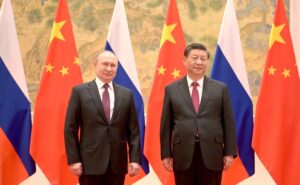 It is not surprising that one of the most debated issues among Marxists in recent years has been the question of imperialism in the twenty-first century. The accelerating rivalry between the Great Powers of West and East, the U.S. invasions in Afghanistan and Iraq, Israel’s genocide in Gaza, and Russia’s war against Ukraine and its military intervention in Syria—all these make it obvious that imperialism is not an issue of the past.
Last year, two progressive writers, Immanuel Ness and John Bellamy Foster, each published a long essay in which they attempted to apply the Marxist theory of imperialism to the conditions of the twenty-first century.1 Both are prestigious university professors in the United States, and Foster is also editor of the well-known magazine Monthly Review.
In their respective essays, the two academics polemicize against what they call “Western Marxism.” According to them, this tendency fails to understand the nature of modern imperialism and, consequently, adapts to the Western powers. Ness denounces several authors, including me, as “neo-conservative Marxists” and “New Cold War theorists” who supposedly “support the expansion of U.S. dominance in Eastern Europe, East Asia, West Asia, Africa and beyond.”
As a matter of fact, Ness and Foster are representatives of what we can call the “Multipolarista School,” i.e., advocates of the ideology of a “multipolar world system,” which is a cover for a policy of support for the new Eastern Great Powers China and Russia. It is therefore no accident that they praise China as a “socialist” country.
True, some of their criticisms of several left-wing authors, who ignore or underestimate the relevance of imperialist super-exploitation of semi-colonial countries (the so-called Global South), are, by and large, correct. However, in the end, they both fail to understand the essence of the Marxist theory of imperialism.
A few months ago, I published a first reply to Ness and Foster that dealt with their mistaken analysis of China.2 As I showed in this as well as in other works, China had been transformed into a capitalist state in the 1990s and later even became an imperialist power.3 In the following essay I will not repeat my arguments on China’s class character, but will focus on their wrong approach to the Marxist analysis of imperialism.
Having a Hard Time with the Dialectical Philosophy of Marxism
Foster and Ness, the latter more explicitly, claim that the so-called principal contradiction in imperialism would be the exploitation of the countries of the Global South by the rich metropolises. Ness states:
Following Mao Zedong, Torkil Lauesen observes that the principal contradiction is embedded in a historical and material conjuncture which is not static but changes based on the dialectical forces in the world. In the context of the world system, the contradiction shifted from the Global North’s working class to a global system where the center of capitalist exploitation converged on the Global South after the Second World War. To comprehend the “principal contradiction,” attention must focus on understanding Western and Northern imperialism and working-class resistance in Africa, Asia, and Latin America.
Consequently, they wrongly criticize those who insist on the concept of inter-imperialist rivalry as an integral part of Lenin’s theory. In contrast, the two American academics effectively remove Great Power rivalry as an essential feature of imperialism from their theoretical concept.
This is a blatant revision of the orthodox Marxist theory of imperialism and makes it impossible to understand the current period of world capitalism. The mistake starts already with the very category of “principal contradiction,” a vulgar mechanistic category that was invented by Stalin and his sycophant “philosophers” in the 1930s and quickly adopted by China’s Communist Party leader Mao Zedong. Theoretically, this concept subordinates all contradictions to a single one—the “principal contradiction.” It has served in the past as theoretical justification for the subordination of the national and international class struggle to the actual foreign policy goal of the Stalinist bureaucracy.
However, one will look in vain for such a category of “principal contradiction” in the writings of Marx and Lenin. Their concept was rather a dialectical one in which reality was viewed as a complex totality of various contradictions and not as one in which all kinds of contradictions are schematically subordinated to a singular “principal contradiction.” Hence, Marx viewed history as a “rich totality of many determinations and relations,”4 and, Lenin spoke about motion—“the essence of space and time”—as “a unity of contradictions.”5
Ness’s vulgar mechanism is also reflected in his criticism of the Hungarian philosopher Georg Lukács and his book History and Class Consciousness (HCC). True, this book contains several weaknesses, as Abram Deborin—the leading Soviet philosopher in the 1920s before he was effectively silenced by Stalin—has pointed out.6 However, Ness’s critical remarks reveal a lack of dialectical understanding.
For Marx and Engels, class consciousness is a direct extension of the material being of the worker, but in HCC Lukács pursues the notion of working-class subjectivity as expressed in the communist party, a view which modifies class struggle from material dialectics into a philosophical abstraction.
Leaving aside that it is pretty difficult to discuss philosophical issues without “philosophical abstraction,” speaking about “class consciousness” as “a direct extension of the material being of the worker” reflects an extremely mechanistic understanding of the contradictory character of consciousness in general and class consciousness in particular. Obviously, the Anglo-Saxon pragmatist is having a hard time with the dialectical method of Marxism. Of course, class consciousness is determined by and develops within the context of the material being of workers. However, this is a contradictory process. If it were simply a “direct extension of their material being,” things would be pretty easy. Workers could quickly see through the mechanism of class exploitation, join forces, and rise against the capitalists. Mission accomplished.
However, as everyone knows, things are not so simple; consciousness and its development are a highly complex process. Workers first have to act as a collective, gain experience in struggles, etc., in order to develop class consciousness. And even then, they have to overcome the reactionary influence of all kinds of (petty-)bourgeois ideologies with which they are bombarded on a daily basis—from school to media and from church/mosque to the bourgeois and reformist parties. For all these reasons, the most advanced workers (and non-proletarian militants) need to unite in a revolutionary party, elaborate a scientific Marxist worldview, and transmit such in order to help the mass of the proletariat in developing a socialist class consciousness. As Lenin explained in various writings—most importantly in his famous pamphlet What Is to Be Done—consciousness and its development is a complex process requiring the direct intervention of the revolutionary party. Class consciousness is not a “direct extension of the material being of the worker,” but rather the result of experience in class struggle and intervention of the subjective factor—all within the context of the “material being of the worker.” Ness and Foster might revere Lenin in the field of the theory of imperialism, but not in the field of political struggle.
It is therefore not surprising that Ness makes repeatedly disdainful remarks about Hegel, the father of modern dialectics whom Marx and Lenin considered a crucial source for dialectical materialism.
Ness and Foster might accuse us of discussing “philosophical abstraction” but, in fact, the above-mentioned statements reflect the mechanist and undialectical approach of the two academics that forms the methodological basis of their understanding of imperialism.
Building on Only One Aspect of Lenin’s Theory of Imperialism
While Ness and Foster more or less correctly criticize various authors for ignoring or underestimating the relevance of imperialist super-exploitation of semi-colonial countries, they themselves make a methodologically similar mistake: they largely ignore another, no less important, aspect of Lenin’s theory of imperialism—the rivalry between the Great Powers. They have a political reason for ignoring this element of Lenin’s theory as this serves their denial of the imperialist nature of new Great Powers like China and Russia. But here, let us focus on the theory of imperialism.
As every student of Lenin’s writings knows, Great Power rivalry was one of the key features of his understanding of imperialism. In his famous book on imperialism, he wrote that “an essential feature of imperialism is the rivalry between several great powers in the striving for hegemony.”7 And in another essay, he stated: “Imperialism is a fierce struggle of the great powers for the division and redivision of the world.”8
In fact, both camps are mistaken in their identification of the essence of Lenin’s theory—those who claim it would be imperialist super-exploitation of the Global South as well as those who consider it to be inter-imperialist rivalry. These two features constitute crucial elements of Lenin’s theory, but they are rather different consequences of one and the same essence of imperialism. And this essence is monopolism—both in the field of economy as well as politics. More precisely, it is monopolism in the age of the final stage of capitalism, its stage of decline.
In Lenin’s most important essay on imperialism—“Imperialism and the Split in Socialism”—in which he could express himself freely (his better-known book was written for the legal press with Tsarist censorship in mind), he provided a comprehensive definition of imperialism:
We have to begin with as precise and full a definition of imperialism as possible. Imperialism is a specific historical stage of capitalism. Its specific character is threefold: imperialism is monopoly capitalism; parasitic, or decaying capitalism; moribund capitalism. The supplanting of free competition by monopoly is the fundamental economic feature, the quintessence of imperialism. Monopoly manifests itself in five principal forms: (1) cartels, syndicates and trusts—the concentration of production has reached a degree which gives rise to these monopolistic associations of capitalists; (2) the monopolistic position of the big banks—three, four, or five giant banks manipulate the whole economic life of America, France, Germany; (3) seizure of the sources of raw material by the trusts and the financial oligarchy (finance capital is monopoly industrial capital merged with bank capital); (4) the (economic) partition of the world by the international cartels has begun. There are already over one hundred such international cartels, which command the entire world market and divide it “amicably” among themselves—until war redivides it. The export of capital, as distinct from the export of commodities under non-monopoly capitalism, is a highly characteristic phenomenon and is closely linked with the economic and territorial-political partition of the world; (5) the territorial partition of the world (colonies) is completed.9
Both inter-imperialist rivalry as well as imperialist super-exploitation of (semi-)colonial countries are results of the domination of the world by political (Great Powers) and economic monopolies (corporations). As Lenin states, such monopolism is a necessary feature of “decaying and moribund capitalism.” Such decay, in turn, has its causes in the deepening of the fundamental inner contradictions of capitalism. On the one hand, the contradiction between the productive forces and the production relations, which results in over-accumulation and changing of the organic composition of capital and, consequently, the tendency of the profit rate to fall; and, on the other hand, the contradiction between the internationalization of productive forces and the borders of national states. Furthermore, rivalry and super-exploitation provoke the acceleration of such crises of capitalism.
Naturally, this is not a linear but rather a dialectical process in which drastic events of the struggle between classes and states can result in a deepening of the crisis (e.g., the October Revolution and the revolutionary crisis at the end of World War I) or its temporary moderation (e.g., the period of the Long Boom as a result of the massive destruction of productive forces in World War II, the absolute hegemony of the United States within the capitalist camp, the Yalta agreement between imperialism and Stalinism, and the defeats of working-class struggles in 1945–48).10
Likewise, as I’ve discussed elsewhere, not all features of imperialism always have the same relevance. For example, as just mentioned, the outcome of World War II resulted in the hegemonic role of the United States within the capitalist camp since other imperialist powers were either defeated (Germany and Japan) or became allies in a subordinated position (Britain and France). Washington’s domination was reinforced by the fact that all imperialist states had no alternative but to accept U.S. leadership in order to wage their Cold War against the Stalinist states. Hence, the inter-imperialist rivalry was overdetermined by another contradiction—that between Western powers and the USSR–led camp of Stalinist states. However, such long-lasting collaboration between the United States and its Western allies was not based on a supposed qualitative transformation of imperialism—as Claudio Katz or Promise Li11 have recently suggested—but on concrete and temporary historical conditions that have been undermined by the collapse of Stalinism in 1991 and that have faced new contradictions and challenges with the rise of new imperialist powers like China and Russia.12
Historic Decay of Capitalism
The historic decay of capitalism can be observed in the long-term tendency of decline of its output growth that, in turn, is ultimately caused by the tendency of the profit rate to fall. Since we have dealt with these issues elsewhere, we shall limit ourselves to presenting a few figures that demonstrate the declining dynamic of the capitalist world economy.13 As one can see from the figures in Table 1 and Figure 1, there has been a continuous decline in the growth rates of the Gross Domestic Product (GDP)—both in total as well as per capita—since the 1950s. One should note that these tables do not include the figures for the Covid depression of the world economy, which started in late 2019 and which included the worst slump since 1929.

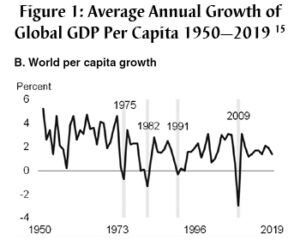
Figure 2 shows the development of the profit rate in the twenty largest economies (G20 states) in the last seven decades. As one can see, there has been, as Marx predicted, a long-term tendency of the profit rate to fall over the last seven decades.
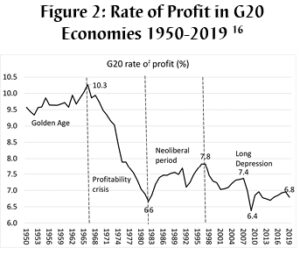
Figure 2: Rate of Profit in G20 Economies 1950-2019 16
It is no accident that Ness and Foster ignore the decline of capitalism and the tendency of the profit rate to fall as the fundamental factors for the evolution of the inner contradictions of imperialism as they belong to the Monopoly Capital school associated with the works of Paul Baran and Paul Sweezy and of which Foster and his Monthly Review are the best-known representatives today. This school mistakenly locates the underlying cause of capitalist crisis in the lack of demand and the resulting lack of realization of surplus value.
In contrast, orthodox Marxists locate the fundamental cause of capitalist crisis in the law of the tendency of the profit rate to fall, which basically means that in the long run the share of surplus value becomes smaller relative to all of the capital invested in production (in machinery, raw materials, etc., as well as wages paid to workers). Therefore, the surplus value that can potentially be used for the reproduction of capital on an extended level becomes relatively less. This inevitably leads to disruptions and crises and a historic tendency of decline as it becomes less and less profitable for capitalists to invest in the expansion of production. Phenomena like overproduction or underconsumption are a result, not the ultimate cause, of the tendency of the profit rate to fall.
Marx himself considered the law of the tendency of the profit rate to fall to be the most important law of capitalism:
This is in every respect the most important law of modern political economy, and the most essential for understanding the most difficult relations. It is the most important law from the historical standpoint. It is a law which, despite its simplicity, has never before been grasped and, even less, consciously articulated.17
Various Marxist writers have defended and further elaborated this theory in the twentieth century until today, among them Henryk Grossmann,18 Ernest Mandel,19 Paul Mattick,20 David Yaffe,21 Andrew Kliman,22 Alan Freeman,23 Deepankar Basu,24 Esteban Ezequiel Maito,25 Guglielmo Carchedi,26 and Michael Roberts.27
The Theory of “Ultra-imperialism” in New Clothes
Another result of Ness and Foster’s removal of Great Power rivalry from their understanding of modern capitalism is that they end up with a version of the theory of “ultra-imperialism” that had been elaborated by the German social democrat Karl Kautsky at the beginning of World War I. Foster speaks about a “U.S.-dominated rules-based imperial order,” i.e., a global imperialist order that is dominated by a single Great Power and its subordinated allies. At the same time, both Ness and Foster deny the imperialist character of China and Russia. In other words, in their view inter-imperialist rivalry would have been superseded by a global imperial order led by a single power. In a certain sense, this concept bears similarities to Kautsky’s theory, which considered it possible that the Great Powers would be able to overcome their conflicting interests in order to jointly exploit the working class and the oppressed peoples.
Hence, from the purely economic standpoint, it is not impossible that capitalism may still live through yet another phase, the transfer of cartel-policy into foreign policy: a phase of ultra-imperialism, against which, of course, we must struggle as energetically as we do against imperialism, but whose perils would lie in another direction, not in that of the arms-race and the threat to world peace.28
The horrific events of World Wars I and II and the current tensions and arms race between the Great Powers have shown that the theory of “ultra-imperialism” is a revisionist pipe dream. Just as Kautsky became a de facto defender of one camp of imperialist powers (the Central Powers led by Germany in World War I and the Anglo-Saxon allies in the 1930s), so are Ness and Foster supporters of the camp led by Chinese imperialism.
It is because of Ness and Foster’s adoption of the ultra-imperialism theory that they consider the concept of “multi-polarity” as something progressive. As they deny the imperialist character of China and Russia, they cannot imagine the existence of several powers as constituting different, rival imperialist powers but rather as conflict between imperialist and non-imperialist (or even socialist) powers.
The concept of “multi-polarity” is nothing inherently progressive. It postulates an imperialist global order dominated by several, rival powers as superior to one dominated by one power (the United States).29 In fact, both the unipolar as well as the multipolar world order are equally reactionary because both are dominated by the class enemies of the workers and oppressed.
Do the Majority of Workers in Western Countries Belong to the Labor Aristocracy?
Finally, one has to point to another consequence of Ness and Foster’s distortion of Lenin’s theory of imperialism. In his writing, Lenin elaborated the thesis that the monopoly bourgeoisie is able, thanks to imperialist super-exploitation of the (semi-) colonial countries, to bribe the upper strata of the working class in the metropolises—the labor aristocracy.
One of the chief causes hampering the revolutionary working-class movement in the developed capitalist countries is the fact that because of their colonial possessions and the super-profits gained by finance capital, etc., the capitalists of these countries have been able to create a relatively larger and more stable labor aristocracy, a section which comprises a small minority of the working class. This minority enjoys better terms of employment and is most-imbued with a narrow-minded craft spirit and with petty-bourgeois and imperialist prejudices. It forms the real social pillar of the Second International, of the reformists and the “Centrists”; at present it might even be called the social mainstay of the bourgeoisie.30
While for orthodox Marxists, such labor aristocracy is a small minority of the working class, Ness argues instead that the majority of workers in Western countries have become labor aristocrats acting as “willing or unconscious conspirators and beneficiaries in the pillage of the Third World.”
Certainly, in the West there is labor exploitation of Black and Latino people, migrant workers, low-waged women, and other oppressed peoples. The aristocracy of labor thesis indicts the majority of the West as willing or unconscious conspirators and beneficiaries in the pillage of the Third World.
Here we see another nonsensical consequence of Stalinist theory of the “principal contradiction,” which removes not only the contradictions between Great Powers but also those between the monopoly bourgeoisie and the majority of the working class in Western countries! In the real world, however, capitalists are increasing the exploitation of the working class—in the Global South as well as in Western countries—which is reflected, among other things, in the declining share of labor in national income. As the IMF showed several years ago, the adjusted labor share declined from about 77 percent (1980) to 70 percent (2014) in the “advanced economies” (an often-used term of bourgeois economists for Western imperialist countries) and about 85 percent to 75 percent in the so-called “emerging market and developing economies” (a term for the Global South).31 Only the upper strata of the working class has been able to increase their share.32
However, Ness wants to remove exploitation and the class contradictions within North America, Europe, and Japan in order to justify their focus on the “principal contradiction” between, on the one hand, China and the Global South, and on the other the Western powers.
In summary, we can see the inner logic of the imperialism theory of Ness and Foster. Their support for imperialist China (which they call “socialist”) is inextricably linked to their denial of the essence of Lenin’s theory of imperialism. They ignore the concept of capitalist decline, they eliminate the inter-imperialist rivalry as an essential feature of modern capitalism, and they distort the concept of the labor aristocracy. All this makes it impossible to understand the development and the inner contradictions of imperialism in the twenty-first century. However, without a correct understanding of imperialism today, it is impossible to fight it!
notes
1. Immanuel Ness, “Western Marxism, anti-communism and imperialism,” International Critical Thought 14:4, 2024. Also in Monthly Review Online, Dec. 28, 2024. John Bellamy Foster, “The New Denial of Imperialism on the Left,” Monthly Review, 76:6, Nov. 2024. All quotes are from these two essays if not indicated otherwise.
2. Michael Pröbsting, “One Should Not Camouflage Capitalist and Imperialist China as ‘Socialist.’ A Reply to Immanuel Ness and John Bellamy Foster,” Spectre Journal, April 8, 2025.
3. I have published a number of works about capitalism in China and China’s rise to an imperialist power. The most important ones are the following: “Chinese Imperialism and the World Economy,” an essay published in the second edition of The Palgrave Encyclopedia of Imperialism and Anti-Imperialism. Immanuel Ness and Zak Cope, eds. (Palgrave Macmillan, Cham, 2020); “China’s Rise as a Great Power and the Marxist Theory of Imperialism,” Critique: Journal of Socialist Theory, March 29, 2025. “On the transformation of social property relations under China’s party-state regime,” LINKS, Sept. 28, 2024. “On the specific class character of China’s ruling bureaucracy and its transformation in the past decades,” LINKS, Sept. 15, 2024. “China: An Imperialist Power…Or Not Yet?” Jan. 22, 2022. “China’s transformation into an imperialist power. A study of the economic, political, and military aspects of China as a Great Power” 2012. https://www.thecommunists.net/publications/revcom-1-10/#anker_4; “How is it possible that some Marxists still doubt that China has become capitalist?” Sept. 18, 2020. “Unable to See the Wood for the Trees. Eclectic empiricism and the failure of the PTS/FT to recognize the imperialist character of China,” Aug. 13, 2020. “China’s Emergence as an Imperialist Power,” New Politics,” no. 57, summer 2014.
4. Karl Marx, Grundrisse der Kritik der politischen Ökonomie [Outlines of the Critique of Political Economy] (1857–58), in Marx Engels Collected Works (MECW), vol. 28, 37–38.
5. V.I. Lenin, “Conspectus of Hegel’s Lectures on the History of Philosophy,” in Lenin Collected Works (LCW), vol. 38, 256.
6. A. M. Deborin, “Georg Lukács und seine Kritik des Marxismus,” Arbeiterliteratur (No. 10, Wien, 1924, 91–116). (English translation: “Georg Lukács and His Criticism of Marxism.”)
7. V. I. Lenin, Imperialism, The Highest Stage of Capitalism (1916), in LCW, vol. 22, 269.
8. V. I. Lenin, “The ‘Disarmament’ Slogan” (1916), in LCW, vol. 23, 98.
9. V. I. Lenin, “Imperialism and the Split in Socialism,” in LCW, vol. 23, 105.
10. Ernest Mandel, Late Capitalism, New Left Books, 1975; see also Keith Hassel, “Revolutionary Theory and Imperialism,” in Permanent Revolution. no. 8 (1989); Michael Pröbsting, “Imperialism, Great Power rivalry and revolutionary strategy in the twenty-first century, Interview,” LINKS, Sept. 1, 2023.
11. Promise Li, “Imperialism as Antagonistic Cooperation,” Spectre, Oct. 15, 2024.; Michael Pröbsting, “Imperialism: ‘Antagonistic cooperation’ or antagonistic contradictions? A reply to Promise Li,” Jan. 25, 2025, LINKS.
12. Michael Pröbsting: “‘Empire-ism’ vs a Marxist analysis of imperialism. Continuing the debate with Argentinian economist Claudio Katz on Great Power rivalry, Russian imperialism and the Ukraine War,” Europe Solidaire Sans Frontières.
13. For my own approach to this debate, see, in addition to my above-mentioned books, e.g., Richard Brenner, Michael Pröbsting, and Keith Spencer, “The Credit Crunch—A Marxist Analysis,” London, 2008. for the complete version of this document in German, see here.
14. Murray E.G. Smith and Josh Watterton, Valorization, Financialization & Crisis: A Temporal Value-Theoretic Approach, 2021, 5.
15. M. Ayhan Kose and Franziska Ohnsorge, eds., A Decade since the Global Recession, Lessons and Challenges for Emerging and Developing Economies, World Bank, 2019, 9.
16. Michael Roberts, “Has globalisation ended?” (2022).
17. Karl Marx, Grundrisse, in MECW, vol. 29, 133.
18. Henryk Grossmann, Das Akkumulations und Zusammenbruchsgesetz des kapitalistischen Systems (Zugleich eine Krisentheorie) (Hirschfeld, Leipzig 1929). (The abridged English translation is: The Law of Accumulation and Breakdown of the Capitalist System: Being also a Theory of Crises (London: Pluto Press, 1992).
19. In addition to Mandel, Late Capitalism, see also his book Long Waves of Capitalist Development. A Marxist Interpretation (London: Verso, 1995).
20. Paul Mattick, Marx and Keynes: The Limits of the Mixed Economy (Boston: Porter Sargent, 1969).
21. David Yaffe, “The Marxian Theory of Crisis, Capital and the State,” Bulletin of the Conference of Socialist Economists, winter 1972, 5–58.
22. Andrew Kliman, The Failure of Capitalist Production. Underlying Causes of the Great Recession (London: Pluto Press, 2011).
23. Alan Freeman, “A General Refutation of Okishio’s Theorem and a Proof of the Falling Rate of Profit,” in Riccardo Bellofiore, ed., Marxian Economics: A Reappraisal (London: Palgrave Macmillan, 1998), 139–62.
24. Deepankar Basu, Julio Huato, Jesus Lara Jauregui, and Evan Wasner, “World Profit Rates, 1960–2019,” Review of Political Economy 37:1, 92–107.
25. Esteban Ezequiel Maito, “The historical transience of capital: The downward trend in the rate of profit since the XIX century,” MPRA Paper 55894, Universidad de Buenos Aires, 2014.
26. Guglielmo Carchedi and Michael Roberts, “The Long Roots of the Present Crisis: Keynesians, Austerians, and Marx’s Law,” in Guglielmo Carchedi and Michael Roberts, eds., World in Crisis. A Global Analysis of Marx’s Law of Profitability (Chicago: Haymarket Books, 2018).
27. Michael Roberts, The Long Depression. How It Happened, Why It Happened, and What Happens Next (Chicago: Haymarket Books, 2016).
28. Karl Kautsky, Imperialism (1914), in Richard B. Day and Daniel Gaido, eds., Discovering Imperialism. Social Democracy to World War I (Leiden: Brill, 2012), 774.
29. See, e.g., the two above-mentioned replies to Claudio Katz as well as “‘Multi-Polar World Order’ = Multi-Imperialism. A Marxist Critique of a Concept Advocated by Putin, Xi, Stalinism and the ‘Progressive International’” (Lula, Sanders, Varoufakis), Feb. 24, 2023.
30. V. I. Lenin, “Theses on the Fundamental Tasks of the Second Congress of the Communist International” (1920), in LCW, vol. 31, 193.
31. IMF, World Economic Outlook: Gaining Momentum? Washington, April 2017, 133.
32. See, e.g., chap. 3 in my book Anti-Imperialism in the Age of Great Power Rivalry.