Why are we against the war? The attack on Iran is an assault on the life and the fate of the people
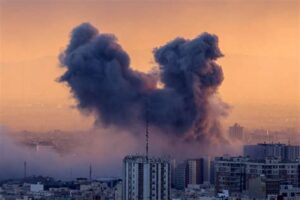 [Editors’ note: We are posting this article, written on the eve of the war, because we believe that its analysis still holds up, and it shows what some progressive forces were saying beforehand. The authors – the Roud Collective, a group of Iranian political activists in exile – offers this note: The initial version (in Persian) of this statement was published – by coincidence – on February 28, the first day of military aggression against Iran. Consequently, it does not analyze the sequence of events that has unfolded since. For this English version, we have summarized the original text without incorporating more recent developments.]
Introduction: Every war massively endangers or complicates the individual and collective survival of the affected people through its direct effects and consequential damages; apart from the killing of civilians and the mass of injured and refugees. The inevitable occurrence of the catastrophic consequences alone is sufficient to invalidate the claim of a “rescue of the Iranian people through foreign military intervention.” This is particularly true because the extent of the ongoing crises in Iran already (even before the war) imposed horrific suffering on the oppressed people and has brought the state of society to the brink of social collapse. In this test, we first list the most important general consequences of war in a condensed form and then name more specific implications regarding the current war. The writing and publication of this text are driven by the hope that, especially in this critical situation, resistance against war, militarism, and imperialist intervention in Iran (as well as in the Middle East and worldwide) will find a louder voice, without being integrated into the propaganda of the rulers of the Islamic Republic (IR) and their allies/proponents, who are themselves part of the problem.
1. General effects of war on very conditions of life
- War destroys and/or interrupts economic infrastructures, people’s livelihoods, and vital service infrastructures.
- War destroys the natural ecosystem and the human environment, which has immediate and/or permanent consequences for the livelihoods and health of people.
- War poses additional dangers for the most vulnerable layers of society: primarily for women and children of the lower classes, poor people, as well as for day laborers and precariously employed members of the working class.
- War creates a space of extreme insecurity that revolves only around bare survival and disrupts social coexistence as well as solidarity.
- A war atmosphere is accompanied by an intensification of authoritarianism as well as the strengthening of patriarchal relations and violence.
- In addition to the direct costs at the expense of the livelihoods and supply of the underprivileged, war opens the door for economic-military oligarchs to expand their plundering under the pretext of defense and national security.
- The direct costs of war (armaments) consume public wealth resources on which the minimal welfare of the underprivileged depends. The follow-up costs (reconstruction of war destruction) also make future minimal welfare impossible.
- War normalizes death and devalues the life and existence of human beings.
2. General social and political consequences of war
War is accompanied by the state’s declaration of a state of emergency and an increasing militarization of public space, which initiates a further tightening of the political blockade and the suppression of opponents. Consequently:
- War destroys the achievements of social movements, the possibilities for struggle from below, and generally the political agency (subjectivity) of the masses.
- The general coordinates of war conditions make the position of state’s agency more exclusive. Among other things, it strengthens the predominance of the state due to the increasing dependence of society on basic state services.
- The aggression of a foreign state makes it easier for those in power to project structural corruption as well as systematic crimes and oppression outward. Generally, through the increase in nationalist tendencies (around national borders and territorial integrity), it creates the basis for the alignment of a part of society with the state and thus leads to the weakening of social solidarity, which is needed for collective struggles against the existing order.
- The war atmosphere activates already existing divisions beyond the agency of the masses. Likewise, it increases the scope for the emergence and/or growth of militias, opportunistic currents and reactionary and/or far-right tendencies, as well as targeted or disruptive interventions by rival security services (both of the domestic state and other states). All of these, in turn, increases the danger of a social collapse and civil war: the war of all against all, instead of a common struggle against common enemies.
- War conditions not only massively hinder the possibilities of promoting popular and people-oriented interests and policies (especially in a dis-organized society as Iran), it also ensures that the political field in the post-war period revolves primarily around the owners of violence and wealth, as well as the military. War is a catastrophe for politics from below.
- War hides the interlocking of authoritarian and imperialist structures, fuels good-evil dualisms, and thereby leads to intellectual misleading and political fragmentation of the oppressed, whereby their potential strength (for a collective struggle) is scattered and weakened.
- War interrupts the continuity of the chain of struggles of the oppressed, which usually manifest particularly in social movements and mass uprisings.
- By wearing the people down, eliminating their political agency, and stoking an atmosphere of insecurity, deprivation, and despair, war establishes the conditions for the emergence of imperialist alternatives from above.
- War weakens the oppressed and strengthens states, powers, and rulers.
3. Specific implications of a probable war in the current situation
3.1. War has always been a vehicle for militaristic capital accumulation based on the expansion of a militaristic economy. Given that in crisis-ridden late capitalism: a) the processes of capital accumulation have become stagnant and inefficient; and as a result: b) imperialist polarizations and conflicts between the centers of global capitalism have increased significantly; and c) conventional policies are no longer capable of managing the consequences of this global crisis, ensuring the submission of the oppressed, or containing their rebellious uprisings; the dependence of capitalism on militaristic accumulation and simultaneously militarism as a management strategy has increased drastically. This is why some theorists, such as Sandro Mezzadra,[1] refer to the current phase of capitalist development as a global war regime.
3.2. The continuum of militarization, war, and warmongering has long intensified the process of militarism in the Middle East. This process has pushed the economic lives of the region’s oppressed to a breaking point, suffocated the political life of these societies, stifling any potential for political development, and facilitated the state’s suppression of class struggles and social movements. It has also led to the violent elimination of progressive forces and currents, and reinforced the divisions and divergences resulting from religious and national borders to the detriment of the internationalist solidarity of the oppressed. Although this imperialist process has historical and global roots and dimensions, the Iranian state (alongside the state of Israel) has been a firm pillar in the Middle East over the last decades to facilitate and intensify this process to its current acute limits.
3.3. Particularly with the promotion of nuclear and missile strategies as well as the “Axis of Resistance,” the Islamic Republic (IR) entered a terrain that was consistent both with the geopolitical strategies of Russia in the Middle East (let us remember Syria) and, as a “useful” stimulus, with the imperialist and military expansion of the USA and Israel. By proxy strengthening Russian (and partially Chinese) interests in the regional conflicts between the eastern and western imperialist blocs, the IR effectively placed Iranian society in a permanent state of semi-war, connected to a permanent state of emergency. The main features of this state have been: the devastating economic costs of nuclear policy, the expansion of militarism and regional interventions, as well as the intensification of oppression and political suffocation. All of this was normalized through a pseudo-anti-imperialist discourse centered on the Axis of Resistance, national security narratives focused on an external enemy, and ambitions of establishing a Shiite-Iranian great power. Aside from several instances of military escalation with Israel, most notably the so-called 12-day war in June 2025, the primary manifestation of life under a semi-war state has been the long-term endurance of devastating economic sanctions imposed by the Western imperialist bloc. This crisis-ridden mechanism has further paralyzed the underprivileged majority while enriching the military-economic oligarchy.
3.4. The patriotic war is a myth. The oppressed people in Iran have been under the fire of both sides for more than a century: both from internal despotism and from imperialist power relations. More importantly: these fire-guns are based on common mechanisms and are interdependent in their functionality. Even after the outbreak of this current war, the duality of aggressor states and victim state remains merely a hollow slogan designed to lead the masses astray into the slaughterhouse. Both sides are constituent elements of a comprehensive system of rule and oppression in the Middle East; a system reproduced through the interwoven functions of these forces at both local and regional levels.[2] Although the recent military aggression by Israel and the U.S. against Iran occurred within the context of imperialist geopolitical conflicts, in which the Islamic Republic has also been an actor, this aggression has imposed yet another war upon the people of Iran. This external conflict stands in addition to the chronic internal war the IR regime has long waged against the majority of its own population.
3.5. The discourse/approach that concludes from a comparison of the imperialist power/hegemony of the US with the regional power of the IR that one must take the side of the “weaker” in this “unequal war” ignores, in addition to the mentioned interdependencies, the sub-imperialist nature and functions of the IR: the violent reproduction of capitalist relations in Iran and the imperialist order in the Middle East through the subjugation of the masses; the expansion of militarism in the region through the proxy mediation of the imperialist rivalry between the Eastern and Western camps.[3] The propagandists and carriers of such a discourse ignore, wittingly or unwittingly, that both sides of the current war, regardless of their geopolitical differences, have been complementing each other’s functions in the submission of the oppressed in the geography of Iran. Since the Islamic Republic no longer possesses the endurance to ensure the long-term submission of the masses, this war will serve as an auxiliary force to secure that subjugation, albeit in a new guise.
3.6. The final outbreak of this war, the threat of which has long made the general living conditions of the underprivileged masses much severe and crisis-ridden, was a decision that the elites of the respective states, with their own profit-and-loss calculations, made over the heads of the oppressed masses of Iran and the region. For the maximal oppression and suffocation by the IR have left no room for the oppressed to cultivate and expand their own agency (though this is a general rule of any capitalist state). In the current balance of power, since the masses have possessed a limited level of agency, they are now facing the extreme costs of this imposed war; costs they can pay only with their own lives.
3.7. Despite all the harsh conditions and hostilities that surround us and have drastically reduced the possibilities of collective resistance, the agency of the oppressed is not entirely eliminable. More importantly, the current precarious situation provides even more vital reasons to continue the struggle. Now, the voice of resistance against the war must be amplified, and a clear line must be drawn against warmongering forces and tendencies. Although the outbreak of war reinforces a discouraging and frightening atmosphere, the inevitable intensification of public misery and political oppression necessitates organized resistance. In such a war situation, resistance does not mean supporting either side, nor does it mean following the myths of rescue from outside or defense of the fatherland (patriotic war). Rather, it will be realized through collective organization to defend the principle of life and to maintain the agency and solidarity of the oppressed. For example, through organizing of aid projects to support the vulnerable social layers; or through any initiative that strengthens organization in the work and public spheres. Such acts and initiatives can, in addition to their immediate necessary functions in the daily lives of people, also build bastions of resistance against the destruction of social solidarity or against the instrumental exploitation of the masses (by those in power). This is the only way to minimize the war’s immediate suffering and devastation while preparing ourselves for the socio-political threats of the looming post-war period.
3.8. With the outbreak of the mass uprising in December 2025 /January 2026, we did not only witness the horrific and unprecedented repression of the IR. This uprising also showed, in a bitter way, how the oppressed of Iran now stand simultaneously in an unequal struggle against three power fronts: the IR with its openly fascist features as the ruling state; the Pahlavi reactionary front with its openly fascist tendencies as a pretender to power; and the imperialist powers that were the motor for the unfolding of the neofascist rise in the contemporary world. All three fronts attach no value to human life, while having reinforced each other in various ways. Be it through powers that gloss over their geopolitical imperialist goals in a military aggression against Iran in the name of rescuing Iranians from endless suffering; Be it through those who, in order to come to power (the throne), have always beaten the drum of warmongering and the necessity of foreign military intervention; Or be it through the state of the IR, which has long imposed on us a life on the edge of war or in a semi-war state for the survival of its shameful rule; a brutal regime, that now assumes the pose of the victim-state and the defender of the people – the same people it slaughters by the thousands if “needed.”
3.9. All three groups count on our despair. Each of these three fronts hopes that the despair into which we have fallen through our catastrophic life under the death-based ruling system will entirely extinguish our political agency. So that we would say: Let come what may; it can’t get any worse than this. If we look back into our collective historical memory, however, all the bitter experiences we have gone through since the final failure of the constitutional revolution (1906) until today testify that in the sequence of our failures, we were confronted each time with something worse that threw us back into an even more ruinous situation. Even if we do not want to look back into our long-term historical memory, the documented consequences of humanitarian military interventions since the 1990s until today reveal the truth: from Iraq, Yugoslavia, and Afghanistan to Libya, Syria, Yemen, and Sudan. Given the long-standing and multi-dimensional hell that the IR has built, it is completely understandable that the oppressed reach the point of desperation. But if we can set aside the grip of despair for a moment, in favor of the vital decisions that determine the future of society, we will acknowledge that this war will worsen our historical situation.
3.10. Political currents that have been presenting foreign military aggression as necessary to get rid of the evil of the IR and actively promoted and normalized such a criminal solution consciously remain silent about the evil consequences of this solution. For they are mostly the same ones who enabled the horrific massacre of the IR in January 2026, namely the mass murder of the protesters; those who then presented this massacre – with shocking indifference – as the necessary costs of war against the IR regime. This time, too – while they been propagating and normalizing military aggression – they are well aware that the costs of war are to be paid by others, so that they themselves can enjoy the blessings of the war.
3.11. There is no doubt that we must bury the stinking corpse of the IR in order to be able to begin a new way in Iran, for this corpse has shaped the walls of our historical prison. But this can only happen through ourselves, not through powers that, given the testimony of the long history of the 20th century, are themselves prison builders and breeders of prison guard; be the Pahlavi gang or the IR itself.
Conclusion:
The current war in Iran is not a war of the US state and Israel against the Islamic Republic, but their common war (by both sides) against the people who, by a misfortune of fate, are forcibly citizens of the IR. This is a catastrophic war against the oppressed of Iran as it disrupts and weakens the unfinished process of their struggles against the oppression system of the IR. This war, as the newest manifestation of inter-imperialist conflicts, in continuation of the previous efforts of the ruling powers, aims to lead the combative aspirations of the oppressed into the abyss. Even after the war, we will be facing to another form of internal war against the oppressed. Therefore, collective resistance against war and militarism cannot be a separate process from the totality of the struggles of the oppressed. Rather, it must be part of a continuous and comprehensive resistance to defend the lives and the fundamental rights of the oppressed.
Our resistance against the war is a resistance against the core of the ruling policy, whose continuation needs the war[4]: politics from above. We are against the war because we believe in the power of connected and conscious people; in the capacity of the oppressed for transformation. Because a politics from below is both necessary and possible.
- No to imperialist wars
- No to warmongering and militarism
- Long live life
- Woman Life Freedom
Contact:
E-Mail: roudcollective@proton.me
Instagram: roudcollective.global
[1] Mezzadra, S. and Neilson, B. (2024): The Rest and the West: Capital and Power in a Multipolar World. Verso.
[2] Let us remember that the counter-revolutionary birth of the Islamic Republic from the 1979 Revolution resulted from an imperialist rupture in a revolutionary process that had its origins in the 1953 coup d’état.
[3] The fact that the U.S. government views this war as a means to return Iran to the Western imperialist camp does not change the fundamental mechanism described in this paragraph.
[4] Carl von Clausewitz famously stated that “war is a continuation of politics by other means.”