Victor Serge – Renegade?
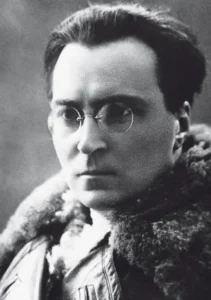
Friends may have seen the controversy simmering on the pages of Jacobin about the politics of Victor Serge. At the start of this month, Suzi Weissman Claudio Albertani, and Christian Dubucq published a piece criticising the recent biography about Serge written by the translator Mitchell Abidor. On Friday, he replied, insisting his narrative was accurate.
For my small corner of the left, a great deal rides on the controversy. In 1968, the year of the General Strike in Paris, Serge was taken to incarnate a particular kind of Marxism, which saw the possibilities of transforming society from below. The key text was Memoirs of a Revolutionary (1951), an autobiography published by a mid-century novelist, Victor Serge. Pro-Soviet Communists tended to believe that the adjective revolutionary was best attached to a collective organisation, a party. Serge, wrote about the left quite differently, The test of whether someone was “a revolutionary” was what they did with their lives; the ideal was to speak truly, to commit anew in each crisis to whatever rising social movement offered the oppressed most hope. On his death in 1947, one of Serge’s friends, a veteran of the Spanish POUM Julián Gorkin, was asked to identify Serge’s corpse. “In a bare shabby room with grey walls, he was laid out on an old operating table, wearing a threadbare suit and a worker’s shirt, with holes in his shoes.” A true revolutionary died poor, alone – that was the proof of the unrelenting commitment by which they had lived.
Mitchell Abidor’s approach has been to say that this narrative of Serge’s live is simply false. Serge, he argues, lied about everything important in his life. The author, Abidor insists, was on his death not a Communist but an “anti-Communist”, a renegade. You can understand why that approach has generated so much ire. Knock out Serge, and the left loses a major voice for revolution from below – the best-known dissident Marxist of the 1930s after Trotsky himself.
The narrative of Serge’s Memoirs describes the following events. Born Victor Lvovich Kibalchich in Brussels to a family of Russian Narodniks, Serge joined the youth wing of the Belgian Socialist Party before rejecting socialism for anarchism. He moved to Paris, where his libertarian acquaintances in the Bonnot gang robbed banks and escaped from the police in history’s first getaway car. Serge was put on trial as a member of the group in 1913 and sentenced to five years’ imprisonment. On release, Serge participated in a general strike in Barcelona in July 1917, sought to travel to Russia and was interned for fifteen months in a French prison camp. He arrived in Petrograd at last in January 1919 and joined the Communist Party. Serge saw the beginnings of the terror, “The formation of the Cheka [secret police] was one of the gravest and most impermissible errors that the Bolshevik leaders committed.” Serge participated in the Congresses of the International, “Everything was scarce: staff, paper, ink, even bread.” He attended Kropotkin’s funeral, the last public protest of the Russian anarchists before the Communists made it impossible for any rivals to organise. Of the regime’s suppression of the Kronstadt rebels in 1921, he wrote, the sailors “had begun a new freedom-giving revolution which would lead to popular democracy.” The Communists “should have beat a retreat by admitting that the existing economic set-up was indefensible”. Serge knew the philosopher György Lukács (“his theory of the Party could be taken as either superb or disastrous, depending on the circumstances”) and the Italian revolutionary Antonio Gramsci, who “fitted awkwardly into the humdrum of day-to-day existence, losing his way at night in familiar streets.” He worked for the Comintern in Germany. Returning to Russia, Serge sided with the Left Opposition. He was arrested in 1928 and again in 1933, after which deported for three years to Orenburg in the Urals before an outcry in western Europe rescued him from detention. In 1940, he abandoned Paris for Mexico. The Memoirs end in 1941 on a note of hope; the Russian revolution was lost, but history would provide some future alternative. “The passion, the experience, and even the errors of my fighting generation may perhaps help illuminate the way forward, but on one condition, which has become a categorical imperative: never to give up the defense of man against systems whose plans crush the individual.”
Abidor has chosen to written a political biography – has nothing of interest to say about such novels as Men in Prison, The Case of Comrade Tulayev, Birth of our Power although they, I would insist, are where Serge’s greatness lay – in his ability to describe a city sometimes a country as place in which thousands of individuals lives and hopes combine. There’s something hypnotic about his best writing, a confidence and a conviction which he brings to the Memoirs. All this, though, is beneath his biographer.
Abidor fixes on four key failures, each of which he argues tends to prove that Serge was the worst kind of sell-out. Around a quarter of Abidor’s book covers 1907-13, the years of Serge’s individualist anarchism. Abidor argues that during this period and years, Serge was an individualism and a supporter of criminal activities against the state (even ones without any obvious political content). He treated the individual ego as sovereign. To hell with society, Serge believed – not just bourgeois society but all social institutions, those of the oppressed and the working class too. Serge acted as a witness for an anarchist bomb-maker Vladimir Hartenstein who shot two policemen.
Here’s the first main charge: during the trial of the Bonnot gang, Serge told his prosecutors that he no longer believed in illegalism, indeed had long been opposed to it. That defence tended to separate him from his fellow defendants.
Is this critique fair? I accept that Serge misjudged the trial. I would go further, his account of its events in the memoirs, is so upbeat as to be misleading. I didn’t need Abidor to tell me this, it is the message which comes out from every page of the most detailed narrative of that hearing – Richard Parry’s book, The Bonnot Gang (1987), which can be read as a pdf on the Libcom website. In shortest form: Serge’s co-defendants believed that he exaggerated his separation from them, that he was selfish in doing so, and that he thereby increased the risks of their conviction. My own reading of events is that he thought he had a way out, planned it in advance, and then stuck to it – as it became apparent for example that that prosecutor hadn’t read the anarchist press, and couldn’t refute him. But I don’t see Serge’s distancing himself from the other members of the gang as being bad enough to call a betrayal. A group of people have taken guns, carried out thefts and murders – he hadn’t.
His position was not in its essentials different from that of the storied anarchist author and revolutionary Malatesta who was prosecuted as the inspiration of the 1921 Diana massacre in which his comrades carried out a bombing that killed 21 people, injured a further 172, and provided the fascists with the most extraordinary propaganda coup. On trial, Malatesta called the culprit a madman, and was acquitted. The difference between Serge and Malatesta is not one of general approach but of degree: Malatesta was in his late 60s Serge his early 20s, the Italian veteran did a much better job of this dual task of protecting himself without denying his politics. The difference, essentially, was one of performance rather than politics.
Reading Abidor’s account, I really don’t feel he emphasises enough that Serge faced a serious punishment – either (as seemed, at the trial’s start) death or at least lengthy imprisonment. Second, a trial is not a speech. The defendant is asked questions, which the prosecutor chooses in the hope of finding the most difficult and awkward ones possible. The defendant must improvise. In very few of the great political trials, do the defendants maintain a consistent dignity – it’s the movement, our belief in the justice of our cause which converts every successful accused person into a Nelson Mandela. I am in no hurry to judge anyone by that standard.
The second charge on Abidor’s sheet of Serge’s moral failings was – the present-day author insists – a failure to state honestly, while a pro-Bolshevik in the early 20s, just how little he thought of the post-revolutionary society. This part of Abidor’s book is militantly careless about chronology, leaps from 1919 to the late 1920s and back, as if it should be obvious to everyone that Serge was just, plain, wrong when he wrote about the Russian revolution as a series of incremental steps away from a utopian beginning. Abidor is allergic to the side of the revolution which attracted Serge, such acts as the abolition of the death penalty or the removal of the criminal code which caused the post-October society to be for a time the first country in the world to have legalised abortion and homosexuality. None of the big events of the next decade attracts Abidor’s interests, neither the Civil War, the New Economic Policy, nor the death of Lenin. His view seems to be that by the time of Serge’s arrival in that country in early 1919, Bolshevik Russia was already a police state in which the Communists were on the verge of expropriating the peasants and killing fellow Bolshevik.
Abidor quotes the hostile accounts of Serge written by various French libertarians. He sets out the position of the French anarchist Roger Gillot (“Rhillon”) who claimed in a bitter polemic that Serge was a monster, a murderer, who had inspired the Bonnot gang to commit their crimes before betraying them to the police. Belatedly, Abidor accepts that these attacks were “unmeasured” – in fact, their content was wholly untrue. To Gaston Leval in spring 1922, Abidor writes, Serge confided his real view which was that Lenin was “a dictator”, and Serge desperate to leave. Abidor treats these opinions of Serge as his sole opinions and any other expressed views as lies. But, among the many faults with that method, is that it assumes that other people’s accounts of what Serge said (often based on memories written down afterwards) constituted all that Serge thought. Whereas, if Serge’s thoughts were actually complex and contradictory, it would not be at all strange if he emphasised different elements to different audiences. This, Abidor would say, is a canting defence – obviously, Serge could not have thought two things at once. Except, he did.
As early as July 1919, Serge wrote a poem ‘Machine Gun’, which compared the uprising to a weapon, an object of “hate” intended to “bring death”, a “tragic machine”. Serge was proud of this piece of writing, arranging to have it published in France in the literary magazine, Clarté. The metaphors he employed were one of distance and dislike. Parts of the revolution enthused and fascinated him, while other parts repelled. It is not strange or mysterious for activist to have dual thoughts about a movement in which they participate – if Abidor actually knew people, had any interest in politics other than the gratification of his own ego – he might be aware that activists talk in about their movements in this dual way all the time.
The revolution had been threatened from without; Serge’s poem was written four months before General Yudenich’s assault on Red Petrograd. By summer 1922, the threats were coming from within. The Memoirs describe Serge trying to save the life of a relative who was accused of theft and facing the death penalty. Serge complained of the lack of press freedom within the USSR, spoke of the country as acting as a “schoolmaster” to fascism though its exuberantly dishonest propaganda. He also recalls travelling across Europe in service of the Communist international, and contrasting the poverty of the Soviet Union its egalitarianism and its blazing creative will to the wretched speculation he found in Western Europe, the “arrogant, imbecile, luxury of the rich and the shameful destitution of the masses”. That was Serge in the early 20s, repelled by the movement, then pulled back to it.
Abidor’s third main criticism of Serge is very similar to his first: the writer was put on trial and failed at the dual task of defending his views in general while insisting on his innocence in the particular. In 1933, Serge sought to smuggle out of the USSR a document setting out his mature views of the revolution. They were very critical. “For many, many years,” he wrote, “the Revolution has been in a phase of reaction.” He called himself “a dissident”. His testament concluded, “It is not against freedom of thought and against man that Socialism can triumph, but on the contrary, through freedom of thought, and by improving the condition of man.” The work came to the attention of the state and members of the secret police arrested and interrogated him.
Abidor’s account of Serge’s capture flits between commending the revolutionary for the courage with which he opposed the regime and chastising him for moments of “Talmudic hair-splitting” even “duplicity”, in which he claimed to be challenging the regime at the level of “ideas” rather than through open “political struggle”.
Serge may well have made mistakes – most interrogated people do. A fair comparison is Nikolai Bukharin, who was arrested in February 1937 and put on trial. His biographers have commended Bukharin, treated him as one of the few victims of the Purges to have resisted, as any revolutionary should. Bukharin responded to his interrogators by at times confessing to the regime’s accusations, even exaggerating them to the point where they became incredible. At other points, he resisted, if not in relation to his guilt, then fighting at least the practice that there could be any fair trial based only on confessions. This, Bukharin’s biographers argue, was the fate of the Soviet prisoner in the 1930s. So hostile was the state and even public opinion that the boldest possible act of resistance on the part of the prisoner would necessarily involve lying, Aesopian language and levels of deceit.
Serge was not in Bukharin’s position exactly. He was arrested four years earlier than his fellow Bolshevik and avoided the humiliation of a public trial. That said, any fair assessment would be that he escaped his interrogation – and endured 85 days of solitary confinement – having made far fewer political compromises than either Bukharin or than the majority of Stalin’s victims.
Abidor’s fourth and last major criticism of Serge is that between 1941, where the Memoirs break off, and 1947 when he died, Serge’s vocabulary expanded to include more references to human rights, and anti-Stalinism became an ever-larger component of his socialism. Some of this story was already known. Among the biographer’s criticisms are that Serge wrote for a social democratic paper, The New Leader, a Jacobin of the 1940s – which seems harsh, when set aside Abidor’s description of the milieu inside which Serge was trying to organise in Mexico in the early 40s. Isolated individuals, driven out of the movement by the Stalinist, warring with each other. Serge had to eat, and what paying alternative did he have?
Abidor wrote for Jacobin, “I was shocked to find: that Serge was a man who came to believe in his final years that socialist revolution was no longer in the cards, and that those who believed it were frozen in the past.” Shocked? I don’t believe him.
In Mexico, Serge believed he was in imminent danger of being murdered by Stalin’s supporters. That fear was well-founded. In 1940, a campaign was built to justify the murder of Leon Trotsky. Stalin’s supporters held protests outside his home in Mexico. One of them David Alfredo Siqueiros, led an armed raid during which a guard was killed and 300 bullets fired at the room in which Trotsky and his wife were sheltering under their bed. Communists were so proud of this attempt that one of their number – the poet Pablo Neruda – smuggled Siqueiros temporarily out of the jail in which he was being held, toasting the killing in a local bar together with Siqueiros’s jailor. On 21 August 1940, another Communist, Ramón Mercader, succeeded in killing Trotsky. Neruda smuggled Siqueiros permanently out of the country. On 25 January 1942, a cartoon published by the Communist paper La Voz de México, showed a caricature of Trotsky’s decomposing head as a “tree of treason” covered in swastikas to represent fascism’s presence in Mexico. The tree had snakes for branches, one of which was a cartoon of Victor Serge. Soon after, the US press ran a letter claiming that Serge was a member of the “Nazi Fifth Column” in Mexico and “restat[ing]” what it called “the feeling of the Mexican people about the Trotskyists in their midst”. Among the many Communists who signed this open letter, which Serge saw rightly as a death threat, were authors, politicians, painters – and (again) Neruda.
Serge had seen the prison camps of the USSR, had lived under Soviet justice, and was in a condition of no safety. If he concluded that a socialist revolution was no longer in the cards, but what humanity faced was more barbarism – no-one writing about him today, has any right to pretend to find that opinion shocking. It was the most natural and obvious conclusion for Serge to have drawn from his immediate circumstances.
There’s another, deeper, problem with his method. Good sports journalists sometimes talk, derisively, of what psychologists called “the peak-end rule”. What they mean is that you can watch some contest, feel throughout that it was finely balanced, and watch at the end as one of the protagonists loses. If you know the end, it becomes tempting to assume that the conclusion was destined. The team that won deserved it, were just better suited to that contest. All you remember of the contest is your response to its ending. The reason people hate this way of looking at sports (or politics) is that it makes the victory of one side inevitable and everyone a fool for resisting it. What bigger losers does history supply than those badly led, ill informed, German anti-fascists who made the mistake of trying to resist Hitler 1933? Or their counterparts in Italy – they lost, that’s all we need to know about them. This is a Trumpian way of looking at life, or at politics.
When a biographer insists that the true meaning of a person’s life is the conclusion they reached, in the last months of their defeat – they are choosing to write out of history the conflicts, the paths not taken, the moments of unsatisfied possibility.
If a biographer wanted to guarantee that a left-wing biography will go unread, there is no better way of going about that task than to treat the person’s last few weeks and months as the proof of the real meaning of any activist’s life. A Gerard Winstanley (scourge of Kings Charles, scourge of Cromwell, an advocate of quiet reflection in a period of defeat) is a far more common revolutionary trajectory than Marat murdered in his bath. What counts is how a figure responded when history gave them the chance to influence others. Serge had this moment of power, briefly, as he left the USSR for exile. He used it to write such novels as Midnight in the Century and The Case of Comrade Tulayev, and to complete his memoirs. His legacy deserves to survive even the misguided contempt of a hostile biographer.
First published at the D K Renton substack.