The Hidden Agendas Behind the India and Pakistan War
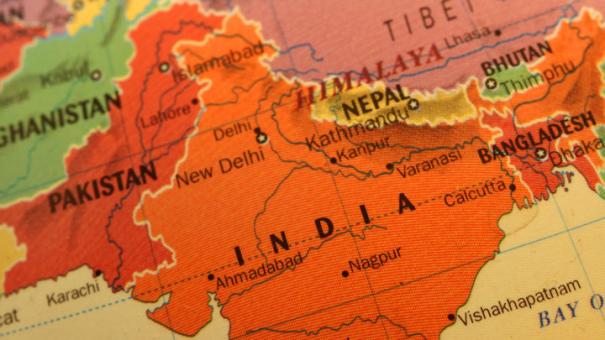
After the April 22, 2025 Pahalgam attack in Indian-administered Jammu and Kashmir, which resulted in the deaths of 26 civilians, the ruling ultra-right BJP government vowed to retaliate and strike hard at terrorist hideouts in Pakistan. The Pakistani government—or more accurately, the Pakistani Army, which acts as a shadow government and is known within the country as “The Establishment”—has a long history of nurturing and supporting Islamic fanatics, aided by CIA and Western funding dating back to the Cold War, when the Soviet Union occupied Afghanistan. Yet, Pakistan continues to feign innocence and victimhood. The war began, and although a ceasefire is currently in place, the specter of conflict still hangs over both nations.
As an Afghan with leftist ideals, I have witnessed my country burn in the inferno of war for over four decades. Every day, I walked to school in fear of being struck by missiles fired by jihadist factions, who targeted Kabul from the surrounding mountains to pressure the pro-USSR government of Najibullah. When I was in my first year of school, I had to run home during the 1990 failed coup attempt by Shahnawaz Tanai, the Chief of General Staff and Minister of Defense, a member of the Khalq faction of the People’s Democratic Party of Afghanistan (PDPA). Tanai, with the support of Gulbuddin Hekmatyar’s notorious Islamic Party and Pakistan’s Inter-Services Intelligence (ISI), tried to overthrow President Najibullah, who belonged to the Parcham faction.
By the time I reached 4th grade, I was forced to stop going to school. The jihadist parties had taken over power in 1992, leading to street-to-street battles among rival Islamist factions—chaos that Afghan citizens grimly refer to as the “Jihadist Dogfights.” These battles killed more than 80,000 people in Kabul alone, led to an unknown number of rapes, looting, and the destruction of both public and private institutions, leaving the entire city and country in ruins. Even 35 years later, the scars of that era are still evident throughout Kabul. Anyone who reads Human Rights Watch’s report Blood-Stained Hands: Past Atrocities in Kabul and Afghanistan’s Legacy of Impunity might develop psychological trauma from the horrors described.
In 1995, I had to leave Afghanistan and my parents behind to continue my education in Pakistan. But a new country brought new suffering. Even after living there for 15 years, from the first day to the last, my fellow Afghan refugees and I had to endure taunts and insults, often being called Mahajir—the refugee—and were frequently forced into physical confrontations with classmates and neighbors.
Long story short, the suffering of the Afghan people continues.
The reader might expect to read about the recent India-Pakistan war, but here is an Afghan recounting the pain of his people—and his own.
My aim is to warn ordinary people, especially in India and Pakistan, not to be fooled by the jingoism of their ruling elites. Knowing the languages of both countries, having spent time in each—15 years in Pakistan and many visits to India—and closely following their local and international media, I am familiar with both nations. I say this with confidence: the ruling class in both countries is either pushing for war or pretending to do so in order to extend their own power. They are manipulating the mentality of their suffering citizens, using war as a convenient excuse to avoid facing the uprisings sparked by broken promises made during elections—much like what happened in Bangladesh last year, a country which once shared land with both countries and is now close in culture, language, and history.
The Bharatiya Janata Party (BJP), led by Prime Minister Narendra Modi, has been in power since 2014. Modi, once a member of the far-right Rashtriya Swayamsevak Sangh (RSS), has campaigned on false promises of “Clean India” and “Abolishing Poverty.” However, since coming to power, the reality has been the complete opposite. He and his party have given free rein to the capitalist elite to exploit the people of India. In 2024, we witnessed the second round of the largest protest in the world by Indian farmers, which later grew to include industrial workers, after Modi’s government failed to fulfill promises made in 2021. While 1.77 million Indians have no place to live in the searing heat of the country, the richest man in India, Mukesh Ambani, owns Antilia, the most expensive house in the world, valued at $4.6 billion in 2023. India’s mining industry continues to wreak environmental havoc. In 2023, Indian wrestlers protested against a BJP member of parliament for sexually harassing female wrestlers during his tenure as president of the national wrestling federation. Cases of rape by high-ranking members of the ruling party go unpunished. When I interacted with Indian humanitarian workers during a workshop, I was shocked to learn about the dire poverty and hunger that force people to eat rats, grass, or the liquid extracted from cow dung. The BJP openly espouses Hindutva, a political ideology that advocates Hindu supremacy over India.
The Situation in Pakistan is equally dire. The country is burdened by crippling international debts. Minister Shehbaz Sharif himself stated: “Today, when we go to any friendly country or make a phone call, they think we have come [to them] to beg for money.” Due to widespread poverty and hunger, there are numerous reports of fathers killing their wives and children by poisoning them before taking their own lives, or people exhuming dead bodies to eat the flesh. Religious fanaticism, which began during Zulfikar Ali Bhutto’s era and was amplified during General Zia-ul-Haq’s rule with CIA funding, has transformed Pakistan into a place of intense religious intolerance. Entire Christian communities have had their homes burned to the ground, and Pakistan’s national cricket team members often appear more like religious missionaries than sportsmen, frequently attributing wins and losses to Allah as if god is a team member.
I remember when I was a student, asking my classmates where they were from, and most didn’t even understand the meaning of my question, replying simply that they were from Pakistan. But today, separatist movements are gaining momentum in Balochistan, Khyber Pakhtunkhwa, Sindh, and Southern Punjab. It has become common in Pakistan for the military establishment to topple a prime minister, prosecute them for corruption, exile them to luxury villas—often in London—and then later reinstate them to power. I recently visited Islamabad after 12 years. Once one of the cleanest cities, it is now filled with trash on the streets and highways.
Both countries, under feudal-capitalist governments, have no solution for the suffering of their people except war—just as all reactionary regimes do. People die of hunger in both countries, but who cares? The generals and the elite class profit from the war, while the rest of the population bears the cost. In the coming years, the war started by the ruling elites will be blamed for all the shortcomings they caused. The people will endure all the hardships, while the ruling class continues to live luxurious lives, either within their own countries or abroad. I write this from the perspective of Afghanistan, where no war criminals have been brought to justice. As regimes have collapsed, those responsible for decades of suffering simply moved to offshore countries to live out their lives comfortably, or to await a return to power.
As a progressive Afghan, I’ve shared a glimpse of the miseries we, Afghans, have faced. Therefore, the people of India and Pakistan should not fall into the trap set by their war-mongering elites. They must choose peace over war because the true winners of this war will be the elite class, while the rest of the population will be the losers.
Say NO to all unjust wars around the world.
May 14, 2025