The Groundless Left: Politics from Above, Defeat from Below
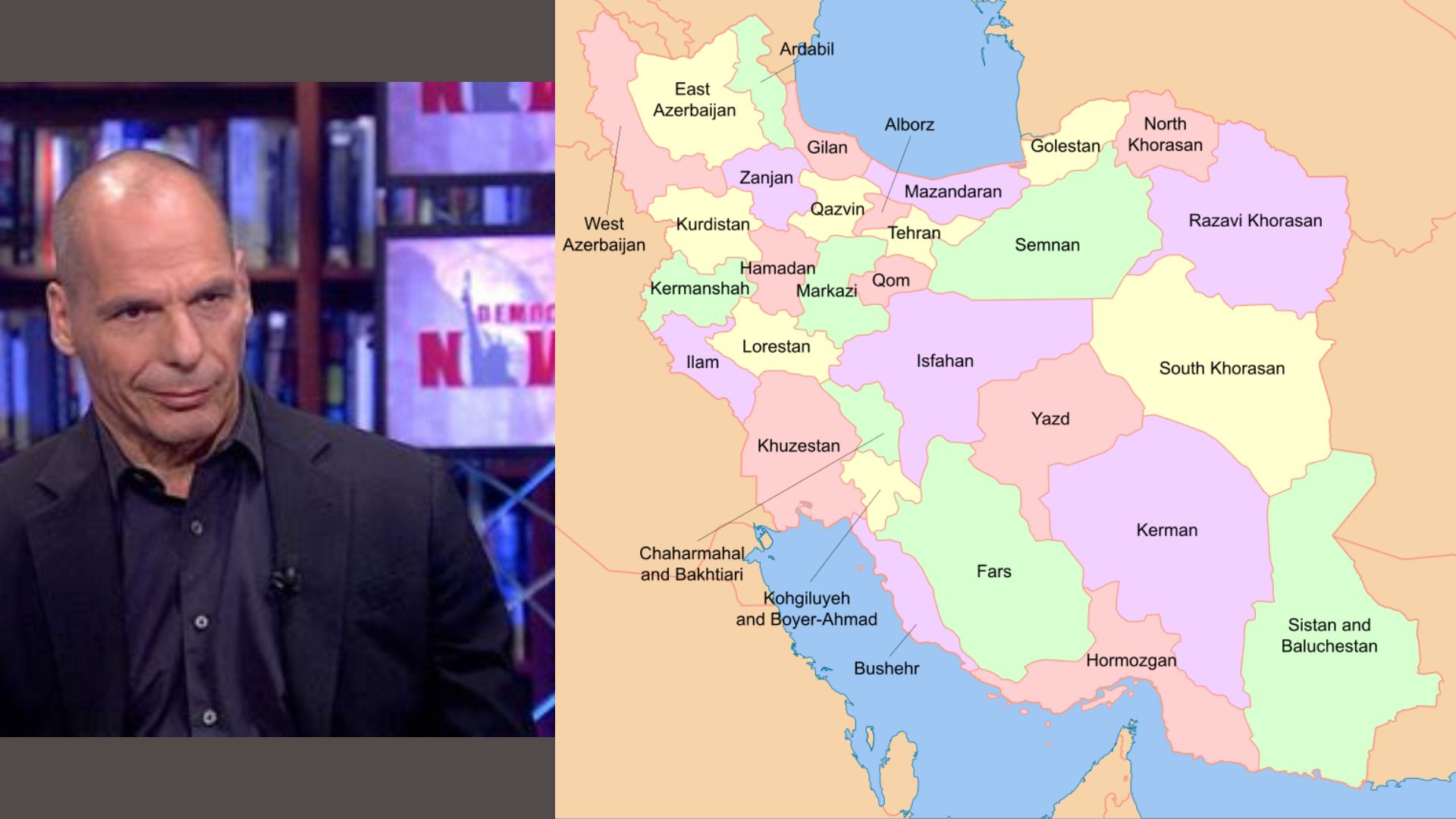
In a recent video released for the 10th anniversary of Greece’s “No to Austerity” referendum, former finance minister and leader of MeRA25, Yanis Varoufakis, reflects on a political defeat. He recalls the moment in 2015 when the Greek people stood against the European Union’s economic dictates—and when the government, including himself, eventually gave in to pressure. On the surface, it’s still told as a song of resistance. But within the same video, when Varoufakis refers to the slogan “Woman, Life, Freedom”—without mentioning Iran, the structure of repression, or the uprisings that made the slogan known worldwide—he steps into a space that clearly reveals the meaning of the crisis inside today’s European left.
This omission is not accidental. This erasure comes from a specific way of thinking: one that sees politics through states, diplomacy, and power balances—not through grassroots movements. The slogan “Woman, Life, Freedom” wasn’t born in conference halls; it was shouted in the streets of Tehran, Sanandaj, and Izeh. It came not from leaders like Varoufakis, but from women who stood against religious tyranny and class oppression—under lashes, in solitary cells, and on the cold soil of cemeteries. When Varoufakis reduces this slogan only to “the Kurdish movement,” without any reference to the nationwide uprising of the Iranian people—those same people he once called friends and comrades—he’s not just erasing history. He’s detaching the struggle from the reality on the ground.
Back in December 2022, in an interview with London-based television station, Iran International, Yanis Varoufakis described the Islamic Republic as an “Islamo-fascist” regime and said it must be pushed back. He also expressed support for the “Woman, Life, Freedom” movement, insisting that one must not fall into false binaries: neither on the side of Israel and U.S. imperialism, nor on the side of a repressive regime—but rather with the people, from below. He even joined an international campaign in solidarity with Iranian political prisoners, launched by exiled Iranian activists.
But in his recent video and open letter to the Islamic Republic’s ambassador, none of those positions are mentioned. The letter only condemns Israel’s attack—a stance that can certainly be defended—but says nothing about the Islamic Republic, its machinery of repression, or the demands of the people. Not even a single line.
This shift is not just a personal retreat. It reflects a structural crisis in the European left: a left that has detached itself from class struggle, sought refuge in political diplomacy, and lost its ability to analyze contemporary forms of fascism. In the case of Palestine, many leftist currents in Europe stepped forward with loud, righteous slogans. But at the same moment—when they also needed to confront Hamas, Islamic fascism in Iran, Russian authoritarianism, and Chinese surveillance capitalism—they chose silence. They only seem able to recognize fascism when it comes from the Western right—Trump, Orbán, or French nationalism. That is why, in solidarity movements for Palestine across Europe, religious voices and Islamic symbols are heard more loudly and more clearly than secular or progressive ones.Western feminists and queer activists often show up quickly and loudly in defense of Palestine. But an Iranian, Palestinian, or Syrian queer person in those very same spaces is easily sidelined—because they do not fit into the pre-approved frame of the “oppressed Muslim subject.” Their local struggles are sometimes even interpreted as echoing Western far-right hostility toward migrants and Muslims. This distortion is not accidental. It is enabled by figures like Varoufakis, and a wider political environment where what once claimed to be a progressive, leftist force in the West has lost any real connection to political clarity or internationalism.
What we see now is a performance of resistance—a resistance that only defines itself against the Western far-right, not in relation to the lived struggles of millions under fascist, theocratic, or oligarchic regimes in Iran, Afghanistan, Iraq, and Syria. The result is absurd: an Eastern person resisting theocracy, fighting for free speech, bodily autonomy, and survival is mistaken for an enemy of Islam—resembling the language of white Christian nationalism. As if that person has no organic link to their society, no history, no context—just an alien body dropped into the conversation.
This erasure of real political movements goes hand in hand with a Eurocentric blindness that shuts down any possibility for internationalist or transnational analysis. In this flattened moral world, political Islam is granted the banner of resistance. Meanwhile, Iranian feminists, queer activists, secular leftists, republicans, and pro-democracy forces are pushed aside—seen as inconvenient, too complex, or too Westernized to matter. This crisis is not just about Varoufakis. For instance, Naomi Klein, has rightly warned against digital fascism and the rise of tech billionaires aligned with far-right politics. But she, too, seems to forget that the very logic of oligarchy violent, extractive, surveillant has been the lived experience of people in Iran for decades, in even more brutal and organized forms. Yet many global left movements still hesitate to call what’s happening in Iran fascism. Their theory of fascism is not adequate. They cannot grasp the mix of religious authoritarianism, rentier class domination, and the destruction of everyday social life that defines contemporary regimes across the Global South.
The government of the Islamic Republic embodies many fascist characteristics: the obsession with national decline, the scapegoating of internal enemies, the ritualized violence, and the effort to construct a “pure” “moral” society through repression. However, it lacks the popular enthusiasm or broad elite consensus that sustained historical fascist regimes. In today’s Iran, repression substitutes for consent. Coercion replaces charisma. The regime remains in power not because of deep-rooted support, but because of its ability to suppress and fragment every alternative, especially those that emerge from below. As long as the Left’s theoretical failure and incorrect comprehension of reality continues, the real struggles of millions will remain invisible behind empty slogans and the selective solidarity of a false resistance. Much of the European left has tied its hopes to elections and parliamentary games. It’s this same mindset that led to the collapse of Varoufakis’s MeRA25 party, which failed to enter the Greek parliament. When leftist forces disconnect from the lived struggles of ordinary people, they eventually lose even their place in official institutions. Not because the people have turned right-wing, but because the left has forgotten how to speak in the language of class and from below.
A politics that still believes the world can be changed through statements, diplomatic balancing, and geopolitical calculations alone is deaf to the basic demands of “bread, work, freedom.” It cannot hear them. And more importantly, it cannot represent them. In Iran, politics from below has already been redefined. Despite brutal repression, people have voiced demands that challenge not only the system’s injustices, but its very foundations: from “No to execution” to calls for “council-based governance.” This is not a politics built on party platforms or legal institutions. It comes from truck drivers on strike, teachers protesting in schoolyards, and women confronting the regime in the streets. It’s a movement not waiting for validation from Western intellectuals.
This form of struggle refuses to be filtered through the institutional language of NGOs, foreign ministries, or social-democratic think tanks. It is born out of urgency, not ideology; out of necessity, not theoretical blueprints. And until the Western left learns to listen not with pity, but with solidarity rooted in shared struggle it will continue to lose relevance. A left that only stands against the Western far right, but makes excuses for repression in Tehran or Moscow, is neither radical nor progressive. It is simply a manager of the status quo. Today, across Europe, the left is being pushed out of parliaments, and losing its grip not because the values it claims to hold are outdated, but because its worldview is. In its place, a vacuum is growing filled with a kind of nihilism that dresses itself up as anarchism, but offers no path, no strategy, and no grounding in the material struggles of real people.
The Islamic Republic today doesn’t need mass rallies or aesthetic militarism to qualify as fascistic. Its power lies in its bureaucratic violence, religious-political fusion, and the continuous production of enemies: women, workers, students, migrants and queers. What we face is a bureaucratized, fragmented, post-charismatic form of fascism, one that survives through exhaustion and surveillance, not popular will or ideological passion. A living, relevant left must learn to listen to the voice of the oppressed wherever it speaks—not only when it matches familiar Western narratives. It needs to offer a true emancipatory vision and not just slogans. It needs to live up to its vision and not just be performative. Until then, it will keep mistaking comfort for clarity, and resistance for branding.