Marieme Hélie-Lucas (1939-2026): Transnational Feminist Solidarity, Secularism, and Resistance to Fundamentalism
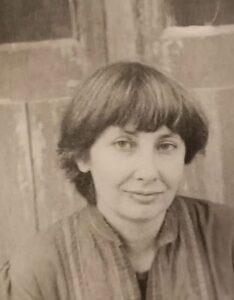
We learned of Marieme Hélie-Lucas’s death on August 9, 2026. Her passing marks the loss of an extraordinary feminist intellectual, organizer, and political activist whose influence extended across continents and generations. For those of us committed to gender equality, secularism, and human rights, her legacy will continue to challenge, inspire, and guide us.
Marieme Hélie-Lucas, born in Algiers in 1939, was an Algerian sociologist, political theorist, feminist activist, and author. She was the founder and former International Coordinator of Women Living Under Muslim Laws (WLUML), an international solidarity network, and later founded Secularism Is A Women’s Issue (SIAWI), an international network dedicated to defending and reclaiming secular spaces for women and girls from all forms of religious fundamentalism.
I first came to know the name Marieme Hélie-Lucas through Women Living Under Muslim Laws established in 1984 and later more through Women in Black. I subsequently read much of her writing and came to feel a profound intellectual affinity with her analysis of religious fundamentalism, secularism, women’s rights, and transnational feminist solidarity. Her insistence on distinguishing religion as a matter of personal belief from political movements that mobilize religion for political power particularly resonated with me.
For those of us working on gender equality and human rights in Iran, this distinction is not merely theoretical. Religious fundamentalism is a political project that uses religion to establish, maintain, or legitimize power. Whether expressed through a state or through non-state actors, political Islam can become profoundly repressive when it seeks to regulate individual lives, restrict freedom of conscience and expression, and deny women and minorities equal rights. Respect for universal human rights is, in my view, foundational to any effort to make our deeply troubled world more just and humane.
Marieme was one of the most formidable political and intellectual forces confronting religious fundamentalism. Her work anticipated many of the debates that have since become central to contemporary feminist politics. For those of us who have witnessed the consequences of the Islamic Republic of Iran over nearly five decades, her analysis carries particular significance. She understood that opposing imperialism, colonialism, racism, and Western domination could never require us to remain silent about fundamentalism or the systematic violation of women’s rights.
Her feminism was uncompromising in its defense of women’s autonomy, freedom of conscience, and universal human rights. She challenged the tendency to treat women living under religious fundamentalism as passive victims or to romanticize the political forces that sought to control them. Instead, she centered women’s agency and insisted on the right of women everywhere to define their own lives, freedoms, and political futures.
Marieme’s intellectual courage was matched by her commitment to feminist organizing and transnational solidarity. She helped create spaces in which women from different countries and political contexts could recognize common patterns of oppression while preserving the complexity of their own experiences. Her work reminds us that genuine solidarity does not demand silence about difficult questions; rather, it requires the courage to confront all forms of domination, including those carried out in the name of religion, culture, nationalism, or political ideology.
Her passing is therefore not only a moment of mourning but also an occasion to reaffirm the principles to which she devoted her life. Marieme Hélie-Lucas leaves behind an extraordinary body of work and a feminist legacy that will continue to shape struggles for secularism, equality, freedom, and justice. We honor her by carrying forward the questions she raised, the boundaries she challenged, and the unwavering commitment to women’s freedom that defined her life.
Marieme’s worldview was deeply shaped by the Algerian struggle against French colonialism and the war of independence. She experienced both the enormous hope generated by national liberation and the painful reality that women’s liberation can be subordinated, postponed, or sacrificed even within broader struggles for national liberation and political freedom.
She worked as a senior civil servant during the first three years following Algerian independence before leaving to teach at Algiers University, where she taught for twelve years. Her intellectual formation in sociology, social history, and political economy became central to the way she understood political movements and social transformations.
She later witnessed the rise of Islamic fundamentalism and its implications for women, minorities, dissenters, and civilians. Rather than treating these developments as simply religious phenomena, she understood fundamentalism as a political force and insisted that the Left develop an adequate political analysis of its rise.
In a 2015 interview with the socialist journal Solidarity, she explained:
“Solidarity: For many years, large parts of the global left have regarded political Islam as essentially progressive against the dominant (US) imperialism; what do you think about this analysis? What are its roots?
We can incriminate several factors. The left’s traditional focus on the state impeded its ability to decode in time the warning signs of supposedly religious non-state forces rising as powerful extreme-right political actors. Human rights organisations sorry, comrades, for this unholy comparison but I must make it also have trouble delinking from an exclusive focus on the state and considering these new players for what they really are. I situate this difficulty at the same level as that of re-identifying and re-defining classes today. One badly feels the need for innovative, intellectually fearless, communist thinkers and theorists to account for the many changes in the world in the last century.”
This analysis was central to Marieme’s political contribution. She challenged the tendency of parts of the Left to regard political Islam as inherently progressive or minimize the atrocities of it because of its opposition to Western imperialism. For her, there could be no progressive politics that required women to surrender their rights or minorities and dissenters to surrender their freedom.
Marieme also understood that feminist movements were often among the earliest and most consistent forces to recognize the danger posed by religious fundamentalism. As she explained in her interview with Solidarity in French.
“Solidarity: What are the key progressive resistance movements (working-class, feminist, secular-democratic, etc.) to the religious far-right?
In my experience, the women’s movement has been the most steadily opposed to religious fundamentalists everywhere, for the simple reason that women are their first victims. To start with, under the political influence of the religious far-right, governments are far too happy to negotiate social peace at the cost of women’s rights. Hence, one of the first steps that is generally taken to appease the Muslim far-right is to change the laws on personal status (or family codes) and make them more “Islamic”, i.e. laws which affect primarily women by regulating marriage, divorce, polygamy, repudiation, alimony, custody of children, inheritance, etc.”
This observation remains remarkably relevant. Marieme understood that the regulation of women’s bodies, sexuality, marriage, family relationships, inheritance, and mobility is often among the first arenas in which fundamentalist “ political projects” as she referred to them seek to establish power.
Her politics therefore rejected the notion that women’s rights could be deferred until after other political struggles had been resolved. Liberation could not be hierarchical. Opposition to imperialism could not come at the expense of women’s equality; opposition to racism could not require accommodation with religious fundamentalism.
She expressed this position clearly at the conclusion of the interview with Solidarity:
“The either/or situation between allying with US imperialism or allying with the Muslim far-right is intolerable. It is for the left to reclaim the lost terrain at international level, and, may I say, some credibility amongst the rank and file in Muslim-majority countries.”
For Marieme, solidarity was never merely a principle expressed in words, theory, or slogans. She lived solidarity through action. She built networks, brought women together across borders, amplified voices that were often marginalized, and stood alongside women confronting religious fundamentalism and other forms of oppression. Her feminism was not simply something she wrote about; it was something she practiced.
In 1984, Marieme founded Women Living Under Muslim Laws (WLUML) and served as its International Coordinator for eighteen years, building an international solidarity network connecting women across diverse political, cultural, and religious contexts. In 2004, she founded Secularism Is A Women’s Issue (SIAWI) and continued her international organizing around secularism, women’s rights, and resistance to religious fundamentalism.
Through these organizations and through her own political engagement, Marieme demonstrated that feminist solidarity requires more than shared language or declarations of support. It requires presence, courage, organizing, and action. She did not simply speak about solidarity she built it, practiced it, and made it a living political commitment.
Marieme repeatedly insisted that women could not be sacrificed in the name of culture, religion, community, nationalism, or anti-imperialism. Her work challenged the false choices that continue to shape political debates: feminism versus anti-racism, secularism versus cultural diversity, opposition to imperialism versus opposition to fundamentalism.
Her intellectual legacy is particularly important at a time when religious fundamentalist movements continue to expand their political influence in different parts of the world, while women’s rights are frequently negotiated away in the name of social stability, cultural authenticity, religious identity, or political expediency.
For Iranian feminists and human rights activists, Marieme’s work has a particular resonance. The experience of the Islamic Republic demonstrates with devastating clarity how a political project that claims religious legitimacy can institutionalize gender inequality and restrict virtually every dimension of women’s autonomy. Marieme understood these dynamics decades ago and insisted that the international Left and human rights movements confront them rather than explain them away.
As Harsh Kapoor, wrote following her death:
“I hadn’t lived with Marieme since 2015, but we remained close friends, comrades, and members of the same family. I am devastated, not knowing how to pick up the pieces. But our pact was never to say goodbye, and to preserve all those precious memories. “Lal Salaams” [red salutations] to you, “meri jaan,” who were so full of life… and loved Serge Rezvani and his beautiful song—Le Tourbillon de la vie (from Jules et Jim), performed by Jeanne Moreau.”
Harsh Kapoor captured her historical significance: “She had already lived half her life when Imet her; she was a true living memory of the Algerian revolution”
Marieme’s life reminds us that feminist solidarity is not simply a shared identity. It is a political practice grounded in intellectual courage, mutual responsibility, and the willingness to stand with women even when doing so challenges dominant political narratives.
She thought internationally, documented resistance, connected struggles, and transformed solidarity into action. Despite her advancing age, she remained relentlessly engaged. As Harsh Kapoor recalled, she “bombarded us daily with a dozen or more emails reminding us of another struggle, another injustice, another person who needed solidarity.” Those who worked with her sometimes struggled to keep pace with her. That extraordinary energy was part of her legacy.
Marieme Hélie-Lucas leaves behind not only institutions and networks but also an intellectual and political method: analyze power critically; refuse false binaries; defend universal rights; listen to women whose voices are marginalized; and transform solidarity into concrete action.
Marieme’s life spanned the anti-colonial struggle in Algeria, the emergence of transnational feminist networks, the rise of religious fundamentalism, and decades of feminist resistance across continents. She remained committed to the conviction that women’s freedom cannot be postponed and that no political project, religious, nationalist, anti-imperialist, or otherwise, has the right to demand women’s subordination.
Her death is a profound loss. But her arguments, her networks, her documentation, her mentorship, and the generations of feminists she inspired remain with us.
Respectful salute, Marieme. You are with us through your writings, your recorded conversations, your organizing, and the countless women and movements whose lives you touched. May your intellectual courage and practice of transnational feminist solidarity continue to guide us.
August 17, 2026