
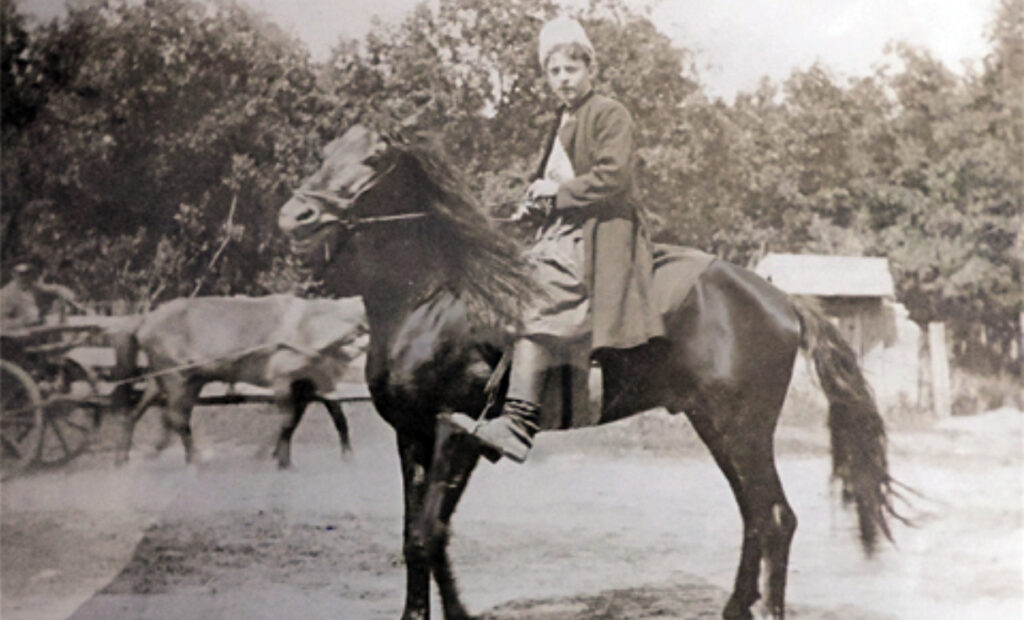
Presented here for the first time in the English language is the pamphlet Ukraine and the War by Lev Yurkevych offering what is arguably the earliest concise Marxist analysis of the Ukrainian question to be presented to international socialists.
Yurkevych, a figure whose name and role have been long forgotten in the history of the labor movement, was during his lifetime one of the foremost Ukrainian representatives of the Social Democracy of the Second International. For decades, those who encountered his name—if they did at all—typically did so through the polemics of Vladimir Lenin. In the Soviet Union, where Lenin was venerated as saint without sin, Yurkevych was maligned as a “bourgeois nationalist,” his writings suppressed, and hidden from view.
Yurkevych forms part of a lost left—lost not only through the physical extermination wrought by Stalinist repression and the Nazi occupation of Ukraine but also through a long succession of retrogressive approaches to the history of the revolutionary period which have cast the Ukrainian Marxist tradition pejoratively.
The ideas articulated by Yurkevych and the Ukrainian Social Democrats extend beyond mere historical interest; the challenges they confronted remain profoundly relevant today. In his opening remarks to Ukraine and the War, Yurkevych observed that prior to 1914, European democrats had shown little concern for the Ukrainian question, yet it would play a significant role in shaping the post-war order.
Similarly, prior to Russia’s war against Ukraine commencing in 2014, there was little interest in Ukraine in the West. Since then, interest has markedly increased—a welcome development, but one accompanied by new forms of retrogression.
We have seen a revival of reactionary ideas that Ukrainian Marxists faced in Tsarist times and that were advanced by the White movement during the Civil War. These ideas include that “Great Russia,” “Little Russia” (Ukraine), and Belarus are three branches of a singular Russian people, Russian language and culture being their shared achievement. Moreover, there are the claims that Little Russia is an inseparable part of a unified Russia, and that the notion of a distinct Ukrainian identity is manufactured by foreign powers to weaken Russia.1
Contemporary Russian leaders base their interpretations of the Ukrainian question on these principles in acting as heir and guardian of Tsarist Imperialism. The reburial of General Denikin in 2005 with military honors in Moscow was an apt symbol of this reconnection with Empire. That Denikin secured Western sponsors for his war to reconstruct the Empire is understandable; that Putin can harness support of the far-right is no surprise. What is significant is the support and appeasement of sections of the international left for Russia’s war of colonial reconquest against Ukraine.
In this context the publication of Yurkevych’s analysis holds relevance today. It offers a unique perspective—one that comes directly from a Marxist within the oppressed periphery—on challenges and issues that have resurfaced in our own time.
Lev Yurkevych: a Biographical Sketch
Lev Yurkevych (1883–1919), who wrote under the pseudonyms L. Rybalka and E. Nicolet, was born in the village of Krivoy—now part of the Zhytomyr region—in what was then Russian-ruled Ukraine. His father, Yosyp Yurkevych was a key figure in the development of the cooperative movement and a leading activist in the Hromada movement that played a crucial role in the Ukrainian revival during the 19th century.
During his university years in Kyiv, Lev Yurkevych was engaged in revolutionary student activism. At the age of 19, he became an active socialist joining the Revolutionary Ukrainian Party (RUP) in 1903 after reading their periodical Selyanyn (Peasant).2
Founded in 1900, the RUP was the first Ukrainian political party within the Russian Empire, playing a crucial role in Ukraine’s political life in the early 20th century. In the lead-up to the 1905 revolution, the RUP experienced significant growth; the paper Iskra noted that RUP leaflets were spread across Ukraine “like snow.”3 In the spring of 1902, Tsarist authorities attributed the mass agrarian strikes to RUP “revolutionary propaganda,” seen by the RUP as the “beginning of the Ukrainian revolution.”4
Initially a coalition of various socialists, radicals, and nationalists, the RUP quickly evolved toward Marxism. By the time Yurkevych joined in 1903, it had formally declared its commitment to the principles of international Social Democracy.
During the years 1904–1905, amid the Russo-Japanese War and revolution, Yurkevych agitated in Kyiv’s factories and streets. Alongside fellow activist Anastasia Grinchenko, they expanded the Kyiv RUP committee, transforming it from a group primarily of intellectuals into one that included active circles of Ukrainian workers.5
This orientation was a major shift from the RUP’s focus on rural Ukraine to organizing urban Ukrainian workers, in an environment where the urban centers saw the primacy of Russians and non-Ukrainian minorities.6 Ukrainians found Russian not only the language of the state but of the labor regime, of the manager and the foreman, with a division of labor that relegated them to the lower strata, with a high proportion of temporary workers being Ukrainian.7 Yurkevych recalled of this campaigning:
Our meetings were mostly about the division of society into classes, the class struggle, socialism, the slogans of the Russian Revolution, current questions, the autonomy of Ukraine and the principle of national organizations. Because of their complexity these last two points were the focus of much attention by our propaganda group. The national character of the work showed in the fact that with Ukrainians we spoke exclusively Ukrainian. At first the workers were a little ashamed to use their native language, but when we spoke it, they always listened with a cheerful smile. It was clear our conversations aroused pleasant memories of their villages, perhaps of their dear ones…. Sometimes we had to defend the right of Ukrainian to exist as a separate language, arguing mainly that the village proletariat constituted the overwhelming majority of the workers, and to ensure the unity of our movement it was necessary to use the majority language; and that the peasantry only understood Ukrainian, and only through this medium would we be able to revolutionize them. And once we’ve done that, we’ll win over the army—the main support of the tsarist regime, which is primarily made up of peasants.8
Yurkevych was to gain some recognition for organizing a strike—not just among ordinary workers, but in the iconostasis workshops, where workers painted icons for the renowned Kyiv-Pechersk Lavra.9 Yurkevych’s success, however, came at a cost, as he faced repeated arrests and imprisonment by the Tsarist police, the Okhrana.10
In December 1905, Yurkevych attended the Second Congress of the RUP in Kyiv, where the party was re-launched as the Ukrainian Social Democratic Workers Party (USDRP). Held on his father’s estate, the congress was nearly cut short when police raided the site on its second day. A few weeks later there were mass arrests, including of Yurkevych, who was incarcerated in Lukyanivka prison. Shortly after his release in May 1906, he was co-opted into the USDRP Central Committee; then after another prison term, Yurkevych, aided by smugglers, fled the Russian Empire in 1907, though he returned several times illegally.
Despite his exile, Yurkevych remained a pivotal figure in Ukrainian Social Democracy, serving as both an organizer and theorist. His efforts in coordinating and funding party publications were crucial to the survival of the USDRP.
At this time, Ukraine was divided between the Russian and Austro-Hungarian Empires, with Ukrainian Social Democracy forming distinct parties in each region. In 1899, the Ukrainian Social-Democratic Party (USDP) was founded in Galicia, an autonomous party within the federal All-Austrian Social-Democratic Workers’ Party. In 1913, Yurkevych briefly served as the secretary of the USDP in Galicia.11
In the years leading up to the 1917 Revolution, Ukrainian Social Democracy emerged as the most consistent and prolific force in political publishing in the Ukrainian language. The USDRP published more than twenty newspapers and periodicals and republished works by key socialist leaders of the period. Their materials had a significant influence, extending well beyond their own ranks.
The work of Ukrainian Social Democracy was historically significant in seeking to move the Ukrainian movement beyond solely cultural concerns of russification, to see the anti-colonial struggle as simultaneously a social question.12 The Ukrainian Marxists were represented in both the Tsarist Duma and the Austrian Reichsrat and were active at an international level, submitting regular reports to the congresses of the Second International.13 Yurkevych himself attended the International Socialist Congresses in Stuttgart in 1907 and Copenhagen in 1910.
Yurkevych, Mykola Porsh, Volodymyr Levinsky, Yulian Bachynsky, and Mykola Hankevych were among those involved in controversies with such figures as Otto Bauer, Georgi Plekhanov, and Lenin over the national question. Yurkevych addressed the Congress of the Czechoslovakian Social Democratic Party in December 1911, expressing solidarity with Ukrainian and Czech autonomists whom he defended as internationalists.14
In the years before the First World War Yurkevych played a key role organizing various USDRP publications. One of the most notable was Dzvin (The Bell), which brought together a diverse range of contributors, including figures from different wings of the Russian Social Democratic Workers Party (RSDRP). The journal also served as a platform for debates on the national question— notably, between Yurkevych and Lenin.
Writing in Nash Holos (Our Voice) Yurkevych summarized his views on the USDRP and the national question:
The root of the issue lies in the attitude of national passivity of the social democracy. Rejecting that view I decided to argue in our press along the following lines: 1) national consciousness is indissolubly linked with class interests and class consciousness. This constitutes a new form of the expression of the class struggle. 2) The proletariat has no fatherland, but it cannot lack a nationality that it shares with the other classes of its people. It is therefore interested in the freedom and development of national life. This commonality is formal; but the national consciousness and politics of the socialist proletariat cannot be separated from its class interests, nor can they be equated with the national consciousness and politics of other classes. 3) The social-democracy of nationally oppressed peoples must work on developing the national-class consciousness of the working class in the interests of (a) its own development and its transformation from an exclusively rural organization into a general workers’ organization of its nation (b) the clear demarcation of the proletariat within the national sphere through the speech and activity of the organization and its party (c) the intention to speed up and widen the revolutionary struggle of the proletariat for national freedom.15
The Ukrainian Social Democrats’ views on the national question, their policy of national autonomy, the subjective forces of the revolution, and the nature of the post-revolutionary order marked a point of demarcation with the Russian Marxists.16 The RSDRP demanded the subordination of all Marxists in the Empire to a single party—their own. As a corollary Lenin supported the assimilation of workers into the Russian nation as historically progressive and refused to challenge the integrity of the Russian Empire.17 In contrast the Ukrainian Marxists took up the national question as a task of the immediate, minimum program of Social Democracy, considering that the advent of socialism would promote a springtime of nations and national culture.
There was, wrote Yurkevych, a progressive side to the national revivals, “a creative and cultural energy displayed by separate classes according to their specific social interests.”18 But the Marxists of the dominant nation were blinkered, they only saw negative attributes “in the national movements of oppressed nations, as a capitalist sees the expansion of the rebellious spirit as the result of the activity of some secret agitators, hostile towards him, in the workers movements.”19
We demand one thing, namely: we, the Marxists of an oppressed nation, must have the opportunity to freely and independently carry out our social and national activity.
This demand seems to be very modest and fully corresponding to a nation’s right for self-determination, recognized by all Marxists.
However, this right is refused to us in practice, because they do not allow us to establish organizations adapted to our national and political objectives. 20
Experience proved the necessity of federative forms in the international unification of workers.
The principle of federalism that we, the Ukrainian Marxists, are upholding as a basis for our unification with the Great Russian Marxists, in our opinion ensues from the entire history of the world labor International.21
This was reinforced, argued Yurkevych, by the experience of the First and the Second Internationals, which operated on federalist principles.22 In one of Yurkevych’s responses to Lenin entitled Jesuit Politics, he noted that the “Russian Marxists had a contemptuous and sometimes even hostile attitudes towards us, Ukrainian Marxists, only because we attach great importance to the national question and conduct our activity in national forms.”23 Yurkevych acknowledged the RSDRP had moved from indifference and was now divided, with a minority “trying to understand the nature of national workers’ movements in exploited nations.” Whilst the majority “with uncommon fanaticism and sectarian obstinacy promulgates old centralist ideas and absolute intolerance towards the national self-organization of workers.”24
As the First World War loomed, Yurkevych—like most USDRP leaders—maintained a firm anti-war stance. At the 1912 International Socialist Congress in Basel, the USDRP and USDP submitted a joint appeal. “Raising our voice against the war, against Russian imperialism and its scoundrel policy, …we call upon the entire Socialist International to raise its cry of protest against the unheard-of criminal policy of the Russian tsardom, which is preparing national death for a numerous people .”25
Ukrainians found themselves on opposing sides, three million from the Russian Empire, later along with Ukrainian immigrants in North America, fought for the Entente, while 250,000 from Galicia, Bukovyna, and Transcarpathia served Austro-Hungary. Both sides persecuted Ukrainians. The Russian Imperial government swiftly arrested Ukrainian leaders and suppressed newspapers. Within a month, Russian forces occupied Galicia, launching anti-Ukrainian measures, including arrests, book burnings, the abolition of Ukrainian education, and forced conversions to Russian Orthodoxy. Concurrently, the Austro-Hungarian army interned 30,000, alleging pro-Russian sympathies. In Canada, thousands of Ukrainian immigrants were similarly interned, accused of pro-Austrian loyalties.26
Within Ukrainian Social Democracy, opposition to the war and support for a Russian “defeat” were widespread.27 Only a small minority of leading figures adopted a pro-Russian or pro-Austrian orientation, as seen in the USDP in Galicia, while a handful of figures from the USDRP joined the Austrian-sponsored Union for the Liberation of Ukraine (SVU).28
Yurkevych, along with the USDP leader Levinsky travelled to Vienna, and there tried to publish an anti-war statement in the leading Social Democrat paper Arbeiter Zeitung. The editor, Austerlitz, threatened them with arrest. Under surveillance in Vienna, Yurkevych took refuge in Geneva. Under Yurkevych’s editorship, the newspaper Borotba was launched in Geneva as the official organ of the “Foreign Organization of the USDRP,” enrolling the support of various exiled USDRP members across Europe.
Declaring complete solidarity with the anti-war Zimmerwald movement, Borotba stated: “Above all, we should not take sides, not besmirch our revolutionary cause in showing solidarity with the war aims of any of the governments involved.”29 Over the next two years Borotba subjected the Russian and Austrian orientations to relentless criticism, whilst exposing the Union for the Liberation of Ukraine as a “lackey of that [Austrian] government,” engaged in “the profitable role of the Emperor’s own revolutionists.”30
At the second anti-war Conference, in Keinthal on 23rd April 1916, Yurkevych submitted an Open Letter in French, Ukraine and the War.31 In a prognosis to be confirmed at the treaty of Brest Litovsk in 1918, Yurkevych condemned Ukrainian politicians of an Austrian orientation. He warned “they have lit the torches of Ukrainian independence—to light up the route of the Austrian armies towards Kyiv”; as opposed to emancipation, they “seek to light the fire of German capitalist exploitation in Ukraine in order to warm themselves by it.”32 Yurkevych warned against illusions in the democratic credentials of the Russian bourgeoisie which would continue the policies of imperialist expansion and Russification. Yurkevych joined in the call for a new international, appealing:
Just as the first International and all European democrats were committed to the liberation of Poland from the yoke of Russian autocracy, we are sure that the liberation of Ukraine will be the watchword of the third International and of the proletarian socialists of Europe in their struggle against Russian imperialism.33
Yurkevych endorsed the Keinthal policy on the national question as being in accordance with the USDRP “principle of national autonomy,” which “will be a great support to us in our activities and against those who, consciously or not are always trying to blacken us questioning our socialist credentials.”34
Yurkevych faced ongoing efforts to discredit Borotba from elements within both Ukrainian and Russian Social Democracy. In response to Ukraine and the war, the USDP in Galicia had issued a letter to various socialist parties, expressing astonishment at his views. They argued that due to the “complete atomism of Ukrainian Social Democracy in Russia,” Yurkevych was acting alone and, by opposing an “independent Ukraine” was “serving Tsarism but not social-democracy or the Ukrainian people.”35
This criticism was not unprecedented. In an open letter the previous year, Dyatlov—a member of the USDRP Central Committee—rejected such claims. He argued that the assertion “that the views of Borotba are the personal views of ‘Mr. Rybalka’ [Yurkevych] does not correspond to reality,” and affirmed that “the views of Borotba truly reflect the traditions of the USDRP.”36
Most prominent in the efforts by Russian Social Democracy to discredit Yurkevych and the USDRP was Sotsial-Demokrat,the exiled paper of Lenin’s faction, which had initially expressed approval of their views on the war.37 Yurkevych developed amicable relations with other currents of the RSDRP, including the Vpered group and Leon Trotsky’s Nashe Slovo. The Foreign Group of the USDRP had solidarized with the Bolsheviks, declaring:
We agree with the Bolsheviks that the defeat of Tsarism in this war will contribute to the weakening of the old Russian State system and make easier the tasks of the coming Russian revolution…. Furthermore, we connect with the Bolsheviks in their decisive fight against social patriotism.38
Despite repeated efforts by the USDRP, the Bolsheviks were unable to reconcile their differences with them regarding the national question and party organization. Yurkevych met with Lenin in Geneva and was perplexed by his unsympathetic attitude toward Borotba. Reflecting on this in July 1915, he confided to Leon Trotsky, “Why? I have no idea.” Trotsky was also puzzled replying, “I have to say that I like your Ukrainian articles which you have sent for Nashe Slovo.” Indeed, Trotsky expressed disagreement with Yurkevych’s views on the revolutionary potential of the defeat of Russia precisely “because this position brings you together with the followers of Lenin. At first glance the hostile attitude of Lenin towards your periodical seems absolutely inexplicable to me.”39
Independence and Dependence
A key point of contention was the question of Ukrainian independence in the context of the war. Yurkevych distrusted Lenin’s framing of national self-determination as a binary choice: either a centralized union with Russia or outright separation —despite Lenin’s opposition to the latter. Writing in Borotba on the significance of the second international socialist conference, Yurkevych reflected critically on this question:
We are not opposed to the idea of an independent Ukraine but the question of our state independence can only be decided when the chains of Tsardom and Russian state centralism are destroyed. When Ukraine is reborn and has reached the level of civic consciousness found for example in Ireland. When the Ukrainian democracy understands the entire awful reaction that goes under the name of the Russian Empire. But now, while even the printed word in Ukrainian is forbidden, while Ukraine is deprived of the smallest civil freedoms and subjected to limitless Russification the only way out for the Ukrainian democracy is a joint struggle with the working masses of Russia against all the black Tsarist and imperialist forces.
Our Russian comrades will only show themselves to be true internationalists when their organization and press in Ukraine recognizes along with us the need for the struggle for the liberation of our people, and on every occasion along with us in resisting in a revolutionary way any manifestations of national oppression.40
Indeed it was from the Irish struggle that Yurkevych took inspiration. Following the Easter Rising of 1916 he wrote in Borotba:
The only enslaved nation that has preserved its dignity amidst the general confusion of nations in times of modern war is the Irish, who organized a courageous uprising at the most critical moment for their oppressor—England.41
Contrasting the situation of the Ukrainian movement in July 1916 to Ireland, Yurkevych looked to a time when “Our working class will not be an exception; it will choose for itself new and more honest leaders, inflamed with hatred of slavery and distinguishing itself among the Ukrainian people against all those that are in a close and sincere relationship with the Russian state.”
Lenin continued his polemics against Yurkevych with all their inaccuracy and invective, when Sotsial-Demokrata published a Sbornik (anthology) on the national question in October 1916. Though it did not name Lenin as the author, it published his text The Socialist Revolution and the Right of Nations to Self-Determination. In January 1917, Yurkevych responded with a comprehensive critique: The Russian Social Democrats and the National Question.42
Yurkevych argued that by holding to two mutually exclusive propositions, the “right of nations to self-determination” with a preference for large states and centralism, it “destroys within them the capacity to consider the national question from a genuinely internationalist point of view.”43
With this in mind and as if to confuse the issue once and for all, the authors of the “theses” note that in actual fact, “the demand for free secession from the oppressor nation” “is not at all equivalent to a demand for secession, fragmentation, or the creation of small states.” It follows from this that the program of the central organ of the RSDRP on the national question, consisting in the recognition of “the right of nations to self-determination” and in its simultaneous denial—equals zero.44
Yurkevych’s analysis was dialectical: “the capitalist order, while oppressing nations, simultaneously regenerates and organizes them.” It was as such “impossible not to agree with Bauer that nations will fully develop only under socialism,” with “social progress by means of its peaceful diversity.”45 Yurkevych also saw problems in Lenin’s prognosis with regard to the achievement of bourgeois democracy in Russia, instead “considering the reactionary and blatantly imperialist character of the policies of the Russian bourgeoisie, one can say with certainty that it will not only not oppose the weakening of Tsarist centralism, but will strengthen it.”46
This assessment by Yurkevych was largely vindicated when Kerensky’s ultra-democratic republic resisted Ukraine’s quest for national autonomy between March and November 1917. The difficulties of the revolutionary process in Ukraine from 1917 to 1921 saw another of Yurkevych’s prognoses arise with tragic consequences.
Posing the question how the Russian workers would respond to a Ukrainian rebellion, Yurkevych contended that Lenin had, for over a decade, educated them to favor a centralized state and oppose “the break-up of Russia,” creating the possibility that if “the Ukrainian workers, believing in the ‘right to self-determination,’ join the rebellion, the Russian proletariat will call them traitors,” and go to war against them in the name of “emancipation.”47
This conflict between the internal forces of Ukraine and external elements of Russia, was to hinder the Ukrainian Revolution’s development, and obstructed the consolidation of a Ukrainian republic shaped by internal social forces.
Thus, in December 1917—on the very day the All-Ukrainian Congress of Workers, Soldiers, and Peasants gave its full support to the Ukrainian People’s Republic—the Bolshevik government of Russia launched a war against Ukraine, whose government was a socialist coalition led by the USDRP.48
In 1919, a second Bolshevik government was imposed on Ukraine, that provoked a mass rebellion of whole sections of the Red Army and red militia. The uprising was led by a pro-Soviet fraction of the USDRP—the Nezalezhnyky (Independents)—who called for the independence of Ukraine with a government of the working people.
When the Nezalezhnyky founded the Ukrainian Communist Party, they condemned the fact that “under such conditions, the socialist revolution in Ukraine in both cases took the shape of an occupation by Soviet Russia.” The Bolshevik leaders were “separated from the working masses of Ukraine, who turned against them.” It was imperative, they argued, for internal forces to “gain control over the Ukrainian socialist revolution and shape its course and character.”49
The Legacy of Yurkevych
The Russian Social Democrats and the National Question was Yurkevych’s final publication. After the February Revolution he attempted to return to Ukraine via Finland and disappeared for a time. His sister, living in Moscow, eventually found him in a Finnish prison hospital, nearly unconscious due to psychosis following typhus.
Upon his return to Moscow, despite his fragile health, Yurkevych was immediately arrested and imprisoned. Rescued by his family at the end of 1918, he remained largely unconscious until his death on October 24, 1919. Buried at Novodevichy Cemetery, he never returned home—his memory eclipsed by subsequent events. It was not until 1927 that even an obituary appeared, published as a pamphlet by Levynsky by the Ukrainian Socialist Library in Lviv.
Although a lost leader of the Ukrainian Revolution, Yurkevych made a significant and largely unrecognized contribution to the rebirth of Ukraine between 1917 and 1920. Yurkevych’s contribution was twofold: first, during the years of reaction following the defeat of the 1905 Revolution; and second during the First World War.
The strong stance taken by Yurkevych and Borotba resonated in the USDRP revival that began soon after the start of the war in 1914. Yurkevych had re-established contact with leading activists of USDRP inside the Russian Empire already in late 1914.50 Vynnychenko wrote to Yurkevych in December 1915 stating “we all stand on your side… the word revolution is on everyone’s lips.”51 The strongest wartime organization of the USDRP was in Petrograd, which had a sizable Ukrainian community and a garrison with many Ukrainian soldiers. Between 1915 and 1917, the local committee published the paper Nashe Zhyttya (Our Life). On the issue of the war the Petrograd organization stood with the positions of Borotba, edited by Yurkevych. It republished Borotba’s declarations and articles, which were circulated beyond the city and into Ukraine itself.
The USDRP had launched a newspaper Slovo in Kharkiv in October 1915.52 In the city of Katernynoslav (Dnipro) the USDRP continued to operate and conducted anti-war propaganda. A conference was held there in November 1915, rejecting the position of the Union for Liberation of Ukraine and arguing to focus on preparing Ukraine’s own forces for a revolution against Tsarism.53 This view was strengthened by the 1916 Easter Rising in Ireland – which found a lively response among the USDRP, as proving “that a national liberation struggle against ‘one’s’ metropolis was possible without a general revolution in the entire country, which strengthened the position of supporters of a general national struggle against Russia.”54 The Kyiv organization of the USDRP also reorganized, calling “for a fight, not with the Germans, but with our oppressors—the government and the nobility.”55
When the February Revolution of 1917 brought the downfall of the Tsarist regime, at the same time it played a significant role in the All-Russian revolution: the intervention of the Izmailovsky and Semenivsky regiments decided the fate of the revolution, whose soldiers were organized by the USDRP.56
With the overthrow of the autocracy, the Ukrainian Revolution soon differentiated itself from the wider Russian Revolution, setting as its goal the achievement of national emancipation through establishing a Ukrainian Republic. It was a period of unprecedented mobilization of the masses. The movement comprised a bloc of the middle class, peasantry, workers, and democratic intellectuals, centered in the Ukrainian Central Rada [Council]. Its very existence was an historic achievement; transforming a situation from one where officially Ukraine did not even exist, to one by July 1917 where the hostile Russian Provisional Government was forced to recognize it as a “higher organ for conducting Ukrainian national affairs.”57 In historical terms it represented for Ukraine what the Easter Rising and First Dáil did for the Irish Republic.
The USDRP was pivotal to this achievement. As the only political party in the strict sense of the word, it already had trained activists and organizers, and its name—as well as those of its leading figures—was known among broad circles of Ukrainian workers. As a result, the USDRP was able to assume a leading role in the revolution and in the first Ukrainian government of 1917–18, headed by Vynnychenko.58
Yurkevych sought to bring the working class to the forefront of the Ukrainian struggle. In Ukraine and the War, he considers the role of the Ukrainian socialist movement as significant in the “national renaissance,” connecting the “the question of national emancipation to all the problems of the emancipation of the proletariat.” From this perspective, his efforts during the years of reaction after 1905 proved crucial to ensuring the survival of the USDRP.
Through his defense of Ukrainian self-organization, his organizing of numerous publications, and his efforts to sustain the USDRP, Yurkevych played a pivotal role in enabling the party to survive—and ultimately to assume its leading role in Ukraine’s rebirth.
That rebirth of Ukraine—achieved despite all the horrors endured by its people has never been reversed, until now, as Russia once again plays the role of a gendarme of Europe, whose program is to absorb Ukraine and subjugate other nations. It is a timely moment to rediscover the neglected figure of Yurkevych who anticipated many of the challenges and devoted such attention to these problems we face again today.
notes
1.Anna Procyk, Russian Nationalism and Ukraine, The Nationality Policy of the Volunteer Army during the Civil War (Edmonton: CIUS, 1995), 49; and Prince Alexander Wolkonsky, The Ukraine Question: The Historic Truth Versus Separatist Propaganda (Rome: Ditta E Armani, 1920).
2. L. Rybalka (Lev Yurkevych): “Pochatok masovoyi roboty sered Kyivskikh obotnikiv,” Nash Holos (no. 6-9, 1911), 332, cited in Volodomyr Levynsky, Lev Yurkevych (Lviv: Ukrainska Sotsialistychna Biblioteka, 1927), 6.
3. Iskra, no. 80, Dec. 1904, cited in George Y. Boshyk, “The Rise of Ukrainian Political Parties in Russia 1900-1907. With Special Reference to Social Democracy” (PhD dissertation, University of Oxford, 1981), 134, note 8.
4. Haslo (No. 3-4, 1920), cited in Boshyk, “Rise of Ukrainian Parties,” 137.
5. Anastasiya Hrinchenko, Shtrykhy do suspilʹno-politychnoyi diyalʹnosti v Kyyevi 1905–1907 rr.
6. Vladyslav Verstiuk, “Conceptual Issues in Studying the Ukrainian Revolution,” Journal of Ukrainian Studies (Vol. 24, No. 1, Summer 1999), 14.
7.Andriy Richtysky, “Memorandum Ukrainskoi Kumunistichnoi Partii Kongresovi III Komunistychnoho Internationalu,” Nova Doba (No. 4, 1920) in Dokumenty Ukrainskoho Komunizmu (New York, 1962) 45-66; Bojcun, “Approaches to the Study of the Ukrainian Revolution,” Journal of Ukrainian Studies (Vol. 24: 1, summer 1999).
8. Nash Holos (Nos. 6-9, 1911), cited in Levynsky, Lev Yurkevych, 7. (Trans Mykhailo Kondrashyn)
9. Hrinchenko.
10. Nash Holos (No. 6-8, 1911), 338, cited in Dymytro Doroshenko, Z Istorii Ukrainskoi Politychnoi Dumky Za Chasiv Svitovoi Viini (Praha, 1935), 28.
11. John-Paul Himka, “Young Radicals and Independent Statehood: The Idea of a Ukrainian Nation-State, 1890-1895,” Slavic Review, Cambridge (Vol. 41, No. 2, Summer, 1982), 219-35; Oleh Zhernokleyev, Natsionalʹni sektsiyi avstriysʹkoyi sotsial-demokratiyi v Halychyni y na Bukovyni (1890 – 1918 rr.) (Kyiv, 2000), 113.
12. Mykola Porsh, Pro Avtonomiyu Ukrainy (Kyiv: Prosvita, 1907), 75.
13. We should also recognize a separate Ukrainian Social Democratic Party in Canada that was at the forefront in organizing the labor movement there, with Ukrainian socialist organizations also active in the USA and Australia.
14. Oleh Zherno, Ukrayinsʹka sotsial-demokratiya v Halychyni: narys istoriyi 1899-1918 (Kyiv), 415.
15. Lev Rybalka [Yurkevych, Nash Holos (nos. 6-8, 1911), cited in Levynsky, Lev Yurkevcyh, 360-61. Trans Mykhailo Kondrashyn)
16. The antagonism of the Russian Social Democracy towards Ukrainian socialism was deep rooted. It can be traced to the very inception of both movements in the nineteenth century. Indeed it brought Engels into conflict with Plekhanov, when he failed to support Ukrainian national rights. This revealing conflict arose in 1890 over Engels’s essay, “The Foreign Policy of Russian Tsardom.” Plekhanov replied criticizing Engels for his consideration of Ukrainians as a nation. Engels had come to believe that one positive outcome of the overthrow of Tsarism would be that “Little Russia [Ukraine] will be able to choose its political connections freely.”
The following year Iosif (Osip) Markovich Polinkovsky, a member of the Union of Russian Social Democrats abroad and a supporter of the Emancipation of Labor group alongside Plekhanov, wrote, perhaps with Plekhanov, O Bezvykhodnosti Uukrainskago Sotsializma v Rossii. (The Dead End of Ukrainian Socialism). It depicted the Russian conquest of Ukraine as an economic necessity and the Ukrainian movement as utopian with no historical basis.
17. There is no complete study of the Ukrainian question in these debates. Works which cover this period include: V. Levynsky, L’internatonale socialiste et les peuples opprimes (Vienna, 1920); Marko Bojcun, The Workers’ Movement and the National Question in Ukraine: 1897-1918 (Netherlands: Brill, 2021); Roman Rosdolsky, Engels and the ‘Nonhistoric’ Peoples: The National Question in the Revolution of 1848 (Glasgow: Critique Books, 1987), 189.
18. Lev Rybalka [Yurkevych] “Peredmova,” Volodymyr Levynsky, Narys Rozvytki Ukrainskoho Rukh v Halychnyia, Dzvin (Kyiv, 1914).
19. Rybalka [Yurkevych], Peredmova, VII.
20. Rybalka [Yurkevych], Peredmova, VII.
21. Rybalka [Yurkevych], Peredmova, X.
22. Rybalka [Yurkevych], Peredmova, XI.
23. Rybalka [Yurkevych], “Yezuyitsʹka polityka,” Dzvin (No. 5, 1914), 461.
24. Ibid.
25. Volodymyr Holovchenko, “Samostiynoyi Ukrayiny” Do Soyuzu Vyzvolennya Ukrayiny: Narysy Z Istoriyi Ukrayinsʹkoyi Sotsial-Demokratiyi Pochatku XX st, (Kyiv, 1996), 152.
26. Mark Von Hagen, War in a European Borderland, Occupations and Occupation Plans in Galicia and Ukraine, 1914-1918 (Univ. of Washington Press, 2007), 11.
27. P. Popov, ‘Moskovsʹka Hrupa “Livykh” V Usdrp, (Z Politychnoho Zhyttya 1915— 1917 R. R.),’ Litopys Revolyutsiyi, No. 9, 6 (33) (Kharkiv, 1928), 287.
28. The Central Committee of the USDRP, elected in Sept. 1913, was composed of V. Vynnychenko, P. Dyatlov, M. Trotsky, and Yurkevych. Trotsky adopted a pro-war stance, joining the Union for the Liberation of Ukraine (SVU) established on 4 August 1914 in Lviv by Ukrainian emigres from the Russian Empire, various Social Democrats and Socialist Revolutionaries. See Roman Rosdolsky, “Do istorii Soiuzu vyavolennia Ukrainy,” Ukrains’kyi Samostiinyk, May 1, 1969.
29. “Viyna chy revolyutsiya?,” Borotba (No. 4, Sept. 1915).
30.Borotba (No. 1, Feb. 1915).
31. Rybalka [Yurkevych], “L’Ukraine Et La Guerre,” Lettre Ouvre adresee a la 2nd conference socialiste internationale tenue en Hollande en mai 1916, Edition du journal social-democrate Ukrainyen Borotba (Lausanne 1916).
32. L’Ukraine Et La Guerre, 46.
33. L’Ukraine Et La Guerre, 53.
34. Borotba (No. 7, Sept. 1916).
35. Protyzacudu Natsinalnoi smerty – za samostiinistiu i nezalezhnictu Ukrainskogo Narodu! Propamiatne pis’mo Ukrainskoi Sotsialdemocratichnoi Partii v Abstrii do Sotsialistichnoho Internatsionalu. 1916.
36.Pyotr Dyatlov (1883-1937), a leading activist in the RUP and a Central Committee member of the USDRP, was deported from the Russian Empire and was living in Vienna in 1914. He was an active supporter of the Foreign Group of USDRP and Borotba. He wrote to Levynsky defending the views espoused by Yurkevych:
“Thus, your statement that the views of Borotba are the personal views of ‘Mr. Rybalka’ [Yurkevych] is contrary to the fact. … But you, comrade, as a person familiar with the program and tactics of our party, undoubtedly know that the views of Borotba really correspond to the USDRP traditions” (Doroshenko, 62). Dyatlov later returned to Soviet Ukraine and worked at Kharkiv University. Arrested in 1933 by the GPU, he was executed in 1937 by the NKVD.
37. Sotsial-Demokrat (No. 28, Feb. 12, 1915).
38. Borotba (No. 2, April 1915).
39. Doroshenko, 80.
40. Rybalka [Yurkevych], “Druha Mizhnarodna sotsialistychna konferentsiya ta yiyi znachennya, veresen,” Borotba (No. 7, Sept. 1916 r).
41.Borotba (No. 7, July 1916).
42. Lev Rybalka, [Yurkevych], Rosiysʹki sotsial-demokraty i natsionalʹni pytannya, Suchasnist (Munich, 1969). The original was published in Russian as Russkie Sotsialdemokrat’i i Natsional’ii Vopros, Geneva (Borotba, 1917).
43. Rybalka, Rosiysʹki sotsial-demokraty, 8.
44. Rybalka, Rosiysʹki sotsial-demokraty, 8.
45. Rybalka, Rosiysʹki sotsial-demokraty, 24.
46. Rybalka, Rosiysʹki sotsial-demokraty, 11.
47. Rybalka, Rosiysʹki sotsial-demokraty, 19-20.
48.The Council of Peoples Commissars declared a war on the Central Rada behind the back of the ostensible Soviet government, the Central Executive Committee of the Soviets. It was not discussed at the Bolsheviks’ own Central committee, and the local Bolsheviks in Ukraine had never been told of the move to war. See John Keep, ed., The Debate on Soviet Power, Minutes of the All-Russian Central Executive Committee of Soviets (Oxford, 1979), 195-223.
49. Orghanizatsihoho Komitety Ukrayins‘ka Komunistychna Partiya” (USDRP Nezalezhnyky), Chervony Prapor, Dec. 21, 1919.
50. Doroshenko, 83-85.
51. Vynnychenko wrote to Yurkevych that “The Union for Liberation of Ukraine has almost no connections [in Ukraine and Russia] and the ‘Russian orientation’ expressed by some at the beginning of the war, it was only out of fear and caution… I met only two Russian patriots out of the large number of Ukrainians with whom I had the opportunity to chat.” Doroshenko, 85.
52. The USDRP newspaper Slovo was published in one issue in 1916 in Kharkiv. It emphasized its position—to defend the interests not only of the workers of all of Russia, but to care “as firmly as possible for the cause of the national rebirth of the Ukrainian proletariat and all of Ukraine” (Slovo, No. 1, 1916).
53. Panas Fadenko, Isaak Mazepa, Boretsʹ Za Volyu Ukrayiny Napysav, Nash Slovo (London, 1954), 18-19.
54. P. Popov, Moskovska Hrupa “Livykh” V Usdrp, Litopys Revolyutsiyi, Kharkiv, No. 9 6 (33), 1928, 289.
55. The Kyiv USDRP declaration stated: “Therefore, we must now gather together so that, having gathered strength, we can rise up against the war, fight for our rights, for freedom, for a better socialist order. Let us be ready, brothers, for an uprising, for a fight, not with the Germans, but with our oppressors — the government and the nobility…” M. Adviyenko, ‘Lyutneva Revolyutsiya V Petrohradi I USDRP,’ Litopys Revolyutsiyi, (Kharkiv, No. 1, 1928), 233-34.
56. Volodymyr Vynnychenko, Vidrodzhennia natsii, Kyiv-Vienna, Vol. 1, 252.
57. “Declaration of the Provisional Government,” “The Kerensky Provisional Government and the Ukrainian Central Rada,” Walter Dushnyk, Ukrainian Quarterly (Vol. XXIII, No. 2, Summer 1967), 25.
58. Vynnychenko, 251-253.
 If you’ve read this far, you were pretty interested, right? Isn’t that worth a few bucks -maybe more? Please
Leave a Reply