Richard Wright and the French Left
The discussions surrounding Donald Trump’s reelection were notably prevalent in France’s political discourse, resembling the treatment of a national issue. This phenomenon can be attributed to the longstanding historical ties between the two nations. Nevertheless, the imbalanced dynamics between the leading and seventh largest economies in the world is often viewed through the prism of “cultural imperialism,” generating both fascination and aversion within the French Left.
Numerous examples from the twentieth century highlight this trend, particularly during the Cold War, when the expansion of American power paralleled the decline of the French empire. The rising importation of cultural commodities, like music, cinema, and literature, frequently incited significant controversies among educated groups, especially those influenced by the pro-Soviet French Communist Party (PCF), which was the leading political force at the end of World War II.
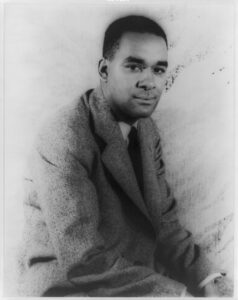
This essay focuses on the critical response to the works of Afro-American author Richard Wright (1908–1960) as perceived by the French left. Additionally, the discussions surrounding his literary contributions and political engagement highlight ongoing concerns, including the conflict between nationalism and internationalism, the viability of a Left that remains autonomous from both Wall Street and the Kremlin, the fluctuation between essentialist and universalist perspectives, and the challenge of envisioning an emancipatory path that transcends partisan sectarianism.
The popular daily Ce soir, run by the Communist writer Louis Aragon (1897–1982), condemned what it termed the “coca-colonization of France” on December 31, 1949. This phrase, which combined anti-imperialist ideology with nationalist sentiments, was later reiterated by L’Humanité. On March 4, 1950, the official newspaper of the prominent PCF proclaimed that “the French won’t be coca-colonized,” illustrating a nationalistic reaction to the perceived threat from “Uncle Sam.”
The critique of American imperialism frequently exhibited a degree of ambivalence, despite its intensity. For example, the official weekly publication of the PCF, France nouvelle, disseminated the Zhdanov Report on October 25, 1947, which underscored “the American plan to enslave Europe.” Nonetheless, between 1945 and 1948, the Communist weekly Les Lettres françaises championed the books of Wright, alongside other leftist publications that enthusiastically embraced the French translations of his acclaimed novel Un Enfant du pays (Native Son) and his autobiography Black Boy, in 1947.
The anti-imperialist discourse of Communist intellectuals was largely shaped by the strategic imperatives of the Soviet Union, leading to the promotion of anti-American campaigns alongside a sustained engagement with the “Black question” in the United States. In the 1940s, Wright captured the interest of leftist critics in France due to his notable accomplishments, yet his public disassociation from the Communist Party USA diminished his favor among the pro–PCF press.
In February 1948, Jean Kanapa (1921–1978), a Communist intellectual who was influential during the cultural Cold War in France, launched a fierce attack on Wright in an article that criticized “American cultural imperialism” from a patriotic viewpoint. At that time, Wright was living in Paris and had close ties with the French philosopher Jean-Paul Sartre (1905–1980), who directed the existentialist journal Les Temps modernes, as well as with the Senegalese intellectual Alioune Diop (1910–1980), who edited the pan-African magazine Présences africaines.
In doing so, Kanapa mirrored the criticisms from American Communists directed at Wright, aiming to challenge the French cultural elite that lauded the renowned author. Yet, Les Lettres françaises initially celebrated Richard Wright as “a genius autodidact” on September 10, 1947. However, by February 5, 1948, he was labeled a “saboteur,” accused of attempting to “incite foolish racial animosity between Blacks and Whites” and of portraying African Americans in a manner akin to that of racists, in stark contrast to Langston Hughes (1901–1967), who was largely “ignored” by the Parisian cultural establishment.
The ties between Wright and the French Communists further eroded after his address at an international meeting convened by the Revolutionary Democratic Rally (RDR), an independent leftist party, in December 1948. Speaking to a crowd of five thousand Parisians, which included significant figures such as poet André Breton and writer Albert Camus, Wright concluded his discourse on intellectual freedom and authentic internationalism with the statement: “The world is greater than America or Russia. Humanity is greater than America or Russia. That is a fact. If we believe it, we shall conquer.” His notable speech was featured in the socialist daily Franc-Tireur on December 16, 1948, as well as in La Gauche, the official organ of the RDR, on December 20, 1948.
In response, André Wurmser (1899–1984) penned a provocative article for the Marxist monthly La Nouvelle critique in January 1949. The Communist journalist criticized independent leftist intellectuals for creating confusion among the French people at a time when the threat of “American colonization” was becoming increasingly apparent. Wurmser took issue with Wright for equating America and Russia, which the famous writer labeled as “symbols of the nationalistic scourge of our times.” Although Wurmser condemned nationalism, the French journalist supported both internationalism and patriotism, referencing the socialist leader Jean Jaurès (1859–1914): “while a little dose of internationalism separates a man from his country, a large dose brings him back.”
The hostile campaign did not cease. In February 1949, Jean Kanapa, director of La Nouvelle critique, reviewed “two novels about the situation of Black Americans”: Chester Himes’s If He Hollers, Let Him Go (S’il braille, lâchez-le…) and Ann Petry’s The Street (La Rue), both translated into French. Contrary to the favorable responses from the French cultural press, Kanapa asserted, “I have a distaste for these works, and I even regard them as fraudulent; rather than making a positive contribution, they detract from the emancipatory efforts of Black individuals in the United States.” This Communist intellectual contended that both Himes and Wright undermined the alliance between Black individuals and the white working class by characterizing this relationship as “unstable” or “temporary.”
Richard Wright’s participation in the first Congress of Black Writers and Artists, which took place in Paris in September 1956, was noted without hostility by Marcel Egretaud (1910–1976) in an article for La Nouvelle Critique published in November 1956. The French activist lamented the absence of the Communist artist Paul Robeson (1898–1976) and the pan-African intellectual W.E.B. DuBois (1868–1963), whom he referred to as “eminent sons of the American people” who were unable to overcome the constraints of McCarthyism. In September 1960, Wright was favorably cited by Monique Lafon in the Communist magazine. Nevertheless, the “materialist” author was strategically opposed to the Senegalese intellectual Léopold Sédar Senghor (1906–2001) to challenge the Negritude movement and its celebration of “ancestral customs.” Furthermore, the French translation of his novel The Long Dream (Fishbelly) garnered acclaim from Marie-Thérèse Moget in La Nouvelle Critique in October 1960. Wright passed away shortly after experiencing a form of “rehabilitation” by two French women.
In contrast to the media outlets associated with communism, the socialist press, which largely aligned itself with the United States, along with independent intellectuals, continued to express their support for Wright. After World War II, the literary critic and left-wing activist Maurice Nadeau (1911–2013) played a significant role in promoting him in cultural circles in France. When Nadeau interviewed Wright for the leftist daily Combat on May 11, 1946, the notorious writer delivered the following statement: “There is not a black problem in the United States, but a white problem.” When Nadeau reviewed Native Son for Combat on July 11, 1947, the journalist wrote: “the genius oversteps racial, social and national categories within which it was born and flourished.”
Nadeau’s analysis placed Wright, celebrated as “one of the greatest writers of our time,” in opposition to Claude McKay (1890–1948) and Langston Hughes, whose literary works “distinctly exhibit their ethnic backgrounds.” In a similar vein, Nadeau reviewed Black Boy for the socialist weekly Gavroche on February 4, 1948, contending that “the book should not simply be included in the canon of black American literature, but rather esteemed as a masterpiece overall.” Through his commendation of this exceptional writer, the French journalist underscored his own humanist and universal principles, which are foundational to his revolutionary ideals.
While reviewing the French translation of The God That Failed (Le Dieu des ténèbres) on June 8, 1950, Nadeau could not conceal his disappointment. This collective volume, edited by Richard Crossman, a key anti-communist activist in the British Labour Party, prompted a critical response from the literary critic. Although he acknowledged Ignazio Silone’s perspectives, Nadeau appeared to dismiss Wright’s input, articulating his critique with a pointed statement: “An intellectual who seeks validation from the Communist Party regarding his intellectual status is either naïve or overconfident.”
Despite the harsh criticism, the bond between Nadeau and Wright remained intact. Following the establishment of his literary magazine Les Lettres nouvelles, the leftist journalist featured two of Wright’s essays: “Ce que tu ne sais pas ne peut pas te faire mal” (What You Don’t Know Won’t Hurt You) in June 1953 and “Suis-je un Africain?” in December 1954. The latter publication heralded the forthcoming translation of Wright’s book, Puissance noire (Black Power). Nadeau served as the editor for the volume in his series titled “Le chemin de la vie” (The Path of Life), which was published by the Parisian house Corrêa/Buchet-Chastel in 1955. Black Power received a favorable review from the French poet Serge Brindeau (1925—1997) in La Revue socialiste in January 1956. Nonetheless, Brindeau remarked that “R. Wright seems to have decided to abandon his scruples as a rationalist and largely positivist intellectual, seemingly motivated by a sense of responsibility.”
Anti-colonialist and socialist author Daniel Guérin (1904–1988) emerged as a significant supporter of Richard Wright within the French leftist movement. Between 1946 and 1949, Guérin traveled to the United States, where he engaged with Trotskyist activists and intellectuals, including C.L.R. James (1901–1991). Upon his return to France, he published a two-volume work titled Où va le peuple américain? (Where Are the American People Going?) in 1950 and 1951. This publication was edited by prominent French philosophers Maurice Merleau-Ponty (1908–1961) and Jean-Paul Sartre as part of their series “Les Temps Modernes” for the Éditions Julliard publishing house. The second volume notably focused on the theme of the “Negro revolt.” During this time, Guérin also met Wright, who, along with Camus and Sartre, co-signed a collective statement condemning the American government’s refusal to grant a visa to Guérin. This statement was published in L’Observateur on April 19, 1951. Shortly thereafter, Guérin invited Wright to speak at an event organized in Paris by the leftist weekly.
The French translation of The Color Curtain (Bandoeng. 1.500.000.000 d’hommes) was released in 1955 under the editorial guidance of the right-wing, pro-American thinker Raymond Aron (1905–1985) as part of his “Liberté de l’Esprit” (Freedom of the Spirit) series, published by Calmann-Lévy. Nevertheless, Guérin reviewed Wright’s book for France Observateur, the successor to L’Observateur, on February 23, 1956, remarking: “The concept of ‘racial inferiority’ was a fundamental aspect of the Bandoeng Conference. The ideological differences were overshadowed by the strong and often irrational impact of the ‘anti-racist racism’ that existed among colonized peoples. Wright is forthright in his assessment, emphasizing the limitations and failures of the Conference.”
In 1963, Guérin articulated his persistent engagement with the “Black question” by publishing La Décolonisation du Noir Américain (The Decolonization of the Black American). A decade later, he released a revised edition titled De l’Oncle Tom aux Panthères noires (From Uncle Tom to the Black Panthers), which he dedicated to his esteemed friend Richard Wright, recognized as “the master of the American novel.” The first chapter of this work, which delves into the analysis of racism, emphasizes the contributions of Afro-American writers. Guérin remarked, “It is difficult to find a reader who can approach the works of Richard Wright, Chester Himes, Ralph Ellison, and James Baldwin, to mention only a few prominent figures, without experiencing a deep emotional engagement.”
Presently, certain aspects of the debate may seem peculiar or outdated. The collapse of the Soviet Union has diminished the significance of the PCF, and the socialist press in France has nearly disappeared. Nonetheless, this does not indicate that sectarian behaviors or hegemonic inclinations have ceased to exist. At the same time, for various reasons, both favorable and unfavorable, the appeal of the United States has risen among French activists and intellectuals, especially those in search of experiences and narratives to address racism. This legitimate endeavor is often tied to selective appropriation, the neglect of historical contexts, and a focus on identity rather than a socialist viewpoint. But the contentious responses to Wright during the Cold War reveal that these issues are not recent. Furthermore, these controversies highlight that an independent path is always possible. Working-class internationalism, in conjunction with secular humanism, persists as an effective approach to avoid transatlantic misunderstandings and to confront the pressing challenges that we currently face.