Reflections on Arbitrariness
The worldwide rise of authoritarianism has impacted the United States with great force, challenging the long-held view that the American political system has been a paragon of democracy, stability, and the rule of law, and thus a standard for other countries to follow. This new development should not be really surprising if we consider that the American political system is probably one of the least democratic among the capitalist democracies in Asia, Europe, and elsewhere.
One of the key components of this authoritarianism is its rapidly increasing arbitrariness. To be sure, there is not a single clear definition of arbitrariness that has, like so many other concepts, a less clear penumbra that surrounds its core. But we can identify a hard core consisting of the antidemocratic policies and decisions that are not formulated and implemented in an equitable, predictable, and uniform manner, and that systematically disregard institutional rules no matter how just and democratic these might be. These arbitrary decisions from the top generally pursue a political and socioeconomic power agenda to preserve and extend, often illegally, top-down power grabs and the creation of new political and social inequalities.
The Social Bases of Arbitrariness
At the most fundamental level, class and power inequalities are the basis of arbitrary practices and decisions. Arbitrary decisions by those higher up in the class and hierarchical division of labor are “normally” so much part of the fabric of daily life that even against our better judgment we tend to take them for granted and assimilate them as an unquestioned part of our existence. Now and then, however, we become aware of them because some groups have begun to courageously object to unjust social practices. We know, for example, that one of the important issues separating workers from their bosses and supervisors is the arbitrary scheduling of working hours with very little advance notice. This has been a fighting issue at many retail chains, particularly at those Starbucks coffee shops that have been unionized. What is especially interesting about these current public struggles is that there is nothing arbitrary about these practices from management’s point of view. Workers are moved around various shifts following a “rational” logic of staffing, the principal aim of which is to save on labor costs. Significantly higher levels of staffing would obviously take care of the problem, but at the cost, from the employer’s point of view, of some workers being “idle” at least part of the time, and therefore of lower profits. From the workers’ point of view, these management practices are discovered to be arbitrary when workers find out, sometimes at the last possible moment, when they must show up for work, thereby disrupting not only their own individual lives, but also the work schedules of partners, school attendance of children, and the leisure time and sleep patterns of the whole family.
The Defense against Arbitrariness
Hundreds of local unions today actively defend the interests and just claims of their members by trying to improve their wages and working conditions, in the context of which the struggle against management arbitrariness plays a central role. This primarily takes place through the vehicle of collective bargaining agreements, disgracefully only in the minority of cases when workers are able to win a union recognition election and then successfully negotiate their first contract—a no-less-difficult accomplishment.
Take, for example, the typical collective bargaining agreement or contract between the United Steelworkers (USW) and the ArcelorMittal corporation of Marion, Ohio, selected at random from the hundreds of collective bargaining agreements American unions submitted to the U.S. Department of Labor. The Marion, Ohio factory, one of twenty plants that ArcelorMittal operates in the United States, manufactures welded mechanical tubing for many industries, including the automobile manufacturing industry.
The content of the USW’s contract or agreement with ArcelorMittal management has important similarities to many other contracts in other plants and companies in the United States. This is especially the case for section III of the contract, which outlines what it calls the Functions of Management. This section spells out in great detail the unlimited powers of management to produce what it wants and dictate how it wants it to be produced. Thus, the “functions of management” include everything that needs to be decided and done in the factory except for some legal limitations concerning matters such as occupational safety, discrimination, and other decisions that the corporation has agreed to cede to the union. See, for example, the contract signed by Arcelor and the USW union in October of 2017.
However, just because under certain circumstances the employer has signed a collective bargaining agreement does not mean that the company will fully enforce it. If management thinks it can get away with not doing so, especially under circumstances different from those existing at the time the contract was negotiated and signed, it will. In fact, many shopfloor union struggles in the United States are about enforcing contracts, to such a degree that this often constitutes a measure of the militancy and effectiveness of both official and rank-and-file union leaders. It can be said that generally, the more bureaucratic and undemocratic a union, the less likely it is that it will insist on the full enforcement of the collective bargaining agreement. In fact, in the worst cases, union members don’t even have access to the text of their existing collective bargaining agreement. That is why organizing the union’s rank and file to fight for the enforcement of the contract is truly indispensable.
It is very clear from this ArcelorMittal contract that their most important features center on two issues: the size and timing of wage increases and the seniority rules that come into operation after the end of the six-month probationary period for newly employed workers at the Marion plant. In this context, seniority rules apply to the rights of recall after layoffs, to bidding rights for the better job openings that may occur during a worker’s employment, and when a particular job is eliminated by the employer. In this latter case, the least senior person in that job classification will be the first to be eliminated. Similarly, the workers recalled after a layoff will start with the recall of the most senior workers. Clearly, seniority rules do not create jobs, nor do they improve the quality of those jobs. What seniority does, and it does it in a major, decisive way, is to sharply curtail if not eliminate management arbitrariness by playing favorites or engaging in discriminatory practices against those workers it dislikes for whatever reason.
Regrettably, seniority rules may also be, under certain circumstances, an obstacle to the retention and promotion of workers who are Black or of Latin American descent in those workplaces where they have been, because of racial discrimination, refused employment until recently, and once they were employed, ended up having lower seniority. Women workers may have also suffered because pregnancy, childbirth, and childcare, as well as sex discrimination, may have interrupted their continuity at work and as a result reduced their seniority rights.
However, most of these problems might have been avoided by a system that made the needs of different kinds ofworkers regardless of gender differences the principal criterion to prioritize who kept or lost a job at a time of retrenchment. This was the situation prevailing in revolutionary Petrograd at the end of 1917, as the production of war industries began to decline after the October Revolution. At the Okhta explosive works the factory committee developed a list determining the order in which workers were to be laid off. (Similar lists were developed at the old Parvianen works and at Putilov, a critically important factory.) Those who had a marginal relationship to the factory and would be the first to be laid off included those who volunteered to help in production, had entered the factory to avoid conscription, or had refused to join a trade union. For the rest, need became the central consideration with the members of families in which more than one member worked at the factory were given the smallest priority, while the last to be laid off were workers with dependents, according to the number of dependents they had. (S. A. Smith, Red Petrograd: Revolution in the Factories 1917–1918, Cambridge University Press, 1983, 242–43.)
It is worth noting that the factory committees’ decisions regarding layoffs did not even mention workers as members of political parties or as supporters or opponents of the October Revolution, even though these layoff plans were developed at a time when party and revolutionary activities were at a fever pitch in Petrograd. Neither did the urgency of the political situation lead to the notion that seniority issues should be settled by the arbitrary partisan decisions of revolutionary factory leaders rather than by the application of the democratically agreed rules.
Confronting Trump’s Arbitrariness
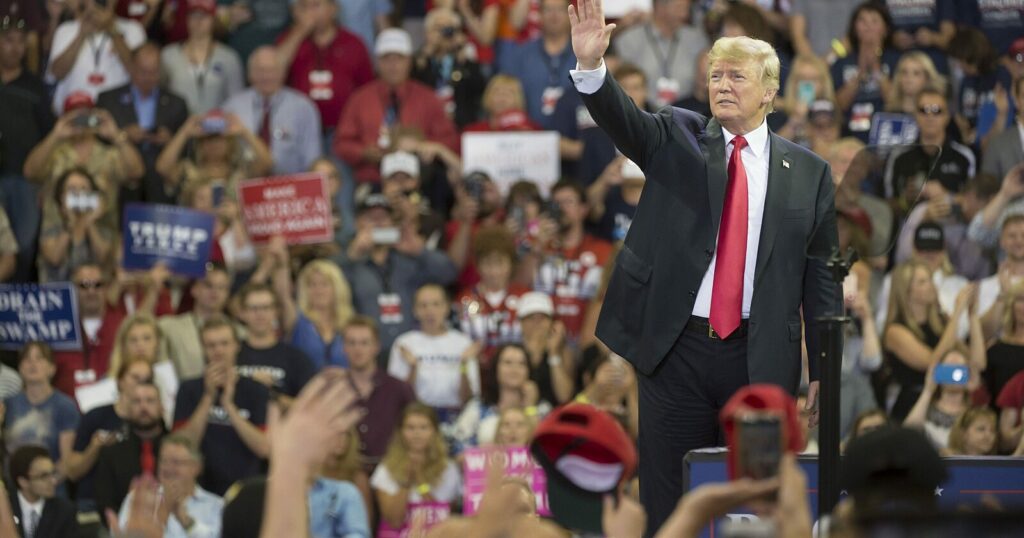
As stated earlier, the issues of arbitrariness and, more generally, authoritarianism are confronting us with great force under the rule of Donald Trump, the very embodiment of these political vices. The left and popular opposition to his second presidency have tried to understand the various aspects of his clear dictatorial actions and threats using a variety of analytical tools. There is, for example, the ongoing debate as to whether Trump’s rule fits the characterization of being fascist and if so of precisely what kind. Others have left aside that debate to focus on the similarities of Trump’s rule to specific authoritarian modalities such as Viktor Orbán’s current Hungarian regime.
Be that as it may, while we fight Trump and Trumpism, we must deepen our analysis of his authoritarianism. Often these Trumpian arbitrary actions and proposals appear—precisely because of their arbitrariness and sometimes even irrationality—as unprecedented and thus “coming out of nowhere.” Such are his proposals to eliminate the 14th Amendment’s unambiguous statement that all those born in this country are automatically citizens of the United States, his proposals for the United States to take over Greenland and even Canada next door, changing the name of the Gulf of Mexico, declaring Biden’s pardons of a number of imprisoned people serving sentences null and void, and worst of all, his outrageous proposal to expel Palestinians from Gaza to create a “Gazan Riviera,” another Trumpian tourist paradise to be created at the expense of and without the consent, participation, or control by the long-oppressed, attacked, and abused Palestinian residents of the area. The interesting thing is that while some of these proposals, such as the annexation of Greenland, could be presented in a conventional way as part of an ordinary imperialist expansion, Trump feels obliged to present them in jingoistic arbitrary outbursts presumably to strengthen the appeal to his extreme right-wing supporters.
Trump as a Lumpen Capitalist
I published an essay almost seven years ago titled “Donald Trump. Lumpen Capitalist,” (Jacobin, October 19, 2018) that attempted to provide a social structural explanation of Trump’s position in American society. Contrary to what many Americans have thought, Donald Trump has not been a consistently successful, and much less some kind of, idealized “model” capitalist. Throughout his career, Trump has declared bankruptcy numerous times and has frequently acted as a hustler and grifter to make a “quick buck,” as in the cases of the corrupt enterprise Trump University, the equally self-serving and corrupt Donald J. Trump Foundation, and more recently the selling of bibles as merchandise, the crypto-presidential enterprises, and family deals in the Gulf states.
Although it has been argued that there has been a move toward similar kinds of corrupt behavior among the capitalist class as a whole (personal communication from Robert Brenner), Trump still stands out not only for his corrupt capitalist conduct, but also for his behavior as a convicted sexual harasser. Moreover, his choice of friends and associates is illustrative of the kind of person he is. Among his dear friends have been David J. Pecker, past editor of the National Enquirer, the most important organ of the gutter press in the United States, and Michael Cohen, former friend and personal attorney turned enemy (often referred to as his former “fixer”), who in turn had a close association with members of the Russian Mafia. In the worlds of entertainment and professional sports, Trump has been friendly in the past with Mike Tyson and Kanye West, two people who have been closely associated with hateful qualities ranging from violence against women to antisemitism. Most important of all, Trump’s early influential mentor was attorney Roy Cohn, who came into prominence as a lawyer for none other than Senator Joseph McCarthy, the witch-hunting senator from Wisconsin. According to his biographer Nicholas von Hoffman, one of Cohn’s partners described him as “a person who was free of the rules” so “whatever he wanted at any given moment was the right thing.” That was consistent with Cohen’s unscrupulous and transactional approach to life that eventually even got him disbarred in the State of New York.
As a “lumpen” capitalist, Trump the politician is not an organic product of the capitalist class. He is instead an external political agent currently running the political system, which as long as its key foundation on the sacredness of corporate private property remains untouched, will preserve the assets of the ruling class, but not necessarily on ruling-class terms. This is so precisely because of Trump’s arbitrary behavior, which resists, if not altogether refuses to follow, certain behavioral norms and obligations, although this does not mean that he will not react and accommodate ruling-class pressures in many situations.
In addition, although individuals such as Elon Musk and sections of the ruling class (such as oil corporations) backed Trump in some or all of his three runs for president, he was not supported by most of the ruling class in any of these elections. According to Albert Serna Jr. and Anna Massoglia (“Big Money, big stakes: 5 things everyone should know about money in 2024 elections,” Open Secrets, November 6, 2024) Kamala Harris raised hundreds of millions of dollars more than Trump. In fact she more than doubled Trump’s electoral fund raising: $1,156 million for Harris versus $463 million for Trump. Although a few candidates in the 2024 elections may have raised a major part of their campaign money through small donations, that was not the case for the two principal presidential contenders. However, once elected, many big capitalists, including many important ones even in the “Silicon Valley” segment of the class, cravenly bowed their heads before Trump in part because they hoped to benefit from his rule even if they had not supported him in the election and in part because they might have been afraid of what he could do against their interests. However, after Trump’s first one hundred days in office, many capitalists and other “opinion leaders” faced with the economic disaster of Trump’s protectionist chaos began to change their tune and criticize him, while the same was happening in American society at large with Trump’s increasing unpopularity.
Donald Trump and Albert Gore Contrasted
Perhaps there is no better way to show the character of Trump’s politics in relation to ruling-class interests, in which his arbitrariness plays a key role, than to compare him with Albert Gore. As the Democratic presidential candidate in 2000, Gore lost by a tiny margin of 537 votes in what turned out to be the decisive state of Florida. But the Florida recount was far from finished when the Supreme Court stepped in and brought an end to it. Moreover, in contrast with Trump, who presented no evidence whatsoever to support his fake claim of fraud in the 2020 election, Gore could have produced an excess of evidence showing that he was the actual winner in 2000. Scholars have demonstrated that the very poorly designed ballot (referred to popularly as the “butterfly ballot”) in Palm Beach County, Florida, caused more than two thousand Democratic voters (including hundreds of Jewish Americans) to vote by mistake for Nazi-loving candidate Pat Buchanan, a number larger than George W. Bush’s statewide certified margin of victory. (Jonathan N. Wand et al., “The Butterfly Did It: The Aberrant Vote for Buchanan in Palm Beach County, Florida,” American Political Science Review vol. 95, no. 4 (2001), 793810.) Moreover, the U.S. Commission on Civil Rights issued a highly detailed report on the 2000 election in Florida showing that there was voter suppression, a systematic and intentional diminution of citizen participation benefiting the Republican Party, especially in the case of racial minorities, created by the rules and organization that presided over the election in that state. (U.S. Commission on Civil Rights, “Voting Irregularities in Florida during the 2000 Presidential Elections. Chap. 9. Findings and Recommendations.”).
Nevertheless, even though Gore had a very strong case that he had won the election in Florida and therefore was the duly elected president of the United States, he quickly accepted the Supreme Court decision of December 9 stopping the recount and conceded the election to Bush. On December 13, 2000, Gore addressed the nation in a televised speech, in which he declared that although he disagreed with the Supreme Court’s decision, he accepted it, while concerning President-elect Bush, he added that,
“… what remains of partisan rancor must now be put aside, and may God bless his stewardship of this country. Neither he nor I anticipated this long and difficult road. Certainly, neither of us wanted it to happen. Yet, it came and now it has ended, resolved, as it must be resolved, through the honored institutions of our democracy. While there will be time enough to debate our continuing differences, now is the time to recognize that which unites us is greater than that which divides us. While we yet hold and do not yield our opposing beliefs, there is a higher duty than the one we owe to the political party. This is America and we put country before party; we will stand together behind our new president.” (“Al Gore’s Concession Speech in 2000 Presidential Election”)
This was the vice president of the United States (1993–2001) speaking, a man who had become successively a Democratic congressperson, senator, and vice president associated with the “moderate,” most neoliberal wing of his party. He had grown up in Washington, D.C., where his father had also been a congressperson and senator representing the state of Tennessee. Al Gore’s speech was a tribute to the political stability required by the security and permanence of the system and in that sense shared the spirit of the ruling class. That does not mean of course that the ruling class met in a smoke-filled room (they never do) and instructed Gore in what to do and say on their behalf. What it did mean was that Gore had, through his upbringing and political associates and business contacts, internalized the norms and values of a dominant class that needed and wanted to preserve their rule under the most peaceful and predictable political conditions. In any case, Gore did very well after “losing” the presidency in 2000. Besides campaigning in defense of the environment, Gore has since been a member of the board of directors of Apple and a senior adviser to Google. In addition, he has been a cofounder and chairman of Generation Investment Management and a partner in Kleiner Perkins Caufield & Byers, where he has been the head of its climate change solutions group.
In drawing a balance sheet of this very important incident in American political history, one could be tempted to argue that the stability pact between Democratic and Republican leaders to repair what could have been a dangerous rift provoked by the very undemocratic “solution” decreed by the Supreme Court in 2000 was sealed by president-elect George W. Bush. Shortly after Gore’s speech, Bush Jr. responded by putting forward the old notion that “our nation must rise above a house divided,” adding that “Americans share hopes and goals and values far more important than any political disagreements. Republicans want the best for our nation, and so do Democrats. Our votes may differ, but not our hopes” (“Bush’s Remarks”). George W. Bush, like Al Gore, had deep roots in the American ruling class as the son of a man who had been a Texas oilman, member of Congress, and president of the United States, besides having been ambassador to the UN and head of the CIA.
But one could draw such a conclusion only at the risk of ignoring a disturbing event that could be retrospectively seen as containing the seeds of future threats to American democracy. On November 22, 2000, hundreds of Republican Party supporters invaded the Stephen P. Clark Government Center in Miami to protest the local Dade County’s vote recount. These Republican rioters succeeded in interrupting the recount process as an outcome of what was called the “Brooks Brothers riot” because many of the participants were dressed in khakis and button-collar shirts. As it quickly became evident, the event was not a spontaneous impromptu protest, but an organized effort by local conservative politicians brought together by GOP operative Roger Stone. Looking back, this event could be seen as a predecessor of the far more important Capitol riot in Washington, D.C., organized by the Trump forces more than twenty years later on January 6, 2021, to prevent Congress from officially declaring Biden and Harris the winners in the general election held in November of 2020.
Thus, Gore played by the rules of the game, and Bush appeared to have done so, although with brazenly unequal results. Bush made a show of avoiding the appearance of Trump-style rule-breaking arbitrariness, but his hand or at the very least that of his close associates was clearly involved in the “Brooks Brothers Riot.” After all, Bush Jr. sent former Secretary of State James Baker, a man known for his political experience and skills managing crises, to oversee and organize the Republican forces in the electoral dispute in Florida.
None of the above implies that capitalist politicians do not typically break rules. In fact, they do so all the time as practically a requirement of their careers, but only up to a point and mostly in secret, which is significant from the perspective of maintaining stability and at least some measure of the legitimacy of the system. That is why Donald Trump’s outlandish lies and outrageous behavior constitute further evidence that he does not care one bit about the long-term credibility and stability of the system. Loyalty, whether to the system or even to his own father when he unsuccessfully tried, in 1990, to take total control of his business and fortune behind his back, is a concept alien to Trump, unless it refers to the loyalty of followers and government functionaries to him.
In fact, Trump has surpassed even the notorious record of the sinister but more talented Richard Nixon. The man from Whittier, California, did everything he could to stay in power after the Watergate scandal was revealed, such as his infamous “Saturday Night Massacre” of October 20, 1973, when he fired the special (Watergate) prosecutor and forced the resignations of the attorney general and deputy attorney generals. Nixon did indeed stay in office far longer than would have been possible in most capitalist democracies, but he finally resigned after he realized that a successful impeachment was inevitable. Although Ford denied that Nixon had been promised a pardon, Jeffrey Toobin has just described in great detail, in his book The Pardon: The Politics of Presidential Mercy (Simon and Schuster, 2025) the negotiations between the two politicians to establish the terms of the pardon and the ownership of such items as the former president’s papers.
Conclusion
How could Trump succeed in the first place? There was no huge economic crisis in the United States like the world depression of the 1930s that brought about the triumph of barbaric Nazism in Germany. However, there was a very strong recession in 2007 to 2008 that did serious damage to the U.S. economy and particularly to minority and working-class people. This on top of the long period of deindustrialization that traumatized the U.S. working class, dramatically reducing its size and even more its social and political power as shown in the recent work by Lainey Newman and Theda Skocpol about the one-time steel workers’ union stronghold in the Pittsburgh area (Rust Belt Union Blues. Why Working-Class Voters Are Turning Away from the Democratic Party, Columbia University Press, 2023). There was not much the neoliberal capitalist Democratic Party was even inclined or wanted to do to seriously intervene in the crisis to try and protect working class interests and thus maintain its electoral support. After all, the Democratic Party relies on the financial and political support of the very capitalist interests that would suffer greatly from any radical structural change in the United States.
Of course, neither could the Republican Party, the other major capitalist party, certainly not under the leadership of people like House Republican leader Paul Ryan, who had openly advocated the “reform” of Medicare (i.e., reducing benefits), or even the so-called Tea Party Republican rebels of 2010 who made opposition to taxes and state intervention in the economy their central plank (Theda Skocpol and Vanessa Williamson, The Tea Party and the Remaking of Republican Conservatism, Oxford University Press, 2012). But then along came Trump. Contrary to a widespread perception, he won a plurality, but not a majority of the vote in the Republican primaries of 2016, thereby showing the weakness and failure of the Republican Party to unite around an orthodox ruling class candidate such as Jeb Bush. Trump opportunistically promised not to touch Medicare while offering the pie in the sky of tariffs that would make workers think he was doing something for them. He probably thought that his newly high tariffs would finance his real program, a substantial tax reduction package for the capitalist class, including of course his rich friends and associates. At the same time, federal expenditures would be reduced through the firing of thousands of federal employees, thereby easing the tax reduction process. Nevertheless, he showed to his supporters that, unlike the other Republican and Democratic politicians, he meant business and would immediately proceed to carry out his reactionary promises.