Ernest Haberkern
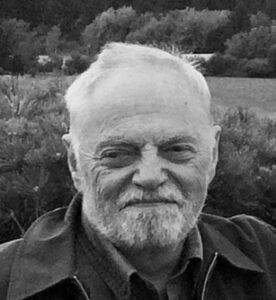 From the 1960s to the twenty-first century, Ernie Haberkern dedicated his life to the socialist movement as writer, editor, and publisher of articles and books on socialism as well as a serving as the union representative for his coworker members of the American Federation of State, County and Municipal Employees at the University of California at Berkeley.
Ernie was born in Springfield, Ohio, but his family moved to the St. Louis, Missouri area when he was eight years old, and he grew up in Union City. After graduating from high school, he went off to study at the University of Notre Dame, where he won a Woodrow Wilson National Fellowship for graduate study during the 1958–59 academic year. With that financial backing he went on to the University of California at Berkeley (UCB) to study classics, but in the end earned a degree in statistics and earned a living as a computer programmer at UCB, while devoting most of his time and energy to socialist work.
At Berkeley he became involved in the social movements of the era, the Free Speech Movement (FSM), the civil rights movement, the United Farm Workers, and the anti–Vietnam War movement. In that milieu he met his wife and life-partner, Rosalyn, and they married in 1962.
In these years Haberkern became an active socialist. He joined the Democratic Socialist Club of the Socialist Party of which Hal Draper was also a member. That group, the Young People’s Socialist League, and other activists from the Congress of Racial Equality joined together in 1964 to create the Independent Socialist Club (ISC), of which Haberkern was a founding member. The intellectual and political leader of the ISC was Draper with whom Ernie would be closely associated until Draper’s death in 1990. At the center of ISC politics was the notion that there was a worldwide three-cornered struggle for political power between the capitalist countries, the Communist or bureaucratic collectivist countries, and the working class. The ISC stood with the latter, the Third Camp.
The foundation of the ISC in the fall of 1964 coincided with the explosive growth and total victory of the FSM where the ISC played an important role in great part because of the major influence of Hal Draper’s public speeches, political advice, and particularly his widely read pamphlet The Mind of Clark Kerr. In that context, Ernie played a very important role in organizing the ISC. This ranged from his organizing the regular setting of a political table facing Sproul Hall, the UCB’s administration building, which had been made possible by the victory of the FSM, to his organizing of political meetings within and outside the university campus. Ernie made sure there was always a stock of the pamphlets and books putting forward the group’s politics as well as classics by Marx, Engels, Luxemburg, and Trotsky.
When the ISC transformed itself into the International Socialists (IS) in 1969, Draper and Haberkern continued in the organization for a time. Haberkern authored the important “Resolution on American Imperialism, the NLF and the Right of the Vietnamese to Self-Determination,” which called for the military victory of the National Liberation Front, but rejected political support of its Stalinist Communist politics and leadership.
But in 1971, Draper and Haberkern left the IS because of disagreements about the group’s early position on the trade unions, which they regarded as sectarian and counterproductive to comrades who were actually active in unions. They wanted the group to seriously commit to nonsectarian work within the unions, a position the IS later adopted, but only after Draper and Haberkern had left. In the course of the debate over the trade unions, they came to believe that the IS was following the organizational model of a sect, which they rejected. They left the IS, along with several others, with the goal of forming a “political center,” an organizational concept that they outlined in a 1973 position paper, “Anatomy of the Micro-sect.”
Draper and Haberkern first formed the Independent Socialist Committee and then later the Center for Socialist History as educational and publishing organizations. Then for the next two decades Draper and Haberkern wrote, edited, and published a number of books on socialism. Ernie co-edited, with Arthur Lipow, Neither Capitalism Nor Socialism: Theories of Bureaucratic Collectivism (2010). After Draper’s death in 1990, Ernie completed the later volumes of Draper’s Karl Marx’s Theory of Revolution: War and Revolution (2005). Their works represented a major contribution to socialist theory.
Ernie retired in 1993 and continued living in Berkeley until 2022, when he and Rosalyn moved to Portland, Oregon, to be near their daughter, Annie. Ernie died there on Dec. 28, 2024. Our condolences to his widow, Roz, also a long-time socialist comrade going back to the University of Chicago in the late fifties and early sixties, and to the rest of his family.