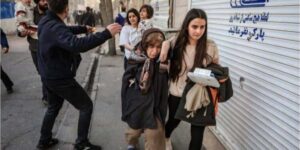
 Iranian, Cuban, and Ukrainian women live in distinct political, historical, and social contexts, yet their experiences reveal important common challenges at the intersection of gender, political power, economic inequality, and international relations. Iranian women confront state-enforced gender discrimination, repression, and restrictions on fundamental freedoms. Cuban women navigate economic hardship, shortages, and the consequences of domestic governance and international sanctions. Ukrainian women face the devastating consequences of Russia’s invasion, including displacement, family separation, gender-based violence, and the disproportionate burdens of war and rebuilding their communities.
Despite these differences, women in all three contexts experience how political decisions, militarization, economic pressures, and patriarchal structures shape their daily lives, limit their choices, and affect their ability to exercise their rights. Their experiences also demonstrate that women are not merely passive victims of political crises; they are agents of resistance, community care, peacebuilding, and social transformation. Yet women’s voices and leadership are too often marginalized in decisions concerning war and peace, economic policy, political transitions, and the future of their societies.
International solidarity among women requires more than expressions of sympathy or the recognition of shared suffering. It calls for an understanding of the historical and political differences shaping each struggle, a willingness to listen to women whose experiences may challenge our assumptions, and a commitment to opposing gender-based oppression consistently regardless of who exercises power or where violations occur. Genuine solidarity must also recognize that opposition to war and foreign military intervention can coexist with opposition to authoritarianism, political repression, and violations of human rights. Neither national sovereignty nor geopolitical alliances should be used to excuse the denial of women’s rights.
Iranian people, Iranian women caught between a rock and a hard place
Iranian women are caught in a devastating double bind, navigating severe internal state repression and systemic violence on one side, and the paralyzing threats of international conflict and economic isolation on the other. This complex geopolitical and domestic trap leaves women fighting for their fundamental human rights at home while simultaneously bearing the brunt of external global pressures and war and aggression.
A breakdown of these dual pressures highlights how Iranian women are uniquely marginalized from all sides.
The Domestic Rock: State Violence, Femicide, and Legal Subjugation
Domestically, Iranian women face an intersection of discriminatory laws, patriarchal traditions, and state-sanctioned violence that severely restricts their autonomy and endangers their lives.
- The Epidemic of Femicide and Honor Killings: Activists and human rights organizations report a brutal crisis of gender-motivated killings. Data indicates that at least one woman or girl is killed every two days in Iran for “honor” or related family disputes, almost exclusively by husbands, fathers, or brothers. These murders are often fueled by deeply entrenched patriarchal views where a man feels compelled to erase a perceived “dishonor” to avoid social exclusion. Additionally, many domestic abuses are masked by “coerced suicides,” where women are driven to take their own lives under intense family pressure.
- Systemic Legal Disadvantage: The state apparatus largely reproduces and protects this violence through institutional censorship and legal leniency. Laws in Iran fundamentally favor male authority. Legal structures reduce the age of marriage for girls, allow unilateral divorce for men, and grant lenient sentences to male relatives who commit “honor” crimes.
- State Executions and Political Repression: Iran consistently ranks at the top of global lists for the execution of women. Women who speak out or lead protest movements such as the historic “Women, Life, Freedom” movement sparked by the death of Mahsa Amini, face severe state retaliation. This includes mass arrests, long prison sentences, and widespread abuse or state-perpetrated violence within the prison system.
The External Hard Place: Austerity, Sanctions, and the Threat of War
While fighting for their lives and rights within the country, Iranian women must simultaneously survive a crushing economic landscape and the terrifying reality of foreign intervention.
- Economic Austerity and Job Discrimination: Decades of severe international sanctions, combined with state economic mismanagement, have driven Iran into deep economic austerity. Women suffer disproportionately from this financial ruin. They face pervasive job discrimination and systemic preference for male hiringand promotions. As household resources dwindle under inflation, women are forced into deeper financial dependence on the very patriarchal structures that oppress them, making it nearly impossible to escape abusive domestic environments.
- The Threat of Foreign Intervention and War: The constant looming threat of military conflict and foreign intervention places an agonizing burden on Iranian civil society. Historically, when external geopolitical tensions or war threats escalate, the Iranian state routinely tightens its domestic security grip, using national security as a pretext to crush women’s rights advocacy and label activists as “foreign agents.”
- The Dilemma of Outside Intervention: This creates a profound psychological and political trap. While many Iranian women seek global solidarity, they are acutely aware that foreign military interventions in the Middle East historically devastate civil populations, collapse infrastructure, and lead to chaotic power vacuums where women’s safety and rights degrade even further.
So Iranian women are being squeezed between a deeply patriarchal, repressive state apparatus and a volatile, sanction-heavy international environment, war and aggression. Iranian women are forced to fight a multi-front battle. They must resist the local systems trying to control their bodies and lives, while simultaneously enduring the broader macroeconomic and military forces reshaping their region.
Iranian people and particularly women are caught between these two forms of power: an authoritarian regime that represses them from within and foreign military intervention that threatens them from without. Yet parts of the international left have allowed the geopolitical framework of anti-imperialism to overshadow the voices of the very people whose liberation they claim to support.
Opposing imperialism does not require defending authoritarianism. Opposing war does not require remaining silent about executions. And standing with the Iranian people should not mean standing with the Iranian state.
Iranian women have demonstrated extraordinary courage, creativity, and resistance. The challenge is to translate that resistance into durable democratic capacity: the ability to organize collectively, protect diversity, negotiate disagreement, and build a political future in which no group of women is expected to sacrifice its freedom for another group’s political project.
What Can Black Feminist Intersectionality Teach Us?
Black feminist intersectionality offers a valuable framework for understanding these interconnected struggles without treating women as a homogeneous group. Developed through Black feminist scholarship and activism, intersectionality examines how systems of power, including racism, sexism, class inequality, and other forms of discrimination interact to shape people’s lived experiences.
For Iranian women, this framework offers several important lessons:
- Recognize the diversity of Iranian women’s experiences.
Iranian women are not a single, uniform constituency. Their experiences differ according to class, ethnicity, religion or belief, disability, age, sexuality, geographic location, and political circumstances. The experiences of Kurdish, Baluch, Arab, Azeri, and other women, as well as those of women from different socioeconomic backgrounds, must be recognized without assuming that one voice can represent all. Intersectionality invites feminist movements to ask whose experiences are centered, whose voices remain unheard, marginalized and whose needs are overlooked. - Challenge multiple systems of oppression simultaneously.
Gender equality cannot be achieved in isolation from economic justice, political freedom, ethnic equality, and protection from state violence. Addressing compulsory veiling or discriminatory family laws, for example, is essential, but a comprehensive feminist vision must also consider poverty, labor inequality, political imprisonment, unequal access to education and healthcare, and discrimination against marginalized communities. Intersectionality helps illuminate how these injustices reinforce one another. - Resist the instrumentalization of women’s rights.
Women’s rights can be invoked selectively to justify geopolitical agendas, military intervention, or competing nationalist projects. An intersectional feminist perspective asks whose interests such narratives serve and whether women themselves have meaningful agency in determining their futures. It allows Iranian feminists to oppose the Islamic Republic’s gender oppression while also questioning foreign policies, sanctions, and military actions that impose additional hardships on ordinary people. It also challenges the assumption that opposition to foreign intervention requires silence about domestic repression. - Center the voices and leadership of those most affected.
Black feminist traditions emphasize the importance of knowledge produced through lived experience and collective action. Applied to Iranian feminist organizing, this means listening to women facing the greatest barriers, creating inclusive spaces for disagreement, and ensuring that women inside Iran and those in the diaspora are not treated as interchangeable. Solidarity should support women’s capacity to define their own priorities rather than impose a predetermined political solution. - Build solidarity without demanding uniformity.
International feminist solidarity does not require Iranian, Cuban, and Ukrainian women to share identical political positions or experiences. Their historical circumstances and immediate concerns differ. What can connect them is a principled commitment to human dignity, gender equality, freedom from violence, and the right of people to shape their own futures. Intersectionality teaches us to acknowledge differences without allowing them to become barriers to mutual understanding and collective action.
Toward a More Inclusive and Consistent Feminist Solidarity
The experiences of Iranian, Cuban, and Ukrainian women invite us to reconsider what international solidarity should look like in a world shaped by militarization, authoritarian governance, economic inequality, and geopolitical competition. Solidarity must be capable of recognizing state repression without legitimizing military aggression, opposing war without excusing authoritarianism, and challenging foreign intervention without overlooking the agency and demands of women living under oppressive systems.
Black feminist intersectionality offers Iranian women and feminist movements a framework for deepening this work: examining how power operates across multiple levels, recognizing differences within movements, centering marginalized voices, and resisting the selective application of human rights principles.
Ultimately, genuine feminist solidarity is neither a demand for political conformity nor a competition over whose suffering deserves recognition. It is an ongoing practice of listening, accountability, mutual learning, and collective action. Its strength lies in the ability to defend the dignity and freedom of women everywhere while respecting the diversity of their experiences and their right to determine their own futures.
International solidarity should not speak for Iranian women, rescue them on someone else’s terms, or demand that they choose between opposing authoritarianism and opposing war.
It should help create the conditions in which they can determine their own future.
Ultimately, feminist internationalism must be capable of holding two commitments together: defending women against the powers that oppress them within their own societies, and challenging the international structures that constrain their freedom from outside.
That is the promise of intersectional solidarity: not unity through uniformity, but collective action rooted in mutual respect, political independence, accountability, and a shared commitment to human dignity.


 If you’ve read this far, you were pretty interested, right? Isn’t that worth a few bucks -maybe more? Please