A Reckless Drive for More Nuclear Power
Over the last year the energy and environmental agency of Connecticut’s government held four presentations to encourage more nuclear power plants in Connecticut. The first thing to say about them is that they start with the wrong assumption. They assume our biggest challenge is the need for more energy to power data centers so the economy can use more AI. Wrong. There is a critical problem, actually an extraordinary crisis, but it’s not the need for more energy. The crisis is the worsening climate catastrophe, a calamity arriving at lightning speed.
Back in 2018 the Intergovernmental Panel on Climate Change (IPCC) gave a grim report that said we must cut back greenhouse gas emissions by nearly half by 2030 or face not only many more weather and fire devastations but the prospect of going over tipping points from which humankind could not recover. The massive fires in Europe are a small taste of the calamity we face.
So we have only a few years to deal with an existential danger. That, and not AI, has to take front and center. We have to take emergency measures now. Data centers and AI development belong in the backseat. The good news is that mitigation of climate ruin is possible and it doesn’t require nuclear power. In fact, nuclear power is a dangerous diversion.
At present there’s one nuclear plant running in Connecticut, by the name of Millstone. There had been a legal ban against more nuclear reactors in the state but that was overthrown by Governor Ned Lamont and the legislature in 2025. The legislature then appropriated $5 million to find towns that say they are willing to be sites of nuclear power plants. The presentations from Connecticut’s Department of Energy and Environmental Protection (DEEP) are intended to warm the public to both varieties of nuclear generation, uranium-powered fission plants and deuterium-tritium fusion plants. Both have inherent defects.
Fission
One huge and obvious problem with fission is radioactive waste. In the nuclear power process radioactive uranium is mined, then enriched and formed into rods and the uranium goes through a process that splits its atoms and gives off energy. That’s done until the rods are no longer productive. Then they are classified as “spent”. However, spent rods are incredibly radioactive and intensely hot. So these rods are put in cooling ponds of the facility for at least five years. Then they have to be stored indefinitely.
Nuclear power waste has been around for more than 80 years, but in all that time there has been no way found to dispose of it permanently. There was a plan to put 90,000 tons of high-level radioactive waste deep under Yucca Mountain in Nevada, but state leadership and the residents were vehemently against it. Nevada’s official position is that the area is “seismically and volcanically active, porous and incapable of geologically containing the waste.”
So, the high-level and long-lasting radioactive waste produced by the nation’s civil nuclear power plants remains at the 75 sites — both operating and closed – where they were created. The problem is managed by the advanced engineering process called “kick the can down the road.”
How are they stored on site? After being removed from the fuel storage pools, the waste is put inside what are called “casks”, stainless steel containers welded shut surrounded my more steel or concrete. How long will a cask last without leaking? One speaker at the Connecticut forums, a professor of nuclear engineering named Dr. Sukesh Aghara, said the casks were good for 160 years while Mark W. Goodsbey, who is Director of Safety and Licensing at Millstone said, “Temporary storage is still designed for hundreds and thousands of years of service without any significant impact or concerns to their robustness.” Thousands of years? How can you assure us of that?
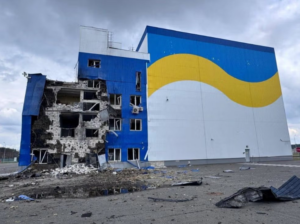
Are the storage areas for spent fuel rods hardened against military attack? The answer is, “No”. To most of us the very question would seem ridiculous. Who would be stupidly reckless enough to attack a nuclear power plant? After the attack on the Chernobyl’s New Safe Containment on Valentine’s Day 2025 and the drone attack a few hundred yards from Chernobyl’s spent fuel casks in June 2026, we know that any force ruthless or terrified enough may make such an assault. There is a concept called Hardened On-Site Storage. It would require the casks be stored in areas hardened against terrorist and armed force assault in facilities resembling hardened missile silos. Of course, that would cost a lot of money. When we see pictures of actual casks, they’re above ground in the open (to shed heat) one next to another. No U.S. plant is hardened to HOSS standards.
The speakers at our public meetings here in Connecticut talk about small, advanced power plants that are modular, in that one day their parts could be built in a factory banged out one after another like pre-fab houses. They use the acronym “SMR” for them (small modular reactor). Paul Dickman of the National Academies of Science stated right out that the large plants (1,000 MW and more) are more efficient than the SMRs. So why build them?
A claimed advantage of the SMRs is that they will only need small emergency planning zones around them to protect the public. The “current fleet” (their words) of reactors typically has 10-mile emergency planning zones around the plants. With the new SMR’s professor Aghara said “you’re talking about less than 5 miles, ideally about two miles.” At another point Kati Austgen of the Nuclear Energy Institute said the zone could be “a 400 meter diameter area.” She said a plant might be able to demonstrate to the Nuclear Regulatory Commission such safety measures that the zone would be ending right at the site boundary “meaning there would be no need to pre-plan any sort of evacuation in the area surrounding the plant.”
No emergency planning zone? So they want to build these things right in the middle of cities, anywhere, maybe even next to schools and hospitals. The ancient Greeks called this insolent arrogance “hubris.”
We haven’t talked about cost. Professor Aghara says he thinks there will be a “30 to 40% reduction in the cost of energy when you couple nuclear and renewable and storage.” However, a 2024 report from the Institute for Energy Economics and Financial Analysis states, “A key tenet for SMR proponents is that the new reactors will be economically competitive. But the on-the-ground experience with the initial SMRs that have been built or that are currently under construction shows that this simply is not true. There currently are three operating SMRs worldwide—two in Russia and one in China, plus a fourth under construction in Argentina. Costs for all four have been significantly higher than originally forecast.”
SMR boosters say assembly line construction of SMRs will save lots of money, but these assembly lines don’t exist anywhere. At this stage it’s just a theory and with global warming putting us in immediate peril we don’t have time to test it out. Past experience with large nuclear plants is not encouraging. Connecticut residents know all about it. The owner of Connecticut’s Millstone plant, Dominion Energy, threatened to shut it down because the nuclear plant couldn’t compete with natural gas. Not until the legislature cut it a deal were the threats tabled.
One big, supposed advantage for the plants is that they’re super-reliable. We’re told they function 24/7. But it’s not true. For one thing they have to be taken offline for refueling and maintenance. The U.S. Energy Information Administration says that averages 34 days a year.
And we’re realizing now the plants depend on the weather. When it gets too hot outside they have problems. Nuclear plants rely on drawing cool water from rivers or the sea to remove heat from reactor systems. But witness France this year. Nuclear power plants there had to shut down already three times this summer. Hot release water combined with exceptionally warm river water would have killed aquatic life.
What’s turning out to be a bigger problem is that in heat waves river water levels drop so the water sometimes can’t be drawn upon for use in the plants. Witness Hungary in August 2026. It had to shut down its nuclear reactors due to low water levels for the first time in its history. Its pumps couldn’t get water at so low a level. Romania shut down its nuclear plant, too.
And the final problem is time. Remember there are only three SMRs anywhere in the world. The idea that SMRs could be produced quickly is untested. Nuclear power plants have been taking 17 years on average to plan, build and get online so SMRs are not going to be of any help in a climate crisis that’s imminent.
Fusion
The U.S. started releasing huge amounts of energy from fusion in 1952. That was the year of first hydrogen bomb explosion. Of course, that energy couldn’t be channeled into anything but mass destruction, but the science was correct. With enormous heat and pressure, you could set off a fusion reaction. In the H-bomb enormous heat came from an atomic bomb “trigger”. Ever since scientists and engineers have been working on how to do fusion on a much smaller scale and in a controlled way. Magnets, lasers and other means are being tested as ways to confine incredibly hot elements in their plasma state during fusion reactions.
There’s never been a fusion power plant. Only in 2022 did the National Ignition Facility arguably produce more energy from a fusion experiment than the amount used by the lasers to conduct the experiment, a net gain of roughly one megajoule of energy or 0.3 of a single kilowatt hour. Even that is kind of fake. It didn’t take into account the 400 megajoules of electricity needed to power the lasers!
But there are tens of billions of dollars floating around for nuclear experiments and construction, so companies are being formed willy nilly to gather in those dollars. Why not? It’s very challenging physics and materials engineering, rewarding work which is presumably well paid. Three companies presented at the DEEP forum. They claim they’ll be producing electricity from fusion in the early 2030s.
But wait. There are as they say “challenges”. I’m relying mostly on an article by Daniel Jassby called “Fusion reactors: Not what they’re cracked up to be.” It was in The Bulletin of the Atomic Scientists in 2017. Dr. Jassby has serious credentials. He was a principal research physicist at the Princeton Plasma Physics Lab until 1999. For 25 years he worked in areas of plasma physics and neutron production related to fusion energy research and development. Jassby says there are “four regrettable problems with nuclear energy: radiation damage to structures; radioactive waste; the need for biological shielding; and the potential for the production of weapons-grade plutonium 239.”
What? Did you read that last one right, the process can create weapons-grade plutonium? One of the draws of fusion was that it was so safe. Fusion just used sweet simple hydrogen isotopes for fuel. Alas, as Jassby puts it, “A fusion reactor can become a source of weapons-grade plutonium simply by placing natural or depleted uranium inside the reactor vessel, where the high neutron flux will produce plutonium 239.” Fusion of hydrogen produces helium, huge amounts of energy and lots and lots of neutrons. Stick uranium into the reactor and you can produce plutonium which you can make into a nuclear weapon.
Shouldn’t that disqualify fusion right from the git go? Should humanity be building these plants everywhere, giving tyrants and unstable governments the materials to build nuclear bombs?
Let’s briefly talk about one other problem mentioned by Jassby. As Jassby explains, fuel assemblies themselves will be transformed into tons of radioactive waste to be removed annually from each reactor as would lots of other parts of the machinery. In fact, he says, “While the radioactivity level per kilogram of waste would be much smaller than for fission-reactor wastes, the volume and mass of wastes would be many times larger.” So what’s the gain with fusion?
Finally, the time problem for fission goes double, triple or more for fusion. Companies may talk about fusion giving out power in the 2030s but no one knows if it really can be done. There’s been a fusion project in the south of France called ITER, sponsored by a number of countries including the U.S. and Russia that. It was thought up in 1985. Building started in 2010. National Geographic had a lengthy article about it in its November 2025 issue. The ITER first “energy-positive” fusion isn’t expected until 2039 (See page 43). And that energy will be heat not electricity.
We Don’t Need Nuclear
We already have the solution, a way of avoiding going over the climate cliff. It’s a combination of solar, wind, water, batteries, efficiency and mandatory conservation. Stanford University civil and environmental engineering professor Mark Z. Jacobson has been explaining for nearly 20 years that we can power the U.S. without burning fossil fuels or splitting or fusing the atom. He demonstrates it in detail state by state and for the entire country. Part of the solution is efficiency. The energy with the least waste is the energy not used in the first place. We need a crash program in everything from insulation to triple-hung windows.
Since America’s leaders on the whole ignored the dire warning of climate scientists and we only have a few years before tipping points are crossed, we have to add to Jacobson’s ideas. We need to plan a strict conservation system in which we use fossil fuel for what’s absolutely necessary and sharply cut back on the rest. Data centers and AI should be put on hold. Personal jets should be grounded. When facing catastrophe you deal with it. You don’t do business as usual.
I’m not much good about predictions but I’m going to say these expensive dangerous plants will not be built in CT. However, a lot of time and effort will be needed to stop them. It’s time we don’t have. I mentioned the year 1952 earlier in the article as the date the first hydrogen bomb exploded. 1952 was also the year of the Paley Commission, a project of the Truman administration, which saw the promise of solar and recommended its wide use. Linda Pentz Gunter of the group Beyond Nuclear has written the “Paley Commission’s authors recognized the abundance offered by solar energy, observing in 1952 that, ‘the United States supply of solar energy is about 1,500 times the present requirement.'” The Commission called for “aggressive research in the whole field of solar energy.” Unfortunately, the report was ignored. Eisenhower became president in 1953 and he launched “Atoms for Peace” driving the U.S. down the disastrous path of nuclear power.